IJSRSET1622394 | Received : 29 April 2016 | Accepted : 03 May 2016 | March-April 2016 [(2)2: 1317-1324]
© 2016 IJSRSET | Volume 2 | Issue 2 | Print ISSN : 2395-1990 | Online ISSN : 2394-4099 Themed Section: Engineering and Technology
1317
Estimation of Passenger Car Unit value at Signalized
Intersection
Ankit N Mahidadiya*, Prof. Jayesh Juremalani
Civil Engineering Department, Parul Institute of Engineering and Technology, Vadodara, Gujarat, India
ABSTRACT
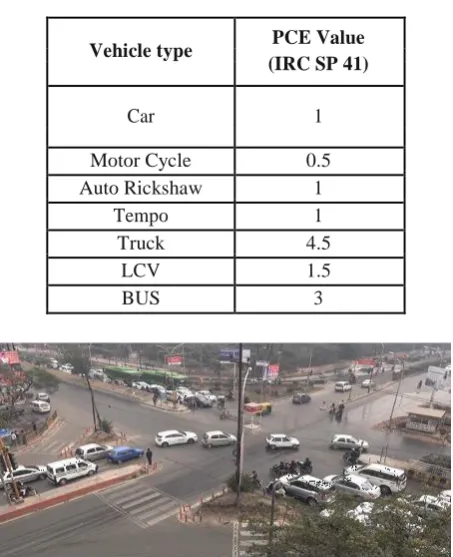
Passenger Car Unit (PCU) is the metric used to convert heterogenic traffic in to homogenous traffic. Presently In India traffic condition is heterogeneous (figure-1,2), it is necessary to convert heterogeneous traffic to homogenous traffic while designing any signalized intersection. PCU Value is dynamic in Nature. PCU value is depends upon current road traffic condition. In India PCU value is based on value given in IRC SP 41 (Table-I). In this paper PCU value for urban intersection is estimated.
Keywords: Passenger Car Unit, Passenger Car Equivalent, Heterogeneous Traffic. I. INTRODUCTION
In India, traffic condition is mixed. It cannot be consider all vehicle type as same. As they have different interfere on road traffic. Passenger Car Equivalent (PCE) or Passenger car unit (PCU) is thus a metric used to assess traffic-flow rate on a highway.
Passenger Car Unit or Passenger Car Equivalent is first introduced by Highway Capacity Manual In 1965. PCU defined as in Highway Capacity Manual is “The number of passenger cars displaced in the traffic flow by a truck or a bus, under the prevailing roadway and traffic conditions”. This definition of PCE was for relative homogeneous traffic conditions prevailing in developed countries.
Today, many methods are available for determining passenger car unit value, i.e. Method given by Chandra & Kumar, based on headway, delay, density, platoon formation, extra vehicle hours, etc. The Indian Roads Congress (IRC) code specifies the PCU values for other vehicle types also such as tractors, rickshaws, hand carts, bullock carts, etc. However, these PCU values are fixed and only depend on traffic composition. This paper present literature review on PCU (Passenger car Unit)
Values for different road traffic condition at intersection, at road section etc.
TABLE I
PCU VALUES OF DIFFERENT VEHICLES AS PERIRC SP 41
Vehicle type PCE Value (IRC SP 41)
Car 1
Motor Cycle 0.5
Auto Rickshaw 1
Tempo 1
Truck 4.5
LCV 1.5
BUS 3
International Journal of Scientific Research in Science, Engineering and Technology (ijsrset.com)
1318 Figure 2 : Heterogeneous Traffic in India
II. METHODS AND MATERIAL
A. Literature Review
In the past various methods have been adopted for estimation of PCU values of vehicles.
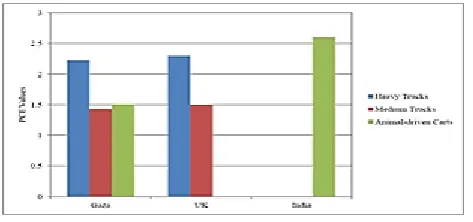
Quazi Sazzad Hossain et al. (2009) [8] In his paper he has discussed the procedure of deriving the passenger car equivalent (PCE) for through vehicles according to the traffic conditions of Dhaka Metropolitan City, Bangladesh (figure-3). The PCE for four vehicle types were derived using the headway ratio method. The estimated PCE for cars, auto-rickshaws, mini-buses and buses are 1.00, 0.86, 1.42, and 2.16, respectively. The comparison between the estimated PCE and the PCE currently used in Bangladesh is demonstrated in this paper. The PCE presently used in Bangladesh.
Figure 3 : PCU Value in Bangladesh
Yahya R. Sarraj (2014) [10] has analyzed the average PCE value for heavy trucks in Gaza. It was
found to be2.23, whereas it was 1.43 for medium trucks and 1.51 for animal-driven carts. In his paper the selection of the signalized intersections was based on the following criteria: High traffic volumes, significant queuing, no parking allowed at or close to the intersection and good mix of different vehicle types. Data was collected at three signalized intersections in Gaza city. Several methods may be used to collect data such as: manual method using a stop-watch, pressure-contact-strip method, sonic detectors and a digital video camera.
A. Obiri-Yeboah et al (April 2014) [1] employed the headway method for estimation of PCU for the traffic mix and flow conditions prevailing at signalized intersections within the Kumasi Metropolis, Ghana. Vehicles considered were placed in three categories; cars, medium vehicles and trucks. The PCEs developed from this study were 1.0, 1.65, and 3.05 for cars, medium vehicles and trucks, respectively, at intersections where roadside friction to flow existed. Where such friction did not exist, the values were 1.0, 1.35, and 2.25 for cars, medium vehicles, and trucks, respectively, which were much lower. The differences in PCE values for corresponding categories of vehicles in the two situations are believed to be a reflection of the impact of roadside friction to vehicular flow at the intersections, which appeared to be more severe on trucks than the other vehicle categories. PCE values which have been adopted from the Overseas Road Note 11 (17) are 1.00, 1.10, and 2.25 for cars, medium vehicles and trucks, respectively, which in comparison to the values obtained in this study, are lower. It is recommended that PCE values from this study be used in intersection analysis within the Kumasi Metropolis as they are believed to reflect better and more accurately the impact of local conditions on discharge at the intersections.
International Journal of Scientific Research in Science, Engineering and Technology (ijsrset.com)
1319 based on actual field studies at the signalized
intersections for their analysis and performance as these are found to vary considerably as compared to IRC PCU values. Estimated PCU values are observed to give higher but consistent value of saturation flow for different approach widths as compared to IRC-PCU values. Estimated PCU values give consistent value of saturation flow per meter width of approach for all the approaches. But estimated values of PCU fail to explain the variation of saturated flow during different saturated green phases of same approach which may be attributed its sensitivity to composition and the varying composition of traffic during different green phases of signal. It affirms that PCU values at signalized intersections are highly dynamic and further emphasizes the need of estimation of PCU values based on different comprehensive approach.
A. Mehar et al. (2014) [2] has demonstrates the effect of congestion level (v/c ratio) on PCU of different type of vehicles on multilane interurban highways. Although the PCU values given are derived for Indian conditions, yet the methodology is quite general and can be used by other researchers to derive PCU values for traffic condition in their countries as well. The major objective of this research was to quantify the effect of traffic volume and composition on PCU values and authors have successfully demonstrated it.
Chris Lee at al. (2015) [3] has estimated PCE value for heavy vehicles at three four-leg roundabouts in Vermont, Ontario, Canada and Wisconsin using vehicle movement data collected from video cameras. The PCEs were determined such that the coefficient of variation in 1-min entry capacities is minimized. The study also applied the PCEs to the prediction of the entry capacity using the HCM 2010 roundabout capacity model. For the model inputs, the critical headway and the follow-up headway were adjusted based on the difference in driver’s gap acceptance behavior between cars and heavy vehicles.
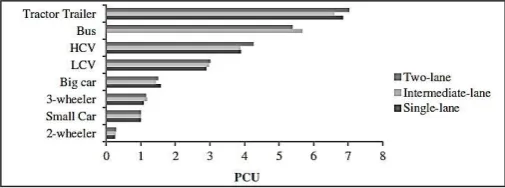
M. Mardani et al. (2015) [5] has evaluated that PCU value (figure-4) for a vehicle type varies with traffic volume and composition on the road. It is also affected by the type of road as well. Carriageway width also affects the PCU value for all types of vehicles.
Figure 4: PCU Value and Road type
Muhammad Adnan (2009) [7] has reported estimation of PCE factors for heterogeneous traffic environment prevailing in urban arterials of Karachi city, Pakistan. Four methods were utilized that have their basis on different notions, and required different data items relevant to traffic stream and vehicles. The study suggests that further investigations are necessary to examine behavior of different type of vehicles, which may lead to appropriate values of PCE factors.
J. R. Juremalani at al. (2015) [4] reviewed on the PCU reveals that studies conducted are mostly related to fairly homogeneous traffic conditions, and the few studies conducted under heterogeneous traffic conditions are not comprehensive enough to replicate the field conditions accurately.
III. DATA COLLECTION
TABLE II. VEHICLE CLASSIFICATION
Vehicle
Category Vehicles Included
Passenger Car All Cars Three Wheeler Auto
Two Wheeler Scooter, Motor Cycle LCV Mini Trucks, chhota hathi
Truck Trucks
Bus Buses, Mini Buses
Tractor Trailers Tractor with Trailers
International Journal of Scientific Research in Science, Engineering and Technology (ijsrset.com)
1320 TABLE III
SIGNAL OPERATIONAL DATA
TABLE IV
VEHICLE AVERAGE PROJECTED RECTANGULER AREA
Vehicle Category Average Projected Rectangular Area
Area ratio to Passenger Car to Vehicle type
Passenger Car 6.71 1
Three Wheeler 4.48 1.4977
Two Wheeler 1.2 5.5916
LCV 12.81 0.5238
Truck 17.62 0.3808
Bus 24.74 0.2712
Tractor Trailers 16.82 0.3989
Bicycle 1.2 5.5916
TABLE IV
TRAVEL TIME DATA
Uma Chokadi
Approach (N to S) & (S to N)
Date 02-03-16 Day Wednesday
Travel Time (s)
No Car Two Wheeler
Three
Wheeler LCV Bus Tractor Truck Bicycle 1 5.98 11.56 11.18 11.97 23.05 24.03 23.52 12.23 2 7.84 9.33 10.25 17.76 21.06 19.24 21.52 13.26 3 7.36 5.2 13.3 15.16 22.23 17.01 18.23 14.25 4 6.93 5.1 10.08 15.83 21.32 15.23 15.23 12.56 5 11.5 9.24 14.16 13.64 20.12 13.25 20.21 11.36 6 10.08 4.9 12.88 9.93 24.01 18.23 18.23 12.21 7 14.16 5.81 13.02 14.58 18.24 21.21 16.25 13.25 8 12.88 7.23 11.61 16.11 22.56 20.32 17.32 12.23 9 13.02 10.59 7.02 14.19 18.21 16.25 18.21 13.26
10 11.61 11.23 7.86 16.01 21.99 14.25
11 7.02 12.98 12.08 12.64 14.32 12.56
12 7.86 13.23 11.56 10.2 15.23
13 12.08 14.2 12.26 12.45
14 11.56 9.23 13.2 15.99
15 12.26 12.26 12.25 12.35
16 13.2 6.62 11.56
17 12.25 10.56 9.23
Intersection Traffic Approach from
Width (m)
Cycle Time (s)
Green Time (s)
Amber
Time (s) Red Time (s)
Uma Chokadi
Pani get (NB) 8.26 163 22 3 119
Vrundavan (SB) 8.26 163 22 3 119
Mahavir Hall (EB) 8.23 163 22 3 119
International Journal of Scientific Research in Science, Engineering and Technology (ijsrset.com)
1321
18 11.56 9.33 12.52
19 9.23 5.2 10.79
20 12.52 5.8 16.06
21 10.79 9.24 13.68
22 16.06 4.9 12.36
23 13.68 5.81 11.26
24 12.36 7.23 10.36
25 11.26 10.59 13.86
26 10.36 11.23 11.01
27 13.86 12.98 7.56
28 11.01 13.23 9.49
29 7.56 14.2 12.27
30 9.49 9.23 10.23
31 12.27 12.26 11
32 12.42 6.62 8.23
33 8.36 12.26 7.2
34 13.94 6.62 9
35 10.91 11.56 8
36 6.55 9.33 7.52
37 9.26 5.2 9.99
38 8.98 5.1 6.52
39 7.23 9.24 7.98
40 8.23 4.9 8.01
AVERAGE TRAVEL
TIME
10.637 9.03325 10.71 13.92067 20.195 18.30778 18.74667 12.85636
Uma Chokadi
Approach (N to E) & (S to W) (W to N) & (E to s) LEFT TURNING
Date 02-03-16 Day Wednesday
Travel Time (s)
No Car Two
Wheeler
Three
Wheeler LCV Bus Tractor Truck Bicycle
1 10.41 3.02 6.11 5.21 8.23 7.23 8.21 5.23
2 7.54 3.26 4.16 5.89 7.26 7.36 7.23 4.23
3 8.56 4.23 6.23 6.23 8.27 6.23 8.12 6.25
4 10.2 4.25 6.23 6.25 7.45 7.24 7.65 3.21
5 7.23 4.85 5.23 6.85 8.12 8.24 7.25 3.25
6 6.23 3.99 5.21 5.98 7.25 7.25 6.85 4.12
7 10.2 4.56 5.89 4.23 6.23 6.21 7.98 3.29
8 9.23 4.97 6.23 4.98 4.23 7.25 6.21 4.97
9 8.23 5.23 6.25 6.21 5.23 8.21 6.74 5.36
10 6.24 4.98 6.85 6.74 6.21 7.65 7.36 4.25
11 7.52 5.63 5.98 7.21 6.21 6.24
12 8.26 5.36 4.23 6.21 7.98 5.21
13 9.85 4.25 4.98 6.36 8.23 4.29
14 8.99 6.24 6.21 5.21 7.45 4.23
International Journal of Scientific Research in Science, Engineering and Technology (ijsrset.com)
1322
16 7.81 4.29 7.21 6.24 7.25 3.12
17 7.26 4.23 6.21 7.25 6.23 5.36
18 8.25 3.98 6.36 5.32 4.23 4.25
19 10.36 3.12 5.21 5.36 5.23 6.24
20 6.25 4.21 4.29 7.24 6.23 5.21
21 6.38 3.15 6.24
22 7.01 5.23 7.25
23 8.01 4.21 5.32
24 6.52 6.21 7.23
25 6.99 4.75 6.21
26 6.25 3.21 6.74
27 7.12 3.99 6.23
28 8.01 3.25 6.25
29 9.21 4.23 6.85
30 6.25 4.54 5.98
31 8.26 6.25 4.23
32 8.45 4.25 4.98
33 6.21 3.54 6.21
34 7.74 4.26 6.74
35 8.23 4.25 7.21
36 6.24 6.32 6.21
37 7.52 5.21 6.36
38 8.26 4.23 5.21
39 9.85 4.23 6.23
40 8.99 4.81 5.21
AVERAGE TRAVEL
TIME
International Journal of Scientific Research in Science, Engineering and Technology (ijsrset.com)
1323 Uma Chokadi
Approach (E to W) & (W to E)
Date 02-03-16 Day Wednesday
Travel Time (s)
No Car Two
Wheeler
Three
Wheeler LCV Bus Tractor Truck Bicycle
1 4.52 9.33 11.18 11.97 23.05 20.12 23.52 12.25
2 6.25 5.2 10.25 17.76 21.06 17.21 17.21 11.52
3 8.08 5.8 13.3 15.16 22.23 16.21 16.25 13.24
4 5.98 9.24 10.08 15.83 21.32 18.27 17.25 12.25
5 11.5 4.9 14.16 13.64 20.12 21.21 20.21 13.85
6 9.25 5.81 12.88 9.93 24.01 10.23
7 14.16 7.23 13.02 14.58 18.24 9.25
8 12.88 10.59 11.61 16.11 22.56 8.24
9 13.02 11.23 7.02 14.19 18.21
10 11.61 9.33 7.86 16.01 21.99
11 8.21 5.2 12.08 12.64 14.32
12 7.86 5.1 11.56 10.2 15.23
13 12.08 9.24 12.26 12.45
14 11.56 9.23 13.2 15.99
15 12.26 12.26 12.25
16 13.2 6.62 11.56
17 10.54 10.56 9.23
18 11.56 9.33 10.59
19 9.85 5.2 11.23
20 12.58 5.8 12.98
21 10.79 9.24 13.23
22 15.23 4.9 14.2
23 13.68 4.99 9.23
24 12.36 7.23 12.26
25 11.26 10.59 6.62
26 10.36 11.23 10.56
27 13.86 12.98 9.33
28 10.23 13.23 5.2
29 7.56 14.2 5.8
30 9.49 9.23 9.24
31 12.27 12.26 4.9
32 12.42 6.62 5.81
33 7.21 12.26 7.23
34 13.94 6.62 9
35 10.91 11.56 8
36 6.55 9.33 7.52
37 9.26 5.2 9.99
38 8.98 5.1 6.52
39 9.21 9.24 7.98
40 7.28 4.9 8.01
AVERAGE TRAVEL
TIME
International Journal of Scientific Research in Science, Engineering and Technology (ijsrset.com)
1324 III.ESTIMATION OF PCU
Several techniques are available in literature to calculate the PCU values for different types of Vehicle in traffic stream. Speed is considered a prime variable to determine the relative effect of Individual vehicles on the traffic stream in terms of the PCU. In the present study, the PCU of a vehicle type is taken as given by Chandra.
Where,
Vc= Mean Speed of Passenger Car Vi= Speed of ith Vehicle
Ac & Ai = Projected rectangular area of Passenger Car & ith Vehicle type.
ti & tc = Travel time of Vehicle type I and Passenger Car.
Vehicle Category
PCU Value (IRC
SP-41)
Estimated PCU Value
Passenger Car 1 1.00
Three Wheeler 1 0.61
Two Wheeler 0.50 0.13
LCV 3 2.14
Truck 3 3.72
Bus 3 5.44
Tractor Trailers 3 3.77
Bicycle 0.5 0.17
IV.CONCLUSION
Estimated PCU values obtained at Uma Chokdi Intersection is quite different from the values given in IRC SP-41. Estimated value for two wheeler is 0.13 and value given in IRC SP-41 is 0.5. The two wheeler PCU values are less than one because their small size enables them to form a compact pack and occupy less space and also cause less hindrance to surrounding vehicles. Estimated value for truck and bus is 3.72 and 5.44 respectively
V. REFERENCES
[1] A. A. Obiri-Yeboah,“Passenger Car Equivalents for
Vehicles at Signalized Intersections within the Kumasi Metropolis in Ghana.”, IOSR Journal of Engineering (IOSRJEN), April 2014.
[2] A. Mehar; S. Chandra; and S.
Velmurugan,“Passenger Car Units at Different Levels of Service for Capacity Analysis of Multilane Interurban Highways in India”, American Society of Civil Engineers. (ASCE), 2014.
[3] Chris Lee“Developing Passenger-Car Equivalents
for Heavy Vehicles in Entry Flow at Roundabouts”, ASCE, 2015.
[4] J. R. Juremalani, T. L. Popat, D. T. Shete, A Critical
Appraisal of Traffic Signal Design for at-Grade Intersections under Mix Traffic Conditions. - A Global Scenario”
[5] M. Mardani Na, S. Chandra and I. Ghosh,
“Passenger Car Unit of Vehicles on Undivided Intercity Roads in India”, The 4th International Workshop on Agent-based Mobility, Traffic and
Transportation Models, Methodologies and
Applications (Science Direct), 2015.
[6] Mahendrakumar Metkari Post Graduate student
Department of Civil Engineering, “Review of Passenger Car Equivalence Studies inIndian Context”, International Conference on Emerging Frontiers in Technology for Rural Area (EFITRA) 2012.
[7] Muhammad Adnan, “Passenger Car Equivalent
Factors in Heterogeneous Traffic Environment- Are
We Using the Right Numbers?”, Fourth
International Symposium on Infrastructure
Engineering in Developing Countries, IEDC (Science Direct), 2013.
[8] Quazi Sazzad HOSSAIN, “Passenger Car
Equivalent (PCE) of through vehicles at signalized intersections in dhaka metropolitan city, Subhash Chand, Neelam J Gupta, Nimesh Kumar Analysis of Saturation Flow at Signalized Intersections in Urban Area, CSIR-CRRI, New Delhi, 110 025.
[9] Yahya R. Sarraj, “Passenger Car Equivalents at