2908
The Application Of The Fuzzy Delphi Technique
On A Component Of Development Of Form Four
STEM-Based Physics Interactive Laboratory
(I-Lab)
Wan Nurul Huda Wan Ab Kadir , Nurul Syafiqah Yap Abdullah, Izan Roshawaty Mustapha
Abstract: STEM-based physics teaching and learning embraces creative and engaging activities for students. In addition to producing innovative learning, The STEM-Based Physics Interactive Laboratory (i-Lab) is an innovation of physics laboratory modules that incorporate Science, Technology, Engineering and Mathematical elements to produce critical thinking and problem-solving students. The objective of this study was to analyse expert agreement on STEM-based physics in an interactive laboratory (i-Lab) component. The Fuzzy Delphi method with 5 Fuzzy scales was used to collect data. A total of 25 experts in various fields of physics education were chosen as respondents for the study. The data were co llected and analysed using the Fuzzy triangular Fuzzy number and the position of each component was determined using the "defuzzification process". A total of six items on the questionnaire (component i-Lab) were submitted to specialists for approval and evaluation. The questionnaire was validated by three experts, with a value of Content Validity Index (CVI) of 0.941. The findings show that 93% of experts agreed that all listed components need to be included in the development of STEM-based physics-based interactive laboratory (i-Lab). The expert consensus found that the "Glass Block Refinement Index" component was ranked first for i-Lab development followed by components of "Scientific Investigation", "Mass and Inertia", "Acceleration Due To Gravity", "Specific Latent Heat of Aluminium" and "Specific Latent Heat of Water".
Index Terms: Interactive Laboratory, i-Lab, based on STEM,Physics experiment
—————————— ——————————
1.
INTRODUCTION
THE STEM approach to teaching and learning science can provide students with many opportunities and spaces to integrate knowledge, skills and values in the STEM field. The Physics Secondary School Standard Curriculum emphasizes the STEM approach in the teaching and learning of physics especially physics. Students can apply STEM knowledge, skills and values through inquiry, daily settlement, environment and the global community. STEM can develop the level of thinking, settlement, team work, investigating and creative techniques that students can use in their daily lives [1]. Additionally, authentic and contextual STEM teaching and learning can encourage students to understand Physics in depth and enable them to work teamwork or individually to embrace STEM. Critical skills can be achieved through scientific or experimental investigations conducted by students. Scientific investigations can enhance student understanding and improve student scientific skills through teaching methods using inquiry-discovery approaches, in which a problem situation will be addressed to solve [2]. Experiments are a key element in Physics, where understanding the process in experiments is one way to become a Physics expert [3]. Conducting experiments is very important in teaching and learning Physics to increase student interest and understanding [2][4]. As a result, Physics experiments conducted by students in Physics labs must be meaningful and provide a more relevant understanding of Physics theories, as well as enhancing student achievement
and perception of Physics.
1.1 Background
The Ministry of Education Malaysia has emphasized the integration of STEM in teaching and learning. However, teaching and learning Physics today is still lacking in terms of the integration of STEM, higher order thinking skill (HOTS) and 21st century learning. Integrating technology in education will enhance the great transformation in terms of wisdom and way of thinking and learning for a student [5]. The STEM approach in teaching and learning Physics as strongly emphasized in a Physics syllabus can encourage deep learning and increase students' interest in Physics. Various activities also can increase students' interest in Physics. Less attractive Physics laboratory teaching does not motivate students' interest in learning, thus influencing student achievement [6].
1.2 Problem Raised In Physics Learning
The Physics Laboratory is an important place to learn Physics. Experiments are one of Physics laboratory learning [2][7][8][9]. Physics Laboratory is a physics experiment or practice site to be used to connect physics theory and practice. In the laboratory, students will be able to practice practical (physics practice) based on Physics Theory they are learning and able to test the concepts and knowledge of students in a subject. At the same time, students use scientific skills to think and carry out procedures for various activities [10]. Therefore, conducive laboratory conditions are urgently needed for students to undergo experiments. Less labour and laboratory equipment that are easily damaged may result in a lack of experiments that can be carried out by students [2][4][11]. In conclusion, the physics laboratory environment today has a poor laboratory problem, with a number of easily damaged and non-replaceable laboratory equipment as well as physics experiment session are still carried out conventionally [2][4][11].
————————————————
Wan Nurul Huda Wan Ab Kadir is currently pursuing a Phd program in physics education in Sultan Idris Education University (UPSI), Perak, Malaysia.
Email: [email protected]
Nurul Syafiqah Yap Abdullah is currently Physics Lecturer in Sultan Idris Education University (UPSI), Perak, Malaysia. Email: [email protected]
Izan Roshawaty Mustapha is currently Physics Lecturer in Sultan Idris Education University (UPSI), Perak, Malaysia.
1.3 Overview Of STEM Learning
Physic laboratory teaching is an important process for students to incorporate physics and practical concepts. Physics labs are very important in Physics learning. Physics experiment sessions are part of Physics learning[9]. During Physical Practice, students can relate experiments with the physics theory that they have learned. Practical teaching in laboratories not only gives learning but also a new dimension to a lesson [12]. Practical teaching in the lab requires careful and good planning to facilitate teaching and learning progress. However, practical lessons also have some constraints. Pupils are not involved with science process skills i.e. experimental skills because hands-on activities do not occur. This is due to the high risk of experimental failure and costs as well as the problem of class control and imperfect school laboratory conditions[13].Therefore, Physics Laboratory Teaching requires innovation in order to make practical lessons meaningful and effective for students. Learning technology applications can also be used in laboratories to produce creative physics teaching and learning for students. For example the application of technology in the laboratory is the use of simulations in conducting experiments. Simulations and experiments run together and need to be developed to be consistent with one another [14]
1.4 Objectives
1. Identify components for the development of STEM-based physics interactive laboratory (i-Lab) based on expert agreement.
2. Identify component rankings for the development of STEM-based physics of interactive laboratory (i-Lab) based on expert agreement.
2.
METHODOLOGY
This study is a quantitative study which involves 25 experts in the field of physical education. The sampling method in this study was a purposive sampling method. The selected sample is based on experience in the field of physical education. The selection of 25 experts is based on [15] which states that for the Fuzzy method of Delphi the number of respondents is between 10-50 people. The criteria for selecting an expert in the study include:
1. Physics Lecturer (Public University in Malaysia) 2. Matriculation Physics Lecturer
3. Officer involved in the construction of Physics Curriculum 4. Chairman of the Physics Committee
5. Physics teacher (served more than 5 years)
A total of 6 items were given to experts for their consent to the selection of components for i-Lab development. In order to implement the Fuzzy Delphi method, the researchers distributed questionnaires to experts who have agreed to contribute their expertise in responding to the components required in the development of STEM-Based Physics Interactive Laboratory (i-Lab). Experts are required to declare the level of consent for each item whether it is highly agreed, agreed, modestly agreed, disagreeable and strongly disagreeable. In addition, the experts were also required to provide recommendations for other components that need to be included in i-Lab development. The data from the Likert Scale obtained was then translated into Fuzzy number data and analyzed using Microsoft Excel software. This data analysis technique is known as the Fuzzy Delphi or Fuzzy Delphi Method (FDM) technique.
2.1 Fuzzy Delphi Method (FDM)
The Fuzzy Delphi method was introduced by Murray, Pipino and Gigch in 1985. This method is triggered by the modified Delphi technique where the combination of Fuzzy Set Theory is incorporated into the Delphi Method. The Fuzzy Delphi method contains some steps that must be followed for expert approval. In addition, the Fuzzy Delphi method by applying Binary Terms rating ranges from 0 to 1, making this method faster and reducing the laps from Delphi's method. The Fuzzy Delphi method can save time and costs for each questionnaire. This method can reduce the number of rounds of surveys and experts can fully express their opinions, ensure perfection and provide consistent opinions. The Fuzzy Delphi method does not misinterpret the original opinion of the expert and illustrates their real reaction.
2.2 Data Collection
A Triangular Fuzzy Number represents the value of m1, m2, m3 and is written like (m1, m2, m3). The m1 value represents the minimum value, the m2 value represents a reasonable value and the m3 value represents the maximum value. Figure 1 describes the values of m1, m2 and m3 for the Triangular Fuzzy Number.
Fig. 1. Triangular Fuzzy Number. Adaptation of [16]
A Triangular Fuzzy Number is used to produce Fuzzy scales (similar to a Likert scale). Fuzzy scales are used to translate linguistic variables into Fuzzy numbers. The number of consent levels for the Fuzzy scale must be taken in odd numbers such as 3, 5, 7 and 9. The higher the Fuzzy scale value indicates the data is obtained more accurately. Figure 2 shows the relationship between Fuzzy scale and Likert scale (5 scale).
Fig. 2. relationship Between Fuzzy Scale and Lickert Scale (5 Scale). Adaption of [16]
2910 formula:
Fig. 3. Formula for determination of distance between two Fuzzy numbers. Adaptation of [16]
Based on the formula in Figure 3, the value of d is the threshold value. If the value d ≤ 0.2, it means all the experts reach an agreement on the item. If instead, a second round should be made to see whether the item is needed or not [17],[18]. In addition, Delphi's Fuzzy Technique also involves the process of determining the expert's agreement whether it is over or equal to 75% for the whole construct or for each item. Each item is assumed to reach expert agreement if the percentage of the specialist agreement for the item is equal to or greater than 75%[19]. The defuzzification process is also carried out in the process of data analysis of Fuzzy Delphi technique. It is the process of determining position or priority for each item or for determining position for each variable or sub variable. In this process, there are three equations:
Fig. 4. Positioning formula for each item.Adaptation of [16]
The value of cut = the median value for '0' and '1', where α-cut = (0 + 1) / 2 = 0.5. If the value of A is less than the value of α-cut = 0.5, the item will be rejected as it indicates the expert agreement in rejecting the item but if the resulting value A exceeds the value of α-cut = 0.5, the item will be accepted as it shows the consensus of the expert to receive the item [20].
3 RESULT
AND
ANALYSIS
If Fuzzy Delphi Method Specialist Approach to STEM-Based Physics Form I-Lab Development i-Lab Component.
TABLE 1
ITEMS (COMPONENTS OF I-LAB DEVELOPMENT)
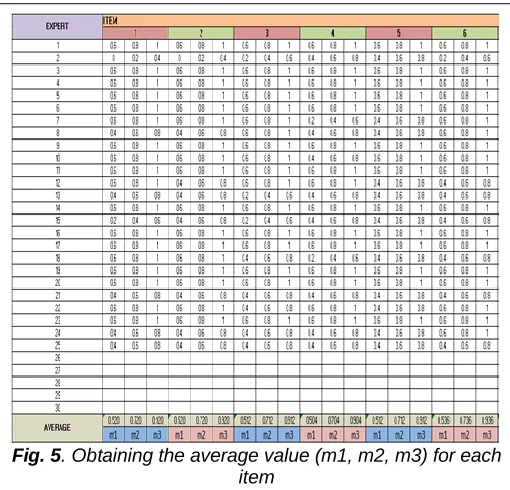
Fig. 5. Obtaining the average value (m1, m2, m3) for each item
The average value of each item is obtained when the Likert scale is converted to a Fuzzy scale. The Fuzzy scale is recorded then the average value (m1, m2, m3) will be calculated. The higher the value of the Fuzzy scale shows the higher the degree of agreement on Likert scale. This study uses Likert scale of 5 with a total of 25 experts.
Fig. 6. Determine value d (treshold value)
The value of threshold (d) is obtained based on the formula:
The value of construct obtained from the study was 0.154. This indicates that the first requirement for the Fuzzy Delphi method has been reached since threshold value (d) for the Item (i-Lab Development Components)
A1-Scientific Investigation is suitable as an i-Lab component
A2 -Mass & Inertial is suitable as an i-Lab component A3 -The acceleration due to Gravity is suitable as an i-Lab component
A4 -The Specific Latent Heat of Water is suitable as an i-Lab component
A5 -The Specific Latent Heat of Aluminium is suitable as an i-Lab component
construct must be smaller than 0.2 (d ≤ 0.2).
Fig. 7. Determining percentage of expert approval
The percentage of experts' agreement can be calculated by the formula:
(Numbers of Item d≤0.2)/(Total Items) x 100%
From this study, the percentage of experts' agreement obtained is 93%. This means that 93% of experts agreed on all items (components) to be included in i-Lab development. The second condition for the Fuzzy Delphi Method has been reached, because the percentage value of the construct is > 75%
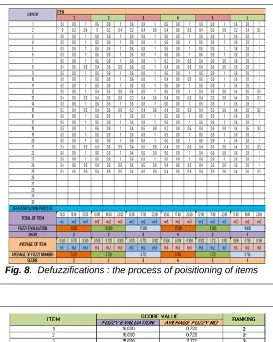
Fig. 8. Defuzzifications : the process of poisitioning of items
Fig. 9. The ranking of item
The value of α-cut = 0.5 and α-cut ≥ 0.5 indicates the item will be accepted as it shows the consensus of experts to receive the item [2]. The α-cut values in figure 9 can be seen in the "Average of Fuzzy Number" column and show all values greater than 0.5. This shows the third condition of the Fuzzy Delphi Method has been implemented. Based on the defuzzification process, the 6th item (the component) is the first title of the Glass Block Refinement Index with the first position, followed by the headings ‘Scientific Investigations’, 'Mass and Inertia', ‘Acceleration due To Gravity', 'Latent Heat
Of Aluminium' and ‘Latent Heat Of Water’.
4 DISCUSSION
AND
CONCLUSION
The findings show that all the components listed have expert consent and comply with all the requirements in the Fuzzy Delphi method to be included in the development of the STEM-Based Physics Laboratory Interactive Laboratory (i-Lab). A total of 93% of experts agree that all listed components need to be applied in (i-Lab). The listed components also coincide with the compulsory four-form experiments enumerated in the Standard Physics Curriculum and Physics Assessment Form Four. Based on the position of the items based on the Defuzzification Process, the practical title of the Block Refinement Index had the highest position for the STEM-Based Physics Form I-Lab Interactive Laboratory (i-Lab). This position is followed by components of the ‘Scientific Investigation’, ‘Acceleration due To Gravity', 'Latent Heat Of Aluminium' and ‘Latent Heat Of Water’.
5 RESEARCH
IMPLICATION
The development of i-Lab has many implications for education. For students, the development of i-Lab can attract students and facilitate student learning. For teachers, i-Lab can be used as a teaching tool to replace the existing practical books, in addition to helping teachers carry out the teaching and learning process at the school. The developers of i-Lab can assist laboratory assistants to provide more efficient practical preparation materials and efficient because there are video procedures per experiment. For the Ministry of Education Malaysia, the development of i-Lab is able to produce unique modules, as each component is developed based on a specialist agreement in the field of physical education.
ACKNOWLEDGMENT
The Full appreciation is given to the Ministry of Education Malaysia on the sponsorship of the "Hadiah Latihan Persekutuan" (HLP) and Universiti Pendidikan Sultan Idris (UPSI) to enable this study to be implemented successfully.
REFERENCES
[1] Chanthala, Chanthala, Chumpon, Toansakul Santiboon, and Kamon Ponkham. "Instructional designing the STEM education model for fostering creative thinking abilities in physics laboratory environment classes." AIP Conference Proceedings. Vol. 1923. No. 1. AIP Publishing, 2018.
[2] Phang, Fatin Aliah, et al. "Faktor penyumbang kepada kemerosotan penyertaan pelajar dalam aliran sains: satu analisis sorotan tesis." Sains Humanika 2.4 (2014).
[3] Wilcox, Bethany R., and H. J. Lewandowski. "A summary of research-based assessment of students' beliefs about the nature of experimental physics." American Journal of Physics86.3 (2018): 212-219.
[4] Darus, Khairunnisa, Ismail Zainol, and Hafsah Taha. "Multimedia Laboratory Module in the Learning of Electrochemistry: Needs Assessment Study." Journal of Science and Mathematics Letters 4 (2016): 31-37.
2912 augmented reality science learning." AIP
Conference Proceedings. Vol. 1891. No. 1. AIP Publishing, 2017.
[6] Abdullah, N. S. Y., and M. I. H. Yaacob. "I-Virtual lab kit with microcomputer-based laboratory (MBL) system for basic electronics." Journal of Physics: Conference Series. Vol. 1185. No. 1. IOP Publishing, 2019.
[7] Kamarudin, Nurzatulshima, and Lilia Halim. "Tahap Pengurusan Pelajar dan Pengurusan Masa dalam Pengajaran Amali Fizik." Sains Humanika 2.4 (2014).
[8] Kamarudin, Nurzatulshima, and Lilia Halim. "Konsep pengurusan alatan dan bahan untuk pembelajaran sains di makmal." Sains Humanika 60.1 (2013). [9] Mardapi, Djemari. "Development of Physics Lab
Assessment Instrument for Senior High School Level." International Journal of Instruction 11.4 (2018).
[10] Caramés, M. T. F., C. Prieto, and M. J. Santos. "Pedagogical innovations to enhance student learning in physics labs." Proceedings of the Second International Conference on Technological Ecosystems for Enhancing
Multiculturality. ACM, 2014.
[11]Zakaria, Nur Hazwani, et al. "Students’ Perception Mobile Computer-based Physics Laboratory (MCPL)." Sains Humanika 9.1-4 (2017). [12] Tatli, Zeynep, and A. Y. A. S. Alipasa. "Virtual
chemistry laboratory: Effect of constructivist learning environment." Turkish Online Journal of Distance Education 13.1 (2012): 183-199. [13]Abdullah, Norazilawati, et al. "Pembinaan dan
penilaian makmal maya (Nora VLab) untuk menerapkan kemahiran proses Sains dalam kalangan murid." Jurnal Pendidikan Sains dan Matematik Malaysia (JPSMM UPSI) 6.2 (2016): 17-31.
[14] Samsonau, Sergey V. "Computer simulations combined with experiments for a calculus-based physics laboratory course." Physics
Education 53.5 (2018): 055013.
[15]Jones, Harry, and Brian C. Twiss. Forecasting technology for planning decisions. No. 658.4 J6. 1978.
[16] Mohd. Ridhuan Mohd. Jamil, Zaharah Hussin, Nurul Rabihah Mat Noh, AhmadArifin Sapar & Norlidah Alias , "Application of Fuzzy Delphi Method in Educational Research. Design and Developmental Research", Kuala Lumpur::Pearson Malaysia Sdn.Bhd,2014 [17]Chen, Chen-Tung. "Extensions of the TOPSIS for
group decision-making under fuzzy environment." Fuzzy sets and systems 114.1 (2000): 1-9.
[18] Cheng, Ching-Hsue, and Yin Lin. "Evaluating the best main battle tank using fuzzy decision theory with linguistic criteria evaluation." European journal of operational research 142.1 (2002): 174-186.
[19] Chu, Hui-Chun, and Gwo-Jen Hwang. "A Delphi-based approach to developing expert systems with the cooperation of multiple experts." Expert systems with applications 34.4 (2008): 2826-2840.
![Fig. 1. Triangular Fuzzy Number. Adaptation of [16]](https://thumb-us.123doks.com/thumbv2/123dok_us/8620150.1409858/2.612.321.580.560.647/fig-triangular-fuzzy-number-adaptation-of.webp)