R E S E A R C H A R T I C L E
Open Access
Rapid T
1
quantification based on 3D phase
sensitive inversion recovery
Marcel JB Warntjes
1,2*, Johan Kihlberg
1,3, Jan Engvall
2Abstract
Background:In Contrast Enhanced Magnetic Resonance Imaging fibrotic myocardium can be distinguished from
healthy tissue using the difference in the longitudinalT1relaxation after administration of Gadolinium, the so-called Late Gd Enhancement. The purpose of this work was to measure the myocardial absoluteT1 post-Gd from a single breath-hold 3D Phase Sensitivity Inversion Recovery sequence (PSIR). Equations were derived to take the acquisition and saturation effects on the magnetization into account.
Methods:The accuracy of the method was investigated on phantoms and using simulations. The method was
applied to a group of patients with suspected myocardial infarction where the absolute difference in relaxation of healthy and fibrotic myocardium was measured at about 15 minutes post-contrast. The evolution of the absolute R1relaxation rate (1/T1) over time after contrast injection was followed for one patient and compared toT1 mapping using Look-Locker. Based on theT1maps synthetic LGE images were reconstructed and compared to the conventional LGE images.
Results:The fitting algorithm is robust against variation in acquisition flip angle, the inversion delay time and cardiac arrhythmia. The observed relaxation rate of the myocardium is 1.2 s-1, increasing to 6 - 7 s-1after contrast injection and decreasing to 2 - 2.5 s-1for healthy myocardium and to 3.5 - 4 s-1for fibrotic myocardium.
Synthesized images based on theT1maps correspond very well to actual LGE images.
Conclusions:The method provides a robust quantification of post-GdT1 relaxation for a complete cardiac volume within a single breath-hold.
Background
Contrast Enhanced Magnetic Resonance Imaging (CEMRI) is the preferred modality for the detection and characterization of myocardial viability [1-6]. At 10-30 minutes after the administration of aT1 contrast
med-ium fibrotic or otherwise damaged myocardmed-ium exhibits hyper-enhancement in comparison with healthy tissue, owing to differences in wash-out kinetics of the contrast agent. Typically, a Phase Sensitive Inversion Recovery (PSIR) sequence is applied for high image contrast between healthy and fibrotic myocardium. In such an acquisition an inversion pulse is applied followed by two acquisitions, one at a short inversion delay timeTinvand
a second during the same heart phase at the subsequent heart beat. The total kernel time of the acquisition
spans two cardiac RR intervals. The latter acquisition is used to correct the background phase of the former such that a real image is reconstructed instead of a modulus. The advantage of this procedure is that there is no contrast degradation due to signal rectification of the original modulus image [7].
The contrast in the PSIR image is governed by the longitudinalT1 relaxation of the various tissues. Signal
intensity differences in the images indicate differences in
T1but, since the image is arbitrarily scaled, no absolute
numbers can be retrieved. Changes in the absolute relaxation rateR1(= 1/T1) provides a measure for
abso-lute local contrast media concentration [8,9]. Monitor-ing R1 over time pictures the actual contrast medium
dynamics without the potential offset intensity bias or changes caused by heart rate variability, as seen with conventional dynamicT1-weigted imaging.
Quantifica-tion may even improve the stability of segmentaQuantifica-tion of healthy myocardium and scar tissue. Especially in * Correspondence: [email protected]
1
Center for Medical Imaging Science and Visualization (CMIV), Linköping University, SE58185 Linköping, Sweden
Full list of author information is available at the end of the article
follow-up studies on the volume of the myocardium and scar, a reliable segmentation is required, independent of scanner settings [10-12]. Finally,T1 maps are
indepen-dent of RF coil sensitivity. This may be important for imaging using (phased array) coils with a strong spatial sensitivity gradient and without proper intensity scaling (such as CLEAR, Constant Level Appearing). It may also reduce the need for a fat suppression technique to remove the high-intensity fat signal that may disturb the image reading. A variety ofT1 mapping methods exists
(seee.g. Refs. [13-17]). A number of these methods rely on strategies with continuous acquisition, which leads to movement artifacts for the heart. Others require several breath-holds to cover the complete cardiac volume. In this work a method is described to retrieve the absolute
T1 relaxation based on a 3D PSIR acquisition, which can
cover the complete cardiac volume within a single breath hold.
Theory
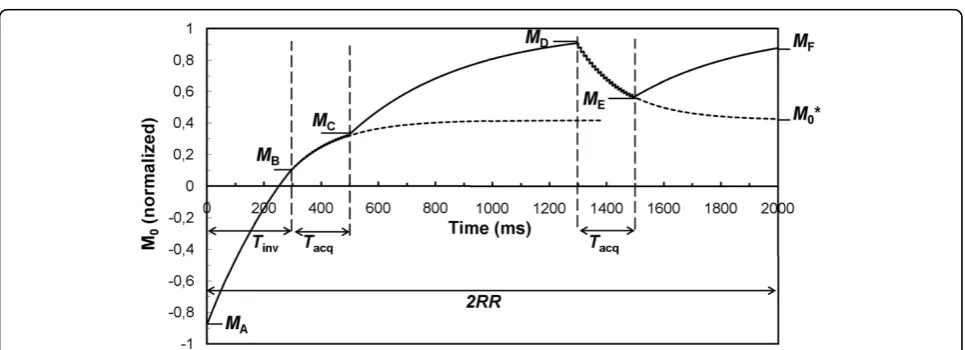
The evolution of the spin magnetization during a 3D PSIR sequence as a function of time is graphically described in Fig. 1. The fully relaxed magnetization M0
is normalized to 1. The measurement is repeated every two cardiac RR intervals, where RR is set to 1 s for Fig. 1. To estimate T1 properly, saturation and acquisition
effects on the magnetization must be taken into account. The magnetization starts at a certain steady-state magnetization MAafter the inversion pulse and
relaxes with T1 during the inversion delay time Tinv
towardsMB. During the acquisition timeTacqthe
mag-netization evolves under bothT1 relaxation and the
con-tinuous application of the RF flip angles a in combination with the subsequent spoiling of the signal, repeated every repetition time TR. This causes a shorter, apparentT1* relaxation towards a saturated
magnetiza-tionM0* as long as the acquisition timeTacqcontinues
[18,19]. TheT1* andM0* can be found with:
M M
T
T T
0 0
1 1
* *
= =
−
TR TR 1ln(cos )
(1)
The flip angleais assumed to be perfect for Eq. 1. It may deviate somewhat due to an imperfect RF slab selection profile and theB1inhomogeneity but since the Tacqis short compared to the total RR interval the effect
of a deviation on the following equations is small. After the first acquisition the magnetization relaxes again with
T1 fromMC towardsMD where the second acquisition
starts. In contrast to the original PSIR measurement identical scanning parameters are applied for the two acquisitions because both are equally important for the
T1 quantification. The magnetization after the second
acquisition,ME, relaxes withT1 towards the
magnetiza-tion MFat 2RR, just before the subsequent inversion
pulse. The total magnetization evolution is thus described by:
MB =M0−
(
M0−MA)
exp(
−Tinv /T1)
(2)MC =M*0−
(
M*0−MB)
exp(
−Tacq / *T1)
(3)MD=M0−
(
M0−MC)
exp(
−(TRR−Tacq) /T1)
(4)ME=M*0−
(
M*0−MD)
exp(
−Tacq / *T1)
(5)MF =M0−
(
M0−ME)
exp(
−(TRR−Tacq−Tinv) /T1)
(6) A perfect inversion pulse is assumed, a small deviation of the complete inversion has only a negligible effect on the calculations. Typically, a 10% reduction of the inver-sion angle (162 degrees rather than 180) results in an overestimation of 2-3% for a T1 in the range 200-800ms. For a single shot PSIR acquisition, with sufficient time between subsequent measurements for the magne-tization to fully recover,MA equals -M0. For a
multi-shot acquisition, either a multi-slice or a 3D sequence, where an inversion pulse is applied every 2RR, in clinical practice a steady-state is reached whereMA= -MFand
(-MA) <M0.
Since Eqs. 1-6 are coupled equations there are in fact only 2 unknown parameters,M0andT1, and all 6
mag-netizationsMA-Fare defined if two of them are known,
in case of the 3D PSIR measurement MB and MD. A
low-high k-space profile order ensures that the image intensity reflects the magnetization in MBandMD even
though the magnetization changes during the acquisi-tion. The value for T1 cannot explicitly be calculated
andM0 andT1 are found using an iterative process. To
start the iterationM0 and -MAare assumed to be equal
to MD. Using Eq. 2 a coarse T1 can be calculated
according to T T M M M inv D B D 1 2 = − − ⎛ ⎝ ⎜ ⎞ ⎠ ⎟ ln (7)
Using this T1 in Eq. 3MC is calculated. A newM0 is
then estimated rewriting Eq. 4 as
M M M TC
TC D C 0 1 = − − exp( )
exp( ) (8)
where exp(TC) equals exp(-(TRR - Tacq)/T1). Finally MFis calculated using the new M0 in Eqs. 5 and 6. The
second iteration starts with the estimatedM0 from Eq. 8
and a newMA= -MF.
The proposed method is compared to the Look-Locker (LL) sequence [20]. This method can be
described as a special case using the same equations. The acquisition is then continuous such thatMA=MB, MC =MDand ME =MFand the evolution of the
mag-netization is in fact described by Eqs. 3 and 5 only. This set of 2 equations can be solved. The steady-state mag-netizationMtas a function of timetafter the inversion
pulse is (if the inversion is repeated every RR interval) given by:
M M M
T T t T t RR = − + − ⎛ ⎝ ⎜ ⎜ ⎞ ⎠ ⎟ ⎟
(
−)
0 0 1 1 2 1 * *exp( / *)
exp / * (9)
Using Eq. 9 the T1* relaxation can be retrieved from a
LL sequence. Subsequently the actualT1 can be
calcu-lated using Eq. 1. From these equations it can directly be seen that the intensity zero-crossing of a LL sequence, in general, does not coincide with the inten-sity zero-crossing of a PSIR sequence. The continuous acquisition of a LL leads to a T1* relaxation which is
shorter than T1 and the saturation and acquisition
effects lead to a different steady-state magnetization. Therefore care should be taken in using the LL to find the intensity zero-crossing for another sequence, although this is commonly done.
As an additional confirmation of the accuracy of the
T1 quantification the approach of Synthetic MRI [21-24]
is applied: TheT1 maps are used as input to simulate a
3D spoiled gradient echo sequence (Inversion Recovery Turbo Field Echo or IR-TFE). Based on theT1values of
the quantification scan the expected image intensity of an IR-TFE can be calculated for any chosen Tinvusing
Eqs. 1-6 (using MD =ME and a kernel time of a single
RR). The synthesized images are compared with the actual ones with the sameTinv. The IR-TFE is
interest-ing since this sequence does not have the second acqui-sition, like the PSIR method, to restore phase and hence potentially has up to 41% more SNR within the same scan time compared to a PSIR sequence of equal geo-metry. A prerequisite, however, is that the optimal inversion delay is applied since the IR-TFE scans do suf-fer from signal rectification in case Tinv is chosen too
short [25]. To ensure an optimal Tinv the synthetic
images can be set first such that the healthy myocar-dium appears black. Subsequently this value forTinvcan
be used as input for the actual IR-TFE scan.
Methods
Phantom measurements
USA) and different concentrations of the Gadolinium contrast agent (Magnevist, 0.5 mmol/mL, Bayer Health-care, Germany, diluted to 0.06 - 0.3 mmol/L) resulting in T1 = 228, 298, 411, 539, 638 and 754 ms. The T2
relaxation times of all phantoms was in the range 42-59 ms. The 3D PSIR protocol for theT1 quantification was
a segmented 3D Turbo Field Echo Planar Imaging (TFEPI) sequence with an EPI factor 3 and a TFE factor 23. The echo time (TE) was 4.2 ms and the repetition time (TR) 9.4 ms leading to an acquisition phase of 215 ms per heart beat. The matrix size was 228×138 (recon-structed 320×320) over a Field of View (FOV) of 350 × 320 mm. The slices had a thickness of 5 mm (overcon-tiguous, i.e. the slices overlap). Using a Sense factor 2 a volume of 12-18 slices can be acquired within 24 sec-onds, depending on the heart rate (2 heart beats per slice). For the phantoms physiology simulation was used for artificial heart triggering. A heart rate of 60 beats per minutes was set, resulting in 12 slices in 24 seconds. The absolute T1 relaxation time of the phantoms was
validated using a standard inversion recovery sequence with 9 separate measurements at an inversion delay time of 50, 100, 150, 200, 250, 300, 500, 1000 and 2900 ms. The TE was 29 ms (EPI factor 13), TR = 3000 ms and the flip angle 90°.
In-vivo measurements
For the in-vivo measurements theTinvwas by default set
to 300 ms and the flip angle to 18 degrees. The acquisi-tion was performed during diastole. The number of slices was adjusted in the range 12-18 slices to fit within a 24 seconds breath-hold. The quantification method was added to routine clinical examinations of patients that were followed up after primary PCI for ST-eleva-tion myocardial infarcST-eleva-tion. The study was approved by the regional ethics committee and complied with the declaration of Helsinki. All patients gave written informed consent. They were given 0.2 mmol/kg (max. 15 mmol) Gadolinium contrast agent (Magnevist 0.5 mmol/ml, Bayer Healthcare, Germany). On one patient, the T1 quantification protocol was performed
every 2 minutes. The quantification scan was interleaved with a LL sequence, a single slice inversion recovery scan with a flip angle of 15 degrees and a TR of 25 ms. The LL resulted in 29 heart phases within a breath-hold of 17 seconds. The matrix size was 228 × 201, recon-structed to 320×320.
On all other patients the quantification method was applied once, about 15 minutes after contrast injection. The Synthetic MRI approach was used to establish the optimal inversion delay. Directly after the 3D PSIR acquisition the images were sent to the PACS system (IDS5, Sectra Imtec, Sweden) where the optimal inver-sion delay time was retrieved from the synthetic images
using a dedicated cardiac package (SyMRI Cardiac Stu-dio, SyntheticMR AB, Sweden). The value for the opti-malTinv was used as input for the IR-TFE sequence to
ensure black myocardium for this protocol. To compen-sate for the time delay between the 3D PSIR and the IR-TFE, in general about 1 minute, 20 ms was added to the suggestedTinv.
The IR-TFE sequence was a segmented 3D spoiled gradient echo sequence with TE = 1.3 ms, TR = 4.4 ms and TFE factor 43, leading to an acquisition phase time of 188 ms, also acquired during diastole. In total 17 slices were acquired with a thickness of 5 mm (overcon-tiguous) and Sense factor 2. The matrix size was 256×172 (reconstructed to 320×320) over a FOV of 350 mm resulting in a scan time of 17 heart beats.
Results
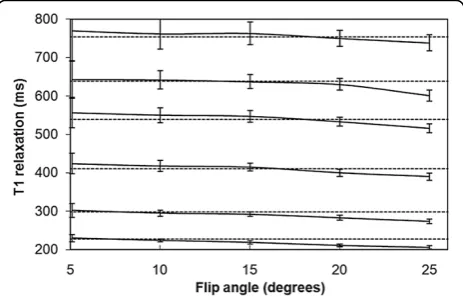
The measured T1 relaxation time of various phantoms
as a function of the applied acquisition flip angle is shown in Fig. 2 where the Tinv is set to 300 ms. The
estimation of theT1 relaxation is consistent over a large
range of applied flip angles. The only exception is the combination of longT1and high flip angle when the T1
time is underestimated. In Fig. 2, theT1 relaxation time
as measured with the standard inversion recovery is dis-played as the dotted lines. The standard deviation ofT1
over 100 pixels is shown as the error bars. Based on Fig. 2 the optimal flip angle of the proposed method is in the range 15-20 degrees, with high SNR and good agree-ment with the standard method.
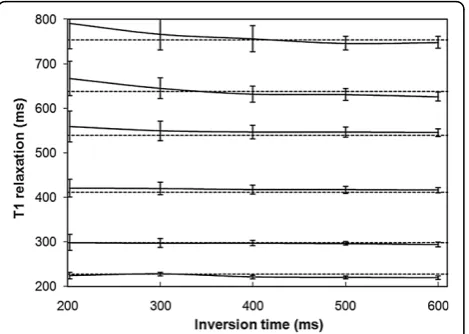
Fig. 3 exhibits the measured T1 relaxation time of
these phantoms as a function of the applied inversion delay time where the flip angle is set to 15 degrees.
Figure 2The measuredT1relaxation time of various phantoms
A consistent measurement ofT1is achieved over a large
range of applied inversion delays. The combination of very short inversion delay times and highT1 values may
cause an overestimation of theT1relaxation time. This
is possibly explained in part by the increased Gibbs’ ringing at the phantom edges due to the high signal intensity difference. Fig. 3 shows that the inversion delay can be set anywhere in the range of 300 - 600 ms forT1
values in the range of 200 - 800 ms.
Based on Figs. 2 and 3 the flip angle was set to 18 degrees and the inversion delay time to 300 ms for the post-Gdin-vivo measurements. A Monte Carlo simula-tion was performed with this setting to monitor the potential error of the fitting due to cardiac arrhythmia. The magnetization was calculated using Eqs. 2-6 while the heart rate was varied randomly for each RR-inter-val in the range ± 5% during the acquisition. In Fig. 4 the estimation of three different T1 values (300, 500
and 700 ms) at nominal heart rates is displayed. The error bars indicate the standard deviation caused by the random heart rate. The error in T1 is smaller than
± 4% for 300 ms and smaller than 7% for 500 ms over the entire range of heart rates between 60 and 90 beats per minute. At high T1 values and high heart
rates the error becomes larger, up to 10% forT1 = 700
ms and a heart rate of 90 bpm. To clarify the impor-tance of taking the actual magnetization behaviour during the sequence into account, the estimated T1 is
shown neglecting the influence of the acquisition and the steady-state saturation effects on the magnetization (Fig 4, dashed lines). TheT1 values are severely
under-estimated at higher heart-rates. The effects may only be neglected if the RR interval equals more than 4 - 5 times the value of T1. This occurs only at clinically
irrelevant low heart rates.
An example of the measured absolute T1 maps of a
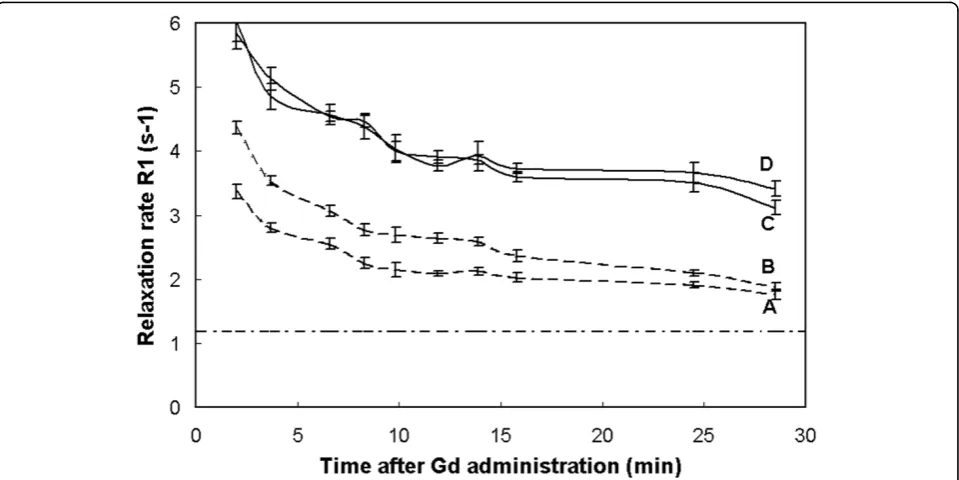
short axis slice of a patient with fibrotic myocardium is shown in Fig. 5. The color scale ranges from 0 to 500 ms. Three slices are shown of the 17 that were acquired in the 3D volume (slice number 13, 10 and 5) at various times after the administration of Gd. A clear difference can be seen between the healthy myocardium and the fibrotic myocardium in slices 13 and 10. Six Regions of Interest (ROI) were placed in the images, as displayed in slice 13a, to monitor the relaxation rateR1 (1/T1) as a
function of time after the Gd injection, where A and B were positioned in healthy myocardium, C and D in fibrotic myocardium, E in the subcutaneous fat and F in the liver. In Fig. 6 the data of the ROIs A-D are shown. The relaxation rate of all myocardial tissue is estimated to be in the order of 6 - 7 s-1 directly after the Gd administration. It rapidly decreases for healthy tissue and at 10-15 minutes post-GdR1is relatively flat at 2
-2.5 s-1. The R1 of fibrotic tissue, on the other hand,
remains high at 3.5 - 4 s-1. The dashed-dotted line is the referenceR1= 1.2 ± 0.2 s-1for myocardium as
mea-sured with our method before the Gd administration. According to Fig. 6 the higher relaxation rate (and hence the hyper-enhancement) of fibrotic tissue com-pared to healthy tissue is already present after 5 minutes and the difference slowly increases during the following 25 minutes. During this interval theΔR1above the
base-line R1 reduces to about 30% for curves A and B
whereas it is only to 50% for curves C and D, indicating faster wash-out kinetics for healthy myocardium. A Look-Locker sequence was applied as well, interleaved
Figure 3The measuredT1relaxation time as a function of the
applied inversion delay time. The same phantoms and settings are used as in Fig. 2. The flip angle was set to 15 degrees.
Figure 4Simulation of the measuredT1relaxation times under
between the acquisitions for the proposed new method. This measurement obtained a single slice which was matched geometrically to slice 13 of our method. Since LL is acquired over the complete cardiac cycle direct fit-ting ofT1relaxation leads to severe motion artifacts in
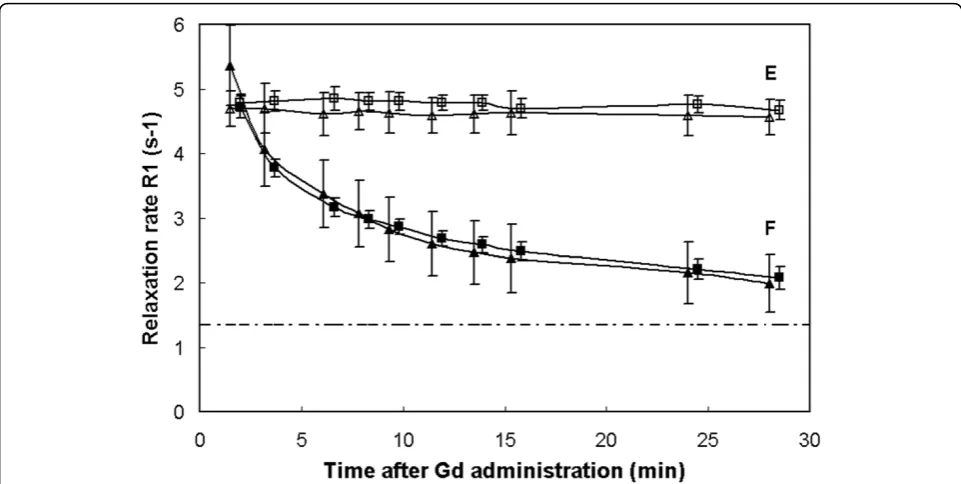
the region of the heart. The LL measurement is com-pared with our method for the subcutaneous fat (ROI E in Fig. 5) and for the liver (ROI F), that remain relatively still. As can be seen from Fig. 7, the two methods agree excellently, although the LL results in slightly lowerR1 Figure 5The absoluteT1relaxation maps of three short axis slices of the heart. The slice numbers 13, 10 and 5 out of the 17 that were acquired in a scan time of 19 seconds are shown. The color scale is in the range 0-500 ms. The time after the administration of Gadolinium was
a)2 min.,b)6 min.,c)12 min andd)24 min. Indicated in slice 13a are the Regions of Interest that are plotted in the following figures.
values, probably due to an imperfect pulse-profile. Note also the difference in standard deviation which for the (single-slice) LL method is 2-3 times that of the pro-posed method.
A group of 18 patients was examined about 15 min-utes post-Gd when the decrease in relaxation rate is slow. The observed change in relaxation rates ΔR1 for
healthy myocardium and fibrotic myocardium is shown in Fig 8. As base line referenceR1= 1.2 s-1is taken.
Lin-ear regression estimated a slope between fibrotic and healthy myocardium of r = 2.5 (R2= 0.93).
As an additional validation theT1maps were used as
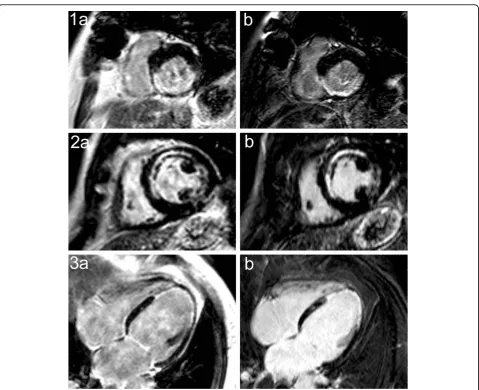
input for synthetic LGE images. Three examples are shown in Fig. 9 of three different patients. The inversion delay was set to a value that turned the healthy myocar-dium black (1: 234 ms, 2: 272 ms, 3: 267 ms). Next to the synthetic images (a) the corresponding actual IR-TFE measurements are shown (b). The inversion delay of this sequence was set to the predicted value of the synthetic images plus 20 ms to compensate for the time delay between the two scans (about 1 minute in all cases). The first example (1a) corresponds to slice 13, 16 minutes post-Gd as displayed in Fig. 5. Visual assessment shows similar pathologic findings in both image sets. An overall difference in contrast between the synthetic image and the conventional image can be seen due to the lack of a SPIR fat-suppression pulse in the quantification scan.
In order to compare the imaging methods two regions of interest were placed in all images, one in healthy and one in fibrotic myocardium. The Contrast to Noise Ratio (CNR) was defined as the difference in signal intensity of the two ROI’s divided by the standard
Figure 7The absolute relaxation rateR1as a function of time for liver tissue and fat. TheR1as a function of time after Gd administration is shown for the 2 ROI’s E and F, as indicated in slice 13a in Fig. 5. The proposed method (squares) is compared to the Look-Locker method (triangles). ROI E is positioned in subcutaneous fat (open labels), ROI F is positioned on the liver (filled labels). Fat has a stableR1= 4.8 ± 0.1 s-1 while the relaxation rate of the liver decreases towards the dashed-dotted line which is the referenceR1= 1.3 ± 0.2 s-1, obtained by our method before Gd injection. The Look-Locker method obtained a reference liverR1= 1.3 ± 0.4 s-1.
Figure 8The change in relaxation rateΔR1after Gadolinium
compared to the base line referenceR1= 1.2 s -1
deviation in the ROI over the healthy (black) myocar-dium. Both methods turn out to have equal CNR (R2= 0.90). A significant difference is, however, that the IR-TFE acquires more slices (22 - 17 compared to 18 - 10 of the PSIR) and a higher resolution (acquisition voxel size 1.5 × 1.6 mm compared to 1.5 × 2.3 mm of the PSIR) in the same scan time.
Discussion
The validation of the absolute T1 relaxation time in
phantoms, as depicted in Figs.2 and 3, shows that our method is consistent over a large range ofT1 values, flip
angles and inversion delay times. As can be seen in Fig. 2 the optimal flip angle of the method is around 15-20 degrees where the signal to noise ratio is highest and the deviation from the expected value is low. The range
of inversion delays that can be chosen is large. The fit-ting algorithm consistently removes the saturation and acquisition effects. The observation that shortT1 values
in the order of 200 ms are consistently measured even with an inversion delay of up to 600 ms implies that the assumption of a perfect inversion pulse is valid. An imperfect inversion would lead to an overestimation of
T1. Possibly this issue has a larger influence at higher
field strengths.
TypicalT1 values for an LGE measurement are in the
values even up to 800 ms although the kernel time is only 2 s. Although it was not the focus of this study it is likely that the method would work for pre-GD myocar-dialT1 values as well. In that case a more natural choice
for the inversion delay would be higher, e.g. 600 ms. In clinical practice other parameters are important, such as the variability of the heart-rate during breath-hold, which might decrease the accuracy of theT1 map.
The Monte-Carlo simulation displayed in Fig. 4 shows that small changes in heart rate have less influence on the typical T1 values than the noise level of the
mea-surement. Furthermore, the resulting error shifts all tis-sue of interest in a similar fashion and leaves the differences inT1 between the healthy and fibrotic
myo-cardium virtually unaffected.
Care has to be taken in the interpretation of the abso-lute T1 relaxation time. A tissue voxel comprises of
manyT1 components rather than the mono-exponential
decay that is assumed in the method. Furthermore, at the selected echo time the short-lived T1 components
might be underestimated and the frequency difference between water and fat might lead to a spatial shift of the intensity in the images. Our 2-point method is designed to rapidly estimate the predominant compo-nent of T1 relaxation and for the given scanner
para-meters this is achieved.
A potential disadvantage of the method is the long breath-hold time (24 s). This results in 12-18 slices of 5 mm depending on the heart rate. Should this be too long the acquisition time may be decreased by reducing the number of slices. The reduced heart volume coverage may be compensated by increasing the slice thickness.
An example of the application of the method is given in Figs. 5, 6, 7 where a patient was monitored every 2 minutes post-Gd. A clear evolution of R1 is observed
over time in the heart and the liver. The change of the relaxation rate ΔR1is taken here, rather than T1, since
ΔR1 is proportional to the absolute amount of contrast
medium present in the tissue and should therefore also represent the severity of fibrosis on a microscopic level. As known from practice the ΔR1 rapidly decreases in
the first 5-10 minutes to remain relatively flat in the fol-lowing 10-30 minutes. The late enhancement contrast already appears after a few minutes. For our patient group the amount of contrast media was about 2.5 times higher in the fibrotic areas compared to the healthy areas (Fig. 8) at about 15 minutes post-Gd. Note that fat is unaffected by the contrast medium and hence can serve as a reference signal intensity for relative mea-surements of signal intensity during a contrast bolus for perfusion.
The approach of synthetic MRI is used for a direct comparison of theT1 quantification maps and
conven-tional imaging resulting in very similar images as shown
in Fig. 9. Pathology shows up similarly and the method has a good CNR. Interestingly this approach also means that the quantification method may provide both theT1
maps and the relevant clinical images in one single scan. The ability to synthetically vary Tinv after the actual
acquisition may optimize the image quality separately for both ventricles [26]. Moreover the method may serve as a test scan to optimize the Tinv for subsequent
IR-TFE sequences.
Conclusions
We present a method to quantify cardiacT1 relaxation
in a large volume within a single breath-hold, based on a 3D Phase Sensitive Inversion Recovery sequence. The fitting algorithm takes acquisition and saturation effects into account and is robust against variation of scan parameters and heart rate. The method is independent of RF coil sensitivity issues such that high-SNR phased array coils can be employed. The absolute relaxation rate R1 is monitored over time and over a group of
patients. TheT1maps can be used for 3D segmentation
and synthesis of conventional LGE images with a free choice of inversion delay.
Acknowledgements
Parts of this work were funded by the University Hospital Research Funds, the Medical Research Council of Southeast Sweden and the Swedish Heart-Lung foundation. The synthetic MRI software has been provided by SyntheticMR AB, Sweden, http://www.syntheticmr.se
Author details
1
Center for Medical Imaging Science and Visualization (CMIV), Linköping University, SE58185 Linköping, Sweden.2Division of Clinical Physiology, Department of Medicine and Health Sciences, Linköping University Hospital, SE58185 Linköping, Sweden.3Division of Radiology, Department of Medicine and Health Sciences, Linköping University Hospital, SE58185 Linköping, Sweden.
Authors’contributions
JBMW developed and verified the theoretical model, JK organized and scanned the patient group and JE was responsible for recruiting, investigating and reporting on the patients. All three reviewed the manuscript.
Competing interests
The main author (JBMW) is partly employed by SyntheticMR AB. This software is used additionally for verification of the method.
Received: 26 October 2009 Accepted: 17 August 2010 Published: 17 August 2010
References
1. Kim RJ, Fieno DS, Parrish TB, Parrish TB, Harris K, Chen EL, Simonetti O, Bundy J, Finn JP, Klocke FJ, Judd RM:Relationship of MRI delayed contrast enhancement to irreversible injury, infarct age and contractile function.
Circulation1999,100:1992-2002.
2. Wendland MF, Saeed M, Lund G, Higgins CB:Contrast-enhanced MRI for quantification of myocardial viability.J Magn Reson Imaging1999,
10:694-702.
3. Wagner A, Mahrholdt H, Sechtem U, Kim RJ, Judd RM:MR imaging of myocardial perfusion and viability.Magn Reson Imaging Clin N Am2003,
4. Hunold P, Schlosser T, Vogt FM, Eggebrecht H, Schmermund A, Bruder O, Schüler WO, Barkhausen J:Myocardial late enhancement in contrast-enhanced cardiac MRI: distinction between infarction scar and non-infarction-related disease.Am J Roentgenol2005,184:1420-1426. 5. Isbell DC, Kramer CM:Magnetic resonance for the assessment of
myocardial viability.Curr Opin Cardiol2006,21:469-72.
6. Tatli S, Zou KH, Fruitman M, Reynolds HG, Foo T, Kwong R, Yucel EK: Three-dimensional magnetic resonance imaging technique for myocardial delayed hyperenhancement: A comparison with the two-dimensional technique.J. Magn Reson Imaging2004,20:378-382.
7. Kellman P, Arai AE, McVeigh ER, Aletras AH:Phase-sensitive inversion recovery for detecting myocardial infarction using gadolinium-delayed hyperenhancement.Magn Reson Med2002,47:372-282.
8. Kiss P, Suranyi P, Simor T, Saab-Ismail NH, Elgavish A, Hejjel L, Elgavish GA:
In Vivo R1-Enhancement Mapping of Canine Myocardium Using CeMRI With Gd(ABE-DTTA) in an Acute Ischemia-Reperfusion Model.J. Magn. Reson. Imag2006,24:571-579.
9. Judd RM, Reeder SB, May-Newman K:Effects of water exchange on the measurement of myocardial perfusion using paramagnetic contrast agents.Magn Reson Med1999,41:334-342.
10. Choi CJ, Haji-Momenian S, Dimaria JM, Epstein FH, Bove CM, Rogers WJ, Kramer CM:Infarct involution and improved function during healing of acute myocardial infarction: the role of microvascular obstruction.J Cardiovasc Magn Reson2004,6:917-925.
11. Petersen SE, Voigtlander T, Kreitner KF, Horstick G, Ziegler S, Wittlinger T, Abegunewardene N, Schmitt M, Schreiber WG, Kalden P, Mohrs OK, Lippold R, Thelen M, Meyer J:Late improvement of regional wall motion after the subacute phase of myocardial infarction treated by acute PTCA in a 6-month follow-up.J Cardiovasc Magn Reson2003,5:487-495. 12. Petersen SE, Mohrs OK, Horstick G, Oberholzer K, Abegunewardene N,
Ruetzel K, Selvanayagam JB, Robson MD, Neubauer S, Thelen M, Meyer J, Kreitner KF:Influence of contrast agent dose and image acquisition timing on the quantitative determination of nonviable myocardial tissue using delayed contrast-enhanced magnetic resonance imaging.J Cardiovasc Magn Reson2004,6:541-548.
13. Wansapura J, Gottliebson W, Crotty E, Fleck R:Cyclic variation of T1 in the myocardium at 3 T.Magn Reson Imaging2006,24:889-893.
14. Freeman AJ, Gowland PA, Mansfield P:Optimization of the ultrafast Look-Locker echo-planar imaging T1 mapping sequence.Magn Reson Imaging
1998,16:765-772.
15. Bokacheva L, Huang AJ, Chen Q, Oesingmann N, Storey P, Rusinek H, Lee VS:Single breath-hold T1 measurement using low flip angle TrueFISP.Magn Reson Med2006,55:1186-1190.
16. Cernicanu A, Axel L:Theory-based signal calibration with single-point T1 measurements for first-pass quantitative perfusion MRI studies.Acad Radiol2006,13:686-693.
17. Messroghli DR, Greiser A, Fröhlich M, Dietz R, Schulz-Menger J:
Optimization and validation of a fully-integrated pulse sequence for modified look-locker inversion-recovery (MOLLI) T1 mapping of the heart.J Magn Reson Imaging2007,26:1081-1086.
18. Deichmann R:Fast high-resolution T1 mapping of the human brain.
Magn Reson Med2005,54:20-27.
19. Warntjes JBM, Dahlqvist O, Lundberg P:A Novel Method for Rapid, Simultaneous T1, T2* and Proton Density Quantification.Magn Reson Med2007,57:528-37.
20. Look DC, Locker DR:Time saving in measurement of NMR and EPR relaxation times.Rev Sci Instrum1970,41:250-251.
21. Riederer SJ, Suddarth SA, Bobman SA, Lee JN, Wang HZ, MacFall JR:
Automated MR image synthesis: feasibility studies.Radiology1984,
153:203-206.
22. Bobman SA, Riederer SJ, Lee JN, Suddarth SA, Wang HZ, Drayer BP, MacFall JR:Cerebral magnetic resonance image synthesis.Am J Neuro Rad1985,6:265-269.
23. Redpath TW, Smith FW, Hutchison JM:Magnetic resonance image synthesis from an interleaved saturation recovery/inversion recovery sequence.Br J Radiol1988,61:619-24.
24. Zhu XP, Hutchinson CE, Hawnaur JM, Cootes TF, Taylor CJ, Isherwood I:
Magnetic resonance image synthesis using a flexible model.Br J Radiol
1994,67:976-982.
25. Gupta A, Lee VS, Chung YC, Babb JS, Simonetti OP:Myocardial infarction: optimization of inversion times at delayed contrast-enhanced MR imaging.Radiology2004,233:921-926.
26. Desai MY, Gupta S, Bomma C, Tandri H, Foo TK, Lima JA, Bluemke DA:The apparent inversion time for optimal delayed enhancement magnetic resonance imaging differs between the right and left ventricles.J Cardiovasc Magn Reson2005,7:475-479.
Pre-publication history
The pre-publication history for this paper can be accessed here: http://www.biomedcentral.com/1471-2342/10/19/prepub
doi:10.1186/1471-2342-10-19
Cite this article as:Warntjeset al.:Rapid T1quantification based on 3D
phase sensitive inversion recovery.BMC Medical Imaging201010:19.
Submit your next manuscript to BioMed Central and take full advantage of:
• Convenient online submission
• Thorough peer review
• No space constraints or color figure charges
• Immediate publication on acceptance
• Inclusion in PubMed, CAS, Scopus and Google Scholar
• Research which is freely available for redistribution