A New Multi-agent Approach for Solving Optimization
Problems with High-dimensional: Case Study in Email Spam
Detection
Hekmat Mohmmadzadeh, Farhad Soleimanian Gharehchopogh
*Department of Computer Engineering, Urmia Branch, Islamic Azad University, Urmia, Iran
Corresponding Author
*Abstract
There exist numerous high-dimensional problems in the real world which cannot be solved through the common traditional methods. The metaheuristic algorithms have been developed as successful techniques for solving a variety of complex and difficult optimization problems. Notwithstanding their advantages, these algorithms may turn out to have weak points such as lower population diversity and lower convergence rate when facing complex high-dimensional problems. An appropriate approach to solve such problems is to apply multi-agent systems along with the metaheuristic algorithms. The present paper proposes a new approach based on the multi-agent systems and the concept of agent, which is named Multi-Agent Metaheuristic (MAMH) method. In the proposed approach, several basic and powerful metaheuristic algorithms, including Genetic Algorithm (GA), Particle Swarm Optimization (PSO), Artificial Bee Colony (ABC), Firefly Algorithm (FA), Bat Algorithm (BA), Flower Pollination Algorithm (FPA), Gray Wolf Optimizer (GWO), Whale Optimization Algorithm (WOA), Crow Search Algorithm (CSA), Farmland Fertility Algorithm (FFA), are considered as separate agents each of which sought to achieve its own goals while competing and cooperating with others to achieve the common goals. In overall, the proposed method was tested on 32 complex benchmark functions, the results of which indicated effectiveness and powerfulness of the proposed method for solving the high-dimensional optimization problems. In addition, in this paper, the binary version of the proposed approach, called Binary MAMH (BMAMH), was executed on the spam email dataset. According to the results, the proposed method exhibited a higher precision in detection of the spam emails compared to other metaheuristic algorithms and methods.
Keywords:
Multi Agent Systems, High-dimensional, Optimization, Email Spam, Metaheuristic
Algorithms
1.
Introduction
In recent years, the optimization problems are widely used in various fields. In these problems, the search space is exponentially increased with the problem dimensions [1] leading to higher complexity of the problem. Meanwhile, most of the real optimization problem is inherently big and complex resulting in the growing use of the complex high-dimensional optimization problems in a wide range of scientific applications [2, 3]. Accordingly, solving a high-dimensional problem is supposed as a considerable challenge, which has attracted the researchers' attention toward solving such problems in recent years. A
high-dimensional optimization problem can be defined as a
D-dimensional problem as Equation (1) [2, 3]:
{min f(x)
Where f(x) is the objective function or optimization problem, x= (x1, x2, x3, …, xD) indicates the variables of the problem with D dimensions, and l= (l1, l2, l3, …, lD) and u= (u1, u2, u3, …, uD) indicate the lower and upper bounds of each variable, respectively. Since such problems cannot be simply solved using the common traditional methods [4], the metaheuristic methods have been introduced as an alternative to the traditional optimization techniques. The metaheuristic methods are characterized with the advantage of finding the viable solutions over a reasonable time as well as high tolerance to difficult and complex problems [5].
The metaheuristic algorithms are considered among the most promising methods for solving the optimization problems. The investigations and studies by several researchers on metaheuristic algorithms have yielded various nature-inspired and non-`e-inspired algorithms, some of which include: GA [6], PSO [7], ABC [8], FA [9], BA [10], GWO [11], WOA [12], and FFA [4], etc. The main advantage of these algorithms is the use of the "trial and error" principle in searching for the solutions, as a result of which they have been used successfully for solving the global optimization problems. The metaheuristic algorithms mostly start with a random initial population and then, through a certain number of iterations, try to improve or change that population in accordance with the given objective function. As stated by Mirjalili et al., the metaheuristic algorithms are brought up to solve the optimization problems more than other methods due to four reasons [11]. First, these algorithms involve simple mathematical operators or processes that can be easily used in an optimization problem. Second, they have such flexibility that can be used for solving the optimization problems while entailing minimal changes in the problem. Third, since these algorithms start with finding random solutions for the optimization problems, there will be no need to find the optimal solution by calculating the derivative of the search space. And finally, the metaheuristic algorithms escape from the local optimum due to having more powerful processes in comparison with the traditional methods.
Notwithstanding the above-mentioned advantages and strengths, the metaheuristic algorithms have also some disadvantages. For instance, the increased problem dimensions may result in the lower population diversity or lower convergence rate of the algorithm. Besides, selection of the appropriate metaheuristic algorithm for solving an optimization problem is another challenge in this regard [13, 14]. However, these can be overcome and resolved by using a multi-agent system, which is a solution that divides a complex problem into several simpler ones. In a multi-agent system, the agents, as a community, attempt to achieve their own specific goals along with their competition and cooperation for achieving the common goals. In fact, an agent is a system that, by recognizing its surrounding environment, increases its position chance after analysis and examination of the environment. On this basis, in the present paper, a multi-agent system is used to solve the high-dimensional problems, so that each metaheuristic algorithm is considered as an agent. The objective of this paper is focused on the collaboration of several metaheuristic algorithms as well as prevention of the early or late convergence and escaping from local optimum.
The rest of the paper is organized as follows. Section (2) deals with a review of the literature on the high-dimensional optimization problems. In Section (3), the multiple agents are described. The proposed method, including its theory, flowchart, and formulation, will be introduced in Section (4). Then, Section (5) addresses the examination and testing of the proposed method's efficiency and performance using the standard benchmark functions, the results of which are recorded and shown in graphical diagrams. And finally, Section (6) includes the general conclusion as well as some suggestions for future works.
2.
Related Works
This section provides a review of the studies conducted on solution of the high-dimensional optimization problems. In the past decades, the researchers have growingly tended toward the use of metaheuristic methods for solving the high-dimensional optimization problems. For instance, Chu et al. (2008) proposed a bacterial foraging optimization (BFO) algorithm for solving the high-dimensional functions [15]. The proposed algorithm incorporates a combination of the advantages of the BFO and PSO algorithms yielding an improved convergence in solving the high-dimensional optimization problems. Of course, a new parameter has been introduced for adjusting the bacteria's path with regard to the best solution. Finally, the proposed method was tested on the standard benchmark functions in order to be compared with the PSO and BFO algorithms, the results of which indicated the proposed method's capability to improve the convergence rate and optimization precision. In [7], Achting used PSO in order to solve the high-dimensional optimization problems. The obtained results showed that a combination of the PSO algorithms with some concepts of the evolutionary algorithm, such as mutation operator, would significantly improve the PSO algorithm's performance in solving the high-dimensional optimization problems. In another study,
Zhao et al. (2010) introduced a self-adaptive differential evolution algorithm with incorporated multi-trajectory search (MTS) and JADE mutation strategy for solving the high-dimensional optimization problems [16].
In [17], a new evolutionary search strategy was introduced for solving the global high-dimensional optimization problems. It showed that the evolutionary algorithms suffer from poor performance in searching for a high-dimensional space. Thus, a new search strategy, named SP-UCI, was introduced. This strategy featured a slope-based searching kernel and a scheme of maintaining the particle population's capability of searching over the full search space. The obtained results showed that the proposed method performed better than the differential evolution and PSO algorithms. In another study, Wang et al. (2013)
presented a GPU-based parallel differential evolution algorithm with self-adaptive control parameters and disagreement-based learning for solving the high-dimensional optimization problems [18]. In this method, the self-adaptive parameters were used to prevent manual adjustment of the parameters, and the disagreement-based learning was used to improve the quality of the solutions. The obtained results indicated the superiority of the proposed method over the other six methods. In [19], in order to compensate the weak points of the PSO algorithm, the authors proposed an elite-grouped adaptive PSO algorithm for solving the high-dimensional optimization problems. In this method, the bad particles are changed by the elite particles leading to the increased population diversity and avoidance from falling into the local optima. The simulation results showed the proposed method's superiority over PSO.
Imanian et al. (2014) introduced a velocity-based ABC algorithm, named VABC, for solving the continuous high-dimensional optimization problems [20]. In this paper, it was claimed that the ABC suffered from low convergence rate and productivity, and thus the authors proposed a new equation in the
onlooker phase based on the PSO strategy. As indicated by the empirical results of the tests on numerical benchmark functions, the proposed algorithm had good performance in comparison with the PSO and ABC algorithms. In another study, the researchers proposed a quantum particle swarm optimization algorithm based on a combination of the simulated annealing algorithm, co-evolution theory, and diversity-guided
search precision and convergence rate for the proposed algorithm. Li et al. [3] introduced a hybrid algorithm called PS-ABC based on the ABC and PSO algorithms for solving the high-dimensional optimization problems. It used one local search phase of PSO and the two phases of onlooker and improved scout bee for global search. The obtained results indicated the proposed algorithm's effectiveness in solving the high-dimensional optimization problems.
In [22], Tuo et al. proposed a harmony search algorithm, called DIHS, for solving the multi-modal high-dimensional optimization problems, in which the two parameters dynamic dimensionality reduction adjustment and dynamic FRET width were used to avoid generation of invalid solutions and to balance between exploration and productivity, respectively. As indicated by the obtained results, the proposed method could provide more precise solutions in a shorter period of time. In another work, Mohapatra et al. (2017) introduced a modified competitive swarm optimizer (MCSO) for solving the large-scale optimization problems [23]. In this method, two thirds of the populations are updated by the tri-competitive
criterion unlike the CSO. The main idea of this method is to maintain higher speed of discovery in the search space with higher convergence rate. In [24], Long et al. proposed a GWO algorithm with enhanced exploration, named EEGWO, for solving the high-dimensional numerical problems. In this work, in order to enhance the exploration, a new equation was used for position updating in; further, the balance between exploration and productivity was achieved by the nonlinear control parameter strategy. As shown by the comparison results, the proposed EEGWO algorithm could considerably improve the performance of the GWO algorithm. In [2], an improved sinusoidal algorithm, named ISCA, was proposed for solving the high-dimensional global optimization problems, in which a modified updating position equation was used for accelerating the convergence and a nonlinear parameter for maintaining the balance and exploration. The comparison results showed the ISCA method to be an effective method for solving the high-dimensional optimization methods.
3.
Multi-agent Systems
Apropos of artificial intelligence, the scholars have not reached a consensus on a generally-accepted definition for "agent". An example of such definitions can be as "agents can appear in a variety of physical forms ranging from robots to computer networks, which are dissimilar" [25]. Therefore, agent is a concept in the subject areas of artificial intelligence and computer sciences, so that any agent is either a computer system or a human in a particular environment. Typically, the agents receive the information through their inputs and then, based on this information, begin to act upon their environment, which may be carried out independent from the other agents' actions. The agent-based computation is a broad scientific field of study, in which an agent can be a "software agent", a "service" [25], or any other thing that can be interrelated in some way with other agents in the environment [26].
In accordance with [25], which is a credible and valid reference, some of the major distinguishing features of an agent against the simple controllers include:
• Situatedness: It refers to an agent's interaction with its environment through sensors and operator actions. For any environment containing an agent, this feature is considered as an inevitable component of its design through which the inputs can be received directly.
• Autonomy: It is considered as the agent's independence or self-administration and can be defined as the agent's capability to select its own actions needless to any external intervention either from the other agents within the network or from humans.
• Inferential capability: It refers to the capability of an agent to act upon the abstract target features. For example, inferring an observation can be done by using a relevant content of the available information.
• Pro-activeness: An agent should react appropriately in order to increase the goal-based tasks. The agent should have the capability of not only giving a specific reaction to a particular change within the environment but also adapting itself with the emerging changes in a dynamic environment.
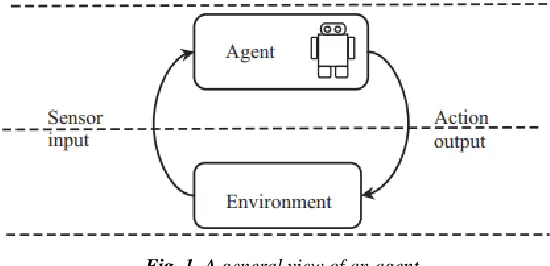
• Social behavior: A decision made by an agent should be independent and free from any external intervention. Nevertheless, when it comes to be in need for achieving a specific goal, the agent must have relationships and interactions with external sources; besides, it should be able to share such knowledge and help others agents solve a particular problem. In addition, each agent interacts with other agents as well as its external environment through social behavior (Fig.1) [26, 27].
Fig. 1. A general view of an agent
In a multi-agent system (MAS), a groups of interconnected independent agents act in an environment in order to achieve a common goal. The agents accomplish such a task through cooperation or competition with or without sharing their knowledge. In fact, a MAS is a system composed of multiple intelligent (smart) agents that are interconnected. These systems can be used for solving those problems that are impossible to be solved simply by an agent or an integrated system [28]. The agents may have a common goal or may seek for their own goals; also, the agents can change their situation, which is accomplished by incorporating the information and sources in the whole system [13, 28]. A multi-agent system is indeed a group of autonomous agents that are interconnected and act in a certain environment. An MAS is typically consisted of three elements [29]: a set of agents A= {a1, a2, …, an}, an environment in which the agents live and act, and a set of reaction rules that control the interactions between the environment and the agents. Below, the reasons for using a multi-agent system, or in other words the advantages of using a multi-agent system, are described according to [25]:
➢ Increased operation efficiency and speed due to the parallel computations and simultaneous operation;
➢ Increased reliability and sustainability of the system;
➢ Scalability and flexibility for adding the agents in case of need;
➢ Reduced costs due to the fact that the individual agents incur lower costs than a centralized architecture;
➢ Substitutability: the agents have modular structure and, thereby, can be easily substituted in other systems or easily upgraded from an integrated system.
4.
Proposed Method
sub-sections (4-1) and (4-2), which describe a multi-agent system based on the metaheuristic algorithms, named MAMH, and the binary version of the proposed MAMH method, named BMAMH, respectively.
4-1 Continuous version
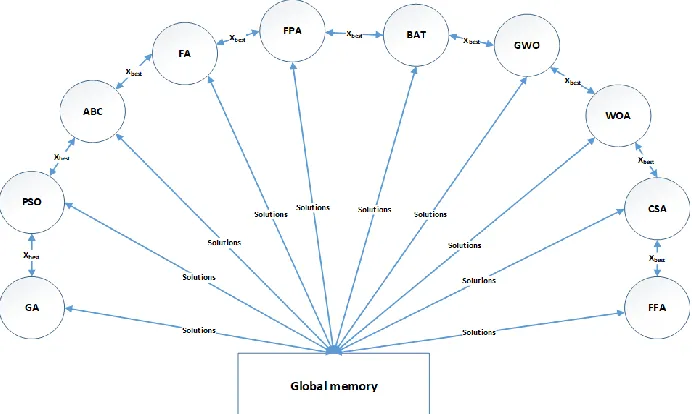
Constructing a multi-agent system requires several attributes or concepts, as the main attributes or concepts, relying on which the system will be able to work properly. The major attributes of a multi-agent system include the agents, the environment containing the agents, the independent, social, and self-learning behaviors of each agent with regard to the individual or common goals, as well as the relationships between the agents. On the basis of the main attributes of a multi-agent system, we are going to present and describe a multi-agent approach based on the metaheuristic algorithms, named MAMH, which is designed for solving the high-dimensional optimization problems. To provide a general view of the proposed method, it is schematically illustrated in Figure (2).
Fig. 2. Overview of the proposed MAMH approach based on multi-agent system
In the proposed method, each agent represents a metaheuristic algorithm. Each of these agents will be described hereinafter. Figure (2) demonstrates the relationships between the agents that are organized via architecture so that the agents and their relationships constitute an environment. In the present paper, a structure with K metaheuristic algorithms has been used, the population of each of which is considered as N. For all of these algorithms, the best solution is interchanged between the algorithms. In this paper, a total of 10 different metaheuristic agents have been used; besides, it has been attempted to adopt various metaheuristic algorithms that involve different processes and belong to different years. These algorithms associated with a general definition for each agent are provided below:
➢ GA: It is one of the most basic evolutionary and metaheuristic algorithms, which is inspired by and based on the "theory of natural selection" and includes three main operators, namely mutation,
crossover, and selection, as well as process that drives the biological evolution [30].
➢ ABC: This algorithm, inspired by the honey bees' behavior in nature, was introduced by Karaboga et al. in 2005. The artificial bee colony algorithm divides the artificial bees into three groups including employed bees, onlookers, and scouts [32].
➢ FA: This algorithm, the main idea of which has been inspired by the flashing behavior of the fireflies, was introduced by Yang et al. in late 2007 [9].
➢ BA: The BA is a metaheuristic optimization algorithm presented by Yang in 2010. In fact, the bats behave based on three criteria, including echolocation, pulse rate of emission, and loudness [10]. ➢ FPA: Introduced by Yang in 2012, this algorithm has been inspired by the flowers' pollination
process that is carried out by honey bees in nature and includes two operators for the local and global optimization processes [33].
➢ GWO: This algorithm was introduced by Mirjalili et al. in 2014. It is based on the leadership hierarchy and hunting mechanism of the gray wolves in nature. In general, there are four groups of wolves among the gray wolves, namely alpha, beta, delta, and omega [11].
➢ WOA: The WOA algorithm, which was introduced by Mirjalili et al. in 2016, has been inspired by the hunting behavior of humpback whale. WOA includes three operators for simulating the search for prey, encircling the prey, and bubble-net foraging behavior of the humpback whales [12]. ➢ CSA: The CSA algorithm, introduced by Askarzadeh et al. in 2016, has been designed and
implemented based on the idea that the crows store their food excess in some nearby hidden places to retrieve it when the food is needed [34].
➢ FFA: The FFA algorithm is a novel metaheuristic algorithm inspired by the farmland fertility in nature, which was introduced by Shayanfar & Gharehchopogh in 2018 [4]. This algorithm, by dividing the farmland into several sections, attempts to optimize the solutions of each section with optimal productivity (efficiency) from the two types of internal and externa memory.
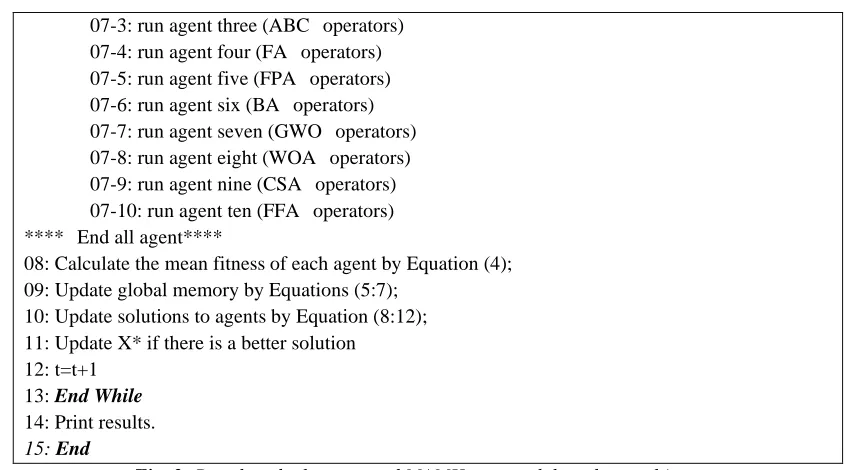
One of the key features of the multi-agent systems is that the agent works cooperatively and coordinately with each other so that it can be considered as a kind of social behavior. The MAMH method assumes two connections for coordination, in the first of which all agents are joined to a shared memory and in the second one; the algorithms interchange the best solution found in each iteration. As such, each agent can be executed individually and independently within itself and meanwhile interconnect with others through the two above-mentioned ways. Moreover, each agent, in accordance with the process defined inside it, would yield local learning in other agents through its own knowledge of the given problem. Figure (3) shows the pseudocode for the proposed method based on the multi-agent condition. To provide a better understanding of the proposed method, it will be explained step by step below:
Begin
01: Global Memory (Generate initial population of solution Xi (i=1... N)) by Equation (2);
02: Initialize parameters D, maxit, varmin, varmax, … 03: Calculate the fitness of each solution by f (Xi);
04: X*=The best Solution
05: Assign solutions to agents by Equation (3);
06: Calculate the mean fitness of each agent by Equation (4);
07: While (t < maximum number of iterations)
****Run each agent with new population****
07-1: run agent one (GA operators)
07-3: run agent three (ABC operators)
07-4: run agent four (FA operators)
07-5: run agent five (FPA operators)
07-6: run agent six (BA operators)
07-7: run agent seven (GWO operators)
07-8: run agent eight (WOA operators)
07-9: run agent nine (CSA operators)
07-10: run agent ten (FFA operators) **** End all agent****
08: Calculate the mean fitness of each agent by Equation (4); 09: Update global memory by Equations (5:7);
10: Update solutions to agents by Equation (8:12); 11: Update X* if there is a better solution
12: t=t+1 13: End While 14: Print results.
15: End
Fig. 3.Pseudocodethe proposed MAMH approach based on multi-agent system
Now, let's explain the algorithm presented here.
Step 01 generating the initial population or shared memory: In this step, regarding the problem and objective function, the random initial population is generated and situated in the shared memory. The highest value of each dimension, lowest value of each dimension, objective function of the optimization problem, dimensions of the optimization problem, and highest number of iterations of each agent (here, each metaheuristic algorithm represents an agent) are determined in this step. The random solutions of the search space, or in other words the shared memory, can be generated using Equation (2):
𝑀𝑖𝑗 = 𝐿𝑗+ 𝑟𝑎𝑛𝑑(0.1) × (𝑈𝑗− 𝐿𝑗)
)
2(
Where, Uj and Lj represent the upper and lower bounds of each dimension of the variable M that has been primarily specified through the benchmark function or the optimization problem, rand indicates the function of random numbers in the (0,1) interval, j=[1, …, D] indicates the dimension of the variable M, and i=[1, …, N] refers to each member of the available solutions existing in the shared memory.
Step 05 assigning the solutions to the agents: In this step, some solutions are assigned to each agent. These steps along with the “updating the population of each agent” step are the most important parts of the proposed approach; therefore, for the first time, all of the agents are assigned with an identical number of the available solutions in the shared memory. This can be defined by Equation (3):
𝑃𝐴𝑔𝑒𝑛𝑡𝑖= 𝑀𝐿𝑗; 𝑗 = [1 … 𝐷]; 𝐿 = 𝑁/𝐾
)
3(
performance will be assigned with less solutions. Hence, prior to changing the solutions by each agent, the mean population of all agents should be calculated using Equation (4):
𝐹𝑖𝑡_𝐴𝑔𝑒𝑛𝑡𝑖= 𝑀𝑒𝑎𝑛( all Fit(𝑥) 𝑖𝑛 𝑃𝐴𝑔𝑒𝑛𝑡𝑖 ) . 𝑖 = {1.2. … . 𝑘}
)
4(
Where, Fit_Agenti represents the value that specifies the quality of the solutions of each agent, so that each section is assigned with a specific value for its own. However, in the search space, this value is indeed the same as the mean fitness value of all solutions assigned to each agent. Thus, for each agent, the mean value of all of the solutions assigned to an agent is calculated and then stored in Fit_Agenti. As a result, a certain number of solutions have been assigned to each agent.Step 07 executing the agents: This step involves execution of each of the predefined metaheuristic agents on its own assigned solutions. As such, in this step, each agent would have a separate population as well as a series of separate processes for improving its population. In the proposed method, a total of 10 metaheuristic agents have been used, which are shown in Figure (2) and defined separately in Subsection (4-1). These agents are an indeed separate metaheuristic algorithm, each of which belongs to a different year and has its own specific features, solutions, and operators. Regarding the fact that the agent's population might be changed and improved after execution, the new mean population of all agents after execution of all of them can be calculated using Equation (4). Importantly, if an agent fails to improve its solutions, it will be assigned with the minimum number of solutions in the subsequent steps.
Step 09 updating the shared memory: In this step, the shared memory should be updated in accordance with the new population of the ten metaheuristic algorithms. For this purpose, the new population of each agent is stored in combinatorial form in a new memory named MemAgent, and then this memory is combined with the shared memory. Subsequently, the newly created shared memory is sorted and then selected with the same size as the original shared memory. Equations (5) & (6) are used to specify the way of updating the shared memory and combining it with the new memory:
Mem𝐴𝑔𝑒𝑛𝑡= [𝑃𝑜𝑝𝐴𝑔𝑒𝑛𝑡1. … . 𝑃𝑜𝑝𝐴𝑔𝑒𝑛𝑡𝑖]; 𝑖 = [1 … 𝐾];
)
5(
𝐺𝑙𝑜𝑏𝑎𝑙𝑀𝑒𝑚𝑜𝑟𝑦𝑛𝑒𝑤 = 𝑆𝑜𝑟𝑡[𝐺𝑙𝑜𝑏𝑎𝑙𝑀𝑒𝑚𝑜𝑟𝑦𝑜𝑙𝑑. Mem𝐴𝑔𝑒𝑛𝑡];
)
6(
In Equation (5), PopAgent indicates the population of each metaheuristic agent, K indicates the number of agents existing in the environment, and MemAgent indicates the new memory in which the new solutions obtained from all agents are stored. In the next step, this new memory is combined with the old shared memory (GlobalMemoryold) and then sorted based on the objective function. Finally, both new and old solutions are stored in a new memory, named GlobalMemorynew, and then the updating of this shared memory is finalized using Equation (7):
𝐺𝑙𝑜𝑏𝑎𝑙𝑀𝑒𝑚𝑜𝑟𝑦 = 𝐺𝑙𝑜𝑏𝑎𝑙𝑀𝑒𝑚𝑜𝑟𝑦𝑛𝑒𝑤(1: 𝑁)
)
7(
In Equation (7), the shared memory is updated based on all of the solutions existing in the
GlobalMemorynew. Notice that since the GlobalMemorynew has been already sorted, the solutions 1 to N are selected as the final solutions. Therefore, the solutions with better values in terms of objective function are selected as the final solutions of the shared memory.
smaller population of the solutions will be assigned to an agent that has weak processes. This step requires formulation in order for distinguishing the weak and powerful agents based on the Fit_Agent criterion. The first thing to do is to detect those agents that have yielded no improvement. In such case, the agents that have achieved a very slight improvement are assigned with a new population according to Equation (8):
𝑃𝐴𝑔𝑒𝑛𝑡𝑏= 𝑁𝐵× 1
𝑏; 𝑏 = [1: 𝐵𝐴𝐶]
)
8(
In Equation (8), a certain percentage of the population existing in the shared memory is assigned to the weak agents, so that all of the bad agents with no improvement in the population are assigned with a certain portion of the population. In this equation, BAC represents the bad agents in the environment, and NB is a parameter that can be adjusted based on the population of good agents. The size of population for good and bad agents can be determined using Equation (9):
𝑁𝐺= 𝑁 ∗ 𝛼; 𝑁𝐵= 𝑁 − 𝑁𝐺
)
9(
Where, NG is the number of solutions assigned to all of the good or improved agents, NB is the number of solutions assigned to all of the bad or unimproved agents, and α is a control parameter that is initiated at the beginning of the algorithm and has a value ranging between 0-1. Therefore, each of the bad agents takes a constant size of the population while the good agents yielding improvement in Fit_Agent are assigned with a greater population, proportionate to the degree of their improvement, according to the Equations (10) and
(11):
𝑃𝑜𝑝𝑔𝑜𝑜𝑑𝐴𝑔𝑒𝑛𝑡𝑖= 𝑁𝐺∗ 𝑃𝑖; 𝑖 = [1 … 𝐺𝐴𝐶]
)
10(
𝑃𝑖= 𝑤𝑖
𝑠𝑢𝑚(𝑊); 𝑊 = [𝑤1. 𝑤1. … . . 𝑤𝑘]
)
11(
In Equation (10), PopgoodAgenti indicates the population of a good agent with the ith counter, Pi is the percentage of improvement for each good agent that can be obtained by Equation (11), GAC is the number of good agents, wi indicates the exact value of improvement for each agent, and W represents the total amount of improvement of all agents. As for the number of good and bad agents, it must be noted that sometimes it might be the case that none of the agents show improvement, which means that all of them are bad agents, or vice versa. If so, there will be no need for dividing the agents and, thereby, assignment of the solutions to the agents will be performed automatically and wholly.
4-2 Binary Version
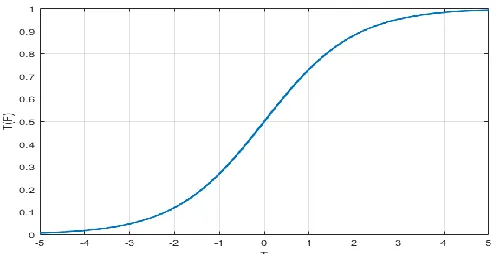
Fig. 4.Overview of the sigmoid transfer function
As can be seen in Figure (3), the sigmoid function causes the solutions to move between zero and one. Thus, in the proposed BMAMH model, initially the sigmoid function is used to change the continuous position of the solutions in the shared memory and convert it to a state between zero and one by means of
Equation (12):
𝑠𝑔(𝐺𝑙𝑜𝑏𝑎𝑙𝑀𝑒𝑚𝑜𝑟𝑦𝑖𝑑(𝑡)) =
1
1 + e−𝐺𝑙𝑜𝑏𝑎𝑙𝑀𝑒𝑚𝑜𝑟𝑦𝑖𝑘(𝑡) (12)
Where, GlobalMemoryd
i is the continuous value of the ith solution in the population of the shared memory in the dth dimension at iteration t. According to Figure (4), the sigmoid function's output is certainly a number between 0 and 1, the conversion of which to binary state requires thresholding. Such conversion can be performed using Equation (13), which is applied for the ultimate conversion of the solutions to binary state:
(
13
)
𝐵𝑀𝐴𝑀𝐻 𝑖𝑑(𝑡 + 1) = {
0 𝑖𝑓 𝑟𝑎𝑛𝑑 < 𝑠𝑔(𝐺𝑙𝑜𝑏𝑎𝑙𝑀𝑒𝑚𝑜𝑟𝑦𝑖𝑑(𝑡)) 1 𝑖𝑓 𝑟𝑎𝑛𝑑 ≥ 𝑠𝑔(𝐺𝑙𝑜𝑏𝑎𝑙𝑀𝑒𝑚𝑜𝑟𝑦𝑖𝑑(𝑡))
Where, GlobalMemoryd
i indicates the position of the ith solution in the population of shared memory at iteration t in the dth dimension. Also, rand represents a number between 0 and 1 with uniform distribution. On this basis, the existing solutions in the shared memory should move in a binary search space using the
equations (12) & (13). Ultimately, this function has been incorporated in the proposed MAMH approach for the purpose of conversion to binary state. To provide a better understanding of the proposed approach, its pseudocode is presented in Figure (5).
Begin
01: Global Memory (Generate initial population of Solution Xi (i=1... N)) Xi∈ random 0,1
02: Initialize parameters D, maxit, varmin, varmax, …. 03: Calculate the fitness of each solution by f (Xi);
04: X*=The best solution
05: Assign solutions to agents by Equation (3);
06: Calculate the mean fitness of each agent by Equation (4);
07: While (t < maximum number of iterations)
07-2: run agent two (PSO operators) 07-3: run agent three (ABC operators) 07-4: run agent four (FA operators) 07-5: run agent five (FPA operators) 07-6: run agent six (BA operators) 07-7: run agent seven (GWO operators) 07-8: run agent eight (WOA operators) 07-9: run agent nine (CSA operators) 07-10: run agent ten (FFA operators) ** End all agent**
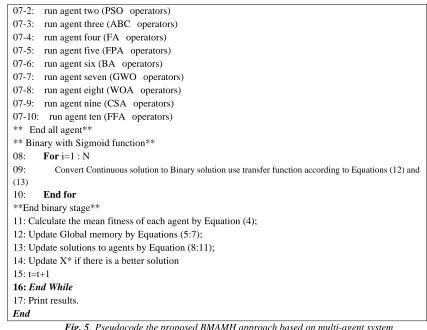
** Binary with Sigmoid function** 08: For i=1 : N
09: Convert Continuous solution to Binary solution use transfer function according to Equations (12) and (13)
10: End for **End binary stage**
11: Calculate the mean fitness of each agent by Equation (4); 12: Update Global memory by Equations (5:7);
13: Update solutions to agents by Equation (8:11); 14: Update X* if there is a better solution
15: t=t+1 16: End While 17: Print results.
End
Fig. 5.Pseudocodethe proposed BMAMH approach based on multi-agent system
Figure (5) shows the proposed multi-agent system-based BMAMH approach for solving the binary problems with the help of sigmoid function. In this pseudocode, the lines 8 to 10 have been used as the conversion of the continuous shared memory to the binary shared memory.
5.
Tests and Results
In order to evaluate the performance of the proposed algorithm, the tests were performed in two phases. In the first phase, the tests were performed on the benchmark functions using the proposed MAMH approach, for the purpose of which a total of 20 high-dimensional benchmark functions were used. These tests will be examined in details in Subsection (5-1). The second phase focused on testing the performance of the binary version of the proposed approach, BMAMH, in detection of spam emails. The Subsection (5-2) includes detailed description of the tests of the second phase along with the name and features of the spam email dataset as well as the primary settings and results of the proposed binary BMAMH approach on the spam dataset.
5-1 Optimization Functions
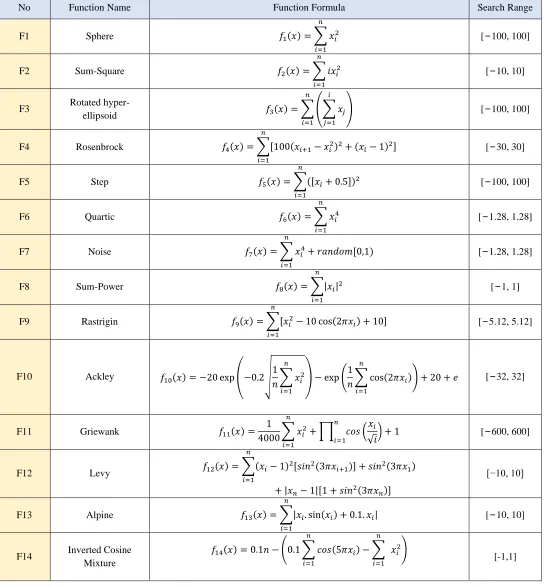
the proposed method due to their novelty and combinatorial nature. The functions (1 to 23) and (24 to 32) belong to the years 2010 and 2017, respectively.
Table 1: List of standard benchmark functions used
.
Search Range Function Formula
Function Name No
[−100, 100] 𝑓1(𝑥) = ∑ 𝑥𝑖2
𝑛
𝑖=1 Sphere
F1
[−10, 10] 𝑓2(𝑥) = ∑ 𝑖𝑥𝑖2
𝑛
𝑖=1 Sum-Square
F2
[−100, 100] 𝑓3(𝑥) = ∑ (∑ 𝑥𝑗
𝑖 𝑗=1 ) 𝑛 𝑖=1 Rotated hyper-ellipsoid F3
[−30, 30] 𝑓4(𝑥) = ∑[100(𝑥𝑖+1− 𝑥𝑖2)2+ (𝑥𝑖− 1)2]
𝑛
𝑖=1 Rosenbrock
F4
[−100, 100] 𝑓5(𝑥) = ∑([𝑥𝑖+ 0.5])2
𝑛
𝑖=1 Step
F5
[−1.28, 1.28] 𝑓6(𝑥) = ∑ 𝑥𝑖4
𝑛
𝑖=1 Quartic
F6
[−1.28, 1.28] 𝑓7(𝑥) = ∑ 𝑥𝑖4
𝑛
𝑖=1
+ 𝑟𝑎𝑛𝑑𝑜𝑚[0,1) Noise
F7
[−1, 1] 𝑓8(𝑥) = ∑|𝑥𝑖|2
𝑛
𝑖=1 Sum-Power
F8
[−5.12, 5.12] 𝑓9(𝑥) = ∑[𝑥𝑖2− 10 cos(2𝜋𝑥𝑖) + 10]
𝑛
𝑖=1 Rastrigin
F9
[−32, 32] 𝑓10(𝑥) = −20 exp (−0.2√
1 𝑛∑ 𝑥𝑖2
𝑛
𝑖=1
) − exp (1
𝑛∑ cos(2𝜋𝑥𝑖) 𝑛
𝑖=1
) + 20 + 𝑒 Ackley
F10
[−600, 600] 𝑓11(𝑥) =
1 4000∑ 𝑥𝑖
2 𝑛 𝑖=1 + ∏ 𝑐𝑜𝑠 𝑛 𝑖=1 (𝑥𝑖
√𝑖) + 1 Griewank
F11
[−10, 10] 𝑓12(𝑥) = ∑(𝑥𝑖− 1)2[𝑠𝑖𝑛2(3𝜋𝑥𝑖+1)]
𝑛
𝑖=1
+ 𝑠𝑖𝑛2(3𝜋𝑥 1)
+ |𝑥𝑛− 1|[1 + 𝑠𝑖𝑛2(3𝜋𝑥𝑛)] Levy
F12
[−10, 10] 𝑓13(𝑥) = ∑|𝑥𝑖. sin(𝑥𝑖) + 0.1. 𝑥𝑖|
𝑛
𝑖=1 Alpine
F13
[-1,1] 𝑓14(𝑥) = 0.1𝑛 − (0.1 ∑ 𝑐𝑜𝑠(5𝜋𝑥𝑖) − ∑
𝑛
𝑖=1 𝑛
𝑖=1
𝑥𝑖2) Inverted Cosine
[−5, 10] 𝑓15(𝑥) = ∑ 𝑥𝑖2
𝑛
𝑖=1
+ (∑ 5𝑖𝑥𝑖 𝑛
𝑖=1 )
2
+ (∑ 5𝑖𝑥𝑖 𝑛 𝑖=1 ) 4 Zakharov F15 [-100,100] 𝑓16(𝑥) = ∑ 0.5 +
𝑠𝑖𝑛2(√𝑥
𝑖−12 + 𝑥𝑖2) − 0.5 1 + 0.001(𝑥𝑖−12 − 2𝑥𝑖−12 + 𝑥𝑖2) 2 𝑛
𝑖=2 Pathological
F16
[−5, 5] 𝑓17(𝑥) = 0.1(𝑠𝑖𝑛2(3𝜋𝑥1))
+ ∑(𝑥𝑖− 1)2(1 + 𝑠𝑖𝑛2(3𝜋𝑥𝑖+1)) + (𝑥𝑛− 1)2(1 𝑛
𝑖=1 + 𝑠𝑖𝑛2(2𝜋𝑥
𝑛)) Levy and Montalo
F17
[−100, 100] 𝑓18(𝑥) = 106𝑥12∑ 𝑥𝑖2
𝐷
𝑖=2 Discus Function
F18
[−100, 100] 𝑓19(𝑥) = 1 − cos (2𝜋√∑ 𝑥𝑖2
𝑛
𝑖=1
) + 0.1√∑ 𝑥𝑖2 𝑛
𝑖=1 Salomon
F19
[-100,100] 𝑓20(𝑥) = 𝑥12+ 106∑ 𝑥𝑖2
𝐷
𝑖=2 Bent Cigar
F20
[-100,100] 𝑓21(𝑥) = ∑|𝑥𝑖|𝑖+1
𝑑
𝑖=1 Sum of Different
Power F21
[-100,100] 𝑓22(𝑥) = |(∑ 𝑥𝑖2
𝐷
𝑖=1
)2− (∑ 𝑥 𝑖 𝐷
𝑖=1 )2|
1/2
+ (0.5 ∑ 𝑥𝑖2 𝐷
𝑖=1
+ ∑ 𝑥𝑖)/𝐷 + 0.5 𝐷
𝑖=1 HGBat
F22
[-100,100]
𝑓
23(𝑥) = ∑(10
6)
𝐷−1𝑖−1𝐷
𝑖=1
𝑥
𝑖2 High ConditionedElliptic F23
[-100,100] Shifted and Rotated Bent Cigar Function
SR-F20 F24
[-100,100] Shifted and Rotated Sum of Different Power Function*
SR-F21 F25
[-100,100] Shifted and Rotated Zakharov Function
SR-F15 F26
[-100,100] Shifted and Rotated Rosenbrock’s Function
SR- F4 F27
[-100,100] Shifted and Rotated Rastrigin’s Function
SR- F9 F28
[-100,100] g1 : Zakharov Function f3
g2 : Rosenbrock Function F04 g3: Rastrigin’s Function F09 Hybrid1
[-100,100] g1 : High Conditioned Elliptic Function F23
g2 : Ackley’s Function F10 g3: Rastrigin’s Function F09
g4: HGBat Function F22 g4: Discus Function F18 Hybrid2
F30
[-100,100] g1=Rosenbrock’s Function F04;
g2=High Conditioned Elliptic Function F23; g3=Rastrigin’s Function F09; Composition1
F31
[-100,100] g1=Ackley’s Function F10
g2=High Conditioned Elliptic Function F23 g3=Girewank Function F11 g4=Rastrigin’s Function F09 Composition2
F32
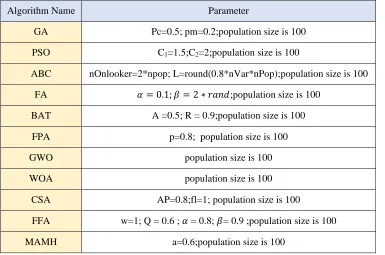
In this section, the proposed MAMH approach is compared with the GA, PSO, ABC, FA, BA, FPA, GWO, WOA, CSA, and FFA algorithms. For this purpose, all of these algorithms were assumed with initial population of 100 and objective function calling order of 20000. Further, other parameters of each of these comparative algorithms are presented in Table (2).
Table 2: Parameters settings for each of the comparative algorithms
.
Parameter Algorithm Name
Pc=0.5; pm=0.2;population size is 100 GA
C1=1.5;C2=2;population size is 100
PSO
nOnlooker=2*npop; L=round(0.8*nVar*nPop);population size is 100 ABC
𝛼 = 0.1; 𝛽 = 2 ∗ 𝑟𝑎𝑛𝑑;population size is 100 FA
A =0.5; R = 0.9;population size is 100 BAT
p=0.8; population size is 100 FPA
population size is 100 GWO
population size is 100 WOA
AP=0.8;fl=1; population size is 100 CSA
w=1; Q = 0.6 ; 𝛼 = 0.8; 𝛽= 0.9 ;population size is 100 FFA
a=0.6;population size is 100 MAMH
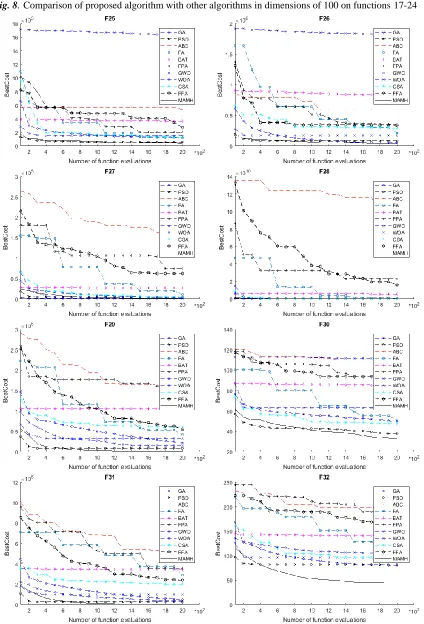
Fig. 8. Comparison of proposed algorithm with other algorithms in dimensions of 100 on functions 17-24
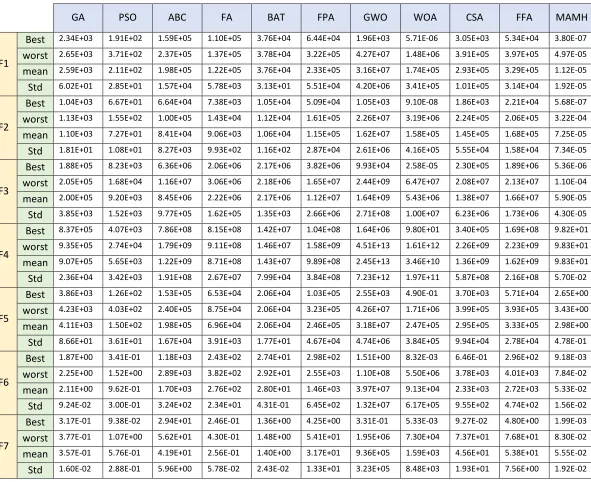
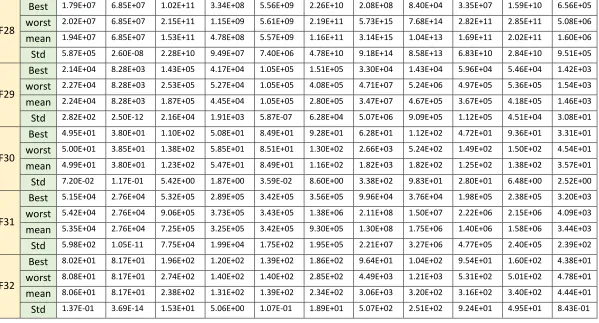
In the first test in Figures (6)-(9), our proposed algorithm and other comparative algorithms were executed on 100 dimensions, the results of which are provided based on the best solution. These results are typically used for demonstrating the convergence of the algorithms in accordance with the calling order of the objective function. As indicated by the results, the proposed method yielded effective and powerful results on the CEC'2010 and CEC'2017 functions; besides, it exhibited a good convergence on the functions 30 and 32 and some of the CEC'2017 functions so that it could maintain its convergence over the whole process. On this basis, it can be said that the proposed algorithm has accomplished improving the best solution in its population more than other algorithms; however, due to the use of multiple agents and other algorithms, the proposed algorithm is rather inclined toward the best algorithm in each execution.
Table 3: Comparison of proposed algorithm with other meta-heuirustic on functions 1-32 with dimensions 100
GA
PSO
ABC
FA
BAT
FPA
GWO
WOA
CSA
FFA
MAMH
F1
Best
2.34E+03 1.91E+02 1.59E+05 1.10E+05 3.76E+04 6.44E+04 1.96E+03 5.71E-06 3.05E+03 5.34E+04 3.80E-07worst
2.65E+03 3.71E+02 2.37E+05 1.37E+05 3.78E+04 3.22E+05 4.27E+07 1.48E+06 3.91E+05 3.97E+05 4.97E-05mean
2.59E+03 2.11E+02 1.98E+05 1.22E+05 3.76E+04 2.33E+05 3.16E+07 1.74E+05 2.93E+05 3.29E+05 1.12E-05Std
6.02E+01 2.85E+01 1.57E+04 5.78E+03 3.13E+01 5.51E+04 4.20E+06 3.41E+05 1.01E+05 3.14E+04 1.92E-05F2
Best
1.04E+03 6.67E+01 6.64E+04 7.38E+03 1.05E+04 5.09E+04 1.05E+03 9.10E-08 1.86E+03 2.21E+04 5.68E-07worst
1.13E+03 1.55E+02 1.00E+05 1.43E+04 1.12E+04 1.61E+05 2.26E+07 3.19E+06 2.24E+05 2.06E+05 3.22E-04mean
1.10E+03 7.27E+01 8.41E+04 9.06E+03 1.06E+04 1.15E+05 1.62E+07 1.58E+05 1.45E+05 1.68E+05 7.25E-05Std
1.81E+01 1.08E+01 8.27E+03 9.93E+02 1.16E+02 2.87E+04 2.61E+06 4.16E+05 5.55E+04 1.58E+04 7.34E-05F3
Best
1.88E+05 8.23E+03 6.36E+06 2.06E+06 2.17E+06 3.82E+06 9.93E+04 2.58E-05 2.30E+05 1.89E+06 5.36E-06worst
2.05E+05 1.68E+04 1.16E+07 3.06E+06 2.18E+06 1.65E+07 2.44E+09 6.47E+07 2.08E+07 2.13E+07 1.10E-04mean
2.00E+05 9.20E+03 8.45E+06 2.22E+06 2.17E+06 1.12E+07 1.64E+09 5.43E+06 1.38E+07 1.66E+07 5.90E-05Std
3.85E+03 1.52E+03 9.77E+05 1.62E+05 1.35E+03 2.66E+06 2.71E+08 1.00E+07 6.23E+06 1.73E+06 4.30E-05F4
Best
8.37E+05 4.07E+03 7.86E+08 8.15E+08 1.42E+07 1.04E+08 1.64E+06 9.80E+01 3.40E+05 1.69E+08 9.82E+01worst
9.35E+05 2.74E+04 1.79E+09 9.11E+08 1.46E+07 1.58E+09 4.51E+13 1.61E+12 2.26E+09 2.23E+09 9.83E+01mean
9.07E+05 5.65E+03 1.22E+09 8.71E+08 1.43E+07 9.89E+08 2.45E+13 3.46E+10 1.36E+09 1.62E+09 9.83E+01Std
2.36E+04 3.42E+03 1.91E+08 2.67E+07 7.99E+04 3.84E+08 7.23E+12 1.97E+11 5.87E+08 2.16E+08 5.70E-02F5
Best
3.86E+03 1.26E+02 1.53E+05 6.53E+04 2.06E+04 1.03E+05 2.55E+03 4.90E-01 3.70E+03 5.71E+04 2.65E+00worst
4.23E+03 4.03E+02 2.40E+05 8.75E+04 2.06E+04 3.23E+05 4.26E+07 1.71E+06 3.99E+05 3.93E+05 3.43E+00mean
4.11E+03 1.50E+02 1.98E+05 6.96E+04 2.06E+04 2.46E+05 3.18E+07 2.47E+05 2.95E+05 3.33E+05 2.98E+00Std
8.66E+01 3.61E+01 1.67E+04 3.91E+03 1.77E+01 4.67E+04 4.74E+06 3.84E+05 9.94E+04 2.78E+04 4.78E-01F6
Best
1.87E+00 3.41E-01 1.18E+03 2.43E+02 2.74E+01 2.98E+02 1.51E+00 8.32E-03 6.46E-01 2.96E+02 9.18E-03worst
2.25E+00 1.52E+00 2.89E+03 3.82E+02 2.92E+01 2.55E+03 1.10E+08 5.50E+06 3.78E+03 4.01E+03 7.84E-02mean
2.11E+00 9.62E-01 1.70E+03 2.76E+02 2.80E+01 1.46E+03 3.97E+07 9.13E+04 2.33E+03 2.72E+03 5.33E-02Std
9.24E-02 3.00E-01 3.24E+02 2.34E+01 4.31E-01 6.45E+02 1.32E+07 6.17E+05 9.55E+02 4.74E+02 1.56E-02F7
Best
3.17E-01 9.38E-02 2.94E+01 2.46E-01 1.36E+00 4.25E+00 3.31E-01 5.33E-03 9.27E-02 4.80E+00 1.99E-03worst
3.77E-01 1.07E+00 5.62E+01 4.30E-01 1.48E+00 5.41E+01 1.95E+06 7.30E+04 7.37E+01 7.68E+01 8.30E-02mean
3.57E-01 5.76E-01 4.19E+01 2.56E-01 1.40E+00 3.17E+01 9.36E+05 1.59E+03 4.56E+01 5.38E+01 5.55E-02F8
Best
6.39E-07 8.97E-23 1.27E+00 1.30E-06 5.17E-08 1.37E-02 6.40E-09 8.07E-17 1.83E-05 9.14E-01 3.89E-31worst
1.25E-06 2.70E-17 7.96E+00 5.83E-06 1.93E-07 4.56E+00 3.78E+119 1.23E+77 7.42E+00 7.06E+00 2.44E-21mean
9.46E-07 9.22E-19 3.81E+00 2.11E-06 7.47E-08 1.38E+00 9.29E+117 1.53E+75 3.24E+00 3.56E+00 4.00E-22Std
2.73E-07 4.23E-18 1.31E+00 1.29E-06 2.51E-08 9.31E-01 5.45E+118 1.37E+76 1.84E+00 1.20E+00 8.31E-22F9
Best
2.88E+02 2.12E+02 1.36E+03 8.19E+02 1.97E+02 1.12E+03 5.49E+02 5.07E-07 8.22E+02 1.20E+03 1.25E-12worst
2.99E+02 2.24E+02 1.66E+03 9.07E+02 1.97E+02 1.73E+03 1.23E+05 6.15E+03 2.04E+03 2.08E+03 8.66E-10mean
2.97E+02 2.14E+02 1.52E+03 8.70E+02 1.97E+02 1.49E+03 9.20E+04 8.59E+02 1.73E+03 1.85E+03 1.71E-10Std
2.14E+00 2.75E+00 5.49E+01 2.70E+01 6.96E-03 1.33E+02 1.42E+04 9.96E+02 2.70E+02 1.09E+02 2.47E-10F10
Best
8.55E+00 3.20E+00 2.07E+01 1.61E+01 1.32E+01 1.59E+01 9.50E+00 3.83E-04 8.29E+00 1.86E+01 1.10E-03worst
8.81E+00 3.55E+00 2.10E+01 1.69E+01 1.32E+01 2.05E+01 2.19E+01 2.18E+01 2.14E+01 2.15E+01 7.51E-03mean
8.74E+00 3.31E+00 2.09E+01 1.62E+01 1.32E+01 1.91E+01 2.17E+01 1.01E+01 2.03E+01 2.12E+01 6.13E-03Std
7.52E-02 6.97E-02 5.30E-02 2.97E-01 5.20E-04 9.43E-01 7.58E-02 8.70E+00 2.53E+00 1.09E-01 1.76E-03F11
Best
2.55E+01 1.47E+00 1.28E+03 9.18E+01 2.63E+02 9.32E+02 1.84E+01 2.40E-06 3.19E+01 4.81E+02 1.50E-07worst
2.78E+01 2.57E+00 2.16E+03 1.67E+02 2.63E+02 3.04E+03 4.08E+05 1.08E+04 3.64E+03 3.71E+03 1.36E-05mean
2.73E+01 1.68E+00 1.76E+03 1.10E+02 2.63E+02 2.21E+03 2.92E+05 1.31E+03 2.53E+03 3.01E+03 3.04E-06Std
4.44E-01 2.35E-01 1.69E+02 1.03E+01 5.01E-02 4.85E+02 4.19E+04 2.29E+03 1.05E+03 2.62E+02 3.85E-06F12
Best
2.08E+01 1.42E+01 9.32E+02 1.28E+02 6.81E+01 2.54E+02 7.35E+01 3.63E-01 1.87E+01 4.10E+02 2.00E+00worst
2.17E+01 1.52E+01 1.57E+03 1.70E+02 7.19E+01 1.39E+03 2.04E+05 1.44E+04 1.58E+03 1.66E+03 2.48E+00mean
2.15E+01 1.45E+01 1.22E+03 1.43E+02 6.90E+01 7.94E+02 1.27E+05 8.90E+02 1.05E+03 1.30E+03 2.13E+00Std
1.47E-01 2.26E-01 1.35E+02 1.43E+01 8.78E-01 2.22E+02 2.61E+04 2.02E+03 4.25E+02 1.56E+02 2.06E-01F13
Best
1.64E+01 2.10E+00 1.95E+02 6.27E+01 5.97E+01 1.74E+02 7.33E+01 2.33E-05 3.63E+01 1.54E+02 8.92E-09worst
1.78E+01 5.26E+00 2.64E+02 7.67E+01 6.18E+01 2.63E+02 3.75E+03 8.21E+02 3.61E+02 3.82E+02 1.99E-08mean
1.74E+01 2.52E+00 2.29E+02 6.83E+01 6.02E+01 2.19E+02 2.90E+03 1.12E+02 2.71E+02 3.02E+02 8.48E-09Std
2.96E-01 4.47E-01 1.26E+01 3.15E+00 4.53E-01 2.09E+01 3.28E+02 1.39E+02 6.72E+01 2.38E+01 5.91E-09F14
Best
4.11E+00 2.12E+00 2.80E+01 1.37E+01 3.99E+00 2.10E+01 4.58E+00 1.92E-09 4.10E+00 1.58E+01 6.75E-14worst
4.23E+00 2.32E+00 3.77E+01 1.63E+01 4.00E+00 4.51E+01 4.65E+03 2.48E+02 4.96E+01 4.96E+01 2.71E-11mean
4.19E+00 2.13E+00 3.22E+01 1.50E+01 3.99E+00 3.45E+01 3.29E+03 2.78E+01 3.81E+01 4.33E+01 7.78E-12Std
2.73E-02 2.73E-02 2.13E+00 5.11E-01 3.43E-04 5.74E+00 4.26E+02 5.37E+01 1.19E+01 3.05E+00 1.02E-11F15
Best
4.61E-05 4.19E-55 1.32E-28 9.03E-07 6.26E-10 4.44E-07 7.68E-39 1.44E-16 2.33E-04 1.47E-32 2.81E-21worst
4.61E-05 7.45E-38 1.34E-13 9.84E-05 3.67E-07 3.37E+00 2.11E+08 7.30E+04 3.29E+04 3.78E+04 1.22E-19mean
4.61E-05 8.76E-40 1.34E-15 4.31E-05 7.23E-08 6.70E-02 1.52E+07 1.75E+03 2.41E+03 3.05E+03 2.00E-20Std
6.81E-21 7.55E-39 1.34E-14 2.64E-05 7.55E-08 3.84E-01 3.88E+07 8.90E+03 5.68E+03 6.09E+03 1.86E-20F16
Best
4.99E-06 5.07E-13 3.21E-05 3.69E-06 7.06E-09 1.21E-06 2.22E-06 1.79E-06 1.93E-05 2.14E-05 7.51E-10worst
4.99E-06 2.79E+01 3.38E-01 4.73E-03 1.89E-06 1.11E-02 2.54E+10 8.67E+05 1.00E+06 1.42E+06 1.63E-07mean
4.99E-06 1.04E+00 3.96E-02 1.88E-03 1.68E-07 9.54E-04 1.11E+09 1.26E+04 8.82E+04 1.23E+05 8.89E-08Std
1.19E-20 3.29E+00 5.09E-02 1.41E-03 2.81E-07 1.68E-03 3.28E+09 9.71E+04 1.90E+05 2.43E+05 7.26E-08F17
Best
3.53E+01 8.65E-01 4.32E+02 6.85E+02 6.90E+01 3.92E+02 9.13E+01 8.46E-01 9.56E+01 2.27E+02 7.43E+00worst
3.69E+01 1.16E+00 7.97E+02 7.76E+02 7.95E+01 1.10E+03 2.12E+05 1.23E+04 2.15E+03 2.09E+03 1.28E+01mean
3.64E+01 8.99E-01 5.96E+02 7.54E+02 6.98E+01 7.81E+02 1.28E+05 1.40E+03 1.23E+03 1.37E+03 1.07E+01F18
Best
7.69E+04 1.94E+02 1.43E+05 2.55E+04 3.44E+05 1.30E+05 5.72E+03 7.07E-06 3.47E+04 5.51E+04 7.93E-08worst
7.98E+04 2.98E+02 2.52E+05 4.21E+04 3.44E+05 2.14E+09 1.80E+12 4.53E+10 9.83E+09 9.81E+09 4.28E-03mean
7.92E+04 2.06E+02 2.03E+05 3.03E+04 3.44E+05 2.27E+07 2.82E+11 1.25E+09 2.87E+09 3.03E+09 6.30E-04Std
5.18E+02 1.21E+01 1.96E+04 4.20E+03 4.73E+01 2.14E+08 3.82E+11 5.70E+09 2.92E+09 2.77E+09 1.31E-03F19
Best
9.30E+00 2.90E+00 4.12E+01 1.18E+01 2.04E+01 3.10E+01 8.86E+00 3.00E-01 7.41E+00 2.60E+01 2.00E-01worst
9.72E+00 5.55E+00 5.09E+01 1.50E+01 2.04E+01 5.83E+01 6.52E+02 1.50E+02 6.47E+01 6.49E+01 2.00E-01mean
9.62E+00 4.17E+00 4.64E+01 1.24E+01 2.04E+01 4.96E+01 5.70E+02 2.77E+01 5.16E+01 5.92E+01 2.00E-01Std
9.28E-02 7.47E-01 1.78E+00 5.93E-01 2.71E-08 6.56E+00 3.94E+01 3.29E+01 1.53E+01 2.71E+00 5.88E-08F20
Best
1.06E+01 1.03E-50 1.46E-25 1.90E+01 1.10E+03 1.15E-01 9.64E-36 1.44E-09 2.34E+02 8.85E-32 2.13E-18worst
1.06E+01 1.19E-32 1.14E-07 2.73E+03 1.11E+03 3.11E+06 2.44E+12 8.63E+10 9.89E+09 9.91E+09 1.18E-13mean
1.06E+01 1.41E-34 1.14E-09 8.86E+02 1.10E+03 6.83E+04 3.99E+11 1.67E+09 3.01E+09 2.87E+09 3.80E-14Std
1.43E-14 1.20E-33 1.14E-08 7.48E+02 1.44E+00 3.88E+05 5.20E+11 9.89E+09 2.93E+09 2.92E+09 5.18E-14F21
Best
4.59E+118 1.75E+62 1.00E+148 1.97E+115 6.44E+141 1.43E+155 8.39E+93 2.94E-10 3.92E+89 8.21E+130 1.19E+30worst
1.13E+119 3.79E+100 4.21E+175 1.48E+125 1.58E+142 1.26E+178 1.86e+308 7.18E+229 3.97E+201 8.47E+201 7.64E+70mean
8.73E+118 6.42E+98 7.50E+173 5.31E+123 7.34E+141 4.19E+176 1.86e+308 9.76E+227 8.04E+199 2.30E+200 1.48E+70Std
1.52E+118 4.90E+99 1.86e+308 2.12E+124 1.26E+141 1.86e+308 1.86e+308 1.86e+308 1.86e+308 1.86e+308 2.98E+70F22
Best
2.16E+03 1.69E+02 1.57E+05 1.00E+04 5.17E+04 6.61E+04 1.81E+03 5.46E-01 4.61E+03 5.77E+04 5.00E-01worst
2.44E+03 1.78E+02 2.42E+05 1.81E+04 5.18E+04 3.33E+05 4.47E+07 6.10E+06 4.10E+05 4.30E+05 6.25E-01mean
2.37E+03 1.69E+02 1.97E+05 1.18E+04 5.17E+04 2.16E+05 3.23E+07 3.69E+05 2.90E+05 3.38E+05 5.26E-01Std
6.45E+01 1.16E+00 1.87E+04 1.04E+03 2.97E+01 6.61E+04 4.36E+06 8.94E+05 1.02E+05 3.17E+04 3.81E-02F23
Best
4.86E+07 7.93E+04 6.95E+08 1.76E+08 2.57E+09 4.11E+09 1.22E+07 1.96E-02 1.38E+08 1.76E+08 1.41E-04worst
5.36E+07 8.77E+04 3.30E+09 3.06E+08 2.59E+09 1.48E+10 5.72E+12 1.01E+11 4.41E+10 3.79E+10 1.81E+00mean
5.26E+07 8.07E+04 1.34E+09 2.26E+08 2.57E+09 8.74E+09 2.33E+12 6.45E+09 2.43E+10 2.56E+10 6.51E-01Std
1.07E+06 1.67E+03 4.31E+08 2.65E+07 3.96E+06 2.47E+09 8.47E+11 1.65E+10 9.04E+09 6.21E+09 6.67E-01F24
Best
1.42E+05 7.77E+04 6.03E+05 1.70E+05 6.08E+05 3.19E+05 1.56E+05 6.38E+05 1.65E+05 3.85E+05 3.63E+04worst
1.47E+05 7.77E+04 2.24E+06 2.45E+05 6.15E+05 1.38E+06 8.88E+09 2.87E+09 9.07E+07 9.65E+07 1.03E+05mean
1.45E+05 7.77E+04 1.03E+06 2.09E+05 6.09E+05 6.49E+05 1.57E+09 3.34E+08 1.99E+07 1.99E+07 4.67E+04Std
1.17E+03 2.65E-11 3.01E+05 2.58E+04 1.01E+03 1.77E+05 1.49E+09 7.16E+08 2.21E+07 2.14E+07 1.37E+04F25
Best
1.19E+05 5.95E+04 5.32E+05 1.16E+05 3.66E+05 2.04E+05 1.49E+05 1.63E+06 1.30E+05 2.67E+05 4.11E+04worst
1.22E+05 5.95E+04 1.49E+06 1.58E+05 3.67E+05 1.18E+06 5.98E+09 9.36E+09 1.01E+08 1.36E+08 1.39E+05mean
1.21E+05 5.95E+04 9.45E+05 1.33E+05 3.66E+05 6.68E+05 1.53E+09 6.02E+08 1.48E+07 1.88E+07 5.29E+04Std
6.48E+02 1.95E-11 2.11E+05 1.46E+04 3.11E+02 1.91E+05 1.24E+09 1.34E+09 1.89E+07 1.98E+07 1.71E+04F26
Best
5.23E+04 8.10E+04 5.89E+05 2.10E+05 8.25E+05 3.19E+05 1.69E+05 1.81E+06 2.86E+05 3.48E+05 4.18E+04worst
5.36E+04 8.10E+04 2.75E+06 3.55E+05 8.29E+05 1.59E+06 1.04E+10 7.78E+09 1.10E+08 2.20E+08 2.08E+05mean
5.33E+04 8.10E+04 1.03E+06 2.94E+05 8.26E+05 8.31E+05 1.88E+09 8.32E+08 2.18E+07 2.54E+07 6.09E+04Std
2.50E+02 3.11E-11 3.12E+05 3.58E+04 7.12E+02 2.66E+05 1.96E+09 1.62E+09 2.19E+07 3.40E+07 2.61E+04F27
Best
2.65E+03 4.37E+03 1.60E+05 1.09E+04 2.66E+04 7.40E+04 4.81E+03 1.24E+03 5.00E+03 6.15E+04 9.62E+02worst
2.82E+03 4.37E+03 2.42E+05 1.99E+04 2.66E+04 3.25E+05 4.33E+07 2.08E+06 4.00E+05 4.01E+05 1.12E+03mean
2.76E+03 4.37E+03 2.01E+05 1.35E+04 2.66E+04 2.32E+05 3.17E+07 2.30E+05 2.62E+05 3.32E+05 9.85E+02F28
Best
1.79E+07 6.85E+07 1.02E+11 3.34E+08 5.56E+09 2.26E+10 2.08E+08 8.40E+04 3.35E+07 1.59E+10 6.56E+05worst
2.02E+07 6.85E+07 2.15E+11 1.15E+09 5.61E+09 2.19E+11 5.73E+15 7.68E+14 2.82E+11 2.85E+11 5.08E+06mean
1.94E+07 6.85E+07 1.53E+11 4.78E+08 5.57E+09 1.16E+11 3.14E+15 1.04E+13 1.69E+11 2.02E+11 1.60E+06Std
5.87E+05 2.60E-08 2.28E+10 9.49E+07 7.40E+06 4.78E+10 9.18E+14 8.58E+13 6.83E+10 2.84E+10 9.51E+05F29
Best
2.14E+04 8.28E+03 1.43E+05 4.17E+04 1.05E+05 1.51E+05 3.30E+04 1.43E+04 5.96E+04 5.46E+04 1.42E+03worst
2.27E+04 8.28E+03 2.53E+05 5.27E+04 1.05E+05 4.08E+05 4.71E+07 5.24E+06 4.97E+05 5.36E+05 1.54E+03mean
2.24E+04 8.28E+03 1.87E+05 4.45E+04 1.05E+05 2.80E+05 3.47E+07 4.67E+05 3.67E+05 4.18E+05 1.46E+03Std
2.82E+02 2.50E-12 2.16E+04 1.91E+03 5.87E-07 6.28E+04 5.07E+06 9.09E+05 1.12E+05 4.51E+04 3.08E+01F30
Best
4.95E+01 3.80E+01 1.10E+02 5.08E+01 8.49E+01 9.28E+01 6.28E+01 1.12E+02 4.72E+01 9.36E+01 3.31E+01worst
5.00E+01 3.85E+01 1.38E+02 5.85E+01 8.51E+01 1.30E+02 2.66E+03 5.24E+02 1.49E+02 1.50E+02 4.54E+01mean
4.99E+01 3.80E+01 1.23E+02 5.47E+01 8.49E+01 1.16E+02 1.82E+03 1.82E+02 1.25E+02 1.38E+02 3.57E+01Std
7.20E-02 1.17E-01 5.42E+00 1.87E+00 3.59E-02 8.60E+00 3.38E+02 9.83E+01 2.80E+01 6.48E+00 2.52E+00F31
Best
5.15E+04 2.76E+04 5.32E+05 2.89E+05 3.42E+05 3.56E+05 9.96E+04 3.76E+04 1.98E+05 2.38E+05 3.20E+03worst
5.42E+04 2.76E+04 9.06E+05 3.73E+05 3.43E+05 1.38E+06 2.11E+08 1.50E+07 2.22E+06 2.15E+06 4.09E+03mean
5.35E+04 2.76E+04 7.25E+05 3.25E+05 3.42E+05 9.30E+05 1.30E+08 1.75E+06 1.40E+06 1.58E+06 3.44E+03Std
5.98E+02 1.05E-11 7.75E+04 1.99E+04 1.75E+02 1.95E+05 2.21E+07 3.27E+06 4.77E+05 2.40E+05 2.39E+02F32
Best
8.02E+01 8.17E+01 1.96E+02 1.20E+02 1.39E+02 1.86E+02 9.64E+01 1.04E+02 9.54E+01 1.60E+02 4.38E+01worst
8.08E+01 8.17E+01 2.74E+02 1.40E+02 1.40E+02 2.85E+02 4.49E+03 1.21E+03 5.31E+02 5.01E+02 4.78E+01mean
8.06E+01 8.17E+01 2.38E+02 1.31E+02 1.39E+02 2.34E+02 3.06E+03 3.20E+02 3.16E+02 3.40E+02 4.44E+01Std
1.37E-01 3.69E-14 1.53E+01 5.06E+00 1.07E-01 1.89E+01 5.07E+02 2.51E+02 9.24E+01 4.95E+01 8.43E-01With regard to the first test performed on all functions with 100 dimensions, the results of which are provided in Table (3) and Figures (6)-(9), the proposed algorithm was recognized on the whole as a powerful algorithm. However, based on the results presented in these figures, it can be said that the proposed algorithm has exhibited more convergence in the 8 functions adopted from the CEC'2017 functions and, meanwhile, has shown a very powerful performance in the CEC'2010 functions. Moreover, the statistical criteria given in this table represent how the proposed algorithm changed the solutions existing in the population and converged them toward the intended goal. In this test, in case of 100 dimensions, the proposed approach had not only the best solution but also better standard deviation and mean values in most of the executions; hence, it can be claimed that the proposed algorithm has yielded higher degrees of improvement in all of the existing solutions in the population in comparison with other algorithms. However, due to the use of multi-agent systems and application of other algorithms, the proposed algorithm demonstrated greater tendency toward the best algorithm in each execution; as a result, the proposed algorithm would absolutely have a performance similar to that of one of the powerful algorithms (similar to the best agent). As can be inferred from the results, the proposed algorithm has acted sometimes similar to WOA and sometimes similar to PSO. The investigations indicated that the proposed algorithm has accomplished maintaining the relationships between the agents and displacing the solutions among them. In addition, regarding the fact that the functions 1 to 23 could have more than 100 dimensions, the proposed algorithm as well as the other ones was tested on these functions with 200, 500, and 1000 dimension. The obtained results are provided in Tables (4) to (6).
GA
PSO
ABC
FA
BAT
FPA
GWO
WOA
CSA
FFA
MAMH
F1
Best
3.06E+04 2.43E+03 4.70E+05 5.30E+04 7.79E+04 1.95E+05 3.20E+04 2.03E-05 1.04E+04 2.23E+05 7.25E+00worst
3.15E+04 3.14E+03 6.72E+05 7.92E+04 7.80E+04 6.54E+05 7.94E+07 2.83E+06 7.55E+05 7.57E+05 3.11E+04mean
3.12E+04 2.62E+03 5.70E+05 6.27E+04 7.79E+04 4.98E+05 6.57E+07 2.44E+05 5.78E+05 6.60E+05 2.22E+03Std
2.14E+02 1.43E+02 3.24E+04 3.64E+03 3.17E+01 1.23E+05 6.52E+06 4.55E+05 1.99E+05 4.60E+04 7.96E+03F2
Best
1.55E+04 1.89E+03 4.44E+05 1.05E+05 6.02E+04 1.58E+05 2.15E+04 4.81E-07 8.28E+03 1.79E+05 4.85E+01worst
1.65E+04 2.42E+03 6.41E+05 1.34E+05 6.18E+04 6.69E+05 9.58E+07 3.80E+06 7.99E+05 8.46E+05 1.75E+05mean
1.63E+04 1.96E+03 5.08E+05 1.19E+05 6.06E+04 4.83E+05 6.56E+07 2.08E+05 5.54E+05 6.68E+05 3.37E+04Std
1.75E+02 6.90E+01 3.27E+04 6.80E+03 3.33E+02 1.29E+05 7.92E+06 4.84E+05 2.18E+05 4.99E+04 5.40E+04F3
Best
1.58E+06 2.71E+05 4.29E+07 2.97E+06 7.36E+06 2.06E+07 1.50E+06 1.13E-04 9.16E+05 1.75E+07 8.74E+02worst
1.66E+06 3.19E+05 5.80E+07 4.95E+06 7.38E+06 6.71E+07 8.48E+09 2.72E+08 7.77E+07 7.66E+07 8.20E+06mean
1.64E+06 2.84E+05 4.99E+07 3.23E+06 7.37E+06 4.68E+07 6.33E+09 2.06E+07 5.58E+07 6.69E+07 2.09E+06Std
1.55E+04 1.06E+04 2.76E+06 2.38E+05 4.03E+03 1.26E+07 7.22E+08 5.41E+07 2.18E+07 4.81E+06 2.94E+06F4
Best
6.81E+06 4.27E+05 2.50E+09 3.93E+07 2.97E+07 3.81E+08 3.34E+07 1.97E+02 7.71E+05 8.85E+08 2.15E+02worst
7.19E+06 7.40E+05 3.89E+09 1.04E+08 3.04E+07 3.04E+09 8.43E+13 8.84E+11 3.99E+09 3.72E+09 1.45E+07mean
7.09E+06 4.79E+05 3.20E+09 4.98E+07 2.99E+07 1.96E+09 5.59E+13 3.12E+10 2.59E+09 3.20E+09 1.03E+06Std
7.52E+04 4.83E+04 2.85E+08 9.23E+06 1.26E+05 7.73E+08 1.29E+13 1.39E+11 1.17E+09 2.59E+08 3.70E+06F5
Best
2.60E+04 2.38E+03 4.98E+05 4.05E+04 9.61E+04 1.93E+05 2.65E+04 8.74E-01 7.02E+03 2.00E+05 2.62E+01worst
2.73E+04 2.88E+03 6.53E+05 6.68E+04 9.63E+04 7.12E+05 7.87E+07 9.66E+05 7.77E+05 7.42E+05 2.90E+04mean
2.71E+04 2.53E+03 5.69E+05 4.46E+04 9.62E+04 4.91E+05 6.50E+07 1.33E+05 5.90E+05 6.66E+05 5.15E+03Std
2.26E+02 1.04E+02 3.04E+04 3.58E+03 3.72E+01 1.32E+05 5.63E+06 2.28E+05 1.84E+05 3.62E+04 1.03E+04F6
Best
2.98E+01 3.63E+00 8.48E+03 4.99E+01 2.69E+01 5.81E+02 5.71E+01 4.22E-03 2.91E+00 2.65E+03 1.86E-02worst
3.14E+01 5.79E+00 1.19E+04 1.52E+02 3.03E+01 1.03E+04 2.83E+08 1.33E+06 1.37E+04 1.39E+04 5.74E+00mean
3.10E+01 4.34E+00 1.04E+04 6.60E+01 2.75E+01 6.88E+03 1.78E+08 5.03E+04 9.00E+03 1.08E+04 1.25E+00Std
3.10E-01 3.85E-01 7.90E+02 1.24E+01 5.14E-01 2.52E+03 3.90E+07 1.89E+05 3.79E+03 1.13E+03 1.59E+00F7
Best
1.01E+00 3.93E-01 8.30E+01 5.74E-01 1.79E+00 1.44E+01 2.13E+00 1.87E-02 1.33E-01 3.29E+01 7.24E-03worst
1.16E+00 1.40E+00 1.28E+02 1.35E+00 1.88E+00 1.10E+02 4.22E+06 4.39E+04 1.42E+02 1.32E+02 8.36E-01mean
1.13E+00 8.99E-01 1.06E+02 7.73E-01 1.83E+00 6.65E+01 1.96E+06 2.06E+03 8.75E+01 1.08E+02 4.27E-01Std
2.45E-02 2.81E-01 9.47E+00 1.53E-01 1.78E-02 2.65E+01 4.93E+05 7.47E+03 4.21E+01 1.08E+01 1.96E-01F8
Best
6.80E-08 5.44E-21 1.90E+00 1.51E-01 8.29E-08 3.23E-02 1.74E-05 3.73E-16 1.43E-05 1.95E+00 3.83E-13worst
6.80E-08 3.19E-15 1.04E+01 4.58E-01 2.09E-07 4.41E+00 3.31E+278 5.17E+249 7.41E+00 9.23E+00 2.19E-03mean
6.80E-08 6.08E-17 4.29E+00 3.32E-01 1.16E-07 1.70E+00 3.31E+276 6.46E+247 3.58E+00 4.60E+00 3.69E-04Std
2.43E-12 3.39E-16 1.40E+00 8.23E-02 2.84E-08 1.24E+00 6.46E+280 6.46E+280 2.02E+00 1.28E+00 6.91E-04F9
Best
9.73E+02 7.26E+02 3.12E+03 1.92E+03 4.37E+02 2.42E+03 1.76E+03 1.38E-04 1.80E+03 2.69E+03 8.29E+02worst
9.96E+02 7.87E+02 3.58E+03 2.08E+03 5.05E+02 3.45E+03 2.60E+05 1.70E+04 4.08E+03 3.96E+03 1.51E+03mean
9.91E+02 7.43E+02 3.34E+03 2.02E+03 4.51E+02 3.10E+03 1.91E+05 1.88E+03 3.42E+03 3.69E+03 1.09E+03Std
4.94E+00 1.40E+01 7.82E+01 4.46E+01 1.37E+01 2.45E+02 2.51E+04 2.70E+03 5.75E+02 1.28E+02 3.76E+02F10
Best
1.16E+01 6.54E+00 2.09E+01 1.27E+01 1.44E+01 1.47E+01 1.23E+01 2.26E-04 8.38E+00 1.98E+01 2.59E-02mean
1.17E+01 6.63E+00 2.10E+01 1.32E+01 1.44E+01 1.85E+01 2.17E+01 1.25E+01 1.99E+01 2.12E+01 1.02E+01Std
3.13E-02 6.28E-02 2.62E-02 2.61E-01 2.02E-02 1.21E+00 5.01E-02 8.43E+00 3.10E+00 7.20E-02 7.51E+00F11
Best
2.12E+02 2.77E+01 4.36E+03 5.43E+02 4.65E+02 1.11E+03 2.37E+02 6.52E-07 6.08E+01 2.08E+03 1.08E+00worst
2.19E+02 3.29E+01 6.11E+03 8.63E+02 4.65E+02 5.85E+03 7.51E+05 5.63E+04 7.27E+03 6.90E+03 2.31E+02mean
2.17E+02 2.95E+01 5.06E+03 5.85E+02 4.65E+02 4.38E+03 5.83E+05 3.46E+03 4.71E+03 6.00E+03 5.15E+01Std
1.55E+00 1.27E+00 3.35E+02 4.81E+01 4.32E-02 1.15E+03 5.88E+04 1.02E+04 2.23E+03 3.59E+02 8.96E+01F12
Best
6.02E+01 3.06E+01 2.04E+03 1.63E+02 2.42E+02 6.81E+02 3.58E+02 1.84E+00 4.15E+01 1.52E+03 1.27E+01worst
6.25E+01 3.45E+01 3.34E+03 2.44E+02 2.53E+02 2.54E+03 3.72E+05 2.92E+04 2.94E+03 3.51E+03 1.63E+01mean
6.20E+01 3.13E+01 2.59E+03 1.85E+02 2.44E+02 1.76E+03 2.66E+05 1.86E+03 2.15E+03 2.62E+03 1.30E+01Std
5.56E-01 5.89E-01 2.34E+02 1.52E+01 1.94E+00 4.47E+02 3.93E+04 4.10E+03 8.88E+02 2.44E+02 3.67E+00F13
Best
7.47E+01 3.64E+01 4.76E+02 3.30E+02 1.37E+02 2.75E+02 2.01E+02 3.31E-05 6.77E+01 3.59E+02 1.77E-01worst
7.75E+01 4.27E+01 5.73E+02 3.70E+02 1.43E+02 5.70E+02 6.84E+03 2.12E+03 7.07E+02 6.91E+02 2.44E+02mean
7.69E+01 3.73E+01 5.21E+02 3.52E+02 1.38E+02 4.71E+02 5.80E+03 2.56E+02 5.44E+02 6.05E+02 7.20E+01Std
5.52E-01 8.15E-01 1.72E+01 1.18E+01 1.12E+00 5.48E+01 4.26E+02 4.03E+02 1.44E+02 3.60E+01 8.99E+01F14
Best
1.27E+01 7.61E+00 7.48E+01 1.86E+01 1.13E+01 3.88E+01 2.57E+01 1.65E-10 9.49E+00 4.38E+01 5.75E-03worst
1.31E+01 8.04E+00 9.04E+01 2.29E+01 1.13E+01 8.88E+01 8.49E+03 8.54E+02 9.91E+01 9.61E+01 2.76E+01mean
1.30E+01 7.74E+00 8.25E+01 2.03E+01 1.13E+01 6.80E+01 6.82E+03 5.49E+01 7.90E+01 8.68E+01 5.40E+00Std
7.93E-02 9.58E-02 3.44E+00 7.56E-01 1.11E-03 1.35E+01 6.75E+02 1.14E+02 1.96E+01 4.46E+00 8.60E+00F15
Best
1.76E-04 4.66E-56 6.65E-28 2.86E-02 7.79E-10 4.03E-06 3.92E-46 5.11E-17 6.60E-05 1.64E-33 1.33E-179worst
1.76E-04 1.17E-39 2.51E-07 1.20E-01 3.44E-07 6.19E-01 6.91E+08 1.51E+04 4.05E+04 3.57E+04 1.21E-04mean
1.76E-04 1.22E-41 2.51E-09 7.29E-02 5.87E-08 1.85E-02 2.14E+07 4.66E+02 3.76E+03 3.56E+03 2.85E-05Std
2.72E-20 1.17E-40 2.51E-08 2.36E-02 6.29E-08 8.71E-02 7.75E+07 1.91E+03 7.31E+03 7.20E+03 4.64E-05F16
Best
1.89E-04 2.23E-15 6.82E-06 2.81E-06 4.46E-08 1.45E-09 1.66E-06 8.14E-07 1.58E-04 8.09E-07 3.95E-10worst
1.89E-04 2.21E+02 3.25E-01 2.69E-03 1.14E-06 1.18E-02 5.18E+10 2.02E+06 1.12E+06 1.57E+06 1.14E-02mean
1.89E-04 4.53E+00 4.05E-02 1.05E-03 1.73E-07 8.33E-04 1.77E+09 8.00E+04 8.95E+04 1.49E+05 1.75E-03Std
1.91E-19 2.52E+01 5.37E-02 7.46E-04 2.04E-07 1.74E-03 5.73E+09 3.46E+05 2.15E+05 2.81E+05 3.04E-03F17
Best
2.04E+02 1.23E+01 1.27E+03 2.19E+02 3.40E+02 6.99E+02 3.00E+02 3.53E+00 2.08E+02 7.07E+02 7.59E+01worst
2.08E+02 1.51E+01 1.86E+03 2.86E+02 3.49E+02 2.21E+03 3.97E+05 2.52E+04 4.13E+03 4.17E+03 8.31E+02mean
2.07E+02 1.32E+01 1.53E+03 2.37E+02 3.41E+02 1.64E+03 2.50E+05 2.66E+03 2.46E+03 2.74E+03 3.01E+02Std
8.31E-01 6.03E-01 1.11E+02 1.40E+01 1.81E+00 3.40E+02 6.16E+04 5.61E+03 9.79E+02 6.67E+02 2.88E+02F18
Best
2.41E+05 3.13E+03 5.11E+05 5.46E+05 4.34E+05 3.01E+05 3.97E+04 2.07E-03 1.22E+05 2.50E+05 6.97E-01