Article
1
Pilot Support System: A Machine Learning Approach
2
David Watkins 1, Guillermo Gallardo 2 and Savio Chau 3
3
1 AVIAGE SYSTEMS Advanced Design & Technology, GE AVIC Civil Avionics Systems;
4
5
2 AVIAGE SYSTEMS Advanced Design & Technology, GE AVIC Civil Avionics Systems;
6
7
3 AVIAGE SYSTEMS Advanced Design & Technology, GE AVIC Civil Avionics Systems;
8
9
10
Abstract: Pilots can be one of the factors in many air traffic accidents. When one or both pilots are
11
impaired (e.g. fatigue, drunk), disabled, capable but wrong-headed, don’t have sufficient training,
12
distracted, miscommunicate with the air traffic controller, or follow wrong instructions from the air
13
traffic controller, the risk of accident will increase dramatically. In some of these cases, the risk can
14
be mitigated by using big data and machine learning. The system will collect and analyze large
15
amount of data about the state of the aircraft, e.g., the flight path, the immediate environment
16
around the aircraft, the weather and terrain information, and the pilots’ input to control the aircraft.
17
Additional sensors such as eye tracking devices and biological monitor can also be added to
18
determine the condition of the pilots. If the pilots’ input do not match proper reaction to the
19
situation or the pilots are impaired, the learning machine will first provide an advisory to the pilots.
20
If both pilots are impaired or incapable, a warning will be sent to the flight attendants and air traffic
21
controllers so that they can take appropriate actions. The learning machine will be trained by both
22
accident database and an automatic training system.
23
Keywords: Avionics Systems; Machine Learning; Big Data; Deep Learning; Pilot Behavior Analysis;
24
Eye Tracking; Automatic Training System
25
26
1. Introduction
27
The NTSB has noted over recent years through toxicology tests of pilots who were involved in
28
fatal aviation accidents that there is increasing evidence of prescription drug use and a variety of
29
over-the-counter (OTC) drugs. This includes drugs that are potentially impairing. Based on this
30
information, it is reasonable to conclude that pilots may be using OTC or prescription drugs without
31
realizing these drugs can cause impairment. Pilot impairment is significant to flight safety and
32
accident risks.
33
Additionally, a NASA research project [3] reported on the safety issues associated with pilot
34
distractions and interruptions. This, when coupled with a recently updated NTSB Safety Alert on
35
Pilot Decision Making and Risk Management [5], shows a definitive safety risk associated with
36
distractions, interruptions, and increased pilot workload.
37
Within the above referenced safety alerts and research, there are enough referenced accidents
38
and fatalities to warranting another look at this problem. In short, there is a need to identify the
39
various unsafe flight deck scenarios where the pilots may be less effective in their duties and provide
40
them assistance when needed.
41
2. Pilot Support System
42
The NTSB frankly notes [4,5] many of these pilot behavioral risks can be prevented. The FAA
43
has provided guidance to pilots regarding these and similar safety risks along with pilot actions to
44
help manage these risks, however, this does not mitigate the risk associated with unintentionally or
45
intentionally non-compliant pilots. The exposure to these risks may decline with compliance,
46
however, it does not reduce the actual risk encountered when the pilot is non-compliant. In these
47
instances, it is important to have a means of actively managing the risk thereby ensuring a safer flight
48
environment.
49
2.1 Risk Management
50
To better address and manage these risks, a Pilot Support System based on machine learning
51
coupled with big data analytics may be used [1,2]. The overall objective of the Pilot Support System
52
is to identify:
53
1. Inefficient or weak patterns
54
2. Efficient or strong patterns
55
The system identifies these patterns during the various phases of flight (e.g., take-off, climb,
56
cruise, descend, and landing). It will identify impairment, distraction, fatigue, or other pilot
57
inhibiting events as well as pilot enabling events. If the system identifies significant events, it will
58
trigger an advisory alert to the pilot. If the situation becomes more urgent, the advisory will be
59
elevated to a caution and then a warning. These advisories, cautions, and warnings will help the
60
pilot take proper actions. If the system determines both pilots are impaired or incapable, a warning
61
will be sent to the air traffic controllers so they can take appropriate.
62
2.2 Data
63
The pilot support system will collect and analyze large amounts of data, such as:
64
• Own-ship data
65
• Flight path information
66
• ATC communication
67
• Weather/environmental data surrounding the aircraft
68
• Terrain information
69
• Pilot feedback through controls
70
• GPS
71
• Pilots Data (e.g., age, gender, experience, education, levels of training, eye vision
72
degradation levels, cultural background, etc.)
73
• Pilot interactions with flight deck systems
74
Other sensors may be used, such as gaze trackers and bio sensors, to collect data and maintain a
75
safe flight environment.
76
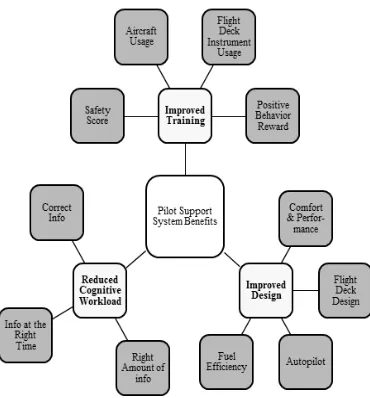
Additionally, the Pilot Support System utilizes big data analytics to provide improvements in a
77
number of other areas. For example, the data may be used to improve training, flight deck design,
78
and help reduce the pilot’s cognitive workload
79
When appropriate, it is possible to also alert the pilots when behaviors are beneficial to flight
80
deck safety. Identifying positive behaviors has been proven to strengthen those behaviors better
81
than punishment. While there are significant constraints to doing this within the flight deck,
82
appropriate means within those constraints can be used to help the pilots and train good behaviors
83
as well as avoid bad behaviors. In fact, the system may be utilized outside the flight deck within a
84
flight simulation training environment and would utilize data collected in an operational flight deck.
85
Utilizing the system in both an operational and training environment can only help to strengthen the
86
system’s ability to identify new pilots versus experienced pilots and thereby tailor the flight
87
experience appropriately for the given pilots.
88
90
91
Figure 1. Pilot Support System Benefits
92
93
3. Industry Benefits & Value
94
The benefits to this particular idea are almost innumerable, Figure 1. The ability to identify
95
unsafe behaviors of those on the flight deck can lead to significant assurances of aircraft, flight crew,
96
and passenger safety. The ability to train pilots can become more effective and enable airlines to
97
train good habits in junior pilots. This will benefit not only the pilots but also the airlines due to
98
instilling habits in the pilots which will help to reduce fuel costs on flights. With lower fuel costs,
99
airlines will be able to provide lower cost flights for passengers which will increase traffic and
100
income.
101
Additionally, aircraft manufacturers and avionics suppliers will benefit from the insights
102
discovered by the pilot support system. This will enable the design of better flight decks, better
103
human computer interfaces, and better overall avionics products. The information may lead to
104
disruptive technologies which address problems on the flight deck in ways that truly meet the needs
105
of the pilots, passengers, airlines, and industry. It can also help reduce engineering costs for those
106
features that are unnecessary based on actual usage.
107
4. Supporting Data and Analyses
108
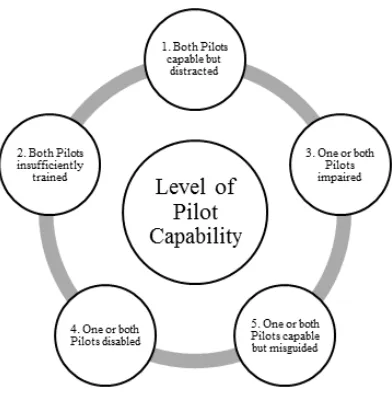
When discussing the functions of a Pilot Support System and how it may interact with pilots, it
109
is important to also define in general terms the levels of a pilot’s capability, Figure 2. These
110
categories may be added to or modified as needed. This section discusses these categories [1].
111
4.1 Capable but Distracted Pilots
112
There have been a number of studies performed on the subject of distracted pilots. Whether
113
pilots are performing necessary and expected tasks or they are involved with their personal electronic
114
devices, a distracted pilot is an unsafe pilot.
115
Given the research performed on distracted pilots from both the 1998 NASA study and the 2003
116
Australian Traffic Safety Board study, a taxonomy of distracted pilots is continuing to evolve. The
117
ATSB created their taxonomy due to limited information regarding actual distractions on the flight
118
deck [8]. In other words, due to a lack of information, we are bounded in our classification and
119
subsequent identification of distracted pilots.
120
However, the ATSB’s classifications are useful for initial data collection as well as a continued
121
review of the taxonomy of distracted pilots. This taxonomy will be the basis for ongoing efforts.
122
124
125
Figure 2. Use Case Scenarios
126
127
4.2 Insufficiently Trained Pilots
128
As a pilot develops greater proficiency in flights, there is a point at which a pilot must move
129
from training to actual operation of a revenue flight. These types of transitions generally occur when
130
pairing an experienced pilot with an inexperienced pilot. This may not always be possible in the
131
future as the airline industry projects a shortage of pilots with respect to flight demand. Therefore, it
132
will be essential to enable pilots placed into situations where they have limited training without the
133
benefit of an experienced pilot.
134
The challenges found in this scenario surround the varying degrees associated with training. A
135
pilot will have some training but may not be familiar specific flight scenarios. The number of flight
136
scenarios could be very large. It will be important to identify the factors indicating when a pilot is
137
less capable. There may be difficulties in having this category of pilot capability overlap with other
138
capability categories. These are the challenges which need to be addressed as additional data are
139
collected
140
Regardless of the varied flight scenarios, the best data collection point for identifying untrained
141
or less trained pilots will be in real training scenarios. This can be in simulated flight scenarios as well
142
as actual flight scenarios. In both instances, the system will collect and learn from pilot interaction
143
during the major phases of flight and also how trainers provide correction to the pilot or aircraft to
144
adjust for mistakes.
145
4.3 Impaired Pilots
146
This scenario may be more difficult than the others due to a potentially large overlap with
147
untrained and distracted pilots. In fact, being distracted or untrained may be considered types of
148
impairment. Similarly, there may be overlap where a pilot’s cognitive capabilities are hindered due
149
to impairment leading to a classification of the pilots as being misguided.
150
More definition will enable a better picture of this type of pilot behavior and a better means of
151
classification and identification.
152
4.3 Impaired Pilots
153
Disabled pilots are those who are incapacitated and are unable to perform flight functions. This
154
may be the easiest scenario to identify, for example, if the pilots are unresponsive to normal flight
155
operations and alerts then the pilots may be safely categorized as disabled (e.g., normal required
156
The more difficult aspect of this will be determining the appropriate course of action. Is it
158
sufficient to notify ATC? What if the communications equipment is not functional, will the system
159
take control and maintain flight on behalf of the pilots as demonstrated recently by the Aurora Flight
160
Systems Co-pilot? These are significant issues requiring further review.
161
4.4 Misguided Pilots
162
Perhaps the most difficult scenario to identify will be the misguided pilot. There are instances
163
where the pilot is not distracted, not untrained, not impaired, and not disabled. In these cases, there
164
may be instances where the pilot becomes confused and starts to make potentially unsafe decisions.
165
For example, if a pilot enters a cloud and becomes disoriented and begins to descend towards
166
the ground during the cruise phase of flight, the system will be able to detect this kind of anomaly
167
and provide feedback to the pilots to ensure the proper decisions are made.
168
Additional details will be obtained as data is collected, analyzed, and interpreted
169
5.0 An Architecture of Pilot Monitoring System
170
A Pilot Monitoring System is proposed to combat the aforementioned pilot frailties. This
171
monitoring system is not intended to control or directly affect the flight operation. Rather, it will
172
provide recommendations or reminders to the pilots at critical moments and alert flight attendance
173
and air traffic control if necessary. The Pilot Monitoring System will have four functions: Pattern
174
Recognition Function, Pilot Attention Monitor Function, Recommendation Function, and Alarm
175
Function. The architecture is shown in Figure 3.
176
177
178
179
Figure 3. Notional Event Detection by Pilot Monitoring System
180
The Pattern Recognition Function is a learning machine which is trained to recognize event
181
sequences that are similar to those prior to previous accidents. The event sequences include serial
182
streams of flight data, aircraft health data, surrounding environment data, and pilots' flight deck
183
actions. The learning machine is also trained to classify the previous accidents into categories. If the
184
learning machine recognizes a pattern of streaming data that is similar to the event sequence prior to
185
a previous accident, it will notify the Recommendation Function. The Recommendation Function
186
will generate textual recommendations to the pilots based on the category. If the pilots do not agree
187
In many cases, the pilots may not even pay attention to the text recommendations, as they may
189
be fixated on one problem while ignoring the other warning signs. Therefore, it is important to
190
determine whether the pilots' attention has been misplaced. The pilots' focus of attention can be
191
detected by eye tracking technology [6]. When the Recommendation Function generates a
192
recommendation, it will pass it to the pilot attention function. The Pilot Attention Monitor Function
193
will first detect whether the pilots' eyes are reading the text recommendation. If the pilots are
194
reading the text recommendation and they don't reject the recommendation, then the pilot
195
Recommendation Function will track their eyes to see which instruments they are watching. If the
196
pilots are not watching the text recommendation or they are not watching the instruments according
197
to the recommendation, then an audible recommendation will be given. Again, the pilots have the
198
ability to explicitly reject the recommendation if they prefer.
199
If the Pilot Attention Monitor Function cannot detect any eye movements, or the eyes of both
200
pilots are closed, or both pilots are absent altogether, this may be an indication that both pilots are
201
drowsy, incapacitated, or missing. This is a very serious problem. At this point, the Pilot Attention
202
Monitor Function must notify the Alarm Function. The Alarm Function will take three actions.
203
First, using the existing flight deck alert system, an alert will sound for pilot response. Second, the
204
flight attendants will be alerted to check the pilots and address any medical situations as required
205
(e.g., choking, heart attack, etc.). Third, the air traffic control will also be alerted and try to keep verbal
206
communication with the pilots or give instructions to land the aircraft at the nearest airport.
207
208
209
210
211
Figure 4. Training by Automatic Accident Generation
212
The most critical issue for pilot monitoring is to find sufficient data to train the Pattern
213
Recognition Function. Accident data can be collected from the database of National Transportation
214
Safety Board (NTSB) and other sources. Additional data can be generated by simulated accidents in
215
pilot training. However, in order to get more training data, it is necessary to use an automatic
216
accident generating and simulation system. This system will have a database of normal flight data
217
and weather conditions along the flight path. Anomalies will be randomly injected to the normal
218
flight data. The normal flight path will first be divided into five phases: taxing from the gate, climb,
219
cruise, descent, and taxing to the gate. Each phase is divided into segments based on any changes in
220
the flight path such as heading and speed. Then, a segment is randomly selected and a sequence of
221
anomalies are injected into the data of the segment, including aircraft health data, environment
222
around the aircraft, pilots' inputs and focus of attention, and other parameters. The flight path with
223
injected anomalies is fed into a simulation model of the aircraft. If the injected anomalies cause an
224
successfully generated accident scenarios are used to train the pattern recognition function. As the
226
automatic accident generating system knows what anomalies have been injected, it also knows the
227
correct categorization of the accidents and the proper recommendation to be given to the pilots. When
228
a simulated accident scenarios are fed to the input of the Pattern Recognition Function, but the Pattern
229
Recognition Function cannot categorize the accident correctly, the error will be back propagated to
230
the learning machine. This system is shown in Figure 4. The possible scenarios that can be generated
231
by this automatic accident generation system can be infinite. The advantage is that it may discover
232
potentially unknown accidents. Once the Pattern Recognition Function of one system has been
233
trained, the knowledge can be replicated to other systems on all aircraft in the fleet.
234
6. Conclusion
235
There is a disconcerting trend in the industry towards more and more distracted or impaired
236
pilots. Efforts to manage the risks need to include more than education of the pilots. Additionally,
237
the efforts from NASA, NTSB, and ATSB have demonstrated there is insufficient data to accurately
238
identify and classify the various distractors on the flight deck.
239
To address the data gap and provide a means to quickly act upon the insights obtained from the
240
data, this proposed system which will collect data from the flight deck for the purpose of enabling
241
pilots in their responsibilities and providing a natural means through which pilots may interact with
242
the system. The system will fill the data void and enable a better, more accurate taxonomy upon
243
which industry may rely to prevent further pilot distractions as well as address factors outside the
244
pilot’s control or capabilities.
245
7.0 Future Work
246
This paper is preliminary. As additional research and work is completed, more papers will be
247
written providing additional details. The future work on this topic should include more accurate data
248
collection and analytics to provide a clear picture of flight deck distractions and pilot behaviors.
249
This effort must go beyond incident reports to better understand the drivers behind incidents and
250
potential incidents. Additionally, it is necessary to determine which machine learning algorithms
251
perform the best.
252
Also, continued effort to obtain data and understand the effects of human machine interaction
253
on the flight deck are an integral part of ensuring mutually beneficial flight experiences and will be
254
the basis upon which future avionics machine learning systems may be built.
255
References
256
1. H. Blair-Smith, "Ubiquitous big data vs. human frailty on the flight deck," 2014 IEEE/AIAA 33rd Digital
257
Avionics Systems Conference (DASC), Colorado Springs, CO, 2014, pp. 2D5-1-2D5-9. DOI:
258
10.1109/DASC.2014.6979434.
259
2. John A. Caldwell, Melissa M. Mallis, J. Lynn Caldwell, Michel A. Paul, James C. Miller, and David F. Neri,
260
“Fatigue Countermeasures in Aviation,” Aviation, Space, and Environmental Medicine x Vol. 80, No. 1 x
261
January 2009.
262
3. Key Dismukes, Grant Young, and Robert Sumwalt, “Cockpit Interruptions and Distractions,” Aviation
263
Safety Reporting System (ASRS) Directline Issue Number 10: Dec 1998
264
4. “Pilots: understand Impairment Risk,” NTSB Safety Alert, National Transportation Safety Board, SA-037
265
September 2014, revised December 2015.
266
5. “Pilots: Manage Risks to Ensure Safety,” NTSB Safety Alert, National Transportation Safety Board, SA-023
267
March 2013, revised December 2015.
268
6. M. Reynal, Y. Colineaux, A. Vernay, and F. Dehais, “Pilot Flynig vs. Pilot Monitoring during the approach
269
phase: an eye-tracking study,” HCI-Aero '16, September 14 - 16, 2016, Paris, France. DOI:
270
http://dx.doi.org/10.1145/2950112.2964583.
271
7. K. Kilingaru, J. Tweedale, and S. Thatcher, “Monitoring Pilot Situation Awareness,” Journal of Intelligent &
272
8. “Dangerous Distraction An examination of accidents and incidents involving pilot distraction in Australia
274
between 1997 and 2004,” Australian Transport Safety Bureau, Aviation Research Investigation Report
275