Case Report
Malignant Melanoma –An Exceptional Survival of Five Years
Ashok Kumar Diwan
1*, Namita Nangia
21*
Associate Professor and Head,
2Junior Resident, Department of Radiation therapy and Oncology,
Government Medical college and Hospital, Nagpur ,Maharashtra, INDIA.
Article History
Received: 10 Oct2015 Accepted: 15 Oct2015
*Correspondence to:
Dr.Ashok.k.Diwan Nagpur, INDIA. [email protected]
ABSTRACT
Anorectal melanoma is an uncommon cancer of the anal canal. It is usually misdiagnosed with common benign conditions like haemorrhoids, anal fissure, anal polyp etc. Most patients have distant metastasis at the time of diagnosis. Surgery if feasible is the preffered treatment for both primary and metastatic melanomas. There is no proven role of adjuvant and systemic therapy for metastatic anal melanoma. It is associated with a poor prognosis and overall survival.We report here a case of metastatic anorectal melanoma surviving for more than five years.
KEYWORDS: Adjuvant chemotherapy radiotherapy, Inguinal lymph node,
Metastatic anorectal melanoma.
INTRODUCTION
Melanoma is a neoplasm of the melanocytes which are embryologically derived from the neural crest cells . Anal melanoma is thought to arise from normal melanocytes distal to the dentate line that extend proximally into the rectum1. Anal canal is the most common site of GI mucosal melanoma and accounts for less than 1% of all anal malignancies2. The incidence rate is reported as 0.4% per million3. 0.4%–3.0% of all malignant melanoma are anorectal melanoma4. The reported 5-year overall survival rate is 6%–15% after surgery4. Casucian females in their sixth-eighth decade are commonly affected5. Misdiagnosis as benign conditions early infiltration and distant spread result in poor overall survival. Unlike cutaneous melanoma there are no associated risk factors6. Most preferred treatment is surgery if it is feasible. Adjuvant radiotherapy and chemotherapy are used to improve survival7. The 5 year survival rate is less than 20%8. We present here a case of mucosal melanoma with metastasis to liver surviving for 5 years after receiving adjuvant chemotherapy and radiotherapy.
CASE REPORT
A 65 years old male presented with passage of urine We report here a case of a 42 year old lady who presented to our hospital GMCH Nagpur in November 2010 with complaints of swelling in right inguinal region associated with pain since 4 months. On examination the swelling was 3×2cm with firm to hard consistency. She also gave history of excision of rectal polyp, hemorrhoids in 2009 whose histopathology report was
suggestive of spindle cell morphology poorly
differentiated carcinoma - Melanoma. She went to TMH hospital for further investigations where IHC was performed and the tumour cells were found to be
positive for S100 and negative for HMB45 Melan A EMA CD34, Desmin favoring melanoma over malignant peripheral nerve sheath tumour. FNAC from the node was positive for deposits of malignant melanoma. She received six cycles of decarbazine vinblastin and cisplatin based chemotherapy from November 2011 to April 2011. After 6 cycles of chemotherapy clinically no inguinal lymph nodes were palpable. Her post 6 cycles chemo CT Abdomen revealed subcentrimetric pelvic lymphadenopathy. She recieved local radiotherapy to pelvic region 40 GY 20 fractions from August 2011 to Sept 2011. Clinical and Radiological examination was normal. She was disease free from 2011-April 2015. In April 2015 she came to OPD with complaints of pain in abdomen. Her contrast enhanced CT scan of abdomen revealed liver metastasis throughout liver parenchyma largest of 7mm×7mm with perirectal and perianal fat stranding and on local examination there was no growth. Decarbazine and Cisplatin based chemotherapy was commenced from May 2015 as she was not affording higher molecule treatment.
DISCUSSION
Melanoma is a radio and chemo resistant disease and no systemic therapy is considered standard. Malignant melanoma of anorectal region is the third most common melanoma after skin and ocular.
determine the presence of lymph nodal metastasis. Immunohistochemical stains for Melanoma antigens S- 100, HMB - 45, and vimentin can also be
performed9. Epidermoid carcinoma is differentiated from melanoma by polyclonal antiserum carcinoembryonic antigen (CEA) and monoclonal antibodies to CEA10.
Fig1: Rectal polypectomy scar in our patient
Fig2: 10X section shows stratified squamous epithelial lining. Underlying tissue shows tumour arranged in
sheets.
Fig3: 100 Xsection shows the presence of intracytoplasmic brown coloured pigment suggestive
of melanoma.
Fig4: 40X, The above figure shows tumour cells having indistinct moderate amount of cytoplasm, oval nuclei
with prominent nucleoli with irregular margin.
Figure 5: Section from the FNAC of lymph node in 40 x magnification showing tumour cells harboring
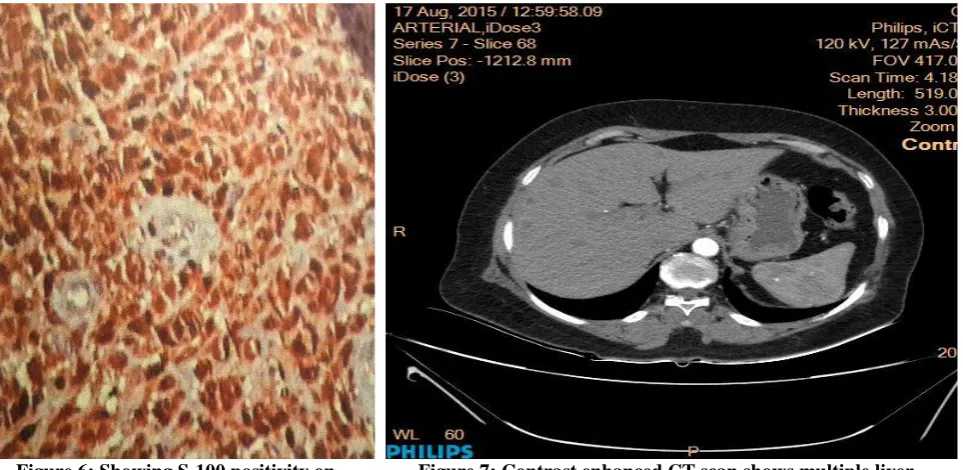
Figure 6: Showing S-100 positivity on Immunohistochemical evaluation.
Figure 7: Contrast enhanced CT scan shows multiple liver metastasis spread throughout the liver parenchyma.
Our subject had presented with past history of pain during defecation and swelling in the inguinal region. She had undergone excision for rectal polyp causing pain per anum. She was evaluated by IHC repeated contrast enhanced CT scan of abdomen regularly at 6monthly intervals. Our subject was incidentally diagnosed with liver metastasis in one of the latest scan as seen in Fig 7.
Surgical excision in the form of APR, WLE and TAE trans anal excision is the definitive treatment. TAE11 is preferred as it reduces morbidity and chances of local recurrences. It is also recommended to perform sentinel lymph node biopsy alongside TAE11. Yeh et Al. reported that there was no significant difference in the local recurrence after APR or TAE11. Pessaux et al. recommended APR for large tumours and isolated local recurrences12. Wide local excision is undertaken when negative margins can be achieved. WLE favours early recovery and no colostomy in comparison to APR. Thibault and colleagues reviewed 50 cases and observed no difference in survival in patients treated by WLE or APR13. Lymph node dissection is preferred for clinically palpable lymph node dissection14. Our patient underwent local excision in the form of polypectomy. Figure 1 shows rectal polypectomy scar in our patient. Figure 2, 3 and 4 show the microscopic findings of tumour cells with oval hyperchromatic and pleomorphic nuclei and intracytoplasmic melanin pigment in tumour cells. Figure 5 show the presence of intracytoplasmic melanin pigment in the specimen of inguinal node FNAC and
S-100 positivity is seen in figure 6 on
Immunohistochemical evaluation.
Decarbazine was earlier used as a single agent and had median response duration of 4-6 months. Combination chemotherapy known as the Dartmouth regimen: Dacarbazine, Cisplatin Carmustine, and Tamoxifen have
shown an improved response rate (19%) over dacarbazine alone. (10%)15. Side effects like bone marrow suppression, nausea and vomiting are more pronounced with combination chemotherapy16.
Biochemotherapy a combination of interferon (IFN), inter leukin-2 and cytotoxic drugs which include cisplatin, vinblastin and decarbazine has been developed. Kim and colleagues at M.D.Anderson observed a median survival of 12 months with biochemotherapy as compared to chemotherapy alone17. BRAF and KIT proto oncogene mutation are commonly associated with both cutaneous and anal melanoma. Vermufenib18 BRAF inhibitor and Ipilimumab19 a monoclonal antibody against CTLA-4 has shown a limited role in metastatic mucosal melanoma. In our case Vinblastin, Cisplatin and
Decarbazine combination chemotherapy was
administered excellent response was observed and she has been resumed on the same protocol after diagnosis of liver metastasis due to financial constraints.
Role of radiotherapy is limited to post-operative and palliative settings20. Bujko and colleagues reported better local control. In preoperative settings no significant benefit has been observed21. A study conducted by Ballo et al. in M.D Anderson where radiotherapy was delivered in post-operative settings in a hypo-fractionated regimen of 30 Gy (5 fractions over 2.5 weeks). The 5-year local control rate was found to be 74%, with a 5-year disease-specific survival of only 36%22. Palliative radiotherapy in case of recurrent metastatic and unresectable disease is effective. No difference in survival is found after surgical and
radiotherapeutic management22. IMRT reduces
with cesium13724. Lymphedema and procitis are common toxicities when inguinal /pelvic nodes are included in the radiation fields25. Radiotherapy to inguinal nodes was planned with a radical and curative intent in our case 100% response rate with survival of more than 5 years was been observed.
Snoj et al. devised electrochemotherpay in an inoperable patient where he increased the permeability of the tissues to chemotherapeutic agent – cisplatin by giving electrical pulses and found significant reduction in the size of the primary after 5 appplications with a total dose of 6mg of cisplatin. The patient was then subjected to surgery which was followed by intracavitatory radiotherapy by Cesium 137 for the primary. However the patient developed inguinal node recurrence after 4 months26. Moozar et al. reported that the overall survival after combined modality treatment –surgery radiotherapy and chemotherapy in a Canadian center was 12 months27.
Our patient received chemotherapy and local
radiotherapy to the inguinal nodes and had a good local and systemic control for more than 5 years.
CONCLUSION
For anorectal malignant melanoma, multimodality treatments including surgery, chemotherapy, and radiotherapy have been used. Surgery is the main treatment. The surgical procedure varies from WLE to APR. Because of nonspecific symptoms, it is easily
mistaken for hemorrhoids. Advanced anorectal
melanoma most likely represents a systemic disease at time of diagnosis. The prognosis depends on the staging, and it is important to detect anorectal melanoma at an early stage. Therapeutic strategies should be adjusted to the prognosis of the disease. New modalities of medical, biological or immunological therapies have improved the final outcome of these patients.
CONFLICTS OF INTEREST
No authors have any conflicts of interest or financial ties to disclose.
REFERENCES
1 Morson BC, Volkstadt H. Malignant melanoma of the anal canal. J Clin Pathol. 1963;16:126-32.
2. Roviello F, Cioppa T, Marrelli D, Nastri G, De Stefano A, Hako L, et al. Primary ano-rectal melanoma: considerations on a clinical case and review of the literature. Chir Ital. 2003;55:575-80.
3.Khan M, Bucher N, Elhassan A, Barbaryan A,
Ali A.M, Hussain N, Mirrakhimov A.E. Primary
Anorectal Melanoma, Department of Internal Medicine, Presence Saint Joseph Hospital, Chicago, Ill., USA Section title: Published: March 2014.
4. Kodai Tomioka, Hitoshi Ojima, Makoto Sohda, Akiko
Tanabe, Yasuyuki Fukai, Akihiko Sano, Takahiro
Fukuda and Masahiko Murakami. Primary Malignant Melanoma of the Rectum: Report of Two Cases. Case
Reports in Surgery Volume 2012, Article ID 247348, 4 pages
5. Coté TR, Sobin LH. Primary melanomas of the esophagus and anorectum: epidemiologic comparison with melanoma of the skin. Melanoma Res 2009;19:58-60.
6. Marc Singer and Matthew G. Mutch. “Anal Melanoma”, Journal of Clinical Colon Rectal Surg. ,2006 May; 19(2): 78–87. doi: 10.1055/s-2006-942348. 7. Kelly P, Zagars GK, Cormier JN, Ross MI, Guadagnolo BA: Sphincter-sparing local excision and hypofractionated radiation therapy for anorectal
melanoma: a 20-year experience. Cancer
2011;117:4747-4755.
8. Khan M, Bucher N, Elhassan A, Barbaryan A, Ali A.M, Hussain N, Mirrakhimov A.E. Department of Internal Medicine, Presence Saint Joseph Hospital, Chicago, Ill., USA.
9 Ben-Izhak O, Bar-Chana M, Sussman L, Dobiner V, et al. Ki67 antigen and PCNA proliferation markers
predict survival in anorectal malignant
melanoma. Histopathology. 2002; 41: 519–525. 10 Belli F, Gallino GF, Lo Vullo S, Mariani L, Poiasina E, Leo E. Melanoma of the anorectal region. The experience of the National Cancer Institute of Milano. EJSO. 2009;35:757-62.
11. Greg Turner, Sarah Abbott, Tim Eglinton, Chris Wakeman, Frank Frizelle. Anorectal melanoma: not a haemorrhoid 6th June 2014, Volume 127 Number 1395 12. Pessaux P, Pocard M, Elias D et al. Surgical management of primary anorectal melanoma. Br J Surg. 2004;91:1183-87.
13. Kouros L, Moozar C, Shun Wong and Jean Couture. Anorectal malignant melanoma: treatment with surgery or radiation therapy, or both. Can J Surg. 2003 Oct; 46(5): 345–349.
14.Christos N Stoidis, Basileios G Spyropoulos, Evangelos P Misiakos, Christos K Fountzilas, Panorea P Paraskeva and Constantine I Fotiadis. Diffuse anorectal melanoma; review of the current diagnostic and treatment aspects based on a case report World Journal of Surgical Oncology 2009, 7:64 doi:10.1186/1477-7819-7-64.
15.David Row and Martin R. Weiser. Anorectal
Melanoma Clin Colon Rectal Surg. 2009 May; 22(2): 120–126.doi: 10.1055/s-0029-1223844.
16. Chapman P B, Einhorn L H, Meyers M L, et al. Phase III multicenter randomized trial of the Dartmouth regimen versus dacarbazine in patients with metastatic melanoma. J Clin Oncol. 1999;17 (9): 2745–2751. [PubMed]
18. Chapman PB, Hauschild A, Robert C, et al. Improved survival with vemurafenib in melanoma with BRAF V600Emutation. NEnglJMed.2011;364: 2507-16. 19. Postow MA, Luke JJ, Bluth MJ, et al. Ipilimumab for patients with advanced mucosal melanoma. Oncologist. 2013;18
20. Hay A, Liong J, Kumar D, Glees J. A striking response of anorectal melanoma to radiotherapy (locoregional disease confined to perineum and anal canal). Ann R Coll Surg Engl. 2010;92(1):10-12. 21. Bujko K, Nowacki MP, Liszka-Deleck P. Radiation therapy for anorectal melanoma — a report of three cases. Acta Oncol 1998;37:497-9.
22. Ballo M T, Gershenwald J E, Zagars G K et al. Sphincter sparing local excision and adjuvant radiation for anorectal melanoma. J Clin Oncol. 2002;20:4555– 4558. [PubMed]
23. Kachnic LA, Winter K, Myerson RJ, et al. RTOG 0529: a phase 2 evaluation of dose-painted intensity modulated radiation therapy in combination with 5-fluorouracil and mitomycin-C for the reduction of acute morbidity in carcinoma of the anal canal. Int J Radiat Oncol Biol Phys 2013;86:27-33. [PubMed]
24. Gupta R, Sharma SC, Bose SM. Adjuvant interstitial brachytherapy in a case of anorectal melanoma.Trop
Gastroenterol 2000;21:86-7. [PubMed]
25. Kelly P, Zagars GK, Cormier JN, Ross MI, Guadagnolo BA. Sphincter-sparing local excision and hypofractionated radiation therapy for anorectal melanoma: a 20-year experience. Cancer. 2011; 117: 4747–4755. [PubMed]
26. Snoj M, Rudolf Z, Cemazar M, Jancar B, Sersa G. Successful sphincter-saving treatment of anorectal melanoma with electrochemotherapy, local excision, and
adjuvant brachyther- apy. Anticancer Drugs
2005;16:345–348
27. Moozar KL, Wong CS, Couture J. Anorectal malignant melanoma: treatment with surgery or radiation therapy, or both. Can J Surg 2003;46:345–349.
How to cite the article: Ashok Kumar Diwan, Namita Nangia. Malignant Melanoma –An Exceptional Survival of Five Years. Int J Med Res Prof. 2015, 1(3); 71-75.