This work is licensed under a Creative Commons Attribution-Noncommercial-No Derivative Works 3.0 United States License.
Vol. 33, No. 1 (2014) ● ISSN: 2164-7984 (online) DOI 10.5195/jlc.2014.78 ●http://jlc.law.pitt.edu
ARTICLES
THE LAW AND ECONOMICS OF MICROFINANCE
Katherine Hunt
Vol. 33, No. 1 (2014) ● ISSN: 2164-7984 (online) ● ISSN 0733-2491 (print)
ARTICLES
THE LAW AND ECONOMICS OF MICROFINANCE
Katherine Hunt*
TABLE OF CONTENTS
I. Introduction ... 4
II. Traditional Financial Relationships ... 8
A. What Does a Normal Banking Relationship Look Like? ... 8
B. Financial Market Players and Their Incentives ... 11
1. Access to Credit and Bank Size ... 12
2. Wealth Creation ... 13
C. Contracts ... 15
1. Contracts and Risk Management ... 15
2. Risk Based Interest Rates ... 16
D. Credit Market Failure ... 16
1. Bank Size ... 18
2. Incentives ... 19
III. The Poor Also Need Finance ... 21
A. Do the Poor Fit into the Traditional Banking Relationship? ... 21
1. Supply Side ... 21
a. Trust ... 21
b. Lack of Information ... 22
* Lecturer in the department of Accounting, Finance and Economics at Griffith University
c. Interest Rate ... 23
d. Alternatives—Supply Not Diversified ... 26
2. Demand Side ... 27
a. Cash Flow but No Savings ... 27
b. Vulnerability to External Shocks ... 28
c. High Interest Rates for Loan Sharks ... 29
B. Typical Microfinance Loan ... 29
IV. Effectiveness and Distribution ... 33
A. Policy Problem ... 34
B. Distribution... 35
C. Measurement of Microfinance Effectiveness ... 35
1. Parameters to Measure Microfinance Success ... 36
2. Benefits of Microfinance ... 38
a. Poverty Reduction from Microfinance ... 38
b. Macroeconomic Perspective ... 40
c. Economic Gains from Microfinance ... 41
d. Micro-Entrepreneurship ... 42
3. Social Benefits of Microfinance ... 45
a. Social Mobility ... 45
b. Intergenerational Effects ... 46
D. Financial Sustainability ... 47
V. CSR and Facilitative Regulation ... 53
A. Corporate Social Responsibility ... 54
1. Can Regulation Stimulate Microfinance via CSR? ... 55
2. Credit Database and Disclosure ... 56
3. Green Finance ... 57
4. Implications of CSR ... 57
B. Facilitative Regulation ... 58
1. State Guarantee ... 59
2. Innovation ... 60
3. Support of Microsavings Products by MFIs ... 61
4. Implications of Facilitative Regulation ... 62
VI. Direct Regulation ... 64
A. Why Is There Microfinance Law? ... 64
B. How Does Microfinance Regulation Promote Microfinance? .... 66
D. Legislation ... 69
1. Interest Rate Ceilings ... 69
2. Minimum Percentage of Loans to Microfinance Clients ... 72
3. Tiered Regulatory Structure ... 73
I.INTRODUCTION
Microfinance may be the poster-boy of international development, but the facts remain that 100 million borrowers are in poverty and most Microfinance Institutions (MFIs) are not financially self-sustainable.1 This means that there are systemic faults, which do not allow the goals of microfinance to be consistently achieved. This paper considers the interaction between regulation and the goals of microfinance being achieved, with specific focus on financially self-sustainable MFIs. Previous research has not considered microfinance from a law and economics perspective. Regulation has the potential to directly affect the financial sustainability of MFIs,2 through restricting or supporting their business operations regarding obtaining capital and product design.3 Given that financially self-sustainable MFIs have the potential to increase long-term access to financial services without reliance on donations,4 the influence of regulation in this sector is a critical area for study. Despite the importance of the topic, little research has discussed the way regulation creates incentives for MFIs and borrowers, affecting financial self-sustainability.5 Thus, a law and economics perspective, which considers just this, is an important perspective from which to consider how microfinance can achieve its long-term goals. This article is the first which considers such an important yet overlooked issue. In order to consider the law and economics
1 Financial self-sustainability refers to the ability of MFIs to operate on an on-going basis and to
expand through financing and operations on market based rates. This means that MFIs which rely on NGO or subsidised lending in order to operate or expand are not financially self-sustainable. See
Mostafa M. Hasan et al., Local Government Investment Outreach and Sustainability of Microfinance Institutions: A Case Study of B, Bangladesh, 34 J. SOC., POL. & ECON. STUD. 348 (2009).
2See, e.g., United Nations, The World Bank, Measuring Financial Inclusion: The Global Findex
Database, Policy Research Working Paper 6025, Asli Demirgüç-Kunt & Leora Klapper (Apr. 2012),
available at https://openknowledge.worldbank.org/handle/10986/6042.
3 Lucy Hurst et al., Global Microscope on the Microfinance Business Environment, Economist
Intelligence Unit (2013), available at www.eiu.com/microscope2013.
4 Niels Hermes & Robert Lensink, The Empirics of Microfinance: What Do We Know?, 117 THE
ECON. J. F1, F8–F9 (2007) (authors find that the financial self-sustainability of MFIs is linked to long term benefits to the poor).
5 Most published research in the field of microfinance is anecdotal in nature and takes the
of microfinance this article will present a comparison between financial relationship in developed and developing contexts and explore how microfinance completes a credit market failure that has resulted in those who are willing and able to obtain financial services being excluded from the market.
Despite microfinance being a popular topic for academic discussion, little of the previous research has been conducted in an empirically sound manner, and even fewer considering the financial management of MFIs.6 This paper presents a discussion previously untouched in the literature by focusing on the available literature, which is empirical in nature. Some of the reasons for the general lack of empirical research in this field are inherent to the sample and instruments.7 Hermes and Lensink discuss the methodological weaknesses of most microfinance papers in this field as being that the variables to measure behaviour are only theoretically and indirectly related; that crude one-dimensional measures are used to proxy for complex constructs; and the endogeneity of the sample.8 Hermes and Lensink consider the effect of these methodological weaknesses and the importance of financial sustainability of MFIs. In particular, these authors find that if MFIs are unable to stand on their own “financial” feet, long-term large-scale outreach to the poor cannot be guaranteed.9 Further, at a short-term level, these authors discuss how microfinance sustainability affects the breadth10 and depth11 of the clients served.
Previous research on microfinance has covered a variety of literature that theoretically, anecdotally, or qualitatively considered the effect of microfinance on increasing the socioeconomic well being of the poor,12
6 Some exceptions to this are some papers published by The World Bank, and others that will be
presented in the current paper.
7 Hermes & Lensink, supra note 4, at F3. 8Id.
9Id. at F8–F9.
10 This refers to the numbers of borrowers reached.
11 This refers to the socioeconomic situation of borrowers reached. In the context of microfinance,
it is important that the “poor” are reached, as they are ordinarily excluded from the formal financial system, and microfinance is an initiative designed to address this financial exclusion in developing countries.
12 Moh’d Al-Azzam et al., The Impact of Socioeconomic Factors and Financial Access on
which is inherently a bottom-up perspective.13 Previous research has found that while the social goals of microfinance, in particular female empowerment, have been consistently reached,14 reductions in poverty have not been found relative to the economic goals of microfinance.15
Microfinance has confirmed social benefits and potential economic benefits through providing access to credit for the poor.16 Although the economic benefits of microfinance have not been empirically studied in an exhaustive number of studies, there is enough evidence to suggest that microfinance does not have a negative effect on economic development,17 does not cost society or the government excessive amounts of fund to support it,18 and thus, it may be an appropriate system for increasing credit availability of the poor.19 In light of this, the current paper seeks to understand what institutional conditions can promote microfinance. In order to do this, the current article presents theoretical analysis from the law and economics perspective and presents the findings of the few empirical articles on microfinance. These discussions will be framed by consideration of the goals20 of microfinance considering the normal banking relationship.
In analysing the development of microfinance law, it is intuitive to begin at a consideration of regular financial relationships; why the poor are
13 Considering microfinance in terms of the effect of loans on the borrowers mental health,
socioeconomic standing and well-being is “bottom-up.” This is in comparison to a “top-down” perspective, which considers strategic issues such as regulation and business operations.
14 Philip Megicks et al., Enhancing Microfinance Outreach through Market-Oriented New
Service Development in Indian Regional Rural Banks, 23 INT’L J. BANK MARKETING 107 (2005).
15 For a summary of the research supporting and challenging the benefits of microfinance see
Katherine Hunt, Microfinance: Dreams and Reality, 2 INT’L REV. ON TRANSITIONS IN CORP. LIFE, L. & GOVERNANCE 62, 77 (2013).
16 Christian Ahlin & Neville Jiang, Can Micro-Credit Bring Development?, 86 J. DEV. ECON. 1, 2
(2008); see also Gail Arch, Microfinance and Development: Risk and Return from a Policy Outcome Perspective, 6 J. BANKING REG. 227, 241 (2005).
17See, e.g., Francisco J. Buera et al., The Macroeconomics of Microfinance, Working Paper No.
17905, NAT’L BUREAU OF ECON. RES. (Mar. 2012), available at http://www.nber.org/papers/w17905. These authors illustrate that when using General Equilibrium and Partial Equilibrium there are economic benefits of microfinance.
18 For governments to support microfinance it needs only regulatory support, rather than
investment of funds. Hence, relative to other humanitarian initiatives, microfinance is not costly to support.
19 For work on credit access, see, e.g., Daniel Agyapong et al., Criteria for Assessing Small and
Medium Enterprises’ Borrowers in Ghana, 4 INT’L BUS. RES. 132 (2011).
20 Rafiqur Rahman & Qiang Nie, The Synthesis of Grameen Bank Microfinance Approaches in
excluded from traditional financial relationships,21 and why regulatory support may be needed to promote microfinance.22 It has been established that microfinance is a method to increase financial inclusion.23 However, the poor have always had access to credit via family, friends,24 and “loan sharks.”25 These credit sources are not efficient: during economic or weather disasters, the regular sources of credit may no longer become available because the family or friends need the capital for their own survival.26 Thus, microfinance provides an avenue for a source of credit that is potentially more reliable. This is even more likely if MFIs are able to operate in a financially self-sustainable manner.27
This article presents a theoretical analysis regarding the law and economics of microfinance. The theoretical perspectives presented in the current article inherently scratch only the surface of the potential analyses on the financial and structural detail of microfinance and general financial relationships. The problem-oriented discussions presented in this article provide a framework for discussing microfinance relationships with the goal of providing a foundation from which future discussion and research can build. As the first article on the topic of the law and economics of microfinance, this is required.
Part II of this article considers normal banking relationships in a problem-oriented way, designed to provide background information from which subsequent discussions can build. This means that the current article will discuss the banking literature as far as it is relevant for microfinance and thus will remain at the surface of understanding and analysis regarding
21 Mohammad Shafi & Ali Hawi Medabesh, Financial Inclusion in Developing Countries:
Evidences from an Indian State, 5 INT’L BUS. RES. 116 (2012).
22See, e.g., M. Wakilur Rahman & Jianchao Luo, The Development Perspective of Finance and
Microfinance Sector in China: How Far Is Microfinance Regulations?, 3 INT’L J. ECON. & FIN. 160 (2011).
23 Shafi & Medabesh, supra note 21.
24 The method, though, was expensive and unreliable. Robert Mayer, Loan Sharks, Interest-Rate
Caps, and Deregulation, 69 WASH. & LEE L. REV. 807, 820 (2012).
25Id. Loan sharks make credit available to those in need with flexible loan and repayment terms.
They do not always take collateral, however, as they are outside the financial system. Non-repayment often results in violence, slavery, or worse. Loan sharks are part of the TML system, which is a blanket term including also family and friends as traditional sources of capital.
26Id.
27 Peter Crabb, Economic Freedom and the Success of Microfinance Institutions, 13 J. DEV.
certain issues. Part III discusses access to finance being restricted from the poor. Part IV outlines the effectiveness and distributional goals of microfinance. Part V discusses facilitative regulation and CSR as potential initiatives. Part VI discusses direct regulation as a potential initiative to support microfinance; and the conclusion compares and contrasts Parts V and VI to determine the process of regulation most suited to promoting microfinance.
II.TRADITIONAL FINANCIAL RELATIONSHIPS A. What Does a Normal Banking Relationship Look Like?
Financial relationships are an aspect of normal life that many in the developed world may take for granted, because in developing countries what is considered a normal financial relationship exists only for the middle and upper classes.28 As a result of this heterogeneity in who has access to financial services, much of the ideas of “normal financial relationships” comes from developed countries.29
Regardless of the location of the financial institutions or the characteristics of the client base, aspects of the financial relationship remain consistent.30 This is because people all over the world require financial institutions for consistent reasons and products are tailored to provide for these. In particular, people go to financial institutions to manage their risk,31 build wealth,32 manage cash flow,33 and transfer money.34 These financial
28 Shafi & Medabesh, supra note 21.
29 A plethora of papers consider financial relationships in developed countries ranging from
innovations in financial services to financial planning.
30 Financial products have a consistency across companies as required by law in such regulations
as: ASIC, Disclosure: Product Disclosure Statements.
31 Examples of this include insurance, fixed rate loans, and deposits. See, e.g., Franklin Allen &
Douglas Gale, Innovations in Financial Services, Relationships, and Risk Sharing, 45 MGMT. SCI. 1239 (1999); John Y. Campbell & João F. Cocco, Household Risk Management and Optimal Mortgage Choice, 118 Q. J. ECON. 1449 (2003).
32 Examples of this include interest bearing savings accounts, investment portfolios and home
mortgages. See, e.g., Asif Dowla & Alamgir Dewan, From Microcredit to Microfinance: Evolution of Savings Products by MFIs in Bangladesh, 15 J. INT’L DEV. 969 (2003).
33 An example of this is a personal loans. See, e.g., Victor Stango & Jonathan Zinman,
services are demand driven and products are designed within regulatory environments to suit the needs of customers. Thus, customers choose to have financial relationships because they have specific needs that financial institutions can meet. Normal financial relationships have consistent motivations and designs across the world.35
The current research is primarily concerned with microfinance as a source of credit for the poor and other financial services tailored to the needs of the poor such as microsavings, microinsurance, and microbanking, like money transfer via mobile phones.36
Traditional financial relationships include information asymmetry for both parties where the cost of information and search provides customers and banks with avenues to benefit from the relationship.37 Information asymmetry is a generic problem in banking relationships and banking law is often designed to attempt to reduce these asymmetries because of the resulting market failure.38 In traditional banking relationships, information asymmetry is reduced through signalling and monitoring.39 That is, borrowers signal to the bank that they are worthy of loans through providing financial reports, business plans, and offering collateral.40 The
34 For example, money transfers to sellers or to family overseas. See Shahid Nawaz et al.,
Informal and Formal Money Transfer Networks: Financial Service or Financial Crime?, 5 J. MONEY LAUNDERING CONTROL 330 (2002).
35 Allen & Gale, supra note 31.
36 In terms of a general definition of microfinance, a useful paper is United Nations, The World
Bank Thematic Group on Poverty Analysis, Monitoring and Impact Evaluation, Impact Evaluation for Microfinance: Review of Methodological Issues, Doing Impact Evaluation No. 7, Dean Karlan & Nate Goldberg (Nov. 2007), http://siteresources.worldbank.org/INTISPMA/Resources/383704-11467522 40884/Doing_ie_series_07.pdf.
37 For a basic discussion of information asymmetry in general, see, e.g., George J. Stigler, The
Economics of Information, 69 J. POL. ECON. 213 (1961).
38 For a discussion of how asymmetric information can lead to banks building a monopoly
because of the fact that they decrease their information asymmetries as the lending relationship progresses, see, e.g., Steven A. Sharpe, Asymmetric Information, Bank Lending and Implicit Contracts: A Stylized Model of Customer Relationships, 45 J. FIN. 1069 (1990) (monopolies in otherwise free markets are generally considered market failures).
39 The mortgage literature generally considers that the fact-gathering procedures before loans are
granted are designed to reduce information asymmetry on behalf of the bank. Further, the information gathered through the repayment behaviours of borrowers via on-going monitoring further serves to decrease asymmetric information to an even greater extent, as discussed in footnote 37.
40 For a discussion on collateral, see Arito Ono & Iichiro Uesugi, Role of Collateral and Personal
bank then monitors the borrower.41 In terms of banking relationships for the poor, the problems of information asymmetry are magnified because the poor are without methods to signal loan worthiness: they are unlikely to have collateral or financial statements.42 Small loan sizes mean banks are faced with high proportional monitoring costs per loan,43 so they expect a signal of quality but the poor do not have collateral44 to give. The result of this is the poor are left without access to capital.45 Hence, MFIs have been created which are designed based on a model where the poor are able to provide intangible collateral.46 This is a key innovation of microfinance from an economics perspective—the ability to substitute tangible with intangible collateral.47
In the microfinance sector, the demographics of borrowers make issues around information asymmetry particularly relevant.48 However, the community selection and endorsement of borrowers minimises the information asymmetries and subsequent possibilities for the adverse selection of borrowers.49 Although traditional banking relationships do not use community selection or social pressure in the models of repayment, this
41Id.
42 Tadeo A. Satta, Microfinance Regulation Influence on Small Firms’ Financing in Tanzania, 12
J. FIN. REG. & COMPLIANCE 1358 (2004) (suggesting the poor generally don’t have access to collateral).
43 Nirvikar Singh, Transaction Costs, Information Technology and Development, 1 INDIAN
GROWTH & DEV. REV. 1, 21 (2008) (considering the operational costs of MFIs in illustrating their challenges in providing long-term financial inclusion).
44 I.e. the signal.
45 Shafi & Medabesh, supra note 21. 46 I.e. social pressure.
47See, e.g., Isidore Ekpe et al., The Effect of Microfinance Factors on Women Entrepreneurs’
Performance in Nigeria: A Conceptual Framework, 1 INT’L J. BUS. & SOC. SCI. 255, 257 (2010); Ono & Uesugi, supra note 40; Johannes Stroebel, The Impact of Asymmetric Information about Collateral Values in Mortgage Lending (2012) (unpublished manuscript) (on file with the New York University Stern School of Business).
48 James C. Brau & Gary M. Woller, Microfinance: A Comprehensive Review of the Existing
Literature, 9 J. ENTREPRENEURIAL FIN. & BUS. VENTURES 1, 22–23 (2004) (clients are generally rurally dispersed and illiterate).
49 Microfinance repayment rates are theoretically based on the community endorsement that is
contractual technique in microfinance has contributed to repayment rates of 99%.50
B. Financial Market Players and Their Incentives
Borrower incentives for on time loan repayment are partially affected by the level of recourse available to banks, which is reinforced by banking regulation.51 In addition to incentives for loan repayments, there are also contractual methods to ensure on time regular payments such as late fees and permanent credit history (or credit score) records.52 Borrowers with full recourse contracts have incentives to repay the loan whereas those without only have the loan repayment incentives if capital values increase.
Lenders operate in different environments depending on the legislation of the country, and the subsequent nature of the competition they face.53 The strength of the competition has the potential to influence the products that are developed, the level of relationships sought with and by borrowers, and the marketing strategies employed to obtain new customers and maintain existing ones.54 Thus there are diverse incentives on lenders in operating and managing customer relationships, affected by regulation.
Bank financing has been constantly changing over the past few decades, with an increased use of securitisation and lower reliance on deposits.55 However, authors have found that there is a relationship between
50 This author analysed the data available for microfinance repayments, among other things,
between the period of 1996–2009 and found a write-off ratio for loans at 1% of loans. That means that repayment was 99%. This author used the widely available Microfinance Information Exchange data for that period. For methodological detail, refer to the paper itself. Gabriel Di Bella, The Impact of the Global Financial Crisis on Microfinance and Policy Implications (Int’l Monetary Fund, Working Paper No. 11/175, 2011).
51See, e.g., Mike Berry, Tony Dalton & Anitra Nelson, Mortgage Default in Australia: Nature,
Causes and Social and Economic Impacts (Austl. Hous. & Urban Research Inst., Final Report No. 145, 2010).
52 Confidence W. Amadi, An Examination of the Adverse Effects of Consumer Loans, 7 INT’L J.
BUS. MGMT. 22 (2011).
53 Thorsten Beck et al., Is Small Beautiful? Financial Structure, Size and Access to Finance (The
World Bank Dev. Research Grp., Pol’y Research Working Paper No. 5806, 2011).
54See, e.g., Abbad Muneer et al., Limitations of E-Commerce in Developing Countries: Jordan
Case, 4 ED. BUS. & SOC’Y: CONTEMPORARY MIDDLE EASTERN ISSUES 280 (2011).
55See, e.g., Farhad Hossain & Tonya Knight, Can Micro-Credit Improve the Livelihoods of the
the cost of capital and internal financial resources if there are external financing constraints,56 and that this can also affect real economic activity through the provision of finance via business and personal channels. The trend away from reliance on deposits and towards financial leverage57 has a variety of advantages and disadvantages particularly relevant for MFIs and is discussed in Parts following. Authors have commented on the factors which banks are interested in within the lending relationship. Namely, Stiglitz and Weiss58 detailed how the contract effectively induces the borrower to act in the best interest of the bank.
1. Access to Credit and Bank Size
The effect of the size of financial firms on financial access is an important topic which is relevant for determining the impact of factors related to microfinance and microfinance institutions within the context of the financial sector. A recent study by Demirgüç-Kunt, and Singer59 examined how a higher number of large banks would influence credit availability of different sized firms. This study has strong theoretical and empirical importance because of potential assumptions by policy makers that bank size and strength increase credit access.60 On a more practical level, these authors noted that access to financial services by Small and Medium-sized Enterprises (SMEs) is critical in developing countries because SME’s comprise most of the private sector.61 This study found that the average size of banks is not associated with access to finance.62 This is contrary to traditional banking regulatory motivations which aim to
56See, e.g., John L. Campbell et al., Financing Constraints and the Cost of Capital: Evidence
from the Funding of Corporate Pension Plans, 25 REV. FIN. STUD. 868 (2011).
57 Given that MFIs are not always able to receive deposits because of regulatory restrictions,
alternative methods such as seeking capital on the capital markets has been pursued more and more in recent years. This allows MFIs to fund their expansion and ongoing costs. This trend has been discussed by: Arch, supra note 16; James Cerven & S.M. Ghazanfar, Third World Microfinance: Challenges of Growth and Possibilities for Adaptation, 24 J. SOC., POL. & ECON. STUD. 445 (1999).
58 Joseph E. Stiglitz & Andrew Weiss, Credit Rationing in Markets with Imperfect Information,
71 AM. ECON. REV. 393 (1981).
59 Beck et al., supra note 53. 60Id.
promote bank strength and dominance.63 Specifically, these authors found that financial markets in developing countries with more large banks resulted in reduced financial service use by firms of all sizes.64 They found that it is specialised lenders65 which increased firms’ access to finance. However, they also found that microfinance does not help with the financing constraints of formal and larger enterprises, which is logical given the target market of microfinance and the products designed to service them. Beck et al.66 commented in describing the implications of their results that policy makers control financial institution size and thus specific financial market structure by determining regulations which impose entry barriers, minimum capitalisation requirements and bank ownership restrictions.
2. Wealth Creation
The theoretical strength of microfinance lies in its ability to increase wealth through the mobilisation of capital for entrepreneurial and investment opportunities by the poor.67 This individual wealth creation aspect is critical for the potential benefits of microfinance because it runs hand in hand with increases in economic development.68 Bauer, Chytilová, and Morduch69 empirically analysed why microfinance has such financial benefits over programs such as those which focus on savings. These authors thus examine microfinance as an innovation for self-discipline of financial
63 Australian Treasury, Release of the Report of the Financial System Inquiry and Initial
Government Response on Mergers Policy, Financial System Inquiry (Apr. 9, 1997), http://fsi.treasury .gov.au/content/P ublicInformation/Pressreleases/PR090497.asp.
64 Beck et al., supra note 53. 65 Such as MFIs.
66 Beck et al., supra note 53.
67 In terms of a general definition of microfinance a useful paper is Karlan and Goldberg, supra
note 36.
68 This is based on the importance of the poor “lifting themselves out of poverty” rather than
having poverty eradication methods imposed upon them, which intuitively indicates a more sustainable anti-poverty strategy.
69See, e.g., Michal Bauer et al., Behavioral Foundations of Microcredit: Experimental and
behaviour,70 and the results have been published in the American Economic
Review.
The results of the study by Bauer et al. show that self-discipline is the reason why people cannot save but can repay loans in rural India.71 Specifically, women who are more present biased72 are more likely to borrow from an MFI. This is because they have more need to borrow than non-present biased women because of a greater tendency to spend income.73 It can be logically extended that microfinance is more efficient than saving because of social pressure and a regular repayment structure which provide greater incentives for financial discipline than regular savings programs.74 Other authors have also commented on this hyperbolic discounting aspect of microfinance.75 Contrary to many statistics, Bauer et al. found that most borrowing is used for investment.76 These results also provide support for the rigid and regular repayment schedules, which other studies77 have
70Id. These authors used a behavioural economics perspective. In order to determine the reason
for the repayment success of microfinance, Bauer et al. used a random walk method to select nine villages per taluk and 35 people per village in rural India. The researchers had a high response rate with 90% participation acceptance. The sample of respondents was generally representative of the population except that there was marginally lower literacy and higher marriage than the region average. This study determined the discount rate by asking respondents if they would prefer “Rs250” tomorrow or Rs265/280/300/330/375 in three months’ time. They also identified time preference reversals. The methodological procedure of this study seems sound in that the same subjective transaction costs apply to both options available to the subjects because all payments are in the future. Subjective transaction costs refer to perceived higher transaction costs of future payments and the effect that hyperbolic discounting has on the desire to consume sooner rather than later. Further, risk tolerance was determined by a simple gambling game. The data which was collected related to demographics, wealth, and women’s position in the household.
71Id.
72Id. Present bias refers to the preference to consume today rather than later. This is also referred
to as hyperbolic discounting. These authors categorise present-bias as when the calculated personal current discount rates are larger than future discount rates, and is generally one third of the population. In a practical sense, this means that these people are impatient about consumption choices for tomorrow but not for consumption choices in one year’s time. This study further distinguishes between “weakly” and “strongly” present-biased participants.
73Id. 74Id.
75 This is where future events are discounted at higher rates than in the near future. See, e.g.,
Richard Herd et al., Financial Sector Reform in India: Time for a Second Wave? (Org. for Econ. Co-operation and Dev., Economics Department Working Papers No. 879, 2011).
76Id. The results hold after controlling for time-discounting and the propensity to borrow. 77See, e.g., Sarah Pearlman, Flexibility Matters: Do More Rigid Loan Contracts Reduce Demand
indicated may reduce the uptake of microfinance. Further, these results explain why despite a move towards individual contracts, the regular repayment schedules and regular group meetings model has been maintained.78 The results of the empirical study by Bauer et al. show that many of the issues which affect the wealth creation of individuals in developed countries also affect microfinance borrowers.
C. Contracts
1. Contracts and Risk Management
The law regarding the enforcement of contracts is a result of the information asymmetries between contract parties and ensures that property rights are upheld.79 Without a mechanism to enforce contracts and in a low trust environment, it is possible for the financial system to be very inefficient.80 A financial system functioning in developed countries is built on a foundation of trust and enforced property rights legislation.81 However, the microfinance sectors in developing countries usually do not have this foundation,82 and the result of this may be less pronounced economic effects of microfinance.83 Contract enforcement in developed countries thus relies on a combination of cultural norms and institutional support. This is in contrast to microfinance contracts whose enforcement is instead supported by social pressure from other community members.84
Contracts are designed to ensure both parties have reduced risk despite the inherent information asymmetries present in all financial relationships.85 In this way, contracts are essentially a risk management tool. This is
78 This is because, as illustrated by Bauer et al., supra note 69, it is the discipline which results in
financial improvements in personal financial situation rather than simply the ability to save.
79 See, e.g., K.M. Waziri, Industrial Property Rights Protection and Entrepreneurship
Development in Nigeria: The Economic Implication, 5 J. POL. & L. 93 (2012).
80 This is often the case in developing countries where microfinance is present. See, e.g., Stefanos
Mouzas et al., Trust and Reliance in Business Relationships, 41 EUR. J. MARKETING 1016 (2007); Nawaz et al., supra note 34.
81 Waziri, supra note 79.
82 Nawaz et al., supra note 34. This was also discussed in supra, Part II.A. 83 Brau & Woller, supra note 48.
84 Jorge Luis Rodríguez-Meza, Group and Individual Microcredit Contracts: A Dynamic
Numerical Analysis (2000) (unpublished Ph.D. dissertation, Ohio State University) (on file with author).
because it is not that risk should be avoided, but simply that uncertainty is something people will pay to circumvent because it is unquantifiable, unlike risk.86
2. Risk Based Interest Rates
In traditional banking relationships borrowers pay interest rates as a way to provide an incentive to the bank to give up capital which they otherwise could have used.87 The interest rates charged depends on the level of cost associated with providing the loan and the risk associated with doing so.88 The consideration of a traditional financial relationship allows that the role of microfinance can be better understood, as interest rates are also charged relative to the cost of providing the loan.89
The risk management practices outlined above ensure that the pricing of risk into financial products is easily reflected in the interest rates charged.90 That is, large balance loans are linked with collateral and charged low interest rates.91 In contrast, low balance unsecured loans are charged high interest rates reflective of the higher proportional transaction costs, the risk of delayed repayment, higher recovery costs in the event of default, and consideration of the smaller loan balance.92
D. Credit Market Failure
The combination of lack of collateral, undocumented abilities to repay the loan, and associated factors of illiteracy and regional diversity means
86 FRANK H. KNIGHT, RISK, UNCERTAINTY AND PROFIT (Houghton Mifflin Co. 1921). For a
general discussion on uncertainty, see George A. Akerlof, The Market for “Lemons”: Quality Uncertainty and the Market Mechanism, 84 Q. J. ECON. 488 (1970).
87Seesupra Part II.A.
88See, e.g., Dean Karlan & Jonathan Zinman, Credit Elasticities in Less-Developed Economies:
Implications for Microfinance, 98 AM. ECON. REV. 1040 (2008).
89Id. 90Id.
91 The costs of providing the loan are not directly proportional to the loan size and thus easily
covered by the interest on such a large principal. For a discussion of this issue, see Ono & Uesugi, supra
note 40.
92 This is in contrast to high balance loans, which, even with lower interest rates charged, do
that in the traditional financial sector, the poor do not have access to financial services.93 There is a market failure because the poor are not being provided with credit, despite the fact that they are willing and able to be a part of the microcredit markets.94 Indeed, authors have found that this is a market failure because the poor are the most productive users of finance95 as are small businesses compared with large businesses.
This failure in the allocation of credit to the most efficient users is arguably a result of the unjustified belief by banks that the poor are a market segment too costly and risky to serve.96 With the identification of credit market failure such as in the lack of access to finance for the poor, legal institutions and regulation may be a method to realign the market and encourage microfinance to complete the market.
Traditional financial relationships follow a simplistic model where the bank obtains capital in large bundles, which are dispersed to many borrowers at interest rates which cover the risk of default, transaction costs, and profit.97 The target market of microfinance borrowers as being rurally dispersed, illiterate, and generally uneducated members of society98 results in a perception that transaction costs remain unbalanced by the return from market interest rates on such small loan balances. The result of this is that the poor do not get access to finance in traditional financial relationships,99 and this is a credit market failure, which has led to the development of MFIs to complete the market.
93Seeinfra Part III.
94See, e.g., Shilpa Aggarwal et al., Financing Businesses in Africa: The Role of Microfinance
(The World Bank Dev. Research Grp., Policy Research Working Paper No. 5975, 2012).
95Id.
96 This is generally not the case, at least when it comes to the rates of repayment. Hence, the risk
is perceived, but not necessarily real. Di Bella, supra note 50.
97 For a thorough analysis of financial market functioning refer to the thesis of see Deniz Akün,
Banking Regulation in Turkey and Russia: An Economic Analysis (June 24, 2013) (unpublished Ph.D. dissertation, University of Bologna), available at http://amsdottorato.unibo.it/5328/1/Deniz_Akun_ Ph.D_Thesis.pdf.
98Seeinfra Part III.
99 Arthur Affleck & Mary Mellor, Community Development Finance: A Neo-Market Solution to
1. Bank Size
Although the poor have limited access to finance, even in urban environments finance can be limited to two choices: the TML or the MFI.100 The lack of competition between and within financial providers means that in many ways there is a problem of concentration in the microfinance sector. The research on monopolies has generally found that they result in worse outcomes for the customer.101 In the context of microfinance, this is particularly important because maximizing better customer outcomes are the goal of the microfinance sector.102 Indeed, even considering the growth of the microfinance sector, with a large number of poor to service, oversaturation of MFIs is still an unlikely reality.
There are a variety of factors which influence access to finance for firms of different sizes. A particular World Bank Report by Beck et al. combined two unique data sets to determine the effect of bank size on access to finance by small firms.103 Bank dominance104 differs between developing countries such as Ukraine, with 99% bank dominance, and Colombia, with 61% of bank dominance. The results of this research are not necessarily consistent with initial intuition in that it was found that a greater number of large banks are associated with lower financial services use by
100 Walter E. Block, A Critique of Yunus and His Micro-Finance, 5 ECON. MGMT. & FIN.
MARKETS 57 (2010).
101 HAL R. VARIAN, INTERMEDIATE MICROECONOMICS: A MODERN APPROACH 6 (W.W. Norton
& Co. 8th ed. 2010).
102 Abdullah Al-Mamun et al., Examining the Effect of Microcredit on Poverty in Malaysia, 29
ASEAN ECON. BULL. 15 (2012).
103 Beck et al., supra note 53. These, among others, will be discussed in the following Part. This
study used data from the Financial Sector Assessment Program on financial structure and World Bank Enterprise Survey to develop a sample of 54 developing countries and up to 50 countries per regression. These authors matched the samples from both surveys based on indicators developed and made a cross-sectional database. The FSAP authors developed indicators for access to finance, account, overdraft, and loans, with the last three acting as dummy variables. The authors ensured the validity of results by conducting such methodological strategies as controlling for firm-level characteristics which could otherwise affect access to finance such as firm size, public listing, age. The underlying assumption for the methodological design is that some industries rely more on external finance than others for technological reasons and that these differences are consistent across countries.
Using the rigorously constructed database of financial sector and firm data, Beck et al. subsequently built and tested non-linear models using regressions with OLS in order to determine marginal effects of interaction otherwise difficult to interpret.
104Id. at 3. Bank dominance refers to the percentage of business placed with regulated banks
firms of all sizes.105 However, it was found that a greater number of specialised lenders regardless of the financial firm size results in greater access to finance of small firms. These authors discuss the implications of these results in the context of development in developing countries where access to financial services by small firms is critical because they comprise most of the private sector.106 Further, Beck et al. explain how a particular trend in the size of financial institutions is affected by the regulator because entry barriers and minimum capital requirements affect bank ownership which subsequently affects financial institution size.107 The effect of this on microfinance is that bank dominance affects credit access, financial system inclusion, and microfinance competition.108 Thus, from the perspective of these authors, the regulator is in control of the access to finance by small firms through regulating with a particular market structure in mind.109 This is of direct relevance because it illustrates the control the regulator has on not only the functioning of the microfinance markets, but also of individual MFIs, and intuitively on the financial sustainability of MFIs.
2. Incentives
The law and economics analysis of microfinance will consider the incentives of all the stakeholders in the sector. The incentives to lend and incentives to borrow are an important point for consideration in the market failure discussion.110 From the banks perspective, there are limited incentives to provide loans to the target market of microfinance because of the high perceived transaction costs associated with doing so.111 From the borrowers perspective, there may be issues where self-selection bias discourages good borrowers from borrowing under the group-lending
105Id. at 4. 106Id. at 2. 107Id. at 3. 108Id. 109Id.
110See, e.g., Timothy Besley & Stephen Coate, Group Lending, Repayment Incentives and Social
Collateral, 46 J. DEV. ECON. 1 (1995).
111 This is compared with providing a loan to the middle classes or poor above the poverty line.
model because of joint liability for loans112 and also where high interest rates exist,113 which potentially creates a similar “market for lemons”114 where the good borrowers opt-out from microfinance loans. Individual loan contracts for microfinance are thus an innovation, which may increase borrower quality within microfinance loans.115 This, however, does not address the social goals of microfinance, which is not to identify the most suitable borrowers, but to provide credit access to the poor. Indeed, to the contrary, research has found that higher interest rates on individual contracts result in lower loan quality because good borrowers opt-out from applying.116 Adverse selection applied in this way potentially draws lines of similarity between microfinance and regular financial relationship contracts.117
The goals of microfinance would not normally be reached in a market environment without intervention. This is because, although microfinance exists and the growth of borrowing statistics is impressive, the political goals of credit access have yet to be reached.118 Supportive legislation is still required to ensure that MFIs are able to be financially sustainable while achieving development and distributional goals. Given this, the legislator must do something to support microfinance. The development of specific microfinance law in various developing and developed countries is evidence of this already taking place.
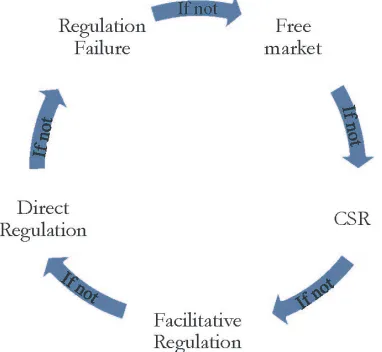
MFI legislation may allow MFIs to overcome risk management problems and facilitate market functioning. In order to achieve this, regulation may support Corporate Social Responsibility (CSR) programs, facilitative regulation, or direct regulation, and these will be discussed in subsequent Parts of this article.
112 Malimba Musafiri Papias & P. Ganesan, Repayment behaviour in credit and savings
cooperative societies, 36 INT’L J. SOC. ECON. 608 (2008).
113 Hermes & Lensink, supra note 4, at F1.
114Seesupra note 86. This author generally refers to the market for lemons, and the current paper
applies that idea to the microfinance sector in this context.
115See, e.g., Arup Daripa, Social Capital, Individual Incentives and Loan Repayment (2009),
available at http://www.isid.ac.in/~pu/conference/dec_09_conf/Papers/ArupDaripa.pdf.
116See, e.g., Hermes & Lensink, supra note 4; Karlan & Goldberg, supra note 36.
117 As a result of information asymmetry and the self-selection of borrowers, these issues function
both in the formal financial sector and also in microfinance.
118 MILLENNIUM CHALLENGE CORPORATION, Access to Credit Country Scorecards, http://www
III.THE POOR ALSO NEED FINANCE
The model of traditional financial relationships leaves a gap in services provided to the poor. The previous Part established that the banks in developed countries may deem providing credit and other financial services to the poor excessively unprofitable.119 The result of this is a lack of access to capital for the poor as small loan sizes are not offered or applications are rejected.120 This situation is relevant across the world, and is especially poignant in developing countries where there are potentially more poor left un-serviced by this market failure. Evidence of this market failure can be found in developed countries where the relatively poor are also excluded from the formal financial system, which has resulted in a trend towards microfinance and microcredit programs across countries such as Holland, Italy and Germany.121 Poverty is an absolute and a relative socially constructed definition.122 It is logical that financial system exclusion exists in all economies, because there will always be a group of people whom banks deem unprofitable because of excessive uncertainty of collateral and repayment ability.123
A. Do the Poor Fit into the Traditional Banking Relationship?
1. Supply Side
a. Trust
Banks in developing countries have greater funding and operational challenges to overcome than banks in developed countries.124 Among other
119 Where high transaction costs relative to income earned are small. 120 Shafi & Medabesh, supra note 21, at 116.
121Microfinance by Country: Italy, EUROPEAN MICROFINANCE NETWORK,
http://www.european-microfinance.org/index.php?rub=microfinance-in-europe&pg=microfinance-by-country&cpg=22.
122 Muhammad Kashif Khan Durrani et al., Role of Micro Finance in Reducing Poverty: A Look
at Social and Economic Factors, 2 INT’L J. BUS. SOC. SCI. 138 (2011).
123 Therese Ann Wilson, Supporting Social Enterprises to Support Vulnerable Consumers: The
Example of Community Development Finance Institutions and Financial Exclusion, 35 J. CONSUMER POL’Y 197 (2012).
124 Rusdy Hartungi, Understanding the success factors of micro-finance institution in a
challenges, authors have commented that the level of trust within a country and within the financial sector is particularly important for innovation and outreach to poor customers.125 The issue for banks in developing countries is that general levels of trust are relatively low and contract law and enforcement are not always reliable to fill the gap in general trust levels. This is especially relevant for microfinance and, in particular, microsavings. In a low trust environment, it may still be likely that people borrow from MFIs, but the likelihood of them depositing savings is much less likely.126
As deposits are the cheapest source of capital, a low trust environment which restricts access to deposits also results in higher operating costs via source of capital, and financial self-sustainability with reliance on donors and governments.127
b. Lack of Information
Traditional banking relationships manage risk by collecting a lot of information from customers before and during the provision of financial products.128 However, the target customers of MFIs may have no evidence of income, assets, or ability to prove they can repay the loan.129 Because of the general lack of information available from microfinance borrowers, there is a very large perceived risk associated with lending to them.130 This is particularly the case for traditional banks with no first-hand experience in the high repayment rates of microfinance loans.131
With technological advances and financial services product innovation, it is becoming easier to provide financial access in developing countries.132 For example, in Kenya, which has bank density at one third the density of India, 70% of people use mobile phone banking and bypass
125 Aggarwal et al., supra note 94. 126Id.
127Id.
128 Allen & Gale, supra note 31. 129Seesupra Part II.C.
130 As discussed in previous Part, this is a perceived risk. 131 Di Bella, supra note 50.
132 STATE BANK OF PAKISTAN, POLICY PAPER ON REGULATORY FRAMEWORK FOR MOBILE
traditional banking relationships.133 However, this system is hinged on the requirement of agents to receive and give cash.134 The potential scope of microfinance expansion which builds on the use of mobile phone technology is large and countries such as Pakistan have explicit regulatory strategies to build on this technology.135
c. Interest Rate
Interest rates on microfinance loans have a global median of 32%.136 The rate of interest is generally explainable by higher costs from a lot of small transactions and higher perceived risk to the lender than for traditional collateralised loans as discussed in the previous Parts.137 This reasoning, however, is not certain. Further, the interest rate reflects a risk allocation and a risk premium given the demographics of the borrowers and subsequent costs. The primary actions of MFIs and banks when granting loans is to adequately select a borrower who will repay the interest and loan principal and then monitor on-going repayments.138 The microfinance model uses community knowledge to select borrowers of low risk by getting recommendations from non-family members.139 Further, these recommendations create social pressure on the borrower, which results in them monitoring their own repayments.140 These two mechanisms build on community knowledge and social pressure and leave the high interest rates attributable to the high proportional operating costs of providing a lot of small loans.141
133 Aggarwal et al., supra note 94. 134 Herd et al., supra note 75.
135 STATE BANK OF PAKISTAN, supra note 132.
136 These results are based on data from 2007 to 2009. Di Bella, supra note 50, at 13.
137 Arch, supra note 16. The real risk of default, however, is low as reported by Di Bella. Di
Bella, supra note 50, at 13.
138 See, e.g., J. Jordan Pollinger et al., The Question of Sustainability for Microfinance
Institutions, 45 J. SMALL BUS. MGMT. 23 (2007).
139 This system works for both individual and group contracts. Rodríguez-Meza, supra note 84. 140 Rahman & Nie, supra note 20, at 213.
A potential reason for such high interest rates may be MFI inefficiency.142 That is, despite the facts that borrower recruitment, selection, and monitoring are effectively outsourced to the community,143 MFIs fail to be financially sustainable.144 Given the social objectives of microfinance, it is understandable that NGO funders may monitor and evaluate microfinance performance based on social outcomes rather than the ultimate operational costs and subsequent interest rates.145 From this it can be logically extended that operating efficiency is not incentivised for MFIs, and the result is high interest rates. The creation of incentives is at the heart of a law and economics analysis of these issues.
However, a trend towards MFIs self-reporting their financial and outreach data to organisations such as the MIX Market Exchange allows that donors can better allocate their funds. This trend creates further issues regarding whether MFIs should be rewarded for being more efficient if there is most likely a trade-off between outreach and efficiency.146 The relatively low interest rate of microfinance is because of the cheap source of capital which MFIs currently have access to, which allows the transaction costs associated with microfinance to be borne partly by the NGO or government providing the capital.
The interest rates on microfinance loans are generally between 32%– 37%.147 This is relatively high compared to the interest rates charged to middle and upper class borrowers in the same developing countries, which may often be below 10%. However, in comparison to the interest rates charged by loan sharks in the slums of many developing countries,148 the interest rates of microfinance are relatively cheap. Indeed, microfinance interest rates are not so different from the 20% charged on unsecured credit cards in Australia.149
142See, e.g., Suresh De Mel et al., Returns to Capital in Microenterprises: Evidence from a Field
Experiment, 123 Q. J. ECON. 1329 (2008).
143 In both group and individual based loans. Rodríguez-Meza, supra note 84. 144See, e.g., Crabb, supra note 27.
145Seal of Excellence will help the microfinance sector further its social mission, MICROCREDIT
SUMMIT CAMPAIGN, http://www.microcreditsummit.org/news/26/seal-of-excellence-will-help.html.
146 Hermes & Lensink, supra note 4, at F2. 147 Di Bella, supra note 50, at 12–14.
148 The rate can be as high as 300%. Mayer, supra note 24.
149 COMMONWEALTH BANK OF AUSTRALIA, Rates and Fees, https://www.commbank.com.au/
The issue of microfinance interest rates is a hotly debated opinionated topic rarely covered in the empirical literature. However, a key empirical article by Karlan and Zinman has been published in the American Economic Review, which analyses credit-elasticity in microfinance.150 This research implemented randomised trials in a South African MFI to determine if the poor are sensitive to interest rate changes.151 Importantly, this research found that increasing the interest rate actually results in lower repayment because of higher information asymmetry.152 In terms of regulatory implications, this research suggests that lower microfinance interest rates result in greater outreach to poor women and at a very small cost to foregone profits. In this way, the research seems to support interest rate caps, although detail is not provided regarding what the interest rate caps should be.
The discussion regarding interest rates is critical to the law and economics discussion of microfinance and will be elaborated in future parts of this article, especially regarding regulatory imposed interest rate caps. If MFI financial self-sustainability is to be achieved, market interest rates need to be charged to borrowers which reflect the cost of providing the product. Indeed, the interest rates currently charged to microfinance borrowers are similar to those charged on uncollateralised credit card loans provided to consumers in developed countries.
Thus, even with cheap sources of capital MFIs still need to charge above 30% interest.153 For banks with traditional sources of capital, it can be understood that the interest rate required to cover the high proportional cost of providing loans to the poor would be much higher.154 This is unless
150 Karlan & Zinman, supra note 88.
151Id. at 1041. The motivation for this is that the authors claim regulation supports MFIs raising
interest rates on loans in order to reduce dependence on subsidies, but this strategy only makes sense if the poor are insensitive to interest rate changes. Among key findings, these authors found that loan size was more responsive to a change in loan maturity than changes in interest rates. Long maturities mean there are small monthly repayments and easier cash flow management than short maturities. Hence, this finding is consistent with theory on binding liquidity constraints.
152Id. at 1064. Borrowers willing to borrow at higher interest rates may arguably have been
rejected from other financial institutions because of unsound financial situation or other reasons, which the MFI is unable to know. Hence, information asymmetries are increased with loans with higher interest rates, associated with lower repayment rates.
153 Di Bella, supra note 50.
the need to access the financial and investment markets in itself creates operating efficiencies brought about by the process of on-going regulation.
d. Alternatives—Supply Not Diversified
For the poor and chronic poor who need access to finance to smooth consumption expenses or fund businesses, there are few avenues to choose from. Some poor are willing and able to pay for access to finance,155 although the chronic poor are not.156 This is illustrated in the widespread use of TMLs157 by the poor across the world.158 It is logical that the loan sharks who dominate the slums and chronic poor areas should not be the first choice of potential borrowers because of high interest rates and violent repayment tactics.159 Authors have found a paradox in that the flexibility of repayments for services by loan sharks means that it is not uncommon for borrowers to choose these loans rather than the rigid payment schedules of microfinance.160 In a continually adapting microfinancial services market, there exists a role for TMLs and loan sharks in providing flexible loans, despite the high interest rates. This is an issue because it illustrates that there is a gap in the traditional market and microfinance has not been designed in a sufficiently adequate manner to complete the gap. However, with low awareness of microfinance, especially in areas such as sub-Saharan Africa161 where the need is great means that the poor are effectively left with no choice.
In a smoothly functioning financial market, there should theoretically be a variety of credit access sources that the poor can use, because where there is demand a market should appear.162 This is because the poor are
155See, e.g., Aggarwal et al., supra note 94; Di Bella, supra note 50.
156 Samia Mahmood, Microfinance and Women Entrepreneurs in Pakistan, 3 INT’L J. GENDER &
ENTREPRENEURSHIP 265 (2011).
157 Traditional Money Lenders (TMLs) such as payday lenders or informal finance sources. 158See, e.g., Amadi, supra note 52; Francis Kehinde Emeni, Microfinance Institutions in Nigeria:
Problems and Prospects: Questionnaire Survey Findings, 21 J. FIN. MGMT. & ANALYSIS 69 (2008).
159 Emeni, supra note 158.
160See, e.g., Hudon, supra note 111; Dean Karlan & Sendhil Mullainathan, Is Microfinance Too
Rigid? (forthcoming) (on file with author); Pearlman, supra note 77.
161 Aggarwal et al., supra note 94.
162 For a general sense for the basic idea of supply and demand, see John Maynard Keynes, The
willing and able to pay for access to credit,163 and the best evidence for this is the use of loan sharks across the world.164 Despite the fact that loan sharks are not able to outsource the selection and monitoring of borrowers in the way MFIs are, their continued existence seems to indicate that providing finance to the poor can be a profitable business.
Across the world the most common source of credit is from family and friends.165 Thus, although there is a source of credit, there is no supply diversification, nor is this supply method efficient.166 This illustrates not only cultural issues and aversions to financial institutions, but also the low awareness and uptake of microfinance. An additional interpretation is that this shows there is a great demand for financial services by the poor.167 Hence, non-diversified access to credit results in fewer choices from lower competition and ultimately less efficient financial service access.
2. Demand Side
a. Cash Flow but No Savings
The financial situation of microfinance borrowers provides an explanation for why most microfinance is used to smooth consumption expenses rather than to fund microenterprises. The target market of microfinance is the poor who have cash flow to cover expenses as they arise, but have no “nest-egg” to provide for a “rainy day” or unexpected or large expenses such as medical expenses or expanding a business.168
It is intuitive that people with a small amount of cash flow but no savings may need to borrow funds to pay for lump sum expenses such as education or medical costs. Indeed, humanities’ general risk aversive
163 Aggarwal et al., supra note 94. 164 Pearlman, supra note 77. 165 Herd et al., supra note 75.
166 Examples include extreme weather or economic catastrophes, which result in this credit source
disappearing.
167 Indeed, with over 70% of loans from family, there are potentially wide-ranging implications in
an economic shock which would surely hurt all members of society with inter-community loans, and also restrict loans to cover the unexpected bad circumstances, which at an individual level a society can deal with. Pearlman, supra note 77.
tendencies169 indicate that even a better personal financial situation may not be enough to shift the use of microfinance from consumption to entrepreneurship.170
b. Vulnerability to External Shocks
Prior to the Global Financial Crisis (GFC), MFI investment was an asset class for inclusion in investment portfolios providing sound diversification because of the general insulation from international markets and lower financial leverage than banks.171 This risk diversification benefit allowed microfinance to attract investment as well as donor funds, and the impact on borrowers was steady growth in outreach. In an IMF Working Paper, Di Bella172 examined the effect of the GFC on microfinance, in particular the systemic risk faced by MFIs.173
Di Bella found that as MFIs trend away from the traditional funding sources of Non-Government Organisation (NGO) funds, there is increased exposure to changes in domestic and international economic conditions.174 The implications of this are large, especially for countries such as Peru, Bolivia, and Kenya where microfinance composes a large percentage of total Gross Domestic Product (GDP). This paper found that the MFI transformation from being unregulated to regulated invariably results in an increase in systemic risk.175 It can be simply and intuitively extended that the increased vulnerability to external shocks, which MFIs face from
169 Arndt Sorge, Culture’s Consequences: International Differences in Work-Related Values, 28
ADMIN. SCI. Q. 625 (book review) (discussing general human tendencies away from uncertainty).
170 W. Jean Kwon, An Analysis of Organisational, Market and Socio-Cultural Factors Affecting
the Supply of Insurance and Other Financial Services by Microfinance Institutions in Developing Economies, 35 GENEVA PAPERS ON RISK & INS. 130 (2010).
171 Nicolas Krauss & Ingo Walter, Can Microfinance Reduce Portfolio Volatility?, 58 ECON.
DEV. & CULTURAL CHANGE 85 (2009).
172 Di Bella, supra note 50.
173Id. This author sampled 353 MFIs who conformed to a set of criteria regarding size and the
consistency of data over the last seven years, and grouped for analysis into geographical regions. In determining the performance of MFIs, the authors used asset and lending growth, return on equity, portfolio at risk, and write-off ratios. This paper examined the systemic risk of MFIs over a nine year period during which the GFC also occurred. The methodology of OLS panel regressions and general regressions seem to be robust given the measures taken to ensure there are no other influencing factors involved.