DOI: 10.30954/2249-6637.02.2019.4 ©2019 IJSS. All rights reserved
Study on Controversial Advertising in India
Kunal K. Lanjekar
1and Geetali Tilak
21Department of Digital Arts, Tilak Maharashtra Vidyapeeth, Pune, India
2Department of Journalism and Mass Communication, Tilak Maharashtra Vidyapeeth, Pune, India
Corresponding author: [email protected] / [email protected]
ABSTRACT
In the era of globalization, everyone is in competition with others. The world of advertising is also not an exception. Controversy in marketing is nothing new. At any cost, advertisers want to attract the attention of the viewers towards their product. They are always looking for ways to do that. Some also get tangled into controversial issues either intentionally or not, which can harm their brand image. The goal is just one and single - to sell the product by hook or by crook. While some advertisers have undertaken controversial advertising campaigns which have been very successful, some have been damaging to the company. Overtly or covertly, the advertisers break ethical guidelines, challenge the norms set up by the supervisory bodies. When protest erupts, either the advertisers drop those advertisements form being broadcast for a temporary period or move up to the court to fight for their reasons. This research paper focuses on the violation of the advertising ethics in Indian advertising being practiced since many years and its effects on the audience and also to find out the loopholes in the controversial advertisements.
Keywords: Controversial Advertising, Ethics, Violation, Brand, Product
Every day we are exposed to up to five thousand advertisements. They are everywhere - on our phone, televisions, newspapers, radios, emails.... the list is endless. The world is changing fast, including the way businesses advertise their brands. A brand is a name, term, design, symbol or other feature that distinguishes an organization or product from its rivals in the eyes of the customers.
Advertisers since time immemorial take bold steps to promote their products. Whether the brand is advertised on TV, on radio or in the newspaper, methods of advertising are changing. As the amount of advertising increases, it would appear that there has been an increase in the amount of controversial advertising shown in various media. Brand promotion is the key concepts of advertising. Therefore, to promote the brand, advertisers have to take some steps which sometimes appear as controversial, where they shock people in
order to grab their attention. Shock advertising uses different techniques, some of them include advertising that include sexual references or even makes people feel bad about them. Some of the reasons for this include that society has become more complex, increased awareness of the harmful effects of some products and as agencies try to become more creative to “cut through the clutter” to gain attention and brand awareness.
But in a country like India, where moral values and ethical values are still most important in society, advertisements with controversial messages create disagreement in public beliefs. Many of these advertisements pass by our conscious awareness, with endorsements and hidden messages peppered across social media. The cleverest thing an advertiser can do is the opposite of what everyone else is doing. Sometimes it’s risky yes, but it’s better to be talked about than not talked about. For advertisers the problem can be that a controversial
advertising campaign can be very successful or very damaging, depending on what ultimately happens in the marketplace. There’s no doubt that controversial advertisements can create debate and gather an enormous amount of attention for a brand.
Globally, businesses want to maximize their profits and get their name out there by using different methods of advertising. Some businesses have particularly focused on controversial advertising methods, although it might not be for the ‘right’ reason, it puts the brand in the spotlight - after all, it is said that ‘any publicity is good publicity’. Although critics might not always agree with the message of an advertisement, there’s no doubt that it can make the brand stick in people’s minds.
the result of controversial advertising campaign can, therefore be offence that can lead to a number of actions like negative publicity, attracting complaints to advertising regulatory bodies, damage to brands reputation, triggering people’s emotions, falling sales and product boycotts.
Controversial advertising is a very brave method of advertising as it goes against traditional ways and aims to stand out in the crowd of other advertisements as well as to create noise.
Some advertisements seemingly take the moral high-ground, through appearing to support equality, and overtly demonstrating their opposition to negative themes in current society. Big businesses know that to connect with the audience they need to touch a chord- triggering a discussion of the advertisement and subsequently, the brand. When a brand is called out on a controversial campaign, they often apologies, stating they meant no harm. It’s hard to tell if these are sincere apologies or not.
Communication and legal guidelines are inextricably linked to each other. Though there is a huge difference between laws and ethics, still ethical values are necessary to be maintained while communicating something to the society as a whole. Advertising is a type of communication that is non-personal in nature, promotional in type and must maintain ethical guidelines as they will be public after being broadcast or printed.
Various social and cultured problems around as are created by this free flow of information violence, eating disorders, sexual behavior, changes in priorities of life are the fruits of this uncensored exposer. “Traditional” journalists working on new platforms, but many are not. India is a democratic country and press is called as a fourth pillar of democracy, which states the right of freedom of speech and expression. The role of media is important as a feedback, exposure and information giving mechanism in all countries. (Tilak, 2019)
Controversial advertising should be applied carefully, with proper guidelines, as there is a big failure risk in terms of loss of a business reputation. In spite of all the risks, recent trends suggest there are plenty of successful examples of controversial advertising.
In India, the Advertising Standard Council of India (ASCI) has set up its moral and ethical guidelines; advertisers are found ignoring, violating or breaking very often as it does not invite any penalty spontaneously.
Objective of the Study
This research paper attempts to find out the violation of advertising ethical guidelines mentioned by the ASCI in the Indian advertisements and its effects on society through its content.
Controversial advertising can be quiet risky and costly to the reputation of the brand if not implemented carefully. The study will also help managers to have a better understanding of what they should be looking for when appraising the implementation of the strategies adapted for controversial advertising methods and to make sure all guidelines are followed correctly.
The main goal of this research is to understand controversial methods of advertising and the consequences of using these methods.
Research Methodology
Data Analysis
Table 1: Percentage of People watching video advertisements?
Age in Years Percentage of Respondents: Frequency of Watching Advertisement
18-25 33%
26-33 54%
34-41 58%
42-49 17%
50-57 10%
From table 1 it shows that people between the age of 26-33 years, are more inclined towards watching advertisement and shows 33 percentage of young generation who are less interested for watching advertisement.
80% 20%
10%
Offensive Advertisements
Yes No Neutral
Fig. 1: People who find advertisements offensive/shocking?
From Fig. 1 it is concluded that 80 percent people think that most of the advertisement are more offensive and shocking and 20 percent people are not agree with that on the other hand 10 percent people are neutral about it.
30%
60%
80% 40% 60%
70%
Offensive Advertisements
Foul Language
Nudity
Presentation
Violence
Fig. 2: Reasons for Offensive
After the survey (Fig. 2) it was noticed that reasons were professed to be not offensive by males and younger generation, yet these were for the most part simply under the midpoint thus demonstrating a greater amount of a lack of concern. Looking at sexual orientation, females were fundamentally more irritated than guys for Sexist Image, Violence, Stereotyping of Individuals, Subject Too Personal, Indecent Language and Nudity. This can be because of the way that ladies are regularly the objects of the sexism, stereotyping and nudity. The older generations were annoyed by advertisements with Violence, Hard sell, Concern for Kids, and Anti-social Behavior. This would show the conservative nature of the elders, furthermore, progressively worried about things like kid welfare and violence.
74% 16%
10%
False Controversies
Yes No
No Comments
Fig. 3: Companies create false controversies around their products for publicity
Using controversy in marketing campaigns is something that is becoming more and more acceptable by brands. If done correctly, it can be a great way to get your brand noticed. If it backfires, it can do more harm than good to your brand. Be wise about any type of controversial campaign you run. You need to predict all possible reactions to the campaign before introducing it so you can determine if it is worth the time and money you are spending.
87% 7%
6%
Ethical Guidelines
Yes No
No comments
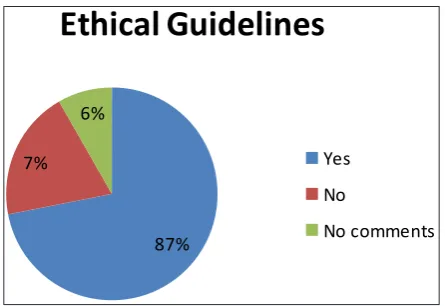
Fig. 4: Should ethical guidelines be set to curb the offensiveness/ shocking nature of the advertisements?
To save our culture, norms and ethics regulations of such unethical advertisements are extremely essential. But today the numbers of unethical and obscene advertisements are increasing in numbers instead of decreasing. (Munjal, 2016) Around 70 percent of people have agreed to the fact that ethical guidelines be set to curb the offensiveness/shocking nature of the advertisements.
Is Using Controversy for Marketing Worth It?
“It’s difficult to use shock marketing without offending at least a portion of your audience. Some entities have been successful in finding the happy medium between being intriguing and being plain offensive, but for most, it is a struggle. America’s diversity makes it hard to implement controversial marketing techniques without being shot down by one group of people or another. Thus, most companies or people who shock their audience understand and accept that they can’t be everyone’s friends; the profit benefits outweigh the enemies made”(Agrawal, 2016).
Brands can benefit greatly from what is often referred to as “shock marketing.” But even with benefits, you will face some losses, you may get new customers but will lose some old ones too.
While some advertisers have undertaken controversial advertising campaigns that have been very successful, some have been damaging to the company.
Controversial Advertisements
The advertisements were first observed and then analyzed as per its scenes, shots and words used. Indian advertisements have spanned the gamut of being funny, sensitive, intelligent and silly. But a few ads from the industry raised everybody’s eyebrows and made people uncomfortable. Here are a few of those that didn’t quite sit well with us.
Jawed Habit controversial add
Hairstylist Jawed Habib, known for his line of hair salons across the country, recently had an ad put out in his company’s name for the upcoming Durga Puja, which did not go down well with some people.
Renowned hair stylist Jawed Habib, who owns a chain of hair salons across the country, found himself in hot waters when a pre-Durga Puja ad featuring the Hindu gods was released in Kolkata . The print ad showed gods and goddesses lounging around in a Jawed Habib salon, getting their hair fixed, applying make-up and counting money, with the tag line, “Gods too visit JH salon”. The ad did not go down well with people, with many taking to Twitter and other social media platforms to express themselves. While some said that Habib should not have toyed with the sentiments of the people by portraying the deities in this fashion, others lashed out at him for disrespecting the Hindu religion; some even urged people to boycott Habib’s salons for the insensitive advertisement.
with an apology, clarifying that he had no intention of hurting anyone (DESK, 2017).
Zomato ‘offensive’ outdoor ad
To break through the clutter, brands sometimes choose to communicate in a style that borders on the unusual. Online restaurant guide and food ordering app Zomato found itself in a soup when its new outdoor campaign was attacked on social media platforms for being offensive and sexist. The controversial ad, written by Zomato’s art director Akshar Pathak, has bold white letters MC.BC. (Mac n’ cheese, butter chicken) written against a bright red background. The ad, with letters that are short for Hindi language expletives, started going viral on Twitter and Face book with people calling it sexist, cheap and crass (Ghosh, 2017).
Apart from the controversial ad, the campaign takes inspiration from elements from pop culture using quirky lines like “Acche din are finally here, Bol Baby Bol, Malai Tikka Roll!” These outdoor ads, executed by Madison and Outdoor Advertising Professionals (OAP), an outdoor agency, have been put up across multiple cities, including in Delhi, Mumbai, Bangalore and Kolkata, among others. The billboards, which went live this week, are a part of an above-the-line (ATL) campaign that started for television, radio and digital platforms.
Advertising and brand experts unanimously agree that the creative in question was done in bad taste and can tarnish the goodwill and image of brand Zomato. Advertising expert Colvin Harris, founder at ad agency Harris-Mint, says the letters MC and BC are not positive attributes which should have not been associated with the brand in the first place. “If this was supposed to be taken as a pun then it’s a terrible one and in a bad taste. It treats the customer and the brand in such a shoddy manner,” he added.
Kalyan Jewellers
This advertisement featuring Aishwarya Rai for a jeweler brand caused a stir because it featured a dark-skinned child struggling to hold an umbrella over her.
This ad was considered racist and the makers of the ad had to finally issue an apology.
Kalyan Jewelers have announced they are withdrawing the controversial ad featuring Aishwarya Rai Bachchan. The ad, draw huge flak after an open letter described it as ‘insidiously racist’. For showing Aishwarya reclining under a parasol held over her head by an ‘a dark-skinned slave-boy’ (as described in the open letter).
This statement from Kalyan Jewelers was posted on Face book: “With regard to the item Open letter to Aishwarya Rai Bachchan: This ad you figure in is insidiously racist, the creative was intended to present the royalty, timeless beauty and elegance. However, if we have inadvertently hurt the sentiments of any individual or organization, we deeply regret the same. We have started the process of withdrawing this creative from our campaign.” Earlier, Aishwarya Rai Bachchan’s publicist issued a statement on behalf of the actress saying the “final layout is the prerogative of the creative team of a brand”. The actress’ publicist on Wednesday issued an image from the original shoot, saying the “final layout is the prerogative of the creative team of a brand” (IndiaToday. in, 2015).
AMUL -Har Ghar, Amul Ghar
This was a digital ad launched by Amul. The story line was about a dad bringing home a baby brother and removing all the dolls that the sister had lovingly decorated the crib with. The little girl is upset about this and the father then proceeds to teach the girl how to play cricket so that she can play with her brother. This ad was looked down as reinforcing archaic stereotypes of boys and girls preferring only certain things to play with.
Motorola C550
Ford Figo India
Ford Figo ran this print ad portraying women bound and gagged in the trunk of a car with the caption “Leave your worries behind”. It was supposed to refer to the spacious trunk of the Ford Figo. However, this ad which came out in 3 versions, featuring the caricatures of the Italian prime minister Silvio Berlusconi, Paris Hilton and Michael Schumacher met with severe opposition. The ads were not perceived as humorous at all especially in the aftermath of the Nirbhaya incident and were pulled off with Ford issuing an apology for them.
CONCLUSION
Waller (2004) noted that most of the research has observed “controversial advertising” as a negative concept, and if controversial advertising resulted in only negative responses advertisers would shy away from this type of campaign. However, advertisers are not shying away but using it in increasing numbers. The use of controversial images has been successful for a number of organizations in the past.
It’s difficult to use controversial marketing without offending at least a portion of your audience. Some entities have been successful in finding the happy medium between being intriguing and being plain offensive, but for most, it is a struggle. India’s diversity makes it hard to implement controversial marketing techniques without being shot down by one group of people or another. Thus, most companies or people who shock their audience understand and accept that they can’t be everyone’s friends; the profit benefits outweigh the enemies made.
Brands can benefit greatly from what is often referred to as “shock marketing.” Keep in mind that even with the benefit, you will have some negativity. You may gain new customers, but you will lose some old customers too. Public reactions need to be predicted from all angles before a campaign is implemented. It is better to prepare for what will happen than try to deal with it after it blows up. Also there were significant differences in the responses with gender being more of a determinant
of offensiveness than age for indicating offence, with women being more offended compared to the men’s responses .On a positive note, a well-placed marketing campaign that shocks people will set you apart from the competition and get your name known. However, it can also be similar to playing with fireworks without taking proper safety precautions.
Using controversy in marketing campaigns is something that is becoming more and more acceptable by brands. If done correctly, it can be a great way to get your brand noticed. If it backfires, it can do more harm than good to your brand. Be wise about any type of controversial campaign you run. You need to predict all possible reactions to the campaign before introducing it so you can determine if it is worth the time and money you are spending.
REFERENCES
Agrawal, A. 2016. Why Using Controversy In Your Marketing Campaign Could Pay Off -- Or Not. Retrieved January 20, 2019, from Forbes.com: https://www.forbes.com/sites/ ajagrawal/2016/10/23/why-using-controversy-in-your-marketing-campaign-could-pay-off-or-not/#362bf0582987 Desk, T. 2017. Indian Express. Retrieved june 2, 2019, from
https://indianexpress.com/article: https://indianexpress.com/ article/trending/trending-in-india/jawed-habib-hairstylist-trolled-for-hindu-gods-ad-ahead-of-durga-puja-4831338/ Ghosh, M. 2017. 5 Controversial Advertisements Which Shocked
Indians In 2017! Retrieved March 22, 2019, from Trak. in:https://trak.in/tags/business/2017/12/28/controversial-advertisements-india-2017/
IndiaToday.in. (2015, april 24). IndiaToday.in. Retrieved May 5, 2019, from www.indiatoday.in: https://www.indiatoday.in/movies/ bollywood/story/aishwarya-rai-bachchan-clarification-on-racist-kalyan-jewellers-ad-row-249812-2015-04-22
Munjal, N. 2016. A study on ethical issues in advertising and analyzing different. Ecoforum, 23-242.
Tilak, D.G. 2019. Freedom of Expression in the Digital Age. Indian Journal of Applied Research, 9(6): 1-3.