United Kingdom ISSN 2348 0386 Vol. VII, Issue 12, December 2019
Licensed under Creative Common Page 360
http://ijecm.co.uk/
PERFORMANCE ANALYSIS OF THE ALAM SEHAT LESTARI
(ASRI) FOUNDATION BASED ON BALANCED SCORECARD
Berkat F. Gulo
Master of Management, Faculty of Economics and Business, Udayana University, Denpasar, Indonesia
Ni Luh Putu Wiagustini
Prof., Faculty of Economics and Business, Udayana University, Denpasar, Indonesia
Abstract
The sustainability of an organization, both profit and non-profit depends on good or bad
performance. The performance of a foundation will affect the trust and loyalty of donors/
grantors. ASRI Foundation as a non-profit organization in Sukadana, West Kalimantan, which is
engaged in forest preservation and health services around the Gunung Palung National Park
(GPNP) area is carrying out an expansion of the work area by replicating the same programs in
the communities around Bukit Baka National Park Bukit Raya (BBBRNP). An objective and
comprehensive assessment of the foundation's performance is very important to do for the
sustainability of the organization. The Balanced Scorecard (BSC) as a management concept to
measure the overall performance of the organization, both financial and non-financial in a
balanced way by using four perspectives on valuation. Data collection techniques in this study
such as questionnaires, internal documents of the foundation and observation. Analysis of the
data used for the patient perspective is the patient satisfaction level, the perspective of internal
business processes using the percentage of eco-discount and cashless payment for healthcare,
financial perspectives using financial performance ratios, learning, and growth perspectives
using employee satisfaction level. Overall, the foundation's performance analysis showed a
composite index number of 65.91 percent, means the foundation's performance is in the good
category.
Keywords: Balanced Scorecard, Composite Index, Performance Analysis, Civil Society
Licensed under Creative Common Page 361 INTRODUCTION
A foundation is like a company, it can be sustainable if the cost management is carried out
properly and in accordance with financial management procedures. The sustainability of an
organization depends on a good or bad performance, including a foundation. Performance
analysis at the ASRI Foundation for 12 years since its establishment, only carried out from the
financial aspect through an annual audit, while non-financial has never been done. Likewise, a
foundation in providing services to the community expects feedback on program activities
carried out in the community. Public satisfaction with the foundation's programs will give trust
from donors/ grantors to support the foundation's operational activities in sustainable programs.
ASRI Foundation as a dynamic organization is expanding its work area through the
replication of existing activities programs around the TNGP area to several places around the
TNBBBR area. The trust of the local community for the ASRI Foundation to replicate activities
requires increased operational costs, so that the foundation's management and donors want to
know the foundation's performance objectively and comprehensively. The foundation's
performance analysis will provide direction for management to find out the organization's
progress, improve the quality of strategic and accountability decision making and long-term
planning.
Internal business processes at the ASRI Foundation are carried out in integrated
programs between health services based on conservation and reforestation activities.
Healthcare is a service; therefore, the health service must be quality. Therefore, to measure
overall and balanced organizational performance is done by using the Balanced Scorecard
(BSC) method which will help formulate a management strategy. According to Tunggal (2003,p.
12) a strategy is a basically theory of how to achieve organizational goals. Of the BSC
approach, top management describes its strategy into performance benchmarks so employees
understand it and can implement something to achieve that strategy.
The BSC approach, besides measuring financial aspects through the financial
perspective of the foundation's financial performance ratios, it also measures the non-financial aspects through three perspectives. Performance measurement from customer’s perspective
will express patient satisfaction with the provided services, if good it will increase visits as proof
of appreciation for the program's success. Performance measurement from the perspective of
internal business processes to determine the quality of the existing programs activities are
integrated with each other. Performance measurement from a growth and learning perspective
can be used to improve employee quality through training and appreciation when performance
Licensed under Creative Common Page 362 The foundation's performance analysis through the BSC approach can be used as a
comprehensive evaluation that will provide an explanation if the results of the four perspectives
show the composite index numbers included in the good or not good category, so that the ASRI
Foundation can improve its performance in achieving its goals according to the organization's
vision and mission in the future.
LITERATURE REVIEW
Performance is about doing work and the achieved results from the work Wibowo (2008,p. 7).
According to Yasa (2016,p. 128) each basis used to compare a performance is called a
standard. Measuring organizational performance is controlling strategy. Strategy will maximize
comprehensive advantages and minimize competitive limitations (Hunger and Wheelen, 2014,
p. 16).
In traditional management, a financial statement is usually used to measure the
organization performance because it is easy to measure (Zainal et al, 2014,p. 50). The
Balanced Scorecard (BSC) helps managers formulate organizational strategies and how to
measure performance. BSC consists of four perspectives from financial and non-financial
(Kopecka, 2015, p. 59). BSC is a translation of strategy into action (Kaplan and Norton, 1996:
36), which consists of four perspectives namely financial perspective, customer perspective,
internal business process perspective and learning and growth perspective. According to
Mulyadi (2001,p. 11-15) the advantages of the BSC approach in strategic planning are being
able to produce strategic plans that have comprehensive, coherent, balanced, and measurable
characteristics.
According to Koetler (2012, p. 284) five dimensions of service quality that must be
fulfilled are physical evidence (tangibles), empathy, reliability, responsiveness and assurance.
The dimensions that determine employee job satisfaction by Robbins and Judge (2015,p.
181-182) include mentally challenged job, appropriate reward (compensation), supportive working
conditions, supportive coworkers, and compatibility of personality with work. According to Gurd and Gao’s (2008, p. 18) researched in healthcare organizations, for nonprofit and government
providers, perspective of patient needs must be more central to the BSC.
RESEARCH METHOD
This research is a case study conducted to determine the BSC-based performance assessment
over a 5-year period, from 2014 to 2018 at the ASRI Foundation in Sukadana, North Kayong
District, West Kalimantan. Performance analysis from a patient perspective is measured based
Licensed under Creative Common Page 363 internal business processes is measured using the percentage of realization of eco-discount
and cashless payment schemes for health services. The financial perspective is measured
using financial performance ratios namely current ratio, debt ratio, FAT ratio, and ROA ratio.
While learning and growth perspective is measured based on the level of employee retention
and the level of employee satisfaction.
Data collection for this study uses qualitative data, which is a general description of the
foundation. Quantitative data are secondary data from the audited annual financial statements
from 2014 to 2018, data on the number of patient visits during the period 2014 to 2018, and
data on realization of eco-discount giving and cashless payment schemes for health services
from 2014 to 2018. The primary data obtained is the result of distributing questionnaires to
patients totaling 100 respondents to determine the level of patient satisfaction and to 61
employees to find out the level of employee satisfaction, as well as the results of interviews in
depth interviews with key respondents to find out the overall scoring of performance values,
showed in Table 1.
Table 1 Total Value of Financial Perspective, Customer Perspective (Patient), Internal Business
Process Perspective, Learning and Growth Perspective
Number Performance Interval Value (Percent)
Performance Value Note
1 25 – 43.75 D Not good
2 43.76 – 62.50 C Poor
3 62.51 – 81.25 B Good
4 81.26 - 100 A Very Good
Source: Ministry of Administrative Bureaucratic Reform of the Republic of Indonesia, 2005
RESULTS AND DISCUSSIONS
Performance of Customer Perspectives
Here, customer perspective is indentified as the patients visiting the clinic at ASRI. The results
of the calculation of the patient visits level to ASRI clinic from 2016 to 2018 have increased from
year to year. This increase was due to the physical facilities at the ASRI Foundation which were
completed in October 2016, which were previously only rented buildings. Spacious and
adequate clinical facilities increase the capacity of services in the clinic to provide services to
patients. When seen from the number of health service discounts to patients and cashless
payments, it increased from 7.14 percent in 2015 to 14.93 percent (2016) and 16.93 percent
Licensed under Creative Common Page 364 The level of clinical patient satisfaction at the ASRI Foundation was obtained by distributing
questionnaires to 100 patient respondents using the incidental method. For the reliability dimension as measured by service indicators and hospitality from employee’s indicators from
employees to patients, the highest positive statement was 4.49. The responsiveness dimension
is measured by responding to the needs of the patient and completion of the administration of
the patient gets a positive statement of 4.44. Dimensions of direct evidence measured by
indicators waiting room facilities, hours/ day clinical services and payment facilities obtained a
positive statement of 4.37. While the assurance dimension is measured by the patient being
given the right medicine and timely service to get the second lowest positive statement of 4.33.
And the last dimension of empathy measured by indicators of good communication with patients
received the lowest positive response of 4.32. Based on the results of the questionnaire
distributed, the average level of overall patient satisfaction was 4.39 or 87.8 percent. From the
results of these calculations it can be concluded that the Level of Clinical Patient Satisfaction at
ASRI Foundation is in a very satisfied or very good condition.
Performance of the Internal Business Process Perspective
The ASRI Foundation preserves tropical rainforests by integrating reforestation activities and
health services into an inseparable part. This success is related to the collaboration of all
divisions in all organizations. The clinic provides healthcare, where patients pay for services tree
seedlings. Tree seedlings received are used for reforestation activities in traditional zones,
utilization zones and rehabilitation zones in around GPNP area. Public awareness increased is
inseparable from the role of socialization and education from planetary health education and ASRI’s forest guardians. The ASRI Foundation's hard work in preserving the tropical rainforests
will be evident from the community feedback in protecting their sub-villages from deforestation
activities, therefore the community getting health service discounts.
The percentage rate of eco-discount based on indicators of deforestation in each
sub-village to communities around TNGP and cashless payments for health services, showed an
increase from year to year starting in 2014 by 5.25 percent to 2017 by 16.93 percent. This
shows that internal business processes within the ASRI Foundation have increased
significantly. Increased budget (donations / grants) are well absorbed, shown by internal
business processes that increase from year to year. In 2018, the percentage growth rate
decreased by 4.15 percent, from 16.93 percent in 2017 decreasing to 12.77 percent in 2018.
This decrease was due to increased payment facilities at the ASRI Foundation, namely the
BPJSKesehatan. Likewise, this number does not show a decrease in internal business
Licensed under Creative Common Page 365 2017 amounted to Rp. 62,543,500 increased to Rp. 100,520,000 in 2018 or 61 percent. The
average annual growth of discounts on health services and cashless payments at the ASRI
Foundation for 5 years (2014 - 2018) was 6.29. percent. This figure shows a positive value that
the internal business processes at ASRI Foundation are experiencing positive growth
(increasing) from year to year.
Performance from Financial Perspective
The ability of the foundation to pay its obligations is increasing from year to year, starting from
2014 to 2016. In 2017 and 2018 the current ratio is quite high, indicating the amount of
remaining cash and cash equivalents from incoming donation/ grants isin excess of current
liabilities. A high current ratio shows the ability of the foundation in fulfilling its obligations, giving
trust to suppliers of goods and services. However, on the other hand, the magnitude of the
current ratio indicates that there may be obstacles in managing the program / activity budget at
the foundation. The average value of the debt ratio obtained by the ASRI Foundation from 2014
to 2018 was 0.1 (10.19 percent), which means that equity came from the foundation's assets.
Debt ratio is good, which is relatively safe because the amount of debt is smaller than the
amount of capital.
Measuring the ratio of activities using a fixed asset turn over (FAT) ratio, which is
measuring the level of efficiency of the use of funds in the foundation. In 2014 and 2015, the
FAT ratio was greater than 1, namely 1.3 and 1.1, which means the foundation's income from
donations and grants was quite high by maximizing existing assets. The ROA value in 2014
showed a negative value due to operating expenses were greater than the foundation's income,
resulting in a deficit. Likewise, in 2016 the value of ROA was negative, in line with the value of
the low FAT ratio due to larger operational expenses for the construction of clinics and
foundation offices. The ability of the foundation to produce the rest of business results is shown
in 2015 and 2018 with ROA values of 6.46 percent and 11.63 percent respectively. However, if
seen from the ASRI Foundation's ROA value for 5 consecutive years from 2014 to 2018, it
showed a good and positive value of 2.96 percent, this shows the ability of the foundation in
managing assets to provide a number of the rest of business results.
Performance from the Learning and Growth Perspective
ASRI Foundation's employee retention rate has changed dynamically from year to year. In 2015
the number of employees who came out was 2 people, in 2016 there were 5 people, in 2017
there were 6 people and in 2018 there were 3 people. This fluctuating change in employees is
Licensed under Creative Common Page 366 working contracts are quite numerous throughout the year. However, in 2015 no employees left,
this shows the ASRI Foundation was able to retain employees properly. From the results of the
questionnaire distributed to employees, the dimension of mental condition was measured by the
pride of work in ASRI getting the highest positive response at 4.36. The dimensions of work
suitability in person are measured by personal job satisfaction and work assignments (jobdesk)
get a positive response of 4.02. Dimensions of working conditions are measured by
accommodation needs, employee desires and work motivation to get a positive response of
3.79. Whereas the dimensions of coworkers are measured by consensus decision and easy
access to information to get a low positive response of 3.27. The dimensions of compensation
are measured by skills training, sensitivity to employee talent, and awards for employees who
excel get the lowest positive response at 3.25. Based on the results of the questionnaire
distributed, the average level of overall employee satisfaction was 3.4 or 74.75 percent. Of this
result can be concluded that the level of employee satisfaction at the ASRI Foundation is in a
satisfied or good condition.
Total Performance of the Four Perspectives
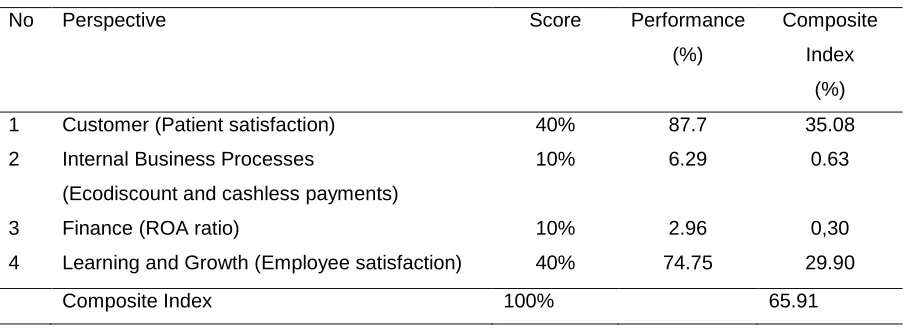
Table 2 The Results of ASRI Foundation Composite Index Calculation (CI)
No Perspective Score Performance
(%)
Composite Index
(%)
1 Customer (Patient satisfaction) 40% 87.7 35.08
2 Internal Business Processes
(Ecodiscount and cashless payments)
10% 6.29 0.63
3 Finance (ROA ratio) 10% 2.96 0,30
4 Learning and Growth (Employee satisfaction) 40% 74.75 29.90
Composite Index 100% 65.91
Based on Table 2, the composite index results for the patient perspective of 35.08 percent,
internal business process perspective of 0.63 percent, financial perspective of 0.30 percent and
a learning and growth perspective of 29.90 percent. Thus, the composite index number from the
four perspectives is 65.91 percent. If measured by the scale of Ministry of Administrative
Bureaucratic Reform of the Republic of Indonesia, the ASRI Foundation's performance score is
Licensed under Creative Common Page 367 MANAGERIAL IMPLICATIONS
Based on the analysis of patient perspectives measured using five dimensions, namely direct
evidence, reliability, responsiveness, assurance and empathy. Generally, performance from the
patient's perspective shows the performance with the category of very good or very satisfied.
The result of performance analysis of the internal business process perspective at the ASRI
Foundation for 5 years (2014 - 2018) is 6.29 percent. This figure shows a positive value that the
internal business processes at ASRI Foundation continue to experience positive growth
(increasing) from year to year.
The results of the analysis from a financial perspective can be seen from the financial
performance ratios. The current ratio, debt ratio, FAT ratio and ROA ratio at the ASRI
Foundation from 2014 until 2018 are generally good. Each of the average financial ratios
measured over five years produces a positive number that indicates growth. The results of the
analysis from the perspective of growth and learning measured using 5 dimensions namely
compensation (reward), supportive working conditions, personal suitability, supportive
coworkers, and mentally challenged job. Overall performance from a growth and learning
perspective shows performance in the good or satisfied category.
The results of the comprehensive performance analysis are a combination of the four
performance perspectives, namely the patient perspective, internal business process
perspective, financial perspective and growth and learning perspective through scoring each
perspective. The comprehensive performance of the ASRI Foundation is in good with the value
of the composite index is 65.91 percent.
CONCLUSION
The author suggests to the foundation management team that performance from a patient's
perspective can be improved through the time aspect of health care; the handling of patients
from the registration room to taking of drugs at the pharmacy has the right time standard. In
terms of employee empathy for patient needs including clear answers and good responses to
patients still need to be improved, so that patient satisfaction is also increasing. From the
perspective of internal business processes, it is recommended to management to increase
socialization and education to the communities about health service discount programs based
on deforestation rates in each subvillages around the GPNP area, so that the level of health
service discounts increases in the future.
From a financial perspective (FAT ratio), it is recommended to the foundation's
management to maximize the value of the foundation's assets that have increased from 2017 to
Licensed under Creative Common Page 368 foundation's operational activities. Viewed from the perspective of growth and learning it is
recommended to management to improve skills training for employees who excel,
responsiveness to the talents and expertise of employees in the field of work and give rewards
to employees who excel, thereby further increasing employee satisfaction.
This study only defines the it’s results without providing a strategic management solution
that to be implemented. For further studies, it can be added by using quadrant analysis or
Importance Performance Analysis (IPA). Future research that wants to analyze the performance
of the foundation based on Balance Scorecard, shout could study on foundations that rare
engaged in other civil society empowerment, It is not limited to the filed of social environment
and health, because research results may differ according to existing case studies. On the other
side, the research variable for the perspective of internal business process uses only 2
components, namely the number of ecodiscount and cashless payments for healthcare. The
further research could add other variables as the programs that support operational activities at
the ASFI foundation are quite complex and dynamic every year.
REFERENCES
Gurd, B. and Gao, T. (2008), Live in The Balance: An Analysis of the Balanced Scorecard (BSC) in Healthcare Organizations, Emerald Journal, Vol 57, No. 1, pp 6 -21.
Hunger, J. David and Wheelen, Thomas L. (2014),Strategic Management, Yogyakarta:Andi Press.
Kaplan, Robert S. and Norton, David P. (1996), Using the Balanced Scorecard as A Strategic Management System, Harvard Business Review 74, 75 – 85.
Koetler, P and Keller, K.L. (2012),Marketing Management, 12th Edition, Jakarta: Erlangga Press.
Kopecka, Nattarinee. (2015), The Balanced Scorecard Implementation, Integrated Approach and the Quality its Measurement,Elsevier Journal, Vol 25, 59 -69.
Mulyadi. (2001), Balanced Scorecard AlatManajemenKontenporeruntukPelipatgandaKinerjaKeuangan Perusahaan, Jakarta: SalembaEmpat Press.
Tunggal, Amin Wijaya. (2003), Performance Measurement using Balanced Scorecard, Jakarta: Harvarindo Press. Robbins, Stephen P and Timothy A.Judge. (2015), Organizational Behaviour. Jakarta: SalembaEmpat Press. Wibowo. (2010),Performance Management, 3rd Edition, Jakarta: PT Raja GrafindoPersada.
Yasa, Ni NyomanKerti. (2006),Strategic Management: Environmental Analysis to Generate Alternative Strategies, Denpasar: Udayana University Press.