Tessa N. Campbell* and Francis Y.M. Choy
Dept. of Biology, Centre for Biomedical Research, University of Victoria, Box 3020 STN CSC Victoria, B.C. V8W 3N5 Canada
Abstract
RNA interference (RNAi) is the sequence-specific gene silencing induced by double-stranded RNA. RNAi is mediated by 21-23 nucleotide small interfering RNAs (siRNAs) which are produced from long double-stranded RNAs by RNAse II-like enzyme Dicer. The resulting siRNAs are incorporated into a RNA-induced silencing complex (RISC) that targets and cleaves mRNA complementary to the siRNAs. Since its inception in 1998, RNAi has been demonstrated in organisms ranging from trypanosomes to nematodes to vertebrates. Potential uses already in progress include the examination of specific gene function in living systems, the development of viral and anti-cancer therapies, and genome-wide screens. In this review, we discuss the landmark discoveries that established the contextual framework leading up to our current understanding of RNAi. We also provide an overview of current developments and future applications.
Introduction
RNA interference (RNAi), initially coined by Fire et al., (1998), is the sequence-specific gene silencing induced by double-stranded RNA (dsRNA; Figure 1; Wall and Shi, 2003). This phenomenon has generated an explosion of interest and enthusiasm by scientists, similar to that created by the entrance of the green fluorescent protein as a species-independent molecular reporter in the mid-1990s. Since its inception, RNAi has been induced in organisms ranging from trypanosomes (Ngo et al., 1998) to nematodes (Fire et al., 1998) to flies (Kennerdell and Carthew, 1998) to vertebrates (Wianny and Zericka-Goetz, 2000). Because of its specificity, efficiency, and cost-effectiveness, RNAi has drawn the bulk of attention away from previous antisense methods such as ribozymes and oligodeoxynucleotides (ODNs). Furthermore, technical expertise accumulated from previous approaches is now being applied to RNAi, thus rapidly advancing its application to the medicinal domain (Kim, 2003). Currently, three areas of human disease research have already strongly embraced the RNAi phenomenon: infectious disease, cancer, and dominantly inherited disorders (Kim, 2003; Wall and Shi, 2003). RNAi has also shown exceptional promise as a genome-wide screening tool (Kamath et al., 2003; Kiger et al., 2003; Berns et al., 2004; Paddison et al., 2004).
In this review, we discuss the landmark discoveries that established the contextual framework leading up to our current understanding of RNAi. We also provide an overview of current developments and future applications.
RNAi: Past
Prior to the discovery of RNAi, several other previously characterized, homology-dependent gene silencing mechanisms had been described. In 1990, the Jorgensen laboratory introduced exogenous transgenes into petunias in an attempt to upregulate the activity of a gene for chalcone synthase, an enzyme involved in the production of specific pigments (Napoli et al., 1990; Agrawal et al., 2003). Unexpectedly, flower pigmentation did not deepen, but rather showed variegation with complete loss of color in some cases. This indicated that not only were the introduced trangenes themselves inactive, but that the added DNA sequences also affected expression of the endogenous loci (Hannon, 2002). This phenomenon was referred to as “cosuppression” (Napoli et al., 1990). Reports from other laboratories noted similar effects (Vander Krol
et al., 1990; Ingelbrecht et al., 1994). Subsequently, cosuppression was renamed posttranscriptional gene silencing (PTGS) since all cases of cosuppression resulted in the degradation of endogene and transgene RNAs post-nuclear transcription and this posttranscriptional RNA degradation was observed in a wide range of transgenes expressing the plant, bacterial, or viral sequences (Kooter
et al., 1999; Agrawal et al., 2003).
As more researchers corroborated PTGS results in plants, a similar phenomenon labelled “quelling” was reported in fungi. Two different laboratories demonstrated transgene-induced silencing of both transgenes and
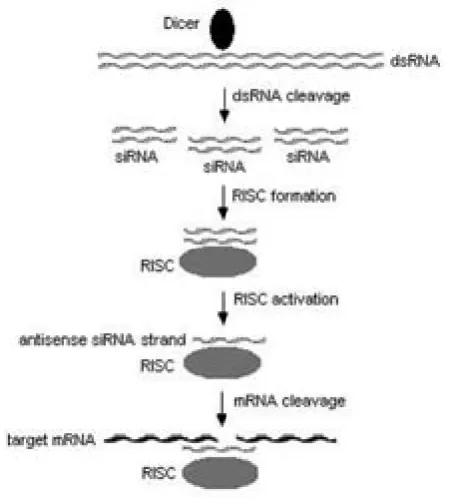
Figure 1. Proposed mechanism of RNA interference. Abbreviations include: dsRNA (double-stranded RNA), siRNA (small interfering RNA), RISC (RNA-induced silencing complex), and mRNA (messenger RNA).
*For correspondence. Email [email protected].
© Horizon Scientific Press. Offprints from www.cimb.org
endogenous genes in Neurospora crassa (Pandit and Russo, 1992; Romano and Macino, 1992). In 1996, a N. crassa strain was transformed with a plasmid containing a segment of the al1 gene to increase production of an orange pigment. The opposite, however, was observed, with a few stably quelled transformants showing albino phenotypes (Cogoni et al., 1996). These results substantiated earlier observations of transgene-induced gene silencing in N. crassa, but also demonstrated that DNA methylation was not obligatory for this process (Cogoni et al., 1996; Sweykowsa-Kulinska et al., 2003).
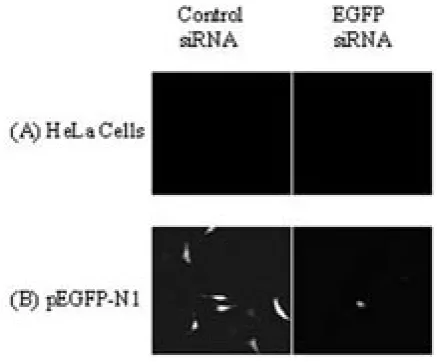
Around the same time, Guo and Kemphues (1995) demonstrated that sense RNA was as effective as antisense RNA in suppressing gene expression in Caenorhabditis elegans. Fire et al., (1998) built upon these results, leading to the discovery of the RNAi phenomenon. The researchers targeted the unc22 gene, which encodes a nonessential myofilament protein. A decrease in unc22 activity produces a twitching phenotype. Results indicated that introduction of a dsRNA mixture directed at the unc22 gene was at least tenfold more effective than were sense or antisense RNA alone. Similar results were noted when other genes were targeted. This experiment paved the way for specific silencing of a functional gene by exogenous application of dsRNA in organisms ranging from worms (Fire et al., 1998) to trypanosomes (Ngo et al., 1998) to flies (Kennerdell and Curthew, 1998). Initial experiments in mammals proved disappointing, since introduction of dsRNA >30 base pairs triggered the interferon response, resulting in global shutdown of protein translation and, ultimately, dramatic alteration in cellular metabolism (Gil and Esteban, 2000). To avoid this general shutdown, Elbashir et al., (2001) chemically synthesized small RNAs which mimicked Dicer products, resulting in the desired gene-specific silencing in mammalian systems. These findings highlighted the possibility of RNAi-induced gene silencing as a therapeutic alternative. Within the same year, Caplen et al., (2001) demonstrated knockdown of enhanced green fluorescent protein (EGFP), a modified version of the Aequorea victoria
wildtype GFP (Campbell and Choy, 2003; 2004; Figure 2). From this point on, EGFP has been employed as a popular positive control to ascertain successful siRNA delivery and to test system integrity.
RNAi: Present
RNAi Mechanism
Biochemical and genetic studies have confirmed that RNAi, PTGS and quelling share mechanistic similarities and that the biological pathways underlying dsRNA-induced gene silencing exist in many eukaryotic organisms (Hannon, 2002). Due to the explosion of interest in RNAi and its application to many diverse systems, much attention has been focused on elucidating its mechanism of action. Several landmark events, including evidence that siRNAs are the key mediators of RNAi (Hamilton and Baulcombe, 1999) and the cloning of the RNAse III-like enzyme Dicer (Bernstein et al., 2001), have provided insight into the RNAi pathway. Currently, a generalized mechanism has been proposed (Figure 1). First, long dsRNA is processed by Dicer into 21-23 nucleotide siRNAs. These siRNAs are incorporated into a nuclease complex labelled the RNA-induced silencing complex (RISC). The incorporated siRNAs are then unwound, leaving the antisense strand remaining in RISC, resulting in complex activation. The activated RISC now targets and cleaves mRNA that is complementary to the siRNA (Zamore et al., 2000; Kim, 2003; Wall and Shi, 2003). Though this general mechanism has been supported by many laboratories, much research is being performed to gain a better understanding of the fundamental biochemistry and kinetics of the RNAi pathway.
siRNA Design
While there are currently no reliable methods to identify the ideal sequence for a siRNA, a number of parameters have been suggested. These include: selection of a target cDNA region 50-100 nucleotides downstream of the start codon, selection of a 5’-AA(N19)UU target mRNA sequence where N is any nucleotide, 50% G/C content in the target sequence, avoidance of 5’ or 3’ untranslated regions and high G-rich areas, and confirmation of exclusive target-specific sequences (Elbashir et al., 2002). Presently, custom siRNA synthesis service is available through a number of companies, including Dharmacon, QIAGEN, and Ambion.
The search for more accurate, efficient siRNA selection has resulted in a number of new developments. In order to determine the accessibility of target mRNA sites to better predict optimal siRNA sequences, several groups have developed a synthetic oligodeoxyribonucleotide/RNase H method (Yang et al., 2002; Vickers et al., 2003). These groups discovered a significant correlation between RNase H-sensitive sites and sites that promote efficient siRNA-directed mRNA degradation. In a different approach, a number of groups have employed either Escherichia coli
RNase III (Calegari et al., 2002; Kawasaki et al., 2003) or recombinant human Dicer (Lee et al., 2002; Myers et al., 2003) to cleave long dsRNA into siRNAs for transfection into mammalian cells, allowing for the introduction of siRNAs with multiple specificities to the target.
siRNA Delivery
A number of different approaches have been used to introduce siRNAs into both cells and whole organisms. Successful approaches include: electroporation (McRobert and McConkey, 2002), soaking in siRNAs (Malhotra
et al., 2002), feeding bacteria carrying dsRNA (Caplen
et al., 2001), transfection with commercial reagents (Elbashir et al., 2001), and vector-based strategies (Lois
et al., 2002; Paddison et al., 2002). Though transfection with commercial reagents is the most widely used RNAi technique at present (Kim, 2003), much focus has been placed on vector-based strategies due to their therapeutic potential. These vector-based strategies involve either DNA or viral vector-mediated RNAi. In the first approach, RNA Polymerase II or III promoters have been incorporated into DNA vectors along with siRNA expression cassettes (Brummelkamp et al., 2002a; Paddison et al., 2002; Sui et al., 2002; Xia et al., 2002). These cassettes have included either sense and antisense siRNA strands expressed from tandem promoters or a short hairpin (shRNA) cassette whereby the two siRNA strands are separated by a short spacer (Dykxhoorn et al., 2003). Use of RNA Polymerase II promoters to generate shRNAs has the advantage that they permit easier adaptation of inducible/repressible tissue- or cell-specific siRNA expression (Wall and Shi, 2003).
Since plasmid-based siRNA expression has limitations in cases where transfection efficiency is low, viral vectors have also been developed. Adenoviral vectors and various retroviral vectors (e.g. lentivirus-based) have proven effective delivery systems in numerous cell types including non-cycling cells, stem cells, and zygotes (Abbas-Terki et al., 2002; Lois et al., 2002; Rubinson et al., 2003; Shen et al., 2003).
RNAi Medical Applications
Soon after the discovery of RNAi, its potential application to therapeutics received much attention. Three main areas of human disease have especially embraced the idea of RNAi therapy: infectious disease, cancer, and dominantly inherited genetic disorders (Kim, 2003). Regarding viral infection, human immunodeficiency virus (HIV), hepatitis, and influenza have all been successfully targeted by RNAi techniques. HIV tat, rev, nef and gag genes have been silenced, resulting in inhibition of viral replication in cultured cells (Lee et al., 2002; Park et al., 2002; Boden et al., 2004; Das et al., 2004). In mice, reduction in hepatitis B virus RNA and replicative intermediates has been demonstrated upon introduction of siRNAs or shRNA vectors (Giladi et al., 2003; McCaffrey et al., 2003). Likewise, the accumulation of influenza viral mRNAs was arrested following addition of siRNAs specific for nucleocapsid or a component of the RNA transcriptase (Ge et al., 2003).
In cancer research, RNAi has been used to target dominant mutant oncogenes, amplified oncogenes, translocation products, signalling molecules, and viral oncogenes (Cheng et al., 2003). For example, through the use of an RNAi retroviral system targeting K-RAS in human pancreatic carcinoma cells, Brummelkamp et al., (2002b) were able to induce loss of anchorage-independent growth and tumorigenicity. In another example, RNAi was used to knock down the MDR1 gene product P-glycoprotein, thus reducing cancer cell multidrug resistance (Wu et al., 2003).
Researchers in the area of dominantly inherited disorders have also successfully employed RNAi techniques (Caplen et al., 2002; Xia et al., 2002; Abdelgany et al., 2003; Miller et al., 2003). Such disorders are particularly amenable to RNAi since targeted silencing of the mutated allele would leave the wildtype allele to restore the normal cellular function. Miller et al., (2003) took advantage of a single-nucleotide polymorphism to generate a siRNA that selectively silenced the mutant Machado-Joseph disease/ spinocerebellar ataxia type 3 allele without suppressing the wildtype. Allele-specific silencing has been also been demonstrated in mammalian cells expressing a pathogenic mutant acetylcholine receptor (AChR) subunit characteristic of slow channel congenital myasthenic syndrome (Abdelgany et al., 2003). Transfection of either siRNAs or shRNAs resulted in efficient discrimination between the knockdown of the AChR mutant and the wildtype.
RNAi Genomic Applications
Genome-wide RNAi surveys of gene function were initially reported in C. elegans (Kamath et al., 2003). Since then, the RNAi library created from this early model has been replicated and reused to screen for genes involved in nematode body fat regulation (Ashrafi et al., 2003), longevity (Lee et al., 2003), and genome stability (Pothof et al., 2003). Not surprisingly, RNAi has also been adapted as a large-scale screening tool in another popular model system, Drosophila (Kiger et al., 2003). Recently, Paddison et al., (2004) and Berns et al.,(2004) reported the generation of tools to permit RNAi mass-screening of mammalian genes. Both groups generated a retrovirus-based library with multiple cloned shRNAs for most of the targeted genes. Paddison et al., (2004) demonstrated the effectiveness of their library with a screen for human proteosome defects, while Berns et al., (2004) used their library to identify one known and five novel components of the p53 signalling pathway.
RNAi: Future
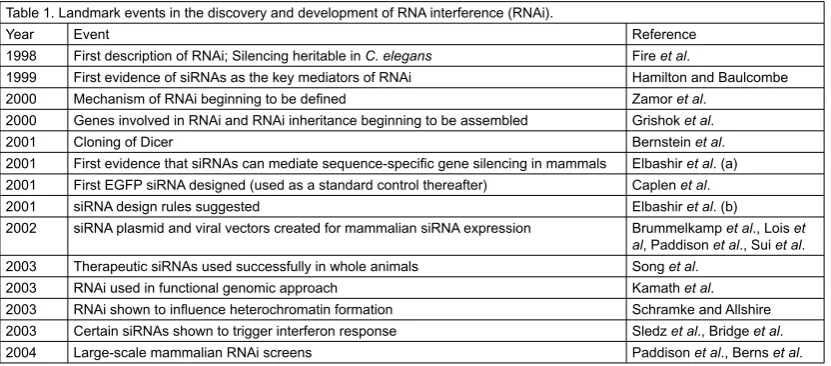
Since its initial discovery in 1998 by Fire et al., RNAi has taken the scientific community by storm. Despite many rapid advances, however, RNAi is still in its infancy (Table 1). Though Song et al., (2003) successfully demonstrated the therapeutic use of siRNAs to treat fulminant hepatitis in mice, other researchers have shown that certain siRNAs may still trigger the interferon response (Bridge et al., 2003; Sledz et al., 2003). Several factors could account for this response, including siRNA sequence/quality, use of invasive transfection reagents, or differences in cell lines and culture conditions (Frantz, 2003). Nevertheless, caution should be taken when evaluating siRNA effectiveness as a therapeutic agent.
avoid current trial-and-error tribulations. Furthermore, development of more efficient delivery and regulated tissue-specific or differentiation-dependent expression of siRNA/shRNA are critical issues for transgenic studies and gene therapy. Finally, the generation of additional RNAi protocols for genome-wide screens will assist with the rapid identification of genes involved in specific biological processes. Thus, though the promise of RNAi is yet to be fulfilled, its potential is beginning to be realized.
Acknowledgements
This research was supported by Natural Sciences and Engineering Research Council grant #138216-01 to Francis Choy and a Scottish Rite Charitable Foundation of Canada Award to Tessa Campbell.
References
Abbas-Terki, T., Blanco-Bose, W., Deglon, N., Pralong, W., and Aebischer, P. (2002). Lentiviral-mediated RNA interference. Hum. Gene Ther. 13, 2197-2201.
Abdelgany, A., Wood, M., and Beeson, D. (2003). Allele-specific silencing of a pathogenic mutant acetylcholine receptor subunit by RNA interference. Hum. Mol. Genet.
12, 2637-2644.
Agrawal, N., Dasaradhi, P.V.N., Mohmmed, A., Malhotra, P., Bhatnagar, R.K., and Mukherjee, S.K. (2003). RNA interference: biology, mechanism, and applications. Microbiol. Mol. Biol. Rev. 67, 657-685.
Ashrafi, K., Chang, F.Y., Watts, J.L., Fraser, A.G., Kamath, R.S., Ahringer, J., and Ruvkun, G. (2003). Genome-wide RNAi analysis of Caenorhabditis elegans fat regulatory genes. Nature 421, 268-272.
Berns, K., Hijmans, E.M., Mullenders, J., Brummelkamp, T.R., Velds, A., Heimerikx, M., Kerkhoven, R.M., Madiredjo, M., Nijkamp, W., Weigelt, B., Agami, R., Ge, W., Cavet, G., Linsley, P.S., Beijersbergen, R.L., and Bernards, R. (2004). A large-scale RNAi screen in human cells identifies new components of the p53 pathway. Nature 428, 431-437.
Bernstein, E., Caudy, A.A., Hammond, S.M. and Hannon, G.J. (2001). Role for a bidentate ribonuclease in the initiation step of RNA interference. Nature 409, 363-366.
Boden, D., Pusch, O., Lee, F., Tucker, L., and Ramratnam, B. (2004). Efficient gene transfer of HIV-1-specific short hairpin RNA into human lymphocytic cells using recombinant adeno-associated virus vectors. Mol. Ther.
9, 396-402.
Bridge, A.J., Pebernard, S., Ducraux, A., Nicoulaz, A.L., and Iggo, R. (2003). Induction of an interferon response by RNAi vectors in mammalian cells. Nat. Genet. 34, 263-264.
Brummelkamp, T.R., Bernards, R., and Agami, R. (2002a). A system for stable expression of short interfering RNAs in mammalian cells. Science 296, 550-553.
Brummelkamp, T.R., Bernards, R., and Agami, R. (2002b). Stable suppression of tumorigenicity by virus-mediated RNA interference. Cancer Cell 2, 243-247.
Calegari, F., Haubensak, W., Yang, D., Hattner, W.B., and Buchholz, F. (2002). Tissue-specific RNA-interference in postimplantation mouse embryos with endoribonuclease-prepared short interfering RNA. Proc. Natl. Acad. Sci. USA 99, 14236-14240.
Campbell, T.N. and Choy, F.Y.M. (2003). Glucocerebrosidase expression and analysis. Doctoral dissertation, University of Victoria, 2003.
Campbell, T.N. and Choy, F.Y.M. (2004). Knockdown of chimeric glucocerebrosidase by green fluorescent protein-directed small interfering RNA. Genet. Mol. Res. 3, 282-287.
Caplen, N.J., Parrish, S., Imani, F., Fire, A., and Morgan, R.A. (2001). Specific inhibition of gene expression by small double stranded RNAs in invertebrate and vertebrate systems. Proc. Natl. Acad. Sci. USA 98, 9742-9747.
Caplen, N.J., Taylor, J.P., Statham, V.S., Tanaka, F., Fire, A., and Morgan, R.A. (2002). Rescue of polyglutamine-mediated cytotoxicity by double-stranded RBA-polyglutamine-mediated RNA interference. Hum. Mol. Genet. 11, 175-184. Cheng, J.C., Moore, T.B., and Sakamoto, K.M. (2003). RNA
interference and human disease. Mol. Genet. Metab.
80, 121-128.
Cogoni, C., Irelan, J.T., Schumacher, M., Schmidhauser, T.J., Selker, E.U., and Macino, G. (1996). Transgene silencing of al-1 gene in vegetative cells of Neurospora is mediated by a cytoplasmic effector and does not depend Table 1. Landmark events in the discovery and development of RNA interference (RNAi).
Year Event Reference
1998 First description of RNAi; Silencing heritable in C. elegans Fire et al.
1999 First evidence of siRNAs as the key mediators of RNAi Hamilton and Baulcombe 2000 Mechanism of RNAi beginning to be defined Zamor et al.
2000 Genes involved in RNAi and RNAi inheritance beginning to be assembled Grishok et al.
2001 Cloning of Dicer Bernstein et al.
2001 First evidence that siRNAs can mediate sequence-specific gene silencing in mammals Elbashir et al. (a) 2001 First EGFP siRNA designed (used as a standard control thereafter) Caplen et al.
2001 siRNA design rules suggested Elbashir et al. (b)
2002 siRNA plasmid and viral vectors created for mammalian siRNA expression Brummelkamp et al., Lois et al, Paddison et al., Sui et al. 2003 Therapeutic siRNAs used successfully in whole animals Song et al.
on DNA-DBA interaction or DNA methylation. EMBO J.
15, 3153-3163.
Das, A.T., Brummelkamp, T.R., Westerhout, E.M., Vink, M., Madiredjo, M., Bernards, R., and Berkhout, B. (2004). Human immunodeficiency virus type 1 escapes from RNA interference-mediated inhibition. J. Virol. 78, 2601-2605.
Dykxhoorn, D.M., Novina, C.D., and Sharp, P.A. (2003). Killing the messenger: short RNAs that silence gene expression. Nat. Rev. Mol. Cell Biol. 4, 457-467. Elbashir, S.M., Harborth, J., Lendeckel, W., Yalcin, A.,
Weber, K., and Tuschl, T. (2001a). Duplexes of 21-nucleotide RNAs mediate RNA interference in cultured mammalian cells. Nature 411, 494-498.
Elbashir, S.M., Harborth, J., Weber, K., and Tuschl, T. (2001b). Analysis of gene function in somatic mammalian cells using small interfering RNAs. Methods 26, 199-213.
Fire, A., Xu, S., Montgomery, M.K., Kostas, S.A., Driver, S.E., and Mello, C.C. (1998). Potent and specific genetic interference by double-stranded RNA in Caenorhabditis elegans.Nature 391, 806-811.
Frantz, S. (2003). Studies reveal potential pitfalls of RNAi. Nat. Rev. Drug Discovery 2, 763-764.
Ge, Q., McManus, M.T., Nguyen, T., Shen, C.H., Sharp, P.A., Eisen, H.N., and Chen, J. (2003). RNA interference of influenza virus production by directly targeting mRNA for degradation and indirectly inhibiting all viral RNA transcription. Proc. Natl. Acad. Sci. USA 100, 2718-2723.
Gil, J. and Esteban, M. (2000). Induction of apoptosis by the dsRNA-dependent protein kinase (PKR): mechanism of action. Apoptosis 5, 107-114.
Giladi, H., Ketzinel-Gilad, M., Rivkin, L., Felig, Y., Nussbaum, O., and Galun, E. (2003). Small interfering RNA inhibits hepatitis B virus replication in mice. Mol. Ther. 8, 769-776.
Grishok, A., Tabara, H., and Mello, C.C. (2000). Genetic requirements for inheritance of RNAi in C. elegans. Science 287, 2494-2497.
Guo, S. and Kemphues, K.J. (1995). par-1, a gene required for establishing polarity in C. elegans embryos, encodes a putative Ser/Thr kinase that is asymmetrically distributed. Cell 81, 611-620.
Hamilton, A.J. and Baulcombe, D.C. (1999). A species of small antisense RNA in posttranscriptional gene silencing in plants. Science 286, 950-952.
Hannon, G.J. (2002). RNA interference. Nature 418, 244-251.
Ingelbrecht, I., Van Houdt, H., Van Montagu, M., and Depicker, A. (1994) Post-transcriptional silencing of reporter transgenes in tobacco correlates with DNA methylation. Proc. Natl. Acad. Sci. USA 91, 10502-10506.
Kamath, R.S., Fraser, A.G., Dong, Y., Poulin, G., Durbin, R., Gotta, M., Kanapin, A., Le Bot, N., Moreno, S., Sohrmann, M., Welchman, D.P., Zipperlen, P., and Ahringer, J. (2003). Systematic functional analysis of
Caenorhabditis elegans genome using RNAi. Nature
421, 231-237.
Kawasaki, H., Suyama, E., Iyo, M., and Taira, K. (2003). siRNAs generated by recombinant human Dicer induce
specific and significant but target site-independent gene silencing in human cells. Nucleic Acids Res. 31, 981-987.
Kennerdell, J.R. and Carthew, R.W. (1998). Use of dsRNA-mediated genetic interference to demonstrate that frizzled and frizzled 2 act in the wingless pathway. Cell 95, 1017-1026.
Kiger, A., Baum, B., Jones, S., Jones, M., Coulson, A., Echeverri, C., and Perrimon, N. (2003). A functional genomic analysis of cell morphology using RNA interference. J. Biol. 2, 27.
Kim, V.N. (2003). RNA interference in functional genomics and medicine. J. Korean Med. Sci. 18, 309-318. Kooter, J.M., Matzke, M.A., and Meyer, P. (1999). Listening
to silent gene: transgene silencing, gene regulation and pathogen control. Trends Plant Sci. 4, 340-347. Lee, N.S., Dohjima, T., Bauer, G., Li, H., Li, M.J., Ehsani, A.,
Salvaterra, P., and Rossi, J. (2002). Expression of small interfering RNAs targeted against HIV-1 rev transcripts in human cells. Nat. Biotechnol. 20, 500-505.
Lee, S.S., Lee, R.Y., Fraser, A.G., Kamath, R.S., Ahringer, J., and Ruvkun, G. (2003). A systematic RNAi screen identifies a critical role for mitochondria in C. elegans
longevity. Nat. Genet. 33, 40-48.
Lois, C., Hong, E.J., Pease, S., Brown, E.J., and Baltimore, D. (2002). Germline transmission and tissue-specific expression of transgenes delivered by lentiviral vectors. Science 295, 868-872.
Malhotra, P., Dasaradhi, P.V.N., Kumar, A., Mohmmed, A., Agrawal, N., Bhatnagar, R.K., and Chauhan, V.S. (2002). Double-stranded RNA-mediated gene silencing of cysteine proteases (falcipain -1 and -2) of Plasmodium falciparum. Mol. Microbiol. 45, 1245-1254.
Matzke, M. and Matzke, A.J.M. (2003). RNAi extends its reach. Science 301, 1060-1061.
McCaffrey, A.P., Nakai, H., Pandey, K., Huang, Z., Salazar, F.H., Xu, H., Wieland, S.F., Marion, P.L., and Kay, M.A. (2003). Inhibition of hepatitis B virus in mice by RNA interference. Nat. Biotechnol. 21, 639-644.
McRobert, L. and McConkey, G.A. (2002). RNA interference (RNAi) inhibits growth of Plasmodium falciparum. Mol. Biochem. Parasitol. 199, 273-278.
Miller, V.M., Xia, H., Marrs, G.L., Gouvion, C.M., Lee, G., Davidson, B.L., and Paulson, H.L. (2003). Allele-specific silencing of dominant disease genes. Proc. Natl. Acad. Sci. USA 100, 7195-7200.
Myers, J.W., Jones, J.T., Meyer, T., and Ferrell, J.E. Jr. (2003). Recombinant Dicer efficiently converts large dsRNAs into siRNAs suitable for gene silencing. Nat Biotechnol. 21, 324-328.
Napoli, C., Lemieux, C., and Jorgensen, R. (1990). Introduction of chimeric chalcone synthase gene into Petunia results in reversible cosuppression of homologous genes in trans. Plant Cell 2, 279-289. Ngo, H., Tschudi, C., Gull, K., and Ullu, E. (1998).
Double-stranded RNA induces mRNA degradation in
Trypanosoma brucei. Proc. Natl. Acad. Sci. USA 95, 14687-14692.
Paddison, P., Silva, J.M., Conklin, D.S., Schlabach, M., Li, M., Aruleba, S., Balija, V., O’Shaughnessy, A., Gnoj, L., Scobie, K., Chang, K., Westbrook, T., Cleary, M., Sachidanandam, R., McCombie, W.R., Elledge, S.J., and Hannon, G.J. (2004). A resource for large-scale RNA-interference-based screens in mammals. Nature
428, 427-431.
Pandit, N.N. and Russo, V.E.A. (1992). Reversible inactivation of a foreign gene, hph, during the asexual cycle in Neurospora crassa transformants. Mol. Gen. Genet. 234, 412-422.
Park, W.S., Miyano-Kurosaki, N., Hayafune, M., Nakajima, E., Matsuzaki, T., Shimada, F., and Takaku, H. (2002). Prevention of HIV-1 infection in human peripheral blood mononuclear cells by specific RNA interference. Nucleic Acids Res. 30, 4830-4835.
Pothof, J., van Haaften, G., Thijssen, K., Kamath, R.S., Fraser, A.G., Ahringer, J., Plasterk, R.H., and Tijsterman, M. (2003). Identification of genes that protect the C. elegans genome against mutations by genome-wide RNAi. Genes Dev. 17, 443-448.
Romano, N. and Macino, G. (1992). Quelling: transient inactivation of gene expression in Neurospora crassa
by transformation with homologous sequences. Mol. Microbiol.6, 3343-3353.
Rubinson, D.A., Dillon, C.P., Kwiatkowski, A.V., Sievers, C., Yang, L., Kopinja, J., Rooney, D.L., Ihrig, M.M., McManus, M.T., Gertler, F.B., Scott, M.L., and Van Parijs, L. (2003). A lentivirus-based system to functionally silence genes in primary mammalian cells, stem cells and transgenic mice by RNA interference. Nat. Genet. 33, 401-6. Schramke, V. and Allshire, R. (2003). Hairpin RNAs and
retrotransposon LTRs effect RNAi and chromatin-based gene silencing. Science 301, 1069-74.
Shen, C., Buck, A.K., Liu, X., Winkler, M., and Reske, S.N. (2003). Gene silencing by adenovirus-delivered siRNA. FEBS Lett. 539, 111-114.
Sledz, C.A., Holko, M., de Veer, M.J., Silverman, R.H., and Williams, B.R. (2003). Activation of the interferon system by short-interfering RNAs. Nat. Cell Biol. 5, 834-839. Song, E., Lee, S.K., Wang, J., Ince, N., Ouyang, N., Min,
J., Chen, J., Shankar, P., and Lieberman, J. (2003). RNA
interference targeting Fas protects mice from fulminant hepatitis. Nat Med. 9, 347-51.
Sui, G., Soohoo, C., Affar, E., Gay, F., Shi, Y., Forrester, W.C., and Shi, Y. (2002). A DNA vector-based RNAi technology to suppress gene expression in mammalian cells. Proc. Natl. Acad. Sci. USA. 99, 5515-5520.
Szweykowska-Kulinska, Z., Jarmolowski, A., and Figlerowicz, M. (2003). RNA interference and its role in the regulation of eukaryotic gene expression. Acta Biochim. Polonica 50, 217-229.
Vander Krol, A.R., Mur, L.A., Beld, M., Mol, J.N.M., and Stuitje, A.R. (1990). Flavanoid genes in petunia: addition of limited number of gene copies may lead to a suppression of gene expression. Plant Cell 2, 291-299.
Vickers, T.A., Koo, S., Bennett, C.F., Crooke, S.T., Dean, N.M., and Baker, B.F. (2003). Efficient reduction of target RNAs by small interfering RNA and RNase H-dependent antisense agents: a comparative analysis. J. Biol. Chem.
278, 7108-18.
Wall, N.R. and Shi, Y. (2003). Small RNA: can RNA interference be exploited for therapy? Lancet 362, 1401-1403.
Wianny, F. and Zernicka-Goetz, M. (2000). Specific interference with gene function by double-stranded RNA in early mouse development. Nat. Cell Biol. 2, 70-75. Wu, H., Hait, W.N., and Yang, J.M. (2003). Small interfering
RNA-induced suppression of MDR1 (P-glycoprotein) restores sensitivity to multidrug-resistant cancer cells. Cancer Res. 63, 1515-1519.
Xia, H., Mao, Q., Paulson, H.L., and Davidson, B.L. (2002). siRNA-mediated gene silencing in vitro and in vivo. Nat. Biotechnol. 20, 1006-10.
Yang, D., Buchholz, F., Huang, Z., Goga, A., Chen, C.Y., Brodsky, F.M., and Bishop, J.M. (2002). Short RNA duplexes produced by hydrolysis with Escherichia coli RNase III mediate effective RNA interference in mammalian cells. Proc. Natl. Acad. Sci. USA. 99, 9942-9947.
• MALDI-TOF Mass Spectrometry in Microbiology
Edited by: M Kostrzewa, S Schubert (2016)
www.caister.com/malditof
• Aspergillus and Penicillium in the Post-genomic Era
Edited by: RP Vries, IB Gelber, MR Andersen (2016)
www.caister.com/aspergillus2
• The Bacteriocins: Current Knowledge and Future Prospects
Edited by: RL Dorit, SM Roy, MA Riley (2016)
www.caister.com/bacteriocins
• Omics in Plant Disease Resistance
Edited by: V Bhadauria (2016)
www.caister.com/opdr
• Acidophiles: Life in Extremely Acidic Environments
Edited by: R Quatrini, DB Johnson (2016)
www.caister.com/acidophiles
• Climate Change and Microbial Ecology: Current Research and Future Trends
Edited by: J Marxsen (2016)
www.caister.com/climate
• Biofilms in Bioremediation: Current Research and Emerging Technologies
Edited by: G Lear (2016)
www.caister.com/biorem
• Microalgae: Current Research and Applications
Edited by: MN Tsaloglou (2016)
www.caister.com/microalgae
• Gas Plasma Sterilization in Microbiology: Theory, Applications, Pitfalls and New Perspectives
Edited by: H Shintani, A Sakudo (2016)
www.caister.com/gasplasma
• Virus Evolution: Current Research and Future Directions
Edited by: SC Weaver, M Denison, M Roossinck, et al. (2016)
www.caister.com/virusevol
• Arboviruses: Molecular Biology, Evolution and Control
Edited by: N Vasilakis, DJ Gubler (2016)
www.caister.com/arbo
• Shigella: Molecular and Cellular Biology
Edited by: WD Picking, WL Picking (2016)
www.caister.com/shigella
• Aquatic Biofilms: Ecology, Water Quality and Wastewater Treatment
Edited by: AM Romaní, H Guasch, MD Balaguer (2016)
www.caister.com/aquaticbiofilms
• Alphaviruses: Current Biology
Edited by: S Mahalingam, L Herrero, B Herring (2016)
www.caister.com/alpha
• Thermophilic Microorganisms
Edited by: F Li (2015)
www.caister.com/thermophile
• Flow Cytometry in Microbiology: Technology and Applications
Edited by: MG Wilkinson (2015)
www.caister.com/flow
• Probiotics and Prebiotics: Current Research and Future Trends
Edited by: K Venema, AP Carmo (2015)
www.caister.com/probiotics
• Epigenetics: Current Research and Emerging Trends
Edited by: BP Chadwick (2015)
www.caister.com/epigenetics2015
• Corynebacterium glutamicum: From Systems Biology to Biotechnological Applications
Edited by: A Burkovski (2015)
www.caister.com/cory2
• Advanced Vaccine Research Methods for the Decade of Vaccines
Edited by: F Bagnoli, R Rappuoli (2015)
www.caister.com/vaccines
• Antifungals: From Genomics to Resistance and the Development of Novel Agents
Edited by: AT Coste, P Vandeputte (2015)
www.caister.com/antifungals
• Bacteria-Plant Interactions: Advanced Research and Future Trends
Edited by: J Murillo, BA Vinatzer, RW Jackson, et al. (2015)
www.caister.com/bacteria-plant
• Aeromonas
Edited by: J Graf (2015)
www.caister.com/aeromonas
• Antibiotics: Current Innovations and Future Trends
Edited by: S Sánchez, AL Demain (2015)
www.caister.com/antibiotics
• Leishmania: Current Biology and Control
Edited by: S Adak, R Datta (2015)
www.caister.com/leish2
• Acanthamoeba: Biology and Pathogenesis (2nd edition)
Author: NA Khan (2015)
www.caister.com/acanthamoeba2
• Microarrays: Current Technology, Innovations and Applications
Edited by: Z He (2014)
www.caister.com/microarrays2
• Metagenomics of the Microbial Nitrogen Cycle: Theory, Methods and Applications
Edited by: D Marco (2014)
www.caister.com/n2
Caister Academic Press is a leading academic publisher of advanced texts in microbiology, molecular biology and medical research. Full details of all our publications at caister.com