Review
Introducing Sustainability in Value Models to
Support Design Decision Making: A Systematic
Review
Marco Bertoni
Department of Mechanical Engineering, Blekinge Institute of Technology, Karlskrona,SE-37179, Sweden; [email protected]; Tel.: +46-73-422-3670
Abstract: Manufacturing organizations shall recognize sustainability as a business occasion to capitalize on, rather than an undesirable pressing situation. Still, empirical evidence shows that this opportunity is hard to capture and communicate in global strategic decisions, through planning by tactical management, to daily operational activities. This paper systematically reviews the modeling challenges at the crossroad of value and sustainability decisions making, spotlighting methods and tools proposed in literature to link sustainability to customer value creation at strategic, tactical and operational level. While statistical results show that the topic of sustainability and value modeling is trending in literature, findings from content analysis reveal that recent attempts to promote a value-based view in the sustainability discussion remain at a strategic level, with most of the proposed indicators being suited for managerial decision-making. The lack of support at operational level points to the opportunity of cross-pollinating sustainability research with value-centered methodologies originating from the aerospace sector. The Value Driven Design framework is proposed as main hub from which to derive models supporting engineers and technology developers in the identification of win-win-win situations, where sustainable improvements are aligned with business advantages.
Keywords: sustainability; value modeling; decision support; value driven design; review
1. Introduction and Objectives
Complex problems that emerge in contemporary society cascade down to a growing responsibility for manufacturing organizations to provide sustainable and innovative packages of products and services able to address increasingly sophisticated consumer needs [1–3]. However, even if many forward-thinking companies recognize sustainability as a business trigger [4], improved environmental and social efficiency often lead to increased costs in several areas of the organization [5], and this may lead to down prioritization of sustainability-oriented innovation initiatives.
Even if sustainability is forecasted to generate competitive advantage in the long term, as it includes a rich set of features important for the successful introduction of new solutions to the market [6–8], it still contains a significant portion of tacit concepts that are difficult to trade-off with classical technical and business requirements, and to relate to profitability and customer value creation. While some aspects of sustainability are partially encompassed by the established drivers for product or service innovation (e.g., specific fuel consumption, lifetime and weight reduction in the automotive and aerospace industry), others are less readily quantifiable (e.g., material criticality from an availability and socio-ecological sustainability perspective) and problematic to use as criteria for decision making [9,10].
Capturing and communicating the value creation opportunity generated by sustainable courses of action across the enterprise, from global strategic decisions, through planning and organization by tactical management, to daily engineering activities of the operational area, is found to be a challenging task [11]. This is particularly evident in today’s multi-disciplinary decision-making situations, where results and insights of different characters are traded against each other [12]. The
difficulty of communicating “sustainability” to individuals belonging to different organizational functions, covering different roles and possessing different educational backgrounds, goes hand in hand with the problem of modeling the value generated by sustainability-oriented decisions [13].
The purpose of this research is to support manufacturing companies in integrating sustainability in their decision-making process at strategic, tactical and operational level. It concentrates then on the systematic and consistent use of models linking sustainability to customer value creation, as a way to support innovation activities and design decision making. Frontloading innovation activities with “value” models are crucial to reduce the risk of late discovery of sustainability issues, which may lead to rework in the later phases of the process, as well as to cost overruns. By describing the impact of sustainability consequences in a concrete, understandable and transparent manner since an early design stage, modeling activities may contribute to resolve sustainability vs. cost trade-offs, by looking at “what” customers and stakeholders expect, and at “how much” they value certain capabilities against each other [13].
The objective of this paper is to present the findings of a systematic review focused on the modeling challenges at the crossroad of value and sustainability decisions making. The underlying research question for the study is formulated as:
“How can value-driven methodologies be successfully integrated in the innovation process work to deliver product/service solutions with true sustainability built in?”
The review accounts for those methods and tools proposed in literature to support sustainability integration in strategic, tactical and operational decisions. Initially, the paper presents statistical results from the analysis of bibliographic data to highlight main areas of investigation and reveal current trends across the research community. It further organizes its findings along the strategic, tactical and operational axis, digging down into the main thematic areas at each level, to reveal initiatives, best practices and challenges. Eventually, the paper discusses gaps in the existing research, as well as opportunities for cross-pollination with other value-driven research approaches.
2. Systematic Literature Review Approach
The investigation of scholarly publications followed a “transparent, replicable and rational” process of systematic review [14]. The work of Adams et al. [15] and Ardito et al. [16] provide a clear and reproducible three-step procedure that helped the author in defining the goal of the research, in planning the way articles were retrieved and reported, and in synthesizing the findings during the analysis stage.
2.1. Stage 1: Developing an Initial Architecture
The first stage aims at developing an initial “architecture” for the review, with the intention of sketching the basic building blocks of the conceptual framework for synthesis. The work employs a multilevel perspective to report and discuss literature findings concerning modeling challenges for value and sustainability. This is considered the most accurate way to uncover the underlying factor structure associated with the effective achievement of innovation objectives [16]. Hence, the initial architecture distinguishes between Strategic, Tactical and Operational level decision making, and categorizes contributions based on their level of granularity, from theoretical to applied.
The Strategic level assists top managers with long-term decisions concerning the definition of corporate strategic goals. These decisions instantiate the 5–10-year company vision and elaborate on how to create multi-values for all stakeholders [17,18]. Contributions include works that clarify socio-ecological sustainability goals and that serve as the framework for lower-level planning. The goal of modeling activities at this level it to evaluate the business case for systematic sustainability implementation, and to build awareness of sustainability, risks and business opportunities for new technological and organizational innovation.
with specific targets relevant to the responsibility and functionality of lower-level departments [19], and identifies so called “activity tables/chains” to build and nurture a sustainable organization [17]. Contributions at this level include models for lower-level managers in the areas of production, marketing, personnel, finance and plant facilities.
The Operational level deals with the specific procedures and processes that occur within the lowest levels of the organization. The objective of contributions at this level is to support process deployment in accordance with tactics and tools chosen on the level above [17]. Literature at this level often elaborates on both qualitative and quantitative assessment models that clarify sustainability, risk and value profile of a product, process or platform. In addition, it collects and describes support tools for how to visualize status and progression of sustainability integration and implementation.
An additional layer, named Metalevel, was added on top of the initial categorization to spotlight higher-level contributions discussing value and sustainability in terms of customer perception (of sustainable products or services) and frameworks for sustainability implementation (that can be cascaded down to strategic, tactical and operational levels).
2.2. Stage 2: Systematic Review
The second stage concerns planning and implementation of the systematic review process. This was conducted through the authors’ library service using the SCOPUS database, which covers research from both major (i.e., Elsevier, Springer, and Emerald) and minor publishers. Previous work highlighted the higher quality and multidisciplinary of SCOPUS compared to other databases [20]. The search strategy is summarized in Figure 1.
Figure 1. Systematic literature review search strategy.
The development of the search string kicked off by including ‘value’ and ‘sustainability’ as keywords in the query, and by linking them using the Boolean operator AND. To include nearby terms (i.e., for ‘sustainability’: ‘sustainable’, ‘sustainably’, etc.), the search was refined using abbreviations and the search operator (*). To limit the number of hits, the search was confined to the ‘innovation’, as well as to the ‘product’ and ‘service’ domains. Synonyms for these terms were identified using dictionaries, test searches, and references in sample papers. Hence, the terms ‘design’, ‘development’ and ‘engineering’ were also included in the query, together with ‘technology’, ‘offer’ and ‘system’. Also in this case the search was performed using abbreviations and the search operator (*). The resulting search string used in the SCOPUS database was:
2006 AND (TO(DOCTYPE,"ar") OR TO(DOCTYPE,"re") OR LIMIT-TO(DOCTYPE,"ch")).
To ensure that only relevant articles entered the pool of papers to be finally analyzed, a list of publication-based and content-based exclusion criteria was proposed.
With the objective to ensure quality and completeness in the resulting paper list, only articles of type “article” (journal papers), “book chapter” and “review” were included in the study. These types are considered to provide an accurate and representative picture of relevant scholarly research, as they tend to shape the theoretical and empirical work in the field by setting new horizons for inquiry within their frame of reference. Hence, non-academic, journalistically written articles, opinion and experience papers, as well as simple success stories, were excluded. Dissertations, industrial reports and other technical documents were excluded too, under the assumption that important results would have been published in academic journals, book chapters or reviews. Importantly, all articles with a date of publication prior to 2007 were eliminated, because considered obsolete. Furthermore, only articles in the English language were kept.
As for the content, articles that did not deal with sustainability and value assessment models as focus were excluded. This first filter eliminated articles that mention sustainability or value only incidentally, both in the title and in the abstract. Furthermore, contributions not referring to models, or not dealing with modeling challenges, were excluded too, because not in the meaning of the scope of this study. Content-related exclusion of articles took place in Steps 3-5 (see Figure 1). Besides that, articles were not removed for other content-related aspects, such as research domain, research topic, and specific focus to certain tasks, themes, due to the explorative nature of the review.
2.3. Stage 3: Framework Synthesis
At this stage, the initial framework from Stage 1 was developed using a modified narrative synthesis approach [21], which is it was iteratively tested, shaped, reinforced and refined by findings from included studies [15]. For each included paper, the following data were extracted and tabulated: type of contribution, type of entity studied, industrial sector, methodological approach, phase in the product development process, phase in the product/system life cycle, summary of main study findings. The main overarching themes and related subthemes were identified, using inductive, open coding techniques, with additional codes created where needed. On completion, the draft conceptual framework was refined: some new categories of modeling challenges were created, and others were subsumed within existing categories, given less prominence or deleted. This process produced the preliminary conceptual framework. At this point, the synthesis activity moved beyond tabulating and counting to explore relationships between characteristics of individual studies and their reported findings, and between the findings of different studies. This resulted in the hierarchical organization of value and sustainability modeling challenges, which are presented in the Discussion section.
3. Bibliometric
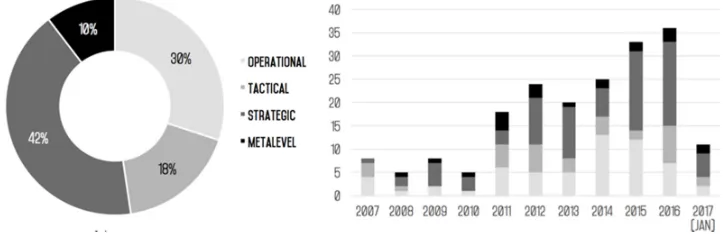
Figure 2. Distribution of contributions per level and per year.
3.1. Source Analysis
Figure 3 summarizes the distribution of publication sources for the selected 193 papers. Noticeably, only 10 journals feature three or more items in the final paper list. The Journal of Cleaner Production (JCP) is a primary source of contributions in relation to the proposed search query and inclusion criteria, featuring 34 hits (18% of the total), while the Journal of Supply Chain Management and the Journal of Manufacturing Technology Management feature seven hits (4%) Notably, 60.2% of the papers considered relevant in the review comes from journals that feature only one hit.
Figure 3. Source analysis (journals with the highest number of hits).
Figure 4 displays the distribution of hits at Strategic, Tactical and Operational level, as well as at Metalevel, for the 10 most popular journals. JCP (5 hits), the International Journal of Sustainable Engineering (2 hits) and Energy Policy (2 hits) are where most of the Metalevel contributions originate. JCP (19 hits) and Business Strategy and the Environment (4 hits) are where most the papers at Strategic level have been collected. JCP (4 hits) and the journal of Supply Chain Management (4 hits) are those featuring the highest number of hits at Tactical level. At Operational level, JCP (7 hits) and the Journal of Manufacturing Technology and Management (5 hits) top the list, while Clean Technologies and Environmental Policy follow closely with four hits each.
Figure 4. Distribution of hits at Metalevel, Strategic, Tactical and Operational level for the 10 most popular journals.
Figure 5. Average number of citations (a) and average number of citations per year (b) of the ten most cited papers at each level.
3.2. Levels, Industrial Sector and Type of Entity Studied
After the initial statistical screening, contributions were analyzed with the help of an ad-hoc classification scheme. For this, the idea of a “concept matrix” for this study was taken and adapted from and [22]. A concept matrix is a logical approach that defines several “concepts” (that may be variables, theories, topics, methods, and so on), where all articles are grouped in and therefore serve as a classification scheme. New concepts could be added during the classification process until the final scheme was developed. The first step was an initial development of the classification scheme based on prior literature. The identified articles were read afterwards and classified according to the scheme. If there were any doubts in classifying a specific article, the scheme was refined, i.e., concepts and categories were added, expended, or modified. In this case, prior classified articles had to be checked again to validate their classification within the refined scheme.
Figure 6. Distribution of contributions per industrial sector and per year.
The analysis also aimed at categorizing the type of entity studied by researchers at each level. Figure 7 shows that sustainability and value analysis is popular in the domain of product development. More than 43% of the papers selected from the SCOPUS refer to “hardware” when discussing and exemplifying models encompassing sustainability and value considerations. Often, the focus of sustainability and value modeling lies on a different type of entity, i.e. models are applied for evaluating and benchmarking companies, enterprises and institutions. This is common in literature dealing with the Tactical level, and within the field of supply chain management. Several publications (10%) originate from the domain of service and Product Service Systems (PSS) design. At Operational level, it is not uncommon to observe contributions that focus on the implementation of sustainability/value approaches for material selection. In addition, in this case the yearly distribution of the analyzed papers is balanced, and no evident trends can be observed.
Figure 7. Distribution of contributions per entity studied and per year.
The distribution of the retrieved contributions across enterprise levels, industrial sector and type of entity studied is summarized using a bubble plot, which reports the frequencies of publications in each category. A bubble plot is basically two x-y scatterplots with bubbles in category intersections, whose size is proportional to the number of articles that are in the pair of categories corresponding to the bubble coordinates. In Figure 8, the same idea is used twice, in different quadrants of the same diagram to show the intersection with the third facet. A main advantage of this type of visualization is that it supports analysis better than frequency tables, since it is easier to consider different facets simultaneously, and that it is more powerful in giving a quick overview of a field, and thus to provide a map [23].
Tactical level, contributions mainly originate in the domain of automotive, even if most papers at this level do not make specific reference to the industrial sector studied. Both “product” and “company” focus is common when looking at the type of entity studied when looking at corporate material and immaterial resources. At the same time, it is possible to observe a lack of entries in the SCOPUS database concerning Tactical-level contributions dealing with services and Product-Service Systems (PSS). Eventually, examples at Operational level are well distributed across all macro industrial sectors considered in the analysis. They are also balanced with regards to the type of entity being studied, with a large share of contributions targeting the field of material assessment and selection.
Figure 8. Distribution of the contributions across the enterprise levels, industrial sector and type of entity studied.
4. Metalevel Contributions and Challenges
The Metalevel classifies contributions that do not directly relate to strategic, tactical or operational decision making. Rather, they set the context for such decisions, elaborating on the meaning of sustainable value creation. Two main research challenges can be highlighted at this level.
The first one deals with the top-down definition of sustainability principles. These are aimed at framing the sustainability discussion in a way that decision makers can take actions to create innovations that are both positive for the environment and value-creating for customers, stakeholders, society and the planet. A first set of these contributions address the overall objective of developing and implementing a more sustainable society. Frameworks, indicators ad tools often originate from the Triple Bottom Line (TBL) model, and feature different levels of granularity [24]. A major reference in this group is the Framework for Strategic Sustainable Development (FSSD), which was recently updated by Broman and Robèrt [25]. Main feature of FSSD are boundary conditions, which are expressed in the form of eight sustainability principles for backcasting, planning and redesign for sustainability. Similarly, Lindsey [26] indicates waste reduction, quality improvement and better system implementation as universal principles associated with the development and implementation of a more sustainable society. Other authors propose “aspects” [27] and “axiological perspectives” [28] on human well-being to help decisions makers in considering social system aspects together with natural resources depletion in the decision-making process. A second set aims at classifying methods, tools and information management strategies to control sustainable development issues in decision-making. Halstar [29] is a major contribution in this respect, collecting 4200 qualitative criteria and 2000 indicators that are potentially relevant for sustainable system design. Sustainable Information (SI) [30] is another framework that specifically targets manufacturing organizations, and that presents information elements linked to sustainability concerns along the entire lifecycle of a product.
for environmentally friendly cars, while “design”, “origin label” and “origin of the raw material” are some of the most influencing factors in the purchasing of green furniture.
Still, recent studies show that customer reactions against green product choices are mixed. Price premium for green products is limited [33] and willingness to buy is strongly related to the ability of informing customers about the benefit of purchasing green [34,35]. The consumption of environment-friendly alternatives seems also affected by frequency of use [36] and level of functional risk [37]. The concept of “green price premium” is found to apply more to products consumed on a continual basis than to those featuring a more sporadic consumption pattern. It can also be observed that consumers are more willing to pay such a premium for commodities rather than for more complex systems. The latter is explained by observing that an increasing level of green inventions is found to negatively affect performances of the system [38], following U-shaped relationship. Several studies [39,40] further show that the decision of buying green and paying a premium price is mainly influenced by social and cultural norms, and that individuals are more sensitive towards social sustainability aspects that towards environmental sustainability [41]. Consumers are also found to be rather skeptical towards corporate environmental initiatives [42]. Skepticism varies based on the level of brand commitment, as well as on how the initiative is presented to them. Martin and Väistö [43] discuss how the marketing of sustainable products shall address this issue by leveraging hedonic aspects of consumption to bridge the current attitude-behavior gap.
5. Strategic Level Contributions and Challenges
At Strategic level the discussion is kicked off by the analysis of new models for sustainable value creation [44], which is, in the words of Laszlo and Cooperrider [45], on the business opportunity to “do well by doing good”. Table 1 lists 12 key value creation areas that are summarized from the analysis of the literature on sustainability oriented strategies.
Table 1. Value creation areas for sustainability oriented strategies.
Identifier Description Identifier Description A1 Risk mitigation and compliance A7 External legitimacy pressure
A2 Process cost reduction/improved
efficiency A8 Taxation reduction
A3 Improved supply chain logistics A9 Shareholder value creation
A4 Product differentiation A10 Financial benefits
A5 New markets penetration and assets
growth A11
Becoming investment target for larger firms
A6 Corporate reputation, branding and
image A12
Building networks/learning from outsiders
Table 2 maps the value creation areas in Table 1 against reference contributions at Strategic level. Process cost reduction and improved efficiency are dominant aspects when it comes to discuss the value of a sustainability-oriented strategy. Company reputation, branding and image are also affected by the decision to invest on sustainable solutions and practices. This leads to new business opportunities, due to increased offer differentiation and higher market penetration, which eventually result in asset growth, financial benefits and shareholder value creation. A growing reputation is also associated to higher attractiveness for external investors, such as large corporations or Original Equipment Manufacturers (OEM).
Table 2. Value creation areas for sustainability per authors per year (Y: covered in the contribution).
Contribution A1 A2 A3 A4 A5 A6 A7 A8 A9 A10 A11 A12
Laszlo and Cooperrider [45] Y Y Y Y Y
Laszlo [46] Y Y Y Y Y
Moore and Manring [47] Y Y Y
Kurapatskie and Darnall [49] Y
Papadopoulos et al. [50] Y Y Y
Chou et al. [51] Y Y
Hang and Chunguang [52] Y
Tollin et al. [53] Y Y
Ford and Despeisse [54] Y Y Y
Hsu et al. [55] Y
Roome and Louche [56] Y
Kumar and Rahman [57] Y Y Y
Gómez-Bezares et al. [58] Y Y Y
Li et al. [59] Y
Severo et al. [60] Y
Yang et al. [61] Y Y Y Y
5.1. Areas of Interventions
A major question at Strategic level is where to intervene to secure financial benefits associated with the firm’s sustainability undertakings. In general, higher-order activities (i.e., those related to the development of new products and processes) are found to provide greater financial benefits than lower-order ones (i.e., those aiming only at incrementally innovate existing products and processes) [49]. Kurapatskie and Darnall [49] further identify four specific areas where to intervene to realize sustainability strategies in practice: Governance, Leadership, Ethics and Social responsibility, and Innovation.
Beckmann et al. [62] propose a 12-box matrix to support the selection of governance tools, combining four governance strategies with the three criteria of sustainability derived from the TBL. Governance is also one of the three dimensions proposed by Fearne et al. [63] to ensure that value chain analysis contributes to sustainable value creation. On the topic of governance structures used to extend sustainability, Gimenez and Tachizawa [64] identify senior management commitment and purchasing staff capabilities as main dimensions to be leveraged to effectively assess and work with the firm’s suppliers. Ding et al. [65] propose government policy incentives that are shared within the supply chain through transfer price negotiations between manufacturers and suppliers, so to motivate supply chain members to collaboratively produce environmentally friendly products. Wong and Avery [66] address the Leadership dimension and argue that sustainability in organizations can be created only when business leaders challenge the status quo end adopt a holistic view in the definition of the company strategy. Along this line of thought, Sekerka and Stimel [67] present a framework to help leaders in examining their strategic perspective based on their organization’s identity. Several have investigated how value can be created through social responsibility programs [68,69], with empirical evidence being found of the existence of a positive and bidirectional relationship between CSR and financial performances [70].
5.2. Business Model Transformation
Contributions from literature do not stop analyzing intervention areas and their focus, rather aim at proposing how to transform existing businesses to become more sustainable.
A first challenge in this transformation is how to intersect innovation and sustainability strategies. Defensive, Accommodative and Proactive are the three business model innovation strategies devised by Schaltegger et al. [76]. The hierarchy of Radical Technology Innovations, Business Model Innovation and Leadership and Organizational Development are instead the three types of strategic innovations proposed by Rainey [77,78] to adopt sustainability and lead change in the context of global economy. A set of normative requirements, touching on the four perspectives of the Business Model Canvas (BMC) (value proposition, financial model, customer interface and supply chain), is further proposed by Boons and Lüdeke-Freund [79], as a way to contribute to a successful marketing of sustainable innovations.
The question of how to build up the business model for sustainability is addressed through the identification of so called business model ‘archetypes’. Bocken et al. [80,81] prescribe eight archetypes, which are groupings of transformation elements and solutions contributing to the development of sustainable business models. The focus of these constructs lies both in the more effective use of existing resources (material, energy, waste) and in the opportunity of exploiting servitization to reshape consumption patterns. Capability creation and learning is another important transformation element for sustainability-driven business models [56]. Network building and reconfiguration, together with the deployment of new concepts drawn from outside the company, are main practices contributing to business model change for sustainability.
A third challenge is how to stimulate companies in designing new business models that are more sustainability-oriented. Girotra and Netessine [82] propose idea triggers to stimulate brainstorming, focusing on “what” decisions are made, “when” they are made, “who” makes them, and “why” they are made. Ceschin [83] suggests focusing on customer habits, organizational structures and regulative frameworks as main development pathways for manufacturing companies to adopt sustainable Product-Service Systems (PSS). Antonova [84] highlights the role of knowledge, dialogue, risk assessment and transparency in adopting new business models able to bring change in customer satisfaction (value) and in sustainability. Bryson and Lombardi [85] identify discursive formations at board level as main item that characterizes the proactive development of balanced financial objectives against a broader sustainability agenda. Geissdoerfer et al. [86] take one step further in such a discussion to propose a workshop framework and routine bringing together “design thinking” and “sustainable business model innovation”. The resulting “Value Ideation” process comprises value ideation, value opportunity selection, and value proposition prototyping.
A fourth and final challenge is how to modify the existing BMC template to capture the value of sustainable innovations, so to inform decision makers on the benefit of designing new products and services with sustainability at the center. Müller [87] introduces the Sustainable Value Proposition tool to create value propositions that embed heterogeneous aspects of sustainability. Joyce and Paquin [88] propose the triple layered BMC, which extends the original template by adding an environmental layer based and a social layer based on a stakeholder perspective. Morioka and de Carvalho [89] propose a three-layered framework to address the integration of sustainability performance into business, while Padin et al. [90] describe the results of a questionnaire-based study to validate TBL constructs in sustainable business practices. Similarly, França et al. [91] discuss the use of a combination of FSSD framework, BMC, creativity techniques, value network mapping, life-cycle assessment, and PSS design tools to inform business model innovation.
5.3. Business Model Selection
hierarchically organize multiple criteria to assess the ability of a PSS design concept to reflect sustainability concerns. The hierarchy is cascaded down in several families of customer- related value indicators, such as “tangibles”, “interaction”, “sustainability, “commitment”, “customer impact”, “cost”, “consumption” and “working conditions”. With regards to matrix-based approaches to evaluate such criteria, the Analytical Hierarchal Process (AHP) is often proposed in combination with other methods, such as TOPSIS [94], VIšeKriterijumska Optimizacija i KOmpromisno Rešenje (VIKOR) [95], and fuzzy approaches.
A major challenge at this level is how to quantify sustainable business models advantage. On the one end, it concerns the use of LCA as a management decision tool for fact-based assessment of valuable sustainability-oriented strategies within the company [96]. On the other end, it concerns the development and use of demonstrators to quantify economic sustainability of the proposed sustainability-oriented business models. Patala et al. [97], for instance, utilize a life cycle value demonstrator to evaluate the economic, environmental and social benefits of industrial products and services. The Green Innovation Value Chain (GIVC) [98] is another tool for evaluating the financial viability of green products using a multi-stakeholder perspective. The analyzed value chain does not only include consumers, manufacturer and distribution channels, but also government and, more in general, the environment.
Simulation tools are often proposed to explore and compute the business model for sustainability. Copani and Rosa [99] describe probabilistic event-decision trees to assess the economic performance of flexibility-oriented business models. The trees consider scenarios, which are based on historical product data and on four-year predictable demand together with five-year forecasts with higher market uncertainty. To solve the tree, expected values (EVs) at end-nodes are calculated as the sum of discounted cash flows over the assessment period under the hypotheses of the different branches. Ueda et al. [100] present a multi-agent system simulation to examine the validity of three proposed value models (Providing Value Model, Adaptive Value Model, and Co-Creative Value Model) to discuss innovation management practices in the context of sustainable development. Abdelkafi and Täuscher [101] use system dynamics to model the environmental value proposition of the company. The latter is represented by a stock that can accumulate or decline over time. Companies can track the level of this stock, together with all other stocks of the business model to monitor their sustainability orientation and guide decision-making activities at strategic level.
5.4. Enterprise-Level Sustainability Scores
Companies in the same industrial sector, or across sectors, are often assigned an indicator representing their sustainability profile, to facilitate benchmarking activities. One of the most popular company-level indicators is outputted by the Sustainable Value Methodology (SVM) [102]. SVM is built on the concept of opportunity costs: to create positive “sustainable value”, a company must use its economic, environmental and social resources more efficiently than an alternative user. SVM implementation follows an eight-step working plan, involving a team composed by internal workers, a SV project leader responsible for the application of the concepts and methodology, and by external elements [103]. Recent literature lists several applications of the Sustainable Value (SV) index in different industrial domains, from car manufacturing [104] to policy design in agriculture [105]. The “Sustainable Value of European Industry” project [106], for instance, uses the SV approach to monetize the environmental performance of 65 European manufacturing companies, looking at how much Gross Value Added a company creates with the resources it uses.
(Ck) to determine how close they are to the industry standard. The approach proposed by Menzel et al. [111] uses six depended variables, namely “electricity”, “CO2“, “toxic gas”, “waste for disposal”,
“waste for reuse” and “water”, and two dependent variables, which are “profit margin” and “sales”. Another example is provided by Tahir and Darton [112], who use natural, financial, human and social capital as main stores of value.
5.5. Enterprise-Level Sustainability KPI
The creation of new measurement criteria and Key Performance Indicator (KPI) is listed by Valkokari et al. [113] as one of the three critical changes (together with empowerment of stakeholders and increased efficiency at network level) required to move towards a more sustainable European manufacturing industry. Literature further points to two main challenges when it comes to measure sustainability from an enterprise point of view.
The Sustainability Performance Indicators (SPI) [114,115] and the Integrated Scorecard [116] are examples of how the classical Balanced Scorecard (BSC) formulation can be modified to integrate the three pillars of sustainability in enterprise performance management practices [117]. The thematic analysis on SBSC architectures conducted by Hansen and Schaltegger [118] finds also that sustainability-oriented modifications of the BSC can be mapped with a typology of generic SBSC architectures. Importantly, the BSC definition shall follow and adapt to the current servitization trend in the manufacturing industry. The definition of a specific set of KPI for sustainability-oriented PSS-like business model archetypes remains an open question in literature, with contributions from Pan and Nguyen [119] and Kastalli et al. [120] representing main reference points.
A second challenge concerns the development of Sustainability Performance Management Practices (SPMPs) to highlight potential areas of evolution when conducting diagnostic activities on sustainable business models [121,122]. Morioka and de Carvalho [123] recently discussed four performance measurement systems in Brazilian companies that encompass sustainability indicators: departmental periodic performance measurement system, individual performance assessment, sustainability reporting, and project assessment. Other approaches include the Comprehensive Assessment Index (CAI) proposed by Jayakrishna et al. [124]. CAI is computed in MATLAB from a so-called VPM-SM matrix, to quantitatively measure the extent to which sustainable manufacturing practices are being followed in the organization.
6. Tactical Level Contributions and Challenges
6.1. KPI for Sustainable Supply Chain Management
SSCM research is also challenged with the development of business and environmental measures for supply chain sourcing. Sustainable supply chains design is found to be guided by five main performance parameters. The present five challenges for managers: “cost”, “complexity”, “operationalization”, “mindset and cultural changes”, and “uncertainties” [131]. Alternatively, Varsei et al. [132] propose the use of a score to be assigned to all supply chain members based on their performances against the available codes of conduct in the four primary social areas: labor practices and decent work conditions, human rights, society, and product responsibility. An AHP model is used for the weighting of these factors, followed up by a multi-objective optimization model. Looking at available standards, Ferreira et al. [133] propose a model to assess the environmental performance of supply chains based on the four BCS perspectives, on the ISO 14031 and GRI standard. The latter is and international agreement, created in 1997, with the mission of drawing up and disseminating the directives for writing sustainability reports. The ISO 14001 perspective is used by Chiarini [134] to define a pathway for sustainable supply chain design. This is composed of five steps. The first two allow the supplier to remain in the company vendor list. The remaining three foresee the measurement of the environmental performances of the supplier by means of an environmental management system and key indicators, to eventually become “green partner”.
In terms of available tools, El Saadany et al. [135] apply an analytical decision model to investigate the performance of a supply chain when product, process, and environmental quality characteristics are considered. More sophisticated approaches include Bai et al. [136], who utilize the Grey based neighborhood rough set methodology, and Rao et al. [137], who propose a decision mechanism for sustainable supplier selection based on linguistic two-tuple grey correlation degree. Still, while plenty of studies acknowledge the importance of supply chain integration, Wong et al. [138] conclude their review noticing a lack of theory to explain why and how integration leads to better performance, and who and what are supposed to be integrated.
Fuzzy approaches have also become popular in literature to model uncertainty in the selection process. Wu et al. [139] apply Interval-Valued Triangular Fuzzy Numbers (IVTFNs) and Grey relational analysis (GRA) for evaluating SSCM performance based on seven aspects and 34 criteria. Zhou et al. [140] address uncertainty for economic, environmental, and social criteria in sustainable supplier performance evaluation using Fuzzy Data Envelopment Analysis (DEA) models. Fuzzy mathematical programming has been further extended to design supply chains with optimized reverse logistics, using a customized Multi-Objective Particle Swarm Optimization (MOPSO) algorithm [141]. Eventually, Boonsothonsatit et al. [142] propose a multi-Objective Optimization approach that integrates Fuzzy Goal Programming and a weighted max-min operator.
6.2. KPI for Sustainable Manufacturing
Literature shows that sustainability performances directly relate to KPI in manufacturing and production [143]. Hence, research in sustainable manufacturing assessment is as rich and multifaceted as SSCM, featuring several contributions proposing metrics that link sustainability and value creation. A recent work from Winroth et al. [144] identifies a list of 47 sustainability indicators relevant at shop floor level for SMEs. These encompass energy consumption, waste management, health and safety of employees, in a similar way as also proposed by Faulkner and Badurdeen [145], together with other environmental and social impact metrics. Xia et al. [146] propose a modified BSC version to evaluate technology candidates in terms of their sustainability profile. This is further implemented by a computing method designed to produce a sustainable technology choice. Noticeably, Winroth et al. [144] also indicate that economic-oriented indicators are still those most highly prioritized in the production managers’ decision-making process.
manufacturing process performances from sustainability viewpoint. LCA is also one of the principal components in the novel manufacturing architecture for sustainable value creation proposed by Bilge et al. [150]. LCA is combined with QFD to provide quantitative evidence of efficient solutions.
Supporting the innovation process for sustainable manufacturing is another topic of concern in literature. Looking at the early stages of the innovation process, Kassahun et al. [151] propose QChain, a tool that aims at supporting early stage group discussions and idea generation activities. QChain allows users to draw a chain diagram of the production process under investigation, as well as to create scenarios through what-if analyses, and compare them in the People-Planet-Profit framework. Le Bourhis et al. [152] propose the use of a predictive model of flow consumption to calculate the environmental impact assessment of a manufacturing plant. This is obtained by feeding the model with information about manufacturing path and geometry of the part that will be produced. The method uses the Eco-Indicator 99 method, and the Eco-Indicator Point, to compare the environmental impacts due to material, fluid, and electrical consumption, which are not expressed in the same unit.
The literature further focuses on the role of standards for guiding the definition of KPI for manufacturing. Petros Sebhatu and Enquist [153] show in their article that EMS-ISO-14001 can be seen more than just a system for environmental performance, but can also be used as a driving force for sustainable value creation in a radical change process aimed at quality improvement. Batalha et al. [154] highlight how the Eco-Management and Audit Scheme (EMAS) can be understood as a refinement of the ISO 14001 concepts, with several benefits.
6.3. KPI for Sustainable Project Management
A smaller set of contributions addresses the construction sector to identify categories of KPI (mainly derived from the TBL model) which can be used to assess sustainability of building and infrastructure projects. Abidin and Pasquire [155] early acknowledged that value management (VM) holds a strategic position to incorporate sustainability issues in project management. They propose a VM process to emphasizes the discussion of sustainability aspects in the construction projects pre-workshop phase, incorporating sustainability in the need of statements when building functional analysis. Fellows and Liu [156] examine construction projects with regards to the processes through which values and sustainability are determined and operationalized, and point to indicators for the Economics, Socio economics, Socio environmental and Legal systems. Catarino et al. [157] propose the use of a sustainable value methodology for project assessment. After gathering data about company and project, a global inventory of all unitary operations is identified, as well as inputs and outputs of materials, energy and water for each of them. A functional analysis is further conducted from a TBL perspective, and costs are allocated to each function, so that projects can be compared. Yunus and Yang [158] analyze decision-making guidelines for the implementation of industrialized building systems and identify 18 sustainability factors critical for the construction project’s decision-making process. Here, the classical measures of time, cost and durability are accompanied by criteria that focus on material consumption, waste management and other social aspects, such as working conditions. Legislation is also included as main driving criteria in the framework, together with dimensions related to the entire lifecycle of the construction project.
7. Operational Level Contributions and Challenges
16 of 31
Table 3. Main features of sustainability and value models at Operational level.
Contribution F1 F2 F3 F4 Simulation Model Ambiguity/Uncertainty Model Modeling Method
Akadiri and Olomolaiye [159] Y Y Factor analysis
Alarcon et al. [160] Y p Value function
Arroyo et al. [161] Y p Choosing by Advantage
Badurdeen and Liyanage [162] Y Y PSI (Product Sustainability Index)
Badurdeen at al. [163] Y p Y PSI (Product Sustainability Index)
Badurdeen at al. [164] Y p Y PSI (Product Sustainability Index) and LCC
Bakhoum and Brown [165] Y AHP and TOPSIS
Bhattacharjee and Cruz [166] p p Y System Dynamics What if scenarios Cost benefit analysis
Brent and Labuschagne [167] Y Y LCI (Life Cycle Inventory) and LCIA (Life Cycle Impact Assessment)
Coskun et al. [168] Y What if scenarios Total utility analysis
Cuadrado et al. [169] Y Y Sensitivity analysis AHP
del Caño et al. [170] Y p Montecarlo simulation AHP
Djassemi [171] Y Cambridge Engineering Selector
Florez et al. [172] Y Sustainability measurement instrument
Fujii et al. [173] Y Y ROC (Resource Occupancy ratio)
Gervásio and da Silva [174] Y Y Montecarlo simulation PROMETHEE and AHP
Gheorghe and Xirouchakis [175] Y Fuzzy numbers MCDM approach
Gudem et al. [176] Y Value chart
Hassan et al. [177] Y Y AHP with neural networks
Henry and Kato [178] Y Y AHP
Hu and Cardin [179] Y Montecarlo simulation NPV
Inoue et al. [180] Y p Upgradable Product Design Method
Jayakrishna et al. [181] Y Y ANP
Jayakrishna et al. [182] Y Y Production cost
Jensen and Maslesa [183] Y p RENO-EVALUE
Jianjun et al. [184] Y Fuzzy logic LCA
Kim and Moon [185] Y p p p Fuzzy logic GRA (Grey Relational Analysis) and LCC
Kimita et al. [186] Y Satisfaction–Attribute function
Lombera and Rojo [187] Y p Y VSA (Sustainable Value) index
doi:10.20944/preprints201705.0003.v3
Peer-reviewed version available at
Sustainability
2017
,
9
, , 994;
17 of 31
Ma and Kremer [188] Y Y Fuzzy logic MSSI (Module Sustainability Index) and LCC
Malmgren et al. [189] Y Y Y p What if scenarios LCA and LCC
Mayyas et al. [190] Y PSI (Preference Selection Index) and PCA (Principal Component Analysis)
Mendoza and Prabhu [191] Y AHP with tree mapping
Metaxas et al. [192] Y Fuzzy logic Sustainable Business Excellence Index (SBEI) using AHP and TOPSIS
Nallusamy et al. [193] Y Fuzzy logic Environmental Sustainability Index (ESI)
Nelms et al. [194] Y p p P (narrative scale)
Ojanen at al. [195] Y Y What if scenarios QFD and LCC/LCP model
Olinto [196] Y S (Sustainability index)
Orji and Wei [197] Y Fuzzy logic DEMATEL and TOPSIS
Orji and Wei [198] Y p p System Dynamics Fuzzy logic TOPSIS
Peruzzini and Germani [199] Y Y What if scenarios LCA and SA (sustainability Assessment)
Peruzzini et al. [200] Y QFD
Russell-Smith et al. [201] Y p LCA and TVD (Target Value Design)
Sakao and Shimomura [202] Y Service Engineering
Smith and Ruiz-Mercado [203] Y Utility analysis
Song and Sakao [204] Y p p Rough numbers HOQ, TOPSIS, Multi Objective Optimization (MOM)
Sproedt et al. [205] Y Y Discrete Event LCA
Suresh et al. [206] Y Y LCA
Tambouratzis et al. [207] Y LCA and EI (Environmental impact) index
Vinodh and Jayakrishna [208] Y Y LCA
Vinodh and Rathod [209] Y Y Montecarlo simulation LCA
Vinodh et al. [210] Y Fuzzy logic QFD
Wang and Tseng [211] Y Y LCCM (Life Cycle Commonality Metrics) and cost benefit analysis
Wever and Vogtländer [212] p p p Y LCA and Cost/Value analysis
Whalen and Peck [213] p (card game) Card game—serious game
Xing et al. [214] Y Y LCA and NPV (Net Present Value)
Zhang et al. [215] Y Y p Y System Dynamics SDV (Sustainable Development Value)
Note: Y: covered in the contribution; p = partially covered; F1: Does the model render a dimensionless score? F2: Does the model render a list of performance measures for the system (e.g., energy consumption)? F3: Does the model render a monetary value? F4: Is the model based on the Triple Bottom Line framework?
doi:10.20944/preprints201705.0003.v3
Peer-reviewed version available at
Sustainability
2017
,
9
, , 994;
Life Cycle Analysis (LCA) is surveyed to be a popular approach across European large manufacturers for the evaluation of high-level design concepts or specific material options at Operational level [216]. LCA is often followed up by quantitative economic evaluations. In turn, the monetary value associated to sustainable-oriented choices is often calculated considering the provider’s investment savings in a static scenario [173,182], sometimes broadening the analysis to encompass a wider range of stakeholders [166,189]. Several simulation techniques are proposed for evaluating with more detail value and sustainability properties of supply chains, with system dynamics being one of the most popular. Monte Carlo simulations are largely applied in conjunction with simulations to capture the intrinsic uncertainty associated with future scenarios.
A drawback of both LCA and quantitative economic models is that they require inventory data of all the elementary processes included within the parameters of the system. Data is sometimes not available to those who perform the modeling, as they do not have direct access to supplier and/or customer plants, as well as to most of the system usage parameters. For this reason, literature features several qualitative models for design concept selection that incorporate different aspects of sustainability as selection criteria. These models are mainly based on Analytical Hierarchy Process (AHP), Analytical Network Process (ANP), Technique for Order of Preference by Similarity to Ideal Solution (TOPSIS) and Quality Function Deployment (QFD) matrixes, outputting a dimensionless score that is then used for benchmarking. Fuzzy logic is a popular technique [217] to handle uncertainty in such models. The review further highlights the use of non-linear functions to map customer satisfaction against the sustainability indicators of a product. The use of these functions is inspired by utility theory and differs from the linear approach proposed by QFD. Non-linearity is shaped in different ways in literature, with exponential functions being the most common non-linear representations [160,170,174,186,187,214].
8. Discussion
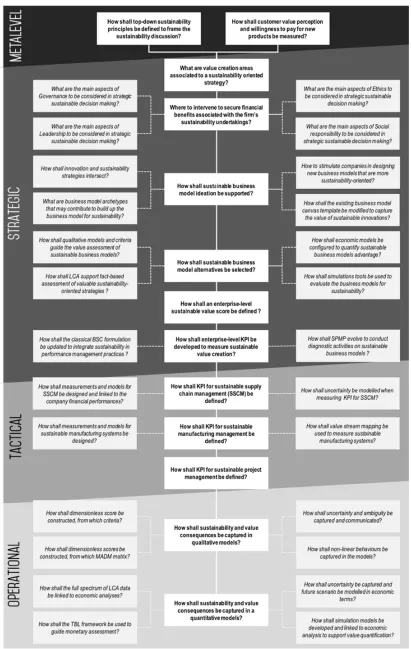
Figure 9 summarizes the modeling challenges at the crossroad of value and sustainability decisions making, highlighting the connection between higher-order questions and lower-level ones. The proposed hierarchical organization is intended to guide decision makers in systematically decomposing issues related to methods and tools at Strategic, Tactical and Operational level, and to elaborate on the specific aspects associated to the targeted level.
Literature is scattered mainly with regards to criteria and MADM methods for assessing sustainable value creation. Sustainability requirements are often not discussed exclusively, rather they are traded-off with quality, performance and cost requirements, and judged in a context where more established engineering tools are used. Assessing and communicating “sustainability” to technology developers becomes then a difficult exercise, due to the problem of showing numbers and “hard facts” related to the value generated by sustainability-oriented decisions across the entire life cycle of a product or service. Borrowing an example from Brockhaus et al. [125], a firm may change input materials to enhance resource efficiency during production, but fail to recognize that such a modification may negatively impact recycling practices, which may become more energy intensive.
It can also be noticed that economic analysis models for sustainability are mainly proposed bottom-up, from the point of view of a specific case study under investigation. A conclusion from this review is that researchers and practitioners may benefit from a more top-down perspective when it comes to model the value generated by sustainable solutions. An advantage point from which to begin the search for a systematic approach for monetary value analysis is found in the domain of advanced engineering. Since the early 2000s, a significant amount of contributions has been produced on value-centered methodologies in the aerospace sector. These have converged in the early 2010s in the research stream of Value Driven Design (VDD) [218]. Net Present Value (NPV) and Surplus Value (SV) are two major monetary optimization functions proposed in VDD to assess the long-term profitability of system alternatives [219,220]. The profitability idea is further cascaded down to the system components, and used to establish requirements at different levels of granularity in the system description. An opportunity is seen then for exploiting the VDD framework as main hub from which to derive models supporting the identification of win-win-win situations where sustainable improvements are aligned with business advantages. Cross-pollinating sustainability and VDD research remains a challenge today, for two main reasons. Firstly, VDD models do not consider sustainability explicitly, apart from sporadic attempts [221]. Secondly, VDD optimization functions struggle to fit with the earliest innovation process stages, which are characterized by seemingly inconsistent, ill-defined and immature knowledge [222,223].
Another reflection is that most contributions dealing with modeling sustainability from a value perspective is rarely forward looking, rather are mostly looking backwards, and based on an historical assessment. The review highlights that a main challenge when performing this assessment in an organizational context relates to the lack of methods for proactively setting future targets, boosting organizational integration capabilities and filtering contextual information concerning sustainability pressures and incentives. Decision support tools shall therefore stimulate design teams in growing understanding among a range of possible scenarios, rather than to picture a static outcome. In this respect, VDD research includes relevant features to support “what-if” analysis and scenario comparison, such as the Epoch-Era Analysis (EEA) method proposed by Ross and Rhodes [224]. EEA can be described as systematic approach designed to clarify the effects of changing contexts over time on the perceived value of a system. It was originally intended to be used in conjunction with Multi-Attribute Tradespace Exploration (MATE), a design exploration technique that models large numbers of designs and compares their costs and utilities. EEA works with fixed periods of contexts and needs (epochs) in which the system operates. The latter are characterized by a set of variables (from political scenarios to financial situations, from operational plans to availability of technologies) that influence the usage of the system: these are used to perform analysis of value delivery over time under the effects of changing circumstances. The introduction of EEA-based methods may cope with the lack of dynamic value modeling capabilities to judge sustainability-oriented choices. EEA integration in the sustainability and value modeling discussion offers the opportunity to more clearly convey the “value robustness” of sustainable design concepts in the forecasted scenarios.
design space exploration and design optimization, so to evaluate, compare, and even improve the definition of existing design options [225]. These tasks are often carried out using models that provide a mapping between quantitative descriptions of a concept and the outcomes of simulated tests on the corresponding CAD models. The generation of such response is supported by models borrowed from the domains of computer science (machine learning) and statistics. Despite the cross-pollination opportunity, surrogate modeling techniques in the domain of sustainability and value creation feature a low level of maturity and are poorly validated. Existing methods for surrogate modeling require precise quantitative input and output data [13], which means that value or sustainability aspects, which are often of more qualitative nature, would have to be transformed into quantitative variables. During the transformation, information loss or distortion can occur and this could reduce the validity of the results [226]. Even if qualitative value and sustainability aspects could be carefully and realistically rendered into quantitative variables, it is still challenging to generate models that can accurately balance these variables against technical engineering requirements and cost data.
As final note, the author acknowledges the problems that limit the validity of the systematic literature review as method to create a complete picture of existing contributions linked to the stated objectives. While efforts were made to be all-inclusive, some works may have inadvertently been omitted. The list of keywords may not be exhaustive; hence it may fail to reflect what being searched, and to adequately address the objectives of the review. Relevant publications may not respond to the search query terms selected for the first step, for instance because the research community tend to use the term “value” interchangeably with similar and related terms, such as “need”, “profit”, “voice of the customer”, “satisfaction”, etc. At the same time, “sustainability” may be neglected in favor of synonyms, making difficult to conduct effective searches in databases. Furthermore, the selection criteria used to filter the retrieved contributions may exclude relevant literature that should not be taken away. The reviewer him/herself may introduce personal biases in the selection. This risk was mitigated during the systematic review process by applying a systematic screening procedure, and by crosschecking the consistency of the application of inclusion and exclusion criteria with external readers.
9. Conclusions
The literature review reveals a plethora of contributions that aim at describing sustainability with regards to classical technical and business requirements, by relating it to profitability and customer value creation. At Metalevel, principles and definitions for sustainability are well established, however existing contributions do seem not sufficiently mature to reliably answer the question related to the customers’ willingness to pay for sustainable products. Even though several specific examples are proposed, these mainly refer to commodities and other simple products, pointing to the need of exploring more deeply the value of sustainability in the domain of Systems Engineering.
Research dealing with business transformation is among the most established and trending at present. A great deal of contributions is dedicated to the analysis of the strategic opportunities offered by circular business models for achieving value and sustainability targets. Models for value and sustainability assessment at Operational level are also attracting attention, at varying levels of detail. Still, no exhaustive indications are given with respect to how to bridge qualitative and quantitative models, using the input of the firsts to guide assessments in the latter. Furthermore, most of the proposed models are mainly static and disregard the dynamic behaviors of industrial and ecological systems. They often emerge from the existing data of today and do not consider alternative future scenario in the assessment. This creates an opportunity for cross-pollinating sustainability research with value-centered methodologies that are more mature in the field of dynamic value creation. Eventually, reliability and trustability of sustainable value modeling remains an issue, requiring a step change in the way uncertainty and ambiguity is treated while modeling future scenarios.
the identification of sustainability targets and to the definition of metrics to measure the progress towards these targets, with the final goal of providing decision makers with a toolbox of assessment models that makes the value of sustainable innovations explicit.
Acknowledgments: The research leading to these results has received financial support by the Swedish
Knowledge and Competence Development Foundation (Stiftelsen för kunskaps-och kompetensutveckling) through the Strategic, Tactical and Operational implementation of Sustainability into the Innovation Process (STOSIP) project at Blekinge Institute of Technology.
Conflicts of Interest: The author declares no conflict of interest.
References
1. Nidumolu, R.; Prahalad, C.K.; Rangaswami, M.R. Why sustainability is now the key driver of innovation.
Harv. Bus. Rev.2009, 87, 56–64.
2. Lubin, D.A.; Esty, D.C. The sustainability imperative. Harv. Bus. Rev.2010, 88, 42–50.
3. Heikkurinen, P.; Bonnedahl, K.J. Corporate responsibility for sustainable development: A review and conceptual comparison of market-and stakeholder-oriented strategies. J. Clean. Prod.2013, 43, 191–198. 4. Willard, B. The New Sustainability Advantage: Seven Business Case Benefits of a Triple Bottom Line; New Society
Publishers: Gabriola Island, BC, Canada, 2012.
5. Eccles, R.G.; Ioannou, I.; Serafeim, G. The impact of corporate sustainability on organizational processes and performance. Manag. Sci.2014, 60, 2835–2857.
6. Kaebernick, H.; Kara, S.; Sun, M. Sustainable product development and manufacturing by considering environmental requirements. Robot. Comput.-Integr. Manuf.2003, 19, 461–468.
7. Pujari, D.; Peattie, K.; Wright, G. Organizational antecedents of environmental responsiveness in industrial new product development. Ind. Market. Manag.2004, 33, 381–391.
8. Waage, S.A. Re-considering product design: A practical “road-map” for integration of sustainability issues.
J. Clean. Prod.2007, 15, 638–649.
9. Bertoni, M.; Hallstedt, S.; Isaksson, O. A model-based approach for sustainability and value assessment in the aerospace value chain. Adv. Mech. Eng.2015, 7, 1–19.
10. Hallstedt, S.; Bertoni, M.; Isaksson, O. Assessing sustainability and value of manufacturing processes: A case in the aerospace industry. J. Clean. Prod.2015, 108, 169–182.
11. Gmelin, H.; Seuring, S. Determinants of a sustainable new product development. J. Clean. Prod.2014, 69, 1– 9.
12. Petala, E.; Wever, R.; Dutilh, C.; Brezet, H. The role of new product development briefs in implementing sustainability: A case study. J. Eng. Technol. Manag.2010, 27, 172–182.
13. Isaksson, O.; Bertoni, M.; Hallstedt, S.; Lavesson, N. Model Based Decision Support for Value and Sustainability in Product Development. In Proceedings of the 20th International Conference on Engineering Design (ICED 15), Milan, Italy, 27–30 July 2015; Volume 1.
14. Tranfield, D.R.; Denyer, D.; Smart, P. Towards a methodology for developing evidence-informed management knowledge by means of systematic review. Br. J. Manag.2003, 14, 207–222.
15. Adams, R.; Jeanrenaud, S.; Bessant, J.; Denyer, D.; Overy, P. Sustainability-oriented Innovation: A Systematic Review. Int. J. Manag. Rev.2015, 18, 180–205.
16. Ardito, L.; Messeni Petruzzelli, A.; Albino, V. From technological inventions to new products: A systematic review and research agenda of the main enabling factors. Eur. Manag. Rev.2015, 12, 113–147.
17. Zhang, F.; Rio, M.; Allais, R.; Zwolinski, P.; Carrillo, T.R.; Roucoules, L.; Mercier-Laurent, E.; Buclet, N. Toward an systemic navigation framework to integrate sustainable development into the company. J. Clean. Prod.2013, 54, 199–214.
18. Hallstedt, S.; Ny, H.; Robèrt, K.H.; Broman, G. An approach to assessing sustainability integration in strategic decision systems for product development. J. Clean. Prod.2010, 18, 703–712.
19. Green, K.W., Jr.; Zelbst, P.J.; Bhadauria, V.S.; Meacham, J. Do environmental collaboration and monitoring enhance organizational performance? Ind. Manag. Data Syst.2012, 112, 186–205.
21. Popay, J.; Roberts, H.; Sowden, A.; Petticrew, M.; Arai, L.; Rodgers, M.; Britten, N.; Roen, K.; Duffy, S.
Guidance on the Conduct of Narrative Synthesis in Systematic Reviews: A Product from the ESRC Methods Programme; version 1; Lancaster University: Lancaster, UK, 2006; p. 92.
22. Webster, J.; Watson, R.T. Analyzing the past to prepare for the future: Writing a literature review. MIS Q.
2002, 26, 13–23.
23. Petersen, K.; Feldt, R.; Mujtaba, S.; Mattsson, M. Systematic Mapping Studies in Software Engineering. In Proceedings of the 12th international conference on Evaluation and Assessment in Software Engineer (EASE), Bari, Italy, 26–27 June 2008; Volume 8, pp. 68–77.
24. Mukherjee, A.; Kamarulzaman, N.H.; Vijayan, G.; Vaiappuri, S.K. Sustainability: A Comprehensive Literature. In Handbook of Research on Global Supply Chain Management; IGI Global Publishers: Hershey, PA, USA, 2015; p. 248.
25. Broman, G.I.; Robèrt, K.H. A framework for strategic sustainable development. J. Clean. Prod.2017, 140, 17– 31.
26. Lindsey, T.C. Sustainable principles: Common values for achieving sustainability. J. Clean. Prod.2011, 19, 561–565.
27. De Vries, B.J.; Petersen, A.C. Conceptualizing sustainable development: An assessment methodology connecting values, knowledge, worldviews and scenarios. Ecol. Econ.2009, 68, 1006–1019.
28. Bolis, I.; Morioka, S.N.; Sznelwar, L.I. When sustainable development risks losing its meaning. Delimiting the concept with a comprehensive literature review and a conceptual model. J. Clean. Prod.2014, 83, 7–20. 29. Pearce, O.J.; Murray, N.J.; Boyd, T.W. Halstar: Systems engineering for sustainable development. Proc. Inst.
Civil Eng. Eng. Sustain.2012, 165, 129–140.
30. Aschehoug, S.H.; Boks, C. Towards a framework for sustainability information in product development.
Int. J. Sustain. Eng.2013, 6, 94–108.
31. Gotzsch, J. Key aspects of product attraction: A focus on eco-friendliness. Int. J. Environ. Technol. Manag.
2008, 8, 37–52.
32. De Medeiros, J.F.; Ribeiro, J.L.D. Environmentally sustainable innovation: Expected attributes in the purchase of green products. J. Clean. Prod.2017, 142, 240–248.
33. Michaud, C.; Llerena, D. Green consumer behaviour: An experimental analysis of willingness to pay for remanufactured products. Bus. Strateg. Environ.2011, 20, 408–420.
34. Tsai, M.T.; Chuang, L.M.; Chao, S.T.; Chang, H.P. The effects assessment of firm environmental strategy and customer environmental conscious on green product development. Environ. Monit. Access.2012, 184, 4435–4447.
35. Goucher-Lambert, K.; Cagan, J. The Impact of Sustainability on Consumer Preference Judgments of Product Attributes. J. Mech. Des.2015, 137, 081401.
36. Biswas, A.; Roy, M. Leveraging factors for sustained green consumption behavior based on consumption value perceptions: Testing the structural model. J. Clean. Prod.2015, 95, 332–340.
37. Hamzaoui Essoussi, L.; Linton, J.D. New or recycled products: How much are consumers willing to pay?
J. Consum. Market.2010, 27, 458–468.
38. Soltmann, C.; Stucki, T.; Woerter, M. The Impact of Environmentally Friendly Innovations on Value Added.
Environ. Resour. Econ.2015, 62, 457–479.
39. Ozaki, R.; Sevastyanova, K. Going hybrid: An analysis of consumer purchase motivations. Energy Policy
2011, 39, 2217–2227.
40. Kim, S.; Cho, Y.; Niki, K.; Yamanaka, T. Integrating affective values to sustainable behaviour focused on Kansei engineering. Int. J. Sustain. Eng.2016, 9, 378–389.
41. Ha-Brookshire, J.E.; Norum, P.S. Willingness to pay for socially responsible products: Case of cotton apparel. J. Consum. Market.2011, 28, 344–353.
42. Raska, D.; Shaw, D. When is going green good for company image? Manag. Res. Rev.2012, 35, 326–347. 43. Martin, D.M.; Väistö, T. Reducing the Attitude-Behavior Gap in Sustainable Consumption: A Theoretical
Proposition and the American Electric Vehicle Market. In Marketing in and for a Sustainable Society; Emerald Group Publishing Limited: Chicago, IL, USA, 2016; pp. 193–213.