R E S E A R C H
Open Access
Statistical shape models of cuboid,
navicular and talus bones
Aleksandra U. Melinska
1*, Patryk Romaszkiewicz
2, Justyna Wagel
3, Bartlomiej Antosik
1, Marek Sasiadek
3and D. Robert Iskander
1Abstract
Background:
The aim was to develop statistical shape models of the main human tarsal bones that would result in
novel representations of cuboid, navicular and talus.
Methods:
Fifteen right and 15 left retrospectively collected computed tomography data sets from male individuals,
aged from 17 to 63 years, with no known foot pathology were collected. Data were gathered from 30 different
subjects. A process of model building includes image segmentation, unifying feature position, mathematical shape
description and obtaining statistical shape geometry.
Results:
Orthogonal decomposition of bone shapes utilising spherical harmonics was employed providing means for
unique parametric representation of each bone. Cross-validated classification results based on parametric spherical
harmonics representation showed high sensitivity and high specificity greater than 0.98 for all considered bones.
Conclusions:
The statistical shape models of cuboid, navicular and talus created in this work correspond to
anatomically accurate atlases that have not been previously considered. The study indicates high clinical potential of
statistical shape modelling in the characterisation of tarsal bones. Those novel models can be applied in medical
image analysis, orthopaedics and biomechanics in order to provide support for preoperative planning, better
diagnosis or implant design.
Keywords:
Bone model, Calcaneus, Cuboid, Navicular, Talus, Morphometry, Spherical harmonics, Shape modelling
Background
The statistical shape model (SSM) has been established
as a powerful tool for medical image analysis [1–6]. The
goal of constructing a statistical shape model is to obtain
a mean shape and description of variation from a
collec-tion of samples [7–10]. The methods employed strongly
depend on the chosen shape representation, which can
be landmarks and meshes, medial models, Fourier
sur-faces, spherical harmonics, deformable models, wavelets
description, non-uniform rational B-Splines and others
[11, 12]. The choice of the shape representation
influ-ences further processing and calculation and in that
context landmark-based point distribution models have
become popular and commonly used methods.
Statisti-cal shape models are usually used for the task of
seg-*Correspondence: [email protected]
1Department of Biomedical Engineering, Wroclaw University of Science and
Technology, 50370, Wybrzeze Wyspianskiego, Wroclaw, Poland Full list of author information is available at the end of the article
mentation [13, 14], but they could also be considered
for finite element (FE) modelling [15, 16] and automatic
detection of shape and feature correspondences [17, 18].
The SSM based techniques of medical image analysis
have been applied to segmentation of bones [19–22] but
only few studies considered statistical shape of the
cal-caneus, cuboid, navicular and talus that constitute the
four largest tarsal bones [23–26]. There have been many
studies considering modelling of foot bones. For example,
Camancho et al. [27] generated an anatomically detailed,
three-dimensional reconstruction of a human foot from
computed tomography (CT) images. They proposed an
accurate representation of bone and soft tissues of foot.
The presented method became a base for further
develop-ment of a FE model of the human foot that could be used
in quantifying morphometric characteristics between
dif-ferent foot types [28]. Also, Liu et al. [29] described rigid
model-based 3D segmentation of joints imaged using
magnetic resonance (MR) and CT images in order to
examine their kinematics. Of all tarsal bones, talus has
received most of attention. Leardini et al. [30]
pro-posed a geometric two-dimensional model of the ankle
joint, which allows examining ankle stability. The
pre-sented model showed the path of calcaneus, ligament
orientations, instantaneous axis of rotation, and
conju-gate talus surface profile as observed in the experiments.
In their following work, [31] they aimed at
develop-ing a model of the intact human ankle complex. The
goal was to design the total ankle replacement which
would better reproduce the physiological function of
the joint. Such a model was used for FE analysis of
total ankle replacement during the stance phase of gait
[32]. Contrarily, cuboid, and navicular were only broadly
considered [33].
All of the works mentioned above did not employ the
SSM analysis. Recently, a SSM for calcaneus has been
described, where an accurate SSM of calcaneus was
pro-posed [24]. The aim of this work was to extend that
methodology to the case of the other three tarsal bones,
namely cuboid, navicular, and talus. Additionally, it was
of interest to ascertain whether SSM parametric
charac-terisation can be used for classifying the particular tarsal
bones.
Methods
A method for automatically building a morphometric and
anatomically accurate model of calcaneus was described
in our previous work [24]. We follow that methodology
aiming at developing SSMs for cuboid, navicular and talus.
Retrospective volume data of 15 left and 15 right feet of
male subjects were used. Scans were gathered from 30
dif-ferent subjects. All subject records were anonymised and
de-identified prior to processing according to the
stan-dard data release procedures. The Review Board of the
Department of Radiology, Wroclaw Medical University,
Wroclaw has approved the study. The study has been
con-ducted according to the principles of the Declaration of
Helsinki.
The particular steps of building the SSMs are: bones
seg-mentation, land-marking, unifying feature position and
orientation and SSM calculation. They consist of:
•
Image pre-processing:
The volume CT registered
image is decomposed in order to prepare a series of
2D images in sagittal plane. For each 2D image the
contrast is enhanced.
•
Contour extraction:
The region growing algorithm
is applied to extract the contour [34]. A starting point
was manually marked by an experienced operator.
•
3D point cloud to surface:
In order to obtain a
surface from contours points the oriented normals
are calculated. This is followed by Poisson surface
reconstruction method for which the mesh is
generated. Meshlab (Pisa, Italy) software was used to
generate meshes [35, 36].
•
Land-marking:
For each bone, three anatomical
landmarks were automatically marked on bone
surface mesh. However, expert validation was still
maintained to ensure that all points were correctly
marked. In few cases an expert operator intervention
was needed to correctly assign the points. The
marked points are (see Fig. 1):
For cuboid: the lowest point of the surface for the
fourth metatarsal (Point
a
C), the highest point of the
surface for the fourth metatarsal (Point
b
C) and the
most posterior point of the cuboid tuberosity which
was the same as the lowest point of calcaneocuboid
joint (Point
c
C).
For navicular: the highest point on the superior edge
of the navicular tuberosity (Point
a
N), the most
posterior point of the navicular tuberosity
articulating to medial cuneiform (point
b
N) and the
most posterior point of the navicular tuberosity
articulating to lateral cuneiform (point
c
N).
For talus: the highest point of the trochlea (Point
a
T),
the most posterior point of the head for navicular
bone (Point
b
T) and the most posterior point of the
posterior calcaneal articular surface (Point
c
T).
•
Averaging feature position and orientation:
Unification of models was prerequisite to further
shape description. The subjects were scanned in the
same feet-first, supine (FFS) position, but feet
placement for each subject was slightly different. To
unify the position of each bone the following steps
are applied (see Fig. 2):
Fig. 2Averaging feature position and orientation. The illustration of the concept for averaging feature position and orientation, showed on cuboid example (bone drawings adapted from [60])
1. Rotation of the model by an angle
α
between the
plane
π
0:
z
=
0
and the plane
π
abcthat includes
points a, b, c of each considered bone.
2. Translation of the model by the vector
−
→
C
=
[
x
c,
y
c,
z
c]
to set the selected point (point
c
for all bones) in the origin.
3. Rotation of the model about the
x axis by the
angle
β
which is between
x axis and vector
−
→
A
=
[
x
a,
y
a,
z
a]
.
•
Spherical harmonics (SPHARM) decomposition:
The calculation of shape description is obtained by
the SPHARM application [37–39].
•
Model and model order selection:
To estimate the
optimal model order for SPHARM decomposition,
the Minimum Distance Length (MDL) criterion [40]
was used. The product of SPHARM decomposition,
i.e., the set of coefficients estimated in the SPHARM
expansion characterises the shape of bone. For the
SSM descriptive statistics of SPHARM coefficients
were calculated.
Two-way parametric ANOVA was used to test for
changes between tarsal bones in SPHARM coefficients
[41]. This was followed by an application of a machine
learning technique, the Random Forest [42], to the 4-class
recognition problem of tarsal bones. For that, the total
of 120 samples of either left or right tarsal bone models
(15 individuals
×
4 bones
×
2 left/right) were used.
10-fold cross-validation method [43] was used to assess the
misclassification error. Sensitivity and specificity for each
classified group was also calculated.
Results
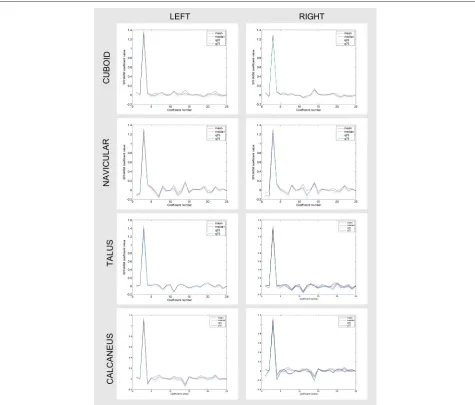
Figure 3 shows the box-plots for the first 25 SPHARM
coefficients for left and right bones while Fig. 4 shows the
first, second, and the third quartile as well as the mean of
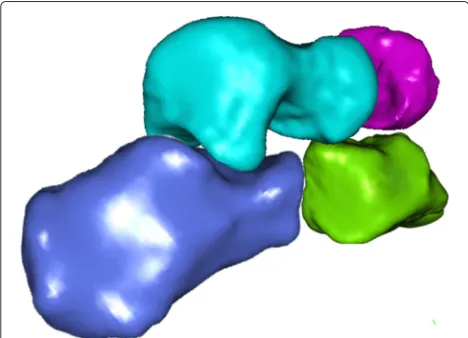
the 25 considered SPHARM coefficients. A 3D model of
bones (see Fig. 5) is generated based on the mean estimate
of coefficients for the right foot. Note that models shown
in the figure are parted in order to exhibit the articular
facets.
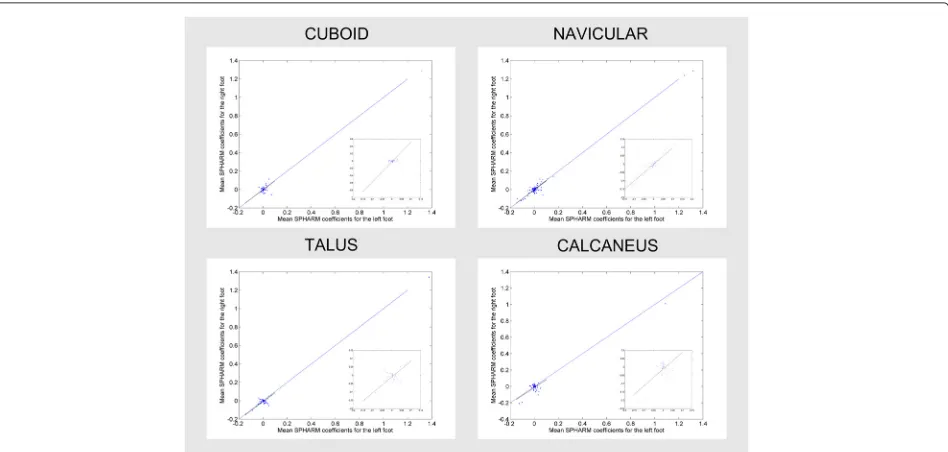
Figure 6 presents the results of correlation between
mean values of SPHARM coefficients for the right and left
foot. The asymmetrical nature of bone can be assessed
through examining the distribution of coefficients. The
right/left foot correlation of estimated shapes is as follow:
for cuboid (
r
2=
0.88), for navicular (
r
2=
0.99), for talus
(
r
2=
0.98), for calcaneus (
r
2=
0.94), and statistically
significant (
p
0.001) for all bones. Those correlations
remain moderate when the highest coefficient is
omit-ted, amounting to: for cuboid (
r
2=
0.72), for navicular
(
r
2=
0.92), for talus (
r
2=
0.84), for calcaneus (
r
2=
0.54),
and statistically significant (
p
0.001) for all bones (see
Fig. 6 zoom).
Two-way ANOVA showed statistically significant
differ-ences between considered bones, coefficients, and
inter-actions between the bones and coefficients (all
p
0.001). Two tests were considered. One for all coefficients
and the other one in which the third SPHARM coefficient
was excluded (see Fig. 3), as it was substantially greater
than the other coefficients and could influence the test.
Nevertheless, similar statistically significant results (all
p
0.001) were obtained for the reduced set of SPHARM
Fig. 5Reconstruction of models. An example of reconstructed SSM of cuboid, navicular, talus and calcaneus for the right foot (blue -calcaneus,green- cuboid,magenta- navicular ,cyan-talus)
coefficients. The distribution of SPHARM coefficients
was found to uniquely characterise each bone and so this
distribution could be used for bone classification.
Further, the random forest algorithm was applied to
develop a tarsal bone classifier. Considering data cross
val-idation, the optimal number of decision trees was 40 and
for that the misclassification rate was 1.02%. Sensitivity
and specificity was estimated: for calcaneus 0.9600 and
0.9953, for cuboid 0.9960 and 0.9878, for navicular 1 and
0.9996, and for talus 0.9793 and 0.9958, respectively.
Discussion
Statistical shape modelling is a useful tool for feature
extraction in medical imaging [12, 44]. The goal is to
pro-vide efficient information about the shape of an object
of interest and its variability, often to build the so-called
statistical atlas of particular body part, including bones
[19, 45, 46]. Quantitative and accurate evaluation requires
an appropriate representation used in shape modelling.
The choice of the particular descriptors used in shape
representation is important for further processing and
analysis. The SPHARM description, used in this paper,
provides quantitative information about the shape directly
[47–49]. This paper contributes to this area by providing,
for the first time, statistical anatomically accurate shape
models for cuboid, navicular and talus.
Describing a shape using orthogonal polynomials, an
inherent feature of SPHARM representation, allows for
easy comparison of shapes through analysis of model
coefficients. Further, it provides basis for classification
of shapes based on testing for differences in the
repre-sentative SPHARM coefficients. Using this methodology,
our study shows that all considered tarsal bones can be
uniquely represented by SPHARM.
Fig. 6Correlation between the SPHARM coefficients. Correlation between the SPHARM coefficients of the left and the right models of cuboid, navicular, talus and calcaneus
Another interesting aspect of statistical shape
mod-elling is reconstruction [54–56]. The advantage of
apply-ing SPHARM to the shape reconstruction problem is their
low complexity. Using estimated SPHARM coefficients
it is possible to reconstruct one particular bone shape
as well as create descriptive statistics for the examined
group, say mean or median shape (see Fig. 5). It is worth
noting that sexual dimorphism [57–59] was not
consid-ered in the study. The goal of the study was to develop
anatomically accurate statistical models of tarsal bones
and at that stage of research the size of bones was of
con-cern. In other words, the statistical shape models of male
bones are not necessarily scaled versions of their female
equivalents.
Conclusions
Summarising, the SSMs of cuboid, navicular and
talus created in this work correspond to anatomically
accurate morphometric atlases (SSM which includes
morphological characteristics and provides
mathemat-ical representation of the shape) that have not been
previously considered. They extend the considerable
amount of 3D SSMs that are already employed in
medical imaging. The new models of the considered
tarsal bones are of interest in medical image
analy-sis, orthopaedics and biomechanics and could provide
additional information for automated identification
of pathologies, better diagnostics and treatment,
pre-operative planning, as well as for implant design and
procedures.
Additional file
Additional file 1: SPHARM coefficients for calcaneus, cuboid, navicular and talus bones. (XLS 127 KB)
Acknowledgements
Authors would like to thank Aleksandra Habowska, Weronika Poszwa and Malgorzata Socha for gathering and preparing data for the analysis.
Funding
The research was supported by Polish National Centre of Science, under grant Preludium UMO-2013/09/N/ST7/03418.
Availability of data and materials
All data generated during this study are included in this published article. This is the full data set for coefficients for calcaneus, cuboid, navicular and talus. We attach text file containing Spherical Harmonics coefficients. Please contact us if you need more information how to prepare models using attached data. (Additional file 1).
Authors’ contributions
AM designed and carried out the experiments, analysed the data, and drafted the manuscript. PR gathered and prepared data to analysis, as well as validated models. JW gathered and prepared data to analysis, as well as validated models. BA analysed the data and drafted part of the manuscript. MS detailed research protocol to meet ethics approval and consent to participate as well as critically revised the manuscript and contributed to the evaluation part. DRI designed experiments and analysed the data as well as drafted the manuscript. All authors read and approved the final manuscript.
Competing interests
The authors declare that they have no competing interests.
Consent for publication
Not applicable.
Ethics approval and consent to participate
Department of Radiology, Wroclaw Medical University, Wroclaw has approved the study. The study has been conducted according to the principles of the Declaration of Helsinki.
Author details
1Department of Biomedical Engineering, Wroclaw University of Science and
Technology, 50370, Wybrzeze Wyspianskiego, Wroclaw, Poland.2Regional
Specialist Hospital, Research and Development Centre, Chair of Orthopaedics, Kamienskiego, 24105 Wroclaw, Poland.3Department of General Radiology,
Interventional Radiology and Neuroradiology, Chair of Radiology, Wroclaw Medical University, Borowska, 24105 Wroclaw, Poland.
Received: 11 August 2016 Accepted: 25 November 2016
References
1. Loncaric S. A survey of shape analysis techniques. Pattern Recogn. 1998;31(8):983–1001.
2. Cootes TF, Taylor CJ, et al. Statistical models of appearance for computer vision. Technical report. Menchester: University of Manchester; 2004. 3. Cremers D, Rousson M, Deriche R. A review of statistical approaches to
level set segmentation: integrating color, texture, motion and shape. Int J Comput Vision. 2007;72(2):195–215.
4. Dryden IL, Mardia KV, Vol. 4. Statistical Shape Analysis. Chichester: John Wiley and Sons; 1998.
5. Bookstein FL. Morphometric Tools for Landmark Data: Geometry and Biology. Cambridge: Cambridge University Press; 1997.
6. O’Higgins P, Jones N. Facial growth in cercocebus torquatus: an application of three-dimensional geometric morphometric techniques to the study of morphological variation. J Anat. 1998;193(2):251–72. 7. Fu G, Berg A, Das K, Li J, Li R, Wu R. A statistical model for mapping
morphological shape. Theor Biol Med Model. 2010;7(1):28. 8. Bruse JL, McLeod K, Biglino G, Ntsinjana HN, Capelli C, Hsia TY,
Sermesant M, Pennec X, Taylor AM, Schievano S. A statistical shape modelling framework to extract 3d shape biomarkers from medical imaging data: assessing arch morphology of repaired coarctation of the aorta. BMC Med Imaging. 2016;16(1):1.
9. Kendall DG, Barden D, Carne TK, Le H, Vol. 500. Shape and Shape Theory. Chichester: John Wiley & Sons; 2009.
10. Lele SR, Richtsmeier JT. An Invariant Approach to Statistical Analysis of Shapes. Boca Ralton, Florida: CRC Press; 2001.
11. Zhang D, Lu G. Review of shape representation and description techniques. Pattern Recogn. 2004;37(1):1–19.
12. Heimann T, Meinzer HP. Statistical shape models for 3d medical image segmentation: a review. Med Image Anal. 2009;13(4):543–63. 13. Pham DL, Xu C, Prince JL. Current methods in medical image
segmentation 1. Annu Rev Biomed Eng. 2000;2(1):315–37.
14. Peng B, Zhang L, Zhang D. A survey of graph theoretical approaches to image segmentation. Pattern Recogn. 2013;46(3):1020–38.
15. Cootes TF, Taylor CJ, Cooper DH, Graham J. Active shape models-their training and application. Comput Vis Image Und. 1995;61(1):38–59. 16. Lu YC, Untaroiu CD. Statistical shape analysis of clavicular cortical bone
with applications to the development of mean and boundary shape models. Comput Meth Prog Bio. 2013;111(3):613–28.
17. Berg AC, Berg TL, Malik J. Shape matching and object recognition using low distortion correspondences In: Schmid C, Soatto S, Tomasi C, editors. IEEE Computer Society Conference on Computer Vision and Pattern Recognition. USA: IEEE; 2005. p. 26–33.
18. Davies RH, Twining CJ, Cootes TF, Waterton JC, Taylor CJ. A minimum description length approach to statistical shape modeling. IEEE Trans Med Imaging. 2002;21(5):525–37.
19. Seim H, Kainmueller D, Heller M, Lamecker H, Zachow S, Hege HC. Automatic Segmentation of the Pelvic Bones from CT Data Based on a Statistical Shape Model In: Botha CP, Kindlmann G, Niessen WJ, Preim B, editors. Eurographics Workshop on Visual Computing for Biomedicine. Netherlands: The Eurographics Association; 2008. p. 93–100.
20. Schmid J, Kim J, Magnenat-Thalmann N. Robust statistical shape models for mri bone segmentation in presence of small field of view. Med Image Anal. 2011;15(1):155–68.
21. Kainmueller D, Lamecker H, Zachow S, Hege HC. An articulated statistical shape model for accurate hip joint segmentation In: Frangi A,
editor. Engineering in Medicine and Biology Society, Annual International Conference of the IEEE. IEEE; 2009. p. 6345–351.
22. Yokota F, Okada T, Takao M, Sugano N, Tada Y, Tomiyama N, Sato Y. Automated ct segmentation of diseased hip using hierarchical and conditional statistical shape models. In: Medical Image Computing and Computer-Assisted Intervention. Berlin, Heidelberg: Springer; 2013. p. 190–7.
23. Stindel E, Udupa JK, Hirsch BE, Odhner D, Couture C. 3d mr image analysis of the morphology of the rear foot: application to classification of bones. Comput Med Imag Grap. 1999;23(2):75–83.
24. Melinska AU, Romaszkiewicz P, Wagel J, Sasiadek M, Iskander DR. Statistical, morphometric, anatomical shape model (atlas) of calcaneus. PLOS ONE. 2015;10(8):e0134603. Public Library of Science, http://dx.doi. org/10.1371/journal.pone.0134603.
25. Chichka D, Stephenson J, Paulic A, Sheehan F. Bearing surface modeling of the talus and calcaneus. J Foot Ankle Res. 2008;1(1):1.
26. Qiang M, Chen Y, Zhang K, Li H, Dai H. Measurement of
three-dimensional morphological characteristics of the calcaneus using ct image post-processing. J Foot Ankle Res. 2014;7(1):1.
27. Camacho DL, Ledoux WR, Rohr ES, Sangeorzan BJ, Ching RP. A three-dimensional, anatomically detailed foot model: a foundation for a finite element simulation and means of quantifying foot-bone position. J Rehabil Res Dev. 2002;39(3):401–10.
28. Ledoux W, Camacho D, Ching R, Sangeorzan B. The development and validation of a computational foot and ankle model In: Enderle JD, editor. Engineering in Medicine and Biology Society, 2000. Proceedings of the 22nd Annual International Conference of the IEEE, vol. 4. USA: IEEE; 2000. p. 2899–902.
29. Liu J, Udupa JK, Saha PK, Odhner D, Hirsch BE, Siegler S, Simon S, Winkelstein BA. Rigid model-based 3d segmentation of the bones of joints in mr and ct images for motion analysis. Med Phys. 2008;35(8):3637–49. 30. Leardini A, O’connor J, Catani F, Giannini S. A geometric model of the
human ankle joint. J Biomech. 1999;32(6):585–91.
31. Leardini A. Geometry and mechanics of the human ankle complex and ankle prosthesis design. Clin Biomech. 2001;16(8):706–9.
32. Reggiani B, Leardini A, Corazza F, Taylor M. Finite element analysis of a total ankle replacement during the stance phase of gait. J Biomech. 2006;39(8):1435–43.
33. Ito K, Hosoda K, Shimizu M, Ikemoto S, Kume S, Nagura T, Imanishi N, Aiso S, Jinzaki M, Ogihara N. Direct assessment of 3d foot bone kinematics using biplanar x-ray fluoroscopy and an automatic model registration method. J Foot Ankle Res. 2015;8(1):21.
34. Pohle R, Toennies KD. Segmentation of medical images using adaptive region growing In: Sonka M, Hanson KM, editors. Medical Imaging 2001. San Diego, CA: International Society for Optics and Photonics; 2001. p. 1337–1346.
35. Kazhdan M, Hoppe H. Screened poisson surface reconstruction. ACM T Graphic (TOG). 2013;32(3):29.
36. MeshLab . http://meshlab.sourceforge.net/, Accessed 5 Jan 2017. 37. Iskander DR. Modeling videokeratoscopic height data with spherical
harmonics. Optom Vision Sci. 2009;86(5):542–7.
38. Hobson EW. The theory of spherical and ellipsoidal harmonics. Cambridge: CUP Archive; 1931, pp. 40–82.
39. Vrani´c DV, Saupe D, Richter J. Tools for 3D-object retrieval: Karhunen-Loeve transform and spherical harmonics In: Dugelay JL, Rose K, editors. IEEE Fourth Workshop on Multimedia Signal Processing. IEEE; 2001. p. 293–8.
40. Rissanen J. Modeling by shortest data description. Automatica. 1978;14(5):465–71.
41. Riffenburgh RH. Statistics in medicine. Amsterdam: Elsevier, Academic Press; 2012.
42. Breiman L. Random forests. Mach Learn. 2001;45(1):5–32.
43. Mosteller F, Tukey JW. Data analysis, including statistics In: Jones LV, editor. The Collected Works of John W Tukey. Monterey, California: Wadswoorth & Brooks/Cole; 1968. p. 601–94.
44. Cootes TF, Taylor CJ. Anatomical statistical models and their role in feature extraction. Brit J Radiol. 2004;77(2):133–39. British Institute of Radiology. 45. Chintalapani G, Ellingsen LM, Sadowsky O, Prince JL, Taylor RH.
Image Computing and Computer-Assisted Intervention. Berlin Heidelberg: Springer; 2007. p. 499–506.
46. Dworzak J, Lamecker H, von Berg J, Klinder T, Lorenz C, Kainmüller D, Seim H, Hege HC, Zachow S. 3d reconstruction of the human rib cage from 2d projection images using a statistical shape model. Int J CARS. 2010;5(2):111–24.
47. Styner MA, Rajamani KT, Nolte LP, Zsemlye G, Székely G, Taylor CJ, Davies RH. Evaluation of 3D correspondence methods for model building. In: Information processing in medical imaging. Berlin Heidelberg: Springer; 2003. p. 63–75.
48. Davies R, Taylor C, et al. Statistical models of shape: Optimisation and evaluation. London: Springer; 2008, pp. 9-45.
49. Davies RH, Twining CJ, Cootes TF, Taylor CJ. Building 3-d statistical shape models by direct optimization. IEEE T Med Imaging. 2010;29(4):961–81. 50. Perperidis D, Mohiaddin R, Rueckert D. Construction of a 4D statistical atlas of the cardiac anatomy and its use in classification In: Duncan JS, Gerig G, editors. Medical Image Computing and Computer-Assisted Intervention. Berlin Heidelberg: Springer; 2005. p. 402–10. 51. Rodriguez A, Ehlenberger DB, Dickstein DL, Hof PR, Wearne SL.
Automated three-dimensional detection and shape classification of dendritic spines from fluorescence microscopy images. PLOS ONE. 2008;3(4):e1997. Public Library of Science, http://dx.doi.org/10.1371/ journal.pone.0001997.
52. Neubert A, Fripp J, Engstrom C, Schwarz R, Lauer L, Salvado O, Crozier S. Automated detection, 3d segmentation and analysis of high resolution spine mr images using statistical shape models. Phys Med Biol. 2012;57(24):8357.
53. Cootes TF, Ionita MC, Lindner C, Sauer P. Robust and accurate shape model fitting using random forest regression voting In: Duncan JS, Gerig G, editors. Computer Vision-ECCV 2012. Berlin Heidelberg: Springer; 2012. p. 278–91.
54. Zheng G, Gollmer S, Schumann S, Dong X, Feilkas T, Ballester MAG. A 2d/3d correspondence building method for reconstruction of a patient-specific 3d bone surface model using point distribution models and calibrated x-ray images. Med Image Anal. 2009;13(6):883–99. 55. Neubert A, Fripp J, Engstrom C, Schwarz D, Weber MA, Crozier S.
Statistical shape model reconstruction with sparse anomalous deformations: Application to intervertebral disc herniation. Comput Med Imaging Graph. 2015;46:11–9.
56. Zachow S, Lamecker H, Elsholtz B, Stiller M. Reconstruction of mandibular dysplasia using a statistical 3D shape model In: Schmidt DC, editor. International Congress Series, vol. 1281. Berlin: Elsevier; 2005. p. 1238–1243.
57. Bidmos MA, Dayal MR. Sex determination from the talus of south african whites by discriminant function analysis. Am J Foren Med Path. 2003;24(4):322–8.
58. Bidmos MA, Asala SA. Sexual dimorphism of the calcaneus of south african blacks. J Forensic Sci. 2004;49(3):JFS2003254–5.
59. Rosing FW, Graw M, Marre B, Ritz-Timme S, Rothschild MA, Rotzscher K, Schmeling A, Schroder I, Geserick G. Recommendations for the forensic diagnosis of sex and age from skeletons. HOMO-Journal of Comparative Human Biology. 2007;58(1):75–89. Elsevier.
60. Gray H. Anatomy of the human body. Philadelphia: Lea & Febiger; 1918.
• We accept pre-submission inquiries
• Our selector tool helps you to find the most relevant journal
• We provide round the clock customer support
• Convenient online submission
• Thorough peer review
• Inclusion in PubMed and all major indexing services
• Maximum visibility for your research
Submit your manuscript at www.biomedcentral.com/submit
![Fig. 1 Anatomical landmarks for cuboid, navicular and talus Bone drawings adapted from [60]](https://thumb-us.123doks.com/thumbv2/123dok_us/690525.1565286/2.595.58.540.633.714/anatomical-landmarks-cuboid-navicular-talus-bone-drawings-adapted.webp)
![Fig. 2 Averaging feature position and orientation. The illustration of the concept for averaging feature position and orientation, showed on cuboidexample (bone drawings adapted from [60])](https://thumb-us.123doks.com/thumbv2/123dok_us/690525.1565286/3.595.59.540.238.701/averaging-position-orientation-illustration-averaging-orientation-cuboidexample-drawings.webp)