R E S E A R C H
Open Access
Validity and reliability of EQ-5D-3L for
breast cancer patients in Korea
Seon-Ha Kim
1, Min-Woo Jo
2*, Jong-Won Lee
3,4, Hyeon-Jeong Lee
2and Jong Kyung Kim
1Abstract
Background:Recently, breast cancer incidence and prevalence has been increasing. Patients' health related quality of life is important considerations in the treatment of breast cancer. The EQ-5D-3L is one of most popular
instruments to measure health related quality of life. This study was aimed to evaluate the validity and reliability of EQ-5D-3L in post-operative breast cancer patients from Korea.
Methods:A total of 827 patients visiting the ambulatory cancer center of 1 tertiary hospital after breast cancer surgery self-administered the EQ-5D-3L and Functional Assessment of Cancer Therapy-Breast Cancer (FACT-B). We evaluated known-group validity using differences in the EQ-5D-3L index and EQ-VAS score according to
demographic and clinical data. The discriminatory ability of the EQ-5D-3L was determined by comparing the mean FACT-B subscale scores between subjects with no problems and subjects with moderate or severe problems in each EQ-5D-3L dimension. Construct validity was evaluated by Pearson correlation coefficients among the EQ-5D-3L index and FACT-B subscales, respectively. Reliability was assessed in terms of test-retest reliability using Cohen’s kappa value and intra-class correlation coefficient (ICC).
Results:The EQ-5D-3L index and EQ-VAS score were higher in the educated, current radiotherapy and
unmarried groups. The correlation of EQ-5D-3L index and subscales for the FACT-B was highest in physical well-being (r = 0.553) and lowest in social well-being (r = 0.199). For reliability, the Kappa values’ range was from 0.32 to 0.70, and ICCs of the EQ-5D-3L index and EQ-VAS scores were 0.70 and 0.48, respectively.
Conclusions: This study indicated that the EQ-5D-3L could be a valid health related quality of life instrument
for postoperative breast cancer patients.
Keywords: Breast cancer, EQ-5D-3L, Health-related quality of life, FACT-B, Korea
Background
Breast cancer is the most frequently diagnosed cancer in females and the leading cause of cancer-related deaths in both economically developed and developing countries [1]. In Korea, the crude breast cancer incidence rate was 63.7 per 100,000 persons in 2011 and has been increas-ing since 1999 [2]. The 5-year survival rate for breast cancer patients has improved, with 91.3 % reported between 2007 and 2011 in Korea [2]. Recent years have led to a range of treatments for breast cancer, and devel-opment of additional therapeutics is continually in progress.
Health-related quality of life (HRQoL) and traditional clinical outcomes (i.e., survival rate or tumor responses) are considered as significant outcomes of cancer care [3]. Tools to assess HRQoL are classified into disease-specific instruments and generic instruments. Preference-based instruments (the Health Utility Index [4, 5], the EuroQol 5D (EQ-5D-3L) [6], or the Short Form 6D [7]) are generic instrument generating utilities that yield a measure that combines both the length and quality of life [8]. Disease-specific instruments can be more sensitive for detecting clinically important differences or changes in specific dis-ease groups in general, although general instrument is oc-casionally not inferior to disease-specific instrument [9]. However, they do not compare HRQoL of patients with other diseases [8]. Resource allocation for health care has been a critical issue, not only for its effectiveness, but also * Correspondence:[email protected]
2Department of Preventive Medicine, University of Ulsan College of
Medicine, 88, Olympicro 43-gil, Songpa-gu 138-736, Seoul, South Korea Full list of author information is available at the end of the article
for efficiency of care; hence, it is important for guiding healthcare policy.
The EQ-5D-3L, a generic preference-based instrument that is widely used to measure HRQoL, can be used to assign preference values to various health states [10]. Additionally, EQ-5D-3L is a unique instrument with quality weight tariffs for use in Korean populations [11]. The psychometric properties of the Korean EQ-5D-3L have been studied for rheumatic disease [12] and colon cancer [13] patients. However, studies on validity and re-liability of the EQ-5D-3L in breast cancer patients in Korea are scarce [14]. Hence, we evaluated the validity and reliability of the EQ-5D-3L to measure the HRQoL in post-operative breast cancer patients from Korea.
Methods
Subjects and settings
A consecutive series of breast cancer patients who had surgery as a primary treatment at the ambulatory cancer center of 1 tertiary hospital in Seoul, Korea from Febru-ary 2012 to May 2012, participated in this study. All par-ticipants provided informed written consent prior to taking our survey and a total of 1,002 subjects were con-secutively recruited. The initial 150 recruited subjects were requested to complete an EQ-5D-3L questionnaire 1 week later via mail to assess the test-retest reliability of each patient. The survey was self-administered in the waiting room at the center with or without research nurse assistance. The Institutional Review Board of Asan Medical Center approved the study (IRB approval number: 2012–0010).
Information
Our questionnaire included requests for demographic information (age, sex, level of education, marital status, and occupation) and 2 HRQOL instruments (EQ-5D-3L and Functional Assessment of Cancer Therapy-Breast Cancer [FACT-B] version 4). Clinical information (the type of surgery, American Joint Committee on Cancer [AJCC] 7th stage at diagnosis, duration of disease since diagnosis, and current treatment for breast cancer), was obtained from the cancer registry database of the center.
The EQ-5D-3L is an instrument widely used to measure and evaluate the general health status of a patient in 5 dimensions (mobility, self-care, usual ac-tivities, pain/discomfort, and anxiety/depression) with 3 levels as follows: 1, no problems; 2, some or moderate problems; and 3, extreme problems. The EQ-5D-3L pro-vides a simple descriptive profile and a single index of health status [10]. The EQ-VAS records the respondent’s self-rated health on a vertical, visual analogue scale where the endpoints are classified as follows: ‘best imaginable health state’ =100 and ‘worst imaginable health state’=0 [10].
The FACT-B is a validated multi-dimensional self-reported questionnaire with a 36-item questionnaire that measures both the 27-item general QoL associated with cancer (Functional Assessment of Cancer Therapy -General [FACT-G]) and an additional 9-item breast cancer-related QOL. The FACT-B includes the following subscales that measure physical well-being (PWB), func-tional well-being (FWB), emofunc-tional well-being (EWB), social/family well-being (SWB), and the breast cancer subscale (BCS). FACT-B total scores were calculated as the sum of the 5 subscales. FACT-G scores were calcu-lated as the sum of the PWB, FWB, EWB, and SWB scores and FACT-B Trial Outcome Index (TOI) was cal-culated as the addition of the PWB, FWB and BCS scores [15, 16]. This study used the Korean FACT-B ver-sion 4 that is validated [17] and a higher score indicated a better state.
Analyses
The proportion of patients reporting any problems in each EQ-5D-3L dimension and EQ-5D-3L index were presented. The EQ-5D-3L index was calculated using a Korean valu-ation set [11]. The EQ-5D-3L index ranged from−0.171 to 1, and higher values indicated better health status. The FACT-B subscale scores were calculated in accordance with a scoring guideline provided by the Functional Assessment of Chronic Illness Therapy (FACIT) measurement system (www.facit.org/FACITOrg).
Differences in the EQ-5D-3L index and EQ-VAS score according to demographic and clinical data were com-pared using the Student’s t-test or analysis of variance (ANOVA). In aspects of known group validity, we ex-pected that the EQ-5D-3L index and EQ VAS would be lower for the following conditions: worse stage at diag-nosis [18], current treatment group [18–20], shorter dur-ation of disease since diagnosis [19, 21–24], older age group [16, 22], and lower education group [16, 18, 22].
The discriminatory ability of the EQ-5D-3L was deter-mined by comparing the mean FACT-B subscale scores between subjects with no problems and subjects with moderate or severe problems in each EQ-5D-3L dimen-sion. It was expected that the FACT-B subscale scores of subjects with no problem would be higher than those of subjects with any problem. The mean differences in the FACT-B subscale were compared using the Student’s
t-test. Discriminatory ability of the EQ-5D-5 L was considered acceptable when all hypothesized differ-ences were significant.
EQ-5D-3L index and SWB subscale would be weaker than those of the other FACT-B subscales, because the EQ-5D-3L does not contain a social dimension. Construct validity was considered as acceptable when the hypotheses were satisfied.
Cohen’s kappa statistic was used to assess the test-retest reliability of each dimension for the EQ-5D-3L in-strument. The kappa statistic calculates the degree of agreement in classification over that which would be ex-pected by chance. There is no universally agreed-upon criteria of significant kappa value. We considered test-retest reliability of EQ-5D-5 L as acceptable if
kappa value was higher than 0.4 in each dimension [25]. The intraclass correlation coefficient (ICC) [26] was used to assess the reliability of the EQ-5D-3L index and EQ-VAS score. We considered that > 0.5 ICC was acceptable.
Results
Among 1,002 recruited patients with breast cancer, 175 patients were excluded from this analysis: 13 duplicated, 2 with missing EQ-5D-3L data, and 160 patients who did not merge into the cancer registry data. Thus, a total of 827 patients were included in the study cohort. Among 150 participants who completed a second survey 1 week later, 67 participants replied and 54 subjects were used for test-retest reliability after excluding 13 partici-pants for whom clinical information was not available. Demographic characteristics of the survey participants were shown in Table 1. All study participants were Table 1General and clinical characteristics of the study subjects
Variables N (%)
Age, years
Less than 40 54 (6.5)
40–49 263 (31.8)
50–59 385 (46.6)
60 or more 125 (15.1)
Level of education
Elementary school 36 (4.4)
Middle school graduate 80 (9.7)
High school graduate 338 (40.9)
College or higher 371 (44.9)
Marital status
Married 692 (83.7)
Widowed 45 (5.4)
Divorced 39 (4.7)
Unmarried 51 (6.2)
Surgery
Mastectomy 303 (36.6)
Breast conserving surgery 524 (63.4)
AJCC 7thstage at diagnosis
0 136 (16.5)
1 361 (43.8)
2 260 (31.5)
3 68 (8.2)
Current treatment
Chemotherapy 26 (3.2)
Radiotherapy 55 (6.7)
Duration of disease since diagnosis
<1 year 147 (17.8)
1 - < 2 years 104 (12.6)
2 - < 3 years 106 (12.8)
3 - < 4 years 125 (15.1)
4 - < 5 years 91 (11.0)
≥5 years 254 (30.7)
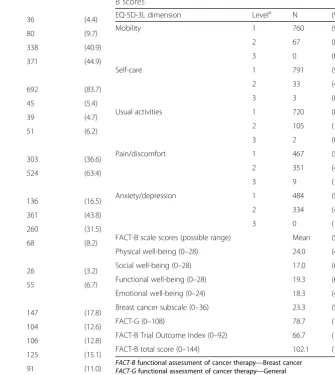
Table 2Distribution of EQ-5D-3L problem reporting and FACT-B scores
EQ-5D-3L dimension Levela N (%)
Mobility 1 760 (91.9)
2 67 (8.1)
3 0 (0.0)
Self-care 1 791 (95.7)
2 33 (4.0)
3 3 (0.4)
Usual activities 1 720 (87.1)
2 105 (12.7)
3 2 (0.2)
Pain/discomfort 1 467 (56.5)
2 351 (42.4)
3 9 (1.1)
Anxiety/depression 1 484 (58.5)
2 334 (40.4)
3 0 (1.1)
FACT-B scale scores (possible range) Mean (SD)
Physical well-being (0–28) 24.0 (4.3)
Social well-being (0–28) 17.0 (6.9)
Functional well-being (0–28) 19.3 (6.4)
Emotional well-being (0–24) 18.3 (4.0)
Breast cancer subscale (0–36) 23.3 (5.4)
FACT-G (0–108) 78.7 (15.8)
FACT-B Trial Outcome Index (0–92) 66.7 (12.3)
FACT-B total score (0–144) 102.1 (19.0)
FACT-Bfunctional assessment of cancer therapy—Breast cancer FACT-Gfunctional assessment of cancer therapy—General Higher scores on the FACT-B scales indicate better quality of life a
female with a mean age of 52.1 years. Most patients were married. The number of participants who had under-gone breast-conserving surgery was 524 (63.4 %).
The proportion of patients reporting any problems of the EQ-5D-3L and the FACT-B subscale score distribu-tion in the study participants was shown in Table 2. The proportion of patients reporting any problems was
relatively higher in the pain/discomfort and anxiety/de-pression dimensions at 43.5 % and 41.5 %, respectively. The mean FACT-G score was 78.7 (SD 15.8) and mean TOI was 66.7 (12.3). The EQ-5D-3L index and VAS score according to demographic and clinical features were shown in Table 3. In the highly educated and un-married group, and not in current radiotherapy group,
Table 3EQ-5D-3L scores according to general and clinical characteristics of the study patients
Variables EQ-5D-3L index EQ-VAS
(n= 827) n M SD p-value* M SD p-value*
Age group (year)
Less than 40 54 0.918 (0.071) 0.448 76.3 (18.0) 0.338
40–49 263 0.921 (0.075) 77.8 (17.5)
50–59 385 0.912 (0.092) 78.5 (16.3)
60 or more 125 0.907 (0.105) 80.6 (15.8)
Level of education (year)
≤6 36 0.864 (0.099) <0.001 81.9 (16.0) 0.629
7–9 80 0.880 (0.100) 77.7 (16.8)
10–12 338 0.916 (0.090) 78.2 (17.9)
≥13 371 0.925 (0.079) 78.4 (15.8)
Marital status
Married 692 0.917 (0.086) 0.045 78.6 (16.7) 0.697
Widowed 45 0.901 (0.097) 79.0 (15.4)
Divorced 39 0.879 (0.125) 78.1 (20.0)
Unmarried 51 0.921 (0.072) 75.7 (16.2)
Surgery
Mastectomy 303 0.915 (0.088) 0.872 78.8 (16.9) 0.678
Breast conserving surgery 524 0.914 (0.088) 78.2 (16.6)
AJCC 7thstage at diagnosis
0 136 0.925 (0.081) 0.083 78.2 (16.3) 0.929
1 361 0.918 (0.093) 78.1 (16.6)
2 260 0.909 (0.083) 79.0 (16.4)
3 68 0.895 (0.088) 78.4 (19.1)
Current chemotherapy
No 793 0.915 (0.088) 0.361 78.5 (16.6) 0.602
Yes 26 0.899 (0.081) 76.7 (18.9)
Current radiotherapy
No 764 0.917 (0.087) 0.001 78.8 (16.3) 0.047
Yes 55 0.877 (0.102) 72.8 (21.0)
Duration of disease since diagnosis
<1 year 147 0.893 (0.090) 0.003 77.5 (18.1) 0.385
1 - < 2 years 104 0.903 (0.084) 76.7 (16.7)
2 - < 3 years 106 0.921 (0.093) 78.2 (17.5)
3 - < 4 years 125 0.914 (0.090) 78.5 (16.1)
4 - < 5 years 91 0.934 (0.066) 81.8 (13.9)
≥5 years 254 0.922 (0.090) 78.6 (16.9)
*
the EQ-5D-3L index scores were higher than corre-sponding scores of the other groups. A worse stage at the time of diagnosis was associated with lower HRQoL scores; however, this trend did not reach the threshold for statistical significance. By post-hoc analysis, individ-uals with < 1 year since the time of diagnosis had a sig-nificantly lower EQ-5D-3L index as compared with those who had > 4 years since their diagnosis. The EQ-VAS score were not significantly different according to demographic and clinical characteristics.
FACT-B subscale scores and summary measurements by dimension and level of the EQ-5D-3L were shown in Table 4. All FACT-B subscale scores and combined index of subjects with no problem were significantly higher than those of subjects with any problem in all EQ-5D-3L dimensions. Difference in PWB scores was larger than other FACT-B subscales in mobility dimen-sion, whereas difference in PWB scores was larger in self-care and usual activities dimensions. Difference in
EWB scores was the largest in the anxiety/depression di-mension. Table 5 showed correlation coefficients among the EQ-5D-3L index, EQ-VAS score, and FACT-B scores. TOI scores showed the highest correlation with both the EQ-5D-3L index and EQ-VAS scores at 0.557 and 0.456, respectively, and the SWB scores showed the lowest correlation with the EQ-5D-3L index. Rates of agreements in the EQ-5D-3L dimensions ranged from 85.2 to 96.3 % across dimensions. Kappa statistics ranged from 0.32 in mobility to 0.70 in pain/discomfort and anxiety/depression dimensions. ICCs of the EQ-5D-3L index and EQ-VAS scores were 0.70 and 0.48, respect-ively (Table 6).
Discussion
In this study, we aimed to assess the validity and reliabil-ity of EQ-5D-3L for measuring HRQoL in post-operative breast cancer patients. Our findings supported the valid-ity of the EQ-5D-3L index. Values for this index were lower in the current radiation therapy, shorter duration of disease since diagnosis, and low education groups. Table 4FACT-B scales and summary measurements by EQ-5D-3L dimension and level
Dimension Levela n PWB SWB EWB FWB FACTG BCS TOI FACT-B total
Mobility 1 760 24.4** 17.1** 18.5** 19.6** 79.7** 23.7** 67.7** 103.4**
2 or 3 67 19.7 14.9 16.8 16.1 67.6 19.6 55.5 87.3
Self-care 1 791 24.2** 17.1* 18.4* 19.6** 79.4** 23.5** 67.3** 102.9**
2 or 3 36 20.0 14.1 17.0 13.7 64.0 20.5 53.5 84.4
Usual activities 1 720 24.7** 17.3** 18.6** 20.0** 80.7** 23.8** 68.5** 104.5**
2 or 3 107 19.8 14.6 16.3 14.5 65.4 20.0 54.4 85.5
Pain/discomfort 1 467 25.4** 17.5* 18.9** 20.4** 82.3** 24.4** 70.2** 106.7**
2 or 3 360 22.2 16.3 17.6 17.9 74.1 22.0 62.1 96.0
Anxiety/depression 1 484 25.3** 18.0** 20.0** 21.2** 84.6** 24.9** 71.4** 109.5**
2 or 3 343 22.2 15.5 15.9 16.6 70.4 21.1 60 91.6
FACT-Bfunctional assessment of cancer therapy—Breast cancer,FACT-Gfunctional assessment of cancer therapy—general,PWBphysical well-being,FWB functional well-being,EWBemotional well-being,SWBsocial/family well-being (SWB),BCSbreast cancer subscale,TOITrial outcome index
a
1,no problem; 2,moderate problems; 3,extreme problems *
p< 0.05 by Student’st-test **
p< 0.001 by Student’st-test
Table 5Correlations between the EQ-5D-3L index, EQ-VAS score, and FACT-B scores
FACT-B scores EQ-5D-3L index EQ VAS
Physical well-being 0.553 0.447
Social well-being 0.199 0.170
Emotional well-being 0.400 0.371
Functional well-being 0.377 0.312
Breast cancer subscale 0.390 0.323
FACTG 0.488 0.414
Trial Outcome Index 0.557 0.456
FACT B total 0.516 0.436
FACT-Bfunctional assessment of cancer therapy—breast cancer,FACT-G functional assessment of cancer therapy—general
Pearson’s correlation coefficient, all p-values were <0.001
Table 6Test-retest reliability of the EQ-5D-3L
Dimension Kappa statistics (95 % CI) all patients (n = 54)
Agreement rate (%)
Mobility 0.32 (−0.18–0.93) 94.4
Self-care 0.49 (−0.11–1.00) 96.3
Usual activities 0.46 (0.13–0.80) 87.0
Pain/discomfort 0.70 (0.51–0.89) 85.2
Anxiety/depression 0.70 (0.52–0.89) 85.2
Intraclass correlation coefficient (95 % CI)
EQ-5D-3L index 0.70 (0.54–0.82)
Most of known-group validity features fulfilled our hy-pothesis. EQ-5D-3L indexes were lower for progressive stages at diagnosis and in the current chemotherapy group, although the differences in the EQ-5D-3L index between groups were not statistically significant. Our re-sults corroborated the findings of Chae and Seo that pa-tients who are younger, more highly educated, and with a longer time since diagnosis have a higher HRQoL [22]. HRQoL score differences by age group were not consist-ent with previous reports of HRQoL measuremconsist-ents in breast cancer patients [16, 22, 23]. Age has different im-pacts on HRQoL domains. Ahn et al’s study on breast cancer survivors showed better social and emotional function but poorer physical function with increasing age [24].
The FACT-B subscale scores for problem reporting in each EQ-5D-3L dimension were significantly different in the current analysis. The EQ-5D-3L index was moder-ately correlated with FACT-B subscale scores, ranging from 0.377 at FWB to 0.553 at PWB subscales, except for SWB. This finding was similar to those of Lee et al. who studied patients with breast cancer in Singapore [26]. In that study, a correlation between the EQ-5D-3L index and FACT-B subscales was the lowest at 0.11 on the SWB subscales and the highest at 0.66 on the PWB subscales [26].
Reliability of EQ-5D-3L in this study was inconclusive. Kappa values for EQ-5D-3L dimensions varied depend-ing on domain and confidence intervals of kappa values were wide in mobility, self-care and usual activities. The ICCs of the 5D-3L index was reasonable but EQ-VAS were somewhat low. Kappa values on mobility di-mensions were the lowest at 0.32, but showed some agreement with the Landis and Koch criteria [25] at an agreement rate of 94.4 %. Low reliability statistics could be due to small sample size, change of health states between 2 time periods, and high proportion of no prob-lem in mobility, self-care and usual activities dimensions. In the previous Singapore study, ICCs for the EQ-5D-3L index were reported to as 0.81 in the English version and 0.69 in the Chinese version [27]. Similarly, another Korean study of colorectal cancer patients reported kappa values for the EQ-5D-3L dimensions ranging from 0.32 to 0.56 and the ICC of the EQ-5D-3L index of 0.55 [13]. Compared to our present study, an earlier Taiwan study on cervical cancer patients reported somewhat higher kappa values for the EQ-5D-3L dimensions and the ICC of the EQ-5D-3L index [28].
The findings of the present study cannot be general-ized since only postoperative breast cancer patients at 1 tertiary hospital were enrolled. Another limitation was that we did not investigate patient recurrence status, time since treatment completion, performance status at the visit day, or comorbidity. Because these parameters
could affect the HRQoL, more comprehensive data are needed in the future to assess the psychometric proper-ties of the HRQoL instruments. In addition, we did not assess the responsiveness of the EQ-5D-3L in breast cancer interventions; hence, further studies are war-ranted. Lastly, we did not reassess physical status at re-test period, thus evidence on re-test-rere-test reliability was inconclusive.
Conclusion
In conclusion, we showed that the EQ-5D-3L could be a valid instrument for measuring the HRQoL of post-operative breast cancer patients in South Korea. How-ever, reliability of the EQ-5D-3L is not conclusive and needs further research.
Abbreviations
ANOVA:analysis of variance; BCS: breast CANCER subscale; EWB: emotional well-being; FACT-B: Functional Assessment of Cancer Therapy-Breast Cancer; FACT-G: Functional Assessment of Cancer Therapy - General; FWB: Functional well-being; HRQoL: health-related quality of life; ICC: intra-class correlation coefficient; PWB: physical well-being; SWB: social/family well-being.
Competing interests
The authors declare that they have no competing interests.
Authors' contributions
All authors contributed to the conception and design of the study and the interpretation of the results. MWJ was responsible for data acquisition. SHK analyzed the data and was involved in drafting the manuscript. MWJ, JWL and JKK were involved in revising the manuscript to ensure its critically important content. All authors have read and approved the final manuscript.
Acknowledgements
This study supported by Bayer Korea.
Author details
1
Department of Nursing, Dankook University, Cheonan, South Korea. 2Department of Preventive Medicine, University of Ulsan College of
Medicine, 88, Olympicro 43-gil, Songpa-gu 138-736, Seoul, South Korea. 3Department of Breast and Endocrine Surgery, Asan Medical Center, Seoul,
South Korea.4Department of Surgery, University of Ulsan College of Medicine, Seoul, South Korea.
Received: 8 July 2015 Accepted: 15 December 2015
References
1. Jemal A, Bray F, Center MM, Ferlay J, Ward E, Forman D. Global cancer statistics. CA Cancer J Clin. 2011;61:69–90.
2. The Korea Central Cancer Registry, National Cancer Center, Ministry of Health and Welfare. Annual report of cancer statistics in Korea in 2011. Seoul: Ministry of Health and Welfare; 2013.
3. Nayfield SG, Ganz PA, Moinpour CM, Cella DF, Hailey BJ. Report from a National Cancer Institute (USA) workshop on quality of life assessment in cancer clinical trials. Qual Life Res. 1992;1:203–10.
4. Torrance GW, Feeny DH, Furlong WJ, Barr RD, Zhang Y, Wang Q. Multiattribute utility function for a comprehensive health status classification system. Health Utilities Index Mark 2. Med Care. 1996;34:702–22.
5. Feeny D, Furlong W, Torrance GW, Goldsmith CH, Zhu Z, DePauw S, et al. Multiattribute and single-attribute utility functions for the health utilities index mark 3 system. Med Care. 2002;40:113–28.
6. Brooks R. EuroQol: the current state of play. Health Policy. 1996;37:53–72. 7. Brazier J, Roberts J, Deverill M. The estimation of a preference-based
8. Drummond MF, Sculpher MJ, Torrance GW, O'Brien BJ, Stoddart GL. Methods for the Economic Evaluation of Health Care Programme. New York: Oxford University Press; 2005.
9. Lee CF, Luo N, Ng R, Wong NS, Yap YS, Lo SK, et al. Comparison of the measurement properties between a short and generic instrument, the 5-level EuroQoL Group's 5-dimension (EQ-5D-5 L) questionnaire, and a longer and disease-specific instrument, the Functional Assessment of Cancer Therapy-Breast (FACT-B), in Asian breast cancer patients. Qual Life Res. 2013;22:1745–51.
10. Brooks R, Rabin R, de Charro F. The Measurement and Valuation of Health Status Using Eq-5D: A European Perspective: Evidence from the Euroqol Biomed Research Programme. Dordrecht, The Netherlands. London: Kluwer Academic Publishers; 2003.
11. Lee YK, Nam HS, Chuang LH, Kim KY, Yang HK, Kwon IS, et al. South Korean time trade-off values for EQ-5D health states: modeling with observed values for 101 health states. Value Health. 2009;12:1187–93.
12. Kim MH, Cho YS, Uhm WS, Kim S, Bae SC. Cross-cultural adaptation and validation of the Korean version of the EQ-5D in patients with rheumatic diseases. Qual Life Res. 2005;14:1401–6.
13. Kim SH, Hwang JS, Kim TW, Hong YS, Jo MW. Validity and reliability of the EQ-5D for cancer patients in Korea. Support Care Cancer. 2012;20:3155–60. 14. Kim SH, Kim HJ, Lee SI, Jo MW. Comparing the psychometric properties of
the EQ-5D-3L and EQ-5D-5 L in cancer patients in Korea. Qual Life Res. 2012;21:1065–73.
15. Brady MJ, Cella DF, Mo F, Bonomi AE, Tulsky DS, Lloyd SR, et al. Reliability and validity of the Functional Assessment of Cancer Therapy-Breast quality-of-life instrument. J Clin Oncol. 1997;15:974–86.
16. Park BW, Lee S, Lee AR, Lee KH, Hwang SY. Quality of Life Differences between Younger and Older Breast Cancer Patients. J Breast Cancer. 2011;14:112–8.
17. Yoo HJ, Ahn SH, Eremenco S, Kim H, Kim WK, Kim SB, et al. Korean translation and validation of the functional assessment of cancer therapy-breast (FACT-B) scale version 4. Qual Life Res. 2005;14:1627–32. 18. Lu W, Cui Y, Zheng Y, Gu K, Cai H, Li Q, et al. Impact of newly diagnosed
breast cancer on quality of life among Chinese women. Breast Cancer Res Treat. 2007;102:201–10.
19. Lu W, Cui Y, Chen X, Zheng Y, Gu K, Cai H, et al. Changes in quality of life among breast cancer patients three years post-diagnosis. Breast Cancer Res Treat. 2009;114:357–69.
20. Janz NK, Mujahid M, Chung LK, Lantz PM, Hawley ST, Morrow M, et al. Symptom experience and quality of life of women following breast cancer treatment. J Womens Health (Larchmt). 2007;16(9):1348–61.
21. Nissen MJ, Swenson KK, Ritz LJ, Farrell JB, Sladek ML, Lally RM. Quality of life after breast carcinoma surgery: a comparison of three surgical procedures. Cancer. 2001;1(91):1238–46.
22. Chae YR, Seo K. Health-related quality of life in women with breast cancer in Korea: do sociodemographic characteristics and time since diagnosis make a difference? Oncol Nurs Forum. 2010;37:E295–303.
23. Park JH, Jun EY, Kang MY, Joung YS, Kim GS. Symptom experience and quality of life in breast cancer survivors. J Korean Acad Nurs. 2009;39:613–21. 24. Ahn SH, Park BW, Noh DY, Nam SJ, Lee ES, Lee MK, et al. Health-related
quality of life in disease-free survivors of breast cancer with the general population. Ann Oncol. 2007;18:173–82.
25. Landis JR, Koch GG. The measurement of observer agreement for categorical data. Biometrics. 1977;33:159–74.
26. Weir JP. Quantifying test-retest reliability using the intraclass correlation coefficient and the SEM. J Strength Cond Res. 2005;19:231–40. 27. Lee CF, Ng R, Luo N, Wong NS, Yap YS, Lo SK, et al. The English and
Chinese versions of the five-level EuroQoL Group's five-dimension questionnaire (EQ-5D) were valid and reliable and provided comparable scores in Asian breast cancer patients. Support Care Cancer. 2013;21:201–9. 28. Lang HC, Chuang L, Shun SC, Hsieh CL, Lan CF. Validation of EQ-5D in patients
with cervical cancer in Taiwan. Support Care Cancer. 2010;18:1279–86.
• We accept pre-submission inquiries
• Our selector tool helps you to find the most relevant journal
• We provide round the clock customer support
• Convenient online submission
• Thorough peer review
• Inclusion in PubMed and all major indexing services
• Maximum visibility for your research
Submit your manuscript at www.biomedcentral.com/submit