R E V I E W
Emerging Roles of Long Noncoding RNA
Regulator of Reprogramming in Cancer Treatment
This article was published in the following Dove Press journal: Cancer Management and Research
Di-Er Sun1,2
Shu-Yuan Ye 1,2
1Clinical Laboratory, HwaMei Hospital,
University of Chinese Academy of
Sciences, Ningbo, Zhejiang, People’s
Republic of China;2Clinical Laboratory,
Ningbo Institute of Life and Health Industry, University of Chinese Academy
of Sciences, Ningbo, Zhejiang, People’s
Republic of China
Abstract: Despite numerous advances in cancer treatment, the global prevalence and
cancer-related mortality remain high. Understanding tumor initiation and progression mechanisms are critical as it will lead to the development of interventions for improving the prognosis of cancer patients. The roles of long noncoding RNAs (lncRNAs) in cancer have attracted immense research interest. Growing evidence indicates that lncRNA regulator of reprogramming (linc-ROR), a well-studied RNA, regulates the progression of various cancers, such as lung cancer (LC), hepatocellular carcinoma (HCC), breast cancer (BC), colorectal cancer (CRC), pancreatic cancer (PC), papillary thyroid carcinoma (PTC), or esophageal squamous cell carcinoma (ESCC). linc-ROR promotes the proliferation, invasion, migration and chemoresistance of cancer cells. Herein, we reviewed current literature on the modulatory functions and mechanisms of linc-ROR in cancer development. We highlight new linc-ROR-related therapeutic strategies in cancer treatment.
Keywords:cancer, long noncoding RNA, linc-ROR, mechanisms, clinical application
Introduction
Cancer remains a major public health challenge in the world.1 Despite major investments into cancer research and management, its prognosis remains poor due to frequent relapse, metastasis, resistance to chemotherapy and lack of advanced diagnostic tools. Novel molecular targets that reverse chemoresistance or suppress metastasis, coupled with early diagnosis and treatment of cancer are urgently needed.
Protein-coding genes only account for less than 2% of the mammalian genome. Recently, research on the role of noncoding RNAs (ncRNAs) in cancer develop-ment has intensified.2 ncRNAs such as long noncoding RNAs (lncRNAs), which contain >200 nucleotides, regulate multiple physiological and pathological pro-cesses. Although they lack protein-coding ability, lncRNAs regulate cis or trans transcription, organize nuclear domains and modulate protein expression.3Recent studies have reported differentially expressed lncRNAs in cancer tissues compared to adjacent normal tissues. These differentially expressed lncRNAs have been shown to be associated with cancer initiation and development.4–6
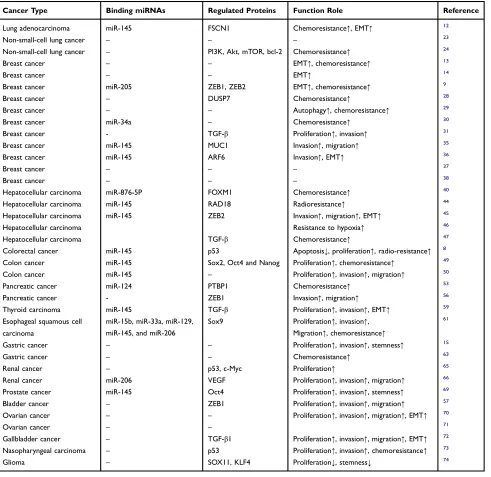
The lncRNA regulator of reprogramming (linc-ROR) is upregulated in multiple human cancers regulating cancer initiation and development (Table 1). linc-ROR is located in chromosome 18 and possess 2.6 kb and four exons, with numerous binding sites between linc-ROR and miRNAs, and proteins.7 Typical targets of linc-ROR contain miR-145,8miR-205,9p5310and so on. Linc-ROR wasfirst reported in a study
Correspondence: Shu-Yuan Ye Clinical Laboratory, Ningbo HwaMei Hospital, University of Chinese Academy of Sciences, Ningbo, Zhejiang 315010,
People’s Republic of China
Email [email protected]
Cancer Management and Research
Dove
press
open access to scientific and medical research
Open Access Full Text Article
Cancer Management and Research downloaded from https://www.dovepress.com/ by 118.70.13.36 on 27-Aug-2020
that used induced pluripotent stem cells (iPSCs). The study showed that linc-ROR exerts vital effects towards maintain-ing stem cell pluripotency.7Besides, it has been shown that linc-ROR promotes the development of many cancers. Epithelial-to-mesenchymal transition (EMT) plays an important role in aggressive traits of cancer cells and has been shown to be upregulated in almost all cancers.11 Increased expression of linc-ROR induces EMT process and the acquisition of docetaxel-resistance in lung cancer (LC).12–14In addition, aberrant expression of linc-ROR was associated with oncogenesis and progression of breast
cancer (BC),13,14gastric cancer (GC),15or colorectal cancer (CRC),16 among others. Accumulating evidence indicates that linc-ROR may serve as a cancer diagnostic and prog-nostic biomarker.17,18The onset, maintenance and modula-tion of cancer stem cells (CSCs) were also reported to be tightly regulated by linc-ROR.7,19
Together, thesefindings suggest that linc-ROR is clin-ical important as they can be targeted to control cancer development. This review summarizes the latest findings on the roles of linc-ROR in cancer, with an emphasis on the underlying mechanisms and clinical applications.
Table 1Current Research on linc-ROR Associated with Malignant Tumor
Cancer Type Binding miRNAs Regulated Proteins Function Role Reference
Lung adenocarcinoma miR-145 FSCN1 Chemoresistance↑, EMT↑ 12
Non-small-cell lung cancer – – – 23
Non-small-cell lung cancer – PI3K, Akt, mTOR, bcl-2 Chemoresistance↑ 24
Breast cancer – – EMT↑, chemoresistance↑ 13
Breast cancer – – EMT↑ 14
Breast cancer miR-205 ZEB1, ZEB2 EMT↑, chemoresistance↑ 9
Breast cancer – DUSP7 Chemoresistance↑ 28
Breast cancer – – Autophagy↑, chemoresistance↑ 29
Breast cancer miR-34a – Chemoresistance↑ 30
Breast cancer - TGF-β Proliferation↑, invasion↑ 31
Breast cancer miR-145 MUC1 Invasion↑, migration↑ 35
Breast cancer miR-145 ARF6 Invasion↑, EMT↑ 36
Breast cancer – – – 37
Breast cancer – – – 38
Hepatocellular carcinoma miR-876-5P FOXM1 Chemoresistance↑ 40
Hepatocellular carcinoma miR-145 RAD18 Radioresistance↑ 44
Hepatocellular carcinoma miR-145 ZEB2 Invasion↑, migration↑, EMT↑ 45
Hepatocellular carcinoma Resistance to hypoxia↑ 46
Hepatocellular carcinoma TGF-β Chemoresistance↑ 47
Colorectal cancer miR-145 p53 Apoptosis↓, proliferation↑, radio-resistance↑ 8
Colon cancer miR-145 Sox2, Oct4 and Nanog Proliferation↑, chemoresistance↑ 49
Colon cancer miR-145 – Proliferation↑, invasion↑, migration↑ 50
Pancreatic cancer miR-124 PTBP1 Chemoresistance↑ 53
Pancreatic cancer - ZEB1 Invasion↑, migration↑ 56
Thyroid carcinoma miR-145 TGF-β Proliferation↑, invasion↑, EMT↑ 59
Esophageal squamous cell
carcinoma
miR-15b, miR-33a, miR-129, Sox9 Proliferation↑, invasion↑, 61
miR-145, and miR-206 Migration↑, chemoresistance↑
Gastric cancer – – Proliferation↑, invasion↑, stemness↑ 15
Gastric cancer – – Chemoresistance↑ 63
Renal cancer – p53, c-Myc Proliferation↑ 65
Renal cancer miR-206 VEGF Proliferation↑, invasion↑, migration↑ 66
Prostate cancer miR-145 Oct4 Proliferation↑, invasion↑, stemness↑ 69
Bladder cancer – ZEB1 Proliferation↑, invasion↑, migration↑ 57
Ovarian cancer – – Proliferation↑, invasion↑, migration↑, EMT↑ 70
Ovarian cancer – – 71
Gallbladder cancer – TGF-β1 Proliferation↑, invasion↑, migration↑, EMT↑ 72
Nasopharyngeal carcinoma – p53 Proliferation↑, invasion↑, chemoresistance↑ 73
Glioma – SOX11, KLF4 Proliferation↓, stemness↓ 74
Cancer Management and Research downloaded from https://www.dovepress.com/ by 118.70.13.36 on 27-Aug-2020
linc-ROR-Related Cancers
Non-Small-Cell Lung Cancer
LC is one of the most commonly diagnosed malignancies worldwide and the leading cause of cancer-related deaths.1 In 2017, LC along with stroke and ischemic heart disease were named the three leading causes of short life expec-tancy in China.20 Although tremendous advancements have been made in the management of cancer, LC treat-ment outcome remains poor. It is therefore critical to explore new and effective clinical biomarkers as well as novel therapeutic targets for this cancer.
Non-Small-Cell LC (NSCLC), the main subtype of LC, accounts for more than 80% of diagnosed cases of LC.21,22 Compared to the normal lung tissues, NSCLC tissues have higher expression of linc-ROR, hence advanced TNM stage and poor prognosis.23 This suggests that linc-ROR promotes the progression of cancer and may serve as a prognostic biomarker in LC. Resistance to chemotherapy often leads to poor outcomes. Accumulating evidence suggests that linc-ROR is associated with chemoresistance in LC.12,24 For instance, by acting as a molecular sponge of miR-145, linc-ROR increases the expression of Fascin1 (FSCN1), a target gene of miR-145, thereby contributing to the acquisition of docetaxel-resistance in lung adeno-carcinoma cells.12 Linc-ROR also induces EMT in doce-taxel-resistant cells, and promotes the invasion and migration of NSCLC cells.12 Shi et al showed that the knockdown of linc-ROR improved sensitivity of NSCLC to cisplatin by regulating the PI3K/Akt/mTOR signaling pathway.24 These findings suggest that linc-ROR may reverse the chemoresistance of NSCLC.
Breast Cancer
BC is the most common malignant tumor and leading cause of cancer-related deaths in women worldwide.1 Despite significant advances in its management, the prog-nosis of BC remains poor due to the lack of advanced diagnosis, frequent distal metastasis and resistance to chemotherapy.25
Studies have implicated linc-ROR in the initiation and development of BC (Figure 1) and its role in subverting drug-resistance has been confirmed. Many lncRNAs, including linc-ROR, regulate EMT by modifying the func-tions of associated proteins. Recent studies have indicated that linc-ROR promotes the invasion and migration of BC cells by inducing EMT.13,14 Tamoxifen, a selective mod-ulator of estrogen receptors (ER), blocks estrogen-induced DNA transcription to inhibit the cell cycle and promote
apoptosis.26,27 However, drug-resistance decreases the efficacy of such treatments in up to 40% of BC patients. Evidence shows that lnc-ROR participates in the oncogen-esis, progression, metastasis and multidrug resistance of BC cells. Decreasing the expression of linc-ROR attenuates the resistance towards tamoxifen9,28,29and sup-presses the EMT process in BC cells.9Overexpression of linc-ROR in BC tissues promotes EMT and tamoxifen resistance by acting as a molecular sponge of miR-205 and increasing the expression of (zinc-finger E-box bind-ing homeobox 1) ZEB1 and ZEB2.9 linc-ROR can also promote estrogen independency and tamoxifen resistance by activating MAPK/ERK signaling pathways.28 Given that Dual Specificity Phosphatase 7 (DUSP7) is an impor-tant inhibitor of the MAPK/ERK signaling pathway, linc-ROR activates ERK by facilitating DUSP7 degradation leading to tamoxifen resistance and tumor growth.28 These findings not only associate MAPK/ERK signaling pathway to linc-ROR, but also reveal that estrogen depri-vation induces ERK actidepri-vation. Elsewhere, it was found that decreasing the expression of linc-ROR reversed resis-tance to tamoxifen and gemcitabine in BC.29,30 Hou et al indicated that overexpression of linc-ROR promotes the proliferation and invasion of BC cells.31 Moreover, linc-ROR activates TGF-β signaling pathway by increasing TGF-β levels, which further upregulates the expression of factors involved in the development of BC such as α -SMA and Smad2.31,32
Triple-negative BC (TNBC) accounts for approximately 20% of all BC cases and is characterized by lack of HER2 gene, progesterone receptors or the amplification of estrogen.33 TNBC is also associated with high rates of relapse and metastasis necessitating the search for more effective molecular targets for this cancer.34 linc-ROR his upregulated in the tissues and cells of triple-negative BC (TNBC).35 Given that the 3ʹUTR of Mucin1 (MUC1) is tightly linked to miR-145, the binding of linc-ROR and miR-145 increases expression of MUC1. High MUC1 expression in turn increases membrane localization of E-cadherin, contributing to invasion and migration of MDA-MB-231 BC cells. ADP-ribosylation factor 6 (ARF6) is also a target of 145. Interaction between linc-ROR and miR-145 increases ARF6 expression. Increased ARF6 expression promotes EMT in TNBC thereby accelerating cancer development.36Therefore, linc-ROR promotes BC by stimu-lating TGF-βsignaling pathway or inducing EMT in an miR-145-dependent manner. It can, therefore, be targeted to treat BC.
Cancer Management and Research downloaded from https://www.dovepress.com/ by 118.70.13.36 on 27-Aug-2020
Previous studies showed that linc-ROR is a potential clinical biomarker in BC. Results from receiver operating characteristic (ROC) curve analyses show that linc-ROR is a superior diagnostic biomarker that outperform CEA and CA153 in BC.37,38 The expression level of linc-ROR in plasma may also be utilized to dynamically monitor the progress of BC.35
Hepatocellular Carcinoma
Liver cancer is the fourth leading cause of cancer-related deaths worldwide and the fifth leading cause of deaths in China in 2017.1,20 Radiotherapy and chemotherapy are frequently used to treat cancers but their effects are limited by high drug-resistance as seen in hepatocellular carci-noma (HCC).39 Thus, surgical resection remains the pri-mary strategy for liver cancer treatment. Therefore, defining the mechanisms underlying HCC radio-resistance and chemoradio-resistance, as well as identifying novel and effective targets to improve early diagnosis is imperative.
Zhi et al reported that Forkhead Box M1b (FOXM1) promotes the expression of linc-ROR in HCC. They identified a positive feedback loop among linc-ROR, miR-876-5p and FOXM1. In addition, they noted that elevated linc-ROR upregulated FOXM1 by acting as a molecular sponge of miR-875-5p,40 thus enhancing resistance to chemotherapy and promoting HCC progres-sion. Whereas overexpression of linc-ROR and FOXM1 enhances resistance to sorafenib in HCC, miR-876-5p inhibits proliferation, promotes apoptosis and increases sensitivity of HCC cells to drugs. The positive feedback loop promotes HCC progression and reduces sensitivity to sorafenib. Thus, silencing linc-ROR may be an effec-tive approach for suppressing radio-resistance. Although the therapeutic value of sorafenib in HCC is limited by frequent chemoresistance, sorafenib improves HCC prognosis to some extent.41–43 Therefore, characterizing the molecular mechanisms of sorafenib resistance is cri-tical. linc-ROR/miR-876-5p/FOXM1 axis can be tar-geted to reverse sorafenib resistance in HCC. Besides, Figure 1The regulatory mechanisms of linc-ROR in breast cancer. (a) Given that the binding sites between miR-145 and mRNAs of MUC1 and ARF6, linc-ROR promotes the EMT process in breast cancer by targeting miR-145; (b) linc-ROR overexpression activates TGF-βsignaling pathway via upregulating the expression level of TGF-β, which triggersα-SMA and Smad2 expression, and thereby promotes the proliferation and invasion of breast cancer cells. (c) by facilitating the degradation of DUSP7, an inhibitor of MAPK/ERK signaling pathway, linc-ROR activates ERK and promotes the tamoxifen resistance and tumor growth of breast cancer. (d) linc-ROR down-regulates the sensitivity of tamoxifen in breast cancer cells by binding to the 3ʹUTR of miR-34a. (e) linc-ROR promotes EMT and tamoxifen resistance in breast cancer via acting as a molecular sponge of miR-205 and increasing the expression of ZEB1 and ZEB2.
Abbreviations:MUC1, Mucin1; ARF6, ADP-ribosylation factor 6; EMT, epithelial–mesenchymal transition; DUSP7, dual specificity phosphatase 7; MAPK/ERK, mitogen-activated protein kinase/extracellular regulated protein kinases; ZEB1, zincfinger E-box binding homeobox 1.
Cancer Management and Research downloaded from https://www.dovepress.com/ by 118.70.13.36 on 27-Aug-2020
the high radio-resistance rate substantially limits the effect of radiotherapy as a treatment of HCC. linc-ROR promotes radio-resistance in HepG2 and SMMC-7721 HCC cells.44 Chen et al reported that linc-ROR upregu-lates the expression of RAD18 by acting as a competing endogenous RNA (ceRNA) of miR-145 thereby promot-ing radiation resistance in HCC cells.44 Increasing the expression of linc-ROR also significantly reduces the γ -H2AX protein levels, a vital marker of DNA damage. This indicates that linc-ROR upregulates DNA repair activity and promotes radiation resistance.45 It was reported that linc-ROR increases the expression of ZEB2 is also a target gene of miR-145 and by its expres-sion, can also promote the proliferation, invasion and EMT in HCC cells. This effect has been also been
con-firmed by in vivo experiments.45 A study by Takahashi et al reported that linc-ROR was up-regulated in hypoxic regions within tumor cell xenografts in vivo.46 Knockdown of linc-ROR by small interfering RNA (siRNA) suppressed the proliferation of HCC cells whereas introduction of extracellular linc-ROR into HCC cells promoted cell survival under hypoxia conditions.46 Extracellular linc-ROR was found to be associated with TGF-β-mediated chemoresistance in HCC.47In their study, knockdown of linc-ROR enhanced HCC chemosensitivity.47 This indicates that linc-ROR reverses resistance to radiotherapy and chemotherapy in HCC patients.
Colorectal Cancer
CRC is the second most common cause of cancer-related mortality worldwide.1 Numerous studies show that linc-ROR is overexpressed in CRC tissues compared with normal tissues. Some of the findings from recent studies that highlight the relationship between linc-ROR and CRC are discussed here.
It has been shown that miR-145 inhibits and even delays the development of CRC.16,48linc-ROR was upre-gulated in both CRC tissue samples and cell lines. Evidence suggests that it is involved in the initiation and progression of CRC mainly by acting as a molecular sponge of miR-145.8,49,50 linc-ROR shares the miRNA binding sites of miR-145 with transcription factors, such as Sox2, Oct4 and Nanog.49 Therefore, increasing the expression of miR-145 will significantly suppress the expression of linc-ROR, Sox2, Oct4, c-Myc and Nanog, thereby inhibit colon cancer stem cell prolif-eration and chemoresistance.49 In colon cancer tissues,
overexpression of linc-ROR increased the expression of Sox2, Oct4, c-Myc and Nanog by tightly binding to the miRNA response elements (MREs) of miR-145, thus promoting CRC progression and decreasing sensitivity to radiotherapy and chemotherapy.8,49 In addition, linc-ROR knockdown inhibited tumor growth in nude mice after radiotherapy treatment suggesting that linc-ROR modulates sensitivity to CRC therapy. Yang et al reported that overexpression of linc-ROR increased p53-mediated (a tumor inhibitor) DNA damage, thereby promoting CRC oncogenesis.8 Thus, linc-ROR can be used as a prognostic biomarker and a target for the treatment of CRC.50
Pancreatic Cancer
With less than 6% of overall 5-year survival, pancreatic cancer (PC) is one of the most aggressive malignancies.1,51 Gemcitabine is the mainstay drug for patients with PC ineligible for surgical resection.52 However, resistance to gemcitabine significantly limits its therapeutic effects. Li et al reported that linc-ROR promotes gemcitabine-resistance.53
Studies have demonstrated that miR-124 can modulate the expression of PKM by switching PKM isoform expres-sion from PKM2 to PKM1.54,55 Given the close link between PTBP1 (a key regulator of PKM splicing) and miR-124, linc-ROR enhances the expression of PKM1 and inhibits PKM2 expression in a miR-124-dependent man-ner. This cascade of events confer gemcitabine resistance to PANC-1, MIAPaCa-2 and SW1990 PC cells.53In addi-tion, linc-ROR induces EMT by upregulating ZEB1, which then promotes the aggressive behaviors of PC cells.56 Although studies have reported that linc-ROR exerts important effects by modulating ZEB1 in many types of cancer,9,57 the specific miRNA mediating ZEB1 and linc-ROR remains unclear.
Papillary Thyroid Carcinoma
Thyroid carcinoma is the ninth most commonly diagnosed malignancy worldwide with approximately 567,000 cases.1It is also the most abundant cancer in Korea, with more prevalence in females.1,58 Despite the advances in the management of thyroid cancer which have signifi -cantly improved its prognosis, its etiology remains unclear. So far, ionizing radiation is the only risk factor associated with the development of cancer. Therefore, exploring its etiology is central to improving the quality of life for patients with thyroid cancer. linc-ROR was unregulated
Cancer Management and Research downloaded from https://www.dovepress.com/ by 118.70.13.36 on 27-Aug-2020
in papillary thyroid carcinoma (PTC) tissues. A negative association between linc-ROR and miR-145 has been identified in TPC-1 cells.59 By measuring the expression level of linc-ROR after treatment with or without TGF-β, it was found that linc-ROR promoted the progression of PTC by modulating the expression of TGF-β and EMT process. Since TGF-β is an important regulator of the EMT process in PTC,59 silencing linc-ROR may be an effective measure to control PTC.
Esophageal Squamous Cell Carcinoma
Esophageal carcinoma is a serious threat to public health, ranking seventh among all malignancies worldwide.1 Esophageal squamous cell carcinoma (ESCC) is most pre-valent among Eastern Asian men. ESCC is a subtype of esophageal cancer derived from esophageal epithelial cells.60 Currently, the molecular mechanisms underlying development of esophageal cancer are not well understood. linc-ROR has been shown to modulate proliferation, invasion, migration and chemoresistance in EC9706 ESCC cells. It increases the expression of Sox9 by regulating miRNAs such as miR-145, miR-206, miR-15b, miR-33a and miR-129.61 It was noted that knockdown of Sox9 reversed the effects of linc-ROR overexpression in EC9706 ESCC cells. Utilizing a target prediction tool,62 12 miRNAs were identified to share binding sites with linc-ROR and Sox9. Finally, it was reported that miR-206, miR-145, miR-129, miR-33a and miR-15b modulated Sox9 via linc-ROR. Moreover, knockdown of linc-ROR in vivo not only suppressed tumor growth, but also reduced expression levels of Sox9 and CSC-marker CD44.
Gastric Cancer
GC is one of the most common life-threatening cancers globally. According to global cancer statistics, GC was the
fifth most commonly diagnosed cancer and third leading cause of cancer-related deaths in 2018.1 Exploring the molecular mechanisms of GC progression may lead to the development of strategies and treatments to improve the prognosis of GC patients. Numerous lncRNAs, includ-ing linc-ROR, have shown promisinclud-ing potential in GC management.
Wang et al found that knockdown of linc-ROR sup-pressed the proliferation and invasion of gastric cancer stem cells,15suggesting that it may be a potential treatment target for GC. Moreover, they found that the expression of linc-ROR was positively associated with multiple-drug resistance and poor prognosis of GC patients.63Silencing
linc-ROR increased apoptosis of Adriamycin- and vincris-tine-resistance GC cells, and thereby subverting tumor development.63
Urologic Cancer
Urologic cancers (UC) are some of the most common malignant tumors. It comprises renal cancer, bladder can-cer and prostate cancan-cer. Previous studies showed that pre-valence of renal cancer (RC) has been on the rise and its prognosis is poor.1,64 Prostate cancer is the second com-monest malignancy in men and the fifth leading cause of mortality.1 Bladder cancer is the seventh most prevalent malignancy in men. Further research is required to eluci-date its pathogenesis, identify novel biomarkers and effec-tive therapeutic targets to improve early diagnostic rates and prognosis of UC.1
Shi et al showed that RC cells and tissues overexpres-sing linc-ROR exhibited aggressive cancer phenotypes, as well as poor prognosis.65 In vitro studies showed that silencing linc-ROR increased cell apoptosis and decreased the expression of c-Myc while increasing the expression of p53.65Other studies found that linc-ROR promotes RC by modulating miR-206/VEGF axis.66 On the other hand, overexpression of miR-206 can reverse linc-ROR-induced proliferation and invasion of RC cells. linc-ROR upregulates the expression VEGF by sponging miR-206 thereby promoting RC cell proliferation, invasion and migration. These findings suggest that silencing linc-ROR may be a potential target for RC treatment.
By modulating the miR-145/Oct4 axis, linc-ROR also promotes human prostate cancer stem cell proliferation and invasion. Previous studies have demonstrated that Oct4, a marker of stem cells, is closely associated with the prognosis of cancer.67,68Given the close link between the 3ʹUTR of miR-145 and Oct4 mRNA, the binding of linc-ROR and miR-145 increases expression level of Oct4.69 Liu et al reported that curcumin suppresses the proliferation of human prostate cancer stem cells in nude mice by inhibiting the expression of linc-ROR and enhan-cing miR-145 expression.69Thus, linc-ROR/miR-145 may be a good therapeutic target for the treatment of prostate cancer. Besides, linc-ROR was upregulate in bladder can-cer tissues compared to adjacent normal tissues and blad-der cancer cell lines.57 ZEB1 is not only increased in bladder cancer but also positively correlated with the expression of ROR. Therefore, overexpression of linc-ROR promotes the proliferation, invasion and migration of bladder cancer cells in a ZEB1-dependent manner.57
Cancer Management and Research downloaded from https://www.dovepress.com/ by 118.70.13.36 on 27-Aug-2020
Other Cancers
Other studies have indicated that linc-ROR can also reg-ulate the initiation and progression of ovarian cancer (OC),70,71gallbladder cancer,72nasopharyngeal carcinoma (NPC)73or glioma.74
It was reported that linc-ROR activates of Wnt/β-catenin signaling pathway and induces EMT, thereby promoting OC development.70 Increasing the expression of linc-ROR up-regulates TGF-β1 expression and further induces EMT pro-cess in gallbladder cancer.72In this way, linc-ROR promotes the proliferation, invasion and migration of gallbladder cancer cells suggesting its importance as a prognostic biomarker. Resistance to chemotherapy and radiotherapy leads to poor NPC prognosis.75Therefore, exploring new targets that help reverse resistance to treatment may be a novel therapeutic strategy. Li et al reported that expressing linc-ROR not only enhanced the proliferation, invasion and migration of NPC cells but promoted chemoresistance.73Evidence indicates that linc-ROR suppresses the sensitivity to chemotherapy through the p53 pathway in cancer treatment. It was found that linc-ROR enhanced resistance to chemotherapy in NPC cells by modulating p53 levels73Although linc-ROR exerts oncogenic effects in almost all types of cancer, it was also found to be a tumor suppressor in glioma by inhibiting the proliferation of glioma cells and the self-renewal of glioma stem cells.74
Perspective
Numerous studies have investigated the roles of lncRNAs in cancer development. However, the full landscape of lncRNAs with diagnostic and therapeutic value is yet to be unraveled. linc-ROR is a novel functional lncRNA that is associated with the onset and progression of many types of cancers except glioma. linc-ROR promotes the prolif-eration, invasion, migration and drug-resistance of cancer cells through a variety of mechanisms at pre-transcription and post-transcription levels. Mechanistically, linc-ROR modulates miRNAs, gene transcription and protein trans-lation. linc-ROR indirectly regulates the activities of onco-genic proteins by interacting with microRNAs which influences tumor progression. Of note, linc-ROR may directly exert its oncogenic effects by either directly redu-cing miR-145 levels,50 or regulating the expression of miR-145’s downstream targets, such as ZEB2,45 p538 or TGF-β,59 and c-Myc.65 Investigation of the mechanisms underlying cancer initiation and progression is important in order to improve the therapeutic strategies. These cru-cial linc-ROR functions define potential for clinical appli-cation in cancer treatment.
Growing evidence has demonstrated that linc-ROR may not only be used as a diagnostic or prognostic biomarker,23,37 but also as a therapeutic target for cancer treatment. Among all the clinical applications, the most promising is its role in reversing resistance to chemotherapy. In LC, up-regulation of linc-ROR attenuates the sensitivity to docetaxel and cisplatin.12,24Although tamoxifen is an important supplement for surgery in the treatment of BC, studies have found that linc-ROR overexpression can reduce its therapeutic effects.9,28,29Moreover, reducing the expression of linc-ROR in BC cells can partly reverse resistance to tamoxifen, further suggesting that linc-ROR may be a chemotherapeutic target in the treatment of BC. Besides, linc-ROR also enhances che-motherapeutic sensitivity in HCC,44 CRC,49 PC,53ESCC61 and NPC.73 However, these findings are derived from cell experiments. Further clinical studies employing different methodologies are needed to investigate additional mechan-isms and roles of linc-ROR in cancer. This will lead to the identification of lncRNA-based therapies for cancer.
Conclusion
We have reviewed recent studies interrogating the relation-ship between linc-ROR and malignant tumors, as well as analyzed the underlying characteristics defining the effects of linc-ROR on cancer. Significant oncogenic effects of linc-ROR were observed in various cancers with the most important being that linc-ROR promotes cancer progres-sion by acting as a sponge of miR-145. linc-ROR pathway may be exploited to develop diagnostic or prognostic biomarkers and therapeutic targets. Besides, linc-ROR can be used to reverse chemotherapeutic resistance.
Acknowledgement
This study was supported by Ningbo Clinical Research Center for Digestive System Tumors (Grant No.2019A21003).
Disclosure
The authors report no conflicts of interest regarding this work.
References
1. Bray F, Ferlay J, Soerjomataram I, Siegel RL, Torre LA, Jemal A. Global cancer statistics 2018: GLOBOCAN estimates of incidence and
mortality worldwide for 36 cancers in 185 countries. CA Cancer
J Clin.2018;68(6):394–424. doi:10.3322/caac.21492
2. Johnson JM, Edwards S, Shoemaker D, Schadt EE. Dark matter in the genome: evidence of widespread transcription detected by microarray
tiling experiments.Trends Genet. 2005;21(2):93–102. doi:10.1016/j.
tig.2004.12.009
Cancer Management and Research downloaded from https://www.dovepress.com/ by 118.70.13.36 on 27-Aug-2020
3. Ulitsky I, Bartel DP. lincRNAs: genomics, evolution, and mechanisms.
Cell.2013;154(1):26–46. doi:10.1016/j.cell.2013.06.020
4. Bhan A, Soleimani M, Mandal SS. Long noncoding RNA and cancer:
a new paradigm.Cancer Res.2017;77(15):3965–3981. doi:10.1158/
0008-5472.CAN-16-2634
5. Li M-Y, Tang X-H, Fu Y, Wang T-J, Zhu J-M. Regulatory mechan-isms and clinical applications of the long non-coding RNA PVT1 in
cancer treatment.Front Oncol. 2019;9:787. doi:10.3389/fonc.2019.
00787
6. Feng S, Liu W, Bai X, et al. LncRNA-CTS promotes metastasis and epithelial-to-mesenchymal transition through regulating miR-505/
ZEB2 axis in cervical cancer. Cancer Lett. 2019;465:105–117.
doi:10.1016/j.canlet.2019.09.002
7. Loewer S, Cabili MN, Guttman M, et al. Large intergenic non-coding RNA-RoR modulates reprogramming of human induced pluripotent
stem cells.Nat Genet.2010;42(12):1113–1117. doi:10.1038/ng.710
8. Yang P, Yang Y, An W, et al. The long noncoding RNA-ROR promotes the resistance of radiotherapy for human colorectal cancer
cells by targeting the p53/miR-145 pathway.J Gastroenterol Hepatol.
2017;32(4):837–845. doi:10.1111/jgh.13606
9. Zhang HY, Liang F, Zhang JW, Wang F, Wang L, Kang XG. Effects of long noncoding RNA-ROR on tamoxifen resistance of breast
cancer cells by regulating microRNA-205. Cancer Chemother
Pharmacol.2017;79(2):327–337. doi:10.1007/s00280-016-3208-2 10. Li X, Sun D, Zhao T, Zhang Z. Long non-coding RNA ROR confers
arsenic trioxide resistance to HepG2 cells by inhibiting p53
expression. Eur J Pharmacol. 2020;872:172982. doi:10.1016/j.
ejphar.2020.172982
11. Thiery JP, Acloque H, Huang RY, Nieto MA.
Epithelial-mesenchymal transitions in development and disease. Cell.
2009;139(5):871–890. doi:10.1016/j.cell.2009.11.007
12. Pan Y, Chen J, Tao L, et al. Long noncoding RNA ROR regulates chemoresistance in docetaxel-resistant lung adenocarcinoma cells via
epithelial mesenchymal transition pathway. Oncotarget. 2017;8
(20):33144–33158. doi:10.18632/oncotarget.16562
13. Chen YM, Liu Y, Wei HY, Lv KZ, Fu P. Linc-ROR induces epithelial-mesenchymal transition and contributes to drug resistance
and invasion of breast cancer cells. Tumour Biol. 2016;37
(8):10861–10870. doi:10.1007/s13277-016-4909-1
14. Hou P, Zhao Y, Li Z, et al. LincRNA-ROR induces epithelial-to-mesenchymal transition and contributes to breast cancer
tumorigen-esis and metastasis.Cell Death Dis.2014;5(6):e1287. doi:10.1038/
cddis.2014.249
15. Wang S, Liu F, Deng J, Cai X, Han J, Liu Q. Long noncoding RNA ROR regulates proliferation, invasion, and stemness of gastric cancer
stem cell. Cell Reprogram. 2016;18(5):319–326. doi:10.1089/
cell.2016.0001
16. Sheng N, Tan G, You W, et al. MiR-145 inhibits human colorectal cancer cell migration and invasion via PAK4-dependent pathway.
Cancer Med.2017;6(6):1331–1340. doi:10.1002/cam4.1029 17. Li S, Yue X-C, Sun C-Y, Qin H-Y, Zhang X-Y. Prognostic value of
long noncoding RNA ROR in patients with cancer in China:
a systematic review and meta-analysis. Medicine (Baltimore).
2019;98(21):e15758. doi:10.1097/MD.0000000000015758
18. Yang S, Chen J, Yu Y, et al. Long noncoding RNA ROR as a novel biomarker for progress and prognosis outcome in human cancer: a
meta-analysis in the Asian population. Cancer Manag Res.
2018;10:4641–4652. doi:10.2147/CMAR.S174143
19. Castro-Oropeza R, Melendez-Zajgla J, Maldonado V, Vazquez-Santillan K. The emerging role of lncRNAs in the regulation of
cancer stem cells. Cell Oncol (Dordr). 2018;41(6):585–603.
doi:10.1007/s13402-018-0406-4
20. Zhou M, Wang H, Zeng X, et al. Mortality, morbidity, and risk
factors in China and its provinces, 1990–2017: a systematic analysis
for the global burden of disease study 2017. Lancet. 2019;394
(10204):1145–1158. doi:10.1016/S0140-6736(19)30427-1
21. Auperin A, Le Pechoux C, Rolland E, et al. Meta-analysis of con-comitant versus sequential radiochemotherapy in locally advanced
non-small-cell lung cancer. J Clin Oncol.2010;28(13):2181–2190.
doi:10.1200/JCO.2009.26.2543
22. Kumar MS, Hancock DC, Molina-Arcas M, et al. The GATA2 transcriptional network is requisite for RAS oncogene-driven
non-small cell lung cancer.Cell.2012;149(3):642–655. doi:10.1016/
j.cell.2012.02.059
23. Qu CH, Sun QY, Zhang FM, Jia YM. Long non-coding RNA ROR is a novel prognosis factor associated with non-small-cell lung cancer
progression.Eur Rev Med Pharmacol Sci.2017;21(18):4087–4091.
24. Shi H, Pu J, Zhou XL, Ning YY, Bai C. Silencing long non-coding RNA ROR improves sensitivity of non-small-cell lung cancer to
cisplatin resistance by inhibiting PI3K/Akt/mTOR signaling
pathway.Tumour Biol.2017;39(5):1010428317697568. doi:10.1177/
1010428317697568
25. Anastasiadi Z, Lianos GD, Ignatiadou E, Harissis HV, Mitsis M.
Breast cancer in young women: an overview. Updates Surg.
2017;69(3):313–317. doi:10.1007/s13304-017-0424-1
26. Lewis JS, Jordan VC. Selective estrogen receptor modulators (SERMs): mechanisms of anticarcinogenesis and drug resistance.
Mutat Res.2005;591(1–2):247–263. doi:10.1016/j.mrfmmm.2005.02. 028
27. Carroll JS, Brown M. Estrogen receptor target gene: an evolving
concept. Mol Endocrinol. 2006;20(8):1707–1714. doi:10.1210/
me.2005-0334
28. Peng WX, Huang JG, Yang L, Gong AH, Mo YY. Linc-RoR pro-motes MAPK/ERK signaling and confers estrogen-independent
growth of breast cancer.Mol Cancer.2017;16(1):161. doi:10.1186/
s12943-017-0727-3
29. Li Y, Jiang B, Zhu H, et al. Inhibition of long non-coding RNA ROR reverses resistance to tamoxifen by inducing autophagy in breast
cancer. Tumour Biol. 2017;39(6):1010428317705790. doi:10.1177/
1010428317705790
30. Chen YM, Liu Y, Wei HY, Lv KZ, Fu PF. Large intergenic non-coding RNA-ROR reverses gemcitabine-induced autophagy and
apoptosis in breast cancer cells. Oncotarget. 2016;7
(37):59604–59617. doi:10.18632/oncotarget.10730
31. Hou L, Tu J, Cheng F, et al. Long noncoding RNA ROR promotes
breast cancer by regulating the TGF-beta pathway.Cancer Cell Int.
2018;18(1):142. doi:10.1186/s12935-018-0638-4
32. Miyazono K, Ehata S, Koinuma D. Tumor-promoting functions of
transforming growth factor-β in progression of cancer.Ups J Med
Sci.2012;117(2):143–152. doi:10.3109/03009734.2011.638729
33. Foulkes WD, Smith IE, Reis-Filho JS. Triple-negative breast cancer.
N Engl J Med. 2010;363(20):1938–1948. doi:10.1056/NEJMra 1001389
34. O’Shaughnessy J, Osborne C, Pippen JE, et al. Iniparib plus
che-motherapy in metastatic triple-negative breast cancer.N Engl J Med.
2011;364(3):205–214. doi:10.1056/NEJMoa1011418
35. Ma J, Yang Y, Huo D, et al. LincRNA-RoR/miR-145 promote inva-sion and metastasis in triple-negative breast cancer via targeting
MUC1. Biochem Biophys Res Commun. 2018;500(3):614–620.
doi:10.1016/j.bbrc.2018.04.119
36. Eades G, Wolfson B, Zhang Y, Li Q, Yao Y, Zhou Q. lincRNA-RoR and miR-145 regulate invasion in triple-negative breast cancer via
targeting ARF6.Mol Cancer Res.2015;13(2):330–338. doi:10.1158/
1541-7786.MCR-14-0251
37. Zhao T, Wu L, Li X, Dai H, Zhang Z. Large intergenic non-coding RNA-ROR as a potential biomarker for the diagnosis and dynamic
monitoring of breast cancer.Cancer Biomark.2017;20(2):165–173.
doi:10.3233/CBM-170064
38. Zhang K, Luo Z, Zhang Y, et al. Detection and analysis of circulating large intergenic non-coding RNA regulator of reprogramming in
plasma for breast cancer. Thorac Cancer. 2018;9(1):66–74.
doi:10.1111/1759-7714.12537
Cancer Management and Research downloaded from https://www.dovepress.com/ by 118.70.13.36 on 27-Aug-2020
39. Dutta R, Mahato RI. Recent advances in hepatocellular carcinoma
therapy. Pharmacol Ther. 2017;173:106–117. doi:10.1016/j.
pharmthera.2017.02.010
40. Zhi Y, Abudoureyimu M, Zhou H, et al. FOXM1-mediated LINC-ROR regulates the proliferation and sensitivity to sorafenib
in hepatocellular carcinoma. Mol Ther Nucleic Acids.
2019;16:576–588. doi:10.1016/j.omtn.2019.04.008
41. Villanueva A, Llovet JM. Targeted therapies for hepatocellular
carcinoma.Gastroenterology. 2011;140(5):1410–1426. doi:10.1053/
j.gastro.2011.03.006
42. Llovet JM, Villanueva A, Lachenmayer A, Finn RS. Advances in targeted therapies for hepatocellular carcinoma in the genomic era.
Nat Rev Clin Oncol.2015;12(8):436. doi:10.1038/nrclinonc.2015.121 43. Chen KF, Chen HL, Tai WT, et al. Activation of phosphatidylinositol 3-kinase/Akt signaling pathway mediates acquired resistance to
sor-afenib in hepatocellular carcinoma cells. J Pharmacol Exp Ther.
2011;337(1):155–161. doi:10.1124/jpet.110.175786
44. Chen Y, Shen Z, Zhi Y, et al. Long non-coding RNA ROR promotes radioresistance in hepatocellular carcinoma cells by acting as
a ceRNA for microRNA-145 to regulate RAD18 expression.Arch
Biochem Biophys.2018;645:117–125. doi:10.1016/j.abb.2018.03.018 45. Li C, Lu L, Feng B, et al. The lincRNA-ROR/miR-145 axis promotes invasion and metastasis in hepatocellular carcinoma via induction of
epithelial-mesenchymal transition by targeting ZEB2. Sci Rep.
2017;7(1):4637. doi:10.1038/s41598-017-04113-w
46. Takahashi K, Yan IK, Haga H, Patel T. Modulation of
hypoxia-signaling pathways by extracellular linc-RoR. J Cell Sci.
2014;127(Pt 7):1585–1594. doi:10.1242/jcs.141069
47. Takahashi K, Yan IK, Kogure T, Haga H, Patel T. Extracellular vesicle-mediated transfer of long non-coding RNA ROR modulates
chemosensitivity in human hepatocellular cancer.FEBS Open Bio.
2014;4(1):458–467. doi:10.1016/j.fob.2014.04.007
48. Wang Z, Su M, Xiang B, Zhao K, Qin B. Circular RNA PVT1
promotes metastasis via miR-145 sponging in CRC. Biochem
Biophys Res Commun. 2019;512(4):716–722. doi:10.1016/j. bbrc.2019.03.121
49. Yan ZY, Sun XC. LincRNA-ROR functions as a ceRNA to regulate Oct4, Sox2, and Nanog expression by sponging miR-145 and its effect on biologic characteristics of colonic cancer stem cells.
Zhonghua Bing Li Xue Za Zhi. 2018;47(4):284–290. doi:10.3760/ cma.j.issn.0529-5807.2018.04.011
50. Zhou P, Sun L, Liu D, Liu C, Sun L. Long non-coding RNA lincRNA-ROR promotes the progression of colon cancer and holds
prognostic value by associating with miR-145. Pathol Oncol Res.
2016;22(4):733–740. doi:10.1007/s12253-016-0061-x
51. Siegel R, Ma J, Zou Z, Jemal A. Cancer statistics, 2014.CA Cancer
J Clin.2014;64(1):9–29. doi:10.3322/caac.21208
52. Kleger A, Perkhofer L, Seufferlein T. Smarter drugs emerging in
pancreatic cancer therapy. Ann Oncol. 2014;25(7):1260–1270.
doi:10.1093/annonc/mdu013
53. Li C, Zhao Z, Zhou Z, Liu R. Linc-ROR confers gemcitabine resis-tance to pancreatic cancer cells via inducing autophagy and
modulat-ing the miR-124/PTBP1/PKM2 axis.Cancer Chemother Pharmacol.
2016;78(6):1199–1207. doi:10.1007/s00280-016-3178-4
54. Calabretta S, Bielli P, Passacantilli I, et al. Modulation of PKM alternative splicing by PTBP1 promotes gemcitabine resistance in
pancreatic cancer cells. Oncogene. 2016;35(16):2031–2039.
doi:10.1038/onc.2015.270
55. Taniguchi K, Sugito N, Kumazaki M, et al. MicroRNA-124 inhibits cancer cell growth through PTB1/PKM1/PKM2 feedback cascade in
colorectal cancer. Cancer Lett. 2015;363(1):17–27. doi:10.1016/j.
canlet.2015.03.026
56. Zhan HX, Wang Y, Li C, et al. LincRNA-ROR promotes invasion, metastasis and tumor growth in pancreatic cancer through activating
ZEB1 pathway. Cancer Lett. 2016;374(2):261–271. doi:10.1016/j.
canlet.2016.02.018
57. Chen Y, Peng Y, Xu Z, et al. LncROR promotes bladder cancer cell
proliferation, migration, and epithelial-mesenchymal transition.Cell
Physiol Biochem.2017;41(6):2399–2410. doi:10.1159/000475910 58. Oh CM, Kong HJ, Kim E, et al. National epidemiologic survey of
thyroid cancer (NEST) in Korea. Epidemiol Health. 2018;40:
e2018052. doi:10.4178/epih.e2018052
59. Zhang R, Hardin H, Huang W, Buehler D, Lloyd RV. Long non-coding RNA Linc-ROR is upregulated in papillary thyroid
carcinoma. Endocr Pathol. 2018;29(1):1–8.
doi:10.1007/s12022-017-9507-2
60. Dong S, Zhang P, Liang S, Wang S, Sun P, Wang Y. The role of the
retinoblastoma protein-interacting zincfinger gene 1 tumor
suppres-sor gene in human esophageal squamous cell carcinoma cells.Oncol
Lett.2013;6(6):1656–1662. doi:10.3892/ol.2013.1608
61. Wang L, Yu X, Zhang Z, et al. Linc-ROR promotes esophageal squamous cell carcinoma progression through the derepression of
SOX9. J Exp Clin Cancer Res. 2017;36(1):182. doi:10.1186/
s13046-017-0658-2
62. Miranda KC, Huynh T, Tay Y, et al. A pattern-based method for the
identification of MicroRNA binding sites and their corresponding
heteroduplexes. Cell. 2006;126(6):1203–1217. doi:10.1016/j.cell.
2006.07.031
63. Wang S, Chen W, Yu H, et al. lncRNA ROR promotes gastric cancer
drug resistance. Cancer Control. 2020;27(1):1073274820904694.
doi:10.1177/1073274820904694
64. Olshan AF, Kuo TM, Meyer AM, Nielsen ME, Purdue MP, Rathmell WK. Racial difference in histologic subtype of renal cell
carcinoma.Cancer Med.2013;2(5):744–749. doi:10.1002/cam4.110
65. Shi J, Zhang W, Tian H, Zhang Q, Men T. lncRNA ROR promotes the proliferation of renal cancer and is negatively associated with
favorable prognosis. Mol Med Rep. 2017;16(6):9561–9566.
doi:10.3892/mmr.2017.7775
66. Shi J, Zhang D, Zhong Z, Zhang W. lncRNA ROR promotes the progression of renal cell carcinoma through the miR206/VEGF axis.
Mol Med Rep.2019. doi:10.3892/mmr.2019.10636
67. Sedaghat S, Gheytanchi E, Asgari M, Roudi R, Keymoosi H, Madjd Z. Expression of cancer stem cell markers OCT4 and
CD133 in transitional cell carcinomas. Appl Immunohistochem
Mol Morphol. 2017;25(3):196–202. doi:10.1097/PAI.0000000000 000291
68. Lu CS, Shieh GS, Wang CT, et al. Chemotherapeutics-induced Oct4 expression contributes to drug resistance and tumor recurrence in
bladder cancer.Oncotarget.2017;8(19):30844–30858. doi:10.18632/
oncotarget.9602
69. Liu T, Chi H, Chen J, et al. Curcumin suppresses proliferation and in vitro invasion of human prostate cancer stem cells by ceRNA
effect of miR-145 and lncRNA-ROR. Gene. 2017;631:29–38.
doi:10.1016/j.gene.2017.08.008
70. Lou Y, Jiang H, Cui Z, Wang L, Wang X, Tian T. Linc-ROR induces epithelial-to-mesenchymal transition in ovarian cancer by increasing
Wnt/beta-catenin signaling. Oncotarget. 2017;8(41):69983–69994.
doi:10.18632/oncotarget.19545
71. Jiang HH, Lou YH, Wang XY, Han Y, Cui ZM. Expression and function of long intergenic non-protein coding RNA-regulator of
reprogramming in high-grade ovarian serous cancer.Zhonghua Fu
Chan Ke Za Zhi.2016;51(12):921–927. doi:10.3760/cma.j.issn.0529-567X.2016.12.008
72. Wang SH, Zhang MD, Wu XC, Weng MZ, Zhou D, Quan ZW. Overexpression of LncRNA-ROR predicts a poor outcome in gall-bladder cancer patients and promotes the tumor cells proliferation,
migration, and invasion. Tumour Biol. 2016;37(9):12867–12875.
doi:10.1007/s13277-016-5210-z
73. Li L, Gu M, You B, et al. Long non-coding RNA ROR promotes proliferation, migration and chemoresistance of nasopharyngeal
carcinoma. Cancer Sci. 2016;107(9):1215–1222. doi:10.1111/
cas.12989
Cancer Management and Research downloaded from https://www.dovepress.com/ by 118.70.13.36 on 27-Aug-2020
74. Feng S, Yao J, Chen Y, et al. Expression and functional role of reprogramming-related long noncoding RNA (lincRNA-ROR) in
glioma. J Mol Neurosci.2015;56(3):623–630.
doi:10.1007/s12031-014-0488-z
75. Blanchard P, Lee A, Marguet S, et al. Chemotherapy and radiother-apy in nasopharyngeal carcinoma: an update of the MAC-NPC
meta-analysis. Lancet Oncol. 2015;16(6):645–655. doi:10.1016/
S1470-2045(15)70126-9
Cancer Management and Research
Dove
press
Publish your work in this journal
Cancer Management and Research is an international, peer-reviewed open access journal focusing on cancer research and the optimal use of preventative and integrated treatment interventions to achieve improved outcomes, enhanced survival and quality of life for the cancer patient.
The manuscript management system is completely online and includes a very quick and fair peer-review system, which is all easy to use. Visit http://www.dovepress.com/testimonials.php to read real quotes from published authors.
Submit your manuscript here:https://www.dovepress.com/cancer-management-and-research-journal
Cancer Management and Research downloaded from https://www.dovepress.com/ by 118.70.13.36 on 27-Aug-2020