~~1~
Universityof
~I' I'
Bedfordshire
IASR
INSTITUTEOF APPLIED SOCIAL RESEARCH E INTER Tl □ N L CE T E1
RESWCH
ING CHILD
S UAL
EX
Pil.OITATION
,
ViOLE.
.·.
CE
A D
iRA.m
.
·
.
I
G
,
Learning about online
sexual harm
online sexual harm
Helen Beckett and Camille Warrington,
with Jacqui Montgomery Devlin
Commissioned and undertaken on behalf of the
Independent Inquiry into Child Sexual Abuse
November 2019
Disclaimer
This research report has been prepared at the request of the Inquiry’s Chair and Panel. The views expressed are those of the authors alone. The research findings arising from the fieldwork do not constitute formal recommendations by the Inquiry’s Chair and Panel and are separate from legal evidence obtained in investigations and hearings.
© Crown copyright 2019. This publication is licensed under the terms of the
Open Government Licence v3.0 except where otherwise stated. To view this licence, visit nationalarchives.gov.uk/doc/open-government-licence/version/3
Where we have identified any third party copyright information you will need to obtain
permission from the copyright holders concerned. This publication is available at www.iicsa.org.uk. Any enquiries regarding this publication should be sent to us at [email protected]
v Acknowledgements viii Executive summary 1 Chapter 1: Introduction 11 1.1 The research 12 1.2 The Inquiry 12 1.3 The research team 13 1.4 Defining online-facilitated child sexual abuse 13 1.5 The existing knowledge base 14 1.6 Report structure 17 Chapter 2: Methodology 18 2.1 Introduction 19 2.2 Methods 19 2.3 Analysis 24 2.4 Ethics 25 2.5 Limitations 26 2.6 Interpretation notes 27
Chapter 3: Being online 28 3.1 Introduction 29 3.2 Spending time online 29 3.3 Online activities 31 3.4 Views on being online 32 3.5 Wider influences on online experiences 34 3.6 Perceptions of adults’ understanding 35
Chapter 4: Knowledge of online sexual harm 38 4.1 Introduction 39 4.2 Have young people heard about online sexual harm? 40 4.3 Sources of learning about online sexual harm 40 4.4 Understanding of online sexual harm 42 4.5 Contextual influences 46 4.6 Reporting concerns about online sexual harm 48
vi
Chapter 5: Provision of school-based education about online sexual harm 54 5.1 Introduction 55 5.2 School delivery of online sexual harm education 55 5.3 Timing of educational input on online sexual harm 57 5.4 Regularity of education 60 5.5 Delivery personnel 61 5.6 Learning preferences and resources 62
Chapter 6: Improving school-based education 65 6.1 Introduction 66 6.2 Perceived relevance and helpfulness of current provision 67 6.3 Improving provision 68
Chapter 7: Enhancing online safety 77 7.1 Introduction 78 7.2 Support from parents and carers 78 7.3 Industry action 81 7.4 Harmful social norms 83
Chapter 8: Overarching themes from the research 84 8.1 Introduction 85 8.2 Overarching themes and researcher reflections 85 8.3 Conclusion 88
vii
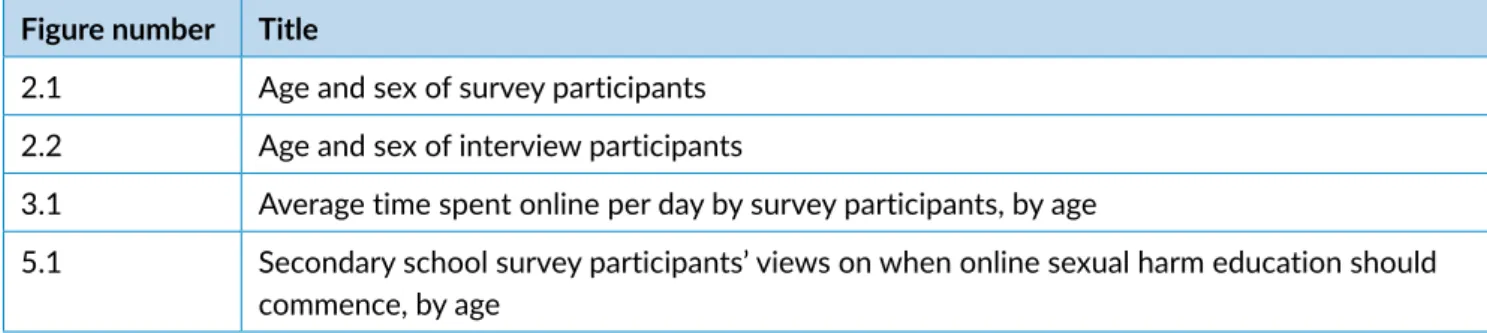
2.1 Age and sex of survey participants 2.2 Age and sex of interview participants
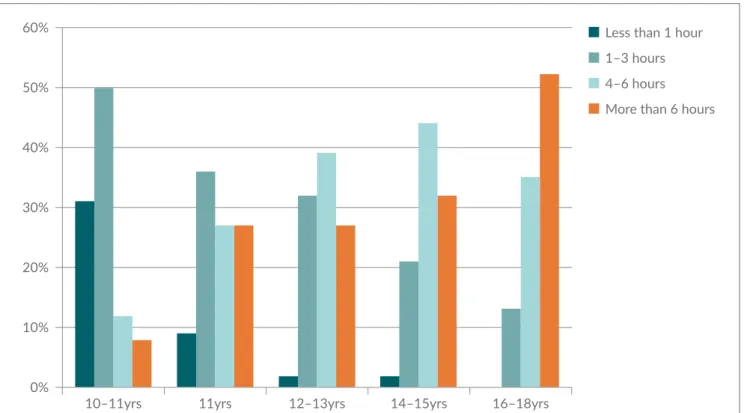
3.1 Average time spent online per day by survey participants, by age
5.1 Secondary school survey participants’ views on when online sexual harm education should commence, by age
Tables
Table number Title
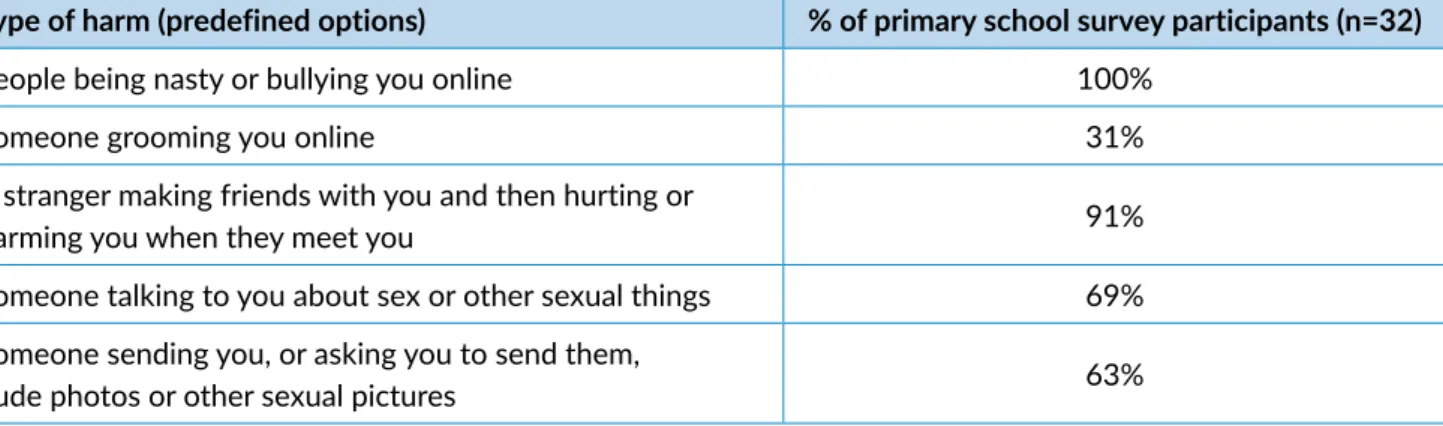
4.1 Primary school survey participants’ awareness of online harm
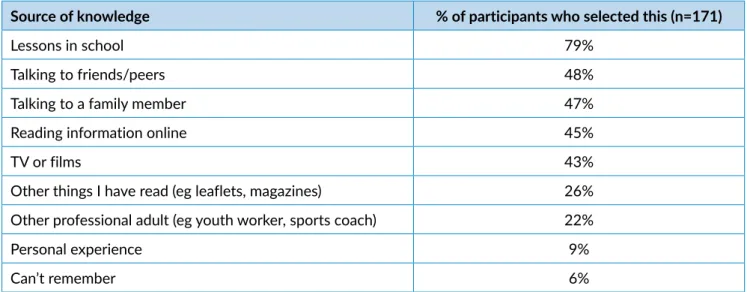
4.2 Secondary school survey participants’ sources of knowledge about online sexual harm 4.3 Secondary school survey participants who had learned about online sexual harm through
personal experience, by sex
4.4 Primary school survey participants’ sources of knowledge about online sexual harm 4.5 Secondary school survey participants’ responses when asked ‘Do you think you know
enough about online sexual harm?’, by sex
4.6 Whether survey participants would tell if they were worried about someone online 4.7 Who survey participants would tell if they were worried about something online
5.1 Primary school survey participants’ views on the types of online harm that are taught about/ should be taught about in primary schools
5.2 Survey participants’ preferred ways of learning about online (sexual) harm
6.1 Secondary school survey participants’ perceived relevance of online sexual harm education 6.2 Survey responses to statement: ‘What I’ve learned at school has helped me to identify risks
of (sexual) harm online’
6.3 Secondary school survey participants’ suggestions for improving school-based education about online sexual harm
viii
Acknowledgements
First and foremost, we would like to thank all the young people who took part in this research, through interviews, surveys and focus groups. We are so grateful for your willingness to support this research, and for the incredible insights that you have shared.
We also wish to extend our sincere thanks to the schools and services staff who took so much time and care to facilitate young people’s involvement in the research.
Thanks to our Young Researchers Advisory Panel who made an invaluable contribution to the design and piloting of the research, and our colleagues Joanne Walker and Delphine Peace who provided much appreciated fieldwork support.
We would like to thank the Inquiry’s Victims and Survivors Consultative Panel for contributing their knowledge, expertise and perspective to this project and report. We are also grateful for the contributions of the Inquiry’s Research Ethics Committee and the report’s peer reviewers.
Learning About Online Sexual Harm 2
'---'
►Introduction
This research was commissioned by the Independent Inquiry into Child Sexual Abuse (the Inquiry),1 as
part of its investigation into institutional responses to child sexual abuse and exploitation facilitated by the internet. It was a small-scale, mixed-methods study which aimed to explore children’s and young people’s perspectives on:
● being online;
● risks of online sexual harm;
● education received about online sexual harm within state school settings;
● how such education could be improved; and
● what else should be done to better protect children and young people from online sexual harm.
Overarching themes from the research
Though a small scale study, the prioritisation of children’s and young people’s voices within it offers an important contribution to the existing underdeveloped research evidence base. The key themes from the research are presented below. These do not constitute formal recommendations by the Inquiry’s Chair and Panel and are separate from legal evidence obtained in investigations and hearings.
1. Listening to the views of children and young people is critical in ensuring the ongoing development of protective efforts are relevant and beneficial.
Children and young people want to talk about these issues and have an important contribution to make. Those who took part in the research said they valued the opportunity to think about and discuss issues of online sexual harm, an opportunity many said they had not previously had.
Across all elements of the research, participants shared insightful contributions into their online lives and how they wanted to learn about, and be protected from, online sexual harm. Finding safe and appropriate ways to further elicit these views is critical if we are to ensure that protective efforts are relevant and beneficial for children and young people.
2. Children and young people need to be prepared for exposure to the risk of online sexual harm before they start spending time online.
The research clearly demonstrates that children and young people are likely to be exposed to risks of online sexual harm. Many interviewees and focus group participants described this as something that occurs on a regular basis and feels like a ‘normal part’ of online engagement.
1 The Inquiry was established in 2015 to consider the extent to which state and non-state institutions have taken seriously their duty of care to protect children from sexual abuse in England and Wales. The Inquiry makes recommendations for change to help ensure that children are better protected from sexual abuse, both now and in the future.
Participants demonstrated varying degrees of knowledge about different forms and sources of online sexual harm. While there was considerable familiarity with potential dangers from adult strangers, there was limited understanding of the potential for harm from peers or others within their social networks. This suggests potential gaps in the messaging children and young people receive about online sexual harm, which affects their ability to identify potential sources of harm.
As participants highlighted, it is important that they are prepared for exposure to such risks in a timely manner. Given the increasingly young age at which children are spending time online, this research suggests a need to engage children and young people in conversations about online harm from primary school age.
3. Children and young people value the opportunities that being online offers, and find overly negative and avoidance-based messaging unhelpful.
Though recognising that harmful or distressing incidents could and did occur online, most participants’ perspectives on spending time online were more positive than negative. Overly negative and avoidance-based messaging, which fails to acknowledge the positive aspects of being online, is seen as unhelpful and less relevant. Children and young people want to learn about online sexual harm in a proportionate and relevant manner.
4. Schools have a vital role to play in education about online sexual harm.
Participants identified a clear role for schools to play in education about online sexual harm, and have a myriad of suggestions as to how the delivery and content of such school-based education could be improved.
Their contributions highlight the need for schools to create a safe environment for learning. This includes the creation of safety in lessons and in the wider school environment, and adopting a zero tolerance approach to all forms of abuse.
Their responses also suggest that delivering education around online sexual harm needs to be recognised as a skilled endeavour. It should be afforded a stronger status within the curriculum, and those delivering it should be appropriately trained and supported.
Given evidence that there are likely to be pupils present who have experienced online sexual harm, it is important that due regard is given to messaging. This would include potential victim-blaming messages and how reporting and access to support can be better enabled.
5. Education about online sexual harm should do more to ensure children and young people do not believe responsibility for preventing online sexual harm lies with them.
Though recognising that parents and carers, industry and wider society all have a role to play in addressing online sexual harm, the degree to which participants indicated they felt it was up to them to avoid sexual harm was a matter of concern.
Education (both school-based and otherwise) needs to balance messaging around self-protective actions with appropriate messages about where responsibility for preventing online sexual harm lies.
Participants’ strong sense of responsibility for their own safety suggests this balance has not yet been achieved.
6. Families, industry and wider society need to play their part in tackling online sexual harm.
Participants recognise that school-based education is only one part of the larger response required to better protect children and young people from online sexual harm. Families, industry and wider society all have a role to play, and participants expressed a desire to see all such parties more actively engaged in efforts to tackle online sexual harm.
Learning About Online Sexual Harm 4
Methodology
The research involved three distinct data collection activities:
● Surveys with 213 children and young people (aged 10–18 years; 59 percent female and 41 percent male), undertaken in one primary and five secondary state school settings in England and Wales.
● Focus groups with 45 young people (aged 14–16 years; 67 percent female and 33 percent male), undertaken in three of the secondary state school settings.
● Interviews with nine young people (aged 13–20 years; eight females and one male) who had experienced online sexual harm when aged under 18 years, undertaken in six specialist services across England.
The research design was approved by ethics committees at the University of Bedfordshire and the Inquiry.
Being online
Participants’ perceptions of spending time online were generally more positive than negative. While they recognised that harmful things can and do occur, they also emphasised the positive aspects of their online lives and wanted others to acknowledge these. This was also true for interviewees who had experienced online sexual harm, although they placed more emphasis on the risks associated with being online.
When asked about the negative aspects of being online, few survey participants explicitly identified the issue of online sexual harm. Their responses focused on more general online safety issues including bullying, hacking and scamming, as well as pressures associated with prevailing popularity and
approval cultures.
Participants’ contributions clearly reveal that spending time online means navigating the simultaneous presence of opportunity and enjoyment alongside pressure and harm, sexual or otherwise. While it was apparent that many had developed strategies to manage this, especially as they got older, participants expressed a desire for:
● action to be taken to reduce the pressures and risks young people face online;
● further support on how to identify and manage potential risks; and
● better understanding by adults of the realities of young people’s online lives, and more relevant messaging around, and responses to, this.
Knowledge of online sexual harm
The vast majority of participants demonstrated some degree of knowledge of online sexual harm. Across all ages, school was identified as the most common source of learning. Family members, friends, peers and the media were also identified as significant sources of learning, although this varied slightly according to age. Of particular note is the fact that 9 percent of secondary school survey participants said they had learned about online sexual harm from personal experience.
Although participants were familiar with the concept of online sexual harm, their responses revealed a need and desire for better understanding about it. This included information about why it occurs, different forms it can take, how to identify it, possible impacts, and what to do if it happens.
Participants’ contributions suggested some potentially critical gaps in knowledge and understanding about different forms of online sexual harm and related sources of risk. For example, while most secondary school aged participants identified sexual approaches from adult strangers as harmful, they demonstrated less clarity about what constituted sexual harm within the context of peer relationships or existing online networks. This included difficulties working out when online sexual activity between peers, including within relationships, was appropriate and when it constituted a form of online sexual harm. Participants explicitly wanted more support about this issue.
The issue of sexual images received considerable attention among interview and focus group participants. Many related personal experiences in which they, or others they knew, received
unsolicited explicit sexual images, or requests or coercive messages to send such images to others. This was particularly apparent for female participants, a number of whom reflected on the ‘normality’ of this.
“I don’t think my dad realises how many messages from random boys I get or how many dick pics I get. And I have to deal with it every day … it’s kind of like a normal thing for girls now … I’ve been in conversations [online] like, ‘Hi. Hi. Nudes?’ I’m like, ‘No’ … yeah, it literally happens that quickly. Like, ‘What’s your age?’ And you’ll say how old you are, you’re underage, and they’ll be like, ‘Oh OK’, and then they’ll ask for pictures.”
14-year-old female interviewee
Participants reflected on how repeated exposure to such experiences could lead to desensitisation, which meant such incidents became accepted as an everyday part of life rather than something harmful to be acted on.
Both male and female participants highlighted how experiences of online sexual harm were influenced by wider harmful ‘gender norms’ and were part of a wider continuum of sexual harm. For boys and young men, these were noted to include myths around males not experiencing sexual harm, and an expectation that if it did occur, they should cope or ‘laugh it off’. For girls and young women, impacts of gender norms included pressure to make sexual images of themselves available, and judgements that ensued whether they followed or resisted these expectations.
The significance of the online environment
Participants identified how the dynamics of online spaces presented young people with distinct risks compared with face-to-face interaction. Specific dynamics included the more anonymous nature of the internet, the disinhibition in online communication, and the global networked nature of possible unsolicited contact:
“If I saw a creepy man walking down the road, I’d walk the other way, while if a person messaged me, they had no profile picture and then they seemed normal, I’d engage in conversation because, you know, they seem normal, they don’t look dangerous or harmful. So, it’s like that, the way you see people, the way you view them, there’s two different ways.”
Learning About Online Sexual Harm 6
I
I
I
A number of focus group participants and interviewees also identified specific protective aspects of the online environment. These included the potential ease, for some, of using ‘blocking’ or privacy settings in response to online sexual bullying or harassment. In other examples, online platforms were cited as a potentially helpful route to disclose experiences of harm and access support.
“You mostly end up telling them [friends] online – it’s a lot easier to do it online because you don’t have to see their face and you don’t feel judged or you don’t know if they’re judging you. I told my friend online – it was a lot easier that way.”
13-year-old female interviewee
Whose responsibility?
Participants’ responses indicated potential concerns in relation to the degree to which children and young people saw themselves as being responsible for preventing abuse occurring. Although participants recognised that parents, carers, industry and wider society all have a role to play in
addressing online sexual harm, their contributions repeatedly suggested that they felt it was ultimately their responsibility to keep themselves safe. This emphasis on personal responsibility holds significant implications for victims’ feelings of guilt and self-blame, and blame from others. In addition, this belief was noted to inhibit the likelihood of children and young people seeking and receiving support in the event of experiencing abuse.
Provision of school-based education about online sexual harm
Nearly all participants thought that schools have an important role to play in educating children and young people about online sexual harm. However, some participants noted that they had not received such education, or had received it ‘too late’, after they had been exposed to or experienced online sexual harm. As one 14-year-old male interviewee who experienced online sexual harm observed:
“There’s no point in learning about a situation after the situation has actually goddamned happened.”
14-year-old male interviewee
Participants emphasised the importance of schools educating children about online sexual harm before they start spending time on social media and other online platforms. Recognising the increasingly young age at which children may engage with social media, participants highlighted the importance of education about online sexual harm starting at primary school. They also noted the importance of school-based education being delivered on an ongoing basis, rather than as a one-off discrete input. Participants further expressed the need for education to consider the different learning styles and needs of pupils, and to use a range of engagement techniques, such as talks and videos, to meet these needs.
Participants identified a role for both schools and external organisations in delivering such education. This included bringing in those who had experienced such harm to talk about their experiences.
“By talking to people who have had those experiences it makes it a lot more real. I feel like by having other young people talking to you about it, they can connect on a more personal level than an older person who doesn’t know the internet as well as a younger person.”
I
I
Improving school-based education to address online sexual harm
The majority of participants who had received school-based education about online sexual harm said it had been helpful in some regards. At the same time, however, participants also questioned the usefulness and relevance of current approaches, noting significant room for improvement.
Improving content
Participants identified a need for school-based education to include:
1. The diversity of ways in which online sexual harm occurs: participants indicated that their education about online sexual harm, to date, had presented only a partial picture about the nature of risk, often focusing on stereotypical ‘stranger danger’ images of perpetrators and abuse. This meant they struggled to identify other types of online sexual harm. Participants specifically highlighted the need for education to discuss the potential for abuse from individuals known to children and young people, including peers, friends and intimate partners.
“Obviously they can tell you, ‘Don’t talk to strangers, don’t let strangers talk to you’, and stuff, but they should also talk about people that you know and trust, or you think you trust, because they might be more of, you might be more of a target to them because they think you trust them.”
15-year-old female interviewee
2. Potential harmful sexual behaviours by young people: a number of participants observed how school-based education about online sexual harm needs to move beyond a focus on the behaviours of potential victims, to include consideration of young people’s responsibility not to sexually harm others.
“They always say, ‘Don’t send pictures because they might get spread’, but the only problem with that is they never say to people, ‘Don’t spread them’.”
14–16-year-old-female focus group participant
3. Links between online sexual harm and broader issues of sex, relationships and consent: participants described engaging with a diverse range of challenges and potential risks online. This included sexual interactions that could be either appropriate or abusive, depending on the context. Focus group participants expressed a desire for more nuanced and reflective education that acknowledges their developing sexuality and helps them navigate what this means in the online environment. Participants also highlighted a desire for education to contextualise the issue of online sexual harm within discussions about broader forms of sexual harassment and abuse. 4. The impact of online sexual harm: there was a clear desire for education to explore the impact
of online sexual harm, supporting children and young people to understand the potentially far-reaching practical and emotional consequences of abuse. This was particularly emphasised by interviewees with personal experiences of online sexual harm who wanted others to understand the impact that it can have.
Learning About Online Sexual Harm 8
I
I
I
5. How to respond to, and report, concerns: participants observed how some children and young people will encounter online sexual harm, regardless of efforts to prevent this. Given this, they noted the need for education to address what to do if online sexual harm occurs, including providing information about available resources, where to report it, and sources of support. Some participants also highlighted the need for education to address potential barriers to reporting, such as embarrassment, shame and fear of others’ reactions, and a desire for help around how to deal with the emotional impact of abuse.
“I think that they should teach us about how we should deal with these sexual harm problems. Like they tell us about it, but not how to deal with these problems … ”
“And not just telling a teacher or a mate. Just tell us how to deal with it mentally.”
14–16-year-old female focus group participants
Improving tone and messaging
Participants repeatedly highlighted the limited effectiveness of overly negative or simplistic messaging, noting that such messages conflicted with the complex realities of their online lives. Participants’ responses suggested that education needs to:
1. Acknowledge the positives as well as the negatives of the internet: there was a strong message from the majority of participants that education about online sexual harm needs to present risk proportionately. This means acknowledging the positive aspects of the internet alongside messaging about the potential risks. Participants emphasised the necessity of this for both educators’ credibility and students’ engagement with their messaging. As one 16-year-old female interviewee who had experienced online sexual harm explained:
“If you [teachers] sort of just come with the approach – ‘this is bad’ – then you just think – ‘you don’t understand so why should I listen?’”
16-year-old female interviewee
2. Consider the balance between informing and scaring: The vast majority of participants highlighted the need for education to strike a balance between presenting the risks of online sexual harm and avoiding overly fearful or alarmist messaging. The one notable exception to this message came from some of the interviewees who had experienced online sexual harm. They advocated presenting ‘worst-case scenarios’ and evoking fear, noting this to be driven by a desire to protect others from experiencing what they had experienced.
“If they don’t know, they won’t know until it’s too late. It can destroy your life.”
16-year-old female interviewee
3. Avoid simplistic avoidance-based messaging: Participants expressed a need for education to go beyond the directive, avoidance-based messages that had been typical of their experiences of online sexual harm education. They remarked on the limited effectiveness, and sometimes counter-productivity, of messaging that simply told people to do or not do something. This includes advice such as ‘increase your privacy settings’, ‘avoid communication with “strangers” online’ or ‘avoid sending any messages of a sexual nature’.
I
“If you just get taught never talk to anyone on the internet, stay off it, you just think, ‘Oh well, I’m going to ignore that’, and then you don’t actually know what the warning signs are, which means you go on thinking that there’s not real risk and everyone’s making it up.”14–16-year-old male focus group participant
Focus group and interview participants further observed that such messages sat uncomfortably with other pressures and their aspirations for popularity, status and belonging, and therefore felt unrealistic to follow.
“With school and stuff, people say, ‘Have your account on private’, but then, it’s all about likes and followers and views nowadays … if your account’s on private, then only the people that follow you can like your things … people don’t really follow the privacy rules because then it don’t really benefit them in lots of ways.”
16-year-old female interviewee
Improving delivery style
Participants indicated that they valued and wanted education which provides opportunities for discussion and reflection, enabling two-way dialogue, as opposed to more didactic teaching styles. They noted the importance of creating an atmosphere that fosters openness and enables pupils to ask questions that might otherwise be difficult or embarrassing. They also emphasised benefits from recognising and integrating pupils’ experiences and expertise, and involving them in setting the learning agenda. Such approaches were noted to both enhance educators’ understanding of the realities of children’s and young people’s online lives, and make education more engaging for pupils.
Enhancing online safety: non-school-based interventions
Although the research primarily focused on school-based education, participants were also asked what else they thought could be done to help protect children and young people from online sexual harm. Participants recognised that tackling online sexual harm requires action not just by schools, but on many fronts.
1. The role of parents and carers: participants identified an important role for parents and carers in protecting children and young people from online sexual harm, but recognised they needed access to better information and support to do this.
“I think as well as teaching young people about online safety they should actually teach young adults, adults [and] parents, because then they can warn their own children about it. Because honestly, I wish that my mum and dad spoke to me about it, and it would have saved me a lot of stress.”
16-year-old female interviewee
Participants recognised that the ability to have these conversations was not just dependent on parents’ knowledge, but also on the nature of parent-child relationships.
Learning About Online Sexual Harm 10
I
There were differing views on the legitimacy of parental monitoring and control, in light of the importance of children’s and young people’s privacy and independence. Achieving an appropriate balance between these concerns was recognised to be difficult and context-specific, dependent on factors such as the age of the child and the nature of the parent-child relationship.
2. The role of the online industry: participants identified a clear role for the online industry to play in protecting children and young people from online sexual harm, suggesting that these responsibilities were not currently being fulfilled.
“I think they [online companies] have a major responsibility, and they don’t do it, they don’t think about it at all. On Instagram, I’ve seen no posts about safety.”
15-year-old female interviewee
Participants identified a series of actions that those responsible for online platforms could take to enhance the safety of children and young people who used them. These included both ‘designing out’ risk through better privacy controls, and ‘designing in’ protective functions through better monitoring and reporting options. Suggestions included:
● embedding warnings and advice for users to read when signing up to social media platforms or other apps;
● improving enforcement of age restrictions;
● improving privacy settings, including the use of default privacy settings when setting up an account; and
● enhanced moderation, more accessible reporting options, and stronger action when concerns are reported.
3. The need for societal change: participants identified a range of ways in which their online experiences, including exposure to sexual harm, were negatively influenced by norms and pressures in society. While having fewer concrete suggestions as to how these could be addressed, participants did note the importance of wider society, including the media and celebrity culture, taking an active role to tackle them. The two main issues identified at this broader societal level were:
● harmful gender norms, and the associated normalisation of sexual violence. These were observed to influence both the risk of, and responses to, online sexual harm; and
● the undue influence of the media, celebrity culture and an online ‘approval culture’. These were observed to make children and young people less likely to use privacy settings, thus increasing their potential exposure to individuals who may sexually harm them.
Learning About Online Sexual Harm 12
1.1 The research
This research study focused on eliciting children’s and young people’s views on online-facilitated child sexual abuse, particularly their views on the education they have received, or would like to receive, about this subject within state school settings. The specific research objectives were to explore children’s and young people’s perspectives on:
● being online;
● risks of online sexual harm;2
● education received about online sexual harm within state school settings;
● how such education could be improved; and
● what else could be done to better protect children and young people from online sexual harm. The research did not seek to elicit the views of parents, school staff or those delivering education programmes, or to evaluate the effectiveness of such programmes. The focus was solely on children and young people’s perspectives.
Contributions were elicited from both general populations of school-aged children and young people, using school-based surveys and focus groups, and from those with known experience of online-facilitated child sexual abuse, through individual interviews.
1.2 The Inquiry
The research was commissioned by the Independent Inquiry into Child Sexual Abuse (the Inquiry). The Inquiry was established in 2015 to consider the extent to which state and non-state institutions have taken seriously their duty of care to protect children from sexual abuse in England and Wales. The Inquiry makes recommendations for change to help ensure that children are better protected from sexual abuse, both now and in the future.
The Inquiry commissioned this research study to provide further context to their investigation into institutional responses to child sexual abuse and exploitation facilitated by the internet (the internet investigation). The research follows the publication of three rapid evidence assessments, commissioned by the Inquiry: Characteristics and Vulnerabilities of Victims of Online-Facilitated Child Sexual Abuse and
Exploitation (May-Chahal et al., 2018); Behaviour and Characteristics of Perpetrators of Online-facilitated Child Sexual Abuse and Exploitation (DeMarco et al., 2018); and Rapid Evidence Assessment: Quantifying the Extent of Online-Facilitated Child Sexual Abuse (Wager et al., 2018).
2 As outlined further in section 1.4, the simpler language of ‘online sexual harm’ (rather than ‘online-facilitated child sexual abuse’) was adopted, as the research was being undertaken with children and young people.
1.3 The research team
The research was completed by staff from the International Centre: Researching child sexual exploitation, violence and trafficking (the International Centre) at the University of Bedfordshire. The International Centre has extensive experience of undertaking research with children and young people around issues of sexual abuse and related experiences and vulnerabilities. As an applied research centre focusing on abuse, the International Centre has developed extensive specialist understanding of safe and ethical trauma-informed approaches to data collection on sensitive issues. This includes work with children and young people who are known to have experienced trauma and abuse, and work with general populations whose exposure to such issues is unknown (as in the school-based elements of this study).
1.4 Defining online-facilitated child sexual abuse
Online-facilitated child sexual abuse is difficult to define due to its dynamic and changing nature and the use of different classifications in different jurisdictions (Wager et al., 2018). The Inquiry’s definition of online-facilitated child sexual abuse, which underpinned this study, includes:
online grooming and receiving sexual requests; being exposed to pornography; some sexting activities; online-facilitated child sexual exploitation (eg offering gifts, money or affection in return for sexual activities taking place or orchestrated online, but enacted during an offline meeting with the perpetrator or others); engaging with online images of child sexual abuse (including searching, viewing, downloading, exchanging, producing and commissioning of indecent images).
It is important to recognise that the term covers a number of distinct but related abusive actions and behaviours. Online-facilitated child sexual abuse can take a variety of forms in both the online and offline environment, and is perpetrated by individuals with varying motivations and using varying mechanisms (see DeMarco et al., 2018, for further details). It includes both contact abuse and
non-contact abuse. Potential perpetrators include: people known and unknown to a victim; males and females; and people operating alone or as part of a group. Peers can present a source of risk, as well as older children or adults, although as noted by May-Chahal et al. (2018), there is a lack of definitional clarity in such circumstances. Such confusion is particularly acute when the abuse occurs within the context of ‘sexting’ or as part of self-generated content and images.
The sexual abuse may constitute a one-off act or recurring pattern of behaviour. It may be linked to other forms of abuse, such as emotional or physical abuse, or take place in contexts such as intimate partner violence. The multiple and diverse forms and contexts of online-facilitated child sexual abuse – and the challenges these can present in understanding, educating about and responding to this type of abuse – is important context to this study.
It is important, at this point, to highlight the alternative terminology used within this research.
Although the original research tender used the term ‘online-facilitated child sexual abuse’, the Inquiry gave permission for the alternative phrasing of ‘online sexual harm’ to be used within the research. This was so the language and concept was more accessible and appropriate for the children and young people taking part in the research.
Learning About Online Sexual Harm 14
The use of the phrase ‘online sexual harm’ was informed by a recognition that children’s and young people’s interpretations of the word ‘abuse’ are often more restricted than those underpinning the study. In addition, it was considered important to ensure that the definition used did not exclude potential manifestations of online-facilitated child sexual abuse that children and young people might not recognise as such. Sexual harm was therefore broadly defined as ‘anything sexual that is abusive or makes you feel upset or uncomfortable’3 (see Chapter 2, section 2.2, for other definitions used within
the study).
The phrase ‘online sexual harm’ was used with participants throughout the research in information materials, surveys, interviews and focus groups, and this report uses the same expression.
1.5 The existing knowledge base
Both online-facilitated child sexual abuse specifically, and children’s and young people’s online experiences more broadly, are relatively new and evolving areas of research. Existing research in the area is consequently limited, particularly that which draws directly on children’s and young people’s perspectives and focuses on education and learning.
The following section provides some key learning points from the existing knowledge base, as context for this study. As the study did not include a formal literature review, this should not be viewed as a comprehensive overview, but rather as a means of situating this research within and alongside a number of key studies and recent policy changes, and signposting to further reading.
1.5.1 Scale of online-facilitated child sexual abuse
As highlighted in the Inquiry’s Rapid Evidence Assessment: Quantifying the Extent of Online-Facilitated
Child Sexual Abuse (Wager et al., 2018), quantifying the extent of online-facilitated child sexual abuse
remains challenging. This is due to both its global nature and the limitations of relying on crime data as a means of identifying victims. Within England and Wales, for example, online-facilitated child sexual abuse is captured across a range of different offences. These include: sexual grooming offences; sexual communication with a child; causing or inciting a child to engage in sexual activity; causing or inciting the sexual exploitation of a child. In addition, crime figures recorded by police are not collected on a national basis, and guidance warns against relying on them to reflect the frequency of a recorded crime (‘prevalence’). Observations of high levels of under-reporting in relation to both sexual abuse more generally (see, for example, Radford et al., 2011) and online-facilitated sexual abuse specifically (see, for example, Palmer, 2015) indicate that crime figures reflect a substantial under-representation of all incidents of online-facilitated child sexual abuse.
Given these limitations, all prevalence figures should be treated with caution. Recognising this, some figures of relevance to the study are outlined below.
● In the year to September 2018, police forces in England and Wales recorded over 9,000 sexual offences against children with an online element (accounting for 16 percent of the total recorded child sexual offences) (NSPCC, 2019).
3 This is in line with the broad definition of child sexual abuse contained within statutory guidance, which includes any sexual activity that is forced or enticed.
● The National Crime Agency identified around 80,000 individuals in the last five years who presented a sexual threat to children online (Home Affairs Select Committee, 2018).
● In 2018, the Internet Watch Foundation received 229,328 reports concerning child sexual abuse images globally, covering 105,047 unique web addresses (URLs) (Internet Watch Foundation, 2019).
Across all existing datasets, including self-reports, there are higher numbers of reported incidents involving female victims than male victims of online-facilitated child sexual abuse, in keeping with what is known about broader forms of child sexual abuse (Radford et al., 2011). However, it is also important to consider particular barriers to the identification and reporting of child sexual abuse experienced by males, which may affect the proportions reflected within these figures (McNaughton Nicholls et al., 2014).
1.5.2 Perpetrators of online-facilitated child sexual abuse
The rapid evidence assessment on perpetrators, commissioned by the Inquiry, identified a lack of research specifically on the profile of perpetrators of online-facilitated child sexual abuse (DeMarco et al., 2018). The assessment observed that the studies that do exist suggest that perpetrators are predominantly men from a white or European background, with less likelihood of criminal histories and previous convictions of any type than contact offenders. The research was inconclusive on the link between online-only offending and further offline offending. Importantly for this research, it found that social networks were the most common platform used for online-facilitated child sexual abuse (DeMarco et al., 2018).
1.5.3 Children’s and young people’s online experiences
A number of pieces of recent research have addressed broader questions about children’s and young people’s online experiences. Some of the key points emerging from this literature, of particular relevance to this research, are noted below.
● Adolescents are among the highest consumers of social media (UK Council for Child Internet Safety, 2018).
● Children greatly appreciate the ability to engage in networked experiences online, including opportunities for self-expression, belonging and participation (Livingstone et al., 2018).
● Children value their privacy and engage in a range of protective strategies online. However, their decisions and practices relating to online safety are also influenced by the wider social environment (Ofcom, 2017).
● Children’s most commonly cited concerns about being online relate to pornographic or sexual content (Livingstone et al., 2013).
● Not all children are equally able to navigate the digital environment safely. Their diverse experiences, competencies and capacities will affect their engagement with privacy online (Livingstone et al., 2018).
Learning About Online Sexual Harm 16
● The impact of offline abuse in intimate relationships – including sexual violence – is compounded by activity in online environments. The dynamics of online spaces provide new opportunities for young people to both experience and perpetrate control and surveillance in intimate partnerships (Aghtaie et al., 2018).
In terms of educating children about online harm, two key points emerge.
● ‘Almost all’ children (aged 8–15 years) have accessed some form of online safety education. A study found that 95 percent of a sample of 1,430 children recalled being told about how to use the internet safely, with this advice most likely to have come from a parent or teacher (Ofcom, 2017).
● Education addressing online safety needs to avoid over-simplified messages about children’s online behaviours, recognising diversity within and between groups of children. For education about online safety to be effective, it needs to situate information about dangers and potential risks in the context of the wider benefits of the internet. Further, it should avoid the use of restrictive parenting or educational approaches that suppress the potential for children’s skills development (Livingstone et al., 2018).
1.5.4 Schools’ roles in addressing online-facilitated child sexual abuse
In 2017, the Children’s Commissioner for England indicated that the potential role of schools in preventing child sexual abuse, including online-facilitated abuse, is not yet being fulfilled (Children’s Commissioner for England, 2017).
Some commentators have suggested that the role of schools in addressing online-facilitated child sexual abuse has lacked consistency, and that guidance has allowed for variable interpretation and application of the existing curriculum (Green, 2019). They note that although the national
curriculum requires schools to teach online safety, there is limited clarity about the integration of sex and relationships education within this (Green, 2019). The diversity of school settings and governance arrangements has also been noted to affect the consistency of the status and delivery of sex and relationships education (Brook et al., 2014; Ofsted, 2013).
There are a range of resources and preventative programmes available for schools that deliver
education about online-facilitated sexual abuse. These include resources aimed at reducing online harm more broadly (see, for example, resources from Childnet International) and those with a more targeted approach to online-facilitated sexual abuse (see, for example, ThinkUKnow from the Child Exploitation and Online Protection command). In addition, schools have access to a government-commissioned online safety guide for those working with children, developed by the UK Council for Child Internet Safety. This sets out the knowledge and skills children need to ‘stay safe’ online. However, despite the range of initiatives in use, little is known about the impact of education on online safety, including that relating to sexual forms of abuse. This research seeks to contribute to addressing this gap.
In June 2019, during the course of this research, the Department for Education published new guidance on teaching online safety in schools (DfE, 2019). This follows the requirement that from September 2020, relationships education for primary pupils and relationships and sex education for secondary pupils will be compulsory in all state-funded schools in England, along with compulsory health education. Online safety will be a mandated element of these new subjects.
The new guidance4 details specific topics for inclusion in the curriculum and ideas about how these
align with existing subjects. It also encourages schools to consider children who may have particular characteristics or needs that could make them more vulnerable to online harm, and to tailor provision to support all pupils. Attention is also given to ensuring the curriculum is delivered and managed safely, specifically considering children who have experienced online abuse. The guidance further recommends that for teaching about online safety and harm to be effective, it must extend beyond the classroom and become embedded within the wider school culture and practice.
1.6 Report structure
Following this introductory chapter, Chapter 2 presents the research methodology. It includes a
reflection on ethics and limitations, and an overview of the research sample. Chapters 3–7 present the findings from the research.
Chapter 3 begins with an exploration of participants’ experiences of spending time online. It considers time spent online, what participants do online, and what participants like and do not like about being online. It also explores the degree to which participants think adults understand the realities of their online lives.
Chapter 4 explores participants’ familiarity with the concept of online sexual harm, considering the degree to which they have learned about this, and through which sources. It also considers contextual factors that participants identified as affecting their exposure to online sexual harm.
Chapters 5 and 6 examine school-based education about online sexual harm. Chapter 5 focuses on whether, how and when participants received such education and how they would like to do so. Chapter 6 considers participants’ reflections on the relevance and helpfulness of the education they have received, exploring their suggestions on how the content, messaging and approach could be improved.
Chapter 7 broadens the focus beyond school-based education to consider participants’ contributions about what else they think needs to be done to better protect children and young people from online sexual harm. In line with their recommendations, it explores the role that parents and carers, industry, and wider society can play to combat online sexual harm.
Chapter 8 offers some concluding thoughts on the conduct of, and learning from, the research. It draws out the overarching themes from across the different elements of the research and considers the potential implications of what the research found.
•••
•••
•••
CHAPTER 2: Methodology
2.1 Introduction
This chapter provides an overview of the research methods used within this multi-method study, the rationale for their use, and the participants engaged through each method. It also reflects on the ethical and practical challenges of undertaking the work and shares some reflections on the limitations of the research. The chapter concludes with some important contextual commentary about how to interpret the data presented in the research findings.
2.2 Methods
Three distinct, but complementary, research methods were used to elicit children’s and young people’s perspectives within this mixed-methods research project. Surveys provided access to a breadth of perspectives across a range of descriptive and attitudinal questions. Focus groups and interviews were used to explore more nuanced or sensitive concepts and to obtain more in-depth reflections from a smaller number of participants. More information on each of these follows below.
Research instruments and supporting information materials were designed and piloted with the
International Centre’s Young Researchers Advisory Panel. The surveys were further piloted with a group of young people (the secondary school survey) and teachers (the primary school survey) and amended in light of their helpful observations.
As noted in Chapter 1, the term ‘online sexual harm’ (as opposed to the more complex ‘online-facilitated child sexual abuse’) was used with participants. Definitions of what was meant by ‘being online’, ‘online harm’ (primary school) and ‘online sexual harm’ (secondary school), as outlined below, were shared at the start of engagements with participants. This sought to ensure that participants responded to questions with a shared conceptual understanding.
Project definitions
Being online: doing anything that involves the internet (supported with examples of the range of activities that this could entail, such as gaming, watching YouTube, searching the web, being in chatrooms or using Snapchat or Instagram).
Online harm (used with primary school survey participants): things that happen online that make you feel uncomfortable, worried or upset.
Sexual harm: anything sexual that is abusive or makes you feel upset or uncomfortable.
Online sexual harm: sexual harm on the internet, including (a) experiences of sexual harm that happen online, such as messages, images and videos, and (b) online contact that leads to face-to-face sexual harm.
Learning About Online Sexual Harm 20
2.2.1 Surveys
Two different surveys5 were used within the research: one for secondary school participants
(aged 11–18 years), and one for primary school participants (aged 10–11 years). Both contained a mix of open and closed questions about:
● participants’ experiences of being online;
● their knowledge of online sexual harm;
● the school-based education they have received about this;
● the helpfulness of such education;
● the education they think children and young people should receive about such issues; and
● what else they think needs to be done to protect children and young people from online harm. These topics reflected the issues the Inquiry wished to learn about through the research, and reflected identified gaps in the current body of research literature.
The primary school survey was adapted from the secondary school survey but designed to be more appropriate and accessible for younger participants. It was shorter, simpler and contained fewer open-ended questions. It was also less direct in how it addressed online sexual harm, in order to avoid confronting participants with unfamiliar concepts. While the secondary school survey solely and explicitly focused on online sexual harm, the primary school survey focused on online harm more generally, with examples of online sexual harm included at appropriate points.6
In order to ensure participants understood what they were being asked to take part in, and to ensure appropriate wrap-around support was provided, surveys were only administered through researcher-led sessions in school settings. Sessions were run during the school day and lasted 35–60 minutes, depending on the school timetable.
Each session began with a short informal introductory talk by the researchers, which covered:
● the purpose of the research;
● what participants were being asked to do;
● how their answers would be used;
● definitions;
● the importance of choice, in terms of whether or not to take part, what questions to answer, and being able to stop at any point and change their mind; and
● support available, both during and after the session.
5 Copies of the surveys and other research materials are available from the researchers on request.
6 The language used in the primary school survey was informed by the Key Stage 2 (up to 11 years) online safety curriculum, and resources designed by the NSPCC (‘Share Aware’) and CEOP (‘Thinkuknow’).
Participants were actively encouraged to ask questions, and consent to participate was checked and formally recorded at the start of the survey. Participants were then given access to the survey, either online or in paper copy,7 and asked to complete it without conferring with others. The researchers
remained in the room, in order to answer questions and provide assistance if needed. The session ended with participants being thanked for their involvement and advised, verbally and in writing, about their right to change their mind, how to access support, and how they would receive feedback about the research.
A total of 18 survey sessions were run across six different state schools. While the number of schools that could be involved was limited by the small-scale nature of the research and the short timeframes within which fieldwork had to be conducted, the school sample was selected to provide diversity in terms of:
● covering England and Wales;
● including rural and urban settings;
● spanning primary and secondary-level provision; and
● including different types of school.
One primary school, two alternative education provisions and three mainstream secondary schools8
(one with sixth form provision) took part. The schools were located in different regions of England and Wales.
The classes that were invited to participate were selected by schools according to preferred age ranges provided by the researchers.9 Participation was dependent on the provision of parental consent, and on
participants’ own interest in and consent to participate.
A total of 213 children and young people participated in the survey element of the research: 39 children (aged 10–11 years) completed the primary school survey; 174 (aged 11–18 years) completed the secondary school survey.
Across the survey sample:
● Fifty-nine percent were female and 41 percent male.10
● Twenty-five percent were aged 10–11 years, 56 percent 12–15 years, and 19 percent 16–18 years.
● Sixty-four percent identified as white, 14 percent Asian, 10 percent black, 10 percent mixed heritage and 2 percent other.
● Seven percent reported having a learning disability, and 2 percent a physical disability. Figure 2.1 shows the age and sex of survey participants.
7 In most schools, both options were available to pupils, the vast majority of whom chose the online option. However, one secondary school could only facilitate use of hard copy surveys, and IT issues in the first session in the primary school meant paper copies had to be used.
8 One of these was a (Catholic) faith-based school.
9 Different schools were asked to involve different year groups to try to maximise age variation across the sample. 10 Missing cases excluded.
Learning About Online Sexual Harm 22
Figure 2.1: Age and sex of survey participants
25 20 15 10 5 0 14yrs 15yrs 12yrs 16yrs ■ Male ■ Female 13yrs 11yrs
10yrs 17yrs 18yrs
N umber o f surv ey responden ts
Age of survey respondents
2.2.2 Focus groups
Focus group discussions were used to have more in-depth conversations about young people’s perceptions of their online lives and associated sexual risks and harm. Participants were also asked to consider potential differences in adults’ and young people’s perspectives around online sexual harm and the implications of this for education.
Focus groups were run in school settings during the school day, for reasons of accessibility and support. Like the surveys, focus groups began with a short introduction to the research (covering the same elements listed above) and consideration of any associated questions or concerns. Participants’ contributions were audio-recorded when the whole group consented to this, but where anyone expressed a preference against this, hand-written notes were taken instead.11
Alongside facilitated discussion, the focus groups used two interactive exercises designed to promote engagement with the topic.
● Voting with your feet: moving along a continuum from ‘agree strongly’ to ‘disagree strongly’ in response to statements, and discussing reasons for chosen position
● A ranking exercise: classifying types of online sexual activity on a matrix according to whether they were judged ‘OK’, ‘harmful’ or ‘context dependent’.
11 All participants were given a choice as to whether the researchers should audio-record or use written notes. This was recorded in writing so participants did not have to express their preferences in front of others. Four groups were audio-recorded; two were recorded in hand-written notes in response to participants’ preferences.
These exercises elicited high levels of conversation, reflection and debate, and could easily have continued had more time been available, revealing a clear appetite among young people for discussing these issues when offered safe opportunities to do so. Focus groups ended with participants
individually writing their thoughts on how education about online sexual harm could be made more relevant, and a short wrap-up by the researchers, as per the survey sessions.
Six groups were conducted across the three mainstream secondary schools that had facilitated the survey element of the research. Given the group-based nature of the engagement, and the topic being discussed, a minimum age of 14 years was set. Schools were asked to set up single-sex sessions, and five such groups were run – three female and two male. One mixed-sex focus group was run at the request of a school which, on the basis that this was an existing group, felt the mixed-sex nature would not inhibit discussions. This proved to be the case.
The focus groups lasted 40–60 minutes, depending on school timetabling, and each involved between four and nine participants. Potential participants were selected by schools, and as such were not a random sample of pupils. A total of 45 children, all aged 14–16 years, participated in focus groups:
● Thirty-three percent were male, and 67 percent female.
● Forty-six percent were aged 14 years, 43 percent 15 years, and 11 percent 16 years.
● There was less ethnic diversity within the focus group participant sample, with 90 percent describing themselves as white, 5 percent mixed heritage, 2 per cent black, and 2 percent as Asian.
● No focus group participants reported having a physical disability; one reported having a learning disability.
2.2.3 Individual interviews
This element of the research was specifically focused on engaging those with known experiences of online sexual harm. It was not designed to explore participants’ actual experiences of such harm, but instead to elicit their experience-based perspectives on the risks children and young people face online, the relevance of current education around online sexual harm, and how we can better protect children and young people from such harm.
All participants were accessed through specialist agencies who could appropriately support their involvement in the research. Risk and needs assessments were completed in advance of involving participants, and specific approaches to interviewing devised accordingly. Proactive wrap-around support was provided by the facilitating agencies, who were funded to deliver this.
It is worth noting that the interview element of the work was particularly difficult to organise, indeed much more so than has previously been the case in other similar research. Fifty-two services were directly approached about supporting the interview element of the research, in addition to approaches to two major children’s charities’ national networks of services. Only six services ended up supporting young people to be involved in interviews, despite many more expressing a desire to do so. The two main reasons for this were capacity issues within services and a lack of young people meeting the criteria for involvement in the research.12
Learning About Online Sexual Harm 24
Interviews lasted 40–90 minutes, depending on how long participants wished to engage for. Interviews were semi-structured, meaning the same general areas were covered but not always in the same order or exactly the same language. All participants had the option to reflect on questions from a broad rather than a personal perspective, allowing them to share their experience-informed perspectives without having to also share details of their own experiences of harm. This was not intended to prevent participants from speaking directly about their own experiences – indeed, seven of the nine interviewees did so as the interview progressed – but to ensure that this was a choice rather than an expectation.
In order to further maximise participants’ control, young people taking part in interviews were given choices about when interviews took place, whether they had a supporter present, how long they wanted to meet for, what they discussed and how their contributions were recorded (via audio recorder or hand-written notes13).
As with the other elements of the project, interviews began with an overview of the research and the young person’s potential involvement in it, discussion of any questions or concerns, and confirmation of consent. Interviews ended with an opportunity for participants to identify anything else they thought it would be good for us to know, and a general discussion to withdraw from the intensity of the interview. The conclusion of the interview also involved checking consent for young people’s contributions to be used14 and a discussion about support and what happens next.
Nine young people with known experiences of online sexual harm participated in individual interviews. One was male, and eight were female. They were aged 13–20 years, and all had experienced online sexual harm while aged under 18 years.15
Figure 2.2 shows the age and sex of interview participants.
2.3 Analysis
The qualitative data that emerged from interviews and focus groups, and the more in-depth qualitative responses to free-text survey questions, were subject to thematic analysis, using the computer package NVivo. The framework for this analysis was initially created using the interview and focus group
schedules, but in line with an inductive approach to analysis, additional categorisations were created to reflect emerging themes within the data.
Survey data were imported into the software package SPSS and subjected to data cleaning and additional categorisations, such as age bandings, to support descriptive analysis. Categorisations were also applied to text-based answers to open-ended questions, in order to enable commentary on the relative frequency with which themes appeared within these answers. This is described in the report as high-level coding. Given the differing questions within the surveys, primary school survey responses and secondary school survey responses were treated as two distinct datasets and separately analysed.
13 Five interviews were audio-recorded, and four were recorded in written note form.
14 As part of this, we proactively checked if there was anything participants had shared that they would rather we did not use, and removed any contributions identified as such. Participants were advised this would happen at the start of the interview so they had the ‘safety net’ of knowing that just because they said something, it did not mean they could not withdraw it. They were also able to withdraw contributions within two weeks of participating, and advised how to do this.
Figure 2.2: Age and sex of interview participants
3 2 1 0 17yrs 18yrs 15yrs 19yrs ■ Male ■ Female 16yrs 14yrs 13yrs 20yrs N umber o f in tervie w ees Age of interviewees
2.4 Ethics
Our overriding methodological and ethical concern was to ensure a informed and rights-respecting approach that prioritised the safety and wellbeing of all involved in the research process. A project such as this entails many ethical considerations, including those relating to safeguarding, welfare, participation and representation. In recognition of this, and in line with all work undertaken by the research team, ethics was viewed as an ongoing reflective concern, not just a discrete
procedural requirement.
All necessary procedural approvals were obtained prior to the commencement of any fieldwork. This included approvals from the Inquiry’s Research Ethics Committee, the University of Bedfordshire’s Institute of Applied Social Research Ethics Panel and the ethics committees of the voluntary sector organisations which supported young people’s involvement in individual interviews.
A copy of our project ethical statement can be provided upon request. Key principles that underpinned this were:
● taking active steps to maximise benefit and minimise risk for participants and those facilitating their participation;