Title:
Performance management and evaluation in non-profit
organisations: an embedded mixed methods approach
Name:
Wadongo, Billy Indeche
This is a digitised version of a dissertation submitted to the University of
Bedfordshire.
It is available to view only.
This item is subject to copyright.
BILLY Indeche WADONGO PhD
PERFORMANCE MANAGEMENT AND EVALUATION IN NON-PROFIT ORGANISATIONS: AN EMBEDDED MIXED METHODS APPROACH
By
BILLY Indeche WADONGO
BSc. (Hons), MSc.
A Thesis Submitted for the degree of Doctor of Philosophy in Management Accounting of the University of Bedfordshire, UK
Performance Management and Evaluation in Non-Profit Organisations: An Embedded Mixed Methods Approach
•
Abstract
Performance management research in the private and public sector has received much attention in management accounting research; however, empirical studies on performance management in the non-profit sector remain scarce. This study proposes and validates a model that explains the relationships between contingency variables, performance management practices, and organisational effectiveness in the non-profit sector. The study employed a mixed methods research approach, which entailed a field study and a cross-sectional survey in the Kenyan non-profit sector. The field study was undertaken to understand the perceptions of NPO leaders on non-profit sector characteristics, organisational effectiveness, determinants, challenges, and benefits of implementation of performance management systems in the Kenyan non-profit sector. Thereafter, a cross-sectional survey (using mailed questionnaires and an online survey) was used to collect quantitative primary data.
Structural equation modelling was used to analyse the quantitative data. The structural equation modelling approach was adopted to test the hypothesised relationships among the contingency factors, performance management practices and organisational effectiveness. The findings indicate that performance management in NPOs can be categorised into three groups: performance planning, performance measurement and performance context. The NPOs emphasise mission statements and core values within the formal PM system. Although a number of private sector measurement frameworks are utilised, the NPOs mostly use logical framework, with emphasis on output and financial measures and team based targets with no clear rewards. The PM systems are resource intensive and they lead to goal displacement and narrow definition and measurement of organisational effectiveness.
The results further reveal that among the contingency variables, strategic orientation significantly predicted performance management practices and organisational effectiveness in non-profits. Among the performance management variables, performance planning, performance targets, and performance rewards significantly predict organisational effectiveness domains. Furthermore, performance management practices mediate the relationship between strategic orientations, technology, information technology, leadership and external environment and organisational effectiveness domains. However, organisational size was not significantly related to performance management practices or organisational effectiveness. To successfully implement and benefit from the PM system, non-profit organisations need to address the fit between contextual factors and the performance management system.
By employing a pragmatic, embedded, mixed methods approach this study provides empirical evidence of performance management practices that influence organisational effectiveness beyond the rhetoric of performance management theory. At the practice level, the findings will benefit Kenya government, non-profit organisations, donor agencies and performance evaluation practitioners.
•
Dedication
In memory of my grandfather JOTHAM WADONGO
•
Table of Contents
Table of ContentsABSTRACT ... I DEDICATION ... II TABLE OF CONTENTS ... III LIST OF TABLES ... VII LIST OF FIGURES ... IX ACKNOWLEDGEMENTS ... X DECLARATION ... XI LIST OF ABBREVIATIONS AND ACRONYMS ... XII DEFINITIONS OF KEY TERMS ... XIII END MATTER ... XV LIST OF PUBLICATIONS AND CONFERENCE PAPERS ... XVI
CHAPTER 1 ... 1
1 INTRODUCTION ... 1
1.1 BACKGROUND TO THE STUDY ... 1
1.2 STATEMENT OF THE PROBLEM ... 3
1.3 THE AIMS AND OBJECTIVES OF THE STUDY ... 5
1.3.1 Objectives of the study ... 5
1.3.2 Research questions ... 6
1.4 RATIONALE AND SIGNIFICANCE OF THE STUDY ... 7
1.5 NON-PROFIT SECTOR AND INTERNATIONAL DEVELOPMENT ... 8
1.6 NPOS’ CHARACTERISTICS IN DEVELOPING COUNTRIES ... 9
1.7 THEORETICAL UNDERPINNINGS FOR THE NON-PROFIT SECTOR ... 11
1.8 LOCATION OF THE STUDY ... 14
1.9 CONTENTS AND STRUCTURE OF THE THESIS ... 15
1.10 CONCLUSION ... 16
CHAPTER 2 ... 17
2 LITERATURE REVIEW ... 17
2.1 DEFINITION, SCOPE AND ROLE OF NON-PROFIT ORGANISATIONS ... 17
2.2 PERFORMANCE MANAGEMENT PRACTICES IN THE NON-PROFIT SECTOR ... 19
2.2.1 Performance management and measurement definition ... 20
2.2.2 Performance management process in the non-profit sector ... 22
2.2.3 Performance measurement frameworks ... 24
2.3 ORGANISATIONAL EFFECTIVENESS AND PERFORMANCE IN NPOS ... 26
2.4 CONTINGENCY VARIABLES AND PERFORMANCE MANAGEMENT ... 29
2.5 PERFORMANCE MANAGEMENT AND ORGANISATIONAL EFFECTIVENESS ... 34
2.5.1 Performance planning and organisational effectiveness ... 34
2.5.2 Performance measurement and organisational effectiveness ... 35
2.5.3 PM system context and organisational effectiveness ... 36
2.6 MEDIATION EFFECTS OF PERFORMANCE MANAGEMENT PRACTICES ... 38
2.7 GAPS IN KNOWLEDGE ... 39
2.8 CONCLUSION ... 41
CHAPTER 3 ... 42
3 THEORETICAL FRAMEWORK AND HYPOTHESES DEVELOPMENT ... 42
3.1 THEORETICAL FRAMEWORK DEVELOPMENT ... 42
3.1.2 Performance management and control framework ... 47
3.1.3 Organisational effectiveness ... 48
3.2 HYPOTHESES DEVELOPMENT ... 50
3.2.1 Contingency variables and performance management practices (Ha) ... 50
3.2.2 Performance management practices and organisational effectiveness (Hb) ... 59
3.2.3 Contingency variables, performance management and organisational effectiveness (Hc) 62 3.3 STRUCTURAL MODELS ... 63 3.3.1 Model 1 (Figure 3.2) ... 63 3.3.2 Model 2 (Figure 3.3) ... 64 3.3.3 Model 3(Figure 3.4) ... 64 3.4 CONCLUSION ... 65 CHAPTER 4 ... 66 4 RESEARCH METHODOLOGY ... 66 4.1 RESEARCH APPROACH ... 66
4.2 PHILOSOPHY AND PARADIGMS ... 67
4.2.1 Ontological assumptions of this study ... 69
4.2.2 Epistemological, axiological and rhetorical assumptions ... 70
4.3 THEORETICAL FOUNDATIONS ... 72
4.4 RESEARCH METHOD ... 73
4.4.1 Research design ... 73
4.5 RELIABILITY AND VALIDITY ... 78
4.5.1 Reliability ... 78
4.5.2 Validity ... 78
4.5.3 Internal and external validity ... 79
4.6 ETHICAL CONSIDERATIONS ... 80
4.7 FIELD STUDY DESIGN... 81
4.7.1 Qualitative interviews ... 82
4.7.2 Focus group discussions ... 82
4.7.3 Sampling procedures ... 83
4.7.4 Designing interview protocol and recording ... 85
4.7.5 Data collection procedure ... 87
4.7.6 Reliability and validity in the field study ... 88
4.8 CONCLUSION ... 90
CHAPTER 5 ... 92
5 FIELD STUDY DATA ANALYSIS AND FINDINGS ... 92
5.1 QUALITATIVE DATA ANALYSIS ... 92
5.1.1 Framework analysis... 93
5.1.2 Familiarisation ... 94
5.1.3 Identifying and testing the thematic framework ... 94
5.1.4 Indexing and charting... 95
5.1.5 Mapping and interpretation ... 97
5.2 FINDINGS ... 97
5.2.1 Non-profit sector characteristics ... 97
5.2.2 Performance management practices ... 100
5.2.3 Organisational effectiveness ... 111
5.2.4 Organisational determinants of PM systems ... 114
5.2.5 External environmental determinants ... 120
5.2.6 Challenges and benefits of performance measurement in NPOs ... 123
5.4 CONCLUSION ... 132
CHAPTER 6 ... 133
6 CROSS SECTIONAL SURVEY DESIGN ... 133
6.1 CROSS-SECTIONAL RESEARCH DESIGN ... 133
6.2 POPULATION, SAMPLE SIZE AND SAMPLE SIZE PROCEDURE ... 134
6.3 QUANTITATIVE DATA COLLECTION PROCEDURE ... 136
6.3.1 Secondary data collection ... 136
6.3.2 Questionnaire development ... 136
6.3.3 Administering the mailed and online questionnaire ... 139
6.4 MEASUREMENT OF STUDY VARIABLES ... 141
6.4.1 Organisational variables ... 141
6.4.2 External environment variables ... 145
6.4.3 Performance management practices ... 146
6.4.4 Organisational effectiveness ... 149
6.5 QUANTITATIVE DATA ANALYSIS METHODS ... 150
6.5.1 Data screening ... 151
6.5.2 Confirmatory factor analysis approach ... 153
6.5.3 Structural modelling ... 155
6.6 CONCLUSION ... 158
CHAPTER 7 ... 159
7 CROSS SECTIONAL SURVEY RESULTS ... 159
7.1 DEMOGRAPHIC CHARACTERISTICS OF THE RESPONDENTS AND NPOS ... 159
7.2 DESCRIPTIVE STATISTICS OF THE MAIN VARIABLES ... 163
7.2.1 External environment determinant ... 163
7.2.2 Organisational determinants ... 164
7.2.3 Performance management practices ... 167
7.2.4 Organisational effectiveness ... 172
7.3 MISSING VALUES ANALYSIS ... 174
7.4 CONFIRMATORY FACTOR ANALYSIS ... 176
7.4.1 Unidimensionality ... 176
7.4.2 Validity and reliability ... 176
7.5 PATH ANALYSIS... 181
7.5.1 Multivariate outliers, normality and bootstrapping ... 182
7.5.2 Modification indices ... 183
7.6 HYPOTHESES TESTING ... 184
7.6.1 Model 1: Mediation through performance planning (H1) ... 184
7.6.2 Model 2: Mediation through performance measurement (Hb) ... 188
7.6.3 Model 3: Mediation through PM system context (HC) ... 194
7.6.4 Mediation effects of performance management practices. ... 199
7.7 SUMMARY RESULTS FOR TESTING THE RESEARCH HYPOTHESES ... 201
7.8 CONCLUSION ... 205
CHAPTER 8 ... 206
8 DISCUSSION... 206
8.1 CURRENT PERFORMANCE MANAGEMENT PRACTICES IN THE KENYAN NON-PROFIT SECTOR ... 207
8.1.1 NPO characteristics and performance management practices ... 208
8.1.2 Organisational effectiveness ... 209
8.1.3 Performance measurement frameworks ... 212
8.1.4 Challenges of performance measurement ... 214
8.2 LINKAGE BETWEEN CONTINGENCY VARIABLES AND PM PRACTICES IN NON-PROFIT ORGANISATIONS ... 218
8.2.1 Organisational determinants ... 218
8.2.2 External environment ... 228
8.3 PERFORMANCE MANAGEMENT PRACTICES EFFECT ON ORGANISATIONAL EFFECTIVENESS IN THE NON-PROFIT SECTOR ... 233
8.3.1 Performance planning practices and organisational effectiveness ... 233
8.3.2 Performance measurement practices and organisational effectiveness ... 238
8.3.3 PM system context and organisational effectiveness ... 248
8.4 MEDIATION EFFECTS OF PERFORMANCE MANAGEMENT PRACTICES IN THE NON-PROFIT SECTOR ... 252
8.4.1 Technology, performance management, practices and organisational effectiveness ... 255
8.4.2 Information technology, performance management, practices and organisational effectiveness ... 256
8.4.3 Leadership, performance management, practices and organisational effectiveness .... 256
8.4.4 Strategic orientation, performance management, practices and organisational effectiveness ... 257
8.4.5 External environment, performance management practices and organisational effectiveness ... 259
8.5 CONCLUSION ... 260
CHAPTER 9 ... 261
9 CONCLUSION AND RECOMMENDATIONS ... 261
9.1 RESEARCH QUESTIONS RE-VISITED ... 261
9.1.1 Non-profit sector characteristics and current performance management practices ... 263
9.1.2 Contingency variables, performance management practices and organisational effectiveness ... 265 9.1.3 Main findings... 272 9.2 CONTRIBUTION TO KNOWLEDGE ... 274 9.2.1 Theoretical contribution ... 274 9.2.2 Methodological contribution ... 276 9.2.3 Empirical contribution... 278
9.3 RESEARCH IMPLICATIONS TO PRACTITIONERS AND POLICY MAKERS ... 279
9.4 LIMITATIONS OF THE STUDY ... 281
9.5 SUGGESTIONS FOR FURTHER RESEARCH ... 283
9.6 FINAL CONCLUSION ... 284
REFERENCES ... 286
APPENDICES ... 311
10 ... 311
10.1 APPENDIX 1KENYA COUNTRY AND NGOSECTOR STATISTICS ... 311
10.2 APPENDIX 2:RESEARCH ETHICS FORMS,RESEARCH PERMIT,AUTHORISATION,INTRODUCTION LETTERS .... 313
10.3 APPENDIX 3INTERVIEW PROTOCOL,FGDGUIDE AND MEASUREMENT OF VARIABLES ... 322
10.4 APPENDIX 4SNAP SURVEY QUESTIONNAIRE ... 341
10.5 APPENDIX 5FRAMEWORK MATRIX ... 349
•
List of Tables
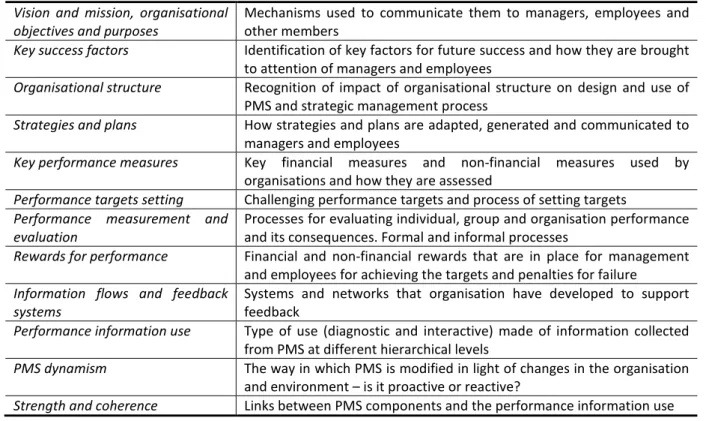
Table 3.1 Performance management and control framework ... 47
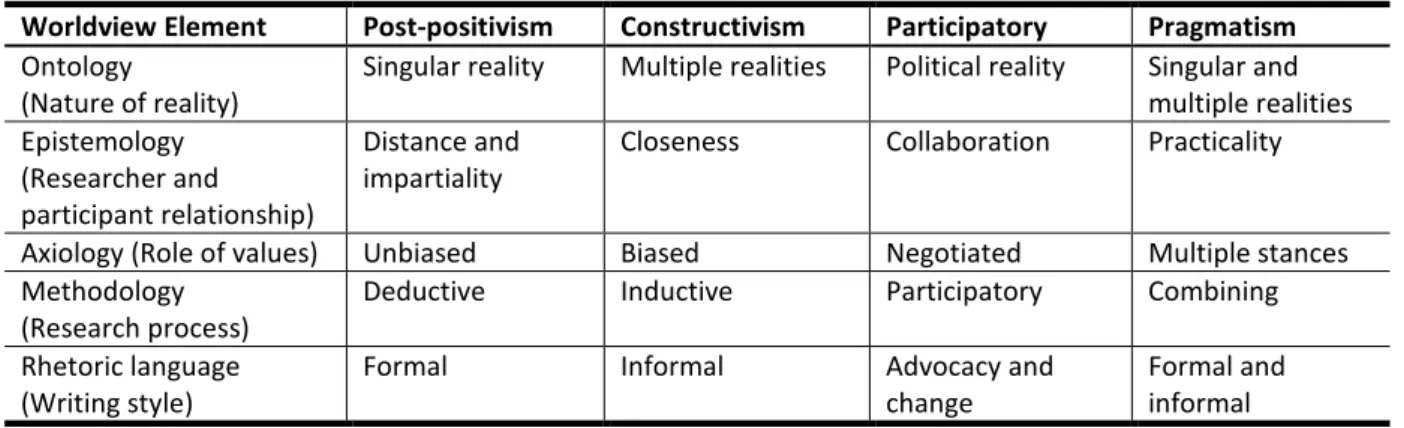
Table 4.1 Paradigms and philosophical assumptions ... 68
Table 4.2 Summary of interviews and FGD respondents’ characteristics ... 85
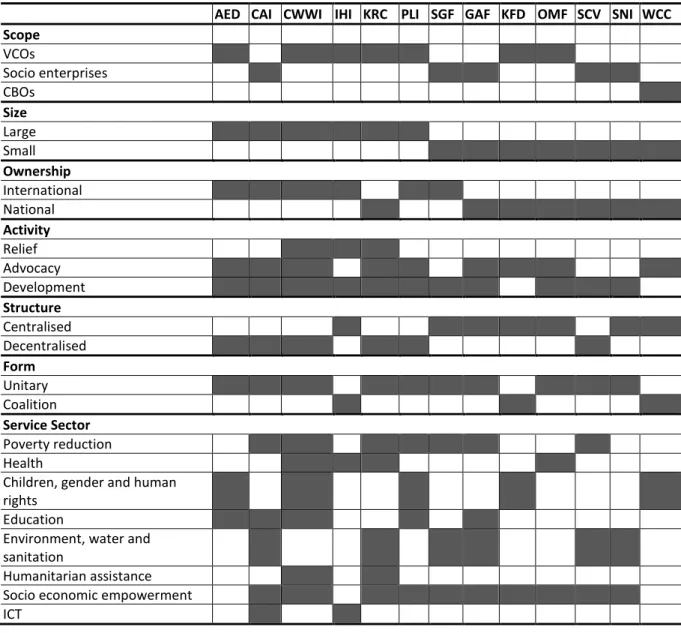
Table 5.1 NPO sector characteristics ... 98
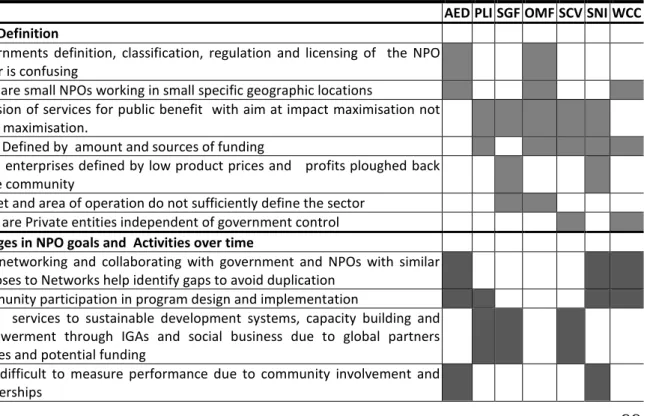
Table 5.2 NPO sector definition, activities and uniqueness ... 99
Table 5.3. Performance measurement definition ... 101
Table 5.4 Mission and vision, goals, objectives, strategies and plans in NPOs ... 102
Table 5.5 Performance planning, key success factors and core values ... 103
Table 5.6 Strategic planning process approach and communication method ... 104
Table 5.7 Performance measurement frameworks, indicators and data collection tools ... 105
Table 5.8 Performance targets, rewards and sanctions ... 107
Table 5.9 PM system information flow systems and PMS dynamism ... 108
Table 5.10 PMS information use and PMS strength and coherence ... 110
Table 5.11 NPO effectiveness definition, examples, attributes and domains ... 112
Table 5.12 Organisational determinants ... 114
Table 5.13 External environment determinants ... 120
Table 5.14 Challenges of performance measurement in NPOs ... 125
Table 5.15 PM benefits and recommendations ... 128
Table 7.1 Demographics of the sample ... 161
Table 7.2 Organisational characteristics ... 162
Table 7.3 External environment determinants ... 163
Table 7.4 Organisational determinants ... 165
Table 7.5 Performance planning practices ... 167
Table 7.6 Performance measurement practices ... 169
Table 7.8 Organisational effectiveness ... 173
Table 7.9 Validity and reliability of the CFA model ... 178
Table 7.10 Reliable indicators of the latent variables ... 179
Table 7.11 Correlations of independent variables ... 181
Table 7.12 Outliers ... 183
Table 7.13 Contingency variables and performance planning practices (Model 1) 187 Table 7.14 Contingency variables and performance measurement practices (Model 2) ... 193
Table 7.15 Contingency variables and PMS context practices (Model 3) ... 198
Table 7.16 Summary of Mediation effects of Performance management practices 200 Table 7.17 Contingency variables and performance management practices (Ha) . 202 Table 7.18 Performance management practices and organisational effectiveness (Hb) ... 203
Table 7.19 Mediation effects of PM practices on contingency variables and organisational effectiveness (Hc) ... 204
Table 9.1 Summary results for testing the first set of research hypotheses (Ha) .. 267
Table 9.2 Summary results for testing the second set of research hypotheses (Hb) ... 269 Table 9.3 Summary results for testing the third set of research hypotheses (Hc) . 271
•
List of Figures
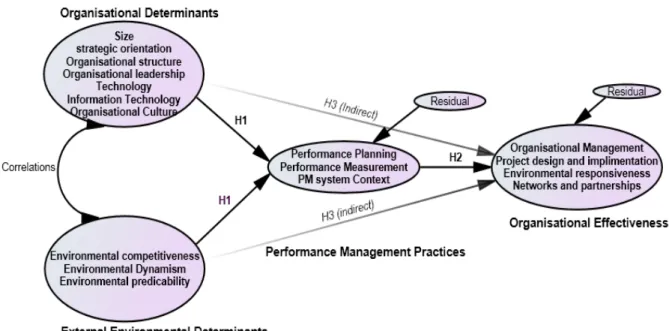
Figure 3.1 Theoretical framework ... 45
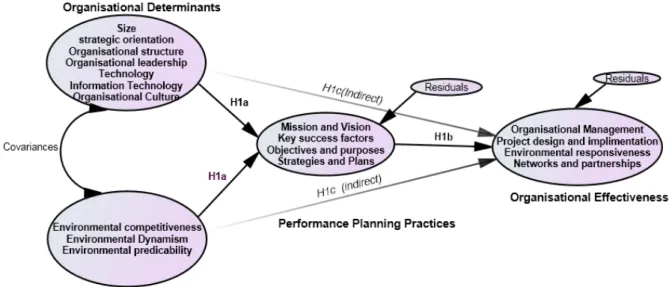
Figure 3.2 Mediation through performance planning ... 64
Figure 3.3 Mediation through performance measurement ... 64
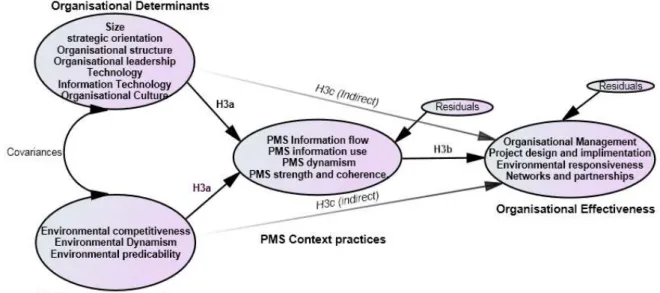
Figure 3.4 Mediation through PM system context ... 65
Figure 5.1 Example of tree node representing the theoretical framework ... 95
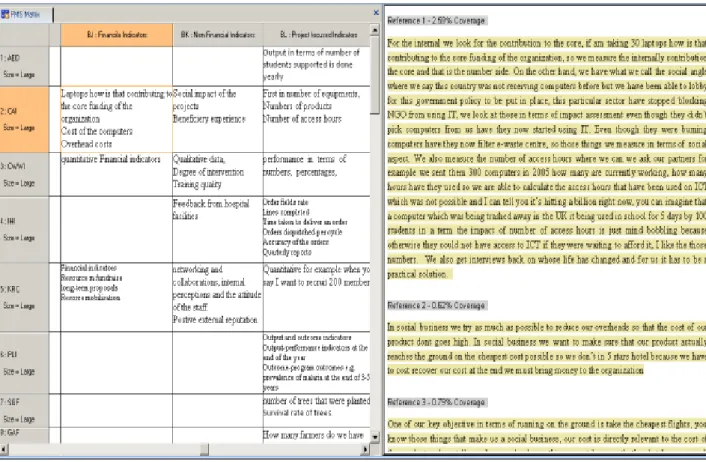
Figure 5.2 An example of a framework matrix extracted from NVIVO 9.2 ... 96
Figure 7.1 Overall summary of missing values ... 175
Figure 7.2 Missing value patterns ... 175
Figure 7.3 Most frequently occurring patterns ... 175
Figure 7.4 SEM results of structural model 1: mediation through performance planning ... 185
Figure 7.5 SEM results of structural model 2: mediation through performance measurement ... 191
Figure 7.6 SEM results of structural model 3: mediation through PM system context... 196
Figure 8.1 Performance management and organisational effectiveness ... 212
•
Acknowledgements
I thank Prof Magdy for not only giving me an opportunity to pursue a PhD but also being a fantastic DOS, thesis supervisor and a friend throughout the four years. Am grateful to Prof. Ram Ramadhanan and Dr. Franc Etu-Menson for their support during my PhD candidature at various periods they served as Director of Studies.
I am grateful to University of Bedfordshire for the PhD bursary, without which this thesis would not have been accomplished. I thank the research participants for their time and participation in this study. I Thank UOB RGS staff for their continued support through the four years in particular I appreciate Kim Porter for the enormous support during my candidature. In addition am grateful to my research assistants, Faith Mutheu, Irene and Jemmimah for your dedication to this research project. I appreciate Sheila Karimi for your immense assistance in leading the data collection team and remaining a true friend. I recognise the assistance I received from Mr Owino the research manager, NGO coordination board. I also thank the team (Beatrice, Antonnaite and Susan) that assisted me in organising the focus group and transcribing the data led by Dr. Okeyo David. Am grateful to Dr Vanessa Liston for her invaluable advice at the start of this research project and survey instrumentation. I thank the thesis proof-readers Kathyn and Sally for giving the thesis a much needed second eye. I thank my colleagues at the University of Bedfordshire for the academic support in particular Sadhar, Naveed, Roopa and Larry.
My parents Moses Wadongo and Sarah Wadongo I humbly salute you for giving me the resources early in life to pursue education and encouraging me throughout my academic career. I thank my fiancée Faith Gakii for being patient for the last few years and apologise to your daughter, Amanda Koki Mwenje for not being there for to welcome you to this crazy world.
I am indebted to my friends here in UK (Harun, Davis, Nat, Rose, Primrose, Leah, Pedro, Kinyua, Mukira, Lucy, Becca, and Renee), White house patrons and Facebook friends, if it were not for you guys I could have completed this thesis 2 years Earlier. In particular, Harun Kamau thanks for your warm welcome to Luton and your friendship over the years.
I appreciate the support and positive influence of Mr Khaemba (Former principal -FSK), Prof. Edwin Odhuno, Dr Oscar Kambona, Prof. Monica Ayieko, Prof. Othuon, Dr. David Okeyo, Dr Eric Fwaya, Mr Oyawa, Mr Aloo, Ms Irene Ayieko, and Mrs Elizabeth Otieno-at various stages of my academic and professional growth.
Lastly, I will like to thank the larger Wadongo family for the support and prayers during this period.
Deo credo
++++++++++++++++++++++
•
Declaration
I declare that this thesis is my own unaided work. It is being submitted in partial fulfilment of the degree of Doctor of Philosophy, at the University of Bedfordshire. It has not been submitted before for any degree or examination in any other University
_Billy Indeche Wadongo_____________________
Name of the Student Signature
Date 19/02/2014
Director of Studies Prof. Ram Ramanathan
Professor of Operations Management &
Director Business and Management Research Institute University of Bedfordshire, UK
Thesis Advisor
Prof. Magdy Abdel-Kader
Prof. of Management Accounting&
Ashcroft Foundation Chair of Management accounting Lord Ashcroft International Business School
Anglia Ruskin University, UK
External Examiner Professor David Dugdale
Emeritus Professor of Management Accounting University of Bristol, UK
Internal Examiner
Dr Syamarlah Rasaratnam, Senior Lecturer in Accounting Luton Business School
•
List of Abbreviations and Acronyms
% -Percentage
AGFI-Adjusted goodness-of-fit index
AMOS-Analysis of Moment structures
AVE-average variance extracted
B-Regression Weight
BSC- Balanced scorecard
C.R- Critical Ratio
CBOs- Community Based Organisations
CFA- Confirmatory Factor Analysis
CFI- Comparative Fit Index
CMIN/DF-Relative Chi-square
CMIN-Chi-square
Cor-Correlation
CSOs-Civil society organisations
D.E-Direct effect
DFID -UK Department for International Development
ERP-Enterprise resource System
FGD-Focus Group Discussions
FIML-Full information Maximum Likelihood
GDP-Gross domestic Product
GFI-Goodness-of-Fit Index
HDI- Human Development Index
H-hypothesis
I.E-Indirect effect
IBM SPSS- Statistical Package for the Social Sciences
ICT-Information communication Technology
IT-Information Technology
KSF-key success factors
M=Mean
MANOVA-multivariate analysis of variance
MAR-missing at random
MCAR-missing completely at random
MIMNOE-Multidimensional and integrated model of non-profit organisational
effectiveness
MI-Modification Indices
ML-Maximum Likelihood
MSEM-Multilevel structural equation modelling
NFI-Normed Fit Index
NGOs- Nongovernmental Organisations
NNFI-Non- Normed Fit Index,
NPO- Non Profit Organisations
OLS-ordinary least square regressions
PDA-Personal digital assistant
PDR-Personal Development Review Tool
PDR-Personal Development Review Tool
PLS-Partial Least Square
PMCF-Performance Management and Control Framework
PMF-Performance Measurement Framework
PM-Performance Management
PMP-Performance Management Practices
PMS-Performance Management System
POW -Production of Welfare
P-Significance level
R2 - Variance explained(adjusted R square)
RMSEA-Root Mean Square Error of Approximation
RMSR-Root Mean Square Residual
RQ-Research question
S.D-Standard deviation
S.E-Standard error
SEM-Structural Equation Modelling
T.E-Total effect
TLI-Tucker-Lewis index
UK-United Kingdom
UNDP-United Nations Development Program
USAID-the U.S. Agency for International Development
USA-United States of America
VCOs-Voluntary and Charitable organisations
•
Definitions of Key terms
A paradigm or sometimes known as s ‘worldview’ is a philosophical position of interrelated assumptions shared among researchers that provides a framework which guides the researcher about selection of tools, instruments, participants and methods used in the study
Community based organisations (CBOs) are NPOs organised and owned by the community, with limited funding and small-scale operations with an aim of providing social empowerment and promoting advocacy.
Contingency Theory- There is no universally appropriate performance management system that applies equally to all organisations in all conditions but particular features of the system and its effectiveness will depend on specific organisational and contextual factors
Contingency variables-Future organisational and environment contextual factors, event, or circumstances that are possible but cannot be predicted with certainty in the non-profit sector
Embedded design occurs when the researcher collects and analyzes either qualitative or quantitative data before, during, or after a traditional quantitative or qualitative design to enhance the overall design.
Environmental competitiveness in the non-profit sector is characterised by intense competition for staff and volunteers, external funding, new innovative projects and community resources.
Environmental dynamism frequent changes in the regulatory, socioeconomic, political and technological environment faced by an organisation
Environmental unpredictability is as the ability for the NPOs managers to foresee stakeholder’s requirements and accountability demands mainly regulators and board of directors, public, government donors, volunteers and beneficiaries.
Information Technology (IT) include operations automation level, IT application level, modern communication technologies and use of specialised softwares
Organisational Culturerefers to beliefs, norms and values that influence the behaviour of people who work in non-profit organisations
Organisational effectiveness is broader and captures organisational performance plus the plethora of internal performance outcomes normally associated with more efficient or effective operations and other external measures that relate to considerations that are broader than those simply associated with economic valuation (either by shareholders, managers, or customers), such as corporate social responsibility
Organisational leadership is defined as the roles and processes that “facilitate setting direction, creating alignment and maintaining commitment in groups of people who share common work” to achieve in direction, alignment and commitment
Organisational size- refers to components approach mainly the size of the budget or number of staff.
Organisational structure refers to coherent patterns of interrelated organisational attributes of hierarchical arrangement of lines of authority, communications, centralisation, formalisation and autonomy, rights and duties of an organisation reflecting identifiable organisational form.
Organizational performance encompasses three specific areas of firm outcomes: (a) financial performance (profits, return on assets, return on investment, etc.); (b) product market performance (sales, market share, etc.); and (c) shareholder return (total shareholder return, economic value added, etc.).
Performance can be defined as the past, present or future accomplishment of a given organisa-tional task or dimension measured against preset known standards of accuracy, completeness, value, or time.
Performance management (PM) practices are formal and informal customs related to specification of aims, methods, procedures and controls within a particular system that generates information for management use
Performance measurement practices involve identification and definition of key performance domains and indicators, performance targets, data collection methods and rewards and incentives.
Performance planning practices includes how the organisation goes about defining and communicating mission, vision, objectives, goals, key success factors, strategies and plans.
Philosophy foundations of research refer to ‘the conceptual roots undergirding the quest for knowledge’
PM system context practices refer to the practices related to a set of underlying contextual issues, which permeate(s) the performance management such as information flow systems, performance information use, PM system dynamism and PM system strength and coherence.
Strategic orientation is as how organisations interpret and respond to three organisational problems namely product innovation problem, administrative problem and operational problem
Technology refers to the way the organisation’s work processes function to convert inputs into outputs, which include materials, machines, tools, people’s tasks, software and knowledge as well technological complexity, task uncertainty and technological interdependence associated with works tasks.
The non-profit sector comprises of entities that are organisations, self-governing, private, voluntary, non-profit distributing and operate for public benefit.
Voluntary and Charitable Organisations (VCOs) are non-profits providing social services, advocacy, relief and social development.
Social enterprises are profit-making organisations aimed at addressing a unique social problem, such as co-operatives, housing associations, and development trusts.
•
End Matter
List of ReferencesList of Appendices
Appendix 1 NPO Statistics
Appendix 1.1: Kenya Country Profile of Human Development Indicators Appendix 1.2: UNDP Human development Index
Appendix 1.3: Trends in the Growth of NGOS in Kenya Appendix 1.4 NGOs’ contribution to the Country’s economy
Appendix 1.5 Table 10.2 EXTRACT FROM 2009/10 ANNUAL RETURNS
Appendix 2 Ethics Documents
Appendix 2.1 Research Ethics Scrutiny form) Appendix: 2.2 Research Permit
Appendix 2.3 Research ID Appendix 2.4 UKBA Letter
Appendix 2.5 Interview Introduction Letter Appendix 2.6 FGD Introduction Letter Appendix 2.7 Introduction Letter Survey Appendix 2.8 Thank You Letter-Survey
Appendix 3 Data collection
Appendix 3.1 Interview Protocol Appendix 3.2 FGD Guide
Appendix 3.3: Measurement of Variables
Appendix4 Survey Questionnaire Appendix 5 Framework Matrix
Appendix 5.1 NGO definition and Characteristics Matrix Appendix 5.2 Performance Planning Practices Matrix Appendix 5.3 Performance Measurement Practices Matrix Appendix 5.4 PMS context practices Matrix
Appendix 5.5 Strategic performance planning process and challenges Matrix Appendix 5.6 NGO effectiveness Matrix
Appendix 5.7 Determinants of PMS Matrix
•
List of Publications and Conference papers
Working papers and manuscripts
• Re-examining performance management and measurement in NGOs: A managerial perspective
(Management Accounting Research)-With Magdy Abdel-Kader
• Performance measurement systems in the Voluntary sector: Determinants, Challenges and Benefits (Accounting and Business Research)
• Strategic Orientation, Performance Measurement and Organisational effectiveness in the third sector(American Accounting Association -AAA-2014 Midyear conference)
• Contingency Theory, Performance Management and Organisational Effectiveness in the Third Sector: A Theoretical Framework (International Journal of Productivity and Performance Management)
• Strategic Performance Planning and Organisational Effectiveness in the Non-Profit Sector; A contingency perspective
• Are NGOs well placed to understand the needs of the poor? Evidence from Spatial dispersions of NGOs in Kenya.(with Vanessa Liston, Trinity college, Dublin)
Book and Book Chapters
• Wadongo B. and Abdel-Kader M. (2011) Performance management in non profit organisations, in Abdel-Kader M. (2011) Review of Management Accounting Research; Palgrave Macmillan Publishers Limited, Hampshire, England
Conference and workshop presentations
Wadongo B Strategic Performance Planning and Organisational Effectiveness in the Non-Profit Sector; A contingency perspective (Management Accounting Research Group-MCA 2013)
Wadongo B & Abdel Kader (2013) Contingency Variables, Performance Management Practices and
Organisational Effectiveness in non-profit sector European Accounting Association, May 6th to May 8thth
Paris 2013
Wadongo B & Abdel Kader (2013) Performance Management Practices and Organisational Effectiveness in the Non-Profit Sector American Accounting Association (AAA) Annual meeting August 3–7, 2013 Hilton Anaheim and the Anaheim Marriott in Anaheim, CA
Wadongo B & Abdel Kader (2012) “Determinants, challenges and benefits of performance management systems in NGOs”. Performance Management Association, July 9th 2012 Cambridge University
Wadongo B ,Abdel-Kader and Franc. Etu Menzoni (2012) “Re examining performance management practices: Evidence from the NGO sector. British Academy of Management Conference, Sept 2012 Cardiff Business school,
Wadongo B. (2012) “Empirical Validation of a Performance Management and Control Framework for Non-profits”, Management Control Association Conference, November 2012 Aston Business school
Wadongo B. and Abdel-Kader M. (2012) “Determinants and effects of performance management practices in nongovernmental organisations”, in proceedings of British Accounting Finance Association 2011 conference, Hilton Hotel Brighton, 16-19 April 2012, Brighton UK
Wadongo B., Abdel-Kader M. and Sermpinis G. (2011) ‘Performance management practices in Kenya; Memoirs of NGO leaders’ University of Bedfordshire conference on 5th and 6th July 2011 Luton Campus
Wadongo B. and Abdel-Kader M. (2011) “Performance management practices in non profit organisations, in proceedings of British Accounting Finance Association 2011 conference, Aston Business School, 12-14 April 2011, Birmingham UK
Wadongo B (2010) “Governance and performance management in civil society in Kenya’, East Africa governance workshop at Strathmore Governance Centre (SGC), Strathmore University, Kenya on 4th November 2010
Doctoral Colloquiums Papers
Wadongo B (2013) Performance Management in Non-Profit Organisations Doctoral Colloquium of the European Accounting Association, Paris 2013 2-5 May 2013
Wadongo B (2012) ‘Performance management practices Nongovernmental organisations: Evidence from the NGO sector” :British accounting and Finance Association Doctoral Colloquium at Aston Business School on 15th April 2012
Wadongo B (2011) “Determinants and effects of performance management practices in nongovernmental organisations” British accounting and Finance Association Doctoral Colloquium at Aston Business School on 12th April 2011
CHAPTER 1
1
INTRODUCTION
This thesis proposes and validates a model that explains how performance management practices (PM) affect organisational effectiveness in the Kenyan non-profit organisations (NPOs). This chapter introduces the study, highlighting the research problem, the objectives, scope and assumptions. The rest of the chapter is structured as follows:
• Background to the study • The statement of the problem • The aims of the study and objectives • The rationale and significance of the study • Non-profit sector and international development • NPOs in developing countries
• Theoretical underpinnings for the non-profit sector • The location of the study
• Contents and structure of the thesis • Conclusion
1.1
Background to the study
Performance management is a complex concept that has received much attention in the management accounting literature. Since the 1960s, performance management has been used in private and public organisations and more recently in the NPOs, not only to address challenges faced by these organisations, but also to improve productivity and service delivery. Performance can be defined as the past, present or future accomplishment of a given organisational task or dimension measured against pre-set known standards of accuracy, completeness, value or time. Effective performance management requires coordination of key activities and related practices undertaken within a system supported by a measurement framework (De Waal, 2003; Rouse and Putterill, 2003). PM practices are formal and informal customs related to specification of aims, methods, procedures and controls within a particular system that generates information for management use (Leeuw and van den Berg, 2011).
Performance measurement in the private and public sectors has received much attention; however, performance management in the ‘non-profit sector’1 seems to be
gaining attention (Yap and Ferreira, 2011). Non-profit organisations are effective change agents in socioeconomic sectors and international development, having evolved from ‘relief and welfare’ organisations to the current sustainable development systems. The researcher adopts Salamon et al.’s (2010) structural operational definition, which suggests that the non-profit sector comprises organisations that are self-governing, private, voluntary and non-profit-distributing and that operate for public benefit. Theoretical and empirical studies focusing on design and adoption of performance management systems in private and public sectors are more common than those completed in the non-profit sector (Wadongo and Abdel-Kader, 2011; Ebrahim and Rangan, 2010).
Performance management is of growing importance to NPOs, as much of the funding comes from corporate donors, governments and individual contributors who are accustomed to the for-profit bottom-line orientation. Consequently, there is increased demand for design and implementation of performance management systems (PMS) in order to demonstrate effectiveness, accountability and legitimacy. Demonstrating effectiveness in NPOs is critical due to their contribution to national economies and social welfare and intensity of competition for funding and resources in the sector. In addition, there is an increased demand for accountability and efficiency from various stakeholders such as donors, academia, the state and the public (LeRoux and Wright, 2010; Boland and Fowler, 2000).
Regardless of the recent growth and importance of the non-profit sector, particularly in developing countries, research focusing on performance management in this sector lags behind (Moxham, 2009; Chenhall, 2007). Thus, the aim of this study is to develop and validate a model that explains how performance management practices affect the non-profit organisations’ effectiveness in Kenya using an embedded mixed method. Against this background, the research problem is presented in the next section.
1
Also referred to as ‘non-governmental organisations (NGOs)’, the ‘third sector’, the ‘voluntary sector’, ‘civil society organisations (CSOs)’, the ‘social economy’, the ‘social sector’, the ‘charitable sector’, ‘not-for-profit organisations (NPOs)’, ‘interest groups’, ‘advocacy networks’, or ‘social movements’, depending on context.
1.2
Statement of the problem
There is growing interest in performance management in NPOs from both practitioners and scholars, particularly design and implementation of performance management systems (PM systems). Over the last decade, at least 20 PM systems for NPOs have emerged, ranging from the balanced scorecard for NPOs (Kaplan, 2001) to the input–impact model (Epstein and Buhovac, 2009). There has been significant development of PM systems, yet little is known of the actual systems utilised in organisations as prior research focuses on design aspects (Leeuw and van den Berg 2011). The authors of these systems implicitly or explicitly underline the applicability of the systems to the non-profit sector. However, to date it appears there is modest empirical evidence to demonstrate the systems’ effectiveness or their practical applications in the sector (Taylor et al., 2009; Campos et al., 2011). In addition, some authors have reported unsuccessful implementation of these frameworks, arguing that they do not address the performance management needs of NPOs and consequently question the usefulness of performance management in the non-profit sector (Kaplan, 2001; Ritchie and Kolodinsky, 2003; Micheli and Kennerley, 2005; Moxham, 2010; Campos et al., 2011).
The last decade has been characterised by continuous calls for empirical research on performance management in the NPOs, not only from the management accounting field but also from international development and public administration perspectives (Lindgren, 2001; Kaplan, 2001; Chang, 2006; Chenhall, 2007; Keating et al., 2008; Ferreira and Otley, 2009; Yap and Ferreira, 2011). For instance, Pollit (2005) laments the shortage of comparative empirical research into the “actual practices” of performance management beyond the “surface rhetoric of performance measurement”. Similarly, LeRoux and Wright (2010, p. 350) point out that:
in theory, managers develop and implement performance measurement systems to document performance and support decision making ... however, there is a distinct lack of research specifically examining whether and to what extent performance information is used by non-profit managers to make strategic decisions.
Radnor and McGuire (2004 p.64) concluded “performance measurement in the public sector is closer to fiction than to fact” due to the parallel systems which make performance measurement into a ‘form-filling” or “box-ticking” exercise.
The current research problem is the gap between theoretical performance management development and actual practices in organisations as highlighted by both researchers and practitioners.
Review of the literature reveals limited performance management research in NPOs, despite its importance to NPOs and numerous calls for research and utilisation of management control systems in NPOs (Chenhall et al., 2010; Chenhall, 2007). For this reason, Yap and Ferreira (2011) call for more studies to gain an in-depth understanding of performance management practices in NPOs.
Previous studies have found variability in PM practices among NPOs in terms of definition, implementation, reporting and management of performance. Empirical studies investigating determinants of PM practices among NPOs remain limited compared to studies completed in the private and public sectors (Moxham, 2009; Thomson, 2010; Carman, 2007). The effects of contingency factors such as information technology, strategy, technology and perceived environmental uncertainty on PM practices in NPOs have not been widely investigated.
A number of non-profit studies have found positive relationships between performance measurement and organisational accountability (Bromberg, 2009; Benjamin and Misra, 2006), organisational legitimacy (Soobaroyen and Raja, 2007; Goddard and Mussa, 2006; Fowler, 2009) and organisational learning (Campos et al., 2011; Benjamin and Misra, 2006; Buckmaster, 1999), strategy implementation (Atkinson, 2006) and organisational decision-making (Martin and Ernst, 2006; LeRoux and Wright, 2010; Samples and Austin, 2009). Although organisational effectiveness is seen as the key motivation for using formal PM systems, empirical studies that examine the linkage between performance management and organisational effectiveness in NPOs remain scarce with conflicting findings (Taylor et al., 2009; Buckmaster, 1999; Lindgren, 2001). Thus, there is limited compelling evidence to generalise this linkage (LeRoux and Wright, 2010). In addition, there is a need to understand performance management in other cultural and organisational contexts and thus contribute to the growing body of PM literature by helping to test generalisability of PM concepts (Pollit, 2005; Rejc, 2004). Regardless of the enormous contribution of NPOs in developing countries, particularly in sub-Saharan Africa, relevant studies in this context are so far still lacking.
Previous qualitative and quantitative studies have explored and explained evolution and adoption of performance measurement systems in NPOs based on new institutional theory, professional theory and resource dependency theory (Teelken, 2008; Thomson, 2010; LeRoux and Wright, 2010); however, studies utilising a mixed methods approach based on contingency theory in a system fit approach remain scarce (Chenhall, 2007). Thus, a gap exists in the literature regarding exploring PM practices from managers’ perspectives through field study and subsequently explaining the linkages between contingency variables, PM practices and effectiveness through structural modelling. Thus, this study is designed with the aim of addressing the above research problem.
1.3
The aims and objectives of the study
The aim of this study is to develop and validate a model that explains how the fit between contingency factors and comprehensive PM practices affects organisational effectiveness in NPOs. In particular, this study provides empirical evidence of determinants of PM practices and their influence on organisational effectiveness in Kenyan NPOs using an embedded mixed methods design. The following objectives are set in this study.
1.3.1
Objectives of the study
1. To identify the current performance management practices in NPOs in Kenya.
2. To validate a structural model that explains how performance management practices affect organisational effectiveness in the Kenyan non-profit sector.
3. To examine the linkage between contingency variables and performance management practices in NPOs in Kenya.
4. To investigate to what extent performance management practices affect organisational effectiveness in NPOs.
1.3.2
Research questions
1. How do NPOs’ leaders define and understand non-profit sector characteristics and organisational effectiveness? RQ1
2. How do the NPOs’ leaders define performance measurement and what are the current performance management practices in NPOs in Kenya? RQ2
3. Does the proposed model of contingency variables, performance management practices and organisational effectiveness fit the data? RQ3
4. What is the relationship between contingency variables and performance management practices in Kenyan NPOs? RQ4
5. What is the linkage between performance management practices and organisational effectiveness in NPOs in Kenya? RQ5
6. What are the mediation effects of performance management practices on the relationships between contingency variables and organisational effectiveness? RQ6
To address the above questions, this study employs a mixed methods research approach utilising a field study and a cross-sectional survey to increase validity and reliability of the study. This research approach is structured within the post-positivism worldview and contingency theory theoretical lens that underpins an embedded research design, which directs the plan for conducting the study. A preliminary field study is completed to understand NPO leaders’ perceptions on key study variables as well as the research context. A cross-sectional survey is adopted to test the hypothesised relationships among the contingency factors, PM practices and organisational effectiveness using a structural equation modelling approach. Qualitative and quantitative data is collected, analysed and interpreted sequentially, thus allowing integration to occur at the stages of data collection and discussion of results. The study is carried out under the following assumptions: a) the interview schedules and questionnaires are answered properly, accurately and without major personal bias; b) the respondents to the questionnaires are qualified to assess, evaluate and comment on PM practices; and c) the sample organisations surveyed are representative of the general population of NPOs registered in Kenya.
1.4
Rationale and significance of the study
In recent years, NPOs have become major players in international development, particularly in developing countries. Therefore, there is increased demand for design and implementation of PM systems in order to demonstrate effectiveness. Despite the enormous contribution of NPOs and development of PM systems, research into the determinants and effects of current performance management practices in the sector lags behind, as stated in section 1.2 above. Thus, this study addresses the research problem (see section 1.2) contributing to the ongoing debate of relevance of performance management in the non-profit sector. A review of the literature in chapter 2 reveals that several contingency factors have not been investigated in the non-profit sector; in particular, environmental uncertainty, environmental dynamism, organisational structure, strategy, and technology have largely been ignored. Thus, there is a need for a study that adopts structural equation modelling to fit a model using several contingency variables. Few studies advance knowledge of NPO effectiveness through empirical analysis (Lecy et al., 2011). Integrating insights across disciplines, this thesis strengthens cumulative knowledge of definition, conceptualisation and empirical measurement of NPO effectiveness domains. In the literature, the influence of performance management on organisational effectiveness remains contested due to conflicting findings in existing studies. Thus, this study demonstrates that performance management variables predict organisational effectiveness domains. The recent research points to the potential use of performance management as a mediating variable of relationship between contingency variables and organisational effectiveness in a system fit approach; however, few past studies have pursued this potential. This thesis develops and validates an antecedent mediation model of contingency variables, PM practices, and organisational effectiveness in the non-profit sector.
SEM is one of the least-utilised methods in management accounting research. However, the recent developments in structural equation modelling techniques and software have produced a range of goodness of fit tests for evaluating competing structural models (Arbuckle, 2011). Therefore, this thesis makes a methodological contribution by employing structural equation modelling to validate the proposed model. This study further responds to previous calls to integrate several research disciplines by combining the management accounting perspective and the non-profit management perspective. Finally, the research context (a non-non-profit sector in
a developing country) enables the researcher to test generalisability of performance management frameworks in other contexts.
At the practice level, the study findings will benefit Kenya’s government, NPOs, donor agencies and other stakeholders. The findings of this study are useful to the stakeholders in implementing policies that address the performance management, accountability, regulatory and annual reporting challenges faced by the third sector. These results provide knowledge required to design an integrated performance management system suitable for the non-profit sector. To summarise, this is important as it not only increases academic knowledge in the management accounting field but also makes a significant contribution to practice in this important area.
1.5
Non-profit sector and international development
Over the last decade, NPOs have become major players in international development, particularly in developing countries (Liston, 2008). NPOs are effective change agents in socioeconomic sectors such as education, microcredit, non-formal education and primary health care. According to Korten (1987) in VanSant (2003), NPOs have evolved over the years from being, first,relief and welfare, to small-scale local development and are currently sustainable development systems. Initially charities working as relief organisations were trusted because of the stakeholders’ homogeneous social and religious values. However, over the years NPOs have expanded to become more larger and more numerous professionalised agencies with multiple stakeholders and thus increased demands for performance measurement (LeRoux and Wright, 2010). Although both the public sector and the non-profit sector provide services often overlooked by the private sector, NPOs respond to collective unique disadvantaged community or group needs and interests, while the public sector responds to majority preferences (Feiock and Andrew, 2006).
In 2010, the sector was worth $2.2 trillion in operating expenditures based on 40 countries in which data was available (Salamon et al., 2010). According to Salamon et al.’s earlier (2004) report, in 2003 the global non-profit sector was a $1.3 trillion industry, which employed over 40 million people with an estimated annual growth of 10% per annum and served billions more in developed and developing economies. In sub-Saharan Africa, NPO expenditure was expected to increase with
average annual growth of 12% per annum, ahead of the Middle East and North Africa and South Asia. The sector is even more important and bigger in Least Developed Countries such as Kenya, where it was valued at UK£1.35 billion in 2010 (Kenya National Bureau of Statistics, 2010). In Kenya, the sector accounted for 5% of the country's GDP (approximately UK£1.35 billion) and employed some 250,000 people in 2010 (Kenya National Bureau of Statistics, 2010). According to an NGO Coordination Board (2010) report, international NPOs in Kenya received most of the funds (69%) donated compared with national NPOs (31%). It is evident that most donations to international NPOs were from the United States (44%), the United Kingdom (21%), Kenya (12%), Germany (9%) and the Netherlands (8%). The growth of NPOs in sub-Saharan Africa and particularly in Kenya is due to dissatisfaction with the performance of central government in delivery of public services; thus, donors increasingly seek to channel development funding through the non-profit sector.
Despite the above growth, there is little agreement on the definition and boundaries of entities constituting the sector. Furthermore, several authors have bemoaned the number of high-profile scandals that have hit the sector around the globe. LeRoux and Wright (2010) cited examples of poor financial practices of the American Red Cross during the 9/11 attacks in the US. Similarly, Mueller et al. (2006) reported misuse of funds in a non-profit for children and literacy in New Zealand. Thus, performance management is of growing importance to NPOs due to funding insecurity, multiple stakeholder requirements and demands for effectiveness and accountability and ways of restoring eroding public trust.
1.6
NPOs’ characteristics in developing countries
The United Nations (UN) categorises countries into developed and developing countries. Developing countries tend to have a lower Human Development Index (HDI), high population growth, and lower levels of income and industrialisation. These features affect the characteristics and efficient operation of non-profits and the public sector in developing countries. In developing countries, NPOs remain relevant, as they are known to encourage alternative development strategies compared to government and business organisations due to poverty and government failure to deliver services. NPO characteristics such as lack of government bureaucracy, flexibility and grassroots support cause their activities to be impact-oriented, emphasising self-sustainability and community participation
(Olujide, 2005). The non-profit sector interventions focus on the poorest of the poor, usually located in remote areas and involve beneficiary participation in project design to ensure acceptance and compatibility with local cultures and conditions. NPOs in developing countries have been lauded for their efforts in providing equitable, cost-effective services alleviating poverty. Some indigenous NPOs are well known for utilising external funding effectively while delivering efficient services, thus gaining community legitimacy. However, many NPOs have implemented multiple programs in different sectors, thus leading to inefficient allocation of resources as they lack the organisational and managerial competencies required to integrate their efforts. This diversity has been driven by the funders’ requirements for integration of multiple projects and activities to achieve long-term community outcomes.
In the last 10 years, accountability and effectiveness have become central concerns in NPOs in developing economies for several reasons, including visible scandals, growing competition with for-profit service providers, increased commercialisation and the engagement of NPOs to fulfil functions previously performed by the state (Benjamin and Misra, 2006; NGO Coordination Board, 2010). Unlike in developed countries, these NPOs in developing countries perceive internal self-performance evaluation as irrelevant due to low performance pressure and emphasis on external performance evaluation processes (Olujide, 2005). Nevertheless, performance management is critical to the NPOs, to enable them to measure performance at an operational level and remind themselves of their original intentions in the development and social context.
NPOs in developing countries continue to face institutional, financial and program sustainability problems, incoherent and ineffective regulation, unpredictable funding and donor dependency (Mimba et al., 2007; Shivji, 2007; Kunguru et al., 2009; Jillo, 2009). Other constraints include poor public culture, institutional fragmentation, the influence of international organisations and lack of institutionalised training, incentives and sanctions systems. These institutional and capacity constraints negatively affect implementation of performance management systems in developing countries, therefore making it impossible for them to benefit from the system (Ohemeng, 2009). Based on the above challenges, coupled with a large amount of external funding from Western countries including the USA, there is an urgent need for empirical studies to inform development and implementation of performance management systems that are relevant, balanced,
integrated, strategic and improvement-oriented to address addressing the specific characteristics of NPOs in developing countries.
1.7
Theoretical underpinnings for the non-profit sector
NPOs share important underlying characteristics that differentiate them from private and public sector organisations, including profit maximisation objectives, revenue sources, goals, high transactions costs, multiple stakeholders and reliance on trust, social capital and voluntarism. Some of the key theoretical underpinnings for the sector discussed in the literature include the public nature of the products and services, dependency on social capital, multiple stakeholders, asymmetric information, incomplete contracts and monitoring and incentive systems (Speckbacher, 2003; Taylor et al., 2009; Beamon and Balcik, 2008; Kendall and Knapp, 2000; Chenhall et al., 2010). Revenue sources are a key factor differentiating non-profits and for-profit organisations (Moore, 2000). For-profits derive their revenue from sale of products and services to customers, while non-profits get their revenue from monetary and non-monetary contributions from government, individuals and corporations. The implication is that in for-profit organisations, customers pay for goods for their own benefit while non-profits secure revenue from funders who do not expect any benefit in return (Henderson et al., 2002).
In a conventional economy, the public sector ensures efficient resource allocation based on public preferences and those who demand differentiated goods are catered for by the private sector at a premium cost. However, the “public good” nature of NPOs’ products and services does not reflect the true market value or price, thus competition and price cannot be used as a measure of performance (Kendall and Knapp, 2000). The interventions are produced at less-than-optimal level in the market as the NPO expenditures only reflect the social (production) costs but not the social (market) value. Thus, the public good properties of the NPOs’ services make it challenging to measure the NPOs’ outputs, as the outcomes are widespread.
Social capital as an intangible resource has been central to the non-profit sector for many years. It results from networks between people in the organisation rather than physical or human capital. People’s formation of and involvement in NPOs represents socio-capital or generates it as a by-product (Kendall and Knapp, 2000;
Chenhall et al., 2010). NPOs are well known for involving voluntarism in the implementation of their projects. The NPOs use volunteers to reduce project costs and to ensure participation by community members. In developing countries, most youths opt to volunteer for instrumental reasons aims due to high unemployment rates. While volunteering and membership is desirable in NPOs, it causes great challenges to performance management, as the volunteers are more than just “human resources” with incomplete contractual rights. They partly assume ownership rights to the organisation’s ideas and success. Furthermore, they are not compensated at the market value; thus, the NPOs cannot demand a certain level of performance by enforcement of rewards and penalties. Traditionally, NPOs’ managers have depended on informal processes based on shared trust, norms and values to develop and sustain social capital, rather than on coercive or formalised procedures. However, recent stakeholder accountability and effectiveness demands, coupled with rapid growth of the sector, have dictated the adoption of formal management controls and practices borrowed from the private sector that sometimes conflict with the intrinsic values of the NPOs (Chenhall et al., 2010).
In organisations, owners of human and physical capital make specific investments to create value with expectations of acceptable share returns. The reliance for organisational success on specific investments and incomplete contractual relationships among multiple stakeholders poses challenges in managing these investments (Rajan and Zingales, 1998). Whereas the “traditional property rights view” assumes that residual right of control is with the owners, as other stakeholders are protected by complete contracts, the “modern perspective” assumes that stakeholders who make large and important specific unprotected investments should have primary decision rights. According to Speckbacher (2003), multiple stakeholders in NPOs make unprotected specific investments based on incomplete contracts with the expectation that NPOs will fulfil their implicit claim and thus return value on their investments. Based on the specific investments, the stakeholders can either be primary or secondary stakeholders. Primary stakeholders make the largest specific investment in the organisation and their investment is protected by giving them information and decision rights to interpret the mission and make decisions in the case of conflict (Speckbacher, 2003). For-profit organisations have homogenous stakeholder groups, who make specific investments, explicit claims and interests and have residual and decision rights; thus they guide organisations’ objectives and intentions. On the other hand,
non-profits have heterogeneous multiple stakeholders with shared values but with conflicting interests and implicit claims. Although different stakeholders are motivated to work together sometimes, they hold different values and priorities (Beamon and Balcik, 2008; Kendall and Knapp, 2000), hence managing trade-offs between stakeholders is challenging to NPOs. Performance management is useful in balancing the stakeholder’s investments and expected share, thus establishing the extent to which the implicit claims are met through stakeholder-oriented strategic performance measurement systems (Speckbacher, 2003; Neely et al., 2001). Therefore, the performance management system is key to provision of information about the nature of the claims and redefinition of trade-offs in cases of conflict. However, the challenge is to identify a stakeholder group that has a residual right, interpret organisation mission, define performance standards and measures and measure effectiveness.
Although technological and traditional property rights views of the firm, which provide the basis of performance measurement and owners’ incentives for performance are not completely transferable to non-profits, Speckbacher (2003) argues that they address the question of how organisational goals can be translated into organisational actions through monitoring and incentives systems that are applicable to non-profits. Monitoring systems are applicable to non-profit measurement so long as there is clarity of goals and measures. However, other characteristics of NPOs mentioned earlier, such as lack of primary owners, asymmetric information, the absence of market prices, the subjective nature of inputs and outcomes and reliance on limiting financial reporting systems, make monitoring processes complicated and costly (Kendall and Knapp, 2000).
The above theoretical underpinnings for the sector pose both challenges and opportunities for applicability of private sector performance management principles to the sector. For instance, the inherent and unique characteristics of the sector pose significant challenges to selecting appropriate performance metrics and developing measurement systems (Micheli and Kennerly, 2005; Sawhill and Williamson, 2001; Beamon and Balcik, 2008). Thus, distinctive characteristics of for-profits and non-profits result in unique performance management needs as well. To conclude, both researchers and practitioners need to understand how modern performance management tools could integrate with the NPO characteristics to optimise effectiveness of individual organisations.
1.8
Location of the study
The study is conducted in NPOs registered and operating in Kenya, a developing country in sub-Saharan Africa. The Kenyan non-profit sector is chosen as it represents an active, organised, and regulated sector in a politically stable developing country. The researcher’s prospects of negotiating access to participants influenced the choice of the location. Kenya lies in East Africa between 5ºN and 5ºS. It covers an area of 582,644km2 and has a population of over 39 million.
According to the United Nations Development Program (2010) Human Development Report, the Human Development Index (HDI)2 for Kenya between 1980 and 2010
rose by 0.5% annually from 0.40 to 0.47 leaving Kenya ranked 128 out of 169 countries (see Appendix 1.2). Kenya’s huge debt burden and inadequate financial resources have slowed down the country’s race to meet the Millennium Development Goals. This has been attributed to the withholding of external aid to the government in the last decade, which has increased government borrowing, resulting in higher servicing costs. Other challenges facing the country are population increase, particularly in urban areas; effects of 2008 post-election violence; increases in food and energy costs in 2010; extremes of flooding and successive drought occasioning disruptions to livelihoods of the poor; and HIV/AIDS, whose prevalence has gone down but absolute numbers of those infected and affected remain high (see Appendix 1.1). Thus, the stakeholders face the challenge of designing and implementing poverty reduction programs that target the poor effectively on a long-term basis.
In the past 30 years, NPOs have become central to poverty alleviation work in Kenya. Most NPOs started their activities around the 1970s and 1980s in response to larger developmental needs following the disappointing bilateral government-to-government aid programs. The hope was that NPOs would succeed in taking assistance to grassroots rural communities. This shift to direct NPO funding resulted in the mushrooming of NPOs (Liston, 2008). In 1993 there were 250 non-governmental organisations (NGOs) registered with the NGO Council of Kenya. In 10 years this figure multiplied by a factor of almost 10 to 2232 in 2001. The sector recorded significant growth between 2001 and 2009. The sector has been growing
2 ‘
Each year since 1990 the UNDP Human Development Report has published the Human Development Index (HDI) which was introduced as an alternative to conventional measures of national development, such as level of income and the rate of economic growth. HDI represents a push for a broader definition of well-being and provides a composite measure of three basic dimensions of human development: health, education and income’.
at the rate of 400 organisations per year (Appendix 1.3) with about 7500 organisations currently registered with the NGOs Coordination Board.3
These NPOs are spread all over the country and vary from small organisations operating locally to inter