University of South Carolina University of South Carolina
Scholar Commons
Scholar Commons
Theses and Dissertations
Fall 2019
Promoting Self-Reflection of Foreign Language Teachers through
Promoting Self-Reflection of Foreign Language Teachers through
Professional Development: An Action Research Dissertation
Professional Development: An Action Research Dissertation
Hanan KhaledFollow this and additional works at: https://scholarcommons.sc.edu/etd
Part of the Curriculum and Instruction Commons, and the Teacher Education and Professional Development Commons
Recommended Citation Recommended Citation
Khaled, H.(2019). Promoting Self-Reflection of Foreign Language Teachers through Professional Development: An Action Research Dissertation. (Doctoral dissertation). Retrieved from
https://scholarcommons.sc.edu/etd/5622
This Open Access Dissertation is brought to you by Scholar Commons. It has been accepted for inclusion in Theses and Dissertations by an authorized administrator of Scholar Commons. For more information, please
PROMOTINGSELF-REFLECTIONOFFOREIGNLANGUAGETEACHERS
THROUGHPROFESSIONALDEVELOPMENT:ANACTIONRESEARCH
DISSERTATION by Hanan Khaled Bachelor of Science Alexandria University, 1989 Master of Arts
Monterey Institute of International Studies, 2010
Submitted in Partial Fulfillment of the Requirements For the Degree of Doctor of Education in
Curriculum and Instruction College of Education University of South Carolina
2019 Accepted by:
Linda Silvernail, Major Professor Rhonda Jeffries, Committee Member
Yasha Becton, Committee Member Christopher Bogiages, Committee Member
Tammi Kolski, Committee Member
© Copyright by Hanan Khaled, 2019 All Rights Reserved.
DEDICATION To
ACKNOWLEDGEMENTS
I would like to offer my sincerest recognition for the support, kindness and encouragement that so many bestowed upon me during the rewarding, yet challenging endeavor of obtaining this doctorate degree.
First and for-most, I would like to express my gratitude and love to my husband and my three beautiful daughters. Their support has been unwavering. In my
weaknesses, they became a portion of my strength. Their consistent belief in me pushed me forward towards my dream of completion. Their celebration of my periodic
achievements empowered me to continue pressing ahead. Thank you for believing in me, you are my heart.
I am thankful for the incredible committee members who dedicated much of their time to guide my learning and shape my dissertation. Dr. Christopher Bogiages, your guidance was instrumental in structuring Chapter One and defining the theoretical frameworks in Chapters One and Two. With your help, I was also granted a strong head start in writing Chapter Three. Dr. Tammi Kolski, the lessons I learned in the
Instructional Design and Assessment Course helped me structure the intervention of the Action Research. Your teaching in this course extended past the framework of this dissertation and went on to greatly shape my daily tasks as a senior academic specialist. Dr. Rhonda Jeffries and Dr. Yasha Becton, your selfless service in managing the
I would like to also extend a special thank you to my dear advisor, Dr. Linda Silvernail for her inexorable guidance and true wisdom. Due to you, I have become a stronger writer and I am forever grateful for your ideas on analysis and interpretation of the qualitative data. I could not have completed the dissertation without your
encouragement and support.
To all the professors in the Curriculum and Instruction Program, your commitment to excellence in teaching and your ability to identify and encourage strengths, you see in your students, defines you as great educators. You have gone beyond your duty and you have left a mark in my heart and many examples in which I hope to someday model my teaching after.
Lastly, I would like to sincerely thank supervisors and colleagues at the Defense Language Institute Foreign Language Center. I am fortunate to work alongside the world’s most talented and forward-thinking faculty in the field of language education. Alongside my supervisors and colleagues, I am forever grateful to my employer for helping me further my education.
An Arabic saying states, “A journey of a thousand miles begins with one step”. As a mother of three children, with a full-time job, this journey seemed intimidating. Yet, with my family by my side, I took the first step and continued to take steps ahead. I am thankful that my children and my husband can now see the achievement they
contributed to. My late parents would be especially proud of me for this achievement. It is one that would have fulfilled many of their dreams for me. Therefore, for their lifetime of sacrifices and unconditional love, this is for you.
ABSTRACT
This explanatory mixed-method action research describes how a social constructivist professional development program impacts self-reflection of foreign
language teachers at the Defense Language Institute Foreign Language Center (DLIFLC). The problem is that traditional professional development for foreign language teachers does not improve self-reflection. Despite their individual differences and qualifications, most teachers receive traditional in-service professional development
(Darling-Hammond, Hyler, Gardner, & Espinoza, 2017) on a specific topic and have no time to reflect on their existing practices, newly presented concepts, or students’ responses to instruction. The effectiveness of such professional development is questionable (Darling-Hammond, Wei, Andree, Richardson, & Orphanos, 2009; Penuel, Gallagher, & Moorthy, 2011; Yoon, Duncan, Lee, Scarloss, & Shapley, 2007; Wei, Darling-Hammond, & Adamson, 2010). Therefore, the purpose of the study is to guide teachers to incorporate reflective teaching practices into their routines through a social constructivist professional development program. The program was adapted from Hall and Simeral (2015) and was tailored to teachers’ initial self-reflection tendencies. Eleven foreign language teachers participated in the study. Teachers’ self-reflection tendencies and frequency of reflection were measured using two parameters: (a) pretest and posttest surveys (quantitative data) and (b) teachers’ responses to prompts in their final reflective journals (qualitative data). Descriptive statistics and thematic analysis were used to describe the changes in teachers’ self-reflection tendencies and frequency of reflection. Findings showed that the social
constructivist professional development program increased the self-reflection tendencies and frequency of reflection for nine of DLIFLC participating teachers. Two participating teachers showed a decline in their self-reflection tendencies. The findings guided the development of the action plan to explain the role of the teachers’ supervisors and trainers as servant leaders (Liden, Panaccio, Hu, & Meuser, 2014) and builders of teachers’ capacity for reflective teaching (Hall & Simeral, 2017). Suggestions for future studies are provided.
TABLE OF CONTENTS
Dedication ... iii
Acknowledgements ... iv
Abstract ... vi
List of Tables ... xi
List of Figures ... xii
List of Abbreviations ... xiii
CHAPTER ONE: INTRODUCTION OF THE STUDY ...1
Problem of Practice ...4
Theoretical Framework ...6
Research Questions ...14
Researcher Positionality...15
Action Research Methodology ...15
Significance of the Study ...21
Limitations of Study ...22
Organization of the Dissertation ...25
Glossary of Terms ...26
CHAPTER TWO: LITERATURE REVIEW ...27
Social Constructivist Theory...29
Professional Development ...61
Chapter Summary ...69
CHAPTER THREE: METHODOLOGY...72
Problem of Practice ...72
Purpose and Significance of the Study ...73
Research Questions ...74 Research Design...74 Setting of Study...76 Intervention ...77 Constructs ...82 Role of Researcher ...83 Participants ...84
Data Collection Instruments ...85
Research Procedures ...89
Data Collection Considerations ...91
Analysis of Data ...94
Quality Criteria ...95
Summary ...98
CHAPTER FOUR: FINDINGS OF STUDY ...99
Research Questions ...100
Findings of the Study ...102
Interpretation of Results of the Study ...125
CHPATER FIVE: SUMMARY AND ACTION PLAN ...134
Overview of the Action Research ...134
Summary of the Findings ...137
Action Plan and Recommendations for Practice ...141
Recommendations for Future Research ...149
Conclusion ...152
REFERENCES ...155
APPENDIX A:SYLLABUS...174
APPENDIX B:INVITATION LETTER ...177
APPENDIX C:REFLECTIVE SELF-ASSESSMENT TOOL ...180
APPENDIX D:REFLECTIVE JOURNAL PROMPTS ...184
LIST OF TABLES
Table 3.1 Biographical information of participating teachers ...85
Table 3.2 Main research question, instruments, and data analysis process ...98
Table 4.1 Scoring range of the four self-reflection stages ...101
LIST OF FIGURES
Figure 1.1 The reflective teaching cycle………..…………..………11
Figure 2.1 Continuum of self-reflection ...46
Figure 3.1 Research design ...25
Figure 4.1 Pretest and posttest scores of awareness of instructional reality ...109
Figure 4.2 Pretest and posttest scores of intentionality of actions ...113
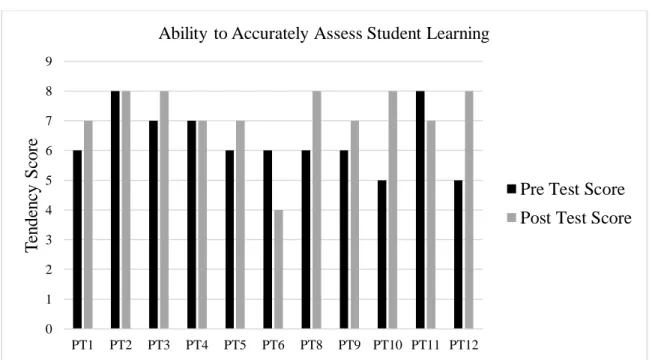
Figure 4.3 Pretest and posttest scores of ability to assess students ...119
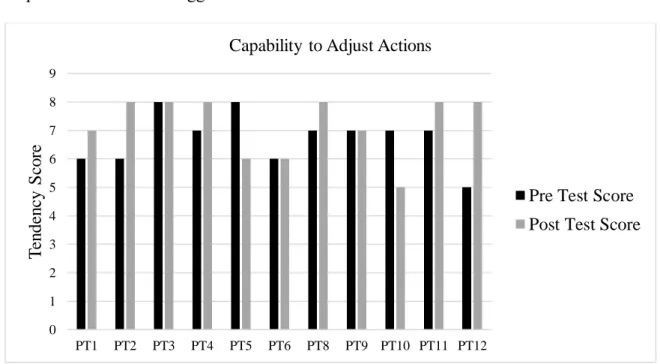
Figure 4.4 Pretest and posttest scores of capability to adjust actions ...122
LIST OF ABBREVIATIONS
DLIFLC... Defense Language Institute Foreign Language Center PD ... Professional Development PT ... Participating Teacher RSAT ... Reflective Self-Assessment Tool SCT ... Sociocultural Theory
CHAPTER ONE
INTRODUCTION OF THE STUDY
We are who we are because of the lessons we have learned from our experiences. We learn to teach and while teaching, we learn. When we reflect upon teaching
practices, learning can take place. As I ponder my experiences as a foreign language teacher and a teacher trainer, I appreciate that reflection played an integral role in my professional development (PD). Throughout my career, assuming the role of a reflective teacher extended my responsibilities. I needed to understand the curriculum and students and teachers’ needs. I have behaved in an ethical, professional manner and evaluated my effectiveness while considering all aspects influencing student and teacher learning. Moreover, I have collected information about the students, the curriculum, and my teaching and scrutinized it to gauge implications for the classroom. I have learned of the need to hypothesize and analyze problems to determine further action. I have also implemented action plans. Having considered my teaching from these perspectives, I have been able to improve my teaching not only for the class, but for individual students and colleagues as well.
I also understand that the role of a reflective teacher is most effective when implemented with the support of colleagues or mentors. Julian Edge (as cited in Bailey, Curtis, & Nunan, 2001) said, “When I use the word development, I always mean self-development. But that can’t be done in isolation. Self-development needs other people” (p. 12). Bailey et al. (2001) added that reflective teachers need to converse,
consult, and cooperate with other colleagues, seeking constructive criticism. As intellectuals, they should recognize the problems students face in the classroom and adjust instruction to meet students’ needs.
Without a doubt, teaching involves complex choices about difficult problems that, if left unaddressed, often escalate. Therefore, a different type of thinking is needed to address such choices. As Danielson (2009) indicated, difficult choices call for teachers to engage in sophisticated reflection. Critical evaluation of teaching in relation to our role in class not only improves teaching performance, but also helps teachers become
authorities in their decisions and performance (Akbari, 2007; Dewey, 1938; Schön, 1983, 1987).
In 2016, the Office of the Secretary of Defense issued a directive for an improvement in the language proficiency of basic course graduates from Listening at level 2, Reading at level 2, and Speaking at level 1+ (in accordance with the criteria of the Interagency Language Roundtable Scale), to higher levels, which are now Listening 2+, Reading 2+, and Speaking 2. To that end, the Defense Language Institute Foreign Language Center1 (DLIFLC) in California, has designed a plan for said implementation
in the Undergraduate Education Schools. A necessary concomitant of this plan is to increase the PD of the teacher (DLIFLC, 2016).
1 According to the DLFLC.edu official website, the institute is an integral part of the U.S.
Army and supports its international commitments and responsibilities. It does so by training and educating entry-level personnel and others in the Undergraduate Education Basic Course in a range of foreign languages, and post-basic language training via the Continuing Education Directorate. As of January 2019, DLIFLC teaches 16 foreign languages at the Presidio of Monterey. The length of the language programs varies from
In the 2018 DLIFLC self-evaluation report, the institute provided a
comprehensive assessment of educational essential tasks, constraints, and resources required to achieve higher student proficiencies in reading, listening, and speaking by 2022. One of the essential tasks is to continually develop and train faculty. The report also recognizes the necessity of having potential faculty with required skills. In response to these needs, the institute is strategically increasing investment in teacher development in terms of training time and funding. Subsequently, the institute initiated a Faculty Development Review Board in 2018 to develop a coherent system for teacher PD and career path options in support of reaching the established foreign language proficiency goals by 2022 and thereafter maintaining those goals. One of the recommendations is to develop a “reflective teacher”.
The challenge lies in providing in-service PD to foreign language teachers, who come from various foreign educational systems and with well-established frames of reference of learning and teaching. Almost all teachers are native speakers of the languages they teach. These teachers are expected to transform their own and their students’ learning. They teach the way they learned and were taught. However, the field of foreign language teaching has undergone a paradigm shift of language learning to prepare foreign language learners to meet real-world challenges with professional language proficiency, self-direction, critical thinking and problem-solving skills.
According to Hall and Simeral (2015), this paradigm shift requires developing reflective teachers, who have the awareness of their instructional reality and ability to accurately assess students’ needs. Reflective teachers intentionally take actions to attend to students’ needs and have the capability to adjust their instruction appropriately.
In my role as a senior teacher trainer who has been serving the institute for over 17 years in different capacities, I assume a role in teacher preparedness in support of the mission. I believe that the most powerful, durable, and effective agents of change in any educational context are the teachers. The quality of the educational change will only be as reliable and proficient as the teachers’ individual capacities for self-reflection. The assumption is that self-reflection is a determinant for teachers’ professional development. In-service PD could be a means for fostering teachers’ self-reflection. According to Osterman (1990), “Reflective practice is a PD method which enables individual practitioners to become more skillful and more effective” (p. 134). Additionally, developing a culture of reflective practitioners requires structured and systematic PD in academic institutions (Darling-Hammond, Hyler, Gardner, & Espinoza, 2017).
Accordingly, this action research sought to investigate how PD impacts teachers’ self-reflection.
Problem of Practice
At DLIFLC, foreign language teachers, including those in the study, are products of foreign learning environments that differ greatly from those in the institute. Despite their individual differences and qualifications, it was observed that most teachers receive less than eight hours of in-service PD on a specific topic, with no time to reflect on their existing practices, newly presented concepts, or students’ responses to instruction. According to Darling-Hammond et al. (2017), the effectiveness of such PD approaches is questionable. One-shot PD workshops often do not change teaching practice (Darling-Hammond, Wei, Andree, Richardson, & Orphanos, 2009; Penuel, Gallagher, & Moorthy, 2011; Yoon, Duncan, Lee, Scarloss, & Shapley, 2007; Wei, Darling-Hammond, &
Adamson, 2010). Growth, improvement, progress, and development are not incidental. They require intentional planning, conscious effort, and thought (Fosnot, 2005).
Therefore, PD needs to foster teachers’ self-reflection. As indicated by Hall and Simeral (2015), PD needs to raise teachers’ awareness of the educational surroundings, guide them to plan instruction deliberately and to take actions intentionally, assess the impact of their decisions and actions, and adjust their course of action based on feedback received from those assessments. Empirical studies addressing the effect of teacher reflection indicated that teachers are not equipped to reflect upon their teaching without guidance (Bazanos, 2014; Bourne-Hayes, 2010; Caccavale, 2017; Tomlinson, 2004; Wyman, 2010). This is concurred by DLIFLC Associate Provost for Undergraduate Education Directorate. In 2017, during the program review of one of the foreign language schools, she indicated that teachers need assistance implementing concepts presented in short-duration workshops (Briefing, March 27, 2017).
The problem of practice was then that traditional PD for foreign language teachers at DLIFLC did not improve self-reflection. Therefore, the primary aim of this action research was to develop a PD program that was tailored to teachers’ self-reflection tendencies. The program is of sustained duration, where teachers self-directed their PD in order to gain awareness of the educational surrounding (students, content, and
pedagogy), plan deliberately and take actions with intentionality to improve students’ learning, assess the impact of their decisions and actions, adjust their course of action based on the feedback they received from those assessments, and engage in a reflective teaching cycle continuously. The program was adapted from Hall and Simeral (2015). The adaptation provided the participating teachers with resources to build knowledge
about different teaching approaches, formative assessment tools of student learning and instruction, lesson planning, and classroom management strategies. It also emphasized the role of the researcher as the facilitator of the course and a more experienced peer. Schools’ instructional coaches played an essential role in mentoring teachers in becoming more reflective teachers. Teachers acquire and apply the knowledge and reflect on what they were learning in action. Understanding how in-service PD fosters foreign language teachers’ self-reflection was needed to better design and facilitate PD programs that fit teachers’ needs and subsequently enhance student’s learning at DLIFLC.
Theoretical Framework
The theoretical frameworks for this study was provided with the purpose of developing the reflective practices of teachers through a PD program. My beliefs are influenced by the social constructivist theory and the reflective teaching practices, which were selected to provide as the theoretical frameworks of the action research. This study is based on the notion that teachers participating in the reflective teaching PD program engage in learning experiences that draw on their prior experiences, communication with others, and interaction with the PD activities that are situated in their immediate teaching context. By communicating with peers, more experienced mentors, and supervisors, teachers reflect on and modify their teaching practices (Hall & Simeral, 2015). Accordingly, I believe that reflective teaching in any situation is inextricably linked to cognitive, social, cultural, and linguistic contexts, which are the major elements of the social constructivist theory.
Social constructivist theory. Hyslop-Margison and Strobel (2008) explained the social constructivist theory as an epistemology or philosophical explanation of learning
that has its roots in cognitive constructivism (Piaget, 1932, 1968, 1972) and the sociocultural theory (Vygotsky, 1978). It implies that knowledge is constructed by learners, is experience-based through authentic learning tasks, and learning is a social activity (Pelech & Pieper, 2010).
Knowledge is constructed by the learner. As Dewey (1916) said, “Education is not an affair of ‘telling’ and being told, but an active and constructive process” (p. 46). Piaget (1932) maintained the same idea. He believed that knowledge is an active system of intentional mental representations derived from past learning experiences. Piaget (1968, 1972) added that learners construct ways to make sense of the learning experience, and they will maintain the use of the constructs as long as they employ it in their work. Since knowledge is constructed, learning is a process of discovery and the role of the teacher is to facilitate discovery by providing the necessary resources and guiding learners to build on and modify old knowledge. Watkins argued (as cited in Badie, 2016), “Knowledge construction is a reflective activity that enables individuals to draw upon their prior experiences, background knowledge in order to conceptualize and evaluate the present and shape future actions. Subsequently, future actions would then construct new knowledge” (p. 293).
The idea of reflective teaching is what concerns us. The fact that teachers construct their own knowledge under direct work circumstances does not mean
knowledge is an individual, subjective matter without external reference. Teachers are situated in their learning environments where they can reflect on their own practices. An important element in the social constructivist theory is that knowledge is heavily
Foucault, 1998; Piaget, 1932). A key implication of the construction of knowledge is that teachers need to have time and should be encouraged to apply the knowledge and reflect on what they are learning in action (Fosnot, 2005).
Knowledge is experience-based. Dewey (1938) stated, “All principles by themselves are abstract. They become concrete only in the consequences which result from their application…Everything depends upon the interpretation given them as they are put into practice in the school and the home” (p. 20). This implies that the knowledge imported by theories is usually abstract. It is only useful when it is used in everyday situations. This concept is supported by adult learning assumptions. Merriam and Bierema (2014) asserted that adults learn through experience. They not only reinterpret concepts and principles, but also they often develop new frames of understanding based on their world experience. They investigate the learning points and make substantial contributions to their knowledge. Therefore, when DLIFLC teachers are faced with complex teaching principles and strategies, they will probably employ new approaches to teaching, resulting in changes in the conception of teaching and learning.
Learning is a social activity. Although Piaget (1932) emphasized the social aspect of the construction of knowledge, Vygotsky (1978) in particular developed this perspective further. Vygotsky’s sociocultural theory (SCT) is well-established in developmental psychology (Lantolf, 2008; Vygotsky, 1998). The theory indicates that the construction of knowledge takes place in social interactions between a more and a less knowledgeable individual (Lantolf, 2008). Walqui (2006) noted the following assumptions as the core elements underlying SCT:
▪ Language is the main tool of thought.
▪ Mediation is central to learning.
▪ Social interactions are the basis of learning and development.
▪ The zone of proximal development is the primary space in which learning occurs (p. 160).
As noted, SCT focused on the interaction between the learner and the society, and the way the social environment facilitates the learner’s development. Vygotsky (1978) stressed the importance of teacher-student interaction and the need for the teacher to activate and mediate learning through a zone appropriate with each student’s level of development. Each learner has an individual range of potential for learning, which can be deepened through social interactions with others. For social constructivists,
knowledge is constructed through negotiation and experience in the social context where learning is culturally embedded and supported (Vygotsky, 1978). The social context includes three levels that influence the way people think and learn: (a) immediate interactive level, which includes the relations and interactions with other people, (b) structured level, which comprises of social structures that influence people, such as work or family, and (c) cultural level, which consists of the larger societal elements such as language and sign systems (Bodrova & Leong, 2001). Within the social constructivist approach in PD, teachers are provided opportunities to interact with peers and a trainer to discuss, generate, and share knowledge (Fosnot, 2005). Differences in points of view, background knowledge, and experience contribute to the transformation of teachers as they engage in academic dialogues (Marchenkova, 2005).
Accordingly, the social constructivist framework implies a transactional-transformational learning process that views interactions between teachers, the teacher trainer, and the PD environment essential for the development of teacher’s knowledge. Additionally, as described by Howe and Stubbs (1996), the application of the social constructivist perspective requires a mindful understanding of the training context, the language used as mediator of thought and action, the interpersonal relationships and differences in background knowledge, motives, values, and beliefs among the participating teachers.
Clearly, teachers’ beliefs and practices might contradict the new paradigm in the field of language teaching and may be detrimental to their learning process in any PD program. For teachers to change their practices and define their work, they need to consciously and continually reflect upon their actions (Mezirow, 2000). However, reflective thinking is a complex reasoning process that means teachers need to assess behaviors via teaching theories, methodologies, and immediate teaching contexts (Hatton & Smith, 1995).
Reflective teaching. Reflective practices are rooted in a social constructivist paradigm because they share basic assumptions about knowledge and learning (Fosnot, 2005; Handal & Lauvas, 1987; Richards, 2010). A way to integrate social constructivist and reflective teaching frameworks within the context of in-service PD is the focus of this research. The study is guided by the reflective teaching framework presented by Hall and Simeral (2015). It is described to provide context for interpreting the study findings and is useful in understanding the elements of reflective teaching that can be influenced by the PD program presented in this action research.
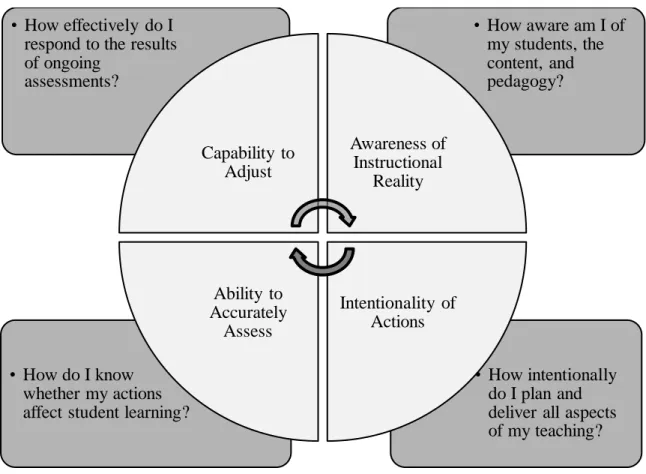
Hall and Simeral (2015) explained that teachers integrate their practical theories and beliefs in their daily actions in repeated patterns, which they call the “reflective cycle” (p. 38). The cycle starts by the teachers “developing awareness before seeking to act with intentionality, they engage in intentional practice prior to assessing the impact of one’s actions, and then they determine impact prior to enacting interventions” (pp. 38– 39). While going through the reflective teaching cycle, teachers monitor the frequency of their reflection. Hall and Simeral (2015) assume that reflection is a habit that must be developed. They argued that “engaging in the reflective cycle requires practice, diligence, and focus” (p. 41). They added that reflective teachers are proactive in the reflection process; they do not need someone to remind them to reflect upon their practices, but they are constantly attentive to their teaching and student learning. Reflective teachers make decisions intentionally to adjust their instruction to students’ needs (Figure 1.1).
Reflective teachers have awareness of their instructional realities. Hall and Simeral (2015) explained that teachers with awareness have knowledge about each student in their classes. This includes students’ interests, motivation, learning profiles, and instructional needs. Such awareness guides the teachers to deeply process their understanding of the content and determine how to facilitate learning of the content in a manner that suits students’ needs in order to maximize retention. In this step of the cycle, teachers ask the question: “How aware am I of my students, content, and pedagogy?” (Hall & Simeral, 2015, p. 39).
Reflective teachers are intentional in their actions. In this step of the reflective teaching cycle, teachers intentionally take steps to facilitate students’ learning. With such
awareness of the need to take actions, teachers select “learning goals, curricula, materials, instructional strategies, student groupings, learning activities, and management strategies to meet the needs of specific students in the classroom” (Hall & Simeral, 2015, p. 39). Teachers’ take actions for a certain meaningful purpose, which is supported by research-based practices. This step in the reflective teaching cycle differentiates between teachers who perform certain teaching acts and teachers who perfect their actions in a methodical manner. Here, teachers ask the question: “How intentionally do I plan and deliver all aspects of my teaching?” (Hall & Simeral, 2015, p. 40).
Reflective teachers accurately assess their impact. In this step, teachers ask the question: “How do I know whether my actions affect student learning?” (Hall & Simeral, 2015, p. 40). Once teachers deliver their teaching in an intentional, deliberate and visible manner, they determine whether their actions resulted in the intended outcome. While teaching, teachers assess their own teaching using different formative assessment tools such as student observation, performance assessment tools, quizzes, surveys, or any other forms that guide teachers’ assessment of student learning. Data collected inform teachers of which teaching strategy contributed to the intended student learning outcome.
Reflective teachers adjust their actions as they teach. Teachers ask the question: “How effectively do I respond to the results of ongoing assessments?” (Hall & Simeral, 2015, p. 41). In the reflective teaching cycle, based on ongoing formative assessment, teachers modify their instruction accordingly. They provide alternative teaching methods for helping students learn. They modify their lesson objectives, add or delete an activity, or group students differently. Experienced reflective teachers understand how their swift intervention can enhance student learning.
Figure 1.1 The Reflective Teaching Cycle (Reprinted with Permission from ASCD)
Unquestionably, reflective teaching is critical in explaining how teachers construe, validate, and reformulate the meaning of their teaching (Mezirow, 2000). It offers an instrument by which teachers may surpass the limitation of mere learning. Mezirow (2000) explained that through reflection “Inaccurate assumptions and points of view become apparent. Once such inaccuracies are identified, they may be replaced by more accurate and critically aware frames of reference. If not identified, they will persist and continue to direct perception” (p. 105). Accordingly, effective PD programs are those that foster reflective teaching, cooperative learning, and emancipatory
• How intentionally do I plan and deliver all aspects of my teaching? • How do I know
whether my actions affect student learning?
• How aware am I of my students, the content, and pedagogy? • How effectively do I
respond to the results of ongoing assessments? Capability to Adjust Awareness of Instructional Reality Intentionality of Actions Ability to Accurately Assess
understanding whereby teachers meet continually evolving obligations and possibilities with rational dialogue (Darling-Hammond, 2006; Glisczinski, 2007).
Research Questions
The intervention in this action research rests on the facilitator-researcher’s view of an in-service PD program in which teachers construct their learning and the learning of others through dialogues and authentic learning tasks and subsequently influence their self-reflection. The goal of this action research is to answer one core question and five sub-questions that relate to the impact of a social constructivist PD program on DLIFLC foreign language teachers’ self-reflection:
1. How does a social constructivist PD program impact DLIFLC foreign language teachers’ self-reflection tendencies?
a. Does the PD program impact DLIFLC teachers’ awareness of their instructional reality (student, content and pedagogy)?
b. Does the PD program impact teachers’ intentionality in taking steps to facilitate students’ learning?
c. Does the PD program impact teachers’ ability to assess students’ learning?
d. Does the PD program impact teachers’ capability to adjust their actions while teaching?
e. Does the PD program impact the frequency of teachers’ self-reflection?
Researcher Positionality
The action research took place at the researcher’s workplace, Faculty
Development Division in the DLIFLC. This setting allowed the researcher to actively participate in the research. The researcher has been working at the Faculty Development Division for over 11 years as a faculty development trainer, teacher-mentor, and
academic specialist for foreign language education. As an experienced foreign language teacher and an experienced peer for the participating teachers, the researcher is an “insider-outsider” in this action research on the continuum of positionality (Herr & Anderson, 2015, p. 40). She is a facilitator-researcher. She works in a department other than the participating teachers, but she is fully engaged as a peer-mentor and as a
facilitator of several pre- and in-service PD programs across the institute. In this action research, she acted as the developer and facilitator of the PD program and an experienced mentor to facilitate teachers’ reflective practices.
Action Research Methodology
To answer the research questions, an action research with a mixed-method approach was chosen to generate understanding of teacher self-reflection and act upon it. This mixed-method strategy is what Creswell (2005) described as “…two different methods in an attempt to confirm, cross-validate, or corroborate findings within a single study” (p. 217). The “problem exists as the quantitative results are inadequate to provide explanations of outcomes and the problem can best described by using qualitative data to enrich and explain the qualitative results in the words of the participants” (Creswell & Plano Clark, 2007, p. 34). Therefore, the purpose of this action research is aligned with
the goal of mixed approach research to help the researcher dig deep to better understand the impact of the PD on teachers’ self-reflection tendencies.
On the other hand, action research is defined as “an inquiry conducted by educators in their own settings in order to advance their practice and improve their students’ learning, and therefore, an appropriate and ideal model for a practitioner-researcher” (Efron & Ravid, 2013, p. 2). Additionally, Mertler (2017) explained that in education, action research offers a venue for systematic inquiry carried out by teachers or stakeholders to gain insights, develop reflective practices, and improve student outcomes and the work and living experiences of those involved in the study. Herr and Anderson (2015) identified three characteristics of action researches: (1) they generate knowledge that is relevant to the research setting; (2) they provide action-oriented outcomes to benefit those involved; and (3) they use multiple perspectives of research methodology over sustained periods of inquiry.
Accordingly, in this action research process, the facilitator-researcher participated in a cyclical process that included discussion, decision, action, evaluation, and revision (Effron & Ravid, 2013; Herr & Anderson, 2015; Mertler, 2017). Going through the process of action research facilitated not only the self-reflection and construction of knowledge of the participating teachers, but also those of the facilitator-researcher herself. This type of research is grounded in the value of human experience of learning as a social activity, a principle consistent with Dewey’s (1938) beliefs about the value of experience and active learning in education and Vygotsky’s (1978) beliefs about learning as a culturally embedded and supported activity.
This action research was guided by the Mills (2011) dialectic spiral model. The model was selected because it emphasizes the role of teachers studying themselves to improve teaching and learning. In this case, the facilitator-researcher and the
participating teachers collaborated to promote their learning. The process of the dialectic spiral action research has four steps: (1) identification of an area of focus; (2) collection of data; (3) analysis and interpretation of data; and (4) development of an action plan. The following is the explanation of each step.
Identification of an area of focus. The focus area should include a topic that involves the teaching and learning of the action researcher. Improving foreign language teachers’ self-reflection through a PD program was selected as a focus area in this action research. This area of focus is in the heart of the facilitator-researcher’s practice and is within the facilitator-researcher’s immediate control. The next step was reconnaissance. This happened when the researcher started to collect preliminary information with which to explore theories and educational values that influenced her practice. Prior to
identifying the problem of practice, the facilitator-researcher conducted an intensive review of literature on relevant topics, with emphasis on the use of a sociocultural constructivist approach in the professional development of foreign language teachers. The facilitator-researcher determined how her literature review work fitted into the context of DLIFLC. Then she identified a reflective teaching PD program used in different school districts in the United States. She tailored the program according to the needs of the participating teachers. Reconnaissance helped the facilitator-researcher define the implication of the selected topic to DLIFLC context. Related to
understand the research constructs. This included tailoring the reflective teaching PD program developed by Hall and Simeral (2015) to fit the needs of DLIFLC participating teachers. The investment in reconnaissance and the thorough review of the literature directed this action research. The final outcome was an action plan that was guided by the research questions, data collection and findings.
Collection of data. Mills (2011) recommended the use of multiple sources of data. Creswell and Plano Clark (2007) described the integration of the two forms of data as convergent design that brings quantitative and qualitative data together to be compared or combined to allow the researcher to gain new knowledge. Since self-reflection is a personal and a unique experience for the participating teachers, this action research used: (1) the Reflective Self-Assessment Tool (RSAT), a pre-/posttest survey to identify teachers’ stages of reflective teaching, and (2) teachers’ responses to guided prompts in their reflective journals. The design used the participating teachers’ responses to the survey before and after the reflective teaching PD program and their responses to the reflective journal prompts after the in-service PD program.
Analysis and interpretation of data. According to Mills (2011), the action research process provides the facilitator-researcher with data that can positively affect her teaching of the PD programs and the self-reflection of the participating teachers.
Accordingly, the facilitator-researcher spent time during the study to assess what she was learning and determined if the research main and sub-questions were answerable and worth answering. Additionally, Mills (2011) warned action researchers against taking premature actions based on early analysis and interpretation of data. He recommended following an iterative process to analyze data. This process included the following:
reading/recording memos so that the researcher can become familiar with the data and identify key themes; describing the research setting, participants and activities; and classifying research data into categories and code data into themes.
Developing an action plan. In this step of the study, Mills (2011) reminded the researcher to ask, “Based on what I have learned from this investigation, what should I do now?” (p. 155). The facilitator-researcher reflected on assumptions and determined the next step in the research. Mills (2011) warned researchers that this step can be
overwhelming. Therefore, the facilitator-researcher outlined a list that includes the following: findings; recommended actions associated with the findings; a timeline for action to occur; resources needed to carry out the action plan, and people who are responsible for the actions and their roles.
Within this framework, this action research allowed the facilitator-researcher to focus on the problem of practice specific to the self-reflection of foreign language teachers at DLIFLC. Data provided a process for educators at DLIFLC to reflect on the design of teacher professional development programs in order to create opportunities for improvement. Data analysis led to an action plan to be implemented in the fall of 2020 for an improved reflective teaching PD program for DLIFLC teachers.
Convenient sampling of the participating teachers was followed. The sample consisted of 12 foreign language teachers; four teachers of Arabic, three teachers of Chinese, three teachers of Korean and two teachers of Russian. One Russian teacher dropped out during the first week of the research. Teachers are native speakers of the languages they teach and are employed in the Undergraduate Education Schools at DLIFLC. In coordination with the Office of the Associate Provost for Undergraduate
Education, on behalf of the researcher, schools’ deans sent out school-wide invitation emails to request teachers’ participation in the research. The email provided information about the research, the six-week reflective teaching PD program, instruments used to collect data, anonymity, and ethical considerations.
The intervention in this action research capitalizes on teachers’ skills and experience and makes teaching and learning more reflective and collegial. It is a six-week in-service PD program, titled “Reflective Teaching.” The syllabus and content were posted on DLIFLC online learning management system. It consisted of two parts: (1) two four-hour face-to-face training sessions in which to gain general knowledge about reflective teaching principles and practices, identification of self-reflection goals and tasks, and options for collaborative learning; and (2) a six-week, taught and self-paced reflective teaching course, where teachers used the DLIFLC website to access the course content, manage their reflective teaching tasks, and coordinate reflective tasks with the facilitator-researcher, and the school’s instructional coaches and supervisors. Based on the results of the pretest survey of the RSAT, each teacher was given access to his/her particular reflective teaching PD program as each course was tailored to teacher’s initial reflective teaching stage.
The data collected from the pre-/posttest RSAT survey were analyzed
quantitatively, using ToolPak Excel program. Qualitative data analysis of teachers’ free-responses to reflective journal prompts were followed, using the process of coding data to generate patterns and themes. Findings were shared with the participating teachers and stakeholders to develop an action plan to offer the reflective teaching PD program for all foreign language teachers at DLIFLC.
Significance of the Study
Transformation within DLIFLC schools is not a simple matter. In order to prepare students adequately for 21st-century language tasks, we cannot keep doing the same things while expecting different results. With the advent of higher graduation standards and a renewed emphasis on military linguists’ readiness for real-world
language tasks, it is imperative that teachers understand the need for reflection upon their own practices. Jones (1975) claimed that teachers tend to teach as they were taught, rather than as they were taught to teach. Thus, teacher PD needs to begin with these traditional beliefs and subsequently challenge them through activity, reflection, and discourse (Fosnot, 1996, 2005). Teachers need experiences as learners to confront traditional views of teaching and learning in order to construct a pedagogy that stands in contrast to older, more traditionally held views (Darling-Hammond, et al., 2017).
Additionally, teachers are unlikely to achieve maximum professional
development if it is imposed by their supervisors. Herr and Anderson (2015) contended that action is influenced by internal convictions derived from personal understanding. Accordingly, this six-week reflective teaching PD program takes teachers’ learning to the next level by encouraging them to make PD decisions for themselves in a supportive learning setting. The PD environment should help teachers build bridges between their current teaching practices and future outcomes.
Teachers seldom see what is occurring outside of their own classrooms. Argyris and Schön (1996) stated, “Each member of an organization constructs his own
representation of the theory-in-use of the whole, but his picture is always incomplete” (p. 16). At DLIFLC, teachers have their own perception of what happens inside and outside
their classroom. After attending a PD program that offers the opportunity to learn and reflect upon their actions and the actions of others, teachers may find that their perception is unrealistic. This may ignite reflection and willingness to assess the implications of their own actions, identify areas that may be improved, or learn new strategies and ideas with which to deliver instruction.
Accordingly, this action research study provides a framework for guiding teachers’ learning through reflection via in-service PD. The training philosophy and design is grounded in the social constructivist and reflective teaching theories. It provides an environment for adult learning, provides time to engage in action and reflection, and establishes clarity of purpose, consistency in the process, and
opportunities for teachers’ input and choice. Additionally, the study may inform the practices of the facilitator-researcher and those involved in teacher PD at DLIFLC. Knowledge gained will need to be modified for a different context.
Limitations of Study
Herr and Anderson (2015) described action research as a human experience with the intent of generating knowledge. Action researchers must make decisions about what to take account of and what to leave out when releasing their findings. Therefore, every researcher brings subjectivity to interpretations throughout the research. Therefore, the facilitator researcher realizes that she (or anyone else) may revisit the data and see new findings, as interpretations are bound by moments in time.
Herr and Anderson (2015) also reminded us that insider knowledge is valid as long as one is honest and reflective about the limitations of one’s positionality and takes them into account. As a facilitator-research with an insider-outsider positionality, who
played multiple roles—as researcher, instructional coach of participants, and course developer of the reflective teaching PD program—I understood that knowledge production from each role was valid as long as I was honest and reflective about the limitations of my multiple positionalities and took them into account methodologically.
To confirm achievement of action-oriented outcomes as stated by Herr and Anderson (2015), the facilitator researcher used multiple measures to collect data. This limitation was addressed by collecting the data using the pre-/posttest RSAT survey and posttest reflective journals. To enhance the outcome validity of the findings as stated by Herr and Anderson (2015), delimitations were presented for the reader to assess the transferability to other educational contexts. The facilitator reseacher understood that “without this kind of acknowledgment and grappling with the power of dynamics in the research design, it will be difficult to ultimately convince the readers that the study was trustworthy” (Herr & Anderson, 2015, p. 61). To ensure democratic validity (Herr & Anderson, 2015), the views of the participating teachers were considered in the development of the action plan.
Herr and Anderson (2015) reminded us that bias and subjectivity are natural and acceptable in action research as long as they were critically assessed and controlled by a valid system that limited distorting effects. Limitations such as social-desirability bias are threats to process validity. This is the result of survey respondents trying to answer questions as they think they should rather than in a way that reveals whatthey actually feel(Creswell, 2005). It is an important limitation for this study because the participating teachers may feel they should reflect a higher tendency of self-reflection. According to Creswell (2005), self-administered surveys, assuring confidentiality and anonymity, may
reduce the social-desirability bias. In this study, surveys were self-administered, identities of survey takers were protected, and individual survey results were accessible only to the researcher. Additionally, the instructions of the RSAT survey asked the participating teachers to respond honestly.
In the pre-/posttest design, process validity may be compromised by the testing effect, which is a result of repeated testing (Creswell, 2005). The responses to the survey questions in the posttest may be influenced by the pretest responses. To overcome such limitations, there was approximately a seven-week period between the pretest and posttest survey. It is possible that the participating teachers may have guessed that the researcher sought a high tendency of reflection in the posttest. The facilitator-researcher reminded the participating teachers to respond honestly to the posttest survey items. Further, the participating teachers might have failed to pay attention to the survey items or interpret the options in a way other than intended. Before the study, the researcher piloted the survey with a number of teachers to ensure clarity and accurate interpretation of the survey items and options.
History is defined as “an event that intervenes in the course of research and makes it difficult to interpret the program effects” (Creswell, 2005, p. 123). Creswell (2005) noted that history effects are always a threat to validity for any non-laboratory study that lasts more than a few hours and, therefore, it becomes a limitation for this study. The reflective teaching PD program took place in the natural environment and lasted for six weeks. During that time, several events could have influenced responses in the posttest survey and reflective journals.
Sampling bias is another potential problem. This study used convenience sampling of intact groups of foreign language teachers at DLIFLC. Although
generalization to a wider population of foreign language teachers is not intended, the additional limitation of bias in sampling is noted. Foreign language teachers who are nonnative speakers of English, and who attended the six-week reflective teaching PD program may not be those who attended a similar course in the past or will attend in the future. Consequently, results may not be transferable to another population.
Credibility of the results lies in encouraging the participating teachers to share their genuine voices (Herr & Anderson, 2015). The qualitative data was collected using the participating-teachers’ responses to prompts in their reflective journals. Teachers are non-native speakers of English and may have limited writing skills to clearly express their reflective thoughts and actions. Therefore, when the participating teachers used unclear language, the facilitator-researcher consulted with the teachers prior recording the data. While analyzing the data, she shared interpretations with the participating teachers in order to receive feedback and deepen understanding of the data.
Organization of the Dissertation
Chapter 1 presents the background for this action research. It includes the statement of the problem, the purpose of the study, and the summary of the action research methodology. Chapter 2 discusses the theoretical frameworks of study. This literature review guides the research in answering the research questions. Chapter 3 shares an overview of the action research methodologies. It summarizes the rationale of the research design, description of the research setting, the participants, the intervention, and the plan for data collection and analysis. The results of the data are shared in Chapter
4. Finally, the action research concludes with Chapter 5. It discusses the major points of the action plan and suggestions for future studies.
Glossary of Terms
Defense Language Institute, Foreign Language Center (DLIFLC)—Thisis a government language school located in Monterey, California, and accredited by the Western Association of Schools and Colleges.
Foreign language teacher—A nonnative speaker of English, who is teaching his/her native language at the DLIFLC.
Professional Development— A structured professional learning that results in positive changes in teacher practices and subsequently improve student learning (Darling-Hammond, et al., 2017)
Self-reflection—Self-reflection is when teachers have the awareness of their instructional realities (student, content, and pedagogy), are intentional in their actions, accurately assess students’ learning, and adjust their actions while teaching to attend to students’ needs (Hall & Simeral, 2015).
Social Constructivist—Learners actively construct their knowledge by connecting to their prior knowledge, using their personal experiences and social interactions (Gabler & Schroeder, 2003).
Reflective Teaching PD program—A six-week, in-service PD event taking place at DLIFLC, where teachers actively construct their learning and the learning of others through interactions with other teachers, their supervisors, and more experienced peers to enhance their self-reflection stages.
CHAPTER TWO LITERATURE REVIEW
Reflective practice is highly valued and largely used in many professions, especially those that require on-the-spot decisions and adaptation, such as teaching. Finlay (2008) maintained that reflective practices are essential and integral elements for successful language teachers. Dewey (1916) said that reflective teachers are more aware of their own professional knowledge and actions as they challenge assumptions of everyday practice by critically evaluating their own responses. Danielson (2009) and Hall and Simeral (2015) asserted that such challenges require teachers to engage in continual self-reflection.
The problem of practice is that traditional PD for foreign language teachers does not improve self-reflection. At DLIFLC, the majority of foreign language teachers are products of learning environments that differ greatly from those in the institute. Despite their individual differences and qualifications, most teachers receive less than eight hours of in-service PD on a specific topic and have no time to reflect on their existing practices, newly presented concepts, or students’ responses to instruction. The effectiveness of such PD approaches is questionable. Professional development (PD) at DLIFLC needs to be tailored to teachers’ tendencies to self-reflect. Therefore, the primary goal of this action research is to develop a PD program that is tailored to teachers’ initial self-reflection tendencies. In the PD program, DLIFLC foreign language teachers take an active role in their PD and collaborate with peers and instructional coaches in order to
promote their self-reflection tendencies. During the PD program (adapted from Hall & Simeral, 2015), teachers gain awareness of their educational surroundings (students, content, and pedagogy), plan deliberately, and take actions with intentionality to improve students’ learning, assess the impact of their decisions and actions, adjust their course of action based on the feedback they receive from those assessments, and engage in a reflective teaching cycle continuously. Understanding how in-service PD fosters foreign language teachers’ self-reflection is needed to better design and facilitate PD programs that fit teachers’ needs and subsequently enhance students’ learning at DLIFLC. One main research question and five sub-questions drive the research:
1. How does a social constructivist PD program impact DLIFLC foreign language teachers’ self-reflection tendencies?
a. Does the PD program impact DLIFLC teachers’ awareness of their instructional reality (student, content and pedagogy)?
b. Does the PD program impact teachers’ intentionality in taking steps to facilitate students’ learning?
c. Does the PD program impact teachers’ ability to assess students’ learning?
d. Does the PD program impact teachers’ capability to adjust their actions while teaching?
e. Does the PD program impact the frequency of teachers’ self-reflection?
This chapter includes three sections. The first section discusses the historical background of the social constructivism theory, perspectives from teacher education and
PD disciplines, and the benefits and challenges of applying the social constructivist approach in teachers’ PD. The second section investigates the historical background of the reflective teaching theory, developing reflective practitioners, dimensions and
attributes of reflection, benefits and challenges of reflective practices, and suggestions to overcome the challenges teachers face while engaged in reflective practices. The third section discusses characteristics of effective teacher PD and how PD impacts teacher and student performance. It is worth noting that the literature presented in this chapter selectively discusses the most relevant issues pertaining to teachers’ reflection and emphasized the importance of PD that addresses teachers’ self-reflection.
Social Constructivist Theory
The social constructivist philosophy of learning is not a recent perspective in epistemology. Beck and Kosnik (2006) and Hyslop-Margison and Strobel (2008)
explained the social constructivist theory as an epistemology or philosophical explanation of learning that has its roots in constructivism and sociocultural theory. In the ancient world, evidence of constructivist thinking appeared in Confucius’ views. Cooney, Cross, and Trunk (1993) noted that the constructivist philosophy existed in Confucius’ beliefs. They quoted Section 2:11 from Confucian Analects: “When I have presented one corner of a subject to anyone, and he cannot from it learn the other three, I do not repeat my lesson” (p. 40). Confucius’ approach to teaching aligns with the constructivist learning theory of connecting to learner’s prior knowledge. Stevenson and Haberman (1998) explained that Plato’s philosophy affirmed that individual’s knowledge is not absolute. Plato realized that knowledge is an active process that requires the observation of things,
interpretation of data from the surroundings, and application of concepts in order to classify and cognitively organize what is perceived.
Dewey (1910) believed that knowledge is created by connecting to prior knowledge. Piaget’s (1932) theory was built on the premise that students learn by interpreting results of their interactions with the environment. Vygotsky (1978)
addressed the social aspect in the construction of knowledge. He believed knowledge is constructed through person-to-person interactions and is dependent upon the social environment where learning happens.
Many definitions of constructivism have been proposed (Gabler & Schroeder, 2003; Henson, 2004; Richardson, 1997; Schwandt, 2003; Shapiro, 2002; von Glaserfeld, 2005), but they all agreed on the following points:
▪ Learners of all ages construct or make their knowledge, they do not discover it.
▪ Learners create knowledge by connecting it to their prior knowledge.
▪ Knowledge is an autonomous and subjective construction process.
▪ Learning is an active construction of how learners think.
▪ Learners use personal experience and social interaction to create knowledge.
▪ Cognitive growth is stimulated when people are confronted with practical, contextual, or personal problems that require them to think innovatively. Richardson (1998) emphasized the role of the sociocultural context in the
construction and appropriation of knowledge. He believed that Vygotskian constructivism reflects a theory of human development that leads to social
transformation. Pelech and Pieper (2010) added that social constructivism implies a transactional-transformational educational process that views interactions between teachers, students, and students and the environment as essential for the construction and reconstruction of knowledge.
Social constructivist approach in teacher development. While social
constructivism is a theory of learning that may inform and influence practice, Richardson (1998) contended it is not a theory of teaching. However, the research shows that large- and small-scale studies were designed to investigate social constructivist frameworks in teaching. For example, using social constructivism as an educational approach for a statewide reform initiative, the University of Louisville faculty developed eleven guiding standards and indicators for social constructivist teaching (Fischetti, Dittmer, & Kyle, 1996). Ostashewski, Moisey, and Reid (2011) explored the first iteration of a teacher PD program grounded in social constructivist theory and activities. The online programs provided opportunities for teachers to engage in social networking.
In a large-scale study, driven by their beliefs that teacher educators need many examples of social constructivist teaching in action, Kosnik, Menna, Dharamshi, and Beck (2017) investigated the practice of 28 literacy English teacher educators from four different foreign countries, who adopted a social constructivist approach in their teaching. The purpose of the study was to determine (1) why literacy teacher educators find the social constructivist approach to be useful in their literacy courses and (2) how the literacy teacher educators actualize a social constructivist approach in their teacher education courses. A qualitative method was followed, and data were collected via semi-structured interviews with teacher educators. Kosnik et al. (2017) concluded that teacher
educators use a social constructivist approach in their education courses because they believe that knowledge is constructed by learners for deeper understanding and that social constructivist approach helps student teachers learn beyond the superficial learning and achieve deeper understanding. To actualize their own courses, teacher educators used student-centeredness to drive instruction. Hands-on activities and group discussions dominated classroom practices.
In the faculty development department at Mersin University in Turkey, the teacher development program was designed on a social constructivist approach to
teaching and learning. The approach was adopted in response to educational reforms for encouraging innovations in education across the nation. In 2015, Uredi and Akbasli, two college professors, investigated whether teachers’ perception of their self-efficacy that is related to implementing the social constructivist approach predicted teachers’ attitudes toward the social constructivist approach. A total of 812 elementary school teachers participated in the study. The findings showed that teachers’ self-efficacy beliefs related to implementing the social constructivist approach significantly predicted teachers’ attitudes toward the social constructivist approach.
Social constructivist teacher trainer and training. Fosnot (2005) concisely presented the approach of social constructivism and its application to teacher
development as “an interpretive, recursive, building process by active learners interacting with the physical and social world” (p. 30). In this paradigm, the focus is on the
development of knowledge of the active learner with the guidance of a teacher trainer or a more competent peer (Vygotsky, 1978). Beck and Kosnik (2006) described the learning experience of the teacher in the social constructivist approach as holistic, i.e.,
cognitive, social, emotional, aesthetic, and physical. Beck and Kosnik (2006) maintained that such training allows for broad personal development and ensures the depth of
understanding and need for knowledge construction. Al-Weher (2004) and Bates (2005) concured that through discussion with others, teachers start to question and recognize their subjective understanding, resolve challenges to their knowledge, and reflect on connections across their individual and collective experiences.
At its core, social constructivist pedagogy consists of teaching methods that are focused on active participation of the learners. Fosnot (1996, 2005), Gagnon and Collay (2001), and Lambert and Pugalee (2015) explored distinctions within social constructivist pedagogy in teacher development. However, each focused primarily on the notion of active learning for students rather than instruction by the teacher. Accordingly, to achieve such a level of learning, the teacher trainer needs to carefully organize the instructional process, set inherently motivating tasks that support deep learning, and allow teachers to exercise choice and control regarding what to work on, how to work, and what products to generate. Additionally, the goal of the teacher trainer is to create a learning space that invites teachers to actively and collaboratively participate in
constructing meaning and is also structured enough to provide guided discovery.
Benefits of the social constructivist approach in teacher PD. In their
description of the benefits of the social constructivist approach in teacher PD, Beck and Kosnik (2006) pointed out that social constructivist-based PD programs emphasize critical analysis and structured reflection on formal course knowledge and everyday learning experience. This approach helps teachers deconstruct their own prior knowledge and attitudes, understand how their learning has evolved, explore the effects of their
actions, and consider alternative actions and behaviors that may be more usable in their learning and teaching.
At a university in Turkey, Gencel and Saracaloglu (2018) conducted a study to investigate the effects of layered curriculum (a social constructivist approach for
learning) on pre-service teachers’ reflective thinking levels and on self-directed learning readiness. A mixed method design was followed. After the completion of the
experimental actions, qualitative data were gathered from interviews conducted with 10 participants. The findings showed that a layered curriculum affects teachers’ levels of reflective thinking and self-directed learning positively; moreover, teachers’ views about the layered curriculum are also positive. Additionally, the layered curriculum (as a social constructivist approach for teaching) was effective in terms of improving pre-service teachers’ comprehension, reflection, critical reflection, and general reflective thinking levels.
To assess a social constructivist PD program for middle school teachers in Algeria, Benamor and Guerroudj (2018) conducted a study aimed at (a) assessing the program in order to make decision about its value and effectiveness; (b) confirming the usefulness of PD journals as effective social constructivist reflective tools for teachers’ conceptual and practical development. Fourteen novice middle school teachers of English, as a foreign language, participated in the study. Data were collected using the participants’ reflective journals. The findings indicated that the cognitive and affective analysis of the participants’ reflections revealed signs of constructions of different English language teaching and PD-related concepts, correction of some misconceptions together with traces of satisfaction, self-confidence and willpower. Researchers