THE DEVELOPMENT OF A FRAMEWORK TO
EMPOWER SME’s IN THE EASTERN CAPE TO
OVERCOME BARRIERS IN THE ADOPTION OF
E-COMMERCE
SABELO EMMANUEL SIWUNDLA
ii
THE DEVELOPMENT OF A FRAMEWORK TO
EMPOWER SME’s IN THE EASTERN CAPE TO
OVERCOME BARRIERS IN THE ADOPTION OF
E-COMMERCE
By
SABELO EMMANUEL SIWUNDLA
Submitted in fulfilment of the requirements for the degree
Master in Business Administration in the Faculty of Business and
Economic Sciences, Nelson
Mandela Metropolitan University
November 2013
Supervisor: Prof C.M. Adendorff
Co
‐
Supervisor: Ms. Aspa Tsoukarelli
iii
DECLARATION
I, Sabelo Emmanuel Siwundla, s211182664 hereby declare that this treatise for Master of Business Administration is my own work and that it has not previously been submitted for assessment or completion of any postgraduate qualification to another university or for another qualification.
iv
ACKNOWLEDGEMENTS
Firstly, I would like to thank God for giving me strength, hope and perseverance in my studies. Without Him, none of this would have been possible or worthwhile.
I would like also to thank my research supervisor, Prof C.M. Adendorff and my co-supervisor Ms Aspa Tsoukarelli for their guidance and helpful criticism throughout this research.
I am grateful to Qaqambile Mangqalaza for his advice during my research, people from Eastern Cape Information Technology Initiative (ECITI), Nelson Mandela Bay SME incubator, East London Development Zone (ELIDZ) and all the individual SMEs. I thank you for taking time to read and complete my questionnaires. I thank all those who contributed to my research project.
Lastly, I would like to thank the Nelson Mandela Metropolitan University Business School for all the support and assistance during my research project.
v
ABSTRACT
The primary objective of the study was to establish the role that e-commerce can play in improving some Small and Medium Enterprises (SMEs) business processes and transactions. This was undertaken by investigating how SMEs in the Eastern Cape can be empowered to use commerce and overcome barriers in the adoption of e-commerce. The study was modelled on the concept that there are four key factors that influence the adoption of e-commerce, namely: level of e-commerce awareness, level of computer literacy, availability of Information Technology and telecommunication infrastructure, as well as trust and security of e-commerce applications.
The literature study revealed that SMEs play a vital role in the development and growth of a country’s economy. The literature review also identified a wide-range of barriers hindering e-commerce development and adoption by SMEs, namely: lack of computer skills, low level of e-commerce awareness, lack of Information Technology and telecommunication infrastructure, as well as lack of e-commerce trust and security. Further, the literature study showed that Internet availability and affordability is key to e-commerce growth and development, as in developing countries Internet is not yet universally accessible. This is due to a lack of necessary policies and infrastructure enabling wide-spread Internet use.
The empirical study consisted of a structured questionnaire distributed to a population of executive management, middle management, operational employees and directors/owners in various SMEs in the Eastern Cape. The structured questionnaire was aimed at gathering views about e-commerce development and
vi
adoption by SMEs in the Eastern Cape with a special focus on barriers to the adoption of e-commerce by SMEs.
The results of the empirical study revealed that:
E-commerce awareness needs to be created among SMEs. Awareness needs to be created among SMEs about all aspects surrounding the use of
e-commerce.
Improvements in the telecommunications infrastructure could reduce the unreliable connections experienced by SMEs. Skills development strategies could assist in equipping SMEs with skills required in the e-commerce environment.
Non-governmental organizations, government and companies assisting SMEs could provide free Internet access to SMEs. Alternatively, Internet cafes could be placed at different places and charge reasonable fees.
NGO’s and higher education institutions could help in developing electronic literacy skills among SMEs.
Companies assisting SMEs with funding could provide more funds to allow SMEs interested in e-commerce to start e-commerce systems.
vii
TABLE OF CONTENTS
DECLARATION ... iii ACKNOWLEDGEMENTS ... iv ABSTRACT ... v CHAPTER ONE ... 1 1.1 INTRODUCTION………1 1.2 RESEARCH PROBLEM……….7 1.3 RESEARCH OBJECTIVES……….9 1.3.1 Primary objectives………9 1.3.2 Secondary objectives ... 10 1.4 RESEARCH HYPOTHESIS………..12
1.5 RESEARCH DESIGN AND DATA COLLECTION METHODOLOGY………13
1.5.1 Research paradigm ... 13
1.5.2 Target group ... 13
1.5.3 Data measurement instrument ... 14
1.5.4 Data analysis ... 14
1.6 IMPORTANCE/BENEFITS OF THE STUDY……….14
1.7 RESEARCH PROTOCOL………17 CHAPTER TWO ... 18 2.1 INTRODUCTION ... 18 2.1.1 E-commerce definition……….19 2.1.2 Models of e-commerce………20 2.1.2.1 Business-to-Business (B2B) ... 21 2.1.2.2 Business-to-Customers (B2C) ... 21 2.1.2.3 Government-to-Business (G2B) ... 21 2.1.4 Growth of Internet ... 24 2.1.5 Growth of e-commerce ... 24
2.1.6 Mobile commerce or m-commerce ... 25
2.2 GLOBAL E-COMMERCE DEVELOPMENTS ... 26
2.2.1 E-commerce in developed countries………..26
2.2.2 E-commerce in developing countries……….27
2.2.3 E-commerce in Africa………30
viii
2.3.1 General barriers to e-commerce adoption……….32
2.3.2 SME barriers to e-commerce adoption……….36
CHAPTER THREE ... 41
3.1 INTRODUCTION ... 41
3.2 RESEARCH DESIGN ... 42
3.3 RESEARCH PARADIGM ... 44
3.3.1 Positivism paradigm………45
3.3.2 Quantitative research approach………..45
3.4 RESEARCH POPULATION, SAMPLING AND SAMPLE SIZE ... 46
3.4.1 Study population………47
3.4.2 Study sample………48
3.5 EMPIRICAL STUDY……….48
3.5.1 Data collection………48
3.5.2 Data collection instrument………49
3.5.3 Design of the questionnaire………49
3.5.4 Pilot study………50
3.5.5 Administration of the questionnaire……….51
3.6 VALIDITY AND RELIABILITY………..51
3.6.1 Validity………51
3.6.2 Reliability………..52
3.7 CONCLUSION ... 52
CHAPTER FOUR ... 54
4.1 INTRODUCTION………54
4.2 DISCRIPTIVE PERCENT STATISTICS………55
4.2.1 Descriptive analysis of demographic variables……….55
4.2.2 Descriptive analysis of research variables ... 57
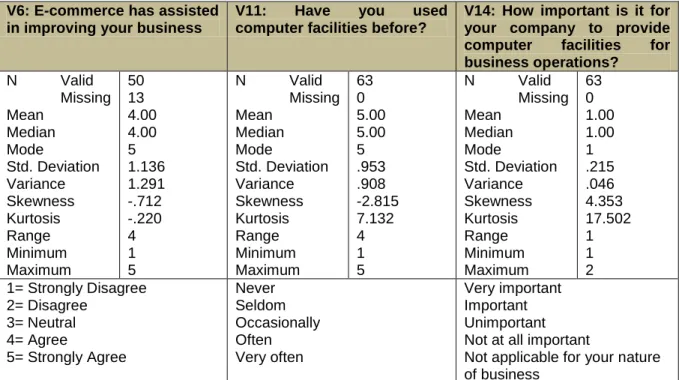
4.3 CENTRAL TENDENCY STATS ANALYSIS V6, V11, V14………..65
4.4 ANALYSIS OF THE OPEN ENDED QUESTIONS V4, V10………66
CHAPTER FIVE ... 68
5.1 INTRODUCTION………68
5.2 OVERVIEW OF THE RESEARCH CONDUCTED………..70
5.3 FINDINGS OF THE EMPERICAL STUDY………..71
ix
5.5 LIMITATIONS OF THE STUDY………81
5.6 RECOMMANDATIONS FOR FUTURE RESEARCH………83
LIST OF SOURCES ... 86
x
LIST OF FIGURES
Figure 1.1 Theoretical rationale ... 11
Figure 2.1 Relationship between types of e-commerce ... 20
Figure 2.2 Factors that affect e-commerce adoption ... 28
Figure 2.3 Categories of barriers to the adoption of e-commerce ... 34
Figure 2.4 Summary of general barriers to adoption of e-commerce ... 36
Figure 2.5 Conceptual framework for barriers to the adoption of e-commerce ... 38
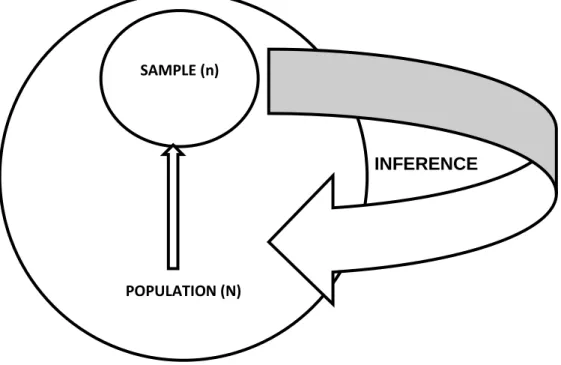
Figure 3.1 Relationship between population and sample ... 47
Figure 5.1 Relationship between the chapters... 68
Figure 5.2 Scenario 1 ... 76 Figure 5.3 Scenario 2 ... 77 Figure 5.4 Scenario 3 ... 78 Figure 5.5 Scenario 4 ... 79 Figure 5.6 Scenario 5 ... 80 Figure 5.7 Scenario 6 ... 81 LIST OF TABLES Table 2.1 Benefits of e-commerce ... 22
Table 4.1 Analysis of demographic variables ... 55
Table 4.2 Analysis of research variable V1,V2,V3: Level of e-commerce awareness ... 57
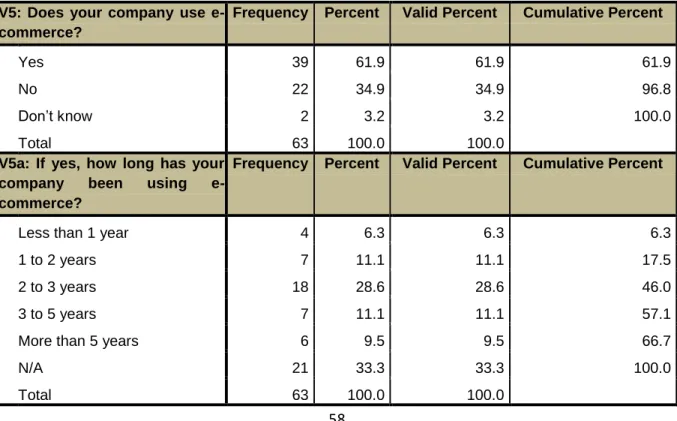
Table 4.3 Analysis of research variables V5,V5a,V5b: Level of e-commerce awareness ... 58
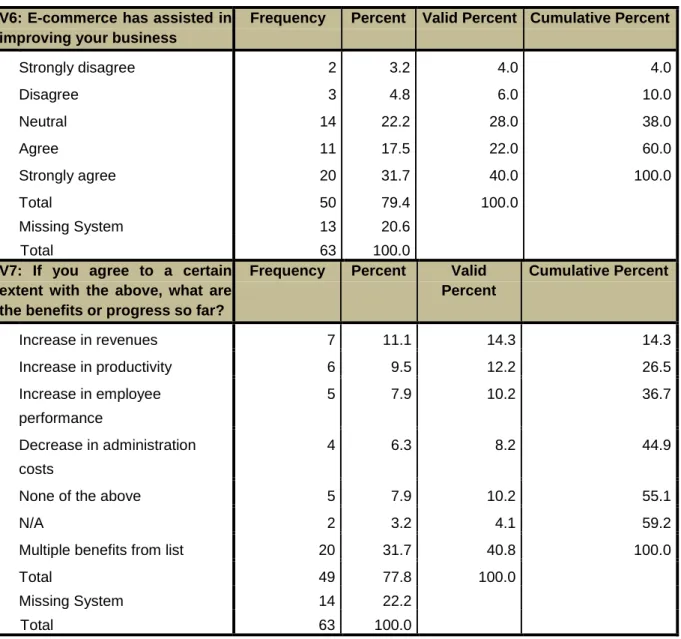
Table 4.4 Analysis of research variable V6,V7: Benefits of e-commerce ... 60
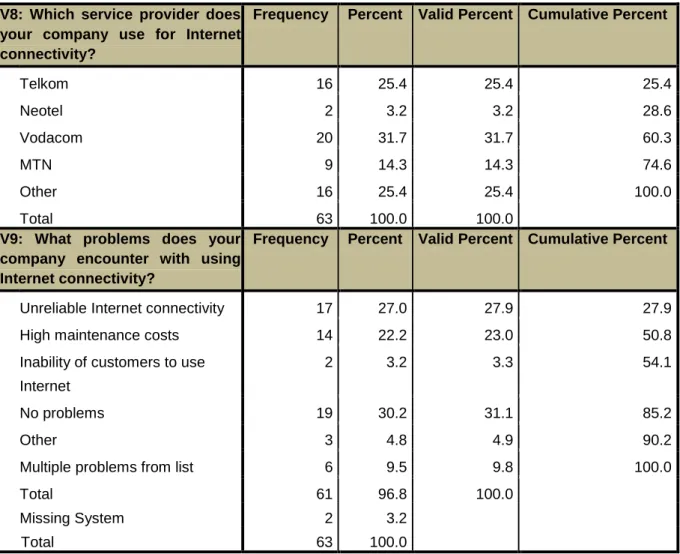
Table 4.5 Analysis of research variable V8, V9: IT infrastructure ... 61
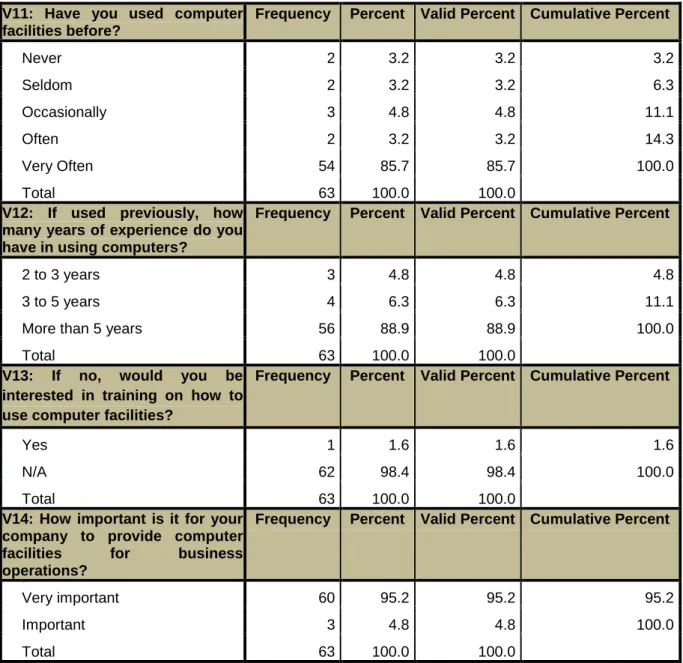
Table 4.6 Analysis of research variable V11, V12, V13, V14, V15: Level of computer skills ... 62
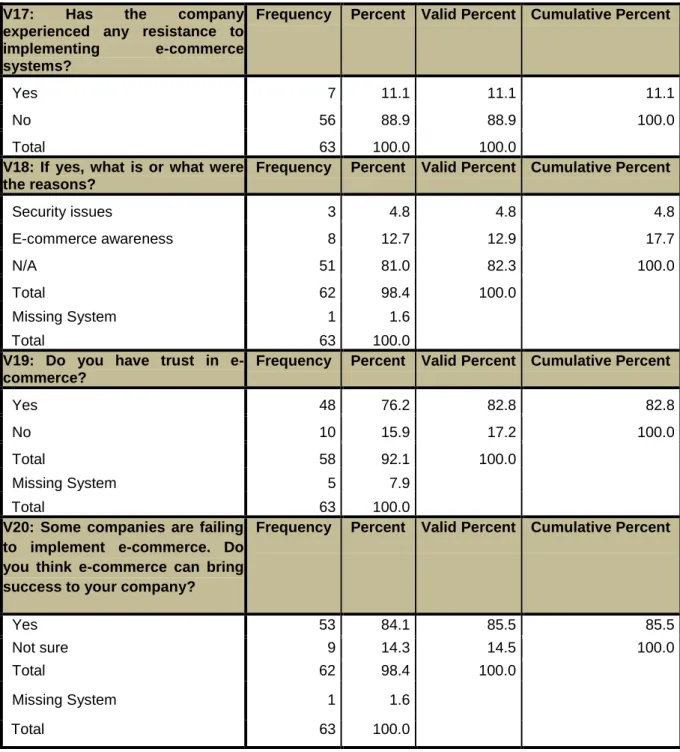
Table 4.7 Analysis of research variables V17, V18, V19, V20: E-commerce trust and security ... 64
Table 4.8 Analysis of Lickert Scale research statements ... 65
1
CHAPTER ONE
INTRODUCTION TO THE STUDY
1.1 INTRODUCTION
Research conducted in developed countries such as the United States of America, the United Kingdom, Australia and several European countries, revealed that commerce has affected the global economy in many different ways. Specifically, e-commerce has affected information technology, all economic sectors and has enhanced productivity growth worldwide (Cloete, 2003). In the future, e-commerce will have major economic effects and permanently change the face of business in the 21st century. Electronic commerce is rising at 12% annually in the United States and
in the countries of the European Union and it is expected that the productivity gap between European countries and the United States of America will close rapidly in the next couple of years. Advancing the Internet revolution is a key public policy goal (Gawady, 2005).
Electronic commerce could offer great benefits to organizations and society in expanding the marketplace to national and international markets by: decreasing the costs of creating, processing, distributing, storing and retrieving paper-based information; minimizing excessive inventories and delivery delays with e-commerce; and enabling companies to interact more closely with customers even if through intermediaries. Furthermore, an important benefit of e-commerce to society is that it keeps people in their homes, which reduces the risk of traffic accidents and cuts
2
pollution by reducing traffic on the roads. Moreover, e-commerce may give less wealthy groups in society a chance to improve their standard of living through lower prices (Hunaiti & Mansour, 2009).
Research conducted in emerging markets and developing countries such as Indonesia, Scotland and Turkey revealed that developing countries are already benefitting from e-commerce developments; they are presently benchmarking their economies with competitors internationally and accelerating the growth of productivity (Chishakwe and Smith, 2012). The impact of e-commerce on developing countries could be even stronger than that of developed countries because the scope for reducing inefficiencies and increasing productivity is much larger in developing countries (Gawady, 2005).
Electronic commerce has the potential to improve efficiency and productivity in many areas and therefore has received significant attention in many countries. However, there has been some doubt about the relevance of e-commerce for developing countries as the absence of adequate and basic infrastructure, as well as socio-economic factors and a lack of national government e-commerce strategies have created significant barriers in the adoption and growth of e-commerce in developing countries (Lawrence & Tar, 2010).
E-commerce is predicted as a new driver of economic growth for developing countries. The opportunities offered by Internet technologies and a necessity for e-commerce have led many to believe that e-e-commerce will grow rapidly and help developing countries overcome their problems of exclusion from the world economy
3
and improve the terms of their participation (Zaied, 2012). E-commerce presents great opportunities for business organizations in developing countries to gain greater global access and reduce transaction costs (Lawrence & Tar, 2010).
Research conducted in Africa revealed that Small and Medium Enterprises (SMEs) are often seen as vital for the growth and innovation of dynamic economies as they help to diversify economies. SMEs account for 60% to 70% of jobs in most developed and developing countries and for most new jobs that are created within Africa. Several countries in Africa have prioritised their investment in SMEs (Iddris, 2012). SMEs account for about 85% of manufacturing jobs in Ghana. The manufacturing sector is a characteristic feature of the production landscape with about 70% of Ghana’s GDP attributed to contributions from SMEs. It is estimated that 91% of formal business entities are Small, Medium and Micro Enterprises (SMMEs) (Iddris, 2012). According to Zaied (2012) the SME sector plays a significant role in its contribution to the national economy in terms of wealth created and the number of people employed. Small and Medium Enterprises (SMEs) in Egypt represent the greatest share of productive units in the Egyptian economy and the current national policy direction addresses ways and means of developing the capacities of SMEs.
As previously mentioned, there are few studies related to the barriers limiting the growth of e-commerce in African countries. For instance Thulani, Tofara and Langton (2010) conducted a study in Zimbabwe to identify factors that may significantly affect the adoption of e-commerce. The factors included: the lack of resources and knowledge, the skills levels of employees, security concerns and e-commerce readiness of small businesses. The study carried out by Hunaiti & Mansour (2009)
4
in Libya identified some of the related barriers in e-commerce adoption as technical issues and customers’ requirements, which contain Internet security-trusted sites, customer awareness and the speed of service. Cloete, Courtney, & Fintz (2002) state that SMEs in Kenya have failed to reach the levels of adoption required to realize the benefits during the formative stages of an enterprise. Many SMEs are unaware of the potential of e-commerce to enhance their business operations which they consider not applicable to their products and services. The factors that affect adoption of e-commerce among SMEs in Kenya particularly include: leadership styles, resources, infrastructure and competition on the adoption of e-commerce among SMEs (Cloete, Courtney, & Fintz 2002.).
Valuable research has been carried out in South Africa about e-commerce development and adoption among SMEs. Cloete (2003) conducted a study to investigate the factors that affect e-commerce adoption by SMEs in the Western Cape. The adoption factors are a result of the owner’s view of e-commerce as well as the organisation’s characteristics. Thulani, Tofara and Langton (2010) believe that the adoption of e-commerce is heavily reliant on the acceptance of e-commerce technology by business owners. If the owner does not perceive the technology to be useful then the business will be reluctant to adopt e-commerce. The level of computer literacy of the owner and the lack of knowledge on how to use technology will result in the business being less likely to adopt e-commerce (Grant & Stansfield, 2003).
Cloete (2003) in the study of SME adoption of e-commerce in South Africa found that slow adoption of e-commerce is influenced by factors inside the organisation such as:
5
lack of access to computers, software, necessary hardware and telecommunication infrastructure at an affordable cost. Kapurubandara (2009) found that additional barriers face SMEs and relevant support is needed by SMEs in developing countries. Kurnia (2007) found that there is mistrust of the IT industry in over-selling the benefits of e-commerce and misinforming SMEs. Cloete, Courtney, & Fintz, (2002) found that other factors affecting e-commerce use are security aspects, trust issues and cost of development of computer and e-commerce technologies.
Zeelie (2007) conducted research on e-commerce amongst SMEs in South Africa to determine the critical success factors that impact on their survival and growth, identified critical success factors of e-commerce implementation by these SMEs as: access to ICT infrastructure, e-commerce awareness and computer skills development. Kruger (2007), in a study on the barriers and benefits of e-commerce adoption by SMEs in emerging markets in South Africa, found that barriers to the adoption of e-commerce by SMEs can be mitigated in the long term. However these studies do not draw any conclusions on how these barriers can be mitigated.
The literature review above revealed that factors affecting the adoption of e-commerce by SMEs in emerging markets and developing countries are common and can be summarised as: a low level of computer literacy and website development expertise, a low level of e-commerce awareness and its benefits, security and trust, infrastructure development and the cost of developing e-commerce technologies. In view of the above, a strategic e-commerce framework needs to be developed to empower and support SMEs with the necessary resources to strategically mitigate barriers in adoption of e-commerce, improve their business processes and increase
6
their contributions to regional and national economy. SMEs need to possess both basic and technical knowledge on how to implement e-commerce technologies. Knowing e-commerce as the process of buying and selling of goods online is not enough, SMEs should know how to implement, maintain and support e-commerce applications.
An SME is a small business that employs from 10 to 250 employees as defined by the Small Business Act of South Africa 1996 as amended in 2003 and 2004 (National Credit Regulator, 2011). The SME sector plays a very important role in the overall growth of the country. This sector has grown significantly during the past few years and various studies have shown that SMEs are an important contributor to South Africa’s economy (Department of Trade and Industry, 2011). While SMEs in developing countries contribute around 50% to the Gross Domestic Product (GDP), those in Asia contribute around 40%. In South Africa SMEs are said to contribute 30% to the GDP and 70% to 80% to employment rates (Department of Trade and Industry, 2011).
E-commerce is the process of buying and selling products or goods and services over the Internet (Cloete, 2003). E-commerce is not limited to business and consumers, government can also engage in this electronic market. E-commerce offers exponential growth for global markets. Though e-commerce brings many benefits, there are still inhibiting factors such as: awareness, trust and security, cost, lack of computer literacy, web development expertise and ease of access to ICT infrastructure especially in underprivileged communities such as those of the Eastern Cape.
7
1.2 RESEARCH PROBLEM
Recently, there have been interesting developments in South Africa’s Internet industry. The country has seen the implementation of under-sea fibre cables such as the East Africa Submarine System (EASSY), the South East Asia Commonwealth (SEACOM) and the West Africa Cable System (WACS) connecting South Africa to the rest of the world. In light of this, the time has come for South Africa’s e-commerce to start flourishing. According to the Digital Media and Marketing Association (DMMA), online activities in South Africa have doubled in the last two years. The report further presented that there were in excess of 14 million local unique browsers active in March 2011 as compared with 6.6 million in March 2009 (World Wide Worx 2011).
This increase is significant due to an increase in the adoption of mobile commerce technologies such as 3G, smart phones, iPads, iPhones, and various forms of social media as well as a decrease of broadband costs. The impact of an increase in the use and adoption of these technologies is about speed, convenience, immediacy, broader coverage and information availability. This more than anything else, is the change required to transform consumers’ Internet experiences into full online engagement at which point it becomes very interesting for companies exploring e-commerce.
The way companies conduct business is changing rapidly and they have to keep abreast of technology advancements in order to remain competitive. E-commerce is gradually changing the nature of business transactions in the 21st century. It can
8
enable SMEs to compete with large business, improve their market reach, communication and productivity. SMEs can use e-commerce to establish their presence in the global market. There is a need to develop strategies and mechanisms to empower SMEs in underdeveloped communities to trade on this digital business platform in the global village (Stravrou, May & Benjamin, 2000).
Stravrou, May and Benjamin (2000) suggest that in an unequal society such as South Africa, in which a developed economy co-exists with high levels of poverty in rural areas, key policy formulation is required to bridge the business platform gap. Policy formulation is needed in this regard to assist under resourced SMEs, enabling them to benefit from e-commerce, as this could represent significant business opportunities for SMEs. There is a number of e-commerce ventures currently in operation and they prove that businesses can be successful through e-commerce. It is imperative that SMEs, especially in underdeveloped communities be made aware of this business area. It is time for them to reconsider the way they do business and embrace this new global electronic world (Korper & Ellis, 2000).
Currently people are able to communicate and perform transactions through cellular phones, 3G technology, smart phones, iPads, iPhones, personal computers and various types of social media. Businesses need to consider e-commerce as the way to improve business. E-commerce enables people to buy products, pay bills, transfer money and many other things in the comfort of their homes or offices and even when travelling. This represents a high level of convenience. E-commerce encourages companies to develop innovative ways of advertising, automation of business processes, delivery of products or services and providing customer support.
9
Currently in the Eastern Cape, South Africa there is a low level of e-commerce use among Small and Medium Enterprises (SMEs). This low level of e-commerce use could be due to low levels of computer literacy and web development skills, low levels of e-commerce awareness and its benefits, low levels of trust and security and the cost of developing commerce applications. The study will propose an e-commerce strategic framework that should explain how SMEs in the Eastern Cape can be empowered to strategically overcome barriers to adopt e-commerce to gain competitive advantage.
1.3 RESEARCH OBJECTIVES
1.3.1 Primary objectives
This study will focus on the role e-commerce can play in improving some of the SMEs business processes and transactions in the Eastern Cape province of South Africa. The study will, in addition propose a strategic, e-commerce business framework that can be used by government agencies responsible for economic development, such as the Small Enterprise Development Agency (SEDA), the
Eastern Cape Development Corporation (ECDC) and non-governmental
organisations (NGOs) to empower them to use e-commerce.
Therefore the primary objective of this study is to investigate how Small and Medium Enterprises (SMEs) in the Eastern Cape can be empowered to overcome barriers to the adoption of commerce. This will be done by assessing the current status of
e-10
commerce adoption, the level of e-commerce awareness and trust, levels of computer literacy and web development skills, the availability of IT and the current telecommunications infrastructure. This study will propose a strategic e-commerce framework, empowering SMEs within the Eastern Cape to overcome strategic barriers in the adoption of e-commerce.
1.3.2 Secondary objectives
To identify the level of computer literacy needed by SMEs to use e-commerce. To assess what level of e-commerce awareness exists in SMEs in the Eastern
Cape.
To identify which factors influence e-commerce adoption by SMEs in the Eastern Cape.
To identify how SMEs in the Eastern Cape could be empowered to overcome barriers to the adoption of e-commerce.
To recommend a strategic e-commerce framework that can be used to empower SMEs to adopt e-commerce.
11
Source: Author’s own construction
E-commerce international trends E-commerce in emerging markets and developing countries Unique rationale of e-commerce Barriers in adoption of e-commerce Strategic e-commerce framework for survival, growth and prosperity of
SMEs
Regional and national economic
prosperity
12
1.4 RESEARCH HYPOTHESIS
The main objective of the study is to recommend and propose an e-commerce strategic framework that can be used to empower and support SMEs in the Eastern Cape to overcome barriers in the adoption of e-commerce. Therefore, the following null hypotheses are postulated:
Null hypothesis 1: Ho1
There is no perceived positive relationship between the level of computer literacy and the adoption of e-commerce.
Null hypothesis 2: Ho2
There is no perceived positive relationship between the level of e-commerce awareness and the adoption of e-commerce.
Null hypothesis 3: Ho3
There is no perceived positive relationship between e-commerce trust and the adoption of e-commerce by SMEs in the Eastern Cape.
Null hypothesis 4: Ho4
There is no perceived positive relationship between e-commerce security and the adoption of e-commerce by SMEs in the Eastern Cape.
13
Null hypothesis 5: Ho5
There is no perceived positive relationship between the availability of ICT infrastructure and the adoption of e-commerce by SMEs in the Eastern Cape.
Null hypothesis 6: Ho6
There is no perceived positive relationship between the availability of an e-commerce strategic framework and the adoption of e-commerce by SMEs in the Eastern Cape.
1.5 RESEARCH DESIGN AND DATA COLLECTION METHODOLOGY
1.5.1 Research paradigm
According to Blumberg, Cooper & Schindler, (2005) the research paradigm is the framework to guide the researcher’s perceptions in the process of seeking new knowledge. The paradigm usually indicates which research strategies or tools will be used in the study.
1.5.2 Target group
The target group consisted of executive management, middle management, operational level employees and directors/owners of SMEs in the Eastern Cape. The sample of SMEs was drawn from organisations responsible for SME developments in the Eastern Cape which included the Eastern Cape Information Technology Initiative (ECITI), the East London Industrial Zone (ELIDZ), the Nelson Mandela Bay SME incubator and individual SMEs which were visited by the researcher.
14
1.5.3 Data measurement instrument
A structured questionnaire with guided questions was developed to elicit responses from the chosen sample. The reviewed literature was used as the basis for designing a modified measuring instrument.
1.5.4 Data analysis
Data collected was captured using Microsoft Excel, thereafter analysed quantitatively and was tested for validity using STATISTICA computer application software. The survey was carried out to identify the following:
Current state and awareness of e-commerce adoption. The state of ICT infrastructure.
The level of awareness and trust of e-commerce.
The level of computer literacy and web development skills. 1.6 IMPORTANCE/BENEFITS OF THE STUDY
E-commerce features various benefits: global marketplace, increased sales and increased profits. Profit margins can be increased because various expenses relating to marketing, promotional material, order processing, customer care, inventory management, information storage and telecommunications are considerably reduced.
The way companies conduct business is changing rapidly and they have to keep up with the advancement of technology in order to remain competitive. A new paradigm
15
that is gradually changing the face of business transactions in the 21st century is e-commerce. It could enable SMEs to compete with large businesses, improve their market reach, communication and productivity. SMEs could use e-commerce to open and maintain a presence in global markets. There is also a need to strategize how SMEs in under-developed communities could be empowered to trade on this new digital business platform in the global village. The Internet has revolutionised our daily lives and the way business is conducted. Nah and Davis (n.d) cited that the World Wide Web has evolved into a true economy and is a new frontier for business. As a result many businesses incorporate e-commerce into their marketing and business strategies.
SMEs can leverage on the features of e-commerce such as a global market place, increased sales and increased profits because various expenses related to marketing, promotional material, order processing, customer care, inventory management, information storage, telecommunication and delivery costs are considerable reduced. E-commerce offers an economic boost to any size or kind of business. Research by the Boston Consulting Group predicts that South Africa’s Internet economy will grow from R51 billion in 2011 to R103 billion in 2016 (World Wide Worx, 2011). This will necessitate an increase in the use of e-commerce by SMEs in the Eastern Cape.
E-commerce offers a tempting economic boost to any size or kind of business. SMEs, by opting for e-commerce can expand their market margins to global horizons or squeeze them to highly focused market segments, as per subjective business
16
acumen and discretion. They can even offer quality and reliability with confidence and can gain competitive advantage.
Since Small and Medium Enterprises (SMEs) play a vital role in many major economies throughout the world, their ability to successfully adopt and utilize the Internet and e-commerce is of prime importance in ensuring their stability and future survival. The study will highlight some of the important issues identified by SME managers relating to the adoption of Internet related technology that government policy makers will have to address if their initiatives aimed at increasing adoption among SMEs are to succeed.
The study will further investigate the level of adoption of e-commerce by SMEs in the Eastern Cape through assessment of the current state of e-commerce, ICT infrastructure, Internet connectivity, computer literacy skills, e-commerce awareness and trust among these SMEs. The focus will be on:
How SMEs in the Eastern Cape could be empowered to use e-commerce to improve their business processes and gain competitive advantage.
Accessibility structure that could be used by SMEs in the Eastern Cape to gain reliable access and connectivity to ICT infrastructure.
Strategies to create awareness, maintain trust of the benefits of e-commerce and electronic literacy.
Development of a strategic e-commerce policy framework that could be used for capacity building and empowerment of SMEs in the Eastern Cape.
17
1.7 RESEARCH PROTOCOL
Chapter 1: This chapter is an introductory chapter, which presents the research background, research problem, research objectives, research design and methodology, research conceptual framework and hypothesis. In addition, this chapter presents the importance and contribution of the study.
Chapter 2: This chapter deals with the literature review, focusing on the dependent variable (adoption of e-commerce by SMEs) and the independent variables (level of commerce awareness, commerce skills development, trust and security of e-commerce and strategies that are used by developing communities to support and empower SMEs to use e-commerce).
Chapter 3: This chapter presents the outline of the research methodology followed in the study outlining the research paradigm, the sample of the study, development of the measuring instrument and the administration of the questionnaire.
Chapter 4: This chapter discusses the results of the study as well as the interpretation thereof.
Chapter 5: This chapter concludes the findings of the study and presents recommendations of the strategies and models that could be used to empower SMEs to use e-commerce.
18
CHAPTER TWO
LITERATURE REVIEW
2.1 INTRODUCTION
Small and Medium Enterprises (SMEs) can enhance their productivity and benefit enormously from adopting e-commerce as a way of running their businesses. Investing in information and communication technology to conduct their day to day business activities can result in maximizing profits. However, in some countries, Small and Medium Enterprises do not use ICT optimally. Government, the private sector and other parties need to support and encourage the use of ICT by SMEs so that they can take advantage of opportunities emerging in the new ICT landscape. In addition, government needs to ensure the availability of ICT infrastructure, the development of e-commerce skills and create e-commerce awareness and education among SME business owners and people generally, for them to be aware of any technological evolutions that can help businesses and consumers to reduce costs.
This chapter will introduce the importance of e-commerce in the development of Small and Medium Enterprises, present the benefits of e-commerce for SMEs to gain competitive advantage and show the importance of SMEs in the development of a country’s economy. The main objective of this chapter is to discuss and expose barriers in the adoption of e-commerce by SMEs through a literature review of the latest e-commerce developments in developed countries followed by that of developing countries and concluding with e-commerce developments in Africa and South Africa.
19
2.1.1 E-commerce definition
E-commerce is defined in many ways. E-commerce is the process of buying and selling of products or goods over the Internet. This can be formally defined in the following way: The use of electronic networks to exchange information, products, services and payments for commercial and communication purposes between individuals (consumers) and businesses; between individuals themselves; within government; between the public and government and between businesses and government (Jian 2010).
E-commerce is the performance of transactions (the buying, selling or negotiation of products and services) by electronic means over the Internet or via electronic networks (Cloete, 2009).
E-commerce covers any form of business or administrative transaction or information exchange that is executed using any information and communications technology (ICT) (Gawady, 2005).
E-commerce is not mainly limited to businesses; consumers and government can also engage in this electronic market. E-commerce offers exponential growth for global markets.
20
2.1.2 Models of e-commerce
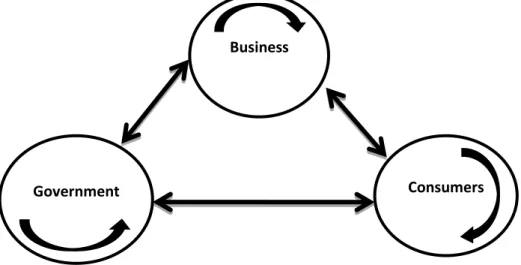
There are different types or models of e-commerce that companies and individuals can engage in, namely: Business-to-Business (B2B), Business-to-Consumer (B2C), Consumer-to-Consumer (C2C) and Consumer to Business (Gawady, 2005). In addition to these models, there are other models that involve transactions taking place between government and business organisations, consumers and other governments which are referred to as e-governance, Government-to-consumer (G2C) and Government-to-Business (G2B), Government to Government (G2G) (World Trade Report, 2012). The most popular types are Business-to-Business (B2B), Business-to-Consumer (B2C), Government to Business (G2B). Figure 2.1 below shows the relationship between three basic participants in the e-commerce space.
Source: Author’s own construction
Business
Government Consumers
21
2.1.2.1 Business-to-Business (B2B)
Business-to-Business E-commerce is the selling of products and services between corporations and the automation of systems through integration. Various businesses approach e-commerce differently depending on their needs. If a particular business area of interest is to use e-commerce to conduct business with their suppliers, distributors and manufacturers, then Business-to-Business would be the most suitable as it focuses mainly on businesses (Korper & Ellis, 2000).
2.1.2.2 Business-to-Customers (B2C)
Business-to-Consumer E-commerce is when a business sells directly to a consumer. This type of e-commerce focuses on consumers (customers), that is selling goods and services to consumers and making them aware of the business, goods and services the business offers. It is most suitable for businesses with an interest in interacting with consumers (Stravrou, May & Benjamin, 2000).
2.1.2.3 Government-to-Business (G2B)
The Government-to-Business Model involves transactions that take place between government and business organisations, which is electronic commercial business transactions taking place between the public sector and private companies. This also refers to the use of online web applications for public procurement, payment and other government business transactions. (World Trade Report, 2012)
22
Table 2.1: Benefits of e-commerce
Benefits How they are achieved
Increase revenue Through extending geography, improving sales channels and growing market share, increased business awareness globally.
Improve customer service By making all processes faster through automation, products can be delivered to consumers quickly.
Reduce administrative costs Less time is spent on paperwork, telephone calls, faxes and implementation of physical infrastructure.
Provide faster delivery Through automation, ordering is done more quickly, therefore delivery becomes faster.
Improved response time Automation reduces errors made when generating orders, hence response time is improved.
Greater choice of products Through e-commerce customers can choose from different products offered by different companies.
Increase market share Stores on Internet are open 24 hours a day, customers can shop at their own convenience.
Worldwide exposure of the business Business will be known by everyone around the world.
Reduce costs Companies do not have to pay retail space and personnel.
Elimination of geographical boundaries Customers can shop in stores they cannot easily access physically.
23
2.1.3 SMEs and e-commerce
An SME is a small business that employs from 10 to 250 employees as defined by the Small Business Act of 1996 and as amended in 2003 and 2004 (National Credit Regulator, 2011. The SME sector plays a very important role in the overall growth of a country, and especially in the economic growth of a region. This sector has grown significantly in the past few years and various studies have shown that SMEs are an important contributor to South Africa’s economy (Department of Trade and Industry, 2011). While SMEs in developing countries contribute around 50% to the Gross Domestic Product (GDP), those in Asia contribute around 40%. In South Africa, SMEs are said to contribute 30% to the GDP and 70% to 80% to employment (Department of Trade and Industry, 2011). SMEs are important in our economy in terms of their increasingly innovative role in new product development and their ability to spread benefits and other positive consequences of growth and development (Cloete, 2009).
SMEs make up the majority of businesses and create employment for the majority of people in both developed and developing countries and in both manufacturing and service sectors. Although SMEs are normally small businesses, they contribute significantly to the GDP of a country and create a viable domestic market through the goods they produce or the services they provide (World Trade Report, 2012). SMEs are lagging behind in ICT developments which lead to low rates of e-commerce adoption among them. In addition, SMEs are missing opportunities in both productivity and profitability by not using e-commerce in their business operations. According to the World Trade Report (2012), SMEs can gain a stronger foothold and competitive advantage in the multilateral trading system through the use of
e-24
commerce. The adoption of e-commerce by SMEs can contribute to the social and economic progress of a country (United Nations Conference on Trade and Development, 2003). The adoption of ICT and e-commerce by SMEs has improved not only business operations and performance, but has also helped improve livelihood in some of the world’s poorest regions and communities (World Trade Report, 2012).
2.1.4 Growth of Internet
In the first decade of the new millennium, the world witnessed a great change and exponential increase in the way business and trade were conducted through the use of electronic systems. Both in developed and developing countries, there has been a dramatic increase of people accessing the Internet through electronic devices. This increase is fuelled by users accessing Internet through mobile technologies. The prediction is that mobile applications will increase use of the Internet and access to the web exponentially in the decade to come (World Trade Report, 2012).
2.1.5 Growth of e-commerce
There is no doubt that e-commerce has grown exponentially since the introduction of the Internet and when the first users started to browse the World-Wide-Web in search of information, goods and services. Businesses have realised that the Internet presents a significant proportion of overall commercial sales. In 1991 the Internet had less than 3 million users worldwide and its application to e-commerce was non-existent. In 1999, 300 million users were accessing the Internet and approximately 75 million of them made purchases online from e-commerce sites which were worth
25
approximately 110 billion US dollars. In 2011 e-commerce sales in Business-to-Customer were worth approximately 1.25 trillion US dollars (International Communications Union Report, 2012).
2.1.6 Mobile commerce or m-commerce
Another business model which requires extensive research and which is also an element of e-commerce is mobile commerce. According to Motjolopane & Warden (2007), mobile commerce also known as m-commerce is the ability to conduct business using mobile devices such as mobile phones, cellular phones, smart phones, I-pads, I-pods and any other emerging mobile equipment. M-commerce is the most popular and progressive business model in the world, especially in developing countries. An increase in the use of mobile technologies has helped to improve how businesses are run. They enable businesses located in rural areas where there is no physical connectivity of ICT infrastructure, to engage with their partners, suppliers and other stakeholders, allowing for mobile money services or mobile banking. People in many countries, especially those with developing economies, still use mobile phones for voice communication and texting only. However, some recent developments in developing countries have begun to increase the use of mobile phones to include applications such as mobile banking and payment. Some African countries which use mobile banking include South Africa, Kenya, Tanzania and Zambia (Thulani, Tofara, & Langton, 2010).
26
2.2 GLOBAL E-COMMERCE DEVELOPMENTS
2.2.1 E-commerce in developed countries
Research conducted in developed countries reveals that e-commerce has affected the global economy in many different ways. E-commerce has affected all economic sectors and enhanced productivity growth throughout the world (Cloete, 2009). In the United States of America and most European countries, the use of e-commerce is rising at 12% annually and the productivity and economic growth rates in these countries are increasing rapidly (Gawady, 2005). According to Gawady (2005), e-commerce has emerged as a fast growing sector in the USA market place despite the contraction in business during the recent recession. Businesses have continued to adopt e-commerce as their way of conducting business and the rate of online purchasing activities by consumers has also increased. E-commerce in the United States of America and most European countries is expected to have a great impact on economic growth during the next decade, particularly through increased productivity as businesses and consumers continue to benefit from using e-commerce. This will take place through a reduction of costs in terms of time and effort required to complete business transactions. There will be a corresponding decrease in the inflation rate because e-commerce promotes competition, enables cost saving and encourages changes in the price-setting models of the sellers which in turn leads to a downward pressure on inflation (Iddris, 2012).
27
2.2.2 E-commerce in developing countries
According to Lawrence and Tar (2010), a developing country is a newly emerging and post-colonial country of Africa, Asia, South America or the Pacific region which are arguably referred to as third world countries or less developed states. More so, these countries are often associated with negative indices such as poverty, insecurity, unemployment and instability. These developing countries are always on the receiving end of all forms of development, be it in the area of information technology, construction, industrialisation and science.
E-commerce developments in these emerging markets and developing countries have played a greater role in economic development and the way in which firms conduct their businesses in terms of competition and marketing. E-commerce also helps developing countries to benchmark their economies with international economies thereby accelerating their growth and productivity (Chishakwe & Smith, 2012). The impact of e-commerce in developing countries could be even stronger than that of developed countries because the scope of economic growth is much greater and encompasses more in developing countries (Gawady, 2005).
According to Kurnia (2007 the government in Indonesia introduced various initiatives to support the growth of ICT and e-commerce through the development of a telecommunication regulatory framework, developed mechanisms to support SME involvement in ICT and e-commerce and increased awareness through educational campaigns about ICT and e-commerce for government officials and the public at large. The Indonesian government also revised its tax laws to promote electronic
28
business transactions, encouraged the use of the Internet in teaching and learning and improved the national telecommunications infrastructure and Internet access to under-served areas (Kurnia, 2007).
According to Jian (2010), SMEs contribute significantly to China’s economy in terms of employment creation, investments and exports. (Zhao, 2009) states that SMEs in China represent more than 99% of all enterprises, employing 80% of China’s workforce and provide over 50% of tax revenues. China’s economy would be positively affected by the successful adoption of e-commerce by SMEs although the adoption of e-commerce by SMEs is still behind as a large percentage of business does not use the Internet for daily business operations.
Kurnia (2007) conducted a study on e-commerce adoption in developing countries. The study identified numerous factors that affect adoption of e-commerce in these countries. The figure below summarizes these factors and shows their relationship in terms of influence on each other. These factors are discussed in further detail below.
Source: Kurnia (2007). External influence Political condition Government initiatives Economic condition Socio-cultural condition Geographical condition Technology infrastructure Public awareness E-Commerce adoption
29
Government is less likely to give support and attention to e-commerce developments in a country where there is an unstable political situation. Lack of government support can be seen as a result of policy changes through leadership change or a country’s civil war and lack of political insight, which can cause slow or even no development of an e-commerce development policy framework. Government initiatives play a critical role in the adoption of e-commerce in these developing countries. These government initiatives can be in the form of the provision of adequate e-commerce development, a regulatory framework and protection of intellectual property, taxation and revenue generation. In addition e-commerce use can be promoted through educational initiatives and awareness campaigns. Government initiatives can be affected by political and economic conditions (Grant & Stansfield, 2003).
Kushwaha (2011) states that stable economic conditions serve as one of the major drivers of e-commerce adoption in a developing country. Since GDP and income per capita are common indicators of a country’s economic growth, e-commerce adoption would be affected if economic conditions are unfavourable because e-commerce relies greatly on technology infrastructure availability which is relatively expensive. E-commerce developments require telecommunications infrastructure to connect all regions of the country from urban to underserved areas. E-commerce adoption can also be influenced by the costs of accessing technology infrastructure, since e-commerce relies on efficient logistics and secure and reliable payment infrastructure to avoid fraud and other illegal activities (Grant & Stansfield, 2003).
Overall, technology infrastructure developments rely on the geographical conditions of a country. Quader (2006) states that geographic conditions of a country can be critical in promoting technology or posing as a barrier to its development, for example
30
countries with many small islands can find it difficult to develop technology infrastructure, even though the need for such development is crucial for effective business operations and e-commerce developments. Social and cultural conditions can greatly influence e-commerce adoption. In some countries people believe in visiting shops or businesses physically, while some consider shopping as a form of recreation. Different levels of education in terms of computer literacy and penetration of the use of personal computers and telephones within a society have a great effect on e-commerce adoption (Kurnia, 2007).
The adoption of e-commerce can be negatively affected by a lack of awareness of the potential benefits it carries, as well as the importance of the use of ICT in some developing countries as e-commerce awareness is limited to e-mail and Internet browsing. Therefore a large number of firms have not yet exploited the potential of e-commerce to improve their business operations (Kushwaha, 2011). External influences from other countries have effects on the growth of e-commerce in a developing country, such as reports from other countries of credit card fraud and fraudulent activities taking place on commercial websites (Quader, 2006).
2.2.3 E-commerce in Africa
Africa as a whole has an opportunity to capitalise on its resource endowments in order to take advantage of high international commodity prices and changes in the global economic transformation. Different countries on the continent can do this to address poverty, inequality, unemployment and promote productivity and competitiveness (Economic Report on Africa, 2013). Africa presents potential and
31
substantial economic growth that is expected to double for many decades to come. Africa will have the fastest growing economies in the world and have the largest overall growth as compared to any other continent for the next decade (World Economic Forum, 2012). Although large businesses and other corporations have the abilities and resources to grow and expand, SMEs will play an important role in the expected economic growth of the African continent. Governments in Africa are increasing their investments into infrastructure projects including ICT and telecommunication infrastructure. These investments will see e-commerce flourish in Africa (Economic Report on Africa, 2013).
E-commerce developments in Africa have contributed and will continue to shape the African economy and will lead to many innovations for businesses on the continent. However literature reveals that in Libya, SMEs find it difficult to adopt e-commerce as the price of Internet is unreasonably high due to the absence of a legal system governing and regulating e-commerce implementation (Hunaiti & Mansour, 2009). According to Zaied (2012), many SMEs in Egypt have only adopted the basic e-commerce applications such as e-mail and Internet as their additional marketing tools. E-commerce adoption in terms of online payment systems and order processing is still relatively low. The low level of e-commerce adoption in Egypt is seen as a result of a lack of e-commerce awareness from both business owners and consumers, and the security of Internet applications (Hunaiti & Mansour, 2009).
In Ghana, e-commerce adoption by SMEs is still at a low level as they use e-mail and the Internet only to communicate with customers and suppliers. There are no online sales transactions (Iddris, 2012). The major barriers to the adoption of e-commerce in
32
Ghana include the lack of legal and regulatory systems, e-commerce security issues, and insufficient knowledge about e-commerce technologies, lack of interest by business owners and a lack of e-commerce technical skills. Kapurubandara (2009) state that SMEs in Kenya have adopted e-commerce in their business transactions such as those which involve hotel bookings, tourism communication, e-mailing and advertising. However there is a low level of e-commerce adoption in business areas such as supply chain management, finance and online payment applications. Factors affecting commerce adoption in Kenya include a lack of human resources or e-commerce application development skills and financial constraints in terms of the cost of telecommunication infrastructure (Kenneth, Rebecca & Eunice, 2012).
2.3 BARRIERS TO ELECTRONIC COMMERCE ADOPTION
2.3.1 General barriers to e-commerce adoption
Since this study is about developing a strategic e-commerce framework to empower SMEs to overcome barriers to the adoption of e-commerce, it is imperative to review international studies and literature concerning barriers to e-commerce adoption. Hunaiti & Mansour (2009) categorise e-commerce barriers into three categories which are: economic, socio-political and cognitive. Economic and socio-political categories refer to environmental characteristics whereas the cognitive category refers to organisational and individual behaviours.
The economic barriers include factors such as slow Internet penetration, a low number of credit card holders and slow ICT and telecommunication infrastructure development. Socio-political factors take cognisance of government e-commerce
33
regulations in terms of e-commerce privacy and security, lack of e-commerce laws, lack of e-commerce legal protection and human cultural differences and preferences such as face-to-face communication and favour of physical shopping (Zaied, 2012).
The cognitive commerce barriers reflect a number of factors that lead to negative e-commerce assessment by individuals and organisations. These include a lack of awareness and understanding of e-commerce benefits and opportunities, a lack of confidence in consumers and other business partners, a lack of skills and low levels of computer literacy (Iddris, 2012). The figure below illustrates three categories of e-commerce barriers and shows how they influence each other in terms of e-e-commerce pre-transaction barriers, transaction barriers and post transaction barriers.
34
Source: Gawady (2005)
Economic, socio-political and cognitive factors Pre-transaction barriers Barriers to e-commerce adoption Post-transaction barriers Transaction barriers ICT skills Number of credit card holders Financial transaction laws Delivery services Internet penetration ICT infrastructure Delivery infrastructure
E-commerce benefits and potential for economic prosperity
Business and consumers to use internet for e-commerce activities
35
According to Courtney and Fintz (2001), two factors which affect e-commerce adoption are identified. The first one concerns owner characteristics which refer to the owner’s view of conducting business in terms of his/her level of knowledge and acceptance of e-commerce technologies. This means that if the owner has a low level of knowledge of e-commerce, the business will unlikely adopt e-commerce. Furthermore, if the business owner is aware of e-commerce technologies and its benefits, the business will likely accept and adopt e-commerce. The second factor concerns the organisational characteristics, which refers to the level of Information Technology use in the organisation. A business will be unlikely to adopt e-commerce if the organisation has a low level of Information Technology implementation. If the organisation has a high level of Information Technology use, the business will likely adopt e-commerce. Competitors who use e-commerce to conduct their business can force organisations to adopt e-commerce as a means of not losing their competitive advantage (Cloete, 2003).
Though e-commerce is growing and it presents credible benefits, it is still faces many challenges. There are still concerns about the security of payments, delivery times, and privacy of personal data, a lack of awareness among people and a lack of online shopping confidence (Lawrence & Tar 2010). Economic factors such as ease and cost of access, convenience and the relatively low number of credit card holders have a great impact on the adoption of commerce. Despite the benefits that e-commerce offers, SMEs in poorer regions would require infrastructure accessibility to be able to trade on this new business platform. Strategies to create awareness and provide skills development have to be in place (Zaied, 2012). The figure below summarises general barriers to the adoption of e-commerce.
36
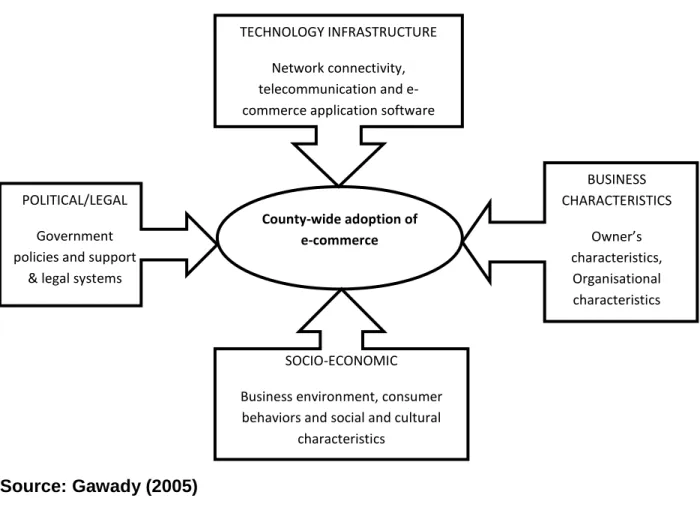
Source: Gawady (2005)
2.3.2 SME barriers to e-commerce adoption
Literature reveals that SMEs in developing countries are still behind in the adoption of e-commerce, even though research conducted in various countries indicates that e-commerce offers viable and practical benefits for businesses to meet the challenge of predominantly changing environments and to gain competitive advantage.
Zaied (2012) conducted a study on the barriers to the adoption of ecommerce in Egyptian SMEs. The study revealed that the main barriers revolve around awareness and education, e-commerce infrastructure, telecommunication infrastructure, legal systems, government issues and social and psychological factors. Cloete (2009)
County-wide adoption of e-commerce
POLITICAL/LEGAL Government policies and support
& legal systems
TECHNOLOGY INFRASTRUCTURE Network connectivity, telecommunication and e-commerce application software
SOCIO-ECONOMIC Business environment, consumer behaviors and social and cultural
characteristics BUSINESS CHARACTERISTICS Owner’s characteristics, Organisational characteristics
37
conducted a study on SME adoption of e-commerce in South Africa. The study reported that barriers to the adoption of e-commerce in South Africa included: low levels of information, a lack of research, limited access to computers, software and hardware and an inadequate knowledge of e-commerce models. Quader (2004) also conducted a study on the reasons behind the slow adoption of e-commerce by SMEs in Taiwan. The results of this study showed that there is a lack of e-commerce skills, financial shortage and concerns regarding e-commerce security. The figure below shows the consolidated conceptual framework of the barriers to the adoption of e-commerce by SMEs.
38 Source: Zaied (2012) Lack of awareness Low level of computer literacy Low level of education Language barriers Social and cultural
barriers Lack of internet access Lack of e-commerce infrastructure Lack of technical qualified staff Inadequate bandwidth availability Technical Barriers Lack of Financial resources Labour shortages
Cost too high
Competitive pressure Economic Barriers
E-commerce adoption in SMEs
Change in regulation with each government Change in government policy Low level of government support
Political Barriers Organisational barriers
Lack of management Support Lack of business owner’s knowledge Limited use of IT by business Resistance to change the existing working procedures Absence of legal and existing systems No e-commerce procedures and guidelines Lack of e-commerce standards Absence of e-trading legislation Legal & regulatory
barriers
39
2.4 CONCLUSION
The literature review in this chapter revealed that SMEs play an important role in the development of a country from an economic point of view, encompassing the social welfare as well. SMEs can also contribute greatly to the creation of a country’s livelihood. The literature also identified a widrange of barriers hindering commerce development in developing countries and which hinder the adoption of e-commerce by SMEs. The barriers to e-e-commerce adoption have been found to differ from country to country. However there are a lot of commonalities, especially in developing countries which are mostly related to: enabling infrastructure (technology and telecommunications network availability), unavailability of Information and Communication Technology (ICT) skills (qualified online application developers), cost factors (cost of ICT equipment and personnel), awareness of e-commerce by both business owners and individual users, security and trust factors (uncertainty of payment methods and legal frameworks), socio-cultural barriers that can be attributed to social values and cultural behaviour of society and lastly other barriers which are related to political and legal systems (absence of government policy framework on e-commerce development).
The literature also revealed that Internet availability and affordability are key to e-commerce growth and development. In developing countries, Internet is not yet widely accessible due to a lack of necessary policies and infrastructure to enable wide-spread Internet use. Despite the limitations and barriers to e-commerce adoption, the literature review identified that e-commerce is critical for growth and development of a country. Therefore a strategic policy framework needs to be
40
developed in supporting SMEs to adopt e-commerce in their day-to-day business operations and to demonstrate government political resolve to support SMEs in overcoming barriers that currently hinder wide-spread e-commerce adoption.
41
CHAPTER THREE
RESEARCH METHODOLOGY
3.1 INTRODUCTION
In chapter two, factors which influence the adoption of e-commerce by Small and Medium Enterprises (SMEs) were identified and a conceptual framework of these factors was constructed and presented. These identified factors and the conceptual framework constitute the focus of the empirical investigation. Since research means different things to different people, there is no consensus in the literature on how research should be defined (Collis & Hussey, 2009). However there is general agreement that various research definitions contain the following elements:
It is a process of enquiry and investigation. It is systematic and methodical.
It increases knowledge (Collis & Hussey, 2009).
Therefore the nature of research requires that researchers use appropriate methods for collecting and analysing research data (Collis & Hussey, 2009).
This chapter deals with the aspects of the research process, with focus on the research design and the research methodology used in the study. The geographical area where the study was conducted, the research paradigm, the population and the sample are also discussed in detail. In addition, the research instrument used to collect data, including methods used to test validity and reliability of the instrument, is described.
42
3.2 RESEARCH DESIGN
Creswell (2009) defines research design as a blue-print, or outline, for conducting the study in such a way that maximum control can be exercised over the validity of the research results. Blumberg, Cooper and Schindler (2005) state that the research design constitutes the blue-print for data collection, measurement and analysis. Research design is the overall guide for connecting the conceptual research problem to the pertinent and achievable empirical research(Collis & Hussey, 2009). Therefore research design can be referred to as the overall plan used by the researcher to obtain answers to the research questions guiding the study. In other words the research design specifies what data is required, the methods to be used to collect and analyse the data and how the research question will be answered. Generally, various research definitions offered by literature agree that research design constitutes the following:
It is an activity and time-based plan.
It is always based on the research question.
It guides the selection of sources and types of information.
It is a framework for specifying the relationships among the study’s variables. It outlines procedures for every research activity (Blumberg, Cooper &
43
Collis and Hussey (2009) state that the research design reflects the purpose of the inquiry which can be classified or characterised as one of or a combination of the following:
Exploratory research question. Descriptive research question. Explanation research question. Predictive research question.
Exploratory research is conducted on a research question or issue when there are very few or no earlier studies conducted before. In this type of research the aim is to look for problems, ideas or hypothesis rather that testing or confirming a hypothesis (Collis & Hussey, 2009)