by
Rhoda Meyer
Submitted in partial fulfillment towards the degree
MPhil in Health Professions Education at
Stellenbosch University
Supervisor
Professor Susan Van Schalkwyk
Co-Supervisor
Dr Rosaley Prakaschandra
Date Submitted
DECLARATION
I, the undersigned, hereby declare that the work contained in this assignment
is my original work and that I have not previously submitted it, in its entirety or
in part, at any university for a degree.
Signed:
Date: 1 October 2014
__________________
(R Meyer)
Copyright 2014 Stellenbosch University
All rights reserved
ACKNOWLEDGEMENTS
I would like to express my sincere gratitude to the following persons:
- My supervisor, Professor Susan Van Schalkwyk for her valuable support and
guidance throughout this year. Her knowledge and commitment to the highest
standards inspired me.
- My co-supervisor, Dr Rosaley Prakaschandra for her continued guidance and
inspiration.
-
The students who agreed to participate in the study.
-
My parents and sisters to whom I owe a debt of gratitude for their prayers and
encouragement throughout my studies.
-
My husband for his unwavering patience, support and motivation.
-
And last but not least, all the glory to God.
This research assignment is dedicated to my two daughters,
Gabrielle and Madeline.
ABSTRACT
Students undertake their clinical placement in various clinical settings for the exposure to and acquisition of skills related to that particular context. The operating room, for example, is a context that offers the opportunity to develop critical skills related to the perioperative care of the patient. Despite the numerous studies that have been undertaken in this field, few studies that have investigated the operating room as a clinical learning environment in the South African healthcare system have been published. The aim of this study was to determine students’ perceptions of the operating room as a clinical learning environment in a private hospital context.
An exploratory, interpretive and descriptive design generating qualitative data was utilized. Data was collected from nursing students undertaking their training at a private nursing education institution. Ten nursing students participated in an open-ended questionnaire (N=10), and twelve students participated in the focus group discussion (N=12). From the results, four themes emerged, namely, ‘interpersonal factors’, ‘educational factors’, ‘private operating room context’, and ‘recommendations’. This study has highlighted some of the challenges experienced by students in the private sector operating room context. Despite the potential learning opportunities, the key findings reveal negative perceptions of students regarding learning experiences. However, the opinion that the operating room offers an opportunity to gain skills unique to this context, as well as facilitates the integration of theory and practice, was also expressed. Some students reported that the emphasis on profitability and cost to patient, and the lack of a mentoring process in this context posed a constraint to learning.
Exploration into the specific preparatory needs of students specific to learning outcomes before operating room placement should be considered. It would also be necessary to improve collaboration between lecturers, mentors and theatre managers so that a structured teaching programme may be developed for students entering the perioperative environment.
OPSOMMING
Studente onderneem hul kliniese plasing in verskeie kliniese omgewings vir die blootstelling aan en aanleer van vaardighede wat verband hou met daardie spesifieke konteks. Die operasiesaal, byvoorbeeld, is ’n kliniese omgewing wat die geleentheid bied om kritiese vaardighede te ontwikkel wat verband hou met die perioperatiewe versorging van die pasiënt. Ten spyte van die talle studies wat in die operasiesaal onderneem was, het slegs ’n paar studies uit ’n Suid-Afrikaanse gesondheidsorg oogpunt, die operasiesaal as ’n kliniese opleidings omgewing ondersoek. Die doel van hierdie studie was om studente se persepsies van die operasiesaal as ’n kliniese omgewing in ’n privaat hospitaal konteks te bepaal.
’n Ondersoekende, verklarende en beskrywende ontwerp wat kwalitatiewe data genereer, is gebruik. Data is ingesamel van verpleegstudente wat hul opleiding by ’n privaat verpleegonderrig instelling ontvang. Tien verpleegstudente (N=10) was genooi om ’n onbepaalde vraelys te voltooi en twaalf student (N=12) het aan die fokusgroep bespreking deelgeneem. Vier temas het na vore gekom, naamlik ‘interpersoonlike faktore’, ‘opvoedkundige faktore’, ‘privaat-operasiesaal konteks’, en ‘aanbevelings’. Hierdie studie het ’n paar van die uitdagings uitgelig wat die studente in ’n privaat sektor operasiesaal ondervind. Ten spyte van die potensiële leergeleenthede teenwoordig in die privaat sektor operasiesaal, toon die belangrikste bevindings egter die negatiewe persepsies van studente jeens hierdie kliniese omgewing. Die opinie is egter ook uitgespreek dat hierdie omgewing ook ’n geleentheid aanbied om unieke vaardighede aan te leer. Dit bied ook ’n geleentheid om teorie en praktiese kundigheid te integreer. Sommige studente rapporteer dat die klem op winsgewendheid en koste vir die pasiënt, asoók die gebrek aan mentorskap in hierdie kliniese omgewing ’n beperking plaas op die leerproses.
Die spesifieke voorbereidings behoeftes van studente insake leeruitkomste voordat plasing in die operasiesaal omgewing geskied, moet eers deeglik ondersoek word. Dit is ook nodig om die nodige samewerking tussen dosente, mentors en operasiesaal bestuurders te verbeter sodat ’n gestruktureerde onderrig program ontwikkel kan word vir studente wat die perioperatiewe omgewing betree.
TABLE OF CONTENTS
1.
Introduction………1
2.
Extended Literature Review...…..……….2
3.
Extended Methods Section………...5
Population and sampling………...5
Data Collection………6
Data Analysis………..7
Trustworthiness
………...8
4.
The manuscript prepared for publication in
Nurse Education in
Practice
The Operating Room as a Clinical Learning Environment: An
Exploratory Study………9
5.
Closing comments……….32
References………33
List of Addenda
Addendum A: Questionnaire for reflection
.
………...38
Addendum B: Participant Information Leaflet and Consent Form………...42
Addendum C: Extract from the Transcription of the Focus Group
Discussion……….46
Addendum D:
Nurse Education in Practice
Author Guidelines……….49
Addendum E: Author Information………...56
List of Figures
Figure 1: Gibbs’ Reflective Cycle
………...6
1.
INTRODUCTION
Changes in healthcare trends and societal demands require qualified nursing students who have the ability to adapt to different contexts and to make accurate clinical judgments (SANC, 2005). Nurse education and training must therefore be attuned so that these desired graduate attributes might be attained. Nurse education is multidimensional consisting of both theoretical and clinical components. Theoretical learning occurs predominantly under controlled conditions, whereas the clinical learning in an authentic clinical setting is often unpredictable and difficult to control (Chan, 2002; Parsell & Bligh, 2001). However, clinical learning contributes substantially to the total competency of a nurse (Henderson, Twentyman, Eaton, Creedy, Stapleton & Lloyd, 2009). In order to ensure that nursing graduates are clinically competent to meet the needs of modern day healthcare, placements in clinical settings ought to offer quality learning experiences.
Students undertake their clinical placement in various clinical settings for the exposure to and acquisition of skills related to that particular context. The operating room, for example, is a context that offers the opportunity to develop critical skills related to the perioperative care of the patient (Callaghan, 2010; Hughes, 2006). These skills, for example, pain management, prevention of infection, etcetera. are transferable to other contexts, which makes placement in this context significant for the development of the necessary skills. Despite the numerous studies that have been undertaken in this field (Callaghan, 2010; Hughes, 2006; Crofts & Taylor, 1996; Radford & Hunt, 1999), few studies which have investigated the operating room as a clinical learning environment in the South African healthcare system have been published. This study focuses on students’ perceptions of the operating room as a clinical learning environment within the South African private healthcare context. The intention is to develop possible recommendations to enhance clinical learning and contribute to the acquisition of critical skills related to this context.
The format of this assignment is built around the article that has been prepared for submission to the Nurse Education in Practice Journal. It begins with an extended literature
review to provide additional context. Thereafter further details regarding the research method are provided. Certain aspects in the extended literature review and methods section may be repeated in the article, which follows the methods section. The assignment ends with a brief conclusion, reference list and the addenda. The presentation of the assignment and article are guided by recommendations from O’Brien, Harris, Beckham, Reed and Cook (2014) for qualitative reporting.
2.
EXTENDED LITERATURE REVIEW
Clinical training allows the practical application of theoretical knowledge acquired in a classroom setting, and forms an integral component in the learning process (Dunn & Hansford, 1997). In order to maximize integration, placement of students in clinical settings, should offer exposure to authentic practice-based experiences where experiential learning may take place (Yardley, Teunissen & Dornan, 2012). Dewey (1938) in Yardley et al. (2012)
also recommended that in order to facilitate the acquisition of applied knowledge, students should actively engage with their surroundings and interact with meaningful learning experiences in a positive clinical environment. Although the challenge in provision of such an environment has been reported on extensively (Mogale, 2011; Mabuda, Potgieter & Alberts, 2008; Elisha & Rutledge, 2011), Burns and Patterson (2005) argue that such a space fosters learning, and has the potential to positively influence students’ perceptions, including when they reflect on their clinical learning.
The act of reflection is a concept that is foregrounded in the literature and is consistently associated with quality learning (Schon, 1987; Slotnick, 2001; Clegg, Tan & Saeidi, 2002), where the importance of students being allowed to reflect on their clinical experiences is also highlighted (Hughes, 2006). According to Horton-Duetsch and Sherwood (2008:946), reflection is centered on ‘thinking about experience, which leads to learners’ full understanding of what they know. This allows the practice of identifying and evaluating experiences, and factors that could have influenced these experiences, through purposeful contemplation. Furthermore, an important purpose of reflection is to develop students into critical thinkers, encouraging them to learn from experience. Schön (1987) stated that reflection has the potential to assist students to understand their challenging experiences and develop possible solutions to overcome and improve on limitations. This is essential for promoting competent nursing practice (Horton-Duetsch & Sherwood, 2008) and may contribute to the improvement in the quality of the learning experience.
Previous research has been undertaken to explore the quality of the learning experience in the clinical environment (Entwistle & Petersen, 2004). Skaalvik, Normann and Henriksen (2011) found that negative clinical experiences impacted negatively on students’ perceptions of their clinical learning environment. Earlier, Sharif and Masoumi (2005) had also found that students were generally dissatisfied with their clinical learning experiences due to lack of opportunities to acquire the necessary knowledge and skills during their clinical placement. In both instances, students highlighted poor quality of learning during clinical learning experiences. Radford and Hunt (1999) suggest that students’ perceptions have an influence on the quality or degree of learning taking place. This is echoed by Lizzio, Wilson and Simons (2002), who imply a strong link between students’ perceptions of their learning environment and their learning outcomes. Exploring students’ perceptions may therefore reveal factors
impacting on learning environments (Schwind, Boehler, Rogers, Williams, Dunnington, Folse & Markwell, 2004). It is also clear that the environment or context in which clinical learning takes place can influence student learning, and should therefore be considered when seeking to improve learning in a clinical environment.
Context forms a fundamental constituent in learning and this is identified in the literature as an influential factor in clinical learning (Cowan, 1998; Chun-Heung & French, 1997). This thinking appears to be aligned with the concept of the situativity theory, which emphasizes the impact of the context, or environment on learning, that is, what occurs in a learning encounter is based on the interactions in the environment or context (Durning & Artino, 2011). Situativity theory further shifts the focus of learning from the individual to the ‘the social and cultural setting in which all activity occurs’ (Durning & Artino, 2011:188). The unique environment or context in which learning takes place therefore provides factors or elements that could initiate and/or promote or prevent the acquisition of distinct skills.
The operating room is a context described as complex and demanding (Callaghan, 2010). However, this area offers the potential to acquire critical skills, such as communication, infection control, patient advocacy, patient positioning, teamwork, and coordination (Sigsby, 2004; ACORN, 2008; Gillespie & Hamlin, 2009), which are necessary to provide comprehensive nursing care. In the South African context, the South African Nursing Council (SANC) stipulates a minimum of four weeks for clinical placement in the operating room for each student (SANC, 2005). Students are expected to acquire specific skills related to this area, which is reflected in their objectives, namely, care for a patient in the perioperative environment; assist the operating team with scrubbing, gowning and gloving; open up sterile packs; scrub for short, uncomplicated surgical procedures and, interact harmoniously with the operating room team (Netcare, 2003).
Despite the value of this clinical area in terms of the potential exposure to diverse skills, previous studies reveal various clinical learning challenges within this context. While many factors impact on learning in the operating room, negative attitudes of staff and a discouraging atmosphere were the recurring themes throughout the literature reviewed (Silen-Lipponen, Turunen & Tossavainen, 2002; Sharif & Masoumi, 2005; Papp Markkanen & Von Bonsdorff, 2003; Elisha & Rutledge, 2011). This has also been reported in local studies (Mogale, 2011; Mabuda et al., 2008). Callaghan (2010) further indicates that in spite of the
potential value of the operating room experience, the lack of teaching by staff in the operating room may contribute to students’ inability to comprehend the complexity of the operating room procedures. These authors recommend greater interest by operating room staff towards students, so that attitudes and willingness to teach may improve.
Although a greater interest in students may result in an improvement in their learning experiences and/or perception, other contextual factors which may influence students’ perceptions of the operating room do exist. Silen-Lipponen, Tossavainen, Turunen and Smith (2004) state that nursing students perceive the operating room as a highly stressful environment. This is possibly due to the nature of the procedures, in terms of level of medico-legal risks; the high patient turnover, and the urgency of the procedures performed, given the nature of the work entailed. These conditions may not be present in other specialties.
Another factor influencing learning in the operating room is the notion of support. Chan (2002) recommends the provision of learning opportunities for students to encourage a supportive environment. Papp et al. (2003) advocate that in an attempt to offer a supportive learning
environment, adequate preparation of students prior to exposure to the clinical setting is necessary. In addition, Yardley et al. (2012) and Bisholt, Ohlsson, Engström, Johansson and
Gustafsson (2014) note that student support is an important component that may facilitate quality learning in the clinical setting. Although support of students was found to be lacking in various studies (Papp et al., 2003; Sharif & Masoumi, 2005), Hughes (2006) found that most
students in her study were satisfied with the support they received from mentors and operating room staff. A noteworthy finding in Hughes’ study is that this satisfaction on the part of the students appeared to translate into positive perceptions of their clinical learning experience in the operating room. What was also evident was that the operating room settings included in this study all employed a designated mentor. This may have improved students’ perceptions of the support that they were receiving. Elisha and Rutledge (2011) also reported that students considered support in the clinical settings essential for learning. This implies that student support should be considered when attempting to improve learning in an operating room context.
Critical to the study, which is the focus of this report, however, is its specific location in the private sector where the operating rooms present other unique challenges that may influence the learning experience. The focus on profitability, patient throughputs and consumer demands (Goh & Watt, 2003) potentially limits attention to student learning and teaching, as, in these contexts, student nurses are often integrated into the workforce (Breier, Wildschut & Mgqolozana, 2009). Although this integration may be advantageous in circumstances where students have the opportunities to have a ‘hands on’ experience, minimal time may be available for structured facilitation by mentors and staff. One also needs to consider the nature of the activities performed during integration into the workforce. To maximize learning in this context, activities need to be aligned with learning outcomes of students so that the operating room experience becomes beneficial (Callaghan, 2010) and meaningful. It is therefore necessary to explore this area as a clinical learning environment.
Few studies have focused on the students’ perceptions of the operating room within the South African private sector. This study will, therefore, explore students’ perceptions regarding the operating room as a clinical learning environment, and has the potential to contribute to health professions education in a South African private sector context. Furthermore, this study envisages highlighting the challenges faced by students in this area so that specific recommendations may be made to maximize learning during clinical placement. This may therefore also be beneficial for the private institution where the study was undertaken. The specific objectives of this study are to:
Determine students nurses’ perceptions of the operating room as a clinical learning environment
Make recommendations to optimize learning experiences in an operating room.
3. EXTENDED METHODS SECTION
In this research, an exploratory, interpretive and descriptive design generating qualitative data was utilized (De Vos, Strydom, Fouchè & Delport, 2011) to explore nursing students’ perceptions of the operating room as a clinical learning environment. McRoy (1995) notes that qualitative research encompasses the exploration and interpretation of meaning, and perceptions or experiences of participants, further illuminating the depth and richness of students’ experiences. This design was appropriate since the aim of this study was to explore the perceptions of students. What was envisaged was a more rigorous assessment of students’ perceptions, which would result in a deeper understanding of their situation (Rubin & Babbie, 2005).
Population and Sampling
This study was conducted at a private nursing education institution located in a metropolitan area in the Western Cape, South Africa. At the site where the study was conducted, the total number of the fourth-year bridging course nursing students was sixty-five (N=65). These students were selected as the population, because their intense training, through the different disciplines gives them a broad view into the different specialties in nursing and helps them determine the quality of the learning environment. In addition, the private institution where this study was undertaken, offers only the bridging course program for registered nurses and not the more traditional four-year integrated program. Although the training for the bridging course program focuses primarily on general nursing rather than for example, on the additional midwifery, psychiatry and community nursing qualifications (as is the case for the four-year integrated program), clinical placement in different specialties for both groups of students offers similar experiences and challenges. It is therefore envisaged that the outcome
of including only bridging course students for this specific study would not preclude its applicability to the challenges faced in the four-year integrated programme, although the specific context for this study needs to be noted.
Participating students were recruited during the month of March 2014. The researcher, who is not their lecturer, but who works at the institution as lecturer for second year students, explained the study to the students at the end of a routine lecture. At this site, students undertake their theoretical training. However, for their clinical training, students are allocated to five different private hospitals belonging to the same corporate company. Purposive sampling was used where students from each of these five hospitals were selected. The recruitment targeted those participants who had exposure to the operating room, that is, students who had undertaken their clinical placement in the operating room. From the students who were selected (N=40), those willing to participate in completing the questionnaire and the focus group discussion were included in the study. Stoker 1985 in De Vos et al. (2011) recommend a sample size of between 64% and 80% for a population size of
forty. The total sample size for this study was twenty-two (N=22). Participation was completely voluntary.
Data Collection
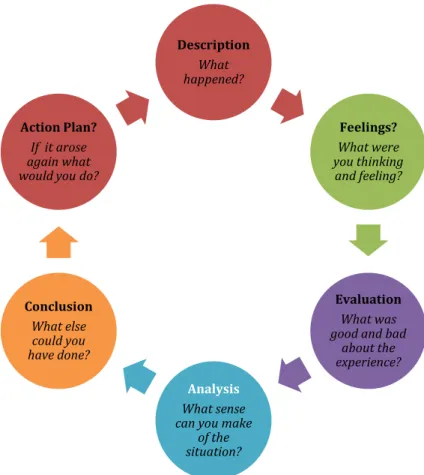
To generate the data, a survey in the form of a questionnaire, containing open-ended questions, as well as one focus group discussion was used. In both instances, participants were given the opportunity to engage in reflective practice (Bulman & Schutz, 2004). To assist them in this process, both the questionnaire and the focus group discussion were based on an adapted version of Gibbs’ cycle of reflection (Palmer, Burns & Bulman, 1994). According to this cycle, a series of six questions are presented to the interviewee (Figure 1). The adapted questions were underpinned by the findings from the literature review and adapted specific to the context of this study (Addendum A). For example, the first step in the Gibbs’ cycle of reflection requires the student to describe the event. The open-ended questionnaire was designed to allow the student to describe their learning experience in the operating room. This enabled the researcher to gain insight into student nurses’ perceptions of the operating room as a clinical learning environment, through the process of reflection.
Figure 1: Gibbs’ Reflective Cycle (Palmer, Burns & Bulman, 1994)
According to Forrest (2008), reflection-on-action is the process of thinking about an event in a meaningful way, after it has occurred, for the purposes of exploring and learning from experiences. For reflection to be effective, it must occur in a coordinated manner, for example through the use of a reflective cycle.
An open-ended questionnaire was chosen as it encourages the participant to consider their thoughts (Bolton, 2001) before actually arriving at a decision. Forrest (2008) adds to this by indicating that the process of writing facilitates the act of contemplation, thus allowing time for the participant to reflect on the value of the experience before recording their thoughts. After explaining the research process, reflective cycle and questionnaire to the students, the questionnaires were handed out to the ten participants (N=10) who were willing to participate in completing the questionnaire. The participants, who were seated together in the same venue, were then given the opportunity to complete the questionnaire in the absence of the researcher. Completion of the questionnaire took approximately forty-five minutes. Although only eight questionnaires (N=8) were returned, this response rate was still useful. DeVos et al.
(2011) suggests that in qualitative research, the focus is usually on the quality rather than the quantity of the data. The open-ended questionnaire used in this study required in-depth descriptions and explanations of students’ perceptions, which eventually produced valuable
Description What happened? Feelings? What were you thinking and feeling? Evaluation What was good and bad
about the experience?
Analysis
What sense can you make
of the situation? Conclusion What else could you have done? Action Plan? If it arose again what would you do?
To further probe issues that presented in the questionnaire, a focus group discussion was undertaken. According to De Vos et al. (2011) focus group discussions may be used as a
method to better understand how people think or feel about a certain subject. In addition they recommend approximately six to ten participants for a focus group discussion with an over-recruitment by twenty percent. For this study, a group of twelve participants (N=12), not involved with the questionnaire, was invited to take part in the focus group discussion. All twelve participants agreed to take part.
The focus group discussion, which was conducted by the researcher, took place a week after receiving the completed questionnaires. The use of a focus group discussion allowed further exploration of student nurses’ perceptions by delving deeper into issues and using group dynamics to elicit information not revealed by the questionnaire. During this time, questions were centered on students’ perceptions of the operating room as a learning environment. Probing was used when clarification was needed (Polit & Beck, 2012). The focus group discussion lasted approximately one hour. The audio-recorded discussion was then transcribed by the researcher.
Data analysis
Data gathering and analysis was conducted iteratively. Typically, data analysis for qualitative studies occurs in three phases: description, analysis and interpretation (Burns & Grove, 2005). Description involved the researcher familiarizing herself with the data by reading and capturing its essence. The written answers from the questionnaires were examined repeatedly to identify components that responded to the study objectives, for example, the ideas that revealed students’ perceptions of the operating room as a learning environment. The information was then prepared and analyzed. No data was excluded from the main study. Analysis took place by: open coding, categorizing of data, and identification of themes and sub-themes (DeSantis & Ugarriza, 2000). Themes were then classified and reduced to reflect relationships and other essential features (Burns & Grove, 2005). The focus group discussion was then transcribed (Addendum C). Member checking of the transcriptions by participants was carried out to ensure trustworthiness. The transcribed text was then read repeatedly to identify parts that responded to the study objectives. These aspects were then analyzed and coded into themes.
Trustworthiness
Trustworthiness is a concept in qualitative research that is often discussed above validity and reliability (Lincoln & Guba, 1985). It encompasses truth value, credibility, applicability, transferability, consistency, dependability, neutrality and reliability confirmable, which was implemented in all the steps of the research (Davies & Dodd, 2002). The researcher adopted a reflexive approach to enhance the quality and the credibility of the research (Day, 2012). According to Thorpe and Holt (2008: 3) reflexivity involves the ‘researcher being aware of his effect on the process and outcomes of research’, rather than merely reflecting on action. This was achieved by consistent awareness of the researcher’s personal feelings and experiences, which may have influenced the study. To further enhance trustworthiness, reflexivity was accompanied by prolonged engagement with the data during data analysis and interpretation. Strict adherence to the research methodology (Ballinger, 2004) and transparency (Savin-Badin & Fisher, 2002) was further ensured to increase trustworthiness. In addition, triangulation of data methods was used to collect data by making use of a questionnaire and a focus group discussion. As noted above, member-checking techniques to ensure credibility were also used. Once data was transcribed, it was sent back to the participants for reviewing. Although the analysis was conducted solely by the researcher, the coding process was reviewed by, and discussed with, her supervisor.
4.
THE MANUSCRIPT
[Prepared for publication in Nurse Education in Practice]
The Operating Room as a Clinical Learning Environment: An Exploratory
Study
ABSTRACT
Students undertake their clinical placement in various clinical settings to ensure their
exposure to and acquisition of skills related to that particular context. The operating
room is a context that offers the opportunity to develop critical skills related to the
perioperative care of the patient. Despite the numerous studies that have been
undertaken in this field, few have investigated the operating room as a clinical
learning environment in the South African private healthcare context. The aim of this
study was to determine students’ perceptions of the operating room as a clinical
learning environment in this context. An exploratory, interpretive and descriptive
design generating qualitative data was utilized. Data was collected from nursing
students undertaking their training at a private nursing education institution. Ten
nursing students completed an open-ended questionnaire (N=10), and twelve students
participated in the focus group discussion (N=12). Four themes emerged, namely,
‘interpersonal factors’, ‘educational factors’, ‘private operating room context’, and
‘recommendations’. This study has highlighted some of the challenges experienced by
students in the private sector operating room context. Despite the potential learning
opportunities, the key findings reveal negative perceptions of students regarding
learning experiences. However, the opinion that the operating room offers an
opportunity to gain skills unique to this context, as well as facilitates the integration of
theory and practice, was also expressed. Some students reported that the emphasis on
profitability and cost to patient, and the lack of a mentoring process in the private
operating room context posed a constraint to learning. Exploration into the specific
preparatory needs of students specific to learning outcomes before operating room
placement should be considered. It would also be necessary to improve collaboration
between lecturers, mentors and theatre managers so that a structured teaching
programme may be developed for students entering the perioperative environment.
___________________________________________________________________
Key words: clinical learning environment, operating room, students’ perceptions
INTRODUCTION
The primary purpose of nursing education is to prepare student nurses to practice in a
variety of health care settings (Happel, 1999), with the ultimate goal being a
practitioner who is adequately equipped with the necessary knowledge, skills and
attitudes to nurse efficiently (SANC, 2005). Clinical placement is a critical
component of nursing education, and is integral in attaining this goal (Henderson,
2011; Dunn et al., 2000). Furthermore, clinical placement affords the student an
opportunity to acquire a number of skills in an authentic environment related to the
specific area of placement (Levette-Jones & Lathlean, 2007), thus contributing to the
development of their clinical competence. While numerous studies on the clinical
learning environment focus on the influence of specific factors on learning such as
staff-student relationships and the degree of mentoring (Dunn & Hansford, 1997;
Papp et al., 2003; Sharif & Masoumi, 2005), Chun-Heung and French (1997) and
Clare et al. (2003) argue that it is the context within which clinical learning takes
place that is most influential in developing the necessary skills.
The operating room provides a context where students have the opportunity to
develop important skills related to perioperative care, which are essential for the
provision of comprehensive patient care (SANC, 2005). The significance of clinical
learning in the operating room is reflected in the numerous studies undertaken in this
field (Callaghan, 2010; Hughes, 2006; Crofts & Taylor, 1996; Radford & Hunt, 1999).
However, to date, few studies that have investigated the operating room as a clinical
learning environment in the South African private healthcare system have been
published.
The aim of this article is to evaluate student nurses’ perceptions of the operating room
as a clinical learning environment in a South African private hospital context, with a
view to developing possible recommendations, if necessary, which may contribute to
the acquisition of critical skills essential to practice.
THEORETICAL PERSPECTIVES
Extensive research has been undertaken to explore the clinical learning environment
(Dunn & Hansford, 1997; Sharif & Masoumi, 2005; Edwards et al., 2004; Papp et al.,
2003; Lydon & Burke, 2012). These studies revealed that students were commonly
dissatisfied with clinical experiences. The authors relate this to specific challenges
such as decreased patient interaction in the intra-operative environment, lack of
mentoring, and the high complexity of nursing practice in the perioperative
environment (Hughes, 2006; Callaghan, 2010). In some instances this work has led to
the development of recommendations for the improvement of students’ experiences in
the clinical setting as well as the improvement of the quality of the clinical learning
environment for the purposes of achieving quality learning.
Radford and Hunt (1999) suggested that the perceptions of students have an influence
on the quality or degree of learning taking place. These suggestions are consistent
with educational literature (Entwistle & Petersen, 2004) and significant for the
improvement of learning in a clinical environment. It is also clear that the
environment or context in which clinical learning takes place can influence student
learning.
Yardley et al. (2012:e102) support this by stating that ‘learning is situated’, occurs
from interaction with factors in the environment and is initiated by exposure to
‘authentic or workplace learning’. Workplace learning provides an opportunity for
students to gain concrete learning experiences that may lead to integration with theory
and abstract concepts (Yardley et al
.
, 2012). However, workplace learning also
provides multiple influences, depending on the context, which may affect the learning
and the perceptions thereof for each individual student.
The link between the learning experience and the environment within which it occurs
has also been described in the nursing context. A study conducted in 2004 by
Silen-Lipponen et al., showed that negative attitudes of staff in the operating room together
with the negative atmosphere in the learning environment contributed to feelings of
anxiety and incompetence by the student nurses. They further highlighted that these
negative attitudes towards students contributed to unsuccessful learning. Callaghan
(2010) also noted that students had negative perceptions of the operating room not
only due to lack of experience in this specialty, but also because of negative clinical
learning experiences. It is clear that there are challenges to clinical learning in the
operating room, which may provide a distinctive context for learning.
As a result, students’ perceptions of this area as a learning environment may differ
from other clinical areas. The operating room may also offer different experiences,
characterized by the interaction between the student and medical staff, patients,
operating room nursing staff, the operating room culture, and even equipment and
procedures (Durning & Artino, 2011). For example, Silen-Lipponen et al. (2004) state
that nursing students perceive the operating room as a highly stressful environment,
possibly due to the nature of the procedures, in terms of level of medico-legal risks,
the high patient turnover, and the urgency of the procedures performed. These
conditions may not be present in other specialties.
A further factor that needs to be considered, given the setting of the present study, is
the impact on learning in some of the private sector health care settings in South
Africa. Typically, in this context, emphasis is on profitability and consumer demands,
which may necessitate increased patient throughputs (Goh & Watt, 2003). Under
these conditions, student learning may not receive the necessary attention, especially
where students are integrated into the workforce as full-time employees (Breier et al.,
2009). This integration may be advantageous in circumstances where students have
the opportunities to have a ‘hands on’ experience, however minimal time may be
available for structured facilitation by mentors and staff. This has serious implications
for clinical learning especially in an unfamiliar area like the operating room. To
augment this, the unpredictable nature of the environment limits the implementation
of a structured teaching program, which is recommended to improve learning
experiences (Radford & Hunt, 1999). Against this background, the specific objectives
of this article is to determine students’ perceptions of the operating room as a clinical
learning environment in a private hospital context, and propose recommendations to
improve clinical learning in this context.
RESEARCH DESIGN
In this study an exploratory, interpretive and descriptive design, generating qualitative
data was utilized, to explore nursing students’ perceptions of the operating room as a
clinical learning environment (De Vos et al., 2011).
Population and Sampling
This study was conducted at a private nursing education institution located in a
metropolitan area in the Western Cape.
At the site where this study was undertaken,
the total number of the fourth-year bridging course nursing students was sixty-five
(N=65). These students were selected as the population, because their intense training,
through the different disciplines gives them a broad view into the different specialties
in nursing and helps them determine the quality of the learning environment.
Purposive sampling was used where students from each of the five hospitals (where
the clinical placements are undertaken) were selected. The recruitment targeted those
participants who had exposure to the operating room. From the students who were
selected (N=40), those willing to participate were included in the study. Stoker 1985
in De Vos et al. (2011) recommend a sample size of between 64% and 80% for a
population size of forty. The total sample size for this study was twenty-two (N=22).
Participation was completely voluntary.
Data Collection
To generate the data, a survey in the form of a questionnaire, containing open-ended
questions and a focus group discussion was used. In both instances, participants were
given the opportunity to engage in reflective practice (Bulman & Schutz, 2004). To
assist them in this process, both the questionnaire and the focus group discussion were
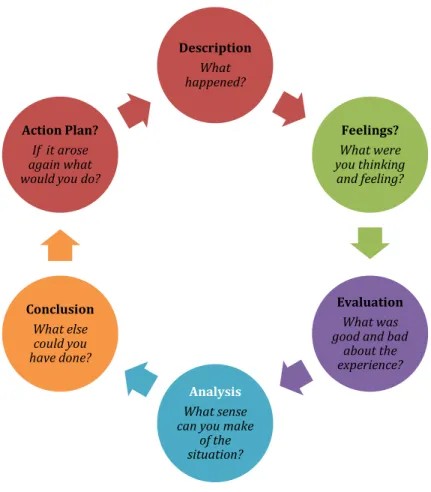
based on an adapted version of Gibbs’ cycle of reflection. According to this cycle, a
series of six questions are presented to the interviewee (Figure 1). These questions
were adapted specific to the content of this study, by studying the relevant literature
through exploratory analysis (Burns & Grove, 2005) (Addendum A).
Figure 1: Gibbs’ Reflective Cycle (Palmer et al., 1994)
An open-ended questionnaire was chosen as it encourages the participant to consider
their thoughts (Bolton, 2001) before arriving at a decision. Forrest (2008) adds to this
by indicating that the process of writing facilitates the act of contemplation, thus
allowing time for the participant to reflect on the value of the experience before
recording their thoughts.
After a routine lecture, the researcher who is not their lecturer, but who works at the
institution as lecturer for second year students, explained the study, research process,
reflective cycle and questionnaire to the students. The questionnaires were handed out
to the ten participants (N=10) who were willing to participate. The participants were
then given the opportunity to complete the questionnaire in the absence of the
researcher. Completion of the questionnaire took approximately forty-five minutes.
Although only eight questionnaires (N=8) were returned, this response rate was still
useful (80%). The open-ended questionnaire used in this study, required in-depth
descriptions and explanations of students’ perceptions, which produced valuable data.
Description What happened? Feelings? What were you thinking and feeling? Evaluation What was good and bad
about the experience?
Analysis
What sense can you make
of the situation? Conclusion What else could you have done? Action Plan? If it arose again what would you do?
To further probe issues presented in the questionnaire, a focus group discussion,
which was conducted by the researcher, was undertaken a week after receiving the
completed questionnaires. This allowed further exploration of students’ perceptions
by delving deeper into issues and by using group dynamics to elicit information not
revealed by the questionnaire. Probing was used when clarification was needed (Polit
& Beck, 2012). According to De Vos et al. (2011) focus group discussions may be
used as a method to better understand how people think or feel about a certain subject,
recommending a sample of six to ten participants for a focus group discussion with an
over-recruitment by twenty percent. For this study, a group of twelve participants
(N=12), not involved with the questionnaire, was invited to take part. All twelve
participants agreed to take part. The focus group discussion lasted approximately one
hour. The audio-taped discussion was then transcribed by the researcher.
Data analysis
Data gathering and analysis was conducted iteratively. Typically, data analysis for
qualitative studies occurs in three phases: description, analysis and interpretation
(Burns & Grove, 2005). Description involved the researcher familiarizing herself with
the data by reading and capturing its essence. The written answers from the
questionnaires were examined repeatedly to identify components that responded to
the study objectives. The information was then prepared and analyzed. Analysis took
place sequentially by open coding, categorizing of data, and identification of themes
(DeSantis & Ugarriza, 2000). Themes were then classified and reduced to reflect
relationships and other essential features (Burns & Grove, 2005). After transcription
of the focus group discussion, member-checking by participants was carried out to
ensure trustworthiness. The transcribed text was then read repeatedly to identify parts
which responded to the study objectives. These aspects were then analyzed and coded
into themes.
Ethical Approval
Ethical approval was granted by the relevant Ethics Committee for implementing the
research (S14/01/005). The permission of the head of the nursing school was obtained
to allow the researcher to collect the data. Participation was completely voluntary and
informed consent was obtained from each participant. The identities of the
participants were not disclosed to anyone and participants were allowed to speak in
the language that they preferred.
RESULTS
This study explored the responses of individuals who participated in the questionnaire
and the focus group discussion. Interrogation of the data relating to perceptions of the
operating room as a clinical learning environment led to the emergence of four themes.
These themes, namely, ‘interpersonal factors’, ‘educational factors’, ‘private
operating room context’, and ‘recommendations’, relate to context, which is the
overarching theme in this study. Although data analysis of the questionnaire and the
focus group discussion were conducted as individual components, themes that
emerged from both data sources were interwoven. What surfaced from the
questionnaire facilitated the understanding of the data from the focus group discussion.
These themes are reflective of the factors that influenced the quality and degree of
learning encountered in the operating room, and whether, ultimately, the operating
room provided an environment conducive to meaningful clinical learning.
Questionnaire
Theme 1: Interpersonal Factors
This theme reflects the interpersonal factors in the operating room expressed by
participants, which may have influenced their perceptions of this area during their
clinical learning experiences. The divergent emotions described in the questionnaire
indicate that the operating room presents both enablers and constraints to learning.
Interpersonal factors, which may have presented constraints to learning, include those
that created feelings of inadequacy amongst students.
1
R 7
: Staff made us feel unwelcome and stupid as they don’t even try to give
you a chance.
R 4: Theatre staff and doctors are rude…not open-minded and don’t have time
to teach students.
Alternatively interpersonal factors which served as enablers to learning as expressed
by participants included acknowledgement:
R 6: my input was acknowledged by the permanent staff.
Theme 2: Educational factors
This theme elucidated participants’ educational experiences and opportunities in the
operating room, which influenced their perceptions of this area. Participants
expressed the lack of meaningful experiences in the operating room as a key factor in
influencing their learning. These factors limited learning and therefore appeared to be
constraints:
R 8
All I learnt was to charge stock-that’s all and open packs. That’s all that
they allow us to do. And fetch equipment for them.
R 5 …and the theatre nurses did not want me as the student to touch the
equipment
.
R 1
They let us work only in receiving area most of the time
.
In addition, the extent to which operating room staff engaged in teaching and learning
activities with the participants, and the support offered, negatively influenced how the
participants perceived this area.
R 1
Nobody is giving proper orientation. Nobody explains to students what to
do in the theatre.
R 7
So I did what I could, opening dressing packs, preparing the patients on
the table…. But then was told to stand in corner and watch.
Two participants, whose operating room placement was situated at different hospitals,
expressed value in what they learnt, which appeared to have created a positive
perception of this area:
R 1
Good experience was to learn how to scrub for surgical operation.
R 2
The good thing was being exposed to the different operations done and
that has helped to feel and have more compassion for the patients….
Other positive learning outcomes included a better understanding of anatomy, pain
management, doctor’s orders and pharmacology.
Participants viewed assertiveness
as a positive outcome of their learning experiences.
Some indicated that assertiveness ensured survival and may have enabled a better
learning experience.
R 5
Being able to ignore the negative attitude and start to ask questions to the
operating doctor on the procedure being done.
Theme 3: Recommendations
This theme reflects the opinions and suggestions made by participants that may
enable learning in the operating room in future. It appears that there is a willingness to
learn on the part of the students, if adequate attention is given to orientation, and the
correct attitudes and behaviours towards their teaching role was embraced by the
operating room staff members.
R 1
More explanations to students, more exposure to operating theatres and
orientation to students…
Focus Group Discussion
Interrogation of the data from the focus group discussion resulted in similar themes to
that of the questionnaire.
Theme 1: Interpersonal factors
As with the questionnaire, interpersonal experiences that were enablers to learning
including acknowledgement and respect from doctors were described in the focus
group discussions. Two participants indicated that this contributed to their feelings of
inclusiveness as team members:
2