© 2017, IRJET | Impact Factor value: 6.171 | ISO 9001:2008 Certified Journal | Page 1233
A HIERARCHICAL DISTRIBUTED PROCESSING FRAMEWORK FOR HUGE
IMAGE BY USING BIG DATA
Ms. K.GOWTHAMI
1, Mrs. SANGEETHALAKSHMI
2, Mrs. C.VINODHINI
31
,
3Research Scholar, Dept of Computer Science and Applications, D.K.M. College for Women (Autonomous),
Vellore, Tamilnadu, India.
2
Assistant Professor, Dept of Computer Science and Applications, D.K.M. College for Women (Autonomous),
Vellore, Tamilnadu, India.
---***---
1.Abstract -
This paper presents a viable handlingstructure designated ICP (Image Cloud Processing) to capably adapt to the information blast in picture handling field. While most past inquires about concentrate on improving the picture preparing calculations to increase higher effectiveness, our work devotes to giving a general structure to those picture preparing calculations, which can be executed in parallel in order to accomplish a lift in time proficiency without trading off the outcomes execution alongside the expanding picture scale. The proposed ICP system comprises of two components, i.e. SICP (Static ICP) and DICP (Dynamic ICP). In particular, SICP is gone for handling the huge picture information pre-put away in the dispersed framework, while DICP is proposed for dynamic input. To fulfill SICP, two novel information portrayals named P-Image and Big-Image are intended to coordinate with Map Reduce to accomplish more advanced arrangement and higher proficiency. DICP is actualized through a parallel handling technique working with the conventional preparing component of the appropriated framework. Delegate aftereffects of thorough tests on the testing Image Net dataset are chosen to approve the limit of our proposed ICP structure over the customary cutting edge techniques, both in time effectiveness and nature of results.
2. INTRODUCTION
Over recent years, image processing has gained wide attention due to its comprehensive applications in various areas, such as engineering, industrial manufacturing, military, and health, etc.. However, in spite of its expansive development prospect, huge data amount comes along and hence triggers severe constraints on data storage and processing efficiency, which calls for urgent solution to relieve such limitations. Particularly, since Web age and search engine [10] started to develop and boom, most real business Web sites like Google, Baidu, Twitter, Facebook, etc. have to deal with millions of users’ requests for image storage, indexing, querying and searching within acceptable time. The prosperity of big image data over
© 2017, IRJET | Impact Factor value: 6.171 | ISO 9001:2008 Certified Journal | Page 1234 challenges that. The image transforming field faces, their
execution may be usually. Restricted to a instead low level because of the wasteful transforming built. With respect to a absolute machine.
In this paper, we available and examine a novel successful distributed skeleton named ICP (Image cloud Processing) which. Will be committed to advertising An dependable What's more effective model for dream. Assignments [32-35]. The centre configuration for ICP will be to use the princely. Registering assets furnished Toward the conveyed framework something like that Similarly as should. Actualize all the viable parallel preparing. The exquisite dispersed. Transforming system that ICP holds will be characterized from two. Far reaching perspectives: 1) effectively transforming the individuals static. Enormous picture information officially put away in the conveyed system, such. Concerning illustration the assignment for picture classification, picture retrieval, and so forth throughout this way, observing and stock arrangement of all instrumentation may be enhances. That would. Not request quick light of those clients in any case an productive. Preparing instead; 2) auspicious preparing the individuals changing information. Which necessities with be transformed promptly What's more exchange a prompt. Light of the users, particularly to those solicitations starting with the portable. Terminal, e. G. , the image transforming product in the users’ versatile. Telephone. Correspondingly, we bring these two preparing instruments. SICP What's more DICP, the place encountered with urban decay because of deindustrialization, engineering imagined, government login and d means static What's more Dynamic,. Separately.
So as will fulfill the prevalence of SICP which concentrates. Ahead utilizing those disseminated assets will accomplish cloud com-. Putting, we recommend two novel picture information representations named. P-Image Furthermore Big-Image which figure it out their possibility with those. Joining exertions of Map Reduce. P-Image, the place p means Pure,. Just holds the necessary majority of the data including the filename,. Those pixel values, and the width-height of the information image, every one of. Which need aid picked up Toward deciphering the beginning information. Big-Image is An. Exceptional representational about document which will be substantial sufficient to hold numerous a. Information record and an list record utilized with store the P-Images and. Record their relating offsets, individually. With those compelling. Indexing structure, we could find those P-Images at a helter skelter pace. Furthermore henceforth enhance the long run effectiveness of the entirety transforming. Methodology. To our SICP mechanism, Big-Image will trade those. Part of customary little picture files on go
about as enter. Concretely,. Big-Image will make divided under a few bunches on make transformed. For parallel Eventually Tom's perusing using the addition registering assets advertised. Toward those conveyed framework. From this perspective, the configuration from claiming. Big-Image will help a considerable measure to support time effectiveness without. Bargaining those load execution.
We outline a ace Proxy Furthermore a matching module on accomplish. Compelling preparing Toward making these two co-operators should worth of effort. With the intrinsic transforming system of the dispersed framework. In parallel. Briefly, those expert Proxy receives solicitations from the. Clients Also transmits the refined approachable parameters (e. G. Picture. Filename and document extension) of the matching module. Then,. The setup document in the matching module will be used to. Match these parameters Furthermore determines if the planning. Instrument if bring the related reaction calculations. Thus, helter skelter. Solidness Also weight imperviousness camwood a chance to be gotten by means of those DICP. Component when transforming changing information. On general, those noteworthy commitments about this paper camwood a chance to be. Summarized as takes after:
1) The proposed ICP is implemented in parallel and provides a general framework for image processing and achieves a boost in time efficiency without compromising the Performances.
2) SCIP is aimed at efficiently processing large-scale images that have already been stored in the distributed system. Especially, two novel image processing algorithms named P-images and Big-images are designed to avoid the repeated and time-consuming decoding operation, as well as to release memory consuming.
3) A complementary mechanism named DICP is applied for the new-coming image files. The stability and pressure resistance of DICP enable the requirement of dynamic input and urgent processing.
© 2017, IRJET | Impact Factor value: 6.171 | ISO 9001:2008 Certified Journal | Page 1235 Researches In view of parallel registering Also
dispersed framework. Bring been conveyed crazy gradually, Around which Big Table [22]. What's more GFS [23] recommended Eventually Tom's perusing Google would average achievements.
An alternate illustrative work, i.e. Map Reduce [14], may be fit. From claiming preparing gigantic information amount On An parallel disseminated way. Over various hubs. In the same way that great presented over [16][19], there. Need aid three fundamental preparing periods for MapReduce: the guide phase,. Those mix phase, and the diminish stage. Throughout the map phase,. Those data information is conveyed over the mapper machines, the place. Every machine after that techniques An subset of the information to parallel Also. Produces a few < key, esteem > pairs for each information record. Then,. Throughout those mix phase, these picked up < key, esteem > pairs. Would repartitioned Furthermore sort program inside every segment In this way that values. Comparing of the same enter camwood be gathered together under a. Values set {v1, v2,..}. Finally, Throughout the lessen phase, each. Reducer machine forms a subset of the < key, {v1, v2,..} >. Clinched alongside parallel Also composes the last comes about of the conveyed record framework. Concerning illustration those the vast majority broadly referred to open-source structural engineering of. Map Reduce, Hadoop [18][24] gives An dependable stage to. Researches requesting secondary efficiency, enormous storage, and exact. Dissection. By making utilization of Hadoop, noteworthy upgrades. Need been attained to Numerous aspects, for exaple, the high tide.
Fig: ICP structure. Static picture information is put away in the dispersed framework, trailed by picking up the picture information portrayal (P-Image and Big-Image), reaction calculations can be called to process the static picture information. Dynamic picture information is for the most
© 2017, IRJET | Impact Factor value: 6.171 | ISO 9001:2008 Certified Journal | Page 1236 mentioned elegant, our objective is very extraordinary on
the grounds that we look for immense picture scale as well as the time productivity, which prompts altogether different outlines. Segment 3 to Section 5 will expound the rich outline of our ICP.
3. SYSTEM OVERVIEW
Our ICP system comprises of two correlative preparing components, i.e., SICP (Static Image Cloud Processing) and DICP (Dynamic Image Cloud Processing). As appeared in Fig.1, SICP is gone for preparing those vast scale picture information that have been put away in the conveyed framework. Interpret these static pictures initially to keep up the vital data as their comparing P-Images which will be then put away in the information document contained in Big-Image. At that point, when picture handling is required, we simply need to record the list document additionally put away in Big-Image to discover the requested P-Images which give the required picture data. Given the required picture data, we would then be able to execute the related picture preparing calculations went for picture characterization, recovery, location, and so forth.. Concerning DICP, it is intended for the dynamic demands from the customers and must have the capacity to restore the outcomes promptly. Ace Proxy acknowledges the customer's handling solicitation and conveys it to the Master working in the characteristic instrument that the customary dispersed framework possesses. In parallel, Master Proxy transmits the available parameters (e.g. the picture filename and record augmentation) refined from the solicitations to the Matching Module in which these parameters will be coordinated with that set in advance as per genuine applications. In the event that effectively coordinated, the related reaction calculations would be called and utilize the data gave by the inborn Master-Slave component of the regular appropriated framework to fulfill comparing picture handling operation. From the working component of SICP and DICP, unmistakably SICP is fit for handling the huge picture information pre-strored in the dispersed framework and on going isn't genuinely requested, while DICP is more appropriate when a huge number of portable terminals all the while make a demand of picture preparing and interest for prompt reaction. Points of interest of SICP and DICP will be expounded in consequent areas.
4. STATIC IMAGE CLOUD PROCESSING
Similarly as previously mentioned, SICP is a powerful circulated expertcessing instrument committed to preparing the huge picture information that have just been put away in the disseminated framework. In some sense, SICP may contribute more to those genuine business Web destinations like Facebook, Google, Gmail, and so on which force a high requesting on productively handling huge scale picture information. So as to take full points of interest of SICP, Map Reduce is utilized to coordinate with the recently planned P-Image and Big-Image to actualize huge scale and parallel preparing in the distributed computing way. Note that our SICP isn't restricted to actualize on Map Reduce, some other parallel handling system is accessible, while Map Reduce may give the generally most astounding prevalence due over its great adaptation to non-critical failure and load adjusting. In the interim, business mammoths like Google and so forth have demonstrated the high adaptability of Map Reduce in genuine applications, moreover, our SICP can be unquestionably versatile to a more mind boggling condition.
4.1
Modeling for P-Image and Big-Image
P-© 2017, IRJET | Impact Factor value: 6.171 | ISO 9001:2008 Certified Journal | Page 1237 Image, these data would not get lost and henceforth, time
utilization will be significantly lessened by dodging the rehashed deciphering operations.
matrix to store the pixel values corresponding to those stored in the P-Image. By accessing the matrix, we can obtain the pixel values at a high speed owing to the one-to-one correspondence between the pixel coordinates recorded in the matrix and those contained in P-Image.
Red Green Blue
Gre y 0~255
0~255
0~255 0~255
. . . . . .
. .
. .
RGB Model
Grey Model (Band=
3)
[image:5.612.43.574.322.737.2](Band =1)
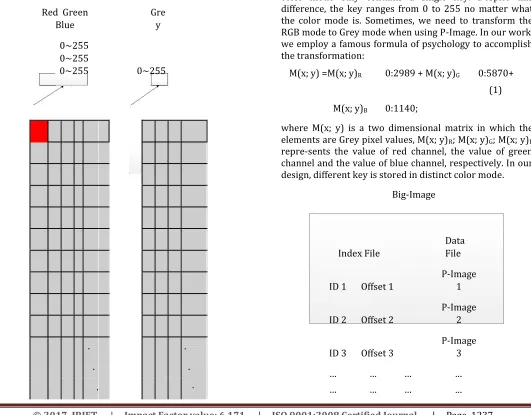
Fig. 3: The differences between RGB color mode and Grey color mode.
In image processing field, RGB and Grey color modes are the most widely used color space to represent images. As depicted in Fig. 3, RGB color mode contains a 1 3 array to store the key of the three channels. By contrast, Grey color mode only contains a single key. Despite this difference, the key ranges from 0 to 255 no matter what the color mode is. Sometimes, we need to transform the RGB mode to Grey mode when using P-Image. In our work, we employ a famous formula of psychology to accomplish the transformation:
M(x; y) =M(x; y)R 0:2989 + M(x; y)G 0:5870+
(1) M(x; y)B 0:1140;
where M(x; y) is a two dimensional matrix in which the elements are Grey pixel values, M(x; y)R; M(x; y)G; M(x; y)B
repre-sents the value of red channel, the value of green channel and the value of blue channel, respectively. In our design, different key is stored in distinct color mode.
Big-Image
Index File
Data File
ID 1 Offset 1 P-Image 1
ID 2 Offset 2
P-Image 2
ID 3 Offset 3
P-Image 3
… … … …
© 2017, IRJET | Impact Factor value: 6.171 | ISO 9001:2008 Certified Journal | Page 1238
… … … …
… … … …
ID n Offset n
P-Image n
Fig. 4: The structure of Big-Image.
Fig. 4 presents the structure of Big-Image which consists of a data file and an index file. The data file is employed to store the aforementioned P-Images, and the index file is utilized to record the ID and Offset of each P-Image stored in the data file. Here, we store the P-Images in Big-Image so as to save memory space, avoid a loss of image information, and process huge amount of images at a time. The catalogue of the index file is made up of two fields, i.e. ID and Offset. The P-Image ID is computed by the Hash function with the P-Image filename, and the P-Image Offset denotes its corresponding location in the data file. Indexing through the index file using the ID to get the corresponding Offset, we can directly get the P-Images stored.
Algorithm 2 DICP Mechanism
/* Step 1: Master Proxy */ 1: For each request from the client do
2: The main thread transmits the request to the Master;
3: Start a vice thread to extract the parameters from the request and transfer the parameters to the Matching Module;
4: End for
/* Step 2: Matching Module */ FN: the pre-set image filename in Matching Module;
FE: the pre-set image extension in Matching Module;
5: For each parameter from Master Proxy do 6: Extract image filename and extension from
the parameters;
7: Gain FN and FE from the configuration file; 8: if parameter. filename=FN and parameter.
extension= FE then
9: Start a new thread and call the corresponding algorithm;
10: End if 11: End for
from these parameters to be matched with the configuration information that have been pre-set in the configuration file (Line 5 to 7). If the accessible parameters successfully match with those set beforehand according to real applications, then, the scheduling mechanism would call the related response algorithms in computer vision area, such as image detection, image retrieval, image classification, etc.. Then, the processing information provided by the Master-Slave mechanism will be used to collaborate with the response algorithms to accomplish corresponding requests.
5 Experiments
` This section provides comprehensive experimental evidence for the performance of our proposed ICP: 1) to validate the efficiency of Big-Image over the traditional small image files when acting as input; 2) to verify the time efficiency of SICP when processing large-scale static image data; 3) to prove the stability and pressure resistance of DICP when processing the dynamic input
5.1. Experimental Environment
We give agent comes about accomplished on the testing ImageNet [30] dataset running on Hadoop-1.0.3 bunch of two IBM minicomputers, each of which furnishes with 16-center 2.2GHz IBM CPU and 30GB memory space. Since the equipment architecture of IBM minicomputer is ppc64 bits, we utilized Java6 SDK additionally discharged by IBM to perform better similarity. The working arrangement of the two minicomputers is SuseLinuxEnter-prise11. To bring the Hadoop bunch into full play, we set map red. map. tasks as 24 and map red. reduce. tasks as 8, both of which are key setup parameters of Hadoop. In our bunch, the quantity of Map Node is 8.
5.2 ImageNet Dataset
© 2017, IRJET | Impact Factor value: 6.171 | ISO 9001:2008 Certified Journal | Page 1239 countless neatly arranged pictures for a large portion of
the synsets in the WordNet chain of importance.
In our previously mentioned three examinations, we picked 10,000 pictures of a similar determination 640 480 as the dataset signified by ImageNet-B to approve the proficiency of Big-Image as an info document; 1,000,000 pictures of various classifications as a dataset repre-sented by ImageNet-S to confirm the handling effectiveness of SICP; and 200 pictures resized to no bigger than 800 demonstrated by ImageNet-D to test the security and weight protection of DICP. Fig.9 demonstrates the example pictures from the ImageNet dataset. Here, ImageNet-B, ImageNet-S and ImageNet-D are autonomous.
Note that the pictures from ImageNet-B must be kept an indistinguishable determination so from to ensure a reasonable condition when looking at the information productivity between Big-Image and customary little picture documents. Then, with a specific end goal to precisely derive the difference in effectiveness when independently in regards to Big-Image and customary little picture documents as information, adequate pictures should be contained and here, test setting is 10,000. Also, since that SICP is gone for boosting the time proficiency in handling enormous picture information, the picture size of ImageNet-S should achieve a generally abnormal state in order to powerfully approve the prevalence of SICP over conventional techniques in light of a solitary hub. Here, we pick 1,000,000 pictures to give persuading comes about. With respect to ImageNet-D, we at first planed to contain 1,000 pictures, yet genuinely limited by the quantity of our test gadgets for the occasion. Consequently, we at long last picked 200 pictures as ImageNet-D and each picture in ImageNet-D was resized to no bigger than 800 to fill in as the dynamic information prepared by DICP system. It should be said that the size of ImageNet-D is conceivable to mirror the DICP system to some degree, and the scale is relied upon to be expanded as the exploratory condition gets enhanced, which will be persuaded in our future work.
5.4.1 Harris
The Harris [31] corner detector is a popular interest point detector due to its strong invariance to rotation, scale, illumination variation and image noise. Based on the local auto-correlation function, Harris is utilized to cater for image regions containing texture and isolated features. Since the algorithmic complexity of Harris is at a relatively low level, it is efficient enough to process small-scale images on a single machine. However, despite the simpleness of image algorithms such as Harris, the requirement for time efficiency based on a single node is
hard to meet along with the increasing scale of big image data. Our SICP is proposed to release this restriction, which successfully achieves high efficiency when processing the big image data stored in the distributed system. Table 1 records the experimental results of SICP and Open when processing different scales of images. From the experimental results recorded in Table 1, when the number of images is only 10,000, the processing time of SICP
is 12.9 minutes, 4.89 minutes longer than that of OpenCV. The rationale for this unexpected result owns to the low complexity of Harris which can be implemented efficiently even on a single node. Recall what has been elaborated in Section 4, the processing mechanism of SICP requires some pre processing such as decoding the images to get P-Image, the mergence and segmentation of Big-P-Image, etc.. Time cost of these necessary operations accounts for a large proportion in the total cost of small-scale images processing. Therefore, the superiority of SICP over traditional methods based on a single node is hard to demonstrate when the image amount is limited to a low level, which, however, can be desirably solved by employing our DICP mechanism. Table 1 gives a desirable comparison when the number of images reaches 50,000, where the processing time of SICP is 10.15 minutes less than that of OpenCV. Along with the increasing number of images, we can validate the efficiency of SICP through a simple calculation. For example, time cost of OpenCV is 1.7 times of SICP’s when processing 100,000 images, and this comparison reaches 5.3 times when processing 500,000 images. Furthermore, when the scale of images boosts to 1,000,000, we can see a comparison of 5.8 times. Based on this growth tendency, we can expect that our ICP framework would undoubtedly outperform OpenCV, whatever the complexity of algorithms, provided that the number of images is large enough.
5.4.2SIFT
SIFT[13] (Scale-invariant feature transform) is a popular algorithm for extracting distinctive invariant features from images that can be used to perform reliable matching between different views of an object or scene. The features are invariant to image scale and rotation and are shown to provide robust matching across a substantial range of affine distortion, change in 3D viewpoint, addition of noise, and change in illumination. As one of the most
© 2017, IRJET | Impact Factor value: 6.171 | ISO 9001:2008 Certified Journal | Page 1240 classical local feature algorithms in recent 10 years, SIFT
[image:8.612.347.558.291.455.2]not only contributes a lot to the academic community but also gains the acceptance from the industries in computer vision, machine learning, graphics, and other related areas. Compared with Harris, the algorithmic complexity of SIFT is much higher, which results in a larger time consumption even when processing small-scale images on a single node. Owing to this, the aforementioned time cost of the necessary pre processing of SICP only accounts for a little proportion in the whole processing time. Hence, SICP outperforms OpenCV by a large margin even when processing small-scale images. Table 2 gives the experimental results of SICP and OpenCV when separately implementing SIFT.
TABLE 2: The comparison between SICP and OpenCV on SIFT.
Just as recorded in Table 2, time cost of OpenCV when pro-cessing 10,000 images is 9.09 times of that when using SICP, and this comparison reaches more than 9.879 times when the number of images is 50,000. When the image scale boosts to 100,000 and and 500,000, time consumption of OpenCV is more than 10 and 11.4 times of SICP, respectively. Once the number of images s oars to 1,000,000, we can observe 16.35 times in processing cost that OpenCV exceeds SICP. The analyzed experimental results have powerfully validated the increasing superiority of SICP over OpenCV along with the growing image scale.
According to the analysis of Table 1 and Table 2, we can draw the conclusion that both of the algorithmic complexity and the image scale can influence the performance of SICP while the image scale plays the dominate role. Despite the low algorithmic complexity, high efficiency of SICP over the conventional methods based on a single node can be apparently revealed as long as the number of images is large enough. Considering the practical applications in image processing field, the complexity of image processing algorithms is usually higher than Harris and SIFT, and besides, the image scale is much larger than that contained in our Image Net-S. Hence, we can obviously obtain high efficiency when employing SICP to implement image processing algorithms that involve big image data stored in the distributed system. The real applications have not been evaluated due to the experimental environment and data amount. However,
Google etc. industry giants have been successfully processing an increasing number of big data on Map Reduce, which largely benefits from the inherent scalability that Map Reduce possesses. In this sense, it can be scalable to accomplish those demanding tasks in real applications with our framework.
5.4.3 Comparison of Visual Results
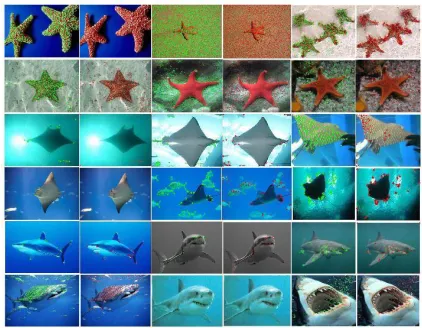
We have verified the time efficiency of SICP in Section 6.4.1 and 6.4.2, yet another factor that also counts a lot in the performance evaluation of ICP framework draws our attention, i.e., the visual results of local features. Fig. 11 and Fig. 12 presents some example images of our experimental results on Harris and SIFT, respectively. Each couple of identical images separately processed by ICP and OpenCV are regarded as one group.
Fig. 11: Examples of visual experimental results on Harris. The odd and even number of columns present the images
processed on ICP and OpenCV, respectively. from the viewpoint of subjective appraisal. For example, the left twin pictures in the first line demonstrates the comparative number of intrigue focuses while the left gathering recorded in the third column presents diverse outcomes where ICP has obviously identified more intrigue focuses than OpenCV. Different gatherings of twin pictures in Fig. 11 can likewise demonstrate the predominance of our ICP over OpenCV while considering both time proficiency and nearby visual outcomes. Fig. 12 gives another persuading occurrence where the left twin pictures displayed in the first column indicate comparative outcomes while the center gathering in the base line introduces much contrast in which ICP extricates highlight focuses promote more precisely than OpenCV by means of subjective assessment. So also, different gatherings recorded in Fig. 12 exhibit the better execution of ICP over OpenCV in various degrees while actualizing SIFT. As indicated by the previously mentioned investigation, we #Image 10,000 50,000 100,000 500,000 1,000,000
© 2017, IRJET | Impact Factor value: 6.171 | ISO 9001:2008 Certified Journal | Page 1241 can presume that however our SICP is gone for boosting
the time productivity of handling huge picture information, it doesn't bargain the nature of the visual preparing comes about and the execution of methodology in the middle. From this point of view, our ICP structure beats customary process-ing techniques in light of a solitary hub, for example, OpenCV in noteworthy measure.
5.5. Performance of DICP
Similarly as said in Section 5 , the key achievement of DICP essentially relies upon its solidness and weight protection. Consequently, in this part, we might want to introduce two sorts of analyses utilizing our Image Net-D to independently assess the steadiness and the weight protection of DICP. Here, the execution of DICP is likewise approved by means of Harris and SIFT calculations.
5.5.1. Stability of DICP
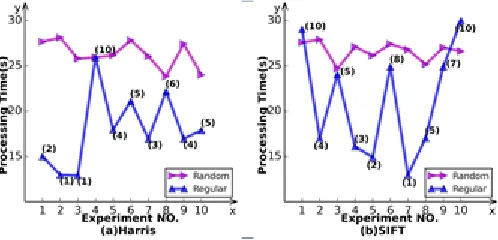
[image:9.612.38.287.464.584.2]Here, we characterize the soundness of our DICP instrument as fol-lows: Each time, regardless of what number of little scale and new-coming pictures should be prepared, the normal handling time of each picture is dependably in a little range. To test the steadiness of DICP, we transferred few pictures in arrangement. In particular, we transferred a few pictures each time, and this operation would be rehashed for 10 times with little schedule vacancy. Here, we transferred the pictures for two turns. Images each time, and for the second, the number of uploaded images each time was random but always no more than 10.
Fig. 13: Stability test on DICP with various calculations.
Fig. 13 shows the test aftereffects of Harris and SIFT on DICP; In Fig. 13, the bend set apart with precious stones speaks to the preparing time of general 10 pictures; the bend set apart with squares remains for the handling time of an irregular number of pictures, and the incentive in the sections named alongside each square is the comparing picture sum. Seeing from (an) and (b) in Fig. 13, when the quantity of pictures is settled to 10, the preparing expense of each time dependably varies under 5 seconds, which
delineates that our DICP component can work relentlessly when the picture sum is settled. Investigating the aftereffects of the irregular information, we can approve the solidness of our DICP after a straightforward count. In (a), we can ascertain the normal handling time (measured in seconds) of each case: 7.5, 8, 8, 2.7, 4, 4.4, 5.3, 3.8, 4.3, 3.6. The uniqueness between the most elevated and least time is just 5.3 seconds. Another powerful contention attracts our consideration regarding (b). After a basic figuring, we get the normal handling time (measured in seconds) of each case: 2.9, 4.1, 4.8, 5.3, 7.5, 3.125, 7.5, 3.3, 3.6, 3. The uniqueness between the most noteworthy and least time is just 4.6 seconds. By breaking down the outcomes picked up from the general and arbitrary information, we have effectively approved the strength of our DICP component.
5.5.2 Pressure Resistance of DICP
© 2017, IRJET | Impact Factor value: 6.171 | ISO 9001:2008 Certified Journal | Page 1242
5.6. Discussion
In previously mentioned tests, execution of our proposed ICP structure has been effectively approved on the Hadoop group. It should be said that our ICP system is chiefly gone for enhancing handling productivity, so we contrast and the conventional picture preparing structure in view of a solitary hub, e.g. OpenCV, a pervasive system additionally intended for enhancing computational proficiency and with a solid concentrate on genuine applications. As two novel information portrayals, P-Image and Big-Image demonstrate their predominance in limiting the info utilization similarly as delineated in Fig.10, which contributes a great deal to lessen the entire picture handling period when com-pared with conventional picture preparing approaches. Since that the technique of delivering P-Images and Big-Image needs certain opening cost, the picture scale must be sufficiently expansive to demonstrate the headway of SICP on the I/O proficiency over customary little picture records, which, in any case, needs no uncertainty in light of the fact that our SICP is really gone for handling enormous picture information. What's more, then again, similarly as examined at last piece of Section 4.1, the picture preparing, P-Image creating, and Big-Image delivering can be executed in parallel, which shows that creating P-Image and Big-Image won't drag down the entire proficiency. The test comes about introduced in Table 1 and Table 2 give agent occasions to confirm the time effectiveness of SICP in handling pictures with various calculations. Low-multifaceted nature calculations and little scale pictures would make genuine imperatives on the execution of SICP, which may be even substandard compared to conventional techniques in view of a solitary hub. Once more, since our SICP is utilized to process substantial scale pictures in the distributed computing way, regardless of the many-sided quality of picture handling calculations or the picture sum will be far higher than that in our investigation. The increase in time proficiency does not imply that we
disregard the nature of the last handling outcomes, which can be confirmed through the illustration comes about introduced in Fig.11 and Fig.12. Similarly as Fig. 13 and Fig. 14 have approved, DICP possesses high steadiness and weight protection because of its compelling inner planning. mechanism, whereas it is probably the scheduling mechanism that might affect the performance of DICP, say, waiting for the query usually costs most of the time. We have been devoted to proposing a comprehensive scheduling mechanism that can achieve both robust pressure resistance and low time cost. According to the experimental evaluation, our ICP framework has gained significant advancements in boosting the time efficiency of image processing, and our efforts may perfect this target in the near future.
6. CONCLUSION
This paper explains a compelling dispersed handling structure named ICP planning to proficiently process the expansive scale picture information without bargaining the outcomes quality. ICP contains two sorts of handling instrument, i.e. SICP and DICP, to accomplish powerful handling on the static huge picture information and the dynamic information, separately. Teaming up with MapReduce, P-Image and Big-Image assume the key parts of SICP to help the time productivity. Depending on the two recently proposed structures, time productivity would be extraordinarily enhanced by using SICP to process expansive scale pictures put away in the appropriated framework when contrasted and conventional strategies in light of a solitary hub. On the off chance that the new-coming picture documents should be handled desperately, DICP takes into consideration quick reaction immediately to maintain a strategic distance from un-dermined issues. Broad investigations have been led on ImageNet dataset to approve the productivity of ICP. From the alluring outcomes, we trust that enormous picture information handling is a promising heading, which calls for attempt in foundation, registering system, demonstrating, learning calculation, applications, and varying backgrounds.
REFERENCES
[1] R. Hong, Y. Yang, M. Wang, X. Hua, “Learning Visual Semantic Relationships for Efficient Visual Retrieval,” IEEE Transactions on Big Data, vol.1, no.4, pp.152-161, 2015.
© 2017, IRJET | Impact Factor value: 6.171 | ISO 9001:2008 Certified Journal | Page 1243 [3] X. Tian, Y. Lu, N. Stender, L. Yang, D. Tao, “Exploration
of Image Search Results Quality Assessment,” IEEE Transactions on Big Data, vol.1, no.3, pp.95-108, 2015.
[4] F. Wu, Z. Wang, Z. Zhang, Y. Yang, J. Luo, “Weakly Semi-Supervised Deep Learning for Multi-Label Image Annotation,” IEEE Transactions on Big Data, vol.1, no.3, pp.109-122, 2015.
[5] Y. Yang, F. Shen, H. T. Shen, H. Li, X. Li, “Robust Discrete Spectral Hashing for Large-Scale Image Semantic Indexing,” IEEE Transactions on Big Data, vol.1, no.4, pp.162-171, 2015.
[6] Y. C. Wang, C. C. Han, C. T. Hsieh, et al, “Biased Discriminant Analysis With Feature Line Embedding for Relevance Feedback-Based Image Retrieval,” IEEE Transactions on Multimedia, vol.17, no.12, pp.2245-2258, 20
[7] R. Hong, Y. Yang, M. Wang, X. Hua, “Learning Visual Semantic Relationships for Efficient Visual Retrieval,” IEEE Transactions on Big Data, vol.1, no.4, pp.152-161, 2015.
[8] K. Huang, C. Wang and D, Tao, “High-Order Topology Modeling of Visual Words for Image Classification,” IEEE Transactions on Image Processing, vol.24, no.11, pp.3598-3608, 2015.
[9] X. Tian, Y. Lu, N. Stender, L. Yang, D. Tao, “Exploration of Image Search Results Quality Assessment,” IEEE Transactions on Big Data, vol.1, no.3, pp.95-108, 2015.
[10] F. Wu, Z. Wang, Z. Zhang, Y. Yang, J. Luo, “Weakly Semi-Supervised Deep Learning for Multi-Label Image Annotation,” IEEE Transactions on Big Data, vol.1, no.3, pp.109-122, 2015.
[11] Y. Yang, F. Shen, H. T. Shen, H. Li, X. Li, “Robust Discrete Spectral Hashing for Large-Scale Image Semantic Indexing,” IEEE Transactions on Big Data, vol.1, no.4, pp.162-171, 2015.
[12] Y. C. Wang, C. C. Han, C. T. Hsieh, et al, “Biased Discriminant Analysis With Feature Line Embedding for Relevance Feedback-Based Image Retrieval,” IEEE Transactions on Multimedia, vol.17, no.12, pp.2245-2258, 2015.
Ms. K. GOWTHAMI
Research Scholar, Dept of Computer Science and Applications, D.K.M. College for Women (Autonomous), Vellore, Tamil Nadu, India.
Mrs. G. SANGEETHA LAKSHMI
Assistant professor, Dept of Computer Science and Applications, D.K.M. College for Women (Autonomous), Vellore, Tamil Nadu, India.
Ms. C. VINODHINI