ON MODELING TRACES IN A COMPUTING
ENVIRONMENT FOR HUMAN LEARNING BASED
INDICATORS
Hassan ELKISS, Faddoul KHOUKHI, Abdelkrim BEKKHOUCHA
Faculty of Sciences and Techniques Mohammedia Laboratory of Informatics of Mohammedia (LIM), BP 146 20650 Mohammedia, Morocco,
Laboratory of Informatics of Mohammedia, Mohammedia, Morocco,
E-mail:
[email protected]
,[email protected] , [email protected]ABSTRACT
In classical teaching, the teacher can supervise his learners through their writings, dialogues and their behaviors. He has the possibility to evaluate them from their productions during the activities and can adapt or modify parts of the course, if it is necessary to start new chapters. The adaptation of educational contents to the learner's profile in a Computing Environment for Human Learning (ILE) is one of the most complex problems to solve. Indeed, the different profiles of learners and their heterogeneity and their different learning styles, returns the development and evolution of such systems difficult. The current goal of several studies is to follow and understand the behavior of the learner uses an ILE during a learning session through its traces.
Several virtual learning environments presented on the web, exploiting traces to provide learners with individualized learning space. Unfortunately, these environments do not always offer the possibility to adapt courses to the profile of the learner.
In a learning situation, we cannot predict with certainty the plan of a learner or the goal that he seeks to accomplish more during his navigation, we cannot directly observe what a learner knows or does not know, but only to estimate it in a very imperfectly way through their actions and interactions with the system. These traces of the Action types are analyzed and exploited in order to provide indications about his behavior during the learning process. The objective of our work is to propose a representation model which traces to determine indicators Cognitive, Activity and Motivation of the learner during the learning process. The exploitation of these indicators will allow us to propose a hybrid adaptive strategy (automatic or manual) to the learner profile.
Keywords: Traces, Indicator, Learner, profile, CAM model.
1. INTRODUCTION
The adaptation of the educational contents to the profile of the learner in an IT environment for the human learning is one of the most complex problems to solve. Indeed, the different profiles of learners and their heterogeneity and their different learning styles, making the development and evolution of such systems difficult.
The current goal of several researches [2]-[7]-[12], 13] is to follow and to understand the behavior of the learner uses an IT environment for the human learning during a learning session through its traces.
The adaptation of educational contents to the learner profile is closely linked to the analysis and the exploitation of trace collected during the learning process.
In this paper we propose a strategy of hybrid adaptation (automatic or manual) educational contents to the learner profile by exploiting trace according to a model we will detail later.
the tutor or an account of the activities of the learner during learning sessions
The assessment will include adequate information on the activity, the motivation and the cognitive of the learners to proceed to manual adaptations of the sequences of activities and/or the scenarios of learning to their skills.
In this paper, we propose an overview of the CAM model [1]-[3] and we show our model traces. In the following we present the use this model in the hybrid model adaptation of content that we propose.
2. TRACES OF INTERACTION
The problem of analysis and exploitation of traces related to a learning process of a learner in a Computing Environment for Human Learning (CEHL) has been studied by several authors
[2]-[7]-[12]-[13]-[15]-[18]-[26], each presents an exploitation method.
Our work can be seen as a contribution to the development of machine learning systems in a CEHL. Indeed, a learner who connects to a training system from the web shows different interactions with its environment:
• At the local post;
• At the level of the platform.
During a learning session, the learners act on the learning platform and all learning objects proposed OP (lectures, exercises, multiple choice, etc.) it contains.
These actions generate events which are at the origin of traces. The traces will be analyzed, exploited and used to generate processes of manual adaptation by the tutor or the processes of automatic adaptation of the educational contents to the profile of the learners.
In the next section, we will highlight the traces used in the calculation of indicators (Cognitive, Activity, and Motivation) but first we will briefly raise the limits of existing models of traces.
3. LIMITATIONS OF EXISTING MODEL TRACS
Trace model MTCAM
In The development of the systems CEHL, several models are used:
The model of the learner
The model of contents
The model of traces
Etc.
In this work, we are more particularly interested in the modeling of traces generated by the actions and the productions of the learner during its process of learning in a CEHL.
We find in the literature several models [4, 15, 25]:
Jermann model
TREFLE Model
MUSETTE model
TRAILS model
CSE model
MTSA model
UTL model
Every model presents its exploitation method of tracks and possesses its own characteristics.
The model of Jermann [34] considers the trace as a sequence of observations which occur during intervals of time during a session of learning. The TREFLE model [34] represents a trace raw format of a graph, whose nodes are ordered lists that build episodes. In this model the treatment of traces is made using the graph theory.
The model MUSETTE [32] defines a trace as a sequence of states and transition (entities and events). This model recovers from navigation traces of a learner in a CEHL.
The model TRAILS [29] is based on the principle of the use of educational objects (EO) and the navigation between these EO interconnected by temporal and conceptual links.
The model CSE (Collection-Structuring-Operation) [20]-[23] is based on the model of Jermann. In this model, the raw trace is merged from multiple sources tracking.
The MSTA model [18] includes the information stemming from log files to build traces relating to the actions and productions of the learners, in order to calculate indicators of activity, social and cognitive. This model transforms the raw trace of educational indicators for the monitoring of online learning.
The UTL model (use tacking Language) [15] considers a trace as a set of elements consisting of one ("key") and one ("value").
4. TRACE MODEL MTCAM
Most part of the models of traces that we cited in this work, are related to the learning systems and have specific needs.
These models do not take into account the related traces to the cognitive, motivational aspect of the learner. To take into account, this aspect of learning, useful in the process of automatic or manual adaptation.
standards established in other systems, to allow the interoperability.
To answer this problem, we propose a model of trace-based indicators called MTCAM. Our approach is based on the following principle:
1) Recovery of raw traces whatever their format (existing format, log files and other sources tracing). 2) Filtering and processing of these
raw traces to build a trace containing a set of information necessary for our model.
3) Calculation of the high-level indicators in occurrence indicators CAM.
4) Construction of MTCAM model in a format UTL (key, value). The model MTCAM allows us to extract lines of traces which we can represent with a language of modelling of data as XML, UTL, etc. these traces will be presented with keys and values. T = {O1, O
2, …, On}
Where, every observed O
i is characterized by a pair < Key, value >.
The structuring raw traces is made according to a fusion of a model of the learner in accordance with the standard PAPI or IMS LIP and indicators CAM. This merger will allow us to create a model of traces rich in information and statistics that can be used as input to another application of learning and decision support. It can also help the designer/guardian to make some supervision and the adaptation of the contents to learner profiles. The main goal of this representation of traces is summarized in four basic issues:
General: Any trace can integrate raw extracted from multiple sources but also all traces derived (Indicators).
Interoperable: the trace can be integrated and processed by all the learning systems using a model of learning in accordance with the standard PAPI and IMS LIP.
Reusable: the model possesses an opening allowing to add and to
complete extensions corresponding to the standard
IMS LIP in different contexts.
Adaptable: she can be personalized and rebuilt according to the specific needs
for the persons and for the systems of learning
This model can collect in the same instance tracing, Cognitive level, the level of activity and the degree of motivation of the learner during the learning process.
The calculation of indicators (Cognitive, Activity and Motivation) [1]-[3], allow one hand to perform an automatic adaptation to learner profile.
If the automatic adaptation fails then the tutor receives a report of actual activity learners to decide if possibly an adaptation manual courses or learning scenarios are necessary.
In the next section, we give a brief overview of the model indicators and then we propose our model traces MTCAM.
We find the notion of indicator in several works [16]-[17]-[19]-[24]-[37]. Most part of these works present indicators as variables which give information on:
• The mode, the process or the quality of the cognitive system of an activity of learning,
• The characteristics and the quality of the product of the interaction,
• The mode, the process or the quality of the collaboration when we are in a social context.
The model we will propose contains three types of indicators: Cognitive Indicators, Activity Indicators and Motivation Indicators.
Every indicator plays a role in the process of adaptation of a given course, for every learner having a given profile.
4.1 Cognitive Indicator
The cognitive functions include [39] all the elaborate intellectual functions which make man a living, cultural and social, able to interact with his immediate environment. We distinguish five main clauses from it:
There are five main areas: the memory, the language, the logical reasoning, the attention, the Visuospatial abilities:
• The memory (The memory intervenes in all the domains of the everyday life, as the storage and the recovery of information, The memory also groups functions much more automated as the storage of knowledge relative to very particular know-how (know how to cycle, drive an automobile or a building machine)
• The logical reasoning (The logical reasoning is implied at every level by the everyday life, Since the extrapolation of simple rules (the respect for the stages to the realization of a recipe) until the management of more complex relations, as the estimation of the consequences of the made of a decision.)
• The attention (The Attention is a cognitive mechanism that role may be similar to the concentration at which an individual is able to process the relevant information available to it)
• The Visuospatial abilities (The Visuospatial abilities are cognitive abilities that promote information processing and visual object recognition. They are, therefore, involved in all actions involving the view. The Visuospatial abilities also include mental imaging capabilities that allow an individual to mentally represent a situation to provide a more appropriate response.)
These major cognitive functions [39] allow the human brain to encode, store and reuse the knowledge and know-how that the individual acquires throughout his life.
These big cognitive functions [39] allow the human brain to encode, to store and to reuse knowledge and know-how which the individual acquires throughout his life.
The cognitive indicator that we propose in the field of adaptive learning does not take into account all the cognitive functions above.
We think that the degree of memory and the degree of the logical reasoning are necessary in any process of learning.
Therefore the cognitive indicator that we propose in this work represents only two degrees mentioned above, to measure the degree of participation of the learner in the learning process by producing answers or solutions to some exercises to questions or multiple choice questions (MCQ).
The cognitive indicator that we propose in our current work is described by a set of two discrete random variables {D1, D2}.
The variable D1 represents the degree of memorization of the learner, This variable is updated during the evaluation of the learner in the exercises, the tests and MCQ which asks for the intervention of the memory. The domain of definition that we used for this variable is:
[1 7], if
D1=1 then the learner presents a low memory. The variable D2 measures the degree of the logical reasoning which possesses a learner. This variable is updated in the tests and the exercises proposed to the learner.
4.2. Activity Indicator
The Activity indicator measures the degree of manipulation of learning objects by learners during the learning process. Indeed, the learner can access some of its technical components that can be buttons, scroll bars, menu, etc. All traces generated are called "Learning Object Manipulation." They can be accessed, a mouse click, production, etc. When the manipulation is to produce an answer, we say that it is a manipulation productive, opposed to handling non-productive (e.g. manipulation of a scroll bar). Any productive manipulation is considered an educational activity must be taken into account. An activity indicator is described by a set of three discrete random variables {A1, A2, A3, A4}. The variable A1 represents the objective of learning described by the taxonomy of Bloom [39], it takes values altogether {1, 6}:
This variable indicates that a learning activity aims one of the six at levels of objectives of learning:
1. The knowledge, 2. The understanding, 3. The application, 4. The analysis, 5. The synthesis, 6. The evaluation.
The variable A2 indicates the type of the activity. It can take three values:
1. Expositive, 2. Active 3. Interrogative.
The variable A3 indicates the nature of the knowledge to be acquired in the activity. It can take five values:
1. Concept, 2. Made,
3.
Process, 4. Principle, 5. Proceeded.The variable A4 measure the rate of activity during the learning session. It calculates the number of productive manipulation in an activity module, relative to the total production in a time interval. Then we can represent the activity indicator IA by: IA = {A1, A2, A3, A4} with Ai can take one of the values listed above and it isautomatically set when the learner makes his choice
4.3. Motivation Indicator
In most part the learning systems online. The learner finds himself isolated, alone in front of his computer screen, and has for partner his only motivation. The problem of motivation of learners in the process of distance learning is treated in several works [16]-[17]-[19]-[24], because it is one of the causes of abandonment in E-Learning. The indicator of motivation in this work measures the quantity of resources allocated (QCM, exercise, navigation in the virtual library, ...) to assimilate a concept. The duration of the learner performed in learning. Number of vists pages treating the concept. A learner little motivated for the learning, will visit few pages (nbPagesVisitées = 0) or will pass furtively on the contents (tMoyenPage = 0). This would give a low effort So this measure would allow us to identify the learners who were not serious during the learning session.
We can define the motivation indicator in the learning session as following:
𝑀𝑜 = �
W
k(i) ∗ 𝑓(𝑖) ∗
𝑑(𝑖)
𝐷
𝑖∈{1..𝑛}
Wk(i) :Weight of page Pj with j∈ {0, 0.25,0.75} and
bloom level
f: frequency of consultation (Number of times visited/ Total number of pages visited)
D: Session duration time in minutes d:Duration page time in minutes where:
d(i) = �
too long 30 ≤ d(i)
long 5 ≤ d(i) ≤ 30
normal 0.5 ≤ d(i) ≤ 5
brief d(i) ≤ 0.5
f(i) = � high 𝑁𝑡𝑣 > 5
normal 𝑁𝑡𝑣 ≤ 5
In our case an indicator of motivation can take a value among this valuable set {amotivated, little motivated, Averagely motivated, very motivated} Based on the concept of fuzzy logic[36], the fuzzy approach provides more intuitive modeling a classical approach, in order to relate observed variables (duration and frequency) and output variables (motivation indicator), our dynamic model theory will to know about the level of learner motivation, we define the shape of the membership function as triangular.
The fuzzification is transforming the digital quantities in a fuzzy set with the linguistic variables that follow:
- (duration, [0.5,30],{ brief, normal, long, toolong ) - (frequency, [1,10], {normal, élevé}),
- (motivation indicator, [0,20], {amotivated, little motivated, Averagely motivated, very motivated}) Basic rules:
We design a fuzzy controller using Mamdani inference method [35] based on:
𝜇
′𝑐𝑜𝑛𝑐𝑙𝑢𝑠𝑖𝑜𝑛
(𝑦)
= 𝑀𝐼𝑁𝑦(𝜇𝑝𝑟é𝑚𝑖𝑠𝑒(𝑥), 𝜇𝑐𝑜𝑛𝑐𝑙𝑢𝑠𝑖𝑜𝑛(𝑦))
2) if frequency = value and duration = value and weight=value then motivation = value.
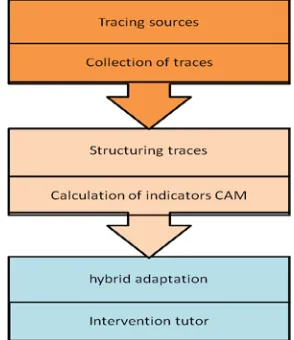
Figure 1: Extraction Process and Transformation traces
The modeling traces of the learners allows tutors to understand, to estimate and to support their learning. To this end, we propose a query language tutor to exploit profiles and monitoring of learners in their learning in order to have an overall idea about the assimilation of a concept using empirical statistical.
The exploitation of traces by the tutor, not only allows to infer new knowledge in the course, which introduces concepts poorly assimilated by a large number of students, but it can, also, provide information reflecting the evolution interactions between learners themselves. Thus, it is necessary to help users (tutors, students, ...), in collecting, structuring and interpreting traces collected especially when heterogeneous non-standardized. The traces that we use in this paper are three categories (traces of category statistics, traces of category learning, traces of analytical category). The traces category statistics represent data concerning:
Figure 2: Operating steps traces
The duration of the training session,
The duration of assimilation of a concept,
The number of pages viewed,
The number of sites visited
The number of sites visited unconnected with learning
The score of the learner in the qcm cognitive (logical reasoning, memory level)
[image:6.612.344.491.424.594.2] Etc...
The trace category learning represent data that can update the random variables A1..A4, related activity indicators and data used to calculate the degree of learner motivation. The traces of analytic categories represent the cumulative learning scenarios provided by the tutor to assess their degree of assimilation. These are data on the quality of learning scenarios provided.
5. CONCLUSION
The field of interaction analysis activities of distance learning is a new direction of research, particularly that of learning scenarios. The objective of this work is to make the system more adaptive and personalized learning for its use, and provide an interface for enhanced playback and support for participants and observers cognitive learning systems, by viewing and exploitation of relevant information.
Our work joins in this approach of constitution of indicators for the help the adaptation and the personalization of the learnings. It is what we tried to present through this article. However, noting that the calculated indicators can be visualized tutor for control and personalization of content.
REFERENCES
[1] M.EL ammari, F.Khoukhi, A.Bekkhoucha «Contribution to Content Modeling in the Computing Environment for the Human Learning CEHL» journal of computing, volume 4, issue 7, july, ISSN (Online) 2151-9617, 2012,
[2] N.Bousbia, Analyse des traces de navigation des apprenants dans un environnement de formation dans une perspective de détection automatique des styles d’apprentissage, Thèse de doctorat, Ecole Nationale Supérieure d’Informatique Algérie, 2011.
[3] F .Khoukhi, M.El Ammari, Traces et modèle CAM dans un eiah, 1 er Colloque International ISKO-Maghreb'2011 "Concepts et Outils pour le Management de la Connaisance (KM)", 13-14 Mai 2011. Hammamet-Tunisie
[4] F.Diagne, Instrumentation de la supervision de l’apprentissage par la réutilisation d’indicateurs : Modèles et Architecture, Thèse de doctorat, Université Joseph Fourier Grenoble, 2009.
[5] S.Laroum, N.Béchet, H.Hamza and M.Roche, “Classification automatique de documents bruités à faible contenu textuel” Bio
polymères Interactions Assemblages, INRA. Juin 2009.
[6] F.Diagne,“Instrumentation de la supervision de, l’apprentissage par la réutilisation d’indicateurs: Modèles et Architecture” Thèse, 2009.
[7] D.P.This Ngoc, S.Iksal., C.Choquet, E.Klinger, “Une proposition de langage de calcul déclaratif pour le processus d'analyse de traces d'apprentissage,” les Actes de la conférence EIAH, 23-26 juin 2009, Le Mans, France, p. 29-36.
[8] S.Ait Adda, N.Bousbia, A.Balla, ‘’Vers une adaptabilité du scénario d’apprentissage à base d’indicateurs de parcours’’ , ICWIT’08.
[9] S.Ait Adda, N.Bousbia, A.Balla, ‘’Détermination d’indicateurs pour l’identification des styles d’apprentissage :Cas de l’indicateur de typologie de navigation’’ , ICWIT’08.
[10]T.Djouad, "Analyser l’activité d’apprentissage collaboratif : Une approche par transformations spécialisées de traces d’interactions",2nde Rencontres Jeunes Chercheurs en EIAH, RJC-EIAH'2008.
[11]M. Cantara ’’ Exploration des facteurs influençant la motivation scolaire de l’étudiante et de l’étudiant lors de l’apprentissage dans un cours offert en ligne’’ M.Ed Université de Sherbrooke Aout 2008. [12]G.E.Blanchard, “Motivation et culture en
e-Learning”, Thèse Juin, 2007.
[13]N. Bousbia, J-M.Labat, “ Perception de l’activité de l’apprenant dans un environnement de formation Sémantique du parcours de l’apprenant’’ Environnements Informatiques pour l’Apprentissage Humain”, Lausanne 2007.
[14]H.Chaachoua, M-C.Croset, D.Bouhineau, M.Bittar, J-F.Nicaud, ‘’ Description et exploitations des traces du logiciel d’algèbre Aplusix’’, Revue STICEF, 2007, Vol. 14 [15]C. Choquet, S.Iksal, ‘’Modeling tracks for the
model driven reengineering of a tel system’’ Journal of Interactive Learning Research (JILR), vol 18, pp161-184. 2007
[16]A.Dimitracopoulou, E.Bruillard. ‘’Enrichir les interfaces de forums par la visualisation d’analyses automatiques des interactions’’, Revue STICEF, Vol. 13, 2006.
[18]F.Diagne, “ MTSA : Un Modèle de Traces pour la Supervision de l’Apprentissage ”, Actes de l'atelier Modélisation des connaissances des 6èmes journées francophones, Lille, 16 janvier 2006, pp. 38-48.
[19]A.Dimitracopoulou, V.Kollias, A.Harrer, A.Martinez, A.Petrou, Y.Dimitriadis, J.Antonio, L.Bollen, A.Wichmann. State of the Art on Interaction Analysis, ‘’projet IA Interaction Analysis’ supporting Teachers & Students’’ Self-regulation. 2005
[20]Pernin, “ CSE, un modèle de traitement de traces”, Internal research report CLIPS-IMAG 2005.
[21]G.Rozé,“Structuration et analyse de traces hybrides issues de situation d'apprentissage”, Master Report Environnements Informatiques pour l'Apprentissage Humain et Didactique 2005, pp 21.
[22]N.Zniber, C.Cauvet, “système pédagogique adaptatifs : état de l’art et perspectives”, 2005. [23]J.-P Pernin,.’’Scénarios et traces
d'apprentissage’’. Institut national de recherche pédagogique ERTé e-Praxis/ Laboratoire CLIPS-IMAG, Grenoble 2005.
[24]A.Dimitracopoulou, A-M. Martinez, Y.Dimitriadis, A.Morch, S.Ludvigsen, A.Harrer, U.Hoppe, B.Barros, F.Verdejo, C.Hulshof, T.de Jong, G.Fessakis, A.Petrou, K.Lund, M.Baker, P.Jermann, P.Dillenbourg, V.Kollias, S.Vosniadou, State of the Art on Interaction Analysis: ‘’Interaction Analysis Indicators‘’. projet ICALT du réseau européen Kaleidoscope, 2004.
[25]M.Merceron, K.Yacef ‘’Train, store, analyse for more adaptative teaching’’. Actes de la conférence Technologies de l'Information et de la Communication pour l'Education, TICE University Sidney Austria 2004.
[26]R.Mazza, V.Dimitrova, ‘’Visualising Student Tracking Data to Support Instructors in Webbased Distance Education’’, Proceedings of the 13th international World Wide Web on Alternate track, 2004.
[27]V.Heiwy, “Un modèle de ressources pédagogiques générique pour la FOAD” Colloque MIAGE, Marrakesh, Morocco, Mars 2004.
[28]C.R.Todd, Myers-Briggs Type Indicator®. The Skeptic'sDictionary.http://skepdic.com/myersb. html, 2004.
[29]J.Schoonenboom, ‘’Handout Introduction TRAILS’’, Workshop, CSCL’ 2004 Symposium.
[30]C.Reffay, T.Chanier, ‘’How social network analysis can help to measure cohesion on collaborative distance learning’’ Proceedings of the International Conference on Computer Support for Collaborative Learning, 2003. [31]V.Heiwy, C-F.Ducateau, “Un modèle de
ressources pédagogiques pour la FOAD”, Colloque Environnements Informatiques pour l'Apprentissage Humain EIAH2003, Strasbourg, France, 15-17 Avril 2003.
[32]P-.A.Champin,Y.Prié, A.Mille,. ‘’MUSETTE: Modeling USEs and Tasks for Tracing Experience”, Workshop 5 'From Structured Cases to Unstructured Problem Solving Episodes For Experience-Based Assistance', ICCBR'03, Trondheim, Norvège, pp 279-286. 2003
[33]T.Lin.Kinshuk, A.Patel,“Cognitive Trait Model for Persistent Student Modeling”, EdMedia 2003 Conference Proceedings, Norfolk, USA, 2003.
[34]E.Egyed-Zsigmond, A.Mille, Y.Prié,’’Club Trèfle: Un modèle de trace usage’’,5th International Conference on Case-Based Reasoning, Research and Development, Trondheim, LNAI 2689, pp 146-160. 2003. [35]R.Nkambou, G.Gauthier, C.Frasson, “Un
modèle de représentation des connaissances relatives au contenu dans un système tutoriel intelligent,” Sciences et Techniques Éducatives, International Journal, Vol. 4, No. 3, pp. 299-330, HERMES, Paris, 1998.
[36]Fuzzy sets and Fuzzy logic Theory and Application, George J.Klir and Bo Yuan, Prentice Hall PTR Upper SaddleRiver , New Jersy 07458. 1997
[37]R-M .Gagné, L.Briggs, W.Wager, “Principles of Instructional Design. Harcourt Brace Jovanonich,” 4 th edition, Orlando, FL.1992. [38]S. H. Bokhari, “Partitioning Problems in
Parallel, Pipelined, and Distributed Computing”, IEEE Transactions on Computers, Vol. 37, No. 1, pp. 34-45, January 1988.