J U L Y 1 9 9 2
WRL
Technical Note TN-30
Transparent Controls
for
Interactive Graphics
Joel F. Bartlett
The Western Research Laboratory (WRL) is a computer systems research group that was founded by Digital Equipment Corporation in 1982. Our focus is computer science research relevant to the design and application of high performance scientific computers. We test our ideas by designing, building, and using real systems. The systems we build are research prototypes; they are not intended to become products.
There is a second research laboratory located in Palo Alto, the Systems Research Cen-ter (SRC). Other Digital research groups are located in Paris (PRL) and in Cambridge, Massachusetts (CRL).
Our research is directed towards mainstream high-performance computer systems. Our prototypes are intended to foreshadow the future computing environments used by many Digital customers. The long-term goal of WRL is to aid and accelerate the development of high-performance uni- and multi-processors. The research projects within WRL will address various aspects of high-performance computing.
We believe that significant advances in computer systems do not come from any single technological advance. Technologies, both hardware and software, do not all advance at the same pace. System design is the art of composing systems which use each level of technology in an appropriate balance. A major advance in overall system performance will require reexamination of all aspects of the system.
We do work in the design, fabrication and packaging of hardware; language processing and scaling issues in system software design; and the exploration of new applications areas that are opening up with the advent of higher performance systems. Researchers at WRL cooperate closely and move freely among the various levels of system design. This allows us to explore a wide range of tradeoffs to meet system goals.
We publish the results of our work in a variety of journals, conferences, research reports, and technical notes. This document is a technical note. We use this form for rapid distribution of technical material. Usually this represents research in progress. Research reports are normally accounts of completed research and may include material from earlier technical notes.
Research reports and technical notes may be ordered from us. You may mail your order to:
Technical Report Distribution
DEC Western Research Laboratory, WRL-2 250 University Avenue
Palo Alto, California 94301 USA
Reports and notes may also be ordered by electronic mail. Use one of the following addresses:
Digital E-net: DECWRL::WRL-TECHREPORTS
Internet: [email protected]
UUCP: decwrl!wrl-techreports
Transparent Controls for
Interactive Graphics
Joel F. Bartlett
July, 1992
Abstract
The graphical user interface for a workstation application is often composed
of working areas containing text or drawings surrounded by controls like
but-tons, menus, or sliders. Users must constantly move the mouse between the
work areas and the controls. Previous methods to decrease this motion have
relied on keyboard shortcuts or popup menus. This paper demonstrates an
al-ternative, transparent controls, that allows the entire display surface to be used
as a working area, with the controls arranged anywhere on the working area.
Copyright
1992
Digital Equipment Corporation
Table of Contents
1. Introduction
1
2. The Virtues of Transparency
2
3. Implementing Transparency
2
4. Conclusion
4
5. Acknowledgements
5
1. Introduction
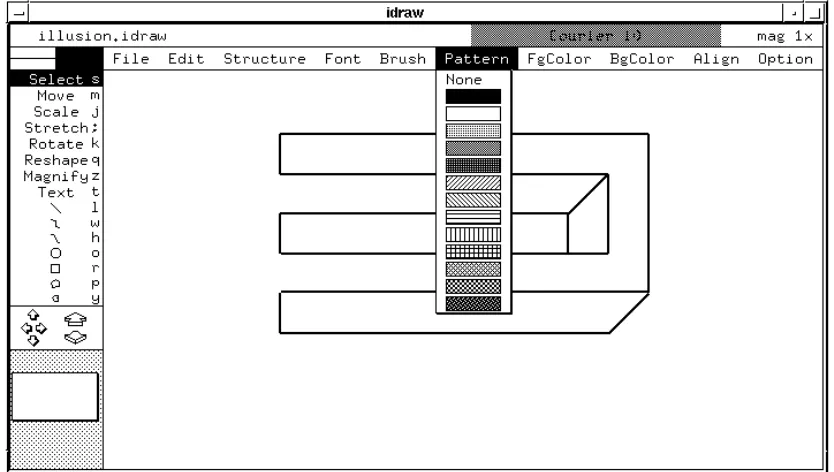
[image:5.612.124.541.189.425.2]A common interactive application allows one to use a mouse (or other pointing device) to
create and edit drawings. A window produced by one such application, idraw, is shown in figure
1. The window is broken up into a number of fixed areas: the drawing area, drawing controls
such as buttons, sliders, and pull-down menus, and indicators showing the current file name and
text font.
Figure 1: A conventional interactive application
The user can waste significant time moving the mouse between the drawing area and the
con-trols. Some applications solve this problem by allowing sequences of one or more keystrokes,
i.e. keyboard shortcuts, as a shorthand way to invoke a mouse selected operation. This can
im-prove productivity, but the user must remember these sequences and either move one hand
be-tween the mouse and the keyboard, or run the application with one hand on the mouse and one
on the keyboard.
Another solution is to use popup menus to control the application. Instead of moving the
mouse to the control region of the window, depressing a combination of mouse buttons and/or
keyboard keys causes a menu to appear under the mouse’s cursor, obscuring part of the work
area. Again, this requires the user to remember key sequences and possibly use two hands.
Finally, some applications support tear-off menus that allow frequently used menus to be
per-manently displayed. While this reduces mouse motion and keystrokes, these menus are like
pop-up or pull-down menus in that they obscure parts of the work area when visible.
All these solutions present an application designer with a dilemma. If the controls are separate
from the work area, then there will be a lot of back-and-forth mouse motion. If the controls are
inter-mixed with the work area, then the work area will be obscured.
TRANSPARENT CONTROLS FOR INTERACTIVE GRAPHICS JULY 1992
2. The Virtues of Transparency
One way to avoid obstructing the work area is to make overlapping objects transparent. That
is, the object under the overlapping object continues to be visible and not distorted. In order to
minimize visual distraction, the transparency of the overlapping object can be varied according
to the user’s attention by watching the location of the mouse’s cursor. When the mouse enters
the controls, they become more visible, and when it leaves the controls, they become less visible.
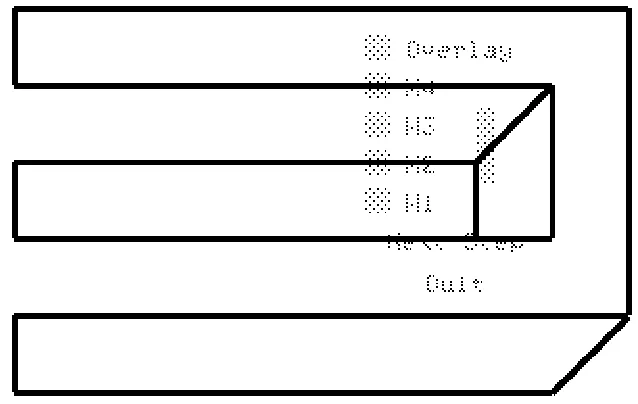
[image:6.612.149.468.274.476.2]In order to demonstrate these ideas, I constructed several sample applications. Figure 2 shows
a portion of a sample window, with a transparent control panel overlaying a drawing. When the
mouse moves into the control panel (Figure 3), the panel becomes more visible by darkening the
letters, dimming portions of the drawing that are under the control panel, and outlining the
but-tons. The user can reposition the control panel by using the mouse to drag its "grab bar" (Figure
4).
Figure 2: Mouse outside the transparent control panel
Since the control panel is transparent, changes that the application makes to the drawing under
the panel become visible as soon as they are made.
3. Implementing Transparency
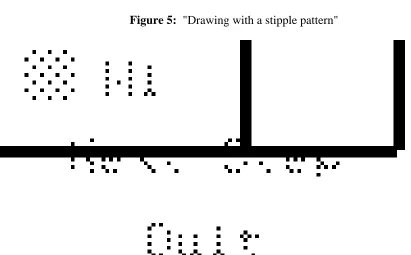
Transparency is easily implemented in the X window system [3] by drawing with stipples, a
bitmap that does additional clipping on the drawn image. Figure 5 shows a checkerboard stipple
pattern and the effect of drawing text with and without it.
When the mouse is outside the control panel, the panel is drawn dimly using a stipple that lets
half the pixels in the panel’s image appear in the window (Figures 2, 6).
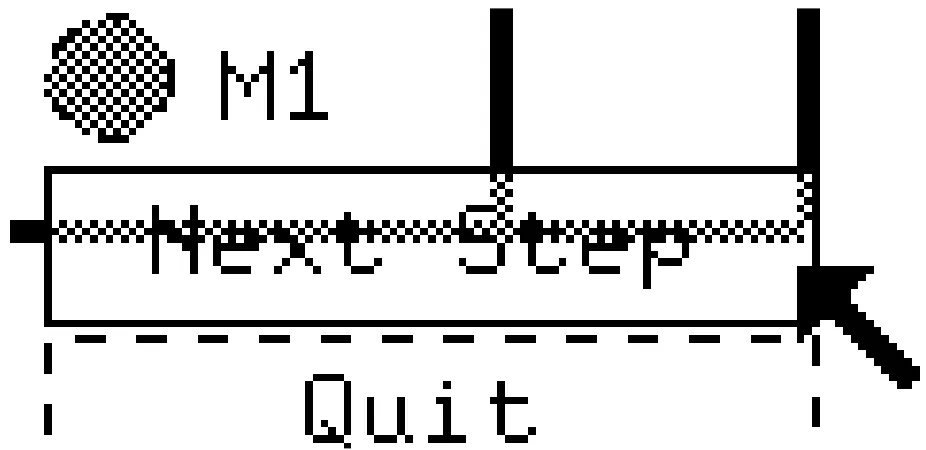
When the mouse is moved into the control panel, the region under the control panel is
lightened by filling it with the window’s background color using a stipple that draws half the
pixels. Then, the control panel text and button outlines are drawn solidly, without using a stipple
pattern (Figures 3, 7).
TRANSPARENT CONTROLS FOR INTERACTIVE GRAPHICS JULY 1992
Figure 3: Mouse inside the transparent control panel
Figure 4: Control panel moved by dragging "grab bar"
The examples in this paper show that transparent control panels are effective on monochrome
displays. What they can’t demonstrate is that transparency is even more effective with color
displays, using some of the design ideas used for topographic maps [4]. By choosing a dark
color for the control panel and lighter colors with similar brightness for the application drawing,
one can eliminate filling the area under the control panel with the stippled background color.
I investigated these ideas using the structured graphics system ezd [2]. Implementation was
straightforward as ezd does not assume that an object completely obstructs the objects beneath it.
Unfortunately, the X window system does assume that when window A obstructs window B,
nothing in the portion of B under A is visible, i.e. windows are opaque. As the X toolkit [1], Xt,
and widget libraries use subwindows and thus depend upon X’s model for obstructing windows,
it would not be easy to add transparent controls to conventional widget sets.
[image:7.612.151.504.328.528.2]TRANSPARENT CONTROLS FOR INTERACTIVE GRAPHICS JULY 1992
[image:8.612.204.493.154.251.2]Figure 5: "Drawing with a stipple pattern"
Figure 6: Detail with mouse outside the transparent control panel
4. Conclusion
Transparent 2-D graphics are a useful new way to add controls to application’s work areas.
The result is less mouse motion and a larger work area. Sample implementations have shown
that stippling is a visually effective and efficient way to implement transparency. One obstacle to
wider use of transparency is existing window system’s models for how windows obstruct each
other.
[image:8.612.90.501.283.538.2]TRANSPARENT CONTROLS FOR INTERACTIVE GRAPHICS JULY 1992
Figure 7: Detail with mouse inside the transparent control panel
5. Acknowledgements
Transparent controls were initially proposed as an example of why it’s a good idea to use
structured graphics to build interactive graphical controls. David Wall and others at WRL
en-couraged me to further investigate the idea. Bill Hamburgen, Joel McCormack, and David Wall
commented on an earlier draft of this report.
I thank you all.
6. References
[1]
Paul J. Asente and Ralph R. Swick.
X Window System Toolkit.
Digital Press, 1990.
[2]
Joel F. Bartlett.
Don’t Fidget with Widgets, Draw!.
Research Report 91/6, Digital Equipment Corporation Western Research Laboratory,
May, 1991.
[3]
Robert W. Scheifler and James Gettys with Jim Flowers, Ron Newman, and David
Rosenthal.
X Window System.
Digital Press, 1990.
[4]
Edward R. Tufte.
Envisioning Information.
Graphics Press, 1990.
TRANSPARENT CONTROLS FOR INTERACTIVE GRAPHICS JULY 1992
WRL Research Reports
‘‘Titan System Manual.’’ ‘‘MultiTitan: Four Architecture Papers.’’
Michael J. K. Nielsen. Norman P. Jouppi, Jeremy Dion, David Boggs, Mich-WRL Research Report 86/1, September 1986. ael J. K. Nielsen.
WRL Research Report 87/8, April 1988. ‘‘Global Register Allocation at Link Time.’’
David W. Wall. ‘‘Fast Printed Circuit Board Routing.’’
WRL Research Report 86/3, October 1986. Jeremy Dion.
WRL Research Report 88/1, March 1988. ‘‘Optimal Finned Heat Sinks.’’
William R. Hamburgen. ‘‘Compacting Garbage Collection with Ambiguous WRL Research Report 86/4, October 1986. Roots.’’
Joel F. Bartlett.
‘‘The Mahler Experience: Using an Intermediate WRL Research Report 88/2, February 1988. Language as the Machine Description.’’
David W. Wall and Michael L. Powell. ‘‘The Experimental Literature of The Internet: An WRL Research Report 87/1, August 1987. Annotated Bibliography.’’
Jeffrey C. Mogul.
‘‘The Packet Filter: An Efficient Mechanism for WRL Research Report 88/3, August 1988. User-level Network Code.’’
Jeffrey C. Mogul, Richard F. Rashid, Michael ‘‘Measured Capacity of an Ethernet: Myths and
J. Accetta. Reality.’’
WRL Research Report 87/2, November 1987. David R. Boggs, Jeffrey C. Mogul, Christopher A. Kent.
‘‘Fragmentation Considered Harmful.’’ WRL Research Report 88/4, September 1988. Christopher A. Kent, Jeffrey C. Mogul.
WRL Research Report 87/3, December 1987. ‘‘Visa Protocols for Controlling Inter-Organizational Datagram Flow: Extended Description.’’
‘‘Cache Coherence in Distributed Systems.’’ Deborah Estrin, Jeffrey C. Mogul, Gene Tsudik,
Christopher A. Kent. Kamaljit Anand.
WRL Research Report 87/4, December 1987. WRL Research Report 88/5, December 1988. ‘‘Register Windows vs. Register Allocation.’’ ‘‘SCHEME->C A Portable Scheme-to-C Compiler.’’
David W. Wall. Joel F. Bartlett.
WRL Research Report 87/5, December 1987. WRL Research Report 89/1, January 1989.
‘‘Editing Graphical Objects Using Procedural ‘‘Optimal Group Distribution in Carry-Skip
Ad-Representations.’’ ders.’’
Paul J. Asente. Silvio Turrini.
WRL Research Report 87/6, November 1987. WRL Research Report 89/2, February 1989. ‘‘The USENET Cookbook: an Experiment in ‘‘Precise Robotic Paste Dot Dispensing.’’
Electronic Publication.’’ William R. Hamburgen.
Brian K. Reid. WRL Research Report 89/3, February 1989.
WRL Research Report 87/7, December 1987.
TRANSPARENT CONTROLS FOR INTERACTIVE GRAPHICS JULY 1992
‘‘Simple and Flexible Datagram Access Controls for ‘‘Link-Time Code Modification.’’
Unix-based Gateways.’’ David W. Wall.
Jeffrey C. Mogul. WRL Research Report 89/17, September 1989.
WRL Research Report 89/4, March 1989.
‘‘Noise Issues in the ECL Circuit Family.’’ Jeffrey Y.F. Tang and J. Leon Yang. ‘‘Spritely NFS: Implementation and Performance of
WRL Research Report 90/1, January 1990. Cache-Consistency Protocols.’’
V. Srinivasan and Jeffrey C. Mogul.
‘‘Efficient Generation of Test Patterns Using WRL Research Report 89/5, May 1989.
Boolean Satisfiablilty.’’ Tracy Larrabee.
‘‘Available Instruction-Level Parallelism for
Super-WRL Research Report 90/2, February 1990. scalar and Superpipelined Machines.’’
Norman P. Jouppi and David W. Wall.
‘‘Two Papers on Test Pattern Generation.’’ WRL Research Report 89/7, July 1989.
Tracy Larrabee.
WRL Research Report 90/3, March 1990. ‘‘A Unified Vector/Scalar Floating-Point
Architec-ture.’’
‘‘Virtual Memory vs. The File System.’’ Norman P. Jouppi, Jonathan Bertoni, and David
Michael N. Nelson. W. Wall.
WRL Research Report 90/4, March 1990. WRL Research Report 89/8, July 1989.
‘‘Efficient Use of Workstations for Passive Monitor-‘‘Architectural and Organizational Tradeoffs in the
ing of Local Area Networks.’’ Design of the MultiTitan CPU.’’
Jeffrey C. Mogul. Norman P. Jouppi.
WRL Research Report 90/5, July 1990. WRL Research Report 89/9, July 1989.
‘‘A One-Dimensional Thermal Model for the VAX ‘‘Integration and Packaging Plateaus of Processor
9000 Multi Chip Units.’’ Performance.’’
John S. Fitch. Norman P. Jouppi.
WRL Research Report 90/6, July 1990. WRL Research Report 89/10, July 1989.
‘‘1990 DECWRL/Livermore Magic Release.’’ ‘‘A 20-MIPS Sustained 32-bit CMOS
Microproces-Robert N. Mayo, Michael H. Arnold, Walter S. Scott, sor with High Ratio of Sustained to Peak
Perfor-Don Stark, Gordon T. Hamachi. mance.’’
WRL Research Report 90/7, September 1990. Norman P. Jouppi and Jeffrey Y. F. Tang.
WRL Research Report 89/11, July 1989.
‘‘Pool Boiling Enhancement Techniques for Water at Low Pressure.’’
‘‘The Distribution of Instruction-Level and Machine
Wade R. McGillis, John S. Fitch, William Parallelism and Its Effect on Performance.’’
R. Hamburgen, Van P. Carey. Norman P. Jouppi.
WRL Research Report 90/9, December 1990. WRL Research Report 89/13, July 1989.
‘‘Writing Fast X Servers for Dumb Color Frame Buf-‘‘Long Address Traces from RISC Machines:
fers.’’ Generation and Analysis.’’
Joel McCormack. Anita Borg, R.E.Kessler, Georgia Lazana, and David
WRL Research Report 91/1, February 1991. W. Wall.
WRL Research Report 89/14, September 1989.
TRANSPARENT CONTROLS FOR INTERACTIVE GRAPHICS JULY 1992
‘‘A Simulation Based Study of TLB Performance.’’ ‘‘Cache Write Policies and Performance.’’ J. Bradley Chen, Anita Borg, Norman P. Jouppi. Norman P. Jouppi.
WRL Research Report 91/2, November 1991. WRL Research Report 91/12, December 1991. ‘‘Packaging a 150 W Bipolar ECL Microprocessor.’’ ‘‘Analysis of Power Supply Networks in VLSI
Cir-William R. Hamburgen, John S. Fitch. cuits.’’
WRL Research Report 92/1, March 1992. Don Stark.
WRL Research Report 91/3, April 1991.
‘‘Observing TCP Dynamics in Real Networks.’’ Jeffrey C. Mogul.
WRL Research Report 92/2, April 1992. ‘‘TurboChannel T1 Adapter.’’
David Boggs.
‘‘Systems for Late Code Modification.’’ WRL Research Report 91/4, April 1991.
David W. Wall.
WRL Research Report 92/3, May 1992. ‘‘Procedure Merging with Instruction Caches.’’
Scott McFarling.
‘‘Piecewise Linear Models for Switch-Level Simula-WRL Research Report 91/5, March 1991.
tion.’’ Russell Kao. ‘‘Don’t Fidget with Widgets, Draw!.’’
WRL Research Report 92/5, September 1992. Joel Bartlett.
WRL Research Report 91/6, May 1991.
‘‘Pool Boiling on Small Heat Dissipating Elements in Water at Subatmospheric Pressure.’’
Wade R. McGillis, John S. Fitch, William R. Hamburgen, Van P. Carey.
WRL Research Report 91/7, June 1991.
‘‘Incremental, Generational Mostly-Copying Gar-bage Collection in Uncooperative Environ-ments.’’
G. May Yip.
WRL Research Report 91/8, June 1991.
‘‘Interleaved Fin Thermal Connectors for Multichip Modules.’’
William R. Hamburgen.
WRL Research Report 91/9, August 1991.
‘‘Experience with a Software-defined Machine Ar-chitecture.’’
David W. Wall.
WRL Research Report 91/10, August 1991. ‘‘Network Locality at the Scale of Processes.’’ Jeffrey C. Mogul.
WRL Research Report 91/11, November 1991.
TRANSPARENT CONTROLS FOR INTERACTIVE GRAPHICS JULY 1992
WRL Technical Notes
‘‘TCP/IP PrintServer: Print Server Protocol.’’ ‘‘Systems for Late Code Modification.’’ Brian K. Reid and Christopher A. Kent. David W. Wall.
WRL Technical Note TN-4, September 1988. WRL Technical Note TN-19, June 1991.
‘‘TCP/IP PrintServer: Server Architecture and Im- ‘‘Unreachable Procedures in Object-oriented
Pro-plementation.’’ gramming.’’
Christopher A. Kent. Amitabh Srivastava.
WRL Technical Note TN-7, November 1988. WRL Technical Note TN-21, November 1991. ‘‘Smart Code, Stupid Memory: A Fast X Server for a ‘‘Cache Replacement with Dynamic Exclusion’’
Dumb Color Frame Buffer.’’ Scott McFarling.
Joel McCormack. WRL Technical Note TN-22, November 1991.
WRL Technical Note TN-9, September 1989.
‘‘Boiling Binary Mixtures at Subatmospheric Pres-‘‘Why Aren’t Operating Systems Getting Faster As sures’’
Fast As Hardware?’’ Wade R. McGillis, John S. Fitch, William
John Ousterhout. R. Hamburgen, Van P. Carey.
WRL Technical Note TN-11, October 1989. WRL Technical Note TN-23, January 1992.
‘‘Mostly-Copying Garbage Collection Picks Up ‘‘A Comparison of Acoustic and Infrared Inspection
Generations and C++.’’ Techniques for Die Attach’’
Joel F. Bartlett. John S. Fitch.
WRL Technical Note TN-12, October 1989. WRL Technical Note TN-24, January 1992. ‘‘Limits of Instruction-Level Parallelism.’’ ‘‘TurboChannel Versatec Adapter’’
David W. Wall. David Boggs.
WRL Technical Note TN-15, December 1990. WRL Technical Note TN-26, January 1992. ‘‘The Effect of Context Switches on Cache Perfor- ‘‘A Recovery Protocol For Spritely NFS’’
mance.’’ Jeffrey C. Mogul.
Jeffrey C. Mogul and Anita Borg. WRL Technical Note TN-27, April 1992. WRL Technical Note TN-16, December 1990.
‘‘Electrical Evaluation Of The BIPS-0 Package’’ ‘‘MTOOL: A Method For Detecting Memory Bot- Patrick D. Boyle.
tlenecks.’’ WRL Technical Note TN-29, July 1992.
Aaron Goldberg and John Hennessy.
‘‘Transparent Controls for Interactive Graphics’’ WRL Technical Note TN-17, December 1990.
Joel F. Bartlett.
‘‘Predicting Program Behavior Using Real or Es- WRL Technical Note TN-30, July 1992. timated Profiles.’’
David W. Wall.
WRL Technical Note TN-18, December 1990.