AN ARCHITECTURE FOR EVOLVING THE
ELECTRONIC PROGRAMME GUIDE FOR
ONLINE VIEWING
Emad Abdulrazzaq Jasim Al-Mohammed
School of Computing, Science and Engineering
University of Salford, Manchester, UK
I
LIST OF CONTENT
LIST OF CONTENT ... I LIST OF PUBLICATIONS ... IV LIST OF TABLES ... V LIST OF FIGURES ... VI ACKNOWLEDGEMENTS ... XI ABBREVIATIONS ... XII LIST OF SYMBOLS ... XIV ABSTRACT ... XV
Chapter One ... 2
1.1 Introduction ... 2
1.2 Research Problem ... 7
1.3 Research Aim ... 9
1.4 Research Questions ... 9
1.5 Research Methodology ... 9
1.6 Contribution to Knowledge ... 10
1.7 Thesis Layout ... 11
Chapter Two ... 14
2.1 Introduction ... 14
2.2 Electronic Programme Guide Systems ... 14
2.2.1 Electronic Programme Guide for IPTV System ... 18
2.2.2 Personalized Electronic Programme Guide... 22
2.3 IPTV System ... 25
2.4 Searching Systems ... 28
2.4.1 World Wide Web Searching Systems ... 29
2.4.2 Multimedia Searching Systems ... 31
2.4.3 Integrating the Internet with Multimedia Searching Systems ... 34
2.4.4 Smart TV Searching Systems ... 35
2.5 Recommendation Systems ... 38
2.5.1 Traditional Recommendation Approaches ... 38
2.5.2 Personalized Recommendation ... 45
II
2.5.4 Context-awareness Recommendation ... 51
2.6 Social Networks ... 55
2.6.1 Social Networks-based Recommendation Systems ... 57
2.6.2 Hybridization the Recommendation Operation with Social Network ... 61
2.6.3 Integrating Facebook into Recommendation Operation ... 63
2.7 Summary ... 67
Chapter Three ... 74
3.1 Introduction ... 74
3.2 Content Searching System ... 75
3.3 Recommendation System ... 75
3.4 Context-awareness Function ... 77
3.5 Service Requirements ... 77
Chapter Four ... 80
4.1 Introduction ... 80
4.2 General System Architecture ... 80
4.3 Content Searching Module ... 81
4.3.1 Extracting Metadata ... 85
4.4 Recommendation Module ... 90
4.4.1 User Viewing History... 90
4.4.2 User Clusters ... 94
4.4.3 Social Networks Recommendations ... 99
4.5 Context-aware Module ... 101
4.6 Content Database Server ... 104
4.7 Summary ... 105
Chapter Five ... 108
5.1 Introduction ... 108
5.2 Content Search Module ... 108
5.3 Recommendation Module ... 117
5.3.1 Viewing History Based (Content-Based) Recommendation ... 118
5.3.2 Users Clusters ... 121
5.3.3 Social Networks Contribution ... 124
5.3.4 Filtering Operation ... 128
III
5.5 Content Database Server ... 137
5.6 Online Electronic Programme Guide ... 146
5.7 Summary ... 149
Chapter Six ... 151
6.1 Introduction ... 151
6.2 User Trial Scenario ... 151
6.3 Evaluating the Function of Multiple Online Content Sources ... 155
6.4 Evaluating the Recommendation Function ... 159
6.4.1 Test Scenario ... 159
6.4.2 Evaluation Metrics ... 161
6.4.3 First Step of User Trial (Cold-start Problem)... 162
6.4.4 Second, Third and Fourth Step of Users’ Trial (Viewing History) ... 166
6.5 Filtering Operation ... 172
6.6 Direct Search ... 175
6.7 Summary ... 179
Chapter Seven ... 182
7.1 Conclusions ... 182
7.2 Future Work ... 185
REFERENCES ... 187
IV
LIST OF PUBLICATIONS
Al-Mohammed, E., & Linge, N. (2016, December). A generic, personalized electronic program guide system for accessing multiple online TV providers. In
11th International Conference for Internet Technology and Secured Transactions
(ICITST), 2016 (pp. 291-296). IEEE.
Al-Mohammed, E., & Linge, N. (2016, December). An Architecture for Personalized Electronic Program Guide to Access Online Television Content.
International Journal of Chaotic Computing (IJCC), vol. 4, issue. 2 (pp. 87-95).
Al-Mohammed, E., & Linge, N. (2017, June). Cloud based electronic programme guide system with integrated social network recommendations. International Journal of e-Education, e-Business, e-Management and e-Learning (IJEEEE), vol.
V
LIST OF TABLES
Chapter One
Table 1.1 Average Time Spent per day on Different Online Activities (hrs:mins) ……..…6
Table 1.2 Internet Video Consuming (Petabyte per month) until 2019 ………..…..6
Chapter Two Table 2.1 List of sources that connected to Atlas ………...16
Table 2.2 Summary of Literature Review ………...71
Chapter Four Table 4.1 Programme Metadata Features ………...84
Table 4.2 Programme’s Features Provided by Several Online Content Providers ……….88
Table 4.3 List of Used Categories ………...95
Table 4.4 Online Content Sources’ Categories ………...96
Chapter Five Table 5.1 Types of Videos Resolution That Employed in the Prototype ……….130
Table 5.2 Device Type versus Resolution Table ………..130
Table 5.3 Available Network Bandwidth versus Resolution Table ………..131
VI
LIST OF FIGURES
Chapter One
Figure 1.1 Proportion of Adults who Using On-Demand and Online Service in the UK …4
Figure 1.2 Proportion of Time Spent Watching, attributed to activities, by Age Group …..5
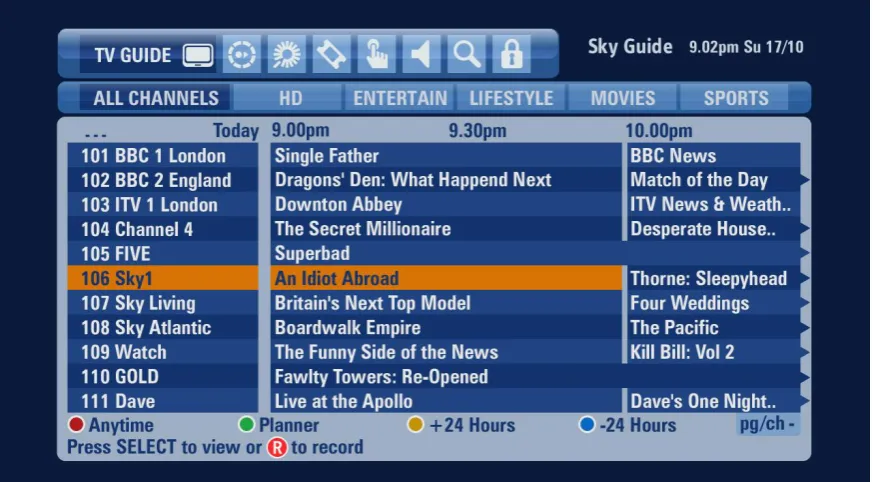
Figure 1.3 General Diagram of EPG Provided by Sky ……….8
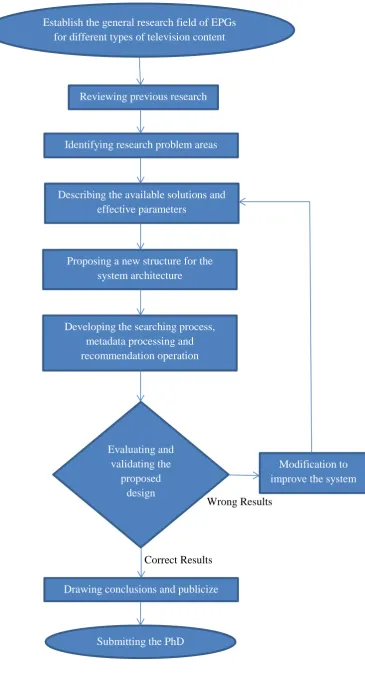
Figure 1.4 Stages of Research Methodology ………..12
Chapter Two Figure 2.1 Part of Content Metadata showing the Basic Description ……….15
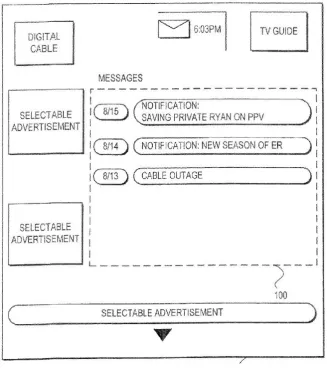
Figure 2.2 User Notifications Service in the Developed EPG ………21
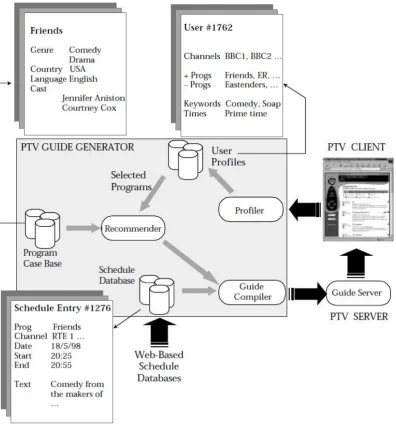
Figure 2.3 Architecture of Personal TV Guide System ………..23
Figure 2.4 Community-Based Programme Recommendation for EPG System ………….25
Figure 2.5 Main Functional Parts of the IPTV System ………...26
Figure 2.6 Overall Structure of personalized mobile IPTV system ………28
Figure 2.7 Intelligent Information Retrieval Agent ………....31
Figure 2.8 EPG Searching System ………..33
Figure 2.9 Supplementary User Interface of Internet Searching system on TV ………….35
Figure 2.10 Search Processing in the Smart TV system ……….37
Figure 2.11 Hybrid Recommendation Approach ………44
Figure 2.12 Typical Personalized Recommendation System ……….46
Figure 2.13 Overview of Show Time System ……….48
VII
Figure 2.15 Multiple Viewers Graphical User Interface ……….51
Figure 2.16 The Possible Ways for Incorporating the Contextual Information into the Recommendation Systems ………..53
Figure 2.17 Context-aware Recommendation System ………55
Figure 2.18 Block Diagram Describes the Idea of Social Network Recommendation System ……….59
Figure 2.19 IPTV Social Network Recommendation System ………60
Figure 2.20 Incorporating Social contribution and collaborative filtering ……….62
Figure 2.21 Selecting and Rating Preferred Movies within the Facebook Application ….64 Figure 2.22 Interface Showing Viewing Statistics ……….66
Chapter Four Figure 4.1 Overview of the Proposed System ………80
Figure 4.2 Content Search Module ……….82
Figure 4.3 XML-Based Metadata Example ………86
Figure 4.4 YouTube Metadata ………87
Figure 4.5 Recommendation Module ……….91
Figure 4.6 Users’ Clustering Process ………..97
Figure 4.7 Social Network Contribution ………..……….100
Figure 4.8 Context-aware Module ………102
Figure 4.9 Overall System Configuration ……….106
Chapter Five Figure 5.1 Retrieved Programme Raw Metadata From The Movie Database Source …..109
VIII
Figure 5.3 Part of The Movie Database Interface PHP Code for Extracting the Categories
………110
Figure 5.4 Part of YouTube Interface PHP Code ……….112
Figure 5.5 Part of BBC-iPlayer Interface Code ………113
Figure 5.6 Programme Matrix ………...114
Figure 5.7 Part of Matlab Code Represents the Combiner and Parser ……….115
Figure 5.8 Search Keywords before and after Search Agent Leader ………116
Figure 5.9 Part of Search Agent Leader Code to Read and Write the Search Keywords in Text File ………...117
Figure 5.10 Part of Recommendation Process Matlab Code Represents the Similarity Calculations Based on Jaccard Coefficient Measure ………119
Figure 5.11 Part of User Matrix which Represents the Recommended List Based on User Viewing History ………120
Figure 5.12 Part of Matlab Code That Used for User Clustering ……….122
Figure 5.13 Part of User Matrix which Represents the Recommended List of Programmes based on the Users Clusters Method ……….123
Figure 5.14 Facebook Application ………124
Figure 5.15 Part of Facebook Application that used to retrieve the Information about the ‘liked’, ‘watched’ and ‘want to watch’ Movies and TV Shows for each user …………..125
Figure 5.16 Data Retrieved from Facebook (in JSON) about Watched Movies and TV Shows for Particular User ……….126
Figure 5.17 Information retrieved from Facebook after Translation Operation ………...127
Figure 5.18 Joining the Application in Facebook ……….127
IX
Figure 5.20 Part of Matlab Code that is used for filtering the Recommended Programmes based on Available Network Bandwidth ………..132 Figure 5.21 YouTube Example for encoding MPEG-DASH stream showing Media Presentation Description (MPD) ……….………..133
Figure 5.22 Programme’s Features Columns in User Viewing History Matrix ………...134 Figure 5.23 User Viewing History ………135 Figure 5.24 Part of the Matlab Code that used to save the Watched Programme in User Viewing History ………136 Figure 5.25 User Matrix for Several Users ………...138 Figure 5.26 Content Matrix for Several Users ………..139 Figure 5.27 Programmes that Located in One of the Cells (Columns) of Content Matrix ………140
Figure 5.28 Part of Matlab Code that is responsible of Checking the User Content Matrix for any relevant Programmes to Social Network’s Recommended List of Programmes .141
Figure 5.29 Data Flow Diagram when the User joins the System for the First Time …..142 Figure 5.30 Data Flow Diagram when the System creating the Recommended Lists of Programmes based on all of the Recommendation Schemes ………....144
Figure 5.31 Snapshot of the Designed EPG ………..148 Chapter Six
Figure 6.1 The Users who joined the Facebook Application ………152 Figure 6.2 The EPG Application (EPGTest) within the List of Application in a Facebook User’s Profile ………153
X
Figure 6.6 Average Precision versus Number of Recommendations for Step One of Users’ Trial ………...163
Figure 6.7 Mean Absolute Error versus Number of Recommendations for Step One of Users’ Trial ………...164
Figure 6.8 Average Precision before and after Recommendation Performance Improvement ……….165
Figure 6.9 Average Precision versus Number of Recommendations for Second Step of Users’ Trial ………...166
Figure 6.10 Average Precision versus Number of Recommendations for Third Step of Users’ Trial ………...167
Figure 6.11 Average Precision versus Number of Recommendations for Fourth Step of Users’ Trial ………...167
Figure 6.12 Mean Absolute Error versus Number of Recommendations for Second Step of Users’ Trial ………...168
Figure 6.13 Mean Absolute Error versus Number of Recommendations for Third Step of Users’ Trial ………...168
Figure 6.14 Mean Absolute Error versus Number of Recommendations for Fourth Step of Users’ Trial ………...169
XI
ACKNOWLEDGEMENTS
This thesis would not have been possible without the help and support of many people. I would like to gratefully acknowledge the contributions of those named below and those whom I may have unfortunately forgotten.
My deep gratitude goes first to Professor Nigel Linge for his kind support, patient guidance and valuable suggestions that helped to produce this thesis in its present form. His unwavering enthusiasm for knowledge kept me constantly engaged with my research and his personal generosity helped make my time at University of Salford enjoyable. I’m indebted to the support of Ministry of higher education and scientific research of Iraq. Sincere thanks to the staff of Iraqi Cultural attaché in United Kingdom. And I would like to thank the school of Computing, Science and Engineering of the University of Salford for providing the support and facilities to undertake this research.
XII
ABBREVIATIONS
API Application Programming Interface CAGR Compound Annual Growth Rate CF Collaborative Filtering
DDL Description Definition Language
DSLAM Digital Subscriber Line Access Multiplexer EPG Electronic programme Guide
GUI Graphic User Interface HD High Definition
HTTP Hypertext Transfer Protocol ID Identity
IMDB Internet Movies Database IP Internet Protocol
IPTV Internet protocol Television
JSON Java Script Object Notation MAE Mean Absolute Error
MPEG Moving Picture Expert Group OTT Over The Top
XIII
RWR Random Walk with Restarts SN Social Networks
STB Set-Top-Box STD Standard Definition TV Television
UCC User Created Content URL Uniform Resource Locator
VoD Video on Demand VOIP Voice Over IP
XIV
LIST OF SYMBOLS
𝐴𝑖 Vector Component 𝐵𝑖 Vector Component
𝐶𝑗 jth Clusters
𝑖𝑙 Data Points
𝑝𝑖 Predicted Rating 𝑟𝑖 Real Rating
𝑤𝑗 Cluster Centres
A Object Vector
B Object Vector
k Number of Clusters
K Number of Keywords in Vector A L Number of Keywords in Vector B SL Similarity Level
𝐸 Error Function of Quality of Clustering
𝑁 Number of Predictions 𝑆𝑖𝑚 Similarity
𝑙 Number of Points
XV
ABSTRACT
Watching television and video content is changing towards online viewing due to the proliferation of content providers and the prevalence of high speed broadband. This trend is coupled to an acceleration in the move to watching content using non-traditional viewing devices such as laptops, tablets and smart phones. This, in turn, poses a problem for the viewer in that it is becoming increasingly difficult to locate those programmes of interest across such a broad range of providers.
In this thesis, an architecture of a generic cloud-based Electronic Programme Guide (EPG) system has been developed to meet this challenge. The key feature of this architecture is the way in which it can access content from all of the available online content providers and be personalized depending on the viewer’s preferences and interests, viewing device, internet connection speed and their social network interactions. Fundamental to its operation is the translation of programme metadata adopted by each provider into a unified format that is used within the core system. This approach ensures that the architecture is extensible, being able to accommodate any new online content provider through the addition of a small tailored search agent module. The EPG system takes the programme as its core focus and provides a single list of recommendations to each user regardless of their origins.
A prototype has been developed in order to validate the proposed system and evaluate its operation. Results have been obtained through a series of user trials to assess the system’s effectiveness in being able to extract content from several sources and to produce a list of recommendations which match the user’s preferences and context.
1
CHAPTER ONE
2
Chapter One
1.1 Introduction
Nowadays, watching television has become a daily part of our digital lives. However, television viewing has seen a switch from the traditional linear viewing of broadcast content to time-shifted or on-demand online viewing. The online consumption of television and video content through the Internet has grown significantly through the use of computers, mobile phones, tablets and other devices. The term online video is general and refers to all video content available over the Internet. It is more general than IPTV or Internet TV. IPTV is the delivery of programming by video stream encoded as a series of IP packets and it is end-to-end service which is distributed by a service provider. Although IP (Internet Protocol) is included in its name, it just refers to the method of sending the encoded video stream over a secure and managed network. It differs from Internet TV which is generally available content distributed over the Internet which can be accessed wherever a broadband connection exists. To understand the difference between those two systems, it is better to compare them based on some of distribution and services features such as geographical limitations, service access, image quality, content and charges. IPTV can only deliver its services over networks that are belonging to telecom operators. Therefore, it is only available where these companies have installed networks. On the other hand, Internet TV is based on the Internet; therefore, it is available wherever a broadband Internet connection exists. Additionally, IPTV requires a decoder box (set-top-box) and contract with the service provider to access its services while Internet TV follows the Internet access rules and the content are free. Moreover, the image quality could be guaranteed by IPTV providers while for Internet TV it depends on the quality of connection. Furthermore, the content over Internet TV is either user-generated content or traditional television via the Internet while the IPTV content is completely controlled by the companies that offer the service and provides broadcast television content and movies supplied by the established media companies.
3
channels besides the Video on Demand (VoD) content. However, VoD refers to a feature provided by the online content providers and companies to enable the users to select and watch video content from a server at any time. This content could be watched on television or computer’s screen and it is available for users who have the authority to access the providers’ server. It is always pre-paid service or accompanied with another service such as IPTV or pay-TV.
Viewing content online offers many advantages such as an increase in the variety of content providers, accessing video-on-demand at any time and a more interactive and personalized experience due to the ease of sharing content through online channels. In 2016, the Pew project reported that 72% of Americans used some type of shared or on-demand online service (Smith, 2016). On the same topic, a separate report stated that the number of users that watched or downloaded video online was 71% of Internet users (Bondad-Brown, Rice, & Pearce, 2012). Moreover, according to a study by Hub Entertainment Research, time-shifted viewing accounts for 53% of the total viewing amongst those who have broadband Internet and spend at least five hours watching television per day. This ratio rises to 61% for those who are between 16-34 years old (Taylor, 2015).
Research published by Ofcom (the Government-approved regulatory and competition authority for the broadcasting, telecommunications and postal industries of the United Kingdom) in 2016 also supports this trend. Their research showed that 74% of UK adults have viewed an on-demand or online service in the past 12 months as shown in figure 1.1. Furthermore, the figure shows that there is an increase in viewing the on-demand and online service in all age levels for both genders comparing with the same set of data gathered in 2014 (2014’s data has shown to the right side of the figure). Moreover, the research showed that 50% of young people in the UK are no longer watching live TV (Ofcom, 2016, Dawes, 2015).
time-4
shifted and on-demand viewing. An example, there are more than 57 million people across 50 countries who have a Netflix subscription. Moreover, more than 2 billion hours of TV shows and movies are streamed by Netflix to their subscribers every month (Bing, 2015).
Fig. 1.1 Proportion of Adults who Using On-Demand and Online Service in the UK (Ofcom, 2016)
5
television and 25% of them said that they had browsed for relevant content related to what they were watching (Holanda, Guilherme, da Silva, & Goussevskaia, 2015).
According to the previous studies, social TV and consumption of online video content have become an important part of people’s digital lives. Although there is much research about online viewing, little of it has focused on providing search and recommendation services for online viewers. A study by Lee claimed that online video services were displacing other media such as cable TV and showed that the time spent accessing online video services reduced the time spent with conventional, linear TV viewing. Hence, the implication being that watching online video will replace alternative modes of delivery in the course of time (Lee & Lee, 2015). The Ofcom Communication Market Report 2016 (Ofcom, 2016) also supported this claim which showed the decreasing reliance on live TV as a function of age, with the younger age group accessing more on-demand services as shown in figure 1.2.
Fig. 1.2 Proportion of Time Spent Watching, attributed to activities, by Age Group (Ofcom, 2016)
6
online video each day and only 1 hr 44 mins on social networks. Table 1.1 shows how the average time spent per day on different online activities by US adults has changed between 2011 and 2015 (Walgrove, 2015). This wide spread consumption of online video content and the large number of video content providers makes finding content that is of interest to the viewer less easy and consequently increases the risk of missing a vital item.
Activity 2011 2012 2013 2014 2015
Online Video 00:39 01:03 01:22 01:39 01:55
Social Networks 01:11 01:28 01:36 01:39 01:44
Digital Radio 00:53 00:55 00:56 01:00 01:05
Facebook 00:30 00:33 00:35 00:38 00:40
Table 1.1. Average Time Spent per day on Different Online Activities (hrs:mins) (Walgrove, 2015)
Moreover, many research investigated the ability of watching online television content using different types of devices such as smartphones and tablets. Cisco predicts in their research that consumer online video traffic will exceed 80% of overall Internet traffic by 2019 and especially in the mobile data traffic. Additionally, the calculated Compound Annual Growth Rate (CAGR) of the expected Internet video consuming for mobile networks reaches to 67% by 2019. Table 1.2 shows the expected Internet video consumed until 2019 where the values are represented in Petabytes per month (Cisco VNI, 2015).
Network Type 2014 2015 2016 2017 2018 2019 CAGR 2014 and 2019
Fixed 20485 25452 32981 43226 56771 74319 29%
Mobile 1139 2014 3475 5842 9407 14999 67%
7
Note that the CAGR has been calculated according to the equation shown below.
𝐶𝐴𝐺𝑅 = (𝐵𝑒𝑔𝑖𝑛𝑖𝑛𝑔 𝑉𝑎𝑙𝑢𝑒𝐸𝑛𝑑𝑖𝑛𝑔 𝑉𝑎𝑙𝑢𝑒 )(
1
𝑁𝑢𝑚𝑏𝑒𝑟 𝑜𝑓 𝑌𝑒𝑎𝑟𝑠)
− 1 ……….Equation 1.1
Where in the previous table, beginning value equal to (1139), ending value equal to (14999) and number of years is 5.
This trend towards an increased consumption of online content suggests that there is a growing need for a system has the ability to help viewers search and find all the available content that matches their viewing pattern and desires. Indeed, with so many content sources now available and a trend towards on-demand viewing, the individual programme will start to become the dominant artefact rather than the more traditional channel through which programmes are delivered. However, even though some sites provide a search tool for their services, there is no centralized electronic programme guide available for the Internet users which can combine all of the available video content sources within the same guide.
1.2 Research Problem
8
Figure 1.3 General Diagram of EPG Provided by Sky
9
1.3 Research Aim
The aim of this research is to determine if it is possible to create a generic EPG system that is able to access all available online video content sources and provide a set of recommendations, regardless of the source, which is better tailored to the viewers’ viewing pattern taking into consideration their viewing context and exploiting personal connections resulting from the viewer’s interactions with social networks.
1.4 Research Questions
Carrying out this PhD has raised a number of research questions which are:
1. How can a generic EPG system be designed that can interface with all the available online video content sources and include any new source without changing the system architecture?
2. How can a searching system be designed to locate all sources of online video content given the diversity of such sources and the large variation in metadata which is used to describe programme content?
3. Can a unified form of programme metadata be devised that works across all online video content sources?
4. How can social networks be exploited within the recommendation process and what impact could this have?
5. What aspects of a user’s context are important in recommending video content and how can these be integrated into the system design?
6. How can the time required to execute the functions of the EPG be optimised to deliver a quality of user experience?
7. How can this generic EPG be designed to serve different displaying devices such as TV’s, laptops, tablets and smartphones?
1.5 Research Methodology
10
1. Carrying out a Literature Review: which examined published work which is related to online video content providers, EPGs and underlying technologies to understand the research area and construct a clear appreciation of the whole system.
2. Identifying the research problem areas: which emerged from the literature review. 3. Defining the requirements and performance parameters that a generic EPG has to
satisfy.
4. Proposing a system architecture for a generic EPG system that has the ability to interface with any online video content source.
5. Developing the searching process, metadata processing and recommendation operation for the generic EPG.
6. Extending the EPG architecture to integrate social networks with a view to enhancing the recommendation process.
7. Evaluating and validating the proposed design: by implementing an experimental prototype for the system to assess its effectiveness at improving the EPG and user’s interactivity with the EPG system.
8. Ongoing modification of the system based on evaluation to improve the system performance and to optimise its design.
9. Finalising the conclusions, publishing results and submitting a PhD thesis for examination.
These steps are summarised in figure 1.4.
1.6 Contribution to Knowledge
This section will illustrate the main contributions to knowledge which are being claimed by this research. The first contribution is the generic online EPG system architecture. The EPG system architecture depends on a modular structure and the modules that are connected with the external sources are extensible to include any number of online sources without changing the main structure. That is implemented through adopting a new unified metadata representation for the different metadata formats which retrieved from the online sources where this unified format will be used within the entire system.
11
to employ four recommendation schemes to enhance the recommendation process and obtain a personalized list of programmes for each user.
Finally, the EPG system has been designed as a cloud-based service, rather than a locally hosted service, which can serve any device that, has the ability to connect to the Internet. Therefore, the EPG provides the ability to appropriately match content to the viewing device and its context.
1.7 Thesis Layout
12
[image:28.595.130.496.73.753.2]
Fig. 1.4 Stages of Research Methodology
Establish the general research field of EPGs for different types of television content
sources
Reviewing previous research Identifying research problem areas Describing the available solutions and
effective parameters Proposing a new structure for the
system architecture Developing the searching process,
metadata processing and recommendation operation
Evaluating and validating the
proposed design
Drawing conclusions and publicize Submitting the PhD
Thesis
Modification to improve the system
Correct Results
13
CHAPTER TWO
14
Chapter Two
2.1 Introduction
This chapter will survey relevant research relating to the development, structure and evolution of Electronic Programme Guide systems. Particular focus is given to research which has investigated the different operations and algorithms that are used in improving the performance of the EPG systems. This includes EPG system design for TV and IPTV, their searching, recommendation and context-aware systems together with social network integration.
2.2 Electronic Programme Guide Systems
An Electronic Programme Guide (EPG) is simply a tool for browsing the available information about programmes normally, via a list of channels and usually based on time. This includes the title, duration, a description or picture relevant to the programme. They have been created to help TV viewers find programmes that match their interests without having to navigate all of the available channels and programme providers. However, because EPG information is collected from more than one programme provider, it is necessary to present this information in a unified and standard format. Therefore, attempts have been made to create a standard format to represent EPG information from all content providers. The standards include information about the metadata structure, the encoding and decoding and content metadata of broadcasted programmes which means this information could potentially be processed by any device. The content metadata further includes different information about the programmes and mainly classified into two parts; content description metadata such as title, genre and textual description and instance description metadata such as content location, video format and usage rules (Rosengren, 1996).
15
interchange and use of the metadata, each item should have a unique name which ensures that merging the metadata collections will occur without errors or duplications.
XML is a standard infrastructure which is used to describe metadata and takes advantages of the similarity between the core idea of XML and metadata description concepts. An XML file consists a sequence of tagged data sections. The tag is simply a name and refers to the external description of the meaning for that section. As an example, < channel > refers to the name of the channel that is broadcasting that particular programme. Each section may contain multiple embedded sections to define a particular metadata item as shown in figure 2.1. Metadata could be described using other types of formats such as JSON. However, programme metadata is usually converted to a different format for reasons of usage space and easily use in the processing (Barton, 2000; ETSI, 2007; Huh & Kang, 2010).
Fig. 2.1 Part of Content Metadata showing the Basic Description
16
However, this service is still limited for a number of content sources and their API is available for only the commercial applications (Metabroadcast, 2017, Atlas, 2009, Chris, 2016 & Jonathan, 2012).
International Long-Form UK Long-Form International Short-Form
Hulu BBC Archive.org
iTunes Channel 4 Dailymotion
TV Blob Five Blip.tv
ITV Podcasts
MSN Video TED.com
Press Association Vimeo
YouTube
Table 2.1 List of sources that connected to Atlas (Metabroadcast)
17
processor to parse and store the television programme’s schedule information. Then the system offers a service to the user which can scan the programme schedule list for multiple programmes with a single command (Ellis, Davis, & Knudson, 2014).
Generally, generating and implementing the EPG for digital TV or IPTV is based on receiving information that originates from TV content providers. Ideally, this information should be delivered to the receiver side in a standard format used by all providers. An EPG is a software application running on the receiver device such as a set-top-box (STB). The design and implementation of these EPG systems and graphical user interface (GUI) depends on the designer in choosing the appropriate software. Cui has designed an EPG system and GUI which is based on a Linux embedded operation system that is used within a digital TV set-top-box. The major functions of the EPG system are programme management, programme searching and system setting. However, this EPG depends entirely on the information from the channel providers and without any consideration of the users’ needs and preferences (Cui, Sun, Wang, & Li, 2012; Dajda, Ciślak, Hełdak, & Pacyna, 1996).
The development in EPG services has continued by proposing more facilities and offering more personalisation and interaction with the user side. Another EPG design has been proposed to present the recent and future TV programmes with an additional list of the past programmes. The designed EPG offers to users the ability to view the past programmes which have a link with the recent and future programmes in EPG such as series or parts of movies. Therefore, and in order to give the users another chance to watch the missed programmes, a list of past programmes is provided for those programmes that will be repeated in the coming few days whether on the same channel or another channel. Additionally, the viewers can select any past programme and the system automatically notifies the viewer when a repeat of that selected programme is about to be broadcast. This system is supported with a user interface which has the ability to receive and forward information to the system and includes management and recording options (Drazin & Kram, 2014).
18
Channel 4 and Channel 5) and catch up and on demand services via a broadband connection. Moreover, it offers an EPG for users with streaming applications to particular providers such as Netflix, Now TV and Amazon Instant Video. Youview is available either as a standalone set-top-box or as part of a TV package from the partnership broadband providers. The provided EPG looks like a normal EPG but the user can watch previously broadcast programmes rather than just what is being broadcast. This EPG has deep links with the catch-up services from the major Freeview television channels and on demand providers such as Netflix and YouTube.
Freeview Play is another hybrid TV platform example in United Kingdom. It adds connected services to the free-to-air digital TV within the EPG. The users are able to scroll backwards through the last seven days of programming within the EPG to watch the programmes that have been missed. It has connected to BBC-iPlayer, ITV Player, All 4, Demand 5 and UKTV Play. Moreover, the users can browse forward to see what’s coming up to watch in the seven days ahead where it connected to over 70 free-to-air digital channels. However, for the catch-up EPG, there is no search functionality. Therefore, if the user doesn’t know the broadcaster or date of what they want to watch, they can’t just search for it within the EPG. In fact, this TV platform might give the impression that the EPG has integrated different sources into one EPG, but it has not because it just has links with the catch-up services.
However, there are several limitations for using this type of hybrid TV platform such as it needs a stable and fast download speed (minimum 3 Mb), it needs extra cost for the set-top-box and the limited number of channels that connected to the TV system (Youview, 2017, Kim, 2017, Andrew, 2012, Freeview, 2017, Rik & Max, 2017 & Andrew, 2017).
2.2.1 Electronic Programme Guide for IPTV System
19
Recently, the propagation of IPTV has been led many researchers to more investigate and develop the performance and quality of service that offered to the users of the IPTV system. In the same way as for digital TV, it has become quite difficult for users to find the programmes that they are interested in due to the increase in available TV programmes and channel providers. Therefore, it has similarly, become necessary to support IPTV with the development of EPGs to help users find their preferred programmes.
An approach proposed by Concolato generates an EPG in a separate device different from the rendering device. It can serve IPTV and Terrestrial TV users, where the server received at first the programme metadata through the broadcasted channels and transformed the raw metadata into a presentation data. Then this presentation data is driven from the server to the EPG generating device. The generating device converts the received data into a presentation format which is streamed to the rendering device. This system provides the EPG to the user device as a client, therefore, the user device does not need to analyse the metadata itself. Moreover, it is possible to update the EPG presentation and change the look of the EPG when the user decides. However, this design has some disadvantages in that it requires more processing on the server side, the adaptation of the presentation with the terminal characteristics of different rendering devices is difficult, the user cannot control the displayed programmes to show a specified category or keyword and finally because the metadata is transformed into the presentation style, the transmission of the EPG requires high bandwidth (Concolato, 2009).
Another IPTV EPG system has been produced by Macedo to collect web data relevant to the programmes that are listed in the EPG. Firstly, the system classifies the programmes in the EPG into specified categories. Then the system integrates the gathered data with the information provided by the programme providers. The web data is gathered from several Internet sources and it contains textual information about the programmes that are listed in the EPG such as related news articles. The system extracts these news articles from a set of predetermined sources. This enriches the information that the EPG provides to users and helps them to make better decisions about whether they would like to watch a given programme or not (Macedo, Cardoso, & Pinto, 2014).
20
module. The EPG recommender engine is responsible for recommending programmes to the users based on their profiles and preferred programmes. Then, in order to improve the user experience and provide more choices, the information exchange module is designed to send requests to the other users through the message module. The message module is responsible for sending requests to the other users, receiving their responses and parsing them to specify the users that should be provided with the shared EPG. The information exchange module supports several ways to exchange EPG information. The user can choose not to exchange their EPG information which means that they will lose the system benefits. Alternatively, they can choose only to exchange their programme information with some of their friends by sending requests to specified users. Finally, they can share programme information with all users in a totally unrestricted manner. The shared programmes are then forwarded to the filter module to filter out the programmes that already exist in the user’s own EPG (Tan, Zhu, Wang, & Chang, 2009).
The open IPTV system is another contribution that allows users to choose an EPG from multiple EPGs which belongs to a number of network providers. This system depends on giving the user the ability to access other IPTV service providers which together create what is called a ‘neighboured garden’. The open IPTV strategy allows users to change to another EPG which belongs to a different IPTV provider. Users do however, need to register with at least one default service provider who then provides the primary contact, bill management, security, other service connection and login records management services. However, service providers seem not to prefer the open IPTV platform (T. Kim, Kim, & Hahn, 2010).
21
[image:37.595.155.483.267.636.2]programmes that are outside the current display time frame. The user can then specify the type of notifications related either to the programmes or the time of broadcasting. The EPG offers the ability to manage the notification through listing, adding, canceling and changing type of notifications. Moreover, the EPG can provide any available information about the user’s selected programmes even those programmes that are not in the TV channels’ time schedule (as example a movie in cinematic release). Figure 2.2 shows the notifications that are provided to the user based on previously selected programmes (McKissick & Forrer, 2013).
22
2.2.2 Personalized Electronic Programme Guide
With an increasing number of channels and programme providers, it has become difficult for users to find programmes of interest despite the existence of EPGs. This is because with traditional EPGs, the user needs to navigate through the whole EPG to find something interesting to watch and this wastes time. On the other hand, if a user becomes accustomed to watching certain kinds of programmes in certain channels, they might not experiment with different programmes in other channels which could also be of interest to them. Therefore, this problem needed to be addressed and one approach is to personalise the EPG based on a user’s viewing history from which the EPG can recommend a list of programmes which is appropriate to their preferences. This new generation of EPG does not just list the information which is provided by content providers but can also process and recommend a list of programmes to users.
Another personalized EPG has been presented for digital TV and runs on the user’s set-top-box. It creates a user model based on information supplied by the user. The system depends on three sources of information to manage the creation of a user model and these are the user’s explicit preferences that should are declared by the user, information about the TV viewers classes which classified based on programmes’ categories that are preferred by viewers and the user’s viewing behaviour. Having completed the user profile, the system creates the user model which is then used in recommending programmes to the user. This is done by matching the programme information which is extracted from the TV stream and channel’s EPG with the user model. Then the resulted programmes are ranked based on viewing behaviour (Ardissono et al., 2004). However, this proposed system doesn’t have the ability to adapt to any update in the user viewing behaviour or preferences especially for events which only occur occasionally. Moreover, the user experience can suffer from over-specialization and hence, they will not experience any new programmes which may be of interest to them.
23
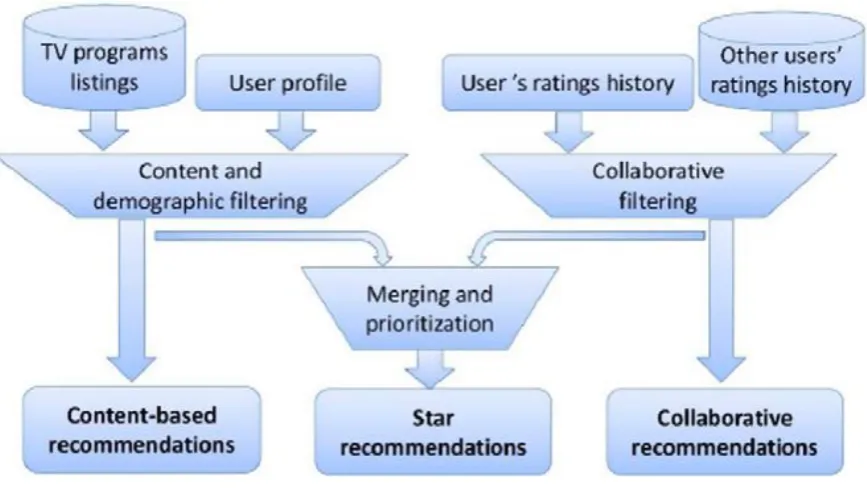
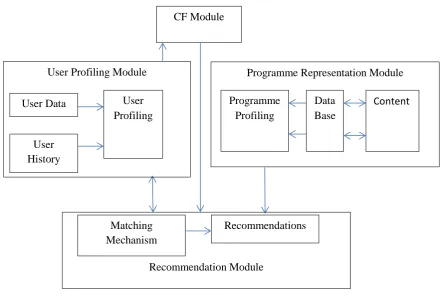
[image:39.595.114.511.173.604.2]overcome the disadvantages of each technique individually. More details about those recommendation techniques will be described in the next sections. An overview of the system is shown in figure 2.3 (Smyth & Cotter, 2001).
Fig. 2.3 Architecture of Personal TV Guide System (Smyth & Cotter, 2001)
24
mining techniques to overcome the problem of sparsity in the collaborative filtering technique. That is because users are usually rating a small number of available programmes therefore, the expected rated programmes overlap between two random users is very low which cause the sparsity problem. Sullivan’s system employs a user profile and information filtering techniques to learn about user preferences and personalize the recommendations according to their needs. Data mining methods have been applied to extract new programme metadata from user profiles in order to recommend similar programmes. However, this system doesn’t address the other problems in the collaborative filtering technique namely, the first-rating problem and cold-start problem (O’Sullivan, Smyth, Wilson, Mcdonald, & Smeaton, 2004).
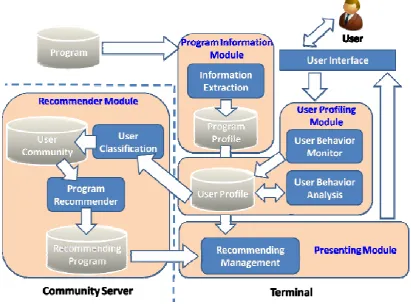
Another proposed system for personalizing the EPG was presented by Chen. This EPG is integrated into the viewing device and automatically monitors watched programmes and records the user’s viewing habits. The users’ feedback is then collected and forwarded to a community’ server in order to cluster the users into several virtual communities. The EPG system comprises content search, content recommendation and content management modules. The content search module is responsible for providing programmes that are simply requested by the user via keywords or by selecting programme categories. The content recommendation module recommends programmes using a community-based recommendation process in which the system monitors the viewed programmes from each user and divides the users into different virtual communities based on their viewing habits. The content management module records the users’ feedback about the recommended programmes and then processes and updates the recommendation process based on new information provided by the content management module. Figure 2.4 shows the block diagram of the community-based programme recommendation for the EPG system (Y.-C. Chen, Huang, & Huang, 2009).
25
[image:41.595.101.513.138.446.2]next sections of this chapter discuss research work relevant to these specific aspects of EPG design and operation.
Fig. 2.4 Community-Based Programme Recommendation for EPG System (Y.-C. Chen et al., 2009)
2.3 IPTV System
Many researchers have discussed EPG design and implementation in the IPTV systems. This section presents a brief explanation of the IPTV system and its structure as an introduction to discuss the EPG within IPTV systems.
26
service which guarantees the quality of service (QoS) over the provider’s network. However, IPTV providers may also include Internet services such as Web access and Voice over IP (VoIP) in which case the become known as Triple Play.
The typical architecture of IPTV service comprises: a Super Head-End, Core Network, Access Network, Regional Head-End and Customer Premises. The Super Head-End encodes and processes the channels and transmits them to the Regional Head-End through the provider’s core network allowing it to serve millions of subscribers across their serving area. The Regional Head-End handles local programming, delivering channels to a single city or geographic area. Programmes are then transmitted as data streams to the subscriber’s premises through a range of access networks including Cable and Digital Subscriber Line (DSL) (Martinsson, 2006; Punchihewa, De Silva, & Diao, 2010). Figure 2.5 illustrates a simple structure of the main functional parts of an IPTV system.
IPTV services could be classified into four domains which are the consumer domain, network provider domain, service provider domain and content provider domain. The consumer domain presents the services to the end user while the network provider domain permits the connection between the consumer and service provider domain. The service provider domain is responsible for providing services for all subscribers whilst the content provider domain possesses licenses to sell or distribute the content. Currently, IPTV provides subscribers with linear TV programmes in the same way as traditional through the air broadcasters. However, many also supplement this with additional services including video on demand (VoD), personal video recorder (PVR), EPG and a traffic and weather service (Zeadally, Moustafa, & Siddiqui, 2011).
Fig. 2.5 Main Functional Parts of the IPTV System National
Broadcaster
VoD
Meta -data
Core Network Regional Head-End
27
Many researchers have discussed the performance of IPTV systems and how to improve the quality of service provided to users. Due to the requirements of an IPTV in terms of its performance and reliability, network bandwidth becomes critical (Mahimkar et al., 2009). A study has been carried out by Simsarian to discuss the traffic and required bandwidth that must be streamed to each user. It was found that the bandwidth depends on where Video-on-Demand (VoD) content, its cache and streaming server is located. Therefore, in order to decrease the traffic on the core network and the required bandwidth, VoD content is normally cached in the Regional Head-End (Simsarian & Duelk, 2007).
Due to the popularization of IPTV, many services have been added to offer more facilities for the users such as on demand and interactive multimedia services. With an increase in the number of channels and content providers, assisting users in making selection becomes crucial. However, creating the EPG in the user device or centralizing the generation of EPG in the main servers can cause more challenges especially when the user experience and available bandwidth will be discussed (Cha, Rodriguez, Crowcroft, Moon, & Amatriain, 2008).
28
Fig. 2.6 Overall Structure of personalized mobile IPTV system (Y. X. Lai et al., 2011)
Many other researchers have discussed different aspects in the IPTV systems such as improving the EPG via more interactive services, user experience and improving the system transmission performance and quality of services to decrease the factors that affecting the service such as Jitter or packet loss. However, there are still many limitations relevant to improve the EPG especially the limited content channels and sources and difficulty of recommending an accurate personalized list of programmes that match the user viewing behaviour and wishes.
2.4 Searching Systems
29
the research that has investigated how to improve the performance and accuracy of search operations.
2.4.1 World Wide Web Searching Systems
Searching the Web for information is managed through popular search sites such as Google. Using a non-real time process, these sites examine and categorise each web page they can find and build a database which is then searched in real-time when a user enters a search term. Such search engines are then evaluated based on factors such as speed, searching effectivity and ease of use. However, searches for images or non-textual content is more challenging. Smith has developed a Web searching agent to search images and videos by incorporating text-based searching and content-based technology. Content-based technique provides for automated estimation of salient visual features such as colours, shapes and spatial information contained in the visual scenes. Then, similarity calculation applied between images and videos based on these extracted visual features. The system retrieves images and videos from the Web and provides a tool to browse this collection. Then, the user needs to select and specify the most and least item from the resulted list that match his desires. Based on the user selection, the system will reformulate the searching and processing operations to better match with user’s instruction. The system has several functionalities such as the search operation is based on content-based technique, updating the search operation using the user feedback and merging the text-based and image and video subject search and navigation (Smith & Chang, 1996).
30
select any one from the two resulted lists. Based on user selection, the system applies and evolves search agents to retrieve more documents relevant to the selected one and the same operation will be repeated (Liddy & Yu, 2001).
A searching system has been proposed by Tu to search the Web for information based on intelligent information retrieval agents which are designed to overcome the information overload problem. This problem arises when the user searches the Web for particular information to find too much relevant information and web sites. However, people often become frustrated due to the little useful information that is contained in the searched results and web sites. The system architecture is based on dividing the functions between several agents where one or more agents can cooperate to perform one task or function as a module while one or more subagents may cooperate to perform a feature of the agent. Each agent has a specified feature (task) such as intelligent searching where the agent can interact with user preferences for each category based on initial knowledge about user categories and filter the resulted pages to pinpoint exactly the user needs.
The system depends on creating a profile for the user based on information relevant to their preferences obtained through the personal agent. In the same time the system categorizes users into groups using its group agent. Based on the collected information from each user profile, initial knowledge will be built to be used in filtering the search results to improve what is presented to the user. Additional services offered by the system include auto-notification sending a notification to the user when any update occurs in the retrieved pages, navigation guide to help users to find the way for relevant pages and information management when updating the user profile based on the selected pages. An overview for intellegent information retrieval agent is illustrated in figure 2.7. (Tu & Hsiang, 2000).
31
The system used a client-server model and works equally well on TVs and tablets (Funk & Noffsinger, 2014).
Fig. 2.7 Intelligent Information Retrieval Agent (Tu & Hsiang, 2000)
2.4.2 Multimedia Searching Systems
32
objects are represented by four elements which are the part number, document number, rank and media type. All these objects are combined into a single result list according to the user requirements (So, Coden, & Mak, 1999).
Mankovitz has designed a system and method to search and extract information from a programme database and to use this information in a video recording device. The system could be built into the television or as a separate device. This system consists of a decoder, processor, controller located in the remote control device, memory and infrared transmitter. The decoder decodes the encoded programmes’ data after receiving it and converts it into an accessible format and then saves this data in the device memory. Then the processor analyses the data to extract the needed information such as the channel, title, date, time and length. The user can access the programme’s metadata to select the programmes that should be recorded whether they are currently being broadcast or scheduled in the future. Thereafter, the system saves the relevant information with all the selected programmes in the device memory. When the time and date of the selected programme coincides with real time, the processor sends a command to the controller by using the infrared transmitter to change the channel if it is not the same channel and start recording the programme. This system is entirely depending on the received programmes’ metadata which is sent by the broadcasters (Mankovitz, 2014).
Digital systems now offer hundreds of channels and thousands of VoD movies. Although an EPG offers time schedule information for the available programmes in a given set of channels, it is still hard to scan all the channels to find programmes of interest. A searching system has been presented as separate device by Jerding to search the digital broadcasting channels and VoD for a specified user input. This system consists of a processor, communication components and memory. The system is connected to the receiver to download and process the programme metadata and then offers a user interface to enter the search criteria. Then, based on the user input which could be a channel, title, or time the system will search the stored media information and provide the user with a search result that is related to their input. (Jerding, Rodriguez, & Banker, 2013).
33
content that are relevant to a specified search request (keyword) among the available channels in the EPG. Figure 2.8 shows the block diagram of the designed system (Rao, Sloo, Danker, & Nyako, 2015).
Fig 2.8 EPG Searching System (Rao et al., 2015)
In order to increase the interactivity between the television set and users, a searching system has been designed to search the programme metadata for relevant programmes using the current and last viewed one. This system monitors the user’s viewing activities and saves the attributes of the programmes that are viewed. Then, the system searches the
Super-Head End Distribution Server
EPG Data
Content EPG Module Content Module Content Providers
Content
Network
Client Navigation Module
EPG Module
EPG DATA Content
TV
34
database of the broadcast programmes to find suitable matches which most closely match the programme attributes. At the same time, another search operation is implemented to find programmes that match the attributes of currently viewed programmes. The system may suggest a list of programmes based on the current viewed programme, the last viewed programme or in general based on the programme that has recently been viewed. A neural algorithm is used to make suggestions and rank the programmes based on those that have the most matching attributes (Franklin E Boyer & Demers, 2014).
2.4.3 Integrating the Internet with Multimedia Searching Systems
Miyamori proposed a search engine that can search for Web content and recorded TV programmes (stored in a PC) in the same search operation. This system can handle Web content as an information source and TV programmes as another source which is considered as a first step towards developing the next-generation of search engines. The integrated search is achieved by generating integrated indices depending on keywords extracted from the TV programmes and Web content. Thus, when the user is watching a TV programme, the system searches the Web for content with content relevant to that programme. In contrast, when the user is browsing the Web, the system searches for TV programmes that have correspondingly relevant content. By selecting another item, the system updates the search results based on the selected item (Miyamori et al., 2006). Kulas also presented a search system that integrated searching an EPG and information resources on the Internet. A user interface has been created to select filtering elements for the search operation and to display the results. The system has the ability to search information contained in the EPG based on the selected elements and extract appropriate information such as title or subject to then use as search criteria on the Internet. Then the system will search the Internet and provide a group of Web sites represented by URL's which are relevant to the search topics. The user interface displays both the EPG results and Internet information for the same search topics represented by web sites in separated windows. The user is then able to select programmes to watch directly through the Interface or to open Web sites in the supplementary window (Legall, Masli, & Kulas, 1999).
35
by the user. These keywords may be extracted from the closed captions (such as news titles or programmes short descriptions) or the EPG data which represents the programme metadata. Then, the keywords are presented to the user as recommended search queries via the user interface. When the user selects one of these queries, the system sends the keyword to the Internet and displays the resulted web page links. Moreover, the system allows users to refine the recommended keywords by offering the category as another choice. Therefore, the user can choose a category which better represents the targeted information. Additionally, the system offers a supplementary user interface for wireless devices such as tablets to enable the users to access the Internet recommendations as shown in figure 2.9 (Messer et al., 2008).
Fig. 2.9 Supplementary User Interface of Internet Searching system on TV (Messer et al., 2008)
2.4.4 Smart TV Searching Systems
36
movie, television programme, web content (information) or e-commerce website. The searching results are displayed to the user in a different window and stored in the system memory, so the user is able to view this content later. The system is designed to work as a separate physical device connected to the Smart TV and includes memory, processor, infrared transmitter and user interface. However, the system designed to serve the Smart TV viewers through providing different search methods. These methods include providing the viewer with multimedia relevant to the programme that currently viewed or searching based on a query term entered by the viewer through an input device (such as keyboard or remote control) represents actor name or commercial product (Rothschild, 2011).
To improve the searching operation in the Smart TV, another approach has been proposed to minimize the human efforts in searching multimedia content. This approach is based on using the mouse as a user interface to the Smart TV. The system analyses the movement of the mouse cursor while the user is navigating the initial results to define the intent of the user. By observing the mouse movement pattern, the system predicts the user’s search intent and generates a new list of multimedia content. The new list contains more relevant content to the user search intent (Jeong & Lee, 2014).
Another system has been proposed for Smart TVs that is based on a multi-level searching process. The system sends keywords that have been entered by the user through their Smart TV browser to the searching system to search the local repository for matching content as shown in figure 2.10. Thereafter, the Smart TV agent server will send those keywords to the EPG repository to search the scheduled information of programmes for any matched content. At the same time, these keywords will be sent to the global repository to search the User Created Content website (UCC) for any matches. The results that are received from the other repositories are combined with the local repository searching results. Then, all of the results are ranked, indexed and displayed to the user through their Smart TV browser. However, the system is still based on the user providing keywords (M.-E. Kim et al., 2013).
37
module. The user analyser saves the user preferences as viewing history and receives the user query term in order to search for the targeted multimedia content. The content analyser extracts the multimedia content information such as the title, category and description. The personalized refinement module is responsible for calculating the similarity between the two information groups, then filtering the irrelevant content and removing them. Several functions included in the personalized refinement module such as grouping and ranking the results are based on the semantic relatedness (Hong & Lee, 2015).
Based on the previous research, in order to create an accurate search system, it is clear that the search system should adopt many analysing operations and information collecting processes. Moreover, the search system should be followed by a recommendation system in order to select or rank the relevant items (programmes) based on specific criteria and filter out the irrelevant programmes. Therefore, the next sections will discuss research that has investigated the development of recommendation systems and the collection of user information which forms a key part of context-awareness.
38
2.5 Recommendation Systems
The recommendation system is one of the most important parts in personalized EPG systems. It has become a major research area due to the spread of using the recommender systems in many other applications such as Internet shopping and tourism websites. Therefore, this section discusses the relevant research that has investigated the development of recommendation operations that could be applied to online TV systems.
2.5.1 Traditional Recommendation Approaches
Basically, there are three main traditional recommendation techniques used to recommend items for users: content-based, collaborative filtering and hybrid recommendation approaches. A content-based approach depends on understanding the commonalities between the user’s highly rated items or programmes. This could be done by creating a user profile that contains the user preferences, choices and their rating on each item or programme. Then, based on the commonalities of the user choices such as a specific actor, genre or subject, only those items that have a high degree of similarity with these preferences will be recommended. However, there are several limitations and drawbacks that can affect using this recommendation technique. The content-based approach is limited by the features that describe the recommended item or programme. This limits the content analysis if there are different items that are described by the same set of features. Additionally, the system can only recommend items that are similar to the items that have been rated by the user. Therefore, the user will not be able to experiment with anything different from what they have seen before – a problem known as overspecialization. Another problem is when the user only has a few rated items or new users join. The content-based recommender needs a sufficient number of items before it can understand the user preferences and present accurate recommendations for the user.