Middle-Secondary Education and Instructional Technology Dissertations
Department of Middle-Secondary Education and Instructional Technology (no new uploads as of Jan. 2015)
Fall 12-20-2012
Links and Disconnects Between Third Grade Teachers' Beliefs,
Links and Disconnects Between Third Grade Teachers' Beliefs,
Knowledge, and Practices Regarding Nonfiction Reading
Knowledge, and Practices Regarding Nonfiction Reading
Comprehension Instruction for Struggling Readers
Comprehension Instruction for Struggling Readers
Nicole Maxwell
Georgia State University
Follow this and additional works at: https://scholarworks.gsu.edu/msit_diss
Recommended Citation Recommended Citation
Maxwell, Nicole, "Links and Disconnects Between Third Grade Teachers' Beliefs, Knowledge, and
Practices Regarding Nonfiction Reading Comprehension Instruction for Struggling Readers." Dissertation, Georgia State University, 2012.
https://scholarworks.gsu.edu/msit_diss/106
This Dissertation is brought to you for free and open access by the Department of Middle-Secondary Education and Instructional Technology (no new uploads as of Jan. 2015) at ScholarWorks @ Georgia State University. It has been accepted for inclusion in Middle-Secondary Education and Instructional Technology Dissertations by an authorized administrator of ScholarWorks @ Georgia State University. For more information, please contact
11-14-12
Links and Disconnects Between Third
Grade Teachers’ Beliefs, Knowledge,
and Practices Regarding Nonfiction
Reading Comprehension Instruction for
Struggling Readers
Nicole P. Maxwell
ACCEPTANCE
This dissertation, LINKS AND DISCONNECTS BETWEEN THIRD GRADE TEACHERS’ BELIEFS, KNOWLEDGE, AND PRACTICES REGARDING NONFICTION READING COMPREHENSION INSTRUCTION FOR STRUGGLING READERS, by NICOLE P. MAXWELL, was prepared under the direction of the candidate’s Dissertation Advisory Committee. It is accepted by the committee members in partial fulfillment of the requirements for the degree, Doctor of Philosophy, in the College of Education, Georgia State University. The Dissertation Advisory Committee and the student’s Department Chairperson, as
representatives of the faculty, certify that this dissertation has met all standards of excellence and scholarship as determined by the faculty. The Dean of the College of Education concurs.
_______________________________ _______________________________ Amy Seely Flint, Ph. D. Julie Rainer Dangel, Ph. D.
Committee Chair Committee Member
_______________________________ _______________________________ Diane Truscott, Ph. D. Michelle Zoss, Ph. D.
Committee Member Committee Member
_______________________________ Date
_______________________________________ Mary Ariail, Ph. D.
Interim Chairperson, Department of Middle-Secondary Education and Instructional Technology
_______________________________________ Paul A. Alberto, Ph. D.
Interim Dean
AUTHOR’S STATEMENT
By presenting this dissertation as a partial fulfillment of the requirements for the advanced degree from Georgia State University, I agree that the library of Georgia State University shall make it available for inspection and circulation in accordance with its regulations governing materials of this type. I agree that permission to quote, to copy from, or to publish this dissertation may be granted by the professor under whose direction it was written, by the College of Education’s Director of Graduate Studies, or by me. Such quoting, copying, or publishing must be solely for scholarly purposes and will not involve potential financial gain. It is understood that any copying from or publication of this dissertation which involves potential financial gain will not be allowed without my written permission.
NOTICE TO BORROWERS
All dissertations deposited in the Georgia State University library must be used in accordance with the stipulations prescribed by the author in the preceding statement. The author of this dissertation is
Nicole P. Maxwell
3150 Woodwalk Drive, Unit 2207 Atlanta, GA 30339 The director of this dissertation is
Dr. Amy Seely Flint
Department of Middle-Secondary Education and Instructional Technology College of Education
CURRICULUM VITAE
Nicole Pinto Maxwell
ADDRESS: 3150 Woodwalk Drive, #2207 Atlanta, GA 30339
EDUCATION:
Ph. D. 2012 Georgia State University Teaching and Learning
Concentration: Language and Literacy Major Advisor: Amy Seely Flint
M. Ed. 2005 Georgia State University
Reading, Language, and Literacy Instruction
B. A. 2002 Oglethorpe University Early Childhood Education
PROFESSIONAL EXPERIENCE:
2003-Present ESOL sheltered teacher 1st grade teacher
Early Intervention Program teacher
Dunwoody Springs Elementary School, Sandy Springs, GA
PRESENTATIONS:
Dangel, J. R. & Maxwell, N. (2011, March). Preservice teachers’ perceptions and knowledge of reading instruction in first and third grade classrooms. Session presented at Professional Development Schools National Conference, New Orleans, LA.
Maxwell, N. (2011/2012). Struggling Readers and Reading Comprehension. Staff development presentation on intervention strategies at Dunwoody Springs Elementary, Sandy Springs, GA.
Maxwell, N. (2010, March). Best Practices for Working with “Struggling” Readers in Elementary School. Session presented at CLUES Conference on Literacy, Urban Education, and Social Studies, Atlanta, GA.
SERVICE:
Nason, M. & Maxwell, N. (2012, October). Persevering through the prospectus. Online presentation for Conversations in Global Preparation at
http://globalconversationsindoctoralpreparation.wordpress.com. October 28, 2012.
Student Editor. (forthcoming). Artifactual literacies. In M. Albers, A. S. Flint, & T. Holbrook (Eds.), New Methods in Literacy Research. New York: Routledge.
Moderator for GCLR Web Seminar (International). Harste, J. C. & Vasquez, V. (2011, Sept.). "What do we mean by literacy now: Critical curricular implications.” Online presentation for Global Conversations in Literacy Research at
http://www.globalconversationsinliteracy.wordpress.com. September 4, 2011.
ACADEMIC AWARDS
2006 Outstanding M. Ed. Graduate Award in Reading, Language, and Literacy, Georgia State University Department of Middle-Secondary Education and Instructional Technology
PROFESSIONAL ORGANIZATIONS
2008 - International Reading Association
ABSTRACT
LINKS AND DISCONNECTS BETWEEN THIRD GRADE TEACHERS’ BELIEFS, KNOWLEDGE, AND PRACTICES REGARDING NONFICTION READING
COMPREHENSION INSTRUCTION FOR STRUGGLING READERS by
Nicole P. Maxwell
In the current era of accountability, U. S. teachers face strict demands from No
Child Left Behind (NCLB) to ensure that all students’ reading achievement meets the
requirements of their respective grade levels (Coburn, Pearson, & Woulfin, 2011). These
demands are especially stressful when teachers have students who struggle with reading.
Regrettably, many students grapple with reading difficulties, particularly with
comprehending fiction and nonfiction texts (Allington, 2011).
The purpose of this study was to examine the beliefs and understandings three
third grade teachers held concerning nonfiction reading comprehension instruction for
struggling readers and how these beliefs and knowledge influenced their pedagogical
practices. This qualitative, interpretive case study examined their beliefs using the
theoretical lenses of epistemology (Crotty, 2007; Cunningham & Fitzgerald, 1996;
Dillon, O’Brien, & Heilman, 2004; Magrini, 2009), social constructivism (Vygotsky,
1978), transactional theory of reading (Rosenblatt, 1994), and the sociocognitive
interactive model of reading (Ruddell & Unrau, 2004). The following research questions
guided this inquiry: (1) How do third grade teachers support struggling readers when
navigating nonfiction texts? (2) What are these third grade teachers’ beliefs and
understandings about struggling readers? (3) How do these beliefs influence the third
grade teachers’ pedagogical practices with struggling readers? Data collection lasted for
collection of artifacts, including DeFord’s (1985) Theoretical Orientation to Reading
Profile (TORP). Data analysis was conducted using the constant comparative approach
(Glaser & Strauss, 1967). The findings in this study revealed links and disconnects
between the accommodations teachers believed their struggling readers needed and what
they actually provided their struggling readers. These teachers faced pressures of time
constraints and a focus on testing, which affected their pedagogical practices.
Furthermore, they demonstrated a reliance on content area textbooks and dissatisfaction
with the accessibility of nonfiction materials. These findings highlight the need for
pre-service and in-pre-service teachers to have access to quality nonfiction materials to use in the
classroom and instruction on how to provide nonfiction comprehension instruction to
LINKS AND DISCONNECTS BETWEEN THIRD GRADE TEACHERS’ BELIEFS, KNOWLEDGE, AND PRACTICES REGARDING NONFICTION READING
COMPREHENSION INSTRUCTION FOR STRUGGLING READERS
by
Nicole P. Maxwell
A Dissertation
Presented in Partial Fulfillment of Requirements for the Degree of
Doctor of Philosophy in
Teaching and Learning in
the Department of Middle-Secondary Education and Instructional Technology in
the College of Education Georgia State University
Copyright by Nicole P. Maxwell
ii
ACKNOWLEDGMENTS
The last five years of my doctoral studies were quite a journey. It is a time that I will cherish for the rest of my life. The knowledge I gained and experiences I had have forever changed who I am as a teacher and a person. This dissertation is dedicated to my Papa, who has shown me the value of being a lifelong learner. Throughout my studies, my family and friends supported and encouraged me. I am incredibly grateful for all of them. Above all else, I thank God for the strength He has given me to make it through this venture. Without Him nothing is possible!
I would like to thank my wonderful dissertation committee: Dr. Amy Flint, Dr. Julie Dangel, Dr. Dana Fox, Dr. Diane Truscott, and Dr. Michelle Zoss. Thank you for all of your guidance and encouragement. It was a pleasure to work with all of you during my graduate studies. To my chair, Dr. Amy Flint, there are no words to express my gratitude for your help throughout this process. Thank you for inspiring my development as a researcher and writer. I would not have made it without you.
To my husband, Jonathan, your love and support throughout my doctoral program was more than I could ever have imagined! Thank you for all the times you read quietly as I worked on my schoolwork and your patience with the influence my studies had on our time together. I am eternally grateful for the encouragement you provided me, especially in the times when I felt completely overwhelmed. I look forward to
progressing with you into the next phase of our lives together as we welcome our sweet baby boy into the world!
To my parents, thank you for believing in me and for instilling a love of reading and learning in me. To my brothers, sisters, and the rest of my family, I am thankful for the support and encouragement you offered me as I undertook this journey. To my mother- and father-in-law, your continual support throughout this process was a blessing that I truly appreciate.
Thank you to all of my friends that stood by me during my doctoral program. I am especially grateful to Megan for taking this journey with me. I cannot imagine what it would have been like without you there.
iii
TABLE OF CONTENTS
Page
List of Tables ...v
List of Figures ... vi
Abbreviations ... vii
Chapter 1 Introduction ...1
Rationale ...4
Purpose Statement ...6
Theoretical Framework ...7
Overview of Significant Terms ...18
Conclusion ...23
2 Literature Review...24
Why Are More Students Struggling? ...25
Teachers’ Beliefs and Understandings...31
Comprehension ...40
Conclusion ...51
3 Methodology ...52
Overview of the Study ...52
Setting ...55
Participants ...56
Role of the Researcher ...58
Research Design...60
Data Collection ...62
Data Analysis ...71
Establishing Trustworthiness ...76
Limitations of the Design and Issues of Bias...79
Conclusion ...81
4 Setting and Context of Study ...83
Central Elementary’s Surrounding Community ...83
Overview of Third Grade’s Academic Schedule ...88
Introduction of Central Elementary Teachers ...92
Conclusion ...123
5 Findings...125
Themes and Data...126
Theme 1: Accommodations for Struggling Readers ...127
Theme 2: Pressures to Cover it All ...161
iv
Conclusion ...183
6 Discussion ...185
Claims ...186
Implications of the Findings ...200
Recommendations for Future Research ...208
Conclusion ...210
References ...211
v
LIST OF TABLES
Table Page
1 Example of Codes Used in Data Analysis ...73
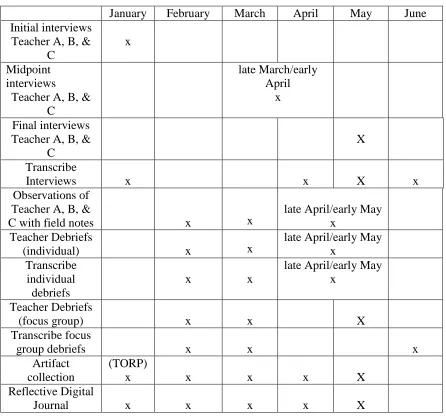
2 Timeline for Data Collection and Initial Data Analysis ...75
3 Data Collection Summary ...76
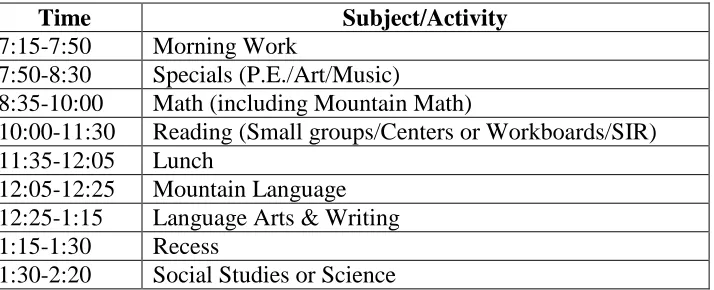
4 Third Grade’s Academic Schedule ...88
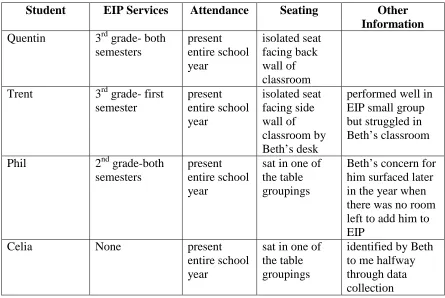
5 Beth’s Struggling Readers ...101
6 Samantha’s Struggling Readers ...112
vi
LIST OF FIGURES
Figure Page
1 Nonfiction texts in Samantha’s classroom related to social studies curriculum ...106
2 Social studies little readers and leveled science readers in Audrey’s classroom ...116
3 Franklin Delano Roosevelt (FDR) flashcards ...151
4 Beth’s Warm-Up on the Promethean Board ...155
vii
ABBREVIATIONS
NCLB No Child Left Behind
EIP Early Intervention Program
ZPD Zone of Proximal Development
PDS Professional Development School
ESOL English to Speakers of Other Languages
IRB Institutional Review Board
TAG Talented and Gifted program
CHAPTER 1
INTRODUCTION
In the current era of accountability, there is a strong focus on reading achievement
at the federal, state, and district levels. With the passage of No Child Left Behind
(NCLB) in 2002 came heightened demands placed on schools, teachers, and students
across the United States to increase reading achievement, along with the possibility of
facing sanctions for not performing well (Coburn et al., 2011). In an effort to
accommodate the greater emphasis on reading achievement, schedules were altered to
provide increased instructional time in reading and decreased instructional time in other
subjects, such as social studies and science (Boyle-Baise, Hsu, Johnson, Serriere, &
Stewart, 2008; McMurrer, 2008). High-stakes testing became a driving force, and some
districts instituted mandated curriculum in an attempt to stimulate widespread increases
in reading achievement. These pressures continue today and are certain to maintain a
role in future reading research, policy, and instruction.
The authorization of NCLB provided the federal government with greater control
over local schools and increased the requirements and accountability of schools
throughout the United States. Among the requirements stipulated by this act is the
specification that certain grade levels, such as third, fifth, and eighth, are considered
“gateway” years, in that the students are expected to pass a state standardized test in a
particular subject area, such as reading and/or math, at the end of the year in order to
progress to the next grade level. Furthermore, all students were required to score at a
proficient level on the grade level state standardized test by the 2013-2014 school year.
set of standards and greater accountability systems for student achievement and teacher
effectiveness were adopted in place of it. Due to these new expectations, teachers still
feel compelled to ensure that all students perform at a high level on the state standardized
tests. It is the students who are struggling to achieve in these specified areas, like
reading, and their teachers who bear a heavier burden. As these new requirements
continue to push teachers and students in particular directions there is an increased
demand for research that focuses on how teachers support students who struggle to meet
their grade level standards. In particular, there is a need to investigate the types and
levels of support teachers in “gateway” grades provide for their students who seem to
struggle in reading. These students are not those that have been identified to receive
special education support. Rather, it is a group of students that have minimal additional
support or attention from Early Intervention teachers. In addition to examining what
teachers are doing to support these students, it is worthwhile to consider the relationship
between teachers’ beliefs and knowledge and their pedagogical practices.
Research shows that teachers’ educational beliefs and knowledge are strong
determinants of how they are going to teach the students who enter their classroom
(Deford, 1985; Pajares, 1992; Richardson, 1996; Richardson, Anders, Tidwell, & Lloyd,
1991; Squires & Bliss, 2004). Whether those beliefs and knowledge are a result of their
upbringing and life experiences, training received in their teacher preparation program,
contextual factors within the school system or specific school in which they work, or a
combination of multiple factors, they influence teachers’ pedagogical practice in the
classroom (Kurumada, 2010; Pajares, 1992; Richardson, 1996). While this applies to the
More specifically, the focus was on reading instruction associated with the
comprehension of nonfiction texts.
Aside from the pressures that accompany federal and state mandates, teachers
continue to face other issues in their classrooms, such as students who struggle with both
learning to decode text and comprehend what they read. Various terms have been used to
identify these students, including at-risk, disabled, low reader, struggling, and below
grade level (Alvermann, 2001; Möller, 2004/2005; Triplett, 2007). According to Triplett
(2007), struggling reader is the new term used to describe these children. Although I
hoped to develop a more positive term for these children, struggling reader is the term I
used for the purposes of this study. While the term struggling reader may apply to
students that are having trouble with decoding, vocabulary, fluency, and comprehension
(Kucan & Palincsar, 2011), the students involved in this study primarily struggled with
the comprehension of text. Regardless of what term is used for these students, their
teachers are faced with the responsibility of helping them gain the reading proficiency
they need. Teachers are not only responsible for helping their students gain the
proficiency needed to perform well on standardized tests, they are also accountable for
helping these students gain the proficiency necessary for success in future years of
schooling and in life.
In order to broaden the base of knowledge that currently exists regarding teachers
instructing struggling readers in the area of nonfiction reading comprehension, I
conducted a qualitative, interpretive study. Through this study I hoped to further the
and knowledge about nonfiction reading comprehension instruction for struggling readers
and the pedagogical practices they employed while working with them.
Rationale
My interest in struggling readers began while taking a course in my master’s
program called Individual Assessment of At-Risk Readers. The course met at the
juvenile justice center located adjacent to the urban university in which I was enrolled.
During this course, we learned about and worked with children in elementary, middle,
and high school whose reading abilities were well behind what was considered on grade
level for them. A variety of reasons accounted for their struggles, but they all shared a common need to learn to read proficiently. It was my first real glimpse that all children
do not learn to read by the end of their early elementary years, which is something I took
for granted given my own experience growing up, as well as in my first year of teaching.
The knowledge and experience I gained in the Individual Assessment of At-Risk Readers
course by reading about and working with at-risk or struggling readers stimulated my
interest. Not only did I feel inspired to learn more about who they were as readers, but
also to find ways to help them succeed in reading text proficiently.
As an elementary Early Intervention Program (EIP) teacher over the last four
years, I have worked with first through fifth graders who had trouble with reading. The
idea behind EIP is to have small groups of students, who perform below grade level
standards, work with an intervention teacher. The intervention teacher provides targeted
individualized instruction to help the student achieve their grade level standards. The
times allotted for working with students are dictated by the state and county, and they
are pull out, so I work with them in my own classroom separate from the instruction that
is occurring in their homeroom classrooms. Students may qualify in one of two ways.
The first way is automatic. If the student fails the state standardized test at the end of the
previous school year, then he/she qualifies for EIP services. The second way to qualify is
by teacher recommendation, which asks the teacher to complete a skills checklist to
demonstrate that the student is not performing on grade level. Thus, students may receive
EIP services even when they passed the test or in some cases do not have test scores.
Triplett (2007) noted that teachers often feel like the support teacher is key to
solving all of the students’ troubles. I found this to be the case in my school setting as I
pulled the struggling readers from their classrooms on a daily basis. Allington’s (2007)
article titled “Intervention All Day Long: New Hope for Struggling Readers” made me
think of the teachers I work with and led me to question what it is that they think about
these students. How do the teachers accommodate the needs of my students, as well as
other struggling readers, in their classroom? Even though Allington refers to adolescent
readers in his article, I believe it is a relevant topic for struggling readers at the
elementary level. The last statement in his article further convinced me of the need to
research this topic. He states,
Until we recognize that appropriate instruction has to be available to struggling
readers all day long, it is unlikely we will meet the challenges of the new
legislation and the moral obligation to end the struggles of our struggling readers.
(p. 13)
Although some research exists on the topic of teachers’ beliefs and reading
instruction, much less exists that discusses teachers’ beliefs and reading instruction as
they relate specifically to struggling readers. More precisely, there is a need for further
investigation into the topic of nonfiction reading comprehension instruction for struggling
readers. In particular, it is still unclear how teachers’ beliefs are truly represented in their
instructional practices in the classroom, as well as what preexisting factors impact
teachers’ beliefs with respect to literacy instruction (Cunningham, Zibulsky, Stanovich,
& Stanovich, 2009). Consequently, I addressed this gap in the literature by conducting
this study.
Purpose Statement
The purpose of this study was to determine what beliefs and knowledge teachers
possess regarding the instruction of struggling readers in the area of nonfiction reading
comprehension and how these beliefs and understandings influenced their pedagogical
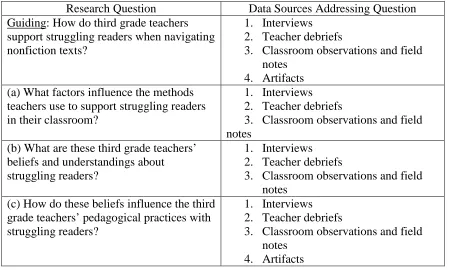
practices in the classroom. Therefore, I examined the following questions in my research
study:
Guiding Question:
• How do third grade teachers support struggling readers when navigating
nonfiction texts?
Sub Research Questions:
• What are these third grade teachers’ beliefs and understandings about struggling
readers?
• How do these beliefs influence the third grade teachers’ pedagogical practices
Theoretical Framework
Throughout the course of this study, several theories informed my research,
including epistemology (Crotty, 2007; Cunningham & Fitzgerald, 1996; Dillon et al.,
2004; Magrini, 2009), social constructivism (Vygotsky, 1978), transactional theory
(Rosenblatt, 1994), and the sociocognitive interactive model of reading (Ruddell &
Unrau, 2004). Epistemology was an important construct since the focus of this study was
on the knowledge and beliefs held by the teachers involved. Social constructivism
factored in as I examined how the teachers defined students as struggling readers and
how this translated into their planned instruction and actual implementation of
pedagogical practices with these students. Transactional Theory and the Sociocognitive
Interactive Model of Reading related to my own belief about the development of reading
in children and how I view learning as a social activity. Learning is not only a social
activity for children, but also for adults. In this study, I was interested to learn how the
teachers’ own understandings and beliefs were the result of social interactions they had
experienced and might have experienced in the course of this investigation. Since this
study was primarily concerned with the beliefs and knowledge possessed by teachers, I
begin with a discussion of epistemology.
Epistemology
Understanding epistemology is important because of its relationship to
individuals’ theories, instructional approaches, and research perspectives within
education (Cunningham & Fitzgerald, 1996). Epistemology is defined by
Merriam-Webster as “the study or a theory of the nature and grounds of knowledge especially with
it is “…a way of understanding and explaining how we know what we know” (p. 3). In
other words, epistemology involves the examination of what counts as knowledge, where
it is positioned, and how knowledge develops (Cunningham & Fitzgerald, 1996). Within
epistemology there are a number of different stances one can take, and these stances
differ in how they view these elements of knowledge. These stances include
epistemological assumptions that individuals embrace about the origin of knowledge, its
structure, and the methods through which knowledge is conveyed to other individuals
(Dillon et al., 2004).
Cunningham and Fitzgerald (1996) discuss five epistemological clusters and
provide an overview of each based on what counts as knowledge, where it is located, and
how it increases. First, positivism/radical empiricism claims that knowledge of reality is
not possible and is divided on whether or not truth actually exists. While this
epistemological stance is not popular today, B. F. Skinner and John Watson ascribed to it
in the past. Within positivism/radical empiricism the most emphasis is placed on
particulars in that immediate sensational experiences are the main source of knowledge.
In this cluster, knowledge exists outside of the subject and it asserts that knowledge is not
created, but discovered. This cluster aligns with what Crotty (2007) refers to as
objectivism, which maintains that “…things exist as meaningful entities independently of
consciousness and experience, that they have truth and meaning residing in them as
objects…” (p. 5). Hypothetico-deductivism/ formalism is the second cluster discussed by
Cunningham and Fitzgerald (1996), and it also argues that knowledge of reality is
impossible and that knowledge is discovered, rather than created. However, it views
both add to and are needed for knowledge. Hence, there is an interaction between
information collected by the senses and conscious thought in this cluster. The theorists
connected with hypothetico-deductivism/formalism are C. G. Hempel, Karl Popper, and
John Dewey. The third cluster is realism/essentialism, which claims there is a single
reality that is not dependent on the knower and that truth does exist. Among the
influential theorists in the realist/essentialist cluster are George Moore, George
Santayana, Aristotle, and Thomas Aquinas. The majority of realists/essentialists agree
that knowledge includes both particulars and universals, but they differ in their beliefs
about how much knowledge is discovered and how much is created.
Structuralists/contextualists comprise the fourth cluster, and they assert that it is not
possible for knowledge to exist separate from the knower but that truth does exist.
Structuralists/contextualists consider knowledge as universal “…in that it is a system
with an overriding principle…or process…which accounts for and unifies all parts or
moments” (p. 48). Theorists associated with the structuralist/contextualist cluster are
Immanuel Kant, G. W. F. Hegel, Karl Marx, Jean Piaget, and Lev Vygotsky. In
structuralism/contextualism knowledge is situated within the process of knowing itself,
which is regarded as social in nature, at least to begin with, by numerous epistemologists
in this cluster, and knowledge is seen more as being created than discovered. Further,
constructionism, which fits within this cluster, holds that it is possible for different people
to construct meaning in varying ways (Crotty, 2007). Finally, the
postructuralism/postmodernism cluster (Cunningham & Fitzgerald, 1996) asserts the
existence of multiple realities, or interpretations, rather than a single reality that is
local. Poststructuralists/postmodernists believe that knowledge is situated at various sites
and is social and cultural. Consequently, all knowledge is created, not discovered, in this
epistemological cluster. Michel Foucault, Thomas Kuhn, and Louis Althusser are some
of the theorists that fit within the postructuralism/postmodernism cluster. Using the
epistemological labels given by Crotty (2007), subjectivism fits within this cluster.
Subjectivism involves the subject assigning meaning to the object and does not allow for
interaction between the subject and object to result in production of meaning. Although
this overview does not fully cover every detail of the stances included, it provides an idea
of the variety that exists.
In addition to discussing the various stances one might take, Cunningham and
Fitzgerald (1996) discuss the importance of the relationship between epistemology and
reading. Specifically, they assert, “Because reading is itself a way of knowing,
epistemology is even more central to reading research and instruction than to most other
areas of education” (p. 39). Teachers’ decisions regarding how to teach and assess are
typically influenced by the specific theory of knowledge they hold (Deford, 1985;
Richardson et al., 1991; Squires & Bliss, 2004). For example, according to the
essentialist understanding of knowledge and approach to reading instruction, students are
believed to have knowledge once they comprehend the text’s objective meaning
(Magrini, 2009). Typically, teachers that hold an essentialist view of knowledge are the
authorities on knowledge and use didactic methods of instruction in order to transfer their
knowledge to their students. Within the instrumentalist view of knowledge the reader
actively partakes in the construction of knowledge, which occurs in an experiential
teachers acting within the instrumentalist view of knowledge are facilitators of learning
who also share in the meaning-making processes of the classroom. Smagorinsky and
Smith (1992) argue that an awareness of one’s epistemological stance may guide an
individual to improve upon what one does since it can direct the individual to question
his/her assumptions. Consequently, by examining teachers’ knowledge and beliefs
regarding struggling readers working with nonfiction text, I hoped to gain a more
thorough understanding of how these constructs translated into their pedagogical choices
in the classroom.
Finally, since the current study involved the knowledge and beliefs of teachers it
is essential to distinguish between these concepts before going any further, especially due
to the confusion that exists within teaching and teacher education regarding beliefs and
knowledge. For the purposes of this analysis, beliefs were defined as
“….psychologically held understandings, premises, or propositions about the world that
are felt to be true” (Richardson, 1996, p. 103). Knowledge, on the other hand, involves
the requirement of having evidence to support its existence. Also, teacher education
literature utilizes multiple terms when discussing beliefs, including “…attitudes, beliefs,
conceptions, theories, understandings, practical knowledge, and values…” (p. 104). As a
result, these terms may be used in the literature review in the next chapter to represent the
author’s conception of beliefs.
As I conclude this discussion about epistemology as a whole, I will discuss social
constructivism, which I feel is the epistemological stance that most closely aligns with
Social Constructivism
Social constructivism maintains that individuals form various subjective meanings
of their experiences (Creswell, 2009). Researchers conducting studies from a social
constructivist viewpoint seek “…to make sense of (or interpret) the meanings others have
about the world” (p. 8). In doing so, researchers heavily depend on the participants’ point
of view regarding the situation under examination. One of my goals in this study was to
develop a firm understanding of how my participants defined struggling readers, as well
as how they developed their definitions of these students. Consistent with social
constructivism, I believe that the subjective meanings held by my participants were the
result of interactions they had with others. I also recognize that historical and cultural
norms may have factored into the meanings they hold. Lev Vygotsky (1978), who
believed that learning was an intensely social process, is commonly associated with
social constructivism.
In order for the internalization of higher mental functions to occur, Vygotsky
argued that a shift from socially supported performance to independently controlled
performance has to happen. A prominent concept related to learning developed by
Vygotsky is the idea of Zone of Proximal Development (ZPD). The ZPD “…is the
distance between the actual developmental level as determined by independent problem
solving and the level of potential development as determined through problem solving
under adult guidance or in collaboration with more capable peers” (1978, p. 86).
Basically, it defines what the child is capable of doing with assistance today and will,
subsequently, have the ability to do independently tomorrow. This is the level at which
to challenge their students appropriately and promote development. It is important to
note that Vygotsky emphasized the need to focus instruction on developing
competencies, rather than ones already possessed by children (Chaiklin, 2007).
Furthermore, the ZPD is dynamic in that it shifts as children attain higher levels of
understanding. The concept of ZPD highlights the fact that learning is a social process in
that individuals further their cognitive development through the process of social
interaction. With respect to my study, ZPD factored in as I interpreted how my
participants’ viewed the capabilities of their struggling readers, both independently and
with the support of others, and how these views influenced what they believed they
needed to do to meet the needs of their students. Furthermore, it related to how their
understandings and beliefs played into the instruction they planned and actually
implemented with these students in the classroom.
Another important construct of Vygotsky’s is the belief that tools and signs
mediate human action on both social and individual levels (Kozulin, 2003; Wertsch,
1985). Although they both mediate human action, they are not exactly the same. Tools
are externally oriented and serve the purpose of helping human external activity
overcome nature, while signs are internally oriented and assist the individual in gaining
control over himself/herself (Vygotsky, 1978). As John-Steiner and Souberman (1978)
state, “…Vygotsky…emphasizes dialogue and the varied roles that language plays in
instruction and in mediated cognitive growth” (p. 131). Hence, Vygotsky viewed
dialogue and language as significant tools for instruction. Through the implementation of
this study, I was interested to see what roles language played in their instruction with
Now that my discussion of the epistemological stance that I feel most aligned
with is complete, I will now consider two theories of reading that correspond with my
own views of the reading process in the following sections.
Transactional Theory of Reading
Rosenblatt’s (1994) transactional theory of reading involves the analysis of
transactions between the reader and the text. The term transaction is used to show that
“…each one conditions the other” (p. 1365) as both reader and text reside together in the
reading event. Using Magrini’s (2009) previously discussed epistemological
classifications, this theory of reading rests within the instrumentalist view of knowledge.
Multiple elements are involved in the dynamic transaction between reader and text.
Rosenblatt (1994) asserts, “Every reading act is an event, or a transaction involving a
particular reader and a particular pattern of signs, a text, and occurring at a particular time
in a particular context” (p. 1369). Hence, the meaning is constructed from the transaction
that occurs between the reader and the text, rather than simply existing within the text or
the reader. The reader’s mind during this event is active as it attends to pictures,
thoughts, and connections that are elicited by the words (Cunningham & Fitzgerald,
1996). Additionally, the current physical and emotional state of the reader at the time the
reading event occurs, as well as the reader’s previous experience and understandings,
influence the transaction that occurs with the text (Rosenblatt, 1994). Still the transaction
is further influenced by another element.
Rosenblatt believes the reader’s purpose can affect the transaction that occurs
while reading and contends that each reading event falls on the efferent-aesthetic
reading and labels the two stances one has for reading as efferent and aesthetic. The
efferent stance involves focusing on factual, methodical, rational, and quantitative
features of meaning. Nonfiction texts, such as newspapers, encyclopedias, and
biographies, are typically approached from an efferent stance. The aesthetic stance, on
the other hand, concerns the affective, sensitive, and qualitative elements of meaning.
Texts most commonly approached from an aesthetic stance are fiction texts, such as fairy
tales and fantasy stories with make-believe characters. Depending on where the reader’s
purpose for reading fits on the continuum, they will focus their attention more on those
particular aspects. However, Rosenblatt feels that while one stance may dominate,
reading events generally involve both stances. It is also possible for the reader to move
between the extremes on the continuum during the same reading event.
Comprehension is a key component in Rosenblatt’s transactional theory of
reading, as well as an area of focus for the current study. Like Rosenblatt, I view reading
as a meaning-construction process involving transactions between the reader, the text,
and the context of the reading event. I also feel that it is influenced by one’s purpose for
reading, whether one is operating from an aesthetic or efferent stance. As I conducted
this study, this theory informed my research as I examined teachers’ beliefs and
understandings regarding their students’ comprehension of the text used in the classroom,
as well as the students’ interactions with various nonfiction texts. Although I believe
Rosenblatt’s transactional theory of reading is valuable, I feel that it does not include an
Sociocognitive Interactive Model of Reading
Ruddell and Unrau (2004) view reading as a meaning-construction process, like
Rosenblatt. However, their sociocognitive interactive model involves the reader, the text
and classroom context, and the teacher, which I will elaborate on in the following
paragraphs. As in Rosenblatt’s transactional model, the three elements are engaged in
dynamic transactions as meaning is negotiated and constructed, and the meaning is not
inherent in the reader, the teacher, or the text. Within the learning environment,
“…readers bring their own meanings to the interaction, teachers bring their understanding
of the story as well as…of the reading process, and members of the class interact with the
text to shape—and reshape—meanings” (Ruddell & Unrau, 2004, p. 1499) during the
meaning-negotiation process. Hence, this model has the added element of the teacher
involved in the reading event in comparison to Rosenblatt’s transactional theory. Within
this interaction, it is possible and acceptable to have various interpretations. The only
stipulation is that the individuals can support their interpretations with evidence from the
text.
The first major element in the sociocognitive interactive model is the students,
whose beliefs and knowledge at the time they engage in the reading event affect the
meaning they are able to construct. In particular, affective factors, such as motivation to
read and their sociocultural morals and beliefs, figure into their process of constructing
meaning. Also, cognitive conditions, like background knowledge, strategies they have
for comprehending text, and their awareness of classroom and social interaction all play a
role in their meaning construction process. In addition to these aspects, the individual’s
During the reading event the reader forms a representation of the text in his/her mind that
is the result of the reader’s interpretation of the text, as well as the impact of various
factors, including discussions with peers and the teacher. Throughout this process the
reader’s previous beliefs and understandings serve a monitoring function to determine
whether or not to accept the new interpretations formulated by the reader.
The teacher constitutes the second key part of the model. As with the reader,
affective and cognitive conditions factor into the teacher component. However, the
affective conditions here involve instructional beliefs and philosophy, including their
incentive to engage students and teachers’ personal sociocultural principles and beliefs.
Cognitive conditions, on the other hand, consist of “…conceptual knowledge
representation as well as instructional knowledge ranging from understanding of the
reader’s meaning-construction process to teaching strategies and personal and world
knowledge” (p. 1466). These previously held beliefs and knowledge combine with the
current circumstances to fashion the teacher’s overall instructional purpose that guides
how and why he/she organizes and carries out his/her actual instruction. Like the reader,
the beliefs and understandings previously held by the teacher serve the purpose of
monitoring the results of his/her instructional decision-making. Therefore, if the
instructional process is progressing in a manner that matches the teacher’s original
objective and design then it will continue as is, and if that is not the case then he/she will
make adjustments to fulfill his/her original goal and plan.
The final component of the model is the text and classroom context, otherwise
known as the learning environment in which the process of meaning negotiation happens.
formulate their interpretations. More specifically, the text and classroom context is
where “[t]hey negotiate purpose and plans…and draw on background knowledge…to
form text and instructional representations while simultaneously monitoring the
meaning-construction process” (pp. 1466-1467). Therefore, the results of the reader’s meaning
construction and the teacher’s instructional decision making are strongly affectedby this
process of meaning negotiation. While this model involves three chief components of the
reader, the text and classroom context, and the teacher, Ruddell and Unrau (2004) stress
that all three factors operate concurrently and in an integrated manner. Thus, it is useless
to examine any one of the variables in isolation. In conclusion, the sociocognitive
interactive model informed my study as I investigated the interactions that occurred
within each classroom between the teachers, students, and the texts. More specifically, it
informed my study as I examined the interactions that occurred between the teachers,
their struggling readers, and the nonfiction texts they encountered in the classroom.
Overview of Significant Terms
Prior to discussing the current research in the area of teachers’ beliefs and
knowledge concerning reading instruction, it is necessary to make some applicable
distinctions and define pertinent terms. Thus, in the following sections I will discuss
three important constructs: nonfiction texts, comprehension, and struggling readers.
Nonfiction Texts
Similar to Moss (2008), I used nonfiction as an overarching term in this study to
represent texts that communicate factual information. My purpose for using a
comprehensive term like nonfiction was to allow for the inclusion of any type of
participants. Nonfiction is viewed as a genre by some, although it is not a genre itself,
but is instead composed of different genres. In fact, Duke and Tower (2004) designate
five types of nonfiction: informational texts, concept books, biography, procedural texts,
and reference materials. Thus, any of these kinds of nonfiction were included as
nonfiction in the current study. Within these categories, the genres can be broken down
further based on their features, structures, and purposes (Donovan & Smolkin, 2002).
For example, Maloch and Bomer (forthcoming, March 2013) demonstrate in their review
of the current literature how researchers differ on their definitions of informational texts.
Some researchers differentiate between informational texts that include expository
elements only and those that also include narrative elements (Donovan & Smolkin, 2002;
Pappas, 2006). Still, for the purposes of this study, nonfiction refers to all texts that
convey factual information.
Comprehension
Comprehension is a vital component in the reading process. Duke and Carlisle
(2011) refer to comprehension as “…a quintessential growth construct” (p. 200) because
its development has no end. Even adults deal with unfamiliar texts and may have to hone
their methods of comprehending. In addition to developing continuously, comprehension
is also “…a dynamic and context sensitive process” (Wilkinson & Son, 2011, p. 359).
Research has shown that many different factors influence the development of
comprehension and that there is no single path to its development. Among the factors
affecting the course of comprehension development are children’s early literacy
experiences, the type of instruction they receive in school, and the amount of time they
Andrews, 2008; Pressley, 2000; Taylor, Pearson, Peterson, & Rodriguez, 2003;
Wilkinson & Son, 2011). In connection with the above mentioned factors,
comprehension of text is profoundly affected by the reader’s beliefs and prior knowledge,
which are significant elements within the concept of schema theory.
Schema theory involves the idea that schemata, knowledge that is previously
stored in a reader’s mind, aids in the comprehension of text. According to Anderson
(2004), “…comprehension is a matter of activating or constructing a schema that
provides a coherent explanation of objects and events mentioned in a discourse” (pp.
597-598). Thus, teachers can assist their students’ comprehension of the text in which they
are engaged by prompting students to activate schema previously formed in their minds.
Schema formation occurs through a variety of experiences both inside and outside of the
classroom. One way teachers can foster the use of schema is by prompting their students
to make links between texts, otherwise known as intertextuality (Hartman, 1995).
According to Short (1992), intertextuality is generally described as “…the process
of making connections between current and past texts; of interpreting one text by means
of previously composed texts” (p. 315). With respect to the definition of text, I agree
with researchers who claim that the term text is not restricted to printed language alone
(Hartman, 1995; Ruddell & Unrau, 2004; Short, 1992). Clearly, artifacts that one can
read are a type of text, but it may also consist of signs of the linguistic and nonlinguistic
nature, such as the spoken word or gestures. Hence, I agree with Short’s (1992)
broadening of the term intertextuality to encompass the construction of meaning by way
of making associations between present and past texts created through a range of life
order to activate their schema and further their comprehension of the text under
examination.
In conclusion, comprehension is an ever-changing construct affected by multiple
factors. It is an essential element of the reading process, particularly since the ultimate
purpose behind reading is to understand what one has read. Therefore, it is a worthwhile
topic for research, especially when one considers it with respect to students, like
struggling readers, who are not traditionally known for their strong comprehension skills.
Struggling Readers
What is a struggling reader? Various characteristics are used by researchers to
describe what represents a struggling reader (Alvermann, 2001; Triplett, 2007).
According to Alvermann (2001), “…the term struggling can refer to youth with clinically
diagnosed reading disabilities as well as to those who are unmotivated, in remediation,
disenchanted, or generally unsuccessful in school literacy tasks” (p. 679). Thus, it has the
potential to identify a diverse group of individuals. Triplett (2007) uses the term
struggling reader to refer to students who are unsuccessful with reading tasks in school.
In this study, struggling readers were students who were not successful with school
literacy tasks, particularly with respect to making meaning out of them.
A child may receive the label of struggling reader for a number of different
reasons. First, one must consider the various components associated with reading, such
as word identification, fluency, vocabulary, and comprehension (Kucan & Palincsar,
2011; Valencia & Buly, 2004). Children who are labeled as struggling may experience
difficulty identifying words, reading fluently, or comprehending text, among other issues.
children being labeled as struggling, I chose to focus on comprehension in this study.
More specifically, I focused on their comprehension of nonfiction texts.
The struggling readers in this study were not students with an Individualized
Education Plan (IEP) to receive special education services. Instead, they were students
who were below grade level for various reasons, such as gaps in learning that occurred in
the process of moving from one school to the next or because they learned at a slower
pace and were unable to keep up with the pace at which their class moved. Furthermore,
the struggling readers in this study were specifically identified by their teachers.
When I think of struggling readers I think of students who have trouble making
meaning out of the text they are reading, particularly text that is identified as on grade
level for them. Multiple reasons account for why these children are not proficient in
reading. They may possess little background knowledge or ability to identify and decode
words fast enough to make sense of what they are reading. Another possible reason
behind their difficulties with reading is an absence of opportunity to engage in reading.
As Allington (2001) states, “[R]eading practice-just reading-is a powerful contributor to
the development of accurate, fluent, high-comprehension reading” (p. 24). Regardless of
how or why one defines the term struggling reader, the fact is that there are many
students across the United States who are less successful in reading than many of their
peers.
An alarming possibility is how this situation can deteriorate easily. Struggling
readers are often trapped in a vicious cycle in which they avoid reading and,
consequently, fail to get the practice required to become more fluent readers (Allington,
fact in mind, one must wonder who is responsible for helping these students break this
vicious cycle. Is it the reading intervention teacher, the classroom teacher, or a
combination of the two? According to Woodward and Talbert-Johnson (2009), “…the
classroom teacher has the responsibility to make sure that the instructional needs of all
students are met” (p. 190). Despite this assertion, research has shown that classroom
teachers are not always working to meet the needs of all of their students. Hence, I
wondered what teachers thought about these children and what they did when faced with
the task of working with them in the classroom and investigated these conditions in the
current research study.
Conclusion
As I move towards my own investigation of what teachers think about and are
doing with students who are labeled as struggling readers, it is important to become
familiar with the related literature that presently exists in the field. Therefore, in the
following chapter, I discuss relevant literature on the following components of this study:
struggling readers, policy requirements, teachers’ beliefs and knowledge, and
comprehension. I also address the gaps that currently exist in the literature in an effort to
CHAPTER 2
LITERATURE REVIEW
In the current era of accountability teachers are faced with pressures to make sure
that all of their students are performing on grade level, regardless of what level the
students are on at the beginning of the school year. Each year numerous students
continue to start the school year below the level that is expected of them. This reality
creates a challenge for the teachers who are responsible for helping them succeed. Since
all teachers are likely to encounter students who fit into the category of below grade
level, research on struggling readers is essential. Questions emerge about how these
students ended up in this category and what beliefs and understandings teachers possess
about them. Furthermore, how do teachers’ beliefs and knowledge influence the
pedagogical practices they implement with struggling readers? These ideas and questions
are among those considered in the following literature review.
In light of the subjectivity associated with the term struggling reader, my desire to
learn more about how teachers define struggling readers and the pedagogical practices
they employ with them led me to develop the following research questions:
Guiding Question:
• How do third grade teachers support struggling readers when navigating
nonfiction texts?
Sub Research Questions:
• What are these third grade teachers’ beliefs and understandings about struggling
• How do these beliefs influence the third grade teachers’ pedagogical practices
with struggling readers?
In an effort to examine these questions I began my investigation of the related
research. The following phrases were utilized in the search for research to include in this
review: teachers’ beliefs, teachers’ knowledge, teachers’ beliefs about reading
instruction, teachers’ knowledge of reading instruction, teachers’ knowledge of
nonfiction reading instruction, nonfiction reading comprehension instruction, reading
strategy instruction, reading instructional practices, struggling readers, and at-risk
readers. Only articles that discussed teachers of students in elementary through high
school were selected for use in this review. In organizing my literature review, I begin
with literature on policy that addresses why more students are struggling. Next, I move
to a discussion of teachers’ beliefs, knowledge, and pedagogical practices regarding
teaching, in general, followed by how those constructs relate to literacy development and
struggling readers. Then I consider literature with a focus on comprehension, including
overall comprehension development, comprehension development of struggling readers,
and comprehension as it relates to nonfiction text.
Why Are More Students Struggling?
Mandated curriculum is a strategy included in policy that is theoretically aimed at
improving reading achievement by specifying not only what teachers have to teach but
how they have to teach it (Coburn et al., 2011). The strict use of scripted curriculums
associated with mandated curriculum actually have a greater potential to hinder the
growth of struggling readers, because they do not recognize the varying needs of readers
instruction formulated to meet the struggling readers’ differing needs will inevitability
exacerbate and prolong the troubles these students experience. While policy has
influenced the number of struggling readers in classrooms today, it is important to
acknowledge a potential additional explanation for this reality.
For instance, Allington (2011) offers an alternative reason behind the existence of
struggling readers with his claim that schools are responsible for the production of large
numbers of struggling readers in schools today. He cites research that asserts the high
probability of kindergarteners who start the school year not knowing all of the names of
the letters in the alphabet becoming struggling readers in the future (Pearson & Hiebert,
2010; Scanlon & Vellutino, 1997). In particular, these students are typically considered
struggling readers by third grade. Nonetheless, Allington (2011) contends that few
schools provide the expert supplemental instruction required to meet the needs of these
students during kindergarten or first grade. This was the case for a kindergarten teacher
in a study conducted by Woodward and Talbert-Johnson (2009) in which grades three
and four were assigned intervention before the other grade levels based on high-stakes
testing requirements. Consequently, without the additional support early on these
students are likely to experience difficulties later in school.
Social Construction of Struggling Readers
Researchers argue that the label “struggling reader” is a term that is socially
constructed (Alvermann, 2001; Flores, Cousin, & Diaz, 1991; Triplett, 2007; Weaver,
2002). According to a social constructionist viewpoint, “a student’s struggle with reading
is created within a social context, instead of a result of individual cognitive deficiency”
difficulties of 14 students in first through third grade were socially constructed within the
classroom context. She found that many of the classroom teachers attributed the
students’ struggles to their experiences at home. For example, most of the students who
were considered struggling came from lower socioeconomic backgrounds, and the
teachers often referred to their parents as irresponsible. Specifically, the teachers
commented that the students’ parents did not require them to do homework or emphasize
literacy practice in the home. Students who came from these lower socio-economic
situations were the ones who were often automatically referred by their homeroom
teachers to the reading intervention teacher. Thus, Triplett contends that the label may
result from the social construction of the idea within the school setting rather than any
particular struggles of the student. Weaver (2002) expresses a similar sentiment in her
text published prior to Triplett’s study, acknowledging the possibility that the term
struggling reader might relate more to others’ beliefs than it does the student’s actual
abilities. She asserts that “the so-called struggling reader may be struggling more with
other people’s perceptions of him or her as a reader than with reading itself…and…to
meet other people’s expectations” (p. 215). Weaver argues that, in reality, the struggling
reader may possess the ability to make meaning of age-appropriate texts. She also
mentions the possible negative effects of labeling students in this way, including
decreasing their self-esteem and prompting the students to focus more on how to say a
word rather than constructing meaning while they are reading. Thus, she cautions against
labeling readers as struggling.
Regardless of what or how a label is applied to these children, staggering numbers
McMaster, Kendeou, & Espin, 2007). In fact, “two of every three students in U. S.
schools have reading proficiencies below the level needed to adequately do grade-level
work” (Allington, 2011, p. 40). Since Allington does not specify what grade level of
students he is referring to one can assume he is referring to students in elementary school
up to high school. Thus, many students who lack reading proficiency early in their
education may continue to lack the proficiency they need to successfully accomplish
literacy activities on their grade level (Allington, 2007, 2011; Scanlon & Vellutino,
1996). This relates to what is known as “Matthew effects."
The term “Matthew effects” comes from Matthew 25:29 in the Bible, which
essentially states that God will reward those who demonstrate their faithfulness by
working for His kingdom and will not reward those who fail to exhibit their faithfulness
in this way. Based on Merton’s (1968) consideration of the “Matthew effect” in relation
to scientists, Walberg and Tsai (1983) adopted the term in education to describe how
one’s cumulative “prior educational background predicts current educative activity and
motivation” (p. 371). With respect to reading it refers to the fact that those who start out
with strong literacy experiences tend to achieve more in the future, while the opposite is
true for those children who do not have advantageous literacy experiences early in life
(Stanovich, 1986). Consequently, children who have less advanced vocabularies
typically read slower and do not take as much pleasure in it. They often read less than
their peers with more advanced vocabularies and struggle to increase their vocabularies,
as well as their ability to read and comprehend what they read. This is a significant cause
for concern and highlights an area in need of research in an effort to remedy this
Accountability
In recent years, policy, especially No Child Left Behind (NCLB), has increased
the focus on struggling readers. Among the significant features of NCLB noted by Mills
(2008) are the following:
(1) accountability requirements by which schools must demonstrate Adequate
Yearly Progress (AYP) based on students reaching targets for achievement
(known as Annual Measurable Objectives, or AMOs) as measured by
standardized tests and other indicators; (2) consequences for schools failing to
meet AYP along with options for students in these schools to receive
supplemental educational services (SES) and transportation to higher performing,
or safer, schools within the same school district; (3) application of rigorous
scientifically based research (SBR) standards to educational programs and
practices to ensure that students are exposed to teaching strategies and methods
for which a strong evidence base exists; and (4) requirements that teachers and
paraprofessionals must meet “highly qualified” educational and credentialing
criteria to remain in the classroom. (p. 10)
The idea behind policies like NCLB is to bring the achievement of these struggling
students up to their respective grade levels. However, for a variety of reasons evidence
suggests that policy such as this may do more harm than good (Afflerbach, 2004; Coburn
et al., 2011; Jimerson, 2001; Jimerson et al., 2006; McCoy & Reynolds, 1999; Triplett,
2007; Valencia & Buly, 2004). In fact, Jimerson et al. (2006) declare, “It is paradoxical
that more children have been ‘left behind’ since NCLB was passed than before” (p. 86).
tests and are then retained in the same grade. Not surprisingly, children who are
identified as struggling readers are often the ones who fail these standardized tests.
Due to the fact that 50% of fourth-grade students had failed the state reading test
over the previous several years, Valencia and Buly (2004) analyzed 108 fifth graders who
failed the fourth-grade standardized test the year before, were struggling readers, and
were not receiving supplemental instruction. The students demonstrated strengths and
weaknesses in the areas of word reading in isolation and context, comprehension and
vocabulary, and rate and expression of reading. Thus, students failed the state reading
test for a variety of reasons. They reason that “if we are to help these students, we will
need to provide appropriate instruction to meet their varying needs” (p. 528). Among the
suggestions made by Valencia and Buly are that teachers assess the needs of their
students through more diagnostic assessments and that they use the information from
these assessments to implement flexible, small-group instruction. While the authors
acknowledge that their recommendations are not necessarily new, they hope to remind
teachers of what they need to do. Consequently, they maintain that high stakes testing
has distracted teachers from sound teaching practices, much like Triplett (2007) found
with the teachers she examined.
In her study, Triplett (2007) found that the pressure the teachers felt to get all of
their students to pass the state tests led them to rush through material and to focus on test
preparation rather than providing more specialized instruction for struggling readers.
Thus, the struggling readers were deprived of the instruction they needed because of the
policy that put so much emphasis on their achievement in the first place. Similarly,