Hydrol. Earth Syst. Sci., 14, 419–431, 2010 www.hydrol-earth-syst-sci.net/14/419/2010/ © Author(s) 2010. This work is distributed under the Creative Commons Attribution 3.0 License.
Hydrology and
Earth System
Sciences
Parameterization of a coupled CO
2
and H
2
O gas exchange model at
the leaf scale of Populus euphratica
G. F. Zhu1,2, X. Li1, Y. H. Su1, and C. L. Huang1
1Cold and Arid Regions Environmental and Engineering Research Institute, Chinese Academy of Sciences, Lanzhou 730000, China
2The School of Mathematics, Physics & Software Engineering, Lanzhou Jiaotong University, Lanzhou, 730000, China Received: 4 August 2009 – Published in Hydrol. Earth Syst. Sci. Discuss.: 26 October 2009
Revised: 26 January 2010 – Accepted: 10 February 2010 – Published: 5 March 2010
Abstract. The following two models were combined to simultaneously predict CO2 and H2O gas exchange at the leaf scale of Populus euphratica: a Farquhar et al. type biochemical sub-model of photosynthesis (Farquhar et al., 1980) and a Ball et al. type stomatal conductance sub-model (Ball et al., 1987). The photosynthesis parameters [includ-ing maximum carboxylation rate allowed by ribulose-1,5-bisphosphate carboxylase/oxygenase (Rubisco) carboxyla-tion rate (Vcmax), potential light-saturated electron transport rate (Jmax), triose phosphate utilization (TPU) and day respi-ration (Rd)] were determined by using the genetic algorithm (GA) method based on A/Ci data. Values ofVcmax andJmax
standardized at 25◦C were 75.09±1.36 (mean±standard er-ror), 117.27±2.47, respectively. The stomatal conductance sub-model was calibrated independently. Prediction of net photosynthesis by the coupled model agreed well with the validation data, but the model tended to underestimate tran-spiration rates. Overall, the combined model generally cap-tured the diurnal patterns of CO2and H2O exchange result-ing from variation in temperature and irradiation.
1 Introduction
Recently, simultaneous estimations of CO2and H2O gas ex-change coupling the Farquhar et al. (1980) type biochemical model of photosynthesis and the Ball et al. (1987) type stom-atal conductance model have been reported in many articles
Correspondence to: G. F. Zhu
(e.g. Tenhunen et al., 1990; Collatz et al., 1991; Harley et al., 1992; Leuning, 1995; Sellers et al., 1996; De Pury and Farquhar, 1997; Baldocchi and Meyers, 1998; Wilson et al., 2001; Kosugi et al., 2003; Kim and Lieth, 2003). Although combined models have become an important tool for under-standing the CO2and H2O gas exchange at both the leaf and canopy scales, the parameterization of these models is still insufficient and further studies of the variations in the param-eters of both the photosynthesis and stomatal conductance models among species and environmental conditions are still needed (Cannell and Thornley, 1998; Kosugi et al., 2003). There are only a few lists of these parameters for SiB2 (Sell-ers et al., 1996), one of the famous global scale land surface models, which uses a Farquhar et al. (1980) type net assim-ilation model and a Ball et al. (1987) type stomatal conduc-tance model. Moreover, the methods used in estimating the parameters have not received much attention and need fur-ther studies (Dubois et al., 2007).
Over the past two decades, the responses of net photosyn-thesis (A)to the leaf intercellular concentration (Ci), i.e. the A/Ci curve fitting analyses, have been widely used to pa-rameterize leaf photosynthesis. These analyses have been invaluable for elucidating and quantifying in vivo the funda-mental biochemical processes underlying the photosynthetic responses of plants to various environmental conditions (von Caemmerer, 2000). However, this procedure of parametriza-tion requires that each A/Ci curve be first divided into sev-eral segments. The parameters for the model are then es-timated through separate fitting of the component functions corresponding to the segments, rather than fitting all param-eters simultaneously based on the entire data set (Kim and Lieth, 2003). It should be noted that the identification of the
420 G. F. Zhu et al.: Parameterization of a coupled CO2and H2O gas exchange model cut-off point between different segments is usually arbitrary,
in essence at the discretion of the investigator. The conse-quence of arbitrary subsetting of the data is that it creates an entry for systematic deviation from the true parameter val-ues (Dubois et al., 2007). Moreover, measurement noise is inevitable in realistic testing conditions. However, the A/Ci curve fitting method is sensitive to noisy data, and small or noisy data sets will be subject to significant estimation prob-lems (Sharkey et al., 2007). Therefore, we set out to find an innovative method to parameterize the Farquhar et al. (1980) photosynthesis model, which can overcome the flaws of the
A/Ci curve fitting method.
In general, parameter estimation can be viewed as an op-timization problem. The goal is the determination of a set of parameters which, substituted into a mathematical model, generate results consistent with measured experimental data. During the last three decades, there has been a growing in-terest in solving optimization problems by mimicking nat-ural processes, such as biological evolution and metal an-nealing (Ooka and Komamura, 2009). Among them, the Ge-netic Algorithms (GA) pioneered by Holland (1975) is such a technique that has received considerable attention (Lee et al. 2006). Compared with traditional optimization methods (e.g. ordinary least squares, weighted and generalized least squares, Bayesian, and maximum likelihood) relating to the parameter estimation, the GA is more appropriate when the function includes some complexities and/or discontinuities (Barth, 1992). Major advantages of the GA include the fol-lowing: (1) it has very good characteristics of robustness and global convergence; (2) it can process a large number of vari-ables at the same time; (3) it can handle the nonlinearity be-tween the model and its parameters; (4) it can be computed simply and has a high implicit parallelism (Holland, 1975; Hu et al., 2007).
Populus euphratica, one of the oldest species of Popu-lus in Salicaceae, is the sole species of the genus naturally
growing at the edge of barren and semi-barren deserts (Gu et al., 2004). Its high survival and biomass production in the arid areas of Mongolia, China, Pakistan, Iraq, and Iran is ac-claimed (Sharma et al., 1999). P. euphratica is characterized by a great resistance to drought, high irradiance and temper-ature, wind, and salinity in the soils, and is very important in maintaining ecosystem function in arid and semi-arid re-gions (Chen et al., 2004). Comparative studies have been carried out to determine the responses of P. euphratica to salt and drought stress (Ma et al., 2002; Chen et al., 2004, 2006). However, efforts to use the gas-exchange data of P.
euphrat-ica leaves to determine the biochemeuphrat-ical model parameters
and their temperature dependences are lacking. Furthermore, coupled gas exchange models have not been developed for P.
euphratica.
In this study, the well-know combined model that simu-lates both CO2 and H2O gas exchange on a leaf scale was applied to several data sets obtained from in situ leaf-scale observations of CO2and H2O gas exchange of P. euphratica
leaves, to parameterize the leaf characteristics related to the gas exchange using the GA method. Also, some details of the model implementation were provided. This information should be of interest to physiologists who seek to understand the enzymatic and photochemical events regulating CO2 as-similation of the species, and modelers searching for species-specific estimates of photosynthesis parameters for use in de-scribing large scale CO2and H2O exchange.
2 Methods and materials
2.1 Model description
2.1.1 Photosynthesis, stomatal conductance and transpiration sub-models
The combined model used for the estimation consists of a Ball et al. (1987) type stomatal conductance sub-model (BWB model), a Farquhar et al. (1980) type biochemical sub-model of photosynthesis for C3plants (FvCB model) and the integrated sub-model of transpiration.
In the FvCB model, the net CO2assimilation rateAcould be modeled as the minimum of two limiting rates:
A=min{Ac,Aj,Ap} −Rd (1)
Acis the rate of photosynthesis when Rubisco activity is lim-iting,Aj is the rate when ribulose-1,5-bisphosphate (RuBP)-regeneration is limiting by electron transport, andAp is the rate when triose phosphate utilization (TPU) is limiting. Rd is the day (non-photorespiratory) respiration rate. Rubisco-limited photosynthesis is given by:
Ac=Vcmax[
Ci−0∗ Ci+Kc(1+O/Ko)
] (2)
whereVcmax is the maximum rate of carboxylation,Ci and
Oare the intercellular concentrations of CO2and O2(which is considered to remain 21 kPa), respectively,KcandKoare the Michaelis-Menten coefficient of Rubisco activity for CO2 and O2, respectively, and0∗is the CO2compensation point in the absence of mitochondrial respiration. This formulation of the model assumes that the cell-wall conductance, the con-ductance between the intercellular space and the site of car-boxylation, is negligible. Some authors have argued that this conductance is significant and may vary with leaf tempera-ture (e.g. Makino et al., 1994). For the species considered here, we did not have access to appropriate data to evaluate the cell-wall conductance and hence were obliged to use the form of the model given above.
The rate of photosynthesis when RuBP regeneration is limiting is given by:
Aj=J
Ci−0∗ 4Ci+80∗
(3)
G. F. Zhu et al.: Parameterization of a coupled CO2and H2O gas exchange model 421 whereJ is the rate of electron transport.J is related to
inci-dent photosynthetically active photo flux density,Q, by: θ J2− [Jmax+ε(1−f )
2 Q]J+Jmax
ε(1−f )
2 Q=0 (4)
whereJmaxis the potential rate of electron transport,θ(0.90) is the curvature of the light response curve (Evans, 1987),ε (0.86) is the leaf absorbance ofQ(von Caemmerer, 2000), f(0.3) is the fraction of photosynthetically active radiation (εQ)loss (Evans, 1987; Long et al., 1993). These parameter values have only a slight effect on the estimated value ofJmax (Medlyn et al., 2002).
When the rate of photosynthesis is limited by TPU, it is simply:
Ap=3TPU (5)
where TPU is the rate of use of triose phosphates but can also be any export of carbon from the Calvin cycle, including direct use of photorespiratory glycine or serine.
The accuracy of the photosynthesis model depends on proper representation of the kinetic properties of Rubisco. Fortunately, the kinetic properties of Rubisco among C3 plants have been shown to be relatively conserved and thus we use a general set of kinetic parameters (Table 1; see also von Caemmerer, 2000; Kattge and Knorr, 2007; Sharkey et al., 2007) but with caution (Tcherkez et al., 2006). There are four parameters that need to be estimated. These areVcmax,
Jmax, Ap andRd corresponding to measurement tempera-tures, thus comparisons between two treatments are often made at a single temperature. Representative temperature responses of the fitted parameters are used to adjust these values to a single temperature in this case 25◦C. The depen-dence of reaction rates on temperature is described by either exponential or peaked exponential functions. The equations used here can be found in Harley et al. (1992):
Parameter=e(c−
1Ha
R·Tk) (6)
or
Parameter= e (c−1HR·a
Tk)
1+e(
1S·Tk−1Hd R·Tk )
(7)
wherec is a scaling constant,1Ha is the enthalpy of acti-vation,1Hdis enthalpy of deactivation,1S is the entropy, Tk denotes leaf temperature in K andRis the universal gas constant (8.314 J mol−1K−1). The scaling constant for the equations used to adjust the parameters is chosen to cause the results to be 1 at 25◦C and the calculated value at other
tem-perature can be used to scale the parameter to 25◦C. Equa-tion 7 is essentially the exponential equaEqua-tion (Eq. 6) modified by a term that describes how conformational changes in the enzyme at higher temperature start to negate the on-going benefits that would otherwise come from further increasing temperature. The exponential function is used for the tem-perature dependences of parametersKc,Ko,0∗,Jmax,Vcmax
Table 1. The scaling constant (c) and enthalpies of activa-tion (1Ha), deactivation (1Hd) and entropy (1S) describing
the temperature responses for ribulose-1,5-bisphosphate carboxy-lase/oxygenase (Rubisco) enzyme kinetic parameters that are nec-essary for A/Cianalysis over a range of temperature.
25◦C c 1Ha 1Hd 1S
Parameters used for fitting
Kc(Pa) 27.238 35.9774 80.99
Ko(kPa) 16.582 12.3772 23.72
0∗(Pa) 3.743 11.187 24.46
Used for normalizing
Vcmax 1 26.355 65.33
Jmax 1 17.71 43.9
TPU 1 21.46 53.1 201.8 0.65
Rd 1 18.7145 46.39
Estimations of each parameter at 25◦C are also provided. Values are taken from Bernacchi et al. (1992, 2001, 2002), Bernacchi et al. (2003) and also see Sharkey et al. (2007).
andRd, and the peaked exponential function is used for the temperature dependence ofgm. The values used in this paper are presented in Table 1.
In sub-model BWB, the stomatal conductance is estimated from the net assimilation rate (A), relative humidity (h), and CO2concentration at the leaf surface (Cs)using,
gsw=m h Cs
A+gswmin (8)
wheregswis the stomatal conductance of H2O,mis the slope of the relationship between the stomatal index (Ah/Cs)and the stomatal conductance andgswminis the minimum stomatal conductance. The CO2concentration at the leaf surfaceCs is calculated using the CO2 concentration of the air in the chamber.
Under steady-state conditions,Ci can be estimated using the stomatal conductance of CO2(gsc):
Ci=Cs− A gsc
(9) where,gscis the stomatal conductance to CO2such thatgsc=
gsw
1.6. The transpiration rate,E, can be calculated as,
E=gswVPDs (10)
where, VPDs is the water vapor pressure deficit between in-tercellular space and the air layer just above the leaf surface.
422 G. F. Zhu et al.: Parameterization of a coupled CO2and H2O gas exchange model
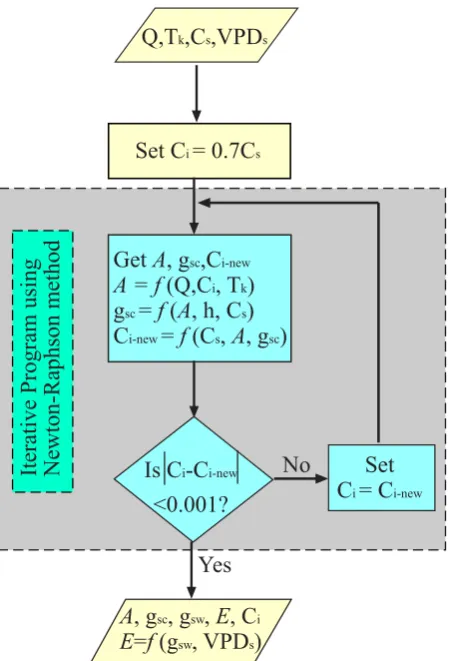
Fig. 1. Schematic diagram of the coupling models flow.
2.1.2 Coupling the models
The FvCB model usesCi, among others (TkandQ), as driv-ing variables. The BWB model requires the net photosynthe-sisAas an input, whileCi results from the interaction ofA andgsw. Therefore, the two sub-models are interdependent. A nested iterative procedure was used to solve this relation numerically (Fig. 1). In finding the solution, the value of Ci was assumed to be equal to 0.7Ca, and substituted into the biochemical photosynthesis model (Eq. 1) to obtain an estimate ofA. Then stomatal conductance (gsc)was calcu-lated from the stomatal model (Eq. 8), and a new Ci was estimated using the resultingAandgsc(Eq. 9). This process was solved iteratively using the Newton-Raphson method un-til the change inCi was less than a certain small value of al-lowance. It should be noted that the parameters of the FvCB sub-model must be calibrated first (discuss below).
2.2 Plant materials
The experiment was conducted at Qidaoqiao Populus
euphratica Oliv. forest reserve, Ejina county, Inner Mongolia, China (42◦210N, 101◦150E; elevation 920.5 m above sea level; 13.33 km2).This is one of the most arid
regions in China, with potential evaporation exceeding 3500 mm year−1 and mean annual rainfall, 84% of which occurs during the growing season (May–September), less than 50 mm year−1. The annual mean air temperature is about 8.1◦C. A winter minimum temperature of −38.5◦C (17 January 1996) and a summer maximum of 43.1◦C (21 July 1980) have been recorded, with an average diurnal temperature range of 28–30◦C (Su et al., 2007). Prevailing winds are northwesterly in winter and spring, and southwest-erly to southsouthwest-erly in summer and fall. Annual mean wind ve-locity ranges from 3.4 to 4.0 m s−1. Total annual sunshine time is from 3170 to 3444 h, the accumulated temperature (≥10◦C) is from 3549 to 3695◦C.
Populus euphratica Oliv. is the dominant native woody
species in the reserve, whose average age is 25 years, and their growth status is good. The stem density was 500 plants ha−1. Mean tree height is 10 m and men breast-height diameter is 12 cm. The understory includes the species Tamarix ramosissima and Sophora alopecuroides L., the former is an invasive xerophytic woody shrub species, which can form monospecific stands at a maximum height varying between 2 and 3 m; the latter is a perennial legume drought-resistant forage species infested to the reserve, com-monly, 30–60 cm in height. The trees were accessed via a canopy access tower. Three to four intact dentate broad-ovate leaves on the exposed side were selected for measurements. The measurements were conducted on 8, 10, 17 July 2006 which were all clear days.
2.3 Gas exchange measurement
A photosynthesis system (LI-6400; LI-COR, Lincoln, NE, USA) with a red/blue light source (LI6400-02B) mounted onto a 6-cm2clampe-on leaf chamber was used to determine light and A/Ci responses under various environment condi-tions. For the construction of A/Ci response curves, three leaf replicas were used. Prior to the measurement the leaf was acclimated to saturating irradiance (1500 µmol m−2s−1) and measurement temperature for half an hour. The CO2 concentration in the cuvette was gradually decreased from 360 µmol mol−1to about 20 µmol mol−1through five steps, increased back to 360 µmol mol−1and then the leaf was al-lowed to acclimate for at least five minutes. Upon comple-tion of this sequence, the CO2 concentration was increased to about 1200 µmol mol−1 through six steps. The light re-sponse of leaves was determined at several irradiance lev-els between 0 and 1800 µmol m−2s−1at 25◦C leaf
temper-ature and 360 µmol mol−1CO
2inside the leaf chamber. For light response curves, measurements started with a leaf equi-librated to high light and the light level was then gradually decreased.
The A/Ci response of leaves was investigated at various leaf temperatures (10, 15, 20, 25, 30, 35 and 40◦C) to de-termine the temperature dependence of the photosynthetic parameters. The leaf chamber was modified by replacing
G. F. Zhu et al.: Parameterization of a coupled CO2and H2O gas exchange model 423 the peltier external heat sink with a metal block
contain-ing water channels, which in turn were connected to a heating/cooling circulating water bath (Endocal RTE-100, Neslab Instruments, Newington, USA). The modified heat-ing/cooling blocks, used in conjunction with the peltier tem-perature controls, provided leaf temtem-perature control at any preset value between 10–45◦C. Leaf temperatures were mea-sured using a chromal-constantin thermocouple pressed to the lower leaf surface. The temperatures reported by this particular thermocouple were cross-checked against standard mercury-in-glass thermometers in a controlled temperature chamber and found to be within±0.4◦C (Bernacchi et al., 2003).
Using 99 leaves, the response ofgsc to relative humidity (0.05–0.90), irradiance (>100 µmol m−2s−1), leaf tempera-ture (10–40◦C) and a range of CO2levels (>50 µmol mol−1) was determined to calibrate the stomatal conductance model. Relative humidity was controlled by adjusting the flow rate of air through the leaf chamber. Measurements used to cal-ibrate the stomatal conductance model were collected by waiting until the rate ofCi, transpiration and CO2 assimi-lation had stabilized before taking the reading; this wait-time ranged from 5 to 30 min depending on the leaves and the en-vironmental conditions of the camber.
2.4 Parameter estimation
The objective of parameter calibration is to determine the pa-rameters −→β = [β1,β2,···,βh]0 so that the values of the de-pendent variable calculated from the modelη=f(−→β ,X)= [f1(
− →
β ,X),f2(
− →
β ,X),···,fl( − →
β ,X)]0 best agree with those observed from experimentation Y= [y1,y2,···,yl]0, where X= [x1(i),x2(i),···xn(i)]0is the input variables. We define our objective function that derives the optimization proce-dure as,
minS(θ)= l X
j=1 No
X
i=1
{wj[yj(i)−ηj(i)]2}
= l X
j=1 No
X
i=1
{wj[yj(i)−fj( − →
β ,X(i))]2} (11)
wherel is the estimated outputs,N0 is the number of data sets, andwj (j=1,2,···,l) is the weighting factor for the jth estimated outputs. In the present work we used the GA to find a vector−→β in the given search space, which is de-fined by providing the lower and upper bounds for each of the h×1 dimensions of−→β, i.e.−→βmin≤−→β ≤−→βmax(discussed below).
The GA is an effective stochastic global that mimics bi-ological evolution. As they are robust, i.e. they use only objective function information and not other auxiliary infor-mation, they has been successfully applied to various prob-lems, such as function optimization and combinatorial op-timization, especially when a rigorous mathematical model
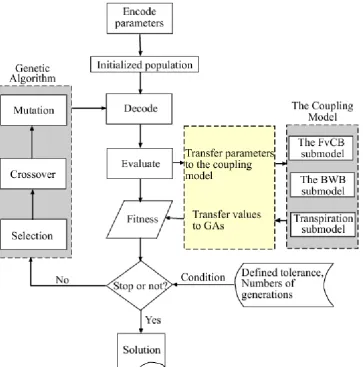
is too complicated to be practically implemented (Goldberg, 1989). The basic operations involved in a GA include three basic operators: selection, crossover, and mutation. The link-age between the coupling model and the GA is shown in Fig. 2. The procedure is summarized as follows: First, an initial set (called a “population”) of vectors (called “individ-uals”) whose elements (called “genomes”) are the values of the parameters is generated. This population is a representa-tive set of solutions to the problem under investigation. Each individual is evaluated on its performance with respect to the fitness function. For parameter estimation problems, the fit-ness of a particular individual is roughly proportional to the inverse of the errors between experimental and predicted val-ues (S(−→β )). Using this measure, the individual competes in a selection process where the fittest survives and is selected to enter the mating pool; the lesser-fit individual dies. The selected individuals (parents) are assigned a mate randomly. Genetic information is exchanged between the two parents by crossover to form offspring. The parents are then killed and replaced in the population by the offspring to keep the population size stable. Reproduction between the individu-als takes place with a probability of crossover. If a random number generated is less than the probability of crossover, crossover happens, otherwise not, and the parents enter into the new population. GA is very aggressive search techniques; they tend to converge quickly to a local optimum if the only genetic operators used are selection and crossover. The rea-son is that GA eliminates rapidly those individuals with poor measures until all the individuals in the population are iden-tical. Without a fresh influx of new genetic materials, the so-lution stops there. To maintain diversity, some of the genes are subjected to mutation to keep the population from prema-ture convergence (Goldberg, 1989; Cieniawski et al., 1995). Selection, crossover and mutation are repeated for many gen-erations, with the expectation of producing the best individ-ual(s) that could represent the optimal or near optimal solu-tion to the problem under study.
3 Results
3.1 Calibration of the sub-models
A/Ci response of P. euphratica leaves, examined at an irradi-ation of 1500 µmol m−2s−1and leaf temperature 25◦C, fol-lowed typical A/Ci response patterns of C3plants (Fig. 3a). Estimates of the photosynthesis parameters were 75.09±1.36 (approximated standard error), 117.27±2.47, 8.21±0.10, and 5.81±0.08 µmol m−2s−1for Vcmax,Jmax, TPU, andRd
at 25◦C, respectively. The FvCB sub-model described the photosynthetic response very well over a range of mea-sured Ci at 25◦C. The transition points from Ac to Aj and from Aj toAp occurred at 23.2 and 88.3 Pa, respec-tively (Fig. 3a). The model response to irradiation was also examined at Ci of 38 Pa at 25◦C. From Fig. 3b, we can
424 G. F. Zhu et al.: Parameterization of a coupled CO2and H2O gas exchange model
Fig. 2
. Flow chart of the GA estimator for parameter estimation of the coupling
[image:6.595.120.484.62.430.2]models.
Fig. 2. Flow chart of the GA estimator for parameter estimation of the coupling models.
see that the model simulated fairly well and transition from RuBP-limited to Rubisoco-limited or TPU-limited photosyn-thesis did not occur during doing light response curves under these circumstances.
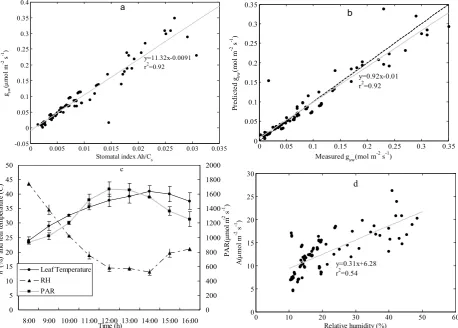
Figure 4a shows the relationship between stomatal con-ductance (gsw, mol m−2s−1)and the stomatal index (AhCs)of the BWB sub-model of P. euphratica. The optimized val-ues for parameters m and gswmin (mol m−2s−1) are 11.32 and−0.0091, respectively. The BWB sub-model was capa-ble of accounting for 92% of the observed variation in mea-sured stomatal conductance of calibration data (Fig. 4b). Fig-ure 4c shows the diurnal change in relative humidity (h)at the leaf surface. Thehvalue decreased slowly from 43.6% at 08:00 to 18.83% at 11:00 and leached a plateau about 14.3% from 12:00 to 14:00. After that thehvalue slowly in-creased from 19.61% to 21.03% from 15:00 to 16:00. Anal-ysis of the response of the rate of photosynthesis rate (A, µmol m−2s−1)to relative humidity (h, %) for leaves at the field site showed that there was positive relationship between Aandh(Fig. 4d).
3.2 Model validation
3.2.1 Prediction ofAby the FvCB model
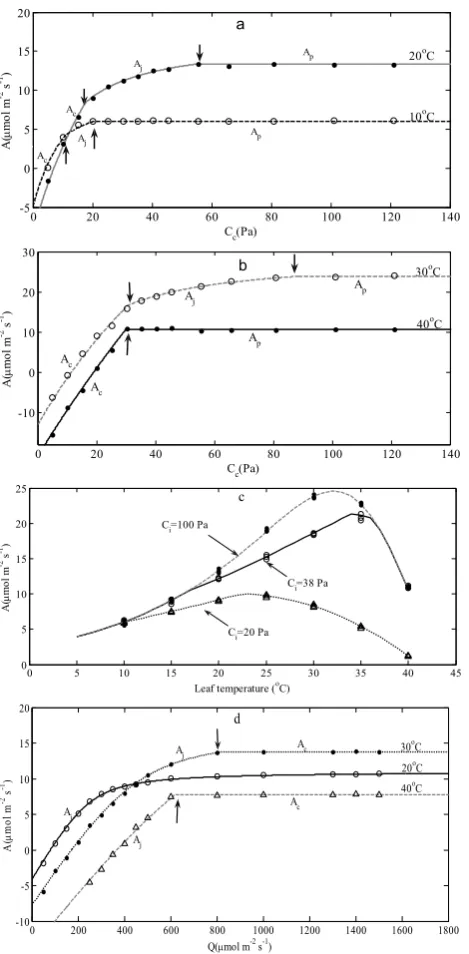
Predicted Aby the FvCB model is represented graphically against calibration data (Fig. 5). At 10◦C,Awas insensi-tive to high CO2levels. The FvCB sub-model simulated this observed pattern well; that is, an increase of photosynthesis rated up to the CO2 concentration level about 20.7 Pa, fol-lowed by a flat line as CO2increased further (Fig. 5a). The model predicted a flat response at high CO2levels as a result of a limitation due toAp. At 10◦C, the model predicted a nearly direct transition from the Rubisco-limited (Ac)to the TPU-limited (Ap)region, with a brief period of RuBP limi-tation (Aj, 10.4–20.7 Pa of Ci)between the two regions. At 20◦C, the model behaved such that the transition fromActo Aj occurred around 17.6 Pa and the transition between Aj andAp took place around 54.2 Pa (Fig. 5a). At 30◦C, the limitation due toAj was recognized over a board range of CO2pressure from 23.8 Pa to 87.6 Pa (Fig. 5b). At 40◦C,
G. F. Zhu et al.: Parameterization of a coupled CO2and H2O gas exchange model 425
0 20 40 60 80 100 120
-10 -5 0 5 10 15 20 25 30
Ci(Pa)
A(
μ
mo
l m
-2 s -1) Rubisco RuBP TPU Observed values a
0 500 1000 1500
-5 0 5 10 15 20
Q(μmol m-2s-1)
A( μ mo lm -2s -1) Light response Observed values b
0 20 40 60 80 100 120
-10 -5 0 5 10 15 20 25 30
Ci(Pa)
A(
μmo
l m
-2 s -1 ) Rubisco RuBP TPU Observed values a
0 500 1000 1500
-5 0 5 10 15 20
Q(μmol m-2s-1)
A( μ mo lm -2 s -1 ) Light response Observed values b
Fig. 3. Examples of genetic algorithms (GA) to A/Ci curve in parameter estimations (a) and corresponding light response curves (b).
For the A/Ci curve, the data set was properly subdivided into three segments by GA with the photosynthesis parameters were 75.09±1.36, 117.27±2.47, 8.21±0.10, and 5.81±0.08 forVcmax,Jmax, TPU, andRdat 25
◦
C, respectively. Points below 23.2 Pa was regarded as Rubisco-limited and above 88.3 Pa as TPU-Rubisco-limited; points between 23.2 and 88.3 Pa might be RuBP-regeneration-Rubisco-limited-the arrow indicates the transition points between different segments. Light response curve atCi of 36.4 Pa at 25◦C.
0 0.005 0.01 0.015 0.02 0.025 0.03 0.035
-0.05 0 0.05 0.1 0.15 0.2 0.25 0.3 0.35 0.4
Stomatal index Ah/Cs
gsw
(
μ
mo
l m
-2 s -1 )
a
y=11.32x-0.0091
r2=0.92
0 0.05 0.1 0.15 0.2 0.25 0.3 0.35
0 0.05 0.1 0.15 0.2 0.25 0.3 0.35
Measured gsw(mol m-2 s-1)
Pr ed ic te d g sw (m ol m
-2 s -1 )
b
y=0.92x-0.01
r2=0.92
0 0.005 0.01 0.015 0.02 0.025 0.03 0.035
-0.05 0 0.05 0.1 0.15 0.2 0.25 0.3 0.35 0.4
Stomatal index Ah/Cs
gsw
(
μ
mo
l m
-2 s -1)
a
y=11.32x-0.0091
r2=0.92
0 0.05 0.1 0.15 0.2 0.25 0.3 0.35
0 0.05 0.1 0.15 0.2 0.25 0.3 0.35
Measured gsw(mol m-2 s-1)
Pr ed ic te d g sw (m ol m
-2 s -1 )
b
y=0.92x-0.01
r2=0.92
c 0 5 10 15 20 25 30 35 40 45 50
8:00 9:00 10:00 11:00 12:00 13:00 14:00 15:00 16:00 Time (h)
h
(%
) an
d l eaf te m per at ur e ( oC) 0 200 400 600 800 1000 1200 1400 1600 1800 2000 PA R ( μ mo l m
-2 s -1 )
Leaf Temperature RH
PAR
0 10 20 30 40 50 60
0 5 10 15 20 25 30 d
Relative humidity (%)
A(
μ
mo
l m
-2 s -1 )
y=0.31x+6.28
r2=0.54
Fig. 4. Calibration of the BWB model (a) Relationship between stomatal conductance
and the stomatal index (Ah/Cs); (b) Linear regression of predicted gsw on
measured gsw as a result of BWB model calibration. Dashed line indicated
1:1 relationship, (c) Daily photosynthetically active radiation (PAR, μmol
m-2 s-1), leaf temperature (oC) and relative humidity (h, %) at the field site
c 0 5 10 15 20 25 30 35 40 45 50
8:00 9:00 10:00 11:00 12:00 13:00 14:00 15:00 16:00 Time (h)
h
(%
) an
d l eaf te m per at ur e ( o C) 0 200 400 600 800 1000 1200 1400 1600 1800 2000 PA R ( μ mo l m
-2 s -1 )
Leaf Temperature RH
PAR
0 10 20 30 40 50 60
0 5 10 15 20 25 30 d
Relative humidity (%)
A(
μ
mo
l m
-2 s -1 )
y=0.31x+6.28
r2=0.54
Fig. 4. Calibration of the BWB model (a) Relationship between stomatal conductance
and the stomatal index (Ah/Cs); (b) Linear regression of predicted gsw on
measured gsw as a result of BWB model calibration. Dashed line indicated
1:1 relationship, (c) Daily photosynthetically active radiation (PAR, μmol
m-2 s-1), leaf temperature (oC) and relative humidity (h, %) at the field site
Fig. 4. Calibration of the BWB model (a) Relationship between stomatal conductance and the stomatal index (Ah/Cs); (b) Linear regression
of predictedgswon measuredgswas a result of BWB model calibration. Dashed line indicated 1:1 relationship, (c) Daily
photosyntheti-cally active radiation (PAR, µmol m−2s−1), leaf temperature (◦C) and relative humidity (h, %) at the field site measured by Li-6400, (d) Relationship between net photosynthesis rate (A, µmol m−2s−1)and relative humidity at leaf surface (h,%).
[image:7.595.82.510.62.240.2] [image:7.595.69.528.325.653.2]426 G. F. Zhu et al.: Parameterization of a coupled CO2and H2O gas exchange model
0 20 40 60 80 100 120 140
-5 0 5 10 15 20
Cc(Pa)
A(
μ
mo
l m
-2 s -1)
a
10oC
20oC
Ac
Aj Ap
Ac
Aj
Ap
0 20 40 60 80 100 120 140
-10 0 10 20 30
Cc(Pa)
A(
μ
mo
l m
-2 s -1)
b
40oC
30oC
Ac
Ap
Ac
Aj Ap
0 5 10 15 20 25 30 35 40 45
0 5 10 15 20 25
Leaf temperature (oC)
A(
μ
mo
l m
-2 s -1)
Ci=20 Pa
Ci=38 Pa
Ci=100 Pa
c
0 20 40 60 80 100 120 140
-5 0 5 10 15 20
Cc(Pa)
A(
μ
mo
l m
-2 s -1)
a
10oC
20oC
Ac
Aj Ap
Ac
Aj
Ap
0 20 40 60 80 100 120 140
-10 0 10 20 30
Cc(Pa)
A(
μ
mo
l m
-2 s -1)
b
40oC
30oC
Ac
Ap
Ac
Aj
Ap
0 5 10 15 20 25 30 35 40 45
0 5 10 15 20 25
Leaf temperature (oC)
A(
μ
mo
l m
-2 s -1)
Ci=20 Pa
Ci=38 Pa
Ci=100 Pa
c
0 20 40 60 80 100 120 140
-5 0 5 10 15 20
Cc(Pa)
A(
μ
mo
l m
-2 s -1)
a
10oC
20oC
Ac
Aj Ap
Ac
Aj
Ap
0 20 40 60 80 100 120 140
-10 0 10 20 30
Cc(Pa)
A(
μ
mo
l m
-2 s -1)
b
40oC
30oC
Ac
Ap
Ac
Aj Ap
0 5 10 15 20 25 30 35 40 45
0 5 10 15 20 25
Leaf temperature (oC)
A(
μ
mo
l m
-2 s -1)
Ci=20 Pa
Ci=38 Pa
Ci=100 Pa
c
0 200 400 600 800 1000 1200 1400 1600 1800 -10 -5 0 5 10 15 20
Q(μmol m-2 s-1)
A(
μ
mo
l m
-2 s
-1) 40oC
20oC 30oC
Aj
Ac
Aj Ac
Aj
d
Fig. 5. Prediction of net photosynthesis (A). Lines represent the FvCB model
prediction; symbols are observations of calibration data. (a) A/Ci responses
at 10 and 20ºC; (b) A/Ci responses at 30 and 40ºC; (c) Temperature response
at three Cilevels (20, 38, and 100 Pa); (d) Light responses at Ci=38 Pa at
[image:8.595.52.287.61.539.2]three leaf temperature levels (20, 30 and 40 ºC)
Fig. 5. Prediction of net photosynthesis (A). Lines represent the FvCB model prediction; symbols are observations of calibration data. (a) A/Ci responses at 10 and 20◦C; (b) A/Ciresponses at 30
and 40◦C; (c) Temperature response at threeCilevels (20, 38, and
100 Pa); (d) Light responses atCi=38 Pa at three leaf temperature
levels (20, 30 and 40◦C).
the model predicted a directly transition fromActoAp oc-curred at 29.9 Pa and the limitation due toAj was not re-alized (Fig. 5b). The model successfully reproduced the ob-served pattern of A/Ciresponses at all four leaf temperatures.
8:00 9:00 10:00 11:00 12:00 13:00 14:00 15:00 16:00 5 10 15 20 25 Time(h) A( μ mo l m
-2 s -1)
Modelled values Observed values
a
8:00 9:00 10:00 11:00 12:00 13:00 14:00 15:00 16:00
1 2 3 4 5 6 7 8 9 b Time(h) A( μ mo l m
-2 s -1)
[image:8.595.309.545.63.256.2]Modelled values Observed values
Fig. 6. Comparison of the observed and estimated (a) net assimilation rates, (b)
transpiration rates using the optimized parameters obtained by GA method. 8:00 9:00 10:00 11:00 12:00 13:00 14:00 15:00 16:00 5 10 15 20 25 Time(h) A( μ mo l m
-2 s -1)
Modelled values Observed values
a
8:00 9:00 10:00 11:00 12:00 13:00 14:00 15:00 16:00
1 2 3 4 5 6 7 8 9 b Time(h) A( μ mo l m
-2 s -1)
Modelled values Observed values
Fig. 6. Comparison of the observed and estimated (a) net assimilation rates, (b)
transpiration rates using the optimized parameters obtained by GA method.
Fig. 6. Comparison of the observed and estimated (a) net
assimi-lation rates, (b) transpiration rates using the optimized parameters obtained by GA method.
The photosynthesis response to leaf temperature was sim-ulated fairly well over the entire range of temperatures at var-ious ambient CO2 concentrations (Fig. 5c). AtCi=100 Pa, the optimal leaf temperature that yields the maximal net pho-tosynthetic rate of 24.59 µmol m−2s−1was around 32◦C. At Ci=38 Pa, the optimal leaf temperature increased to 34◦C with a maximal photosynthetic rate of 21.32 µmol m−2s−1. AtCi=20 Pa, the optimal leaf temperature decreased to 23◦C with a maximal photosynthetic rate of 10.0 µmol m−2s−1. The model response to irradiation was also simulated fairly well. At 20◦C, the model predicted that A was solely limited by Aj throughout all irradiation levels (Fig. 5d). At 30◦C, the transition from Aj to Ac occurred around Q=820 µmol m−2s−1. At 40◦C, the transition fromAj to Acoccurred at lower irradiation (Q=621 µmol m−2s−1). 3.2.2 Coupling model validation
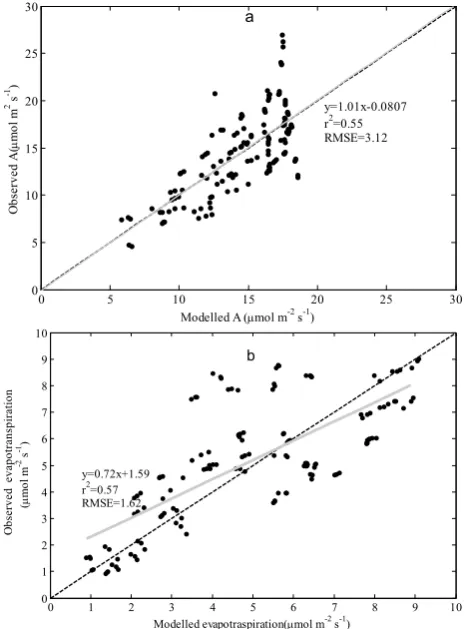
Having parameterized the combined model as described above, we simulated the diurnal courses of photosynthesis and evapotranspiration on a leaf scale, using as driving vari-ables the measured values of the leaf temperature and irra-diation, as well as measuredCs andh. The resulting simu-lations were compared with the measure rates of net photo-synthesis (Fig. 6a) and transpiration (Fig. 6b). The combined model successfully reproduced the observed response inA. Of note, the observed net assimilation rate of the P.
euphrat-ica leaves peaked at 10:00 o’clock and declined gradually
until 15:00 o’clock with a slightly increase after that. The regression line slope between the observed and modeled val-ues was 1.01 with an intercept of−0.0807, corresponding to a Root Mean Squared Errors (RMSE) of 3.12 (Fig. 7a).
G. F. Zhu et al.: Parameterization of a coupled CO2and H2O gas exchange model 427 However, the combined model generally tended to
under-estimate the transpiration (Fig. 6b) and the regression line slope deviated significantly from unity, corresponding to a RMSE=1.62 (Fig. 7b). Comparing the daily integrated to-tals of carbon fixed and water lost, the model overestimated daily CO2fixation by 0.44% and underestimated water loss by 9.31%, respectively. Overall, the combined model gener-ally captured the diurnal patterns of CO2and H2O exchange resulting from variation in temperatures and irradiation.
4 Discussion
4.1 Model parameterization
The major advantage of the proposed method is its global nature, and its ability to outperform simultaneous estimates of the photosynthetic parameters (e.g.Vcmax,Jmax, TPU and
Rd). Our experiments showed that the appropriately iden-tifying bounds on parameters for minimization in proximity to the global minimum were indispensable. Wide parameter searching bounds for the GA may result in parameters drift-ing into nonsensical ranges. For example, in very rare cir-cumstances, data include samples of two segments (Ac and Aj), but wide bounds result in an A/Ci set for which one of the two functions (e.g.Aj)happens to provide a better fit than two functions combined, despite the underlying pres-ence of two phases (Su et al., 2009). In this circumstance, we say the GA method obtained biologically implausible es-timates for the parameters of the FvCB model.
It is possible to prohibit the estimation procedure from reaching biologically implausible values by constraining the range of a parameter. Knowing the initial value of A/Ci curve, one can use the following equation to get an approxi-mate estimation forVcmax (whenCi equals to the CO2
com-pensation point0*): Vcmax,0=
dA dCi
(0∗ +Kc(1+O/Ko)) (12)
whereVcmax,0 is the primary estimation ofVcmax, dA dCi is the
initial slope of the A/Cicurve, which can be calculated from the difference quotient of the first two points of the A/Ci curves.
WhenCi→ +∞,Aj in Eq. 3 becomes lim
Ci→+∞
Aj= lim Ci→+∞
J 4
Ci−0∗ Ci+20∗
=J
4 (13)
where lim Ci→+∞
Aj is the limit of the RuBP-limited photosyn-thesis rate function whenCi→ +∞, which can be approx-imately evaluated from the last two end points on the A/Ci curves. ThusJmaxcan be approximately estimated by: Jmax,0=4 lim
Ci→+∞
Aj (14)
whereJmax,0is the primary estimation ofJmax.
0 5 10 15 20 25 30
0 5 10 15 20 25 30
Modelled A (μmol m-2 s-1)
Ob se rv ed A( μ mo l m
2 s -1)
a
y=1.01x-0.0807
r2=0.55
RMSE=3.12
0 1 2 3 4 5 6 7 8 9 10
0 1 2 3 4 5 6 7 8 9 10
Modelled evapotraspiration(μmol m-2 s-1)
O
bs
er
ved eva
pot ra ns pi ra ti on ( μ mo l m
-2 s -1 )
y=0.72x+1.59
r2=0.57
RMSE=1.62
[image:9.595.311.544.64.379.2]b
Fig. 7. Linear regression of (a) predicted A on measured A; (b) predicted
transpiration on measured transpiration. Dashed line indicates one to one relationship.
0 5 10 15 20 25 30
0 5 10 15 20 25 30
Modelled A (μmol m-2 s-1)
Ob se rv ed A( μ mo l m
2 s -1)
a
y=1.01x-0.0807
r2=0.55
RMSE=3.12
0 1 2 3 4 5 6 7 8 9 10
0 1 2 3 4 5 6 7 8 9 10
Modelled evapotraspiration(μmol m-2
s-1)
O
bs
er
ved eva
pot ra ns pi ra ti on ( μ mo l m
-2 s -1)
y=0.72x+1.59
r2=0.57
RMSE=1.62
b
Fig. 7. Linear regression of (a) predicted A on measured A; (b) predicted
transpiration on measured transpiration. Dashed line indicates one to one relationship.
Fig. 7. Linear regression of (a) predicted A on measured A; (b)
predicted transpiration on measured transpiration. Dashed line in-dicates one to one relationship.
If TPU-limited photosynthesis occurs as no increase in A with increasing CO2concentration, approximate TPU value can be easily obtained:
TPU0= Ap
3 (15)
Generally, Rd is constrained to be greater than 0 and less than 10 µmol m−2s−1 (Sharkey et al., 2007). Thus, for any given A/Ci curves, the bounds for parameters Vcmax,
Rd, Jmax and TPU are [Vcmax,0−30,Vcmax,0+40], [0, 10],
[Jmax,0−40,Jmax,0+70] and [TPU0−3, TPU0+3]. Our ex-periences showed that at these search spaces the optimum parameters were all successfully found at one time.
The BWB model is empirical and has received wide atten-tion, analysis, acceptance and applications (Muchow, 1985; Lhomme et al., 1998). The applications of the model to CO2 and H2O exchange studies result in coupled equations which required recursive or iterative computation. Thus, it may not be favourable for large-scale ecosystem simulations. Also, the empirical nature of the BWB model makes it difficult to extrapolate the model into future environmental regimes. For example, the effect of the soil water stress on stomatal con-ductance was not explicitly included in the model.
428 G. F. Zhu et al.: Parameterization of a coupled CO2and H2O gas exchange model
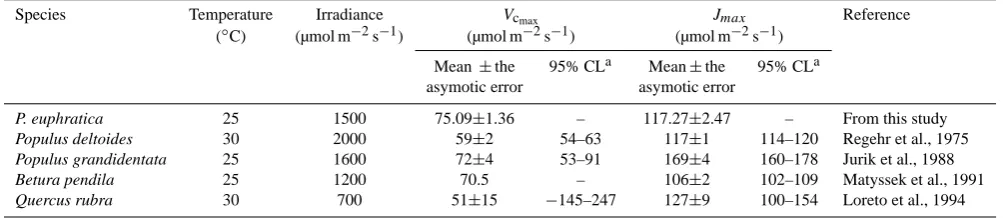
Table 2. A comparison ofVcmaxandJmaxof the investigated tress with the results of other studies.
Species Temperature Irradiance Vcmax Jmax Reference
(◦C) (µmol m−2s−1) (µmol m−2s−1) (µmol m−2s−1)
Mean ±the 95% CLa Mean±the 95% CLa asymotic error asymotic error
P. euphratica 25 1500 75.09±1.36 – 117.27±2.47 – From this study
Populus deltoides 30 2000 59±2 54–63 117±1 114–120 Regehr et al., 1975
Populus grandidentata 25 1600 72±4 53–91 169±4 160–178 Jurik et al., 1988
Betura pendila 25 1200 70.5 – 106±2 102–109 Matyssek et al., 1991
Quercus rubra 30 700 51±15 −145–247 127±9 100–154 Loreto et al., 1994
aUpper and lower 95% confidence limit
4.2 Maximum carboxylation rate,Vcmax and maximum
rate of electron transport,Jmax
Values for Vcmax of 75.09±1.36 and Jmax of 117.27±2.47 µmol m−2s−1were obtained for P. euphratica leaves at 25◦C. It should be noticed that the assessed values
ofVcmax andJmax at a reference temperature dependent on
the choice of the Rubisco kinetic parameters and temperature dependence functions in each model. Therefore, care should be needed for the comparison of the Vcmax andJmax with
other studies. Wullschleger’s list of Vcmax and Jmax for
109 species estimated from the A/Ci curves included five species from the genus Populus (Wullschleger, 1993). Our values ofVcmax andJmax for P. euphratica is very close to
Wullschleger’s two values for Populus species (Table 2). The optimalVcmax andJmax for P. euphratica in this study are also close to Wullschleger’s values for hardwood in temperate forests of Betura pendula and Quercus rubra.
Various functions have been used to describe the temper-ature dependence ofVcmax andJmax. For example, Harley et
al. (1992) and Leuning (1995) employed a compound func-tion with an optimum for bothVcmax andJmax, whereas de
Pury and Farquhar (1997) used an exponential growth func-tion for Vcmax. Leuning (1995) reported that functions
de-scribing temperature responses of the photosynthetic param-eters Vcmax and Jmax at 25◦C showed little variation be-tween different species at leaf temperatures<30◦C, while above this temperature variation was large and species-dependent. Under the natural condition, better predictions of Rubisoc-limited photosynthesis are necessary because of the synchronous variations of temperatures and irradiation which range from 24.0 to 40.98◦C and from 934.82 to
166.8 mol m−2s−1 during the diurnal course, respectively (Fig. 4c). Thus, photosynthesis in field condition is com-monly Rubisco-limited (Fig. 5d). In our experiments, we found a slight decline of Vcmax when the temperature was
greater than 40◦C. However, we opted to use the exponential function because it resulted in better overall performance for the typical diurnal gas exchange on a leaf scale. The leaf
nitrogen content can also be linked to key photosynthetic model parameters such as Vcmax and Jmax (Gonzalez-Real and Baille, 2000). Therefore, further studies are still needed to reveal these relationships.
4.3 Parameters of BWB sub-model
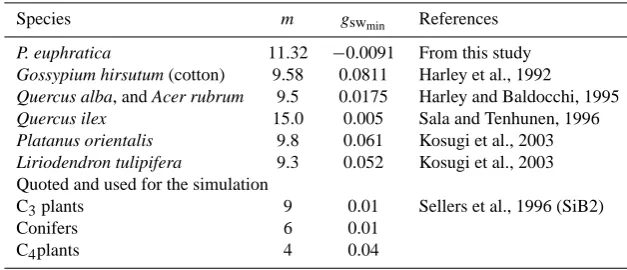
Table 3 compared the optimized values of parametersmand gswmin for BWB sub-model with other studies. Parameterm
in the BWB sub-model for P. euphratica is 11.31. This value is in the range of values for C3tree species listed in Table 3. Parametergswmin, the minimum stomatal conductance to H2O
whenA=0 at the light compensation point, should be non-negative in the sense of biological realities. Althoughgswmin is negative in our study, it was noticed that its value is relative low (−0.0091 mol m−2s−1)and has small effect on the esti-matedgsw. Thus, we thought it is acceptable to use the neg-ativegswminvalue to predict the values ofgswin the coupled models. Evidence from gas exchange measurements sug-gests that the value ofmoccupies a relatively narrow range for all C3 species. Based on this, some noteworthy studies simulating canopy fluxes used a constantmof around 9 (see also Table 3). Nevertheless, parameter mhas a significant physiological meaning related to the intrinsic water use ef-ficiency, indicating a plant-specific manner of regulating the fluxes, and the importance of slight fluctuation in parameter mshould not be undervalued (Kosugi et al., 2003). Studies have reported that the soil and plant water status might effect mthrough regulating leaf water potentials. Results showed thatmbecame small during soil drought conditions (Sala and Tenhunen, 1996) and in old tress (Falge et al., 1996). Thus, Gao et al. (2002) derived a new model for the plant stomatal conductance and transpiration as a function of the soil water stress, vapour pressure deficit and photosynthetically active radiation. In the applications of the model, some additional experiments are needed in future studies.
G. F. Zhu et al.: Parameterization of a coupled CO2and H2O gas exchange model 429
Table 3. A comparison of the parameters for BWB submodel with other studies.
Species m gswmin References
P. euphratica 11.32 −0.0091 From this study
Gossypium hirsutum (cotton) 9.58 0.0811 Harley et al., 1992
Quercus alba, and Acer rubrum 9.5 0.0175 Harley and Baldocchi, 1995
Quercus ilex 15.0 0.005 Sala and Tenhunen, 1996
Platanus orientalis 9.8 0.061 Kosugi et al., 2003
Liriodendron tulipifera 9.3 0.052 Kosugi et al., 2003
Quoted and used for the simulation
C3plants 9 0.01 Sellers et al., 1996 (SiB2)
Conifers 6 0.01
C4plants 4 0.04
5 Conclusions
This paper applied a combined model to simulate CO2 and H2O fluxes at the leaf scale for P. euphratica. The parame-ters of the FvCB sub-model were estimated by using the GA method. It is demonstrated that this method can effectively find higher quality parameter values of the FvCB sub-model based on the entire A/Cicurves data sets while obviating the need for arbitrary determination of transition points and sub-setting of the data before analysis. Moreover, the present coupled gas exchange model for P. euphratica leaf is capable of predicting photosynthesis, the stomatal conductance and transpiration as a function of radiation, leaf temperatures, ambient CO2, and relative humidity, but predictions of the stomatal conductance and transpiration are less satisfactory. In the present study, the FvCB sub-model was parameterized by using A/Cidata sets under a controlled environment. Re-cent advances in potable equipment enabled us to make long-term field gas exchange measurements and we have been ac-cumulating data. What about the GA method using the long-term data obtained from in situ observations of the diurnal changes in the CO2and H2O fluxes in the parameterization of the FvCB model? A comprehensive study is still required.
Acknowledgements. The authors would like to thank Natascha T. (Editorial Support) for her continued help during the revisions of the article. We also thank the anonymous reviewers for their critical
reviews and helpful comments. This research was supported
by Chinese Academy of Science Knowledge Innovation Project (No.KZCX2-YW-Q10-2-4), National Natural Science Foundation
of China (Nos. 40701054, 40871190), and the national
high-tech program (863) project “a common software for multi-source remote sensing data assimilation” (grant number: 2009AA12Z130).
Edited by: X. W. Li
References
Baldocchi, D. and Meyers, T.: On using eco-physiological, mi-crometeorological and biogeochemical theory to evaluate carbon dioxide, water vapor and trace gas fluxes over vegetation: a per-spective, Agr. Forest Meteorol., 90, 1–25, 1998.
Ball, J. T., Woodrow, I. E., and Berry, J. A.: A model predicting stomatal conductance and its contribution to the control of photo-synthesis under different environmental conditions, in: Progress in Photosynthesis Research, edited by: Biggins, I., Martinus-Nijhoff Publishers, Dordrecht, The Netherlands, 221–224, 1987. Barth, N. H.: Oceanographic experiment design II: Genetic
algo-rithms, J. Amtos. Oceanic. Technol., 9, 434–443, 1992. Bernacchi, C. J., Pimentel, C., and Long, S. P.: In vivo
tempera-ture response functions of parameters required to model RuBP-limited photosynthesis, Plant, Cell Environ., 26, 1419–1430, 2003.
Bernacchi, C. J., Portis, A. R., Nakano, H., von Caemmerer, S., and Long, S. P.: Temperature response of mesophyll conductance. Implications for the determination of Rubisco enzyme kinetics and for limitations to photosynthesis in vivo, Plant Cell Environ., 130, 1–7, 2002.
Bernacchi, C. J., Singsaas, E. L., Pimentel, C., Portis Jr., A. R., and Long, S. P.: Improved temperature response functions for models of Rubisco-limited photosynthesis, Plant Cell Environ., 24, 253–259, 1992.
Bernacchi, C. J., Singsaas, E. L., Pimentel, C., Portis, A. R., and Long, S. P.: Improved temperature response functions for models of Rubisco-limited photosynthesis, Plant Cell Environ., 24, 253– 259, 2001.
Cannell, M. G. R. and Thornley, J. H. M.: Temperature and CO2
responses of leaf and canpony photosynthesis: a clarification us-ing the non-rectangular hyperbola model of photosynthesis, Ann. Bot.-London, 82, 883–892, 1998.
Chen, Y. P., Chen, Y. N., Li, W. H., and Xu, C. C.: Characterization of photosynthesis of Populus euphratica grown in the arid region, Photosynthetica, 44(4), 622–626, 2006.
Chen, Y. N., Wang, Q., Ruan, X., Li, W. H., and Chen, Y. P.: Physio-logical response of Populus euphratica to artificial waterrecharge of the lower reaches of Tarim River, Acta Bot. Sin., 46, 1393– 1401, 2004.
430 G. F. Zhu et al.: Parameterization of a coupled CO2and H2O gas exchange model
Cieniawski, S. E., Eheart, J. W., and Ranjithan, S.: Using genetic al-gorithms to solve a multiobjective groundwater monitoring prob-lem, Water Resour. Res., 31, 399–409, 1995.
Collatz, G. J., Ball, J. T., Grivet, C., and Berry, J. A.: Physio-logical and environmental regulation of stomatal conductance, photosynthesis and transpiration: a model that includes laminar boundary layer, Agr. Forest Meteorol., 54, 107–136, 1991. De-Pury, D. G. and Farquhar, G. D.: Simple scaling of
photosynthe-sis from leaves to canopies without the errors of big-leaf models, Plant Cell Environ., 20, 537–337, 1997.
Dubois, J. J. B., Fiscus, E. L., Booker, F. L., Flowers, M. D., and Reid, C. C.: Optimizing the statistical estimation of the param-eters of the Farquhar-von Caemmerer-Berry model of photosyn-thesis, New Phytol., 176, 402–414, 2007.
Evans, J. R.: The dependence of quantum yield on wavelength and growth irradiance, Aust. J. Plant Physiol., 14, 69–79,1987. Falge, E., Graber, W., Siegwolf, R., and Tenhunen, J. D.: A modelof
the gas exchange response of Picea abies to habitat condi-tions, Trees, 10, 277–287, 1996.
Farquhar, G. D., von-Caemmerer, S., and Berry, J. A.: A biochem-ical model of photoshynthetic CO2assimilation in leaves of C3
species, Planta, 149, 78–90, 1980.
Gao, Q., Zhao, P., Zeng, X., Cai, X., and Shen, W.: A model of stomatal conductance to quantify the relationship between leaf transpiration, microlimate and soil water stress, Plant Cell Envi-ron., 25, 1373–1381, 2003.
Goldberg, D. E.: Genetic Algorithms in Search, Optimization and Machine Learning, Addison-Wesley Longman Publishing Co., Inc., Boston, MA, USA, 1989.
Gu, R. S., Liu, Q. L., Pei, D., and Jiang, X. N.: Understanding saline and osmotic tolerance of Populus euphratica suspended cells, Plant Cell Tiss. Org., 78, 261–265, 2004.
Harley, P. C. and Baldocchi, D. D.: Scaling carbon dioxide andwater vapour exchange from leaf to canopy in a deciduous for est. I. Leaf model parametrization, Plant Cell Environ., 18, 1146–1156, 1995.
Harley, P. C., Thomas, R. B., Reynolds, J. F., and Strain, B. R.: Modelling photosynthesis of cotton grown in elevated CO2, Plant
Cell Environ., 15, 271–282, 1992.
Holland, J. H.: Adaptation in natural and artificial systems, Ann Arbor, MI, The University of Michigan Press, 1975.
Hu, B., Tang, G., Ma, J. W., and Yang, H. Z.: Parametric inversion of viscoelastic media from VSP data using a genetic algorithms, Appl. Geophys., 4(3), 194–200, 2007.
Jurik, T. W., Weber, J. A., and Gates, D. M.: Effects of temperature and light on photosynthesis of dominant species of a northern hardwood forest, Bot. Gaz., 149, 203–208, 1988.
Kattge, J. and Knorr, W.: Temperature acclimation in a biochemical model of photosynthesis: a reanalysis of data from 36 species, Pant Cell Environ., 30, 1176–1190, 2007.
Kim, S. K. and Lieth, J. H.: A coupled model of photosynthesis, stomatal conductance and transpiration for a rose leaf (Rosa hy-brida L.), Ann. Bot.-London, 91, 771–781, 2003.
Kosugi, Y., Shibata, S., and Kobashi, S.: Parameterization
of the CO2 and H2O gas exchange of several temperate
deciduousbroad-leaved trees at the leaf scale considering season-alchanges, Plant Cell Environ., 26, 285–301, 2003.
Lee, Y. H., Park, S. K., and Chang, D.-E.: Parameter estimation using the genetic algorithm and its impact on quantitative pre-cipitation forecast, Ann. Geophys., 24, 3185–3189, 2006, http://www.ann-geophys.net/24/3185/2006/.
Leuning, R.: A critical appraisal of combined
stomatal-photosynthesis model for C3 plants, Plant Cell Environ., 18,
339–355, 1995.
Lhomme, J. P., Elguero, E., Chehbouni, A., and Boulet, G.: Stom-atal control of transpiration: examination of Monteith’s formu-lation of canopy resistance, Water Resour. Res., 34, 2301–2308, 1998.
Long, S. P., Postl, W. F., and Bolharnordenkampf, H. R.: Quantum yields for uptake of carbon dioxide in C3vascular plants of
con-trasting habitats and taxonomic groupings, Planta, 189, 226–234, 1993.
Loreto, F., Di-Marco, G., Tricoli, D., and Sharkey, T. D.: Measure-ments of mesophyll conductance, photosynthetic electron trans-port and alternative electron sinks of field grown wheat leaves, Photosynth. Res., 41, 397–403, 1994.
Ma, T. J., Liu, Q. L., Li, Z., and Zhang, X. J.: Tonoplast H+-ATPase in response to salt stress in Populus euphratica cell suspensions, Plant Sci., 163, 499–505, 2002.
Makino, A., Nakano, H., and Mae, T.: Effects of growth tem-perature on the responses of ribulose-1,5-bisphosphate carbox-ylase, electron transport components, and sucrose synthesisen-zymes to leaf nitrogen in rice, and their relationships to pho-tosynthesis, Plant Physiol., 105, 1231–1238, 1994.
Matyssek, R., Guthardt-Georg, M. S., Keller, T. H., and Schei-degger, C. H.: Impairment of gas exchange and structure in birch leaves (Betula pendula) caused by low ozone concentra-tion, Trees, 5, 5–13, 1991.
Medlyn, B. E., Dreyer, E., Ellsworth, D., Forstreuter, M., Harley, P. C., Kirschbaum, M. U. F., Leroux, X., Montpied, P., Strasse-meyer, J., Walcrofi, A., Wang, K., and Loustau, D.: Temperature response of parameters of a biochemically based model of photo-synthesis: II. A review of experimental data, Plant Cell Environ., 25, 1167–1179, 2002.
Muchow, R. C.: Stomatal behavior in grain legumes grownunder different soil water regimes in a semi-arid tropical environment, Field Crop Res., 11, 291–307, 1985.
Ooka, R. and Komamura, K.: Optimal design method for build-ing energy systems usbuild-ing genetic algorithms, Build. Environ., 44, 1538–1544, 2009.
Regehr, D. L., Bazzaz, E. A., and Bogges, W. R.: Photosynthesis, transpiration and leaf conductance of Populus deltoids in relation to flooding and drought, Photosynthetic, 9, 52–61, 1975. Sala, A. and Tenhunen, J. D.: Simulations of canopy net
photo-synthesis and transpiration in Quercus ilex L. under the influence of seasonal drought, Agr. Forest Meteorol., 78, 203–222, 1996. Sellers, P. J., Randall, D. A., Collatz, G. J., Berry, J. A., Field, C.
B., Dazlich, D. A., Zhang, C., Collelo, G. D., and Bounoua, L.: A revised land surface parameterization (SiB2)for atmospheric
GCMs. Part I: Modeling formulation, J. Climate, 9, 676–705, 1996.
Sharkey, T. D., Bernacchi, A. J., Farquhar, G. D., and Singsaas, E. L: Fitting photosynthetic carbon dioxide response curves for C3
leaves, Plant Cell Environ., 30, 1035–1040, 2007.
G. F. Zhu et al.: Parameterization of a coupled CO2and H2O gas exchange model 431
Sharma, A., Dwivedi, B. N., Singh, B., and Kumar, K.: Introduction of Populus euphratica in Indian semi-arid trans angetic plains, Ann. Forest., 7, 1–8, 1999.
Su, Y. H., Zhu G. F., Miao, Z. W., Feng, Q., and Chang, Z. Q.: Es-timation of parameters of a biochemically based model of pho-tosynthesis using a genetic algorithm, Plant Cell Environ., 32, 1710–1723, 2009.
Su, Y. H., Feng, Q., Zhu, G. F., Si, J. H., and Zhang, Y. W.: Identifi-cation and Evolution of Groundwater Chemistry in the Ejin Sub-Basin of the Heihe River, Northwest China, Pedosphere, 17(3), 331–342, 2007.
Tcherkez, G. G. B., Farquhar, G. D., and Andrews, T. J.: Despites low catalysis and confused substrate specificity, all ribulose bis-phosphate carboxylases may be nearly perfectly optimized, P. Natl. Acad. Sci. USA, 103, 7246–7251, 2006.
Tenhunen, J. D., Sala, A., Harley, P. C., Doughherty, R. L., and Reynolds, J. F.: Factors influencing carbon fixation and watuse by mediterranean sclerophyll shrubs during summerdrought, Oe-cologia, 82, 381–393, 1990.
Von-Caemmerer, S.: Biochemical Models of Leaf Photosynthe-sis, CSIRO Publishing, Collingwood, Victoria, Australia, 1–165, 2000.
Wilson, K. B., Baldocchi, D. D., and Hanson, A. P. J.: Leaf ageaf-fects the seasonal pattern of photosynthetic capacity and nete-cosystem exchange of carbon in a deciduous forest, Plant Cell Environ., 24, 571–583, 2001.
Wullschleger, S. D.: Biochemical limitations to carbon assimilation in C3Plants – A retrospective analysis of the A/Ci curves from
109 species, J. Exp. Bot., 44, 907–920, 1993.