Best Practice Transfer for the Care Homes for the
Elderly: Case Study Methodology
'*
oralf fish ah Sulaiman, 2 ~ a v i d Baldry and ' ~ e s Ruddock' ~ u n Hussein Onn College University of Technology [Kolej Universiti Teknologi Tun Hussein Onn (KUiTTHO)], Beg Berkunci 101,86400 Parit Raja Batu Pahat Johor, Malaysia
'~esearch Institute for the Built & Human Environment (BuHu), University of Salford, Salford Greater Manchester, M5 4WT, UK
E-mail: [email protected]/n.sulaiman@p~.~a1ford.a~~uk, [email protected] , [email protected]
ABSTRACT: A Case Study can be defined as empirical inquiry that investigates a contemporary phenomenon within its life context and copes with the technically distinctive situation in which there will be many more variables of interest than data points and relies on multiple sources of evidence. This paper presents a discussion on the philosophical stance of the case study as a methodology leading to the PhD research project which is titled Opportunities for the Transfer of United Kingdom (UK) Best Practices for the Provision of Care Homes for the Elderly in Malaysia. The case study technique consists of document analysis, observation and focus group interviews and their use will be justified.
Keywords -Best Practice Transfer, Case Study Methodology, Case Study Technique
1.0 INTRODUCTION
As one of the developing countries, Malaysia is still backward in terms of the provision of care homes for the elderly as compared to the UK. Also, the separation between housing programmes and social programmes in the Five Year Development Plans contributed to various issues regarding the need of the elderly to be housed appropriately. Fortunately, in the recent years, the awareness for adequate housing and appropriate homes for the elderly has been taken into account in many discussions and forums in Malaysia. Along with the increasing number of the older population, the Eighth Malaysia Plan (2001-2005) emphasised that the phenomena of decreasing family size and increasing number of older persons, as well as other demographic and social factors affecting the family structure such as the role of the extended family, will require the establishment of formal institutions to take over the traditional responsibilities of families. Considering UK as the best practitioner in terms of delivering care homes for the elderly, this research is aiming to determine the opportunities for best practices transfer to guide care homes management in practice to meet emerging and changing social needs. Hence, the objectives of this paper are (i.) to describe the philosophical stance of the research which is being undertaken; (ii) to discuss the aim, research questions and objectives of the research; (iii) to discuss how the research will be conducted using case study methodology consisting of document analysis, observation and interview as the research techniques.
2.0 BACKGROUND OF RESEARCH
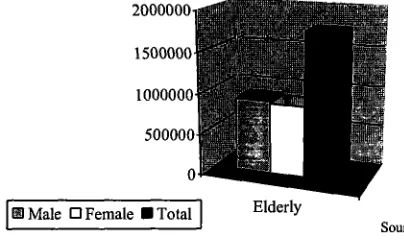
on. Figure 1 below demonstrates the exponential growth rate in the population of elderly in Malaysia since year 1970 until the year 2005. Figure 2 shows the male elderly is about 900,550 and the female elderly is 873,810 out of 1.77 million of total elderly population in Malaysia (United Nations Statistics Division, 2005). To cope with this, Malaysia needs to undertake careful social and housing policy planning, and this would also imply health maintenance and promotion for all ages especially the elderly.
Figure 1: Percentage of Elderly Population in Malaysia (1970-2005)
7
Eil Male O Female
.
Total ElderlySource: United Nations Statistics Division (2005)
Figure 2: Population of Elderly in Malaysia by age (60-75+) in 2005
Western values of individualism in Asian families. In other Asian countries like China, the expectation of institutional care for older people is becoming a norm. In Taiwan, institutional care has also rapidly overtaken family care for the elderly (WHO, 2005). Though people in Asian societies still, on the whole, pay high respect to the elderly, there is no doubt that the value is fast fading away and can no longer be taken for granted (Chow, 2006). Similarly, in Malaysia, Abdul Jalil (2005a) revealed that "We are certainly not going back to the period when we had a very youthful population that took care of an elderly population". Further, the Eighth Malaysia Plan (2001-2005) identified that the concurrent phenomena of decreasing family size and increasing number of older persons, as well as other demographic and social factors affecting the family structure, such as the demographic role of the extended family, will require the establishment of formal institutions to share take over the traditional responsibilities of families in Malaysia. Syed Mustafa et. al, (2005) also stated that Malaysia is similar to other developed countries which have shown an increment in the percentage of homes being developed in order to cater for the needs of the elderly people to reside and to be taken care of.
The increasing scenario of nuclear families; decline of extended family; migration of the working adults to urban areas or abroad; increase in dual income families and the growth of female labour-force participation, are bringing an effect on the family structure especially for the future living arrangements of elderly people in Malaysia (Martin, 1989; Ong, 2002; Abdul Jalil, 2005a). The eradication of this traditional value of familism is also influenced by the other factors such as housing costs, level of income, and rural-urban location; and characteristics of the elderly (Da vanzo and Chan, 1994). In addition, more of Malaysia now has less time for carrying out care duties for their parents (Ong, 2002). In fact, some older people also remain living alone in the rural areas and also shoulder the responsibility of caring for their grandchildren while their children are working in the urban areas or abroad (Ong, 2001). On top of that, (Nurris, 2006) stated that there is also an increasing number of Malaysians opting for divorce when problems crop up in their marriage. About 150,060 couples took marital vows in 2004. In the same year, 19,800 divorce cases were recorded, an increase of 4,561 cases compared with 2000. Unsurprisingly, according to (Sonia, 2006), "they may not find fault with the finding that 80 percent of women professionals between the ages of 25 and 40 prefer to marry after 30 or not at all". These are the concerting trend which also may influence the future elderly living arrangement in Malaysia. Herne (1994) summarised her research that a decreasing birth rate leads to fewer children to share the responsibility for care of an elderly parent or parents; greater numbers of divorces may reduce contact with children and in-laws; geographical mobility of family members could leave an elderly person with no relative living without easy travelling distance; and most importantly, women have usually taken on the majority of care of the elderly for their own parents and often for those of their spouses are the reasons that present a less feasible of families to act as a caregiver. In recent times the increase in the numbers of women working both full time and part time has left less time for carrying out care duties.
that a family provides informal care in the way it think fit, but sometimes it may lead to inadvertent neglect or overprotection of the elderly. Instead of this, for the elderly living alone it is important to have a good transportation system; healthy homes; and to continue to communicate with society. Even though more than two thirds of Malaysians age 60 or older co-reside with an adult child, in the next decade institutional care which provides formal care to the elderly may no longer be considered unacceptable for an older person and society but be seen as an alternative for families to take care of their third age member.
As the alternative living arrangement for the elderly, are the caie homes providers in
Malaysia prepared? At the moment, all types of care homes in Malaysia are monitored by the DSW, under the control of the Ministry of Women, Family and Community Development (MWFCD). Three providers of the care homes were known as Department of Social Welfare (DSW), Non-Governmental Organisations (NGOs) and private providers. Currently there are about 2,000 older people registered as service users at the care homes for the elderly provided by DSW. Nearly, 1,000 older people have registered at the care homes provided by the Non Governmental Organisations (NGOs). Unfortunately, there was no such statistical information about the total service users at the care homes provided by the private provider in Malaysia. Surprisingly, some of the care homes service providers even do not register with the DSW to run their operation (Ooi, 2006). Hence, this makes it more difficult for the government to draw the exact number of the elderly who received care at the private provider's care homes. Figure 3 below shows the care homes service providers in Malaysia.
Mini& of Women, FamiIy and CornPluni6 ~ e ~ e l o p e n . f \ /
'G
D e p & d of Social welfare->
Care ~edi-e AM1993 (Ad 5 4don me-&, organ;sah
N601s)
0
Mate ~mvlhrs [image:4.614.150.490.345.491.2]Source: Sulaiman et. al., (2006~)
Figure 3: Care Home Service Provider in Malaysia
of staffing, according to Loh (2004), many care homes do not have enough qualified staff Some of the care homes cannot afford to hire a nurse. Government needs to train and send mobile nurses to the care homes for the elderly as well as day care centres to look after the weak or sickly people. Indeed, surprisingly, there are only 10 doctors specialising in the care for the elderly, or geriatricians, to cater to the 1.8 million people in Malaysia who are above 60 years old at the moment (Murad, 2006). This makes the ratio of geriatrician to patient at 1: 180,000. Ideally it should be 1: 10,000. Furthermore, with regards to the elderly daily life and social activities at the care homes, Vytialingam in Hooi (2004) said most nursing homes have very limited activities for the elderly. A survey of nine homes in Klang Valley found that none of them provided a comprehensive rehabilitation programme. Sulaiman et. al., (2006a & 2006b) stated that until now, there is no formal standard or best practice guidance which has been established to protect the rights and needs of the occupants of the homes for the elderly in Malaysia either operated by DSW, NGOs or by the private sector. In addition to this, Ooi (2006) suggested that care homes in Malaysia need a system to monitor their practices. They should be audited and scrutinised by the councils and possible audited by a state or independent auditor or commission. Regrettably, some of the care homes have not registered their operation; hence the service providers provide their service without monitoring by any agencies.
According to Muhamad & Kamis (2006), elder groups command less than favourable interest in the academic and economic arena in Malaysia. In addition to this, according to Poi et. al, (2004), there was no vision of challenge of treating and caring for older people, or directing programms of home or community base care, or pursuing research in geriatrics in Malaysia.
An analysis on papers published in the Welfare Journal by Department of Social Welfare revealed only five papers had been written on the elderly since 1991 (Muhamad & Kamis, 2006). Muhamad & Kamis (2006) identified few available studies with regards to the elderly in Malaysia such as there are more women elderly than men (Mohd Yatim, 1999); elderly remain healthy and able (Muhamad, 2001; Tan et. al., 1999; Sebestian, 1997); they increasingly had to fend for themselves (Tan, 1995); they are concerned about their health, spiritual and community life at the older stage of their life (Muhamad, 2001; Meriam and Muhamad, 2000). With regards to the housing for the elderly, Martin (1989) had studied the living arrangements of the elderly in Fiji, Korea, Malaysia, and the Philiphines; Da Vanzo,
& Chan (1994) also studied the living arrangements of older Malaysians in terms of co- residence with adult children; Ong (2001) and (2002) reviewed the national policies programmes for the elderly in Malaysia; Poi et. al, (2004) implicitly discussed the poor services for older people in Malaysia; Syed Mustafa et. al., (2005) had written about the appropriateness of housing design for the elderly in Malaysia; Agus (2003) discussed the opportunities and challenges for the house buyers in Malaysia; Yahya (2003) studied the fknction of low cost housing in fulfilling the basic needs and lifestyles of people in Malaysia; Yusuff et. al., (2004) discussed anthropometry and quality housing for the elderly in Malaysia; SUHAKAM (2003) discussed the accessibility to basic needs fiom the perspective of economic; social and cultural rights for the elderly; Abdul Rashid (2003) focused her discussion on the accessibility to adequate housing by disadvantaged groups such as the poor, children, person with disabilities and the elderly; Sulaiman et. al., (2006a & 2006b) discussed fbrther the issues regarding the elderly and their living arrangements; Sulaiman et.
According to Fong et. al., (1998), organisations should search for the best practices by any possible means; otherwise, they would suffer fiom parity but not gain in superiority. "Work
smarter, not harder" is a cry commonly heard throughout business of all kinds, as an exhortation to boost performance. If it can be captured what the top performers do, and implement it in one's own operations, the productivity, profitability and long term viability would receive a massive boost (Baker, 2001). Best practices are "those practices that have been shown to produce superior results; selected by a systematic process; and judged as exemplary, good, or successfully demonstrated" (Jarrar and Zairi,2000a). Transfer of best practice is defined as "identifying and learning fiom best practices and applying them in a new configuration or new location" (Jarrar and Zairi, 2000b). According to Lauren (2004), "In companies where exemplary processes have been in place for 20 years, you need to ask people why they do what they do and how. Consider your depth of knowledge of the practice, and then ask your self, 'What's the potential gain of applying this practice in another unit? How will it take to start getting equal or better results in the recipient unit?" In the context of this research, UK has a long experience of delivering housing for the elderly and care homes for the elderly. Some social housing provisions like Almshouses are the earliest form of sheltered housing for the elderly with some having their roots back to the 1 2 ' ~ century. The idea of 'community care' also started to develop since the late 1940s in the UK for people with vulnerabilities. Since the merit of developing care outside of residential setting forced government to continuously intervene with various change of policies; amendment of pieces of legislation, progressively reviewed and introduced government plans and strategies, have made UK practices in managing housing and care homes for the elderly far better to compare with Malaysia (Sulaiman et. al., 2006a). Undeniably, Malaysia developed its housing policies experience fiom developed countries (Sulaiman et. al., 2005a; 2005b; and 2005~). Goh (1988) brought the evidence that in early 1970s, Malaysia adopted an extensive system of planning controls based on the planning system used in England and Wales. Forrest et.al (2000) revealed that the concept of housing systems in the South East Asia countries, including Malaysia, tend to be largely developed fiom literature and research in Western countries. In addition to this, in housing and social studies, British debates and experiments were often followed with great interest by housing and social reformers in other countries (Harloe, 1995).
Comparatively, in the UK, issues regarding care homes practices and elderly people are now at the centre of an intense national debate as well. This has created various strategies with regards to the elderly people living arrangements either at the care homes or independently. Since April 2002, such all homes in England, Scotland and Wales are known as care homes, but are registered to provide different levels of care (Housing Care, 2006). Part 1, Section 3,
Management and Administration (Thomas et. al, 2003). This standard defines the minimum good practice must be delivered at the care homes for the elderly across the UK. "Standard is
an agreed way of doing something. It is benchmark to measure actual or projected performance. Is form a (largely technical) regime that allow market to trade against a specification, adhere to common testing regimes, use common language, prove a specified level of quality, and follow accepted best practices" (Jones, 2005).
As Malaysia develops a system for caring for older people, it needs to learn from the mistakes of other healthcare systems (not repeat them) and seek advice of visionary leaders of the specialty (Poi et. al, 2004). Malaysia should be able to look to both UK and Australia to provide traininglsupport opportunities for aged care workerlcarer (Poi et.al, 2004). It would be very beneficial if Malaysia can adapt and adopt the provision structure and identify best or good practices from the provider of the homes for the elderly in the UK (Sulaiman et.
al, 2006a, 2006b). Without doubt, the process of sharing and transferring best practices, a company examines impact on corporate performance in terms of dollars saved, customer satisfaction, public favourability, development new technologies, and reduced cycle time (Allee, 1997), overcome political and geographical barriers (O'Dell & Grayson, 1998), low cost, no wasting time and reduce pitfall (Barker, 2001). However, there are also some barriers which would be faced during the process of transferring best practices. As mentioned by O'Dell and Grayson (1998), "We can have two plants right across the street fiom one another, and it's the damnedest thing to get them to transfer best practices. This happens in business, in health care, in government, and in education". Szulanski in Lauren (2004) mentioned that there are four main barriers that would be raised in the transfer of best practice which depends upon knowledge, sources, and recipient criteria, economic and cultural background. Szulanski (1996), in O'Dell and Grayson (1998), found that other barriers may be the level of ignorance, absorptive capacity of the recipient; lack of relationship between the source and the recipient knowledge; and time of adoption. Bear in mind that the transfer best practice is defined as "identifying and learning fiom best practices and applying them in a new configuration or new location". As a result, there may be certain practices which could be and could not be adopted and adapted within the context of care homes for the elderly in Malaysia. Hence, this research is aimed to identify the "Opportunities for the Transfer of United Kingdom (UK) Best Practices for the Provision of Care Homes for the Elderly in Malaysia to Meet Emerging and Changing Social Needs".
3.0 SOURCES OF BEST PRACTICE
There are numerous sources for identifying internal and external bestlgood ideaslpractices as in the following;
I . Bank of Good Practice (Housing Corporation, 2006);
2. Proven working practice which is far enough ahead of the norm to provide significant performance through the application of continuous improvement (Royal Mai1,UK) (Zairi and Whymark, 2000);
3. Examples £iom good practice (Watson and Britain, 1996 in Scottish Executive, 2006);
4. Form of a statement of prescriptive standards (Scottish Executive, 2006); 5. Manuals of policy and practice (Scottish Executive, 2006);
, *
.
"
1 ' 1"
11 1 . ,.,{
t I '1, f i
' -
7 ' I
..
*
j j
'
1. i I 1 ~1 -
.
I ,' '1 t * . 1 1.
, .
.,
-
1 1 7 ., ?a
, - I * '
.;-
I. I I
4.';
~ 6 i l i b l e on subscription or £tee of charge regulatory approach of besf. practices int
fheBank of GoodPractice (Housing Corporation, 2006);
1 0, A. iombiqatibn format which may include standards, legal A& iF?
:c$&mr~;~s'+f
goodf
7
ptacticb, gh useful references (Chartered Institute of Housing, 2006); ' ,
il. ~ood,E?ract de Bank brings together articles, information sheet&. ca$@,st'udies',:,link~ &dlhtkr~hklphl guidance on a range of volunteering issues (Voluptee~ing J?ngland,
.' 1 2Obp): +
,
,. ! ! I * ,*'
,
(,. r.,; 3 12. %I$ grgafiisation provide for both communicating good practice and maintainingthe good practice database for future references (Zairi and Whymark, 2000);
13. Literature review: an extensive review of published literature (theory, case studies, tools, etc) (Jarrar and Zairi, 2000a; Jarrar and Zairi, 2000b);
14. Dedicated best practices resources published by various sources, such as the American Productivity and Quality Centre, the UK Department of Trade and Industry, the Business Intelligence Group and the European Centre for TQM (Jarrar and Zairi, 2000a; Jarrar and Zairi, 2000b);
15. Access to best practice information via resources on the internet, e.g The Benchmarking Exchange (TBE), International Benchmarking Clearinghouse (IBC) and EQA best practices database (Jarrar and Zairi, 2000a; Jarrar and Zairi, 2000b); 16. Networking in conferences, training courses and so on (Jarrar and Zairi, 2000a; Jarrar
and Zairi, 2000b);
17. Personal networks (Jarrar and Zairi, 2000a; Jarrar and Zairi, 2000b);
18. Co operation with specialized research centres and educational establishments (Jarrar and Zairi, 2000a; Jarrar and Zairi, 2000b);
19. Organised benchmarking site visits-site visits bring a constant stream of ideas £tom visitors (Barker, 2001);
20. Informal networks (nucleus of "communities of practice") in technologies or around functional specialties (Allee, 1997);
2 1. Formal basis i.e., the company sponsors regular internal conferences for best practices exchange (Allee, 1997);
22. Sharing best practices database online through intranet or groupware (Allee, 1997); 23. Best practices groups may form either around technologies or around functional
specialties (Allee, 1997);
24. Knowledge manager which is considered as "the first point of contact" for people seeking knowledge and expertise. This individual is the driver and champion of best practices transfer. Its also responsible to ensure that tacit knowledge is made explicit and good ideas are shared (Allee, 1997);
In the UK, the Centre for Policy on Aging (1996), also developed three status terms which could be used in delivering the care practices in the care homes for the elderly as below.
1. Must (Is used to apply to something laid down by law or required by medical direction);
2. Should (denotes good practice which is expected in most circumstances. Exceptions need good reason); and
Sulaiman et. al., (20060 surveyed Malaysian knowledge of practices for the care of the elderly and identified eighteen sources of good practice with regards to the elderly care practices in Malaysia as the following;
1. Practices and normal care fiom family's descent;
2. Informal information from fiiends and personal networks; 3. Formal information fiom conferences, meeting, discussion etc; 4. Doctor's or other expert's opinion;
5. Sources or references from regulation;
6. Formal standardlguidelines for taking care of the elderly; 7. Informal standardlguidelines for taking care of the elderly; 8. Sources such as books, internet, newspaper and etc; 9. Sharing, sending and asking information through email; 10. Manual of practices for the care of the elderly;
11. Improvise the previous method of taking care of the elderly; 12. Traininglcertified course related to the care activities of the elderly; 13. Previous experience of taking care of the elderly;
14. Using the latest technology/facilities for taking care of the elderly; 15. Looking at the previous case studies for taking care of the elderly;
16. Benchmarking with other peoplelorganisation who succeeded in delivering care practices for the elderly and are recognised as best practitioners;
17. Based on 'word of mouth';
18. Site visit to places which are similarly taking care of the elderly.
*
This non probability sampling procedure has been employed in this survey and is still in the stage of analysis. The questionnaires were delivered to the delegates at the ASEAN Healthy Cities Conference 2006 on 2gth March 2006, Putrajaya Auditorium, Malaysia organised by Ministry of Health Malaysia; Putrajaya Corporation; and Kuala Lumpur City Hall.4.0 ELEMENT OF PRACTICES AT THE CARE HOME FOR THE ELDERLY
I I Contract
I
Heanh Carej 1 Needs Assessment = Medicat~on
) rn Meeting Needs
.
Privacy 8 D~gn~ty ) I TnalVisits1
1 Dying &DeathI m Intermediate Care
I
I
...a
... " ...,...p
... " ...p
... ! Soclal Contact &.
Cornublnls Premlses~ i ~ h i s ntact
-
ProtmonI
m Shared Facllllles
m Lavatones 8 Washlng Facllltles
m Adaptatlons 8 Equlpments Indlvldual Aommmodatlon S p m Requirements lndl~dual Accommodatlm Furn~ture 8 Flttlngs S e ~ c e s Hedna and L~ghtmg
m S e ~ c e s Hyg~ene and Controlof lnfectlon
Qualfimt~ons
Recru~tment
1
:
:,"fl%
Assurance Staff Tra~ning ~inankal hocedures1 Service Users' Money
SteffSupervisbn Record Keeping
-
Sefe Working.
Pmspeotlw service.
The s e ~ c e user's.
Service users find.
Service users and 1 I Semce users lve In a users have the health personal and the l~festyb the~r r e t l r and/
safe nIl.manta~ned ~nfonst~on they soclalcare needs are expenencad ~n the fnends are enmnment need to make an set out ~n an ~nd~vldual home matches ther con8dent that thelr ; S e ~ c e users havem e s s to safe and
1 I No serv~e user home's pol~cles and wth speclabs1 equlpmeot mom Into the pmcedures for deakng fam~ty#nends/repre they require to home~thout wth med~o~nes sentatlves and the mav~m~se the~r I havlng had hlsther I S e ~ c e usersfeelthey localmmmunlty as independence ' neads assessed are treated wth they a s h S e ~ c e usets own I and been assured respect and thelr nght = Serv~ce users are rwms sult thelr needs
I that these all be to pnvmy IS upheld hebed la exemlse S e ~ c e users lve m
I met Semce users are cho~ce and mntml safe, comfortable
/
.
S e ~ c e users and assured that at the aver Umr I w s bedmoms a t h h e r the~r tlmeof thelr death. 9 S e ~ c e users o m possessionsI represental~ves staff a l l treat hem and recelwa a around them
I know that the home thew fam~lywth care, whobsome 1 S e m e users l w ln
/ hey enter will meet sens~uvlty and respect appeal~ng balanced safe cornloflabla
I h a r needs dlet In plaaang surroundings
surround~ngs at = The home IS cban
I
hmes convenient to pleasant and hyglen~ci
I
8 SeMce users needs
are met by the numbers and skill mlx Of stdl
m SeMce users are safe hmds at allllmes S m c e users are supparted and pmtected by the home's reoru~tments polcy and pracllces
I Staff am tramned and
competent to do lhelr jobs
S e ~ c e users lve In a home whlch IS run and managed by a person who 1s Ill to be In charge of gmd chswler and abb to discharge hls or her responslblht~es fully Semm users benefit from the ethos, taadershlp and management approach of the home
-
The home 1s run In the best Interest of semcesusers= S e ~ c e users ere safeguarded by the
accounting and fmanc~al proDedwes of the home Semce users' finanaal
interests are safeguarded Staff are appmpnatety supensed
I S e ~ c e users nghts
and best lnleresls are safeguarded by the homes record keeplng mlc~es and pmcedures
-
The heath, safety and welfare of service users and staff are pmmoted m d pmtectedI
[image:10.603.80.519.62.521.2]Source: Sulaiman et. a1.,(2006e)
Figure 4: Care Homes for Older People National Minimum Standards, in United Kingdom
5.0 PHILOSOPHICAL STANCE OF THE RESEARCH
1998). As concluded by Philips and Pugh (2004), a thesis must add something to the existing knowledge.
According to Esterby-Smith et al., (1991), failure to think through philosophical issues can
seriously affect the quality of management research. Philosophically, researchers make claims about what is knowledge (ontology), how we know it (epistemology), what values go into it (axiology), how we write about it (rhetoric); and the process for studying it (methodology) (Creswell, 1994). In the first place, there was a study of the knowledge claims fiom the perspective of Parmedian Ontological which considered the ontology as the study of being, that is the nature of existence. Ontology embodies what is. This concept emphasised a permanent and unchanging reality (everything that exists). Reality is seen as being composed of clearly formed entities with identifiable properties. Once entities are held to be stable they can become represented by symbols, words and concepts. There then followed the epistemological position. An epistemology is a way of understanding and explaining how we know (Creswell, 2003). Epistemology is a branch of philosophy that considers the criteria for determining what constitutes and what does not constitute valid knowledge (Gray, 2004). A researcher's epistemology, according to Holloway (1997), Mason (1996) and Creswell (1994), is literally the theory of knowledge, which serves to decide how the social phenomena will be studied. In other words, epistemology asks: How can we claim to know that something is true or false?. It is a theory of knowledge embedded in the theoretical perspective and thereby in the methodology (Crotty, 1998).
In this research, constructionism epistemology is chosen. This theory of knowledge rejects the view of human knowledge; believes that truth and meaning do not exist in some external world but are created by the subjects; meaning is constructed not discovered; subjects construct their own meaning in different ways even in relation to the same phenomenon (Gray, 2004). This is the epistemology underpinning the interpretivism stance. The term paradigm or theoretical perspective is "a set of beliefs, values and techniques which is shared by members of a scientific community, and which acts as a guide or map, dictating the kind of problems scientist should address and the types of explanation that are acceptable to them" (Kuhn, 1970 in Saratakos, 1997). To date, three perspective or paradigms are most dominant and provide a theoretical basis for the methodologies employed in the social sciences. These are positivism, interpretivism and critical inquiry. In addition the other perspectives include Feminism and Postmodernism. Patton (1990) believed that a paradigm is "a set of propositions that explain how the world is perceived; it contains a world view, a way of breaking down the complexity of the real world, telling researchers and social scientists in general 'what is important, what is legitimate, what is reasonable". Crotty (1998) defined theoretical perspective as "an approach to understanding and explaining society and the human world and grounds a set of assumptions that theoretical perspective typically bring to their methodology of choice".
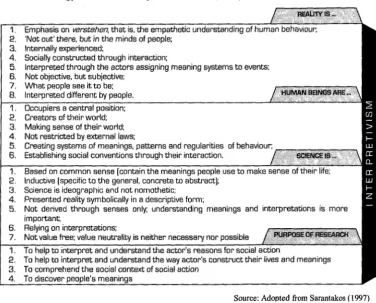
In addition to this, phenomenological research has been adopted as the best means for this study. Phenomenologists believed in interpretive theoretical perspectives as in Figure 5 above in the social sciences. Interpretive research does not predefine dependent and independent variables, but focuses on h l l complexity of human sense making as the situation emerges (Kaplan and Maxwell, 1994). This researcher has appointed the qualitative approach
synthesised and portrayed the research process as in the Figure 6. Figure 6 is adopted fiom the Nested Methodology as introduced by Aouad et al., (1998).
3. Internally experienced;
4. Socially constructed through interaction;
5. Not derived through senses only; understanding meanings and interpretations is more
[image:12.615.135.512.100.403.2]Source: Adovted from Sarantakos (1997)
Figure 5: Theoretical Perspective in the Social Sciences
Ep~stemology
Theoretical Perspect~ve
Research Methodology &
9
Research Method
Source: Sulaiman et. a1.,(2006e)
Figure 6: Philosophical Research Background
6.0 AIM, RESEARCH QUESTIONS AND RESEARCH OBJECTIVES
[image:12.615.233.462.449.608.2](Phillips and Pugh, 2004). That is how a few grains of new knowledge will be added to an already established mountain. As cited by Sarantakos (1997), Becker (1989) and Vlahos (1984) this research is also believed to aim at one or more of the following goals: general goals; political goals; pragmatic goals; or theoretical goals. Once more, this research aim is to identify the "Opportunities for the Transfer of United Kingdom (UK) Best Practices for the Provision of Care Homes for the Elderly in Malaysia to Meet Emerging and Changing Social Needs".
Defining research questions is probably the most important step to be taken in a research study, so a researcher should allow patience and sufficient time for this task (Yin, 2003). Miles and Huberman (1994) believed most research questions do not come out right on the first cut, no matter how experienced the researcher or how clear the domain of study. In this regards, research questions are those questions that the investigator would like answered in order to understand or explain the problem. It is also those questions that the data collection will attempt to answer (Creswell, 2003). Based on the research objectives the following research questions are identified.
1. What are the current best practices in the provision of care homes in the United Kingdom?
2. What are the current best practices in the provision of care homes in Malaysia? 3. To what extent have the best practices approach been established and
empirically emerged in the context of Malaysia?
4. Which enablers, barriers and benefits will Malaysia have if the best practice transfer process takes place?
5. What lessons could be learned for the improvement of the provision of care homes in Malaysia?
6. What are the transferable best practices for the care homes to be transferred to Malaysia?
According to Locke, Spirduso and Silverman (2000), the purpose, intent or objective statements indicate why you want to do the study and what you intend to accomplish. Creswell (2003) cited that the purpose statement conveys the overall intent of a proposed study and is the central controlling idea in a study. Based on the research aim, four research objectives have been established as below:
1. To review and understand the provision of care homes in the United Kingdom and Malaysia.
2. To identify good practices in the provision of care homes in United Kingdom and Malaysia
3. To review and understand the Best Practice Transfer Model
4. To compare the practices between Malaysia and United Kingdom in the provision of care homes
5. To test and validate UK practices for adoption into Malaysia
7.0 CASE STUDY METHODOLOGY
researcher's interpretivism paradigm, Yin (2003) defined case studies in two ways of technical definition as the following.
1. Empirical inquiry that investigates a contemporary phenomenon within its life context, especially when the boundaries between phenomenon and context are not clearly evident and;
2. Case study inquiry copes with the technically distinctive situation in which there will be many more variables of interest than data points and as one result relies on multiple sources of evidence, with data needing to converge in triangulation fashion, and as another result benefits fiom prior development of theoretical propositions to guide data collection and analysis.
Case Study as a Research Strategy
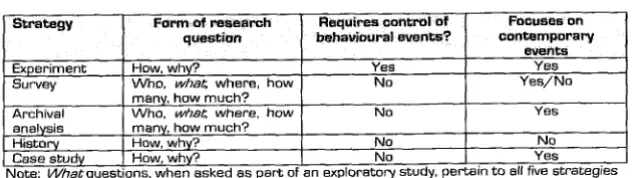
Yin (2003) placed the research strategies in research as in the Table 1. Each strategy peculiar
advantages and disadvantages, depending on three conditions: (a) the type of research question; (b) the control an investigator has over actual behavioural events and; (c) the focus on contemporary as opposed to historical phenomena. According to Yin (2003), a basic categorisation of research questions is the familiar series: "who", "what", "where", "how" and "why". The researcher believed the developed research questions will answer the inductive reasoning qualitative inquires through the multiple sources of converging evidence consisting of document analysis, observation and interviews. Based on the Table 1 below
this phenomenological research is trying to answer six what research questions. This research can be considering as an exploratory case study as mentioned by Yin (2003) that if research questions focus mainly on "what" questions, either two possibilities arise. First, some types of "what" questions are exploratory and the second type of "what" research questions is actually form a "how many" or "how much" line of inquiry emerged in the research strategy.
Table 1: Research Strategy
analysis ( many, how much? I I
History 1 How, why? No NO
Case study 1 How, why? 1 No 1 Yes
Note: Whatquestions, when asked as pert of an exploratory study, pertain t o all fiie strategies
Focuses on contemporary
events
Yes Yes/No
I many, how much? I 1
Source: Yin, (2003)
Khy Case Study?
Requires control of
behavioural even-?
Yes No
Strategy
Exper~ment Survev
Archival 1 Who, w4mC where, how 1 No
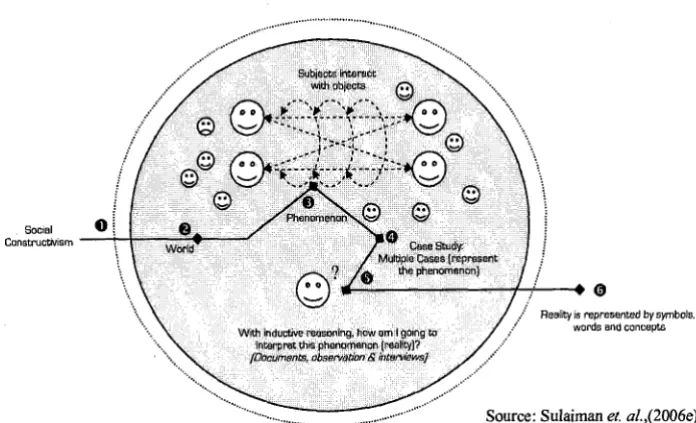
Figure 7 shows the relationship between philosophical background and case study
methodology conducted in this research. As this research is considered on interpretivisim epistemology, there are several reasons why the case study methodology is believed as the best methodology as in the list below.
Form of research
queseion
How, why?
Who, what where, how
Yes
1. Passionately seeking understanding of the world/social life, reality is subjective, problematic, holistic, and socially constructed;
[image:14.615.159.477.453.542.2]3. Investigates a contemporary phenomenon within its life context, especially when at the boundaries between phenomenon (within the selected case studies either analytical or conceptual generalisation);
4. Desiring to understand contemporary, complex and real life social phenomena; 5. Allowing researcher to retain the holistic (studies of whole units) and meaningful
characteristics of real life events;
6. Obtaining a wide range of different sources of evidence/multiple sources of evidence/full variety of evidence (using the case study techniques consisting of documents; observation and interviews);
7. There is no predefine dependent and independent variable (involves qualitative inquiries in a dynamic systems-process and change);
8. Involving inductive analysis and no strict rules for the interpretations;
9. Cases will be conducted within a time and context specific;
10. Gathering qualitative data, thick and description through documents, observation and interviews.
[image:15.607.142.490.294.505.2]Adopted &om: Sarantakos (1997) and Patton (1990)
Figure 7: Relationships between philosophical background
and case study methodology
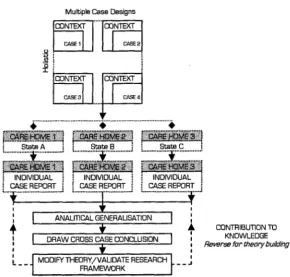
Case Study Design
Multiple Case Designs
CONTRIBUTION TO KNOWLEDGE
Reverse for theory buih'ing
I T
L - , MODIFY THEORY/VALIDATE RESEARCH
- -
:
FRAMEWORK [image:16.610.195.486.74.352.2]Source: Sulaiman el. a1.,(2006e)
Figure 8: Multiple Holistic Case Study Design
Criteria of Selecting Case Studies
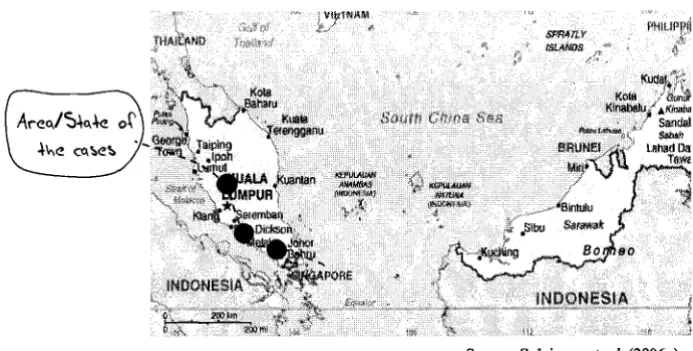
The Care Standard Act 2000 is a foundation stone of the care homes service provision in the United Kingdom. Under Section 23 (1) of the Act, the Secretary of State sets out the minimum standards for care homes for older people known as Care Homes for Older People: National Minimum Standards (Department of Health, 2002). Thomas et. al, (2003) stated that "...it is worth remembering that the standards represent the minimum expectation. You can, of course go beyond these but never be below...". Considering this standard as "a recognised document that defines good practices" (British Standard Institutes, 2005), the seven elements of this standard will be used as a basis for identifying practices in the care homes for the elderly in Malaysia. So, with this regards, three care homes for the elderly have been identified in Malaysia against the criteria as in Table 2 and Figure 9 below.
Table 2: Criteria of Selecting Case Studies
[image:16.610.170.478.595.670.2]Source: Sulaiman el. a1.,(2006g)
Figure 9: The location of arealstate of the cases
In addition to the above mentioned criteria, Jarrar and Zairi (2000a), and Jarrar and Zairi (2000b), also suggested that there are several criteria which also need to be determined at the early stage of transferring best practices. These criteria are needed when identifying the case study because they would be the success factors in the transferring best practice process. These include;
I. Having common and consistent goals and linking best practice to the delivery of corporate objective;
2. Translating goals and objectives throughout the organization and
insisting on best practice and target against benchmarks;
3. Generating organizational commitment by communicating clearly where
the business needs to go and why it is important to embrace modern ideas and pioneering management thinking;
4. Choosing champions to drive in best practices and encourage the process of dissemination and sharing;
5. Resolving problems of empowerment and team leadership so that barriers to the transfer of best practices can be removed and obstacles totally eliminated;
6. Reinforcing of required behavioral competencies;
7. Driving the notion that power is in action and producing better results rather than for controlling individuals and stifling creative potential and good ideas;
8. Encouraging a climate for the sharing of best practices;
9. Providing a good IT infrastructure for supporting the sharing of best practices;
10. Having good reward schemes and sending positive reinforcements throughout the organization in attempts to disseminate and share best practices;
11. Demonstrating that adopted practices have managed to close a performance gap.
or Part 111, Registered Homes Act 1984 in the United Kingdom will be chosen as the comparison.
Research Design
Research design is the logic that links the data to be collected (and the conclusions to be drawn) to the initial questions of study (Yin, 2003). It is supposed to represent a logical set of statements and much more than a work plan. The development of research design is a difficult part of doing case studies. Yin (2003) defined research design as "a logical plan for getting fiom here to there, where here may be defined as the initial set of questions to be answered, and there is some set of conclusions (answers) about these questions. Between "here" and "there" may be found a number of major steps, including the collection and analysis of relevant data". It deals with at least four problems: what questions to study, what data are relevant, what data to collect and how to analyse the results. The main purpose of the design is to help to avoid the situation in which the evidence does not address the initial research questions (Yin, 2003). Five components of research design are especially important (i.) a study's questions; (ii.) its proportions, if any; (iii.) its unit(s) of analysis; (iv.) the logic linking the data to the propositions; and (v.) the criteria for interpreting the findings. In addition, the development of case study designs needs to maximise four conditions related to design quality (a) construct validity, (b) internal validity, (c) external validity and (d) reliability. Researcher has depicted the research design in this research as in the Research
Process Diagram as attached.
Unit of Analysis
A unit of analysis is determined by an interest in exploring or explaining a specific phenomenon. In general, the unit of analysis is shaped by three attributes social phenomena, time and space. According to Kenny (2003), in principal, the analysis should be conducted at the level at which generalisations should be made. So, if one wants to draw conclusions about persons, a person should be the unit of analysis. Selection of the appropriate unit of analysis will occur when you accurately specify your primary research questions. According to Yin (2003),
". .
.if your research questions do not lead to the favouring of one unit of analysis over another, your questions are probably either too vague or too numerous and you may have trouble conducting your case study..". Conclusively, the researcher believes that "...unit of analysis are the basic entity or object about generalisations which are to be made based on an analysis and for which data have been collected". In this research the unit of analysis is the practices (within their social phenomena, time and space) delivered at the care homes in Malaysia by the subject (respondents could be the service users or the service providers).Conducting Case Studies: Collecting the Evidence
Gray (2004) defined method as "the techniques or procedures used to gather and analyse data related to some research questions or hypothesis". Yin (2003) stated that case study's unique strength is "..its ability to deal with a full variety of evidence such as documents, artefacts, interviews and observation.."
.
"...
a good case study will therefore want to use as manyDocumentation
Collection of evidence for the case studies are achieved by reviewing the documentation and reports published by the Economic Planning Unit, Prime Minister Department, Malaysia, Ministry of Women, Family and Community Development (MWFCD) Publications, organisation records and literatures, survey data, such as census records or date previous collected about a site and also the sources of best practices implemented at each case studies. The strengths of documentation are that the information gathered is;
i. Stable (can be reviewed repeatedly);
ii.
. . .
Unobtrusive (not created as a result of the case study);111. Exact (contains exact name, references, and details of an event);
iv. Broad coverage (long span of time, many events, and many settings)
Observation
Observation is "
...
a purposeful, systematic and selective way of watching andlistening to an interaction or phenomenon as it takes place.. " (Kumar, 1996). Some relevant behaviour or environmental condition of the care homes in Malaysia will be observed. Researcher will act as non-participant observer, not get involved in the activities of the group but remains a passive observer, watching, listening to its activities and drawing conclusions fiom the studied phenomena. Researcher may watch, follow, and record the activities as performed at the care homes. ARer making a number of observations, conclusions can be drawn about how the practices at the selected care homes have been carried out. Observational protocol will be developed as part as the case study protocol and the researcher will measure the incidence of certain types of behaviours during certain period of time in each care homes. The observation will also involve observations of meetings, and most important the observation on the practices being delivered by the care homes. It is also will be very beneficial to let the researcher know the condition of buildings, location, technology differences and other important requirements that should be delivered to hlfil the needs of the elderly in the care homes in Malaysia. Some photographs may even consider to be taken. It may help to convey important case characteristics to be compared. The unit of observation is the entity in primary research that is observed and about which information is systematically collected. So, in this case, the unit of observation is the same with unit of analysis when the generalisations are made fiom an analysis. Researcher believes the observations at the care homes are invaluable aids for understanding the actual practices and potential transferable best practices within care homes in the UK and Malaysia. Direct observation process might be made throughout a field visit, including occasions during which other evidence, such as documentations and interviews, is being collected.
Interview (Focus Group Interview and Photo Interview)
a. Focus Group Interview
The generic term group interview has tended recently to be used interchangeably with focus group. Focus group is "..a highly efficient technique for qualitative data collection since the amount and range of data are increased by collecting fiom several people at the same time.." (Robson, 2004). The interview session can explore a collective phenomenon of the practices at the care homes. It will be conducted with the key management personnel at the care homes and top management which is invited to join the focus group interview session. This heterogeneous group will be differing in background, position and experience which can stimulate and enrich the discussion and may inspire other group members to look at the topic in a different light. In the interview session, the researcher will act as the moderator. The questions concerned with facts, behaviour and with beliefs or attitudes of the respondents in delivering their practices at the care homes.
b. Photo Interviewing
During the interview session, researcher would show photos to the respondents in order to get them to raise their feedback and comments on the current practices in the UK and Malaysia. Hurworth (2004) cited photo elicitation as a tool for nursing and gerontological research. Heisley & Levy (1991) cited that photo interviewing allows the researchers and the interviewees to develop a negotiated interpretation of consumption events. It also provided a means to give:
".
. .the informants increased voice and authority in interpreting such events while providing a perspective of action that makes systems meaningful to an outsider. It is also manufactures for the informant so they see familiar data in unfamiliar ways"As Malaysia is less developed in delivering best practices compared to the
UK, the researcher believed that showing some images relating to best
practices in the UK's care homes might help in terms of obtaining feedback, comparing ideas, identifLing enablers, barriers, benefits and lessons which could be learned for the betterment of the provision of care homes in Malaysia. Research Process Diagram attached portrays the research techniques which will be undertaken during this study.
Contribution to Knowledge
In brief, the success of the contribution of this research will be assessed by the quality of the answers to the research objectives and questions (Amaratunga, 2000). It has been assumed that based on the findings and the conclusion, it will be possible to contribute to the knowledge as the following.
Theoretical Contribution
explain social phenomena. They are logically constructed statements that summarise and organise knowledge in a particular area, and are open to testing, reformulation, modification and revision. Base on the case study multiple sources of evidence; it has been assumed that the following contributions will be gathered:
a. The establishment and enhancement of the structure of provision of care homes provision in Malaysia.
b. The development of the framework of care homes for the elderly good practices in Malaysia
c. Contribution to the current literature (study propositions and theoretical assumptions) on the benefits, enablers, and barriers to be accepted if the external best practices transfer (internationally) takes place.
d. Generalisation and identification of the gap between the elements of practices provided in the UK's care homes and Malaysia's.
e. Identification of the possible lessons to be learnt and opportunities to transfer the possible selected best practices.
f The ability to proceed with the Phase I1 (Transfer Process, Reviewing and Routininzing) in the Best Practice Transfer Model.
Practical Contribution
The assumed practical implications occurring fiom the results of this study will be the following:
a. Identification for the improvement of the current approach (strength and weaknesses) which is used in Malaysia among the care homes providers. b. From the generalisation of the replicated case studies, the primary feedback will help the care homes provides in Malaysia to identify their current practices, best practices and nextpractices to be undertaken. c. Help to improvise the current legislations, policies, standards and the
current sources of best practices.
d. Enhance the quality of living for the Malaysia's elderly in the care homes.
e. Reducing the cost, time, and the pitfalls encountered in providing the services to the elderly and increasing efficiency.
8.0 LIMITATION, CONSTRAINTS RESERVATION AND EXCLUSIONS
It is necessary to take into consideration that the researcher's resources available are limited to the three selected care homes in Malaysia. No hnds or any other monetary resources are available for this research. In brief, the limitations, constraints, reservations and exclusions are listed below:
Limitations
predicted to produce similar results (a literal replication). Cross case will be drawn as a conclusion after linking data to propositions. This research only involves Phase 1 in the process of best practice transfer.
Constraints
Three care homes provided by Department of Social Welfare in Malaysia
Reservations
In general, the opportunities for transferring good practice might also consider general differences within the social, legal, economic, environmental, political and cultural factors in the context of Malaysia. The Care Homes for Older People: National Minimum Standards
2000 in the UK will be referred to as a basis for obtaining minimum comparative good practices within UK and Malaysia. Status of terms would be different, however, for the basic principles, it will be the same. In conjunction with the success factors, practices as delivered at the care homes for the elderly with board and personal care (but not nursing or mental nursing care) either for Part I or Part 111, under the Registered Homes Act 1984 in the United Kingdom will be chosen for observation.
Exclusions
7.0 REFERENCES
ABDUL JALIL (2005a), Ageing with Dignity: Rights of Older Persons. SUHAKAM- [Suruhanjaya Hak Asasi Manusia] Human Rights Commission of Malaysia. Kuala Lumpur.
AGUS, R (2003), Housing for All in Malaysia: Opportunities and Challenges. Seminar on Accessibility to Basic Needs. July 3 1. Human Rights Commission of Malaysia. K.Lumpur AOUAD,G, COOPER, R, HINKS, J, KAGIOGLOU, M, SEXTON, M AND SHEATH, D (1998), Generic Design and Construction Protocol: Final Report
.
University of Salford BARKER, P (200 I), Win Together. Works Management. Pp43. UK.BOAZ, A, HAYDEN, C & BENARD, M (1999). Attitudes andAspirations of Older People: A Review of the Literature. Department of Social Security. Leeds.
BIUTISH STANDARD INSTITUTE (2005), The Small Business Guide to Making Standards Work. British Standard Institute. London.
CENTER FOR POLICY ON AGING (1996), A Better Home Life: A Code of Good Practice for Residential and Nursing Home Care. Center for Policy on Aging. London.
CHARLES, K.K & SEVAK, P (2005), Can Family Caregiving Substitute For Nursing Home Care? Journal of Health Economic. pp 1 1 74- 1 190.
CHOW, N (2006), Ageing Issues and the National Agenda. Asian Population Studies Series. N0.141. pp 1-12.
CRES WELL, J. W (1 994), Research Design: Qualitative and Quantitative Approaches. Thousand Oaks, CA: Sage
CROTTY, M (1998) The Foundation of Social Research. Sage Publication. London
DA VANZO, J & CHAN, A (1994), Living Arrangements of Older Malaysians: Who Core sides with their Adult Children. Demography. Vo1.3 1, No. 1, 1994, pp 95-1 13.
DEPARTMENT OF HEALTH (2002), Care Homes for Older People. National Minimum Standards. The Stationary Ofice. London.
ECONOMIC PLANNING UNIT (2001). Eighth Malaysia Plan (2001-2005). Percetakan Nasional. Kuala Lumpur.
ECONOMIC PLANNING UNIT (2005), Malaysia: Achieving the Millennium Development Goals. Successes and Challenges. United Nations Country Team Malaysia. Kuala Lumpur .
ESTERBY-SMITH, M, THORPE, R & LOWE, A (1991), Management Research. Sage Publication, London.
FORREST, R, LEE, J & KAM WAH, C (2000). Editors' Introduction: Focus on Housing in South East Asia. Housing Studies. Vol. 15 , No 1, pp 7-10.
GOH, BAN LEE (1988). Future of Urban Planning in Malaysia. Habitat International Vol. 12. No.4 pp 5-12. Pergamon Press. UK.
GRAY, D.E (2004) Doing Research in Real World. London. Sage Publication.
HARLOE, M (1995) The People's Home ? Social Rented Housing in Europe & America. Blackwell Publishing. Oxford.
HEISLEY, D.D & LEVY, S.J (1991), A Study in a Photo Elicitation. International Journal of Consumer Research. Vol 18, pp 257-272.
HERNE, S (1994), Catering for Institutionalised Elderly People. British Food Journal. V01.96, 1994, pp3-9.
HURWORTH, R (2004), Photo Interviewing. Qualitative Research Journal. Sage Publication. HOLLOWAY, I (1997), Basic Concepts for Qualitative Research. Oxford. Blackwell
Science.
JARRAR, Y.F AND ZAIRI, M (2000a). Best Practice Transfer for Future Competitiveness :
A Study of Best Practices. Total Quality Management, Vol. 11 Nos.4/5& 6. S734-S740. JARRAR, Y.F AND ZAIRI, M (2000b), Internal Transfer of Best Practice for Performance
Excellence: A Global Survey. Benchmarking: An International Journal. Vo1.7, No.4, 2000, pp 239-246
JONES, D (2005), Best Practice
...
Next Practice. How to Survive, Innovate and Grow in an Ever Changing World Executive Summary. British Standard House. LondonKAPLAN, B. & MAXWELL, J.A. Qualitative Research Methods for Evaluating Computer Information Systems, in Evaluating Health Care Information Systems: Methods and Applications, J.G. Anderson, C.E. Aydin and S.J. Jay (eds.), Sage, Thousand Oaks, CA,
1994, pp. 45-68.
LAUREN, K.J. (2004), Improving Best Practice Transfer. Havard Management Update. Havard Business School Publishing Corporation. Pp 3-4.
LOH, F.F (2004), When Old is Not Gold. New Straits Times. March 13, Kuala Lumpur. MMTIN, L.G (1989), Living Arrangements of the Elderly in Fiji, Korea, Malaysia, and the
Philiphines. Demography. Vo1.26, No.4, 1989, pp 627-643. MASON, J (1996), Qualitative Researching. London. Sage
MILES, M.B & HUBERMAN, A.M, (1994), Qualitative Data Analysis. Sage Publications. London
MUHAMAD, M & KAMIS, M (2006), Policy and Learning Program for the Malaysian Elderly: An Analysis. Universiti Putra Malaysia. Kuala Lumpur.
MURAD, N (2006), Aging Population Needs More Geriatricians. The Star. Kuala Lumpur. NURRIS, I. (2006), Sportlight: D.I.V.O.R.C.E. Why Malaysian Couples are Untying the
Knot. New Straits Times. Kuala Lumpur.
O'DELL, C & GRAYSON, C.J (1998), If Only We Knew What We Know: Identification and Transfer of Internal Best Practices. California Management Review. Vo1.40, No.3. OHARA,
K
(2004), Housing Policy towards a Super Aging Society: From BuildingSpecification to Special Needs Measures. Geriatrics and Gerontology International 4:S210-S213.
ONG, F.S (2001), Ageing in Malaysia: National Policy and Future Direction. University of Malaya. Kuala Lumpur.
ONG, F.S (2002), Ageing in Malaysia: A Review of National Policies and Programmes in Ageing and Long Term Care: National Policies in the Asia-PaciJic. Asia Pacific Institute of Ageing Studies. Hong Kong.
001, V. (2006) System to Monitor Welfare Homes. The Star. Kuala Lumpur.
PATON, M (1 990), Qualitative Evaluation and Research Methods, Newbury Park, CA: Sage PHILLIPS, E.M AND PUGH, D.S (2005), How to Get a PhD. Open University Press.
McGraw-Hill, London.
POI, P.J.H, FORSYTH, D.R & CHAN, D.K.Y (2004), Services for Older People in Malaysia. Age and Agieng. Vo1.33, No.5. British Geriatrics Society.
REMENYI, D, WILLIAMS, B, MONEY, A & SWARTZ E (2002), Doing Research in Business and Management: An Introduction to Process and Method. Sage Publication. London.
ROBSON, C (2004), Real World Research: A Resource for Social Scientist and Practitioner- Researchers. Second Edition. Blackwell Publishing.
SARANTAKOS, S (1997) Social Research. Palgrave Publishers Ltd. New York. SONIA, R. (2006) Women: Marriage? No Way!
.
New Straits Times. Kuala Lumpur.SULAIMAN, N, BALDRY, D & RUDDOCK, L (2005a). 'International Comparative Study of Housing Provision: An Initial Study of the Position of Malaysia'. Proceedings of the
jth International Postgraduate Research Conference. April 11-15, 2005, University of
Salford.
SULAIMAN, N, BALDRY, D & RUDDOCK, L (2005b) 'Modes of Formal Housing Provision in Malaysia'. Proceeding of the European Real Estate Society (ERES) Conference 2005. June 14-1 8. University College Dublin, Ireland.
SULAIMAN, N, BALDRY, D & RUDDOCK, L (2005~) 'Can Low Cost Housing in Malaysia Be Considered as Affordable Housing'. Proceeding of the European Real Estate Society (ERES) Conference 2005. June 14- 1 8. University College Dublin, Ireland. SULAIMAN, N, MAT RADZUAN, I, BALDRY, D & RUDDOCK, L (2006a). Issues and
Challenges on the Provision of Housing for the Elderly in Malaysia. Proceedings of the ASEAN Healthy City Conference. March 28, 2006, Putrajaya, Malaysia
SULAIMAN, N, BALDRY, D & RUDDOCK, L (2006b). 'Issues Concerning Housing for the Elderly in Malaysia'. Proceedings of the 6Ih International Postgraduate Research Conference. April 6-7, 2006, Delft University of Technology.
SULAIMAN, N, BALDRY, D & RUDDOCK, L (2006~). 'Relationship between Housing and Social Policy in Malaysia. Provision to the Elderly'. Proceeding of the European Real Estate Society (ERES) Conference 2006. June 7-10. Bauhaus Universitat, Weimar, Germany.
SULAIMAN, N, BALDRY, D & RUDDOCK, L (2006e), 'Opportunities for the Transfer of United Kingdom (UK) Best Practices for the Provision of Care Homes for the Elderly in Malaysia to Meet Emerging and Changing Social Needs'. Interim Report for PhD. Research Institute for Built & Human Environment (BUHU), School of Construction &
Property Management (SCPM), University of Salford. Report: Volume 1
SULAIMAN, N, BALDRY, D & RUDDOCK, L (2006f), A Study of Malaysian Knowledge of Practices for the Care of the Elderly: Questionnaires Survey Form for the ASEAN Healthy City Conference 2006. Disseminated on March 28, 2006, Putrajaya, Malaysia. Research Institute for Built & Human Environment (BUHU), School of Construction &
Property Management (SCPM), University of Salford.
SULAIMAN, N, BALDRY, D & RUDDOCK, L (2006g), 'Opportunities for the Transfer of United Kingdom (UK) Best Practices for the Provision of Care Homes for the Elderly in Malaysia to Meet Emerging and Changing Social Needs'. Power Point Slides Presentation for PhD Interim Assessment. Research Institute for Built & Human Environment (BUHU), School of Construction & Property Management (SCPM), University of Salford.
SYED MUSTAFA, S.A.H, ABD KADIR, A.A & HUSAIN, N (2005), Designing And Elderly Housing-Adopting An Appropriate Concept.
ath
International Conference of the Asian Planning Schools Association. September, 11-14, 2005. Penang, Malaysia.TEE, S.E (2006) Caring for the Older Patient: Is Our Society Prepared? The Star. Kuala Lumpur.
THOMAS, A, MASON, L AND FORD, S (2003), Care Management in Practice for the Registered Manager Award. Heinemann Educational Publishers. Oxford. UK
WONG, C.N. (2006) Caring for Senior Citizens. The Star. Kuala Lumpur.
WORLD HEALTH ORGANISATION (2002), World Report on Violence and Health. Abuse the Elderly. Geneva.
YAHYA, N (2003), Low Cost Public Housing: Fulfilling the Basic Needs and Lifestyles. Seminar on Accessibility to Basic Needs. July 31. Human Rights Commission of Malaysia. Kuala Lumpur.
YUSUFF, RM, ABDUL RASHID, SN, HASHIM, NS (2004), Anthropometry and Quality Housing for the Elderly. National Conference on Affordable Quality Housing. November 24-26, 2004, Miri, Sarawak, Malaysia.
ZAIFU, M & WHYMARK (2000). The Transfer of Best Practices: How to Build a Culture of Benchmarking and Continuous Learning. Benchmarking: An International Journal, Vol.7 NO. 1, 2000, pp 62-78.
Webpages:
ALLEE, V (1997), Chevron Maps Key Processes and Transfer Best Practices [Internet]. Available fiom: http://www.virtual-communities/modules/news/article.php?storyid=10 [7 March 20061
CHARTERED INSTITUTE OF HOUSING (2006). Chartered Institute of Housing Good Practice Unit. Available fiom: http://www.cih.org/gpu/ [22 February 20061.
HOUSING CARE (2006), The Independent Guide to Care Homes throughout UK [Internet].UK.Available from http://www.housingcare.org/making-elderly-housing-
choices1 care-homes.aspx. [2 June 20061
HOUSING CORPORATION (2006) The Bank of Good Practice [Internet]. Leeds. Available
fiom:http://www.bankofgoodpractice.org/index.cfm?fuseaction=content.displaypage
page_id=127 [20 February 20061
NACSCOM (2005), National Council of Senior Citizens Organizations Malaysia (NACSCOM) [Internet]. Malaysia. Available fiom: http://nacscom.org.my/[23 December 20051
PROTON EUROPE (2006) Proton Europe Innovation from Public Research. [Internet]. Available fiom: http://www.protoneurope.orgl[25 January 20061.
SCOTTISH EXECUTIVE (2006), Good Practice in Housing Management: A Review of the Literature. [Internet]. Available fiom: http://www.scotland. gov.uk/cru/kdO 1 iblue Igphmlit-01 .htm [25 January 20061.
SCOTTISH FEDERATION OF HOUSING ASSOCIATION (2006). Scottish Federation of Housing Association News [Internet]. Available from: http:// www. sfha. co. ukt sfha- text .asp?pg=4# [25 January 20061.
UNITED NATIONS STATISTICS DIVISION (2005), United Nations Statistics Division: Demographic and Social Statistics. [Internet]. Available fiom: http://unstats.un .org /unsd/demographic /products/ [23 December 20051