Port-Fuel Injection System for Small 4-Stroke Single Cylinder Engine: An
Experimental Framework
Mohd Faisal Hushim1,*, Ahmad Jais Alimin, Mohd Faizal Mohideen Batcha, Mas Fawzi Mohd Ali, Luqman Abdul Rashid
1
Automotive Research Group (ARG) Department of Plant and Automotive Engineering Faculty of Mechanical and Manufacturing Engineering
Universiti Tun Hussein Onn Malaysia (UTHM) Parit Raja, Batu Pahat, 86400 Johor
Malaysia
Abstract:
In Malaysia, motorcycles using carburetor system are still the main option as a medium of transport for many people. Due to its mobility, convenience, economy, and door-to-door functions, it makes the motorcycle become a very popular vehicle for transportation. One advantage of motorcycles is that their high power to weight ratio which gives them good fuel economy. Future exhaust emission legislation for small engines, used on motorcycles and leisure products, will make it necessary for small engine manufacturers especially for motorcycle manufacturers to adopt some technologies in engine development as car manufacturers have done. This paper presents a review on port-fuel injection small four-stroke single cylinder engine which consists of: engines selection (two-stroke and four-stroke) and fuel injection system. Investigation framework study on how to complete the research is also included in this paper.
1. Introduction
In many countries, motorcycles using carburetor system are still the main option as a medium of transport for many people. The motorcycle is a very popular vehicle for transportation due to its mobility, convenience, economy, and door-to-door functions. One advantage of motorcycles is that their high power to weight ratio gives them good fuel economy.
From 26 million motorcycles registered in year 2001, 70% are from Asian countries while 8% accounts for Europe [1].
Based on statistic, in Malaysia, there are more than 7 millions motorcycles
registered in year 2005 and increases by 21% in year 2008.
Skyrocketing fuel price has also forced many people to opt for a motorcycle as a mean of transport for work and leisure rather than driving a car, for the sole purpose of reducing fuel cost.
Traditionally, small capacity engines employed the use of carburetors to control the amount of air and fuel that entered the combustion chambers. The demand for small capacity engines with high power to weight ratio and low emissions is well known.
Fuel-injected engines offer many advantages over carbureted engines such as improved fuel economy and reduction in harmful emissions.
Fuel injection systems have a long term potential as a medium to supply suppressed fuel because of their high efficiency, low emission characteristics and increasing fuel economy. Now, urban air quality issues, coupled with fuel petrol that have sky rocketing time by time, many motorcycle manufacturers have decided to implement the fuel injection system to their new motorcycles.
But there are millions of motorcycles still using carburetor and each one of this produces harmful emissions. It is therefore desirable to have a fuel injection retrofit kit system for small engines as a promising technology that offers all of the advantages of fuel injection over traditional carbureted engines.
2. Review from Previous Works
Due to the increasing number of motorcycle users, fuel efficiency and exhaust emissions are two main concerns that must be addresses. Regulating bodies in major countries have come up with stringent emission regulations, which will be enforced in the near future.
There are three ways to reduce emissions form spark-ignition engines which are; changes in engine design, combustion conditions, and catalytic after-treatment. Some of the variables of the engines and combustions that affect emissions are the air-fuel ratio, ignition timing, and turbulence in combustion chamber. And among these variables, air-fuel ratio is the most importance variable that needs to be focused on. Air-fuel ratios for the internal combustion engine are controlled by fueling system which is either by using carburetor system or fuel injection system.
For small gasoline-fuelled engines (below 250cc), a carburetor system is still favorable. It is proven for many years that such system is cheap and easy to maintain. However, Komuro et al. [2] and Latey et al. [3] have shown that there are much improvement can be made by converting the carburetor system to a fuel injection (FI) system alone. The fuel economy may be improved as much as 6% [2]. Moreover, hydrocarbon (HC) and carbon monoxide (CO) emissions may be reduced up to 26% and 70% respectively [3].
In dealing with small capacity engines, the findings and several interesting challenges for an FI system are shown in Table 1.
Table 1:
Findings and challenges from previous works.
Findings & Challenges Authors
The additional cost for the FI system must not overly increase the total cost of the vehicle
Ujiie et al. [4]
The fuel pump must use low power and small enough to fit into the gasoline tank
Karasawa et al. [5]
Load detection must be accurate during small opening throttle
Almkvist et al., [6]; Nakamura et al., [7] Vaporization of fuel must be
prevented due to higher ambient temperature around air-cooled engine
Komuro et al., [2]
The FI system components have been developed that compact enough to fit into small motorcycles
Nakamura et al., [7]; Ujiie et al., [4]
The FI system must be able to operate only by kick start when the battery is completely discharged
Tamaki et al., [8]
Highly accurate measuring data have been developed intake air mass, acceleration, stroke distinction and atmospheric measurement
In Malaysia, small engines are widely used in underbone motorcycles, mopeds and scooters. Since the first underbone motorcycle was born in 1958 until now, not much technological advancement have been made to replace the carburetor system. Even though Malaysia has not yet implement any emission regulation for motorcycles and scooters, the rest of the world showed major concern when it comes to air pollution control. This research will attempt to develop a fuel injection kit to address such challenges in meeting the world emission regulations as well as providing an efficient FI system for small gasoline-fuelled engines.
3. Investigation Framework
In order to complete this research project, several factors need to be determined carefully and solved successfully.
There are two relative importance factors were determined for this research, which are;
i. Engine selection that consist of gas emission, fuel efficiency, and its durability.
ii. Selection of fuel injection system.
3.1 Engine Selection
Generally, there are two types of engine for motorcycles: two-stroke and four-stroke engines. The difference between these two types of engines is the method how fuel is supplied to the combustion chamber and strokes to complete the full engine cycle.
There are four events take place to complete a full cycle of combustion which is; intake stroke, compression stroke, combustion stroke, and exhaust stroke.
In the two-stroke engine, the four events as stated above take place in only two strokes of the piston and one complete revolution of the crankshaft. These two
piston strokes are the compression stroke (upward movement of the piston) and combustion stroke (downward movement of the piston).
For the four-stroke engine, it is referred to as four-stroke engine because it requires four complete strokes of the piston to complete one engine cycle.
Each engine types have advantages and disadvantages that need to be considered carefully.
A power stroke is produced every crankshaft revolution within the two-stroke engine, while the four-stroke engine requires two revolutions for one power stroke. This means that, at the same size of engine, the two-stroke engine can produce twice as much power as the four-stroke engine operating at the same speed. However, the burned gases are not completely cleared from the cylinder, reducing combustion efficiency. In addition, because of the much shorter period the intake port is open (compared to the period the intake valve in a four stroke is open), a relatively smaller amount of air is admitted. Hence, with less air, less power per stroke is produced in a two-stroke engine.
The four-stroke spark ignited engine has been selected for this research and are of interest because of,
i. They have the potential for very lean operation.
ii. They might operate unthrottled (or less throttled) at part load.
3.2 Selection of Fuel Injection System
Fuel injection system can substantially lower consumption and emissions when compared to conventional vehicles, no matter what fuel they use.
DI fuel-injection system is more complicated and requires much more sophisticated control over the fuel-injection, air-fuel mixing and combustion processes compared to PFI system [9].
PFI system was selected in developing fuel injection retrofit kit in order to replace the current fueling system – carburetor due to its simplified system.
In a PFI system the low-pressure fuel injector mounted in the intake-port will supply the exact quantity of fuel to mix with air just after the intake valve is opened.
3.3 Research and Development
[image:4.612.70.271.282.449.2]Methodology
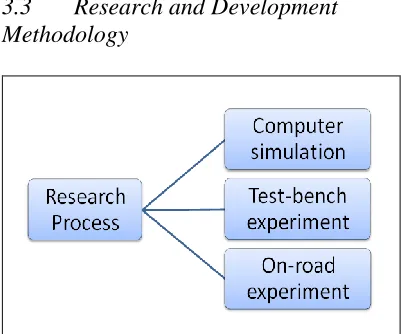
Figure 1: Methodology that commonly adopted for R&D process.
Three methods are commonly adopted for research and development (R&D) of fuel injection system for small engine which are; computer simulation by using computer aided engineering software, test bench experiments and on-road experiments; as shown in Figure 1.
Among of these research processes, computer simulation by using computerized-fluid-dynamics (CFD) plays the most important role in this research followed by test-bench experiment process and on-road experiment process.
3.3.1 Computer Aided Simulation
GT-Power, developed by Gamma Technology, is a program that widely used in an automotive research area. It is a powerful 1D-CFD-software for calculating the combustion engine gas exchange and combustion itself. Simulation and analysis will be carried out using GT-Power software.
All components of a four-stroke spark ignition gasoline engine were measured and the data from the engine measurements are use for modelling and visualization.
In order to develop the GT-Power model of the engine, the selected engine need to be dissemble part-by-part to measure the engine components size. The data measured as shown in Table 2 will be stored in the GT-Power library.
Table 2:
Specification of the selected gasoline engine.
Engine Parameters Value
Engine model and No. Of cylinder
4-stroke / 1 cylinder
Stroke x Bore (mm x mm)
100 x 52
Displacement (cc) 110 Connecting rod length
(mm)
130
No. of transmission 4 gear Ignition system Spark ignition Cooling system Air-cooled system
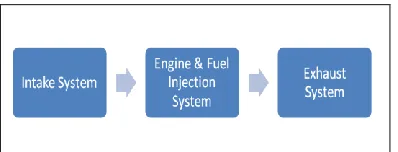
Figure 2 : Tree system in simulation modeling.
For the selected four-stroke gasoline engine, the intake system starts from
environment till the intake valve.
The engine cylinder and fuel injection system is focused on engine cylinder combustion and performance. In this system, gasoline fuel from injection system, fresh air from intake system and exhaust gas to the exhaust system are take part. The components in this system are fuel injector, cylinder and engine. All of these components data and size must be recorded and inserted to the GT-Power form.
The last system in this simulation model is exhaust system. For this system was started from exhaust valve and finished to environment.
[image:5.612.324.543.111.276.2]The complete GT-Power model for the selected four-stroke spark ignition engine is shown in figure 3.
Figure 3 : GT-Power model for the selected engine.
The computer simulation it will provide optimum parameters that will be used for the next process in developing and conducting a actual experiments.
3.3.2 Test-bench Experiment
Figure 4 : Test-bench that has been connected to an engine dynamometer test.
A single cylinder four-stroke spark ignition engine will be connected to an engine dynamometer test (Figure 4). A complete instrumentation and measuring apparatus will be installed prior to the experiments.
The test engine will be installed with the prototype of port fuel injection retrofit kit that will be fabricated by using data gained from the simulation process. This prototype consist of fuel injector, throttle valve, intake manifold and ECU.
During this process, several experiments will be conducted in order to test engine performance, calculating fuel consumption, and analyze exhaust emission.
3.3.3 On-road Experiment
The last process for conducting this research is the on-road experiment. The function of this experiment is to test the durability of the developed fuel injection retrofit kit and to collect data based on real situation.
The data gained from this experiment will be used as an input to reprogram or remap the ECU if needed.
INTAKE ENGINE EXHAUST
TEST-ENGINE
[image:5.612.80.277.458.631.2]4.Conclusion
In this paper, a review on port fuel injection small four stroke single cylinder engine has been discussed. An investigation framework has also been presented.
Acknowledgment
Appreciation and acknowledgment to Ministry of Science, Technology and Innovation (MOSTI) for providing financial support under Science Fund: Vot S017, also to Universiti Tun Hussein Onn Malaysia for technical support and facilities.
References
[1] Hayakawa, K., Yamazaki, S., Takenaka, S., Oshiba, H., Yang, K. C., and Worth, D. (2004). 125cc Small Engine Fuel Injection System with Low Emissions Solutions. SAE Technical Paper, No. 2004-32-0094.
[2] Komuro, K., Yagisawa, K., Akamatsu, S., Hayashi, A., and Ueda, M. (2005). Fuel Injection System of Air-cooled Engines for Small Displacement Motorcycles. SAE Technical Paper, No. 2005-32-0035.
[3] Latey, A. A., Bhatti, T. S., Das, L.M., and Gajendra Babu, M. K. (2005). Gasoline Fuel Injection Investigations on Single Cylinder SI Engine. SAE Technical Paper, No. 2005-26-012.
[4] Ujiie, T., Saito, H., Ueda, M., Akamatsu, S., Hayashi, A., and Nakano, Y. (2005). Development of Fuel Injector and Fuel Pump for a Fuel Injection System to Use in Small Motorcycles. SAE Technical Paper, No. 2005-01-0047.
[5] Karasawa, T., Hashimoto, S., and Ehara, R. (2005). Development of Discharge Pump Type Fuel Injection System for Small Two-wheel Vehicle. SAE Technical Paper, No. 2005-32-0022.
[6] Almkvist, G., Karlsson, T., Gren, S., Bengtsson, J, Andersson, C. And Oskarsson, P. (2001). Fuel Injection System for a High Speed Single Cylinder SI Engine. SAE Technical Paper, No. 2001-01-1863.
[7] Nakamura, M., Sawada, Y., and Hashimoto, S. (2003). Fuel Injection System for Small Motorcycles. SAE Technical Paper, No. 2003-32-0084.
[8] Tamaki, K., Kokubu, S., and Akamatsu, S. (2004). Control Device of Electronically Controlled Fuel Injection System of Air-cooled Engines for Small Motorcycles. SAE Technical Paper, No. 2004-01-0901.