London School of Economics and Political Science
Evolutionary Dynamics of New Media Forms:
The Case of the Open Mobile Web
Indrek Ibrus
A thesis submitted to the Department of Media and Communications in partial fulfilment of the requirement for the degree of Doctor of Philosophy
Declaration
I confirm that the work presented in this thesis for the examination for the PhD degree of the London School of Economics and Political Science is my own. Where information has been derived from other sources, I confirm that this has been indicated in the thesis.
The copyright of this thesis rests with the author. Quotation from it is permitted, provided that full acknowledgement is made.
Abstract
This thesis is designed to improve our understanding of the evolutionary dynamics of media forms, with a special historical focus on the recent processes of Web and mobile convergence and the early development of the cross-platform Web. It aims to investigate the dynamics that have underpinned the creation, evolution and conventionalisation of new media forms in the open mobile Web following the launch of 3G mobile networks.
In theoretical terms the thesis explores the possibilities for the analytical integration of evolutionary approaches that traditionally have shed light on the discrete components of the evolutionary ‘ensemble’ that comprises media’s textual forms, their technologies and organisational systems. Among the theoretical pillars the study builds on is, first, the cultural semiotic approach (Lotman) that is utilised for interpreting the textual dynamics constituting the form evolution. Second, evolutionary economics (Schumpeter, Freeman and others) is included for interpreting the market dynamics that condition the formation of the media industries. Third, systems theoretical sociology (Luhmann) is deployed in order to understand the broader dynamics of social organi-sation in late modernism. The integration of these approaches provides the conceptual framework that focuses on the following phenomena: dialogic interchange among industry sub-systems as enabling innovations and the emergence of new sub-systems; the self-organisation of the sub-systems in the contingent environment; the role of memory and systemic ‘path-dependencies’ in guiding the processes of self-organisation; and the nature of the power relations that shape the dialogic processes.
Acknowledgements
The general sentiment of this thesis is that ‘history matters’ – the work we do builds on previous work done and it is the dialogical contacts with many others, their insights and knowledge that guide us along our chosen paths. Hence, I need to acknowledge the valuable guidance by several people who have, perhaps unintentionally, shaped my academic path, my interests and choices, in some cases long before this work was formally started. In this light, I am grateful for the care and guidance I received as an undergraduate student at the University of Tartu, Estonia, from Peeter Vihalemm and Marju Lauristin, then professors at the journalism department. I am thankful also to Peeter Torop, professor of semiotics at the same institution for opening the gates to the path and issues I am still dwelling on. More immediately, it was my Master’s studies at the University of Oslo that helped me address the range of questions that I later took with me to the London School of Economics and Political Science (LSE). The guidance I got there from professors Terje Rasmussen and Gunnar Liestøl as well as from Anders Fagerjord was crucial for starting my work towards the conceptual framework presented in this thesis.
However, all this work was only of a preparatory nature for this thesis. Once I enrolled as a PhD student at LSE my work here has relied so much on the help and guidance from the faculty of the media and communications department. Firstly, there are not enough words to express my gratitude to Professor Robin Mansell, my supervisor. She has been educating me, she has been encouraging me, she has been pushing me. She has also constrained me when needed. She opened many new conceptual doors for me, but also pointed to the need to be careful with opening too many – interdisciplinarity borders with superficiality. All her advice on managing one’s life in academia will continue to be the ‘handbook’ of my further academic life.
I am also deeply indebted to Professor Sonia Livingstone, my second supervisor, in particular for her inspiration, her critical precision, her challenging and difficult questions and her ability to encourage – nothing seemed impossible when leaving her office.
It is also important to recognise the importance of the intellectual milieu at the LSE. The friendship and discussions with many of my co-students made my time in London easier as well as intellectually rewarding. Dr Michael Skey, Maria Kyriakidou, Dr Arianna Bassoli, Kristina Glushkova, Dr Shenja van der Graaf, Niall Brennan, Dr Ulla Rannikko, Dr Zoe Sujon as well as many others helped me to take the little steps through my career as a PhD student at LSE.
To finish, this work would not have been possible without the unconditional love and support from my family, in particular my mother and father. They have never failed to believe in me and to support my work. And, last of all, Ulrike, my partner in life – it was your care, belief and understanding that made it all so much easier. Danke, mein Schatz!
Contents
LIST OF ACRONYMS 10
LIST OF FIGURES 12
1 INTRODUCTION 13
1.1 Introduction 13
1.2 The pressing immediacy to study the historical emergence of the mobile Web 13
1.3 Premise: Internet as an ʻensembleʼ in motion 17
1.4 Agenda for the study 19
1.5 Research questions 25
1.6 Overview of the thesis 25
2 THE HISTORIES OF THE MOBILE WEB 28
2.1 Introduction 28
2.2 Prolegomena. From the formation of expectations to the first commercialisations 28
2.3 1G and 2G: standardisation 30
2.4 2G: Evolving designs of the mobile, its media and the formation of their audiences 32
2.5 Internet-mobile convergence: the first generation 35
2.6 3G: faster networks, more integration 39
2.7 Need for service continuities motivating network convergence and new value chains 41
2.8 Operator portals at a cross-roads 43
2.9 Fragmentation of the Web and its access platforms 47
2.10 Conclusion 49
3 THEORETICAL FRAMEWORK 51
3.1 Introduction 51
3.2 Mapping the theoretical space: alternatives and fitting in 51
3.2.1 Media archaeology: a theoretical alternative 51
3.2.2 Why turn to evolutionary theories? 53
3.2.3 Integration motivated by the ʻmultidimensionalityʼ of the research object 54
3.3 Innovation in texts and culture 58
3.3.1 Defining ʻtextʼ 58
3.3.2 Remediation, rhetorical heterogeneity and innovation in new media texts 59
3.3.3 From texts to culture: semiospheric dynamics 62
3.4 Social dynamics behind textual evolution: synthesising the disciplinary meta-languages 65
3.4.2 Convergence of old and emergence of new social systems 68
3.4.3 ʻEvolutionʼ: synthesised conceptualisation 71
3.5 Systemic power: meta-descriptions, centre-periphery dynamics and dialogic control 73
3.5.1 The power of grammars 73
3.5.2 Centre-periphery dynamics 75
3.5.3 De-ontologisation of power: dialogic control 77
3.6 Memory in work: from cognitive uncertainties to path-dependencies 79
3.6.1 Interpretative limits leading to remediation 79
3.6.2 Memory effect: locking in and locking out 81
3.7 Conventionalisation into genres 84
3.8 Conclusion 86
4 RESEARCH DESIGN AND METHODS 92
4.1 Introduction 92
4.2 Textual analysis 93
4.2.1 Rationale 93
4.2.2 Textual analysis: key questions 99
4.2.3 Corpus construction 99
4.3 The interviews 101
4.3.1 Rationale of discourse analysis 101
4.3.2 Discourse analysis: key questions 107
4.3.3 Passing ethnography: mapping complicity and ongoing dialogues 108
4.3.4 Reaching and addressing the case study 109
4.3.5 Interview conduct, ethical aspects 112
4.4 Analytical integration of corpora and empirical findings 113
4.5 Conclusion: contribution and challenges 115
5 T-MOBILEʼS WEBʼNʼWALK: CREATING AN OPEN MOBILE WEB APPROACH 117
5.1 Introduction 117
5.2 History of choice: genealogy swap for the mobile Web? 117
5.3 Environmental push for change? 120
5.4 Opening to the Web: environmental rationale 123
5.4.1 Dynamics of reaching and defining the innovation 126
5.5 Evolving definition of the ʻInternetʼ on the phone 129
5.6 Users and the ʻreal Internetʼ offer 133
5.7 Open mobile Web - enabling innovations 138
5.8 Conclusion 138
6 MOBILE WEB STANDARDISATION IN W3C: SETTING THE STAGE FOR ʻONE WEBʼ141
6.1 Introduction 141
6.3 MWI: standardising website authoring for ʻOne Webʼ 145
6.4 Mobile industry motives to support ʻOne Webʼ 151
6.5 Content providers call for ʻadaptationʼ 155
6.6 Work towards ʻdevice-independentʼ authoring 158
6.7 Struggles for outreach beginning 162
6.8 Conclusion 163
7 MOBILE WEB 2006: FORMS OF THE NASCENT MEDIUM 165
7.1 Introduction 165
7.2 The form factor: mobile interfaces as of 2006 165
7.3 The SSR effect: comparison of Yahoo! Movies layouts on desktop and mobile devices 167
7.3.1 Justifying Yahoo! 167
7.3.2 Comparison 168
7.4 The CSS effect: comparison of Opera front page on desktop and mobile screens 175
7.5 Comparison of different BBC outputs and analysis of their connections 178
7.6 Existing conventions of the mobile Web 184
7.6.1 Sub-group 1: Maximum minimalism 185
7.6.2 Sub-group 2: Minimalist designs with few introductions to medium-specific
conventions 189
7.6.3 Sub-group 3: Complex designs with new medium-specific conventions 192
7.7 Conclusion 195
8 EARLY META-LANGUAGES FOR THE MOBILE WEB-MEDIA FORMS 198
8.1 Introduction 198
8.2 Materiality of the media motivating discontinuities in design 198
8.3 Differing functionalities motivating discontinuities in design 202
8.4 Continuities in practices and institutional structures 205
8.5 Perceived ʻhorizons of expectationsʼ of users motivating continuities in design 211
8.6 Suggested content categories 214
8.7 Suggested ʻlead formsʼ 216
8.8 Conclusion 218
9 FROM DESKTOP TO UBIQUITOUS: EARLY EVOLUTIONARY DYNAMICS OF THE
MOBILE ACCESSIBLE WEB 221
9.1 Introduction 221
9.2 T-Mobileʼs innovation: creation of a new market and its constitutive continuities 221
9.3 Material circumstances of media effecting the emergence of discontinuities 227
9.4 Conventionalisation untying the path-dependencies 230
9.5 Multidimensional power struggles and parallel movements towards continuities and
discontinuities 235
10 CONCLUSION 244
10.1 Introduction 244
10.2 A study motivated by the immediacy of history 244
10.3 Reflection on the conceptual framework 246
10.4 Interdependencies in mobile Web evolution 248
10.5 Path-dependencies 250
10.6 Power 252
10.7 Outlook: emerging tensions 254
10.8 Evaluation: challenges and lessons 255
10.9 Suggestions for future research 260
10.10 Conclusion 261
REFERENCES 264
APPENDICES 285
APPENDIX A: ANALYTICAL FRAMEWORK FOR DISTINGUISHING CULTURAL
CODES OF SPATIAL COMPOSITION 286
APPENDIX B:OVERVIEW OF INTERVIEWEES IN TERMS OF KEY CHARACTERISTICS 289
List of acronyms
1G first-generation wireless telecommunications technology 2G second-generation wireless telecommunications technology 3G third-generation wireless telecommunications technology ACS acceleration and compression system
AJAX asynchronous JavaScript and XML AMPS advanced mobile phone system API application programming interface B2C business-to-consumer
BPWG Best Practices Working Group CDMA code division multiple access
CEPT European Conference of Postal and Telecommunications Administrations
cHTML compact HTML
CMS content management system CSS cascading style sheets
DDWG Device Description Working Group DIAL device-independent authoring language DIWG Device Independence Working Group EC European Commission
ETSI European Telecommunications Standards Institute GAP global authoring practices for the mobile Web GPRS General Packet Radio Service
GSM global system for mobile communications GUI graphical user interface
HSDPA high-speed downlink packet access HTML hypertext mark-up language HCI human-computer interaction HTTP Hypertext Transfer Protocol
ICANN Internet Corporation for Assigned Names and Numbers ICT information and communication technology
IMS IP Multimedia Sub-system
IMT-2000 International Mobile Telecommunications-2000 IP Internet Protocol
IPR intellectual property right IPTV Internet Protocol television ISP Internet service provider IT information technology
ITU International Telecommunication Union KPI key performance indicator
LCD liquid crystal display
OECD Organisation for Economic Co-operation and Development OMA Open Mobile Alliance
MB megabyte
MEF Mobile Entertainment Forum MMA Mobile Marketing Association MMF Mobile Marketing Forum
MWI Mobile Web Initiative MWBP Mobile Web Best Practices Ni-MH nickel metal hydride NMT Nordic Mobile Telephone PC personal computer
PDA personal digital assistant
PTT Post, Telegraph and Telephone (Telecommunications) (historical incumbent operator in a country)
R&D research and development SMS short message service SNS social network service SSR small-screen rendering TAMS text analysis mark-up system TCP Transmission Control Protocol TDMA time division multiple access TLD top-level domain
UK United Kingdom
UMTS universal mobile telecommunications system URL uniform resource locator
URI uniform resource identifier US United States
USP unique selling proposition UTRA UMTS terrestrial radio access VGA video graphics array
W3C World Wide Web Consortium WAP Wireless Application Protocol
W-CDMA wideband code division multiple access WML wireless mark-up language
WURFL wireless universal resource file
XDIME XHTML with device-independent mark-up extensions XHTML extensible hypertext mark-up language
List of figures
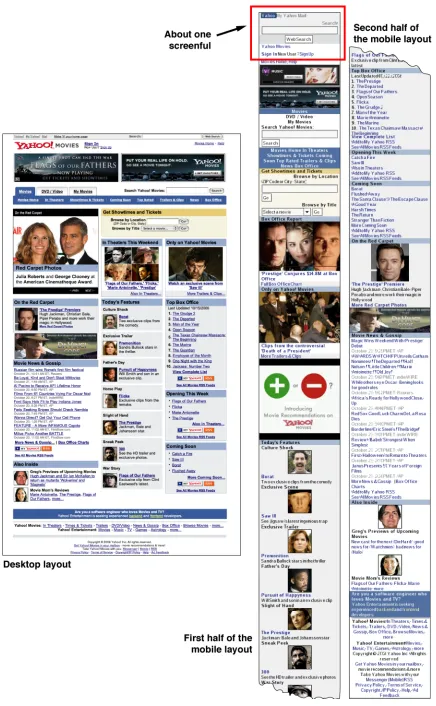
Figure 7.1. Yahoo! Movies, October 2006 169
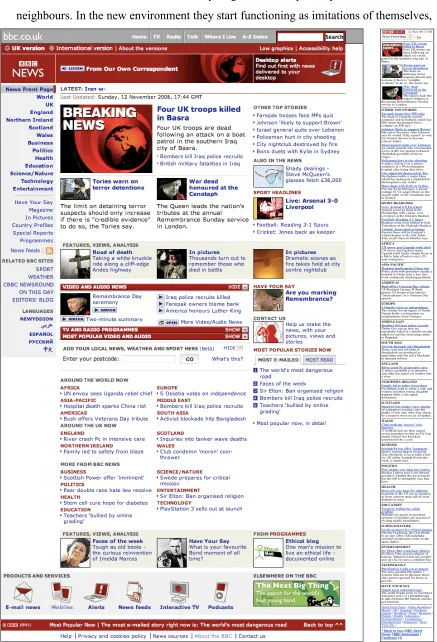
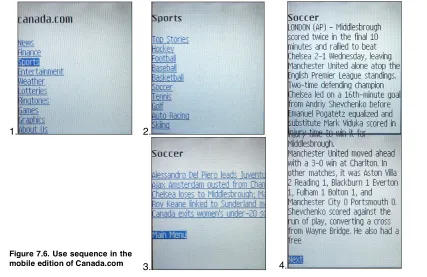
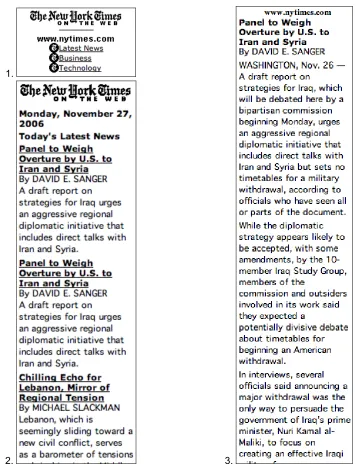
Figure 7.2. How Opera SSR transcoded Yahoo! Movies for mobile devices 172 Figure 7.3. Comparison of Opera’s desktop and mobile-adapted website layouts 176 Figure 7.4. Examples of BBC News logos and ‘visual identity’ 180 Figure 7.5. Comparison of BBC News desktop and mobile-adapted website layouts 181 Figure 7.6. Use sequence in the mobile edition of Canada.com 186 Figure 7.7. Use sequence in the mobile edition of the New York Times website 187
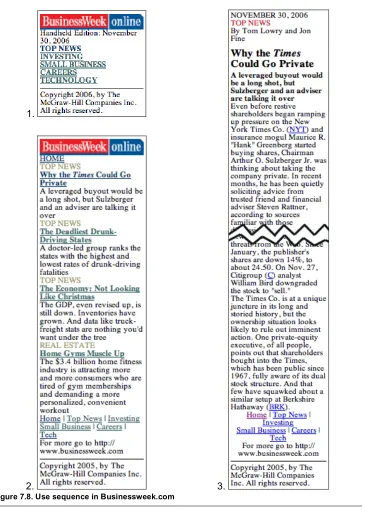
Figure 7.8. Use sequence in Businessweek.com 188
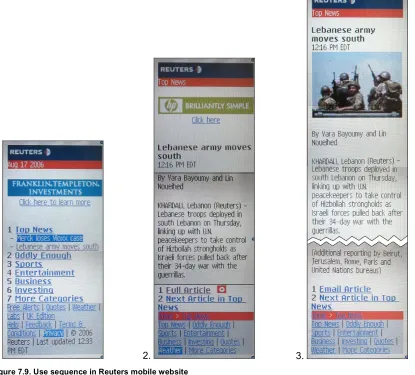
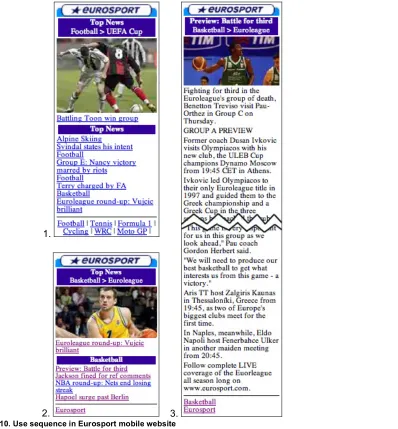
Figure 7.9. Use sequence in Reuters mobile website 190 Figure 7.10. Use sequence in Eurosport mobile website 191 Figure 7.11. Front pages of the Deutsche Welle World, USA Today and The Onion 193
Figure 7.12. Web’n’Walk front page 193
1
Introduction
1.1 Introduction
This chapter provides an introduction to the study of the evolutionary dynamics of new media forms. It focuses on a particular historical case study, the opening up of the mobile platform to the ‘big Web’, a move that affected the process of convergence between the two platforms. It introduces the core agenda and motivations for the study, demonstrating the pressing immediacy of the issue – the rapid ongoing development of the mobile accessible Web – and connects it to the research agenda established by Raymond Williams more than 30 years ago: that is, the study of the institutional shaping of our current media, its forms and technologies. For, as is shown in this study, it is the early decisions made about the design of our media that shape the future of these media. This chapter establishes the primary motivation for this thesis: to study how, by whom and for whom innovations in the new media field are negotiated and what the alternatives have been for the design of the new media. At the end of the chapter the central research questions for the study are introduced and the structure of the thesis outlined.
1.2 The pressing immediacy to study the historical emergence of the mobile Web
This thesis aims at investigating the evolutionary dynamics of new media forms by working towards developing an interdisciplinary approach for studying the parallel and interdependent evolutions in media forms, technology, the economy and the organisational settings of the media and communications industries. In order to do so, the focus is on a particular empirical case – the early evolution of the media forms developed for the mobile Web, a new media platform that, especially after the development of the 3G (third-generation wireless telecommunications technology) mobile network in the mid-2000s, has experienced rapid growth and development.
video, home video, satellite transmission and reactive and interactive devices) was at that point institutionally unformed. Some formations could, in the case of television,
... lower the price of entry so that producers outside the mainstream could begin to offer alternative programming: some could provide an opportunity for communities to communicate amongst themselves; others could give consumers more choice over their programming. But equally all could be captured by dominant interests, in which communities became fronts for commercial interests, interaction was constrained by those who control the gateways, and the internationalisation of media content, and the capacity of small producers to reach wider audiences, just as equally overwhelmed by programme-dumping transnational media conglomerates. (Silverstone, 2003: xii)
As Silverstone suggests, the situation was contingent for the evolution of the medium of television as a technology and a cultural form. And so it would be again with yet another new medium – the mobile Web. Silverstone suggests that in 1974 Williams asked his readers to acknowledge the immediacy of the situation and the significance of decisions taken then to form the television medium. I propose that it is time to ask the next generation of his readers to do the same thing – with the emerging media including the Internet technologies and their cultural forms. This thesis, in its motivations, acknowledges that reccurring immediacy, and is responsive to the research agenda established by Williams three decades ago.
This new immediacy has been apparent since at least 2004 when the first 3G mobile networks were launched and the operators started to market intensely a penumbra of data services, including those for browsing Internet content on mobile phones. The industry’s motivation has been apparent: ‘With four billion connected mobile phones on the planet – compared to one billion PCs – handhelds offer developers the mother of all opportunities: ubiquity and mass market’ (Clarke, 2009).
was well underway, the focus had changed notably – another study by the same company now focused firmly on mobile browsing, reporting again that the growing adoption of 3G handsets had spurred the adoption of mobile data services (M:Metrics, 2007). And despite the fact that over this 12-month period those using their phones to browse ‘news/information’ had grown by only 0.7% in the UK, more recent growth has been explosive.
Opera, the leading mobile browser vendor, has reported that the number of page views via its Opera Mini browser has been growing on average by 10% on month-on-month comparisons (see Opera Software, 2009). Annual growth in 2006 was 1,270%, and in the following years, respectively, 352%, 424% and 308%. A similar growth rate is projected to continue – another survey from Nielsen (see Tellabs, 2009) in early 2009 suggested that 58% of US consumers and 55% of European users who already accessed data services planned to increase their usage over the next two years. Among non-users, 27% of US consumers and 28% of Europeans were planning to start using the mobile data services (Forrester, 2009).
The rapid growth in user take-up has been translating into growth in the industry’s revenues. In 2007 when the empirical research for this study was taking place, the European Union’s (EU) mobile data market grew by 40% (GSM Association, 2008). In 2008, data revenues accounted for over 20% of all global service revenues of the operators (Sharma, 2008)1. In 2009 the global data services market (excluding the hugely popular messaging market) was estimated to grow by 26.2%2 (iSuppli, 2009). The rapid take-up of data subscriptions and their market growth started to spill over to ‘neighbouring’ market segments. As stated by Nielsen Mobile in Summer 2008, the mobile Internet in terms of user take-up had reached a critical mass as an advertising medium (Nielsen Mobile, 2008). This was widely recognised as evidenced by the surfacing of several new ad-networks specialised for the mobile Web (AdMob, AdWhirl, JumpTap, Millennial Media, Quattro Wireless, etc.). AdMob, one of the leading such networks,3 reported that the number of monthly ad requests in their network almost tripled in the course of 2008 (Admob, 2009)4.
Such growth in advertising income has been animating the content industry. As
1 For the first half of 2009 that number increased by 5% (Sharma, 2009). For the leading operators, data
services were contributing 40% of the overall revenues.
2 To reach US$87.7 billion and approximately US$188 billion by 2013. 3 In November 2009 AdMob was announced to have been bought by Google.
4 According to Juniper Research (Holden, 2009) the sharp increase in mobile Internet ad spend was about
reported in industry accounts (Kiss, 2008), there was ‘fresh excitement’ and activity in the online publishing sector regarding the mobile output: in 2007 only 44% of the UK publishers were producing content for mobiles but that had risen to 66% by April 2008. Competition was fiercest among the social networking providers – relating to the explosive popularity of their new mobile websites among the mobile users. The number of users in the US who accessed social network sites (SNS) on their mobile on a daily basis increased by 427% in 2008 (comScore, 2009a). According to Facebook’s public announcements (see Chang, 2008; Cutler & Krzykowski, 2009) the number of users who log in to their service at least once a month grew from five million in January 2008 to 65 million in August 2009 – 13 times greater in 20 months. Access to SNS while on the move was seen as the main driver for subscribing to the mobile Web (Mobile Entertainment Forum, 2009)5.
In this context it is interesting to consider how the popularity of social networking started to influence the device design. In August 2009, 18% of young adults in the US were reported to cite social media features as the most important factor when deciding what phone to buy (VerticalNews, 2009). Mobile operators like 3 in the UK or handset vendors such as INQ responded by developing special Facebook or Twitter phones – devices that had the respective feeds as a default on the home screen and the chatting function made prominent. Other industry sections responded by cooperating to
create a new gadget category – the always-connected mobile broadband device (see mocoNews, 2008). In other words, particular forms of content and their usage practices started to affect new technologies and device designs in this time period. The emerging focus on social media was generally seen as reviving the ‘flagging equipment market’, including the then struggling base station market. As Mike Roberts, a principal analyst at Informa, put it:
The mobile industry is still largely structured around its key product to date, narrowband voice, but that structure is breaking down fast due to the boom in mobile data traffic. The rapid transition from voice to data traffic will lead to a fundamental overhaul of mobile networks, as mobile operators and vendors shift their focus from voice to the mobile broadband internet. This
5 According to comScore (2009b) a third of European mobile social networkers did not access anything
in turn will help drive a wider overhaul of mobile business models and strategy. (cited in Middleton, 2008)
It is because of these contingencies, the things that could happen and the immediacy of the need to understand the associated risks and potentials that the early evolution of the open mobile Web was chosen as a case study for this thesis.
1.3 Premise: Internet as an ʻensembleʼ in motion
These examples and the data and quotations above help us to appreciate a complex recent dynamic that has shaped how the media and its technology are evolving. We see how the networks appear to have conditioned user behaviour, how new usage patterns affected new business models and forms of content and how these pushed for new investments in networks and in new kinds of devices. We need to understand, first, the interdependencies in the ongoing evolution of the mobile Web that have been establishing its further trajectories of development. And second, that the development of the ‘mobile Web’ is, in one way or another, part of the broader evolution of the Internet. This evolution, then, consists of the infinite amount of such micro-interdependencies. The Internet, far from being a ‘single medium which sprung fully formed into our lives’ (Lievrouw & Livingstone, 2002), is instead an indefinite compilation of technologies and forms of media and communication that all continue to evolve. All its sub-particles as well as the Internet as a whole, like all other innovations, are undergoing a lengthy and highly social process of research, development, design and redesign, hand-in-hand with the co-construction of a ‘market’, its ‘needs’ and its institutions (Livingstone, 2005: 18; Mansell & Silverstone, 1996b).
In this context I borrow the definition of ‘new media’ proposed by Lievrouw and Livingstone (2002: 7) for whom the concept consists of the following triad:
artefacts or devices that enable and extend our abilities to communicate;
communication activities or practices we engage in to develop and use these devices;
social arrangements or organisations that form around the devices and practices.
is what has, justifiably, characterised new media studies. In line with general theories of mediation (see Silverstone, 2000; Livingstone, 2009) they posit that it is the dynamic links and interdependencies among the artefacts, practices and organisations, the multiple, concurrent consideration of all elements of the new media infrastructure as an ensemble, that the focus of both theory and method development in new media studies should continue to move towards. It is a suggestion that this thesis will investigate and build on.
particular way. Another way of putting this – to bring in the theoretical language introduced in detail later in Chapter 3 – is to ask what its conventionalisation and emancipation into a new and independent medium with its own norms, characteristic forms and systems of governance (when it supposedly ceases to remediate and starts only to mediate) depends on? These, in the case of the nascent mobile Web, are some of the themes for this thesis to explore.
Another important starting point for this work is the proposition that the complex of textual, technological and social interdependencies is not approachable through visions of singular disciplines and, therefore, a multidisciplinary perspective is required (Mansell & Silverstone, 1996a: 1). Since the aim of this thesis is to study how the new media forms are designed by specific actors in specific circumstances in the social environment, there is, therefore, a need for the integration of different disciplinary perspectives that have traditionally been used to shed light on discrete components of this ‘ensemble’ of forms, actors and systems of social organisation. It is for this reason that this thesis will offer an integrated use of a varied set of disciplinary approaches – semiotics for interpreting the textual dynamics inherent in form evolution in cultures; the economics of innovation studies for understanding the market dynamics that condition the formation of the modern media and communications industries in late capitalism; and systems theoretical sociology to understand the broader dynamics of social organisation in late modernism. The choice of particular approaches and the omission of others is justified and explained in detail later in Chapter 3.
1.4 Agenda for the study
that takes societies into evolutionary flux, but also for enabling the conduct of power and the resulting mechanics of control.
These dialogues result in the selection of alternative values that become embedded in the technical systems. When this is acknowledged, we can begin to understand how the accumulation of these choices affects the way social and technical systems interact. The results of research of this kind can help us to imagine alternatives to the guiding principles that are shaping our mediated experience and that otherwise may be regarded as ‘facts’ – that is, unalterable features of the digital technological regime. (Mansell, 2002)
The research agenda proposed in this quotation provides the guiding principle that this thesis subscribes to. What this also implies is that despite the mix of disciplinary theories and methods – that is, a substantial focus on the methods and analytics of semiotics and cultural studies and their integration with perspectives drawn from the economics of innovation studies – in many regards, the core research agenda of this thesis is inherited from a strand of work in the tradition of the political economy of the media. It is the agenda for the political economy of the new media as suggested by Mansell (2004) that this thesis is responsive to. Concerned about the ‘unproblematic’ pluralist takes on new media development, she proposes a set of ‘most important’ questions for future studies of the new media, two of which are important in providing the motivation for this thesis (see Mansell, 2004: 103).
How is technological innovation in the new media field being structured; by whom and for whom is it being negotiated?
What are the alternatives?
system encompassed by past, present and future generations of information and communication technologies (ICTs) and their institutional settings (Mansell & Silverstone, 1996a: 3). The discontinuities resulting from the shifting tectonic plates of the global information and communication economy, together with related changes in the interactions of different industries, of production and consumption, of state and market, of local and global interests, has been suggested (Silverstone & Mansell, 1996: 213-14) to produce uncertainty and conflict among all the stakeholders that participate in the media development and design processes. As a result, their capabilities to participate in the media design, in the related negotiations or practices of production, tend to be in flux – in some cases, depending on associated power relations such that the scope for manoeuvre may be great, while in others, it might be slight (Mansell & Silverstone, 1996a: 6).
electronic spaces through the use of payment systems or by favouring some kinds of new media over others (Mansell, 2004: 98). Therefore, among the aims of this thesis is to investigate in which ways, in the case of the early development of the mobile Web, the different stakeholders have exercised their power to arrive at their favoured design for this evolving platform, and how the structuring of the mobile Web has been informed by various dominant and alternative principles, values and power relations.
There have been a few studies with similar mission statements, but they are mainly focused on the processes of fixed-Web development and standardisation. Galloway (2004, 2006a, 2006b; Galloway & Thacker, 2007), for example, has developed a ‘cultural studies’ approach to analysis of the way power underpins the structuring of Internet Protocols (IPs) in ways that, he argues, have yielded, not technologies of freedom, but rather technologies of control. Lovink (2003: 330-46) has argued that after a short period during the mid-1990s, a ‘massification of the net’ set in, involving its commodification. He has illustrated how the battle for an open or closed (i.e., privately controlled) Internet has been fought on the level of software and network architecture, and pointed to standardisation bodies being the main arenas for this fight.
Step by step we are approaching the final battle of the ‘War on Standards’. With the age of web pioneers and visionaries declared history, and the net going through its phase of massification and speculation, we are approaching the next stage – codification – with a few corporations and governments left as final players. (Lovink, 2003: 340)
These and similar concerns are the relevant motivations for this thesis and signpost the themes to be addressed. With the ‘regular Web’ being extended to the mobile domain and being converged with the specific institutional legacies and ambitions of the mobile telecommunications sector, these matters are relevant to cross-platform output, and their importance could become amplified. Starting with users being ‘locked in’ to specific operators, their bundles and devices, content being ‘walled in’ to operators’ portals, ‘app-stores’ (content markets) being controlled by specific device vendors and extending to technologies like IMS (IP Multimedia Sub-system) which, despite the fierce fights around ‘net neutrality’ in the fixed-net seems ready to evolve in the ‘mobile periphery of the net’ into an elaborate, standardised and cross-platform form of a non-neutral Internet (Weinmann, 2009: 29-30). It is for such reasons that I examine in Chapter 6 the dynamics of mobile Web standardisation at W3C and the related power struggles, to investigate how these dynamics and struggles are linked to various institutional or systemic legacies of the participating stakeholders and their associated preferences for the platform design. The aim is to address how these dynamics bear on the particular design of the ‘ubiquitous Web’ and its evolutionary trajectory.
My interest in this ‘evolution’ introduces the last premise that underpins this study – that the policy implications of these developments must be considered in the light of the observation that ‘history matters’. As maintained by Garnham, we can only emancipate ourselves from the hold of a ‘societal habit’ by understanding historically how, why and with what consequences our institutions and routines were informed. ‘If we wish to take a critical stance towards the existing structure and performance of the media we need to know why they are the way they are, what historical variations there may have been, if any, between historical periods and between societies or cultures, what historically rooted practices are inscribed in the institutions of social communication we have inherited’ (Garnham, 2000: 18). Studying the dynamics that have taken us to a particular structuring of our media may enable us to recognise alternatives and path-dependencies and to consider whether these may be reversed. The process of ‘unconcealment’ (Heidegger, 1962; Mansell, 2002: 269) undertaken in this thesis is intended to contribute to our understanding of some of the reasons for the particular shape of our Web-based media and to hint at how it may develop in the future.
3G networks in the Western world and ended in Summer 2007. As such, the development of the mobile Web provided a large case study of ‘live’ development of a nascent media platform to be analysed using the conceptual framework proposed in Chapter 3. This large case study was designed to consist of four sub-studies. The first of these (presented in Chapter 5) focused on how T-Mobile, an international mobile network operator, arrived at what was then a notable market innovation – unrestricted and unlimited ‘real Web’ browsing on mobile phones. If this sub-study focused on the evolution and shaping of the ‘mobile Web’ concept at the ‘grassroots level’ – one company acting in the contingent environment – then the second sub-study took a meta-view of the industry change and of the dialogic relationships among a variety of stakeholders conditioning this change. The site for this sub-study (see Chapter 6) was the then new mobile Web standardisation initiative at W3C and its specific focus was on the standardisation of the mobile Web as a certain whole – as a new (but convergent with desktop Web) platform for media content. The third sub-study again focused on the views and approaches of content and service industries on how to produce content for this new platform, presenting their views about whether the two platforms (mobile and desktop) should converge or diverge and on what terms either of the alternatives should take place (see Chapter 8). With these three sub-studies the research was designed to focus on views and discourses of different industry fractions and on the different levels and sites of the industry dynamic. The aim was to arrive at an analytical overview of the most relevant dynamics conditioning the early development of the platform and its media forms. For each of these three sub-studies, first, interviews were conducted with relevant industry representatives and, later, discourse analysis was applied to these interview texts. The aim of the discourse analysis was to glean the pertinent power relations in the industry and to investigate how the domain, its different composites, texts and institutions were defined and bounded by these discourses.
1.5 Research questions
This research aims to investigate how and for what reasons the innovative media forms created for nascent media platforms were designed in a certain way, how they are connected to the forms of older or parallel media and how these new designs evolved and came to be redesigned over time. Most importantly, how do they grow ‘old’, i.e., how do they emancipate as media by becoming, in various ways, codified – conventionalised or standardised? My central research question is:
What are the dynamics that have underpinned the creation, evolution and conventionalisation of new media forms in the open mobile Web following the launch of 3G mobile networks?
These dynamics are understood to accrue from a complex set of dialogic relations among different actors, institutions and social systems. The theoretical sub-questions in response to the need to study these dynamics are:
How are the textual dynamics of media evolution constituted by the dialogic interactions among agents involved in designing new media forms, by the inner dynamics of related social sub-systems and by the dialogic interactions among these sub-systems?
Are these dynamics dependent on the legacies and memory of the associated sub-systems? How are these legacies, hierarchies and culture constituted and maintained by their underlying power relations and how are these relations further negotiated in the process of the evolution of these systems? How is the change in these relations reflected in the evolution of the textual forms of new media?
1.6 Overview of the thesis The structure of the thesis is as follows.
is the setting, the further evolution of which the empirical research of this study is designed to study.
Chapter 3 outlines the conceptual framework. The main emphasis is on the integration of the disciplinarily distant evolutionary approaches (cultural semiotics, evolutionary economics, systems theoretical sociology) to study the complex dynamics of modern media change consisting of changes in textual forms, technologies, markets, discourses and institutions. The theoretical intersections of these approaches are considered with a focus on the following: dialogic interchange between social sub-systems enabling innovations and the emergence of new societal structures, their self-organisation in the contingent social environment, the role of memory and societal ‘path-dependencies’ in guiding the processes of self-organisation and affecting the nature of related power relations that shape the dialogic processes among the relevant stakeholders. The chapter proposes a conceptual framework for the analysis of this complexity.
Chapter 4 outlines the research methodology. The research questions and the conceptual framework are operationalised in a set of pragmatically motivated, object-related research questions. The chapter discusses two main research methods – a semiotic textual analysis of the mobile Web-media forms and discourse analysis. The chapter discusses the data collection procedures and the strengths and weaknesses of the research design, including the challenge of achieving analytical synergies between the components of the study.
Chapter 5 presents the empirical findings of the interview-based research at one of the ‘core sites’ of this study – T-Mobile International, one of the major global mobile operators. T-Mobile provided a valuable site to start mapping the interdependencies in the evolution of the open mobile Web at a ‘grassroots level’ – how one industry institution, as a result of a variety of dialogic processes both within the company as well as between the company and other players, arrived at the significant market innovation – the opening of the mobile platform to the (virtually) unrestricted and unlimited real-Web browsing, supported by a monthly flat fee pricing scheme.
Chapter 7 presents the empirical findings of the third sub-study, the textual analysis of the mobile Web-media forms as of 2006. The focus is on how the new mobile-specific forms can be shown to relate intertextually to the rest of the culture and its textual forms. The results of two analytical exercises are presented: first, the relations between different mobile and desktop websites and second, the specifics of the ‘mobile website’ as a new form.
Chapter 8 presents an analysis of the meta-discourses and perspectives of those interviewees who were creating the mobile media forms inspected in Chapter 7. Their discourses on the norms for mobile Web content design are examined.
Chapter 9 integrates the analytical results of the empirical chapters, and discusses these in the light of the conceptual framework presented in Chapter 3. It suggests what the principal agents and relevant societal sub-systems were that participated in the dialogues that modelled the mobile Web as a new medium, and analyses how the dialogical dynamic between these domains seems to have conditioned the evolution of the new media platform, its media and its productive sub-systems.
2
The histories of the mobile Web
2.1 Introduction
Before starting to study the recent developments in the evolution of mobile media, it is important to ask, where did mobile media come from? As Huhtamo (2004), a media archaeologist, points out, there is nothing self-evident in the connection between ‘mobile’ and ‘media’. He has shown how, to the inhabitants of medieval villages who rarely travelled, the need to be in perpetual contact with distant others would have made little sense. Hence, he has suggested that the idea of moving around with portable communications devices and consuming particular forms of media on this platform is cultural, rather than universal, and that these forms have emerged when certain social, cultural and economic conditions are met. The focus of this chapter, therefore, is on the phenomena of the historical emergence and further development of mobile media, its constituting institutions, forms and audiences – the setting whose further evolution the empirical research of this study takes up to study.
2.2 Prolegomena. From the formation of expectations to the first commercialisations
However, the more direct precursor to the mobile communications that established the ‘horizon of expectations’ for the immediate conversations with the distant other was the invention of the telegraph (see Du Boff, 1980; Yates, 1986; Carey, 1989: 201-30). When Marconi at the end of the 19th century conducted his first successful tests of radio communication he termed the new technology a ‘wireless telegraph’. In the context of the further development of mobile communications, its technologies, artefacts and forms of consumption, it is important to recognise how the technological set-up and societal structures of the time started to shape these early forms – after the initial deployment and seeding period in maritime contexts, first, wireless receivers and, later, sending receivers were converged with another then nascent mobile technology – automobiles. Above we saw how roads are argued to have conditioned the need for the being-with-equipment. However, this also conditioned the expectations for faster and more efficient mobility in the form of motorised cars – which emerged as the first enabling platform and a market for the then heavy mobile wireless communication technologies. As noted by Jessop (2006: 44), in the many decades that followed, these two technologies formed a complementary relationship, establishing social and technological connections that have shaped the modern forms of the mobile phone (see also Fortunati, 2001).
But the increasing usage of radio services meant that the radio frequency spectrum – then a scarce resource – filled up quickly and started to restrict the capacities of networks. The idea for beginning to overcome this scarcity and turning the mobile communications eventually from an industry utility into a mass market commodity, the cellular concept, was born in 1947. However, there were several reasons, technical as well as social, that prevented its application until the mid-1970s. When D.H. Ring and his Bell Labs colleague W.R. Young in the US first articulated the cellular concept (see Farley, 2005), the scientific work had many technical obstacles to overcome: for instance, to acquire the ability to work at increasingly high frequencies (800-900 MHz), digital switching microprocessors and many other technical solutions that had to be invented. In this respect, the development of the media form and business market had to wait for the scientific sub-system to reach a certain level in its development cycle. But Agar (2004: 22-7) stresses that technology comes to be ‘there’ only when it fits the wider world. His suggestion is that the world that was highly regulated and ruled by the large PTTs (Post, Telegraph and Telephone [Telecommunications]) was slow to produce innovations. These monopolistic enterprises that governed the tele-communications sector in most countries from the 19th century until the 1980s were seen to be more interested in securing an equilibrium around their monopolistic markets than looking for change. When Bell Labs came up with the cellular concept, its development gradually migrated to Motorola since, for AT&T, it was seen to threaten its fixed-line plant. But for Motorola it held the promise of a core service with high profit potential which would work against its rivals (Steinbock, 2003: 40). Once in the lead, this strategy won and the first generation of mobile communications technologies was developed. This, together with computerisation and broad development of data communication, led to a revolution in telecommunications that gradually swept away the old monopolies and, as Agar (2004: 26) stresses, that revolution was part of a global sea-change in both technology as well as politics. The rest of this chapter will discuss the nature, course and initial outcomes of this change.
2.3 1G and 2G: standardisation
telephone users in Sweden – more than anywhere else in Europe. But in the historical and evolutionary context what was significant about NMT was its international scope – it was launched as a standard for the whole Nordic area. Hence, roaming was easy; one could use the same phone when travelling between Helsinki and Oslo. Furthermore, one internationally shared standard enabled the development of a growing international market for technology vendors and phone manufacturers. The phones for NMT were provided initially by Nordic companies such as the Danish Dancall and Storno, Swedish Ericsson and Finnish Mobira, the early mobile arm of Nokia. Hence, we can say that a transnationally shared standard was the first step in the evolution of the modern global mobile communications market and contributed to the success of the Nordic vendors in this.
The European Commission (EC) was impressed with the rapid regionalisation of the NMT standard and decided to support and lead the slate of initiatives that aimed to replicate the triumph of NMT at a pan-European level, but now in digital format (NMT, AMPS [advanced mobile phone system] and the other parallel standards were all analogue). This formed the original horizon of expectations for the GSM (global system for mobile communications), the first platform for modern mobile multimedia and data services. But, as demonstrated by several analysts (Pelkmans, 2001; Steinbock, 2003: 49), the related goals were manifold, technical as well as political and economic. For our purposes it is important to note that consolidation of European markets and the potential for the exploitation of the economies of scale were seen by the EC as a means for boosting the birth of region-wide players that could challenge Europe’s main competitors, Japan and the US and their industry leaders (Russell, 2004: 8).
process moved away from the legacy of the telecommunications monopolies and became responsive to the development of competitive markets in mobile telecommunications. In the end, the standard was crafted by the major telecommu-nications operators and local equipment manufacturers, under the direction of ETSI.
The first GSM network was launched in 1991 in Finland and by 1995 European coverage was nearly complete. But what made the European standard historically important was the momentum it created, such that it began to be adopted around the world. By 1996, GSM networks were launched in 103 countries, from Australia to Russia. GSM was not the only standard on offer, but it was strongly lobbied for and, as a significant number of countries were already using it, for the new countries adopting it it was seen as a safer bet for achieving continuity and compatibility in telecommu-nications services – the same motivations that originally provided the motivation for the European Union (EU) in its development.
However, we should also recognise how the success of the GSM put European firms on a sound footing at this time for competing in the emerging global telecommunications markets. The key to this was intellectual property rights (IPRs). Motorola, Nokia, Alcatel, Ericsson and Siemens, which had staked a claim to some of the ‘essential patents’ in GSM, brokered bi-lateral cross-licensing agreements with each other and, in the end, imposed their strategy on GSM, which led to prohibitively expensive licensing conditions implemented for other players (Garrard, 1998: 140; Russell, 2004: 10). Hence, when GSM expanded across the world that meant dominance in the widening market for the three big ‘European’ vendors – Nokia, Ericsson and Motorola (which had an extensive European presence). By the end of 1995 they shared about 75% of the GSM terminal market. That dominance continued into the early 3G era. We can therefore say that it was the digital 2G (second-generation wireless telecommunications technology) standard and European regulatory policies that helped give these three companies their original push and an advantage that they continue to build on.
2.4 2G: Evolving designs of the mobile, its media and the formation of their audiences
upper-class males. This trend was similar all over the world (see Roos, 1993; Arceneaux, 2005: 24; Goggin, 2006b: 10). However, with 2G this started to change. Technical advances such as digitalisation and the improvement of nickel (Ni-MH, nickel metal hydride) batteries led to a qualitative change in mobile terminal design – i.e., to their miniaturisation. All of a sudden, mobile phones had become small and light enough to routinely carry around. The new design attracted new customers, turning the former business tool into an everyday object, an upscale accessory and a ubiquitous consumer product (see Vincent & Harper, 2003: 6). For instance, Keller (2005) has demonstrated how in Estonia in the course of the 1990s the role of the mobile phone as a commodity turned gradually from being a status symbol into a hedonistic lifestyle-related consumer product.
What this, in effect, refers to is the phenomenon that operators and manufacturers turned first to lifestyle attributes of the handset design to avoid the ‘commodity trap’ (where the manufacturers could only compete on the price of the substitutable, undifferentiated commodities). However, as Spurgeon and Goggin (2007: 320) posit, there came a point where emphasis on handset design ceased to provide the leverage in a crowded market. And that, eventually, motivated them to take the next step and initiate a new buffet of customisable value-added data services. As demonstrated by Hillebrand (2002: 407), the evolution of these services started formally in the earliest days of GSM planning when the participating operators addressed the basic requirements for the data services in the first action plan for GSM. However, we should recognise that even the 1G phones were screen-based devices. The LCD (liquid crystal display) screens were there for guiding user interaction with the electronic device. It could be suggested that it was on this basis of the early forms of LCD screens – calculators, watches, handheld video games, etc. – that the specific interface conventions for the mini-screens started to evolve. But as Manovich (2001: 88-93) has argued, this development was, in essence, part of the larger evolution of HCI (human-computer interaction) conventions that have evolved on various platforms and technologies from the early 1950s. And the latest stage for that evolution was the forms of networked communication and interaction. Hence, we can assume that this background – the preceding forms of portable ‘screenic’ devices, the development of PC (personal computer) user interfaces, the packet switching technology and Internet networks, together with their various popular applications such as e-mail – made up the horizon of expectations that led to the consideration of mobile handsets as possibly something more than simply devices for verbal communication.
started to take a more direct part in the design of mobile media and the concept of user agency started to become understood in the mobile industry.
The cultures that quickly developed around SMS texting indicated for the industry a possible market for similar services and applications. Messaging from the tiny mobile keypad was a cumbersome exercise, but, paradoxically, because entry barriers to learning to use the service were high, or at least, higher than making a voice call, adolescents saw this as an advantage in that it enabled them to exclude adults (Lacohée et al., 2003: 206). Hence, despite the limited funds of the young users, it was they who took up the first forms of the premium entertainment services built on top of the SMS delivery mechanisms – the markets for ringtones, wallpapers, mobile games and related products for further customisation of the phones. Despite the later arrival of the mobile Internet and its various applications, it was these rather trivial services that continued to drive mobile content markets and constituted a sizable source of income for the operators and media companies.
2.5 Internet-mobile convergence: the first generation
In parallel with the emergence of SMS and the related services, as reported (Funk, 2001: 20; Sigurdson, 2001: 11), there seems to have developed a feeling of urgency in the industry as it was sensed that the Internet had come to stay and that, therefore, the mobile Internet needed to find a way into the future. The first visible solution to achieve the desired convergence of the Internet and mobile phones was in the form of an artefact – the Nokia Communicator 9000 launched in 1996. The innovative aspect that attracted worldwide attention (Sigurdson, 2001: 11) was the concept of a portable pocket-sized electronic office. The Communicator had a QWERTY keyboard, enabled word processing, sending and receiving faxes, sending e-mails and browsing the Web in a limited way – the many features that are now common on the so-called smartphones. It could be argued therefore that the Nokia Communicator established a genre, a point to which I return later in this thesis. However, when it came to its Web browsing utility then, as suggested by Hjelmeroos et al. (2000), consistency between the PC and the mobile browser was not always to be desired (see also Keinonen, 2003: 3). It was realised at the time (Roto, 2006) that mobile phones were not capable of displaying large Web pages and that, therefore, specific mobile-optimised Web pages would be needed.
for PCs. It started in two different camps and followed different strategies – one eventually celebrated as a success, the other conceived as a failure. The first was the i-mode platform developed by Japanese operator NTT DoCoMo (mobile hand of the former PTT). The second was the Wireless Application Protocol (WAP) developed in cooperation between European and US handset and software vendors and deployed in many regions of the world.
The development of the WAP started formally in 1997, the same year that the Communicator was launched. And in 1997, after a couple of years of negotiations, the WAP Forum was established by Unwired Planet6, Ericsson, Motorola and Nokia. The Forum was opened to all members after the release of the WAP 1.0 specifications in April 1998. After the first year there were 100 members; after another two years, the number reached 500 – including all the major telecommunications operators, information technology (IT) and software vendors from around the world. As such, it could be argued to have been functioning as the first institutional catalyst for the industry convergence processes that would produce the new domain of the mobile Web and its structures.
However, despite the first steps in industry formation, the platform itself failed to attract users. After being launched in 2000 in several European countries, the operators often marketed it in ways that suggested that it offered PC-level service quality, setting the expectations relatively high. But the user experience of mobile browsing did not meet these expectations. The settings to be connected were hard to configure, circuit-switched networks required long connection times (up to 40 seconds), once connected the speed was slow, WAP sites did not look like websites, the selection of content was very limited as compared to the full Web, browsing costs were seen as being high against the price of desktop browsing and, once connected, users often found themselves being restricted to operators’ ‘walled gardens’ (see Nielsen, 2000; Funk, 2001: 22; Kumar et al., 2003: 81-2; Teo & Pok, 2003a, 2003b). As a result of this, by the end of the year the global number of WAP users was estimated to be only eight million, most of them in South Korea and Taiwan where there were better designed services (Funk, 2001: 19).
In parallel, the development of i-mode emerged as a success. Although developed by a former monopoly, it was now operating in a liberalised market and data services were seen as an opportunity to create differentiation. i-mode was launched in February 1999 and experienced rapid growth. More than 20 million users were attracted in only
two years and 33 million in three years after the launch (Ishii, 2004: 44). Growth continued at a similar pace. What may have conditioned the differences in take-up and user satisfaction between WAP and i-mode? Based on the work of several commentators (Funk, 2001; Helyar, 2001: 199-203; Sharma & Nakamura, 2003: 162; Lindmark et al., 2004: 353; Tee, 2005: 151), these differences may be explained, first, by differences in the level of medium specificity and the ‘emancipation’ of the new platform – i.e., how independent these were in relation to desktop Internet and its services. Although both were designed as mobile-specific content platforms, the WAP was ambiguous in its relation to the desktop Web. Second, its initial promise as the Internet on the phone seemed to establish the expectation for continuity between the two. Third, it failed to introduce any new medium-specific forms that would be complementary, not supplementary, in relation to desktop Web and, as such, could have attracted users with new functionalities. The success of the i-mode at the same time was argued by those cited above to have been brought about by communication and entertainment services that, despite being initially rather trivial, were attractive to young people, the target customers for enabling new functionalities. After the critical mass of users was achieved with these services, new layers of sophistication were added. Hence, what the above commentators took away from this lesson for the future was that mobile and desktop Web should be developed, not as supplementary to each other, but as complementary platforms with differing functionalities and entirely new services, users and emancipated, platform-specific forms of content (Funk, 2001: 17; Helyar, 2001; Lindmark et al., 2004: 353).
target groups. The lesson for the Western service providers was to jump on the bandwagon of the ongoing ‘consumerisation’ of mobile data services and to target more user segments (Funk, 2005: 114-15).
A third aspect that has been suggested by various commentators to have led to the differences in user reception of the mobile Web in Japan and Europe was the level of coordination in the development of the platform and the inclusion of operators and content providers in the process. In Japan NTT DoCoMo was able to fully control the introduction of the service and the related value chain. Mobile media platforms tie in three classical value chains – networks, devices and content services. In the case of i-mode, DoCoMo fully controlled their integration (Sigurdson, 2001: 18; Lindmark et al., 2004: 354; Tee, 2005: 158). It dictated the terminal design, launch schedules and the retail strategy together with the (subsidised) prices. It designed the platform together with its micro-payment system and it established the guidelines for the content providers. To become an ‘official’ content provider listed in the portal, applicants had to undergo an extensive screening and evaluation process. The ability to coordinate all these components of the service was seen to enable DoCoMo to guarantee the quality of the service.
In Europe and North America such central coordination was not possible as there was no dominant party that could have controlled the whole value chain and integrated all the components needed for the effective operation of the platform. WAP was, since its start, an evolving concept, a standard that was negotiated between parties of very different kinds. However, as has been addressed (Sigurdson, 2001: 22), one of the fatal aspects in its development was that the initial specification for the WAP was devised one-sidedly by handset and software vendors and little was done to involve the operators and to optimise the platform for their networks in the light of their expertise in service provision or with respect to the preferences of their subscribers. Many of the problems were arguably caused by the absence of a dominant design both for handsets and services (Steinbock, 2003: 374). As Kumar et al. (2003: 82) describe, WAP was a designer’s nightmare – there was a lack of shared conventions that might have guided both designers of the content as well as its users. The problems faced by WAP developers – i.e., that applications were differently rendered by different phones and browsers and the incompatibilities between variations of WML (WAP’s mark-up language) – all suggest a lack of coordination in the industry.
the situation became intolerable for most of the major operators (Steinbock, 2003: 374). In the same year, the industry body, the GSM Association, took the initiative by ‘bringing together its operator community to provide clear guidance to handset manufacturers and software developers on the needs of consumers of Mobile Internet services going forward’, as stated in its press release (GSM Association, 2001). This step and the further inclusion of operators and content and service providers in the WAP Forum, later (tellingly) renamed the Open Mobile Alliance (OMA), suggests early steps towards industry consolidation along the value chains aimed at improving the mobile Web service offerings around the world.
2.6 3G: faster networks, more integration
For the Western firms, however, to achieve better integration of the IP and wireless communications the first step was to overcome the limitations of their networks. The work towards that had, however, started much earlier, in 1986, when the telecommunications planners held their first gathering to launch the third generation services and technologies (that is, before the first call had ever been made for the second generation). The initial concept was simple – a pocket-sized mobile telephone that could be used anywhere in the world. This recalls the original motives for the ‘3G’ mobile standards and services. The first was based on increasing globalisation and the need to overcome the incompatibilities among standards worldwide. The second motivation that emerged a little later was to develop handsets, connections and services that could handle data in addition to voice signals.
The move towards global continuities is exemplified by the fact that, if for the 2G and GSM it was the EC that played a critical role, the design of 3G was, in contrast, a global initiative that moved gradually from the EU to the International Telecommunication Union (ITU). In the late 1980s, when the ITU began to develop 3G systems, the aim was to harmonise frequency spectrum and radio interface standards worldwide (see Dupuis, 2002: 181). The goal was to achieve a unitary global standard through an initiative that was eventually named the International Mobile Telecommunications-2000 (IMT-2000). According to the objectives set by the ITU, the distinctive characteristics of IMT-2000 were to achieve: