5
II
February 2017
Technology (IJRASET)
Analysis of Novel Approaches for Energy Efficient
Computational Offloading Performances in Mobile
Cloud Computing
M.S. Monisha1, S. Chidambaram2
1PG Scholar, Department of ECE, Adhiyamaan College of Engineering, Hosur, TN, India 2Associate Professor, Department of ECE, Adhiyamaan College of Engineering, Hosur, TN, India
Abstract: Our interaction with the mobile devices are increasing enormously nowadays because of advantages in mobile application. This massive applications is satisfied with the help of integration between cloud and mobile computing that is called as mobile cloud computing. Another side mobile user’s expectation are always progressively grownup. Due to this expectations ; In mobile devices Storage Capacity, Network Bandwidth and Processor Performances, are always upgraded day by day, therefore the smart phones and android mobiles they want better battery life or concentrating how much power consumed in latest mobile devices that is a major problem. Because of the additional applications runs in mobile device they may want to charge the mobile devices at least one time per day and also migrate their data into cloud servers. Therefore optimizing the power consumption in mobile devices that the data are migrated to the cloud. In cloud environment the user get a resources by a Cloud Service Providers. The energy consumption is reduced in mobile cloud computing by using computational offloading techniques. As a result our research paper mainly focussing on reduce the power consumption in mobile devices using different approaches of computational offloading in Mobile Cloud Computing.
Keywords: Mobile Cloud Computing, Mobile Devices, Computational offloading, Power Consumption, Storage Capacity, Network Bandwidth, Processor Performances
I. INTRODUCTION
[image:2.612.168.426.517.685.2]The mobile cloud computing are supportive to every persons can access the applications with the help of cloud servers at anywhere and any placedepends on our requirements. In Modern era the applicability of mobile devices leads to enormous amount of users and also using these devices has a distinctive habitation in human life. Cloud computing technology provided mobile cloud with the intention of improve using mobile phones and overcome the power consumption of mobile phones have integrated with business companies. In mobile cloud computing, the mobile devices applications are transmitted to cloud service centres for reducing the computation and storages of mobile devices.
used in mobile cloud computing for reduce energy consumption [1, 4]. Cloud computing is possibly becoming the leading computing service delivery raised area. Cloud computing is a form of service computing, however the computing resources are retailed as an on request, scalable, pay-as-you-go these will be provided to the end-user by a Cloud Service Provider (CSP). Mobile cloud computing which provide unlimited scalable storage and processing resource [2]. However mobile devices appearances with many encounters on their own resources for example bandwidth, storage and power consumption and communication for example portability, bandwidth and security [3].
II. RELATED WORK
Currently smartphones are capable of supporting a wide range of applications. Therefore running of complex applications in smartphones could result in poor performances and reduced battery life because of their limited resources [7]. Due to the advanced developments in mobile computing technology user have changed their mind set and give the first preferences to cloud computing. However in the face of all advancements in the recent years, Android phones and Smart Mobile Devices (SMDs) are still have a less prospective computing devices which are limited memory capacity , battery power lifetime and CPU speed. As a result, Mobile cloud computing (MCC) employs computational offloading for supporting computationally concentrated mobile applications on SMDs. One of the research paper proposed an Energy Efficient Computational Offloading Framework (EECOF) for the handling of concentrated mobile applications in MCC. These framework focussing on leveraging application processing services of cloud datacentres with negligible occurrences of computationally concentrated component relocation at runtime. Therefore, the energy consumption cost and the size of data transmission is reduced in computational offloading for mobile cloud computing [6]. EECOF framework gives the results in offloading different components of the prototype application over the wireless network medium as follows, the size of data transmission is reduced by 84 % and energy consumption cost is reduced by 69.9 %.
Using Dijkstra’s algorithm to find the prime decision for computational offloading problems. This prime decision is suitable solution on perfect knowledge of future tasks. They propose online algorithm for offloading. Therefore implementation of these algorithms can significantly reduce the energy of computational offloading in cellular network [8]. Another method for enhancing offloading computationally intensive work using Mobile Augmentation Cloud Services (MACS) middleware which enables adaptive execution of android application execution from a mobile cloud into the cloud [9].
III. COMPUTATIONAL OFFLOADING SCENARIO
Offloading is a solution to supplement these mobile devices capabilities by transferring computation to more resources full computer that is servers. Computational offloading is always different from the migration model used in the multiprocessor system and grid computing. Migrating the program to servers outside of the users’ immediate computing environment is the key difference of computational offloading but in grid environment the migration may be between two computers in same computing environment. For achieving efficient computational offloading they proposed a game theoretic approach for mobile cloud computing. They formulate the decentralized computational offloading decision making difficult among mobile device users [5]. One of the most common problems with the computational offloading is deciding what and when has to be sent into the cloud [11].
IV. OPTIMIZING ENERGY CONSUMPTION
Therefore for the above related works to be proposed the cloud computing will help to reduces energy consumption in mobile devices. It is related to both computation and communication sector. The critical aspect for mobile clients is the trade-off between energy consumed by computation and the energy consumed by communication [10]. The energy consumption approaches can be divided into two categories static and dynamic [1].
A. Static Approach
Technology (IJRASET)
Table iComparing the different static approaches of optimizing energy consumption in mobile cloud computing. S.NO Approach Energy Optimization Method
1 Li et al approach [12] Computational offloading
2 Lahh et al approach [20] location of mobile device and user
need
3 Chun et al approach [23] Strengthened implementation of Smartphone programs
B. Dynamic Approach
While in dynamic approaches environment and operating conditions are variable and dynamic. We compare the different dynamic approaches of optimizing energy consumption in mobile cloud computing that is given in the Table II following.
C. Leaning Automata Algorithm
Learning automata which is a single entity that has a range of actions will be limited. Operating method of these algorithm is select an action from the set of actions and applies it to the environment. Using by a random environment the actions are evaluated and the next action will be chosen by an automata based on environment response. From this process, automata learn how to select the prime action. To select the next prime action from the set of actions based on environment responses in automata which is determined by learning automata algorithm.
Stochastic learning automata consist of two components:
It have a finite number of actions that interact with a random environment. Here automata using it find prime action.
Random environment can be defined below,
Where,
α - number of actions on automata β - environment outputs
Table ii
Comparing the different dynamic approaches of optimizing energy consumption in mobile cloud computing.
S.NO
Approach Energy Optimization Method
1 Dezhong Yao et al approach [21]
Computational offloading
2 Xiao Maa et al approach [22] Mobile device location
3 Giurgiu et al approach [24] Program classification and various layers of
cloud
V. OFFLOADING DECISION
The offloading decision can be either static or dynamic. Therefore the decision is static means during development the program is partitioned. Static partition has the advantage of low overhead during execution.
Offloading techniques for energy consumption
Year Paper Decision M V Gr Ga T 2001 [12] Static
2002 [13]
[18]
Static
Static
2004 [14] Dynamic
2006 [15] Static
2008 [17] Dynamic
2010 [16] Dynamic
2014 [7] Dynamic
2015 [1]
[19]
Dynamic
Dynamic
The abbreviated columns represent the following categories of applications—M: multimedia, V: vision and recognition, Gr: graphics, Ga: gaming, T: text processing
In compare, dynamic decisions can adjust to various run-time conditions, such as inconsistent network bandwidth. In dynamic
approaches the decision making is selected using prediction mechanism. For example, the offloading bandwidth B can be monitored
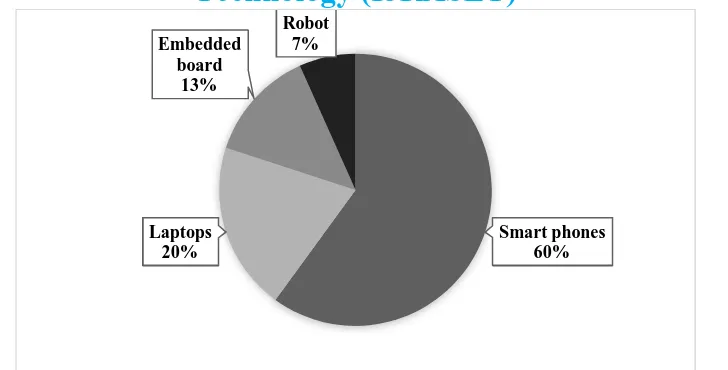
[image:5.612.105.508.101.270.2]and predicted using a Bayesian scheme. For the meantime, more dynamic decision deserve higher overhead because the program has to monitor run-time conditions. Figure 2 shows static and dynamic decisions in the papers surveyed.
[image:5.612.134.476.365.708.2]Fig. 2a Types of algorithms used for offloading
Fig. 2b Most frequently used types of applications for offloading
0 20 40 60 80 100
2001-2003 2004-2007 2007-2010 2010-2015
P er ce nt ag e o f pa pe rs Time
Algorithms used for offloading
STATIC DYNAMIC
0 2 4 6 8 10 12 14
[image:5.612.139.473.369.521.2]Technology (IJRASET)
Fig. 2c Percentage breakdown of different types of devices used by the applications
VI. CONCLUSION
One of the mail challenges in mobile devices is their power consumption that is battery life, processing time. One of the mail solution in order to overcome the energy consumption is locate suitable place for application implementation. The user request can be executed on mobile devices or computational offloading (transfer application from mobile devices into cloud environment and implemented in cloud). Therefore this research paper will give analysis of the different approaches in computational offloading for last 15 year to reduce energy consumption in mobile cloud computing.
REFERENCES
[1] Najmeh Moghadasi, Mostafa Ghobaei Arani “A Novel Approach for Reduce Energy Consumption in Mobile Cloud Computing”, I. J. Computer Network and Information Security, vol. 10, pp. 58-69, 2015, published online in modern education and computer science.
[2] Elhadj Benkhelifaa, Thomas Welsha, Loai Tawalbehb, Yaser Jararwehc, Anas Basalamah, “User Profiling for Energy Optimisation in Mobile Cloud Computing”, First International Workshop on Mobile Cloud Computing Systems, Management, and Security (MCSMS), pp. 1159 – 1165, 2015.
[3] Karthik Kumar Jibang Liu Yung-Hsiang Lu Bharat Bhargava, “A Survey of Computational offloading for Mobile Systems”, Springer Science+Business Media, 2012.
[4] Markus Schüring, “Mobile cloud computing – open issues and solutions”, 15thTwente Student Conference on IT, June 20th, 2011 [5] Xu Chen, “Decentralized Computational offloading Game for Mobile Cloud Computing”, Mar 2015.
[6] Muhammad Shiraz , Abdullah Gani, Azra Shamim, Suleman Khan, Raja Wasim Ahmad, “Energy Efficient Computational Offloading Framework for Mobile Cloud Computing”, Springer Science+Business Media Dordrecht, January 2015.
[7] Siddiqui Mohammad Saad, S.C.Nandedkar, Siddiqui Mohammad Saad, “Energy Efficient Mobile Cloud Computing,” International Journal of Computer Science and Information Technologies, Vol. 5 (6), pp. 7837-7840, 2014.
[8] Yeli Geng, Wenjie Hu, Yi Yang, Wei Gao and Guohong Cao, “Energy-Efficient Computational offloading in Cellular Networks”.
[9] Dejan Kovachev and Ralf Klamma, “Framework for Computational offloading in Mobile Cloud Computing”, International Journal of Artificial Intelligence and Interactive Multimedia, Vol. 1, No. 7 pp. 6-15
[10] Antti P. Miettinen, Jukka K. Nurminen, “Energy efficiency of mobile clients in cloud computing”, 2010.
[11] Krisztian Fekete, Kristof Csorba, Bertalan Forstner, Marcell Feher and Tamas Vajk, “Energy- efficient computational offloading model for mobile phone environment”, IEEE 1st International Conference on Cloud Networking (CLOUDNET), November 2012.
[12] Z, Wang C, Xu R, “Computational offloading to save energy on handheld devices: a partition scheme,” International conference on compilers, architecture, and synthesis for embedded systems, pp 238–246, 2001.
[13] Li Z, Wang C, Xu R, “Task allocation for distributed multimedia processing on wirelessly networked handheld devices,” Parallel and distributed processing symposium, pp 79–84, 2002.
[14] Chun G, Kang B-T, Kandemir M, Vijaykrishnan N, Irwin MJ, Chandramouli R ,“Studying energy trade-offs in offloading computation/compilation in java-enabled mobile devices,” IEEE Trans Parallel Distrib Syst 15(9): 795–809, 2004.
[15] KJ, Nathuji R, Raj H, Schwan K, and Balch T, “Autopower: toward energy-aware software systems for distributed mobile robots,” IEEE international conference on robotics and automation, pp 2757–2762, 2006.
[16] Cuervo E, Balasubramanian A, Cho D, Wolman A, Saroiu S, Chandra R, Bahl P, “MAUI: making smartphones last longer with code offload,” International conference on mobile systems, applications, and services, pp 49–62, 2010.
[17] Seshasayee B, Nathuji R, Schwan K, “Energy aware mobile service overlays: cooperative dynamic power management in distributive systems,’ International conference on automatic computing, pp 6–12, 2007
[18] Li Z, Xu R, “Energy impact of secure computation on a handheld device,” IEEE international workshop on workload characterization, pp 109–117, 2002.
[20] La, H. J., & Kim, S. D, "A conceptual framework for provisioning context-aware mobile cloud services," Cloud Computing (CLOUD), 2010 IEEE 3rInternational Conference, pp. 466-473, IEEE, 2010, July.
[21] Ma, X., Cui, Y., & Stojmenovic, I. "Energy efficiency on location based applications in mobile cloud computing: a survey." Procedia Computer Science, 10, 577-584, 2012.
[22] Yao, D., Yu, C., Jin, H., & Zhou, J, "Energy Efficient Task Scheduling in Mobile Cloud Computing," In Network and Parallel Computing, pp. 344-355, Springer Berlin Heidelberg, 2013.
[23] Chun, B. G., & Maniatis, P, "Augmented Smartphone Applications through Clone Cloud Execution," HotOS, Vol. 9, pp. 8-11, 2009, May.