S T U D Y P R O T O C O L
Open Access
PACE-UP (Pedometer and consultation
evaluation - UP)
–
a pedometer-based walking
intervention with and without practice nurse
support in primary care patients aged 45
–
75
years: study protocol for a randomised
controlled trial
Tess Harris
1, Sally M Kerry
2, Christina R Victor
3*, Sunil M Shah
1, Steve Iliffe
4, Michael Ussher
1, Ulf Ekelund
5,6,
Julia Fox-Rushby
7, Peter Whincup
1, Lee David
8, Debbie Brewin
8, Judith Ibison
1, Stephen DeWilde
1, Elizabeth Limb
1,
Nana Anokye
7, Cheryl Furness
1, Emma Howard
1, Rebecca Dale
1and Derek G Cook
1Abstract
Background:Most adults do not achieve the 150 minutes weekly of at least moderate intensity activity
recommended for health. Adults’most common physical activity (PA) is walking, light intensity if strolling, moderate if brisker. Pedometers can increase walking; however, most trials have been short-term, have combined pedometer and support effects, and have not reported PA intensity. This trial will investigate whether pedometers, with or without nurse support, can help less active 45–75 year olds to increase their PA over 12 months.
Methods/design:Design:Primary care-based 3-arm randomized controlled trial with 12-month follow-up and health economic and qualitative evaluations.
Participants:Less active 45–75 year olds (n = 993) will be recruited by post from six South West London general practices, maximum of two per household and households randomised into three groups. Step-count and time spent at different PA intensities will be assessed for 7 days at baseline, 3 and 12 months by accelerometer. Questionnaires and anthropometric assessments will be completed.
Intervention:The pedometer-alone group will be posted a pedometer (Yamax Digi-Walker SW-200), handbook and
diary detailing a 12-week pedometer-based walking programme, using targets from their baseline assessment. The pedometer-plus-support group will additionally receive three practice nurse PA consultations. The handbook, diary and consultations include behaviour change techniques (e.g., self-monitoring, goal-setting, relapse prevention planning). The control group will receive usual care.
Outcomes:Changes in average daily step-count (primary outcome), time spent sedentary and in at least moderate intensity PA weekly at 12 months, measured by accelerometry. Other outcomes include change in body mass index, body fat, self-reported PA, quality of life, mood and adverse events. Cost-effectiveness will be assessed by the incremental cost of the intervention to the National Health Service and incremental cost per change in step-count
(Continued on next page)
* Correspondence:[email protected]
3
Gerontology and Health Services Research Unit, Brunel University, London UB8 3PH, UK
Full list of author information is available at the end of the article
(Continued from previous page)
and per quality adjusted life year. Qualitative evaluations will explore reasons for trial non-participation and the interventions’acceptability.
Discussion:The PACE-UP trial will determine the effectiveness and cost-effectiveness of a pedometer-based walking intervention delivered by post or practice nurse to less active primary care patients aged 45–75 years old. Approaches to minimise bias and challenges anticipated in delivery will be discussed.
Trial registration:ISRCTN98538934
Keywords:Accelerometers, Behaviour change techniques, Cognitive behavioural, Middle-aged adults, Older people, Pedometers, Physical activity, Postal, Practice nurse, Primary care, Walking intervention
Background
Benefit and risks of PA and current PA guidelines
Why is physical activity (PA) important for adults and older adults? PA leads to reduced mortality, a reduced risk of over 20 diseases and conditions, and improved function, quality of life and emotional well-being [1]. Physical inactivity is the fourth leading risk factor for global mortality [2] and a major cost burden on health services [1].
What are the PA guidelines?Adults and older adults are advised to be active daily and, in order to obtain health benefits, should achieve at least 150 minutes (2 ½ hours) per week of at least moderate intensity activity in bouts of 10 minutes or more. One effective way to do this is by 30 minutes of moderate intensity activity on at least 5 days weekly [1,3,4]. Regular walking is the most com-mon PA of adults and older adults, walking at a mo-derate pace (3 mph /5 km/h) qualifies as momo-derate intensity PA [5]. Time spent being sedentary for ex-tended periods should also be minimised, as this is an independent disease risk factor [1] and increases steeply from the age of 45 [6]. Whilst amongst adults in England aged 16 and over, 39% of men and 29% of women were judged to meet the recommended PA levels, based on their self-reported data, only 20% and 17% of men and women aged 60–74 met recommended levels [6], des-pite most of these inactive older people being capable of walking [7].Lower socioeconomic groups [6] and Indian, Pakistani, Bangladeshi and Chinese ethnic groups are significantly less likely to report activity levels that meet the recommended levels, whilst the activity levels of other ethnic groups (Black Caribbean, Black African and Irish) are similar to that of the general population [8]. Surveys of adults in Europe and the USA also con-firm that over 50% do not achieve public health PA rec-ommendations [9,10]. Since PA, including walking, is unreliably recalled, surveys may overestimate PA levels [11]. Objective accelerometer measurement found that only 5% of men and 4% of women aged 35–64 years and 5% men and 0% of women aged 65 or more achieved
the recommended PA levels, only a fraction of those self-reporting achieving these levels [6].
What are the risks from increasing PA? Risks from a sedentary lifestyle far exceed the risks from regular PA [3,12,13]. Moderate intensity PA carries a low injury risk [14], mainly musculoskeletal injury or falls [15]. Walking is very low risk, “a near perfect exercise” [5]. Screening participants for contraindications before participating in light to moderate intensity PA programmes is no longer advocated [3,16]. An important safety feature of our study is that individualised goals can be set from the participant’s own baseline, in line with advice that older adults in particular should start with low intensity PA and increase intensity gradually, the “start-low-and-go-slow”approach [12,13].
Strategies for increasing PA
the daily routine (e.g., walking) [13]. A recent systematic review concluded that walking interventions tailored to people’s needs, targeted at the most sedentary and delivered at the individual or household level, can be effective, although evidence directly comparing inter-ventions targeted at individuals, couples or households is lacking [22].
Are pedometers helpful? Pedometers are small, inex-pensive devices, worn at the hip, that provide direct step-count feedback. A systematic review of 26 studies found pedometer users increased steps/day by 2,491 (1,098–3,885) and PA levels by 27%, with significant re-ductions in body mass index (BMI) and blood pressure [23]. A second review (32 studies) found an average increase of 2,000 steps/day for pedometer users [24]. Step-goals and diaries were key motivational factors [23,24]. Several limitations were recognised. Study sizes were relatively small and long-term effects undetermined; many included several components (e.g., pedometer and support) so independent effects were difficult to establish and the inclusion of older people and men was very limited [23,24]. Recent studies have addressed some of these limitations. A trial of 210 older women found that a pedometer plus behaviour change intervention in-creased PA at 3 months but not at 6 months [25]. Two trials in high risk groups (cardiac disease and impaired glucose tolerance) showed sustained increases in step-count at 12 months [26,27]. NICE recently updated its advice from only advising pedometers as part of research [28] to now advising their use as part of packages including support to set realistic goals, monitoring and feedback [29].
How do step-count goals relate to PA recommendations?
Step-count goals lead to more effective interventions, but no specific approach to goal-setting is favoured [23]. Goals are based on either a fixed target (e.g., 10,000 steps/day) [30,31] or by advising incremental increases on baseline, as a percentage (5% per week [32], 10% biweekly [33] or 20% monthly [25]) or by a fixed number of extra steps. Those advocating a fixed number of extra daily steps have developed step-based guidelines to fit with existing evi-dence based guidelines with their emphasis on 30 minutes of at least moderate intensity PA on 5 or more days weekly [34]. Despite individual variation, moderate intensity walk-ing appears approximately equal to at least 100 steps per minute [34,35]. Multiplied by 30 minutes this produces a minimum of 3,000 steps per day, to be done over and above habitual activity. Several studies have advocated adding in 3,000 steps/day on most days weekly, either from the beginning [26] or by increasing incrementally (initially an extra 1,500 steps/day and increasing) [36,37] or increasing by 500 steps/day biweekly [27]. Studies that advised adding 3,000 steps/day to baseline produced sig-nificant improvements in step-counts at 3 months and
two measured outcomes at 12 months and showed sustained improvements in step-counts [26,27], waist circumference [26] and fasting glucose levels [27]. Al-though there is no evidence at present to inform a moderate intensity cadence (steps/minute) in older adults, Tudor-Locke et al. advocate using the adult ca-dence of 100 steps/minute in older adults (whilst recognising that this may be unobtainable for some individuals) and advise that the 30 minutes can be broken down into bouts of at least 10 minutes [38]. This model was used in a primary care walking inter-vention in 41 older people which found significant step-count increases from baseline to week 12, main-tained at week 24 [39,40].
Could accelerometers be useful in a pedometer-based walking intervention? Accelerometers are small activity monitors, worn like pedometers, more expensive, but able to provide a time-stamped record of PA frequency (step-counts) and intensity (activity counts). They re-quire computer analysis and give no immediate feed-back, functioning as blinded pedometers in objectively measuring baseline and outcome data, but providing objective data on time spent in different PA intensities, including time spent in at least moderate intensity activity and time spent sedentary, two important public health outcomes. Pedometer studies without accelerometers have relied on self-report measures of these outcomes. Acceler-ometers are valid and acceptable to adults [6,41] and older adults [6,42,43]. Although both instruments measure step-count and are highly correlated [44,45], pedometers usu-ally record lower step-counts, particularly at lower walking speeds, and accelerometers cannot reliably be substituted for pedometers at an individual level [45]. Thus, although we will use the accelerometer to measure outcomes, we will use a blinded pedometer, worn simultaneously at baseline, to set individual step-count targets.
Are pedometers cost-effective? There is limited know-ledge on the cost-effectiveness of pedometer-based in-terventions in the UK. Recent systematic reviews that considered the economic outcomes of pedometer-based interventions found no evidence [46,47], partly attribut-able to insufficient data [48]. However, a recent study assessed the cost-effectiveness of giving an individua-lised walking programme and pedometer with or with-out a consultation compared with usual walking activity alongside a trial of 79 people [49]. The incremental cost-effectiveness ratios per person achieving an add-itional 15,000 steps/week were £591 and £92 with and without the consultation. However, no data on quality of life were collected and impacts on long-term outcomes were not estimated.
registered list of local patients, using disease registers to provide annual or more frequent review of chronic disor-ders (for many of which PA will be of benefit), via a multi-disciplinary health care team to provide continuity of care. NICE guidance found that brief interventions in primary care are cost-effective and therefore recommends that all primary care practitioners should take the opportunity, whenever possible, to identify inactive adults and provide advice on increasing PA levels [28]. New National Health Service health checks include adults up to age 74 and incorporate advice on increasing PA, often by primary care nurses [50]. Primary care nurses have been shown to be effective at increasing PA, particularly walking, in this age group [51]. Health professional PA advice in consultations is individually tailored [52] and has greater impact than other PA advice [53]. PA promotion by other routes, for older adults in particular, is unlikely to be as effective [54]]. Exercise prescribing guidance in primary care rein-forces the importance of follow-up to chart progress, set goals, solve problems, and identify and use social support [55]; this will be an important feature of the nurse PA con-sultations in this trial. Evaluation of the UK Step-O-Meter Programme, delivering pedometers through primary care, showed self-reported PA increases, but advised investigation with a RCT design [36]. Two small trials have assessed the effectiveness of pedometers plus PA consultations: one showed a significant effect on step-counts at 12 weeks in 79 middle-aged adults [37]; the other showed a significant effect on step-counts at 12 weeks, maintained at 24 weeks in 41 older primary care patients and called for a further, larger primary care trial [39,40].
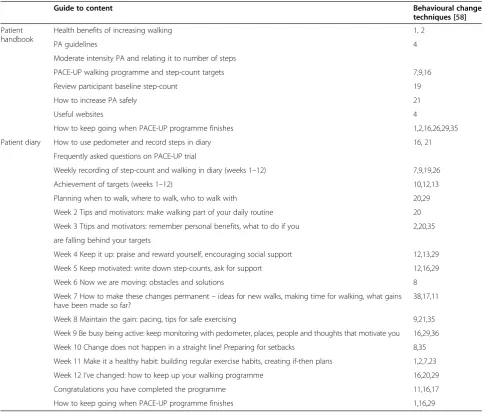
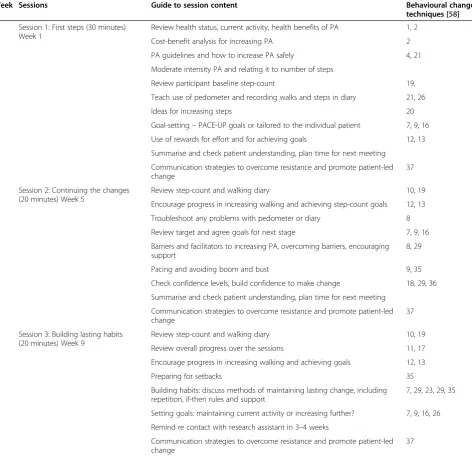
Theory on which the intervention is based and relevant pilot and preparatory work. The pedometer-based inter-vention is centred on work cited above showing that pe-dometers can increase step-counts and PA intensity [23,24], but extending this to ensure that the study covers older adults, men, has a 12 month follow-up, and is de-signed to examine pedometer and support components separately. The patient handbook, diary and practice nurse PA consultations will use behaviour change techniques (BCTs) (e.g., goal-setting, self-monitoring, feedback, boost-ing motivation, encouragboost-ing social support, addressboost-ing barriers, relapse anticipation etc.). These techniques have been successfully used by non-specialists in primary care after brief training [56] and are emphasized in the Health Trainer Handbook [57], based on evidence from a range of psychological methods and intended for National Health Service behaviour change programmes, with local adaptation [57]. We have adapted the Health Trainer Handbook for use in this trial into PACE-UP nurse and patient handbooks, to focus specifically on PA using pe-dometers. The BCTs have been classified according to Michie’s refined taxonomy of BCTs for PA interventions
[58] (Tables 1 and 2). Diary recording of pedometer step-counts provides clear material for PA goal setting, self-monitoring and feedback, and should fit well with this approach. Relevant pilot and preparatory work in-cludes observational work using pedometers and accel-erometers in primary care [42] and a trial with older primary care patients developing the PA consultations and pedometer-based walking intervention (PACE-Lift trial ISRCTN42122561) [59].
Study rationale and aims Rationale
There is a need for a large, adequately powered primary care trial to test the effect of a pedometer-based walking intervention, with and without nurse PA consultations in inactive adults and older adults. It should include follow-up to 1 year and ensure that adequate numbers of men, older adults and individuals from diverse socio-economic and ethnic backgrounds are included. It should enable the effectiveness of taking part as an individual or as a couple to be estimated. For greatest effect the inter-vention should use step-goals and diaries and the PA con-sultations and patient handbook should be based on BCTs, such as those used in the Health Trainer Handbook [57]. To objectively test the interventions’effectiveness on important public health outcomes, such as time spent in at least moderate intensity activity and time spent sedentary, accelerometer measurement of out-comes should be included. A qualitative assessment is needed to explore the intervention’s acceptability and reasons for dropout and durability of effects. An eco-nomic evaluation should be performed alongside the trial and the costs and benefits of the alternatives, modelled beyond the end of the trial.
Study aims
The main hypotheses to be addressed are: i) does a 3 month pedometer-based walking intervention increase PA in inactive 45–75 year olds at 12 month follow-up; and ii) does providing practice nurse support through PA con-sultations provide additional benefit. The study will also assess the cost-effectiveness of both interventions and whether or not any effects are modified by age, gender, body mass index or taking part as a couple, and will esti-mate the effect of the interventions on patient reported outcomes and anthropometric measures.
Methods/design
This paper was written according to CONSORT reporting guidelines for RCTs of non-pharmacologic treatment [60].
Trial design
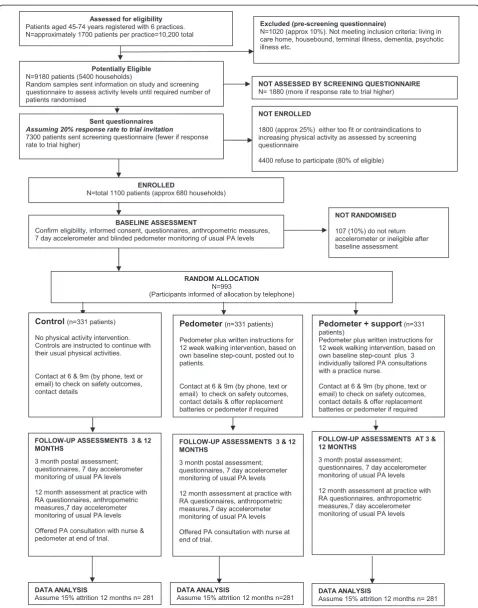
a control group (usual PA); pedometer and written structions by post; pedometer and support (written in-structions and brief individually tailored PA consultations with a practice nurse). A 1:1:1 allocation will be used. The CONSORT flow diagram summarises the design, proce-dures and stages (Figure 1) [60].
Practice and participant recruitment Practice inclusion criteria
South West London general practices with a list size >9,000; giving a commitment to participate over the study duration; having a practice nurse to carry out the
PA consultations; and a room for the research assistant to recruit participants and conduct assessments.
Practice recruitment
[image:5.595.56.542.99.512.2]The Primary Care Research Network Greater London will help us to identify potential participant practices within South West London who fit the above practice inclusion criteria. Approaches by mailed invitation, tele-phone contact with practice managers and personal con-tact with local general practitioners (GPs) and practice nurses will all be used as necessary to identify practices. We will select six from the list of potentially interested practices to include a range of socio-demographic factors
Table 1 PACE-UP patient handbook and diary, and behavioural change techniques included
Guide to content Behavioural change
techniques [58]
Patient handbook
Health benefits of increasing walking 1, 2
PA guidelines 4
Moderate intensity PA and relating it to number of steps
PACE-UP walking programme and step-count targets 7,9,16
Review participant baseline step-count 19
How to increase PA safely 21
Useful websites 4
How to keep going when PACE-UP programme finishes 1,2,16,26,29,35
Patient diary How to use pedometer and record steps in diary 16, 21
Frequently asked questions on PACE-UP trial
Weekly recording of step-count and walking in diary (weeks 1–12) 7,9,19,26
Achievement of targets (weeks 1–12) 10,12,13
Planning when to walk, where to walk, who to walk with 20,29
Week 2 Tips and motivators: make walking part of your daily routine 20
Week 3 Ttips and motivators: remember personal benefits, what to do if you 2,20,35
are falling behind your targets
Week 4 Keep it up: praise and reward yourself, encouraging social support 12,13,29
Week 5 Keep motivated: write down step-counts, ask for support 12,16,29
Week 6 Now we are moving: obstacles and solutions 8
Week 7 How to make these changes permanent–ideas for new walks, making time for walking, what gains have been made so far?
38,17,11
Week 8 Maintain the gain: pacing, tips for safe exercising 9,21,35
Week 9 Be busy being active: keep monitoring with pedometer, places, people and thoughts that motivate you 16,29,36
Week 10 Change does not happen in a straight line! Preparing for setbacks 8,35
Week 11 Make it a healthy habit: building regular exercise habits, creating if-then plans 1,2,7,23
Week 12 I’ve changed: how to keep up your walking programme 16,20,29
Congratulations you have completed the programme 11,16,17
How to keep going when PACE-UP programme finishes 1,16,29
1. Provide general information on behaviour-health link; 2. Provide information on consequences to individual; 4. Provide normative information about others’
(including targeting some practices in areas with high numbers of ethnic minority patients) and geographical cir-cumstances based on practice postcode index of multiple deprivation scores using national quintiles (at least 1 prac-tice from each quintile). The index of multiple deprivation score includes factors such as distance to services, crime rates and road traffic accident rates, which could influence likelihood of outdoor PA, as well as material deprivation measures [61].
Participant inclusion criteria
Patients aged 45–75 years registered at a selected general practice, able to walk outside the home and with no con-traindications to increasing their moderate intensity PA levels.
Participant exclusion criteria
[image:6.595.63.536.102.559.2]In order to maximise the benefits of the intervention to individuals and the National Health Service, the trial
Table 2 PACE-UP practice nurse physical activity consultations and behaviour change techniques included
Week Sessions Guide to session content Behavioural change
techniques [58]
1 Session 1: First steps (30 minutes) Week 1
Review health status, current activity, health benefits of PA 1, 2
Cost-benefit analysis for increasing PA 2
PA guidelines and how to increase PA safely 4, 21
Moderate intensity PA and relating it to number of steps
Review participant baseline step-count 19,
Teach use of pedometer and recording walks and steps in diary 21, 26
Ideas for increasing steps 20
Goal-setting–PACE-UP goals or tailored to the individual patient 7, 9, 16
Use of rewards for effort and for achieving goals 12, 13
Summarise and check patient understanding, plan time for next meeting
Communication strategies to overcome resistance and promote patient-led change
37
5 Session 2: Continuing the changes (20 minutes) Week 5
Review step-count and walking diary 10, 19
Encourage progress in increasing walking and achieving step-count goals 12, 13
Troubleshoot any problems with pedometer or diary 8
Review target and agree goals for next stage 7, 9, 16
Barriers and facilitators to increasing PA, overcoming barriers, encouraging support
8, 29
Pacing and avoiding boom and bust 9, 35
Check confidence levels, build confidence to make change 18, 29, 36
Summarise and check patient understanding, plan time for next meeting
Communication strategies to overcome resistance and promote patient-led change
37
9 Session 3: Building lasting habits (20 minutes) Week 9
Review step-count and walking diary 10, 19
Review overall progress over the sessions 11, 17
Encourage progress in increasing walking and achieving goals 12, 13
Preparing for setbacks 35
Building habits: discuss methods of maintaining lasting change, including repetition, if-then rules and support
7, 29, 23, 29, 35
Setting goals: maintaining current activity or increasing further? 7, 9, 16, 26
Remind re contact with research assistant in 3–4 weeks
Communication strategies to overcome resistance and promote patient-led change
37
1. Provide general information on behaviour-health link; 2. Provide information on consequences to individual; 4. Provide normative information about others’
focusses on less active adults, using a single-item validated questionnaire measure of self-reported PA as a screening question to identify them [51]. Those individuals reporting achieving a minimum of 150 minutes of at least moderate intensity PA weekly [1] will be excluded. Participants found on subsequent baseline accelerometer assessment to be above this PA level will not be excluded, as these patients would be included if this intervention were to be rolled out in primary care. Other exclusions: living in a residential or nursing home; housebound; ≥3 falls in previous year or≥1 fall in previous year requiring medical attention; terminal illness; dementia or significant cogni-tive impairment (unable to follow simple instructions); registered blind; new onset chest pain, myocardial infarc-tion, coronary artery bypass graft or angioplasty within the last 3 months; medical or psychiatric condition which the GP considers excludes the patient (e.g., acute systemic illness such as pneumonia, unstable heart failure, unable to move about independently, psychotic illness). Pregnant women will also be excluded.
Participant recruitment
The number of patients aged 45–74 years will be recorded at each practice. Practice staff will search practice elec-tronic primary health care records to identify patients aged 45–74, using Read codes supplied by researchers and local care home knowledge to exclude ineligible patients (as above). Initial sampling will include 45–74 year olds, but some individuals will become 75 before randomisation and will still be included. A list of potentially eligible pa-tients will be created and ordered by household, with each household given a unique household identifier. We are aiming to select either individuals or couples in a house-hold, therefore we want to select a maximum of two people per household. If a household with one individual is selected at random, then that individual is selected. If a household has two or more individuals then one individ-ual is selected at random. If there is a second individindivid-ual in that household with an age difference of 15 years or less, they will also be selected. The approach was based on pre-vious validated work showing that this age difference is an effective way of identifying (married or cohabiting) couples within a household [62]. Initially, the first random sample containing 400 eligible patients will be selected at each practice and the list examined by practice GPs or nurses to ensure trial suitability. Patients in these households will then be mailed an individual trial invitation letter from the practice and the screening question to assess activity levels and a participant information sheet. This will make it clear that if potential participants have any difficulties under-standing, speaking or reading English they should bring a family member or friend with them to the research assist-ant appointment. The participassist-ant information sheet will be translated into different languages if practices indicate
this to be appropriate. The 400 individuals will be con-tacted by post in a staggered manner over 2–3 months to avoid overwhelming the research assistants. Reminders will be sent out to non-responders after 6–8 weeks. Fur-ther random samples of households will be selected from the list until required numbers have been randomised. On the reply slip, those not wishing to participate will be asked about reasons for declining and their willingness to fill in a health and PA questionnaire, one of the questions on this questionnaire will ask if they would be willing to be interviewed about their reasons for not wanting to par-ticipate in the trial. Patients who agree to parpar-ticipate in the trial will be telephoned to arrange a baseline assess-ment at the practice with the research assistant. Two eli-gible people within a household will be invited together (or apart if they prefer). Eligibility will be confirmed and informed consent sought at this appointment.
Participant selection for the qualitative evaluation
Participant selection for the qualitative evaluation will run parallel to the trial and will focus upon three distinct groups. i) Trial ‘non-participants’who agree to be inter-viewed, to explore factors influencing their decision not to participate. ii) Purposive samples of four groups of trial participants, after 12-month follow-up (including samples of those who did and did not increase their PA in each of the two intervention arms). The samples will reflect the range of socio-demographic characteristics of participants including ethnicity. iii) All practice nurses (maximum 12 if two per practice) will be invited to par-ticipate in a focus group to find out their thoughts about the interventions’ acceptability and use in PA consulta-tions. Interviewing with study participants will continue until no new themes are identified (approximately 55–80 are anticipated, 15–20 for the‘non-participants’and 10–15 for each of the four groups of trial participants).
Baseline assessment
The following assessments will be carried out by the research assistant at the patient’s general practice.
i) Questionnaire measures–
Questionnaire (GPPAQ) [69] and International Physical Activity Questionnaire (IPAQ) [70] will be completed after wearing the PA monitors for 7 days and posted back with them.
ii)Falls Risk Assessment Tool[71]–This will be assessed using self-report items and by direct observation of the ability to rise from a chair of knee height without using their arms.
iii)Anthropometric measures–Height (measured in bare feet to neared 0.5 cm using a stadiometer); weight (measured to nearest 0.1 kg), body fat, bioimpedance (using Tanita body composition analyser BC-418 MA); and waist and hip
circumference (using standard technique and tape measure with clear plastic slider).
iv)Objective PA assessment–Measurement of usual PA levels, wearing an accelerometer and a blinded pedometer (Yamax Digiwalker CW200) on a belt over one hip, all day for 7 days, only removing for bathing. A diary is also provided to record what activities are done and how long for. The monitors, belt and diary will be posted back on completion. The Actigraph (GT3X + Manufacturing Technology Inc., Fl. USA) measures vertical accelerations in magnitudes from 0.05–2.0 g sampled at 30 Hz then summed over a selected (5 s) time period, it can record PA continuously for up to 21 days. The output, activity counts per unit of time, distinguishes between different walking speeds and PA intensities, using standard cut-offs [42,43]. The pedometer function on the accelerometer will be used for baseline and outcome measurement of step-counts for the trial. Participants will be offered the option of text messaging to remind them to wear the accelerometer each day and to return it after the 7 days. Once it is returned, the participants receive a £10 gift voucher.
Randomisation procedure
After all participants in a household have completed the baseline assessment and returned the accelerometer with at least 5 complete days of ≥9 hours / 540 minutes re-cording, the RA will allocate to the trial groups using an internet randomisation service to ensure independence of the allocation. Participants who do not provide the required data, will be asked to wear the accelerometers for another 7 days or excluded, if this is not possible. To avoid couple contamination, randomisation will be at household level. Block randomisation will be used within practice with random sized blocks to ensure balance in the groups and an even workload for nurses. The research assistant will inform participants by telephone of their group allocation.
Nature of the complex intervention
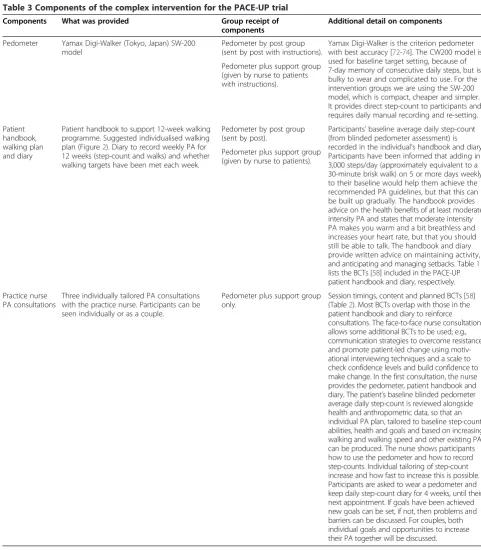
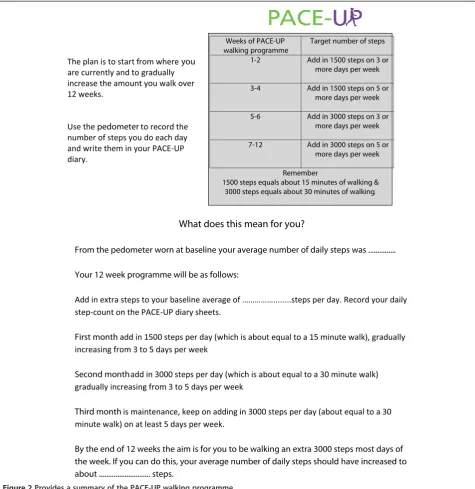
Twelve-week pedometer-based walking intervention deliv-ered either by post with written instructions (pedometer group) or delivered in the context of three practice nurse PA consultations (pedometer plus nurse support group). Table 3 provides details of the complex intervention com-ponents. (Figure 2)
Procedure for control group (usual PA)
The research assistant informs participants that they are in the usual PA group and that they should continue with their usual PA throughout the trial. She/he will thank them for participating and inform them that they will be contacted later to arrange the 3-month postal assessment and the 12-month outcome assessment appointment at the practice, including wearing an accelerometer for 7 days as part of these. He/she will also make contact at 6 and 9 months (by telephone, text, or email according to pa-tient preference) to check on safety outcomes and contact details. On study completion, the control group will be offered a pedometer, diary and written instructions for a 12-week pedometer-based walking programme either by post or as part of a single practice nurse consultation (according to patient preference).
Procedure for the pedometer-alone group
The research assistant informs participants that they are in the pedometer-alone group and arranges to post out a ped-ometer, PACE-UP patient handbook and diary with easy to follow written instructions for a 12-week pedometer-based walking programme. This is based on the participant’s own baseline pedometer average daily step-count. The research assistant will telephone 1 week after sending out the ped-ometer to check that it has arrived safely and is working properly and to offer a replacement pedometer in the event of loss or malfunction during the 12-week intervention. He/she will also check that participants understand the 12-week pedometer-based walking plan and answer any questions. Arrangements for follow-up at 3, 6, 9 and 12 months are as for the control group. In addition, at each follow-up, the research assistant will offer a replace-ment pedometer or batteries, if required. On study com-pletion, participants in this group will be offered a single practice nurse PA consultation.
Procedure for qualitative study
The qualitative researcher will approach the non-participants and the non-participants, from both interven-tion groups, as discussed in qualitative participant recruitment and seek their informed consent for a semi-structured telephone interview. All interviews will be audio-recorded (unless participants do not consent,
[image:10.595.54.536.86.637.2]when contemporaneous field notes will be taken) and transcribed verbatim professionally. Thematic analysis will proceed in parallel with the interviews to enable refinement of the interview guide and purposive sampling according to emerging themes. The qualitative research assistant will also run a focus group with the practice nurses, when all the interventions are completed,
Table 3 Components of the complex intervention for the PACE-UP trial
Components What was provided Group receipt of
components
Additional detail on components
Pedometer Yamax Digi-Walker (Tokyo, Japan) SW-200 model
Pedometer by post group (sent by post with instructions).
Yamax Digi-Walker is the criterion pedometer with best accuracy [72-74]. The CW200 model is used for baseline target setting, because of 7-day memory of consecutive daily steps, but is bulky to wear and complicated to use. For the intervention groups we are using the SW-200 model, which is compact, cheaper and simpler. It provides direct step-count to participants and requires daily manual recording and re-setting. Pedometer plus support group
(given by nurse to patients with instructions).
Patient handbook, walking plan and diary
Patient handbook to support 12-week walking programme. Suggested individualised walking plan (Figure2). Diary to record weekly PA for 12 weeks (step-count and walks) and whether walking targets have been met each week.
Pedometer by post group (sent by post).
Participants’baseline average daily step-count (from blinded pedometer assessment) is recorded in the individual’s handbook and diary. Participants have been informed that adding in 3,000 steps/day (approximately equivalent to a 30-minute brisk walk) on 5 or more days weekly to their baseline would help them achieve the recommended PA guidelines, but that this can be built up gradually. The handbook provides advice on the health benefits of at least moderate intensity PA and states that moderate intensity PA makes you warm and a bit breathless and increases your heart rate, but that you should still be able to talk. The handbook and diary provide written advice on maintaining activity, and anticipating and managing setbacks. Table1 lists the BCTs [58] included in the PACE-UP patient handbook and diary, respectively. Pedometer plus support group
(given by nurse to patients).
Practice nurse PA consultations
Three individually tailored PA consultations with the practice nurse. Participants can be seen individually or as a couple.
Pedometer plus support group only.
this will be audio-recorded and transcribed and subjected to thematic analysis.
Procedure for the health economics evaluation
The economic evaluation will take the perspective of the National Health Service personal social services and participants and first undertake a trial based analysis. Participant-level resource use data will be collected for equipment (pedometers), face to face or telephone con-sultations (length of time and frequency), out of pocket expenses (e.g., transport costs), use of support services
[image:11.595.60.536.89.579.2]and apportioned to patients within the relevant arm of the trial. Unit costs will be valued using national aver-ages to increase their generalizability. Long-term costs and effects expected to occur beyond the trial will be es-timated using Anokye et al.’s model, which accounts for the lifetime risk of developing three conditions associ-ated with PA (coronary heart disease, stroke and type II diabetes) [75].
Practice nurse training and assessment of fidelity of practice nurse consultations
Practice nurse training in BCTs and in the use of the PACE-UP nurse handbook and PACE-UP patient hand-book and diary will be planned with and conducted by ex-perienced trainers in BCTs with primary care and practice nurse training experience (LD and DB) [56]. They will also provide supervision and monitoring to the nurses over the course of the trial, including listening to audio-recordings of a sample of each nurse’s consultations and providing individual feedback. In addition, the Chief Investigator will provide training to the nurses on PA and safety aspects of the trial and the use of pedometers. Nurses will all go on a walk wearing an accelerometer to try out different walking speeds and be shown accelerometer feedback to appreciate the difference between light, moderate and vigorous PA intensities.
The fidelity and quality of the implementation of the intervention will be monitored over time and between different nurses by the following methods: i) analysing the content of a sample of audiorecorded sessions for each nurse by the trainers according to an agreed pro-forma (to include at least one example of each session and one example of a couple consultation); ii) discussion about consultations during group supervision/training with all the nurses; iii) completion of a checklist of areas covered in each consultation by the nurse; and iv) completion of a nurse patient alliance questionnaire at the end of each patient’s intervention by both the nurse and the patient. The nurse patient alliance questionnaire was drawn up using a modified version of the Working Alliance Inventory [76,77] a validated measure of alliance frequently used in cognitive behavioural therapy based studies, and questions on patient self-efficacy adapted from the SCI Exercise Self-Efficacy Scale [78].
Assessment of outcomes after 3 and 12 months in the intervention and control groups
3-month postal assessment (interim assessment)
As for baseline assessment (including accelerometer as-sessment) but there is no anthropometric assessment, and the questionnaire has additional questions about ad-verse events, injuries and health problems over the last 3 months for all participants and questions on time and financial costs associated with PA and attending nurse
appointments for the intervention groups as part of the health economics assessment.
12-month assessment at the patient’s general practice (primary outcome assessment)
As for baseline assessment (including accelerometer assessment) but questionnaire has additional questions about adverse events, including injuries and health problems and use of pedometer over the last 12 months (for pedometer use, slightly different questions depending on group).
Accelerometer data will be downloaded as soon as each accelerometer is returned. Data entry of questionnaire data will occur as soon as possible after data collection at each period. Analysis of outcome data will occur when data on all participants is complete.
Outcome measures
The primary outcome is change in average daily step-count, measured over 7 days, between baseline and 12 months assessed objectively by accelerometry (Actigraph GT3X + Manufacturing Technology Inc., FL, USA).
Secondary outcomes are:
i) Change in time spent in at least moderate intensity PA and in time spent sedentary between baseline and 12 months, measured over 7 days by accelerometry. ii) Change in average daily step-count, time spent in at
least moderate PA and time spent sedentary measured over 7 days, between baseline and 3 months by accelerometry.
iii) Cost-effectiveness. Incremental cost of the intervention to the National Health Service and incremental cost per change in step-count and per quality adjusted life year.
Other ancillary outcome measures:
i) Change in self-reported PA assessed by GPPAQ and IPAQ.
ii) Change in other patient reported outcomes from the questionnaire (exercise self-efficacy, anxiety,
depression, EQ-5D).
iii) Change in anthropometric measurements; weight, BMI, waist circumference, body fat, bioimpedance. iv) Adverse outcomes; data on falls, injuries, major
cardiovascular disease events and deaths will be collected as part of safety monitoring for the trial, through participant and nurse reporting,
questionnaires at 3 and 12 months and primary care records after 12 month follow-up.
in-patient attendances that lead to new diagnoses recorded in computerised primary care records, downloaded at the end of the study, given participants’consent.
Qualitative outcomes
There will be a range of outcomes from qualitative in-terviews and focus groups for non-participants, partici-pants and practice nurses involved in implementing the intervention. We will gain an in-depth understanding of the acceptability and challenges with the interventions for participants and practice nurses, as well as valuable insights into the factors influencing why people opt not to participate in the intervention.
Sample size
A meta-analysis of a heterogeneous group of short-term intervention studies involving pedometers showed inter-ventions increased steps count per day by 2,500 with a SD of 2,700 [23]. However, a smaller increase in steps of 1,000 per day would lead to worthwhile health gains if this was sustained for 12 months. We also want to be able to demonstrate whether there are differences in the effects achieved by a pedometer intervention alone com-pared with a pedometer intervention with nurse support. A sample of 217 patients in each of three arms would allow a difference of 1,000 steps per day to be detected between any two arms of the trial with a 90% power at the 1% significance level. This means that we will have sufficient power to adjust for multiple hypothesis testing. However, we plan to randomise households. For men and women the effect of clustering is likely to be small but needs to be taken into account when stratifying by age. Assuming an intra-cluster correlation of 0.5 and an average household size of 1.6 eligible patients we would need to analyse 282 patients per arm. Allowing for ap-proximately 15% attrition, we would need to randomise a total of 993 patients (331 usual PA, 331 pedometer only and 331 pedometer plus nurse support). Six general practices (centres) each recruiting approximately 166 pa-tients will suffice. We will select papa-tients at random to take part until required numbers have been randomised.
Anticipated recruitment
We anticipate a recruitment rate of 20% amongst those eligible to participate. This estimate is based on pilot work using pedometers and accelerometers in an observa-tional study of older primary care patients, recruitment rate 43% [42] and other studies of PA interventions (in-cluding with pedometers) amongst middle-aged and older adults in primary care, where recruitment has been be-tween 6% and 35% [25,79-83]. Even if our recruitment rate were as low as 10%, we would have enough eligible partici-pants (Figure 1).
Statistical analysis
Analysis and reporting will be in line with CONSORT guidelines, with primary analyses being on an intention-to-treat basis. That is, all participants will be included who have outcome data, regardless of their adherence to the interventions. Sensitivity analyses including all ran-domised patients will be carried out using multiple im-putation to impute PA levels at 12 months for subjects randomised but with no adequate accelerometry data at 12 months; baseline data are available for all subjects by definition. All participants will be included in the primary analysis if they have at least one satisfactory day of accelerometer recording out of 7 days at 12-month follow-up. A satisfactory recording comprises at least 540 minutes (9 hours) of registered time during a day. Adequacy of the randomisation process to achieve balanced groups will be checked by comparing partici-pant characteristics in the three arms (e.g., age, sex, socio-economic group, baseline PA level, health status, body mass index, household size). The same variables will be compared between those who complete follow-up and those who drop out completely, and those who fail to provide a complete set of 5 days data for the primary out-come. Significance tests, either t-test or χ2tests, will be used to compare those with complete data and those who have missing outcomes.
Primary analysis
The primary outcome measure is change in step-count from baseline to 12-month follow-up. Secondary outcome measures which we will also examine are counts per mi-nute, counts per minute of registered time and number of minutes spent in moderate or vigorous PA. These mea-sures are likely to be highly correlated with step count and will be analysed using identical approaches to that for step count. The primary analysis will use all patients with at least 1 day of adequate accelerometry data at 12 months (i.e., complete case analysis). The main outcome will be the change in average daily step-count measured over 7 days between baseline and 12 months. In practice, we will regress average daily step-count at 12 months on average baseline steps per day; this will effectively be measuring change in number of steps over the 12 months.
Subsidiary analyses
Stopping rules
It would be impossible to carry out interim analyses on sufficient patients to decide to stop, so there are no formal statistical stopping rules. If a patient becomes ineligible, the nurse may discontinue the intervention, but all pa-tients will be asked to complete follow-up assessments. Patients can withdraw at any time.
Procedure for accounting for missing data
Only days with at least 540 minutes of registered time on accelerometer on a given day will be used. Participants in all groups with less than three days satisfactory wear time at follow-up will be asked to wear the accelerometer for an addidional week and the second set of readings used if greater wear time. Participants will only be ran-domized if they provide at least five such days of acceler-ometer data at baseline. We will use a mixed effects multilevel linear regression model of daily step count, tak-ing account of day of the week and days since start of measurement to estimate the baseline average daily steps for each subject. The main analysis of effect will include all subjects with at least one satisfactory day of recording at 12 months. We will estimate average daily steps at 12 months for each subject using an identical approach to that at baseline; we will then regress estimated PA level at 12 months on estimated PA level at baseline, age, sex and practice as well as treatment group, while including household as a random effect. In a further sensitivity analysis, we will use multiple imputation to impute values for those with no accelerometer data at 12 months.
Participant withdrawal
Participants will be free to withdraw from the trial at any time and without giving a reason. Practice nurses can advise discontinuation of the PA intervention if the intervention poses a hazard to the participant. In both cases, information that has already been collected on participants may still be used and they will be asked if they would be prepared to provide any further data on outcomes at 3 months and 12 months (e.g., questionnaire, anthropometric measurements and/or PA monitoring). Withdrawal from the study will not affect the standard of care received by the practice. If participants withdraw be-fore they have been randomised they will be replaced, those withdrawing or being withdrawn after randomisa-tion will not be replaced.
Adverse event monitoring
Notification and reporting of adverse events
A standard operating procedure for the management of adverse events will be in place, so that participants or their relatives, practice staff or researchers can inform the chief investigator of any event. All adverse events
reported will be assessed for seriousness, expectedness and causality.
Retrospective data collection on adverse events
i) Questionnaires:Intervention and control groups will be sent questionnaires at 3 and 12 months that will ask specifically about falls, injuries and exacerbation of any pre-existing conditions in the previous 3- and 12-month periods, respectively.
ii) Contact with research assistant:Participants in all three groups will be contacted at 6 and 9 months (by telephone, text or email as preferred by participant) and asked about adverse events since the last contact.
iii)Computerised primary care records:In order to be sure that full data on adverse events is collected, informed consent will be sought to collect data from participant records at the end of the study. All consultation data for the 12-month period of the study for each individual will be downloaded from practice computerised records, including all new problems/diagnoses recorded during this period. This will be anonymised before removal from the practice and a researcher who is blind to the intervention or control status of the participants will analyse this data with a standardised proforma recording possible adverse events.
Ethical and organizational review
The trial has been reviewed and given a favourable opinion by the London Research Ethics Committee (Hampstead) (12/LO/0219). National Health Service Research and Development approval was given initially by Primary Care Trusts and then by Clinical Commissioning Groups in South West London to cover all the practice sites.
Discussion
We have taken the following measures in the trial to minimise or avoid bias:
i) Randomisation:The Kings College Clinical Trials Unit internet randomisation service will be used to ensure allocation concealment. Randomisation will be at household level to avoid couple contamination (see below).
ii)Contamination: Contamination could occur between
partners in the same household. This will be minimised by ensuring that if both are recruited they are allocated to the same group. Contamination could also occur in the control‘usual PA’group if they seek to increase their PA. Participants will be discouraged from buying a pedometer by ensuring that they know that they will receive one, along with instructions on its use and the offer of a PA
consultation with their practice nurse and feedback on their individual activity levels at the end of the trial. The 3-month and 12-month assessments will capture information on PA in the usual PA group, including a question at 12 months about whether they have used a pedometer at all in the previous year.
iii)Blinding and assessment of outcomes:Participants cannot be blinded to their intervention or control status. The research assistants assessing outcomes will not be blinded to the participants’intervention status for pragmatic reasons; the study is funded to support only two research assistants to carry out recruitment and follow-up simultaneously at their allocated practices. Appointments for the 3-month and 12-month outcome assessments will be booked in advance according to a protocol, taking into account holidays. However, primary and secondary outcome measures are objectively measured by accelerometry and do not rely on assessor interpretation. Physical measurements will also be assessed objectively (e.g., body weight and body fat measurements using scales with print-out results). Patient reported outcomes will be assessed by validated self-report instruments, minimising researcher bias. The statistician analysing the data will be blind to the treatment allocation of the participants.
The particular challenges that we anticipate in this study are as follows:
i) Low levels of recruitment and possible selection bias, with those who are more physically active being more likely to want to take part. We have a screening question to filter out those who already report recommended PA levels, this should
minimize the number who are too active taking part. We are addressing potential low levels of
recruitment by recruiting from practices with enough people in the target age range for us to achieve our sample size even if recruitment were as low as 10% of those eligible. In order to estimate response bias we aim to assess self-reported PA and health on those who are not recruited to the trial, but who are willing to fill out a short questionnaire. ii) Variation in the PA interventions delivered across
practices and over time. We have several quality assurance mechanisms in place (including protocols for research assistants who are delivering the postal intervention, and protocols, audio-recording of consultations, group supervision, nurse checklists and patient nurse alliance scales for the nurses delivering the PA consultations) to help us to avoid and monitor these aspects of fidelity.
iii) Losses to follow-up, particularly the control group. We hope to reduce this in the following ways: personal contact with the same research assistant; the offer of a £10 gift voucher when accelerometers are returned; offering controls individual feedback on their activity levels after they complete the trial from their baseline, 3-month and 12-month assessments; and offering a pedometer and 12-week individualized walking programme, either by post or in a single nurse PA consultation, after trial
completion.
The findings of this trial will contribute importantly to the development of strategies to address a key global public health challenge, low PA among adults and older adults. Specifically in the UK, an understanding of the role of pedometer-based programmes and nurse support will help guide national policy on promoting PA in pri-mary care. If effective and cost-effective, our interventions could be incorporated into the National Health Service Health Check Programme, which targets patients aged 40–74 years. More widely, our findings will be able to guide international policy and recommendations for increasing PA.
Trial status
In recruitment phase (recruitment started October 2013 and anticipated to finish November 2013).
Abbreviations
BCI:Behaviour change intervention; BCTs: Behaviour change techniques; BMI: Body mass index; GP: General practitioner; NICE: National Institute for Health and Clinical Excellence; PA: Physical activity; RCT: Randomised controlled trial; UK: United Kingdom.
Competing interests
Authors’contributions
TH, DC, CV and SK conceived the idea for the study. TH, DC, CV, SK, SS, SI, MU, UE, PW, JF-W and NA participated in the design of the study and developed the research protocol for funding. SK, DC and EL were responsible for the statistical analysis plan, and SK and DC for the sample size
calculations. CV and TH designed the qualitative aspects of the study. TH, LD, DB and MU designed the behaviour change intervention, adapted the National Health Service health trainer handbook for the purposes of this trial and designed the patient handbook and patient diary. TH, LD, DB, MU and CF designed and carried out the nurse training. JF-W and NA designed the health economics procedures and data collection tools. CF, EH and RD were involved in compiling patient information and data collection packs and in discussions of any practical changes required to the protocol. EL organised the random samples for each of the practices and data collection and data management plans. TH, JI, SDW, MU and SS were involved in questionnaire development and practice recruitment, selection and training. All the authors have read and approved the final manuscript.
Acknowledgements
This project was funded by the National Institute for Health Research Health Technology Assessment (NIHR HTA) Programme (project number HTA 10/32/02) and will be published in full in Health Technology Assessment. The views and opinions expressed therein are those of the authors and do not necessarily reflect those of the HTA programme, NIHR, National Health Service, or the Department of Health. The funding body was not involved in the study design, collection of data, analysis and interpretation of data, writing of the manuscript or the decision to submit the manuscript for publication. We would like to thank the general practices and their practice nurses who supported this study: Upper Tooting Road Practice, Tooting; Chatfield Practice, Battersea; Wrythe Green Practice, Carshalton; Francis Grove Practice, Wimbledon; Putneymead and Heathfield Practices Putney; and Cricket Green Practice, Mitcham, and all the patients who participated.
Author details
1
Population Health Research Centre, St George’s University of London, London SW17 ORE, UK.2Pragmatic Clinical Trials Unit, Queen Mary’s University of London, London E12AT, UK.3Gerontology and Health Services Research Unit, Brunel University, London UB8 3PH, UK.4Department of Population Health Sciences, University College, London NW3 2PF, UK.5MRC Epidemiology Unit, University of Cambridge, Cambridge CB2 OQQ, UK. 6
Department of Sport Medicine, Norwegian School of Sport Sciences, PO Box 4014, 0806 Oslo, Norway.7Health Economics Research Group, Brunel University, London UB83PH, UK.810 Minute CBT, Devonshire Business Centre, Letchworth Garden City, Herts SG61GJ, UK.
Received: 9 September 2013 Accepted: 20 November 2013 Published: 5 December 2013
References
1. Department of Health PAHI&P:Start Active, Stay Active: A Report on Physical Activity for Health from the Four Home Countries’Chief Medical Officers.
London: UK Department of Health; 2011.
2. World Health Organisation:Global Recommendations on Physical Activity for Health.Geneva: WHO; 2010.
3. Garber CE, Blissmer B, Deschenes MR, Franklin BA, Lamonte MJ, Lee IM, Nieman DC, Swain DP, American College of Sports Medicine:American college of sports medicine position stand: quantity and quality of exercise for developing and maintaining cardiorespiratory,
musculoskeletal, and neuromotor fitness in apparently healthy adults: guidance for prescribing exercise.Med Sci Sports Exerc2011,
43:1334–1359.
4. O’Donovan G, Blazevich AJ, Boreham C, Cooper AR, Crank H, Ekelund U, Fox KR, Gately P, Giles-Corti B, Gill JM, Hamer M, McDermott I, Murphy M, Mutrie N, Reilly JJ, Saxton JM, Stamatakis E:The ABC of physical activity for health: a consensus statement from the British association of sport and exercise sciences.J Sports Sci2010,28:573–591.
5. Morris JN, Hardman AE:Walking to health.Sports Med1997,23:306–332. 6. Joint Health Surveys Unit:Health Survey for England 2008: Physical Activity &
Fitness.London: The NHS Information Centre for Health & Social Care; 2009. 7. Simonsick EM, Guralnik JM, Volpato S, Balfour J, Fried LP:Just get out the
door! Importance of walking outside the home for maintaining mobility:
findings from the women’s health and aging study.J Am Geriatr Soc
2005,53:198–203.
8. National Centre for Social Research:Health Survey for England 2004.London: Department of Health; 2005.
9. Sjostrom M, Oja P, Hagstromer M, Smith BJ, Bauman A:Health-enhancing physical activity across the European union countries: the
eurobarometer study.J Public Health2006,14:291–300.
10. Centers for Disease Control and Prevention:State Indicator Report on physical Activity.Atlanta GA: US Department of Health and Human Services; 2010.
11. Tudor-Locke CE, Myers AM:Challenges and opportunities for measuring physical activity in sedentary adults.Sports Med2001,31:91–100. 12. Morey MC, Sullivan RJ Jr:Medical assessment for health advocacy and
practical strategies for exercise initiation.Am J Prev Med2003,25:204–208. 13. Cress ME, Buchner DM, Prohaska T, Rimmer J, Brown M, Macera C, Dipietro L,
Chodzko-Zajko W:Best practices for physical activity programs and behavior counseling in older adult populations.J Aging Phys Act2005,13:61–74. 14. Thompson PD, Buchner D, Pina IL, Balady GJ, Williams MA, Marcus BH, Berra
K, Blair SN, Costa F, Franklin B, Fletcher GF, Gordon NF, Pate RR, Rodriguez BL, Yancey AK, Wenger NK, American Heart Association Council on Clinical Cardiology Subcommittee on Exercise, Rehabilitation, and Prevention; American Heart Association Council on Nutrition, Physical Activity, and Metabolism Subcommittee on Physical Activity:Exercise and physical activity in the prevention and treatment of atherosclerotic cardiovascular disease: a statement from the council on clinical cardiology (subcommittee on exercise, rehabilitation, and prevention) and the council on nutrition, physical activity, and metabolism (subcommittee on physical activity).Circulation2003,107:3109–3116. 15. Hootman JM, Macera CA, Ainsworth BE, Martin M, Addy CL, Blair SN:
Association among physical activity level, cardiorespiratory fitness, and risk of musculoskeletal injury.Am J Epidemiol2001,154:251–258. 16. Ory M, Resnick B, Jordan PJ, Coday M, Riebe D, Ewing Garber C, Pruitt L,
Bazzarre T:Screening, safety, and adverse events in physical activity interventions: collaborative experiences from the behavior change consortium.Ann Behav Med2005,29:20–28.
17. Hillsdon M, Foster C, Thorogood M:Interventions for promoting physical activity.Cochrane Database Syst Rev2005,1:CD003180.
18. Hillsdon M, Foster C, Cavill N, Crombie H, Naidoo B:The Effectiveness of Public Health Interventions for Increasing Physical Activity Among Adults: A Review of Reviews.London: HAD; 2005.
19. Hobbs N, Godfrey A, Lara J, Errington L, Meyer TD, Rochester L, White M, Mathers JC, Sniehotta FF:Are behavioral interventions effective in increasing physical activity at 12 to 36 months in adults aged 55 to 70 years? A systematic review and meta-analysis.BMC Med2013,11:75. 20. King AC, Rejeski WJ, Buchner DM:Physical activity interventions targeting
older adults: a critical review and recommendations.Am J Prev Med1998,
15:316–333.
21. National Institute for Health and Clinical Excellence:Behaviour Change at Population, Community and Individual Levels.London: National Institute of Health and Clinical Excellence; 2007.
22. Ogilvie D, Foster CE, Rothnie H, Cavill N, Hamilton V, Fitzsimons CF, Mutrie N:Scottish Physical Activity Research Collaboration: Interventions to promote walking: systematic review.BMJ2007,334:1204.
23. Bravata DM, Smith-Spangler C, Sundaram V, Gienger AL, Lin N, Lewis R, Stave CD, Olkin I, Sirard JR:Using pedometers to increase physical activity and improve health: a systematic review.JAMA2007,298:2296–2304. 24. Kang M, Marshall SJ, Barreira TV, Lee JO:Effect of pedometer-based
physical activity interventions: a meta-analysis.Res Q Exerc Sport2009,
80:648–655.
25. McMurdo ME, Sugden J, Argo I, Boyle P, Johnston DW, Sniehotta FF, Donnan PT:Do pedometers increase physical activity in sedentary older women? A randomized controlled trial.J Am Geriatr Soc2010,
58:2099–2106.
26. Houle J, Doyon O, Vadeboncoeur N, Turbide G, Diaz A, Poirier P:Innovative program to increase physical activity following an acute coronary syndrome: randomized controlled trial.Patient Educ Couns2011,
85:e237–e244.
28. National Institute for Health and Clinical Excellence:Four Commonly Used Methods to Increase Physical Activity: Brief Interventions in Primary Care, Exercise Referral Schemes, Pedometers and Community Based Exercise Programmes for Walking and Cycling. Public Health Intervention Guidance no.2.London: National Institute for Health and Clinical Excellence; 2006. 29. National Institute for Health and Clinical Excellence:Walking and Cycling:
Local Measures to Promote Walking and Cycling as Forms of Travel or Recreation. NICE Public Health Guidance 41.London: National Institute for Health and Clinical Excellence; 2012.
30. Schneider PL, Bassett DR Jr, Thompson DL, Pronk NP, Bielak KM:Effects of a 10,000 steps per day goal in overweight adults.Am J Health Promot2006,
21:85–89.
31. Lindberg R:Active living: on the road with the 10,000 Steps program.
J Am Diet Assoc2000,100:878–879.
32. Croteau KA, Richeson NE, Farmer BC, Jones DB:Effect of a pedometer-based intervention on daily step counts of community-dwelling older adults.Res Q Exerc Sport2007,78:401–406.
33. Prochaska JJ, Hall SM, Humfleet G, Munoz RF, Reus V, Gorecki J, Hu D:
Physical activity as a strategy for maintaining tobacco abstinence: a randomized trial.Prev Med2008,47:215–220.
34. Tudor-Locke C, Craig CL, Brown WJ, Clemes SA, De CK, Giles-Corti B, Hatano Y, Inoue S, Matsudo SM, Mutrie N, Oppert JM, Rowe DA, Schmidt MD, Schofield GM, Spence JC, Teixeira PJ, Tully MA, Blair SN:How many steps/ day are enough? For adults.Int J Behav Nutr Phys Act2011,8:79. 35. Marshall SJ, Levy SS, Tudor-Locke CE, Kolkhorst FW, Wooten KM, Ji M,
Macera CA, Ainsworth BE:Translating physical activity recommendations into a pedometer-based step goal: 3000 steps in 30 minutes.Am J Prev Med2009,36:410–415.
36. McKay J, Wright A, Lowry R, Steele K, Ryde G, Mutrie N:Walking on prescription: the utility of a pedometer pack for increasing physical activity in primary care.Patient Educ Couns2009,76:71–76. 37. Baker G, Gray SR, Wright A, Fitzsimons C, Nimmo M, Lowry R, Mutrie N,
Scottish Physical Activity Research Collaboration (SPARColl):The effect of a pedometer-based community walking intervention“Walking for Wellbeing in the West”on physical activity levels and health outcomes: a 12-week randomized controlled trial.Int J Behav Nutr Phys Act2008,5:44. 38. Tudor-Locke C, Craig CL, Aoyagi Y, Bell RC, Croteau KA, De Bourdeaudhuij I,
Ewald B, Gardner AW, Hatano Y, Lutes LD, Matsudo SM, Ramirez-Marrero FA, Rogers LQ, Rowe DA, Schmidt MD, Tully MA, Blair SN:How many steps/day are enough? For older adults and special populations.Int J Behav Nutr Phys Act2011,8:80.
39. Macmillan F, Fitzsimons C, Black K, Granat MH, Grant MP, Grealy M, Macdonald H, McConnachie A, Rowe DA, Shaw R, Skelton DA, Mutrie N:
West End Walkers 65+: a randomised controlled trial of a primary care-based walking intervention for older adults: study rationale and design.BMC Public Health2011,11:120.
40. Mutrie N, Doolin O, Fitzsimons CF, Grant PM, Granat M, Grealy M, Macdonald H, MacMillan F, McConnachie A, Rowe DA, Shaw R, Skelton DA:
Increasing older adults’walking through primary care: results of a pilot randomized controlled trial.Fam Pract2012,29(6):633–642.
41. Ekelund U, Tingstrom P, Kamwendo K, Krantz M, Nylander E, Sjostrom M, Bergdahl B:The validity of the Computer Science and Applications activity monitor for use in coronary artery disease patients during level walking.Clin Physiol Funct Imaging2002,22:248–253.
42. Harris TJ, Owen CG, Victor CR, Adams R, Cook DG:What factors are associated with physical activity in older people, assessed objectively by accelerometry?Br J Sports Med2009,43:442–450.
43. Davis MG, Fox KR:Physical activity patterns assessed by accelerometry in older people.Eur J Appl Physiol2007,100:581–589.
44. Harris TJ, Owen CG, Victor CR, Adams R, Ekelund U, Cook DG:A comparison of questionnaire, accelerometer, and pedometer: measures in older people.Med Sci Sports Exerc2009,41:1392–1402.
45. Tudor-Locke C, Ainsworth BE, Thompson RW, Matthews CE:Comparison of pedometer and accelerometer measures of free-living physical activity.
Med Sci Sports Exerc2002,34:2045–2051.
46. NICE Public Health Collaborating Centre:A Rapid Review of the Effectiveness of Pedometer Interventions to Promote Physical Activity in Adults.London: National Institute for Health and Clinical Excellence; 2006.
47. Talib H, Sabirin J:Pedometer and Accelerometer in Assessing Physical Activity Among Children and Adolescents.Malaysia: Health Technology Assessment Unit; 2007.
48. NICE:Modelling the Cost-Effectiveness of Physical Activity Interventions.
London: National Institute for Clinical Excellence; 2006. 49. Shaw R, Fenwick E, Baker G, McAdam C, Fitzsimons C, Mutrie N:
‘Pedometers cost buttons’: the feasibility of implementing a pedometer based walking programme within the community.BMC Public Health
2011,11:200.
50. Health Checks Programme NHS:Putting Prevention First: NHS Health Checks: Vascular Risk Assessment and Management Best Practice Guidelines.London: NHS; 2009.
51. Lawton BA, Rose SB, Elley CR, Dowell AC, Fenton A, Moyes SA:Exercise on prescription for women aged 40–74 recruited through primary care: two year randomised controlled trial.BMJ2008,337:a2509.
52. Brawley LR, Rejeski WJ, King AC:Promoting physical activity for older adults: the challenges for changing behavior.Am J Prev Med2003,
25:172–183.
53. Tai SS, Gould M, Iliffe S:Promoting healthy exercise among older people in general practice: issues in designing and evaluating therapeutic interventions.Br J Gen Pract1997,47:119–122.
54. Goodman C, Davies S, Tai SS, Dinan S, Iliffe S:Promoting older peoples’ participation in activity, whose responsibility? A case study of the response of health, local government and voluntary organizations.
J Interprof Care2007,21:515–528.
55. Khan KM, Weiler R, Blair SN:Prescribing exercise in primary care.BMJ2011,
343:d4141.
56. David L:Using CBT in General Practice: The 10 Minute Consultation.
Oxfordshire: Scion; 2006.
57. British Psychological Society:Improving Health: Changing Behaviour: NHS Health Trainer Handbook.London: Department of Health; 2008. 58. Michie S, Ashford S, Sniehotta FF, Dombrowski SU, Bishop A, French DP:A
refined taxonomy of behaviour change techniques to help people change their physical activity and healthy eating behaviours: the CALO-RE taxonomy.Psychol Health2011,26:1479–1498.
59. Harris T, Kerry S, Victor CR, Ekelund U, Woodcock A, Iliffe S, Whincup P, Beighton C, Ussher M, David L, Brewin D, Adams F, Rogers A, Cook D:
Randomised controlled trial of a complex intervention by primary care nurses to increase walking in patients aged 60–74 years: protocol of the PACE-Lift (Pedometer accelerometer consultation evaluation - Lift) trial.
BMC Public Health2013,13:5.
60. Boutron I, Moher D, Altman DG, Schulz KF, Ravaud P:Methods and processes of the CONSORT Group: example of an extension for trials assessing nonpharmacologic treatments.Ann Intern Med2008,
148:W60–W66.
61. Noble M, McLennan D, Wilkinson K, Whitworth A, Barnes H:The English Indices of Deprivation 2007.London: Department of Communities and Local Government; 2008.
62. Shah SM, Carey IM, Harris T, DeWilde S, Victor CR, Cook DG:Do good health and material circumstances protect older people from the increased risk of death after bereavement?Am J Epidemiol2012,
176:689–698.
63. Caspersen CJ, Bloemberg BP, Saris WH, Merritt RK, Kromhout D:The prevalence of selected physical activities and their relation with coronary heart disease risk factors in elderly men: the Zutphen Study, 1985.Am J Epidemiol1991,133:1078–1092.
64. McGee MA, Johnson A, Kay D:The medical research council cognitive functioning and ageing study (MRC CFAS): the description of activities of daily living in five centres in England and Wales.Age & Ageing1998,
27:605–613.
65. Jette AM, Rooks D, Lachman M, Lin TH, Levenson C, Heislein D, Giorgetti MM, Harris BA:Home-based resistance training: predictors of participation and adherence.Gerontologist1998,38:412–421. 66. Zigmond A, Snaith R:The hospital anxiety and depression scale.Acta
Psychiatr Scand1983,67:361–370.
67. Brooks R:EuroQol: the current state of play.Health Policy1996,37:53–72. 68. Tunstall J:Old and Alone.London: Routledge and Kegan; 1957.
69. Department of Health:General Practice Physical Activity Questionnaire.
London: UK Department of Health; 2006.
70. Booth ML:Assessment of physical activity: an international perspective.
Res Q Exerc Sport2000,71:s114–s120.