Georgia State University
ScholarWorks @ Georgia State University
Marketing Dissertations Department of Marketing
5-9-2016
Essays on the Convergence of Consumer Spending
Patterns across National Markets
Ayse Ozturk
Follow this and additional works at:https://scholarworks.gsu.edu/marketing_diss
This Dissertation is brought to you for free and open access by the Department of Marketing at ScholarWorks @ Georgia State University. It has been accepted for inclusion in Marketing Dissertations by an authorized administrator of ScholarWorks @ Georgia State University. For more information, please [email protected].
Recommended Citation
Ozturk, Ayse, "Essays on the Convergence of Consumer Spending Patterns across National Markets." Dissertation, Georgia State University, 2016.
ESSAYS ON THE CONVERGENCE OF CONSUMER SPENDING PATTERNS ACROSS NATIONAL MARKETS
BY
AYSE OZTURK
A Dissertation Submitted in Partial Fulfillment of the Requirements for the Degree
Of
Doctor of Philosophy
In the Robinson College of Business
Of
Georgia State University
GEORGIA STATE UNIVERSITY ROBINSON COLLEGE OF BUSINESS
1 Copyright by
Ayse Ozturk
2
ACCEPTANCE
This dissertation was prepared under the direction of Ayse Ozturk’sDissertation Committee. It has been approved and accepted by all members of that committee, and it has been accepted in partial fulfillment of the requirements for the degree of Doctor of Philosophy in Business Administration in the J. Mack Robinson College of Business of Georgia State University.
Richard Phillips, Dean
DISSERTATION COMMITTEE
S. Tamer Cavusgil (Chair)
Naveen Donthu
Leigh Anne Liu
Denish Shah
Jagdish Sheth
3
ABSTRACT
ESSAYS ON THE CONVERGENCE OF CONSUMER SPENDING PATTERNS ACROSS NATIONAL MARKETS
BY
AYSE OZTURK
03 / 24 / /2016
Committee Chair: S. Tamer Cavusgil
Major Academic Unit: Marketing
The international marketing literature has a common assumption that consumers across countries are becoming more similar in their consumption behavior over time. However, this assumption of global convergence of consumer spending has not been empirically tested in the literature. In this dissertation, we examine the convergence hypothesis across a heterogeneous set of countries and multiple product categories. In the first essay, we develop a conceptual framework of
convergence of consumer spending behavior. In the second essay, we empirically test whether convergence is observed across markets and product categories over time. Finally, in the third essay, we investigate the effect of global convergence of consumer spending on market
concentration and firms’ market shares. Using the four-firm concentration ratio, we compute the market concentration by industry in each market to investigate the effect of convergence on market concentration. We also examine the effect of convergence on market shares of individual firms, considering the moderating effects of country of origin, country of operation, and the degree of internationalization of the firm. We model the dependent variables, market
4
ACKNOWLEDGEMENTS
I have been extremely lucky to have the input and support of many professors, colleagues, and friends along this journey leading to the development of this dissertation.
First and foremost, I would like to express my deepest gratitude to my advisor, Dr. S. Tamer Cavusgil. He has always been supportive, caring, and motivating. I am grateful and honored to get his guidance and mentoring during my education at Georgia State University. I feel
tremendously lucky to have him as my mentor as he has shown that research can actually be fun and a true passion.
I am also very grateful for the invaluable support of my committee members: Dr. Naveen Donthu, Dr. Leigh Anne Liu, Dr. Denish Shah, Dr. Jagdish Sheth, and Dr. Sengun Yeniyurt. I would like to thank Dr. Naveen Donthu for his guidance in substantive marketing areas. I am indebted to Dr. Leigh Anne Liu for providing her vision regarding international business and cross-cultural aspects. I appreciate Dr. Denish Shah for his guidance and support, and always being welcoming whenever I needed help. I am also thankful to Dr. Sengun Yeniyurt for providing his guidance on international marketing. Finally, I would like to sincerely thank Dr. Jagdish Sheth for sharing his wisdom and broad vision on both international business and marketing aspects of my study.
I am also thankful to many professors and teachers who have supported me throughout my education. None of this would be possible without the help of Dr. Sevgin Eroglu. She has not only been a professor but also a part of our family. I am also grateful to Dr. Sriram
Venkataraman for his support as a wonderful professor, but more than that, as a brother to Cem and me. I would like to also thank all my Georgia State professors for their efforts in making me a better scholar. I have been very lucky to have met many valuable professors at Galatasaray University and Icel Anatolian High School, and my elementary school teacher Ziya Norgaz who has given me so much passion for learning.
Besides school, I have always felt lucky to be surrounded by good colleagues and friends. Special thanks to my fellow Ph.D. students. So many names made my Ph.D. life unexpectedly happy. My dear friends Alina, Vivek, Angela, Anna, Andras, Ceren, Honey, Abhishek, Hulya, Jung, Sean, Jyoti, Anit, Sam, Adil, Tugce, Necati, Yanwen, and Chongchao. I am grateful to have created many fun memories along the way with these wonderful people.
Finally, I would like to thank my family. To my mother Nilufer and my father Ahmet, who are still not sure about what I exactly do in my profession, but are nonetheless my greatest
5
TABLE OF CONTENTS
ESSAYS ON THE CONVERGENCE OF CONSUMER SPENDING ACROSS
NATIONAL MARKETS ... 13
Motivation of the Study ... 13
Significance of the Study ... 13
Research Objectives ... 15
Contributions of the Essays ... 16
ESSAY 1 CONCEPTUALIZATION OF THE GLOBAL CONVERGENCE OF CONSUMER SPENDING ... 18
1. The Convergence Debate ... 18
2. Convergence Perspectives in Multiple Disciplines... 19
2.1. Convergence in Economics ... 19
2.2. Convergence in Economic Psychology ... 22
2.3. Convergence in Sociology ... 23
2.4. Convergence in Political Sciences ... 24
2.5. Convergence in Management ... 26
2.6. Convergence in Marketing ... 27
2.7. Summary of the Convergence Perspectives in the Literature... 31
3. Gaps in the Literature... 32
4. Propositions... 33
4.1. Convergence across Countries ... 33
6
4.3. Antecedents of Convergence: Market Types (Emerging Markets versus Advanced
Markets) ... 37
4.4. Antecedents of Convergence: Product Types (Conspicuous versus Non-Conspicuous Products) ... 38
4.5. Moderators of Convergence: Diversity (Ethnic, Linguistic, Religious, and Cultural Diversity) ... 39
4.6. Consequences of Convergence: Market Concentration ... 41
5. Conceptual Framework ... 42
6. Discussion ... 42
7. Contributions... 44
8. Implications... 45
9. Limitations and Future Research ... 46
ESSAY 2 EMPIRICAL EXAMINATION OF THE CONVERGENCE OF CONSUMER SPENDING ACROSS NATIONAL MARKETS ... 49
1. Introduction ... 49
2. Theoretical Background on the Convergence Debate ... 51
3. Methodology ... 59
3.1. Coefficient of Variation Method ... 60
3.2. Budget Allocation Gap Method ... 61
3.3. Regression Methods in Measuring Convergence ... 64
4. Results ... 65
7
4.2. Results for the Budget Allocation Gap Method ... 68
4.3. Results for Regression Methods in Measuring Convergence ... 74
5. Discussion ... 76
6. Contributions... 81
7. Implications... 83
7.1. Managerial Implications ... 83
7.2. Scholarly Implications ... 85
8. Future Research ... 85
ESSAY 3 EFFECTS OF THE GLOBAL CONVERGENCE OF CONSUMER SPENDING ON MARKET CONCENTRATION AND FIRMS’ MARKET SHARES ... 88
1. Introduction ... 88
2. Theoretical Framework ... 90
3. Methodology ... 97
3.1. The Effect of Global Convergence of Consumer Spending on Market Concentration 98 3.2. The Effect of Global Convergence of Consumer Spending on Market Shares of Individual Firms ... 101
4. Results ... 103
8
5. Robustness Checks... 109
6. Discussion ... 112
7. Contributions... 114
8. Implications... 115
9. Future Research ... 118
REFERENCES ... 120
FIGURES ... 133
TABLES ... 149
9
LIST OF FIGURES
Figure 1. Conceptual Framework of the Global Convergence of Consumer Spending ... 133
Figure 2. Mean Convergence Rates across Product Categories from 1990 to 2014... 134
Figure 3. Coefficient of Variation of Expenditure (US$) over Time from 1990 to 2014... 135
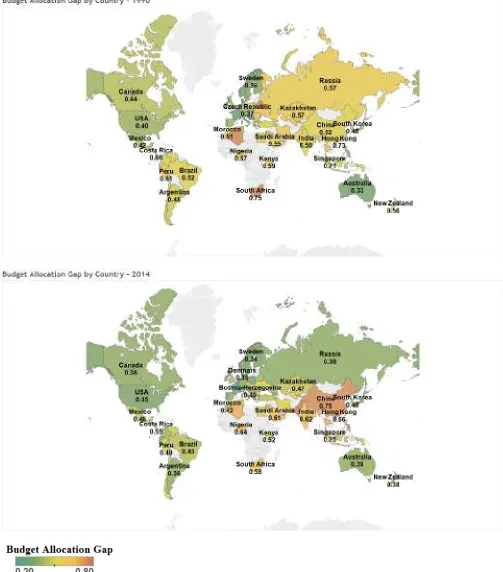
Figure 4. Budget Allocation Gap over Time from 1990 to 2014... 136
Figure 5. Average Budget Allocation Gap in 1990 versus 2014 across Countries ... 137
Figure 6. Change in the Budget Allocation Gap from 1990 to 2014 across Countries ... 138
Figure 7. Convergence Trend Coefficients by Country from 1990 to 2014 ... 139
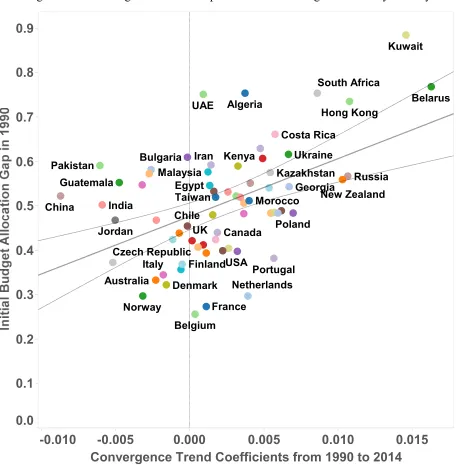
Figure 8. Initial Budget Allocation Gap in 1990 and Convergence Trend by Country ... 140
Figure 9. Expenditure Growth Rates versus Initial Expenditure Levels of Countries ... 141
Figure 10. A Detailed Examination of Divergence in China in Diverging Product Categories . 142 Figure 11. Budget Allocation Gap for Personal Care in 1990 versus 2014 across Countries .... 144
Figure 12: GDP Per Capita and Convergence Trend by Country ... 145
Figure 13. Market-Level Consequences of Global Convergence of Consumer Spending ... 146
Figure 14. Firm-Level Consequences of Global Convergence of Consumer Spending ... 146
Figure 15. Histogram of Sum of Market Shares of Top One (CR1) to Four (CR4) Firms ... 147
10
LIST OF TABLES
Table 1. Summary of the Literature on Convergence from Multiple Disciplines ... 149
Table 2. Summary of the Literature on Divergence from Multiple Disciplines ... 150
Table 3. List of Product Categories in the Data Set ... 151
Table 4. Descriptive Statistics on Key Variables... 152
Table 5. Mean Convergence Rates from 1990 to 2014 ... 153
Table 6. Regression Results for the Coefficient of Variation Trend across Product Categories 154 Table 7. Regression Results for the Budget Allocation Gap Trend across Product Categories . 155 Table 8. Regression Results for the Budget Allocation Gap Trend across Countries ... 156
Table 9. Polynomial Regression of Expenditure Growth Rates on Initial Expenditure Levels . 157 Table 10. A Product Category Level Examination of the Most Converging Markets ... 158
Table 11. A Product Category Level Examination of the Most Diverging Markets ... 159
Table 12. Descriptive Statistics on Key Variables ... 160
Table 13. List of Product Categories in the Data Set ... 160
Table 14. Classification of Countries... 161
Table 15. Descriptive Statistics on CR1, CR2, CR3, and CR4 ... 161
Table 16. Fractional Logit Model Results for Market Concentration ... 162
Table 17. Marginal Effect of Convergence on Market Concentration ... 162
Table 18. Fractional Logit Model Results for Market Shares ... 163
Table 19. Marginal Effect of Convergence on Market Shares at Each Moderating Set ... 164
11 Table 21. Robustness Checks: Fractional Logit Model Results of Market Shares for Two
12
LIST OF APPENDICES
Appendix 1. Mean Budget Allocation versus Median Budget Allocation as Reference Points in
Calculating the Budget Allocation Gap ... 167
13
ESSAYS ON THE CONVERGENCE OF CONSUMER SPENDING ACROSS
NATIONAL MARKETS
Motivation of the Study
The starting point of this dissertation emerges from questioning the common assumption of
consumers across countries becoming more similar in their consumption behavior over time due
to globalization and related factors (e.g. wealth increase, advances in technology). Although this
convergence hypothesis related to consumer demand is widely assumed among scholars and
practitioners alike, it is never thoroughly tested on a global scale. One study puts it this way: “the
often suggested, but never tested, hypothesis of global convergence of consumer needs and
wants” (Steenkamp & Ter Hofstede, 2002). Limited number of studies have examined it using
basic methodological approaches for a few numbers of countries, mostly focusing on European
markets. In line with this gap in the literature, the essays in this dissertation attempt to
comprehensively examine the convergence hypothesis across a heterogeneous set of countries
and multiple product categories, determine if it exists in terms of convergence of consumer
spending patterns, and if so, to what extent it exists, and finally identify its consequences on
market shares of firms.
Significance of the Study
Companies are constantly in the search of competitive advantage as a key factor for success
(Porter, 1980). However, despite growing importance of international markets, particularly the
emerging markets, marketing strategy literature has not sufficiently covered beyond the domestic
14 (e.g. consumer spending patterns and integrated marketing strategies) in the context of
international markets.
Companies need to track the trends of consumer behavior in their target markets. Based on the
past behavior of consumers, companies develop target segments. However, customer behavior is
not stable, but is constantly changing over time. As a result, previously distinct customer
segments may become more similar over time. Instead, similar segments may also get more
dissimilar. Thus, to have a forward-looking perspective for marketing and business planning
purposes, it is important for companies to track the trends of consumer behavior and identify
converging or diverging behavior of consumers. Convergence trend would necessitate more
standardized marketing strategies. Several studies argue that companies that fail to acknowledge
the similarities among markets will be at a competitive disadvantage (Levitt, 1983; Özsomer &
Simonin, 2004; Yip, 1995). On the other hand, diverging trends would require more customized
approaches.
Although monitoring the evolution of global consumer behavior has important implications for
companies, the literature has not provided a long-term outlook on this topic. A common
assumption holds that convergence in consumer tastes occurs across countries due to
globalization (Levitt, 1983). On the other hand, some studies argue that divergence has been in
effect due to distinct cultural values (De Mooij & Hofstede, 2002). However, consumer behavior
is constantly evolving due to technological disruptions. Even if divergence has been observed in
the last decades, the opposite can happen today because of the high connectivity of cross-border
consumers due to advanced technology, social media, increasing purchasing power, and
facilitated transportation. As a result, cultural norms may even converge, leading to convergence
15 global consumer spending behavior should be developed in light of the recent advancements in
the globalization domain. The findings from the essays of this dissertation will provide
refinements to the convergence theory in terms of consumer spending behavior, and even lead
the way for further development of new theories.
Research Objectives
Our main goal in this dissertation is to comprehensively examine the global convergence
phenomenon both conceptually and empirically. In the first essay, our goals are to integrate the
convergence phenomenon from multiple disciplines, conceptually examine it in terms of
convergence of consumer spending across countries and product categories, and develop a
conceptual framework. In the second essay, our purpose is to empirically test and identify
whether convergence is observed across countries and product categories over time. Finally, in
the third essay, we examine the effects of global convergence of consumer spending on market
concentration and firms’ market shares.
The first essay aims to conceptually discuss the convergence concept from multiple disciplines
(e.g. economics, economic psychology, sociology, political sciences, management, and
marketing). Based on the relevant theories from these fields, the essay extends the discussion on
convergence in terms of consumer spending behavior. We develop propositions and a conceptual
framework on the global convergence of consumer spending.
The second essay takes an empirical approach in testing the convergence hypothesis. We use
multiple methods to test convergence of consumer spending. First, we adopt and improve a
previously used measure from the literature which is the coefficient of variation of expenditure.
16 convergence and allows for comparison of convergence both across countries and product
categories. Third, we incorporate a method based on the neoclassical growth models from the
economics literature. Our findings from all three methods show consistent results. The insights
have managerial implications in market segmentation and global marketing strategy decisions.
Finally, the third essay investigates the consequences of convergence of consumer spending. We
explore the impact of global convergence of consumer spending on market concentration and
market shares. We compute the four-firm concentration ratio (CR4) and the Herfindahl index to
calculate market concentration per industry in each market. Then, we test the effects of
convergence on market concentration using fractional logit models. We also test the effects of
convergence on individual firms’ market shares considering the moderating effects of country of
origin, country of operation, and the degree of internationalization of the firm. The results have
important implications for the leading firms in each market.
Contributions of the Essays
Managerially, it is important for firms to track the trends of consumer demand in their target
markets. Convergence is an important trend and is widely assumed to occur across national
markets due to globalization. However, although it has scholar and managerial implications,
delineating which markets are likely to converge toward which product categories is unexplored
in the literature. If convergence of consumer spending occurs for a specific product category, it
shows that consumer demand for that product category is becoming similar across markets.
Firms may consider integrated marketing strategies in the case of convergence.
Scholarly, this study will contribute by adding insights to resolve theoretical conflicts in the
17 economics literature, the neoclassical growth model predicts convergence of income across
countries, whereas the new endogenous growth model predicts divergence of income. In the
business literature, both convergence and divergence hypotheses in terms of consumer behavior
have proponents and opponents. However, only a very limited number of studies have examined
the convergence hypothesis in consumer demand. The current study will address this gap in the
literature by providing evidences across multiple markets and products, using methodological
and theoretical approaches from multiple disciplines. An empirical investigation of convergence
in terms of consumer spending behavior will help resolve the persistent debate on convergence
versus divergence by providing empirical evidences based on a longitudinal analysis.
Methodologically, we empirically test convergence across markets and product categories
developing a new measure as well as adopting methods from the economics literature.
Conceptual discussion of convergence is more widespread than empirical testing of convergence
in the literature. Furthermore, those few studies that have examined convergence use limited
methods such as the comparison of coefficient of variation between two time periods. The
current study develops a new measure of convergence referred as the “budget allocation gap”
which allows to test convergence both at the country level and at the product category level over
each time period. We also use regression methods based on the neoclassical growth model to test
18
ESSAY 1
CONCEPTUALIZATION OF THE GLOBAL CONVERGENCE OF CONSUMER SPENDING
1. The Convergence Debate
Theodore Levitt, in his pioneer studies, argues that the world is becoming one large market, and
consumer tastes are converging and becoming more homogeneous due to technological
advancements, increasing global communication, travel and transport (Levitt, 1983). He
advocates that businesses should offer globally standardized products rather than customized
ones. This global standardization philosophy is based on such assumptions as worldwide
homogenization of customer needs and wants, and universal preference of low price and good
quality (Douglas & Wind, 1987; Levitt, 1983). This perspective of a more homogenized world
market and global culture is also advocated in well-known publications such as the End of
History and the Last Man by Francis Fukuyama (1992), and The World is Flat by Thomas
Friedman (2005).
On the other hand, opponents of the convergence view claim that consumers are becoming more
heterogeneous because cultural values play a bigger role as countries converge in economic
wealth (De Mooij, 2010, p. 5). Increased wealth enables people to emphasize their civilizational
identities (Huntington, 1987). An advocate of divergence, Samuel P. Huntington (1993) posits
cultural differences as the source of divergence across civilizations. He argues that differences
between civilizations will increasingly maintain their importance and create conflicts between
cultural groups, mainly between Western and non-Western societies. Greater worldwide
19 civilization but a world of different civilizations in the future (Huntington, 1993). Similarly,
another study finds that countries are actually diverging in terms of macro-environmental
characteristics such as infant mortality, cost of living, life expectancy, and similar other macro
factors (Craig, Douglas, & Grein, 1992).
In sum, the debate of the convergence of consumer behavior presents differing views in the
literature. This essay integrates convergence literature from a wide range of disciplines, and
develops propositions and a conceptual framework on the convergence of consumer spending for
different product categories across countries. We conclude with discussion, contributions,
implications and future research directions.
2. Convergence Perspectives in Multiple Disciplines
The convergence theory proposes that nations are becoming more similar to each other despite
different cultural, historical, political, and economic background (De Mooij, 2010). This theory
has been examined from different perspectives in multiple disciplines including economics,
economic psychology, sociology, political sciences, management and marketing. Below is a
discussion of the literature review on convergence and related theories from different fields.
2.1.Convergence in Economics
In economics, convergence is mainly examined in terms of per capita income. Convergence is
defined as the erosion in the gap of the living standards between rich and poor countries (J. G.
Williamson, 1996). The convergence theory is the central idea of the neoclassical growth models
pioneered by Solow (1956) and Swan (1956). The neoclassical growth models propose that per
capita output of countries converges over time based on the assumption of diminishing returns to
20 related to the initial level of income or output per capita (Cass, 1965; Koopmans, 1965).
Low-income economies grow faster than high-Low-income economies, and Low-income disparity across
countries disappears over time (Rassekh, 1998). The argument of the convergence hypothesis is
that being left behind drives a productivity laggard to grow faster than the early leader
(Abramovitz & David, 1996).
The convergence hypothesis is also called the catch-up effect due to the expectation that rapidly
growing poor countries will catch up with slowly growing rich countries (Abramovitz, 1986).
The idea is that workers in poor countries have little access to capital. So, even a small increase
in the amount of capital in poor countries will lead to substantial gains in productivity. A similar
increase in the amount of capital in a rich country, however, will result in a smaller gain in
productivity because workers in a rich country already have high levels of productivity. As a
result, the growth potential for a country is higher if the country is initially more backward, and
it weakens as the productivity level converges toward that of the rich countries.
This assertion of convergence still represents one of the oldest controversies in economics
(Rassekh, 1998). The debate dates back to the studies of Hume who defended the tendency of
countries to converge in terms of economic growth, and Tucker who, contrary to Hume, believed
that economic disparity can persist permanently (Elmslie, 1995; Rassekh, 1998). The new
endogenous growth theories challenged the predictions of the neoclassical growth model with
regards to the eroding gap between rich and poor nations (Capolupo, 1998). The neoclassical
growth models assume that internal growth is feasible until the capital stock reaches the
steady-state, and after that further growth is difficult to achieve which leads to convergence in the
growth of economies. However, according to the new endogenous growth models, sustained
21 marginal productivity of capital with increasing income. Thus, the accumulation of capital can
sustain a permanent growth. As a result, endogenous growth models foresee divergence in the
growth of economies as opposed to the convergence predictions of neoclassical growth models
(Capolupo, 1998).
Another theory supporting the convergence of incomes is based on studies by the economist
Simon Kuznets (Kuznets, 1955; Piketty, 2014, pp. 13-15). Kuznets developed the theory of the
Kuznets curve. This theory posits that income inequality follows a bell curve. Inequality of
income first increases in the early phases of industrialization and economic development, and
then decreases in the later stages of development, leading to convergence of incomes in the long
term. A recent study opposes this view by arguing that divergence forces are more influential in
the long term (Piketty, 2014). Piketty (2014) notes that when the rate of return on capital exceeds
the growth rate of economy (which he predicts for the twenty first century), the inherited wealth
grows faster than output and income. In this case, inherited wealth will be much higher than
wealth acquired from a lifetime’s labor. More simply, rich will get richer and poor will get
poorer. However, the author also notes that the history of income and wealth has always been
unpredictable. The dynamic factors such as how societies view and respond to inequality will
shape the future on convergence or divergence of income and wealth.
In the economics literature, another convergence debate is related to the factor prices across
countries. The convergence, discussed above, which is the convergence of per capita income is
termed “macro convergence”, whereas the convergence related to the factor prices such as wage
is termed “micro convergence”. The macro convergence is based on the neoclassical growth
model, while the micro convergence is based on the factor price equalization theorem. Heckscher
22 free trade leads to factor prices being equal across countries. Ohlin (1933) builds up on this
theory arguing that there will only be partial equalization. Even though factor prices do not
equalize completely, convergence occurs as trade barriers fall. Hirschman (1977, p. 68) relates
these two types of convergence (i.e. micro and macro convergence) by arguing that international
trade leads to factor price equalization which then leads to the equalization of incomes across
economies.
In economic history, there is evidence that convergence of incomes has occurred at specific
growth periods. A study defines three epochs of growth after the mid-nineteenth century: the late
nineteenth century with fast growth, the middle years between 1914 and 1950 with slow growth,
and the late twentieth century again with fast growth (J. G. Williamson, 1996). The two epochs
with fast growth are characterized with globalization and convergence of incomes. The study
finds a positive correlation between globalization and convergence, arguing that globalization
contributes to convergence. Another study also shows evidence for the convergence of
productivity levels across countries, which is especially true if the countries have social
capability to absorb more advanced technology (Abramovitz, 1986).
2.2.Convergence in Economic Psychology
Opposing views of convergence and divergence also exist in the economic psychology literature
captured by the concepts of the bandwagon effect and the snob effect. These perspectives relate
to convergence and divergence of consumer behavior.
The bandwagon effect refers to the tendency of consumers to do certain things or consume
certain products as other consumers exhibit these behaviors. The demand of a product is
23 the desire and motivation to join the crowd which relates to mass psychology. They want to
conform to the people they aspire to be associated with. This drive to “jump on the bandwagon”
contributes to the convergence of consumer behavior.
The opposite of the bandwagon effect is the snob effect. It refers to the decreased demand of a
product due to the fact that others are consuming that product (Leibenstein, 1950). These
consumers searching for exclusive types of consumption and disassociating themselves from the
“common herd” would lead to divergence of consumer behavior.
2.3.Convergence in Sociology
In sociology, convergence relates to societies. There are also advocates and opponents of each
side of the debate on convergence versus divergence. Some theorists support the idea that
societies would increasingly become similar despite diverse cultures, histories, political and
economic systems (De Tocqueville, 1952; Maine, 1906; Tonnies, 1957); whereas other theorists
argue against convergence (J. B. Williamson & Fleming, 1977). Patterns of convergence in
sociology are studied through social relationships, modes of production, increasing dependence
of science and technology, popular attitudes, and political and economic control (De Mooij,
2010; Inkeles, 1998, pp. 20-23).
The debate of convergence in sociology relates back to the modernization theory in the 1960s.
The convergence advocates argue for a single form of modernity, whereas the divergence
advocates argue for different forms of modernity (De Mooij, 2010, p. 52). A major scholar of the
modernization theory, Inkeles (1998), emphasizes convergence in institutions such as education,
communications, family patterns, medicine and health that lead to more similar global attitudes
24 convergence. For example, there may be a ceiling effect in some forms of convergence and
further convergence may not be possible (e.g. primary school enrollment in advanced countries);
or there may be different levels of convergence (e.g. the age of marriage going down in some
countries but moving up in others) (De Mooij, 2010, pp. 57-58; Inkeles, 1998, pp. 30-45).
In recent decades, increased globalization practices have generated a new cultural shift.
Sociologist George Ritzer developed the McDonaldization term that refers to the global
homogenization of cultures. The thesis argues that fast-food restaurants first dominate the
American society, and then dominate the other societies. Cultures start adopting the
characteristics of fast-food restaurants which are defined as predictability (e.g. a uniform menu),
efficiency (e.g. fast service), calculability (e.g. quantity before quality), and control (e.g.
standardized tasks). This leads to a process in which these four characteristics of fast-food
restaurants increasingly dominate consumers and institutions in every society, leading to a new
homogeneous modern global society (Ritzer, 2008). The foundations of this view date back to
the rationalization concept of Max Weber which refers to replacement of traditional thought with
reason and efficiency. In the end, the trend of rationalization in the modern societies would
eventually create a uniform global society (Ritzer, 1998).
2.4.Convergence in Political Sciences
In political sciences, convergence due to globalization leads to homogenization of economic and
political values such as convergence toward the acceptance of the liberal democratic values and
human rights of the industrialized democracies. Convergence makes societies move toward a
similar point as a result of the industrialization (Kerr, Dunlop, Harbison, & Myers, 1960). Major
25 promote international monetary cooperation, the World Bank is founded to foster economic
development of less developed countries, and the GATT is founded to increase international
trade (Seita, 1997; J. Williamson, 1982). Regional blocs such as the European Union and
NAFTA are other outcomes of convergence in terms of political, economic, and even monetary
systems. Yet, the convergence of political values is not as straightforward to achieve as the
convergence of economic values. Some nations have been eager to gain economically by
increasing foreign trade or adopting free market policies, but they have not switched from
dictatorship to democracies. The convergence of political and economic values facilitates global
cooperation by creating a common bond among people. Thus, a person's racial, religious, or
ethnic group are overshadowed by this common bond due to convergence (Seita, 1997).
Nevertheless, there are still forces against convergence toward democracies and market
economies. Inequality of capital and wealth brought by capitalism complicates the progress
toward convergence of political and economic systems and undermines the meritocratic values of
democratic societies (Piketty, 2014). A market economy includes powerful forces of
convergence (e.g. diffusion of knowledge, training, and skills) as well as powerful forces of
divergence (e.g. increasing income inequality). The income distribution has been getting worse
in many economies. In the U.S., the top income decile had about 45-50 percent at the beginning
of the twentieth century, then 35 percent in 1950s, and then again, it rose to 45-50 percent. This
income divergence trend is observed in many countries due to increase in wage inequality, in
other words, the rise of super-salaries mainly among top managers of large firms (Piketty, 2014).
As a result, even though many policies such as mass education are adopted, they do not give
intended results. Increasing levels of mass education do not result in greater social mobility
26 knowledge, educational policies, and the acquisition of training and skills are required to make
convergence possible. The policies and institutions the societies adopt in the face of increasing
income inequality will shape the future trends in convergence versus divergence of income, and
the related trends in political and economic systems.
2.5.Convergence in Management
In the management literature, convergence versus divergence debate has focused on the
formation of cultural values (Webber, 1969). The main question is whether cultural values
converge as countries industrialize. The convergence theory advocates believe that economic
ideologies drive values, and as nations industrialize, they embrace common values which
converge toward Western values. On the other hand, opponents of the convergence theory
believe that national culture drives values, and even if nations industrialize, their value systems
will not change (Ralston, Holt, Terpstra, & Kai-Cheng, 1997). Thus, convergence is economic
ideology-driven, whereas divergence is culture-driven.
Many international firms aim to be global organizations, achieving a universal corporate culture
among its employees. However, employees bring with them diverse individual work values
originating from different national cultures (e.g. Eastern versus Western cultures) and economic
ideologies (e.g. capitalism versus socialism). The integration of these diverse value systems, that
is, the convergence toward an integrated set of values becomes important to create a universal
corporate culture. Ralston et al. (1997) argue that, rather than moving toward either polar
extreme of convergence or divergence, cultural and ideological value systems synergistically
integrate and generate a new unique value system that is different from the original value sets.
27 Gustafson, Cheung, & Terpstra, 1993; Ralston et al., 1997). They examine four countries on two
extremes of economic ideology (capitalism versus socialism) and national culture (Western
versus Eastern): the U.S., Japan, Russia, and China. They compare the individual work values of
managers across these four countries based on Schwartz Value Survey sub-dimensions. The
findings lend credence to the crossvergence hypothesis. For example, power and benevolence
sub-dimensions do not differ across China and the U.S., whereas they are expected to differ
based on different national cultural and economic ideology structures. While the other
dimensions are still different across China and the U.S. resulting as expected, these two
sub-dimensions might imply that some values are converging across diverse markets. In sum, each
value changes at different rates, and crossvergence is a temporary and transitional state during
which values become more similar over time (Ralston et al., 1997).
2.6.Convergence in Marketing
Marketing literature has examined convergence in terms of changing consumer needs and wants
as a result of globalization. In recent decades, globalization processes have generated a new
culture which is referred as the global consumer culture. It represents people’s desire to associate
themselves with global citizenship and the “global village” (McLuhan, 1964; Steenkamp & De
Jong, 2010; Strizhakova, Coulter, & Price, 2008). A unique world culture is emerging due to
increasing interconnectedness of diverse cultures (Alden, Steenkamp, & Batra, 1999; Hannerz,
1990). Advances in transportation and communication technology facilitate this homogenization
of world markets (Jain, 1989). Consumers embracing the idea of global citizenship are attracted
to the shared consciousness brought by globalization processes. They also appreciate the
increased homogenization of consumer culture as a result of widespread market economies and
28 Although globalization, converging incomes, media and technology might lead to
homogenization of consumer behavior, there are opponents to this view. Several studies have
found that consumers’ cultural values are so strong that, with increasing incomes, consumers
have more freedom to express their unique values leading to divergence of consumer behavior
(De Mooij, 2000, 2003). While this view assumes that cultural values are distinct and stable,
there are other views claiming that cultural norms are also shifting, weakening the divergence
arguments.
A study uses the acculturation theory to explain the changing role of the females in Japanese
television advertising (Martin, 2012). Acculturation happens when two or more cultures come
into contact with each other and subsequently change each other’s cultural patterns. The study
argues that Western influence on Japanese consumers changes the traditional values through
foreign media, overseas travel, and international trade. In response to that, advertisers mostly use
assimilation strategies emphasizing local culture to resonate more with local consumers when
they use foreign actors in their ads. As a result, acculturation leads to convergence of cultural
norms across different cultures. Another study shows how national cultural values are merging
and blending, and how similar segments across countries are forming. Yoo, Donthu, and
Lenartowicz (2011) develop a new scale to measure Hofstede’s cultural values at the individual
level. In their subsequent segmentation study, they find similar market segments showing similar
cultural orientations in three countries with different national cultural values (the U.S., South
Korea, and Poland). Once again, this study confirms that the distinction of national cultural
values is disappearing to form similar segments across countries toward convergence.
Other than culture, convergence is examined in terms of innovation diffusion and new product
29 that converging macro-environmental trends and converging consumer behavior are more
prevalent than divergence trends in European Union countries (Ganesh, 1998; Leeflang & Van
Raaij, 1995). This convergence trend suggests blending of lifestyles and growing homogeneity of
consumer tastes and buying behavior, allowing for more standardized marketing strategies. As a
result, homogenization of consumer behavior facilitates the diffusion of new products, ideas, and
technologies. European nations have been converging to a more similar macro-marketing
environment and micro-marketing mix (Leeflang & Van Raaij, 1995). In new product diffusion,
the convergence of consumer behavior suggests that a sprinkler strategy (i.e. simultaneous entry
in all markets) would be more efficient for firms than a waterfall strategy (i.e. phased entry into
markets at different times). Divergence of consumer behavior suggests the opposite.
As opposed to the study of Ganesh (1998) and Leeflang and Van Raaij (1995), some studies
found divergence trends in consumer behavior. Stremersch and Tellis (2004), similar to Ganesh
(1998), focus on new product diffusion processes in Europe. However, unlike Ganesh (1998), the
authors find that the pattern of international growth of new products differ substantially across
European nations. The contradictory conclusions on convergence versus divergence may be due
to different sets of countries (European Union versus all industrialized countries) or different
time periods (before versus after the formation of European Union) used in these studies.
It is not very straightforward to distinguish markets as converging or diverging. In line with this
issue, Douglas and Craig (2011) argue that some markets are converging whereas others are
diverging. So, marketers are increasingly encountering challenges from these converging and
diverging markets. As a result, a semi-global marketing strategy is advised where different parts
of the world are served in different directions regarding their converging and diverging patterns.
30 adjusted to new and diverse sources of market growth and opportunity. This requires developing
a more complex, multifaceted approach in designing different strategies for diverse markets such
as BRICs, second-tier emerging markets, and rural areas (Douglas & Craig, 2011).
There are also studies measuring consumer attitudes toward convergence and divergence.
Consumers show a dilemma between economic benefits of convergence (e.g. price decrease) and
cultural drawbacks of convergence (e.g. dilution of cultural authenticity). Van Ittersum and
Wong (2010) note that consumers are reluctant to global convergence when it harms the
authenticity of cultural products and local economic production structures, but they embrace
convergence when it provides economic benefits such as price reductions. So, this trade-off
between the economic benefits of convergence and the cultural benefits of divergence determines
consumer attitudes toward convergence and divergence.
The trade-off between the economic benefits of promoting global convergence and the cultural
benefits of preserving local divergence is best reflected in a metaphor by Thomas Friedman in
his book “The Lexus and the Olive Tree”. He expresses the dilemma of the modern day people
with these words: “Half the world seemed to be emerging from the Cold War intent on building a
better Lexus, dedicated to modernizing, streamlining and privatizing their economies in order to
thrive in the system of globalization. And half the world - sometimes half the same country,
sometimes half the same person - was still caught up in the fight over who owns which olive
tree.” (T. L. Friedman, 2000, p. 31).
As a result of changes in consumer behavior across markets, cross-national market segments
appear to converge (Griffith, 2010). Global marketing strategies need to be devised based on the
31 levels of institutional convergence breed larger cross-national market segments which can be
served with more standardized marketing mix variables. On the other hand, lower levels of
institutional convergence create smaller cross-national market segments which need more
adaptation of marketing mix variables (Griffith, 2010).
2.7.Summary of the Convergence Perspectives in the Literature
In summary, convergence is a broad concept and is examined in different contexts in multiple
fields, in terms of: convergence of per capita income and factor prices in economics,
convergence of consumer behavior in economic psychology, convergence of societies and
institutions in sociology, convergence of economic and political values in political science,
convergence of cultural values in management, and convergence of consumer needs and wants in
marketing. Moreover, the forces of convergence and divergence are constantly at play. Which
side will gain the upper hand is unknown yet, but it is certain that each side has its proponents
and opponents.
Table 1 presents a summary of the literature on convergence perspectives, and Table 2 presents a
summary of the literature on divergence perspectives from different fields.
---
Insert Table 1 here
---
---
Insert Table 2 here
32 This study will extend the literature in terms of convergence of consumer demand across
countries and product categories. We define convergence as the homogenization of consumer
expenditure such that customers become more similar in their spending behavior across product
categories and countries. In our context, convergence means the reduction of heterogeneity of
consumer expenditure for a specific product category across countries. Using several related
theories from the research streams discussed above, we extend the convergence theory in terms
of consumer spending, comparing convergence across markets and product categories.
3. Gaps in the Literature
Although the convergence concept has long been debated in other fields, marketing and
international business literatures have minimally examined this concept in terms of consumer
demand. It is not tested whether there is a convergence trend occurring across national markets
on a global scale. The drivers of convergence of consumer spending patterns are also unexplored.
Convergence of consumer spending has important implications for targeting and strategy
development purposes of international marketers. Therefore, understanding the convergence
phenomenon and identifying the drivers of convergence of consumer spending is imperative in
the international marketing literature.
Furthermore, examining the differences in convergence comparatively across product categories
and countries is also lacking in the literature. Some product categories or countries may be more
likely to exhibit convergence in consumer demand in a greater extent than other product
categories or countries.
Consequences of convergence are also overlooked in the literature. As consumer expenditures
33 of consumer spending behavior is a relatively new topic the literature, not much insights are
provided on the consequences or implications such as how a firm’s performance is affected by
convergence. This study will also discuss the consequences of convergence on market shares of
firms.
4. Propositions
Before developing propositions, we define convergence in terms of consumer expenditure.
Overall, convergence means to come together from different directions so as to eventually meet
(Lind, 2004). However, its definition differs by the literature or the context in which it is used.
For example, at an industry level, convergence is defined as the merging of separate markets and
removing entry barriers across industry boundaries (Lind, 2004). In several studies, convergence
represents the homogenization of economic systems, demographic systems, value systems and
homogenization of consumer behavior (De Mooij, 2000, 2003; De Mooij & Hofstede, 2002). In
the context of the current study, convergence represents the homogenization of consumer
expenditures such that consumers become more similar in their spending behavior toward
different product categories across national markets.
4.1.Convergence across Countries
Modernization theory, global village, and global citizenship arguments have increasingly more
influence on consumers’ behavior compared to a few decades ago. Consumers are now more
connected to each other through advanced technology, easier diffusion of knowledge, and higher
exposure to information. High connectivity among people in different countries make them more
likely to converge toward similar consumption patterns. Consumers have more access to
34 communication tools and facilitated travel opportunities than before. The convergence arguments
of the modernization theory and global village concept would apply more to today’s world
markets. Therefore, we expect that there is a convergence trend in consumer spending patterns
across countries over time.
P1: Over time, a convergence trend in consumer expenditure patterns occurs across
countries.
4.2.Antecedents of Convergence: Macroeconomic Indicators
Common factors associated with convergence in the literature include: advanced communication
technology (Seita, 1997), diffusion of technology, international trade (Barro & Sala-i-Martin,
2004, p. 349; Rassekh, 1998), modernization, urbanization, formal education, industrialization,
national wealth (De Mooij, 2010, p. 51), global media, and increasing purchasing power (Ter
Hofstede, Wedel, & Steenkamp, 2002). These factors are associated with convergence related to
political systems, institutions, income, and consumer behavior. Likewise, we propose that these
macro-environmental factors also lead to convergence of consumer spending across markets.
For example, in political sciences, technology promotes democracy and human rights by making
information and communication easier and cheaper without censorship of governments,
facilitating convergence of political values. In economics, the diffusion of technology provides
poor countries the impetus to grow faster than rich countries, facilitating convergence of incomes
(Rassekh, 1998). Similarly, the advancements in technology increase the connectivity among
consumers, spread their ideas faster, leading to convergence of consumer spending in distinct
35 Furthermore, international trade, urbanization and education affect convergence in a similar
fashion by increasing the connectivity with other consumers, even beyond the regional or
national borders. As international trade increases, similar products and services become available
across borders. As urbanization increases, similar consumption patterns spread easily among
populous urban residents. Finally, as education increases, the connectivity of the individual with
technology, other consumers, and other resources increases, leading to more similar consumption
patterns among these connected consumers.
Income increase can also lead to convergence of consumer spending. As incomes increase,
consumers will have more to spend on their consumption. They are more likely to spend on
products or services that others have, such as leisure and travel, or automobiles. Income increase
will lead to convergence of consumer spending across markets. In particular, as lagging markets
develop economically, they will catch up with the convergence patterns in advanced economies.
Therefore, we propose that the factors discussed above are the drivers of convergence of
consumer spending across markets.
P2: The higher the technology, the higher the convergence of consumer spending.
P3: The higher the international trade, the higher the convergence of consumer spending.
P4: The higher the urbanization, the higher the convergence of consumer spending.
P5: The higher the education, the higher the convergence of consumer spending.
P6: The higher the income, the higher the convergence of consumer spending.
Besides the factors discussed above, we propose that a new factor, the middle class can also have
36 increasing purchasing power with global convergence trends. The middle class is a major
indicator of the increasing purchasing power in economies. It is a rising phenomenon especially
in rapidly transforming emerging markets. The rise of the new middle class, especially in
populous emerging markets including China and India, has generated a large-scale first-time
buyers for most consumer goods ranging from personal accessories to appliances (J. N. Sheth,
2011). Countries with an increasing size of the middle class grow faster because the middle class
breeds entrepreneurs, generates consumption power and invigorates economies. As the middle
class gets stronger, there will be more interconnectedness and more globalization across
economies. As a result, consumer spending patterns will start to become more similar. Since the
middle class is on the rise in rapidly growing emerging markets, these middle-class consumers
are likely to become more similar and eventually catch-up with their counterparts in advanced
markets. Thus, we expect that as the middle class gets stronger, and the size of the middle class
increases, the convergence of consumer spending across markets will increase.
P7: The higher the size of the middle class, the higher the convergence of consumer
spending.
Another factor affecting the convergence through consumer spending patterns is related to public
policies. Socially responsible policy policies around the world discourage the use of unhealthy
consumption choices such as alcohol and tobacco usage. These public policies are also
corroborated by intergovernmental organizations such as the World Health Organization.
Socially responsible public policies aim to protect consumers and minimize social harm
(Blaszczynski, Ladouceur, Nower, & Shaffer, 2008). Similar policies are put in place to improve
vaccination rates and seat belt usage. Such policies oversee the benefits of consumers to
37 consumption in harmful products (e.g. alcoholic drinks) whereas they direct their spending
toward more beneficial products (e.g. nonalcoholic drinks). Therefore, we expect that as socially
responsible public policies increase, the convergence of consumer spending across markets will
also increase.
P8: As socially responsible public policies increase, the convergence of consumer
spending across markets will also increase.
4.3.Antecedents of Convergence: Market Types (Emerging Markets versus Advanced
Markets)
Grouping countries into more homogeneous subcategories reveals more insights on the
convergence patterns. Based on the neoclassical growth model, less advanced economies have
higher growth rates of income compared to more advanced economies. It means that countries
with lower initial income levels grow faster than countries with higher initial income levels.
Advanced economies grow slower than less developing economies, leading to convergence of
economic growth (Nishikawa & Hall, 2012).
Considering the high correlation between income and expenditure, we can extend this view from
income to expenditure. We argue that less developed economies would have higher growth rates
of consumer expenditure compared to advanced economies. In this case, higher growth rates of
consumer expenditure in emerging markets would reduce the heterogeneity of consumer
expenditure to a greater degree across emerging markets. The heterogeneity across advanced
markets would be more stable due to their lower growth rates. Thus, we expect the convergence
38 P9: Convergence of consumer spending across countries is higher for emerging markets
than for advanced markets.
4.4.Antecedents of Convergence: Product Types (Conspicuous versus Non-Conspicuous
Products)
Convergence patterns can also vary by product categories. The bandwagon effect may be at play
in comparing the consumer expenditure across product categories. The bandwagon effect refers
to the desire of consumers to wear, buy, do, consume, and behave the same as their fellows
(Leibenstein, 1950). Consumers are more likely to adopt a product as the number of consumers
or fellows using that product increases. This effect would lead to the homogenization and
convergence of consumer spending. However, the nature of product categories may affect the
extent of the bandwagon effect.
For example, conspicuous products are socially more visible, and social influence is more
pronounced for conspicuous products. Thus, we expect that the more conspicuous the product
category (e.g. clothing, personal accessories), the higher the convergence of consumer spending
compared to less visible product categories (e.g. food).
One can also argue that the snob effect may cancel out the bandwagon effect resulting in
divergence in more visible or conspicuous product categories. However, the combined effect of
globalization, modernization, urbanization, and McDonaldization is likely to strengthen the
bandwagon effect to a greater extent than the snob effect. Thus, convergence of consumer
consumption is expected more in more conspicuous product categories.
P10: Convergence of consumer spending is higher for more conspicuous product
39
4.5.Moderators of Convergence: Diversity (Ethnic, Linguistic, Religious, and Cultural
Diversity)
Country diversity also plays a role on convergence. Diversity can be in the form of cultural,
ethnic, religious or linguistic variations in a society. More diverse countries have more variation
in terms of cultural, ethnic, religious, and linguistic characteristics.
More diverse societies have higher communication costs which makes neighborhood effects less
effective (Hansen, Owan, & Pan, 2006). For example, the census data in India shows that there
are 122 major languages which were each spoken by at least 10,000 people in the country.1 In
such a linguistically diverse country, the knowledge transfer and sharing through communication
and coordination can prove to be more challenging compared to societies with less linguistic
diversity. Similarly, communication and coordination problems are prevalent in heterogeneous
countries in terms of cultural, ethnic, and religious diversity. These challenges make the effects
of macroeconomic indicators (e.g. technology, international trade, urbanization, education,
income, and middle class) on convergence less accentuated in a diverse society compared to a
more homogeneous society.
Similarly, socially responsible public policies are more effective in more homogeneous societies
compared to heterogeneous societies. A variety of languages, cultures, religions or ethnicities
among subgroups within a society make communication and execution of policies more
challenging. Thus, diversity of a culture would also reduce the positive effect of socially
responsible public policies on convergence of consumer spending patterns across markets.
40 On the other hand, one can argue that heterogeneous societies may have more opportunities for
information exchange, and therefore, convergence. Diversity allows for more knowledge sharing
and coordination if it is a skill-related diversity such as diversity of organizational teams. Diverse
teams are shown to have more peer effects and result in higher productivity in organizational
settings. However, the positive effect of diversity on knowledge sharing is not observed for
non-skill related demographic diversity such as in a heterogeneous country context because of high
costs and reluctance of communication among diverse subgroups within a society (Hansen et al.,
2006; Sacerdote, 2000).
In sum, diverse subgroups in a country may be less open to communication and coordination
with other groups who are different from themselves. Countries with higher diversity do not have
much opportunities for exchange of ideas and transactions among dissimilar subgroups. This
leads to less opportunities for convergence of consumer spending patterns. Thus, the effects of
convergence drivers on convergence of consumer spending are reduced when there is higher
diversity in a society.
P11: Diversity of a country reduces the positive effect of technology on convergence of
consumer spending.
P12: Diversity of a country reduces the positive effect of international trade on
convergence of consumer spending.
P13: Diversity of a country reduces the positive effect of urbanization on convergence of
consumer spending.
P14: Diversity of a country reduces the positive effect of education on convergence of
41 P15: Diversity of a country reduces the positive effect of income on convergence of
consumer spending.
P16: Diversity of a country reduces the positive effect of middle class on convergence of
consumer spending.
P17: Diversity of a country reduces the positive effect of socially responsible public
policies on convergence of consumer spending.
There are two main diversity scales used the economics literature that measure the level of
heterogeneity in each country. Fearon’s (2003) analysis includes ethnic fractionalization and
cultural diversity indices, whereas the analysis by Aleasina et al. (2003) comprise ethnic,
linguistic, and religious fractionalization. All of these diversity indices are relevant in moderating
the effects of the antecedents on convergence. A combination of these different fractionalization
measures from the literature would represent the single comprehensive diversity measure that is
expected to act as the moderator weakening the relationship between drivers and global
convergence of consumer spending.
4.6.Consequences of Convergence: Market Concentration
Convergence of consumer spending indicates increasing similarity in spending patterns of
consumers across markets. Although this increasing similarity occurs at the product category
level, it can have consequences at the firm level. Increasing homogeneity of consumer tastes can
cause their spending to be directed toward similar product categories as well as similar brands. In
particular, global brands will attract more demand because of positive externalities and synergies
generated by the global brand knowledge. As more consumers start using a specific product,
42 Subsequently, as more consumers converge toward similar product categories, they will be more
likely to purchase the most preferred brands in those product categories. In consequence, as the
convergence of consumer spending intensifies, the top brands in a market will get even stronger,
resulting in a higher market share for the most popular firms. Therefore, we expect that, as the
global convergence of consumer spending expands, there will be a higher market concentration,
which represents the aggregate market shares of the largest firms in a market. As global
convergence increases, largest firms with popular offerings for consumers are likely to gain more
market shares, leading to higher market concentration.
P18: Convergence of consumer spending for a specific product category increases the
market concentration in that product category.
5. Conceptual Framework
The proposed conceptual framework is presented in Figure 1.
---
Insert Figure 1 here
---
6. Discussion
In this study, we develop a conceptual framework of antecedents, moderators, and consequences
of convergence of consumer spending. We first integrate convergence theories and perspectives
from multiple disciplines such as economics, psychology, sociology, political science,
management and marketing. We discuss both sides of the convergence debate by citing
43 convergence debate in terms of consumer spending in the international marketing domain. We
develop propositions on the convergence of consumer spending, its antecedents, moderators, and
finally consequences. We integrate the most commonly cited drivers of convergence such as
technology, international trade, urbanization, education, income, and introduce relevant new
drivers such as the middle class and socially-responsible public policies. We also distinguish the
effects of market types (emerging versus advanced markets) and product types (conspicuous
versus non-conspicuous products) on convergence. In addition, we introduce new moderators to
the convergence of consumer spending such as the diversity of a country: ethnic, linguistic,
religious, and cultural diversity. We expect that diversity of a society will weaken the effects of
globalization drivers on convergence. Finally, we discuss the consequences of convergence of
consumer spending on market concentration. We propose that convergence at the product
category level will lead to convergence at the firm level, leading top firms in a market gain even
higher market shares. This has important implications for the leading brands in a converging
market. In sum, we comprehensively analyze and integrate the convergence debate from multiple
disciplines and extend it in terms of convergence of consumer spending by bringing in new
moderators and consequences to the proposed conceptual framework.
The future of convergence of consumer spending depends on the level of integration of the world
markets. Globalization, connectivity of people, and information flows are the main forces that
foster an environment toward global convergence of consumer behavior. Advanced markets are
already connected extensively with each other, and their globalization depth is among the highest
in the world.2 On the other hand, emerging markets have recently started to develop globalization
capabilities. Yet, they are heavily trading with more advanced markets. Nevertheless, they are