ISSN 2250-3153
Effect of Oxygenated Fuel Dibutyl Ether on Diesel
Engine
Sharun Mendonca
*, John Paul Vas
**
M.Tech student, Mechanical Engineering Department, Srinivas Institute of Technology, Valachil, Mangalore.
Abstract- Stringent emission norms and environment degradation due to pollutants from the automotive vehicles lead us to find the suitable alternative for the petro-diesel. The oxygenated fuel used is dibutyl ether(DBE). While injection pressure is 200 bar and injection timing is 20.50BTDC we get higher brake thermal efficiency and lower brake specific fuel consumption for DBE10 compare to diesel.
Index Terms- injection pressure, oxygenated fuel, brake thermal efficiency
I. INTRODUCTION
iesel engines have been widely used in recent decades as an alternative power source for light-duty vehicles because of the economic and environmental reasons. Therefore, the global diesel fuel consumption has increased with the pollutions sourced from diesel engines [1,2]. The unburned or partially burned (total) hydrocarbon (THC) emissions, smoke (soot) or particulate matter (PM), nitrogen oxides (NOx), sulfur oxides (SOx) emitted from compression ignition (CI) engines and particularly carbon dioxide (CO2) create severe environmental problems [2-4], which have been tried to be reduced by the stringent emission legislations. The different alternatives such as the investigation of viable alternative fuels and the reformulation of conventional fuels have been evaluated for meeting the emission standards and future energy demand [5,6]. The reformulation of diesel fuel contains the reduction of the sulfur and aromatic contents or the oxygen addition to diesel fuel [7]. A lot of works have been performed to show the effects of using alternative diesel fuels and additives including synthetic diesel fuels, biodiesels, alcohols and ethers.
The properties of DBE are almost similar to diesel, expect DBE as higher cetane number and lower density compare to diesel. DBE as higher oxygen content.
II. RESEARCH PROCESS
An effort is made in this study to evaluate the effect of varying the injection timing on the performance and emissions of a 5.2 kW engine fuelled with dibutyl ether (DBE10) for establishing the appropriate injection pressure and also to study the effect of oxygenated fuel.
III. STUDIES AND FINDINGS
Properties of diesel and simarouba biodiesel
Property comparison of Diesel and Simarouba bio diesel are shown in table 1
SL.NO. Characteristics Diesel
DBE 100%
DBE10
1
Calorific value (KJ/Kg)
43000
42800
42998
2
Viscosity at 40
0C
2.6-5
0.23
2.7
3
Cetane number
50
91
51
4
Flash point (
0C)
55
25
55
5
Specific gravity
0.84
0.767
0.839
IV. EXPERIMENTAL SET UP, PROCEDURE AND OBSERVATION
The experiment aims at determining appropriate proportions of biodiesel & diesel for which higher efficiency is obtainable. Hence
.experiments are carried out at constant speed, comparing the performance of compression ignition engine operated on blends of
diesel. The S20 blend is checked under loads 20%,40%,60% and 80% with injection timing 15.10 by varying injection pressure 200
ISSN 2250-3153
bar,250 bar,300 bar and compression ratio 17.5. The samples are prepared by using the 1000 ml measuring jar and a 10 ml graduated
test tube.
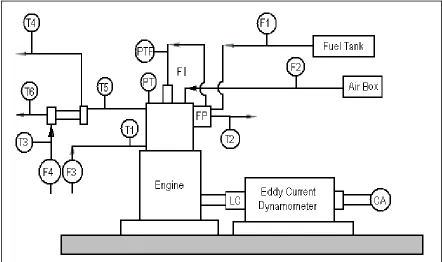
Fig.1 shows the schematic diagram of the complete experimental setup for determining the effects of waste cooking oil as bio diesel
fuel additives on the performance and emission characteristics of compression ignition engine. It consists of a single cylinder four
stroke water cooled compression ignition engine connected to an eddy current dynamometer. It is provided with temperature sensors
for the measurement of jacket water, calorimeter water, and calorimeter exhaust gas inlet and outlet temperature. It is also provided
with pressure sensors for the measurement of combustion gas pressure and fuel injection pressure. An encoder is fixed for crank angle
record. The signals from these sensors are interfaced with a computer to an engine indicator to display P-Ө, P-V and fuel injection
pressure versus crank angle plots. The provision is also made for the measurement of volumetric fuel flow. The built in program in the
system calculates indicated power, brake power, thermal efficiency, volumetric efficiency and heat balance. The software package is
fully configurable and averaged P-Ө diagram, P-V plot and liquid fuel injection pressure diagram can be obtained for various
[image:2.612.35.477.278.540.2]operating conditions.
Fig. 3.1 Schematic Diagram of the Experimental Set-up
PT Combustion Chamber Pressure Sensor F1 Liquid fuel flow rate
PTF Fuel Injection Pressure Sensor F2 Air Flow Rate
FI Fuel Injector F3 Jacket water flow rate
FP Fuel Pump F4 Calorimeter water flow rate
T1 Jacket Water Inlet Temperature LC Load Cell
T2 Jacket Water Outlet Temperature CA Crank Angle Encoder
T3 Inlet Water Temperature at Calorimeter EGC Exhaust Gas Calorimeter
T4 Outlet Water Temperature at Calorimeter
T5 Exhaust Gas Temperature before Calorimeter
ISSN 2250-3153
ENGINE SPECIFICATIONS
SL.NO Engine parameters specification
1 Engine type TV1(Kirloskar ,four stroke)
2 Rated power 5.2 KW at 1500 rpm
3 Bore 87.5 mm
4 Stroke 110 mm
5 Cubic capacity 661 cc
6 Compression ratio 17.5:1
7 Injection pressure 200 bar
8 Injection timing 20.50 BTDC
V. RESULTS AND DISCUSSIONS
Brake specific fuel consumption
At 200 bar brake fuel consumption of DBE10 is lower than diesel.
ISSN 2250-3153
DBE10 gives better brake thermal efficiency compare to diesel in most of the cases.
Carbon monoxide
At 250 bar both DBE10 and diesel gives lower carbon monoxide emission.
ISSN 2250-3153
Lowest hydrocarbons emisson is observed at 250 bar for DBE10 compare to diesel.
Oxides of nitrogen
Lowest NOX emission is observed at 250 bar for DBE10 compare to diesel.
APPENDIX
BSFC-BRAKE SPECIFIC FUEL CONSUMPTION BTE -BRAKE THERMAL EFFICIENCY
BTDC-BEFORE TOP DEAD CENTRE CO- CARBON MONOXIDE HC- HYDROCARBONS NOX- OXIDES OF NOTROGEN
PPM- PARTS PER MILLENNIUM DBE10-DIESEL+10 DROPS OF DIBUTYL ETHER ACKNOWLEDGMENT
I would like to express my deep sense of gratitude of my family members whose support in all time made me mentally free to concentrate my work.
REFERENCES
.
ISSN 2250-3153
[2] A.N. Shah, G. Yun-shan, T. Jian-wei, Carbonyls emission comparison of a turbocharged diesel engine fuelled with diesel, biodiesel, and biodieselediesel blend, Jordan Journal of Mechanical and Industrial Engineering 3 (2) (2009) 111e118.
[3] A.A. Abdel-Rahman, On the emissions from internal-combustion engines: a review, International Journal of Energy Research 22 (1998) 483e513.
[4] S. Lebedevas, A. Vaicekauskas, Research into the application of biodiesel in the transport sector of Lithuania, Transport 21 (2) (2006) 80e87.
[5] A.K. Agarwal, Biofuels (alcohols and biodiesel) applications as fuels for internal combustion engines, Progress in Energy and Combustion Science 33 (2007) 233e271.
[6] M.-R. Chao, T.-C. Lin, H.-R. Chao, F.-H. Chang, C.-B. Chen, Effects of methanol containing additive on emission characteristics from a heavy-duty diesel engine, The Science of the Total Environment 279 (2001) 167e179.
[7] W. Ying, Z. Longbao, W. Hewu, Diesel emission improvements by the use of oxygenated DME/diesel blend fuels, Atmospheric Environment 40 (2006) 313e2320.
AUTHORS