Georgia State University
ScholarWorks @ Georgia State University
Public Health Theses School of Public Health
1-5-2018
The Association between Maternal HIV Status and
Low Birth Weight Offspring, Malawi DHS 2010
Sterner MsamilaFollow this and additional works at:https://scholarworks.gsu.edu/iph_theses
This Thesis is brought to you for free and open access by the School of Public Health at ScholarWorks @ Georgia State University. It has been accepted for inclusion in Public Health Theses by an authorized administrator of ScholarWorks @ Georgia State University. For more information, please contact [email protected].
Recommended Citation
Msamila, Sterner, "The Association between Maternal HIV Status and Low Birth Weight Offspring, Malawi DHS 2010." Thesis, Georgia State University, 2018.
ABSTRACT
The Association between Maternal HIV status and Low Birth Weight Offspring, Malawi DHS 2010
By
Sterner Moses Msamila
INTRODUCTION: Low birth weight (LBW) is a public health problem in developing countries including Malawi. It is an intermediate endpoint of maternal lifestyles and health status, and a powerful predictor of newborn’s survival. Over 30 risk factors have been associated with LBW, but the role of maternal HIV infection as an underlying factor for LBW is not yet well established. Understanding whether or not maternal HIV status is a risk factor for LBW is key in the prevention of LBW and its life time health effects.
AIM: The purpose of this study was to examine the association between maternal HIV status and LBW in Malawi using DHS 2010 data.
METHODS: This study analyzed 7716 mother-child pairs from the 2010 Malawi Demographic and Health Survey (DHS) data using SAS 9.4 program. Student’s t-test and Chi-square test were applied, for continuous and categorical variables respectively, to compare maternal and child characteristics by HIV status and LBW status separately. Bivariate logistic regression was performed and crude odds ratios were determined to ascertain the relative measure of effect of maternal and fetal characteristics on outcome variable (LBW). Then, multivariable logistic regression analyses were performed to examine the association between maternal HIV infection and LBW adjusting for covariates. Statistical assessment of interaction between HIV infection and covariates on LBW was made. A p-value of <0 .05 or 95% confidence intervals were used to determine statistical significance throughout all the analyses performed.
RESULTS: The proportion of LBW infants was 9.45% in total, with 13.60% among HIV positive
women and 9.26% among HIV negative women (p 0.0337). A multivariable logistic regression
model showed that HIV positive mother was 77% more likely [odds ratio (OR) 1.77, 95% confidence interval (CI) 1.17-2.67] than HIV negative mother to give birth to LBW infant. The odds of LBW also increased among teenage women (OR = 1.86; 95% CI = 1.47, 2.35), women without education (OR = 1.66; 95% CI = 1.13, 2.43), low income (OR = 1.37; 95% CI = 1.05, 1.78), and Chewa ethnicity (OR = 1.92; 95% CI = 1.39, 2.66). However, LBW was not associated with child sex, marital status, or prenatal care. Though not statistically significant, the association between HIV infection and LBW was modified by increase in age, unmarried marital status, and inadequate prenatal care.
DISCUSSION: These findings are consistent with other previous studies that showed that maternal HIV status is a significant risk factor for LBW.
ii
The Association between Maternal HIV status and Low Birth Weight Offspring,
Malawi DHS 2010
By
Sterner Moses Msamila
Bsc in Environmental Health
University of Malawi, the Polytechnic
A Thesis Submitted to the Graduate Faculty
of Georgia State University in Partial Fulfillment
of the
Requirements for the Degree
MASTER OF PUBLIC HEALTH
ATLANTA, GEORGIA
iii APPROVAL PAGE
The Association between Maternal HIV status and Low Birth Weight Offspring,
Malawi DHS 2010
By
Sterner Moses Msamila
Approved:
Dr. Ike Okosun
__________________________________________ Committee Chair
Dr. Moges Ido
__________________________________________ Committee Member
11/06/2017
iv Acknowledgements
I am thankful to God who always guide and bless me through each step of my life. I want
to thank my wife, son, parents and the rest of my family members for all their support and love. I
would like to acknowledge my thesis committee, Dr. Okosun and Dr. Ido for their guidance and
support throughout this thesis. I am also thankful to the Institute of Public Health for believing
v
Author’s Statement Page
In presenting this thesis as a partial fulfillment of the requirements for an advanced degree from Georgia State University, I agree that the Library of the University shall make it available for inspection and circulation in accordance with its regulations governing materials of this type. I agree that permission to quote from, to copy from, or to publish this thesis may be granted by the author or, in his/her absence, by the professor under whose direction it was written, or in his/her absence, by the Associate Dean, School of Public Health. Such quoting, copying, or publishing must be solely for scholarly purposes and will not involve potential financial gain. It is understood that any copying from or publication of this dissertation which involves potential financial gain will not be allowed without written permission of the author.
Sterner Moses Msamila
vi Table of Contents
Abstract ... i
Acknowledgements ... ii
List of Tables ... viii
Chapter I Introduction ... 1
1a. Background ... 1
1b. Purpose of Study ... 3
1c. Hypothesis ... 3
Chapter II Review of the Literature ... 5
2a. Low Birth Weight ... 5
2b. Maternal HIV ... 6
2c. Maternal Age ... 7
2d. Marital Status ... 9
2e. Ethnicity... 11
2f. Education ... 12
2g. Socioeconomic Status /Family Income ... 12
2h. Prenatal Care ... 13
2i. Child Sex ... 14
2j. Long Term Effects ... 15
2k. Prevention Strategies ... 16
Chapter III Methods and Procedures ... 18
3a. Data source ... 18
3b. Study design ... 19
3c. Study population and sample size ... 19
vii
3e. Data Analysis ... 21
Chapter IV Results ... 23
4a. Descriptive Statistics... 23
4b. Logistic analyses ……… 27
4c. Interaction of maternal HIV infection with maternal factors ………….…………...…..29
Chapter V Discussion and Conclusion ... 30
5a. Discussion ... 30
5b. Study strengths and Limitations ... 33
5c. Implications of Findings ... 34
5d. Recommendations for Future Research ... 34
5e. Conclusion ... 35
viii List of Tables
Table 4.1: Characteristics of study participants among 7716 mother-infant pairs according to
maternal HIV status ……….………...….….24
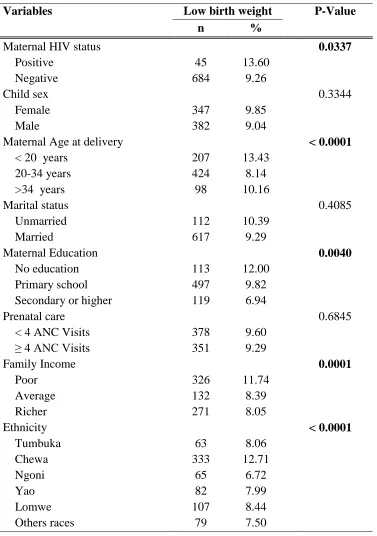
Table 4.2: LBW prevalence by maternal and Child factors: results of chi-square tests…..….26
Table 4.3: Results of Bivariate and Multivariate Logistic Model for Maternal and Child factors
associated with LBW………....28
Table 4.4: Homogeneity effects of maternal HIV infection and maternal factors on the risk of
ix
Notice to Borrowers Page
All theses deposited in the Georgia State University Library must be used in accordance with the stipulations prescribed by the author in the preceding statement.
The author of this thesis is:
Sterner Moses Msamila
24 Ollie St NW
Atlanta, GA 30314
The Chair of the committee for this thesis is:
Ike S Okosun, MS, MPH, PhD, FTOS, FACE
Institute of Public Health, College of Health and Human Sciences
Georgia State University
P.O. Box 3995
Atlanta, Georgia 30302-3995
Users of this thesis who not regularly enrolled as students at Georgia State University are required to attest acceptance of the preceding stipulation by signing below. Libraries borrowing this thesis for the use of their patrons are required to see that each user records here the information requested.
NAME OF USER ADDRESS DATE TYPE OF USE
CHAPTER I
INTRODUCTION
1a. Background
Human Immunodeficiency Virus (HIV) is an infection of public health problem with about
36.9 million people living with the virus in 2014, and about 25.8 million (70%) of them live in
sub-Saharan region (SSA) (Joint United Nations Programme on HIV/AIDS, 2015). In 2003, the
global prevalence of HIV among 15-49 age group was 1.1% with the sub-Saharan region having
the prevalence of 7.5% while the rest of regions/countries having the prevalence of less than 1%
(UNICEF, 2005). Globally women remain the most vulnerable group with prevalence of 52% of
all HIV infected persons (Joint United Nations Programme on HIV/AIDS & World Health
Organization, 2013) and it is estimated that in 2012, SSA harbored 92% of all HIV-infected
women and 90% of all HIV-infected pregnant mothers. In 2013, about 1.4 million pregnant women
were HIV infected globally, many of which were from SSA (World Health Organization, 2014).
Malawi, just like other sub-Saharan countries, has high prevalence of HIV/AIDS. In 2010 the
prevalence among adults aged 14-49 was 10.6% at national level, 12.9% among women, and 8.8%
among pregnant women (National Statistical Office (NSO) and ICF Macro, 2011).
LBW, defined as a birth weight below 2500 grams, is also a global public health problem
since it is both a sequelae of maternal health and a predictor of child’s health. Globally, the
prevalence of LBW is 15.5%, and about 20 million children are born with a low birth weight
(LBW) every year and 95.6% of these children are born in low-income countries (Wardlaw, WHO,
& UNICEF, 2004). Estimates shows that the incidences range as high as 25% in countries like
India, to as low as 7.6% in United States, 5–6% in the Scandinavian countries, and 6% in the
2
are LBW infants (National Statistical Office (NSO) and ICF Macro, 2011, Oestergaard et al.,
2011). LBW has adverse effects on child’s health and is the leading cause of death in children
under 5 years (Blencowe et al., 2012). It is reported that about 60-80% of neonatal deaths is due
to LBW (WHO, 2004). Therefore, attempts to determine factors that are associated with LBW in
low-income countries are needed to contribute towards reduction of morbidity and mortality of
children.
Many studies conducted on LBW have focused and acknowledged the effects of maternal
age, education, marital status, income, body mass index (BMI), alcohol drinking, child sex, and
smoking status has on the child’s development and resulting LBW. However, the role of maternal
HIV status as an underlying factor for LBW remain an area where strong evidence is lacking. For
most low-income countries like Malawi where HIV in the general population and among pregnant
mothers, and LBW are prevalent, a thorough description of the association between maternal HIV
and LBW is lacking.
Published studies indicate that maternal factors including maternal HIV status are
associated with a higher risk of LBW infants (Salihu et al., 2012; Ndirangu et al., 2012; Nkhoma
et al., 2012; Wilkinson et al., 2015). However, these studies are conducted in countries where there
is much lower prevalence of HIV pandemic than Malawi. For instance, the retrospective study
conducted in Japan in 2011 reported prevalence of LBW to be 4% (Murai et al., 2017) while survey
based on general population reported LBW prevalence of 12.3% in Malawi (National Statistical
Office (NSO) and ICF Macro, 2011). Similar studies from Malawi were facility-based which
limited generalizability of the results. As the prevalence of HIV among Malawian women is
reported to be significantly higher, the overall impact of HIV on LBW is expected to be much
3
fewer risk factors. Due to these methodological issues, such studies tend to underestimate the
association between maternal factors and LBW.
1b. Purpose of Study
More than 30 maternal characteristics such as obesity/overweight, underweight, diet,
physical activity, drug, alcohol drinking, smoking, and socioeconomic status (SES) have been
associated with an increased risk of LBW (Valero de Bernabé et al., 2004). Some of these risk
factors can be hypothesized to modify the association between HIV infection and LBW.
Considering the public health importance of HIV infection and the fact that LBW is an
important risk factor for infant mortality in sun-Saharan Africa, this study assess whether maternal
HIV infection/status is associated with a low birth weight infants. This thesis will supplement the
limited amount of research done with regards to impact of maternal HIV infection on infants’ birth
weight. While controlling for several variables, the association between maternal HIV status and
LBW among Malawian population will be examined using 2010 Demographic and Health Survey
(DHS) data. A better understanding of maternal HIV infection as a risk factor for LBW is of great
importance for prevention of LBW and development and/or strengthening of future HIV/AIDS
interventions, guidelines, and policies.
1c. Hypothesis
This study posits that HIV-infected mothers would have greater odds of giving birth to low
birth weight offspring than HIV-uninfected mothers. There are several pathophysiological
mechanisms that support this hypothesis. Firstly, HIV infection lowers the immune systems of the
mother thereby predisposing the mother to more illnesses. Even though with appropriate
4
mother might affect fetal development resulting in LBW. Secondly, due to frequent illnesses the
HIV positive mothers end up being of lower SES, earn less wages, have less education, and have
fewer antenatal visits than their counterparts. These factors have consistently shown in many
studies to be risk factors for delivering LBW offspring. The null hypothesis for this study is that
5 CHAPTER II
REVIEW OF THE LITERATURE
The literature review examined risk factors for LBW as well as immediately and long term
effects of having low birth weight to the infants. The following chapter is dedicated to presenting
scientific literature that supports inclusion of the variables of interest in this study. These factors
include; child’s sex, maternal age, marital status, maternal education, family income, prenatal care,
and ethnicity.
2a. Low Birth Weight
Birthweight is a precursor for many health outcomes. It explains child mortality and later
morbidity. It is also an intermediate endpoint of maternal lifestyles and health status. It is a
powerful predictor of an individual baby’s survival. Generally, the lower the birth weight, the
higher the risk of infant mortality (McCormick, 1985). Due to its implications on health outcomes,
birthweight is dichotomized; ‘Low birth weight’ (LBW) as a category of babies weighing less than
2500 grams at birth regardless of gestational age and its cause, and ‘Normal birth weight (NBW)’
which is a birth weight of 2500-6000 grams (WHO, 1961).
LBW do occur because an infant is born too early in pregnancy (pre-term birth (PTB)) or
is born at full-term but is growth restricted. It is estimated that about two-thirds of LBW infants
are born preterm (Dunkel Schetter & Tanner, 2012). LBW is sometimes further divided into three
categories; moderate LBW (1500-2499 g), very LBW (1000-1499 g) and extreme LBW (less than
1000 g). In 2010, PTB was the second leading cause of child deaths worldwide (Liu et al., 2012)
6
Various studies have shown LBW to be a significant cause of infant morbidity and
mortality (McCormick, 1985). For instance, McCormick found that LBW babies are typically 20
or more times more likely to die than NBW babies. It is also reported that about 38% of child
mortality that occurs in the first month is directly related to birth weight (Nazari et al., 2013), and
that between 60-80% of all neonatal deaths is attributed to low birth weight (Sachdeva et al., 2013).
Even though the effect of LBW is so prevalent during first days of life, serious health and
non-healthy consequences have been documented across the life course. Such consequences include
physical, intellectual, and behavioral difficulties (Waldman, 2001), and poor educational
attainment (Conley 2000).
2b. Maternal HIV
One of risk factors for LBW is maternal HIV infection. Women who are HIV positive were
more likely than HIV-uninfected women to give birth to LBW infants (Salihu et al., 2012;
Ndirangu et al., 2012; Nkhoma et al., 2012; Wilkinson et al., 2015). A study conducted by Jess
and colleagues in Florida, it was found that the rate of LBW significantly differed between
HIV-infected and non-HIV-infected women. The infants born to HIV-HIV-infected women were on average 303
grams smaller than their fellow counterparts born to HIV negative women (Salihu et al., 2012).
Another study conducted in southern part of Malawi found similar findings (Nkhoma et
al., 2012). The facility-based prospective study registered LBW prevalence of 9% and there was
significant statistical association between maternal HIV status and LBW. Compared to HIV
negative women, the HIV positive women were thrice more likely to give birth to LBW infants.
Similarly, in Tanzania, Wilkinson and colleagues conducted a prospective cohort study of 44
HIV-positive and 70 HIV-negative pregnant women who attended antenatal clinics in rural dispensaries
7
birth outcomes including low birth weight. The infected women delivered babies with lower
average weight and length than their counterparts (Wilkinson et al., 2015).
Some studies done in Malawi and Zambia have even demonstrated the association between
severity of HIV-1 and LBW (Turner et al., 2013; Kuhn et al., 2005; Lambert et al., 2000). These
studies have postulated that the more severe the HIV-1 infection the higher risk of giving birth to
LBW infants. Even though the mechanism on how HIV infection cause LBW remain unknown, it
has been speculated that it facilitates placental inflammation, as a result of coinfection, and it
disrupts the tenuous immunological balance thereby causing LBW. In short, it is believed that
complications related to HIV infection impairs placental functions resulting in LBW (Nazli et al.,
2010).
Most studies conducted on association between maternal HIV and LBW were done in
developed countries where the prevalence of HIV is very low. In addition, most studies were
facility/hospital based, had smaller samples sizes, and controlled for few covariates in their
multi-logistic regression analysis. Due to aforementioned limitations, the findings could not be
generalized to sub-Saharan region where the prevalence of HIV pandemic is extremely high. This
study will supplement the existing literature by addressing some of the methodological issues
observed in previous studies. Hence using population level data and controlling for many
confounding variables to maximize generalization of results.
2c. Maternal Age
Studies conducted worldwide have provided evidence that maternal age is an important
independent risk factor for LBW. LBW infants were more likely than NBW children to be born
8
2014; Oladeinde et al., 2016; Makgoba et al., 2012; Reime et al., 2006; Dahlui et al., 2016;
Mohammad et al., 2014). In a hospital based cross-sectional study conducted in Central Women
Hospital, Mandalay during 2008-2009 conducted by Oo and Moe, it was found that the prevalence
of LBW decreased with increasing age until age of 35 and increased thereafter (Oo & Moe, 2015).
The overall prevalence was 7.8% with LBW proportion of 8.6%, 5.7%, and 11.3% in ages <25,
25-34, and 35-39 years respectively.
In a study conducted in Nigeria, the variation of the prevalence of LBW according to
maternal age was also observed (Oladeinde et al 2016). The results of the study indicated that the
women of age group 14-18 years had very high risk for LBW, followed by 19-23 age group after
controlling for potential confounding variables. Even though overall prevalence of LBW was
6.3%, there was great variation of prevalence of LBW. The prevalence was found to be 33.3%,
9.1%, 6.2%, 5.5%, 4.1% and 4.2% in age-group 14-18, 19-23, 24-28, 29-33, 34-38, and >39,
respectively.
Likewise, in India, the study that used routine hospital data collected in 2008-2014, lower
maternal age was also correlated with high risk of LBW (Ahankari et al., 2017). The study that
utilized 655 live births found 13.8% prevalence of LBW. In that study women of age less than 22
years of age at time of delivery had twice the odds of giving birth to LBW infants compared to
older women. Another study conducted in 2011 in Fatima Hospital in northeast Iran showed
similar findings (Chaman et al., 2013). The cross-sectional study recorded 7.2% prevalence of
LBW of neonates and there was significant statistical association between maternal age and LBW.
Compared to 19-35 year age group, the women of age group more than 35 years were 5 times more
9
A number of explanations have been speculated as to why incidence of LBW increases in
the both ends of reproductive life; between 15 and 19 years and those over 35 years of age. In
adolescence, the intrinsic biological factors (immature body) as well as high levels of social
disadvantages are believed to be responsible for their high prevalence of LBW. Most adolescent
mothers are single, earn less income, have fewer prenatal care, and lower maternal weight, which
are associated with high incidences of LBW (Roth, Hendrickson, Schilling, & Stowell, 1998).
However, as regards women older than 35 years, it is speculated that pregnancy complications are
responsible for LBW. Other authors suggest, it is not age itself, but high prevalent of chronic
diseases such as hypertension and diabetes are responsible for high prevalence of LBW among
older women (Cnattingius, Forman, Berendes, & Isotalo, 1992).
2d. Marital Status
Accumulating scientific evidence have consistently shown that women who are not married
have increased risk of giving birth to LBW infants (Oladeinde et al, 2016; Frimmel & Pruckner,
2014). However, there are others studies that had failed to show any correlation between marital
status and birth weight (Bacci, Bartolucci, Chiavarini, Minelli, & Pieroni, 2014). These
inconsistency might be due to differences in methodologies and characteristics of study
population.
Oladeinde et al (2016) studied 780 women and live singleton infants in Nigerian traditional
birth homes. In the study that studied different risk factors associated with low birth weight, the
prevalence of LBW was 6.3% with 10.2% in unmarried women and 5.1% in married women. This
study showed that unmarried women were twice more likely to give birth to LBW infants than
10
Frimmel & Pruckner (2014) also studied determinants of LBW with focus on family status.
They studied Austrian birth data of 1984 - 2007 and the study population included 82% of married
mothers. In the study, the married women gave birth to infants who had the mean birth weight of
89.8 grams higher than those born to unmarried women. The study also found significant lower
birth weight among newborns of women divorced during pregnancy than birth weight of single
mothers. Similar findings were also found in Singapore (Kang, Lim, Kale, & Lee, 2015), Germany
(Reime et al., 2006), and Tanzania (Siza, 2008).
However, some studies do not find significant association between marital status and LBW.
The study conducted in Italy comprised of 792 women who gave birth twice between year 2005
and 2008 of which 87.5% of them were married (Bacci et al., 2014). In this study they controlled
for many covariates including mother’s age, birth intervals, term of deliveries, antenatal visits,
education level, and other variables. After controlling for covariates, the prevalence of birth weight
for infants born to married women were not significantly different from those born from unmarried
(p=0.787).
Marital status has shown to be an important risk factor for LBW and it is closely interrelated
with other factors such as social economic level, age, culture, and race. In sum, LBW babies are
generally children of single mothers who happens to be mostly of younger maternal age
(adolescence) and without husband during the pregnancy, hence economically disadvantaged
(Reichman et al 2008). This partly explains why unmarried mothers have high risk of giving birth
11 2e. Ethnicity
Previous studies showed that certain groups of people are at more risk of giving birth to
LBW infants (Makgoba et al., 2012; Dahlui et al., 2016; Watson-Jones et al., 2007). Even though
it is not clear why there are racial differences in prevalence of LBW, it is postulated that behavioral,
environmental, socioeconomic, genetic, and/or physiologic risk factors are responsible for the
differences (Fuller, 2000; Valero de Bernabé et al., 2004).
In a study conducted by Makgoba et al (2012), they found that women of non-white racial
origin had higher risk of LBW infants than their counterparts. The black populations delivered
smaller babies than white population did despite the former having significant higher average BMI
than the latter. Similar findings were documented in many other studies conducted in United
States. The Non-Hispanic Blacks and Hispanic Americans have higher prevalence of LBW
offspring than Non-Hispanic Whites do (Okosun et al 2000). The African Americans are twice
more likely to give birth to LBW infants than White women would. However, foreign born
mothers are significantly less likely to give birth to LBW infants than U.S. born women
(Acevedo-Garcia, et al 2007).
Dahlui et al (2016) also observed variation in prevalence of LBW among different ethnic
groups in Nigeria. The study that utilized 2013 demographic health survey data observed 6.3%
national prevalence of LBW with significant difference across ethnicities. The Yoruba ethnic
group had lowest prevalence of 4.3% while Hausa ethnicity had highest prevalence of 15.4%. The
Igbo ethnic group was found to have a prevalence of 6.0% while the rest of ethnic groups registered
12 2f. Education
Education remain a significant risk factor for LBW. The higher the education level of the
mother the lower the risk of giving birth to LBW infants (Oo & Moe, 2015; Demelash et al., 2015;
Mohammad et al., 2014; Taha et al., 2012a). A 2016 study conducted in Nigeria by Dahlui and
colleagues showed that the prevalence of LBW infants had an inverse association with educational
level in women and the proportion of LBW was 14.9% among women without education, 8.0%
among those with primary education, and 7.7% among those with high school or higher. In
developing countries, the odds of giving birth to LBW infants among illiterate mothers was 1.5
times that of literate mothers (Mahumud et al.,2017). Likewise, Oo and Moe (2015) found similar
trend where the prevalence of LBW was 14%, 8.4%, and 4.5% in women of low, middle, and high
level of education, respectively. Again, in Tanzania, women without formal education had
four-fold risk of LBW infants than those who had formal education (Siza, 2008).
Education level influences birth outcomes in a number of ways; age and economic
activities. Young women are typically of lower education status and this lower age group is a
strongly associated with high risk of LBW. Secondly, women of low education find it difficult to
get well-paying jobs which offers better medical insurance. Low education also limit uptake of
health services, hence low educated mothers are less likely to take adequate health care including
prenatal care due to lack of capacity to make right decisions about their health and health of unborn
child (Silvestrin et al., 2013). In short, minimum of high school level of education is important for
better health care utilization and birth outcomes.
2g. Socioeconomic Status /Family Income
One of the factors influencing health status of the populations is the socio-economic level.
13
Women of low SES have poorer health and more likely to give birth to LBW infants than their
counterparts (Demelash et al., 2015; Hirschman & Fernandez, 1980; Lund et al., 1999). Income
variable is a known risk factor for LBW as disadvantaged circumstances may lead to inadequate
access to healthcare, poor nutrition, low educational attainment, more smoking and drug abuse,
and more stress which all contribute to poor fetal growth (Mohammad et al., 2014).
Income may also affect prevalence of LBW offspring by its influence on prenatal and
perinatal factors. Mothers of low income tend to have no or poor health insurance which result in
poor health seeking behaviors and consequently having poor birth outcome including low birth
weight (Mahmoodi et al., 2013). However, the association between offspring birth weight and
income may be confounded by Age and race. Young women generally have lower socioeconomic
status when compared to older women. In addition, income levels varies across different ethnic
groups (Reichman et al., 2008). Studies that examined association between LBW and SES within
different strata of Age and race, suggest a strong direct and indirect inverse association between
income of household/mother and prevalence of LBW offspring (Mahmoodi et al., 2013).
2h. Prenatal Care
Health of women is critical for birth outcomes including birth weight. A small
improvement in health care of mothers lead to important benefits derived from better and earlier
diagnosis of risk factors for LBW. Adequate prenatal care is generally measured in terms of date
of the first antenatal visits, total number of antenatal visits, and length of pregnancy. Pregnant
women are recommended to start attending antenatal clinic (ANC) during the first trimester, attend
at least four (≥4) clinics/visits for normal pregnancy (World Health Organization, 2009). ANC
visits gives pregnant mothers the opportunity to receive services and interventions that are very
14
increased risk of adverse pregnancy outcomes and be assisted accordingly (Raatikainen et al.,
2007).
Previous studies have established a link between these factors and LBW infants (da
Fonseca et al., 2014; Negandhi et al., 2014; Mahumud et al., 2017; Hendryx et al., 2014; Bacci et
al., 2014), with a stronger association when first visit is not done in first trimester or when the
number of ANC visits is less that the recommended 4 ANC visits. For instance, in Zimbabwe, the
mothers who had inadequate ANC visits had 34% higher odds of having LBW infants than those
with adequate ANC visits (Yaya et al., 2017). Similar findings were also noted in Ghana where
attending less than four ANC visits was associated with 2.55 odds of LBW compared to attending
at least four ANC visit, after adjusting for confounders (Asundep et al., 2014). Study also shows
that high risk women have up to 25% inadequate prenatal care while those low-risk women have
less than 10% (Halpern et al., 1998). In sum, adequate prenatal care prevents LBW regardless of
presence of any confounding variables (Joyce, 1999; Zimmer-Gembeck & Helfand, 1996;
Coria-Soto et al., 1996).
2i. Child Sex
Previous studies have shown variation of LBW prevalence among child sex. Some studies
found association between infant sex and LBW (Dubois & Girard, 2006; Mohammad et al., 2014;
Abubakari et al., 2015) while other studies found no significant relationship (Oladeinde et al.,
2016). In Nepal, female infants were 1.5 time more likely to have LBW than male infants (Khanal
et., 2014). Significant higher proportion of LBW in female than male infants was also found in
Italy (Dubois & Girard, 2006), Ghana (Abubakari et al., 2015), Jordan (Mohammad et al., 2014).
However, a follow up study conducted in Nigeria showed no significant association between child
15
It is still unclear why there is gender differences on LBW prevalence (higher risk in female
infants). However, researchers postulate that such variation can be explained by the specific
intrauterine growth patterns. For instance, Lampl et al in their longitudinal study found that the
growth of male fetuses is more sensitive to maternal weight and height, varying with gestational
age (lampl et al., 2009). Thus, the authors suggested that biological and non-biological
determinants of intrauterine growth might be regulated by fetal sex resulting in LBW sex
differences.
2j. Long Term Effects
Apart from increased under-five morbidity and mortality, LBW has shown to be associated
with many long terms effects. These effects include increased risks of illnesses in adulthood
(Barker 1999, Erik 2001), worse self-reported health at 23 and 33 years of age (Currie & Hyson,
1999), increased risk of high school drop-out (Conley 2000), decreased health and IQ leading to
negative effect on labor market outcomes, education attainment and earning (Currie & Moretti,
2007; Black et al., 2007), and consequently impacting on birth weight of future generation (Royer,
2009). Previous studies indicate that LBW children have greater chance of repeating a grade in
school as well as more difficulty graduating from high school. According to Conley and Bennet
(2000), children of low birth weight are 34% less likely to graduate from high school at an
appropriate age.
LBW is postulated to facilitate deposition of adipose tissues in the abdomen thereby
causing overweight/obesity which consequently lead to metabolic syndrome, diabetes mellitus,
and insulin resistance (Begum et al., 2013). These changes result in development of cardiovascular
diseases and metabolic diseases in adulthood of LBW babies (Barker, 2007). Hence, LBW infants
16
than NBW infants (Katsuragi et., 2017; Eriksson et al., 2003; Roseboom et al., 2000). In short,
there are many health and non-health complications associated with low birth weight.
2k. Prevention Strategies
There are both modifiable and non-modifiable risk factors for low birth weight. Early
maternal age, education, marital status, income, maternal HIV, and prenatal care, are some of
modifiable risk factors while ethnicity and child sex are non-modifiable factors. Therefore
addressing the prevalence of low birth weight requires focus on changing or addressing modifiable
risk factors.
Prevalence of LBW can be reduced by delaying motherhood until appropriate age is
reached. This can be achieved by avoiding getting into marriage during teenage period or using
appropriate family planning methods until normal/appropriate maternal age is reached. When
adolescents delay pregnancy they increase better pregnancy and birth outcomes since they will
give birth at time their body is mature enough.
Since poverty associated with unmarried marital status make such women to have high
odds of giving birth to LBW offspring, preventing prevalence of LBW require unmarried women
to be financially well and/or avoiding motherhood before they get married. Early start of ANC
visits and attending the ANC clinic at least 4 times during pregnancy also help in preventing LBW.
The educated women earn more income, and since both of these factors are associated with LBW,
women should wait to get adequate education before getting married and giving birth.
Even though maternal HIV positive status cannot be changed, efforts can be made to reduce
LBW by reducing HIV positive women who give birth and preventing HIV infection among HIV
17
reduced through appropriate policies, guidelines, and interventions, the prevalence of LBW can
greatly be reduced. Some important interventions might include strengthening health education,
18 CHAPTER III
METHODS AND PROCEDURES
3a. Data source
The data source for this thesis was the 2010 Malawi Demographic and Health Survey (2010
MDHS). The survey was conducted by the National Statistical Office (NSO) in partnership with
the Ministry of Health Community Sciences Unit (CHSU). However, the data was obtained from
the United States Agency for International Development (USAID) website at
http://www.dhsprogram.com/data/available-datasets.cfm, after Demographic and Health Survey
Program and ICF International granted permission when the purpose of study was explained.
Malawi DHS survey is a large, nationally representative household-based survey,
implemented to obtain detailed information on fertility levels, nuptiality, fertility preferences,
knowledge and use of family planning methods, breastfeeding practices, nutritional status of
mothers and children, childhood illnesses and mortality, use of maternal and child health services,
maternal mortality, and domestic violence. The main objective of the 2010 MDHS was to provide
up-to-date information for policymakers, planners, researchers, and programme managers to help
them evaluate and improve existing programs (National Statistical Office (NSO) and ICF Macro,
2011).
The sample for the 2010 MDHS was designed to provide population and health indicator
estimates at the national, regional, and district levels. The 2008 Malawi Population and Housing
Census (PHC) was used as sampling frame. The sample was selected using a stratified, two-stage
cluster design, with clusters used as sampling units for the first stage, and households list in each
19
and a representative sample of 27,345 households were selected in the second stage. A third of
households were sampled for HIV testing for eligible women.
3b. Study design
A cross sectional study was conducted to assess the association between Low birth weight
and maternal HIV status, adjusting for child sex, maternal age, maternal education, marital status,
prenatal care, family income, and ethnicity. The Standard Demographic and Health Surveys (DHS)
phase VI data for Malawi was used.
3c. Study population and sample size
The sample for this thesis consisted of 7716 mother-child pairs who had answered all the
questions for the variables used in the analysis. Analysis was restricted to under-five live singleton
children who had birth weight and their gender documented, and to their mothers who had known
HIV status, maternal age, marital status, highest education level, total antenatal visits, family
income (wealth index), and race/ethnicity. Birth file had children ranging from birth to 37 years
old, but only those of 5 years old and less were used in this study since the older ones had many
missing values on variables of interest. The maternal age was restricted to 15-49 years old while
birth weight was restricted to 200-6000 grams. All participants who did not have complete
information on the selected variables were eliminated from the study.
3d. Variables of Interest
The dependent variable in this study was low birth weight. This variable was recorded in
the dataset as a continuous variable but for sake of this study it was dichotomized (i.e. changed
20
The maternal HIV status was independent variable for the current study. Although in 2010
DHS the HIV status included those who refused and those with unknown status, this study was
restricted to those women who had known HIV status.
In order to examine unbiased association between LBW and maternal HIV status, the
following covariates were included in this study. These variables were selected based on literature
review and their availability in the DHS data set.
CHILD GENDER: child’s sex was self-reported as male child and female child.
MATERNAL AGE: Age was reported as a whole number in years at the time of interview. Since
this study was interested in maternal age, it was derived from mother current age and child current
age. The derived/calculated maternal age was then recoded into three categories based on literature
review. These three categories were 15-19 (young age), 20-34 (middle age) and 35-49 (old age).
MARITAL STATUS: Women were classified either as; never in union, married, living with
partner, widowed, divorced, or no longer living together. This study dichotomized this variable;
married and unmarried.
PRENATAL CARE: Total antenatal visits during pregnancy was determined and dichotomized
into inadequate (<4 ANC visits) and adequate (≥4 ANC visits).
EDUCATION: Maternal highest education level attained was self-reported and was categorized
into 4 groups; No education, primary, secondary, and Higher. This study re-categorized into 3
21
FAMILY INCOME: DHS categorized family wealth index into 5 groups; poorest, poor, middle,
richer, and richest. This study re-categorized wealth index into 3 groups by combining the first
two groups and last two groups.
ETHNICITY: Malawi has more than 10 ethnic groups and DHS documented all of them. This
study was restricted to the 5 major ethnic groups; Tumbuka, Chewa, Ngoni, Yao, and Lomwe, and
grouped the rest of ethnic groups into one group called ‘other races’.
3e. Data Analysis
Statistical Analysis System -SAS® (SAS Institute Inc., Cary, NC, USA) software program
version 9.4 was used for all data analyses. In the descriptive analysis, frequency procedure was
used to provide the descriptive characteristics of independent and dependent variables, and
covariates. Means of normally-distributed continuous variables; birth weight and maternal age,
between HIV-positive and HIV-negative mothers, were compared using student’s t-test.
Proportions of categorical variables between HIV positive and HIV negative women were
compared using Pearson chi-square tests. The prevalence estimates of LBW among different
categories of child gender, maternal HIV status, maternal age, marital status, education level,
prenatal care, income, and ethnicity were performed using Pearson chi-square test. Bivariate
logistic regression was performed and crude odds ratios (COR) or 95% confidence interval (CI)
were determined to ascertain the relative measure of effect of each variable on outcome variable.
Then, multivariable logistic regression analyses were performed and adjusted odds ratios (AOR)
or 95% CI were computed to determine the effect of maternal HIV status on LBW, adjusting for
child and maternal socio-demographic factors. Statistical assessment of interaction between
22
homogeneity strategy. Throughout all the analyses performed, a p-value of <0.05 or confidence
interval of 95% were used to determine any statistical significance.
In 2010 DHS survey, stratified sampling was used and the 849 clusters were not allocated
among the districts in proportion to their contribution to national population. In Malawi, more than
90 percent of population resides in rural areas, and some districts and regions are small. In order
to have enough clusters to represent such sections, the Northern region and urban areas were
oversampled (National Statistical Office (NSO) and ICF Macro, 2011). Therefore, in order to take
into account/adjust for disproportionate sampling, and to restore the representativeness of the
sample, so that the total sample distribution “look like” the country actual population, the sample
23 CHAPTER IV
RESULTS
4a. Descriptive Statistics
The total sample of DHS respondents that met the study eligibility criteria was 7716 live
singleton children and their mothers of whom 331 (4.29%) women were HIV positive. The
demographic characteristics of the respondents who were included in the study with respect to
birth weight, child sex, maternal age, marital status, education, prenatal care, family income, and
ethnicity stratified by maternal HIV status are presented in Table 1. Overall, the majority of study
population were married (86%), middle aged (71%), had primary education (66%), richer wealth
index (44%), and were of Chewa tribe (34%). About half of infants were female children, and just
over half of women had inadequate prenatal care. The mean (±standard deviation [SD]) birth
weight of live birth was 3271 (±723) and infants born to HIV negative mothers were, on average,
83 grams heavier than those born to HIV positive mothers.
Statistically, the mean birth weight of infants born to HIV positive was statistically
significantly lower than that of infants born to HIV negative mothers. Similarly, when birth weight
was dichotomized, the frequency of LBW infants among HIV-uninfected mothers was statistically
significantly lower from their counterparts. There was also significant difference between HIV
infected mothers and uninfected ones in terms of maternal age at delivery, marital status, and
race/ethnicity. HIV positive mothers were significantly much older at delivery, unmarried, and
from Lomwe tribe than their counterparts. However, the frequencies of child sex, total ANC visits,
highest education level attained, and family income did not statistically differ significantly by
24
Table 4.1 Characteristics of study participants among 7716 mother-infant pairs according to maternal HIV statusa
Characteristics HIV+b (n=331) HIV-b (n=7385) Overall P-Value
Mean STD Mean STD Mean STD
Birth weight, g 3192 724 3275 723 3271 723 0.0412c
Maternal Age, y 29.6 5.96 26.18 6.49 26.33 6.5 <.0001c
n % n % n %
Low birth weight 45 13.60 684 9.26 729 9.45 0.0337d
Female Child 180 54.38 3698 50.07 3878 50.26 0.1746d
Unmarried mothers 111 33.53 967 13.09 1078 13.97 <.0001d
Inadequate ANC visits 163 49.24 3776 51.13 3939 51.05 0.5544d
Maternal Age at delivery <.0001d
< 20 years 27 8.16 1514 20.50 1541 19.97
20-34 years 233 70.39 4978 67.41 5211 67.53
>34 years 71 21.45 893 12.09 964 12.49
Maternal Education 0.0653d
No education 54 16.31 888 12.02 942 12.21
Primary 216 65.26 4843 65.58 5059 65.57
Secondary or higher 61 18.43 1654 22.40 1715 22.23
Family Income 0.2201d
Poor 124 37.46 2653 35.92 2777 35.99
Average 62 18.73 1511 20.46 1573 20.39
Richer 145 43.81 3221 43.62 3366 43.62
Ethnicity < .0001d
Tumbuka 26 7.85 756 10.24 782 10.13
Chewa 70 21.15 2549 34.52 2619 33.94
Ngoni 32 9.68 935 12.66 967 12.53
Yao 43 12.99 983 13.31 1026 13.30
Lomwe 102 30.82 1166 15.79 1268 16.43
Others races 58 17.52 996 13.49 1054 13.66
aSignificant values are in bold font
bHIV+ HIV positive mothers, HIV- HIV negative mothers
25
A total of 7,716 singleton babies born 5 years preceding the survey were analyzed, of which
729 were LBW. Therefore, the prevalence of LBW was estimated as 9.45% in this study.
Chi-square analyses showed that maternal HIV status, maternal age, maternal education, family
income, and ethnicity were statistically related to LBW [Figure 2]. However, child sex, marital
status, and prenatal care was not statistically related to LBW. The prevalence of LBW was higher
among infants born to HIV infected mothers, as compared to those born to HIV negative mothers.
Female children had statistically non-significant higher prevalence of LBW than their male
counterparts. Teenage mothers registered the highest percentage of LBW followed by the older
mothers, and least among the middle-aged mothers. The proportion of LBW babies was slightly
higher among unmarried mothers than married mothers, but it was not a statistically significant
difference. The prevalence of LBW decreased with increasing maternal education, mothers with
secondary or higher education having the least prevalence and those who had no education having
the highest prevalence. Women who had inadequate prenatal care had statistically non-significant
higher proportion of LBW infants than their counterparts. There was also a statistically significant
difference in LBW rates by ethnicity with Chewa and Ngoni tribes having highest and lowest
26
Table 2: LBW prevalence by maternal and Child factors : results of chi-square testsa
Variables Low birth weight P-Value
n %
Maternal HIV status 0.0337
Positive 45 13.60
Negative 684 9.26
Child sex 0.3344
Female 347 9.85
Male 382 9.04
Maternal Age at delivery < 0.0001
< 20 years 207 13.43
20-34 years 424 8.14
>34 years 98 10.16
Marital status 0.4085
Unmarried 112 10.39
Married 617 9.29
Maternal Education 0.0040
No education 113 12.00
Primary school 497 9.82
Secondary or higher 119 6.94
Prenatal care 0.6845
< 4 ANC Visits 378 9.60
≥ 4 ANC Visits 351 9.29
Family Income 0.0001
Poor 326 11.74
Average 132 8.39
Richer 271 8.05
Ethnicity < 0.0001
Tumbuka 63 8.06
Chewa 333 12.71
Ngoni 65 6.72
Yao 82 7.99
Lomwe 107 8.44
Others races 79 7.50
a
27 4b. Logistic analyses
Bivariate logistic regression analysis was performed using the dataset to examine the
influence of each risk factor on low birth weight. The unadjusted odds ratios showed statistically
significant associations between LBW and maternal sociodemographic characteristics: maternal
HIV status, maternal age, maternal education, family income, and ethnicity [Table 3]. HIV positive
mothers had significantly elevated risk for low birth weight offspring in this study. Teenage
maternal age was also associated with increased risk for LBW. Having primary education, being
illiterate, and belonging to poor wealth-index were also statistically significantly associated with
higher risk for LBW infants. Among the six ethnic groups in this study, only Chewa women had
a statistically significant higher risk for LBW, when compared to Ngoni women. However,
mothers who gave birth to female child, who were unmarried, gave birth at old age, had inadequate
ANC visits, had richer wealth-index, and belonged to Lomwe, Tumbuka, Yao, or other races did
not have statistically significantly higher risk to have LBW offspring than their counterparts.
After adjusting for the covariates selected based on literature review and their availability
in the dataset, a multivariable logistic regression model revealed that Maternal HIV positive status,
young maternal age at delivery, lower maternal education level, poor wealth index, and Chewa
ethnicity were independently associated with a higher odds of LBW [Table 3]. However, child
sex, single (unmarried) motherhood, old age motherhood, and inadequate prenatal care were not
significantly associated with LBW. According to this model, Chewa ethnicity was strongest factor
associated with LBW, followed by teenage motherhood, and then maternal HIV positive status.
These results show that maternal HIV status is an independent risk factor for LBW and support
the hypothesis that HIV positive mothers have greater risk for LBW offspring compared to HIV
28
Table 3. Results of Bivariate and Multivariate Logistic Model for Maternal and Child
factors associated with LBW
Variables Crude Odds Ratio Adjusted Odds Ratio**
OR 95% CI* AOR 95% CI
HIV positive mothers 1.55 1.03-2.33 1.77 1.17-2.67
Female Child 1.10 0.91-1.34 1.11 0.91-1.36
Maternal Age at delivery 20-34 years (Referent)
< 20 years 1.75 1.38-2.22 1.86 1.47-2.35
>34 years 1.28 0.94-1.74 1.07 0.78-1.47
Unmarried mothers 1.13 0.85-1.50 1.01 0.76-1.34
Maternal Education
Secondary or higher (referent)
No education 1.81 1.28-2.58 1.66 1.13-2.43
Primary school 1.45 1.08-1.95 1.29 0.94-1.77
Inadequate prenatal care 1.04 0.87-1.24 1.05 0.87-1.26
Family Income (Wealth index) Average (referent)
Poor 1.45 1.12-1.88 1.37 1.05-1.78
Richer 0.96 0.72-1.26 1.09 0.82-1.40
Ethnicity
Ngoni (Referent)
Chewa 2.01 1.45-2.78 1.92 1.39-2.66
Lomwe 1.27 0.88-1.83 1.21 0.84-1.75
Tumbuka 1.20 0.76-1.89 1.30 0.82-2.05
Yao 1.20 0.82-1.76 1.10 0.76-1.61
Others races 1.12 0.78-1.61 1.08 0.77-1.55
*CI confidence interval. Significant values are in bold font.
29
4c. Interaction of maternal HIV infection with maternal factors
Further analyses were carried out to assess homogeneity effects between maternal HIV
status and the covariates on the risk of LBW. As table 4 shows, HIV positivity tended to interact
with maternal age, prenatal care, and marital status on the risk of LBW, although the interactions
were not statistically significant. In comparison with HIV negative mothers, the risk of LBW for
HIV positive mothers increased with increasing maternal age, inadequate antenatal visit, and
[image:39.612.72.527.309.623.2]unmarried marital status.
Table 4.4 Homogeneity effects of maternal HIV infection and maternal factors on the risk of LBW in a sample of 7716 mother-child pairs, Malawi 2010 DHS
Covariates Maternal
HIV status
LBW Odds Ratio
Yes No Crude Adjusted* 95% CI
Maternal Age
< 20 years Positive 4 23 1.12
1.00 1.22 0.35 - 4.29
Negative 203 1311
20-34 years Positive 28 205 1.58
1.00 1.78 1.09 - 2.91
Negative 396 4582
> 34 years Positive 13 58 2.13
1.00 2.39 1.02 - 5.58
Negative 85 808
Prenatal care
≥ 4 ANC Visits Positive 20 148 1.34
1.00 1.46 0.78 - 2.75
Negative 331 3278
< 4 ANC Visits Positive 26 137 1.85
1.00 2.13 1.30 - 3.56
Negative 352 3424
Marital status
Unmarried Positive 21 90 2.25
1.00 2.79 1.37 - 5.70
Negative 91 876
Married
Positive 25 195
1.26
1.00 1.45 0.89 - 2.46
Negative 592 5826
Negative 254 2967
30 CHAPTER V
DISCUSSION AND CONCLUSION
5a. Discussion
This is one of few studies that examined the relationship between maternal HIV infection
and LBW in a setting with highest prevalence of HIV infection. The results indicate that HIV
positive women are at statistically significantly increased risk for giving birth to low birth weight
infants even after adjusting for confounders such as maternal age, marital status, maternal
education, prenatal care, family income, race, and child sex. The risk is more pronounced as the
mother gets older and among unmarried women. On the other hand, having adequate prenatal visits
mitigates the effect of HIV positivity on low birth weight.
The prevalence of LBW in this representative cross-sectional study was 9.45%, which is
similar to national reports (National Statistical Office (NSO) and ICF Macro, 2011). Although this
proportion of LBW is lower than 19.9-21.5% reported in previous facility based prospective study
(Taha et al., 2012b), it is still a major challenge to reduce neonatal mortality in Malawi. Apart
from neonatal mortality, LBW is also likely to significantly increase developmental disabilities
such as learning difficulties, visual and auditory deficits, and cerebral palsy (Currie & Moretti,
2007; Black et al., 2007).
The finding of an increased risk of LBW among HIV-positive mothers is consistent with
those reported in previous studies (Salihu et al., 2012; Siza, 2008) including studies done in
Malawi (Nkhoma et al., 2012). In a population-based retrospective study in Florida, Salihu and
colleagues found 40% greater likelihood for LBW among HIV-positive mothers (Salihu et al.,
31
that HIV-positive mothers had a twice increased risk of LBW (OR = 2.4; 95% CI 1.1-5.1).
Similarly, NKhoma and colleagues followed up 831 Malawian pregnant women, and maternal
HIV status was associated with increased risk of LBW (OR=3.08; CI 1.40-6.79). HIV infection
might influence LBW through placental inflammation which disrupt placental function. This
observed association between LBW and maternal HIV status might have been strengthened by
poor maternal nutrition, and poverty due to limited economic productivity, and co-morbidity with
other illnesses, which are common among HIV positive women and are well-known determinants
for LBW in developing countries (Watson-Jones et al., 2007).
This study has shown that maternal age, maternal education, wealth index, and ethnicity
were statistically significantly associated with the birth weights of the infants. A large number of
epidemiological studies have shown similar findings (Dahlui et al., 2016; Taha et al., 2012b). High
prevalence of LBW in younger mothers might be due to their incomplete physical development as
well as due to their social disadvantages such as low social economic status, low education, poor
nutrition, and low BMI (Roth et al., 1998). Low maternal education might influence LBW through
low finances associated with it and limited ability for such mothers to make right decisions about
their health (Silvestrin et al., 2013). In short, low education influences poor maternal feeding
practices and maternal health service utilization. Lower wealth index is associated with poor
nutrition and tend to influence prenatal and perinatal factors hence leading to high rates of LBW
(Mohammad et al., 2014). However, it is not clear why Chewa women had significant higher risk
for LBW than other tribes, but it might be due to differences in environmental and genetic factors.
However, the present study did not find a statistically significant association between LBW
and child sex, marital status, or prenatal care. These result are inconsistent with the following
32
Girard, 2006; Mohammad et al., 2014; Abubakari et al., 2015), and strong association between
marital status and LBW (Oladeinde et al, 2016; Frimmel & Pruckner, 2014). Likewise, they are
contrary to the other findings that found inadequate antenatal visits to be strongly associated with
LBW (da Fonseca et al., 2014; Negandhi et al., 2014; Mahumud et al., 2017; Hendryx et al., 2014;
Bacci et al., 2014; Khanal et al., 2014). One of the reasons for this inconsistency might be due to
free health services in Malawi which render women equal access to health care regardless of their
income level. Previous researchers speculated that married mothers have better income which
enable them to have necessary prenatal care than their counterpart hence lower rates of LBW
reported in previous studies.
This is the first study that assessed the interaction of maternal HIV infection and maternal
factors: maternal age, prenatal care, and marital status income on the risk of LBW. Increase in
maternal age, inadequate antenatal visit, and unmarried marital status modified the effect of HIV
infection of LBW. Previous studies found the significant association between severity of HIV
infection and risk of LBW (Turner et al., 2013; Kuhn et al., 2005; Lambert et al., 2000), therefore,
it can speculated that the increase in maternal age modify the association between HIV infection
and LBW by increasing the severity of the infection, since the HIV positive older mothers are
more likely to have been lived with the HIV virus for longer period than young HIV positive
mothers. In addition, increase in age result in decrease in body immunity to infections thereby
exacerbating the effect of HIV on LBW. Inadequate antennal visits and unmarried marital status
might modify the association through poor maternal nutrition and poverty due to inadequate health
education and limited economic productivity (Watson-Jones et al., 2007). These findings support
the need to intervene with supplemental nutrition interventions during antenatal clinics in order to
33 5b. Study strengths and Limitations
The major strength of this study was the availability of a large sample size, nationally
representative dataset. This is one of the largest study in terms of study participants that determine
the association between maternal HIV status and LBW. The large, ethnically diverse sample
enhances the generalizability of the findings. The population-level study design reduced selection
bias and limitation of generalization of results that commonly impact facility-based studies.
Another strength is that many of well-known risk factors for LBW were taken into account when
determining the association between maternal HIV status and LBW.
Certain limitations need to be taken into consideration when interpreting the results of this
analysis. One of them is the use of secondary data which limited the researcher from adjusting for
other confounders such as chronic diseases, alcohol use, and nutritional factors since they were
not included in the dataset. It is possible, for instance, that HIV positive women were more
alcoholic or underweight resulting in high odds of LBW. Another inherent weakness of the study
is the fact that there is possibility of misclassification bias due to recall bias since variables such
as age, education, and family income were self-reported in DHS. Such bias is likely to be a
non-differential misclassification, resulting in underestimation of the association. However, the DHS
has been collecting data by similar methods for more than two decades, and there has been a
substantial improvement in the completeness and reliability of the dataset (ICF International,
2012)
In addition, cigarette smoking and body mass index, known risk factors, were not assessed
due to many missing values and too few smokers in dataset, respectively, even though 10% of
cross-34
sectional nature of the study design, causal relationship between the maternal HIV status and LBW
could not be stablished.
5c. Implications of Findings
The findings of this study has a public health implications. Women most likely to be
infected with HIV in pregnancy mirror those living with HIV in the general population – namely,
women who are unmarried, with lower educational attainment, lower income, and younger than
20 years of age. In addition, we found a strong association between LBW and maternal HIV status.
Therefore, consideration of HIV risk and status should be thought of when providing the
continuum of care to women for healthier outcomes for mothers and offspring. Essentially,
preconception care is of paramount importance since HIV positive women of reproductive age
require appropriate preventive measures for disease transmission, and protective strategies for
better pregnancy outcome. Therefore, the findings from this study will provide insights for public
health professionals and policy makers to implement HIV prevention strategies or interventions
programs to reduce the prevalence of LBW in the future. Therefore, these findings should be
thought of by policy makers and prompt the development of effective public health interventions
that could reduce the adverse effects of maternal HIV infection on newborn body weight.
5d. Recommendations for Future Research
Future research is necessary to examine if the association between the maternal HIV
infection and LBW is confounded by the HIV treatment during the preconception period, as well
as during pregnancy. In addition, other factors for LBW, such as body mass index, food security,
nutritional status during pre-pregnancy and pregnancy, pregnancy-induced hypertension, and other
35 5e. Conclusion
In conclusion, this study demonstrated that being maternal HIV positive was independently
associated with LBW. In Malawi, where prevalence of maternal HIV is high, clinicians, public
health practitioners, and policy makers should be actively involved in health education to increase
awareness among HIV-negative mothers of importance of preventing HIV infection for better birth
weight offspring. The awareness to HIV positive women can help them to make informed decision
on whether to get pregnant or not, and when they are pregnant, to attend antenatal clinics regularly
and follow nurses recommendations on good maternal nutrition, for them to reduce the risk of
LBW. In short, current study has substantiated the need to recognize HIV-positive pregnant
mothers as high risk obstetric patients who need extra surveillance during pregnancy and delivery,
and the need to strengthen HIV prevention among women of child bearing age in order to reduce