Investigating the effects of power relations
on the implementation of Enterprise
Resource Planning through the lens of Actor
Network Theory: the case of MESAIR
Tariq Kashmeery
Investigating the effects of power relations
on the implementation of Enterprise
Resource Planning through the lens of Actor
Network Theory: the case of MESAIR
Tariq Kashmeery
Centre for Digital Business
Salford Business School
The University of Salford
Salford, UK
Submitted in Partial Fulfilment of the Requirements of the Degree of
Doctor of Philosophy
i
Table of Contents
List of Abbreviations vi
List of Tables ix
List of Figures x
Acknowledgements xi
Abstract xii
1. Introduction 1
1.1. Introduction 1
1.2. Rationale 1
1.3. ERP implementation in organisations 4 1.4. Research question, aim and objectives 6 1.5. The research context 7 1.5.1. Research motivation 8 1.5.2. Research boundaries 9 1.6. Organisation of the thesis structure 9 1.7. Summary and conclusion 11
2. Literature Review 13
2.1. Introduction 13
2.2. Information Systems and Enterprise Resource Planning (ERP) 13 2.3. ERP implementation in organisations 17 2.4. Summary and Conclusion 27
3. Theoretical Framework 28
3.1. Introduction 28
3.2. Adoption of theoretical perspectives in IS and ERP implementation research
28
3.3. Actor Network Theory 34 3.3.1. Actor Network Theory (ANT) in IS and ERP implementation
research
ii
3.3.2. Criticism of ANT regarding the analysis of power related issues 43 3.4. The analysis of power 48 3.5. Foucault’s analysis of power in IS and ERP implementation
research
54
3.6. Summary and Conclusion 55
4. Research Methodology 56
4.1. Introduction 56
4.2. Research ontology 57 4.3. Research Epistemology 57 4.4. Research Approach 61 4.5. Qualitative vs. quantitative 63 4.6. Research Strategy 64 4.6.1. Adopted research strategy 65 4.6.2. Rationale for using case study research strategy 66 4.6.3. Rationale for adopting an explanatory single case study 66 4.6.4. Single case study generalisability 67 4.6.5. Rationale for not using other research strategies 69 4.7. Research reliability, validity and validation 71 4.8. Data Collection Methods 75
4.8.1. Interviews 75
4.8.2. Sampling Strategy 77 4.8.3. Sample size and research participants’ details 78 4.8.4. Candidates invitation preparation 82 4.8.5. Ethical consideration 83 4.8.6. Participant invitation process 84 4.8.7. Interview protocol 84 4.8.8. Interview questions guide 90
4.8.9. Documents 93
4.8.10 Archival records 93 4.9. Modes of Analysis 94 4.10. Summary and Conclusion 97
5. ERP Implementation Project: The MESAIR Case Study 98
iii
5.2. General background 99 5.3. Original organisation structure 99 5.4. MESAIR’s privatisation project 100 5.5. MESAIR’s legacy IS and culture 101 5.6. Information systems requirements and ERP selection 103 5.7. ERP implementation project – strategy and approach 103 5.8. ERP implementation project – Business Blueprint Workshops 107 5.9. PAHO leaving the process 109 5.10. General Support Services Division 111 5.10.1. Middle managers’ conflict of ERP interests 112 5.10.2. Top management decision prior to the ERP implementation 113 5.10.3. Information Systems (IS) review 114 5.10.4. Subject Matter Experts (SMEs) selection 115 5.10.5. Buyer role and the clash of conflict 116 5.10.6. Blurred views of GSS on the privatisation project 121 5.11. Summary and Conclusion 121
6. Research Findings 130
6.1. Introduction 130
6.2. Themes Development 130 6.2.1. ERP implementation project’s role of empowering Subject Matter
Experts (SMEs)
134
6.2.2. ERP’s ‘best practice’ enforcement 142 6.2.3. SMEs’ and ERP implementers’ personal relationships influencing
the ‘To-Be’ business process
147
6.2.4. Privatisation project’s influence on the ERP implementation project
150
6.2.5. Organisation structure over ERP’s ‘best practice’ business process 155 6.2.6. Power of the organisation culture 158 6.2.7. Change management and its lack of power 162 6.2.8. Privatisation project consultants and ERP implementers power
relationships
166
6.2.9. ERP implementation project enrols SMEs and/or managers into pursuing personal interests
iv
6.3. The outcome of the themes 170 6.4. Research findings 173 6.5. Summary and Conclusion 176
7. Discussion 179
7.1. Introduction 179
7.2. The similarities between Foucault’s analysis of power and Actor Network Theory (ANT)
179
7.3. The initial stage of embedding Foucault’s analysis of power within ANT
184
7.4. The final stage of embedding Foucault’s analysis of power within ANT
192
7.5. Applying ANT-Foucault in the case under study 196 7.5.1. Introducing the actors 196 7.5.2. Strategy of confrontation phase 204 7.5.3. Power relation initialisation phase 208 7.5.4. Conflict and domination phase 212 7.5.5. Stable mechanism phase 223 7.6. Relevance of ANT-Foucault concept to the literature of ERP
implementation
224
7.7. Summary and Conclusion 228
8. Conclusion 230
8.1. Introduction 230
8.2. The achievement of the research objectives, aim and question 230 8.3. Evaluating the research 232 8.3.1. Contribution to knowledge 232 8.3.2. Appropriateness of the methodological choices 235 8.3.3. Relevance of the research findings to the application of
ANT-Foucault into the case study
237
8.3.4. Relevance of the conceptual development to its application in the case under study
240
8.3.5. Research limitations and recommendations for further research 241 8.4. Summary and Conclusion 241
v
Appendix 1 270
Appendix 2 271
Appendix 3 272
Appendix 4 273
Appendix 5 274
Appendix 6 275
Appendix 7 276
Appendix 8 277
Appendix 9 278
Appendix 10 279
Appendix 11 280
Appendix 12 283
Appendix 13 290
Appendix 14 291
Appendix 15 292
Appendix 16 295
Appendix 17 297
Appendix 18 298
Appendix 19 300
Appendix 20 301
Appendix 21 303
Appendix 22 304
Appendix 23 306
Appendix 24 307
Appendix 25 308
Appendix 26 309
Appendix 27 310
Appendix 28 311
vi
List of Abbreviations
ANT Actor Network Theory
CAS Corporate Administrative Support Department
CAS SME Nominated employee from Corporate Procurement Services (CPS) Department who co-jointly represented the whole General Support Services Division on the SAP ERP implementation project workshops
CBS Contracting and Bidding Services Department
CBS SME Nominated employee from Contracting and Bidding Services Department who co-jointly represented the whole General Support Services Division on the SAP ERP implementation project workshops
CPS Corporate Procurement Services Department CSFs Critical Success Factors
DP GSS Deputy President for General Support Service DPs Deputy Presidents
EBS Executive Business Sponsor ERP Enterprise Resource Planning
ERP Mgr. Org. The Project Manager of the Enterprise Resource Planning (ERP) from the organisation’s side
GMs General Managers
GM CAS GM for Corporate Administrative Services Department
GM CBS General Manager for the Contracting and Bidding Services Department
GM SMD General Manager for Space Management and Development Department
vii
become the General Manager for Contracting and Bidding Services (GM CBS)
GM 2 The General Manager for General Manager for Contracting and Bidding Services (GM CBS) who had been switched to become the General Manager for Space Management and Development (GM SMD)
GSS General Support Services
GSS IT Information Technology Specialist for General Support Services
HR Human Resources IS Information Systems IT Information Technology
Jarmair Another organisation that had previously gone through privatisation process
MESAIR The name of the organisation under study MM Materials Management
MRP Material Requirement Planning
PAHO Organisation that implemented Enterprise Resource Planning (ERP)
PAHO PM The Project Manager of Enterprise Resource Planning (ERP) from the implementer’s side
P01 Subject Matter Expert (SME) from the Corporate Administrative Services Department
P02 Subject Matter Expert (SME) from the Contracting and Bidding Services Department
P03 Subject Matter Expert (SME) from the Contracting and Bidding Services Department
P04 ERP Implementation Consultant, Material Management Module
P05 Team Leader of the organisation’s side for ERP implementation project workshops - Materials Management Module
viii
P07 SME - Real Estate SBU P08 SME - Human Resources P09 SME - Human Resources P10 SME - Human Resources P11 SME - Real Estate SBU P12 SME - Human Resources P13 SME - Real Estate SBU P14 SME - Real Estate SBU P15 SME - Human Resources
P16 ERP General Manager - IT Department P17 SME - General Support Services Division P18 SME - Human Resources
P19 SME - Real Estate SBU P20 SME - IT Department P21 SME - Real Estate SBU
P22 ERP Module Leader - IT Department P23 SME - IT Department
P24 SME - IT Department
SAP Organisation that develops Enterprise Resource Planning (ERP) solutions
SBUs Strategic Business Units SD Sales and Distribution
SMD Space Management and Development Department SME Subject Matter Expert
SMS Space Maintenance Services Department SoN Statement of Needs
SRM Supplier Relationship Management
ix
List of Tables
Table 2.1. Three classic types of ERP implementer and user relationship in ERP implementation
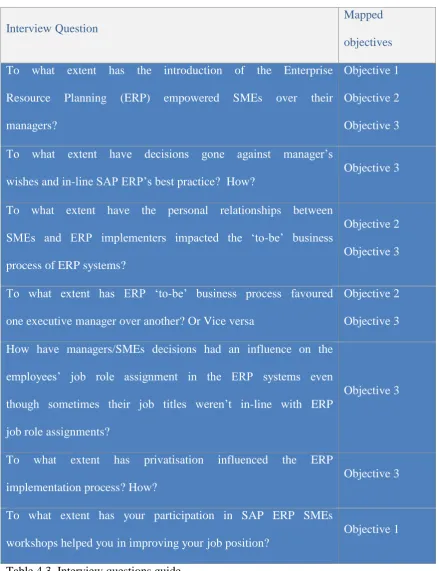
Table 4.1. List of research participants Table 4.2. Stages of the interview protocol Table 4.3. Interview question guide
Table 6.1. The development of the nine themes Table 7.1. Phases of Actor Network Theory (ANT)
Table 7.2. Initial stage of embedding Foucault’s analysis of power within ANT
Table 7.3. ANT-Foucault
x
List of Figures
Figure 2.1. Typical ERP systems
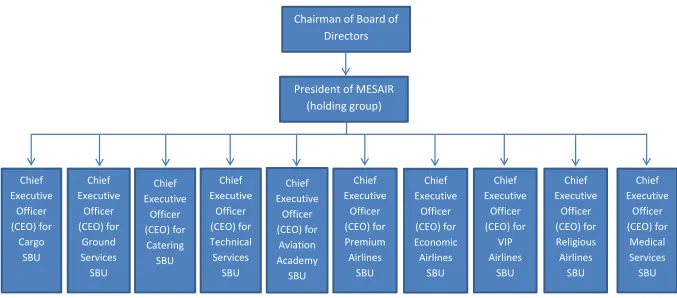
Figure 5.1. MESAIR’s executive organisational structure prior to privatisation
Figure 5.2. MESAIR’s proposed organisational structure prior to the ERP implementation project
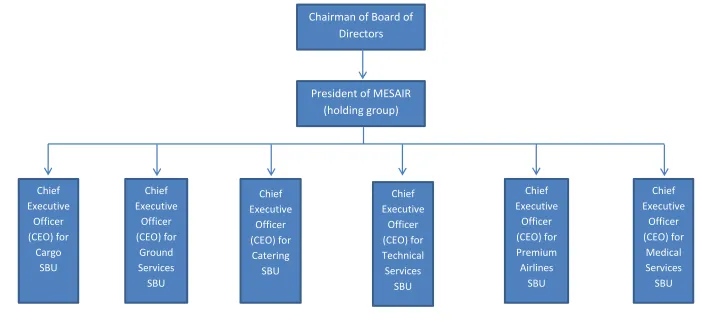
Figure 5.3. MESAIR’s approved organisational structure at the start of the ERP implementation workshops
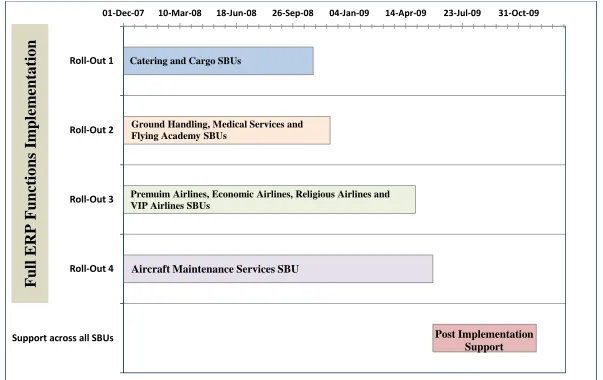
Figure 5.4. ERP implementation strategy – original plan Figure 5.5. ERP implementation strategy – revised plan Figure 5.6. GSS Division Organisation Structure Figure 5.7. GSS Projected SBU Plan
Figure 6.1. The change of MESAIR structure in line with the approved and the non-approved SBUs
Figure 6.2. Approved ERP implementation strategy
Figure 7.1. Initiating actors and their roles for confronting the problem Figure 7.2. Confronting the problem for IS and finding the solution Figure 7.3. The ERP-Privatisation alliance
Figure 7.4. Imposing the solution for the confronted problem on GSS Division
Figure 7.5. The initiation of the Best-Practice alliance Figure 7.6. The initiation of the Privatisation alliance
Figure 7.7. Privatisation alliance domination of the power relations network Figure 7.8. The initiation of the MESAIR Legacy alliance
xi
Acknowledgements
I would like to thank my supervisor Dr David Kreps for his endless support and for his valuable guidance throughout the journey of my PhD.
I would also like to show my gratitude to my wife for her patience and encouragement that helped me to get through the difficult times during my PhD journey.
xii
Abstract
1
1.
Introduction
1.1. Introduction
This chapter starts by providing the rationale for conducting the research followed by introducing Enterprise Resource Planning (ERP) implementation in organisations. Next, the research question, aim and objectives are introduced, followed by the research context, motivation and boundaries.
1.2. Rationale
Enterprise Resource Planning (ERP) systems are capable of improving the efficiency of business process and increase productivity for organisations. However, sufficiently implementing ERP systems in organisations usually requires getting involved in complex projects (Ko, 2014; Ngai et al. 2008; Swan et al. 2000). In addition to the high complexity of such projects, research on ERP implementation demonstrated that such projects can be very costly (HassabElnaby et al. 2012; Su and Yang, 2010) as well as being associated with the risk of running over budget and/or over planned time-frame (Aloini et al. 2012; Kanaracus, 2013).
2
Due to the high rate of project failure and given its degree of complexity, some research on ERP implementation adopted a variety of theories mainly incorporated from social science in order to sufficiently analyse the complexity aspects of running such projects (Jones and Karsten, 2008). Actor Network Theory (ANT) had been widely adopted in this field (Elbanna, 2010) due to its uniqueness of including non-human artefacts in a particular social setting and that they are considered to be active entities that have the capability of making certain change to the social setting in which they are engaged in (Mitev, 2009). A good example of adopting ANT for analysing ERP implementation projects is the work of Lyytinen and Newman (2015).
Given the criticism that had been associated with ANT for paying little attention to power related issues (Walsham, 1997; Winner, 1993), and with the capability of Foucault’s analysis of power to complement ANT by providing the necessary tools to respond to such criticism (Law, 2009; Mathewman, 2013); this research contributes to knowledge in that respect. It investigates the impact of power relations on the implementation of ERP in a specific organisational context.
As it had been reported in the ERP implementation literature that power related issues require further investigations (Horton 2003; Dhillon 2004; Doolin 1999; Maguire et al. 2010). Taking into account the similarities between Foucault’s analysis of power and ANT (Elbanna, 2012; Law, 1992) and given the fact that scholars like Underwood (1999), Fox (2000), and Matthewman (2013) have incorporated Foucault’s analysis of power within ANT, while their work have not investigated power related issues in ERP implementation projects; this research contributed to knowledge on that respect. That is by incorporating Foucault’s analysis of power within ANT in order to investigate the impact of power relations on an ERP implementation project in a specific organisational context.
3
embedded within Actor Network Theory (ANT). The first objective of this research was to introduce a case study of an ERP implementation project in an organisation in Saudi Arabia. The second objective was to embed Foucault’s analysis of power within the Actor network Theory (ANT); whilst the third objective was to apply Foucault’s analysis of power embedded within Actor Network Theory (ANT) in the case under study in order to investigate the effects of power relations on the implementation of Enterprise Resource Planning (ERP) in the organisation under study.
This research was approached in an inductive manner with a subjective viewpoint. The researcher adopted a qualitative, interpretive research perspective using a single explanatory case study paradigm, which is generalisable to a concept. As one of the objectives of this research was to analyse the case study by using Foucault’s analysis of power embedded within Actor Network Theory (ANT), the concept of ANT-Foucault was developed.
The collected data from interviews, documents and archival records were analytically themed in order to discover the research findings. From the developed themes, the researcher drew out nine findings. The research findings provided insights into the case under study which were capable of laying out the groundwork for the application of the concept on the case under study. The developed concept was applied on the case under study to investigate the effects of power relations on the implementation of ERP in an organisation in Saudi Arabia.
4
Investigating power related issues that are associated with IS and ERP implementation projects using the ANT-Foucault concept is also capable of helping IS and ERP implementers understand the social complications that they face during the course of the implementation process. In addition, the developed concept has the potential of being developed further in order to gain a more robust theoretical stance. However, the outcome of the research was limited to deploying a single case study; future research could be aimed at further examining the application of such concept with a view of developing a new theoretical framework.
1.3. ERP implementation in organisations
ERP systems are capable of improving the efficiency of business process and increase productivity for organisations. However, sufficiently implementing ERP systems in organisations usually requires getting involved in complex projects (Ko, 2014; Ngai et al. 2008; Swan et al. 2000). In addition to the high complexity of such projects, research on ERP implementation demonstrated that such projects can be very costly (HassabElnaby et al. 2012; Su and Yang, 2010) that are usually associated with the risk of running over budget and/or over planned time-frame (Aloini et al. 2012; Kanaracus, 2013).
Even though there were some successful ERP implementation projects in organisations such as those of Cisco Systems, Eastman Kodak and Tektronix (Bicknell, 1998; Boudette, 1999), the literature reports that there is a high rate of failure in terms of not delivering the desired efficiency as far as organisations are concerned (Koch and Wailgum, 2007).
5
Due to the high rate of project failure, research had been mainly devoted to the development of Critical Success Factors (CSFs) for ERP implementation projects (Huang and Yasuda, 2016; Saade and Nijher, 2016). However, CSFs had been criticised for its lack of practical applicability (Françoise et al. 2009)
Although CSFs for ERP implementation had been widely cited in the literature on ERP (Huang and Yasuda, 2016), other scholars questioned its applicability when put in practice (Françoise et al. 2009) while other scholars questioned their critical and crucial stances when put in practice (Ram et al. 2013). Other research on ERP implementation focused on investigating the impacts of organisational context on ERP implementation projects; as it had been reported in the literature that organisational context is capable of directly influencing the efficiency of the process of a particular ERP implementation project (Huang and Yasuda, 2016).
Many research on ERP implementation investigated the impact of contextual issues on ERP implementation projects (Morton and Hu, 2008) such as the impact of the organisational structure (Hong et al. 2010) and the organisational culture (Rabaai, 2009) on ERP implementation project as well as on investigating the impact of misaligning the organisation structure with the ERP’s business process (Ahmadi et al. 2015; Kerr and Houghton, 2010).
Other research investigated the importance of developing mutual trustworthy relationship between ERP implementers and users (Ko, 2014), which was seen as a major contribution to delivering a more effective outcome out of ERP implementation projects; while other research emphasised the importance of establishing continuous monitoring and assessment techniques on ERP implementers throughout the different phases of ERP implementation projects (Tiwana, 2010; Tiwana and Keil, 2009; Chang et al. 2013).
6
due to its uniqueness of explaining a social phenomenon by including non-human artefacts as active entities that have the capability of making certain change to the social setting in which they are engaged in (Mitev, 2009).
A great example is the work of Lyytinen and Newman (2015) that adopted ANT to investigate the alienation of users in two ERP implementation projects. Their research involved the formation of different networks as well as introducing a range of alliances which provided in-depth case study analyses.
Given the criticism that had been associated with ANT for paying little attention to power related issues (Walsham, 1997; Winner, 1993), and with the capability of Foucault’s analysis of power to complement ANT by providing the necessary tools to respond to such criticism (Law, 2009; Mathewman, 2013); this research contributes to knowledge in that respect. It investigates the impact of power relations on the implementation of ERP within an organisational context.
As it had been reported in the ERP implementation literature that power related issues require further investigations (Horton 2003; Dhillon 2004; Doolin 1999; Maguire et al. 2010), and taking into account the work of scholars like Underwood (1999), Fox (2000) and Matthewman (2013) who have incorporated Foucault’s analysis of power within ANT, and given the fact that their work have not investigated power related issued in ERP implementation projects. This research contributes to knowledge by incorporating Foucault’s analysis of power within ANT in order to investigate the impact of power relations on an ERP implementation project in an organisational context.
1.4. Research question, aim and objectives
7
Research question What is the relationship between power relations and ERP implementation within an organisational context?
Research aim Investigate the effects of power relations on the implementation of Enterprise Resource Planning (ERP) in an organisation in Saudi Arabia through the lens of Foucault’s analysis of power embedded within Actor Network Theory (ANT).
In order to achieve this aim, it is necessary to break it down into a set of objectives that ultimately contributes to achieving the overall aim.
1st objective Introduce a new case study of an ERP implementation project in an organisation in Saudi Arabia.
2nd objective Embed Foucault’s analysis of power within Actor Network
Theory (ANT).
3rd objective Apply Foucault’s analysis of power embedded within
Actor Network Theory (ANT) to the case study in order to investigate the effects of power relations on the implementation of Enterprise Resource Planning (ERP) in an organisation in Saudi Arabia.
1.5. The research context
The organisation under study had been operating in the airline industry since the 1940s. Throughout this research, the organisation under study is called MESAIR. As it stands, MESAIR’s fleet contains a range of 115 aircraft operating domestic and international flights to a range of destinations in the Middle East, Africa, Asia, Europe and North America. It also owns a fleet of cargo aircrafts that operate globally.
8
Saudi government job scheme, which offers their occupiers extreme job security whilst benefiting from working fewer hours as opposed to semi-government or private sector jobs.
Employees of MESAIR had always manually conducted their day to day business activities. Paper-based information systems were predominant across the organisation until 2006. This meant that official electronic communication between different departments was almost non-existent. Some departments developed stand-alone electronic archival systems to keep track of the incoming and outgoing letters for their respective departments. MESAIR’s IT Department developed some stand-alone digital information systems for finance and Human Resources, mainly to support their paper-based system. However, once the privatisation project was well under way, MESAIR signed a multimillion pound deal to implement SAP ERP solutions across its business functions in order to integrate different business process into one shared system.
1.5.1. Research motivation
The idea of this PhD started when the researcher became involved in an ERP implementation project in an organisation in Saudi Arabia. While the ERP implementation in that organisation was in full force, the researcher realised that original implementation plans can change during the implementation process due to many factors. One of these factors was that certain power exercises impacted the direction of the implementation process.
9
1.5.2. Research boundaries
This research was based on a single case study of an ERP implementation project in an organisation (MESAIR) in Saudi Arabia. It pays specific attention to the activities that were being carried out in the General Support Services (GSS) Division during the ERP implementation project. In addition, specific attention was given to the SAP ERP Materials Management (MM) module, because the GSS Division had been involved heavily in the implementation process of that module. The case under study covers the duration of the 1st and the 2nd phases of the ERP implementation project which together lasted for around sixteen months (from November 2007 until March 2009).
1.6. Organisation of the thesis structure
This PhD thesis has been organised into eight chapters. The first chapter is the Introduction Chapter, describing the gap of knowledge that this research was intended to explore. The research question, aims and objectives are presented subsequently, followed by explaining the research context, including the motivation behind conducting it as well as explaining the boundaries of the research.
The second chapter is the Literature Review Chapter. It provides the necessary background knowledge on ERP systems and their implementation in organisations. This includes reviewing the literature on the factors influencing ERP implementation projects in organisations as well as the organisational context and its impact on ERP implementation projects.
10
The fourth chapter is the Research Methodology Chapter which is aimed at describing the research methodologies adopted for this research. This includes explaining the variety of research methods and techniques that were used for conducting this research. The chapter proceeds by identifying and justifying the ontological approach that was adopted for this research. It follows on by identifying and justifying the epistemological paradigm that was adopted for this research. Subsequently, the chapter explains how this research was approached. It follows on by explaining the differences between carrying out a qualitative research study as opposed to a quantitative one. It then describes the adopted research strategy as well as explaining the reasons for adopting such strategy. The chapter continues by justifying the research reliability, validity and validation; followed by describing the techniques that were used for collecting data. Finally, it explains the modes of analysis that were adopted for this research.
The fifth chapter is the Case Study Chapter which introduces the case study of an organisation in Saudi Arabia. For the sake of fulfilling the ethical requirements to conduct the research, the organisation was given a coded name in the form of MESAIR. The case study was developed with a view to explaining thoroughly the most relevant issues that would serve this research well. It starts by providing general background information about the organisation under study. It follows on to explain its organisational structure prior to introducing and explaining the privatisation project.
11
The sixth chapter is the Research Findings Chapter which provides the research findings that were drawn out of the data analysis. As the research findings were based on thematically analysing the collected data, the chapter begins by explaining the mechanisms and the techniques that were used in order to develop the themes. The chapter follows on to explain nine developed themes as well as drawing out the research findings derived out of the themes.
The seventh chapter is the Discussion Chapter which explains the procedure undertaken to embed Foucault’s analysis of power within ANT which is then applied to the case under study in order to explain the power relations that were formulated during the ERP implementation project under study. This includes introducing the most influential actors that were involved in the case under study. It also includes explaining the enforcement of power from one actor over another as well as explaining the different alliances that were formed during the course of the project under study. The researcher also explains the network of power relations that were formed during the course of the project under study, as well as explaining the shifts of power from one actor and/or group of actors to other actors and/or groups of actors.
The eighth chapter presents the Conclusion Chapter; starting by addressing the research objectives, aims and question. It follows on by providing the evaluation of the research which includes reviewing its capability of contributing to knowledge, the appropriateness of the methodological choices, and relevance of the research findings to the application of the developed concept (ANT-Foucault) on the case under study and the relevance of the conceptual development to its application on the case under study. Finally, the research limitations and recommendations for further research are presented.
1.7. Summary and conclusion
12
context, motivation and boundaries. The organisation and the structure of the thesis were also presented.
13
2.
Literature Review
2.1. Introduction
The previous chapter presented the introduction for this research. It started by providing the rationale behind conducting this research followed by introducing ERP implementation in organisations. Next, the research question, aim and objectives were introduced followed by presenting the research context, motivation and boundaries. The organisation of the thesis structure had been presented.
This chapter provides the reader with the necessary background knowledge on ERP as well as reviewing the literature on its implementation in organisations. This includes reviewing the literature on the factors influencing the ERP implementation projects in organisations as well as on the organisational context and its relationship with ERP implementation projects.
2.2. Information systems and Enterprise Resource Planning (ERP)
Over the last two decades, the number of Information Systems (IS) that have been implemented in organisations has increased dramatically (Wagner and Monk, 2008). Some organisations opt to develop their own Information Systems in-house. However, research showed that such organisations are very likely to struggle with managing their legacy systems (Alshawi et al., 2004, Davenport 1998). In addition, such in-house projects might not be able to deliver the desired results, especially in large organisations.
14
systems were regarded as the best IT solutions for organizations (Huang and Yasuda, 2016; Fuβ et al., 2007).
ERP systems are packaged software that can be thought of as a set of integrated systems that introduce the right information for the relevant functional area of business. It is a management information system which consists of a set of integrated systems to manage all business functions in a particular organisation (Wagner and Monk, 2008; Yen et al., 2002). This means that ERP systems are shared knowledge-base for the main, if not all, organizational functions such as logistics, accounting, sales and distribution, and human capital management (Wagner and Monk, 2008; Krumbholz and Maiden, 2001).
ERP software packages are intended to provide computerised support for most of organisations' standard processes (Shanks, et al., 2004). They provide global solutions (Rajapakse and Seddom, 2005) by integrating all major processes of a particular organisation into one common system that supports all levels of management (Al-Mashari and Al-Mudimigh, 2003).
They are meant to sufficiently manage the flow of information that needs to be shared across all supply chain processes (Al-Mashari and Zairi, 2000). In addition, ERP systems are capable of efficiently enhancing the management of inventory, as well as aiding in minimising the working capital whilst providing the ability to manage suppliers, alliances and customers in an integrated and more efficient manner (Austin et al., 1999).
ERP systems “promise the seamless integration of all the information flowing through the company – financial and accounting information, human resources
15
is used across all departments in a particular organisation, so that all departments can share information with one another (Rosemann and Wiese, 1999).
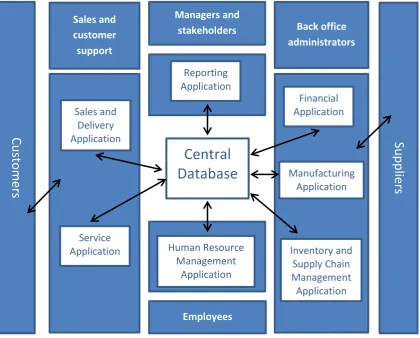
[image:29.595.89.510.309.647.2]Davenport (1998) explained ERP further by plotting it into a diagram (See Figure 2.1.), which showed that the main function of ERP is a centralised database. Because it is a centralised database, the information that it holds is meant to be shared by all departments within a particular organisation. All departments are meant to use the same database, so that they can share each other’s information.
Figure 2.1. Typical ERP Systems (Adapted from Davenport, 1998)
Given the figure above, if the reporting department, for instance, is required to produce a certain performance report to its executives, ERP systems are usually equipped with all the necessary pieces of information that are needed to fulfil
Sales and customer support
Managers and
16
delivering such request in a timely manner. That is due to the fact that all related pieces of information about the company should be available in the centralised database. The required performance report can be developed by picking out the right pieces of information from different modules that characterise ERP systems. This means that certain pieces of information can be generated from, for instance, the sales and delivery, finance and HR modules that can collectively contribute to developing a comprehensive performance report (Chung and Synder, 1999).
However, without such integrations, developing a performance report such as the one explained above can become a lengthy process due to the usual involvement of generating information from different stand-alone systems. On top of time consumption, there is a chance that the collected pieces of information might lack the desired accuracy. Having ERP systems set in place can contribute to reducing the time for the delivery of information as well as reducing the duplication and redundancy of information (Alshawi et al., 2004). Such reductions are potentially beneficial to organisations due to cost reduction and increase of work efficiency and productivity.
The accumulative development of ERP systems started in the 1960s. Back then, organisations were given the opportunity of automating their inventory control systems by either developing or buying Inventory Control (IC) packages (Alshawi et al., 2004). In the 1970s, further development to the 1960s’ IC packages led to the development of the Material Requirement Planning (MRP). MRPs are pieces of software that were mainly used for managing the manufacturing processes by integrating the production plan system and the inventory control system into one centralised database (Adam and Sammon 2004, Alshawi et al. 2004). However, MRP lacked the support of plan management and order processing (Kalakota and Whinston, 1997).
17
that were needed to perform all the necessary tasks with respect to managing the whole manufacturing process, starting from when a customer placed an order until it got dispatched.
However, MRP II had been designed to solely serve the manufacturing process. It involved systems such as shop floor and distribution management, project management, finance, human resources and engineering (Alshawi et al., 2004). As MRP and MRP II were designed solely to support the manufacturing process, software developers realised that there was a need to develop a more comprehensive system. Although MRP II seemed to be comprehensive enough, it could not deal with the shift in manufacturing trends that had emerged in the 1980s with respect to manufacturing customised products rather than standard ones (Adam and Sammon 2004). According to Adam and Sammon (2004), organisations demanded more comprehensive systems that were capable of supporting different aspects of business other than cost and quality due to the need of improving manufacturing lead times.
Manufacturers were also required to introduce real time flexible customised products which meant that they ought to have closer and more integrated communication media with their suppliers and customers. According to Alshawi et al. (2004), ERP was first introduced in the late 1980s and it differed from MRP II in being capable of dealing with external issues as well as internal ones (Adam and Sammon 2004). According to them, it was designed to plan and schedule the supplying aspects of resources from suppliers, based on the demands from customers.
2.3. ERP implementation in organisations
18
phases of the project (Maditinos et al. 2012; Ifinedo, 2011; Dezdar and Sulaiman, 2009; Somers and Nelson, 2004; Shanks et al. 2004; Brown and Vessey, 2003). In addition to the high complexity of such projects, research on ERP implementation demonstrated that such projects can be very costly (HassabElnaby et al. 2012; Su and Yang, 2010).
According to a recent survey on ERP implementation conducted by Panorama Consulting Solutions (2015), the average cost of running an ERP implementation project for the period between 2010 and 2014 reached approximately £3.8 million with more than half of those projects exceeding their planned budget. The survey also revealed that the average duration of completing such projects reached an average of 15.7 months with more than half of those projects running over the scheduled time-frame. ERP implementation projects are usually associated with high risk of running over planned budgets together with running over the planned time-frame (Aloini et al. 2012; Kanaracus, 2013).
Even though organisations that opt for implementing ERP systems pay a large sum of money and usually spend quite a long time conducting the project, they are not always guaranteed great return on their investments. In fact, the survey that was conducted by Panorama Consulting Firm (2015) also revealed that more than half of organisations that conducted such projects have only received 50% of their desired return on investments.
According to Kraemer (2012), well over half of ERP implementation projects failed to deliver their desired outcome. Some scholars such as (Aloini et al., 2012; Kanaracus, 2013) stressed out that by gaining only 50% of the benefits out of a costly project is considered to be a failure. The risks of not getting the desired efficiency of ERP systems are considered to be high, leading to a significantly high failure rate of ERP implementation projects (Koch and Wailgum, 2007).
19
Tektronix (Bicknell, 1998; Boudette, 1999). However, other organisations such as the pharmaceutical giants FoxMeyers Drug had to declare bankruptcy just after implementing an ERP solution. Due to a technical error, the ERP systems processed thousands of orders but only to be delivered to wrong addresses. Such error directly influenced the bankruptcy declaration of the organisation. Dell Computer (the PC giant organisation) had to scrap their ERP implementation process due to its rigidity and its lack of adaptation to their on-going global expansion (Bicknell, 1998; Boudette, 1999).
Research on ERP implementation had been mainly focused on finding out the causes and effects of the high rate of failure. Most research on the field of ERP implementation was concerned with developing an array of factors that can be of benefit to positively influence the implementation process; they were often referred to as the Critical Success Factors (CSFs) for ERP implementation projects (Huang and Yasuda, 2016; Saade and Nijher, 2016). According to Huang and Yasuda (2016), CSFs for ERP implementation projects can be described as positive attempts to draw out the most relevant factors that are essential to increase the chances of successfully implementing ERP in organisations.
The development of CSFs for ERP implementation through research often identified factors such as top management support, business process reengineering, user training and education, change management, strategic planning, user acceptance (Holland and Light, 1999; Somers and Nelson, 2001; Finney and Corbett, 2007; Al-Turki, 2011; Garg and Garg, 2014; Beheshti et al. 2014; Garg and Agarwal, 2014; Abu-Shanab et al. 2015), vendor/customer partnerships, dedicated resources, minimal customisations (Somers and Nelson, 2001), empowered decision makers (Finney and Corbett, 2007, Saini et al.
20
Although CSFs for ERP implementation had been widely cited throughout the literature on ERP (Huang and Yasuda, 2016), other scholars questioned its applicability when put in practice like the work of Françoise et al. (2009). They conducted a review in order to determine the plausibility of the widely recognised CSFs by putting each CSF to a test carried out by ERP experts in order to examine each CSF’s applicability in the workplace. The research criticised CSFs for not being practically appropriate as far as ERP implementers are concerned.
The work of Ram et al. (2013) further criticised the widely reported CSFs by questioning their critical and crucial stances when put in practice. Their research demonstrated that some of the CSFs were neither critical nor crucial to the successful implementation of ERP but were helpful to some extent on improving the level of ERP performance in a particular organisation. Despite the criticism, research on CSFs have continued to get carried out (Garg and Garg, 2014; Beheshti et al. 2014; Garg and Agarwal, 2014; Abu-Shanab et al.
2015) without necessarily addressing the issues that were raised by Françoise
et al. (2009) and Ram et al. (2013).
21
It had been reported in the literature that the organisational context is capable of directly influencing the efficiency of ERP implementation projects (Huang and Yasuda, 2016). The process of implementing ERP systems in organisations usually requires reengineering organisation’s business process (Panayiotou et al. 2015; Velcu, 2010). This means that organisations are required to perform certain tasks in the form of changing the structure of the organisation and its business process in order to fit them to those on the ERP systems (Hong et al. 2010). However, such tasks had been proven to be not as simple as it was hoped due to the inevitable dealing with contextual issues. The context of a particular organisation can negatively impact the progress of ERP implementation projects (Ahmadi et al. 2015).
Organisations are required to conduct business strategy and it should be aligned with the ERP’s counterpart (Law and Ngai, 2007; Wang et al. 2007). Part of that usually includes developing an overall business strategic plan which should clearly state the willingness to align existing business process to ERP systems business process. Law and Ngai (2007) empirically studied the impact of organisational factors on the ERP implementation success. One of their findings demonstrated that the alignment of business strategy of a particular organisation with ERP implementation strategy is crucial to achieving a better business performance post ERP implementation. Their findings supported the outcome of the earlier work of Gefan and Ragowsky (2005) which stressed out on the need for configuring ERP systems to be in context with the business characteristics of a particular organisation.
22
the ERP implementation project can lead to a better alignment between ERP systems’ business processes and the organisation’s counterpart.
The vital role of ERP implementers on the outcome of a particular ERP implementation project had been investigated thoroughly in the literature (Dezdar and Sulaiman, 2009). Metrejean and Stocks (2011) investigated the importance of ERP implementers’ effectiveness in each phase of ERP implementation projects. Their research found that ERP implementers are mostly effective during the configuration and the integration phases of ERP implementation projects. Metrejean and Stocks (2011) provided recommendations for organisations that are in the process of conducting an ERP implementation which was to consider hiring ERP implementers to only conduct the configuration and the integration phases of the project which was seen as a way of reducing the cost of conducting ERP implementation projects.
Ko (2014) provided a different view in the sense that the relationship that is based on a mutual trust between ERP implementers and the user during the ERP implementation project is crucial to transferring knowledge. According to Ko (2014), it contributes to delivering a more effective outcome of the project. Building trustworthy relationships is considered to be a lengthy process as it requires getting involved in repeated interactions between certain individuals. Such interactions lead to the reduction of tension and ambiguity amongst both parties. Those interactions usually entail getting involved in ongoing forms of communications about needs, beliefs and preferences regarding the issue of concern (Vanneste and Puranam, 2010; Perrone et al. 2003).
23
As mentioned earlier regarding the need to create a fit between the organisation’s objectives and the ERP implementation’s counterpart, the literature stresses out the need of setting up continuous progress monitoring on ERP implementers by organisations throughout the different phases of the implementation process. Research on controlling ERP implementers by organisations such as Tiwana (2010), Tiwana and Keil (2009) and Chang et al.
(2013) emphasised the importance of establishing such control.
It was also reported in the literature that it is important to empirically investigate the impact of the overreliance on ERP implementers to achieve the overall objectives of their business (Sturdy et al. 2009). The work of Chang et al. (2013) contributed to the literature on that sense as they empirically studied the impact of political aspects on ERP implementation projects through the adoption of the control theory. They emphasised the importance of controlling ERP implementers’ progress throughout the ERP implementation process.
Chang et al. (2013) went on to explain that as the business objectives lie within the users and technological objectives lie within the ERP implementers, organisations are required to introduce some form of control over the extent of one side overshadowing the other (Newell et al. 2000). This means that organisations need to find ways to control ERP implementers as the latter’s own personal objectives might be different than the overall business ones.
24
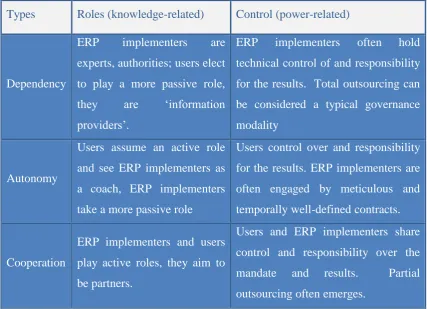
The relationship between ERP implementers and users during ERP implementation projects had also been seen as a power and knowledge relationship. Pozzebon and Pinsonneault (2012) investigated the relationship between ERP implementers and users by analysing how power and knowledge are exercised and exchanged amongst members of both parties during the unfolding of ERP implementation projects. They developed a model based on the global-local characteristics of both parties (i.e. ERP implementers represent the global characteristics and the users represent the local counterpart). The model included explaining a variety of roles of and controls on ERP implementers and users during ERP implementation projects (see Table 2.1.). Coelho et al. (2015) adopted the model to investigate the impact of the relationship between ERP implementers and the users on an ERP implementation project in a public-sector Brazilian organisation.
Types Roles (knowledge-related) Control (power-related)
Dependency
ERP implementers are
experts, authorities; users elect
to play a more passive role,
they are ‘information providers’.
ERP implementers often hold
technical control of and responsibility
for the results. Total outsourcing can
be considered a typical governance
modality
Autonomy
Users assume an active role
and see ERP implementers as
a coach, ERP implementers
take a more passive role
Users control over and responsibility
for the results. ERP implementers are
often engaged by meticulous and
temporally well-defined contracts.
Cooperation
ERP implementers and users
play active roles, they aim to
be partners.
Users and ERP implementers share
control and responsibility over the
mandate and results. Partial
outsourcing often emerges.
[image:38.595.84.512.369.678.2]25
The researcher believes that the overall concept of preliminarily characterising ERP implementers into being global is somehow problematic. This is due to the fact that there are many ERP implementers who can be categorised as local; given that organisations sometimes assign local IT consulting firms to conduct the implementation of a global ERP solution. This led the researcher to question whether the dimensions of power and knowledge between ERP implementers and users are the only formed relation that can influence ERP implementation projects or whether there are other relations that naturally unfold throughout the progress of the implementation project. The model in Table (2.1.) failed to consider adding the global ERP solution (as an active non-human agent) into the mix; which could leave out the bigger picture unexplored.
As mentioned in section (2.2.) in this chapter, ERP systems are meant to provide a globally standardised solution for organisations without paying specific attention to their local characteristics (O’Leary, 2000). ERP solutions are meant to be pre-configured with ‘best-practice’ business processes, where ERP implementers are encouraged by the ERP vendors to adopt such practices for implementation purposes even though they are not particularly obliged to do so (Wagner and Newell, 2004).
26
Other forms of relations that unfold during ERP implementation project could include the relationship between organisational structure & culture and the ERP’s ‘best practice’. For instance, it was reported in the literature that the misalignment of existing business process and structure on the one hand and ERP system’s counterparts on the other can cause undesired disruption to the progress of a particular ERP implementation project (Morton and Hu, 2008; Soh et al. 2003).
On another note, the literature also failed to distinguish apart the different types of users or as they refer back to them as ‘clients’. Most research refers back to the involved members of a certain organisation that get involved in an ERP implementation project as ‘clients’. The researcher believes that the term ‘client’ is too generic for the purpose of analysing a complex situation. The clients should be fragmented into different groups. One of these groups is the Subject Matter Experts (SMEs) who usually put enough efforts to help in sufficiently implement ERP systems while department managers usually try their best to oppose any changes to be made in the structure of a particular organisation in order to protect their hierarchal positions. Therefore, the user resistance that had been widely identified in the literature as being harmful to the implementation process (Aladwani, 2001) does not reflect the overall impression of individuals throughout the organisation.
Mobashar Hossain et al. (2011) identified the SMEs empowerment by investigating ownership & governance, scope management and employee empowerment. Part of their findings affirmed the concurrent existence of employees’ empowerment especially the ones who have been selected to become SMEs for ERP implementation projects; they have also demonstrated through their case study analysis that there were some deep concerns among high management about losing control over SMEs during the implementation process.
27
order to explain the influences of such network of relations amongst all of the aspects that unfold, the literature on ERP implementation demonstrated that adopting a social theory (Elbanna, 2007; Lyytinen and Newman, 2015) such as Actor Network Theory (ANT) can provide a solid background to investigate the interactions between technological and social systems that unfold during ERP implementation projects (Mitev, 2009; Lee, 2001). The role of ANT in analysing such network of relationships during ERP implementation project is presented in the next chapter (see section 3.2.1. in Chapter 3 for more details).
The next chapter (see section 3.2.1.) also explains how ANT as well as being the most suitable social theory to explain the case under study, it also identifies its lack of adequacy to investigate the control related activities and the political issues that arise within the identified network of relations that unfold during ERP implementation projects. It follows on to explain why it is important to incorporate Foucault’s analysis of power within ANT in order to sufficiently analyse and investigate the range of control related and political issues that invigorates during ERP implementation projects.
2.4. Summary and Conclusion
This chapter has provided the reader with the necessary background knowledge on Information Systems and ERP, as well as reviewing the literature on their implementation in organisations. This included reviewing the literature on the factors influencing the ERP implementation projects in organisations, as well as the organisational context and its relationship with ERP implementation projects.
28
3.
Theoretical Framework
3.1. Introduction
The previous chapter presented the necessary background knowledge on Information Systems and ERP as well as reviewing the literature on their implementation in organisations. This included reviewing the literature on the factors influencing the ERP implementation projects in organisations, as well as the organisational context and its relationship with ERP implementation projects.
This chapter is aimed at presenting the theoretical aspects that are related to the research. It provides the necessary background knowledge on Actor Network Theory (ANT) and its adoption in IS and ERP research. It also provides the background knowledge regarding power analysis whilst paying specific attention to Foucault’s concept of analysing power. In addition, the researcher provides the necessary background knowledge on research on Foucault’s power analysis in IS and ERP research.
3.2. Adoption of theoretical perspectives in IS and ERP
implementation research
29
According to Kerimoglu et al. (2008), the level of satisfaction amongst users of a newly introduced IS or ERP can be achieved as soon as a collective belief is shared between users regarding the usage benefits of such systems. This means that users are likely to increase their willingness to use a newly introduced IS or ERP if they believed in its potential benefits of simplifying and/or enhancing their day-to-day activities (Lee et al. 2010).
TAM had been widely adopted by other scholars in the IS and ERP implementation discipline (Marangunic and Granic, 2015). The early work of Amoako-Gyampah and Salam (2004) can be seen as a good example. Their research investigated the impact of shared beliefs on the benefits of a technology and the impact of training and communication on the PEOU and the PU during the implementation of ERP systems in an organisation. A more recent research by Sternad and Bobek (2013) applied the TAM model to examine factors that influence an ERP implementation project in Slovenia.
Ever since its development in 1989, TAM had been extended to what was called TAM-2 which entailed the inclusion of external variables that could influence the Perceived Usefulness (PU) amongst users such as subjective norms, job relevance, experience, etc. (Venkatesh and Davis, 2000). Venkatesh (2000) went on to modify TAM-2 by arguing that such external variables that was introduced in TAM-2 could influence both Perceived Usefulness (PU) and the Perceived Ease of Use (PEOU); which directly influence the attitude towards using and the intention to use newly introduced IS or ERP systems in a particular organisation.
30
equally capable of influencing the outcome of implementing IS or ERP systems in organisations.
As mentioned in the previous chapter of this thesis (see section 2.3.), the organisational context is capable of directly influencing the efficiency of the ERP implementation process (Huang and Yasuda, 2016; Mitra and Mishra, 2016, Rabaa’i 2009). Another aspect that had been investigated in the literature of IS/ERP systems is the power dynamics and the political aspects that usually unfold during IS/ERP implementation projects (Silva and Fulk, 2012; Mobashar Hossain et al. 2011). Such aspects tend to be given less importance when adopting TAM as the theoretical framework for a particular research. However, as the researcher believes that in order to critically analyse such aspects of a particular ERP implementation project, TAM would fail to give this research the depth needed to rigorously investigate such issues.
Other researchers on IS/ERP implementation brought in a range of social and organisational theories in order to explain and critically analyse issues that unfold during the introduction of such systems. Theories such as Giddens’ structuration theory, institutional theory and Actor Network Theory (ANT) had been widely cited in the IS/ERP implementation literature (Jones and Karsten, 2008; Elbanna, 2010).
Giddens’ structuration theory assumes that the structure and the individuals are mutually constitutive of the social order (Giddens, 1984). The dualistic mutual participation of constituting the social norm between the structure and the individuals cannot be separated (Jones and Karsten, 2008). Giddens’s structuration theory affirms that the social structure and the individuals are interdependent where the social structure draws on the interactions of individuals but at the same the social structure is produced and reproduced through the reactions of individuals (Walsham and Han, 1990).
31
power and sanctions. Each representing dimension and its corresponding interaction are interlinked with modalities in the form of interpretive scheme, facility and norm (Giddens, 1984; Walsham and Han, 1990).
In the 1990s, Giddens’ concept of structuration theory attracted scholars in the IS field who saw great potential of adopting such theory to investigate the implementation of IS in organisations such as Brooks (1997), Karsten (1995), Orlikowski (1993) and Volkoff (1999). However, recent research on the implementation of IS/ERP shifted away from adopting such theory. This was due to its lack of any methodological approach for researchers to follow.
Giddens’ structuration theory had been best described as being more of a meta-theory (Walsham and Han, 1990; Weaver and Gioia, 1994) where other theoretical approaches can contribute to expanding it in order to produce a more sufficient concept for analysing a particular setting or context (Walsham and Han, 1990). Even Giddens (1990) stated that his structuration theory lacks the ability to carry out research with a clear conceptual approach; he suggested that researchers should get inspired by the logic of the proposed framework of the theory to develop a context-specific methodological approach (Giddens, 1991).
32
However, there have been a few attempts to propose a technology-related methodological approach to Giddens’ structuration theory such as the work of DeSanctis and Poole (1994). What they called the Adaptive Structuration Theory (AST) was based on Giddens’ structuration theory but it was specifically developed to tackle the impact of technology in organisations. Their theory was centralised on investigating the change process that occur during the introduction of a new piece of technology into a particular organisation.
AST is meant to investigate the change process by placing the introduced technology in a structure and the emerging structure that unfolds as a result of human interactions in response to the introduction of that piece of technology. The duality aspects of human interactions and the technology structure had also been brought forward from Giddens’ structuration theory to AST where technology enforces the adaptation of humans agents while human agents’ reactions to such enforcements forces the technology to move into a specific direction based on those reactions (Roh and Hong, 2015).
Shifting away from Giddens’ structuration theory, the AST pioneers identified technology as a viable artefact which directly influences the structure of a particular organisation by interacting with users and implementers. Shaping the structure of a particular organisation is manufactured through the interactions between technology, users and the technology implementers (Roh and Hong, 2015; DeSanctis and Poole, 1994).
33
As far as this research is concerned, such interactions of intentions between different types of actors are crucial to its outcome. As this research intended to investigate such power relations that unfolded during an ERP implementation project, AST does not offer the research a great deal of investigation. Therefore, the researcher reached a decision not to adopt AST for this research.
Other theories such as the institutional theory provided the IS field with an alternative way of providing in-depth analysis. According to Currie (2011), the different versions of institutional theory (such as neo-institutional) shared a common concept in the IS field; which is that the IS adoption in organisations is influenced by institutional pressure such as governments rules and regulations as well as by the business processes embedded in the IS. Such pressure directly influences different organisational actions; one of these actions is to align the organisations business process and structure to fit the IS.
However, institutionalism approaches for analysing the adoption of IS in organisations usually adopts the bird eye view of organisational actions. Such actions should be investigated in greater detail in order to understand how and why such actions occurred during the adoption of IS in organisations (Hasselbladh and Kallinikos, 2000). As this research investigates the intentions behind actions of human agents in a specific organisation; and at the same time, it investigates the intentions behind actions of an introduced piece of technology, institutionalism approach provides very little to that respect.