International Journal of Emerging Technology and Advanced Engineering
Website: www.ijetae.com (ISSN 2250-2459,ISO 9001:2008 Certified Journal, Volume 5, Issue 11, November 2015)
84
Optimizing Assembly Rate by Managing Space and Introducing
Vertical Storage System
Pooja C. Patil1, Abdul Samad2, Dr. Y. B. Mathur3
1Research Scholar, Marudhar Engineering College, Bikaner, Rajasthan, India 2
Assit. Prof. Department of Mechanical Engineering, Maruthar Engineering College Bikaner, Rajasthan, India
3Lecturer, Department of Mechanical Engineering, Govt. Polytechnic College Bikaner, Rajasthan, India
Abstract— The Atlas Copco Company is a Sweden company and has its division plant in Nashik. The assembly of the machines is done in the company. These are water well rigs used for drilling the water wells. The towers of each machine has is of the height around 40ft. and hence during assembly, these towers occupy most of the area. The material required for the assembly is stored on the shopfloor along the floor. This has restricted the production rate to one machine assembly at a time.
The material stored in the warehouse of the company utilizes a lot of space. With the help of this project the space management of the company’s warehouse is done and the floor area is made available. Mainly in this project two machines TH10 and DB40K are considered. With increase in demand, the production rate was needed to be increased to assembly of 3 machines at one time. For making this possible, the floor space was required to be managed accordingly. In the present research work,, the kardex shuttle system was introduced which is a vertical storage system and the production rate of the company was raised to the desired level.
Keywords—Assembly, Carousal System, DB40K, Kardex Shuttle System, TH10.
I. INTRODUCTION
Atlas Copco is a Swedish company founded in the year 1873. It mainly involved its manufacturing of machines that goes underground. Machines used for drilling and mining are the main interests of the company. Almost 100 years later after forming the company in the year 1972, production of water well rigs started. This was mostly used for drilling gas along with CBM wells.
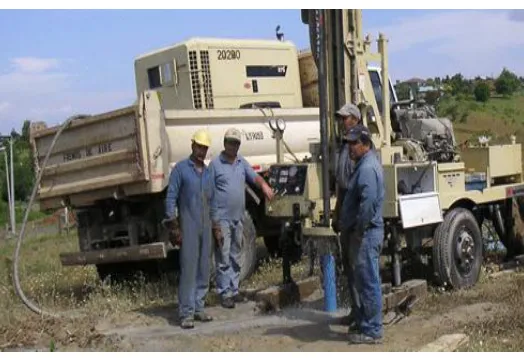
[image:1.612.327.589.252.431.2]1.1 Water well rigs:
Figure 1. Image Showing Drilling Process.
International Journal of Emerging Technology and Advanced Engineering
Website: www.ijetae.com (ISSN 2250-2459,ISO 9001:2008 Certified Journal, Volume 5, Issue 11, November 2015)
85 1.2 Inventory management:
Basically the inventory management is an essential concept which represents the current status of the supply chain along with the financial status of the balance sheet. There are various types of inventories and at different stages of the organization.
In the present paper the main focus is the pre management of all the inventories required for constructing the water well rigs called TH10 and DB40K. The material required for these machines requires sorting out and making the use of kanban system to make sure the production is not affected due to shortage in supply of the parts and material required for its construction.
1.3 Kardex Shuttle Concept:
The concept adopted for this project is the Kardex shuttle concept, which is generally used for inventory management. It can be defined as modular structured computer managed robotic vertical lift, storing along with the recovery system. Every part works with its own computer and electronically managed extractor which moves and provides the required tray or bucket to the small entrance of the location allocated for its storage in a very small duration of time. All the materials are stored on the plates or trays on the forward facing and backward facing side of the tower. This kardex shuttle extractor does the work of getting the required material form their storage location to the trays and placing the material back to its previous location after use. This extractor is given the motion with the help of belts of two toothed type, which is also the latest technique and is noiseless working characteristics.
II.LITERATURE REVIEW
Phichet Wutthisirisart et al in [1] introduced the material positioning issue which distributes material to the two warehouses although reducing the overall storing as well as transference expenses. Four material position prototypes/strategies, all using diverse assessment limitations, are offered to resolve the issue from diverse material management outlooks.
Haiping Ma et al in [2] proposed an ensemble multi-objective biogeography-based optimization (EMBBO) system; this is motivated by collaborative education, to explain the computerized warehouse arrangement issues. Initially, a practical computerized warehouse arrangement issue is framed as per a forced multi-objective optimization issue.
Whereas Marco Bortolini et al in [3] expressed the points like enhancing of unit-load storing systems situated in seismic zones, studying of an actual task approach for single-load warehouses, combined investigation of the
storing/recovery portable period plus the frame steadiness. Daria Battini et al in [4] presented an advanced start to
end procedure on behalf of the actual ergonomics assessments of physical material treatment in warehouse locations, where entire portion of the frame are involved in the course of the actions performance.
Riccardo Accorsi et al in [5] presented a unique decision-support system (DSS) for storing system project in addition procedures mechanism. Systematic approaches, prototypes and algorithms are executed in a reverse approach to direct issue resolving manner.
In the research done by Martha Mendoza et al in [6], the documented events that subordinate the subjects with the manuscript documents are created by Probabilistic Latent Semantic Analysis; however the order is formed robotically with the help of a gathering algorithm.
Saeyeon Roh et al in [7] concentrated more on utilizing the already set warehouses at planned positions everywhere in the world, a method usually considered by some caring assistance groups to progress their abilities to distribute adequate assistance help inside a comparatively small duration of time, besides to offer accommodation and help to catastrophe sufferers..
Bhanuteja Sainathuni et al in [8] offered a nonlinear number software design prototypical for the WITP bearing in mind source chains by means of numerous dealers, supplies, material plus duration, in addition to one warehouse. The prototypical likewise studies employee blocking at the warehouse that might distress employee efficiency. A heuristic grounded on repetitive native exploration exists established to resolve company related issues through 500 supplies and 1000 merchandises.
International Journal of Emerging Technology and Advanced Engineering
Website: www.ijetae.com (ISSN 2250-2459,ISO 9001:2008 Certified Journal, Volume 5, Issue 11, November 2015)
86 Peng Yang et al in [10], inspects the combined enhancement of storage position task then storage/retrieval arranging in numerous-shuttle automated storage/retrieval systems (AS/RSs) in collective storing, in which the use again of hollow position generated by recovery process is permitted. From the view of systematic prototypical, the benefit of operative mode in collective storing is confirmed.
Jennifer A et al in [11] introduced a carousel system which is a sample of a computerized storing and recovery system which is utilized in supply areas and industrialized amenities. We examine the impression consignment repossession treating has on output presentation for straight carousel systems that usage computerized storing plus recovery machineries as mechanical pickers.
Felix T.S. Chan and H.K. Chan in [12] aimed in offering a replication training of an actual case concerning storing obligation difficult of a human level picking and numerous level frame warehouse. Presentation of the case is restrained in positions of portable space besides demand recovery period.
III. RESEARCH METHODOLOGY
3.1 Floor Area:
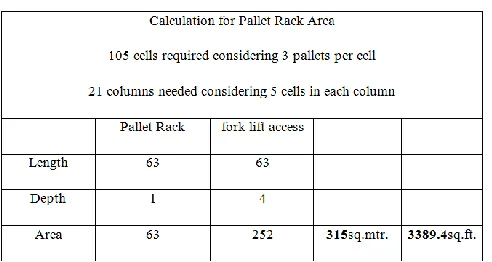
In every company the main issue faced is the space management on the shop floor. The area available is to be utilized for material storing as well as the production of the machine. Both are required to be on the same floor so that the time required for moving the material to the required site is less and production rate is higher. Considering the case of DB40K, it can be seen in the tables 1.
The total number of parts required for it is 1415. Components that can go in yard are 51.
[image:3.612.332.560.313.455.2] Components to be kept on the pallets are 313.
Table 1. Pallet and Forklift Area
When the table 1 is studied it can be seen that the total number of pallets per row kept are three and total number of rows in one column are 5. Area required for the forklift is same in front of every pallet and so that much area is also required to be kept empty and free of any obstacles.
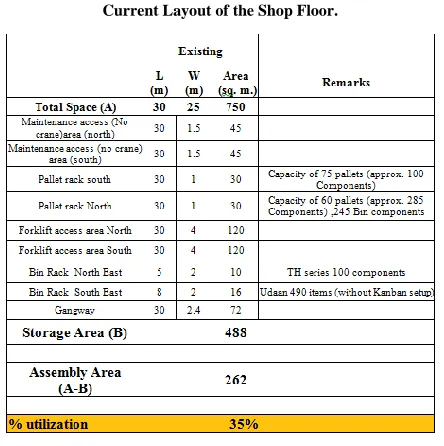
[image:3.612.53.299.563.694.2]Currently, the space available is only sufficient for manufacturing one water well machine per month whereas the requirement is almost 3 to 4 machines per month. This is a huge difference experienced by the company and would let down the company’s reputation if the demand of the customers is not met on time. The current layout of the company’s shop floor can be seen in the line diagram as shown in the figure 2. Table 2 gives the detail information of the present layout of the shop floor and the area that is utilized for storing and area utilized for production.
Figure 2. Diagram Showing Existing Layout
International Journal of Emerging Technology and Advanced Engineering
Website: www.ijetae.com (ISSN 2250-2459,ISO 9001:2008 Certified Journal, Volume 5, Issue 11, November 2015)
[image:4.612.58.280.141.364.2]87 Table .2
Current Layout of the Shop Floor.
3.2 Shuttle Concept:
[image:4.612.407.481.384.572.2]There were various machines and companies that provide this kind of machines. The comparison was done between all these companies and then the selection of kardex was done. The comparison can be seen in the following table 3.
Table 3.
Comparison between Various Company Machines.
On comparing the various machines and companies producing the vertical storage shuttle system, the kardex shuttle seemed to be most suitable. The concept of kardex shuttle is now clear as it is explained in the introduction. Studying the kardex shuttle in details is very essential. It needs to be customized according to the requirement of the company, the height, width, placing of the system on the shopfloor, etc. all paly a very important role. This concept makes the storing of the material having different sizes possible. The material can vary from smaller parts to the material on the trays in one entire single unit. It benefits to improve the working techniques in the storerooms or warehouses which in return help in reducing the time required for lifting.
3.3 Technical Specifications:
Height available: - 10000 mm
Floor Space Available: - 4000 (W) x 3500 (D) mm Average height of material:-250mm
Weight / tray: - Max.460 kg.
Figure 3 represents the outline of the machine.
Figure 3. Diagram Showing Kardex lift.
3.4 Entrance Opening at the Front Side:
[image:4.612.51.283.464.623.2]International Journal of Emerging Technology and Advanced Engineering
Website: www.ijetae.com (ISSN 2250-2459,ISO 9001:2008 Certified Journal, Volume 5, Issue 11, November 2015)
[image:5.612.52.287.154.271.2]88 Table 4.
Entrance Specifications
3.5 Drive:
[image:5.612.325.567.297.670.2]With the help of good motors, the initiating and stopping of the extractor and trays becomes very smooth and jerk free. Addition of the speed controller feature make the starting and stopping routines more reliable and smooth by managing the transporting speed and is also in the situation of the changing load strains. This ensures the time required for transporting also is reduced.
Table 5. Drive Controls.
The total cost of 1 Unit Shuttle XP500 NORTH EUROPEN PORT is: 47000.00 EUR
IV. RESULTS
On studying all the issues and taking the views of various employees in account the working was done accordingly and the results obtained were as follows.
4.1 Space Management:
For assembling the machines simultaneously, the main hurdle faced was the space management. The available space was not enough for assembling more than one machine. It was observed that the height of the shop floor is very high and can be utilized for storing instead of storing the material along the floor. For making this possible, the Kardex shuttle concept was introduced.
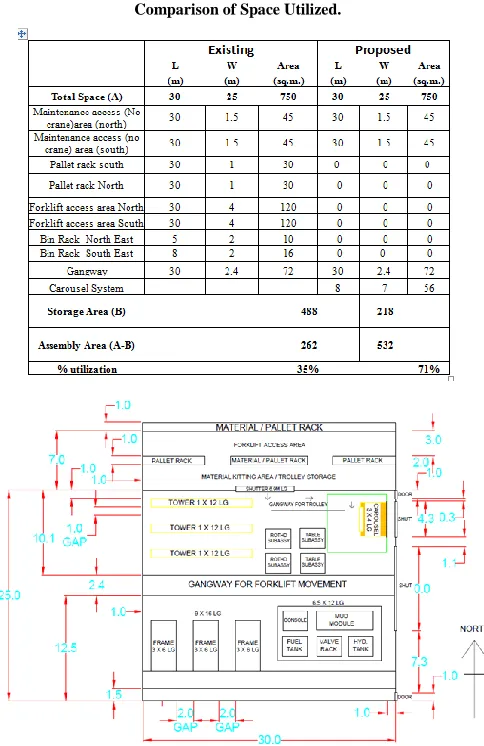
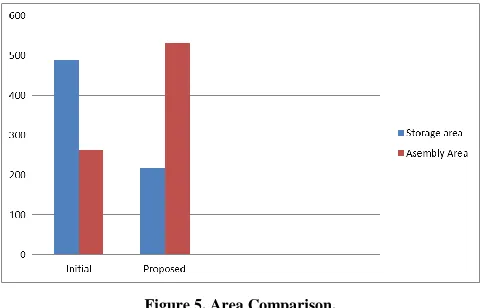
In the table 6, the comparison can be seen. The dimensions and the working of the kardex system are seen in details in the section of research methodology and its comparison is done with the current material storage plan. On comparison, the utilization of height of the shop floor is done more than its length. The area utilized for the storage of racks for pallets and racks for bins is completely eliminated and only the area required for the maintenance that is electrical output and plugs utilize a small amount of area. This helps in making the area available for assembly is 71%. Almost double the area is available as compared to the current layout on the shop floor. This will help in doubling the speed of assembly and meet the requirements.
Table 6.
Comparison of Space Utilized.
[image:5.612.56.280.401.488.2]International Journal of Emerging Technology and Advanced Engineering
Website: www.ijetae.com (ISSN 2250-2459,ISO 9001:2008 Certified Journal, Volume 5, Issue 11, November 2015)
[image:6.612.48.289.217.371.2]89 Figure 4 helps to understand the layout of the floor when the carousel system is introduced. Where in the current case only one tower could fit is the available area, the proposed system could make almost three towers at one time to fit in the same area. As represented in the figure 5, it becomes very clear the utilization of the area for assembly as well as the area used for storing the material.
Figure 5. Area Comparison.
V. CONCLUSION
The results obtained are on a positive side and mostly all the objectives are being fulfilled. The main constrained of space management is also solved and assembly of more than one machine is possible at one time. The use of kardex shuttle system has no negative impact in any way on the company and so this technique can be utilized.
On using carousal system or kardex, makes it possible to reduce the floor space used for storing the material and use that area for production purpose the area initially used for assembling only one machine, now can be utilized for assembling three machines at one time. The utilizing of kardex system needs material sorting. The material was sorted accordingly and the trays could be utilized properly and efficiently.
The material that was stored on the floor along the shopfloor can now be stored in the kardex machine which utilizes the vertical space. Area occupied by the material can now be used for assembly of the machines and thus the production rate of the company increased as per the demand.
REFERENCES
[1] Phichet Wutthisirisart, Mustafa Y. Sir, James S. Noble; The two-warehouse material location selection problem; International Journal of Production Economics, 13 July 2015.
[2] Haiping Ma, Shufei Su, Dan Simon, Minrui Fei; Ensemble multi-objective biogeography-based optimization with application to automated warehouse scheduling; Engineering Applications of Artificial Intelligence, Volume 44, September 2015, Pages 79-90. [3] Daria Battini, Alessandro Persona, Fabio Sgarbossa; Innovative
real-time system to integrate ergonomic evaluations into warehouse design and management; Computers & Industrial Engineering, Volume 77, November 2014, Pages 1-10.
[4] Marco Bortolini, Lucia Botti, Alessandro Cascini, Mauro Gamberi, Cristina Mora, Francesco Pilati; Unit-load storage assignment strategy for warehouses in seismic areas; Computers & Industrial Engineering, Volume 87, September 2015, Pages 481-490. [5] Riccardo Accorsi, Riccardo Manzini, Fausto Maranesi; A
decision-support system for the design and management of warehousing systems; Computers in Industry, Volume 65, Issue 1, January 2014, Pages 175-186.
[6] Martha Mendoza, Erwin Alegría, Manuel Maca, Carlos Cobos, Elizabeth León; Multidimensional analysis model for a document warehouse that includes textual measures; Decision Support Systems, Volume 72, April 2015, Pages 44-59.
[7] Saeyeon Roh, Stephen Pettit, Irina Harris, Anthony Beresford; The pre-positioning of warehouses at regional and local levels for a humanitarian relief organisation; International Journal of Production Economics, 30 January 2015.
[8] Bhanuteja Sainathuni, Pratik J. Parikh, Xinhui Zhang, Nan Kong; The warehouse-inventory-transportation problem for supply chains; European Journal of Operational Research, Volume 237, Issue 2, 1 September 2014, Pages 690-700
[9] Ö. Öztürkoğlu, K.R. Gue, R.D. Meller; A constructive aisle design model for unit-load warehouses with multiple pickup and deposit points; European Journal of Operational Research, Volume 236, Issue 1, 1 July 2014, Pages 382-394.
[10] Peng Yang, Lixin Miao, Zhaojie Xue, Bin Ye; Variable neighborhood search heuristic for storage location assignment and storage/retrieval scheduling under shared storage in multi-shuttle automated storage/retrieval systems; Transportation Research Part E: Logistics and Transportation Review, Volume 79, July 2015, Pages 164-177.
[11] Jennifer A. Pazour, Russell D. Meller; The impact of batch retrievals on throughput performance of a carousel system serviced by a storage and retrieval machine; International Journal of Production Economics, Volume 142, Issue 2, April 2013, Pages 332-342. [12] Felix T.S. Chan, H.K. Chan; Improving the productivity of order