Technology Enhanced Learning:
Students’ views
Eileen O’ Donnell
[email protected]
Knowledge and Data
Engineering Group, TCD,
and College of Business,
Dublin Institute of Technology,
Aungier Street,
Dublin 2, Ireland.
Mary Sharp
[email protected]
Knowledge and Data
Engineering Group,
School of Computer Science and
Statistics,
Abstract
User feedback is very important in all areas of computer science especially in the development of computer applications. Hence, student feedback on the use of technology enhanced learning in higher education in Ireland is relevant to the quality of the learning resources to be created by learning designers and academics in the future. The book “Student Reactions to Learning with Technologies: Perceptions and Outcomes” (Moyle & Wijngaards, 2012) was published by IGI Global in October 2011. This book includes contributions from various authors who are interested in students’ feedback regarding how technology has impacted on their educational experience. This book provides feedback from students located in different countries. Chapter 10: “Students’ views of E-Learning: The impact of technologies on learning in higher education in Ireland ” (O'Donnell & Sharp, 2012) provides feedback from three hundred and twenty students to inform learning designers and academics about students’ thoughts and opinions on the impact of technologies on learning in higher education in Ireland. This research was conducted in both Trinity College Dublin and the Dublin Institute of Technology. The responses received from the students who kindly participated in this study were analysed and the findings are presented in this chapter. Analysis of the responses received from these students indicates that students are of the opinion that the use of technologies in higher education can beneficially transform learning; however, technologies will never replace lecturers.
Keywords
1. Introduction
This study was undertaken to obtain students perspectives on the academic use of technologies in the Faculty of Business, DIT, and the Faculty of Engineering, Mathematics and Science, TCD. The findings of this study are presented in a chapter of a book titled: “Student Reactions to Learning with Technologies: Perceptions and Outcomes” edited by Drs. Kathryn Moyle and Guus Wijngaards (Moyle & Wijngaards, 2012). The title of the chapter was “Students’ views of E-Learning: The impact of technologies on learning in higher education in Ireland” (O'Donnell & Sharp, 2012). IGI Global is the publisher of this book.
2. Methodology
An evaluation of current literature was performed to identify key attributes to be explored and from these attributes statements were devised to seek student perspectives regarding the issues identified. A survey was compiled to ascertain students’ perspectives on the concept that the use of technologies in higher education has the ability to transform learning.
The survey was designed with three sections:
(i) A list of 27 statements was created for students to evaluate using a five point Likert scale i.e. strongly agree, agree, neutral, disagree, strongly disagree.
(ii) Very basic personal information was sought such as level of study. (iii) Students had the opportunity to share perspectives on statements such
as “can the use of technologies transform learning” and “what use of technology has the most beneficial impact on student learning”.
3. Results
In the figures presented below the vertical column represents the percentage of students who: strongly agreed; agreed; were neutral; disagreed or strongly disagreed with the statements presented in the survey. In the analysis of this data, the percentages for “Strongly Agreed” and “Agreed” were combined and the percentages for “Disagreed” and “Strongly Disagreed” were combined to provide a clearer comparison between the two higher education providers.
Out of the 320 students who participated in this study 92% agreed that the use of technologies in higher education makes a positive difference to studying, these findings are consistent with those found by Rogers (2004). While the students clearly realised the benefits to be achieved by using technologies in their education they still appreciated the benefits of having face to face tutorials with lecturers, and face to face interaction with peers. One student commented “The use of technology should be used in parallel to lectures as the best way of learning is through human interaction” and another “Technology has to be properly integrated with an approach to teaching. Not just technology for the sake of technology”.
A clear definition of the pedagogic rationale and learning outcomes expected from each unit of learning should be realized by the educator prior to the integration of technology into the learning experience. Another student suggested: “It's not the technologies we should be focusing on - rather the pedagogy - supported through the technology. (That is, it's not what you use, rather how it's used). New technologies to support new pedagogies!”.
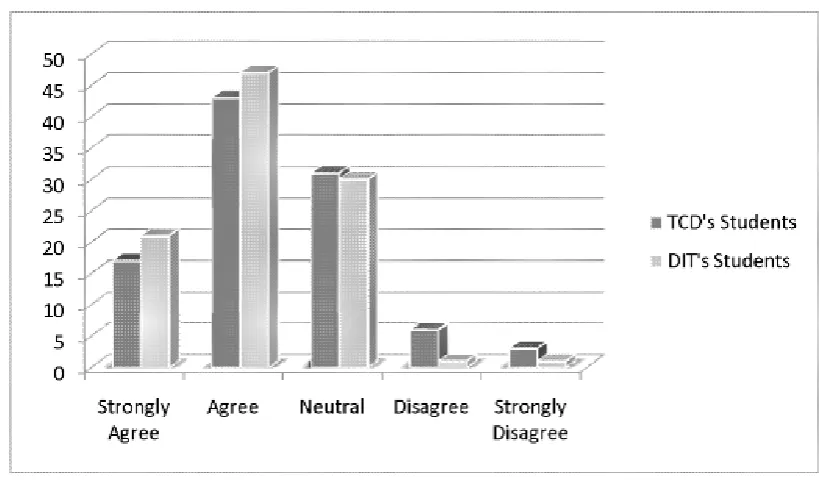
Figure 1. Technology facilitates a student centred environment that was not possible before (O'Donnell & Sharp, 2012, p. p.211).
Learning Experiences
In this research 80% of TCD’s students and 68% of DIT’s students agreed that the quality of students’ learning is enhanced by using technologies to augment lectures, this would be in the form of blended learning, these findings are consistent with those found by Condie and Livingston (2007). One student commented “I think that learning essentially remains the same, technology just makes it an easier means to the same end”, this view is similar to the views of Gilbert et al. (2007). This study found that 53% of TCD’s students and 54% of DIT’s students agreed that podcasts and video casts of lectures would facilitate student learning more so than hand-outs, this concurs with the findings of McKinney, Dyck, & Luber (2009).
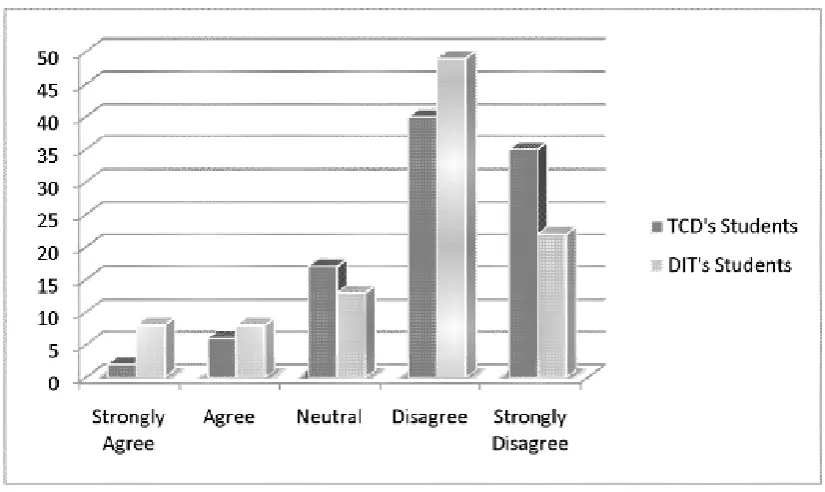
Figure 2: There is no longer any need to attend lectures because course notes available online are a good substitution (O'Donnell & Sharp, 2012, p. 213).
82% of students agreed that using technology in higher education effectively enhances the learning experience of students, these findings are consistent with those found by McLoughlin (2000) and O’Donnell (2008). 78% of TCD’s students and 66% of DIT’s students disagreed that the use of technology in higher education would make lecturers disposable. Donnelly & O’Rourke (2007) noted that some academic staff were of the opinion that engaging with online learning environments would make them disposable. One of the students commented that “Yes, technology can transform learning, but only as an aid, not as a replacement”. O’Neill, Singh, & O’Donoghue (2004) came to the same conclusion that technology can be used to enhance the learning experience of students, but not replace the lecturer.
substitute”. 75% of TCD’s students and 72% of DIT’s students surveyed disagreed with the statement that there is no longer any need to attend lectures because course notes available online are a good substitution. These findings are consistent with those found by Wilson and Christopher (2008).
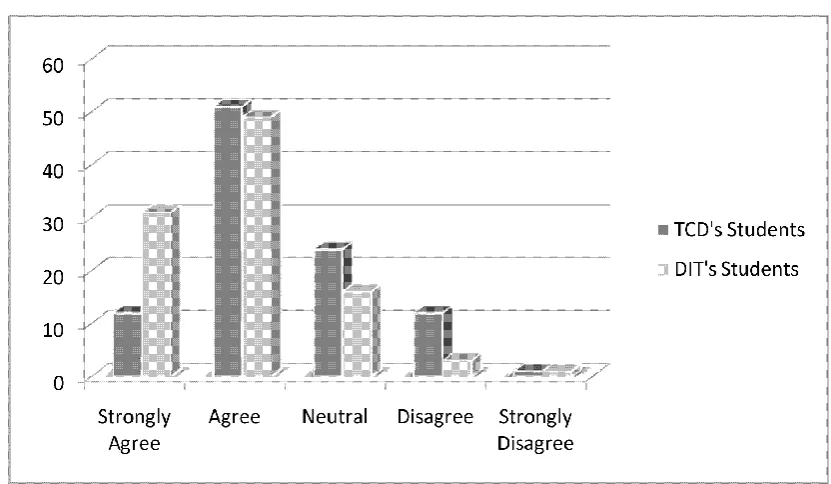
[image:7.595.114.530.416.658.2]80% of students agreed that attending formal lectures facilitates a deeper understanding of course content than online access (Figure 3). One student commented that “Yes, I think technologies can transform learning but also that lectures and class interaction increase further learning”. Similar to the findings of this study McKinney et al. (2009) found that although 60% of undergraduate general psychology students felt that computer-based lectures were appealing, they still preferred the traditional lecture.
Teacher: student and student: student relationships
An interesting comment on this issue made by a student was “Yes, technology can transform learning, it enables people to work to their own pace, e.g. if they are a night time student. However, attending lectures allows students to engage in debates and discussions which are fundamental to social skills because online discussions mean people don’t have to think on their feet”. This students’ perspective is very intuitive, because in life there is a need to know when to respond immediately and when to pause and think before making a contribution, and of course, students need the ability to do both.
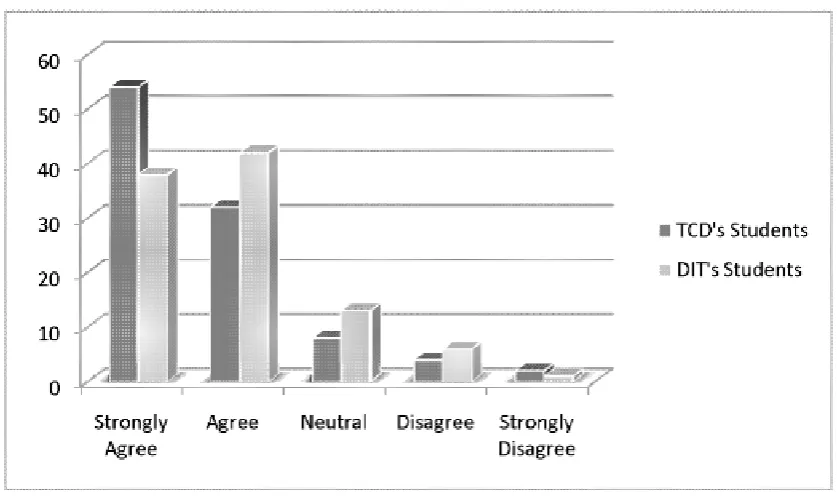
[image:8.595.92.511.436.684.2]This research found that 86% of TCD’s students and 80% of DIT’s students agreed that if course material was available online at the commencement of term it would markedly change students’ ability to learn at their own pace (Figure 4).
80% of TCD’s and DIT’s students agreed that the use of technology in higher education increased their satisfaction with their course of study. These findings are consistent with those found by Overbaugh & Shin Yi (2006). 66% of TCD’s students and 46% of DIT’s students agreed that the use of video casts would be superior to podcasts for enhancing students’ understanding of course material.
Access to Information
52% of TCD’s students and 55% of DIT’s students disagreed with the statement that they prefer accessing journal articles from hardcopies in the library to accessing journals online, therefore technologies facilitate fast and efficient access to required information which was not previously possible. 87% of TCD’s students and 64% of DIT’s students disagreed with the statement that when they come across an acronym or new concept with which they are unfamiliar, they seek clarification in the library first and then online, these findings are consistent with those found by Hartman, Moskal & Dziuban (2005). A wiki is a web-based document which enables users to add and edit content using only their web browser (Bayne, 2008). In this study 61% of TCD’s students and 40% of DIT’s students agreed that using wiki interfaces increases the value of the students’ learning experience.
Learning Outcomes and Skills Development
notes in class, different viewpoints were expressed; this could be attributed to the acknowledged existence of different learning preferences and styles.
[image:10.595.92.507.251.493.2]This research found that 51% of TCD’s students and 49% of DIT’s students agreed that collaborative online research affords the lecturer the opportunity to identify the students that are making the most worthwhile contributions (Figure 5).
Figure 5. Collaborative online research affords the lecturer the opportunity to identify the students that are making the most worthwhile contributions (O'Donnell & Sharp, 2012, p. 218).
4. Conclusions and Future Work
education, and while technologies can effectively be used to enhance students’ learning experience, the use of technologies in higher education will never replace the lecturers. Please refer to the chapter of the book for a complete analysis of the findings.
Suggestions for future research which arose from this study were:
Would the sharing of in-depth class notes online improve the pass rate of courses?
Can computer mediated communication improve learning?
Can studying class notes prior to a lecture facilitate deeper understanding? Will the current recession reduce the number of households who subscribe to
broadband access?
5. References
Bayne, S. (2008). 'Higher education as a visual practice: seeing through the virtual learning environment'. Teaching in Higher Education, 13(4), 395-410. Condie, R., & Livingston, K. (2007). Blending online learning with traditional
approaches: changing practices. British Journal of Educational Technology, 38, 337-348.
Donnelly, R., & O'Rourke, K. (2007). What now? Evaluating e-learning CPD practice in Irish third-level education. Journal of Further and Higher Education, 31(1), 31-40.
Gilbert, J., Morton, S., & Rowley, J. (2007). e-Learning: The student experience.
British Journal of Educational Technology, 38(4), 560-573.
Hartman, J., Moskal, P., & Dziuban, C. (2005). Preparing the Academy of Today for the Learner of Tomorrow. In D. G. Oblinger & J. L. Oblinger (Eds.),
Educating the Net Generation [Online].
McKinney, D., Dyck, J. L., & Luber, E. S. (2009). iTunes University and the classroom: Can podcasts replace Professors? Computers & Education, 52, 617-623.
McLoughlin, C. (2000). Creating partnerships for generative learning and systemic change: Redefining academic roles and rleationships in support of learning.
International Journal for Academic Development, 5(2), 116-128.
Moyle, K., & Wijngaards, G. (Eds.). (2012). Student Reactions to Learning with
Technologies: Perceptions and Outcomes. United States of America:
Information Science Reference (an imprint of IGI Global).
O'Donnell, E. (2008). Can e-learning be used to further improve the learning
experience to better prepare students for work in industry. (Masters in
O'Donnell, E., & Sharp, M. (2012). Students' views of e-learning: The impact of technologies on learning in higher education in Ireland. In C. D. U. Kathryn Moyle and Guus Wijngaards, Australia, and InHolland University, The Netherlands (Ed.), Student Reactions to Learning with Technologies:
Perceptions and Outcomes. Hershey, New York: Information Science
Reference (an imprint of IGI Global).
O'Neill, K., Singh, G., & O'Donoghue, J. (2004). Implementing e-learning programmes for higher education: A review of the literature. Journal of
Information Technology Education, 3, 314-320.
Overbaugh, R. C., & ShinYi, L. (2006). Student Characteristics, Sense of Community, and Cognitive Achievement in Web-based and Lab-based Learning
Environments. Journal of Research on Technology in Education, 39(2), 205-223.
Rogers, G. (2004). History, learning technology and student achievement - Making the difference? The Institute of Learning and Teaching in Higher Education
and SAGE Publications, 5(2), 232-247.
Wilson, B. G., & Christopher, L. (2008). Hype versus reality on campus: Why e-learning isn't likely to replace a professor any time soon. In S. Carline & P. Shank (Eds.), The E-Learning Handbook: Past Promises, Present Challenges
Appendix I – Survey - Dear Student,
At present I am conducting a study on students’ perspectives regarding: Can the use of technology transform learning? In order to complete this study I need your perspectives on the use of technology in higher education.
Please do not participate if you are under 18 years of age.
For each of the statements below, please indicate the extent of your agreement or disagreement by placing
a tick in the appropriate column.
S tr ongl y A gr ee A gr ee Ne u tr al Dis agr ee S tr ongl y Di sa gr ee
1 If course material was available online at the
commencement of term it would markedly
change students’ ability to learn at their own pace.
2 Podcasts and video casts of lectures would
facilitate student learning more so than handouts.
3 The learning experience of students would be
altered for the better if lecturers discussed topics in class prior to making the notes available online.
4 The use of technologies in higher education
makes a positive difference to studying.
5 The use of video casts would be superior to
podcasts for enhancing students’ understanding of course material.
6 Watching a video cast of a lecture would be as
educationally beneficial as attending the lecture in person.
7 Using podcasts or video casts for revision
purposes would better improve recall than revising course notes.
8 The use of technology in higher education
increased my satisfaction with my course of study.
9 Having course notes available online makes me
more likely to skip the occasional lecture.
10 There is no longer any need to attend lectures
because course notes available online are a good substitution.
11 I prefer accessing journal articles from hardcopies
in the library to accessing journals online.
12 The use of technology in higher education
For each of the statements below, please indicate the extent of your agreement or disagreement by
placing a tick in the appropriate column.
S Ag re e Ag re e Ne ut ra l Disa gr ee S Dis ag re e
13 I would be forced to learn more in lectures if I had
to make my own notes (as opposed to having the notes available online).
14 Attending formal lectures facilitates a deeper
understanding of course content than online access.
15 Using technology in higher education effectively
enhances the learning experience of students.
16 When I come across an acronym or new concept
with which I am unfamiliar, I seek clarification in the library first and then online.
17 Using wiki interfaces increases the value of the
students’ learning experience.
18 Computer mediated communications achieve a
more in-depth insight than classroom discussions.
19 The quality of students’ learning is enhanced by
using technology to augment lectures.
20 The use of technologies in higher education
improves student engagement with course material.
21 Technology facilitates a student centred
environment that was not possible before.
22 Online discussion boards force students to open
their minds to the thoughts and opinions of others.
23 Online learning develops students’ ability to work
as team members.
24 Collaborative online research affords the lecturer
the opportunity to identify the students that are making the most worthwhile contributions.
25 The use of technology in education could
successfully replace the learning achieved through interaction with lecturers.
26 The use of technology in education could
successfully replace the learning achieved through face to face interaction with fellow students (peers).
27 The use of technology in higher education will
What level and year of study are you
undertaking?
(Please tick the appropriate box)
Level of study Please tick
Degree Masters PhD
Researcher
Gender Please tick:
Male Female
If you have any other perspectives on the question under review, that is, ‘Can the use of technologies transform learning?’ Please share your perspectives below:
_____________________________________________________________________
_____________________________________________________________________
_____________________________________________________________________
_____________________________________________________________________
_____________________________________________________________________
In your opinion, what use of technology has the most beneficial impact on student learning?
_____________________________________________________________________
_____________________________________________________________________
_____________________________________________________________________
_____________________________________________________________________
The time taken to complete this survey is much appreciated. Please return the completed form to me in person or to KDEG Lab 1, Ground Floor, O’ Reilly Institute, TCD, Dublin 2. E-mail: [email protected]