T
HE
I
NTRODUCTION OF
S
OLUTION
-F
OCUSED
T
HERAPY
TO
I
RISH
S
OCIAL
W
ORKERS
:
A
C
ASE
S
TUDY
OF
I
NNOVATION
D
IFFUSION
PhD Thesis
Department of Social Studies
Trinity College
University of Dublin
April 2002
SUMMARY
The objective of this thesis is to consider how the process of innovation-diffusion occurs in social work when a new practice model is introduced to qualified practitioners.
Taking the form of a case study, the thesis examines the introduction of Solution Focused Therapy (SFT) to Irish practitioners and managers through a large-scale, cross-agency, short course in 1995.
The study set out to address the following questions:
How do social workers engage with, assess and incorporate theoretical innovations into their practice?
What factors influence the processes of engagement with, and evaluation of, innovations in social work?
What is the role of the short training course in this process?
The study explores the influences and processes which shape the individual learning experiences through an in-depth qualitative survey of 52 practitioners 12-18 months after their participation in a specific course. The research population consisted of practitioners and managers with varying levels of experience who were based in child protection, fostering, medical, psychiatric and voluntary service settings. The local context within which research subjects were practising at the time of the study is described and critically analysed.
A range of relevant literature relating to social work practice and theory and therapeutic models of practice and in particular SFT is critically reviewed. The study also considers relevant organisational theories, and theories relating to training, learning and change. A generic framework (Rogers, 1995), which theorises the diffusion of innovation as it occurs on organisational, group and individual levels, has been adopted as a tool to analyse the movement of respondents through the Innovation –Diffusion Process after attending the course.
This thesis demonstrates that a range of inter-related factors, none of which can be taken in isolation, account for both individual and collective innovation-adoption decisions.
Experimentation is necessary for formal theory to be transformed into personalised knowledge (Eraut, 1994) and for practitioners to become confident in assessing ‘ideas-only’ innovations. An ‘ideas-only’ innovation will be interpreted and practised in a variety of ways because the practitioner is critical in transforming a theory into a practice.
A combination of environmental and individual factors influences the progress practitioners make with practice innovations in the workplace. Conditions in the workplace and perceived levels of support are environmental factors which influence innovation adoption patterns.
The individual’s locus of control, level of self-efficacy and level of confidence are intrapersonal variables of importance in their ability to experiment with innovations. The individual’s interpretation of the social work role together with his or her own orientation to practice influences his or her assessment of the practice innovation. For SFT, an active change-agent orientation was necessary on the part of the practitioner.
On the basis of these findings, a number of key components in the innovation-diffusion process in social work can be identified and the processes connecting them outlined. These components interact together to create the context and conditions within which, over time, change will either be successfully diffused, will falter or will be rejected or abandoned.
Themes of hope and hopelessness emerged consistently from the accounts of respondents. The importance of the maintenance of hope on the part of workers is reaffirmed in this study. The findings suggest that local agency conditions and team factors contribute towards the development of either hopeful or hopeless contexts of practice.
DECLARATION
a)
This thesis has not been submitted as an exercise for a degree at this or any
other University.
b)
This thesis is entirely the candidate’s work.
Signature:
SUMMARY
The objective of this thesis is to consider how the process of innovation-diffusion occurs in social work when a new practice model is introduced to qualified practitioners.
Taking the form of a case study, the thesis examines the introduction of Solution Focused Therapy (SFT) to Irish practitioners and managers through a large-scale, cross-agency, short course in 1995.
The study set out to address the following questions:
How do social workers engage with, assess and incorporate theoretical innovations into their practice?
What factors influence the processes of engagement with, and evaluation of, innovations in social work?
What is the role of the short training course in this process?
The study explores the influences and processes which shape the individual learning experiences through an in-depth qualitative survey of 52 practitioners 12-18 months after their participation in a specific course. The research population consisted of practitioners and managers with varying levels of experience who were based in child protection, fostering, medical, psychiatric and voluntary service settings. The local context within which research subjects were practising at the time of the study is described and critically analysed.
A range of relevant literature relating to social work practice and theory and therapeutic models of practice and in particular SFT is critically reviewed. The study also considers relevant organisational theories, and theories relating to training, learning and change. A generic framework (Rogers, 1995), which theorises the diffusion of innovation as it occurs on organisational, group and individual levels, has been adopted as a tool to analyse the movement of respondents through the Innovation –Diffusion Process after attending the course.
This thesis demonstrates that a range of inter-related factors, none of which can be taken in isolation, account for both individual and collective innovation-adoption decisions.
Experimentation is necessary for formal theory to be transformed into personalised knowledge (Eraut, 1994) and for practitioners to become confident in assessing ‘ideas-only’ innovations. An ‘ideas-only’ innovation will be interpreted and practised in a variety of ways because the practitioner is critical in transforming a theory into a practice.
A combination of environmental and individual factors influences the progress practitioners make with practice innovations in the workplace. Conditions in the workplace and perceived levels of support are environmental factors which influence innovation adoption patterns.
The individual’s locus of control, level of self-efficacy and level of confidence are intrapersonal variables of importance in their ability to experiment with innovations. The individual’s interpretation of the social work role together with his or her own orientation to practice influences his or her assessment of the practice innovation. For SFT, an active change-agent orientation was necessary on the part of the practitioner.
On the basis of these findings, a number of key components in the innovation-diffusion process in social work can be identified and the processes connecting them outlined. These components interact together to create the context and conditions within which, over time, change will either be successfully diffused, will falter or will be rejected or abandoned.
Themes of hope and hopelessness emerged consistently from the accounts of respondents. The importance of the maintenance of hope on the part of workers is reaffirmed in this study. The findings suggest that local agency conditions and team factors contribute towards the development of either hopeful or hopeless contexts of practice.
ACKNOWLEDGEMENTS
To my supervisor, Ruth Torode, of the Department of Social Studies in Trinity College, for her knowledge, guidance and unfailing patience and interest. To my current and past colleagues for their interest, support and tolerance, and especially Robbie Gilligan, Shane Butler, Marguerite Woods and Janet Convery for constructive advice. To those who shared with me their knowledge, interest and skill in the field of therapy, especially Chris Iveson.
The early innovators who formed the SFT network in Dublin provided an environment of stimulation, interest and action.! They include John Sharry and Melissa Darmody of the Dublin Brief Therapy Centre, Imelda Mc Carthy and Hilda Loughran of University College Dublin and Mary O’Neill of the Eastern Health Board. To Ineke Durville and my other former colleagues in Community Care who came to share my interest in SFT and who unwittingly led to this study being undertaken.
I am particularly indebted to the 52 Irish social work practitioners and managers who shared their experiences and reflections on SFT, social work, and training courses with me in the interviews that form the critical core of this research study. I hope that I have given their accounts the justice and respect they deserve.
To Alan Glanz of the Department of Health in London a special ‘thank-you’ for introducing me to the work of Everett Rogers.
To my family and friends who retained both interest and hope in this enterprise over the last six years, especially my mother, Helena, Colette, Caroline, Nellie, Maeve, Maggie, Cate and Dee; and Hilda for combining mutual PhD support with long evening walks.
My husband Dave Willow and our children Tom and Jessica Willow have in ways contributed most. For six years, they have put up with missing chunks of time and energy which went from family life into this study. Dave’s unending patience, proof-reading and gentle suggestions were invaluable. Thank You.
Table of Contents
Declaration ... ii
Summary ... iii
Acknowledgements ... v
List of Tables ... x
List of Figures ... xi
Abbreviations ... xii
Chapter One: Introduction ... 1
The study domain ... 1
Genesis of the study ... 2
Solution Focused Therapy ... 2
Post-qualifying development and education in Social Work ... 3
Rationale for the study ... 5
Social Workers and their use of formal theory ... 5
Aims of the study... 6
Layout ... 7
Chapter Two: The local setting ... 9
Introduction ... 9
The early development of Irish social work services ... 9
The establishment of Irish community care social work... 9
The evolution of child protection social work ... 10
Effects of the evolution of child protection social work in the 1990s ... 11
Features of the local context at the time of the study ... 16
Changes demanded of practitioners ... 17
Health Boards and training in the 1990s ... 18
Conclusion ... 20
Chapter Three: Literature Review: Social Work, Theory and Practice ... 22
Introduction ... 22
The social construction of social work ... 22
What is social work? ... 23
Epistemologies of practice ... 27
Typologies and ‘orientations’ ... 31
Organisational factors affecting the shape of social work practice ... 33
Individual factors affecting the shape of social work practice ... 39
Cognitive processes and professional expertise... 45
The process of the development of practice expertise ... 47
The development of professional expertise ... 48
The social work ethos and formal theory ... 51
The politics of theory ... 53
Chapter Four: Solution Focused Therapy ... 56
Introduction ... 56
(i) Background to the development of Solution Focused Therapy ... 56
(ii) Solution Focused Therapy: ... 65
(iii) Evaluation of Solution Focused Therapy... 75
(iv) Solution Focused Therapy and Social Work ... 86
Conclusion ... 88
Chapter Five: Continuing professional development ... 90
Introduction ... 90
Part One: Individual, Organisational and Professional Perspectives ... 90
The individual perspective ... 90
The organisational perspective ... 95
Professional perspectives ... 97
The Literature on Training ... 100
Conclusion ... 111
Part 2: Diffusion of Innovation Theory ... 113
Introduction ... 113
Rogers’ (1995) Innovation Diffusion Model ... 113
The importance of particular actors ... 117
The role of training in the diffusion of innovation ... 118
The potential of Rogers’ model as a framework for analysis ... 118
Chapter Six: Methodological Approach ... 122
Introduction ... 122
Aims of the Research ... 122
A qualitative framework ... 123
Research paradigms ... 123
Using the researcher’s own experience ... 125
A case study ... 126
Research design ... 127
The respective roles of practitioner and researcher ... 128
Telephone interviewing ... 129
Advance contact of respondents ... 132
Interview schedule design ... 132
Pilot Study ... 133
Recording of data ... 133
Analysis of data ... 134
Interpretation of the data ... 135
Ethical considerations... 136
Conclusion ... 138
Chapter Seven: Cross-national diffusion ... 140
SFT: From American family therapy to Irish social work ... 140
The Innovation Development Process ... 140
The specific role of the Brief Therapy Practice (London) ... 145
Diffusion from the UK to Ireland ... 146
Impact of the first health board initiative ... 148
Conclusion ... 149
Chapter Eight: ‘The Dublin Course’ – the participants ... 150
Introduction ... 150
The Dublin Course ... 151
Profile of the research subjects ... 153
What prompted individual social workers to attend a course in SFT? ... 157
Stage Two/Three Respondents ... 163
Stage Four Respondents ... 166
Respondents’ evaluation of the short course ... 168
Conclusion ... 168
Chapter Nine: ‘The Dublin Course’ – Interpretations of SFT ... 170
Introduction ... 170
Understanding of the approach ... 170
Appeal of the approach ... 171
Conclusion ... 178
Chapter Ten: After ‘The Dublin course’ – experimentation, conviction and doubt . 180
Introduction ... 180
Part One: Patterns of Experimentation ... 180
Patterns of Experimentation ... 181
Part Two: Movement of the respondents through the innovation-decision process . 212
Conclusion ... 232Chapter Eleven: Discussion of Findings: Components and Processes of Innovation
Diffusion in Social Work ... 234
Introduction ... 234
Components of the Innovation-Decision (Change) Process ... 234
Social work as a site for innovation-diffusion ... 235
The nature of the theory/innovation ... 241
The marketing process ... 248
The means of transmission... 249
The Transfer Process ... 256
Individual characteristics ... 257
The Sense-making Process ... 265
Environmental Factors ... 267
The Peer Influence Process ... 273
Chapter Twelve: Conclusions ... 275
Introduction ... 275
Rationale for the study reviewed ... 275
Evaluation of the study ... 277
SFT as a contemporary practice theory ... 280
The Message of Hope ... 281
Do practice models matter? ... 282
Considering change – the role of the training course ... 284
Formal theory and the construction of personalised knowledge – implications for
innovation-diffusion ... 285
The complex environment of contemporary social work ... 286
Appendices... 290
Appendix A – training course notes (Iveson, 1995) ... 290
Appendix B: Research Interview Schedule ... 303
Appendix C – Respondents’ Descriptions of SFT in Summarised Form ... 307
Appendix D: case examples of using SFT ... 309
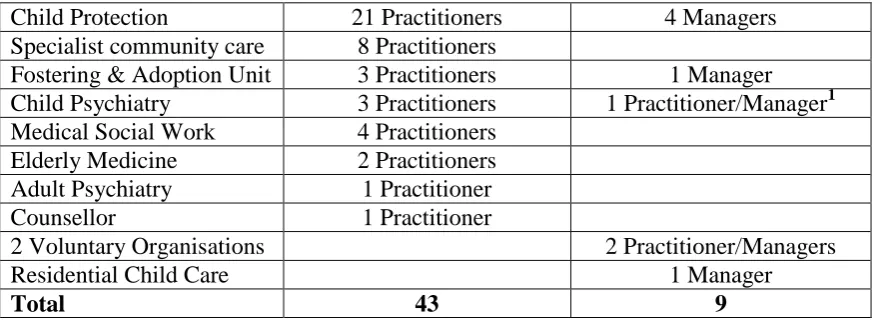
Appendix E – Respondent Group by setting at time of interview. ... 324
Bibliography ... 325
Official Publications and Reports ... 325
LIST OF TABLES
Table 1: The 35 health board practitioners by setting ... 154
Table 2: The 8 non-health board practitioners by setting ... 155
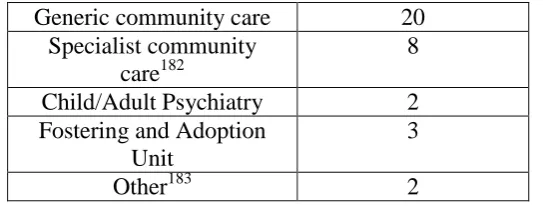
Table 3: Generic, specialist and therapeutic posts ... 155
Table 4: Total respondent group by setting (N=52) ... 155
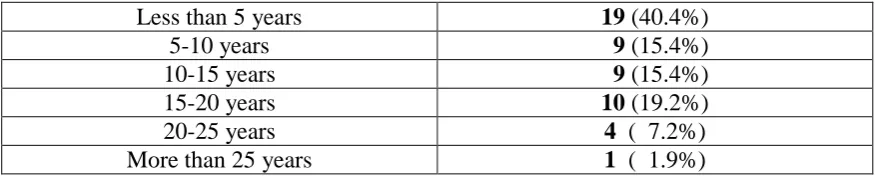
Table 5: Length of post-qualification experience(n= 52) ... 156
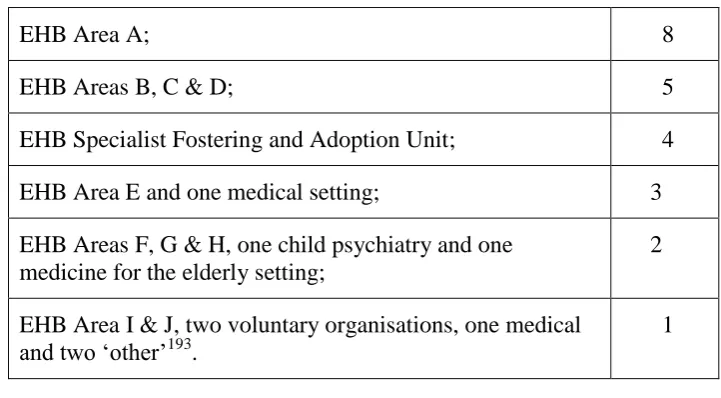
Table 6: Number of Course Participants by Location ... 157
Table 7: Reasons for attending training and stage in innovation-decision process (after Rogers 1995) ... 157
Table 8: Factors influencing decision to ‘seek knowledge’ (N = 37) ... 158
Table 9: General levels of recall ... 170
Table 10: Appeal of SFT. ... 171
Table 11: Categories of Appeal of SFT by frequency of mention ... 172
Table 12: Early Rejecters of SFT ... 177
Table 13: Breakdown of Patterns of Experimentation (n= 37) ... 181
Table 15: Participants who tried SFT once following training ... 186
Table 16:Child Protection ... 190
Table 17: The 15 ‘returnees’ by agency setting ... 205
Table 18: The rejecters ... 214
LIST OF FIGURES
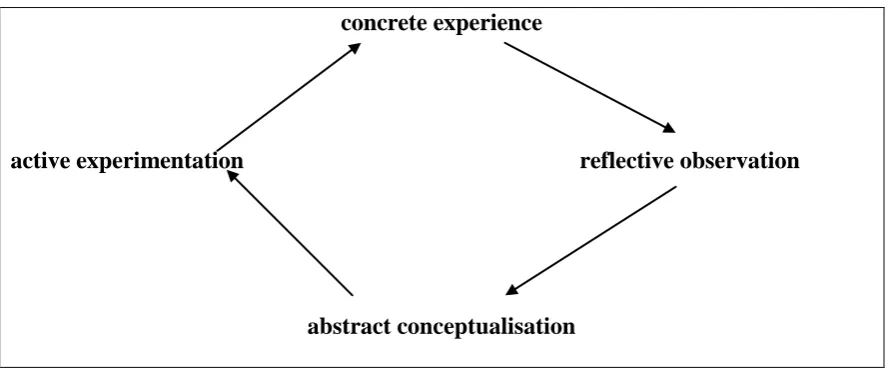
Figure 1: Kolb’s Learning cycle (1984) ... 92
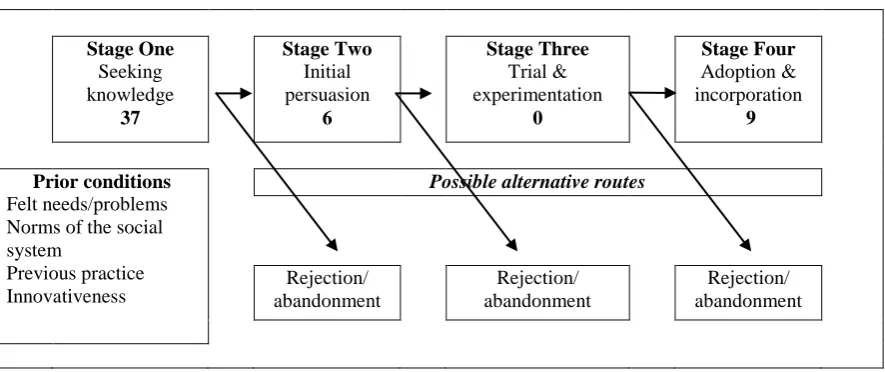
Figure 2: Rogers’ Model of Stages in the Innovation-Decision Process (1995: 163) ... 120
Figure 3: Variables determining the Rate of Adoption of Innovations (Rogers, 1995: 207) ... 121
Figure 4: Timeline: Some key events and dates in the cross-national diffusion of SFT ... 144
Figure 5: Location of respondents in the Innovation-Decision Process at the time of the SFT course (after Rogers, 1995) ... 151
Figure 6: Profile of the research subjects ... 153
Figure 7: Movement of 52 Respondents through Innovation-Decision Process (after Rogers, 1995) ... 213
Figure 8 –The Optional Innovation- Diffusion Process in Social Work. ... 235
ABBREVIATIONS
BASW
British Association of Social Workers
CPD
Continuing Professional Development
EHB
Eastern Health Board
IASW
Irish Association of Social Workers
IFSW
International Federation of Social Workers
MRI
Mental Research Institute, Palo Alto, California
NASW
National Association of Social Workers, USA
NISW
National Institute of Social Work, UK.
CHAPTER ONE: INTRODUCTION
This study is concerned with an attempt to change social work practice by the introduction of a new practice method to Irish practitioners and managers through the medium of a short post-qualifying course. The endeavour was initiated by a small group of social work practitioners and managers who had become interested in the approach. It took the form of an ‘ad hoc’ training event provided for social workers across organisational boundaries.
THE STUDY DOMAIN
This case study is centred on a particular short course in Solution Focused Therapy (SFT) held in Dublin in Oct. 1995. It took place over four days – a 2 day ‘Introductory’ course, followed by a 2 day ‘Advanced’ course. It was attended by 70 social work practitioners and managers. The commissioning agency was the Eastern Health Board; the trainer was a London-based social worker/therapist brought over to Dublin for this one event. The majority of participants came from the health board services, with a small number of non-health board employees attending on a fee-paying basis. This was essentially a ‘in-service’ event, provided by employers for their employees with a trainer who had been ‘bought-in’ for this specific piece of work.
It was the second such large-scale event to be hosted by the local health board and presented by the same external trainer in Dublin. The sequence of events during the early 1990s as SFT made its way into the consciousness of Irish helping professions will be tracked in Chapter Five as an example of the introduction and diffusion of an innovation.
Irish social work in the mid-1990s, and specifically in the Eastern region of the country had particular features and characteristics which created the context and backdrop for the world of social workers at that time. In Chapter 2, these features will be enunciated and analysed to make sense of the context within which the actors in this enterprise were located.
This study aims to address the following questions:
(i) How do social workers engage with, assess and incorporate theoretical innovations into their practice?
(ii) What factors influence the processes of engagement with, and evaluation of, innovations in social work?
(iii) What is the role of the short training course in this process?
levels has been adopted as a tool of analysis and as a base for theoretical triangulation. The study data has been analysed to identify and illustrate significant themes in how social workers incorporate practice innovations, taking the form of a case study into the introduction of one practice method.
GENESIS OF THE STUDY
This study grew out of my own experiences as a social work practitioner and educator over two decades. My completion of professional social work training in Ireland in 1978 was followed by periods of employment in Irish community care social work and English local authority social work in the areas of child welfare and mental health social work. Ten years in practice and numerous short training courses were followed by a postgraduate course in mental health social work with children and families1 and subsequent family therapy training2 in London. These experiences reawakened my interest in the relationship between theory and practice and the different forms of knowledge or wisdom which practitioners draw on, develop and construct both in the course of their day-to-day work and developmentally over their years in practice. During my last years of employment as a social work practitioner, I trained in and used Solution Focused Therapy (SFT) in my own work in a family therapy setting in London, and then in a community care ‘child protection’ setting in Dublin, and latterly in independent and court social work.
My move to the world of social work education in Ireland in the early 1990s coincided with a local developing interest in SFT as an approach for practice, and its introduction to Irish social work practitioners through training courses and texts. As an advocate of SFT myself, I was involved in these developments3.
SOLUTION FOCUSED THERAPY4
Solution Focused Therapy (SFT) is a particular practice model for the helping professions developed in a family therapy centre in the USA in the 1980s. SFT has been defined as:
… a strategy for encouraging clients to persuade themselves that their lives are not as troubled as they assume. (Miller, 1997: 19)
1 The postgraduate diploma in mental health social work with children and families at the Maudsley
Hospital, accredited by the University of London in 1988.
2 The Foundation course in Family Therapy and Part One of the Family Therapy training at the Institute of
Family Therapy in London, 1989-1991.
3 At the same time as embarking on this thesis in Oct. 1995, I was a significant actor in the establishment
of training courses on the approach in the local Health Board; collaborated with practitioners to edit a collection of single case studies using the approach (Walsh, 1997); engaged with an academic colleague in providing short training courses on the approach to agencies who requested this; and had already written an article on the approach for an Irish social work journal (Walsh, 1995).
4 Solution Focused Therapy is also sometimes referred to as Solution Focused Brief Therapy but for the
The various contested claims in relation to SFT, its epistemological and theoretical origins and potential usefulness to social workers will be considered further in Chapter Four. It is an approach to change-work which, according to one classification of types of social work, is located on a reflexive-therapeutic axis5 (Payne, 1997). The approach has been ‘read’ in several different ways:
some initial formulations considered it to be a cognitive-behaviourist model, which concentrates on achieving specific behavioural and/or cognitive goals with clients on an individual casework level, usually within a specific brief goal or time limited framework;
others view it as located within a social constructionist view of reality (McNamee & Gergen, 1994);
others as a existentialist/humanist approach (Payne, 1997).
One of the originators of the approach locates it within a ‘interactional constructivist’ framework (de Shazer et al., 1986). It has been described by one researcher as an approach which:
… directly challenges the fundamental assumptions of most forms of psychotherapy and family therapy by treating clients’ troubles as social constructions. Troubles are, from this perspective, literally talked into existence by clients and others in their social worlds, and can therefore be talked out of existence if clients describe their lives in new ways. (Miller, 1997: 18)
POST-QUALIFYING DEVELOPMENT AND EDUCATION IN SOCIAL WORK
Post-qualifying courses and events can act both as a catalyst and a significant conduit for the introduction of new concepts, philosophies, theories, practice models and policies into the practice arena.Social workers are, through professional training courses, journals and literature, exhorted to consider themselves as beginning practitioners at the end of their training. They are expected to engage in a process of continuing professional development (Adams, Dominelli & Payne, 1998; Compton & Galaway, 1994), which includes the development and refinement of skills, knowledge and practice for generic and specialist social work practice.
SFT was popularised and developed in the Irish context through large and small scale events of short duration in the absence of formal qualification routes or accreditation criteria6.
Short courses, in comparison with long courses7, are generally intensive, sometimes consisting of a limited number of days ‘training’, or alternatively a short course followed by work-based support
5 Reflexive-therapeutic social work seeks ‘the best possible well-being for individuals, groups and
communities in society, by promoting and facilitating growth and self-fulfilment. A constant process of interaction with others modifies their ideas and allows them to influence others. This process of mutual influence is what makes social work reflexive. In these ways, people gain power over their own feelings and way of life. Through this personal power, they are enabled to overcome or rise above suffering and disadvantage’ (Payne, 1997: 4).
6 This is now changing in the UK: The University of Birmingham established a Masters programme in
in implementation, either externally or internally provided. An organisation might ‘buy-in’ a trainer or alternatively send employees to externally organised courses. The majority of post-qualifying courses within social services in the UK fit within the parameters of in-service training courses provided by the organisational ‘training unit’ (Howarth & Morrison, 1999). The situation in Ireland was somewhat different at the time of this study.
The term ‘training’ is problematic in the discourse of continuing professional development and education, as it implies a technical-rational8 model of learning in an organisational environment of agreed and uncontested goals. Smale (1998) has described training as
… a term which often implies, amongst other things, technical expertise to be used by staff
on ordinary people rather than working with them; a neutral value stance where values are being changed; and an absence of political judgements where power and authority relations are an integral issue at stake. (p. 201, original emphasis)
Howe (1986) notes that
Whereas training is an appropriate experience for those carrying out prescribed tasks, professional education suggests that practitioners, acting autonomously, should also be able to enquire and understand the ‘reason why’ of things. (p. 153)
While “training” continues to be the dominant rhetoric in the literature on post-qualifying development, or at least that premised on the work of the ‘training unit’ in a large organisation (Reid & Barrington, 1994), it remains problematic for the reasons outlined above when applied to the fields of social work and social care. In this study the term “post-qualifying short course” will be used most of the time9 instead of “training” in order to include the concepts of continued development and education.
The process connecting my two foci of enquiry (short courses and the diffusion of innovation) is that of the transfer of learning. Both in the literature on social work training and practice (Howarth & Morrison, 1999) and the organisational literature on the impact of short courses (Buckley & Caple, 1995), the key process is seen to be in the transfer of learning from short courses to working realities. This study attempts to track such a transfer, by the collection of data sometime after a short course through the self-reports of participants. It contextualises this through the profiles of the participants and the local conditions within which they were working. The general literature on
7 ‘Longer courses’ are generally located outside the employing organisations and frequently within
academic institutions, often involving the payment of large fees, regular work release, and lasting for at least one academic year.
8 ‘Technical rationality holds that practitioners are instrumental problem solvers who select technical
means best suited to particular purposes’ (Schon, 1987: 3). Furthermore, ‘technical rationality rests on an objectivist view of the relation of the knowing practitioner to the reality he knows. On this view, facts are what they are, and the truth of beliefs is strictly testable by reference to them. All meaningful disagreements are resolvable, at least in principle, by reference to the facts. And professional knowledge rests on a foundation of facts’ (Schon, 1987: 36).
training, learning theories, and the specific social work and social care literature on training and development are reviewed in Chapter Five.
RATIONALE FOR THE STUDY
While SFT has been considered by its advocates as an innovation, as something ‘new’ and ‘different’, its status as an innovation as perceived by a particular professional group, had not been tested empirically prior to this study.
Although one study had considered its effectiveness as a social work tool in Finland (Sundman, 1997), and another text has developed a hybrid of SFT (de Shazer et al., 1986) and Narrative therapy (White & Epston, 1990) into a model for Constructive Social Work (Parton & O’Byrne, 2000), no studies have been published which consider how social workers view and understand this approach; whether it has an appeal to them or not; whether it appears more applicable in some settings than in others; and (most importantly) how they fare when they try to use the approach in practice.
As no research had been carried out on the perceptions of SFT held by Irish social workers10 or on the impact of the SFT short courses that were becoming popular both in Ireland and in the UK, I was keen as an educator/researcher to address this gap in knowledge. Of related interest was the question of the impact of short courses over time and their role in the diffusion of practice innovations.
The assessment of SFT by a large cohort of social workers across a range of settings could also illuminate whether social workers in the Irish context accept therapeutic interventions as part of their social work tasks, and if so, how central they are in the practice of social work.
The particular Irish context within which social workers were practising and within which this short course took place will be described in Chapter Two.
SOCIAL WORKERS AND THEIR USE OF FORMAL11 THEORY
Studies of the effectiveness or applicability of social work practice methods (Goldberg et al., 1985; McDonald & Sheldon, 1992) have tended to be focused on the gathering and analysis of primarily quantitative data. This traditional scientific approach has the disadvantage of taking for granted ‘the
10 The only study I was able to locate which had followed up the participants of SFT training was an
American one focused on which techniques they had adopted, collecting information through postal questionnaires (Skidmore, 1997).
11
methodology and basic assumptions of the scientific method in generating these results’ (Payne, 1997: 288). Large scale in-depth studies into the practice of social work (DHSS, 1978; Crousaz, 1981), practitioners’ use of theory (Curnock & Hardiker, 1979; Secker, 1993) and the development of professional, (Eraut, 1994) and specifically, social work expertise (Harrison, 1991; Hindmarsh, 1992, Fook et al., 2000) have confirmed the inadequacy of a positivist, technical rational approach for exploring and analysing practitioners’ use of formal theory and their development of ‘personalised knowledge’ (Eraut, 1994). Newer epistemologies of practice centred on the notion of the ‘reflective practitioner’ (Schon, 1983; 1987; Gould & Taylor, 1996) have reformulated the practitioner’s position as that of an active researcher, creating theories for individual cases, as practice experiences inform thinking. However, these newer theories also have some shortcomings.
Not all short courses are concerned with the introduction of practice innovations but those which are, and the role of such courses in the diffusion of practice innovations, have been relatively under-researched in the field of social work. The classic task-centred studies of the 1970s (Reid & Epstein, 1972; Goldberg, Gibbons & Sinclair, 1985) focused on the outcomes of the application of a specific model; they did not explore practitioners’ perceptions of the approach or their translation of it from training course to work practice.
The nature of social work, studies into the practice of social work, the use of formal theory by social workers, and newer epistemologies of practice will be reviewed in Chapter Three.
AIMS OF THE STUDY
This study seeks to complement existing studies in the development of knowledge about how social workers process practice innovations. It takes participants at one specific short course in SFT as the research subjects, employs a qualitative research framework and adopts an interpretative/constructionist research paradigm. The methodology will be discussed in Chapter Six.
An innovation is an idea, practice, or object that is perceived as new by an individual or other unit of adoption. It matters little, as far as human behaviour is concerned, whether or not an idea is ‘objectively’ new as measured by the lapse of time since its first use or discovery. The perceived newness of the idea for the individual determines his or her reaction to it. If the idea seems new to the individual, it is an innovation. (Rogers, 1995: 11)
Rogers’ theory is described and reviewed in Part Two of Chapter Five. In Chapter Seven, the theory is drawn on to illustrate how SFT was diffused from American family therapy to Irish social work.
My initial research questions focused on the impact of the training on participants and sought to assess this quite narrowly. However, as data collection and analysis progressed, it became evident that the research interviews had created an opportunity for the social work interviewees to reflect upon and develop their own views about the nature of the social work enterprise, the impact of formal theory (such as practice models) on their practice and other factors which they saw as critical to their day-to-day practices: in short, the respondents in this study were theorising their practice through the interviews. Subsequently my research questions were reformulated:
1) What can be learnt from this study about the relevance to social workers of short post-qualifying courses on formal theories such as SFT?
2) How do social workers make sense of and incorporate theoretical innovations into their practice in the post-qualifying environment?
3) What can be learnt about the different factors at individual, team and organisational levels, and the interplay between such factors, which influences engagement with, and evaluation of, innovations in social work?
LAYOUT
To recap, the study is divided into twelve Chapters.
Chapters One to Six deal with the context of the case study.
In Chapter Two, the context of the study, that of Irish social work in the Dublin area in the mid-1990s is described.
The Literature Review consists of three chapters, Three to Five inclusively. Chapter Three considers the nature of social work and its defining components and examines and assesses studies on social work practice, practitioners’ use of theory and epistemologies of practice.
In Chapter Four, the origins of SFT are outlined, the model itself is explained and SFT research studies and critiques reviewed.
In Chapter Five, Part One reviews the literature on organisational training and organisational change and theories of learning in so far as they are relevant to my study. The literature on social work/social care training and development is examined and key issues discussed. In Part Two of Chapter Five, Rogers’ theory on Diffusion of Innovation is outlined.
Chapter Six details the methodological framework of the study.
The Dublin short course is firstly contextualised through a description of some of the significant events leading to the cross-national diffusion of SFT into the Irish social work world in Chapter Seven.
Chapters Eight, Nine and Ten contain the central findings of the study.
Chapter Eight provides a profile of the research subjects, an overview of the ’prior conditions’ leading subjects to attend the short course and their evaluation of the course itself.
Chapter Nine outlines the research subjects’ perceptions of SFT and an analysis of the level and types of appeal SFT had.
Part One of Chapter Ten maps the subjects in relation to their positions in the innovation-decision process at the time of attending the short course and describes their intentions and efforts to use SFT after the course. Part Two maps and then analyses their movement through the innovation-decision process between the time of the course and the study one year later, identifying both the individual and environmental factors which had an bearing on their progress.
Chapters Eleven and Twelve provide the discussion and concluding sections of the thesis. Chapter Eleven provides a discussion of the findings of the study and reviews these in relation to existing literature. A map of the innovation-decision process is proposed and described, and its component parts and processes are analysed.
CHAPTER TWO: THE LOCAL SETTING
To understand and interpret case studies, researchers describe the context in detail. (Gilgun, 1994a: 375)
INTRODUCTION
This chapter provides a detailed picture of the employment context within which this study is located – namely the world of Irish social work practitioners in the Eastern Health Board region12 in the mid-1990s.
THE EARLY DEVELOPMENT OF IRISH SOCIAL WORK SERVICES
Historical accounts (Gilligan, 1991; Skehill, 1999) have noted that the early development of social work in Ireland took place primarily within medical settings through the appointment of almoners. Voluntary bodies played a major role in the development of social services in Ireland from the beginning of the twentieth century:
In the past, it was the religious orders or Protestant voluntary committees that ran schools for the poor, orphanages and hospitals. Organisations such as the ISPCC13 acted to protect children from neglect and violence. Societies such as the St. Vincent de Paul sought to provide some kind of financial safety net to poor families. (Gilligan, 1991: 143)
Until the beginning of the 1970s, the numbers of social workers employed in Ireland remained minimal, with the majority employed in medical, psychiatric or voluntary settings (Skehill, 1999).
The development of Irish social work services entered a new phase in the late 1960s and early 1970s, coming under the direct influence of the State for the first time when social workers were appointed to the probation service in 1969, and then to the newly established health board structure of community health and welfare provision in 1974. This expansion of social work posts within statutory services is reported to have been coupled with a diminishment of the role of voluntary (or non-statutory) agencies as direct employers of social workers (Gilligan, 1991).
THE ESTABLISHMENT OF IRISH COMMUNITY CARE SOCIAL WORK
The 1970 Health Act provided for the establishment of eight Regional Health Boards divided into three ‘programmes’, catering for general medical, ‘special’ medical and community care services. While the Act did not make specific provision for a social work service, one was subsequently established within the community care teams, linking health and social services at the point of
12 The Eastern Health Board is one of eight regional health boards in the Republic of Ireland providing
health and social services on a geographic basis. The Eastern Health Board covers the counties of Wicklow and Kildare and the city and county of Dublin.
delivery (Dept. of Health, 1985). The creation of the social work service headed by a medical Director of Community Care was not without its problems and Butler (1996) notes that during the 1980s a vigorous but unsuccessful campaign was fought to establish an administratively separate social work service which would protect professional autonomy.
The community care programme aimed to provide a unified health and welfare service on a countrywide basis. Whilst social workers were employed in all three programmes, it was within the community care programme that a significant expansion in the number of social workers employed occurred in the 1970s14.
Irish community care social work was originally envisaged as a broadly based service for three particular groups: the elderly, the disabled and families with young children but from the mid-1970s social work with children and families became its primary focus (Dept. of Health, 1985).
By the mid-1980s, although there was a sizeable number of social workers employed within the community care service and smaller numbers in medical, psychiatric and voluntary settings15, the service in all areas was viewed as inadequate and in need of expansion (Department of Health (Ire.), 1985). Embargoes on public spending during the 1980s ensured that the social work field remained static in terms of numbers employed until change came with improved economic conditions and raised public concerns about social problems towards the end of the 1980s.
The social work service within the community care structure consisted, until the early 1990s, of two grades: social work practitioners and senior social work managers, accountable to the medical Directors of Community Care in each local area.
The Eastern Health Board was the largest of the eight health boards and the biggest employer of social workers in the country. At the time of this study, it was divided into ten geographical areas, numbered one to ten, covering Dublin city and county, Wicklow and Kildare.
THE EVOLUTION OF CHILD PROTECTION SOCIAL WORK
During the 1980s, prioritising of work with children and families, to the neglect of a more generic role, continued within community care social work, and a further restriction emerged in the type of cases considered most in need of a service:
14 Skehill (1999) notes that the number of social workers employed in the Eastern Health Board region rose
from 3 in 1974/5 to 41 social workers and 9 senior social workers by 1976.
15 In the mid-1980s, there were estimated to be approximately 300 social workers employed by health
Social work in community care is a frontline service which aims to provide a locally based facility for people who need help with social problems (p. 27) … [ but] in most areas the service is confined to families and child care … in some areas this focus has been further concentrated on families with children at risk. (Dept. of Health, 1985: 59)
Over the three decades from 1970 the terms ‘child abuse’ and ‘child protection’ have ‘gained increasing currency on the Irish public and political agenda, reinforced from time to time by highly publicised events’ (Buckley, 1999: 21), and this contributed to the increasing focus on incidents of abuse and neglect in community care social work.
However, the emergence of ‘child protection’ as a distinct form of social work practice can be dated more recently, and was, I contend, imported into the Irish context from our UK neighbours in the late 1980s and early 1990s (Walsh, 1999), fuelled not only by specific highly publicised events but also by the activities of key actors and professional groups for whom it was a domain of especial interest. That social workers were also actors in this process must be acknowledged.
Whilst a number of high profile Inquiries into individual cases of serious child abuse (Dept. of Health (Ire.), 1993; Keenan, 1996) resulted in ‘unprecedented public and political attention on child protection policies and practices’ (Ferguson, 1996: 5) ‘child protection’ and the notion of a ‘child protection system’ became established through specific Irish publications (Ferguson, 1993; 1994; 1995a; 1995b; Buckley, 1996), the establishment of postgraduate courses in Child Protection and Welfare in two Irish universities in the early 1990s16, and the first large-scale commissioned research studies into the working of the ‘child protection system’ in the mid-1990s (Buckley et al., 1997; Ferguson & O’Reilly, 2001)17
.
These developments took place within a context of increased public and political scrutiny of child welfare services, and the reframing of child welfare work into child protection work created both additional tensions and opportunities within the field of social work.
EFFECTS OF THE EVOLUTION OF CHILD PROTECTION SOCIAL WORK IN THE 1990S
Legislation
The Child Care Act, 1991, was implemented in the period 1994-1996. Implementation was hastened in response to the high-profile Kilkenny case and the subsequent publication of the first Irish inquiry into the role of the state in child welfare (Dept. of Health (Ire.), 1993).
16 The postgraduate courses and specialisation by academics in child protection also led to an increase both
in publications and research studies into Child Protection and Welfare by postgraduate students (Buckley, 2002).
17
This legislation had the potential to fundamentally alter the shape of services for vulnerable children and their families, as for the first time it introduced into Irish legislation the requirement that the delegated authorities (the health boards) should promote the welfare of children in need of services as well as safeguard those who needed protection. Yet, research indicates that safeguarding activities accounted for over 81% of the budget for child care services compared to 19% for promotional activities in the EHB area in the mid-1990s18. A study in another Irish health board at the same time found that ‘much of the time and energy of those charged with promoting the welfare of children has been directed into a more narrowly focused child protection framework’ (Buckley et al., 1997: 18, original emphasis).
Social workers on the ground were found to be predominately occupied with the investigation and management of cases of suspected child abuse and neglect. The filtering of such cases through a narrow ‘child protection’ lens at the expense of a broader role in promotional, preventative and therapeutic activities was a phenomenon which has also been identified in the UK system some years previously (Howe, 1992).
Additional resources
The provision of additional resources to implement the Child Care Act of 1991 led to a period of expansion from the mid-1990s, which consisted not only of an increase in social work posts within the health board community care services, but also to an increase in posts in related social professions19. The increasing number of ‘frontline’ posts was filled primarily by newly-qualified social workers (NSWQB, 2000). Even with a sustained expansion of social work posts over 7 years, the level of social work provision per head of population in Ireland was found in 1999 to be amongst the lowest of the industrialised countries and less than 50% of the level offered within the UK20. This staffing level raised serious questions about what may be expected from a social work service.
18
Safeguarding activities were identified as those which targeted: child protection, provision of alternative family and residential care and child psychiatry services; and on a universal level: child abuse and accident prevention programmes; and health education on drugs and alcohol. Promotional activities included: counselling, child care, families and parenting groups; and on a universal level: family resource centres, nurseries and community mother schemes.
19 By 1999, it was estimated that the Department of Health and Children was the ‘parent’ department for
83.3% of the total number of 1,390 social work posts established in the country, with the majority of posts (58.6%) located in health boards. 1996 Census figures are reported to have shown an increase in the numbers of related professions in the mid-1990s, and ‘In Child Care, Youth and Community Work and Social Care, there has been a dynamic expansion, not only in relation to numbers of students and courses but also new specialisms (e.g. Community Childcare worker, Early years worker, Play worker) and new levels of qualifications’ (NSWQB, 2000: 12)
20
The introduction of new specialisms, such as the community care psychologist and childcare worker working alongside or within social work teams, also challenged the nature of the social work task and role definition for community care social workers, offering as it did alternative opportunities for therapeutically-oriented work and generic family support work to be carried out by non social work professionals.
The impact of expansion
The expansion of the child welfare service resulted also in the introduction of new levels of community care management, with a team leader grade introduced in the early 1990s. Although there has been a ‘major growth in the managerial component in child protection work’ (Buckley, 1999: 22) with increased attention paid to the introduction of protocols and procedures, it can be argued that community care social work remained chronically under-managed and supported. The slow development of team leader posts within community care social work, the expansion of team leader responsibilities and duties in relation to the extension of locally-provided residential facilities and so-called ‘special arrangements’ for individual children21; increases in the numbers of child welfare cases in court, and the introduction of child care workers into social work teams, created a situation where some practitioners received less rather than more supervision, support (and surveillance) for their work. Ratios of team leaders to supervisees (social workers and child care workers) appear to have been in the region of 1-15 in the mid-1990s.
New procedures were introduced in the 1990s, the most notable of which was recommended by the Kilkenny Incest Case report (Dept. of Health (Ire.) 1993) and made it a requirement for Health Boards and the Gardaí to share information in cases of suspected child abuse and neglect (Dept. of Health, 1995). Buckley has warned about the dangers of an over-reliance on protocols and procedures based on the assumption that child maltreatment is predictable and therefore preventable, as
… failure to reach this goal renders the practitioners charged with statutory obligations in child protection seriously culpable, and creates a tension between front-line workers and their official agency function. (Buckley, 1999: 22)
21 The term ‘special arrangement’ ‘Describes provision for a child or children in the care of the health
board which is neither foster care or an already established children’s residential centre … usually arises from one of four reasons: i) in response to a high court order stating that the child is to be kept in a secure placement and the health board is unable to locate such a placement; ii) as an emergency response to a child in its care for whom no placement could be found; iii) as a planned placement for a child with unique difficulties, following a comprehensive assessment, and iv) a family group of brothers and sisters, in need of care and whose interests are served if they remain together, sometimes within the family home.
The effect of this new protocol for social workers was profound because it reinforced both their role in, and perception of them (by clients and others) as agents of, social control and regulation. Other protocols and managerial structures and bodies have been proposed since 1995-1997 but have stalled because of continuing staffing crises. The most significant of these, the 1999 Children First, new national child protection and welfare guidelines are not yet fully implemented in the EHB region because of staffing shortages and training delays.
Public scrutiny
The extent to which social workers are mindful of, and possibly organised by, fear of censure and public criticism in child protection work, has been documented both in the UK and Ireland (Howe, 1992; Buckley, 1999). In Ireland in the mid-1990s, a study into child protection practices in one Eastern Health Board area office found that the
… social workers in this study … felt caught between the public perception attached to their role, and the reality of day-to-day practice. Practitioners felt that their work was being driven by ‘politicians and the media’. (Buckley, 1999: 36)
The impact of this fear of censure is thought to lead to a form of defensive practice, and intense anxiety on the part of those charged with child protection responsibilities, which in itself stifles the ability to reflect on and consider the impact of particular actions:
… the climate of professional impotence and defensiveness attenuates our capacity for self-examination, which in turn feeds our helplessness and increases our anxiety. It is harder to stand outside and evaluate with a fresh eye, (Cooper, 1999: 102)
Practitioners and their managers in such situations may be less likely to grapple with the uncertainties and complexities inherent in child welfare work, and, instead of considering alternatives to substitute care for a child deemed to be at risk of harm, prefer the safer option of removal, mindful that ‘all that the wary social worker and her supervisor have to do if blame is to be avoided is “go by the book”’ (Howe, 1992: 507).
Child Protection social work and anxiety
communication within client families (and professional systems) (Reder, 1986; Reder, Duncan & Gray, 1993; Dare et al., 1990). Whilst the splitting of the child protection task between a numberof professional individuals and agencies can lead to confusion about roles and boundaries, it is also maintained that
… in the case of child abuse, it is primarily the nature of the problem that activates a large network of statutory and other workers who are deemed relevant to its solution. (Reder, Duncan & Gray, 1993: 68)
Such networks can become ‘problem-determined systems’ if the necessary resources and structures are not provided for workers in child protection. Reder et al. (1993) identify the need for a ‘secure work setting’22
to minimise dysfunctional professional systems. Hughes and Pengelly (1997) identify anxiety-laden dynamics which can occur when ‘worker, supervisor and the agency as a whole are being bombarded by the impact of emotional issues arising from certain sorts of work that occupy most of their time and energy’ (p. 92). They suggest that
… agencies where the task is entirely concerned with human ‘raw material’, where the main technical resource consists of the staff themselves and where the work must be carried out predominately via relationships with service-users, are especially prone to be affected by specific anxieties stirred up by the work, and by the staff’s need to defend against them. (p. 119)
The impact of uncontained anxiety and unconscious fantasies on child protection workers (and others in health and mental health services) is borne out by the findings of Woodhouse and Pengelly (1991) and Cooper (1999). The former note that social services departments sometimes behave like ‘citadels under siege’ where
The boundaries of social work – within which social workers should be sure of their distinctive role and competence, and across which they receive a public mandate and are in turn publicly accountable – have resembled a war zone more than a workable frontier. (p. 175)
In social services departments focused on child protection work, they found that fear of failure (and censure) not only came from without:
… we discovered that social workers needed no external accusers. They were the first to blame themselves, often in anticipation. Their professional self-esteem was undermined not only from outside but from within, by anxiety that they might be perpetrating the very failures of parenting which they were committed to making good. (Woodhouse & Pengelly, 1991: 177)
Cooper’s comparison of the nature and forms of anxiety in the French and English child protection systems highlights the role of the judiciary in either containing or diffusing anxiety through the more or less active role played by Judges in the different systems. He concludes that
22 ‘Many factors contribute to a secure setting, including adequate training, regular supervision and
… the structural relationship between the social work and legal parts of the English system does not readily enable child protection workers to manage their own authority; authority is too easily experienced as destructiveness … social workers deserve, and need, to be protected from external blame; the potential for self-blame and guilt, transferred from and activated by the families themselves, is already great enough. (p. 113)
Staffing and workloads
By the mid-1990s, there were indications that the community care social work service in the Eastern Health Board region was under severe strain, resulting in an increase in the number of staff resignations23 and threatened industrial action.
The threat of industrial action triggered an external review (EHB/Impact, 1997) of the region’s child care and family support services, a review which not only identified factors contributing to the strain24 but which also outlined the nature of the ‘strain’25. This review also produced a profile of services within the region which challenged assumptions that the ten local community care areas comprising the EHB region were ‘dancing to the same tune’. Instead this review illustrated firstly: the extent to which social workers in the different areas were interpreting their responsibilities and defining priorities according to individual and collective team perceptions of need; and secondly that the practice realities within which individuals worked differed greatly in the sense of pressure of workload perceived, the perceived focus of the service and the emphasis placed on child protection versus a broader child welfare remit (EHB/Impact, 1997).
FEATURES OF THE LOCAL CONTEXT AT THE TIME OF THE STUDY
At the time that this study was conducted, local practitioners were operating in a field of practice that was becoming increasingly dominated by concerns regarding child abuse and child protection. Recent Irish Inquiries into high profile cases had held both health boards and their social workers to
23
Fulham (1997) in a study on staff retention problems in one community care area found that factors influencing the decision to resign included ‘high stress levels, unmanageable case loads, and a lack of resources such as placements for children in need of care’, and that the majority of respondents in this small study ‘received no induction training and all were allocated a case load within the first week’.
24 Factors identified were: new and additional responsibilities arising from the Child Care Act, 1991, and
other new legislation in the arenas of adoption and domestic violence; the increase in the demand for child protection services arising from increased public awareness of the issue and a preparedness to report incidents or concerns of abuse; increases in demand and complexity of work with adolescents where drug use was an issue; failures in planning which had produced large discrepancies in the numbers of social workers trained and the staffing requirements of employers; and the reduction in the commitment of independent voluntary and religious bodies to provide residential care for children and young people (EHB/Impact, 1997).
25
account for past failures to protect children. New legislation was being enacted which placed additional responsibilities on health boards in the areas of child welfare, adoption and domestic violence. Area teams were expanding, practitioners were being promoted into management positions or leaving the service, and there was an increase in the number of newly qualified workers who were operating the frontline child protection system. As posts increased, so also did vacancies. As public awareness of child abuse grew, the number of referrals received by health board offices increased. Waiting lists were introduced in some areas to reduce the pressure of high caseloads on individual workers. Local reorganisations included the introduction of intake systems in some areas and tiered levels of management. This redefining of the community care social work service as part of a child protection system, and the expansion of child care and family support services and social work posts within the community care structure created both opportunities and strains for those working within the system.
CHANGES DEMANDED OF PRACTITIONERS
The contextual features outlined above also challenged social workers to question the nature of their role and the type of work they could carry out. Howe argues that the establishment of a discourse of ‘child protection’ redefines the roles that the various actors have to play:
Social workers would have to become investigators and not family caseworkers. Managers would have to become designers of surveillance systems and not casework consultants. Parents would have to become objects of inquiry whose behaviour could be predicted and not people whose skills could be improved. The shift is from therapy and welfare to surveillance and control. (Howe, 1992: 497)
Two particular aspects of practice which were apparent in this location at the time of the study were:
the increasingly explicit regulatory role which social workers were expected to undertake; and the increase in referrals to health boards and the numbers of cases or families awaiting a service on waiting lists.
questionable given that most traditional theories of helping are premised on a functionalist approach to practice (Howe, 1987) and based on a consensusmodel of society26.
Social work caseloads and referral rates to services continued to escalate throughout the first part of the 1990s, demanding change in patterns of response and creating pressure to undertake work which would be short-term and limited in focus. Many traditional practice theories27are not brief methods of intervention, and the practitioners were not necessarily trained to adapt to these changing conditions. Thus the advent of a training event in a ‘brief’ method of therapy was likely to be met with mixed reactions.
The introduction of a practice innovation which apparently offered a brief therapeutically-focused intervention was particularly timely, given the need for practitioners and service managers to consider short-term methods of intervention within community care social work, in a context of being increasingly uncomfortable with a more overt social control function. Yet, a question of some importance in these changing conditions, and one which is pertinent to the introduction of a particular practice method with a ‘therapeutic’ label is whether the social work actors employed in the newly-defined child protection system saw themselves as still occupying a therapeutic role in their work or whether this had been abandoned in the new conditions which prevailed.
For practitioners and managers outside the community care structure, located in medical, psychiatric or voluntary settings, the events of the early 1990s were somewhat demoralising.
Firstly social work as a field of practice was in danger of becoming synonymous with child protection (Walsh, 1999), leading to neglected areas of practice and lower visibility and possibly lower status for those occupying other social work posts. Secondly the Department of Health was renamed the Department of Health and Children, emphasising the priority given to this client group at the expense of a broader Personal Social Services remit. Thirdly resources were concentrated in the field of child care, arguably at the expense of other equally needy client groups and services.
HEALTH BOARDS AND TRAINING IN THE 1990S
(a) The Health Board as a ‘learning organisation’
A small-scale analysis of Irish Health Boards was undertaken in 1995 which examined the extent to which they were operating as ‘a learning organisation’28
(Joyce & Kenefick, 1997). While it was
26
However, when one examines the historical literature on casework, it is evident that ‘the use of authority’ was a much-debated concept both in the USA and the UK from the inception of public welfare services (Brown, 1966; Studt, 1966).
27 With the notable exceptions of crisis-intervention and task-centred casework.
28