John Babatunde i
EVALUATING THE IMPACT OF SECURITY MEASURES
ON PERFORMANCE OF SECURE WEB APPLICATIONS
HOSTED ON VIRTUALIZED PLATFORMS
JOHN OLUWOLE BABATUNDE
A thesis submitted in partial fulfilment of the requirements of the
University of East London for the degree of Professional Doctorate in Information Security
Dissertation written by John Oluwole Babatunde
M.Sc., London Metropolitan University, UK MBA, University of Ilorin, Nigeria
B.Eng., University of Jos, Nigeria
Approved by
___________________________________ Chair, Doctoral Dissertation Committee ___________________________________ Members, Doctoral Dissertation Committee ___________________________________
___________________________________ ___________________________________
Accepted by
John Babatunde iv ABSTRACT
The use of web applications has drastically increased over the years, and so has the need to secure these applications with effective security measures to ensure security and regulatory compliance. The problem arises when the impact and overheads associated with these security measures are not adequately quantified and factored into the design process of these applications. Organizations often resort to trading-off security compliance in order to achieve the required system performance. The aim of this research work is to quantify the impact of security measures on system performance of web applications and improve design decision-making in web application design process.
This research work examines the implications of compliance and security measures on web applications and explores the possibility of extending the existing Queueing Network (QN) based models to predict the performance impact of security on web applications. The intention is that the results of this research work will assist system and web application designers in specifying adequate system capacity for secure web applications, hence ensuring acceptable system performance and security compliance.
state-of-the-art web application - Microsoft SharePoint 2013. The experimental data were analyzed using the ANCOVA model. The third study is essentially a modeling-based study aimed at using the insights on the security implications provided by the second study. In the third study, using a well-established QN result - Mean Value Analysis (MVA) for closed networks, the study demonstrated how security measures could be incorporated into a QN model in an elegant manner with limited calculations.
The results in this thesis indicated significant impact of security measures on web application with respect to response time, disk queue length, SQL latches and SQL database wait times. In a secure three-tiered web application the results indicated greater impacts on the web tier and database tier primarily due to encryption requirements dictated by several compliance standards, with smaller impact seen at the application tier. The modeling component of this thesis indicated a potential benefit in extending QN models to predict secure web application performance, although more work is needed to enhance the accuracy of the model.
John Babatunde vi
TABLE OF CONTENTS ABSTRACT ... IV LIST OF FIGURES ... XII LIST OF TABLES ... XIV DEDICATION... XVI ACKNOWLEDGEMENTS ... XVII LIST OF ABBREVIATIONS ... XVIII CHAPTER 1 INTRODUCTION ... 1
1.1 Industrial Context ... 1
1.2 Background ... 2
1.3 System Performance ... 5
1.4 Performance Evaluation ... 6
1.5 Research Questions ... 7
1.5.1 Research Question 1: ... 7
1.5.2 Research Question 2: ... 8
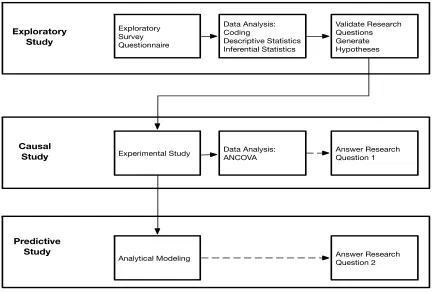
1.6 Research Methods ... 10
1.6.1 Research Methods for Research Question 1: ... 11
1.6.2 Research Methods for Research Question 2: ... 13
1.7 Research Motivation ... 14
1.8 Thesis Outline ... 15
CHAPTER 2 LITERATURE REVIEW ... 17
2.2 System Performance ... 20
2.2.1 Performance, Service Level Agreements and Quality of Service ... 22
2.2.2 Performance Evaluation ... 23
2.2.3 Performance Modeling and Analytical Theories ... 32
2.3 Security ... 37
2.3.1 Security Standards, Regulation and Compliance ... 38
2.3.2 Similarities in Security Challenges for Cloud and Web Applications ... 41
2.3.3 Virtualization and Associated Security Issues ... 42
2.3.4 Enhancing Security in Virtualized Environment ... 45
2.3.5 Security Protocols ... 46
2.4 Web Applications ... 48
2.4.1 Restful Web Application and Microsoft SharePoint ... 48
2.5 Virtualized Hosting Platforms ... 50
2.5.1 Virtualization and Virtual Infrastructure ... 50
2.5.2 Types of Virtualization... 51
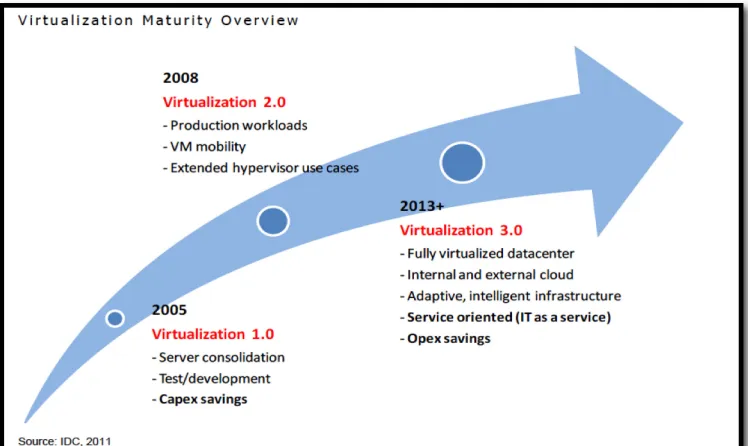
2.5.3 Virtualization Maturity ... 54
2.5.4 The Cloud ... 55
2.6 Gaps in Recent Performance Overhead Studies ... 56
2.7 Impact Evaluation and Causality ... 57
2.8 Conclusion ... 59
CHAPTER 3 RESEARCH METHODOLOGY, DESIGN AND METHODS .... 60
3.1 Introduction ... 60
3.2.1 Research Philosophy ... 61
3.2.2 Research Paradigms ... 65
3.2.3 Types of Research ... 66
3.2.4 Quantitative versus Qualitative ... 68
3.3 Research Design and Methods... 69
3.3.1 Putting all it Together ... 72
3.4 Preliminary Exploratory Survey: Design and Methods ... 73
3.4.1 Data Collection ... 74
3.4.2 Questionnaire Development ... 74
3.4.3 Exploratory Study Variables ... 75
3.4.4 Sampling... 76
3.4.5 Data Analysis Method for Questionnaire Survey ... 79
3.5 Experimental Study: Design and Methods ... 81
3.5.1 Experiment Design and Strategy ... 81
3.5.2 Experimental Study Variables ... 84
3.5.3 Key Arguments and Existing Experimental Gaps... 89
3.5.4 Experiment Lab Setup ... 90
3.5.5 Instrumentation and Performance Testing ... 94
3.5.6 Validity Considerations in Experimental Study ... 96
3.5.7 Data Analysis Methods for Experimental Results ... 97
3.6 Research Ethics Considerations ... 99
3.6.1 Anonymity and Confidentiality ... 100
3.6.3 Safety Considerations ... 100
3.6.4 Project Risk Assessment ... 101
3.7 Summary ... 101
CHAPTER 4 SURVEY AND EXPERIMENTAL RESULTS ... 102
4.1 Introduction ... 102
4.2 Preliminary Exploratory Survey Results ... 102
4.2.1 Response Rate ... 103
4.2.2 Descriptive Statistics ... 105
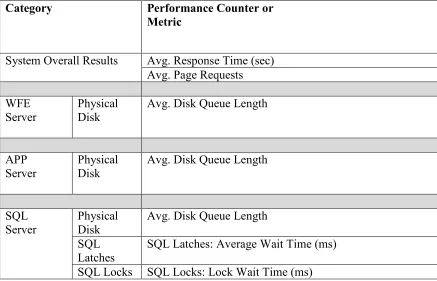
4.2.3 Inferential Statistics ... 116
4.2.4 Hypotheses and Causality ... 120
4.3 Results of Experimental Study ... 121
4.3.1 Impact of Security Measures on End-to-End Response Time ... 121
4.3.2 Impact of Security Measures on Disk Queue Length (WFE Server) ... 125
4.3.3 Impact of Security Measures on Disk Queue Length (APP Server) ... 128
4.3.4 Impact of Security Measures on Disk Queue Length (SQL Server) ... 131
4.3.5 Impact of Security Measures on SQL Server Database Latches ... 134
4.3.6 Impact of Security Measures on SQL Server Database Lock Wait Time ... 137
4.4 Conclusion ... 140
CHAPTER 5 MODELING AND ANALYTICAL RESULTS ... 142
5.1 Introduction ... 142
5.2 Analytical Modeling of Secure Web Applications ... 142
5.2.1 Modeling Context ... 143
5.2.3 Modeling Paradigm ... 145
5.2.4 Modeling Approach... 147
5.2.5 Related Studies ... 150
5.2.6 Reference Architecture ... 153
5.2.7 Study Architecture... 154
5.2.8 Traffic Flow... 155
5.2.9 Experimental Setup ... 156
5.2.10Baseline Multi-Tier Queueing Network (QN) Model ... 157
5.2.11Existing Results for Queueing Networks ... 158
5.3 MVA Model Construction ... 160
5.3.1 Base Model (Control Environment – Without Security Measures) ... 161
5.3.2 Secure Model (Experimental Environment – With Security Measures) ... 162
5.4 Results... 164
5.4.1 Model Results ... 164
5.4.2 Experimental Results... 166
5.5 Conclusion ... 167
CHAPTER 6 DISCUSSION AND CONCLUSIONS ... 170
6.1 Introduction ... 170
6.2 Research Questions and Empirical Findings ... 170
6.2.1 Research Question 1 ... 171
6.2.2 Research Question 2 ... 172
6.3 Summary of Contributions ... 173
6.5 Limitations of Study ... 177
6.5.1 Limitations of Study Affecting the Generalizability of the Findings: ... 178
6.5.2 Limitations of Study due to Cost Constraints: ... 181
6.6 Scope for Future Research ... 182
REFERENCES ... 184
APPENDIX A LAB SETUP ... 195
Hosts ... 195
Virtual Machine Setup ... 197
Base Configuration of SharePoint ... 198
Securing the Experimental Environment ... 198
APPENDIX B SURVEY AND ETHICAL CONSIDERATION ... 205
Questionnaire - Questions and Justifications ... 205
Questionnaire ... 208
Ethics Committee Approval ... 214
APPENDIX C RESULTS OF EXPERIMENTS ... 216
APPENDIX D STATISTICAL ANALYSIS – EXPERIMENTAL STUDY ... 223
APPENDIX E STATISTICAL ANALYSIS – EXPLORATORY STUDY ... 238
APPENDIX F MODEL PARAMETERIZATION ... 242
LIST OF FIGURES
Figure 1.1 A chart of disabled features versus percentage of respondents ... 1
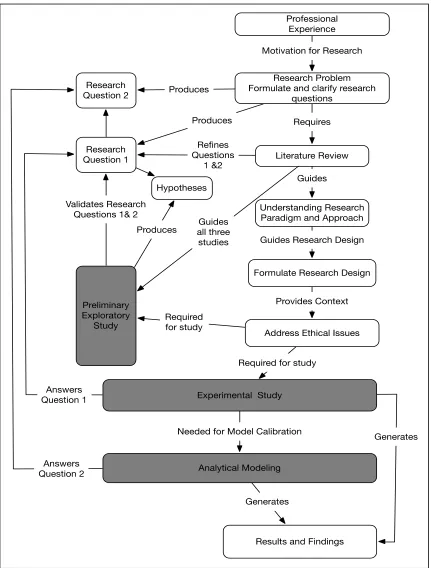
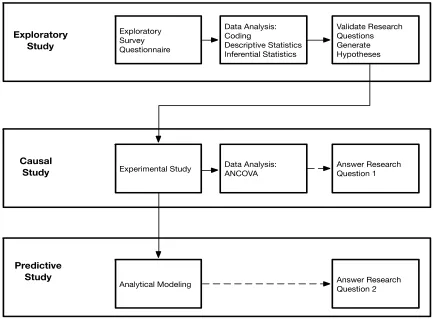
Figure 1.2 Research Method Flow Diagram ... 13
Figure 2.1 Literature Map ... 19
Figure 2.2 Metric Selection Flow Process ... 29
Figure 2.3 Virtualization Maturity Overview ... 55
Figure 3.1 Continuum of Research Paradigms ... 66
Figure 3.2 Continuum of Basic and Applied Research ... 68
Figure 3.3 Thesis Research Design ... 70
Figure 3.4 Research Method Flow Diagram ... 73
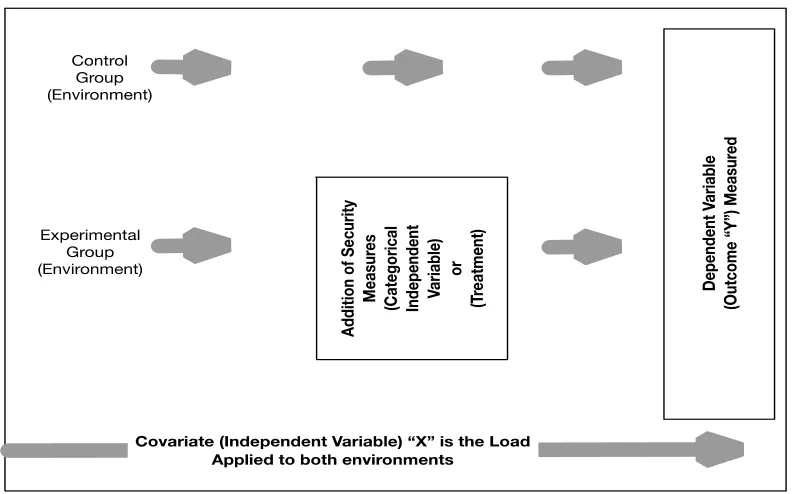
Figure 3.5 Experimental Strategy ... 83
Figure 3.6 Control Environment Test bed SharePoint 2013 (No Security, Control Environment) ... 90
Figure 3.7 Experimental Environment Test bed - Secure Three-Tier Web Application SharePoint 2013 ... 91
Figure 3.8 vCentre Management Console for Experimental Study ... 94
Figure 4.1 Chart for Question 1 ... 106
Figure 4.2 Chart for Question 2 ... 107
Figure 4.3 Chart for Question 3 ... 108
Figure 4.4 Chart for Question 4 ... 108
Figure 4.5 Chart for Question 5 ... 109
Figure 4.7 Chart of Question 7 ... 110
Figure 4.8 Chart for Question 8 ... 110
Figure 4.9 Chart for Question 9 ... 111
Figure 4.10 Chart for Question 10 ... 111
Figure 4.11 Chart for Question 11 ... 112
Figure 4.12 Chart for Question 14 ... 112
Figure 4.13 Chart for Question 15 ... 113
Figure 4.14 Chart for Question 16 ... 113
Figure 4.15 Chart for Question 17 ... 114
Figure 4.16 Eigen Value and Scree Plot ... 119
Figure 4.17 Factor Loading... 120
Figure 4.18 Regression of Response Time (s) by Number of Users ... 123
Figure 4.19 Regression of Disk Queue Length - WFE by Number of Users ... 126
Figure 4.20 Regression of Disk Queue Length – APP by Number of Users ... 129
Figure 4.21 Regression of Disk Queue Length – SQL by Number of Users... 132
Figure 4.22 Regression of SQL Database Latches by Number of Users ... 135
Figure 4.23 Regression of SQL Database Lock Wait Time (ms) by Number of Users . 138 Figure 5.1 Modeling Framework for Multi-tier Secure Web Applications ... 149
Figure 5.2 PCI DSS Three Tier Computing eCommerce Infrastructure ... 154
Figure 5.3 Three-Tier Web Application Architecture ... 155
Figure 5.4 Basic Queueing Network Model ... 157
Figure 5.5 Control Environment (Base) Model (Without Security Measures) ... 161
John Babatunde xiv
LIST OF TABLES Table 1.1 Thesis Outline ... 15
Table 2.1 Commonly used Benchmarks ... 30
Table 2.2 Mapping of ISO 27001, PCI DSS Requirements and Implementation ... 39
Table 3.1 Table of Variables ... 75
Table 3.2: Summary of Sample Size... 77
Table 3.3: List of Participants ... 78
Table 3.4 Selected VS2013 Performance Counters (Dependent Variables) ... 86
Table 3.5 Reduced Dependent Variable List ... 88
Table 3.6 Baseline Test bed SharePoint 2013 (No Security, Control Environment) ... 92
Table 3.7 Secure Three-Tier Web Application SharePoint 2013 Test bed (Experimental Environment – With Security Treatment) ... 93
Table 3.8 Hypervisor Specification ... 93
Table 3.9 Experimental Set ... 95
Table 4.1 Descriptive Statistics Summary ... 105
Table 4.2 Factor Pattern ... 118
Table 4.3 Descriptive Statistics ... 121
Table 4.4 Levene's Test of Equality of Error Variancesa ... 123
Table 4.5 Tests of Between-Subjects Effects ... 124
Table 4.7 Levene's Test of Equality of Error Variancesa ... 126
Table 4.8 Tests of Between-Subjects Effects ... 127
Table 4.9 Descriptive Statistics ... 128
Table 4.10 Levene's Test of Equality of Error Variancesa ... 129
Table 4.11 Tests of Between-Subjects Effects ... 130
Table 4.12 Descriptive Statistics... 131
Table 4.13 Levene's Test of Equality of Error Variancesa ... 132
Table 4.14 Tests of Between-Subjects Effects ... 133
Table 4.15 Descriptive Statistics... 134
Table 4.16 Levene's Test of Equality of Error Variancesa ... 135
Table 4.17 Tests of Between-Subjects Effects ... 136
Table 4.18 Descriptive Statistics... 137
Table 4.19 Levene's Test of Equality of Error Variancesa ... 138
Table 4.20 Tests of Between-Subjects Effects ... 139
Table 4.21 Summary of Experimental Study Results ... 140
Table 5.1 Summary of Estimated Base Model Parameters... 162
Table 5.2 Summary of Estimated Security Enhancement ... 164
Table 5.3 Base Model Result Table ... 165
Table 5.4 Tests of Between-Subjects Effects for Models ... 165
Table 5.5 Validation Experimental Results ... 166
John Babatunde xvi DEDICATION
John Babatunde xvii ACKNOWLEDGEMENTS
I would like to thank my Director of Study, Dr. Ameer Al-Nemrat for his constructive supervision, thoughtful suggestions and guidance throughout this research project.
Special thanks go to my wife, Janet and my children, Tomi and Ola for their support and sacrifice towards this research work.
Above all, I give thanks to God Almighty for sparing my life and providing me with the resources to undertake this research work.
John Oluwole Babatunde August 2015
LIST OF ABBREVIATIONS
ANCOVA Analysis of Covariance
ANN Artificial Neural Network
ANOVA Analysis of Variance
AWS Amazon Web Service
APP Application Server
CMS Content Management System
COBIT Control Objectives for Information & Related Technology
CPU Central Processing Unit
DMZ Demilitarized Zone
DoE Design of Experiment
FIPS Federal Information Processing Standards
HIPAA Health Insurance Portability And Accountability Act
HPC High Performance Computing
HTTP Hypertext Transfer Protocol
HTTPS HTTP over TLS
IIS Internet Information Server
IPS Intrusion prevention systems
IPsec Internet Protocol Security
JMT Java Modeling Tool
LPV Linear Parameter Varying
OSI Open Systems Interconnection model
PAPI Performance Application Programming Interface PCI DSS Payment Card Industry Data Security Standard
PoC Proof of Concept
QN Queueing Network
QoS Quality of Service
REST Representational State Transfer RUBiS Rice University Bidding System
SLA Service Level Agreement
SLR Systematic Literature Review
SOAP Simple Object Access Protocol
SOX Sarbanes–Oxley Act of 2002
SQL Structured Query Language
SSL Secure Socket Layer Protocol
TDE Transparent Data Encryption
TLS Transport Layer Security
UAT User Acceptance Testing
VM Virtual Machine
VPN Virtual Private Network
VS2013 Microsoft Visual Studio 2013 Ultimate Edition
CHAPTER 1 INTRODUCTION
1.1 Industrial Context
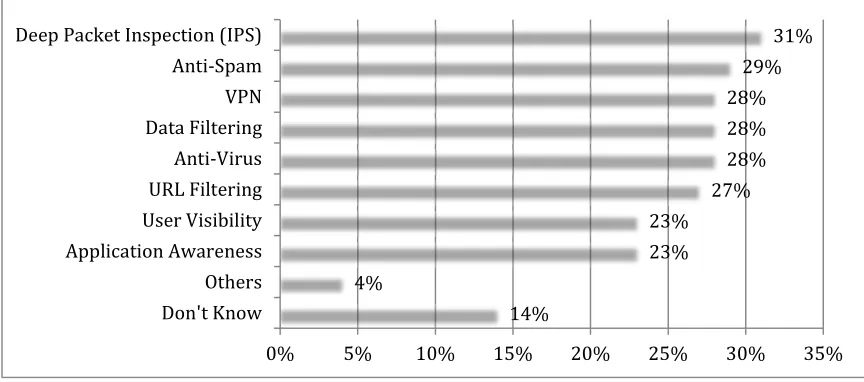
In a recent study on performance and security trade-off (McAfee, 2014), a number of IT professionals were asked this question:
Which features below has your organization disabled in a security product to avoid impacting network performance?
[image:21.612.107.539.451.642.2]The results in Figure 1.1 show the startling reality of the extent to which professionals are ready to trade-off security compliance for performance. 31% of respondents indicated that IPS was disabled, 28% data filtering, 29% anti-spam, 28% anti-virus, 28% VPN and 27% indicated URL Filtering.
Figure 1.1 A chart of disabled features versus percentage of respondents Source: McAfee (2014).
14% 4% 23% 23% 27% 28% 28% 28% 29% 31%
0% 5% 10% 15% 20% 25% 30% 35%
The immediate implication of performance versus security trade-off is the issue of security compliance. The moment a security feature aimed at securing a system is disabled, the likelihood that the system is no longer security compliant increases. The issue of trade-off presents a valid case for the need to understand and quantify the impact of security compliance, particularly the security measures on systems and the need to design the system capacity and processing power to deliver the performance quality required by customers.
The security implication of trade-off is even greater for web applications because of their wide use in the online retail industry, banking industry and cloud computing. According to IMPERVA (2014) “Web application attacks are the single most prevalent and devastating security threat facing organizations today”.
The main aim of this research is to understand the impact of security compliance (security measures) on web applications in order to aid system design and capacity planning. A well-designed web system which factors in the effect of security on performance will minimize, if not entirely remove the need for trade-off, as the system will have enough processing power to carry the required load.
1.2 Background
related. The impact of security measures such as firewalls, content filtering devices and antivirus on network and systems are far from clear - this remains a huge subject for debate.
According to MacVittie (2012) it is practically impossible to completely eliminate the performance degradation associated with security mechanisms; the extent of degradation can only be minimized. Somani, Agaewal and Ladha (2012); ZhengMing and Johnson (2008) equally allude to performance degradation due to the additional processing that is needed to ensure security. On the other side of the debate, authors such as Garantla and Gemikonakli (2009) present a rather mixed argument, stressing that firewall filtering could actually improve web performance in some cases through filtering, while impacting performance in some other security implementations.
The opportunity provided by the Internet to enable internet-based users to access systems, web applications and the underlying infrastructure held somewhere in a remote location - be it the Cloud or a virtualized hosted platform has not only made the relationship between security and performance more interesting; it has also heightened the concerns organizations have about performance and security issues.
is experienced on SSL client-side decryption. One of the main recommendations in that study is the need to review the SSL performance rating and factor that in when deciding which platform to implement to meet performance requirements.
In a study carried out by Coarfa, Druschel and Wallach (2006), the impact of Transport Layer Security (TLS) on server performance ranges between 64% to 89% performance loss depending on the test trace tool and transaction intensity used. A separate study carried out by Zhao, Makineni and Bhuyan (2005), found that about 70% of processing time of web traffic transmitted over HTTPS is spent in dealing with SSL overhead.
In general, existing studies provide an overwhelming evidence of security impact on performance. However, what remains unclear is how the impact of security on performance can be quantified and used in provisioning the required computer system infrastructure resources capable of satisfying the system performance expectations of the end-users, particularly in web application deployment.
While the focus of this study is on the impact of security on web applications, the study itself touches broadly on the subjects of security, security compliance, system performance, capacity planning and virtualization.
1.3 System Performance
remotely. This obviously has far-reaching implications on web applications, as they are mainly remote applications accessed via the web.
Performance of a system can be impacted by several factors - including security overheads, inadequate computing resource capacity, bad application code, misconfigured infrastructure resources and network related delays. This research work considers web application performance from three separate but related perspectives:
• Performance from the perspective of security impacts.
• Performance from the perspective of capacity planning, factoring in the influence of security mechanisms on performance and capacity planning.
• Performance evaluation through analytical modeling to assist in predicting the performance of a given web application implementation, with security adequately factored in.
1.4 Performance Evaluation
or assumptions of any operational details. However, measurement techniques are found to be very expensive, time consuming and intrusive of business activities, whereas predictive methods such as simulation and modeling are typically quicker and far less expensive, with analytical modeling being the quickest and the cheapest of these techniques (Pitts and Schormans, 2001).
1.5 Research Questions
In order to achieve the research objectives for this study, two research questions relating to the impact of security measures and security compliance on web application performance, and the performance modeling of secure web application to meet the expected end-users’ performance requirements need to be answered.
1.5.1 Research Question 1:
What are the impacts of security compliance particularly security measures, in
multi-tiered web applications on system performance of web applications hosted in a
virtualized or hosted platform environment?
1.5.1.1 Justification:
meet performance requirements. Along the same lines, Coarfa et al. (2006) reported in their study that the impact of TLS on server performance ranges between 64% to 89% performance loss depending of test trace tool and transaction intensity used. A separate study carried out by Zhao et al (2005), also revealed that about 70% of processing time of web traffic transmitted over HTTPS is used in dealing with TLS overhead.
Given these statistics, it is clear that without a proper understanding, quantification and factoring in of the impact of security measures in system and web application design, organizations will continue to risk trade-off in order to realize expected performance levels. The issue of security compliance is critical in this study because in the current business climate no organization that wants to remain competitive will serve its customers with an insecure web application system.
1.5.2 Research Question 2:
Can the existing queueing based performance evaluation models be expanded to
handle performance modeling of a security complaint web application in a virtualized or
hosted platform environment?
1.5.2.1 Justification:
This is important because there is a need for organizations to be able to predict quickly the performance requirements of security compliant web systems of different sizes.
Several models such as Factor Analysis, Queueing Network (QN), Queue Petri Nets Fuzzy logic and Neural Networks have been used in literature for the purpose of performance modeling. Queueing Networks have been widely used and found effective in performance modeling of networks and operating systems (Bolch, Greiner, de Meer & Trivedi, 2006). The focus of this research is on QN based performance models.
While these studies provide insight into multi-tier applications in virtualized or cloud environments, a major gap that exists across all the studies is the failure to incorporate security and address security compliance factors in building their models.
Le Blevec, Ghedira, Benslimane, Delatte and Jarir (2006) argued that security becomes even more crucial in real business applications such as web applications and web services where exposure to users over the public Internet is required. From an operational point of view, users must be able to access their web applications anywhere in a secure manner. In ensuring certain level of security, providers and customers will have to agree on the security compliance framework to employ in the solution being designed.
Clearly, the problem becomes the need to incorporate security compliance in performance evaluation in a way that represents real business operating scenarios, in order for such models to be relevant and useful to designers of web application solutions. This study focuses on the modeling of multi-tier web applications in virtualized and hosted platforms, predicting performance not only from a systems resource perspective but also from the standpoint of the effects of security measures and compliance on predictive models. This research work, we believe, is the first study to explicitly cover this important perspective.
1.6 Research Methods
data. A combination of primary and secondary quantitative data will be used for this research. Across the research questions in the first instance, secondary data will be collected and reviewed. According to Bryman (2012), secondary data comes with the benefits of time and cost saving, high-quality data and the opportunity for longitudinal analysis. The secondary data sources for this research work include academic literature, IT vendor whitepapers, technical magazines and public survey results. It is intended that the secondary data will create a theoretical foundation upon which the primary research will be conducted.
1.6.1 Research Methods for Research Question 1:
relating to security (which are technical in nature) can be properly analyzed without human bias that could be introduced if the study were survey or case study based.
Experimental design, also known as Design of Experiments (DoE) is a set of tests which introduces purposeful changes to input variables of a system in order to measure the effects on the response variables (Telford, 2007). Recent cloud performance studies (Zheng, O’Brien, Zhang & Cai, 2012; Casola, Cuomo, Rak & Villano, 2010) recently demonstrate that a full factorial DOE is effective not only in understanding the effect of a single factor on performance, but also understanding the mutual interaction between multiple factors. The experimental study in this thesis utilizes a two-factor factorial design. The first factor is the “Environment” which is in two levels – secure environment and standard (or non-secure environment). The second factor is the “User Load” which is applied in six levels, starting with 10 users and stepping up to 60 users by adding 10 users per step.
1.6.2 Research Methods for Research Question 2:
[image:33.612.108.542.284.577.2]This research question will be answered purely by using secondary data and analytical modeling methods. The key to answering this question is in finding an analytical means of handling security factors in the performance model. This entails expanding the existing queueing models and incorporating parameters representing delays in response time of requests imposed by security mechanisms and protocols.
1.7 Research Motivation
The last decade has brought huge businesses for UK IT services companies as organizations see outsourcing of IT services as a core cost saving strategy. The Internet further accelerates this trend as services and web applications are hosted remotely either in a cloud infrastructure, a virtualized hosted environment or a traditional data centre.
Through observations and practical experience of working in three of the UK’s leading IT services companies, the ability to adequately and accurately model performance of web application during the development and design phases continues to be a major factor impacting the quality of IT solutions delivery. These companies are not able to accurately predict web application performance and capacity; consequently they are not able to accurately estimate the required computing resources during pre-implementation phases. Hence their ability to get the IT solutions right the first time is adversely impacted. What usually happens is that the solution is designed and a test environment created, after which system performance testing and load testing take place. If the test results indicate inadequate computing capacity or resources, remediation exercise takes place and the design is reviewed. This design and testing process is not efficient, as time is wasted and the process is prone to re-work in the design phase. The design process can be made more efficient by taking advantage of performance modeling which could be used during solution design to size computing resources and web user loads, thereby enhancing the ability to get the solution right the first time.
application performance. As discussed above, the ramifications of this is time wastage during the design process and an inability to get the design right the first time for clients who require security compliance in their solutions and ultimately the risk of unacceptable system performance for the end clients. In consequence, organizations often resort to trading-off security features so as to meet the required performance levels.
From a professional practice perspective, this study encompasses the three major factors in solution design – security compliance, performance and system availability. According to Houmb, Georg, Petriu, Bordbar, Ray, Anastasakis and France (2010), the issue of balancing security and performance is central in system design decision-making. For performance modeling of multi-tier application deployment, this research work approaches modeling in a way that ensures its relevance to professional practice. This thesis will provide a reliable performance modeling technique and improve design decision-making in web application solution design.
1.8 Thesis Outline
This research work examines the relationship between security compliance and performance, specifically in the context of web application implementation in virtualized hosted platform and solution design process in UK IT services companies. This thesis is structured as follows:
Table 1.1 Thesis Outline
Chapter Title Synopsis
which this research work is based. It also
introduces the research questions this thesis sets out to answer.
2 Literature Review This chapter provides a comprehensive
overview of background literature and theories necessary to study the impact of security measures on system performance of web applications.
3 Research Methodology,
Design and Methods This chapter provides a discussion of research methodology, design and methods adopted in this thesis. The first part of the chapter outlines the justification for the research philosophy, research paradigm and research design employed in this research work. The chapter also summarizes the chosen research strategy and approach
4 Survey and
Experimental Results This chapter presents the findings and results of the preliminary exploratory survey and the experimental studies
5 Modeling and
Analytical Results This chapter deals with the development of a basic three tier model, followed by model enhancement with security parameters and finally determining whether or not a QN model is suitable for accurately predicting the effect of security measures on system performance.
6 Discussion and
CHAPTER 2
LITERATURE REVIEW
2.1 Introduction
This chapter provides a comprehensive overview of background literature and theories necessary to study the impact of security measures on system performance of web applications. In order to conduct a thorough and efficient review of background literature for a study of this nature, it is important to identify the major themes and knowledge domains that constitute the research topic. Hence this literature review focuses on the following four different but related knowledge domains:
1. System Performance 2. Security Measures 3. Web Applications
4. Virtualized Infrastructure
While these four sub-topics appear seemingly stand-alone, the needs and demands of business enterprises in today’s competitive business ecosystem make them all desirable in any organization that wants to survive and remain competitive. Ali (2012) argued that as of 2012, close to 80% of enterprise applications are web applications and accessible to external customers over the Internet, hence increasing the need for security defense measures and policies.
system performance and security therefore become the focal points of customers’ perception of the quality of the cloud or web services they are receiving. Access to cloud and remote applications cannot be discussed in isolation from web applications and web services, since web technologies remain the major vehicles for remote applications access apart from network infrastructure in most enterprises today: be it banking, transportation ticketing, entertainment or booking systems. Highlighting an intriguing perspective on web applications, Chieu, Mohindra, Karve and Segal (2009) argued that today's scalability and on-demand requirements of web applications can only be adequately supported by cloud environments which typically have the capability to scale in terms of storage, networking and compute (or server) resources.
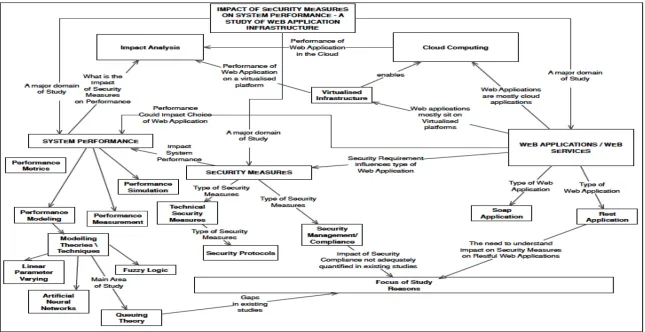
The Literature Map in Figure 2.1 provides a comprehensive structure upon which the analysis and review of literature in this chapter is based. This approach helps not only in analyzing existing studies in the three broad knowledge domains identified above, it also helps in elucidating the interplays and interrelationships between the domains, hence providing the necessary theoretical basis for studying the impact of security measures on system performance of web applications with emphasis on virtualized infrastructure platforms.
2.2 System Performance
According to Brendan (2013, p. 1) system performance can be described as the evaluation of a system in its entirety taking into consideration the physical hardware and software components including all servers in the case of distributed systems, with the understanding that any of these components is capable of influencing the overall performance of the system. In general, the terms performance, system performance and performance evaluation are used interchangeably when discussing performance issues within the context of IT systems. This is quite rightly so because the usefulness of system performance study lies in the results gained through performance evaluation, hence this section focuses on the evaluation of performance in IT system with emphasis on web application systems.
Performance evaluation is equally vital due to the pivotal role of virtualization and cloud computing in the global delivery of IT solutions today. This is evident in the recent upsurge in the amount of academic research work being done in the field of virtualization performance and quality of service. Brendan (2013, p. 8) argued that virtualization and cloud computing, although provide high flexibility in solution capability and capacity scaling, the technologies introduce challenges associated with resource optimization and cost saving culminating in greater a need for development in their system performance evaluation.
the effect of security measures on virtualization and cloud performance. The study carried out by Li et al. (2011) focused on mechanisms for predictive modeling of end-to-end response time of cloud hosted web application. The research work involved gathering and analyzing resource usage trace for web applications using trace based performance evaluation and replays to predict performance. The researchers were able to come up with a predictive model capable of predicting performance of applications on different cloud platforms - AWS, Rackspace, and Storm. In contrast, Addamani et al. (2012) worked on a queuing model to analyze system performance of web applications using two application benchmarks to generate load and data. The resulting data was analyzed using MINITAB software. A closed queuing model was built and analyzed using JMT. Jackson et al. (2010) studied the viability and performance impact of running HPC applications on the public cloud. The researchers were able to demonstrate that the multi-user nature of typical HPC applications with associated multi global communications suffer significant performance degradation when implemented in the cloud.
2.2.1 Performance, Service Level Agreements and Quality of Service
It is not uncommon to find literature expressing system performance in terms of Quality of Service (QoS), particularly when discussing web applications or cloud performance. Performance requirements of web applications in most cases are driven and governed by Service Level Agreement (SLA) and contracts between IT solution providers and the services consumers. An SLA is a collection of agreed expected service levels between the service consumers and the service providers with higher service expectations, such as shorter application response time, typically carrying higher financial implications on the part of the consumer (Menasce, Almeida & Dowdy, 2004, p. 339). QoS on the other hand is a set of system attributes such as performance, availability, and reliability (Kounev, 2006), which can be used by the consumer to assess the quality of the system services delivered by the provider.
The consumer typically will want to know the level and quality of service they are getting from the providers. This trend is commonplace now particularly with the advances in virtualization, cloud technologies and web application coupled with organisations’ higher propensity to move mission critical applications and services from traditional physical infrastructure platforms to virtual infrastructures. They do this in order to increase savings in energy costs, reduce infrastructure footprint and operational costs, and lower their overall Total Cost of Ownership (TCO).
particularly web and cloud applications. According to Beloglazov and Buyya (2012), aggressive consolidation of VMs results in performance degradation, especially at peak loads when sudden surge in resource utilization is experienced by applications. In a multi-tenant virtualized environment, this situation often means that resources are taking away from other VMs hence, the resource requirements of those applications (or VMs) are no longer being met, resulting in increased response times, failures, packet drops or general system crash. The ability of a virtual infrastructure (or virtual appliance) to fulfil application resource requirements and end-user satisfaction at an agreed service level agreement (SLA) directly relate to its Quality of Service.
According to Prasad et al. (2001), the term QoS is commonplace in the field of telecommunications but its meaning differs from person to person and system to system; ultimately what matters is the perception of quality by the user. Soldani, Li and Cuny (2007) argued that some try to define the term from a business perspective whereas others do so from a technical perspective, but in general QoS describes the ability of the network to fulfil a service within an assured service level.
2.2.2 Performance Evaluation
Several researchers (Borisenko, 2010; Gokhale et al., 1998; Eisenstadter, 1986) have identified the basic three methods of performance evaluation as: Performance measurement, simulation models and analytical models.
Performance measurement is a real life measurement activity that represents the actual operating conditions of the system being measured, without exclusions or assumptions of any operational details. According to John (2002) performance measurement typically involves building expensive prototypes even before the commencement of any measurements, making this method more suited for situations where performance measurement are taken within existing systems as part of future design modifications and adjustment. Measurement techniques are generally found not only to be very expensive, but also time consuming and intrusive to business activities, however, predictive methods such as simulation and analytical modeling are typically quicker and far less expensive, with analytical modeling being the quickest and the cheapest of these techniques (Pitts et al, 2001).
Understanding the various methods of performance evaluation is vital in selecting the appropriate method for the IT solutions under study.
2.2.2.1 Performance Measurement
most reliable and accurate validation of analytical or simulation models and results (Eisenstadter 1986).
A few studies (Kramer, 2011; Zaparanuks, 2009) have been conducted with a central focus on performance measurement. Kramer (2011) has studied the concept of Sustained System Performance in order to accurately assess system performance using estimation based on time-to-solution. Time-to-solution is basically a function of the time taken to complete a system task. The measure is typically useful when comparing performance of software applications in different computing environments (SAS Pub, 2009).
Zaparanuks (2009) performed comparative experiments on a set of processors, in order to evaluate the accuracy of three of the main testing infrastructures - perfctr, perfmon2, and PAPI. This study demonstrated that counter and measurement setup for performance evaluation could introduce errors and inaccuracies in system performance measurement. While the arguments introduced by these studies are valid and could potentially steer improvements in the practice of performance measurement, they do not have any relevant contributions applicable to predictive performance evaluation methods and can only be applied to prototypes or real systems. According to Haverkort (1998) the performance measurement depends fundamentally on the availability of the real system.
2.2.2.2 Performance Metric Selection Issues
understanding of metric selection process. If metrics are not selected in an objective and structured manner the likelihood of achieving accurate results could be greatly hampered.
Literature and industry whitepapers abound with a huge number of potential metrics for performance evaluation for cloud, virtualized platforms and web applications. This situation presents the need for a systematic or scientific method of selecting evaluation metrics for specific purposes. According to Li et al. (2012), evaluation of cloud services plays a role in the cost-benefit decisions relating to cloud adoption and crucially, selecting suitable metrics is vital to evaluation implementations. Li et al. argued that metric selection should be foundation upon which benchmark selection should be based.
Sadly, several cloud service evaluation studies in literature, be it performance evaluation, quality of service (QoS) evaluation or security evaluation (Verma et al., 2011; Sobel et al., 2009; Lu et al., 2008; ZhengMing et al., 2008) have largely been carried out without proper scientific or systematic metric selection. Most of these studies have randomly selected metrics at best. The same could go for web applications since most web application are indeed implemented as cloud application \ services.
methodology. While the outputs of the studies are reasonably scientific, the view taken in this thesis is that the methods and frameworks suggested in these three studies should be tailored and consolidated in order to maximize their value for this research. A metric selection flow process based on these three studies is proposed.
2.2.2.3 Metric Selection Process
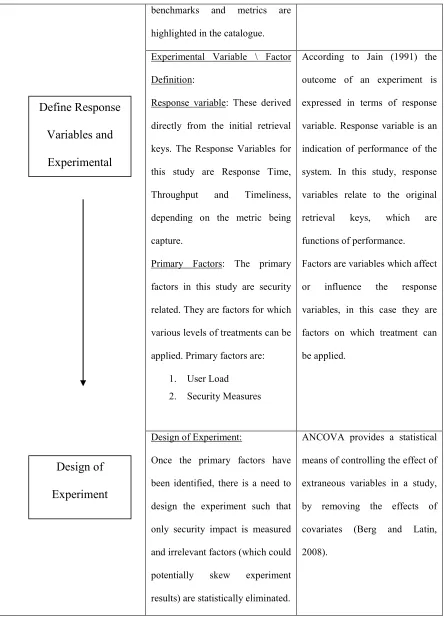
According to Li et al. (2013), the first stage in cloud evaluation methodology is state a clear purpose for which the service evaluation is required and to identify which services and features require evaluation. In this study, the purpose of evaluation is to understand the effect of security measures on the performance of web applications hosted on a virtualized platform. This forms the starting point for the metric selection flow process. Figure 2.2 below illustrates the metrics and experimental selection flow process with a summary of literature sources.
Metrics and Experimental Factors Selection Flow Process
Description of Step Literature Reference
Requirement for this study: Study the effect of security measures on web application performance hosted on a virtualized platform. Web application \ service feature: Performance attributes:
The starting point in web and cloud evaluation includes a clear understanding of the requirements \ purpose for the evaluation and the identification of the features of the service to
Defining Requirements and
all tiers
2. End-to-end Response Time
features are performance, and security (Li et al., 2013a)
Retrieval Key(s): This is a key that will be used against metric catalogue to select the relevant metrics for this research work. To define retrieval keys, the expected service quality of a system is broken down to its performance related attributes. Quality attributes \ retrieval keys: Response Time, Throughput and Timeliness. These keys will be used to select the appropriate metrics within the metric catalogue in (Li et al., 2012).
A retrieval key is a pre-determined key that helps bring out only the metrics and benchmarks relevant to study from a wide range of benchmarks and metrics (Li et al 2013). According to Burkon (2013) performance dimensions are Response Time, Throughput and Timeliness.
Metrics and Benchmark Selection: The retrieval keys, in this case, Response Time, Throughput and Timeliness are applied against the metrics catalogue in Li et al., 2013, to bring out the relevant metric and benchmarks. Only physical parts where all the keys appear will be selected from the metrics catalogue. The selected
benchmarks and metrics are highlighted in the catalogue.
Experimental Variable \ Factor Definition:
Response variable: These derived directly from the initial retrieval keys. The Response Variables for this study are Response Time, Throughput and Timeliness, depending on the metric being capture.
Primary Factors: The primary factors in this study are security related. They are factors for which various levels of treatments can be applied. Primary factors are:
1. User Load 2. Security Measures
According to Jain (1991) the outcome of an experiment is expressed in terms of response variable. Response variable is an indication of performance of the system. In this study, response variables relate to the original retrieval keys, which are functions of performance. Factors are variables which affect or influence the response variables, in this case they are factors on which treatment can be applied.
Design of Experiment:
Once the primary factors have been identified, there is a need to design the experiment such that only security impact is measured and irrelevant factors (which could potentially skew experiment results) are statistically eliminated.
[image:49.612.103.547.79.700.2]2.2.2.4 Performance Benchmarks
Benchmark is another concept worthy of mention in any discussion relating to performance measurements. Benchmarks are standard programs developed for the purpose of system performance evaluation. These programs or loads are run on systems with the view to capturing performance data resulting from their execution. According to Lee et al. (2013), benchmarks for cloud machines performance evaluation should cover the various components of a typical VM, such as CPU speed, disk I/O, memory and network I/O. Proper selection of benchmarks is vital to achieving representative results in performance testing, unfortunately this is an area in which many studies in literature have fallen short.
Table 2.1 summarizes the commonly used benchmark. Although these benchmarks are widely used in research today, some of them are obsolete. LINPACK was originally designed for supercomputer use in the 1970s and early 1980s (Clements, 2013, p. 375) and Qcheck has not been updated since 2001.
Table 2.1 Commonly used Benchmarks
Benchmark Description Purpose
LINPACK Open-source testing tool designed to load and measure performance of CPUs in flop/s. Its loads the system by performing numerical linear algebra computation. It allows tester to vary problem size and related parameters during testing.
CPU load testing
IOzone IOzone is a free disk I/O benchmark software that evaluates performance by generating loads and measuring disk
operation metrics
Qcheck Qcheck is a free network performance utility by NetIQ for TCP Response Time, TCP Throughput and UDP Streaming testing.
Network Response time and transmission rate testing.
Iperf (jperf) Jperf (gui version of iperf) is an open source benchmark software used for testing network latency, bandwidth and overall link quality.
Network link quality testing.
Memalloc MemAlloc is a free memory benchmark tool. It allows memory loading of Windows operating system by requesting varying amounts of memory from the system and capturing memory usage.
Memory stress testing.
2.2.2.5 Simulation
performance measurement - this makes it less expensive than performance measurement but more expensive than analytical modelling. Eisenstadter (1986) argued that simulation methods carry more computational overhead than analytical techniques, hence making them more expensive than analytical methods. This thesis builds on existing predictive models studies for web applications as will be seen in later sections and chapters. Hence the focus of this research will be on analytical models.
2.2.3 Performance Modeling and Analytical Theories
Eisenstadter (1986) argued that despite the limitations imposed by the formulation of analytical models, they generally have a huge cost advantage over simulation models. It therefore comes as no surprise why most organizations embrace them for performance evaluation of distributed systems.
Several predictive models are in use today for performance evaluation of distributed systems particularly web and cloud applications. Web applications and to a large extent cloud applications typically serve a large number of customers, hence it is impracticable in many cases to create prototypes for testing and performance evaluation prior to implementing the live solution mainly due to cost and the impracticability of gathering a large number of people for testing. Having a predictive model that does not depend on creating a prototype or expend a large capital outlay could be very beneficial both in the design and pre-implementation planning phases
Fizzy logic, Artificial Neural Networks (ANN), Probabilistic Performance Model and CloudSim as some of the modelling techniques employed in tackling virtualization performance modelling.
2.2.3.1 Artificial Neural Networks
“Artificial Neural Networks, or ANN, are statistical systems patterned after biological neural networks. Using artificial neurons, or nodes, these networks can be used to model non-linear systems. A specific implementation of an ANN based model has been used to predict the performance of applications in virtualized environments at a given level of allocated resources. In order to accomplish this, the models first had to undergo an iterative training process, and the training data set was then followed by a testing data set” (Altamash et al., 2013).
CPU and Memory testing. Network and application response time - which directly impact cloud user experience - are left out. Secondly, the hardware employed in experimentation is a budget desktop machine. This obviously may not be a true reflection of a real life production environment as web application or cloud providers will most certainly use a server grade machine with Hyper-Threading (HT) features in their server \ hypervisor farm.
Another application of ANN for performance modelling is a study carried out by Kalogirou et al. (2014). The researchers applied ANN modelling in predictive performance evaluation of large solar systems. Using a combination of experiments and ANN modelling the authors were able to demonstrate the strength of ANN in predicting daily energy performance of large solar systems. In general, most ANN studies have not shown much strength in the area of web application or distributed systems performance modelling. Instead, several web applications; cloud and distributed modelling have widely employed Queueing based models.
2.2.3.2 Fuzzy Logic and Linear Parameter Varying (LPV)
Linear Parameter Varying (LPV) has equally been seen in recent performance evaluation works. One of major strengths of the LPV modeling technique is its ability to enable non-linear systems to be represented as linear systems by varying the parameters (Altamash, 2013). This greatly simplifies otherwise difficult and convoluted mathematical constructs. Qin et al. (2006) in their studies of performance evaluation of Web servers were able to combine LPV based on first-principles and queueing dynamics to assess the system response time under varying loads.
As with ANN, fuzzy logic and LPV haven’t seen much use in cloud or web based distributed performance analyses. Moreover, most of the commercial modelling tools used in performance analysis are mainly based on Queueing models. Queueing based models have much stronger research foundation for web, cloud and distributed performance modeling than ANN, fuzzy logic and LPV.
2.2.3.3 Queueing Theory
The main focus of this research study is Queueing theory based models. These models have been successfully applied on performance modelling of web applications and distributed over the past couple of decades. However history of Queuing models can be traced as far back as a few centuries. According to Thomopoulos, (2012), Agner Krarup Erlang (1878–1929) developed the technique upon which traffic engineering and queuing theory is based while trying to determine the number of circuits needed to achieve an acceptable level of performance in a telephone service.
describing queueing system characteristics while Leornard Kleinrock and Thomas L. Saaty furthered the advancement queueing theory in the 1960s through their work (Thomopoulos, 2012). The development of queueing theory for performance modelling continued over the ensuing decades to become the well-developed and proven modelling technique that it is today.
In the past, solutions to queueing theory problems followed exact calculations using several complex simultaneous equations to work expected performance variables. According to Boxma et al. (1994) in the 1970s, there was a major research shift from exact analysis of queueing models to applied form of queueing theory where already proven elegant results are used in solving system performance problems
vital to understand and be able to predict the impact these measures will have on web application performance and quality of service particularly in virtualized environments, which tend to the environment of choice for web applications. The above argument forms the basis of this research study.
2.3 Security
Security is a term that has lived with mankind since memory began. In earlier times security was usually associated with protection of family, property, land, food, livestock and other valuable assets. The practice of security has become more sophisticated over time as the need to secure valuable items continues to evolve. Today security takes various forms ranging from physical security, network security, system security, cyber security and food security to financial security. In many cases companies and individuals are faced with combinations of security challenges along these lines.
drive security in organizations. Organizations are still falling victim to high profile attacks. According to HKSAR (2008), the driver to ensuring that organizations adopt and implement standardized security measures and good practices is provided by various governments through security standards, legal and regulatory frameworks. In conclusion, the security standards and regulations should be central to any cyber security discussion.
2.3.1 Security Standards, Regulation and Compliance
the security requirements of two of the most widely used standards in the UK namely the PCI DSS and ISO standards particularly ISO27002:2005.
A practical way of looking at security and compliance is to understand the security requirements and control objectives these standards are stipulating for organizations to implement in order to achieve compliance. PCI DSS is a set of 12 security key requirements targeted mainly towards the retail and banking sectors in particular but in general toward any industry or organization that handles cardholder data. ISO27002:2005 on the other hand, is a robust set of 35 control objectives aimed at companies operating in the UK. Using security requirements, several sources (IT Governance Ltd, 2006; Lovric, 2012; srivastav, Ali, Kumar and Shanker, 2014) have successfully mapped ISO controls objectives to PCI DSS requirements.
For implementation purposes, it is necessary to understand the nature of the requirements within these security standards. The requirement mapping in Table 2.2 is based on a mapping table provided in Srivastav et al., 2014. The mapping has been enhanced in Table 2.2 by adding a classification column based on the nature of implementation needed to fulfill the security requirements.
Table 2.2 Mapping of ISO 27001, PCI DSS Requirements and Implementation Source: Adapted from (Srivastav et al., 2014)
PCI DSS Requirements ISO 27001 Controls Implementation (based on PCI DSS Requirements) 1. Install and maintain a
protect data Management
A11.4. Network Access Control
2. Do not use vendor- supplied default for system password and other security password
A10.Communication and
operation management Policy and Business Process A11. Access Control
A12. Information systems acquisition, development and maintenance
3. Protect stored data A10. Communication and
operation management Technical Implementation A12.Information system
acquisition, development and maintenance
A15. Compliance 4. Encrypt transmission of
cardholder data sensitive information across public networks
A10. Communication and
Operation management Technical Implementation A11. Access Control
5. Use and regularly update
antivirus software A10.4. Protection against malicious and mobile code Technical Implementation Policy and Business Process 6. Develop and maintain
secure systems and applications
A10. Communication and
operation management Technical Implementation Policy and Business Process A11. Access Control
A12. Information systems acquisition, development and maintenance
7. Restrict access to data by
business need to know A8.1.1. Roles and responsibilities Technical Implementation Policy and Business Process A8.3.3. Removal of access
right
A11. Access Control 8. Assign a unique ID to
each person with computer access
A8. Human Resource
security Policy and Business Process A10. Communication and
operation management A11. Access Control 9. Restrict physical access
to cardholder data A8. Human Resource security Policy and Business Process A9. Physical and
Environment security A10. Communication and operation management 10. Track and monitoring
resource and cardholder
data A11.Access Control
11. Regularly test security systems and information security systems with all control specified in
accordance with system and processes
A10. Communication and
operation management Technical Implementation Policy and Business Process A11.Access Control
A12. Information systems acquisition, development and maintenance
12.Maintain a policy that addresses information security
A5.Security Policy Policy and Business Process A6.Organization of
Information security A10. Communication and operation management A12. Information systems acquisition, development and maintenance
2.3.2 Similarities in Security Challenges for Cloud and Web Applications
With the above in mind and coupled with the fact that the basic functionalities of the cloud are made possible by two major enabling technologies – the Internet and virtualization technology, dealing with the impact of security measures on web applications can, to an extent translate to dealing with the impact of security measures on web delivery aspects of cloud applications.
2.3.3 Virtualization and Associated Security Issues
In recent years, energy efficiency, green computing, cost cutting and carbon emission reduction have become vital areas of interest and concern in today’s modern societies. Server virtualization happens to be one of the answers provided by technology to address these concerns. The subject of virtualization security has been widely explored and as this continues, diverse viewpoints repeatedly emerge in literature. Many argue in support of virtualization as a security enhancing technology, while others are of the view that virtualization brings with it new security threats, vulnerabilities and challenges. The main challenge now becomes knowing what impact virtualization has on security. This challenge is further compounded by varied human perceptions of information security. Halonen and Hatonen (2010) argue that ‘security’ implies different things to different people and that the concepts and terms associated with information security are generally plagued with ambiguity. These challenges have prompted several questions and contributions from researchers and professional services as to how information security can be quantified or measured.
Dhok and Varma (2010) suggested that virtualization presents key security advantages such as centralized data management, quick and effective security incident response, effective logging and better forensic image verification time. According to Vokorokos, Anton & Branislav M. (2015), the abstraction process of hardware virtualization and the associated isolation enhance security by providing VM isolation and sandbox platforms for running untrusted applications .Another security benefit of virtualization discussed by Price (2008) is the ability for encapsulation. An administrator could easily template a hardened gold VM and deploys the template into several VMs with uniform security settings in a small space of time. While the proponents of virtualization as a security enhancing technology maintain a strong case, the opponents are advancing their case as well.
Recent studies (Sunanda, 2015; Sahoo et al. 2010), suggested that although isolation is one of the primary benefits of virtualization, if it’s not properly configured could actually amount to a security threat where VMs access applications in other VMs. Other security issues identified in literature are external modification of hypervisor, external modification of VMs, access control issues, data integrity and confidentiality issues and VM proliferation (Sunanda, 2015; Sahoo et al. 2010; Price, 2008 and Yunis et al., 2008)
Some key benefits of measuring information security and its related objectives highlighted by researchers are support for compliance with regulatory laws, financial gains (Chew, Swanson, Stine, Bartol, Brown and Robinson, 2008) and decision support through provision of assessment and predictability (Savola, 2008). While it is desirable to measure information security, there are indications in literature of pitfalls to watch out for. Halonen et al. (2010) suggest that the meanings of terms and concepts relating to information security are somewhat vague and impinge on communication around Information security. Equally, Savola and Heinonen (2011) express the view that the inherent complexity and fluid nature of security risks coupled with the lack of common definition have created a situation where security cannot be measured as a universal property.
Efforts in literature concentrated more on virtualization implications on performance, carbon reduction and greenness. The impact of virtualization on security, which relates to the main objective of this research, has so far been poorly explored and clarity in this area is virtually non-existent. The opportunity therefore exists for this research to focus on impact analysis of in virtualized environment.
2.3.4 Enhancing Security in Virtualized Environment
This section looks at security from two broad perspectives - security objectives and security management principles. In order for an organization to objectively tackle security issues, it needs to define its security goals and objectives and formulate security management strategies to meet those security objectives.
In this research study, the concept security measures is studied from the perspective of technology, specifically security protocols and processes with particular emphasis on security compliance and related frameworks.
2.3.5 Security Protocols
The basic channel for getting web or cloud application services to the end users is the Internet. Hence in order to make cloud and web services available to external users, exposure to the Internet is required. This in turn poses several security issues in the area of availability, confidentiality and data integrity. Traversing the Internet means that data must be secured by encryption technology. According to Brooks et al. (2007) encryption is basically a mathematical process of converting plaintext into unintelligible cipher text such that only the parties that have the encryption keys can access, read or decrypt the data.
The two main categories of security protocols employed in web applications and cloud traffic over the Internet are the Transport Layer Security (TLS) protocol and the Internet Protocol Security (IPSec) protocol. Both protocols utilize encryption to secure data across the Internet.
2.3.5.1 Transport Layer Security (TLS) and Secure Socket Layer Protocols
provided by the SSL handshake. The SSL handshake however is the most computationally expensive part of an SSL session (Reid et al., 2014). In most cases where web applications or cloud implementations are exposed to the Internet, SSL is used to secure HTTP protocol. The resulting transport protocol - HTTPS is known universally to have huge overhead in comparison to the plain HTTP protocol. However most of the existing Queueing studies have largely ignore this important impact on web application performance.
In a typical web application implementation, SSL would only provide encrypted connection during data flow, but once the data gets to its destination, SSL security encryption are offloaded, hence data remains unencrypted at the destination (Harr 2013, p. 855). This means that for most web applications a combination of security such as SSL encryption for data in transit and data encryption for data at rest is required.
2.3.5.2 Internet Protocol Security (IPsec) Protocol
2.4 Web Applications
Web applications are applications that extend the functionalities of the web sites or web systems by running business applications in a client - server architecture and providing the end users with the ability to execute business logic via web browsers (Conallen, 2003, pp. 8-10). Over the years the growth of web applications in almost every sector has been phenomenal, as customers and end users clamour for flexible and remote access server applications. Competition in global business has drastically driven demand for the agility of applications, which can only be provided via web and cloud applications. In order to conduct a balanced discussion about web applications, it is pertinent to visit the concept of web 2.0 – a technology that has fueled the explosion of the use of web applications.
According to HKSAR, (2008) Web 2.0 is a technology that uses the web as a platform to facilitate collaboration, social networking and interactive creation and sharing of web content. Common web applications based on web 2.0 are Twitter, Wiki Instagram and YouTube.
2.4.1 Restful Web Application and Microsoft SharePoint
There are two main web app