Re-presenting Scientific
Representation
Roman Frigg
London School of Economics
Thesis submitted to the University of London
for the completion of the degree of a
Doctor of Philosophy
UMI Number: U185091
All rights reserved
INFORMATION TO ALL USERS
The quality of this reproduction is dependent upon the quality of the copy submitted.
In the unlikely event that the author did not send a complete manuscript and there are missing pages, these will be noted. Also, if material had to be removed,
a note will indicate the deletion.
Dissertation Publishing
UMI U185091
Published by ProQuest LLC 2014. Copyright in the Dissertation held by the Author. Microform Edition © ProQuest LLC.
All rights reserved. This work is protected against unauthorized copying under Title 17, United States Code.
ProQuest LLC
789 East Eisenhower Parkway P.O. Box 1346
S poirncALOP 1(0 AND
T
h
£ S £ S
F
SIS'?
Abstract
It is now part and parcel of the official philosophical wisdom that models are
essential to the acquisition and organisation of scientific knowledge. It is also
generally accepted that most models represent their target systems in one way or
another. But what does it mean for a model to represent its target system?
Surprisingly, this issue has hardly been recognised, much less seriously discussed.
In the first part, I introduce the problem of scientific representation and argue for
its importance. In the second part, I provide a critique of the current orthodoxy, the
semantic view of theories. Though writers in this tradition do not explicitly address
the issue of scientific representation, the semantic view implies that a model
represents by being isomorphic or, in another version, similar to its target. I argue
that this view faces insurmountable problems because both isomorphism and
similarity are notions too weak to endow a model with representational power. In
the third part, I develop a theory of representation that overcomes the shortcomings
of the semantic view. The leading idea consists in taking representation to be
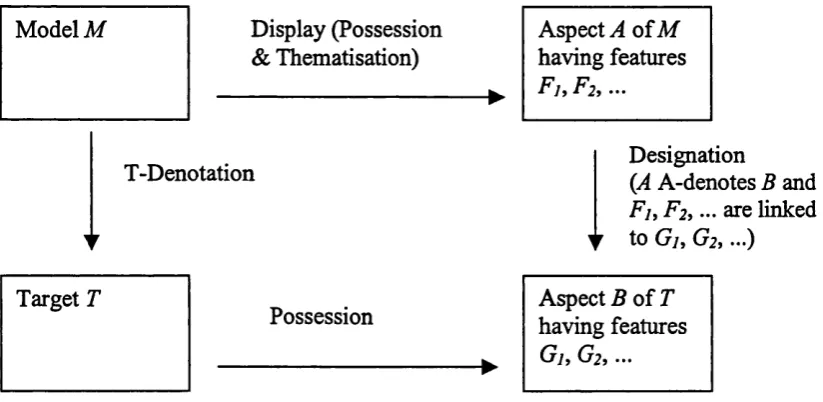
explained in terms of three relations: denotation, display and designation. A model
denotes its target system in roughly the same way in which a name denotes its
bearer. At the same time it displays certain aspects, that is, it possesses these
aspects and a user of the model thematises them. Finally, an aspect of the model
designates an aspect of the target if the former stands for the latter and a
Contents
Part I - Scientific Representation as a Philosophical Problem
1. Models and the Three Conundrums of Scientific Representation... 8
1. Models Matter - A Brief Survey... 8
2. Description versus Representation... 10
3. The Three Conundrums of Scientific Representation... 13
4. Taking Stock... 17
5. Why Bother?... 19
6. Aims and P lan ... 20
Part II - Why Current Accounts are Blind Alleys
2. Strictures on S tru ctu res... 231. The Structuralist Conception of M odels...23
2. Structuralism and the Enigma of Representation...29
(a) Isomorphism has the wrong formal properties... 30
(b) Isomorphism is not sufficient fo r representation...32
(c) Multiple realisability... 32
(d) Identity conditions fo r models... 36
Where does representational power come from?... 36
3. Structuralism and the Problem of Quomodity...40
4. Amended Versions: Why They Do Not Fare B etter...42
3. Further Strictures on S tru ctu res...45
1. Introduction...45
2. Why One Cannot Have Structures All the Way D ow n...46
The argument: structures are not the whole sto ry... 46
Specific and unspecific structures... 46
Different notions o f abstraction... 49
Abstract Concepts... 50
The abstractness o f structure... 53
Conclusion... 56
Possible responses... 57
A qualification: a hierarchy o f structures - but not all the way down! ... 60
3. The Chimera of the One and Only Structure of Reality... 61
There is not such thing as the one and only structure o f a target system . 61 Newman's theorem... 63
A continuation: the methane molecule...64
Another continuation: the solar system... 67
Logistic growth in ecological models... 67
A final rem ark... 68
4. Counter: This Is Nonsense - All We Need Is a Data M odel...69
5. Conclusion: Structures and Descriptions Go in Tandem... 75
4. Putting Similarity into Perspective... 79
1. Models and Similarity 79 •
2. Similarity and the Enigma of Representation... 80
3. Similarity and the Problem of Quomodity... 81
Part III - Re-Presenting Scientific Representation
5. W hat Are M odels?... 861. Introduction... 86
2. Models as Imagined Objects... 87
3. The Descriptivist Objection... 90
4. A Faster Route to Imagined Models... 96
5. Other Kinds of M odels... 98
Material M odels... 99
Equations... 100
Summary... 101
5. A Brief Remark on Models and Similarity... 102
6. On Scientific A boutness... 103
1. Introduction... 103
2. ‘Naturalness* and the Acquisition of Knowledge... 104
3. The Intentional Character of Scientific Representation... 108
7. Facing the Enigma of Representation... 119
1. Introduction... 119
2. Scientific Representation - The Elements... 119
Heuristic considerations and the overall picture... 120
T-Denotation... 125
D isplay... 128
Designation... 133
Interlude: representation and intentionality ... 135
Learning from models - a two stage approach... 136
A first simple example: samples... 138
A second simple example: measuring air resistance in the wind tunnel 139 A third example: cell differentiation... 140
3. Linking... 141
Linking, methodological naturalism, and the problem o f quomodity ... 141
Identity and Sampling... 144
Idealisation: ideal lim its... 146
5. A Note on Two Alternative Accounts of Scientific Representation 155
The DDI account o f modelling... 155
The inferential conception o f scientific representation... 156
8. The Use of Mathematics in Scientific M odelling... 161
1. Introduction: Models and the Applicability of Mathematics... 161
2. A Structuralist Conception of the Applicability of Mathematics 162 The overall picture... 162
Premise 1: structuralism in the philosophy o f mathematics... 165
Premise 2: structures and physical objects... 168
Premise 3: translation... 168
Summing u p... 169
3. Illustration: the Mathematical Treatment of the Sun-Earth System 170
The Structure o f Classical Particle Mechanics... 171
The structure o f the Sun-Earth System... 173
Further lessons... 176
4. A Remark on Alternative Points of V iew ... 178
Glimpses B eyond... 182
P a r ti
Scientific Representation as a Philosophical
Chapter 1
Models and the Three Conundrums
of Scientific Representation
1. Models Matter - A Brief Survey
Models are of central importance in many scientific contexts. The roles the bag
model of quark confinement, the billiard ball model of a gas, the Bohr model of the
atom, the Gaussian-chain model of a polymer, the Lorenz model o f the atmosphere,
the Lotka-Volterra model of predator-prey interaction, the double helix model of
DNA, or general equilibrium models of markets play in their respective domains are
cases in point. Scientists spend a great deal of their time on building, testing,
comparing and revising models and in many journal articles the bulk of the
discussion is concerned with introducing and putting to use a particular model. In
brief, models lie at the heart of modem science.
While their importance in actual research is beyond dispute, models had a rather
fluctuating fate in the philosophical debate about science. For a long time it was a
widespread conviction among philosophers that models were otiose in a systematic
exposition of a scientific theory. Pierre Duhem took a science based on models to be
inferior to one which presents its subject matter in the form of abstract and general
principles (1906, Ch. 4) and the logical positivists regarded models as mere
epiphenomena of scientific research. Rudolph Carnap famously remarked that ‘the
discovery of a model has no more than an aesthetic or didactic or at best heuristic
value, but it is not at all essential for a successful application of the physical theory’
(1938, 210) and Carl G. Hempel held that ‘all reference to analogies or analogical
models can be dispensed with in the systematic statement of scientific explanations’
and Ernest Nagel (1961, Ch. 6) tried to canvass a more favourable picture of the use
and function of models, the positivist take on the subject matter remained
deflationary.
The tides changed in the sixties of the last century. The positivist picture of
science construes theories as families of sentences. This outlook is now referred to as
‘syntactic view’ or ‘received view’ of theories. It came under attack with the rise of
the so-called semantic view of theories, by which it was eventually overthrown. On
this view, a scientific theory is a collection of models rather than sentences, where
models are construed as non-linguistic entities. The details of this extended debate
are discerningly surveyed in Fred Suppe (1977, 3-241) and need not concern us here.
The salient point in connection with the replacement of the syntactic by the semantic
view is that the latter, by construing theories as families of models, assigns models a
place right at the heart of science. Over the years, the semantic view has been
developed in different ways by, among others, Fred Suppe (1988), Ronald Giere
(1988), Patrick Suppes (1960a, 1967, 1970) and Bas van Fraassen (1980, 1989,
1991), and has eventually become the currently dominant view on the nature of
scientific theories.
Closely related to the semantic view is the German structuralist programme,
which also adopts a model-based view of scientific theories. The programme has
been developed over many years by a group of philosophers around Wolfgang
Stegmiiller in Munich and has found its classical formulation in a monumental
treatise by Wolfgang Balzer, Ulises Moulines and Joseph Sneed (1987). The state of
the art of the programme is documented in a special volume of Synthese (Moulines et
al 2002).
Parallel, but by and large unrelated to the rise of the semantic view, Peter
Achinstein (1968, Chs. 7 and 8), Max Black (1960), Mary Hesse (1963) and later on
Nancy Cartwritght (1983) have argued in one way or another for the importance of
models on the grounds that they are indispensable to scientific practice, in its
experimental as well as theoretical aspects. If models play an essential role in actual
research, we cannot dismiss them as irrelevant in a philosophical account of what
science does. Finally, about two decades on, a group of philosophers gathered in a
embarked on a detailed study of how models function in different investigative
contexts (see the essays collected in Morgan and Morrison 1999).
This enumeration is not meant to suggest that all the aforementioned
philosophers employ the same notion of a model, let alone that they share a common
philosophical programme. In fact, there is little consensus as to what models are,
how they function, and how they relate to both theory and reality. However, despite
these differences, there is one point that all share in common: models matter. What
the above survey is supposed to show is that nowadays philosophers across the board
assign models a central place in science. Whatever picture of what science does,
what its aims are and what it achieves is canvassed, models are an integral part of it.
Much remains to be said about the differences between diverging accounts, but for
now it is the common denominator on which I would like to lay stress and which I
take as my point of departure: we can’t do without models.
2. Description versus Representation
Fashion changes, in philosophy as well as on the catwalk. So is the emphasis on
models more than a quirk? I think so. The move from the received view to a model-
based account of science marks a fundamental change, namely the transition from a
descriptive to representational understanding of science: science does not describe, it
represents its subject matter.
On the received view, science aims at providing theories, and these are taken to
be families of sentences. Thus construed, scientific theorising is a linguistic activity
aiming at giving us a description of whatever we investigate. Consequently,
understanding science amounts to understanding how the language of science works.
So we find among the hotly debated problems at the time issues like the nature of
theoretical terms and the character of correspondence rules. Although there is little
agreement on actual answers, the ‘linguistic paradigm’ itself enjoyed univocal
acceptance for a long time: understanding science is understanding how its language
works.
This changed radically when models entered the scene. Though views on what
than a set of sentences, i.e. that models are non-linguistic entities. This ‘anti-
linguistic turn’ in the philosophy of science originated with the pioneers of the
semantic view and found its programmatic expression in van Fraassen’s remark that
the main lesson of twentieth century philosophy of science may well be that no
essentially language-dependent concept has any philosophical importance at all
(1980, 56). One may not want to go as far as that, but the consequence is inevitable:
if the main units of scientific theorising are non-linguistic, then description has to be
replaced by something else, which I take to be representation. Words describe and
models represent.1 Hence, the shift from a sentence to a model-based account of
science amounts to replacing a descriptive view o f science with a representational
one: science gets a grip on selected parts of the world not by describing, but by
representing them in a model.2
Many philosophers, realists and antirealists alike, agree with a characterisation
of science as an activity aiming at representing the world, among them Cartwright
(1999, esp. Ch. 8), Giere (1988; 1999; 2002), Hughes (1997), Kitcher (1993),
Morgan and Morrison (1999), Morgan (1999a), Morrison (1999), Psillos (2000),
Redhead (2001), Suppe (1989), Suppes (1967; 1970), van Fraassen (1980; 1997;
2002), to mention just a few. Needless to say, views on what representing the world
amounts to vary widely; I come to that later. But before moving on I should guard
against a common misconception of representation. According to a popular myth, to
represent an item amounts to giving something like a mirror image of that item; that
is, a representation is thought of as a copy or imitation of the thing represented. In
short, representation is wedded to realism. This is a mistake. Representations can be
1 The term ‘representation’ can be used in a broad and in a narrow sense. In the broad sense it refers to anything that stands for something else and therefore encompasses, among many other things, also language. In a narrow sense it covers only cases of non-linguistic representations such as paintings, photographs, maps, diagrams or, last but not least, scientific models (I do not want to suggest that the notion of representation involved in all these cases is the same). I use the term in the narrow sense unless indicated otherwise; in the latter case I make die broad meaning explicit by adding a qualification and talking, for instance, about ‘linguistic representation’. When using ‘representation’ in this broad sense, one can describe the move from a sentence to a model based view as the recognition that science employs object-to-object rather than word-to-object representations.
realistic, but they need not. There is nothing in the concept of a representation per se
that ties it to realism. Human beings don’t look like Alberto Giacometti’s sculptures,
yet they represent Humans; or the harmonic oscillator is not a mirror image of an
actual pendulum bob, yet it represents this bob. Representation and realism are just
two different issues. One can reject realism without rejecting representation.
Representations, in science as well as in art, can be of different sorts; representation
is a much broader notion than mirroring or depiction. Some representations are
realistic, others are not. It would be a wrong move to deny the status of a
representation to one or the other of these. One of the things we expect from a theory
of representation is that it can account for the difference between realistic and non-
realistic representations, a possibility we forgo if we dismiss one of them out of
hand.
That representation and realism are distinct is of great importance to the project
of this thesis. A theory of scientific representation is not, as one might mistakenly
believe, a defence of scientific realism in disguise. On the contrary, in order to
achieve an adequate understanding of scientific representation, it is necessary that the
concept be freed from the stranglehold of realism. Representation as such
presupposes neither realism nor antirealism.3
This said, I am now in a position to introduce the three main conundrums a
theory of scientific representation has to deal with, the enigma of representation, the
ontological puzzle and the problem of quomodity. But before that, a methodological
remark seems in place. Throughout this thesis, I make extended use of examples
from art, in particular sculpture and painting, and use ideas originating in
philosophical aesthetics. This is purely heuristic and nothing in the final formulation
of any of my views on scientific representation hinges on it. Those who are adverse
to drawing on parallels between art and science can skip the respective passages and
replace the artistic examples by scientific ones without missing anything essential to
my view on scientific representation. Although it is important that one can do that (a
theory of scientific representation has to be an independent theoretical unit!), I hope
that no one will. The problems in the two fields are similar in many respects, which
makes pointing out both analogies and disanalogies between them extremely
productive. Some ideas from a theory of pictorial representation do mutatis mutandis
carry over to the case of models, while others do not. In the former case we gain
valuable insights we can build on, in the latter it is instructive see why they do not.
The heuristic value of this parallel is further reinforced by the fact that while there is
a rich and intricate literature on artistic representation, the problem of scientific
representation has, by and large, been forgotten in recent debates - I come to this
below. Why then not learn from philosophy of art what can be learned?
3. The Three Conundrums of Scientific Representation
Models are representations of something else, usually a selected part or aspect of the
world (henceforth referred to as the ‘target system’). But in virtue o f what is a model
a representation of something else? To appreciate the thrust of the question, consider
the analogue problem in the visual arts. When seeing Camille Pissarro’s Boulevard
des Italiens we immediately realise that it depicts one of the glamorous streets of fin
de siecle Paris. Why is that? The symbolist painter Maurice Denis famously took
wicked pleasure in reminding his fellow-artists that a painting, before being a battle
horse, a nude, or some anecdote, essentially is a plane surface covered with paint. A
painting as a painting is a welter of lines and dots, a bounded collection of curves,
shapes, and colours. Following Beardsley (1981, 267), I call a painting thus
construed a ‘visual design’. The puzzle then is this: due to what is a visual design a
picture; how do lines and dots represent something outside the picture frame? Per se,
Boulevard des Italiens is a canvass covered with a myriad of oil-paint brush strokes,
yet it depicts a scene of urban life. How can a configuration o f flat marks on a
canvass do this? What is it for that canvass to be a pictorial representation of a
Parisian street? This is what Flint Schier called the enigma of depiction (1986, l).4
Like pictures, models are representations of something beyond themselves. This
naturally raises the same question in a different setting: in virtue o f what is a model a
representation of something else; what does its ‘aboutness’, its ‘representational
power’, consist in? Or to render the question more precisely: what fills the blank in:
‘M is a scientific representation of Tiff where ‘M’ stand for ‘model’ and ‘7” for
‘target system’. Slightly altering Schier’s congenial phrase, I refer to this as the
‘enigma o f representation'. This is the first of three major conundrums a theory of
scientific representation has to come to terms with. Presenting a solution to this
conundrum amounts to specifying the general features that every scientific
representation has to possess in order to be a scientific representation.
The second conundrum becomes palpable once we try to bypass the analogy
with painting and give an explicit statement of the enigma of representation. The
problem is that it is not clear what we are to substitute for phrases like ‘a welter of
lines and dots’. Specifying the ‘material substratum’ of a piece of art is an
unproblematic matter. Neither do the specifications ‘oil on canvass’ or ‘bronze cast’
on the label next to an exhibit cause any bewilderment in the spectator, nor will the
need to provide such information give curators sleepless nights. Either the matter is
just obvious, or the conservation department will come up with an answer. Not so
with scientific models. It is not clear what models are and views on that matter vary
widely. Some take models to be structures in the sense of set theory, others regard
them as concrete objects and yet others as idealised or abstract entities - and this by
no means exhausts the possibilities. So what then are models? What is the ‘scientific
analogue* o f the visual design? This is the second question a theory of scientific
representation has to answer. I refer to it as the *ontological puzzle ’.
The third conundrum is what I call the ‘problem of quomodity’, which comes in
a factual and in a normative version. Not all representations are of the same kind;
there are different ways in which models can represent reality. In the visual arts this
is so obvious that it hardly deserves mention. Innumerable pictures have been painted
portraying the same subject, a Provence landscape, say, each using different means
and devices. There are ink drawings depicting the landscape by using thin and clearly
marked lines to reproduce selected aspects of the reliefs shape as they appear to the
human eye from a certain point of view under certain circumstances. A pointillist
painter works under the assumption that the human visual field can be decomposed
into a myriad of coloured spots and achieves representation by reproducing - at least
field. Yet others focus on simple geometric figures such as cubes and cylinders and
represent their subject by first ‘seeing’ the subject as composed of such elementary
figures and then reproducing these figures on canvass in both colour and form.
Needless to say, this list can be extended at will.
This pluralism is not a prerogative of the fine arts. The representations used in
the sciences are not all of one kind either, not even when they represent the same
target system. Weitzacker’s liquid drop model represents the nucleus of an atom in a
manner very different from the shell model. The latter represents the nucleus by
means of part-to-part correspondence; it posits a set of entities that are matched with
the constituents of the nucleus (the nucleons) and the claims we derive from the
model are based on this part-to-part correspondence. Nothing of that sort happens in
the liquid drop model. The model has no parts that could correspond to parts of the
target. It represents some selected features of the nucleus as a whole by portraying its
shape. Similarly, a scale model of the wing of an air plane represents the wing in a
way that is different from how a mathematical model of its cross section does. Or
Bill Phillips’ famous hydraulic machine and Hicks’ mathematical models both
represent a Keynesian economy but they use very different devices to do so.
Scientific representation is not a monolithic concept. We should not be fooled into
thinking that all scientific representations work in the same way. On the contrary, as
in painting, there seems to be a variety of devices one can use to achieve
representation. But unlike in painting, it is not at all obvious what these devices are.
This leaves us with the question of how scientific models represent. What devices are
there and how exactly are they put to use? For want of a better term, I call the way in
which a model represents the target system its ‘quomodity’, from Latin quomodo =
how (occasionally I use ‘mode of representation* or ‘representational strategy’ as
synonyms for ‘quomodity'). A theory of representation has to come up with a
taxonomy of different quomodities and provide us with a characterisation of each of
them. This is the factual aspect of the problem of quomodity.5
A further aspect of the problem of quomodity is the normative question of
whether we can draw a distinction between scientifically acceptable and
unacceptable modes of representation. Do the epistemic interests of scientific enquiry
constrain the choice of modes of representation? Some may be willing to grant that
there are different representational strategies but still hold that only some of them
truly deserves the label ‘scientific’. A theory of representation should address the
question of whether there are some quomodities that can be singled out as acceptable
while others are have to be dismissed as unscientific.
In sum, a theory of representation has to come to terms with three conundrums,
two semantic, and one ontological. The two semantic issues are the enigma of
representation (why does a model represent its target?) and the problem of quomodity
(how does a model represent its target?); the third issue is the ontological puzzle
(what is a model?).
To frame the problem in this way is not to say that these are separate and
unrelated issues, which can be dealt with one after the other in roughly the same way
in which we first buy a ticket, walk to the platform and then take a train. This is not
the case. This division is analytical, not factual. It serves to structure the discussion
and to assess suggestions but it does not imply that an answer to one of these
questions can be dissociated from what stance we take on the other issues. Let me
illustrate this by dint of the illusion theory of pictorial representation. On this view,
the enigma of representation is answered by an appeal to illusion: X pictorially
represents Y iff X causes the illusion of seeing 7 in the spectator. A picture represents
Piccadilly Circus if it makes us believe that we see Piccadilly Circus. But how does it
achieve this? This is the problem of quomodity. What devices does the picture
employ to bring about the illusion? Is it the use of lines to portray visible shapes, is it
sameness of colour, both of them together, or yet something else? And this answer
cannot be given without presupposing a certain ontology. If the picture represents by
dint of sameness of colour and shape, say, it must be true, trivially, that the picture
belongs to the kind of objects that can have colours and display shapes.
4. Taking Stock
Where does the debate on scientific representation stand? The answer to this question
is rather sobering. In many respects the debate has hardly started. Despite its
importance, the issue of scientific representation has barely been recognised, much
less seriously discussed. The question of how an object represents another one has,
by and large, gone unnoticed in twentieth century analytical philosophy of science.6
Unlike word-to-object representation, object-to-object representation still awaits
detailed treatment informed by the practices of representation in the sciences.
The different problems within a theory of representation have met with different
degrees of inattention. Among the three basic conundrums, the enigma of
representation has the poorest track record. Within analytical philosophy of science,
it has not even been recognised as a problem and virtually nothing has been written
on it. Given that models have been with us for at least forty years now, this is rather
surprising because how one thing comes to represent another one seems an important
and puzzling question. Accordingly, a fair portion of this thesis is dedicated to this
issue.
The ontological puzzle, though as marginal a topic as the enigma of
representation, has received some tangential mention in parts of the literature on the
semantic view of theories. Many authors writing in this tradition are strongly
influenced by formal approaches to science and in this vein take models to be
structures in the sense of set theory (references will be given in Chapter 2). Although
this view is not explicitly put forward as an answer to the question about the
ontology of models, it does not seem farfetched to take it as such.
Unlike the other two conundrums, various discussions have been going on for a
while which quite naturally can be understood as at least partially addressing the
problem of quomodity. What I have in mind are the extended debates about the
nature of idealisation, the functioning of analogies, and the like. Though these issues
have not been discussed within the context of a theory of scientific representation, it
seems quite natural to understand idealisation, for instance, as an answer to the
question of the quomodity of a model. The problem with the issue of quomodity is a
lack of systematisation rather than a lack of attention. Icons, idealised models and
analogies are not normally discussed under one theoretical umbrella. As a
consequence, we lack comparative categories that could tell us what features they
share and in what respects they differ. What we are in need of is a systematic inquiry,
which provides us with both a characterisation of individual quomodities as well as a
comparison between them. What, for instance, makes an icon an icon, and how does
it differ from an analogy? In tackling this problem we can build on intuitions, but
they need to be systematised and transformed into a coherent and comprehensive
web of notions characterising how models face reality.
The bottom line is this: the enigma o f depiction and the ontological puzzle need
to be recognised and discussed; existing accounts of quomodity need to be
5. Why Bother?
I have presented the lack of a philosophical literature on scientific representation as a
lacuna that calls for action. But a critic might counter that this, rather than being a
call for action, is indicative of the irrelevancy of the topic. Needless to say, I
disagree. If it is worthwhile asking - and I think it is - how words acquire meaning
and reference, how speech acts work, or what it means for a sentence to be true, I
cannot see why it should not be worthwhile asking how models represent.
Representation it is no less a philosophical puzzle than reference or truth and as such
deserves our attention. But this, I anticipate, may not satisfy the critic. For this reason
I will now sketch how representation relates to the epistemology of science, in
particular to issues such as the acquisition and the nature of knowledge and the
character of scientific explanation.
Science aims at giving us empirical knowledge. If models are to serve this
purpose, they must be representational. There is an intimate connection between
knowing and representing. Cognitive acquisition in science is often mediated by
representation. This interdependence is grounded in the fact that models are the units
on which significant parts of scientific investigation are carried out rather than on
reality itself. We study a model and thereby discover features of the thing it stands
for. For instance, we study the nature of the hydrogen atom, the dynamics of
populations, or the behaviour of polymers by studying their respective models. But if
models are to give us knowledge about the world, they must be representational.
They can instruct us about the nature of reality only if we assume that (at least some
of) the model’s aspects have counterparts in the world. Hence, in order to be a source
of knowledge models must be representational.
What kinds of knowledge do models provide us with? If the acquisition of
knowledge is closely tied to representation and if there are different ways of
representing, then there are different ways of knowing. We learn from a model by
first inquiring into the features of the model itself and then transferring the findings
to the real-world system it represents; that is, we ‘export’ the knowledge we acquire
about the model to its corresponding system in the world. But in order to know how
and in what way knowledge about a model can be converted into knowledge about a
two. If, for instance, we have a model we take to be a realistic depiction, this transfer
is accomplished in a different manner than when we deal with an analogue, or one
that involves idealising assumptions. Thus the way in which a model represents its
target directly bears on what we can learn from it about physical reality - different
ways of representing, different ways of knowing.
What are these ways? To answer this question we need to know what kinds of
representations there are. That is, we need to have a solution for the problem of
quomodity. Only when we are clear on different representational strategies can we
start discussing the question of what kinds of knowledge they provide us with.
Finally, there is a close connection between knowing and understanding, as well
as knowing and explaining. Different kinds of knowledge correlate with different
notions of understanding and with different types of explanation. Therefore, the way
in which a model leads to understanding and the kinds of explanations it provides us
with is a function of how it represents. For this reason, the issue of representation has
a direct bearing on explanation and understanding.
6. Alms and Plan
The aim of this thesis is to provide comprehensive answers to both the enigma of
representation and the ontological puzzle, along with an indication of the direction in
which an answer to the problem of quomodity has to be sought. Within the limits of
the current PhD thesis it is not possible to present a complete answer to the problem
of quomodity as well. Such an answer, I maintain, has to be taxonomic. That is, what
we have to come up with in response to the problem of quomodity is a catalogue of
the different ways in which models can represent their targets, along with an account
of how these ways differ from one another. As far as I can see, there is no ‘a priori’
method of compiling such a catalogue; it is extended case studies that will have to
tell us in what way different models face reality. I discuss one particular case in
Chapter 7 in order to indicate what the study of representational strategies might look
like; but to come up with a (more or less) comprehensive set of cases is beyond the
This gives rise to the following plan. The thesis has three parts. Part I, the
present chapter, introduces the problem of scientific representation and argues why it
is important. Part II is a critique of the current orthodoxy. Although the issue of
representation has received little explicit attention within philosophy of science so
far, the currently dominant view on the nature of scientific theories, the so-called
semantic view, deals with issues that are relevant to a theory of representation. So I
begin by extracting a consistent account of representation from its writings, which I
then criticise as untenable. In Part III, finally, I develop a positive view of how
scientific representation works, which overcomes the shortcomings of current
Part II
Chapter 2
Strictures on Structures
1. The Structuralist Conception of Models
One influential account of models is articulated within the semantic view of theories,
which is now, in one way or another, held by many philosophers of science. The
problem in discussing this account is that the semantic view does not address the
issue of representation, although it touches upon topics that are relevant to it. The
explicit involvement with the problem of representation remains confined to a casual
mention of the term and some brief remarks to the side every now and then.7 So my
first task is to extract a consistent account of representation from the writings on the
semantic view.
At the core of the semantic view lies the notion that models are structures (where
a structure, roughly speaking, is a collection of objects along with the relations in
which they enter) and that they represent due to their being isomorphic to their target
systems. For this reason, I refer to this as the structuralist view o f models.8 Another
version of the semantic view has it that similarity rather than isomorphism is the
correct specification of the relation obtaining between model and target. I focus on
the version that deals with isomorphism in this chapter and the following, and defer a
discussion of the similarity variant of the view to Chapter 4.
7 Recently, Bas van Fraassen (2002b) and Steven French (2002) have paid some attention to the issue of representation within the framework of the semantic view of theories. However, no systematic account of representation emerges from their discussions.
A structure (sometimes ‘mathematical structure’ or ‘set-theoretic structure’) S is
a composite entity consisting of the following ingredients: (i) a non-empty set U of
individuals called the domain (or universe) of the structure S, (ii) an indexed set O
(i.e. an ordered list) of operations on U (which may be empty), and (iii) a non-empty
indexed set R of relations on U.9 Often it is convenient to write these as an ordered
triple: S=<U, O, R>.10' 11 Note that nothing about what the objects are matters for the
definition of a structure - they may be whatever one likes them to be. Similarly,
operations and functions are specified purely extensionally; that is, w-place relations
are defined as classes of n-tuples, and functions taking n arguments are defined as
classes of n+\ -tuples (I come back to this point in greater detail in the next chapter).
The crucial move now is to claim that scientific models are nothing but
structures in this sense. In this vein Suppes declares that ‘the meaning of the concept
of model is the same in mathematics and the empirical sciences.’ (1960a, 12) and van
Fraassen posits that ‘[according to the semantic approach, to present a scientific
theory is [...] to present a family of models - that is, mathematical structures offered
for the representation of the theory’s subject matter’ (1997, 522). In short, models are
10 1 ^
structures. This has become the cornerstone of the semantic view of theories.
9 This definition of structure is widely accepted among mathematicians, logicians, and formally minded philosophers of science. See for instance Machover (1996, 149), Bell and Machover (1977, 9, 49, 162), Hodges (1997, 2), Boolos and Jeffrey (1989, 98-9), Solomon (1990, 168), Rickart (1995,
17), Shapiro (2000, 259), Bourbaki (1957, 12).
10 Structures of this kind are sometimes also referred to as ‘first order structures’ because they are used to provide first order languages with a semantics. However, their use is not confined to first order logic. As Shapiro (1991, Ch. 3) points out, also second order languages can be interpreted in terms of the same structures. For this reason I refer to S as simply as a ‘structure’ and drop the qualification ‘first order’.
11 In what follows I will, for the sake of simplicity, not deal with operations. This is justified because (a) the set of operations can be empty by assumption and (b) ultimately operations reduce to relations (see Boolos and Jeffrey 98-99; Shapiro 1991, 63).
However, in themselves structures do not represent anything in the world. They
are pieces of pure mathematics, devoid of empirical content. But a representation
must posses ‘semantic content’, that is, it must stand for something else.
Structuralists can reply to this charge that structures, though not representations in
themselves, are endowed with representational power when the relation they bare to
their intended target system is specified. What is the nature o f this relation? In
keeping faithful to the spirit of the semantic view, the most natural choice is
structural isomorphism. We then obtain: a structure S represents a target system T iff
they are structurally isomorphic.14
This is in need of qualification. Assume that the target system T exhibits the
structure Sf=<Ur, Or, ^r>. Then consider the structure S. An isomorphism is a
mapping/: Ut -» U such that (i)/is one-to-one (bijective), (ii)/ preserves the system
of relations in the following sense: the elements ay ,..., a„ of St satisfy the relation Rr
iff the corresponding elements bi=fia]% ..., bn=J{an) in S satisfy R> where R is the
relation in S corresponding to RT. And similarly, for all operations g T of St we have
J[gT(ajt ..., a„)]= gifiaj), ...,f(an)) where g is the operation in S corresponding to gT.
Note that the notion of isomorphism as introduced here is symmetrical, reflexive, and
transitive: if A is isomorphic to B, then B is isomorphic to A; every structure is
isomorphic to itself; and if A is isomorphic to B and B to C, then A is isomorphic to
C.
French (2000, 119) - correctly, I think - remark, ‘[i]t is important to recall that at the heart of this approach [i.e. the semantic approach as advocated by van Fraassen, Giere, Hughes, Lloyd, Thompson, and Suppe] lies the fundamental point that theories [construed as families of models] are to be regarded as structures.’ (original emphasis)
13 As introduced here, models are structures, no more and no less. I should mention, however, that this use of the term ‘model’, although motivated by mathematical logic, differs from how it is used there. The difference is that in the case of mathematical logic linguistic elements are considered part of the model as well. More specifically, a model is commonly taken to consist of three elements: first, a structure defined as a set of objects endowed with relations and operations, second, a ‘basic’ language consisting of various symbols and, third, a denotation-fimction which assigns these symbols appropriate elements (or sets thereof) in the structure (see for instance Machover 1996, Ch. 8; Hodges 1997, Ch. 1).
In sum, the structuralist view of models is the following: a model M is a
structure; and Mrepresents a target system r i f f Tis structurally isomorphic to M 15
Mauricio Suarez (1999, 79) has raised the objection against this view of models
that the capacity of a model to represent must be an inherent part of it and not
something that is added to it as an ‘external factor*. More specifically, since
structures per se do not represent anything in the world, it is inappropriate to refer to
them as models. Models inherently ‘point’ to their targets and do not need to be
connected to them by postulating an external relation (structural isomorphism) to
hold: ‘[...] a model is a representation, as it essentially intended for some
phenomenon; its intended use is not an external relation that we can choose to add to
the model, but an essential part of the model itself.’
I agree with this. Taking a model to be a structure, and nothing but a structure, is
like taking a painting to be merely a collection of brush strokes on canvas. However,
proponents of the semantic view could now counter that this argument rests on a
confusion about the use of the term ‘model’. They may say that when they speak of
models as structures what they actually mean is ‘structureplus isomorphism*. On this
reading, the structuralist view is that a model is a structure plus the isomorphism that
holds between the target and the structure - and if at times bare structures are called
‘models’ this is just sloppy talk. We then obtain the following as a definition of the
structuralist view of models:
(SM) The structure S represents the target system T iff T is structurally
isomorphic to S\ given that this is the case, the model M is the pair
consisting of the structure S and the isomorphism that holds between S
and T.
This is illustrated in Figure 1.
Structure S Target system T <---►
Isomorphism
Model
Fig. 1: The structuralist conception of representation.
The structuralist view of models comes in grades of refinement or sophistication.
What I have presented so far is its simplest form. The leading idea behind all
ramifications is to weaken the requirement that model and target have to be
isomorphic. This can be achieved by replacing the isomorphism in the above
definition by an embedding, a partial isomorphism, or a homomorphism, to mention
just some options. However, I believe that the structuralist view is at its best at its
simplest, and that refinements only obscure what it has to offer without reducing any
of the serious difficulties that attach to it. For this reason, I consider the structuralist
view in its simplest form throughout this chapter and confine my discussion of the
ramifications to a brief section at the end, explaining why they do not fare better.
The aim of this and the next chapter is to argue that the structuralist conception
of models is a blind alley. The arguments against it fall into two groups. Criticisms
belonging to the first group, which I will be the dealing with in the present chapter,
grant that the notion of an isomorphism between a model and its target is
unproblematic, and proceed to showing that scientific representation cannot be
explained in terms of isomorphism. Arguments belonging to the second group
question this assumption. Isomorphism is a relation that holds between two structures
and not between a structure and a piece of the real world per se. Hence, if we are to
make sense o f the claim that the model is isomorphic to its target we have to assume
that the target exhibits a certain structure St=<Ut, Ot, Rj>• This assumption is by no
means trivial. What does it mean for a target system - a part of the physical world -
to possess a structure? I discuss this question at length in Chapter 3 and argue that
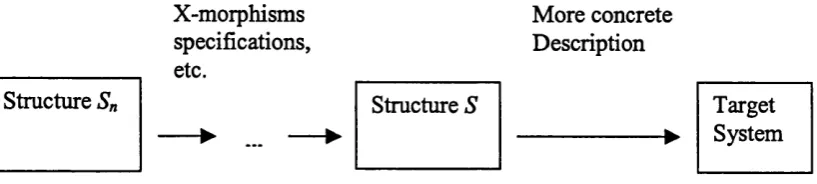
[image:29.595.124.447.97.243.2]more concrete description of the target system. As a consequence, concrete
descriptions cannot be omitted from an analysis o f scientific representation. For this
reason one has to recognise that structures and isomorphisms alone cannot be a
complete analysis of scientific representation.
Let us then, for the time being, assume that there is no problem with there being
an isomorphism between a model and a target system. Given this, is (SM) correct?
Before I can answer this question, I have to say what I mean by ‘correct’. I take it
that (SM) is correct if it provides us with a satisfactory response to the three
conundrums of representation as introduced in the last chapter. What stance then
does (SM) take in these matters? While things are clear as far as the ontological
puzzle is concerned - models are structures - (SM) is ambiguous about the semantic
issues. Is isomorphism supposed to be an answer to the enigma of depiction or to the
problem of quomodity or to both? Since writers on the semantic view do not
distinguish between these two problems, one can only speculate what their answer
might be. In what follows I will discuss both possibilities and conclude that neither
of them will do. As a response to the enigma of representation, isomorphism is
patently inadequate, and it fares only slightly better when understood as an answer to
the problem of quomodity. While isomorphism can be an answer to how some
models represent, it is not the case that all models represent in this way, nor is it true
that the presence of an isomorphism marks the difference between scientific and non-
scientific forms of representation. Scientific representations can be isomorphic to
their targets, but they do not have to be. So my conclusion will be that isomorphism
does not provide us with an answer to either of the semantic issues. And what about
the ontological claim? Are models structures? It will come as little surprise by now
that I take this to be mistaken too, but I shall argue for this only in the next chapter.
I should end this introduction with a disclaimer. The criticism I put forward in
this chapter and the next are only directed against structuralism as an account of
scientific representation. I do not thereby claim that structures are unimportant or that
structuralism cannot be the right route to go in other contexts. In fact, in Chapter 8 I
argue for a structuralist answer to the problem of the applicability of mathematics.
The point I am making in what follows is only that structures by themselves are not
2. Structuralism and the Enigma of Representation
Can (SM) account for why models represent? In this section I argue that it can’t. To
get a first idea of why it cannot, consider the following variation of a well-known
thought experiment due to Hilary Putnam (1981, Iff.).16 Imagine a mathematician
who is totally ignorant about physics. One day, sitting at the desk in his study, he
writes down the equation d2x(/)/d/2 = -k*x(t) and discusses its solutions with all
sophistication and rigour of a modem mathematician. A person with some
background in physics immediately realises that this is the equation describing the
motion of an oscillating pendulum bob; or using the model-theoretic jargon: the
phase space trajectory the equation describes is a model of the motion of the
pendulum bob. But did the mathematician (who, to repeat, is totally ignorant about
physics) write down a model of the moving pendulum?
On a little reflection most of us would probably say: no, he didn’t. What the
mathematician wrote down is a piece of pure mathematics, a mathematical structure
if you like, but not a model of any physical system. The mathematician, after all,
does not know pendulums and hence could not have had the intention to come up
with a model of one. He simply wrote down an equation and solved it. The fact that
someone else can ‘see’ this structure as a model of a pendulum is not his concern.
The point I want to get at is that structural isomorphism is not sufficient to make
something represent something else. In Putnam’s original thought experiment an ant
is crawling on the beach leaving a trace that resembles Winston Churchill. Does this
trace represent Churchill? Putnam concludes that it does not, because ‘[similarity
[...] to the features of Winston Churchill is not sufficient to make something
represent or refer to Churchill. Nor is it necessary.’ (1981,1)
Mutatis mutandis things are the same in the case of the ignorant mathematician.
Unless he knows about oscillations and intends to come up with a model for them,
his structures do not represent oscillations - regardless of whether they are
isomorphic to oscillations or not.
Why not? I have used Putnam’s story to draw attention to the problem of
representation. But a story is not an argument. So the burden of proof seems to be on
my side: I have to provide convincing arguments why isomorphism is not enough to
establish representation. This is what I want to do in the remainder of this section,
where I present four arguments for the conclusion that this view is wrong.17
But before I start arguing for my claim, I would like to use an observation from
the history of science to further dispel the appearance of plausibility (or even
obviousness) of an isomorphism-based view of representation. Many mathematical
structures have been discovered and discussed long before they have been used in
science. Hilbert spaces or continuous manifolds with non-zero curvature as studied in
curvilinear geometry are cases in point. If we subscribe to the view that mathematics
refers ‘by itself we have to accept that Riemann discovered general relativity or that
that Hilbert invented the state space of a quantum system. This is obviously
mistaken. It is only later that scientists started to use these mathematical tools to
represent things and processes in nature.
(a) Isomorphism has the wrong formal properties
The first and somewhat simple reason why representation cannot be cashed out in
terms of structural isomorphism is that the latter has the wrong formal properties:
isomorphism is symmetric, reflexive and transitive while representation is not.
Symmetry. If A is isomorphic to B then B is isomorphic to A (see above). But if A
represents 5, then B need not (and in fact in most cases does not) represent A. While
a tube map represents the London Underground, the underground does not represent
the map. Likewise, Maxwell’s ‘billiard ball model’ represents a gas, but not vice
versa.
One might now be tempted to counter that the relation between the billiard balls
and the gas, for instance, is actually asymmetrical because a scientist has picked out
features of the balls to represent the gas molecules. This is a good point, and I shall
come back to this suggestion later on, but it is not available at present. The view I am
discussing right now seeks to explain representation uniquely in terms of structural
isomorphism and users have not yet entered the scene.
Reflexivity. Everything is isomorphic to itself, but most things do not represent
themselves. To stick with the example, the map I hold in my hands represents the
London Underground, but not the map itself.
Transitivity. Isomorphism is transitive but representation is not.18 Botticelli’s
famous painting represents the birth of Venus. A photograph of if in an art history
book represents the painting one can see in the Galleria degli Uffizi in Florence. But
from this it does not follow that the photograph represents the birth of Venus.
Suppose the gallery decides to sell the painting and a reproduction of it appears in
Sotheby’s auction catalogue. I take that what would be advertised for sale is
Botticelli’s painting, not Venus.
Chaos theory affords us with a telling example for the non-transitivity of
representation in science. Most of the by-now famous mappings such as the cat-map,
the horse-shoe, the tent map, or the baker’s transformation have not been designed to
model any real process. They are simplified and schematic pictures of an exceedingly
complex continuous flow in an abstract phase space (which is in fact too complicated
to be studied directly) and it is this flow that represents the dynamics of the real
system. Hence, the mappings represent the phase flow and the phase flow represent
the dynamics of the physical system, but the mapping does not represent the
dynamics of the physical system.
(b) Isomorphism is not sufficient for representation
Structural isomorphism is too inclusive a concept to account for representation. In
many cases neither one of a pair of isomorphic objects represents the other. Two
copies of the same book, for instance, are perfectly isomorphic to one another but
neither needs to be a representation of the other. Isomorphism between two items is
not enough to establish the requisite relationship of representation; there are many
cases of isomorphism where no representation is involved. Hence, isomorphism is
not a sufficient condition for representation.
One might now argue that this critique is spurious since in the given set-up this
problem cannot crop up at all.19 The models under consideration are structures and
the target systems are objects in the world. Counterexamples of the aforementioned
type can then be ruled out simply by building this matter of fact into the definition of
representation: introduce the ontological restriction that a model M must be a
structure and the target T must be a concrete object (or process) in the world. This
strategy blocks the above objection. Even if one book resembles the other, it does not
represent it because it is the wrong kind of thing.
Unfortunately things are not that easy. Though models often do refer to things in
the world, this is not necessarily so. Just as a picture can represent another picture, a
model can represent another model rather than anything in the world. Consider again
the aforementioned case of chaos theory. Mappings like the baker’s transformation
are models that represent what happens in another model, not what is going on in the
world. But this is incompatible with the amendment suggested above since by
requiring that the target of a model must be a real system we would rule out such
obvious and important cases of representation. This is an unacceptable consequence.
(c) Multiple realisability
Looking at successful applications of mathematics in the sciences we find that quite
often the same structure is used several times in different contexts and even across
different disciplines. Linear spaces, for instance, are widely used in physics,
economics, biology, and the mathmatised parts of psychology. Similarly, ordinal
measurement scales are used to quantify length, volume, temperature, pressure,
electrical resistance, hardness of a solid and many other things. The Hr2 law of
Newtonian gravity is also the ‘mathematical skeleton* of Coulomb’s law of
electrostatic attraction and the weakening of sound or light as a function of the
distance to the source. Harmonic oscillations are equally important in the context of
classical mechanics and classical electrodynamics (for a detailed discussion of this
case see Kroes 1989). These examples suggest that structures are ‘one-over-many’,
as Shapiro (2000, 261) puts it. That is, the same structure can be exhibited by more
than one target system. Borrowing a term from the philosophy of mind, one can say
that structures are multiply realisable.
These examples are by no means isolated cases. Certain geometrical structures
are possessed by many different systems. Just think about how many spherical things
we find in the world; or consider the spiral we know from helter-skelters and spiral
staircases and that later on even came to serve as a model of DNA. The same is true
of many mathematical theories as well. Take once more the case of chaos theory.
Many of its mathematical structures have been put to use in various different fields
such as physics, biology, economics, medicine, or climate research. And similar
remarks apply to other branches of mathematics such as partial differential equations
or probability theory.
To see how the multiple realisability of structures clashes with the
representational power of models, we need to bear the following feature of
representations in mind. I observed at the outset that models are representations of
something else. Implicit in this is that models are representations of some particular
target system. The target can either be a token (as in the case of cosmological
models) or a type (as in the case of models of the atom), but models are always
representations of some physical phenomenon like an electric circuit, a falling object,
magnetism in a solid, or an exploding star. Representations, by their very nature, are
directed towards one particular phenomenon. This implies that the extension of a
representation must be fixed correctly; a model of the hydrogen atom, say, represents
hydrogen atoms and nothing else. Or to put it another way, the correct class of
objects as its targets must be singled out for a scientific representation in much the
It is this feature of representation that is incompatible with multiple readability.
The point is that in the case of a multiply realisable structure, isomorphism is unable
to single out the class of objects or phenomena that the model is intended to
represent; that is, isomorphism cannot determine the correct extension of the
representation. Or to put it another way, the model does not allow us to correctly
identify the system it is supposed to represent. If a model is isomorphic to more than
one system instantiating the same structure, which one is it a model of? What is the
harmonic oscillator, to stick with the example, a model of? A pendulum bob? A lead
ball on a spring moving up and down? The voltage in an electric circuit with a
condenser and a solenoid? The amplitude of the B-field of an electromagnetic wave?
The motion of atoms in the wall of a black body? It is isomorphic to all of them, but
is it a model of all of them? This cannot be. To repeat, it is one of the main
characteristics of a model is that it is a model of one particular phenomenon (no
matter whether type or token). But if several parts of the external world can
instantiate the same structure, a structure per se does not stand for one of them in
particular. We face the dilemma that the structure as a model must stand for one
particular system (or one particular type of system), but as a bare structure it is
isomorphic to many systems (or types) and there is nothing that would allow us to
pick out one of these as the ‘privileged’ one of which the structure ‘really’ is a
model. In other words, the structure fails to indicate which one of the structurally
isomorphic targets it is a model of.
Three counters to this point come to mind. The first tries to mitigate the force of
the argument by denying that such cases are relevant to science. Van Fraassen (1980,
66), mentions a problem similar to the one at hand under the heading of ‘unintended
realisations’ and then expresses confidence that it will ‘disappear when we look at
larger observable parts of the world’. Adopting his point to the present context one
could try to counter the multiple realisability argument as follows: even if there are
multiply realisable structures to begin with, they vanish as science progresses and
considers more complex systems and larger chunks of the world. We have good
reasons to believe that this solves the problem because the more we know about
phenomena, the more likely it is that their structures will be different; and once we
There is a problem with this counter, however. It is just besides the point to
appeal to future science to explain how models work today. It is a matter of fact that
we currently have models that represent electric circuits and sound waves and a
theory of scientific representation that cannot account for how they do so must be
defective. We just do not have to await future science providing us with more
detailed accounts of a phenomenon to make our models represent what they actually
already do represent.
The second counter has it that the argument from multiple realisability is wrong
because all that matters is that we can use a particular structure as a model for this or
that. On one occasion we use the harmonic oscillator structure as a model for an
electric circuit and on another occasion as a model for the motion of an atom. That is
what scientists do all the time, so what is the problem with it?
There is no problem with that, but it describe