© 2015, IRJET ISO 9001:2008 Certified Journal
Page 1095
Green supply chain management: A Review
Gaurav. B. Patil, Dr. Dhananjay R Dolas
1
Student, Mechanical engineering, Jawaharlal Nehru engineering collage, Maharashtra, India
2Associate Professor in Mechanical Engineering at MGM’S Jawaharlal Nehru College of Engineering, Aurangabad,
Maharashtra, India
---***---Abstract -
Green Supply Chain Management has appeared as an environmental innovation with integrates environmental concerns into supply chain management. The main objective of this study is to correlate the term Supply Chain Management with the Green Supply Chain Management. Green Supply Chain Management has appeared as an environmental innovation with integrates environmental concerns into supply chain management. The main purpose of this study is to demonstrate the new innovative areas of this emerging field. The study is focused on application of GSCM in the developed firms including all those innovations that are relevant to environmental and social sustainability towards operation management and supply chain management. It shows that GSCM is the advance change to improve to conventional supply chain management method. .
Key Words:
conventional, modern supply chain
management , innovations in GSCM ,
1. Introduction-
Green supply chain management integrates the environmental thinking into supply chain management, including product design, material resourcing and selection, manufacturing process, delivery of final product to the consumer as well as end of life management of the product after its useful life. In the early days, there was the conventional supply chain management that provides the management of flow of goods and services. It integrates the transpose and storage of raw material, work in process inventory, and finished goods from the point of origin to point of consumption (1). The Interconnected channels and node businesses are involved in provision of product and services required by end of customers in supply chain. Supply chain management draws heavily from the area of operation management, logistics and strives for an integrated approach. The degree of economic growth is rising the degree of energy as well as material consumption, which contribute the environmental issues and resource depletion problem(12) .It has become rising significant for firms facing competitive, regulatory, and community pressures to provide a better supply chain management which should be balanced with
economic and environmental aspects. So, nowadays many firms are adopting some changes related to environmental issues which also affected suppliers and customers (2).Also manufacturers need to work with their supplier of raw material and their component in order to produce environmental friendly products. By using their purchasing power, the industries can set up environmental criteria for their suppliers upstream in supply chain (3).
2. Literature review
Toke, Gupta and Dhandedkar (1) have reviewed a no. of issues to green supply chain and their management. The structure of the presentation was based on four major functions that could be considered as driers within the green supply chain management. These functions are purchasing, in bound logistics, production, and distribution and out bound logistics
Noor aslinda, senam, zakuan, jusoh and shoki (2) discussed an overview of GSCM literature in a developed countries and developing countries. Although some studies in the literature discussed the GSCM implantations includes drivers, practices and performance over the world, but there has still little research includes drivers practices and performance over the world. But there has still research about GSCM implementation an adoption in Malaysia
Neemavat and Namdev (3) has discussed the cost and complexity are perceived as higher barrier to implement GSCM which highlight the need of cost effective and easy to implement solutions. Brand building is one of the top incentives for green supply chain management, highlighting the importance of public perception of how companies operate the GSCM.
Kumar and Chandadkar (4) studied the present system of functioning of industries is deteriorating the environment and a soon a day will come when damage done to earth will become irrecoverable. Thus, it can be concluded that the GSCM is inevitable if the earth is to be kept green and appropriate methodology maybe adopted by industries to minimize the detrimental effect on environment.
© 2015, IRJET ISO 9001:2008 Certified Journal
Page 1096
approach for improving performance of process and productaccording to requirement of environmental regulation
Qinghua Zhu, Joseph Sarkis, Kee-Hung (6) argued that how many GSCM practices implications effectively closing the supply chain loops. Adoption of these practices is fundamental to China's involvement in these critical practices. Under pressure from foreign partners and customers and increasingly value to domestic environmental regulation, Chinese industries will further adoption of five major categories of GSCM
Benita.M.Bemon(7) demonstrated that the supply chain management concept grew out of reorganization that process of transforming raw material into final product and delivering to those products to customers is become increasingly complex. As such, it become increasingly apparent that analysis of individual supply chain management stages did not lead to improvement as whole.Thus,the concept of supply chain emerged to describe all production stages to raw material acquisition to final product delivery. Changes in the state of environment, leading to subsequent pressure and environmental legislation have necessitated a fundamental shift in manufacturing business practice.
Su Yol Lee (8) focused on importance of green supply chain initiatives, which are inter-organizational projects striving to improve environmental performance as well as economic efficiency throughout the entire supply chain. These initiatives have been successfully implemented only if the participation of all player, in particular SME suppliers, is guaranteed. His study investigates what factors facilitate SME suppliers to willingly take part in those initiatives
Francesco and Fabio(9) estimated that the most interesting result of their model concerns the role of EMss(environmental measurement system) 'nest' in which GSCM can easily originate and effectively grow. The key to the development of GSCM practices, according to their findings, seems to be that prompting the adoption of EMss (Environmental management system), also through the diffusion of the connected certifications schemes in order to facilitate and support their gradual extension towards supply chain activities.
Arimura, Darnall and Katayama (10) demonstrated that using Japan facility level data, the effect of ISO14001 certification on the promotion of more advance environmental practice named as green supply chain management. They find that ISO14001 promotes green supply chain management. Facilities with ISO14001 are likely to access 40% more of their supplier's environmental performance and 50% more likely to require that their suppliers undertake specific environmental practices
Ghobakhloo, Tang, Zulkifli, and Ariffin (10) presented a state-of-the-art and succinct framework of effective GSCM implementation which is based on the literature review of GSCM while integrating the whole gamut of activities in the
area. They have found that the key themes that came out of the GSCM literature over the last twenty years are the concepts of greening the product design, material management, manufacturing process, distribution and marketing, and reverse logistics
B.L.Lakshmimeera and Dr. Palanisamy (12) concluded that the subject launches a number of challenges for managers, academics and researchers. GSCM involves a paradigm shift in which the issue of sustainability is no longer seen as a source of costs, representing a potential source of competitive advantage for companies. Manufactures today are under pressure to adopt these strategies to create an environmental stance that is a driver for reduced costs and risks, increased revenues, and improved brand image. Organizations which have taken up the environmental position go beyond the basics of cutting waste and operating efficiently to adopt the strategy of Lean and Clean to be really green.
3. Conventional supply chain management
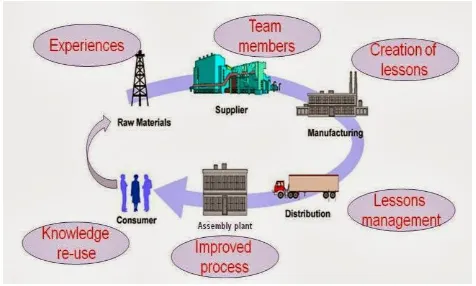
[image:2.595.315.553.480.623.2]The supply chain management is defined as a planned production process in which raw material is converted into finished goods, the delivered to end costumers. Connected set of resources and process starts with the raw material sourcing and expands to delivery of finished goods to the end costumer (4). Therefore these are the basic definitions of supply chain management. The description of extended view of SCM and integration of extra activities in the function of supply chain is explained as follows,
Fig 01
© 2015, IRJET ISO 9001:2008 Certified Journal
Page 1097
The objectives of supply chain management are lower thetotal amount of resources required to provide the necessary level of customer service to specific segment. Other writers have indicated objectives supportive of this overall goal including synchronizing the requirement of the customer with the flow of material from supplier reducing inventory investment with chain, increasing customer service building competitive advantage for the supply chain and value(6).
It has been observed that stiff competition in the industry has manufactures to focus on efficiency of total supply chain rather than on improvement of specific functional areas.(7).Integration supply chain practices now extends to the product development process. For example ,product development at the Toyota system is closely linked with the system and essential of this framework involves close, frequent, cross functional interactions both informal and formal and close monitoring by supervisors of their subordinates.(8)
4. Green supply chain management
Green supply chain management integrates the environmental thinking into supply chain management, including product design, material resourcing and selection, manufacturing process, delivery of final product to the consumer as well as end of life management of the product after its useful life. In order to achieve the GSCM, manufacturing organizations must follow the basic principles established by ISO 14000, and particularly, by state-of-the-art ISO 14001(9). In doing so, it is imperative that organizations develop procedures that concentrate on operations analysis, continuous improvement, measurement and objectives (10). However, to more systematically come up with guideline for effective GSCM implementation, it is based on following definition of GSCM: Green Supply Chain Management (GSCM) = Green Product Design + Green Material Management + Green Manufacturing Process + Green Distribution and Marketing.(2)
4.1. Green product
The main purpose of the green designing is to subtract the catastrophic effect on environment completely through systematic as well as sensitive design(11).The implementation of gscm design requires no renewable resources, impact the environmental minimally, and connect people with natural environment. Green design includes essential material selection, product procurement, package design and energy use. Green considers these important factors.
1. Design for environment 2. Eco design
3. Life cycle design 4. Other factors such as,
A. Top management committee B. Organizational structure C. Reverse logistics function D. Claim and reuse
F. Recycle remanufacturing and disposal G. Environmental management system H. Government regulations and legislations I. Reducing energy consumption
Green material management-
4.2 Material management-
Green material management is defined as environmental purchasing consist of involvement in activities that includes the reduction, reuse and recycling of material
For green material management, following processes of material selection, separation and material recovery should receive more support (13)
1) Different materials used in a product should be easy to separate;
2) While maintaining compatibility with the existing manufacturing infrastructure, fewer numbers of different materials in a single product should be used;
3) More adaptable materials for multiple product applications should be used;
4) Smaller number of „secondary operations‟ should be used to reduce the amount of scrap and simplify the recovery processes
4.3 Green manufacturing
The general manufacturing process consumes excess amount of energy required from burning various natural sources such as coal, coke and natural gas and combustion causes air pollution. Manufacturing system evolution consist of lots of internal as well external factor. In today's global awareness of environmental risks and pressing needs to complete through efficiency, manufacturing system are involving into new paradigm.(12) The main purpose of green manufacturing is to save energy by supplying greener source of energy. The key factors of green manufacturing are,
1. The amount of energy 2. Resource utilization 3. Green degree of energy 4. Amount of hazardous waste
5. Number of reuses of Hazardous waste
4.4 Green distribution and marketing
© 2015, IRJET ISO 9001:2008 Certified Journal
Page 1098
environmental destruction. In particular, the factor of socialresponsibility plays an important role as mediator in the effect of green marketing on product or corporate reputation (13). Of the three factors of corporate image, product image and corporate reputation have a direct effect on purchase intentions, whereas social responsibility has an indirect effect on purchase intentions in the retail setting.
5. Innovations and results of green supply chain
management
Innovation Results
Purchasing-
Several electronics companies, including Nortel and Intel, have moved away from purchasing material toward receiving chemical
services via chemical
management programs. These services can include procurement, inventory management, data
tracking, and waste management
By providing incentives for suppliers to reduce material quantities and by leveraging the suppliers’ expertise, these companies have achieved Substantial savings and reduced wastes.
Chemical management providers are no longer compensated based on the volume of chemicals they sell to their customers, but on value-added services
Instead. With appropriate incentives, providers are rewarded for reducing chemical usage (and costs), increasing productivity, or decreasing waste
Materials Handling
A number of companies are switching to reusable packaging systems. 3M recently launched an Eco-efficient packaging business, and GM has a well
established reusable pallets and containers program
By working closely with suppliers, GM successfully
switched to reusable
packaging systems and
reduced its disposal costs by $12 million between 1987
and 1992. Additionally,
reusable containers can
reduce solid waste, decrease
product damage during
Shipping, and eliminate
ergonomic and safety
problems.
Storage
Several companies have
changed their inventory
storage procedures for
maintenance, repair, and operating (MRO) materials by consolidating storage areas and requiring suppliers
Public Service Electric and Gas Company streamlined its
purchasing And storage
processes and saved more than $2 million in 1997. The
changes significantly
decreased the disposal of obsolete paint and other materials, reduced storage
to adhere to stringent material return Policies.
space requirements, And
lowered carrying costs...
MATERIAL RECOVERY
By focusing on their high volume material flows and striving to eliminate wastes,
several companies have
justified material recovery
projects by applying
environmental accounting
methods
Andersen Corporation
(manufacturer of Andersen Windows and Patio Doors)
developed a composite
material from wood wastes
generated during its
manufacturing processes.
This innovation is expected to yield a 50% return on investment and has already
enabled Andersen to
decrease solid lumber
purchases by 750,000 board-feet
DISPOSITION
Many companies are saving money by ensuring that major waste disposal costs
are made explicit and
attributed directly to the
responsible product or
business unit. Companies use this cost information to
identify more financially
attractive alternatives to disposal
Environmental accounting
Commonwealth Edison, a Midwestern electric utility company, to greatly reduce its landfill disposal volume. A
life cycle accounting
approach highlighted the indirect costs created by a variety of activities, including disposal. Once these costs were made explicit, the company began developing a cost-effective method for grinding tree limbs.
Product Take Back
A variety of companies have
developed cost-effective
ways to recover products from their distributors and customers
Kodak’s logistics system
currently recovers 70% of the cameras sold to consumers. Since its inception, over 200 million saver cameras have been returned to Kodak facilities
6. Cost category
Cost category
Definition
Conventional
(least difficult to quantify)
Material, labor, other expenses, and revenues that are commonly allocated to a product or process.
Potentially Hidden Expenses incurred by and
© 2015, IRJET ISO 9001:2008 Certified Journal
Page 1099
processes, e.g., supervisorsalaries and safety training courses.
Contingent Potential liability or benefit that
depends on the occurrence of a future event, e.g. potential occupational health and clean-up costs related to a spill of a hazardous substance.
Image/Relationship Costs/benefits related to the
subjective perceptions of a firm’s stakeholders, e.g., a community group’s resistance to a plant expansion or an insurer’s concern about the lack of a formal environmental management
External
(most difficult to quantify
Costs/benefits of a company’s impacts upon environment and society that do not directly accrue to the business, e.g., the benefits of reduced traffic congestion from a company’s Telecommunication program.
3. Conclusions
From this study conclude that green supply chain management is an emerging field which integrates the environmental saving factors with the supply chain management. Also studied the diverse approaches of various authors towards the green supply chain management. From the study it can be concluded that GSCM is a modern way of conventional supply chain management. We studied the need of GSCM and constraints of conventional supply chain management. The results of studies are states that to overcome through
the constraints of supply chain management,
implementation of GSCM is necessary tool.
GSCM related financial impacts.
GSCM improves operations by employing an environmental solution:
> improves agility – GSCM helps mitigate risk and speeds up innovations;
> Increases adaptability – green supply chain analysis often leads to innovative Processes and continuous improvements;
> promotes alignment – GSCM involves negotiating policies with suppliers and customers, which results in better alignment of business processes and principles
REFERENCES
[1] Gupta, M.“Environmental management and its impact on the operations function”, International Journal of Operations and Production Management, 15 (8): 34-51.1995,
[2] Nimawat Dheeraj and Namdev Vishal, "An overview of Green supplies chain management in India" Research journal of recent sciences. Rajasthan, India,2012,vol1(6)
[3] Assey Mbang Janvier-James, "A New Introduction to
Supply Chains and Supply Chain Management: Definitions and Theories Perspective", International Business Research.Shanghai 200051,
China,2012,vol 5(1)
[4] Coopert, Lambert, Pagh," supply chain
management; more that a new name to logistics", The international journal of logistic management, December 1996,Ohio,USA
[5] Srivastava S.K., “Logistics and Supply Chain Management Practices in India”, 6th Global Conference on Business and
Economics,(2006),India
[6] NASSCOM, (2007),“It adaptation in the Indian Auto Component Industry", Dec. 23,2013
[7] Norhana Muslan, Abu Bakar Abd Hamid, Helen Tan and Halimah Idris , "Practices of Green Supply Chain
management towards Manufacturing Sustainability", Johor ,Malasia,2013 [8] Maruf Husan, "Sustainable Supply Chain
Management Practices and Operational Performance",Sydney, Austalia.2012
[9] Benita M. Beamon, "Designing the Green supply chain,Logistics Information Management", Washington, USA, (1999)
[10] Robert Hanfield, Nicole Darnell," Environmental management system; Green supply chain
management; compliment for sustainability", 2008 [11] Aref Hervani, Joseph Sarkis," Performance
measurement of GSCM,Chicago", U.S.A,2005 [12] Anoop A.T., Dr. Regi Kumar V. , A review of GSCM
issues in Indian bottle water industry,Kerala,India,2013
[13] B.L. Lakshmimeera and Dr. Chitramani Palanisamy, "Conceptual Framework on Green Supply Chain
Management Practices", Coimbatore, India.
[14] M. Ghobakhloo, S. H. Tang, N. Zulkifli, and M. K. A. Ariffin, "An Integrated Framework of Green Supply
Chain Management Implementation", International Journal of Innovation, Management and