Experimental analysis of pine needle briquettes
using different binding material
Mr.Arvind Singh Bisht#1, Dr. Satyendra Singh*2, Mr. Shailesh Ranjan Kumar#3
#
Department of Mechanical Engineering, BTKIT Dwarahat Almora
Abstract— The study is undertaken to investigate the Thermal properties of pine needle in the preparation of biomass briquettes. Forest fires are the annual phenomenon in Himalayan region as the forests are dense and catch fire easily due to natural and man-made reasons. Himalayan forests are rich in Pine trees and the pine needle is one of the reasons to enhance the forest fire. There is a necessity to handle this forest waste efficiently. The dry pine needles are a major cause of forest fires and destroy the local ecology and the unburned pine needles damaging the fertile top layer of the soil.
This paper attempts to explain the briquetting technology of pine needles and the results showed that a significant improvement in calorific value with the different binding material, and also help to find out the most suitable or efficient binding material for pine needle briquetting.
Keywords: Pine Needles, Briquetting, Himalayan Region, Thermal Analysis, Forest Fire, Forest waste, Biomass
I. INTRODUCTION
Biomass is one of the most promising renewable energy resources on earth which is used in the form of solid, liquid and gaseous fuels. The demand for bioenergy systems in small scale industry is increasing at faster rate due to its lower investment cost. Currently bioenergy is the second largest commercial renewable energy source. Current total biomass energy usage ranges around 12% of world total primary energy consumption, mainly in traditional applications like cooking in developing nations like India. Also the usage of wood for heating purposes is increasing day-today. Normal domestic wood-burning appliances include fireplaces, pellet stoves and burners, central heating furnaces and boilers for wood logs and wood pellets [1]
Biomass can be converted into either heat energy or electrical or energy carriers like charcoal, oil, or gas using both thermochemical and biochemical conversion methods. Combustion is the most developed and frequently applied process used for solid biomass fuels because of its cheap cost and high reliability. During combustion, the biomass first loses its moisture at temperatures up to 100°C, using heat from other particles that release their heat value. As the dried particle heats up, volatile gases containing hydrocarbons, CO, CH4 and other gaseous components are released. In a combustion process, these gases contribute about 70% of the heating value of the biomass. Finally, char oxidizes and ash remains [2]
Among the usage of biomass the wood pellet is also included. Many new techniques are available to turn wood and crop wastes into standardized pellets that are eco-friendly and easy to handle [3]This document is a template. For questions on paper guidelines, please contact us via e-mail.
II. MATERIEL&METHODS
10 kg of pine needle sample was collected from Uttarakhand hill region of India During May 2014. Sample was received in the form of long fibrous mass. It was chopped in order to get uniform representative sample
Char (biomass produced by pine needle carbonization) which can be further use as briquette by briquetting which is the process of converting low bulk density biomass into high density concentrated fuel briquetting. In this process we use modified kiln and briquetting mould.
Sample Char Binding material
S1 1 kg 500g clay
S2 1kg 350g clay
S3 1kg 50g Starch
S4 1kg 50g Starch+ 100g clay
S5 1kg 50g paper
S6 1kg 50g paper+ 100g clay
Fig.1.Briquetting Process
PROXIMATE ANALYSIS WAS CARRIED OUT ON THE BRIQUETTE SAMPLES TO DETERMINE THE PERCENTAGE VOLATILEMATTER
CONTENT,% ASH CONTENT,% CONTENT OF FIXED CARBON AND HEATING VALUE OF THE SAMPLES.THE PROCEDURES OF ASTM
E711-87
Parameters Pine Briquette
Appearance Black color,Cylindrical Shape witht holes
composition S1,S2,S3,S4,S5,S6
Weight 185g
TABLE 2 PHYSICAL PARAMETER OF BRIQUETT
III.RESULTANDDISCUSSION
Result of each briquette analysis of on water boiling test This was carried out to compare the cooking efficiency of the briquettes. It measured the time taken for each set of briquettes to boil an equal volume of water under similar conditions. Ignition time
Each briquette sample was ignited at the base in a drought free corner. The time required for the flame to ignite the briquette was recorded as the ignition time using stop watch.
SAMPLE S1 S2 S3 S4 S5 S6
Moisture Content (%) 6.2 5.9 4.6 5.1 4.4 5.5
Ash Content (%) 32.6 29.3 15.2 19.2 14.5 22.4
Volatile matter (%) 50.7 55.4 73.21 67.41 75.2 69.2
Fixed Carbon (%) 10.5 9.4 6.99 8.29 7.1 8.2
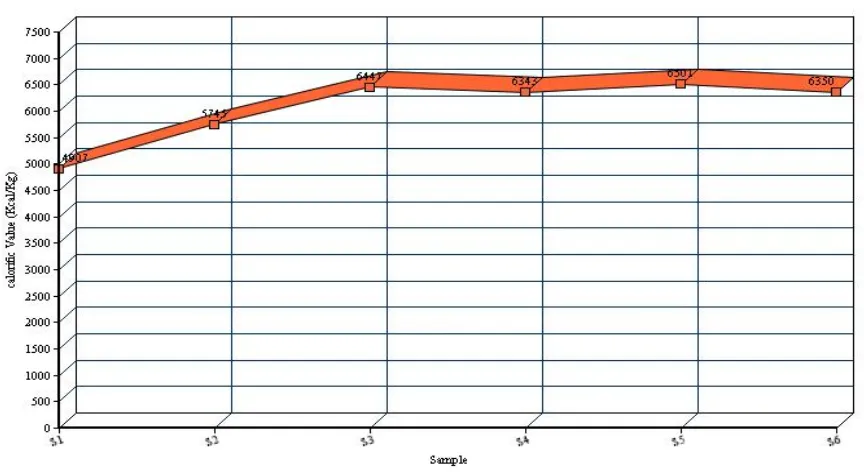
[image:3.612.150.463.262.317.2]Calorific Value(Kcal/Kg) 4907 5745 6447 6343 6501 6350
Table 3 The result of proximate analysis briquette samples
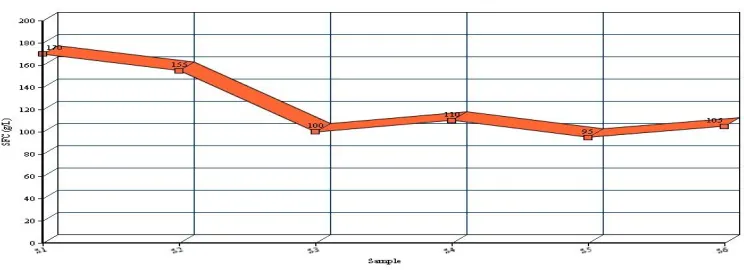
Fig. 2 Variation in specific fuel consumption with different binding material
Pine needle collection Drying Carbonization
Binding Solution Briquetting
[image:3.612.127.499.564.699.2]Fig. 3 Variation in burning rate with different sample
[image:4.612.100.532.453.689.2]Fig. 4 Effect of binding material on the efficiency
[1] ENVIS Centre on Himalayan Ecology G.B. Pant Institute of Himalayan Environment and Development Kosi-Katarmal, Almor,Uttarakhand,India-263643 data available Online http://gbpihedenvis.nic.in/indian_him_reg.htm ENVIS Centre on Himalayan Ecology
[2] World Wildlife Fund ,Himalayan subtropical pine forests,online http://www.worldwildlife.org/ecoregions/im0301Himalayan subtropical pine forests [3] Kaliyan Nalladurai and Morey R. Vance, “ConstitutiveModel for Densification of Corn Stover and Switchgrass.” Biosystems Engineering. 104.1 (2009):
47‐63.
[4] Grover P.D. and Mishra S.K., “Biomass Briquetting: Technology and Practices.” RWEDP Field Document no. 46, Food and Agricultural Organization of theUnited Nations, Bangkok, 1996
[5] Grover P.D., Mishra, S.K. and Clancy J.S., gDevelopment of an Appropriate Biomass Briquetting Technology Suitable for Production and Use in Developing Countries. h Energy for Sustainable Development. (1994): 44-48
[6] Eriksson S. and M. Prior, “The Briquetting ofAgricultural Wastes for Fuel.” FAO Environment and Energy Paper11 (1990),
[7] Singh R.M., M. Kamide and Toshihiko M., “Some chemical and physico‐mechanical properties of Nepalese coal tested for biobriquettes.” Journal ofNepal Chemical Society 15 (1996): 12‐18
[8] Food and Agriculture Organization (FAO), “Simpletechnologies for charcoal making.” FAO (1987). Rome
[9] Higman Chris and Burgt van der Maarten, “Gasification.” Elsevier Science (2003). 200 Wheeler Road. Burlington. Page 67-70
[10] Singh R.M., M.Toshihiko, M. Kamide, K. Taniguchi and K. Deguchi, “Biobriquettes‐An alternative fuel fordomestic and industrial applications.” Nepal Journal of Science and Technology 3 (2001),105-114
[11] Karve Priyadarshini, H.Y. Mahajan and A.D. Karve, “A Biomass Charring system for Rural Areas.” In: Biomass Residues for Fuel. A Publication of Glow the Asia Regional Cookstove Program Vol. 24. June, 2001
[12] Sugumaran p., Seshadri s., “Biomass charcoal briquetting”, Shri AMM Murugappa Chettiar Research Centre taramani, Channai-60011, 1-12
[13] ASTM standard E711-87, Standard test method for gross calorific value of refuse – derivedfuel by the bomb calorimeter. Annual book of ASTM standard, 11.04. ASTM International,http//www.astm.info/standard/E711.htm 2004
[14] Eriksson S. and M. Prior, “The Briquetting of Agricultural Wastes for Fuel.” FAO Environment and Energy Paper11 (1990).
[15] Bamgboye Isaac Adeleke and Bolufawi Joseph Senewo, “Physical Characteristics of Briquettes from Guinea corn (sorghum bi‐color) Residue.” Agricultural Engineering International: the CIGR Ejournal. Manuscript 1364 Volume (11), 2009