© 2018, IRJET | Impact Factor value: 6.171 | ISO 9001:2008 Certified Journal | Page 268
A COMPARATIVE STUDY ON DURABILITY AND PROPERTIES OF LIGHT
WEIGHT CONCRETE
RASHMIYA R
1, PRAVEENRAJ M
2, VENNILA R
3, ARIVAZHAGN R
4,MAGESHWARI R
51Assistant Professor of Civil Engineering
2,3,4,5 under graduate final year Civil Engineering students
Sembodai RukmaniVaratharajan Engineering College, Sembodai-614 809, Vedaraniyam (Tk), Nagapattinam (Dt).
---***---Abstract-
Light Weight Concrete is not a new invention ofconcrete world.it has been known since ancient times. It is made by replace of fly ash and natural aggregates like volcanic origin, saw dust. LWC has light weight and has high durability and mechanical properties. In this concrete has high strength and effectively low density. We are using 53 grade of cement and 10 mm size aggregates. The mix ratio of LWC is M25 grade. The production of this concrete
partially replacement of fly ash in cement and partially replace of saw dust in fine aggregate. This paper briefly presents the compressive strength development of fly ash and saw dust concrete at different ages. The split tensile strength and flexural strength of all the concrete mixes were also investigated at different days of curing.
Key Words: LWC - Lightweight concrete, FASD - Fly ash and Saw Dust, Fly ash; coarse aggregates ,compressive strength, split tensile strength , flexural strength.
1.INTRODUCTION
Concrete is most important construction materials. Concrete is a material used in building construction, consisting of a hard, chemically inert particulate substance, known as an aggregate that is bonded together by cement and water. In upcoming years there has been an increasing worldwide demand for the construction of buildings, roads and an airfield which has mitigate the raw material in concrete like aggregate. Light Weight Concrete has a surprisingly long history and was first patented in 1923, mainly for use as an insulation material. Although there is evidence that the Romans used air entertainers to decrease density, this was not really a true Light weight concrete. Significant improvements over the past 20 years in production equipment and better quality surfactants (foaming agents) has enabled the use of foamed concrete on a larger scale. Compressive strengths range from up to 40 MPa down to almost zero for the really low densities. Generally it has more than excellent thermal and sound insulating properties, a good fire rating, is non-combustible and features cost savings through construction speed and ease of handling. The other main specialties of lightweight concrete are its low density and thermal conductivity. So its advantages are that there is a reduction of dead load, faster building rates in
construction and lower transport and handling costs. Light Weight Concrete maintains its large voids and not forming laitance layers or cement films when placed on the wall. Sufficient water cement ratio is vital to produce adequate cohesion between cement and water. Insufficient water can cause lack of cohesion between particles, thus loss in strength of concrete.
2. LITERATURE REVIEW
Manish Awana and Chandan Kumar (2017), has studied a Cellular Lightweight Concrete. In this paper, parametric experimental study for producing CLWC using fly ash is presented. The performance of cellular lightweight concrete in term of density and compressive strength are investigated. From the result, it can be seen that compressive strength for cellular light weight concrete is low for lower density mixture.. Sieve IS 2.36 mm, The specific gravity 2.65.The coarse aggregate with maximum size of 10mm having the specific gravity value of 2.68.Sieve IS 2.36 mm, The specific gravity 2.65 Normal
concrete has a density of 2,400 kg/m3 while densities
range from 1,800, 1,700, 1,600 down to 300 kg/m3.To
compare the conventional concrete and light weight aggregate concrete using mix M30 with poly carboxyl ether admixture. Light Weight Concrete is made by Partial replacement of Coarse Aggregate with different ratios of fly ash ranging from 20%, 50%, 80% and 100%. This project is focused to determine the compression strength and split tensile strength parameters of light weight aggregate concrete to find the favorable replacement with the above mentioned replacements.
2.1 Experimental Study:-
Materials Properties:
Properties of fly ash Specific gravity 2.27 53 Grade Ordinary Portland cement. The specific gravity of Cement was 3.14. The initial and final setting times were found as 27 minutes and 512 minutes respectively. Standard
consistency of cement was 41.12%. IS: 383 – 1970,
Specification for Coarse and Fine Aggregates from Natural Sources for Concrete. Methods of Test for Aggregates for
Concrete.Local River sand confirming to Grading Zone-II
© 2018, IRJET | Impact Factor value: 6.171 | ISO 9001:2008 Certified Journal | Page 269
Material Collection
Mixing Process
Moulding & Demoulding
Testing & Result Analysis Curing
process
[image:2.595.43.282.175.278.2]from cement fly ash proportions 20:80 and 25:75.Hard Broken Granite stone (HBG) confirming to graded aggregate of size 10mm as per IS: 383-19790.Fly ash and saw dust aggregate (FASDA) obtained from cement fly ash proportions 21:65 and 26:25. Fresh water was used for mixing process and curing.
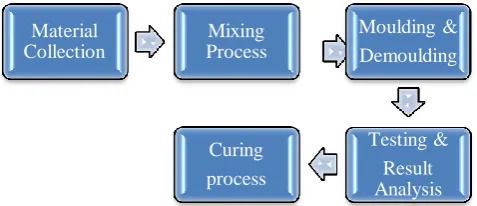
Fig 1 working procedure of this study
2.2- Material used:
Cement
Fly ash
Saw dust
Fine aggregate
Coarse aggregate (10 mm).
Properties of saw dust:
Table-2.1: Chemical composition of saw dust
Saw Dust Oxide Percentage (by weight)
SiO2 68.30
Al2O3 3.5
Fe2O3 2.23
MgO 5.4
CaO 5.0
Properties of cement:
Table 2.2: Approximate Oxide Composition Limits of Ordinary Portland cement.
Oxide Per cent content
CaO 60–67
SiO2 17–25
Al2O3 3.0–8.0
Fe2O3 0.5–6.0
MgO 0.1–4.0
Alkalies ( K2O, Na2O) 0.4–1.3
SO3 1.3 – 3.0
Properties of fly ash:
Table-2.3: Chemical composition of fly ash
Compounds (%) Fly Ash
SiO2 38-63
Al2 O3 27-44
TiO2 0.4-1.8
Fe2 O3 3.3-6.4
MnO b.d-0.5
MgO 0.01-0.5
CaO 0.2-8
K2 O 0.04-0.9
Na2 O 0.07-0.43
LOI 0.2-5.0
pH 6-8
[image:2.595.317.549.376.571.2]Material specifications:
Table 2.4: Materials specification
Materials Specifications
Cement 53grade of ordinary Portland cement
Fine aggregate Sieve IS 2.36 mm,The specific gravity 2.65
Coarse aggregate
The coarse aggregate with maximum size of 10mm having the specific gravity value of 2.68
Fly ash Passing through 90 micron sieve
Saw dust Sieve IS 2.36 mm, The specific gravity 2.65
Water Fresh water was used for mixing process and curing
2.3-Physical properties of materials:-
Table-2: materials specification
1
Properties of cement Specific gravity Initial setting time
3.15 & 35-45 minutes
2 Properties of fly ash
Specific gravity 2.27
3 Property of fine aggregates
© 2018, IRJET | Impact Factor value: 6.171 | ISO 9001:2008 Certified Journal | Page 270 2.4 Collection of Materials:-
Cement- The cement used in this experimental works is Portland cement 53 Grade Ordinary Portland cement. All properties of Cement are tested by referring IS12269-1987 Specification for 53 Grade Ordinary Portland cement. The specific gravity of Cement was 3.14.
Fly Ash- Fly ash is a by-product of the combustion of pulverized coal in thermal power plants. The fly ash from boilers at some older plants, where mechanical collectors alone are employed, is coarser than from plants using electrostatic precipitators.
Saw dust- In this is a natural material, it is from the waste of wooded works. Thus the material is has low specific gravity and has low binding property. It has only one thing of water store capacity so the concrete is well durability.
Coarse aggregate- Crush granite 10 mm size to 4.75 mm aggregate taken and used and the specific gravity value of 2.67 and fineness modulus of 6.21 were used as a coarse aggregate. The loose and compacted Bulk Density values
of coarse aggregate are 1501 kg/m3 respectively, the
water absorption is 0.15%.
Table- 3: Material Mixing Proportions
content cement Wt of (kg)
Wt of fly ash
(kg)
Wt of saw dust (kg)
Wt of aggregates
(kg)
0% 5.700 - - 10.27
30% fly ash and 10 % saw dust
4.000 1.700 1.710 10.27
40% fly ash and 10 % saw dust
3.480 2.340 1.710 10.27
Mixing process:
At first beginning replace of fly ash in cement and mix with less water. And adding of coarse aggregate with thus mixtures. (Mix a slurry concrete).Mixture of concrete is ready and makes a cube for testing of mechanical and durability of concrete. Different water cement ratio are used and finally we choose the high value and the mix proportions to apply the procedure in field.
Moulding:
The mixing of fresh concrete is then filled into the cubes. The moulds are cleaned and applied oil on both sides of mould.
Then the fresh LWC is filled and compacted correctly. The concrete evenly distributed on mould and the top of the surface is cleaned and evenly maintained. Cubes and cylinders are making same procedure.
De-Moulding:
Moulded concrete cubes and cylinders are de-moulded to next stage of curing. Easily de-moulded the cubes and cylinders with the help of spanners.
Curing Process:
De-moulded LWC cubes and cylinders are allowed to curing process. The cubes and cylinders are immersed into the water for 7 days, 14 days and 28 days. The concrete cubes are absorbing the water and increasing strength by itself.
Advantages of LWC:
Rapid and relatively simple construction
Economical in terms of transportation as well as
reduction in manpower
Significant reduction of overall weight results in
saving structural frames, footing or piles.
Most of lightweight concrete have better nailing
and sawing properties than heavier and stronger conventional concrete
Disadvantages of LWC:
In the mixtures very sensitive with water content,
Difficult to place and finish because of the porosity and angularity of the aggregate. In some mixes the cement mortar may separate the aggregate and float towards the surface.
Mixing time is longer than conventional concrete
to assure proper mixing.
2.5-Details of Specimens:
The experimental program consists of casting and testing of 25 (150 mm × 150 mm × 150 mm) cubes for determining compressive strength (fcu), 25 cylinders (100 mm × 300 mm) for determining indirect tensile strength (fct).
© 2018, IRJET | Impact Factor value: 6.171 | ISO 9001:2008 Certified Journal | Page 271 contrast, are used to study the same parameters, but with
30% and 40% fly ash as partial replacement, in concrete mix instead of natural aggregate respectively. Adding 30% and 40% fly ash are used to study the same parameter but with 10% saw dust as partial replacement, in concrete mix instead of natural aggregate respectively.
2.6 Material for 1 M3
content Cement
(kg/m3)
Fly
ash (kg/mFA 3)
Saw
dust CA
Replace 30% Fly ash and
10% Saw dust 412 176 518.4 57.6 1027
Replace 40% Fly ash and
10% Saw dust 353 225 518.4 57.6 1027
Replace only
30% Fly ash. 412 176 576 - 1027
Replace only
10% Saw dust 588 - 518.4 57.6 1027
2.6-Application of Light Weight Concrete
Light Weight Concrete is ideal for roof deck repairs, stair pan fill, elevated floor slabs or overlays on existing floor decks. It can also be used for appliance platforms, curbs, down spout gutters, balconies, floors, fish ponds, walls, setting posts, castings, steps, or virtually any job that would normally be done with standard weight concrete. Use it where ease in lifting and carrying is important.
Lightweight Concrete also offers slower temperature transfer rates than standard weight concrete, resulting in improved insulation factors. Nowadays with the advancement of technology, lightweight concrete expands its uses, for example, in the form of perlite with its outstanding insulating characteristics.
It is widely used as loose-fill insulation in masonry construction where it enhances fire ratings, reduces noise transmission, does not rot and termite resistant. It is also used for vessels, roof decks and other applications.
3. ANALYSE AND TEST RESULTS
3.1 Testing Process:-
Preparation of fresh concrete should find out the consistency by slump test of concrete to check workability of concrete by compaction factor test. After removing of moulds concrete cubes and cylinders are tested in laboratory compressive strength and flexural strength should find out in compressive testing machine.
[image:4.595.296.563.124.444.2]3.3 Setting time and consistency:
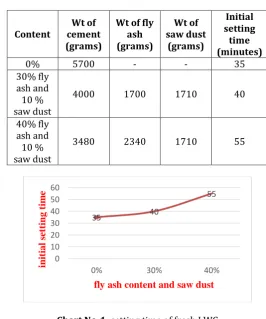
Table-5: setting time of LWC
Content cement Wt of (grams)
Wt of fly ash (grams)
Wt of saw dust
(grams)
Initial setting
time (minutes)
0% 5700 - - 35
30% fly ash and 10 % saw dust
4000 1700 1710 40
40% fly ash and 10 % saw dust
3480 2340 1710 55
Chart No-1: setting time of fresh LWC
Thus the result it can see that as amount of fly ash increased in cement, initial setting time also increased and it take more time to settle.
3.4-Testing of Concrete
Slump cone test
Compaction factor test
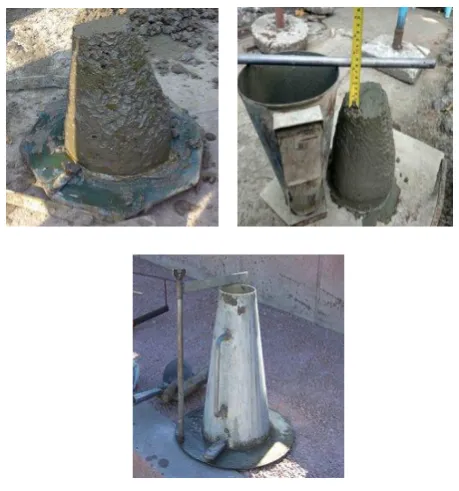
Slump Test
The amount of fly ash content and water cement ratios are fixing the slump values. The water content increased slump values increased. Fly ash also has not more binding property so the slump values increased. Adding of saw dust also has no binding property so the slump is increased. Water/cement ratio also plays an important role in preparing of concrete, amount of water for concrete mix can be determined according standard consistency of cement. It water is added more it will wet concrete which have less workability and strength.
Compaction Factor Test
This the test decide the workability of concrete. Fresh concrete should pass the top of the container to
35 40
55
0 10 20 30 40 50 60
0% 30% 40%
in
it
ial
s
et
tin
g
tim
e
© 2018, IRJET | Impact Factor value: 6.171 | ISO 9001:2008 Certified Journal | Page 272
10 30
100
300
0 100 200 300 400
40% 45% 50% 55%
H
ei
ght
Of
S
lum
p
In
m
m
Water/ Cement Ratio
bottom cylinder. The passing capacity and compaction of concrete is measured to decide the water cement ratio. Repeat the procedure with increasing water content. Saw dust and fly ash are had low binding properties with cement so the water cement ratio is increased and more water is added and the setting time also increased.
[image:5.595.312.556.80.210.2]3.4 Slump of Concrete:-
Fig-2: slump of concrete
3.4.1- If replacing of 30 % fly ash in cement and 10% saw dust in fine aggregate:
Table-6: Slump test of fresh concrete
S.N Ratio w/c content Water Height
% ml Initial (mm) (mm) Final Average (mm)
1 0.40 40 2280 300 300 0
2 0.45 45 2565 300 280 20
3 0.50 50 2850 300 230 70
4 0.55 55 3135 300 30 270
The slump value of the concrete is: 70 mm Graphical representation for slump height vs w/c ratio:
Chart No-2: slump of concrete
[image:5.595.39.269.187.433.2]3.4.2-If replacing of 40 % fly ash in cement and 10% saw dust in fine aggregate:
Table-7: Slump test of fresh concrete
S.N Rato w/c content Water Height
% ml Initial (mm) (mm) Final Average (mm)
1 0.40 40 2280 300 300 0
2 0.45 45 2565 300 270 30
3 0.50 50 2850 300 210 100
4 0.55 55 3135 300 0 0
The slump value of the concrete is: 100 mm Graphical representation for slump height vs w/c ratio:
Chart No-3: Slump of concrete
3.4.3-If replacing of 30 % fly ash in cement:
Table-8: Slump test of fresh concrete replacing of 30 % fly ash in cement
S. No
w/c ratio
Water
content Height
% ml Initial
(mm)
Final (mm)
Average (mm)
1 0.40 40 2280 300 300 0
5 20
70
270
0 100 200 300
40% 45% 50% 55%
He
ight
Of
Sl
um
p
in
m
m
[image:5.595.314.559.465.609.2]© 2018, IRJET | Impact Factor value: 6.171 | ISO 9001:2008 Certified Journal | Page 273
0
75 120
300
0 100 200 300 400
40% 45% 50% 55%
He
igh
t O
f S
lu
m
p
Water/ Cement Ratio
0 5 10 15 20 25
7 14 28
co
m
p
re
ssi
ve
st
re
n
gt
h
N/
m
m
2
Days
Cubes
Cylinders
2 0.45 45 2565 300 225 75
3 0.50 50 2850 300 180 120
4 0.55 55 3135 300 0 300
The slump value of the concrete is: 75 mm Graphical representation for slump height vs w/c ratio:
Chart No-4: Slump of concrete
[image:6.595.312.573.105.230.2]3.4.4-If replace only 10% saw dust in fine aggregate:
Table -9: Slump test of fresh concrete replace only 10% saw dust in fine aggregate
S.No ratio w/c content Water Height
% ml Initial (mm) (mm) Final Average (mm)
1 0.40 40 2280 300 300 0
2 0.45 45 2565 300 250 50
3 0.50 50 2850 300 240 70
4 0.55 55 3135 300 190 110
The slump value of the concrete is: 70 mm Graphical representation for slump height vs w/c ratio:
Chart No-5: Slump of concrete
3.5 COMPRESSIVE STRENGTH OF LWC:
3.5.1- 30% of Fly Ash And 10 %Saw Dust,
Size of cube = 150 x150x 150 mm,
Size of cylinders = 150 x 300 mm,
Area of cube = 22.5x103 mm2
[image:6.595.39.283.190.325.2]Area of cylinders= 17.67x103 mm2
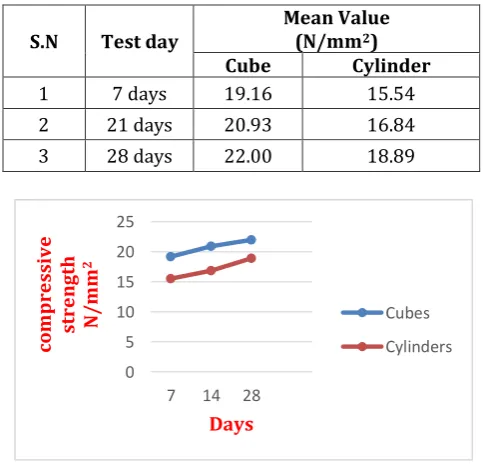
Table -10: Compressive strength of LWC, 30% of Fly Ash And 10 % Sa-w Dust
S.N Test day Mean Value (N/mm2)
Cube Cylinder
1 7 days 19.16 15.54
2 21 days 20.93 16.84
3 28 days 22.00 18.89
Chart No- 6: Compressive stress
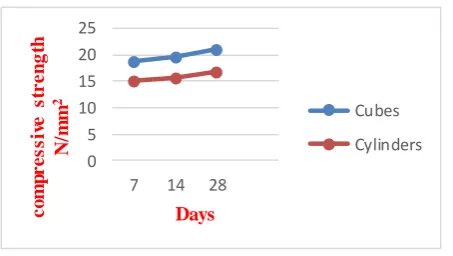
[image:6.595.313.555.363.598.2]3.5.2- 40% of Fly Ash And 10 %Saw Dust:
Table-11: compressive strength of LWC, 40% of Fly Ash And 10 % Saw Dust
S.N Test day Mean Value (N/mm2)
Cube Cylinder
1 7 days 18.75 15.18
2 21 days 19.55 15,59
3 28 days 21 16.70
0
50 70
110
0 50 100 150
40% 45% 50% 55%
H
e
ig
h
t
O
f
Slu
m
p
© 2018, IRJET | Impact Factor value: 6.171 | ISO 9001:2008 Certified Journal | Page 274
0 5 10 15 20 25
7 14 28
co
m
p
re
ssi
ve
st
re
n
gt
h
N/
m
m
2
Days
Cubes
Cylinders
Chart No-7: Compressive Stress
Thus it can that as amount of fly ash and saw dust increased compressive strength slidly varied. Up to 20-40 % fly ash and 10-20 % saw dust is safe to use in concrete mix.
[image:7.595.60.287.85.213.2]3.5.3-Compressive strength of LWC, Conventional Concrete:
Table-11: Compressive strength of LWC, Conventional Concrete:
S.N Test day Mean Value (N/mm2)
Cube Cylinder
1 7 days 19.67 16.86
2 21 days 21.21 18.59
3 28 days 21.90 19.31
[
Chart No-7: Compressive Stress
3.6-Durability Testing:-
Saturated Water Absorption
Aggression by CO2: Carbonation induced
corrosion
3.6.1-Saturated Water Absorption:
Water absorption of M 25 grade of concrete with 100%
natural sand, 40% manufactured sand and the optimum replacement level of 10% manufactured sand and also
30% & 40% replacement of fly ash content in cement appear. The concrete with manufactured sand has less water absorption, when compared to the conventional concrete. This is due to the less voids of better packing and it is also found that the water absorption is low for concrete with 70% manufactured sand due to the presence of less amount of micro fines in it.
3.6.2 Aggression by CO2: Carbonation induced corrosion
Cement paste contains 25-50 wt% (Ca(OH)2), pH » 13 The carbonation process requires the presence of water because CO2 dissolves in water forming H2CO3. If the concrete is too dry (RH <40%) CO2 cannot dissolve and no carbonation occurs. If on the other hand it is too wet (RH >90%) CO2 cannot enter the concrete and the concrete will not carbonate. Optimal conditions for carbonation occur at a RH of 50% (range 40-90%).
MIX DESIGN
Mix design for M25 grade of concrete
Mix proportions:
M25 Grade of concrete, mix ratio of 1:1:2
Target mean strength:
Water ratio = 0.45 (severe)
Size of Coarse Aggregate = 10mm
Selection of water content and sand:
Water content = 208 kg/m3
Determination of cement = 535 Kg/m3
Calculation of Fine Aggregate:
FA = 576 Kg/m3
Calculation of coarse Aggregate:
CA = 1027 Kg/m3
3. CONCLUSIONS
From the experimental investigation, it was found that the compressive strength was increased for fly ash concrete cubes with cement, fly ash and saw dust proportion when compared to the conventional concrete cubes at all the ages of curing. The Light Weight Concrete cubes containing fly ash aggregates made using cement fly ash proportions 10%, 30% and 40% showed reduction in compressive strength when compared to the conventional concrete at all the ages.
0 5 10 15 20 25
7 14 28
c
o
m
p
r
e
s
s
iv
e
s
tr
e
n
g
th
N
/m
m
2
Days
Cubes
© 2018, IRJET | Impact Factor value: 6.171 | ISO 9001:2008 Certified Journal | Page 275
REFERENCES
[1] Fine aggregate Grading zone selected as per the code
provision of IS 383 -1986.M. Young, The Technical Writer’s Handbook. Mill Valley, CA: University Science, 1989.
[2] The compressive and tension test results are
tabulated and were tested IS 516-1959.
[3] IS: 516-1959 Methods of Tests for Strength of
Concrete.
[4] Mix design for M25 grade concrete proportion has