Improving the performance of Content Based Image Retrieval through
Color Layout Descriptor
Muhammad Imran
1, Rathiah Hashim
1and Noor Elaiza
21
University Tun Hussein onn Malaysia [email protected]
University Teknologi MARA Malaysia [email protected]
Abstract. Due to increasing the digital contents day by day, many image databases are
available in different areas such as education, forensics science, and medical science etc. Although these databases are helpful in related areas but the demand to manage these databases such as storing and to retrieve the images from these databases is the need of the day. To search the similar image from these databases Content Based Image Retrieval (CBIR) is one of the best technique. Even though it is a good technique to search the images but still it faces some problem. One of the problems of CBIR is to represent the image as a feature vector. In this paper, we proposed a new feature vector using Color Layout Descriptor (CLD) to increase the accuracy of CBIR. We tested our technique on the Coral Database and compared the results with other CBIR techniques. Proposed method achieved better results than previous techniques. The proposed technique can be used by forensic department for the suspect identification using forensic database.
Keywords: CLD; CBIR; Color Layout Descriptor;GFD
1 Introduction
Due to powerful processors and cheap memories, a variety of applications are using large image databases. Different fields such as medicine, geography, advertising, architecture and design are using large image databases to help their users [1]. Therefore, an effective and efficient image retrieval technique is now a necessity. Two approaches to search the image are available. One is the Keyword Based Image Retrieval (KBIR) and the other is Content Based Image Retrieval (CBIR). The keyword based image retrieval search the images based on the keywords tagged with an image. KBIR faces many problems such as keywords are manually annotated, the person adding the keyword may have a different perception about the image than the one who is searching the image. To overcome these drawbacks, researchers introduced the CBIR. In CBIR searching is performed by the visual features of the images. Therefore, further no need for the manual keywords annotation.
distance etc and display ranked result to the user. Due to high demand for searching from an image database CBIR becomes a popular image searching technique. However, CBIR is facing problems and it achieved the accuracy up to a limit only. In This paper, we proposed a new signature development approach for CBIR. We used the Color Layout Descriptor (CLD) for feature extraction. Similarity measure is performed using Manhattan distance. Section 2 in detail about proposed approach. Section 3 and 4 are reserved for the results and analysis; finally the paper is concluded in section 5.
2 Proposed Approach
To represent the image as feature vector we used Color features. Color feature is one of the basic features used to retrieve the images. It is most intuitive and obvious feature of the image and color is easily extracted. To describe color information different methods are available. In this paper, we have used the CLD from MPEG-7 standard to extract the color information from the image. Following are the steps to extract the color feature vector from the image.
1. Divide the image into 8x8 blocks
2. Single representative color is selected from each block 3. The selection results in a tiny image icon of size 8x8 4. The color space is converted from RGB to YCbCr
5. The luminance (Y), blue and red chrominance (Cb and Cr) are transformed by 8x8 DCT 6. A zigzag scanning is performed on these three sets of DCT coefficients
7. As a result we obtain three matrixes for each block of Y, Cb and Cr color space 8. Take sum of each matrix to get three feature vectors
9. Finally horizontally concatenate three feature vectors to obtain a final feature Vector for an image
When user input query image to the system to search similar images, the similarity between the query image and the database images is calculated using Manhattan Distance and results are sorted, ranked and presented to the user.
3 Results
ܲݎ݁ܿ݅ݏ݅݊ ൌ
ܰݑܾ݉݁ݎ
In our experiments, we select 10 random images from each category as the query image and perform retrieval process. The process is re
[image:3.612.210.403.219.400.2]precision is calculated. Average precision is calculated for 20, 30 and 40 top retrieval where 20 top retrieval means 20 most similar images are displayed and this can be represented as P@20. The results achieved by the proposed feature vector technique are shown in Table 1.
Table 1. Performance of proposed Technique at different top Retrieval
3.1 Comparison with Previous Methods
[image:3.612.335.590.519.676.2]Table 2 illustrate the comparison of Segment Method.
Table 2. Comparison of proposed method with previous methods
Class Africa Beach Buildings Buses Dinosaurs Elephant Flower Horses Mountains
Class Simple Hist
Variance Segment
Proposed Method
Africa 0.3 0.13 Beach 0.3 0.26 Buildings 0.25 0.11 Buses 0.26 0.17 Dinosaurs 0.9 0.96 Elephant 0.36 0.34 Flower 0.4 0.49 Horses 0.38 0.2 Mountains 0.25 0.25
Food 0.2 0.15
Avg 0.36 0.306 0.461
ܰݑܾ݉݁ݎ ݂ ܶݎݑ݁ ܲݏ݅ݐ݅ݒ݁
ܰݑܾ݉݁ݎ ݂ ܶݎݑ݁ ܲݏݏ݅ݐ݅ݒ݁ ܨ݈ܽݏ݁ ܲݏݏ݅ݐ݅ݒ݁
In our experiments, we select 10 random images from each category as the query image and perform retrieval process. The process is repeated for 10 times and category wise average precision is calculated. Average precision is calculated for 20, 30 and 40 top retrieval where 20 top retrieval means 20 most similar images are displayed and this can be represented as P@20.
ed by the proposed feature vector technique are shown in Table 1. Performance of proposed Technique at different top Retrieval
Comparison with Previous Methods
Table 2 illustrate the comparison of the proposed technique with Simple Hist
Table 2. Comparison of proposed method with previous methods
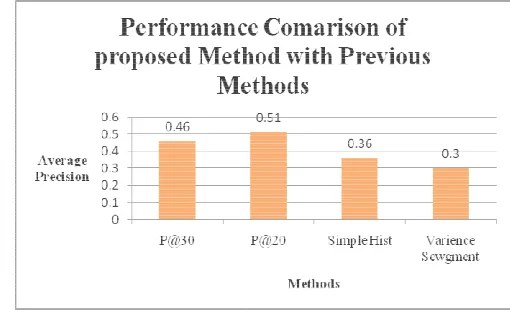
Fig. 1. Comparison of the proposed method with simple Hist and Variance Segment
Class P@40 P@30 P@20
Africa 0.25 0.3 0.35 Beach 0.3 0.32 0.38 Buildings 0.18 0.23 0.27 Buses 0.28 0.33 0.39 Dinosaurs 1 1 1
Elephant 0.4 0.45 0.55 Flower 0.7 0.77 0.86 Horses 0.5 0.62 0.68 Mountains 0.3 0.35 0.41 Food 0.18 0.24 0.29
Avg 0.409 0.461 0.518
Proposed Method 0.3 0.32 0.23 0.33 1 0.45 0.77 0.62 0.35 0.24 0.461 ܲݏݏ݅ݐ݅ݒ݁
In our experiments, we select 10 random images from each category as the query image and peated for 10 times and category wise average precision is calculated. Average precision is calculated for 20, 30 and 40 top retrieval where 20 top retrieval means 20 most similar images are displayed and this can be represented as P@20.
ed by the proposed feature vector technique are shown in Table 1. Performance of proposed Technique at different top Retrieval
the proposed technique with Simple Hist and Variance
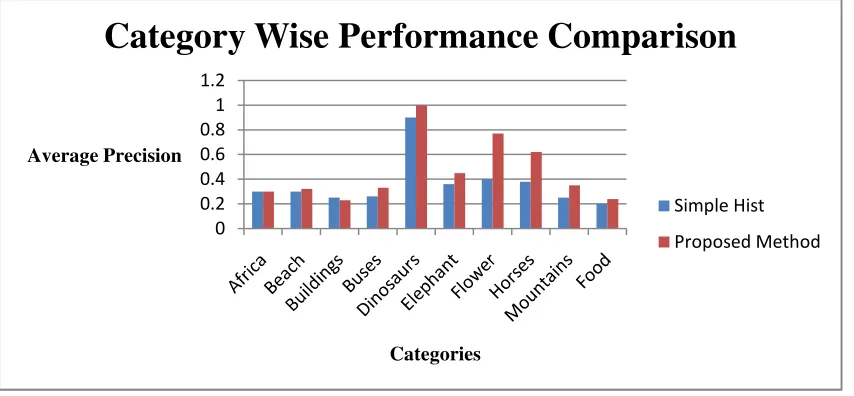
Fig. 2.Category-wise Comparison of Proposed Method (P@ 30) with previous methods
4 Analysis
From Table 2 and Figure 2, it is obvious that proposed method has better results than Histogram based and variance segment method. The overall average precision of Histogram based method, Variance Segment and proposed method is is 0.36, 0.306 and 0.50 respectively. Which means that Histogram based method achieved 36%, Variance Segment method achieved 30% while proposed technique achieved 50% accuracy rate. Figure 2 illustrated the comparison of proposed method with Simple Hist where average accuracy of proposed method is calculated for top 30 and 20 retrieval. The graph depicted that the proposed method has better precision than both previous methods. Category wise performance comparison of the proposed method with Variance Segment method is presented in Figure 3. For all categories, proposed method achieved higher average precision than Variance Segment method. For the class dinosaurs, the proposed method has 100% retrieval rate as the precision reaches 1.0.
5 Conclusion
This paper proposed and implemented a new signature technique to improve the performance of CBIR. This new signature technique is the combination of the color and shape features. Color features are extracted using CLD while GFD is used to extract the shape features. The performance of proposed technique is tested on coral Database containing the images from 10 different categories. To validate the proposed technique, results were compared with the previous CBIR techniques. The proposed technique increased the performance of CBIR in term of accuracy. Previous techniques achieved 30% and 36% while proposed technique achieved 50%
0 0.2 0.4 0.6 0.8 1 1.2
Average Precision
Categories
Category Wise Performance Comparison
Simple Hist
accuracy. As a future work to increase, the performance of the proposed system texture feature can be combined with the color and shape features.
6 Acknowledgement
The researchers would like to thank University Tun Hussein Onn Malaysia (UTHM) for supporting this project under Project Vote No 1315.
7 References
1. Lee, S.M., Bae, H.J., Jung, S.H.: Efficient content-based image retrieval methods using color and texture. ETRI journal 20(3) (1998) 272-283.
2. Bhuravarjula, H., Kumar, V.: A novel content based image retrieval using variance color moment. International Journal of computer and Electronic Research 1(3) (October 2012) 93-99.
3. M. Imran, et al., "New Approach to Image Retrieval Based on Color Histogram," in Advances in Swarm Intelligence. vol. 7929, Y. Tan, et al., Eds., ed: Springer Berlin Heidelberg, 2013, pp. 453-462.
4. Zhang, J., Zou, W.: Content based image retrieval using color and edge direction features. In: 2nd International Conference on Advanced Computer Control (ICACC). Volume 5., IEEE (2010) 459-462.
5. Soman, S., Ghorpade, M., Sonone, V., Chavan, S.: Content based image retrieval using advanced color and texture features. In: International Conference in Computational Intelligence (ICCIA). Volume 3. (2012).
6. Singh, S.M., Hemachandran, K.: Content-based image retrieval using color moment and gabor texture feature. International Journal of Computer Science Issues (IJCSI) 9(5) (2012). 7. Abubacker, K., Indumathi, L.: Attribute associated image retrieval and similarity re ranking.
In: International Conference on Communication and Computational Intelligence (INCOCCI). (dec. 2010) 235 -240
8. Zhang, D., Lu, G.: Generic fourier descriptor for shape-based image retrieval. In: IEEE International Conference on Multimedia and Expo. Volume 1. (2002) 425-428 vol.1
9. Banerjee, M., Kundu, M.K., Maji, P.: Content-based image retrieval using visually significant point features. Fuzzy Sets and Systems 160(23) (December 2009) 3323-3341 10. Hiremath, P., Pujari, J.: Content based image retrieval using color boosted salient points and
shape features of an image. International Journal of Image Processing 2(1) (2008) 10-17. 11. Wang, J., Li, J., Wiederhold, G.: Simplicity: semantics-sensitive integrated matching for
picture libraries. IEEE Transactions on Pattern Analysis and Machine Intelligence, 23(9) (sep 2001) 947 {963