The Acculturation Model in Second
Language Learning: A Cross-Linguistic
Study of a Group of English-Speaking
Nigerian Immigrants Learning German as
a Second Language in Germany
A thesis submitted in partial fulfilment of the
requirements for the degree of Doctor of Philosophy at
the University of East London
Lambert B. M. Ahamefule
January 2019
Abstract
This study explores the experiences of a group of English-speaking Nigerian immigrants learning German as second language in Germany in a naturalistic and unstructured environment. The main aim of the study is to determine the extent to which the social and psychological distance factors of the Schumann Acculturation Model of SLA feature in the second language learning experiences of the group. By adopting a more social psychological approach, the study illustrates the integration patterns of immigrant minorities through the application of the Schumann model. The use of the model as the framework of the study enabled me to explore how the adult immigrants overcame different barriers in order to settle into a new environment. The study helps to fill the gap in SLA research carried out in the social context and the natural environment.
A case study research design was adopted for this investigation to explore the participants’ perceptions about their real-life experiences in learning German in a naturalistic setting. Within the case study design, the questionnaire, focus group and semi-structured interview methods were used to collect data in relation to the following three research questions: 1) which social distance factors if any, feature in the experience of the group Nigerian immigrants learning German in Germany? 2) which psychological distance factors, if any, feature in the experience of this group? 3) to what extent does the experience of this group shed light on the Schumann model and the socio-psychological issues in second language learning?
The analysis revealed that the group of immigrants were as strongly motivated to integrate into German society as they were determined to maintain the attachment to their cultural values. However, the group identified the lack of reciprocity from the host community as a factor potentially affecting their integration.
The study contributes to the view in literature (for example, Conrick and Donovan, 2010) that the integration of immigrants into the host community involves engagement with a wide range of new cultural practices of which language is a highly significant element. Most importantly, the study helps to develop further knowledge on a less researched area involving the diaspora Nigerian community in Germany.
Declaration
I hereby declare that the work embodied in this thesis is the result of original research that has not been previously submitted for a higher degree to any other University or tertiary educational institution.
Signature:
---Date: 24
thJanuary 2019
Dedication
This thesis is dedicated to the Nigerian immigrants in Germany for their kindness, encouragement and unconditional participation in this research project.
Acknowledgement
For the successful completion of this thesis, I owe utmost gratitude to the Almighty God for sustaining me all through the many challenges along this academic journey. I also owe sincere gratitude to many who have made tremendous sacrifices and contributed immensely towards the success of this doctorial process.
In a very special way, I thank Dr Raymonde Sneddon for her untiring support and encouragement as my supervisor from the beginning to the end of this process. To you, Dr Mario Moya I am deeply grateful for the inspiration and sense of direction you brought to my work from the time you joined my supervisory team. I have no words to thank you enough for your huge contribution to the success of this thesis. I would also like to extend my deep-felt appreciation to Professor Gerry Czerniawski, the PhD programme leader, Cass School of Education and communities, UEL. My sincere gratitude goes to Dr John Gray of Institute of Education London who mentored and encouraged me to undertake this project. I must not fail to thank Dr Peter Sneddon for his special support and encouragement.
My most cordial thanks go to all members of the Ahamefule family, my father, my wife and children, my brothers and sisters. I am very grateful to all of you for your unwavering love and understanding all these years. Finally, I heartily thank all my friends for their inspiring support and encouragement all through this academic venture.
Abbreviations and Glossary
Abbreviations Meaning
2LL Second Language Learning
BDM Bi-Dimensional Model
BERA British Educational Research Association
CMA Concordance Model of Acculturation
FL Foreign Language
FLL Foreign Language Learning
GMG Global Migration Group
IAM Interactive Acculturation Model
ILO International Labour Organization
L2 Second Language
NCG e.V Nigerian Community Germany eingetragener Verein
NGOs Non-Governmental Organizations
SLA Second Language Acquisition
SPSS Statistical Package for Social Science
TL Target Language
UDM Uni-Dimensional Model
UNCTAD United Nations Conference on Trade and Development
UNDESA United Nations Department of Economic and Social Affairs
UNDP United Nation Development Programme
UNHCR United Nation High Commissioner for Refugees
Table of Contents
Abstract ...ii
Declaration ...ii
Dedication ... iv
Acknowledgement ... v
Abbreviations and Glossary ... vi
CHAPTER ONE: INTRODUCTION AND BACKGROUND ... 1
1.0 Background of study ... 1
1.1 The German socio-cultural background ... 2
1.2 Background of the Nigerian immigrants ... 6
1.3 Personal background and motivation for the research ... 9
1.4 Statement of problem ... 14
1.5 Purpose and objectives of the study ... 16
1.6 The research questions ... 17
1.7 Overview of the thesis ... 18
CHAPTER TWO: ACCULTURATION AND SOCIO-ANTHROPOLOGICAL ISSUES ………... 21
2.0 Introduction ... 21
2.1 Acculturation ... 21
2.1.1 Definition of acculturation ... 22
2.1.2 Acculturation dimensionality and conceptual models ... 24
2.1.3 Acculturation in relation to the study ... 26
2.2 International migration ... 28
2.2.1 Definition of international migration ... 28
2.2.2 Theories of international migration ... 30
2.2.2.1 The macro theories ... 30
2.2.2.2 The micro theories ... 31
2.2.2.3 The meso theories ... 32
2.3 Multiculturalism ... 35
2.4 Superdiversity ... 38
2.4.1 Implication of superdiversity to language and sociolinguistics ... 41
2.5 Summary of chapter 2 ... 43
CHAPTER THREE: THE FIELD OF SLA AND THE SCHUMANN MODEL AS THE FRAMEWORK OF THE STUDY ... 45
3.0 Introduction ... 45
3.1 The field of SLA ... 45
3.1.1 The scope of SLA ... 48
3.1.2 Multiple of theories in SLA ... 50
3.2 Socio-psychological perspectives of SLA ... 53
3.2.1 The social psychological model ... 54
3.2.2 The socio-educational model ... 56
3.2.3 The social context Model ... 59
3.2.4 The intergroup model ... 61
3.2.5 Critique of the socio-psychological perspectives of SLA ... 62
3.3 The Schumann model as the theoretical framework of the study ... 65
3.3.1 Social distance factors ... 67
3.3.2 Psychological distance factors ... 70
3.3.3. Critiques of the Schumann model ... 72
3.3.4 The rationale for using the Schumann model as a framework ... 76
3.3.5 Studies based on the Schumann model ... 78
3.4 The degree of acculturation and the complexities of measurement ... 82
3.4.1 Measuring acculturation in this study ... 87
3.4.2 Social distance factors as measures of acculturation ... 88
3.4.3 Psychological distance factors as measures of acculturation ... 90
3.5 Summary of the critique and rationale for using the Schumann model .. 91
3.6 Summary of chapter 3 ... 94
CHAPTER FOUR: METHODOLOGY ... 96
4.0 Introduction ... 96
4.1 Philosophical assumptions ... 96
4.1.1 The interpretivist assumption ... 97
4.1.2 The qualitative approach to the study ... 98
4.2 The research design and strategy ... 99
4.2.1 The case study research design ... 101
4.2.2 Limitations of the case study research design ... 103
4.2.3 The rationale for adopting the case study research design ... 104
4.3 Research methods and procedure ... 105
4.3.1 Research population ... 106
4.3.1.1 Sample size ... 107
4.3.1.2 Sample technique ... 107
4.3.2 Questionnaire ... 110
4.3.2.1 Questionnaire technique ... 111
4.3.2.2 Questionnaire structure ... 111
4.3.3 Piloting the questionnaire ... 118
4.3.3.1 Focus group discussion ... 119
4.3.3.2 Administering the questionnaire ... 121
4.3.4 Semi-structured interview ... 122
4.3.4.1 The interview guide/protocol ... 122
4.3.4.2 Conducting the interview ... 123
4.3.5 My role as an insider-researcher ... 124
4.3.6 Reliability and validity ... 125
4.3.6.1 Reliability ... 126
4.3.6.2 Validity ... 126
4.3.6.3 Reliability and validity of the questionnaire ... 128
4.3.6.4 Reliability and validity of the semi-structured interview ... 128
4.3.6.5 Strategies used to ensure trustworthiness of the human instrument ... ………129
4.3.7 Ethical considerations ... 131
4.4 Summary of chapter 4 ... 133
CHAPTER FIVE: ANALYSIS AND DISCUSSION ... 134
5.0 Introduction ... 134
5.1 Preamble ... 134
5.1.1 Approach to the questionnaire data analysis ... 135
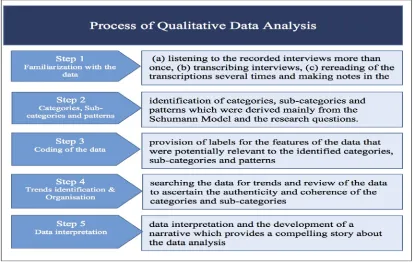
5.1.2 Approach to Interview data analysis ... 139
5.2 Data presentation and discussion ... 141
5.2.1 Demographic profile of the research population ... 141
5.2.1.1 Age ... 142
5.2.1.2 Gender ... 142
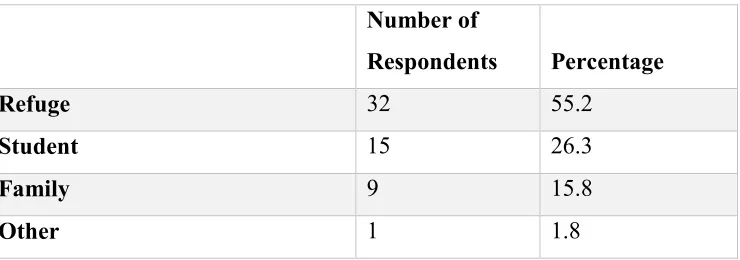
5.2.1.3 Reason to migrate to Germany ... 143
5.2.1.4 Immigration status ... 144
5.2.1.5 Actual length of stay ... 146
5.2.1.6 Educational level before immigration ... 147
5.2.1.7 Summary of section 1 ... 148
5.2.2 Social distance factors ... 148
5.2.2.1 Social dominance ... 149
5.2.2.2 Integration pattern ... 153
5.2.2.3 Enclosure ... 157
5.2.2.4 Cohesive and size ... 162
5.2.2.5 Attitude ... 166
5.2.2.6 Cultural congruence ... 171
5.2.2.7 Length of stay/residence ... 173
5.2.2.8 Discussion/summary of section 2 ... 179
5.2.3 Psychological distance factors ... 181
5.2.3.1 Language shock ... 182
5.2.3.2 Culture shock ... 187
5.2.3.3 Motivation ... 191
5.2.3.4 Ego permeability ... 196
5.2.3.5 Discussion/summary of section 3 ... 198
5.2.4 Measure of SLA and 2LL experiences of the participants ... 199
5.2.4.1 Proficiency in SLA ... 201
5.2.4.2 2LL strategies ... 205
5.2.4.3 Previous 2LL experiences/knowledge of the English language ... 210
5.2.4.4 Discussion/summary of section 4 ... 214
5.3 Summary of chapter 5 ... 215
CHAPTER SIX: CONCLUSION ... 217
6.0 Introduction ... 217
6.1 Re-statement of the research objectives and research questions ... 217
6.2 Summary of findings ... 218
6.2.1 Based on research question 1: the social distance factors ... 218
6.2.2 Based on research question 2: the psychological distance factors ... 219
6.2.3 Based on research question 3: the Schumann model as the social psychological framework of the study ... 220
6.2.4 Based on measure of SLA and German language proficiency of the participants ... 221
6.3 Implications of the study for the Schumann model ... 222
6.4 Implications of the study for the socio-psychological perspectives of SLA ... ………224
6.5 Contributions to knowledge ... 227
6.6 Limitations of the study ... 230
6.7 Recommendation for future research ... 232
6.8 Concluding reflection about the research project ... 232
References: ... 235
Appendices: ... 264
Appendix 1: Ethics approval letter ... 264
Appendix 2: Information to participants ... 265
Appendix 3: Consent form ... 266
Appendix 4: Questionnaire ... 267
Appendix 5: The interview guide ... 281
Appendix 6: Interview transcript – Respondent 1 ... 282
Appendix 7: Interview transcript – Respondent 2 ... 289
Appendix 8: Interview transcript – Respondent 3 ... 294
Appendix 9: Interview transcript – Respondent 4 ... 298
Appendix 10: Interview transcript – Respondent 5 ... 302
Appendix 11: Interview transcript – Respondent 6 ... 306
Appendix 12: Interview transcript – Respondent 7 ... 309
Appendix 13: Interview transcript – Respondent 8 ... 314
Appendix 14: Interview transcript – Respondent 9 ... 320
Appendix 15: Interview transcript – Respondent 10 ... 325
Appendix 16: Interview transcript – Respondent 11 ... 329
Appendix 17: Interview transcript – Respondent 12 ... 336
Appendix 18: Interview transcript – Respondent 13 ... 342
Appendix 19: Interview transcript – Respondent 14 ... 352
Appendix 20: Interview transcript – Respondent 15 ... 359
Appendix 21: Interview data coding system ... 363
Appendix 22: Some Key variables in the study ... 365
Appendix 23: Tables of analyses (Summaries of items) ... 366
Appendix 24: Details of participants ... 368
List of figures: ……….
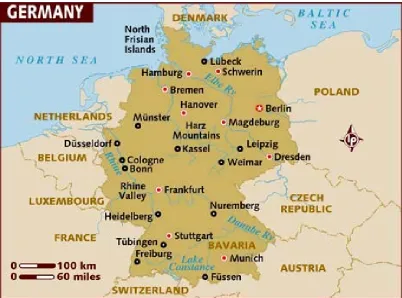
Figure 1: Map of German showing some major cities and neighbouring countries .. 3Figure 2: Map of Nigeria showing 36 states and Abuja – the federal capital ... 7
Figure 3: The process of qualitative data ana;ysis ... 139
Figure 4: Item Q34 – Number of Nigerian immigrants in Germany ... 164
Figure 5: Chain of causality in SLA based on Schumann model ... 201
List of tables: ………..
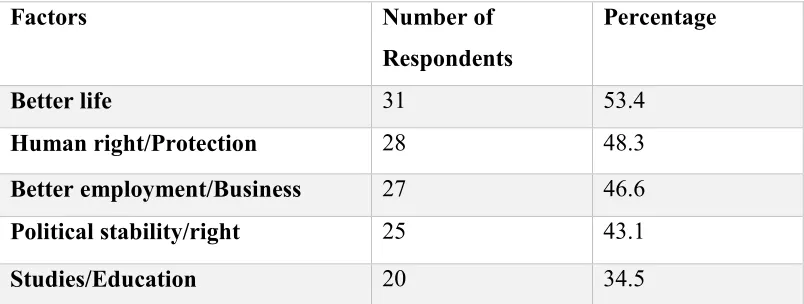
Table 1: Item Q7 – Reason to migrate to Germany ... 143Table 2: Item Q6 – Immigration status ... 145
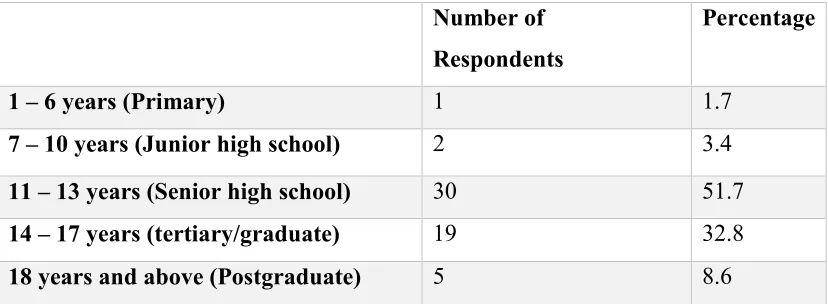
Table 3: Item Q9 – Educational level before migration ... 147
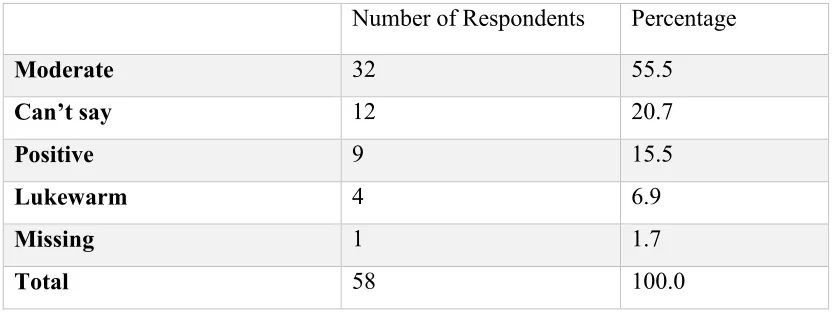
Table 4: Item Q36 – Attitude of Nigerian immigrants towards Germans ... 167
Table 5: Item Q37 – Attitude of Germans towards the Nigerian migrants ... 167
Table 6: Item Q38 – Speaking native language in public ... 183
Table 7: Item Q41 – Speaking German in public ... 183
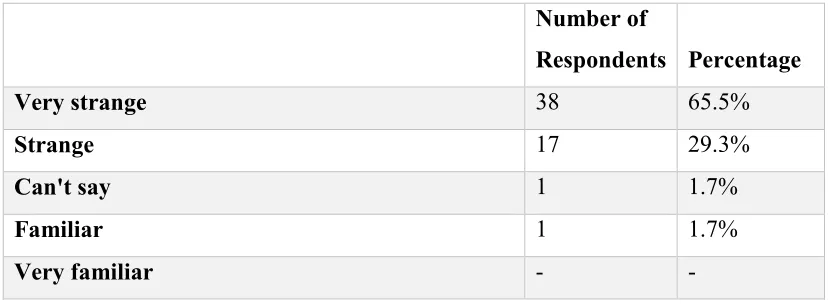
Table 8: Item Q55 – How German sounded in the beginning ... 184
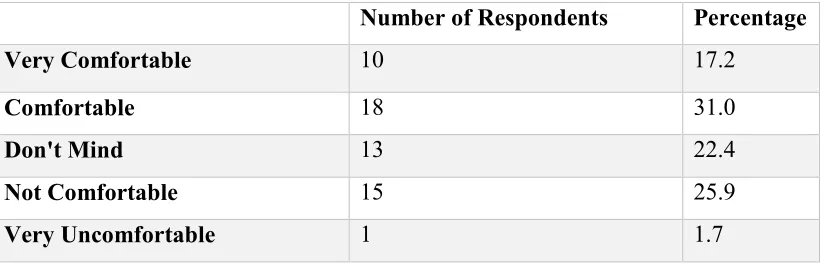
Table 9: Item Q39 – Your felling when asked where you come from ... 188
Table 10: Item Q42 – Importance of learning german at the initial time and at
present ... 192
Table 11: Item Q46 – Reasons for improving profeciency in German ... 192
Table 12: Item Q48 – Intention to attend German courses ... 193
Table 13: Item Q79 – The previous knowledge of English language ... 196
Table 14; Item Q56 – Improvement of German over time ... 202
Table 15: Item Q57 – Which German skills improved over time? ... 202
Table 16: Item Q59 – Participant's knowledge level in German ... 203
Table 17: Item Q47 – Strategy for learning German ... 206
Table 18: Item Q58 – Causes of impovement in German ... 206
Table 19: Items Q64 to 67; Q70 and Q71 – Strategies for improving listening skill .. ………207
Table 20: Items Q73 to Q78 – Strategies for improving reading skill ... 208
Table 21: Item Q51 – Learning English in Nigeria and learning German in Germany, which is more difficult? ... 211
CHAPTER ONE: INTRODUCTION AND BACKGROUND
1.0 Background of study
This study is concerned with the social psychological influences in adult second language learning in a natural environment under the conditions of immigration. Second language learning (2LL) in this context is viewed mainly in relation to the adaptation of the learner to the culture of target language (TL) community; rather than in terms of how linguistic and grammatical features are acquired. As Ellis (2008) has observed, for many years, the learning of another language has continued to predominate language studies at all levels, including most research in second language acquisition (SLA). However, the natural environment and socio-cultural factors for the acquisition and use of the second language seem not to have been taken into adequate considerations (Agnihotri et al., 1998; Ellis, op. cit.). In this regard, this study contributes towards the growth of SLA researches conducted in the natural environment.
The field of SLA has included studies of acculturation, which entails among other variables, the social and psychological integration of immigrants into the target language (TL) community. Most of these studies (for example, Schumann, 1986; Duan, 2006 and Ratcheva, 2007) investigate the relationship between socio-psychological variables and the development of proficiency in the TL. Following this research tradition, the present study explores the case of a group of English-speaking Nigerian immigrants learning German as a second language in Germany. In their new environment, these individuals undergo the process of acculturation in their efforts to acquire the TL. Acculturation here means a process of cultural and psychological change due to continuous contact and interaction between two different cultures (Berry, 2003).
The conceptual background of the study is interdisciplinary and cross-linguistic as insights are drawn from more than one area of enquiry. As a research in the field of SLA, it deals with issues relating to cultural influences in adult language learning in the natural environment and explores interdisciplinary concepts relating social anthropology, social psychology and sociolinguistics. Specifically, it uses the English language to explore the experiences of a group of immigrants learning German as a second language in
contemporary Germany. The language learning experiences of the group are considered in relation to their social and psychological integration into the German society.
It is pertinent to observe that for immigrants, such as the group of Nigerians in Germany, who are living in language communities different from where they were born, the process of learning a second language is not simply learning new information about vocabulary, grammar and pronunciation (Larson-Freeman and Long, 1991; Berry 2006). Rather, it involves acquiring symbolic elements of a different ethno-linguistic community that requires a person to include aspects of another culture into his or her own life space (Gardner, 1985). Therefore, the study adopts a socio-psychological approach in which the perceptions of the participants about their intergroup attitudes with the Germans are very crucial for their adaptation to the host culture as well as their motivation to learn German as a second language.
1.1 The German socio-cultural background
The present study is situated within the socio-cultural context of contemporary Germany. The Federal Republic of Germany is in Central Europe and shares border with Poland and the Czech Republic in the east, Switzerland and Austria in the south, the Netherlands, Belgium, Luxembourg and France in the west and Denmark, the North and the Baltic Sea in the north. With a population of about 82 million and an average density of 228 inhabitants per square kilometer, Germany is Western Europe’s most populated nation (Hintereder and Schayan, 2015). Since the present investigation is concerned with the inter group attitudes between a group of Nigerian migrants and members of the German host community, it is appropriate to look at how immigration has contributed in shaping public opinion, community attitudes, and the ethno-cultural composition of the contemporary German social milieu.
Figure 1: Map of German showing some major cities and neighbouring countries
According to Kolb (2008: 2), the German social milieu to a large extent is shaped by the fact that a significant proportion of the German population has a migratory background. By this he means that most Germans “are either born abroad or are descendants of parents of whom at least one is not born in Germany”. As early as the nineteenth century, Germany attracted a large number of immigrants and since the 1950s has emerged as the European country with the largest immigrant population (Hintereder and Schayan, 2015). During this period, the Federal Republic of Germany started recruiting foreign guest workers as a solution to the problem of labour shortage. After the collapse of socialism in Eastern Europe, there was a wave of immigrant workers coming into the German industrial regions mainly from Poland and the Czech Republic (Zick et al., 2001; Kolb, 2008). Since the 1970s, asylum seekers and refugees, mainly from Eastern European, Africa and other third world countries constituted another group in the wave of immigrants that moved to Germany (Bommes, 2006).
the largest ethnic minority group in Germany. Most of them have lived in the country for years. They had been invited to come to Germany to take jobs as guest workers (Gastarbeiter in German) in the 1960s. After the people from Turkey, the refugees and asylum seekers constitute the second largest minority group in Germany (Bommes, 2006; Zick et al., 2007; Kolb, 2008).
Despite the large number of immigrants in Germany from various part of the world, the German immigration policy until 2005 focussed on guest workers and was characterized by government official denial of the fact that Germany was a country of immigration (Esses et al., 2006; Zick et al., 2007). Fundamentally, the presence of foreigners and immigrants was considered to be of a temporary nature and merely attached to their economic utility (Coenders and Scheepers, 2008). Thus, a discriminatory official German policy on immigration pervaded the general mood and attitude of Germans in their intergroup relations with immigrants. This policy also determined the integration pattern of immigrants and influences the entire acculturation process within the German society. In the late 1980s and early 1990s, the increase in the number of asylum seekers generated a lot of negative media discourse, and irresponsible political debate among German politicians. There was tension between the ethno-cultural groups in Germany because of traditional social and political ideologies against immigrants and the changing demographics of the contemporary German society. Consequently, violence against immigrants erupted in many German cities such as Hooyerswerda in Sepember, 1991; Rostock in August 1992; Solingen in May 1993; Moelln in November 1993; and Magdeburg in May 1994.
Reviewing recent research with a focus on Germany, Esses et al (2006: 655) observed that for many years, little was done to support the integration of ethno-cultural groups in Germany. They also revealed that national surveys demonstrated that Germans tended to “support segregation or assimilation for ethno-cultural groups”. Zagefka and Brown (2002) studied the acculturation strategy of German hosts and a sample of immigrants, including Turks, Russians, Poles and Lebanese. They found that the preferred strategy for both the German host society and immigrants in Germany was integration but that 19% of the Germans preferred marginalisation, which was the strategy least preferred by immigrants. In a similar study involving the acculturation
of German hosts and Turkish and Italian immigrants, Rohmann et al. (2006) found that the Germans felt threatened when they perceived that an immigrant group wanted to maintain their original culture to a greater degree than they supported the maintenance of the German host culture. The individual acculturation attitudes in Germany are strongly related to ethnic prejudices. As Legge (2003: 69) observed, it was “difficult to dismiss racism or at least ethnic chauvinism as a primary explanation for antiforeigner sentiment in the German population”.
However, a change of government in 1998 introduced a fundamental reform in the German Nationality Act (Kohlmeier and Schimany, 2005). For the first time, the Nationality Act of January 1, 2000, introduced elements of the ‘ius soli`, which made it easier for foreign children born in Germany to naturalise and become German citizens. This law also introduced new regulations for adult foreigners such as the introduction of a compulsory language test in the process of naturalisation. This change in law marked the first step towards the legal integration of immigrants and contributed significantly to the public discourse on immigration and integration issues in Germany (Hailbronner 2001). As a result of the public discourse, the Immigration Law of July 2004 was passed, and this brought about a major paradigmatic change in the German immigration policy. Consequently, from January 1, 2005 when the law came into force, Germany officially began to consider itself as a country of immigration.
Currently, modern, cosmopolitan Germany has developed into an important immigration country. Today, about 16.4 million people living in the country have migratory background and the country is now among those nations with the most liberal immigration rules (Hintereder and Schimayan, 2015). According to a 2014 study by the Organization for Economic Co-operation and Development (OECD, 2014), Germany is the most popular immigration country after the USA. The cultural landscape of the country has become more diverse through immigration. New ways of life and everyday realities are changing the daily life in the contemporary German society. At present, more than it was thought to be possible in past, immigrants participate more freely in various kinds of economic activities and socio-cultural events. For instance, even in the German carnival, once considered a typical example of German culture, immigrants do now play some important roles (Frei, 2003). Thus, over the years, the German society has evolved to become more receptive to the idea of considering Germany as an
immigration country.
1.2 Background of the Nigerian immigrants
Nigeria is the most populous nation in the west sub-region of the sub-Saharan African continent (Adetunji, 2015). The country is populated by people of divergent ethnic groups with distinct cultures, religious practices and languages (Afolayan, 2009; Mberu and Pongou, 2010). There are over 300 ethno-linguistic groups in Nigeria, however, the three major ones are the Hausas in the North, the Ibos in the East and the Yorubas in the West (Ginsburgh and Weber, 2011; JBN PLC, 2010). Some other minority ethnic and linguistic groups, which altogether make up the total population of the country include the Edos in the Mid-Western region, the Efik/Ibibio in the North East, Ijaw/Ishekiri in the South East, the Idomas in the Middle belt and a couple of others located in various parts of the country. As a result of the multilingual background of the country, English is used as the lingua franca and the official language of the country (Adetunji, op. cit.; Ginsburgh and Weber, op. cit.).
The formation of Nigeria as a country was the handiwork of the former British imperial Government in Africa who introduced English language as the official language of the colonial administration (Falola and Heaton, 2008). Since then, the English language has continued to play important roles in the political administration, business, education and indeed the general life of Nigerians till today. It is a second language in the country whose status has reached the stage where it is being regarded as a native language, at least for the younger generation of Nigerians. At present, the Federal Republic of Nigeria is constituted of 36 states and the federal capital territory at the centre (see Figure 2 below). The country practices a democratic system of government with a three-tier structure at federal, state and local government levels. All the 36 states of the federation are represented at the centre (JBN PLC, 2010).
Figure 2: Map of Nigeria showing 36 states and Abuja – the federal capital
It is a common phenomenon for Nigerians to migrate and relocate within the country. The huge size of the country in terms of the land mass from the North to the South and the East to the West makes it possible for people to reside and relocate freely from one part of the country to the other in search of better opportunities in employment, business and education (Mberu, 2005). However, the beginning of massive migration across international borders among Nigerians could be cited in the 1980s. Before this time, Nigerians have been travelling abroad mainly for further studies or for international business and it was considered a badge of pride, honour, prestige and privilege to travel abroad and return after a successful academic or business sojourn abroad. Nevertheless, certain ‘push’ and ‘pull’ factors (Udahemuka and Pernice, 2010) within the country and the outside world compelled many Nigerians to migrate en-masse across national borders in search of refuge and a better life for the future.
According to Udahemuka and Pernice (2010), migration researchers (such as Kunz, 1973; Ward et al., 2001) have suggested that pull and push factors are the two main motives that generally lead migrants to leave their country of origin. The push factors refer to the harsh socio-political and economic conditions at home, which force people
to emigrate from a country and the pull factor are the incentives abroad which attract people to immigrate into another country. In this respect, Ward et al. (2001) proposed that immigrants are pulled or attracted towards the new country in pursuit of personal, familial, financial and /or political goals.
The push factors in Nigeria started with events in the late 1960s, which culminated into a three-year civil war known internationally as the Nigerian – Biafran war (Kirk Greene
et al., 2015). The civil war and its concomitant effects forced many Nigerians to migrate
abroad. A few who migrated to Germany and some Nigerian students in the country, as well as, in other parts of the world were to remain abroad as refugees. One direct consequence of the Nigerian civil war was the emergence of the military regimes which lasted for many years. Successive regimes of military dictatorship in Nigeria from 1966 to 1999 led to the break down in social infrastructure and created political and economic uncertainties which eventually led to the devaluation of the national currency (the naira) in the mid-1980s (Falola and Heaton, 2008). Widespread deprivation and unbearable hardship caused the exodus of Nigerians out of the country and forced them to migrate en mass in search of greener pastures in the west and other developed countries of the world. On the other hand, employment opportunities, better social and health services, higher exchange rate of foreign currency and more recently, the opening of borders within the member states of the European Union, altogether constituted the pull factor that motivated many Nigerians to migrate to Germany and other European countries (Kirk-Greene et al., 2015; Falola and Heaton, 2008).
commercial trips to Germany. It is more plausible to claim that early contact between Nigeria and Germany was, in fact, initiated by the activities of the German construction and multinational companies. Certainly, the Nigerian students and business men who started to immigrate to Germany in the early years of the 1960s and 1970s were those who had direct or indirect contacts with the German expatriates who worked for the multinational companies in Nigeria (Afolayan, op. cit.; Mabnefo, op. cit.).
Nevertheless, by all accounts, Germany seems an odd place for the English-speaking Nigerians to immigrate because unlike Britain, Nigeria has no historical ties with Germany; the German language is entirely new and strange to Nigerians; and the Germans have an established history of hostile attitudes towards foreigners (zick et al.,
2001). Despite these facts, and perhaps contrary to common expectations, there is a reasonable number of English-speaking Nigerian immigrants residing in Germany today. Although the actual number of Nigerians in Germany is not yet known, the UNDP Human Development Report (2009) estimated that 1.127.7 million Nigerians were living abroad and the Development Research Centre database for global migration estimated that 2.9% of Nigerians living abroad were located in Germany. Hundreds and thousands of Nigerian immigrants reside in major cities in Germany (for example, Frankfurt, Bremen, Berlin, Essen, Freiburg, Münster, Stuttgart, Munich and Nurnberg).
The majority of the English-speaking Nigerian immigrants arrived in Germany in the mid-1980s and the 1990s. More have continued to arrive, mainly seeking for better socio-economic conditions and improved quality of life. For many, the desire for better social conditions and quality of life are probably the main factors that motivated their migration (Furnham and Buchner, 1986). Obviously, their motive to emigrate also included such factors as relative deprivation of full employment opportunities, education, health and housing facilities. These are the harsh conditions that have been found prevalent in Nigeria, a country where more than 50% of the adolescent population have the intention to emigrate (UNDP 2009).
1.3 Personal background and motivation for the research
This section deals with a brief discussion of my personal background and my motivation for conducting the research. It includes some basic information about my
professional and language background, my emigration to Germany and my role as a leader in the Nigerian community in Germany. In essence, the section introduces my position as both the researcher and a member of the research population with regard to power relations and the potential impact to the study.
Therefore, it is pertinent to observe that the research topic, and the German socio-cultural background and setting of this study are determined to a large extent by my professional background as a teacher of English of language and personal experiences as a Nigerian immigrant in Germany. Being a Nigerian immigrant, I come from a multilingual and multi-ethnic background because Nigeria has over 300 languages and ethnic groups (Ginsburgh and Weber, 2011). I belong to the Igbo ethno-linguistic group, which together with the Hausas and the Yorubas, constitute the three major groups in Nigeria. Pertaining to my multilingual background, apart from Igbo (my mother tongue) I possess a basic knowledge of Hausa and Ibibio (one of the Nigerian minority languages), which I learnt respectively during my undergraduate training as a teacher and my national youth service in Nigeria. This means that prior to my immigration to Germany, I already had some basic knowledge of three other languages, including the English language. I taught English language at the secondary and high school levels in Nigeria for over seven years before I migrated to Germany in 1995.
Having arrived in Germany, I lived in the country for about 14 years before I came to the UK in September 2009 to pursue my master’s programme in English Language teaching (MA ELT) at the University of East London (UEL). During the period of my stay in Germany (between 1995 and 2009), in addition to my professional and intellectual pursuits, I engaged actively in the organisation of the Nigerian community in Germany. As a registered organisation in Germany, the Nigerian Community Germany (NCG) has the status of an ‘eingetragene Verein (e.V)’, which is always attached to any registered organisations in the country (hence the complete acronym, NCG e.V). I served as the president of the NCG e.V from July 2007 to July 2013, which afforded me a very good opportunity to interact with many Nigerian immigrants and the officers of the Nigerian Embassy in Berlin, Germany. As a leading member of the community, my extensive engagements and interaction with the network of Nigerian immigrants and diaspora organisations in Germany prepared the ground and contributed immensely to my motivation in carrying out the present study.
Structurally, the NCG e.V was formed as a linking mechanism for all Nigerian immigrants and diaspora organizations in Germany, regardless of ethnic group or social class. The organization has branches in various cities in Germany and a central executive body, which is registered in Berlin the capital city of the Federal Republic of Germany. It is important to observe that the structure of the Nigerian community in Germany provides a network of contact and support among the members of the community. As such, the organisation affords members valuable opportunities to maintain ties with their cultural heritage.
The memberships of cultural organizations that make up the NCG e.V often have several characteristics in common. In terms of gender, most of these organizations have predominantly male memberships. As Marchand et al. (2015: 15) have observed, “several organizations even have only one female member who is active in the group”. Many organizations offered family or affiliate memberships, which were mostly utilized by wives who wanted to be involved in family events and social gatherings hosted by the club but did not wish to attend meetings or vote on issues. This is a major reason for the disproportionate predominance of male participants and the gender imbalance limitation of the present study. Also, as a male researcher, my gender undoubtedly played a very significant role in the fieldwork in terms of limited accessibility to the female members of research population. It was easier for me to gain access and interact with more male participants who are disproportionately predominant in the membership of the NCG e.V. As such, the data in this study predominantly reflect the experiences of Nigerian male immigrants in Germany. Be that as it may, it is pertinent also, to state that the present study places less emphasis on the issue of gender because the Schumann model (being the theoretical framework of the study) did not take gender into major consideration in making predictions about the social and psychological variables proposed to enhance or inhibit 2LL.
cultural organizations vary widely with some members having university degrees or specialized skills and others lacking in basic vocational training (see 5.2.1, for more on the characteristics of the research participants). It is important to note that beyond the structures described here, many Nigerians immigrants and diaspora organizations also function independently out of any networks or associations.
Altogether, as mentioned at the beginning of this section, my interest in this research arose from my professional background and personal experiences as an immigrant confronted with the challenges of learning German in Germany. Reflectively, when I arrived newly in Germany, I thought that my professional and multilingual background would make it easier for me to be fluent in German within a short period of time. However, I was baffled that after spending about 14 years in Germany, I was still not confident in expressing myself in the language. Then, I began to attribute my inadequacies and lack of confidence in German to the fact that I did not feel welcomed and I did not feel quite integrated into the German society. So, when I came to the UEL in 2009 to pursue my post graduate studies, I became acquainted with the Schumann Acculturation Model of SLA in one of our lectures. Instantly, I saw a connection between the theory and my personal experiences and challenges in learning German as an immigrant in Germany. From this time, I developed the keen interest in using the acculturation theory of SLA to investigate the experiences of the Nigerian immigrants in learning German as a second language in Germany. Thus, I embarked on this research project with the hope of drawing from my own professional background and personal experiences to explore the language experiences of the group of Nigerian immigrants in Germany.
researcher and the researched, and the ethical concerns pertaining to this imbalance are commonly dwelled upon in the literature of research methodologies (for example, Atkinson and Coffey, 2003; Anyan, 2013; Bourke, 2014).
In this regard, I may argue that the relation between me (as the researcher) and the research participants is dynamic and influenced by the specific context of our commonly shared cultural background and immigration experiences in Germany. As well, I may say that the research should be seen as a co-production (Atkinson and Coffey, 2003). Obviously, as a trusted member of the community who understand the participants, and their experiences, I am in a privileged position to elicit richer and fuller responses from them. Nonetheless, I cannot claim that the present study is totally value free or devoid of my personal subjectivities, experiences, attributes or underlying values (Hammersley, 2000). As the researcher, I entered the field with two types of 'self' (Peshkin, 1988) namely my human-self (which is typified by the totality of who I am as an individual) and my research-self (which is brought to bear on this particular research situation). According to Peshkin (1988: 18), these are constant elements of any research, which “have the capacity to filter, skew, shape, block, transform, construe, and misconstrue what transpires from the outset of a research project to its culmination in a written statement”. Also, Olesen (as cited in Denzin and Lincoln, 2000) observes that this self (combining the human and research elements) is characterized by our history, gender, class, race and social attributes that influence a research.
Therefore, in view of my position as the researcher (conscious of my research-self), I must acknowledge the fact that I also went into this study with elements of my human self and biases based on my professional background, personal experiences gender, cultural values and ethnicity, all of which are inextricably linked to who I am as an individual. I decided on the topic of study, initiated the research process and set the overall research agenda in terms of the specific areas of focus, the research questions and issues related to the research design. In addition, I also carried out the final interpretation and conclusion. All of these steps involved some elements of my personal subjectivity that are important for the accomplishment of the study. Obviously, being in a position to take these decisions tends to tilt the imbalance in the power dynamics to my advantage.
Consequently, I am fully conscious of the inherent imbalance in the power relation between me and the research participants and the attendant potential ethical and credibility implications for the study. For instance, because of my leading position in the community, some participants may be over zealous in their responses in order to impress me. When this happens, the credibility of the data collected may be obviously affected. Hence, I have taken some measures as discussed in the methodology chapter (see 4.3.5, 4.3.6.3, 4.3.6.4, 4.3.6.5 and 4.3.7) to minimise the potential negative impact of power relation to the outcome of the study.
1.4 Statement of problem
Learning a second language in a foreign country requires the individuals to face exposure to unfamiliar experiences and to some degree, adapt to the new cultural environment (Bhawuk and Brislin, 2000; Roccas et al., 2000). As such, it is very important to understand the social and psychological variables that could be crucial to the foreigners` experiences in leaning the second language (Rubenfeld et al, 2010). In recent times, Germany has become a choice destination for immigrants from various parts of the globe (including immigrants from Nigeria and other African countries). For these immigrants, knowledge of the German language is essential both for their immediate survival and long-term integration into the German society.
Generally, the importance of language for the integration of immigrants into the host community is an issue that cannot be over-emphasised. However, there has been little attention in empirical studies evaluating the effect of the socio-psychological integration of immigrants on their motivation to learn the TL of the host communities. At present, research investigating the link between the acquisition of German as a second language and the integration of immigrants, and particularly the Nigerian immigrants into the Germans society, is almost non-existent. Therefore, the present study seeks to fill the gap in this area of research by exploring the influence of the social and psychological distance factors of acculturation (Schumann, 1978 and 1986) in the experiences of a group of Nigerian immigrants learning German as second language in Germany.
The direction of research and informed practices in SLA is largely determined by the existence of multiple theories and models (Long, 1990; Ellis, 1994; Block, 2003; Doman, 2005). Larsen-Freeman and Long (1991:227) state that “at least forty theories of SLA have been proposed” and none of them offer a thorough explanation for the entire SLA process. Most of the SLA theories tend to focus merely on certain areas of linguistic research and ignore other important aspects. For example, Schumann`s Acculturation Model, which is the framework of this investigation, views second language acquisition as one part of adaptation to a new culture and emphasizes findings relating to language socialization (Schumann, 1976, 1978 and 1986). The other models, which have been explored but not used in this study include Krashen`s Monitor Model, which prioritizes research on input and affective factors (Krashen, 1985) and Long`s Interaction Model, which takes a social constructivist view of research on input (Long, 1990).
Given that the field of SLA is multifaceted, complex and interdisciplinary, few researchers expect that any model will be sufficient and absolute in explicating the entangling issues in SLA research. Moreover, language learning (like any other type of learning) is not a linear process, and therefore, cannot be deemed as predictable as many SLA models have hypothesized it to be. In as much as these models and theories play important roles in the development of SLA research, at the same time, they constitute major sources of controversies in the field. Hence despite all the research, we still do not know much about how languages are learned. It is difficult to reject any of the theories, as all of them seem to make some sense, one way or the other. The adoption of the Schumann Acculturation Model as the framework of the investigation does not necessarily place any claim for superiority of the model over the others. On the contrary, the model has attracted some criticisms (see 3.3.3) with regards to its propositions based on some of the social and psychological distance factors (such as
social dominance, cultural congruence and ego permeability). However, the model is
considered the appropriate framework for the investigation based on the particular context and nature of this study. More especially, the model includes a consideration of the social and psychological factors that influence L2 acquisition in a natural environment (see 3.3.4 for more on the rationale for the use of the model).
1.5 Purpose and objectives of the study
For a long time, research in SLA has been seen primarily as an intellectual exercise centred mainly within the educational context of the classroom with an emphasis on the mastery of a system made up of sounds and structures (Pica, 2005). This perspective viewed language acquisition as more or less a process of habit formation rather than as a process embedded in a social psychological context (Agnihotri et al., 1998). However, researchers such as Firth and Wagner (1997), Block (2003), and Bluestone (2008) have called for some more socially informed and socio-linguistically oriented research in SLA. Against this backdrop, the present research seeks to contribute towards redressing the perceived imbalance in SLA research by focusing on the social and natural environment. Therefore, the study adopts a social psychological approach to explore the 2LL experiences of a group of Nigerian immigrants in the German natural environment.
Specifically, the purpose of this study is to review and explore the acculturation model in SLA with a focus on the influence of the socio-psychological variables as identified and defined by Schumann (1978 and 1986). The model conceptualises acculturation in terms of the social distance factors (which include social dominance, integration pattern, enclosure, cohesiveness, size, cultural congruence, attitude and length of residence in the target language area); and the psychological distance factors (which include language shock, culture shock, motivation, and ego permeability). The main objectives of the study include:
• To explore the acculturation theory in SLA that learners will acquire the TL to the degree they acculturate to the TL group (Schumann, 1978 and 1986) in a cross-linguistic study (involving English and German languages) of a group of Nigerian immigrants learning German in Germany
• To determine the extent to which the social and psychological distance factors feature in the experiences of the Nigerian immigrants in Germany
• To explain the Schumann Acculturation Model in such a way as to evaluate the contemporary relevance of the model and also, determine the extent to which the model is empirically suitable as the theoretical framework in the context of the study.
• To highlight the importance and influence of cultural and socio psychological integration of the learner in SLA
It is important to state that the data for the present study are mainly based on the perceptions of the participants as a group of immigrants learning German in Germany. This means that members of the German host community are not included as part of the population sample. The study is designed to produce a narrative from the point of view of the immigrants who are directly involved in the acquisition of the second language in the diaspora. Thus, the study takes the stand that although the orientations and attitudes of members of the German host community may contribute in shaping the language learning experiences of the immigrants, the focus is placed on the perceptions of immigrants that inform the choices they must make and their motivation for learning German as a second language. Therefore, the study gives a voice for the expression of the perceptions of these immigrants who may be feeling marginalised by the circumstances of their immigration status and their everyday struggle to learn German in order to integrate into the German society.
1.6 The research questions
Based on the main research objectives (see 1.7 above) and the theoretical framework of the Schumann Acculturation Model (see 3.4), this study specifically seeks to answer the following research questions:
1) Which social distance factors, if any, feature in the experience of the group Nigerian immigrants learning German in Germany?
2) Which psychological distance factors, if any, feature in the experience of this group (Nigerian immigrants in Germany)?
3) To what extent does the experience of this group shed more light on the Schumann model and the socio psychological issues in second language learning?
1.7 Overview of the thesis
This thesis consists of six main chapters orderly arranged to include the background of the study, review of related literature, methodology, data analysis and discussion as well as the conclusion and recommendation for further research. Chapter one introduces the research as a study that is concerned with the social psychological influences in adult 2LL in the natural environment. The chapter also presents the German social cultural context of the study and the background of the Nigerian immigrants as the subjects of the investigation. In addition, it includes a brief discussion of my personal background and motivation for carrying out the research. Furthermore, it contains the statement of the problem, the purpose and objective of the study including the main research questions. This is followed by literature review, which is presented in two chapters to enable a proper discussion of the social psychological and SLA issues that combine to form the theoretical background of the study.
Therefore, in chapter two, the first part of the review focusses on the concept of acculturation and related socio-anthropological issues such as international migration, multiculturalism and superdiversity. These areas are reviewed because they are relevant to the acculturation theoretical framework of the investigation and the experiences of the Nigerian immigrants in Germany. The chapter provides insights toward the understanding of the general acculturation theory and thus, reveals the wider conceptual basis for the adoption of the Schumann Acculturation Model as the main framework of study. Since the study deals with the language learning experiences of immigrants in a host community, international migration is discussed as a major factor in the study. The macro, meso and micro theoretical levels of analysis help to provide some basic explanation for the occurrence and perpetuation of international migration as global phenomenon. The chapter explores the link between the concept of acculturation and international migration, and the resultant intercultural contact and interaction that subsequently leads to the diversity of multuiculturalism and further, to the diversification of diversity known as superdiversity (Vertovec, 2006, 2007 and 2014).
Chapter three presents the second part of the review and situates the study within the context of research in the field of SLA. Such issues as SLA as a field of study, social psychological perspectives in SLA, and the Schumann Acculturation Model as the
framework of study are discussed. The discussion includes the definition, scope and the multiple theories in SLA. Some social psychological models such as Lambert’s Socio Psychological Model (1963, 1972 and 1974), Gardner’s Socio Educational Model (1985), Clément’s Social Context Model (1980) and Giles and Byrne’s inter Group models (1982) are briefly reviewed. The models are generally critiqued in order to indicate some of their limitations. Then, the Schumann acculturation model was presented and critiqued as the main theoretical framework of the investigation. Thereafter, the rationale for adopting the model as the framework of the inquiry and some works based on it were also presented. Generally, the review of literature revealed that theeffect of socio-psychological factors on L2 proficiency and its mechanisms has not yet been fully understood (Crookes and Schmidt, 1991 and Baker, 2011).
Chapter four discusses the methodological approach adopted in conducting the study. The chapter particularly explores the philosophical assumptions underpinning the research methodology and strategy, as well as the specific methods and techniques deployed for the data collection. The chapter is divided into three interrelated parts: the first part deals with the philosophical assumptions underpinning the research approach. The second part is about the research design and strategy adopted in the investigation. Finally, the third part discusses the specific methods and techniques of data collection including such aspects as the pilot study, the description of my role as an insider-researcher, ethical considerations, validity and reliability. The distinctive methodological research strategy adopted for the study is the case study research design. This is because the study utilises data based on the evidence from the real world and real people in a natural and contemporary setting (Yin, 2009; 2013). Particularly, the study explores the life experiences of a group of individuals and seeks to identify the participants’ own perceptions about their everyday efforts to learn a second language in a naturalistic environment. The over-all philosophical assumption of the present research is rooted within the realms of interpretivism. The methods of data collection involve the use of the questionnaire, the focus group and semi-structured interview.
interview is analysed through the process of category identification. Subsequently, reflecting on the research objectives and main research questions, the data analysis is presented and discussed in four sections, namely 1) the demographic profile of the research population, 2) the social distance factors, 3) the psychological distance factors and 4) the measure of SLA. The analysis of the data relating to the social and psychological distance factors reveals that some factors (such as ‘integration pattern’, ‘enclosure’, ‘cohesiveness’, ‘size’, ‘attitude’ and ‘length of stay’, ‘motivation’,
‘culture’ and ‘language shock’) are more relevant for the exploration of the experiences
of the group of participants than others (such as ‘social dominance’, ‘cultural
congruence’ and ‘ego permeability’). The data analysis also revealed that the majority
of the participants used a variety of learning strategies (such as watching TV, listening to radio, attending German lessons and others) to acquire some measure of proficiency in German.
Chapter six is the concluding section of the thesis. It reflects on the objective of the study and the main research questions to provide the summary of the findings and also considers the implications of the study for the Schumann model as the theoretical frame work of the study. The chapter includes the contribution of the study to existing knowledge with regards to SLA and the adaptation of immigrants to the cultural milieu of the predominant host communities. Finally, it points out the limitations of the study, makes recommendation for further research and offers my concluding reflections about the research project.
CHAPTER TWO: ACCULTURATION AND
SOCIO-ANTHROPOLOGICAL ISSUES
2.0 Introduction
The present study is rooted in theoretical insights across inter-related disciplines such as Social Anthropology, Social Psychology and SLA. Within these broad areas, the review of literature is presented in two parts. This is to enable an adequate discussion of the interdisciplinary issues that combine to form the theoretical background of the study. In this chapter, the first part of review focusses particularly on the concept of acculturation and related socio-anthropological issues, such as international migration, multiculturalism and superdiversity. These areas are discussed because they deal with situations where people of distinct cultural origins come into close contact and co-exist for a considerable period of time. In such situations, the negotiation for a common existence in the intercultural encounter underscores the strong need for the learning of a second language for the purpose of intergroup interaction. Thus, the concepts under review are very relevant both to the experiences of the Nigerian immigrants in Germany and to the acculturation theoretical framework underpinning this study.
2.1 Acculturation
Views on acculturation are associated with studies in Social Anthropology, Cross-cultural Psychology (such as Berry, 1980, 1987; Berry and Sam, 1997; Schwartz et al., 2010) and Applied Linguistics/ SLA (Schumann, 1978 and 1986). Acculturation is discussed here within the broader context of general acculturation theory and with particular reference to Schumann’s work, which is the theoretical framework for the present study. The Schumann Acculturation Model of SLA was developed based on some basic perspectives of the broader acculturation theory. Therefore, for a proper understanding of the Schumann model as the framework of the study, it is important to review the concept of acculturation in terms of definition, dimensionality and conceptual models.
2.1.1 Definition of acculturation
Fundamentally, acculturation is explained in terms of the cultural changes that occur when individuals from one cultural context adapt to a new context as a result of migration, colonization, or other forms of intercultural encounter (Berry and Sam, 1997). In one of the pioneer definitions of acculturation, Redfield et al. (1936) stated:
Acculturation comprehends those phenomena which result when groups of individuals having different cultures come into continuous first-hand contact, with subsequent changes in the original culture patterns of either or both groups (Redfield et al., 1936: 149 – 159, cited in Berry and Sam, 1997: 293).
This definition refers to a complex process whereby a minority group modifies its social norms, attitudes, values and behaviours because of continuous exposure to another cultural system, which is significantly different from their original culture (Berry and Sam, 1997; Maxwell, 1998). When this happens, the individuals may relinquish or retain the characteristics of their culture of origin. In this formulation, acculturation is seen as one aspect of a broader concept of culture change that results from intercultural contact (Berry and Sam, 1997; Berry, 2005). Such a perspective considers that acculturation generates change in one or both groups and implies mutual influence of elements of two cultures, which have intermingled and merged (Berry, 2005). This definition has subsequently been further broadened to include cultures in which people were socialized or where they have had extensive life experiences (Ramirez, 1980) and contact with people of other cultures. It has also broadened to include both the group and individual levels of adaptation (Berry, 2008). For instance, the Social Science Research Council expanded on the definition of acculturation and added other dimensions to the process by stating that:
Acculturative change may be the consequence of direct cultural transmission; it may be derived from non- cultural causes such as ecological or demographic modification induced by an impinging culture; it may be delayed as with internal adjustments following upon the acceptance of alien traits or patterns; or it may be a reactive adaptation of traditional modes of life. Its dynamics can be seen as the selective adaptation of value systems, the processes of integration
and differentiation, the generation of developmental sequences, and the operation of role determinants and personality factors. (Social Science Research Council, 1954: 974 cited in Padilla and Perez, 2003: 37).
This broad definition of acculturation highlights features of the original meaning of the concept (Berry and Sam, 1997). For example, it indicates the fact that acculturation can include a change that is indirect. Berry and Sam (1997) argue that acculturation can include a change that is not only cultural but also ecological; and that the process can be delayed. This means that the process is also influenced by environmental factors such as clothing, language and outward expression of emotions (Padilla and Perez, 2003; Organista et al., 2013). Thus, acculturation is a dynamic process which is far from being straightforward. The significance of this definition, according to Padilla and Perez (2003), is the recognition that change from one cultural orientation to another can be selective. This means that persons involved in intergroup contact can select the aspects of their culture they wish to surrender and the ones they want to incorporate from the new culture.
In most instances, acculturation is presented in the direction of a minority group which adopts the habits and language pattern of the dominant or host society. However, in the original sense of the term, acculturation also implies a reciprocal influence in which elements of the two cultures intermingle and merge, that is, the dominant group also adopts patterns typical of a minority group (Social Science Research Council, 1954; Redfield et al., 1936; Berry, 1990).
Another feature worth mentioning is that acculturation occurs at socio-cultural and psychological levels when distinct cultures come in close contact and intermix (Berry, 1997; 2008). At the socio-cultural level, acculturation deals with the key features of the groups, the nature of their contact relationships and the resulting cultural changes in the groups during the process. The psychological level deals more with issues concerning the psychological changes that the individuals in the cultural groups undergo and the effect of eventual adaptation to their new situation (Berry, 1997, 2008). According to Berry, the initial distinction between psychological and socio-cultural adaptation was proposed and validated by Ward and colleagues (Searle and Ward, 1990; Ward, 1996; Ward and Kennedy, 1993). Although conceptually distinct, the two types of adaptation
are empirically related and, as such cannot be separated (Lopez-Class et al., 2011). Nevertheless, for a better understanding of the process, it is very important to recognize the distinction between the group and individual levels of acculturation.
The acculturation framework developed by Berry (1997; 2008) demonstrates how contact between two cultures could result into socio-cultural changes at the group level and psychological changes at the individual level. Such a framework has been used in a wide range of studies in cross-cultural psychology and related disciplines (such as Schumann, 1978, 1986; Piontkowski et al., 2002; Brown and Zagefka, 2003; Schwartz
et al., 2010; Sapountzis et al., 2013). Most pertinently, the Schumann acculturation
model, which is the main framework for this study, acknowledges the group and individual levels of acculturation (Schumann, 1978, and 1986; Chizzo, 2002; Ellis, 1994, 2008). The model separated the social psychological factors influencing second language acquisition into the social distance factors at the group level and the psychological distance factors at the individual level (see 3.3).
2.1.2 Acculturation dimensionality and conceptual models
Dimensionality is another important perspective of the acculturation process (Berry, 1997 and 2008), which bears direct relevance to the theoretical framework of the study. Berry (op. cit.) argues that acculturation could be unilinear, which means that the process could take place along a single dimension. In this case, groups and individuals move over time from one pole, that is, from their traditional way of life, towards another. Alternatively, acculturation would also be a multi-linear or multi-dimensional process whereby groups and individuals change on more than one direction. This entails maintenance of original cultural identity and maintenance of relationships with other cultural groups (Berry, 2008; Ward and Rana-Deuba, 1999).
Dimensionality is important because it does not only determine the direction of acculturation, it also defines the acculturation strategies, which groups or individuals could adopt in the process of cultural and behavioural changes and adaptation (Ward and Deuba, op. cit.). Based on acculturation dimensions and strategies, two initial conceptual models were developed to guide the study of acculturation. These include a bipolar uni-dimensional model (UDM) and a bi-dimensional model (BDM), which
incorporates and extends the bipolar model (Berry, op. cit.; Szapocznik and Kurtines, 1980; Phinney, 1990; Laroche et al., 1998). Other conceptual models, such as the Interactive Acculturation Model (IAM) and the Concordance Model of Acculturation (CMA), were later introduced to take into account the attitudes and adaptation preferences of the minority and the majority groups in the harmonious interethnic relations (Bourhis et al., 1997; Piontkowski et al., 2002).
According to the UDM, the process of acculturation means that an individual becomes assimilated in the host society in such a way that the newcomer and the host are so alike as to be culturally indistinguishable (Berry, 1998). In such a circumstance, the diminution of differences between immigrants and members of the receiving community represents a unidirectional process in which the immigrants assimilate to the host culture, adopting the values, beliefs and practices of the host culture while losing those of their culture of origin (Laroche et al., 1998; Tsai et al., 2000).
In contrast, according to the BDM, maintaining relationships with both the original and host cultures may be viewed as two independent processes (Berry, 1992, 1998). One process pertains to the maintenance and development of the individual's original cultural characteristics within the new society; the other to the degree to which the individual adopts the culture of the host society. However, individuals do not choose between two conflicting or competing cultural systems, as increased involvement in the host society would not necessarily entail corresponding rejection of, or disengagement from, the immigrant’s traditional culture (Szapovcznik and Kurtines, op. cit.; Rogler et al., 1991).
Within the BDM framework, there are four distinct outcomes to the process of acculturation; these are integration, assimilation, separation and marginalization (Berry, 1987, 2006; Schwartz et al., 2010). When an individual does not wish to maintain his/her cultural distinctness, but rather wishes to identify himself/herself with the receiving culture, the outcome is assimilation. When an individual maintains his/her original culture and at the same time resists adopting aspects of the host culture, the result is separation. With regard to certain aspects of culture (language being one obvious example), it is possible to retain the original culture while also fully adopting the host culture. This outcome represents integration. Finally, if the individual identifies