AN ANALYSIS OF NEGOTIATION OF MEANING IN SPEAKING CLASS AT THE SECOND GRADE OF SMAN 1 PASIR SAKTI
(A Script)
By
NING SETIAWATI
UNIVERSITY OF LAMPUNG BANDAR LAMPUNG
ABSTRACT
AN ANALYSIS OF NEGOTIATION OF MEANING IN SPEAKING CLASS AT THE SECOND GRADE OF SMA N 1 PASIR SAKTI
By
NING SETIAWATI
The aims of this research were to investigate (1) Do the students used negotiation of meaning in the two types of the tasks i.e., jigsaw and information gap, (2) the component of negotiation of meaning mostly used by students in two types of the tasks, and (3) the differences of negotiation of meaning in the students’ conversation in both tasks. The method of this research was qualitative descriptive research. The subjects of this research were 30 students of XI science 1 SMAN 1 Pasir Sakti.
AN ANALYSIS OF NEGOTIATION OF MEANING IN SPEAKING CLASS AT THE SECOND GRADE OF SMAN 1 PASIR SAKTI
By
NING SETIAWATI
A Script
Submitted in a Partial Fulfillment of the Requirements for S-1 Degree
In
The Language and Arts Education Department of The Faculty of Teacher and Education
UNIVERSITY OF LAMPUNG BANDAR LAMPUNG
CURRICULUM VITAE
The writer’s name is Ning Setiawati. She was born in Labuhan Maringgai, on June, 16th, 1993. She is the second child of Sucipto and Sukerni. She has two brothers, Tri Susanto and Sony Setiawan.
She began her formal education for the first time at TK Aisyah in 1998 and graduated in 2000. She entered elementary school in SD Negeri Bandar Negeri in 2000. Having graduated from elementary school in 2006, she studied SMP N 1 Pasir Sakti and graduated in 2009. She has enrolled at SMA N 1 Pasir Sakti and graduated in 2012.
DEDICATION
This script is dedicated to:
My parents, Sucipto and Sukerni, who always pray and support me for my success
My beloved brothers, Tri Susanto and Sony Setiawan and who always care about me
My lovely friends, English Education of Lampung University 2012 who always encouraged me
MOTTO
“Fa-inna ma’al ‘usri yusran.. inna ma’al ‘usri yusran ..fa-idzaa faraghta faanshab”
“Maka sesungguhnya bersama kesulitan ada kemudahan,…sesungguhnya bersama kesulitan ada kemudahan…..Maka apabila engkau telah selesai (dari
sesuatu urusan), tetaplah bekerjakeras (untuk urusan yang lain)”
ACKNOWLEDGEMENTS
Praises are merely for Allah SWT, the words to start, the creator of the world and
man, who always gives us all the best in this life and there is no doubt about it. This script is written as a partial fulfillment of the requirements for S1 degree of Department of Language and Arts of Teacher Training and Education Faculty,
Lampung University.
This script will never come to existence without any support, encouragement and guidance from several dedicated people. The researcher would like to express her
deepest gratitude and respect to Hery Yufrizal, M.A.,Ph.D., as the first advisor and Dr. Muhammad. Sukirlan, M.A., as the second advisor. Words are not enough
to show how much she thanks them for their assistance and guidance in the writing process of this script. She also extends her gratitude to Mahpul, M.A.,Ph.D., as the examiner. Thanks for his suggestion and constructive ideas in
improving the content of this script.
The most important, her special gratitude is due to her beloved parents, Sucipto and Sukerni; they are the reasons why she keeps struggling when she wants to
give up. Thank for always encouraging her and motivating her to finish this script, thanks for everything. She also owes her deepest thankfulness to her beloved brothers Tri Susanto and Sony Setiawan and my sister in law Ummi Kholifah who
Her special thanks an addressed to her lovely friends: Yona May Rahayu, Rika Nikmatussolehah, Kartini, Ayu Meriza, Felicia Gabriela W.S., Kurnelia Mustika Dewi, Meita Rahmawati, Puji Supriyani, Rahmayuni Wulandari Renata Sari, Nia
Larasati, Bustanul Haimia, Yusy Iralisa, Dian Ratna Kusumaningtyas, who filled her life with many colors of love, friendship, and also gave me much spirit in
finishing this script. All of her friends in English Education, thanks for giving her a chance to be a different one when she with you all, she try to be the new one, the better one for the new life her want. For people who cannot be mentioned one by
one by the writer, thank you for all support in finishing this script.
Finally, the writer hopes that this script will be useful for all readers.
Bandar Lampung, 2017
CONTENTS Page COVER ABSTRACT CURRICULUM VITAE MOTO DEDICATION ACKNOWLEDGEMENTS CONTENTS
LIST OF TABLE
LIST OF APPENDICES
I. INTRODUCTION
1.1.Background of the Research ... 1
1.2Research Questions ... 5
1.3 Objective of The Research ... 5
1.4 Use of The Research ... 6
1.5 Scope of The Research ... 6
1.6Definition of Terms ... 7
II. LITERATURE REVIEW 2.1Concept of Speaking ... 8
2.2Teaching Speaking ... 13
2.3Negotiation of Meaning ... 14
2.4Task on the Study of Negotiation of Meaning ... 21
2.5Concept of Classroom Interaction ... 25
2.6Interaction Analysis ... 27
III. METHOD 3.1 Research Design ... 28
3.2 Population and Sample of The Research ... 29
3.3 Research Procedure ... 29
3.4 Data Collecting Technique ... 33
3.5 Research Instrument ... 34
IV. RESULT AND DISCUSSION
4.1. Result of the Research ... 36 4.2. Discuss of the Finding ... 48
V. CONCLUSION AND SUGGESTION
5.1. Conclusion ... 51 5.2. Suggestion ... 51
LIST OF TABLES
Table Page
Table 1. Specification of components in negotiation of meaning ... 18
Table 2. Specification of Negotiation of Meaning components’
Used in Jigsaw and information gap Tasks ... 37
Table 3. Table Component of Negotiation of Meaning between Used
LIST OF APPENDICES
Appendix Page
Appendix I. Jigsaw Task ... 57
Appendix II. Information Gap Task ... 60
Appendix III. List of Students Number ... 63
Appendix IV. Observation Sheet ... 64
1
I. INTRODUCTION
1.1.Background of the Research
Teaching Language as a Foreign Language (TEFL) has been carried out at all levels of education in Indonesia (Sadikin: 2011). In learning English, there are four skills that students must master i.e., listening, speaking, reading, and writing.
Speaking is one of the important language skills in learning language. Speaking is a process of communication between at least two people or more. It is a way to
express someone’s idea to his or her interlocutor. Bryne (1984) defines speaking as a two-way process between speaker and listener and it involves the productive skills and receptive skills of understanding. It means that in the speaking process,
there are sender (who sends message) and receptor (who receives or responds the message given) then they tried to communicate each other.
The general aim of speaking is to communicate the ideas or transferring
information. According to Setiyadi (2006:61), speaking ability is the most difficult phase of a foreign language to teach and acquire. We could not deny that
speaking is the most important one for asking information in conversely for delivering information, speaking is the direct system of communication. Speaking is the main skill in communication (Wetly and Dorothy: 1976). By having a good
2
relationship by communicating with others in the society. That is why the students should be succesful in learning the second language especially in speaking. Therefore, it can be said that the students have strong willing to communicate
each other in English. But, then they feel disappointed when they realize that they are unable to speak English well. They rarely practice the language in oral
communication and there is gap in the language knowledge.
Based on the researcher’s teacher training experience conducted in SMPN 3
Cukuh Balak Tanggamus, it was found that there were many students’problem in speaking English. In practicing dialogue, students face some difficulties if they
were asked by the teacher to come in front of the class. It makes them unable to speak English well. The problems in speaking were caused by a number of factors such as limited number of vocabulary, grammar, pronunciation, and fluency.
Students often make mistake in speaking and misunderstanding can happen when they tried to transfer the ideas. So, when they had to expalain someting using English they confused. Then when they tried to communication, sometimes they
used mimic, body language, or sentences as the feed back to their interlocutor like saying “pardon”, “uh…”, “emmm” in the conversation. To solve their problem
in speaking, the students used negotiation of meaning. It can help them in communication and minimize misunderstanding.
Negotiation of meaning is defined as a series of exchanges conducted by addressors and addressees to help themselves understand and be understood by
3
(NSs) and non native speakers (NNSs) are involved in an interaction, they work together to solve any potential misunderstanding or non understanding that occurs, by checking each others’ comprehension, requesting clarification and
confirmation and by repairing and adjusting speech (Pica and Doughty, 1988). Negotiation of meaning is regarded to be more effective in order to avoid
misunderstanding in conversation. Negotiation of meaning also functioned as an indication of communication pursuit. More students negotiate, more interaction occurs. It occurs when 2 or more students involve in oral interaction and they find
a potential for the communication breakdown.
The previous research finding about negotiation of meaning is from Pratiwi (2013) conducted research about An Analysis of Negotiation of Meaning in Students’ Speaking Performance in Dialogue by Using Realia at Second Grade of
SMAN 1 Kalianda. She investigated the types of negotiation of meaning use by students performing dialogue by using realia, the component in negotiation of meaning that mostly and least used by the students in performing dialogue by
suing realia and to investigate the difficulties that students encounter while speaking by using realia. Based on the research finding, there are 11 components
of negotiation of meaning, the components of negotiation of meaning mostly used is confirmation check through repetition (CCR), and the difficulties face are pronunciation, vocabulary, grammar, fluency and comprehensible. In this
research used one class and used class room observation, recording, and interview to collect the data. The result of the research shows that negotiation of meaning
4
The other research finding is from Nurdiana (2011). From her research about An Analysis of Negotiation of Meaning in the First Year Students of SMAN 4 Bandar
Lampung. She investigates whether students at the first year of SMAN 4 Bandar Lampung use negotiation of meaning in their conversation and which component
in negotiation of meaning that mostly used by the students. Based on the research finding, students of SMAN 4 Bandar Lampung use negotiation in their conversation and the components of negotiation of meaning mostly used is
trigger. In this research she used one class use recording to collect the data. The result of thee research shows that negotiation of meaning was used by students tin
their conversation.
There are many components of negotiation of meaning that could appear during
speaking class. In order to know what components of negotiation of meaning are widely used by students, the writer did the research entitled “An Analysis of Negotiation of Meaning in Speaking Class at The Second Grade of SMAN 1
5
1.2.Research Questions
In line with the background state previously, the problems arise is:
1. Do the students at the second grade of SMA N 1 Pasir Sakti use
negotiation of meaning in two types of the tasks i.e., jigsaw and information gap?
2. Is there any difference of the components of negotiation of meaning in two
types of tasks i.e., jigsaw and information gap?
1.3. Research Objectives
By relating the research question, the objectives of the research is:
1. To find out whether students at second grade of SMA N 1 Pasir Sakti use
negotiation of meaning in two types of the tasks i.e., jigsaw and information gap.
6
1.4. Use of the Research
In relation to the problems and objectives, the findings of the research may be benefical not only theoritically but also practically. Therefore, these uses can be
describe as follows:
1. Theoritically:
The result of this research may give additional contribution in case of
education and it may verify the previous research finding.
2. Practically:
The result of this research can be used as information sharing for English teacher in senior high school aboutstudents’ difficulties inspeaking class and
how to minimize negotiation of meaning in speaking class.
1.5.The Scope of the Research
In order to focus this research, the researcher limited the scope of the research. This research is focused on analyzing negotiation of meaning used by students in
two situation of speaking; jigsaw and information gap task in speaking class. The sample of this research was students in second grade of SMAN 1 Pasir Sakti. The
subject was students of class XI Science 1 at SMAN 1 Pasir Sakti which consisted of 30 students. This research focused on analyzingstudents’ speaking ability and the components of negotiation of meaning they used. The researcher conducts two
7
1.6. Definition of Terms
In order to specify the topic of the research, the researcher provides some definition of terms related to the research. These are some terms which are related
to the research:
1. Analysisis the process of breaking acomplex topicor substance into smaller parts in order to gain a better understanding of it.
2. Negotiation of meaning is defined as a series of exchange conducted by addressors and addresses to help themselves understand and be understood by
their interlocutors.
3. Speaking is ability to express in life situation, or the ability to converse, or the ability to report acts or situation in precise word or the ability to express a
sequence of idea fluently.
4. Jigsaw is a method of organizing classroom activity that makes students dependent on each other to succeed. It breaks classes into groups and breaks assignments into pieces that the group assembles to complete the (jigsaw) puzzle.
5. Information gap task is a technique in language teaching where students who miss the information to complete a task or solve a problem, and must
communicate with their classmates to fill in the gaps.
6. Teaching speaking means the process of giving knowledge, or skill to others, whit the goal emphasized to improve communication skill in order to make
8
II. LITERATURE REVIEW
2.1. Concept of Speaking
2.1.1. Definition of Speaking
Speaking is a way of communication by which people can share their idea each other. According to Byrne (1976) speaking is an oral communication. It is two-way process between speaker and listener that involves productive and receptive
skills. Welty (1976) states that speaking is the main skill of communication. Based on these ideas, it understand that through speaking someone can expresses
their ideas clearly.
Lado (1981:240) states that speaking as an ability to converse or to express a sequence of idea fluently. It means tht in the process of speaking there must be at
least two people, one is the speaker and the other is the listener. In speaking process, the speaker must be able to share the ideas clearly so that the listener can recieve what the speaker communicates, he or she must comprehend in coming
message and then organize approriate responses for production.
Rivers (1978:162) says through speaking someone can express his or her ideas,
9
ideas, the speaker must also attend the aspect of speaking, in order that the message is undertandable to the listener.
According to Duff (1986:2) in all communication or conversation two people are
exchanging information or they have a communication or conversation need. It means that the reason for people to communicate with each other is in order to tell people thing, which they do not know, or to find things out rom other people.
Murcia (1978:91) says that speaking is the primary element of languages and it can be develop from the begining when someone was born, from the first contact
with the language.
In short, speaking is a way to communication by express ideas, feeling and emotions to other people which involves not only proucing but also using
language communicatively.
2.1.2. Components of Speaking
According to Welty (1976: 47) speaking is one of four bsic skills of lnguage and it has important role in daily life because it is the main skill in communication.
Speaking must fulfill these following criteria, they are:
1. Pronunciation
Pronunciation refers to the ability to produce easily comprehensible
articulation. There are three basics of main ranges of the teaching technique which can be involved to assist students in learning pronunciation. The first is exhortation. Exhortation is the intructition to imitate and mimic, to make such
10
construction of special games and exercise which entail the use of word of sentence so as to practice particular sound, sequences of sounds, stress-patterns, rhythm, and intonation. Third is practical phonetics which including
description of the organ of speech, description of the articulation of sounds, description of stress, rhythm, and intonation.
2. Grammar
The study of how words and their component parts combine to form sentences, structural relationships in language or in a language, sometimes
including pronunciation, meaning, and linguistic history. Grammar is the set of logical and structural rules that given natural language. Grammars refers it is a kind of regularity of sounds structure that nobody could learn language
without grammar.
3. Vocabulary
Vocabulary means the appropriate diction which is use in communication. vocabulary refers to the selection of words that suitable with content (Harris 1974: 68-69). Vocabulary is divided in to two parts close class and open
class. Close class consist of preposition, pronoun, conjuction.
4. Fluency
Fluency is the smoothness of flow with which sound, syllables, words, and phrases are joined together when speaking. It can be seen that fluency as the maximal affective operation system so far acquired by the students. It refers
11
5. Comprehension
Comprehension is the study how well setudents understand a language, or that helps them to improve their understanding of it, in which they read a
piece of writing of listen to someone speaking, and then answer question. Beside that, comprehension is the ability to understand completely and be
familiar with a situation, fact, etc. It refers to the ability of understanding the speakers’ intensionand general meaning.
2.1.3. Type of Speaking
According to Brown (2001) our language teaching devoted to instruction in
mastering English conversation.
He also classifies six types of classroom activities as follow:
1. Imitative
A very limited portion of classroom speaking time may legitimately be spent generating “Human tape-recorder” speech, where, for example, learner practice an intonation contour or try to pinpoint a certain vowel sound. Imitation of this kind
is carried out not fort the purpose of meaningful interaction, but for focusing on some particular element of language form.
2. Intensive
Intensive speaking goes one-step beyond imitative to include any speaking performance that is designes to practice some phonological or grammatical aspect
12
3. Responsive
Responsive assesment task includes interaction and test comprehension but at the
somewhat limited level or very short conversations, stadard greetings and small talk, simple requests and comments, and the like. The stimulus is almost always a spoken prompt (in order to preserve authenticity), with perhaps only one or two
follow-up dialogues:
Example 1. Linda :Excuse me, do you have the time?
Dony : yeah, Nine ten.
4. Transactional (dialogue)
Transactional dilogue is carried out for the purpose of coveying or exchanging specific information or idea in extended from of responsive language.
Conversation, for example, that may have more negotiate nature to them than does
responsive speech.
5. Interpersonal
Interpersonal dialogue carries out more for maintaining social relationship than
for the transmision of fact and information. The conversation are little tricker for learners because they can involve some or all of the following factors: a casual
13
6. Extensive
Extensive monologue is extended monologues in the form of oral reports,
summaries, or perhaps short speeches. In this, the register is more formal and deliberative. This monologue can be planed.
2.2. Teaching Speaking
Teaching speaking means teaching how to use languge for communication for
transferring ideas, through or even feeling to other people. Rivers (1978: 6) states that speaking is developed from the first contact with the language that we learn,
because by the speaking we can transfer our ideas or trought to order people.
Therefore, if students do not learn how to speak or do not get any opportunity to speak in the alanguage classroom they may soon lose their motivation and interest
in learning. On the other hand, if the right activities are tough in the righ way., speaking in class can be alot of fun raise general learner motivetion and make the
English Language classroom a fun and dynamic palce.
Teaching speaking is to teach english language learners to:
1. Produce the English speech sound patterns.
14
3. Select appropriate words and sentences according to the proper social setting, audience, situation, and subject matter.
4. Organize their thought in meaningful and logical sequence.
5. Use the languge quickly and conidently with few unnatural pauses, which are called as fluency. (Nunnan, 2003)
It is clear that speaking is the ability to express one’s thought and it is one of the
suitable forms of communication. There are several ways of teaching speaking that can use during teaching learning process. In order to teach second language
learners how to speak in the best way possible, the teacher must use speaking activities that can be practiced and applied in the classroom. Short dilogue is one
of them.
2.3. Negotiation of Meaning
Negotiation of meaning is defined as a series of exhanges conducted by addressors and addressees to help themselves understand and be understood by their interlocutor (Yufrizal, 2007 p.14). In other words negotiation of meaning is
a process that speakers go through to reach a clear understanding of each other. It is used by learners of second or foreign language to overcome some
misunderstandings that might occur in an interaction. When misunderstandings occur in the process of interaction the interlocutor gets dificulties to keep their interaction going on so they try to alter communication strategies including
15
Negotiation of meaning is regarded to be effective in order to avoid misunderstanding in the interaction. Negotiation of meaning also can avoid the obstacles in interaction. The more the participants negotiate the more interaction
occur. It occurs when two or more participants involved in oral interaction and found a potential for the communication to breakdown.
2.3.1. Negotiation of Meaning in Teaching
Negotiation of meaning is defined as series of exchanges conducted by addressors
and addressees to help themselves understand and be understood by their interlocutors (Yufrizal, 2007 p.14). When native speakers and non netive speakers
are involved in an interaction, both interlocutors work together to solve any potential misunderstanding or non understanding that occurs, by checking each others’ comprehension, requesting clarification and confirmation and by repairing
and adjusting speech (Pica, 1991). According to Pica at al (1991) there are basically four components in negotiation of meaning, that are:
1. Trigger
Trigger is the utterance that contains elements that create. It can also be defined as prime of negotiation of meaning which invokes or stimulate incomplete
understanding on the part of the listener (Grass and Varonis :1985).
2. Signals
This component refers to an indicator from a listener that understanding is not
16
This indication is triggered by a speakers’ previous utterance. In many studies of negotiation of meaning, signal are devided into two concepts they are cofirmation
check and clarification request.
a. Confirmation check
The listener inquiry as to whether or not their expressed understanding the speaker’s previous is correct. It could accur in three ways:
The interlocutor repeats all of the speaker utterance. It is called
confirmation check through repetition (CCR).
The interlocutor correct or complete what the previous speaker said (CCC).
The interlocutor elaborates or modifies what the speaker said in order to
comfirm whether his/her understanding of what speaker said (CCM).
b. Clarification request
A clarification request is a request for futher information from an interlocutor about a previous utterance (Foster: 1998). Different from confirmation check where the listener listened to the speaker’s utterance with some degree of non
understanding clarification request refers to an indication that shows the totally not understood what the speaker said.
3. Response
It refers to a speaker’s attempt to clear up what the listener said (unaccepted input). In many studies of negotiation of meaning reponses were related to the
17
responses, they are self-repetition response, other-repitition response, self modification, other-modification response, and negate response.
a. Response Self-Repetition (RSP)
It refers to a response produced by a speaker in the form of part or all an utterance produce in the trigger (Pica: 1989).
b. Response Other-Repetition (ROP)
In this category, the speaker repeats what the listener says in the signal (Pica: 1989). Therefore, it is called other-repetition response. In the speaker’s response
to the signal, we can see that the speaker change his output besed on the input from the listener. Since listener’s signal is triggered by inability to interpret the speaker’s utterance, the signal always modifies the trigger toward the listener’s
assumed interpretation. Therefore, the speaker in this case, produced modified output.
c. Response Self Modification (RSM)
In this category, the speaker modifies the trigger as a response to the listener’s signal of negotiation of meaning (Pica:1991). The modification made by the
speaker can be at the level of phonology, morphology, or syntax, or at the semantic.
d. Response Other-Modification (ROM)
Other-modification response is a modification by the speaker to reflect the signal
18
e. Negate Response
It refers to a response in the form of confirmation or negation. A ‘yes’ response is usually short.
4. Follow-Up
It refers to information about whether to communication modifications have been
successful or not. In a long negotiation of meaning, interlocutors usually repeat the signal-response exchange until an agreement is achieved. Varonis and Gass (1985) proposed a simpler model for exchanges that create negotiation of
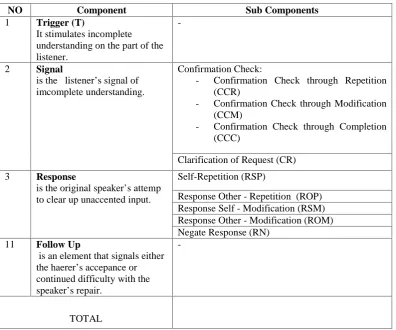
[image:33.595.114.511.408.738.2]meaning.
Table 1. Specification of components in negotiation of meaning
NO Component Sub Components
1 Trigger (T)
It stimulates incomplete understanding on the part of the listener.
-2 Signal
is the listener’s signal of imcomplete understanding.
Confirmation Check:
- Confirmation Check through Repetition (CCR)
- Confirmation Check through Modification (CCM)
- Confirmation Check through Completion (CCC)
Clarification of Request (CR)
3 Response
is the original speaker’sattemp to clear up unaccented input.
Self-Repetition (RSP)
Response Other - Repetition (ROP) Response Self - Modification (RSM) Response Other - Modification (ROM) Negate Response (RN)
11 Follow Up
is an element that signals either the haerer’s accepance or continued difficulty with the speaker’s repair.
19
In the development of studies in negotiation of meaning, Alcon, Shortreed, Martyn, and Van Den Branden have broadened the concept of negotiation of meaning, such as by inserting some ideas from studies in communication
strategies into the basic concept of negotiation of meaning. Alcon (1996) in Yufrizal (2007 p.19), for instance, included some elements of communication
strategies in their studies of negotiation of meaning, such as appels for sistance, appeals for verivication of meaning, definition requests, appeals indicating lexical uncertainty for the the component of signals, foreignization, literal translation,
code switching, approaximation for responses. Another extension of negotiation of meaning is by Van Den Branden (1997) who distinguished three definitions of
negotiation of meaning: negotiation of meaning, negotiation of form and negotiation of content.
Firstly, Branden (1997) in Yufrizal (2007, p.19) defines negotiation of meaning as
side sequences to the main flow of conversation aimed at signalling and solving problems of message comprehensibility that is aimed at restoring mutual understanding. Under this category, Branden divides the negotiation of meaning
into two elements: indicators and response. The indicators includes clarification request, confirmation request with trigger unmodified, confirmation of request
with trigger modified, and non verbal indicator. The response includes switch to the new topic, repetition of trigger, modification of trigger, repetition of indicator, modification of indicator, confirm of negate indicator, inability to respond, ignore
the indicator, response unnecessary.
Secondly, Branden (1997) defined the negotiation of meaning as side sequences to
20
formal aspect of description, and encouraging ‘self repair’ or, at the very laest, acknowledgement of the formal modifications that the listener suggested. The negotiation of form also consists of two elements: indicator and response. The
indicator includes request of rephrasal, prompt, confirmation request unmodified, confirmation modified, and metalingistic comment. The response includes
repetition of trigger, modification of trigger, repetition of indicator, modification of indicator, confirm of negate indicator, inability to respond, ignore the
indicator, response unnecessary.
Thirdly, Barden (1997) defines negotiation of content as stretches of interaction aimed at pushing the participants to provide more information spontaeously offered in the description. This type of modification also consists of two elements:
indicator and responses. The indicator includes clarification request, confirmation request unmodified, confirmation request modified, and confirmation request
elaborate. The response includes giving additional information, repetition of trigger, modification of trigger, repetition of indicator, modification indicator, negate indicator, inability to respond, ignore indictor, respond unnecessary, and
switch to a new topic.
2.3.2. The Role of Negotiation of Meaning in Second Language
Acquisition
Pica (1996) in Yufrizal admitted that although there has been no emprical
21
decades have shown that there are two abvious contributions of negotiation of meaning to second language acquisition. Firstly, through negotiation of meaning (particularly in interactions involving native speaker) non native speaker obtain
comprehensible input necessary for second language acquisition much more frequently than in interaction without negotiation of meaning. Secondly,
negotiation of meaning provides opportunities for non native speaker to comprehensible output necessary for second language acquisition much more frequently than in interaction without negotiation of meaning. Another important
role of negotiation of meaning which may not have a direct impact on second language acquisition but it is also an important element for second language
learning through communication is that negotiation of meaning can function as an indication of persuit of communication.
2.4. Task on the Study of Negotiation of Meaning
Pica and Doughty in Yufrizal (2007, p.100) investigate three classroom ESL communication activities involving group task. The focus of their study is to find
out the interactional features of conversation between teacher fronted and group decision making activities. They find more grammatical input available during
teacher fronted than during group activities. However, most of these grammatical inputs are from teacher while student’s production is ungrammatical in both situation. In conclusion, Pica and Doughty, stress individual students appear to
22
activities though either taking more turn or producting more samples of their interlanguage.
On the continuation of the first study, Pica and Dougthy in Yufrizal (2007) added
another variable in their study, that is dyad. So, the second study compares three interactional pattern: teacher-fronted, small group and dyads. The study found that there is significant different of information exchange between teacher-fronted
group work and dyads and between require excahange task and optional exchange task. Modification in the interaction is find to be higher in group that in
the teacher fronted participation pattern. However there is no difference in internation modification between group and dyad interactio pattern.
According Pica, Holliday, Lewis and Morgenthealer (1989) in different study, in
Yufrizal appy three different tasks to investigate the pattern of comprehensible output of their subjects. Three tasks are given a jigsaw in which the prticipants is
assigned to sequence a series of house, an information gap in which the one participant as describer of picture and other draw the picture and the last task is a discussion task. The study found that the information gap task offered the largest
percentages of opportunities for the non native speaker to modify their output response to native speaker signals of request for clarification and confirmtion.
This result in contrary to the theoritical consideration offered Pica, Kanagy and Fallout (1993) who suggest that jigsaw is the most ideal task that call elicit the L2
interaction.
23
students interaction may help language development in two ways: First, the flexibility for learners to choose and to collaborate in choosing the effecient syntatic units of communiction enable them to follow their own path toward
integrating the grammar of language into the oral skill. Second, interaction gruop can contribute by the mecchanism it activities in order for communication to take
place.
More recently, Foster (1998) found that require exchange tasks produce more negotiation of meaning and modification of input than optional exchange tasks.
However, she suggests that is the participant setting (dyadic or small grouping), not the task which influence the negotiation of meaning. The tasks only made a
little difference in the modification and negotiation made.
Some common result of the relations between tasks and negotiation can be summarize as follows:
1. One way task (e.g. Brown and Yule, 1983) produce more individual output, but much less negotiation work than do two-way-tasks (e.g. long, 1981; Doughty and Pica, 1986).
2. Required information tasks produced more negotiation than optional information exchange (Pica and Doughty, 1986).
3. Convergent, problem solving tasks produce more turn taking and questioning that do divergent, dabate style tasks (Duff, 1986).
4. Small group arrangement produced more interaction negotiation than do
24
5. Increase familiarity with particular tasks and interlocutor result more frequent negotiaton work (Gass and Varonis, 1984).
6. Non native speaker and non native speaker partners produced more
frequent negotiation of meanings than do native speaker with non native speaker partner (Varonis and Gass, 1985).
7. Non native speaker days from differnt L1 background produce more meaning negotiation than non native speaker dyads from the same L1 background (Yule and Mcdonald, 1990).
2.4.1. Jigsaw Task
Jigsaw is a cooperative learning technique that has been studied in various ways
by a number of researchers and teachers in classes of different levels and subjects. The jigsaw classroom, originally developed by Aronson in 1971 in Austin, Texas,
was considered effective in increasing positive educational outcomes. As a cooperative learning technique, it has been greatly studied abroad and has been explored in various ways by a number of researchers and teachers in classes of
different levels and of different subjects (see Aronson, Blaney, Stephin, Sikes & Snapp, 1978; Bafile, 2008; Hedeen, 2003; Holliday, 2002; Joe, 2008; Johnson &
Johnson, 1995; Johnson, Johnson & Smith, 1991; Slavin, 1983).
2.4.2. Information Gap Task
25
acquisition (SLA). Since that time, they have also come to serve as reliable instruments for gathering data on a variety of instructional interventions and learning processes as they arise during both learner-learner and learner-native
speaker (NS) interaction. Information gap tasks have been used in research primarily as a source of data on input, interaction, and interlanguage, or as a
context for applying a treatment, such as feedback.
2.5. Concept of Classroom Interaction
Interaction is the collaborative exchange of thoughts, feelings or ideas, between two or more people, resulting in a reciprocal effect on each other. Theories of
communicative competence emphasize the importance of interaction as human beings use language in various contexts to “negotiate” meaning or simply stated to get an idea of one person’s head into the head of another person (Brown,2011).
Interaction is sometimes used in the verbal interchange between teacher and students. Malamah and Thomas (1987) state that classroom interction is as the astabilish of rapport and a sense of community. Furthemore, Rivers (1987) find
that communication essentially from interaction. In the classroom the students achieve facilities in using a language when their attention is focused on conveying
and recieving authentic message. This message contains interaction information to speaker and listener in a situation of importance to both, that is interaction. Thus, interaction is an active process in which people try getting their meaning across to
26
Interaction in language lerning refers to the codition in which students achieve in using language. When their attention is focused on conveying and recieving
authentic message that contains information of interest to speaker and listener in a situation of importance (Rivers: 1987). In addition, Rivers (1987: 4-5) states
through interaction students could increase their languages they listen to or read authentic linguistic linguistic material or even the output of the fellow students in discussion, problem solving tasks or dialogues journals.
In interaction, students can use all of their possession of the language-all they
have learned or casually absorbed-in real life exchange. Interaction involves not only expression of one’s own ideas but also comprehensions. As the students’ interest is aroused, their anxiety, fear or even fatigue in the classroom will
gradually diminish; if not completely disappear, and as a result they actively in the classroom interaction.
Wegner in Yufrizal (2008) states that foreign language acquisition occurs especially when learner are engaged in the use of the language for
communication. Pica et al in Yufrizal (2008) states that, language is best learnt and taught though interaction. In this view, interaction is treated as one of the most important aspect that influence the succes of ailure in foreign language
learning.
According to Wheeler in Ponda (1998: 7), interaction involves not just
27
something to speaker B, he expects some kinds of reaction (not necessarilly in word; he might get gesture, a facial expression or semi-verbal sound like “Mm’). In short, the deversity in interaction involves not only verbal communication but
also paralinguistics elements such as pitch, stress and intonation. Classroom interaction in the teaching-learning activity includes mime, request for
clarification and confirmation check (Rivers, 1987). Mime means that the learner use non-verbal interaction in place of lexical item or action, for instance, clapping, nodding or waving. Thus mime is language learner’s interaction to subtitute words
or make conversation clear (Chaika, 1982).
2.6. Interaction Analysis
Interaction analysis focuses on ways of tracking individual acts of communicators. Scholars studying interpersonal and small-group communication
have often looked at such communication examples. The method involves recording group as it deliberates and listens to each statement a person makes. Those statements are counted in each categories listed or the figure. Bales (1979)
himself moved to an increasingly communication have been also interested in developing uses of the SYMLOG system (e.g, Calega, Wall, & Rippey, 1987).
Yet the nation of intercation analis can be demonstrated by looking at Bale’s initial approach. Bales (1979) are able to explain the succesful group of people need to balance the task dimension of their work with the social-emotion
28
III. METHOD
3.1. Research Design
The researcher is a qualitative study by employing a descriptive research.
Descriptive method is used to present a board spectrum of research activities having a common purpose of describing situations events or phenomena (Mason
and Bramble: 1997). It implies that descriptive method was used in this research because the researcher wanted to describe the analysis of negotiation of meaning in speaking class used jigsaw and information gap task. This research employed a
focused description study in which the researcher uses some category of data which has been prepared by the researcher (Setiyadi: 2006).
The research was focused on the process of students’ speaking material in learning activities. The aim of this research was to investigate students’ negotiation of meaning in conversation and the differences of components of
negotiation of meaning used on jigsaw task and information gap task that happens in teaching learning activity, between student and the other student in a dialogue/conversation. The research observes the students in speaking while in the
English class. Because it was not cognitive research, so the researcher did not focuses in statistic, but the researcher focus on the analysis of negotiation of
29
3.2. Subjects
The subjects of this research were the students of second grade in SMAN 1 Pasir Sakti in even semester academic year 2016/2017. There were six classes in second
grade of senior high school in academic 2016/2017. Each class consisted of 30- 35 students. The researcher used one class as the sample of this research. The sample was not chosen randomly. The class was XI science 1 class which consists of 30
students. The reasons choose XI science 1 class was because the class has good enthusiasm in learning English than other classes in the same grade.
3.3.Research Procedure
1. Finding the subject of the research
A class is random, selected from several class as the subject of the research to know how the interaction procced.
2. Providing task (jigsaw and information gap) to each group
Before giving the task, the teacher explained about jigsaw and information gap to the students. Jigsaw task contained two pictures of woman that came from the
same figure with some differences in her accessories and hair style. Information gap task contained two maps. First map was completed and it would give for the
30
3. Giving task each group
The students worked in pairs, then they made a conversation based on the task, they should make conversation based on their own language. For jigsaw task
students identified five or more of differences of the pictures that on part of face and accessories. For information gap task, the students completed a map. In this case, the students took turn as the describer and the other as information seeker.
The information describer explains to the listener the position of the buildings that exist in his /her part of picture. Then the information seeker tried to complete
his/her picture based on information that he/she heard.
4. Instructing the students task to take interaction
After receiving the task, students made the conversation about the theme that they had determine in task. First they identify differences that found from the picture about women (jigsaw task). Then, the students discuss about the maps
(information gap task).
5. Observing
The purpose of observation was to explain the situation being investigated;
activities, person or individual of students involved in an activity and the relationships among them. What the researcher expects, then by administering this
procedure is to gather information bout the learner activities during the speaking activities in the class. According to Arikunto (2002), there were four aspects to observe in instructional activities, they are: material, specific instructional
31
conversation in front of the class, the researcher observes the conversation used the observation sheet.
6. Recording the conversation in teaching activities
In this part, the researcher recorded the conversation during teaching learning process of audio recording as soon as the learning process run. It took during the students make interaction and the researchers record their conversation from the
beginning until the end of the tasks. Besides, the researcher at the same time took note about all the problem that occured during the teaching learning process.
7. Transcribing the conversation
The researcher made a transcription based on the audio recording that had been taken previously. After recording the student’s conversation and interaction, the
researcher transcribing it well. Because of the research was qualitative so the researcher focused on the process of interaction not the statistical data.
8. Coding each transcription of conversation
It is necessary for the researcher to give code for each conversation so it can easily understood by the reader.
9. Analyzing the data
The data were obtained from observing the conversation between teacher and students or student and student. Data analyzing had done to answer the research
32
10. Reporting result of analysis
After the researcher analyzed the data, the researcher reported the result of the research especially in the analysis. In this final procedure the researcher would
explain the analysis of the research
First, the researcher provided two tasks , i.e. jigsaw task and information gap task to each group. For jigsaw task, students were required to identify min 5
differences from 10 differences between pictures. The pictures was woman with some differences, the differences were on the art of face and accessories. The
woman on the picture was the same figure but with some differences for example differences in her accessories and her style. For information gap task the students were required to complete a map. The researcher used two maps, first map was
complete map and second map was incomplete map. The maps were given to the students; the complete map was for student as describer and incomplete map for
student as information seeker. The map describer explained to the information seeker the position of the buildings that exist in his/her part of picture. Then, the information seeker tried to complete his or her picture based on information that
he or she has listened.
Second, the researcher instructed the students to take interaction. After receiving
tasks the students took a conversation on the topic that had been determined in task. First the students identified differences that found from two pictures A and B about women (jigsaw task). After jigsaw task had finished, the students discussed
33
end of the conversation. Then after the researcher finished the research in the school, the researcher transcribing and coding each student’s conversation. After the researcher has finished to transcribing and coding each conversation, the
researcher analyzed all data from transcription of interaction (conversation) among students.
3.4. Data Collecting Technique
The researcher use two methods to gain the data
1. Classroom Observation
Observation is the act of collecting data of the performance a subject through the five senses: sight, smelling, hearing, touching, and test (Arikunto, 2002). In this
research, the researchers conduct the observation in 3x45 minutes. The researcher directly observed the classroom and took notes in the on the relevant event while
the learning process was going on. By using observation the researcher can saw the negotiate between students and teacher about the meaning that students know.
2. Recording
The researcher recorded the conversation between student A and student B. The research intends to have audio recording to gain the data. Therefore, if they're
unclear data from the video recording, it could be support of audio recording. The researcher took the audio recording as close as possible with the students'
34
3.5.Research Instrument
3.5.1. Tasks
The researcher used two tasks that are jigsaw task and information gap task. This
task is used by researcher while the researcher getting the data. It important because the researcher will know how and is the negotiation of meaning happen in
the speaking class.
a. Jigsaw Task
In jigsaw task the students work in pairs, then the teacher gives them picture
after that they try to describe the differences both picture A for student A and picture B for student B. The pictures were from a same figure with some
differences of characteristics and style.
b. Information Gap Task
After finishing the jigsaw task, the students discuss the information gap task.
There were two maps on this research in information gap task, i.e., blank map and complete map. The maps are given to students, then they make the conversation between student as describer with complete map and student as
information seeker with blank map.
3.6.Data Analysis
35
researcher focused on description technique not on statistic technique. The researcher described conversation during the students' interaction process of speaking class, giving coding and making notes. The next step was analyzing the
transcription. Researcher provide analysis of the data by using the steps propos by Moleong (1990) as follow:
1. Making the abstraction of the collect data is treated in one unit. The
researcher interprets all data available in selecting them into an abstraction. In this step, the researcher selects the data in order to keep
them relevant to the research question.
2. The researcher identifies the data into a unitary meaning that researcher paid attention to them the students. It uses two distinct the activities in the
process.
3. Categorizing the data based on the research question.
4. Interpreting the data after categorizing the data describing the conclusion.
This chapter already discussed method of the research. Including the explanations about the research design, s of the research, research procedure,
51
V. CONCLUSION AND SUGGESTION
This final chapter presents the conclusion of the research findings and suggestions for negotiation of meaning when they speak each other.
5.1. Conclusion
Referring to the findings of the research, it is concluded that the students used negotiation of meaning in their conversation in the two types of the tasks i.e., jigsaw and information
gap. In speaking class, the students used negotiation of meaning to solve their problem in communication. This research also shows there were differences of components use between in jigsaw and information gap tasks, the differences includes of number of items,
the use of component and the sentence that students used in their conversation. Thus, different of tasks facilitate students to negotiate meaning.
5.2. Suggestion
Referring to the research findings and discussion on the previous chapter, the researcher would like to propos some suggestions as follows:
A. Suggestion for English Teaching
When the researcher collected the data, the researcher found that students do not know
52
their conversation. Thus, it is important to give information and comprehending about negotiation of meaning. When students already know about negotiation of meaning and
they know how and when they use negotiation of meaning. Therefore, the English teacher, it is important to give knowledge about negotiation first before start collects the
data.
B. Suggestion for Future Research
In this research the researcher used two situations of speaking jigsaw and information gap, it made students twice in work and made student confused and bored. During
collecting the data in first task (jigsaw) students still focus, but in the second task students already tired and not focus. Therefore, for the future research to make an interactive task and give ice breaking when students are getting bored it is can make students’ focus
again.
Thus the conclusions and suggestions may be submitted, may be particularly useful for
53
REFERENCES
Arikunto, S. (2002). prosedur penelitian suatu pendekatan praktek. Jakarta: Renika Cipta.
Bales, R. F. (1979). SYMLOG: A System for multilevel observation of groups. New York: Free Press.
Brown , D. H., & Yule, G. (1983). teaching spoken language: approach based on the analysis of conversational English. Cambridge: Cambridge University.
Brown, D. H. (2001). Teaching by principle an interactive approach to language pedagogy. San Francisco: State University.
Bryne, D. (984). Teaching oral English. New Jersey: Longman Group Ltd. Bygate, M. (1989). Unit of oral expression and language learning in small group
interaction. Applied Linguistics, 9 (1):1-2
Celaga, D. J., Wall, V. D., & Rippey, G. (1987). An Investigtion of Interaction and Involvement and the Dimension of SYMLOG: Perceived
Communication Behaviors of Personss In Taskks-Oriented Groups. Central States Speech Journal, 38, (1): 81-93.
Chaika, E. (1982). Language in the Social Mirror. Massachusetts: New Burry House Publisher.
Duff, P. (1986). Another Look at Interlanguage Talk; Taking Task to Task. Rowley Mass: New Burry House Publisher.
Foster, P. (1998). A Classroom Perspective on the Negotiation of Meaning. Applied Linguistics, 19, (1): 1-23.
Gass, S. M., & Varonis, E. M. (1984). the effect of familiarity on the
comprehensibility of non-native speech. Language Learning, 34, (1): 65-89.
Lado, M. H. (1981). input, interacction, and second language acquisition. Annallss of the New York Academy of Science, 379, (1): 259-278.
54
Masson, I., & Bramble, C. (1997). The Role of Description Method Theory in Teaching Class. Quinquereme: Cornell University.
Nunan, D. (2003). Practical English Language Teaching. New York: MC Graw Hill.
Nurdiana, N. (2011). An analysis of negotiation of meaning in the first yeear students of SMAN 4 Bandar Lampung. Lampung: University of Lampung.
Pica, T. (1987). Interlanguage Adjustments as an Outcome of NS-NNS Negotiated Interaction. Language Learning, 38, (1): 45-73.
Pica, T. (1996). Do Second Laguage Acquisition Learners need Negotiation. IRAL, 34, (2): 1-9.
Pica, T., & Doughty, C. (1988). Variation is Classroom Interaction as a Function of Participation Pattern and Task. New York: Abex.
Pica, T., & Young, R. (1987). Making Input Comprehensible. Do interactional modification help? I.T.L. Review of Applied Linguistics, 11,(1): 63-90. Pica, T., Holliday, L., Lewis, N., & Morgenthaler, L. (1989). Comprehensible Output as an Outcome of Linguistics Demand on the Learner. Studies Second Language Acquisition, 11,(1): 63-90.
Pica, T., Holliday, L., Lewis, N., Berducci, D., & Newman , J. (1991). Language Learning trough Interacation: What Roles does Gender Play? Studies in Second Language Acquisition, 13, (1): 343-376.
Pratiwi, D. (2013). an analysiss of negotiation of meaning in students' speaking performance in dialogue by using realia at econd grade of SMAN 1 Kalianda. Lampung: University of Lampung.
Rivers, W. M. (1978). a Practicaal Guide to the teaching of English as a foreign language. New York: Oxford University Press.
Sadikin , L. S. (2011). Young learneers' vocabulary improvement through audio visual by using youtube videos: A case study at EEP Anglish course in Bandung. Bandung: Universitas Pendidikan Indonesia.
Setyadi, A. B. (2006). Teaching English as a Foreign Language. Yogyakarta: Graha Ilmu.
55
Van den Braden, K. (1997). Effect of negotiation language learners' output. Language Learning, 47, (4): 589-636.
Welty, D. A., & Dorothy, R. W. (1976). The Teacher Aids in the Interlocutor Team. New York: Mc Grew Hill.
Yufrizal , H. (2008). An Interaction to Second Language Acqquisition ( a text book for ESL learners and English teacher. Bandung: Pustaka Reka Cipta.
Yufrizal, H. (2007). Negotiation of meaning by Indonesia EFL learners . Bandung: Pustaka Reka Cipta.