DESIGN AND IMPLEMENTATION OF MF-MB
CANCELLATION DETECTION IN TRANSMISSION OF
PHYSICAL LAYER NETWORK
1B.SUNEELA, 2E.V.KRISHNA RAO,3K.CH..SRI KAVYA 1K .L. University, Department of ECE
2LAKIREDDY BALIREDDY COLLEGE OF ENGINEERING, Department of ECE 3K.L. University, Department of ECE
E-mail: 1[email protected], 2[email protected]
,
3[email protected]
ABSTRACT
Today’s Wireless networks have become more and more prevalent to promise global digital connectivity, and wireless devices have quickly evolved into multimedia smart phones, which run applications that demand high-speed data connections. MU-MIMO (Multi-User Multiple-Input-Multiple-Output) wireless method has received considerable attention as a way to meet such demand by achieving high efficiency. In this paper consider a Physical-layer Network Channel and proposed a less difficulty of MF-SIC (Multiple Feedback Successive Interference Cancellation) strategies with multi-branch (MB) processing for achieving higher detection diversity order. Additionally, LDPC (Low-Density Parity-Check) coded are used for makingproper detection and performance at low complexities which are used towards removing the inter-symbolinterference, as well as spatial effects to large dimension of delay spreads with MIMO channel. The experimental results show that these new detection systems considerably beat the previous SIC receivers as well as moderate the singularity of propagation error with low processing delay.
Keywords: PNC, MU-MIMO system, Error control code, Multi-Branch Processing, Successive Interference Cancellation
1. INTRODUCTION
From the past two decades, the rapid development of wireless communication system, QoS (Quality of Services)and data rate requirements are continuously increased towards enabling the user experiences in wireless communication system[1]. It requires the flexibility and high capacity of data from the future wireless communication schemes and this network which provides that regulation as well as various factors reduce the RFspectrum aninfrequent as well as avaluable resource. So, the future wireless communication network is necessary to proficient of providing thehigh capacity to achieve maximum spectral efficiency, more number of concurrent users and high data rate[2]. Wireless networks have developed more and more pervasive to guarantee global digital connectivity, and wireless devices have quickly evolved into multimedia smartphones, which run applications that demand high-speed data connections [3].
In telecommunication research, the data transmission over the high quality of information with increasing bit rate swap amongthe terminals is becoming the new stimulating goals.Currently, the
MIMO systems are stimulating
significantattentionthrough the wireless productiveness since they perform key tools for future wireless groups[4]–[12]. Multiuser MIMO (MU-MIMO) wireless techniques have received much attention as a way to meet such demand by achieving high spectral efficiency [13].
Additionally, thesecommunications are used to exchange sensitive data. Subsequently, physical medium, unapproved receivers situated in the range of transmission that can also perceive the signals guided through the transmitter towards legitimate receiver section as well as secretly listen to the conversation.So the security has grown into serious problem towards transaction with them. The MU-MIMO system particularly the communications are sensitive issues towards security since every secreted data should reserve as the confidential from external nodes as well as users except intentional one [14].This communication system which permits the several independent radio terminals towards access the system as well as improve the communication capacities of every specificstation.
accessing the same channel continuously by
freedom of spatial degrees using MIMO system.Furthermore, enabling this Mu-MIMO system using avarious method which can be accepted as well as various versions/ application which one is available. This system delivers a procedure through that can able to achieve spatial sharing of channels.
2. LITERATURE REVIEW
The previous study related to interference cancellation detection are discussed as follows: Kyeongyeon Kim et al.[16]proposed the O-SIC (Ordered Successive Interference Canceller) of MU-MMSE for downlink approach of MIMO MCCDMA (Multi-Carrier Code Division Multiple Access) systems as well as examined the performance using FER (Frame Error Rate) and throughput of the data. Also,it beats the proposed method. Subsequently, the interference of the other antenna is getting rejected through code data. Here the performance of the method was related amongst chip interleaving after interleaving and symbol interleaving before spreading within that frequency domain intended for encoded proposed method. The simulation results proven the chip interleaving technique was greater than the symbol interleaving while the multipath improved towards burst error using randomization effect as well as inferior to symbol interleaving technique when the increase of code due to the inter-code interference of SISO MC-CDMA method.
Arevalo et al. [17] proposed an IDD (Iterative Detection and Decoding)system for the uplink coded MU-MIMO systems. The structure of proposed SISO iterative system is based on a Multi-Branch Lattice Reduction Successive Interference Cancellation (MB-LR-SIC) strategy that computes in 1stiterationdependableto the operating from
outside data and then feedsset to the decoder. After the first iteration, the Soft Cancellation Minimum MeansSquare Error (SC-MMSE) strategy is used to subtract the residual interference. The simulationresults show that the proposed method has an excellent performance as compared to prior art and approach the Single User (SU) scenario with only one transmit antenna which is free from interference.
Qiao et al.[18]proposed a decoding structure with iterative joint detection of SISO in the uplink of turbo MIMO system. By the soft interference cancellation, V-BLAST and MU detection with MMSE method were achieved through SISO
detector. Thus the interference cancellation was composed amongst CAI (Co-Antenna Interference) and multiple access interference. The experimental resultsproved which the gain of turbo coded system has higher performance than the conventional receiver of uncoded technique.Furthermore, they compared the soft iterative MMSE receiver with the low complexity method as well as observed the low complexity performance, almost it near to the MMSE.However, this study needs to concentrate more towards reducingthe complexity of decoding receiver with joint detection method.
Mandloi et al.[1]Proposed Improved Multiple Feedback Successive Interference Cancellation (IMF-SIC) algorithms for symbol vector detection in MIMO spatial multiplexing systems. The MF-SIC is based on Shadow Area Constraint (SAC) where, if the decision falls in the shadow region multiple neighboring constellation points will be used in the decision feedback loop followed through the conventional SIC. The best candidate symbol from multiple neighboring symbols ischosen using the Maximum Likelihood (ML) criteria.Conversely, while deciding the best symbol from multiple neighboring symbols, the SAC condition may occur in subsequent layers which results inaninaccurate decision. To overcome this drawback, in the proposed algorithm, SAC criteria are checked recursively for each layer. This mitigation of error propagation is significantly improving theBER performance. Further, they also proposed anOrdered IMF-SIC where they use log likelihood ratio (LLR) based dynamic ordering of the detection sequence. The experimental results proved that this algorithmbeat the previous detectors method such as conventional SIC and MF-SIC in terms of BER, and achieves a near ML performance.
Hesketh et al. [19]Proposed a successive interference cancellation detector which utilizes multiple feedback candidates for cancellation stages and a dynamic Reliability Ordering (RO) of the cancellation steps in a MIMO system. The proposed Multi-Feedback Reliability- Ordered SIC (MF-RO-SIC) detector’s performance is compared with VBLAST based techniques for MF, the dynamic LLR RO without MF and the ML detector. The experimental results proved that the MF-RO-SIC could perform the MF-MF-RO-SIC as well as RO-MF-RO-SIC in the performance of BER, with the ability to tune the performance by altering the shadowing criterion values.
interchange of authorized data over the wireless
medium in unapproved eavesdroppers starved of higher layer encryption. This was achieved through two principal. These are, designing transmitter coding strategies withoutsecret key and developed the secret keys over thepublic channel by
manipulating the communication
medium.Furthermore, they described the evolution of transmission strategies insecure way from p2p channels to multiple-antenna systems through simplifications towardsMU broadcast, MA, relay networks, and interference.
From the above studies concluded as most of them has focused towards cooperativein order to increase detection of diversity order. Furthermore, few of the m Kim et al.[16],Arevalo et al. [17], Qiao et al.[18] used turbo codes for achieving good error correction. However, the decoder section of this code has a fixed number of iterations. This suggeststhe time consumption of decoding as well as bit rate out of decoder, are constant units. It will increase the complexity of the system at the code lengths, S/N, and performance. In order to overcome these issues, in this research proposed an MF-SIC strategy with MB processing that attainsto finding higher diversity order. Furthermore, proposed an LDPC code for achievinggood detection and error rate performance. The LDPC codes have involved plentiful consideration as moral error correcting codes attaining the error rate performance almost near to the Shannon limit [7]. In Li and Jafarkhani[8], the concatenation system of LDPC codes with the capability of powerful error correcting based on Alamouti system. While the length of the block is larger, compared to turbo code the LDPC has better performance with same block length and rate of the code[6].Additionally, the decoding technique of LDPC coded system has less complexity related to the turbo coded system[21].
2.1 Our Contribution
The influences of this paper are discussed as follows:First, developed a low complexity MF-SIC detector scheme with MB-SIC processing for achieving higher detection diversity order as well as produce optimal performance. Second, present IDD receiver towards method the MAI (Multiple Access Interference) presentations in the coded system which utilizes the channel coding method. Third, compare the proposed method with the previous detection method for directed MU-MIMO systems.
The structure of this study is summarized as follows: In the first section briefly discussed thebackground of the study. The second sectiondiscussed about overall system model. The third section discussed the novel representation of MF-SIC technique with MB processing. Section four is discussed the presentation and discussion of numerical results obtained via MATLAB simulations. Finally, Section five discussed the conclusion of this study.
3. SYSTEM MODEL
[image:3.612.334.495.310.356.2]This study primarily focused on the two-way relay channel (TWRC) and demonstrated in figure 1. Here the relay channel is fitted out with the two antennas and the end node connected to the single antenna.
Figure 1: Two-Way Relay Channel Source: Adopted from Zhang et al. [22] In this two-way transmission technique, these end nodes send the packets towards relay node by the use of QPSK modulation process. Consider these packets attain at the relay section within the synchronization of symbol level. By this method, the overlaid signal received through the relay section. It is defined as y1, y2 and it’s written as,
2 2 22 1 21 2
1 2 12 1 11 1
n
x
h
x
h
y
n
x
h
x
h
y
+
+
=
+
+
=
--- (1)
Here the term hi,j is the zero-mean complex
gaussian random variable which signifies the coefficient of the channel from theend node to i-th node of theantenna. Subsequently, the term yi is the
received signal at the relay node over the i-th antenna. The transmitted signal xi∈ {±1 ± √ −1}
with QPSK modulation technique of end node Ni as well as ni denoted as complex gaussian noise with σ2variance and mean of zero for all the dimensions.
The full information about the data is obtainable at the relay section. Here the vector form of received signal is rewritten as,
N
HX
Y
=
+
--- (2)Where the term H is denoted as channel matrix of dimension
N
t×
N
r, and the channel gain of each entry of hi, jis transferred antenna I and receiverN
antenna is j. Thus the presence of x,y and H
numbers in complex form. The direction and length of these vectors are represented as a complex number like phase/ phase shift and amplitude/ amplitude attenuation, respectively. Additionally, the term n is AWGN (Additive white Gaussian noise) with variance σ2
n and zero mean value. At
the moment relay section attempts to mine some valuable message from Y and transfer to the coded network system in the form of
x
1
⊕
x
2
x1. Later this will be focused as well as processing the demonstration as briefly.
4. PROPOSED METHOD
In this study proposed low-complexity MF-SIC with a multi-branch strategy for MU-MIMO systems. Due to this method the detection algorithm such as SD (Sphere Decoder) and optimal MLD (Maximum Likelihood Detection) which needs an exponential complexity as an increase of modulation level and number of data streams. Thus, the proposed method with shadow area constraint improved the cancellation of interference was achieved through the constellation points as the user conflict the error proliferation within the loop of decision feedback. By the same way combine the MF-SIC with MB processing for achieving greater diversity detection order. In thecodedsystem, the less complexity SISO with LDPC was proposed which is relate to the MB-MF and MF-SIC interference cancellation method for perceiving MIMO indications. The MF-SIC computational complexity was compared to the conventional SIC method. Subsequently, this requires small complexity. The experimental results proved the proposed method sufficiently greater than the traditional SIC method as well as dealing with the optimal ML detector.
Subsequently, in the proceeding section briefly discussed the proposed MF-SIC method as well as discussed QR decomposition of MIMO signal detection and various application of its SIC method.Furthermore, developed the MB-SIC processing for improving the performance of detection scheme. These are as follows.
[image:4.612.333.524.123.258.2]4.1 Design of Multi-Feedback System
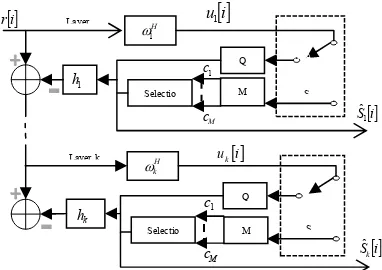
Figure 2: Block Diagram of MF-SIC Detection
The reliability of existing detected symbol was determined through shadow area constraints that preserve the computational complexity through reducing the process of redundant with consistent decisions. The length of the branch is K user, and the detecting procedure is denoted as
S
ˆ
K[
ι
&
]
. Theother user detection streams are defined as
]
[
ˆ
],...
[
ˆ
],
[
ˆ
2
1
ι
&
S
ι
&
S
Kι
&
S
. The soft estimation of kthe user was attained through thefollowing equation.
]
[
]
[
ι
&
ω
γ
(
kι
&
H K k
u
=
--- (3)Here the MMSE filter vector of
N
γ×
1
is writtenas,
k s
H K k
k
H
H
I
η
σ
σ
ω
ν 12 2
)
(
−+
=
--- (4)From the above equation, the
H
K denoted as attained matrix value through the columns such as K, k, and K+1 of H as well as the received vector]
[
ι
γ
(
k
&
is detected after the interference cancellation of existing k−1 symbols. At this time softestimation
u
k[
ι
&
]
of every user verified throughshadow area constraints which decidethe decision that reliable according to the metric of k- th user. It is rewritten as,
{
(
[
]
)
}
min
k fA a
k
u
a
d
x
−
=
Ξ
ι
&
--- (5)Selectio M Q
[ ]i Sˆk
[ ]i Sˆ1 H
1
ω
H k ω
[ ]
i u1[ ]i uk 1
c
M c
1
c
M c
S
1
h
k h
[ ]i
r Layer
Selectio M F
Q
S
SSA
Here the term afdenotedas constellation point which
is close to the soft estimation uk[i]of the k-thuser.If the condition,
d
k>
d
th , the pre defined as [image:5.612.306.544.68.267.2]droppedthreshold into the area of shadow in constellation map. Thus the presence of shadow area constraints,important towardssaving the computational complexityand related to the system that considersbeing all the estimations are unreliable. Finally compared the complexity of MF-SIC method with conventional MF-SIC systemas well as verified the results.
Figure 2: Block Diagram of MF-SIC Detection
Table 1:The algorithm steps for MF-SIC design
Initialization
r
(
k[
ι
&
]
=
r
[
ι
&
]
K
h
I
H
H
H kk k
k
(
)
1
...
1 2
=
+
=
σ
ν −ω
For
k
=
1
to k do %for each other]
[
]
[
ι
&
ω
(
kι
&
H k
k
r
u
=
If,in Shadow area
T M
m
c
c
c
c
,
,...,
,....
]
[
1 2=
∠
For
m
=
1
M do % Multiple feedbacksFor
q
=
k
to K do]
[
]
[
]
[
ˆ
1 1ι
ι
ι
&
(
&
m&
p q k p p kcm k m
k
r
h
h
b
r
=
−
−
∑
−= +{
ˆ
[
]
]
[
ι
&
ω
qmι
&
H q m
q
Q
r
b
=
End for T m K m q m k m k mb
b
b
c
s
s
b
[
ι
&
]
=
[
ˆ
2[
ι
&
],...,
ˆ
−1[
ι
&
],
,
+1[
ι
&
],...,
[
ι
&
],...,
[
ι
&
]]
21
[
]
[
]
min
ι
&
mι
&
M m
opt
aeg
r
Hb
m
=
≤ ≤−
mopt
k
c
s
ˆ
[
ι
&
]
=
Else
}
{
[
]
]
[
ˆ
kι
&
Q
u
kι
&
s
=
end if]
[
ˆ
]
[
]
[
ι
&
ι
&
11ι
&
(
k n k k
k
r
h
s
r
∑
−=
−
=
End for
The implementation steps of proposed MF-SICmethod was discussed in table 1.
4.2 Design of MF-SIC with Multi-Branch Processing
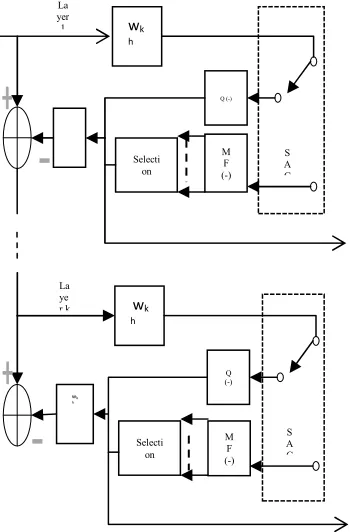
[image:5.612.109.284.255.521.2]In this sector briefly discussed aboutproposed structure of MF-SIC with MB-MF-SIC demonstrated in figure 3.
Figure 3: Structure of the Proposed MF-SIC With Multi-Branch Processing (MB-MF-SIC)
This method was developed based on the previous work that consists of various parallel processing schemes with various ordering pattern The l-th branch of proposed MF-SIC scheme was
calculated using detected vector symbol
s
ˆ
1[
ι
&
]
and defined as]]
[
ˆ
],...,
[
ˆ
],
[
ˆ
[
]
[
ˆ
1ι
&
s
l,1ι
&
s
l,2ι
&
s
l,kι
&
s
=
---→
(6)Here,
s
ˆ
l[
ι
&
]
signifies the K×1 ordered assessedsymbol vector, that perceivedconferring to the IC ordering design such as T, l = 1, L for the l-th
MF-SIC1 ME-SIC2 MF-SIC L Select that Minimi zes J
Q ( -1 × R i N r
[ ]i Z1
~
[ ]i Z2
~
[ ]i ZL ~ T T2 T T1 T L T [ ]i Z1
~
[ ]i Z2
~
[ ]i ZL
~
[ ]i Zl
[ ]i S) 1 × r N Selecti on M F (-) Q (-) wk h wk h wk h S AC La
yer 1
[image:5.612.309.513.393.528.2]branch. Thus the obtained vector
r
(
[
ι
&
]
is given asfollows:
],
[
]
[
,
ι
&
ι
&
(
r
r
lk=
k
=
1
,
],
[
ˆ
)
'
(
]
[
]
[
11 ,,
ι
&
ι
&
ι
&
(
j l k
j j
k
l
r
H
s
r
∑
−−
−
=
nk
≥
2
.⋅
⋅
⋅
⋅
⋅
⋅
⋅
⋅
⋅
⋅
⋅
(7)Here the
H
'
transformed channel matrix was attained through,H
T
H
'
=
lAdditionally, the channel matrix H columns are permutated through channel matrix transformation. Thus the processing of serially obtained from k=1 to k=K of the entire rearranged channel matrix H. hence the rearrangement of cancellation order of each branch represented as
l
[23].
The k-th channel of ordered channel matrix H denoted as
(
H
'
)
k that estimate the data stream of each symbol through proposed MF-SIC scheme.The end of this branch transform ∧
sl
[
ι
&
]
back to the original order ofs
l[
ι
&
]
∧ as well as ~sl′ through
T1that is rewritten as,
]
[
ˆ
]
[
~
ι
ι
&
l&
T l
l
T
s
S
=
Thus, the detectorfinds a collection of dissimilarassessed vectors. At this, theproposed MB processingchoose the branch with the leasteuclidean distance according tooptimization. This is given as,
) ( arg
min
1
l J l
L l opt
≤ ≤ =
For each branch,
2 2
]
[
ˆ
'
]
[
]
[
~
]
[
)
(
l
r
ι
&
H
s
ι
&
r
ι
&
H
s
lι
&
J
=
−
=
−
Thus the proposed method implementation of MB-MF-SIC metric
J
(
l
)
of every MF-SIC branch can gain and straight from the optimization of l-thbranch. The detected symbol vector is denoted as,
]
[
ˆ
]
[
~
]
[
ι
&
ι
&
loptι
&
T lopt
lopt
T
s
s
s
=
=
The proposed multi-branch cancellation scheme is near to the optimal performance. Hence the comprehensive search a sL = K! branches which is not in practical assumption. So the reduction of
branch number method was developed using FSB (Frequently selected branches)[23]. It is used to found the sub-optimal solution for choose an l
branch of the system. This consists of ordering patterns of chosen branch as well as attains a number of branches that is near to the reduced optimal performance. The brief definition of this sub-optimal order method are added in [23].
5. SIMULATION RESULTS
In this section briefly discussed about experimental results obtained through proposed method. The bit error rate performance of proposed method compared with the existing detection scheme, various numbers of users with coded systems. Additionally ,simulated the IDD method with SC detector as well as PIC coded channel scheme. Thus the proposed techniques, as well as counterparts in IDD flat fading model and coefficients, a reoccupied from complex Gaussian random variables with unit variance and zero mean value. At this, the channel code employs PNC code with a length of constraints are 3 and rate R=.5. For
[image:6.612.325.506.469.617.2]every user, the transmitted bits are encoded with coded bits and enclosed as transmitter block. These transmitted bits are getting modulated towards QPSK symbols as well as efficient coding technique. Subsequently, consider the traditional MF-SIC and SIC ordered through reduced signal to noise ratio for reasonable comparison.
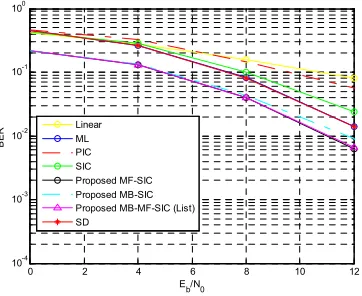
Figure 4: BER vs. SNR of Coded System with4 User Systems
The simulation results of bit error rate with a signal to noise ratio was plotted in figure 4 and
the modulation M=2 and 4. The threshold (d) with
branch length as 2 and 6 for proposed algorithm. To employ training sequence with 40 symbols towards performing the estimation of channels using least
0 2 4 6 8 10 12
10-4 10-3 10-2 10-1
100
Eb/N0
B
E
R Linear
[image:7.612.102.283.215.361.2]
squares method. The comparison of proposed MF-SIC with the cancellation of interference are simulated and plotted in below figure. The transmitted symbol mean was removed towards cancellation order earlier than the filtering of MMSE. Thus the simulation results denoted as the output of soft MF detector that beats the SIC method and the channel estimation with perfect SIC cancellation.
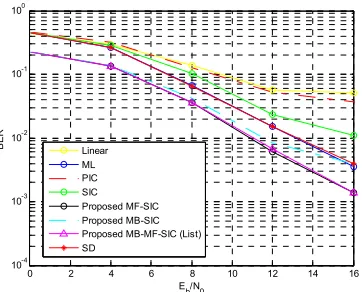
Figure 5: LDPC Coded System for 8- User System
The simulated results performance of proposed technique of 4x4 and 8x8 configurations are illustrated in figure 5.The codebook of optimum ordering patterns and FSB are developed to create the renovation matrices T. To attain the optimum codebook using Matlab function PERM (NT: −1: 1)
that consists of collation patterns NT. The FSB
codebook was described in least size, FSB index[1,2,5] for 4x4 coded system and [1,2,3,5,4] for 8x8 coded system.These elements are specified as directories of designs in thefinest codebook.The constraints are set as dth T =.5 for the threshold of
shadow area constraints as well as modulation is 4 for multiple feedbacks set L. Insphere detection radius was chosen towards noise variance of scaled version. The experimental results showbetter performance achieved once larger candidate list L was considered. These parameters were selected based on the simulation trials. By the comparison of proposed method with SIC-SC and SC, proposed techniques provided better results than the bit error rate of other schemes as well as reduced the delay of decoding.
6. CONCLUSION
From the simulation results the proposed MF-SIC with MB processing method achieved higher detection diversity order, Furthermore, achieved
good detection as well as error rate performance using LDPC code. This coded scheme has attracted significantconsideration as good error correcting codes achieved the error rate performance near to the Shannon limit [7].Additionally, attained SISO detection through estimated MMSE symbols in all spatial layer.This MMSE filter recurrently used in the frame by frame,as well as the channel matrix inversion was computed at the beginning of each frame. Consequently, the proposed combinatorial link selection strategies have been proven to the bit error rate performance that gains over-codedPNC MIMO systems. Also, invented the offered detectors and IDD method as well as examined their performance in MU-MIMO systems. The simulation results proven the proposed iterative detectors method of SU (single-user) performance assured and less delay of decoding.
REFERENCES:
[1] M. Mandloi, M. A. Hussain, and V. Bhatia, “An improved multiple feedback successive interference cancellation algorithm for MIMO detection,” in 2016 8th International Conference on Communication Systems and
Networks (COMSNETS), 2016, pp. 1–6.
[2] M. Myllyla, “Detection Algorithms and Architectures for Wireless Spatial Multiplexing in Mimo-OFDM Systems,” University of Oulu, 2011.
[3] G. Geraci, “Physical Layer Security for Multi-User MIMO Systems,” The University of New South Wales, 2014.
[4] Chong-Yung Chi and Chii-Horng Chen, “Cumulant-based inverse filter criteria for MIMO blind deconvolution: properties, algorithms, and application to DS/CDMA systems in multipath,” IEEE Trans. Signal
Process., vol. 49, no. 7, pp. 1282–1299, Jul.
2001.
[5] F. Li, Q. T. Zhang, and S. H. Song, “Efficient Optimization of Input Covariance Matrix for MISO in Correlated Rayleigh Fading,” in 2007
IEEE Wireless Communications and
Networking Conference, 2007, pp. 1926–1930.
[6] W. Ge, J. Zhang, and G. Xue, “MIMO-Pipe Modeling and Scheduling for Efficient Interference Management in Multihop MIMO Networks,” IEEE Trans. Veh. Technol., vol.
59, no. 8, pp. 3966–3978, Oct. 2010.
[7] C. F. Ball, R. Mullner, J. Lienhart, and H. Winkler, “Performance Analysis of Closed and Open Loop MIMO in LTE,” in 2009 European
Wireless Conference, 2009, pp. 260–265.
0 2 4 6 8 10 12 14 16 10-4
10-3 10-2 10-1 100
E
b/N0
B
E
R
[8] F. Li and H. Jafarkhani, “Multiple-Antenna
Interference Cancellation and Detection for Two Users Using Quantized Feedback,” IEEE
Trans. Wirel. Commun., vol. 10, no. 1, pp.
154–163, Jan. 2011.
[9] H. Futaki and T. Ohtsuki, “Low-density parity-check (LDPC) coded MIMO systems with iterative turbo decoding,” in2003 IEEE 58th Vehicular Technology Conference. VTC
2003-Fall (IEEE Cat. No.03CH37484), 2003, pp.
342–346 Vol.1.
[10] F. Li and H. Jafarkhani, “Multiple-Antenna Interference Cancellation and Detection for Two Users Using Precoders,” IEEE J. Sel. Top.
Signal Process., vol. 3, no. 6, pp. 1066–1078,
Dec. 2009.
[11] A. Goldsmith, S. A. Jafar, N. Jindal, and S. Vishwanath, “Capacity limits of MIMO channels,” IEEE J. Sel. Areas Commun., vol.
21, no. 5, pp. 684–702, Jun. 2003.
[12] K. Kusume, G. Dietl, T. Abe, H. Taoka, and S. Nagata, “System Level Performance of Downlink MU-MIMO Transmission for 3GPP LTE-Advanced,” in 2010 IEEE 71st Vehicular
Technology Conference, 2010, pp. 1–5.
[13] C. Lim, T. Yoo, B. Clerckx, B. Lee, and B. Shim, “Recent trend of multiuser MIMO in LTE-advanced,” IEEE Commun. Mag., vol. 51,
no. 3, pp. 127–135, Mar. 2013.
[14] G. Geraci and J. Yuan, “Physical Layer Security for Multiuser MIMO Physical Layer
Security for Multiuser MIMO
Communications,” Recent Trends Multi-user
MIMO Commun., pp. 141–156, 2013.
[15] C. Hung, N. G. Zablan, and L. S. Leng, “Co-channel Interference Cancellation Based On MIMO Space-Time System,” Eng. Sci.
Technol. An Int. J., vol. 1, no. 2, pp. 111–115,
2012.
[16] K. Kim, J. Ham, C. Lee, and D. Hong, “Performance analysis of a downlink MIMO MC-CDMA system with turbo coding and channel interleaving,” in IEEE 60th Vehicular
Technology Conference, 2004. VTC2004-Fall. 2004, 2004, vol. 2, pp. 1439–1442.
[17] L. Arevalo, R. C. de Lamare, and R. Sampaio-Neto, “Iterative Multi-Branch Lattice-Reduction-Aided Successive Interference Cancellation for Multiuser MIMO Systems,” in
WSA 2015; 19th International ITG Workshop
on Smart Antennas, 2015, pp. 1 – 5.
[18] X. Qiao, W. Yang, and W. Liu, “Iterative Soft Interference Cancellation for Uplink Turbo-Coded MIMO MC-CDMA System,” in 2007
International Conference on Wireless
Communications, Networking and Mobile
Computing, 2007, pp. 113–117.
[19] T. Hesketh, P. Li, R. C. de Lamare, and S. Wales, “Multi-Feedback Successive Interference Cancellation with Dynamic Log-Likelihood-Ratio Based Reliability Ordering,”
in Wireless Communication Systems (ISWCS
2013), Proceedings of the Tenth International
Symposium on, 2013, pp. 1 – 5.
[20] A. Mukherjee, S. A. A. Fakoorian, Jing Huang, and A. L. Swindlehurst, “Principles of Physical Layer Security in Multiuser Wireless Networks: A Survey,” 2014.
[21] L. A. P. Hernandez and M. G. Otero, “Performance of Low-Density Parity Check with Space-Time Block Coded MC-CDMA Systems and Soft-Interference Cancellation,”
in 2006 IEEE 7th Workshop on Signal
Processing Advances in Wireless
Communications, 2006, pp. 1–5.
[22] S. Zhang, C. Nie, L. Lu, and G. Qian, “MIMO Physical Layer Network Coding Based on VBLAST Detection,” 2012.
[23] R. C. de Lamare and R. Fa, “Multi-branch successive interference cancellation for MIMO spatial multiplexing systems: design, analysis and adaptive implementation,” IET Commun.,
vol. 5, no. 4, pp. 484–494, Mar. 2011.