IJPSR (2017), Vol. 8, Issue 3 (Research Article)
Received on 23 August, 2016; received in revised form, 18 October, 2016; accepted, 28 November, 2016; published 01 March, 201 7 FORMULATION AND EVALUATION OF INDAPAMIDE SUSTAINED RELEASE MATRIX TABLETS
V. Rajesh Babu* and Syeda Rana Nikhat
Department of Pharmaceutics, MESCO College of Pharmacy, Hyderabad, Telangana, India.
ABSTRACT: The study was undertaken with an aim to formulate
anti-hypertensive agents as sustained release matrix tablets. The literature review showed that Indapamide is an anti hypertensive / diuretics in SR dosage form 50% of drug is released between 5-14hrs and 20-80ng/ml blood level is obtained for 24 hrs and SR form permits uniform and constant blood level after absorption of galenic form by oral route up to now it is available as IR with an dose of 2.5mg/day which results in considerable blood peaks, it is formulated as SR form to avoid and maintain constant blood level and to maintain better theraupetic index. In the present study, HPMC was found to play a great role in controlling release of drug Indapamide from the matrix system. Incorporation of HPMC K 100 M CR as release controlling polymer in extra granular fraction was found helpful in restoring the original and still closer release profile.
INTRODUCTION: Indapamide is the first of a new class of antihypertensive/diuretics, the indolines. It has been reported that the oral administration of 2.5 mg (two 1.25 mg tablets) of Indapamide to male subjects produced peak concentrations of approximately 115 ng/mL of the drug in blood within two hours. It has been reported that the oral administration of 5 mg (two 2.5 mg tablets) of Indapamide to healthy male subjects produced peak concentrations of approximately 260 ng/mL of the drug in the blood within two hours. A minimum of 70% of a single oral dose is eliminated by the kidneys and an additional 23% by the gastrointestinal tract, probably including the biliary route.
QUICK RESPONSE CODE
DOI:
10.13040/IJPSR.0975-8232.8(3).1255-59
Article can be accessed online on:
www.ijpsr.com
DOI link: http://dx.doi.org/10.13040/IJPSR.0975-8232.8 (3).1255-59
The half-life of Indapamide in whole blood is approximately 14 hours 1, 2, 3. Indapamide is preferentially and reversibly taken up by the erythrocytes in the peripheral blood. The whole blood/plasma ratio is approximately 6:1 at the time of peak concentration and decreases to 3.5:1 at eight hours. From 71 to 79% of the indapamide in plasma is reversibly bound to plasma proteins.
Indapamide is an extensively metabolized drug with only about 7% of the total dose administered, recovered in the urine a pharmacokinetic s unchanged drug during the first 48 hours after administration. The urinary pharmacokinetic elimination of 14C-labeled Indapamide and metabolites is biphasic with a terminal half-life of excretion of total radioactivity of 26 hours.
In a parallel design double-blind, placebo controlled trial in hypertension, daily doses of indapamide between 1.25 mg and 10 mg produced dose-related antihypertensive effects. Doses of 5 and 10 mg were not distinguishable from each other although each was differentiated from Keywords:
Sustained release matrix tablets, Indapamide, HPMC K 100, Pre-formulations and wet granulation.
Correspondence to Author: V. Rajesh Babu
Sr. Assistant Professor MESCO College of Pharmacy Mustaidpura, Karwan Road Hyderabad-06, Telangana, India.
placebo and 1.25 mg Indapamide. At daily doses of 1.25 mg, 5 mg and 10 mg, a mean decrease of serum potassium of 0.28, 0. 61 and 0.76 mEq/ L, respectively, were observed and uric acid increased by about 0.69 mg/100 ml 6, 7, 8.
MATERIALS AND METHODS: Indapamide
was obtained as a gift sample from Dr Reddy’s Laboratories Ltd, Hyderabad, Telangana state. Micro crystalline cellulose pH 102, Micro crystalline cellulose pH 114, Mannitol, Iso propyl
alcohol, HPC-LF, Zinc stearate, HPMC K 100 M, Ly coat, Aerosil.
[image:2.612.49.561.220.344.2]Method of preparaion of tablets: Wet granulation is a process of dry mixing, wet mixing, and particle size enlargement, and is a process of particle attachment (agglomeration). It consists of six steps: Dry mixing, wet mixing, Milling of the wetted mass, Drying, Milling and sizing of the dried mass, final blending and coating.
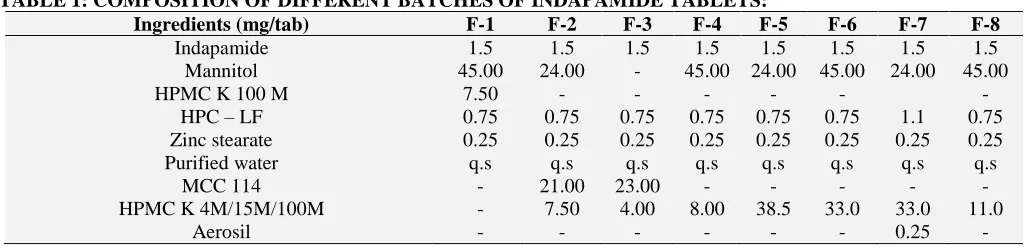
TABLE 1: COMPOSITION OF DIFFERENT BATCHES OF INDAPAMIDE TABLETS:
Ingredients (mg/tab) F-1 F-2 F-3 F-4 F-5 F-6 F-7 F-8
Indapamide 1.5 1.5 1.5 1.5 1.5 1.5 1.5 1.5 Mannitol 45.00 24.00 - 45.00 24.00 45.00 24.00 45.00
HPMC K 100 M 7.50 - - - -
HPC – LF 0.75 0.75 0.75 0.75 0.75 0.75 1.1 0.75 Zinc stearate 0.25 0.25 0.25 0.25 0.25 0.25 0.25 0.25 Purified water q.s q.s q.s q.s q.s q.s q.s q.s
MCC 114 - 21.00 23.00 - - - - -
HPMC K 4M/15M/100M - 7.50 4.00 8.00 38.5 33.0 33.0 11.0
Aerosil - - - 0.25 -
Characterization of the tablets:
Average Weight: Weigh accurately 20Tablets and calculate the average weight.
Hardness: Determine the hardness of
10Tablets, using a suitable calibrated hardness tester.
Thickness: Determine the thickness of
10Tablets, using a Vernier calipers.
Friability: Weigh accurately 20 tablets and place them in the friability test apparatus. Adjust the timer to 4 minutes. Operate the apparatus at 25+1rpm and observe the tablets while rotating. No tablets should stick to the walls of the apparatus. Take the tablets out and observe. No capping should be observed. Weigh the tablets, after dedusting excess powder from their surface.
Uniformity of weight: Weigh accurately 20 tablets and calculate the average weight. Then weigh the 20 tablets individually. Find out the tablets having the highest weight and the tablets having the lowest weight, in the above 20 tablets.
Dissolution by HPLC:
Apparatus: USP Apparatus II
RPM: 50
Medium: 900ml pH 6.8 Phosphate buffer
Temp: 37+0.5oC
Sampling Interval: 1, 4, 8 ,12, 16, 20 , 24 hours
Preparation of 0.2M monobasic potassium
phosphate solution: Dissolve 27.22gms of
monobasic potassium phosphate in water dilute with water to 1000 ml,
Preparation of 0.2M sodium hydroxide solution: Dissolve sodium hydroxide in water and dilute to 1000 ml Heat the medium.
Preparation of 6.8 pH phosphate buffer: Place 250ml of 0.2M monobasic potassium phosphate solution and 112 ml of o.2 M sodium hydroxide in 1000ml volumetric flask and dilute to 1000 ml with water .
Chromatographic Conditions:
Mobile Phase : Acetonitrile and buffer in ratio 40:60 ( degas and sonicate for 10 mins)5
Column : Intersil ODS 3V 150 x 4.6 mm, 4μ
Flow rate : 1.0ml/minute
Wave length : 240nm
Temperature : 65
Load : 50 μl
Run time : 10.minutes
Standard Preparation: Weigh and place 52mg of standard into 250ml volumetric flask. Dissolve and dilute with Methanol. Pipette 2ml of solution in to 250ml volumetric flask make up vol with medium.
Sample preparation: Transfer 6 tablets
individually in six dissolution flasks containing 900ml of the medium that has been equilibrated to 37oC + 0.5oC. Take care to exclude air bubbles from the surface of the tablets, start the apparatus immediately. Collect the sample after the specified time, withdraw sample from a zone midway between the surface of the medium and top of the rotating blade and not less than 1cm from the vessel wall and filter through 0.45μ membrane filter by discarding the 5ml.
Procedure: Separately inject the standard
preparation into the liquid chromatography and record the area due to major peaks.
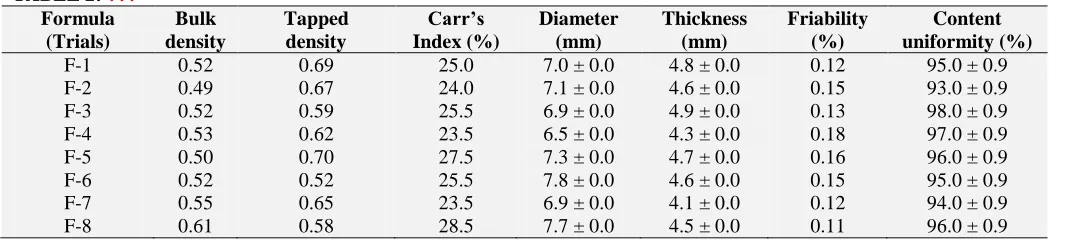
[image:3.612.42.575.308.429.2]RESULTS and DISCUSSION: TABLE 2: ???
Formula (Trials)
Bulk density
Tapped density
Carr’s Index (%)
Diameter (mm)
Thickness (mm)
Friability (%)
Content uniformity (%)
F-1 0.52 0.69 25.0 7.0 ± 0.0 4.8 ± 0.0 0.12 95.0 ± 0.9 F-2 0.49 0.67 24.0 7.1 ± 0.0 4.6 ± 0.0 0.15 93.0 ± 0.9 F-3 0.52 0.59 25.5 6.9 ± 0.0 4.9 ± 0.0 0.13 98.0 ± 0.9 F-4 0.53 0.62 23.5 6.5 ± 0.0 4.3 ± 0.0 0.18 97.0 ± 0.9 F-5 0.50 0.70 27.5 7.3 ± 0.0 4.7 ± 0.0 0.16 96.0 ± 0.9 F-6 0.52 0.52 25.5 7.8 ± 0.0 4.6 ± 0.0 0.15 95.0 ± 0.9 F-7 0.55 0.65 23.5 6.9 ± 0.0 4.1 ± 0.0 0.12 94.0 ± 0.9 F-8 0.61 0.58 28.5 7.7 ± 0.0 4.5 ± 0.0 0.11 96.0 ± 0.9
Based on the preformulation data, HPMC K100M was taken as release controlling polymer, mannitol and MCC114 as diluents, HPC-LF as binder, aerosil as glidant, zinc stearate as lubricant.
In Trial 1, HPMC K100M was used as release controlling polymer and mannitol as diluent, this trail is taken to check various problems in processing of tablets, the tyablets which are processed passed all the in process quality control tests (thickness, friability, hardness, weight variation,). But the flow of dried granules should be improved and compressibility of granules also to be improved.
In Trial 2, Mannitol and MCC114 are combinedly used as diluents to increase flow and compressibility of dried granules, and HPMC K (4M,15M,100M,) are used as release controlling polymer to check for their release profile, the tablets with HPMC
K100M are showing retarded release.
In Trial 3, 4 HPMC K100M taken as release conrolling polymer in (7%, 14%, 20%) concentration to check for there release profile , tablets with higher concentration of polymer showing more retarded release.
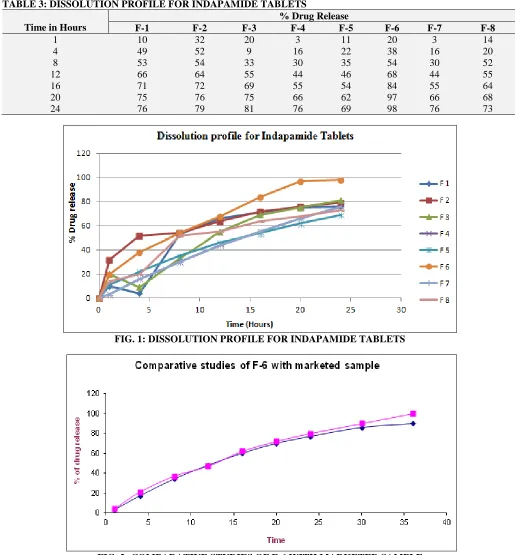
In Trial 5, 6 HPMC K 100 M taken as release controlling polymer in (60%, 70%,) concentration to check for there release profile, tablets showing release profile similar to that of innovator product but during processing of tablets hard granules are formed which are very difficult to mill and sift. So the process to be optimized.
In Trial 8, HPMC K100M (CR) is taken as release controlling polymer and used in extra granulation part, the granules which are formed are soft and no
difficulties observed in sifting, the tablets showing release profile is 98%.
TABLE 3: DISSOLUTION PROFILE FOR INDAPAMIDE TABLETS
Time in Hours
% Drug Release
F-1 F-2 F-3 F-4 F-5 F-6 F-7 F-8
1 10 32 20 3 11 20 3 14
4 49 52 9 16 22 38 16 20
8 53 54 33 30 35 54 30 52
12 66 64 55 44 46 68 44 55
16 71 72 69 55 54 84 55 64
20 75 76 75 66 62 97 66 68
24 76 79 81 76 69 98 76 73
[image:4.612.46.561.110.665.2]FIG. 1: DISSOLUTION PROFILE FOR INDAPAMIDE TABLETS
FIG. 2: COMPARATIVE STUDIES OF F-6 WITH MARKETED SAMPLE
SUMMARY AND CONCLUSION: In the
present study, HPMC was found to play a great role in controlling release of drug indapamide from the matrix system. Incorporation of HPMC K 100 M CR as release controlling polymer in extra granular
Preformulation and Excipients compatibility study Prototype formulation trials were started. Wet granulation process was used for both the layers formulation by using the RMG Granules were evaluated for tests such as LOD, Bulk density, Tapped density, Compressibility Index and Hausner ratio & sieve analysis before being punched as tablets. Tablets were tested for weight variation, thickness, hardness and friability, In-vitro dissolution tests were performed and f2 values were calculated. Dissolution profile matched with innovators product and f2 value was satisfactory. Accordingly, it can be concluded that the final formulation is a robust one and the performance is less likely to be affected by the various factors studied. An excellent in vitro –in vivo correlation is expected as evident from degree of similarity found in gradient dissolution in different media and release kinetics with respect to the reference listed drug products and as comparing with the commercial drugs also shows good dissolution studies.
ACKNOWLEDGEMENT: The authors are
thankful to Dr. Mir Wajahath Ali, Convener MESCO College of Pharmacy for his constant encouragement and kind support.
REFERENCES:
1. Yeole P.G., Galgatte U.C., Babla I.B. and Nakhat P.D, Design and evaluation of Xanthan gum based SR matrix tablets of Diclofenac Sodium, Indian Journal of Pharmaceutical Sciences, 2006, 68(2): 185
2. Pandey V.P., Manavalan R, Syed Munawar Hessian and Srinivasa rao P.L., Formulation and development of
naproxen conventional tablets, THE INDIAN
PHARMACIST-JANUARY, 2007: 85.
3. Venkatesh, Nath B.S, HPMC as wicking agent in Matrix tablets of Cetyl alcohol, Indian drugs 1999, Vol 36: 720. 4. Thilak Kumar M., Srinivas G., HPMC based Matrix tablets
of Atenolol and Cisapride. Indian Journal of
Pharmaceutical Sciences 2005, Vol 67: 414
5. Dhuikhel., effect of Drug Solubility and polymer viscosity on invitro drug release from HPMC matrix tablets, INDIAN DRUGS, 2005: 42
6. Lawrence X.Yu, Christopher D. Elison, Dale P. Conner, Larry J. Lesko, and Ajaz S. Hussain, Influence of Drug Release Properties of Conventional Solid Dosage Forms on the Systemic Exposure of Highly Soluble Drugs, AAPS Pharm Sci. 2001; 3(3): 24.
7. Rantanen J, Rasanen E, Tenhunen J, Kansakoski M.; Mannermaa J.; Yliruusi J.; An evaluation of particle size and binder effects, Eur.j.pharm.biopharm.2000, vol.50: 271-2762
8. Becker D., Rigassi T., Bauer- Brandla A., Effectiveness of Binders Using Wet granulation. Drug development and industrial pharmacy, 1997, Vol 51: 356
9. Pavol Rajnaik, Frantisek Stepanek, Christopher
Mancinelli, Rey Chern, Leon Farber, and Brian Hill, Experimental study of wet granulation in fluidized bed: Impact of the binder properties on the granule morphology, INIST-CNRS, 2006.
10. Chowdary K.P.R, Pregelatinized starch: A potential pharmaceutical excipient. The eastern pharmacist, April 2000: 33.
All © 2013 are reserved by International Journal of Pharmaceutical Sciences and Research. This Journal licensed under a Creative Commons Attribution-NonCommercial-ShareAlike 3.0 Unported License. This article can be downloaded to ANDROID OS based mobile. Scan QR Code using Code/Bar Scanner from your mobile. (Scanners are available on Google Playstore)
How to cite this article: