7176
C-MEANS AND FUZZY TAHANI AS BASE OF CATTLE
DATA COLLECTION FROM MANUAL CARD SYSTEM TO
ONLINE INFORMATION SYSTEM
1ENDANG SUGIHARTI, 2RIZA ARIFUDIN, AND 3ANGGYI TRISNAWAN PUTRA
1,2,3 Computer Science Department, Faculty of Mathematics and Natural Sciences, Universitas Negeri
Semarang (UNNES), Indonesia
E-mail: 1[email protected], 2[email protected], 3[email protected]
ABSTRACT
Online information system for cattle data collection is the first step of utilizing technology implemented by the Department of Animal Husbandry and Fisheries. The Department of Animal Husbandry and Fisheries is still in the stage of using a manual card system that contains the identity of each cattle through the handwriting on the card. Therefore, it needs to be supported by the updated step through the online information system for data collection of cattle. The problem is how to change the manual card system to the online information system for data collection of cattle based on C-Means and Fuzzy Tahani? The purpose of this research is to build a prototype of an online information system to convert manual card system to an online information system in Semarang Regency area. The methods were conducted with field surveys related to the identity descriptions of each cattle, owner, mutation records, cattle health records, literature studies, and the preparation of online programs through collaborative activities. The results of this research were as follows: (1) producing an online information system design which was based on C-Means and Fuzzy Tahani using PHP and MySQL to support the recording system of each manual card into the online system; (2) producing an online information system prototype for data collection of cattle in Semarang regency; and (3) obtaining the limited test results by using the prototype of this online information system.
Keywords:Online Information System, Cattle, C-Means, Fuzzy Tahani.
1. INTRODUCTION
Currently, the Department of Animal Husbandry and Fisheries begin to introduce the manual cattle card system which contains the identity of every cattle, owner, mutation records, including cattle health records. Therefore, Informatics Engineering Study Program of Computer Science Department of FMIPA UNNES, a state university in Central Java Province of Indonesia, needs to give positive contribution in the field of Science and Technology to support the conversion of manual cattle card system to online information system for cattle data collection based on C-Means and Fuzzy Tahani by using PHP and MySQL for the region of Semarang Regency of Indonesia.
The online information system can display all statistical data or recording system [1]. Recording system for cattle can also be utilized as a decision-making tool from related parties, for example, to know the stock of cattle in Semarang regency, the sale price, health, the number of breeders, the
granary of cattle, the type of the cattle, and others according to the data available on the cattle card. For long-term, this online information system can be disseminated nationally as a form of UNNES contribution to the nation and country.
Additionally, the enumeration system of cattle in the form of web-based applications can also be accessed online with the media of web browser either through a PC or Android-based smartphone. Thus, the online information system on cattle is still possible to be developed through the use of a PC or smartphone. People should start getting used to online-oriented behavior.
7177 conventional cattle card into an online system?; (2) How to produce an online information system prototype for cattle quality data collection in Semarang regency based on C-Means and Fuzzy Tahani? (3); How to get the test result of online information system prototype for cattle data collection in Semarang regency?
The main purpose as the focus of this research is to build a prototype of an online information system to convert a manual card system to an online information system in Semarang Regency area. From this main purpose, sub-purposes may be prepared as follows: (1) To obtain a design of online information system to support the recording system of every conventional cattle card which uses manual card into an online system; (2) To produce an online information system prototype for cattle quality data collection in Semarang regency based on C-Means and Fuzzy Tahani; (3) To get the test result of online information system prototype for cattle data collection in the region of Semarang Regency. The research hypothesis is that it can be made a prototype of an online information system based on C-Means and Fuzzy Tahani to convert a manual card system to an online information system in Semarang Regency area.
The contribution of the research results includes four users. The First contribution is for the students of the Computer Science Department, (1) the results of this resarch are able to provide additional insight to students about the benefits of C-Means and Fuzzy Tahani in making this online information systems. (2) Provide additional insight to students about the effectiveness of using PHP and MySQL to facilitate data collection. The second contribution is for lecturers in Computer Science, (1) Lecturers as readership need this work as the reference of examples of C-Means and Fuzzy Tahani based application programs. (2) Lecturers get additional references about examples of using PHP and MySQL so that it can be used as a reference for giving assignments to students. The third contribution is for the Office of the Department of Animal Husbandry and Fisheries of Semarang Regency: (1) the Service Office has an online information system prototype based on C-Means and Fuzzy Tahani using PHP and MySQL to facilitate the collection of cattle data in its working area. (2) The Office has complete documentation of cattle data for the Semarang Regency area, is programmed, and is easily accessible according to their needs. And the Fourth contribution is for cattle breeders in Semarang Regency: (1) The cattle
breeders have facilities in reporting data on the identity of each cow, owner's name, mutation record, and cattle health records. (2) The cattle breeders communities have facilities in seeing quality cows that will be traded online quickly, accurately, and accountable.
2. LITERATURE REVIEWAND METHODS
2.1. Literature Review
2.1.1 Understanding and Characteristics of Online Information System
This research resulted in the change of the manual cattle card system into an online cattle card system. The use of online information system means utilizing online system media. This online system media is often referred to as Online Media or Digital Media namely the media presented online on the internet. In Indonesia itself, Online Media socialized with the name "Media in the Network." In its development, the term of Online Media there is a mention with CyberMedia.
The general sense of online media is any kind or format of media that can only be accessed via the internet. They contain text, photos, video, or sound. In this general sense, online media can also be interpreted as a means of online communication. Online communication can be utilized optimally for communication in the process of collecting the cattle data from farmers and data registrars. The recording results can also be communicated to users. In the opinion of [2], with the Online Information System, the distance between the cattle owner and the Registrar Officer is no longer a problem.
7178 quickly and easily revised by the admin that can be done anytime; (8) It is two-way interactive and egalitarian in the presence of facilities created, such as the facility of comment column, chat room, polling, and so on; (9) It is documented, information or data stored securely in the "data bank" (archives) and can quickly be found through links, related articles, or search facilities; (10) It can connect with other data sources (hyperlink) related to data of cattle presented.
Therefore, the characteristics of online media of cattle card are the main differentiator with conventional media in the form of manual cattle card from the content side. Online media for cattle card can be equipped with audio, video, and animation. Furthermore, online cattle card system is also equipped with a link or hyperlink, i.e., links to other web pages that can enrich information related to cattle data.
2.1.2 Use of Online Information System as
Communication Media
At the time of the process of cattle data collection, communication and information are very important. Good reciprocal communication between cattle ranchers and cattle registered officer affects the quality and accuracy of cattle data obtained. However, the busyness, the narrowness of time, the geographical conditions, or the distance between the breeder's location and the registrar's officers can lead to the emergence of obstacles in communicating intensely. Humans as social beings desperately need communication facilities to convey information from and to others. Communication that occurs directly, quite effective and easy because the two parties face to face directly so they can deliver the data freely. But if the communication cannot happen directly, for example, because the two parties are not at the same place and time, because the busyness, the narrowness of time, geographical condition, or the distance between the breeder's location and the registrar officer then needed a certain tool or media to communicate.
In the current disruption era, there are various types of media that can be used as a means of communication and convey information quickly, accurately, and effectively. The communication media such as electronic media like mobile phone, or the internet in the form of the online information system, as part of the online media. Even mobile phones today become the most popular communication media in the community including the community of cattle ranchers because of the
various advantages compared to other communication media. Mobile phone with internet facility has a kind of operating system that greatly affects its performance. Various advantages of the features offered by mobile phones regarding internet connection, media completeness, and various other advantages make the number of users in various countries continues to increase every year, so the use of mobile phones has become a very phenomenal amount in the community including cattle ranchers.
The strengths of online cattle data collection: (1) supports the multitasking process, which allows users to open multiple applications at a time, For example it can use WhatsApp, facebook, internet browsing, and view the video at one time; 2) easy access using the Google Apps market, for people who frequently use GPS and install apps, this feature can download many apps for free; (3) easy notification. Any SMS, WhatsApp, email, or article from RSS Reader will be able to instantly appear on the home screen; (4) online media system can be linked with various brands of mobile phones. Now many mobile phones that use this online media operating system ranging from HTC, Samsung, Nokia, iPhone, Cross, Oppo, Mitto, and others; (5) If cattle card uses an online system then this system can be integrated with Android on a mobile phone so that Google or other products become easily accessible, such as Google Map, Google Reader, Google Translate, Youtube, Blogger, and others.
The disadvantages: (1) Need to always connect to the internet in accessing the features required so that at least have to use weekly or monthly internet package; (2) There are many ads in each application program because they connect to the internet automatically; (3) Waste of electricity/battery. Operating System with online media always uses more electrical power than without using online media because of the performance also more process.
7179
2.1.3 Methods of C-Means and Fuzzy Tahani
for Cattle Data Collection
Method of C-Means and Fuzzy Tahani is one of science and technology materials provided in lectures at the Department of Computer Science, Informatics Engineering Study Program. This form of Science and Technology, innovation, and development of C-Means and Fuzzy Tahani, can be applied in the form of applied product research in the field of cattle data collection through the web-based clustering system.
The full term of C-Means is Fuzzy Clustering-Means. C-Means or Fuzzy C-Means is a clustering method that is widely used in clustering applications [2,3]. C-Means applies a fuzzy grouping, which means that each data can be a member of multiple clusters with varying degrees of membership on each cluster. Fuzzy C-Means is an iterative algorithm, which implements iteration in the data clustering process. The purpose of C-Means is to obtain a cluster center that will be used to know the data that go into a cluster. Clustering is a grouping method based on the size of proximity (similarity). Clustering is different from the group. The group contains the member with the same conditions. If the member is not the same, it means it does not belong to the group. The cluster does not have to be the same, but the grouping is based on the proximity of an existing sample characteristic. This will provide information on the similarity of each object.
One of the many fuzzy clustering algorithms used is the Fuzzy Clustering Means algorithm. The vector of fuzzy clustering, V={v1, v2, v3,…, vc}, is an objective function defined by the degree of membership of data Xj and center cluster Vj.
The Fuzzy C-Means algorithm divides the available data from each finite data element and then puts it into the part of the cluster collection that is affected by some given criteria. Given a finite set of X= {x1,…, xn } and data centers, then:
𝐽 𝑋, 𝑈, 𝑉 𝜇 𝑑 𝑋,𝑉
Where μij is the degree of membership of Xj and the center of the cluster is a part of the membership matrix [μij]. And d2 is the root of the Euclidean distance and m is the fuzzy parameter whose average degree of obscurity of any degree data of membership is not greater than 1.0. The output of Fuzzy C-Means is a row of central of clusters and some degree of membership for each data point.
This information can be used to build a fuzzy inference system.
Fuzzy Query Database is making a fuzzy query against classical databases [2,3]. Users create an application that can handle a query wherein the query there are variables that are fuzzy, or in other words, the query has linguistic variables while the data in the database that will be accessed is certain data. The database proposed by Tahani is a form of Fuzzy Query Database. The Tahani database still uses the standard relation, but this model uses fuzzy set theory to get information on its query.
Tahani developed a framework at a high level of the conceptual level to process fuzzy queries in a conventional or non-fuzzy database environment. Tahani formulates a formal architecture and approach to handling databases with simple fuzzy queries. The query language used is based on SQL.
Fuzzy database application program is a program to search the data by linguistic search method [4]. This program is an application of the theory of fuzzy database. Initial input in this program is user criteria, and then fuzzy variable determination and fuzzy set determination will be used in the search. After the data is entered and the user has selected the search criteria in the linguistic search table, the next step is to calculate the degree of membership of a data in each set on a variable based on the membership function that has been selected previously. The following fire strength process based on the selected criteria. The data that has the highest fire strength value indicates that the data is closest to the search criteria.
7180 concept of fuzzy relation in a DBMS with a degree of membership.
[5] explained that Fuzzy Database Tahani model could be implemented in the form of software (website) if it has been determined the indicator data for each perspective. Each input must have value so that accurate data will be obtained.
2.1.4 Recording for Online Cards System
The records of cattle are very useful in terms of (1) listing the names of cattle owners; (2) history of cattle; (3) cattle mutation; (4) management of efficient management systems, disease control, breeding management, pregnancy and feed management; (5) selection of prospective males to be used in lieu of males; (6) selection in the framework of replacement of cows; (7) unfavourable disposal of cattle; (8) evaluation of cattle in groups; (9) development of cattle production system [6,7].
The benefits of cattle data recording are to (1) facilitate breeding management of a cattle business, by providing information to users about the production performance and reproduction of cattle; (2) organize decisions on breeding at the central level through total information for production performance of all cattle records and their genetic superiority; (3) provide genetic improvement opportunities for the resulting production and reproduction traits [8,9].
This process requires a fairly expensive cost and a long enough time to design it [10]. But if this program has been running well, with once collected data, then the next data processing will be very efficient. The use of the internet and web pages based on C-Means and Fuzzy Tahani disposal obviously can improve the role of society in support of these ideas. The research team also utilizes the programming language PHP and MySQL which is a database tool that is integrated with PHP. Fannin's opinion is also in line with the concluding that: Internet and web page construction can all play a role in supporting human expression [11-14].
2.1.5 Implementation of C-means and Fuzzy
Tahani Using PHP and MySQL
MySQL is generally used in conjunction with PHP to create dynamic and powerful server applications. Researchers use programming languages of PHP and MySQL as supporters of C-means and Fuzzy Tahani methods to help the Department of Animal Husbandry and Fisheries of Semarang in changing manual card system to online system with no commercial purpose.
PHP stands for "Hypertext Pre-processor." PHP is a programming language installed in HTML. One of the uses of PHP is to make the web look more dynamic. With PHP, programmers can display or run multiple files in 1 file by way of include or require. Additionally, PHP has been able to interact with several database tools although with different completeness, for example with MySQL [15].
2.1.6 Changing Manual Cattle Card System
toward Online Information System The manual cattle card systemcontains the identity of each cattle, owner, mutation notes, including health/cattle quality records. This program is based on Law No. 41 of 2014 on Amendment to Law No. 18 of 2009 on Animal Husbandry and Health. With the enactment of Cattle Cards, every cattle must be recorded in Manual Cattle Card. The data collection needs to be supported by the system to record every conventional cattle card into a digital system (Web-based online system) [16].
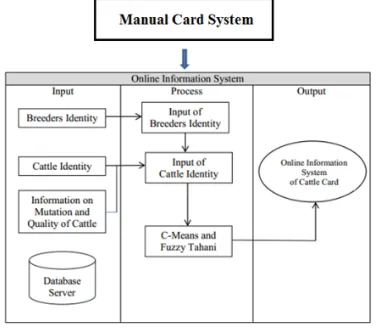
[image:5.612.332.520.395.559.2]Based on the description above then it is made the changing of manual cattle card system toward online information system. The scheme is as follows.
Figure 2. changing manual cattle card system toward online information system
From the above scheme, the research team will create and change the manual cattle card system into the online information system.
2.2. Methods
2.2.1 Research Subjects and Research
Location
7181 Figure 1. Data related to cattle.
The location of this research is in two places, namely on the Campus of Computer Science Department of Universitas Negeri Semarang (UNNES) and in Pabelan District of Semarang Regency. Activities in the Campus of Computer Science Department of UNNES are analyzing the initial data to be inputted, designing output by the online information system prototype, and composing a prototype online information system based on C-Means and Fuzzy Tahani using PHP and MySQL to facilitate the collection of cattle data. Activities in Pabelan District of Semarang Regency are preliminary data collection at the Department of Animal Husbandry and Fisheries Service Office, followed by checking of the real data taken from data from the cattle owned by fire farmers.
2.2.2 Activity Flowchart of Research
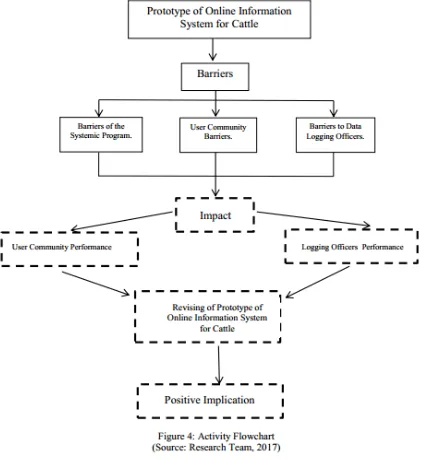
[image:6.612.94.306.510.740.2]Activity flowchart of research as the conceptual framework adopted for this study [17-20] is shown in the following figure 3.
Figure 3. Activity flowchart of research
2.2.3 Outcome Indicators
The indicators of research achievement are as follows: (1) providing the design of online information system to support the recording system of every conventional cattle card into an online system; (2) producing a prototype of an online information system for cattle data collection in Semarang regency and its Guidebook: (3) obtaining the test results of online information system prototype for cattle data collection in Semarang Regency.
3. RESULTS
3.1 Design of Online Information Systems
Here is described the results of research related to the way of designing online information systems to support the recording system of each conventional card manually recorded into a digital/online system. Field observation does the initial process. This observation is conducted to obtain data relating to field conditions. The research team and the students who assisted in the implementation of this research, visited one of the owners of cattle in Semarang Regency to observe and match the existing cattle data on the Animal Husbandry and Fishery Office of Semarang Regency.
The field data obtained are used as the basis for the design of information systems built with accurate and validated data. In this system begins by entering the identity data of cattleman, the identity data of cattle on the card, data of cattle mutation, cattle health data, and data of Semarang regency area. Then data on cattle information will be done by the input process of cattle data and cattleman data. This data is then done by general data processing of cattle based on C-Means and Fuzzy Tahani method using PHP and MySQL. The output of this process is obtained from reports of cattle that have been recorded.
7182
3.2 Production of an online information system
prototype for cattle data collection based on C-Means and Fuzzy Tahani
3.2.1 Using of C-Means and Fuzzy Tahani
C-Means is a data clustering technique in which the presence of each data point in a cluster is determined by the degree of membership. The basic concept of C-Means is to determine the cluster center whose value is not accurate in the initial conditions. Each data point has a degree of membership for each cluster. The center of the cluster and the degree of membership will then be repaired repeatedly based on the minimization of the objective function so that the center of the cluster will move towards the right location. The output is a row of cluster centers and several degrees of membership for each data point. The steps of using of C-Means method [21], are as follows.
a. Determining the data to be in cluster X, in the form of n x m matrix (n = number of data samples, m = attribute of each data). Xij = i-th sample data (i = 1,2, ..., n), j-attribute (j = 1,2, ..., m).
b. Determining the number of clusters (c), rank (w), maximum iteration (MaxIter), least expected error (ζ), initial objective function (P0 = 0), initial iteration (t = 1).
c. Generating random numbers μik, i = 1,2, ..., n; k = 1,2, ..., c; as elements of the initial partition matrix U. The partition matrix (U) in fuzzy grouping satisfies the condition, where μik is the degree of membership that refers to how likely a data can become a member of a cluster. Calculate the number of each column (attribute).
𝑈
𝜇
𝑥
⋯ 𝜇
𝑥
⋮
⋱
⋮
𝜇
𝑥
⋯ 𝜇
𝑥
d. Calculate the center of the k-cluster: Vkj, with k = 1,2, ..., c; and j = 1,2, ..., m.
𝑉
∑
𝜇
. 𝑥
∑
𝜇
e. Calculate the objective function on the t iteration, Pt:
𝑃 𝑋 𝑉 𝜇
f. The objective function is used as a recurrence requirement to get the right cluster center. So
we get the trend of data to enter the cluster wherein the final step. For the initial iteration the value of t = 1.
g. Calculate the partition matrix change. h. Check stop condition:
a) | Pt - Pt-1 | <ζ) or (t> MaxIter) then stop; b) otherwise, iteration is raised t = t + 1, repeat
step 4.
After the results obtained from the cluster then analyzed with Fuzzy Tahani to produce quality cattle recommendations from each data cluster. Fuzzy Tahani steps are as follows:
a. Describing Membership Functions
The membership function is a curve showing the data entry point into its membership value (often also called membership degree) which has an internal between 0 and 1, one way that can be used to obtain membership value is through a functional approach. Some functions that can be used are linear curve representation, triangle curve representation, or trapezoid curve representation. Each of these functions will result in a value between "0" and "1" in different ways, according to the type of representation used.
b. Fuzzification
Fuzzification is the first phase of fuzzy calculation that is changing the firm value to the fuzzy value. The process is as follows: An analog quantity is entered as input (crisp input), then the input is inserted at the scope boundary of the membership function. The membership function is usually called membership input function. The output of this fuzzification process is a fuzzy input value or commonly called fuzzy input.
c. Query of Fuzzification
Query of fuzzification is assumed to be a conventional (nonfuzzy) DBMS query that will try to create and implement a basic fuzzy logic query system.
d. Zadeh Basic Operators for Fuzzy Set Operations.
7183 max (μA [x], μB [x]). The recommended alternative is an alternative that has a Fire Strength value or a level of conformity with the selection criteria above the number 0 (zero) to the number 1 (one).
The types of variables, fuzzy set, membership function, and domain (fuzzy range) in Fuzzy Tahani design are shown in Table 1 below.
Table 1. Design of Fuzzy Tahani
Variable Set of Fuzzy
Member-ship Function
Domain (Fuzzy Range)
Explanation
Age Young Down
[image:8.612.313.536.151.257.2]Linear
[18, 24] In Month
Enough Triangle [18, 48]
Old Up
Linear [24, 48]
Weight Low Down
Linear
[272, 320]
In Kilogram
Medium Triangle [272,
450]
High Up
Linear
[320, 450] BCS
(Body Condition Score)
Low Down
[image:8.612.91.303.201.383.2]Linear
[2, 3] In Unit
Medium Triangle [2, 4]
High Up
[image:8.612.94.296.586.678.2]Linear
[3, 4]
3.2.2 Online Information System Prototype
for Cattle Data Collection in Semarang Regency
This application is developed to be accessible online. Application development using PHP and MySQL programming languages as a database integrated with PHP. The application is used to manage cattle card data in Semarang Regency, from Manual Cattle Card to online Card System.
This application is also equipped with the guidebook of the use of the online system of cattle card application. The first look of the online system of cattle card application is preceded by the application information as shown in Figure 4.
Figure 4. Application Home Page of Online Cattle Card System
This application requires login information to be able to manage data related to cattle card after
[image:8.612.313.530.590.718.2]login then the admin can manage data breeder and cattle card as in figure 4. In Figure 5, managers can add, edit and delete data of breeders.
Figure 5. Display of Cattleman Data Management in Semarang Regency
Applications Program above can also be used to manage cattle cards including cattle owners, cattle information, and cattle mutations. This cattle information is related to cattle ownership and animal characteristics. Cattle movements also contain the history of cattle mutation and cattle health namely information about the history of cattle and health treatment.
3.3 The Test Result of Online Information
System in Semarang Regency
The research team has conducted a test on the online information system prototype for cattle data collection in Semarang Regency and obtained the test results as the validation of this online information system. Here is described the test results related to using of online information system prototype for data collection of cattle quality in Semarang regency. This application has succeeded to used to be accessible online. The application was developed by using PHP and MySQL programming languages as a database integrated with PHP. This application has been successfully used to manage cattle card data in Semarang regency, from manual cattle card to become an online cattle card system.
The display of the results of this application is shown in Figure 6.
7184 The results of this online cattle card system have been validated through a focus group discussion which was attended by the research team and the representatives of the Cattle Service Office who was assigned to input the data of cattle in the district of Semarang. As a result, the cattle data input officer in the region of Semarang Regency is satisfied and can operate this Online Cattle Card System. By the system of open data through online Information System, is a creative and very strategic action, so it is expected to facilitate the owner of goods/cattle offer his goods/cattle [22 and 23].
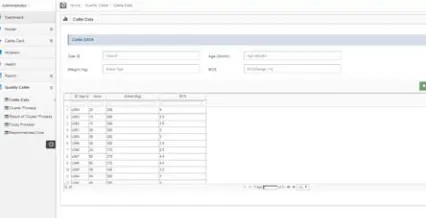
[image:9.612.311.534.82.203.2]Furthermore, for the determination of the quality of cattle with C-Means and fuzzy Tahani made the appearance of cow information about BCS, Age, Cow's Weight (Kg) as in figure 7.
Figure 7. Information Display of BCS, Weight, and Age of Cattle
[image:9.612.90.303.309.418.2]After the C-Means process, Fuzzy Tahani Process is done. This Fuzzy Tahani is done to determine the degree of membership of each existing data. The degrees of membership are separated by BCS, weight, and age of cattle. Consider the results of this Fuzzy Tahani process in Figure 8. In the last step, this application can provide quality cow recommendation as in Figure 9.
Figure 8. The result of Fuzzy Tahani Process
Figure 9. Recommended Cattle Quality
4. DISCUSSION
In this research, the team introduced the online cattle card system application. To obtain data related to field conditions, research teams and students who helped the implementation of this research, visited one of the owners of cattle in Semarang District to observe and match the existing cattle data at the Department of Animal Husbandry and Fisheries Semarang regency.
From the beginning of the process of designing, prototyping, until the testing, has been validated and has been consulted with the Department of Animal Husbandry and Fisheries Semarang as the user. Thus, the online information system prototype for the collection of cattle in Semarang Regency is in line with the needs of the Department of Animal Husbandry and Fisheries District Semarang.
The online system of cattle card application is also equipped with the user manual. This book can be read and studied independently. Independence is required as a way to validate that this User Guide Book can be used significantly, beneficially, clearly and operationally by its users.
[image:9.612.89.307.572.685.2]7185 planning of adding more cattle. (7) Providing a search process for cattle data based on certain criteria.
Besides the advantages, this online cattle card system application also has several weaknesses. These weaknesses are (1) A reliable admin is needed to handle the online cattle card system application. (2) It needs a good office space arrangement for an electronic data storage room. The space for administrative activities (data input for cattle), computer operations, or data sorting of cattle, is often mixed with manual administration so that the work becomes less systematic. (3) If there is an error in the program and the regional service office does not have an expert in the field of online system programming, then the online cattle card system application can actually hinder the work. (4) For the maintenance of machinery or hardware, the regional service office still relies on the supplier with a contract system per year. As a result, if there is damage to technical damage, even if it is very simple, the employees cannot immediately overcome it.
However, these weaknesses can be overcome if the service office already has a good programmer/admin, supported by government regulations that support the online cattle card system application. This regulation is needed as a legal protection.
5. CONCLUSIONS AND SUGGESTIONS
5.1 Conclusions
The conclusions of this research are as follows: (1) The design of online information system based on C-Means and Fuzzy Tahani has been produced to support the recording system of each conventional card which manually recorded into an online system; (2) A prototype of an online information system for cattle data collection has been produced in the region of Semarang regency. This prototype is also equipped with an online information system guidebook for cattle data collection; (3) The test results of online information systems prototype for cattle data collection in the area of Semarang Regency has been successfully implemented based on the needs of the Department of Animal Husbandry and Fisheries of Semarang regency.
5.2 Suggestions
Suggestions that can be recommended are as follows. (1) Online information system prototype for cattle data collection in Semarang Regency area that has been completed with the guidebook of an online information system for cattle data collection needs to be supported by socialization to the user
community. (2) To optimize the benefit of this research results, then it needs to be continued with further research by making an online information system for cattle data collection in the district of Semarang base on Android. (3) Creativity and strategy of cattle ranchers to be willing to use online information system is expected to increase the selling power of cattle.
In addition to the above suggestions, a number of actions are also needed to minimize the weaknesses of the Online Cattle Card System. These actions are (1) It is necessary to recruit employees who are experts in the field of programming and reliable Admin personnel. Programming experts are needed to overcome if there is damage to an existing program. (2) It is necessary to arrange a special spatial plan that is adequate as an electronic data storage room. 3) Avoiding space for administrative activities (data input of cattle), computer operations, or sorting data on cattle mixed with manual administration space so that work becomes systematic. (3) For maintenance of machinery or hardware, Regional Service Offices must strive not to rely on suppliers with a contract system per year. As a result, if there are technical damages, then the damage can be immediately handled by the employees themselves.
REFERENCES:
[1] Espetvedt, M.N, et al., “Data quality in the
Norwegian dairy herd recording system: Agreement between the national database and disease recording on the farm”, J Dairy Sci Vol 96 Issue 4 April 2013.
[2] Nguyen, Tuan, “The Effectiveness of Online Learning: Beyond No Significant Difference and Future Horizons”, Merlot Journal of Online Learning and Teaching, Vol. 11,
No. 2, June 2015, pp 309-319.
[3] Jiang, et al. “Fuzzy c-means clustering based
on weights and gene expression programming”, Pattern Recogn Lett, 2017, Volume 90, 15 April 2017.
[4] Pradibtha S, Nyoman PI, and Buana PW., “Residential Site Selection by Combining GIS And Fuzzy Database Query On Android Device”, JATIT, Vol 61, No. 3, 2014, pp
654-660.
[5] Velmurugan T., and Santhanam T., “A Comparative Analysis Between K-Medoids and Fuzzy C-Means Clustering Algorithms for Statistically Distributed Data Points”,
7186 [6] Lindstrom, U.B. “Milk Recording in
Developing Countries”. World Anim. Rev, 1976, Vol 19, pp. 34-42.
[7] Mulder, C. A. T., et al, “The usefulness of
the computerized medical records of one practice for research into pregnancy loss in dairy cows”, Prev. Vet. Med, 1994, Vol 21,
pp. 43–63.
[8] Fioretti, M., A. Rosati, and R. Aleandri. “Case Study on Animal Recording for improved Breeding and Management Strategies on Buffalo in Italy”. ICAR Technical Series 2000, Workshop on Animal Recording for Imporved Breeding and Management Strategies for Buffaloes. Slovenia, No. 4.
[9] Mörk, M., et al. “Comparison between dairy
cow disease incidence in data registered by farmers and in data from a disease-recording system based on veterinary reporting”. Prev. Vet. Med, 2009; Vol 88, pp. 298 307.
[10] Fannin, B. “Record Keeping Goes High Tech at Beef Short Course”. http: //
animalid. aphis.usda. gov/nais/index. Shtml, 2005.
[11] Ashford, J. “The arts and crafts computer: Using your computer as an artist's tool”.
Pearson, 2002.
[12] Brown, I. New radicalism for art education: Embracing change. Australian Art Education, 2002, Vol. 25, No.1, pp. 62-64.
[13] Neylon, J. I couldn't do my homework, the cat ate my mouse. Artlink, Vol 16, No. 2 &
3, 1996, pp. 54-56.
[14] Taylor, S. A computer convert's story. EQ Australia, 1999
[15] Welling, Luke dan Thomson, Laura. PHP and MySQL Web Development, 3rd Ed. USA: Sams Publishing, 2004.
[16] Ince, DC & Hekmatpour, S. Software Prototyping –Progress and Prospects.
Journal Information and Software Technology, 1987; Vol 29 No 1
January/February 1987.
[17] Hillage, J. and Aston, J.Attracting New Learners: A Literature Review, Learning and Skills Development Agency.
http://www1.curriculum.edu.au/eq/archive/p rior2002/eq_99/taylor.html, 2001.
[18] Western Cape Education Department. Barriers to learning. South Africa Retrieved From
curriculum.wcape.school.za/.../40112654_ Inclusive_eng_12-27.doc. 2001.
[19] Noor, A. M. and Majid, F. A. “A case study on the challenges of postgraduate TESL
adult learners”, International Journal of Arts and Science, 2009, Vol. 3, No. 6, 1-19.
[20] Pia KF. “Barriers in Teaching Learning Process of Mathematics at Secondary Level: A Quest for Quality Improvement”. Am J Educ Res, 2015; Vol. 3, No. 7, 2015,
pp. 822-831.
[21] Kusumadewi S, Purnomo H. “Aplikasi Logika Fuzzy Untuk Pendukung Keputusan”. Edisi ke-2. Yogyakarta: Graha
Ilmu, 2010.
[22] Arvidsson, V, Holmström, J, Lyytinen, K. 2014. “Information System Use as Dtrategy Practice: A multi-dimensional View of
Strategic Information System
Implementation and Use”, Journal of Strategic Information Systems 23 (2014), pp. 45-61.
[23] Wu, J, Wen, N, Dou, W, Chen, J. 2015. “Exploring the Effectiveness of Consumer Creaivity in Online Marketing Communication”. European Journal of Marketing. Vol. 49 No. 1/2, 2015, pp.