Systematic Review
Preventing health-care acquired infections in lower-level healthcare facilities (maternities, health centers, health posts, MCH centers): the role of WaSH (Water, Sanitation and
Hygiene) in Low- and Middle-Income Countries
Hai-Ryung Sung
A technical report submitted to the faculty of the University of North Carolina at Chapel Hill in partial fulfillment of the requirements for the degree of MSPH in the Department of
Environmental Sciences and Engineering
April 2019
Approved by Committee Members: Dr. Jamie Bartram (Advisor)
Dr. John Tomaro Dr. Michael Fisher
Abstract
Hai-Ryung Sung
Preventing health-care acquired infections in lower-level healthcare facilities (maternities, health centers, health posts, MCH centers): the role of WaSH (Water, Sanitation and Hygiene) in Low-
and Middle-Income Countries (Under the direction of Jamie Bartram)
Comprehensive environmental conditions including water, sanitation, and hygiene (WaSH), healthcare waste management, and energy services are needed in health care facilities (HCFs) to ensure safe and adequate care, and to reduce the risk of healthcare acquired infections (HCAIs). Insufficient and inadequate WaSH services in HCFs are prevalent in low- and middle-income countries (LMICs). For example, between 2014 and 2016 the absence of running water for handwashing, cleaning, and disinfection at HCFs posed a significant challenge to containing the Ebola epidemic in West Africa. While the role of WaSH services and energy are important, there are very few studies on these services in lower-level HCFs. To address this, a systematic review of both peer-reviewed and grey literature on WaSH services in lower-level HCFs in LMICs found no articles in English that assessed the implementation of the full range of WaSH services; and review found no definitions of types of lower-level HCFs and their accompanying range of services. Overall, four studies reported sufficient coverage with WaSH and energy services in lower-level HCFs in LMICs. We conclude that a supportive enabling environment, focused political attention, and the effective and comprehensive application of WaSH and energy interventions in lower-level HCFs in LMICs are required to prevent healthcare-acquired
Acknowledgements
I would like to thank my academic advisor Dr. Jamie Bartram, for his guidance and support throughout my graduate program. Working under you has helped me grow both intellectually and personally. I would like to additionally thank to Dr. John Tomaro and Dr. Michael Fisher for their invaluable support and encouragement. I also thank Hayley Schram for reviewing my technical report. My family has been extremely supportive throughout my entire program. Especially, I thank Youngoo for his support.
Table of Contents Abstract………i Acknowledgements……….ii LIST OF TABLES………..v LIST OF FIGURES………vi LIST OF ABBREVIATIONS………...vii 1. Introduction………1 2. Conceptual framework………...3 2.1 Components of WaSH………...4
2.2 Enabling Environment for WaSH in HCFs……….8
2.3 Framework adapted……….8
3. Methods……….9
3.1 Criteria for Inclusion and Exclusion………9
3.2 Search Strategy for Identification of Studies……….10
3.3 Data Extraction and Analysis……….11
4. Results………..12 5. Discussion………12 5.1 Components/activities………15 5.1.1 Water availability………...15 5.1.2 Water quality………..23 5.1.3 Sanitation………...27 5.1.4 Hygiene………..32
5.1.5 Healthcare Waste Management………...42
5.2 Limitation………...51 6. Conclusion and Implication………...52 Bibliography………54 Supplementary material……….. Table 1
LIST OF TABLES
TABLE 1: Guidelines and definitions between essential environmental health standards in health care settings, standards for improving quality of care with the core indicators for water, sanitation, hygiene, and waste management in HCFs……….6 TABLE 2: Criteria for inclusion and exclusion………...10 TABLE 3: Literature review search terms………...11 TABLE 4: The number of countries by WHO regions included from 55 studies…………...13 TABLE 5: WaSH and energy services addressed in 55 studies………..13 TABLE 6: Studies on quality assessment of WaSH and energy services studies…………...14
LIST OF FIGURES
FIGURE 1: Conceptual framework of the role of WaSH in HCFs. Blue shading: Domains at four levels ………..8 FIGURE 2: Flow diagram of studies included in the review………...12
LIST OF ABBREVATIONS
AFRO- African Region
DAC- Doctor Ambulatory Clinic EE- Enabling Environment FAP- Feldsher Action Post
HCAIs- Health Care Acquired Infections HCFs- Health Care Facilities
HCs- Health Centers
HCWM- Health Care Waste Management HCWs- Health Care Workers
HICs- High-Income Countries HPs- Health Posts
HWSs- Hand Washing Stations JMP- Joint Monitoring Program
LMICs- Low-and Middle-Income Countries PAHO- Pan-American Health Organization PHU- Peripheral Health Unit
PPE- Personal Protective Equipment SDGs- Sustainable Development Goals SEARO- South-East Asia Region WASH- Water, Sanitation and Hygiene WHO- World Health Organization WPRO- Western-Pacific Region
1. Introduction
Sufficient and appropriate water, sanitation, and hygiene (WaSH) conditions should be present in healthcare facilities (HCFs) to enduring high quality of care. When healthcare facilities (HCFs) are without the most basic requirements of reliable water, hygiene, and adequate sanitation, infection, illness, and even death can befall patients seeking treatment (Jamie Bartram et al., 2016). WaSH services support infection, prevention, and control practices that prevent infections and respond to outbreaks of infectious diseases. In 2014, a systematic review reported that poor access to clean water and sanitation had a strong association with maternal mortality (Benova, Cumming, & Campbell, 2014). Hundreds of millions of patients annually acquire infections as a result of poor handwashing practices due in part to the lack of available handwashing materials and facilities (WHO, 2009).
Despite the important role of WaSH in preventing HCAIs in HCFs, there is scant literature that describes and analyzes the effects of implementing appropriate WaSH services in lower level HCFs. Lower level HCFs such as health centers and health posts play an important role in not only in LMICs but also in high-income countries (HICs). This study examines existing literature on the association between WaSH services and HCAIs and suggests that a systematic application of these services is needed to prevent HCAIs in lower-level HCFs, i.e., those not offering ‘inpatient’ services (non-hospitals) and usually categorized as maternities, clinics, health centers, health post, etc.
The WHO reports that the following conditions are more likely to be found in settings with insufficient resources: inadequate environmental hygienic conditions, incomplete waste disposal practices, poorly maintained infrastructure, incomplete equipment, understaffing, overcrowding, poor knowledge of basic infection control measures and inadequate application of basic infection
control measures, and the absence of local and national guidelines and policies (World Health Organization, 2011). These conditions are found in hospitals, health centers, clinics, health posts, dental surgeries, and general practitioner settings. According to the WHO, there are three broad types of HCFs in which environmental health conditions must be effectively initiated and sustained, i.e., large, small and emergency facilities (Adams et al., 2008).
• Large HCFs provide a range of outpatient and inpatient care and include district hospitals and other referral health facilities. Within large HCFs, the risk of disease transmission is substantial, given the presence of infectious patients and extended contact with other patients, staff, and care-givers (Adams et al., 2008).
• Small HCFs provide outpatient care and outreach activities and include primary health-care centers in rural, peri-urban, and urban areas. These provide little to no inpatient care, resulting in the restricted risk of disease transmission (Adams et al., 2008).
• Emergency settings include isolated treatment facilities that address infectious diseases such as cholera and acute respiratory syndrome. Intensive management of water supply, sanitation, hygiene, and waste are required to protect staff, care-givers, and patients from diseases (Adams et al., 2008).
Insuring the effective application of WaSH services in lower-level HCFs is important because vulnerable populations are over-represented and there is an increased risk of infection and death (Maha Bouzid, Cumming, and Hunter 2018). With growing awareness about this issue, the first assessment of the status of WaSH covered 66,101 HCFs in 54 LMICs and provided broad perspectives of WaSH in HCFs (WHO and UNICEF 2015). Another study identified inequalities and environmental health challenges (Cronk and Bartram 2018). A
subsequent global assessment found that nearly 50% of facilities lacked piped water, 33% were without adequate sanitation, 39% did not have soap available for handwashing, 39% lacked adequate infectious waste disposal, 73% lacked sterilization equipment, and 59% lacked reliable energy services (Cronk and Bartram 2018).
Monitoring of WaSH provision in healthcare settings is included in the Sustainable Development Goals (SDGs) (UN DESA 2018). SDG 3 and 6 reflect the importance of achieving appropriate WaSH conditions and practices in HCFs (UN DESA 2018). Target 3 concerns universal health coverage and access to WaSH in health-care facilities. Target 6 promotes the expansion of WaSH services beyond household settings, i.e., to HCFs (UN DESA 2018). The principal questions addressed in the systematic literature review include the following:
▪ What are the WaSH, waste management, and Energy services conditions and in lower-level HCFs in LMICs?
▪ What recommendations do studies give to improve WaSH and Energy services in lower level HCFs?
2. Conceptual framework
Despite the importance of WaSH services in HCFs, there is no literature on the application of conceptual frameworks to describe and analyze the adoption of comprehensive WaSH programs in the healthcare settings. For the purposes of this thesis, a conceptual framework below has been developed and used to investigate the association between the application of WaSH services in lower-level HCFs in LMICs and the prevention of HCAIs.
1) Components of WaSH
In this review, to align standard definitions and indicators of WaSH activities in HCFs, we examined two relevant reports; Essential environmental health standards in health care (Adams et al., 2008); and Core questions and indicators for monitoring WaSH in health care facilities in
the Sustainable Development Goals (WHO, 2018).
Essential environmental health standards in health care written by Adams et al. (2008), was prepared by the WHO to establish standards for quality health care that could reduce the risk of spreading HCAIs to and among patients, staff, caregivers, and visitors. The document defines minimum WaSH standards in HCFs for countries to adapt (Adams et al., 2008). The standards cover: water accessibility and availability; water quality and quantity; water facilities; human excreta disposal; wastewater treatment and disposal; health care waste disposal; cleaning and laundry; food storage and preparation; building design; construction and management; control of vector-borne disease; and hygiene promotion (Adams et al., 2008).
The Standards for improving quality of maternal and newborn care in health facilities (WHO, 2016) defines “quality of care” and presents a framework for improving the quality of care for mothers and newborns around the time of childbirth (WHO, 2016).
The WHO/UNICEF Joint Monitoring Program (JMP) developed a series of survey questions and indicators to measure WaSH services and waste management practices in HCFs, entitled
Core questions and indicators for monitoring WaSH in health care facilities in the Sustainable Development of Goals (WHO, 2018).
WHO’s document on Standards for improving quality of maternal and newborn care in
health facilities (WHO, 2016) also includes energy because it is indispensable to operate water
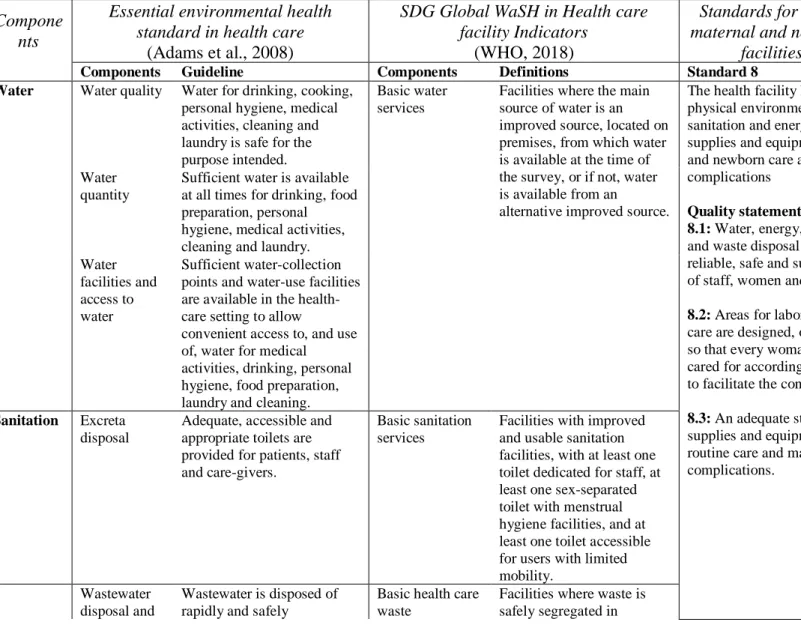
and acceptable health care service delivery. Quality statement 8.1 states that “Water, energy, sanitation, hand hygiene and waste disposal facilities should be functioning, reliable, safe and sufficient to meet the needs of staff, women and their families” (WHO, 2016). Table 1 aligns the guidelines and definitions between essential environmental health standards in health care settings, standards for improving quality of care with the core indicators for water, sanitation, hygiene, and waste management in HCFs.
Table 1. Guidelines and definitions between essential environmental health standards in health care settings, standards for improving quality of care with the core indicators for water, sanitation, hygiene, and waste management in HCFs
Compone nts
Essential environmental health standard in health care
(Adams et al., 2008)
SDG Global WaSH in Health care facility Indicators
(WHO, 2018)
Standards for improving quality of maternal and newborn care in health
facilities (WHO, 2016)
Components Guideline Components Definitions Standard 8
Water Water quality Water for drinking, cooking, personal hygiene, medical activities, cleaning and laundry is safe for the purpose intended.
Basic water services
Facilities where the main source of water is an improved source, located on premises, from which water is available at the time of the survey, or if not, water is available from an
alternative improved source.
The health facility has an appropriate physical environment, with adequate water, sanitation and energy supplies, medicines, supplies and equipment for routine maternal and newborn care and management of complications
Quality statements
8.1: Water, energy, sanitation, hand hygiene and waste disposal facilities are functional, reliable, safe and sufficient to meet the needs of staff, women and their families.
8.2: Areas for labor, childbirth and postnatal care are designed, organized and maintained so that every woman and newborn can be cared for according to their needs in private, to facilitate the continuity of care.
8.3: An adequate stock of medicines, supplies and equipment is available for routine care and management of complications.
Water quantity
Sufficient water is available at all times for drinking, food preparation, personal hygiene, medical activities, cleaning and laundry. Water
facilities and access to water
Sufficient water-collection points and water-use facilities are available in the health-care setting to allow
convenient access to, and use of, water for medical activities, drinking, personal hygiene, food preparation, laundry and cleaning. Sanitation Excreta
disposal
Adequate, accessible and appropriate toilets are provided for patients, staff and care-givers.
Basic sanitation services
Facilities with improved and usable sanitation facilities, with at least one toilet dedicated for staff, at least one sex-separated toilet with menstrual hygiene facilities, and at least one toilet accessible for users with limited mobility.
Wastewater disposal and
Wastewater is disposed of rapidly and safely
Basic health care waste
Facilities where waste is safely segregated in
Waste Manageme nt Health-care waste disposal Health-care waste is segregated, collected, transported, treated and disposed of safely.
management services
consultation areas and sharps and infectious wastes are treated and disposed of safely.
Hygiene Information and hygiene promotion
Correct use of water,
sanitation and waste facilities is encouraged by hygiene promotion and by
management of staff, patients and care-givers.
Basic hand hygiene services
Facilities with functional hand hygiene facilities available at one or more points of care and within 5 meters of toilets. Environm ental cleaning practices Cleaning and laundry
Laundry and surfaces in the health-care environment are kept clean.
Basic
environmental cleaning practices
Facilities which have protocols for cleaning, and staff with cleaning responsibilities have all received training on cleaning procedures. Building design, construction and management
Buildings are designed, constructed and managed to provide a healthy and comfortable environment for patients. Staff and care-givers
Not Available
Control of vector-borne disease
Patients, staff and care-givers are protected from disease vectors.
Not Available
Food storage and
preparation
Food for patients, staff and care-givers is stored and prepared in a way that minimizes the risk of disease transmission.
2) Enabling Environment for WaSH in HCFs
The enabling environment (EE), a set of interrelated sector policies, protocols/procedures and functions that enable governments as well as public and private partners to engage in the process of implementing effective WaSH services, is critical to achieve a better operational status of WaSH in HCFs and to reduce HCAIs (UNICEF 2016). However, EE will not be considered in this review.
3) Framework adopted
The framework below is adapted from the Standards for improving quality of maternal and
newborn care in health facilities (WHO, 2016). which aligns WaSH in HCFs with the specific
frame of quality improvement for preventing HCAIs.
Figure 1. Conceptual framework of the role of WaSH in HCFs. Blue shadings in the figure are domains at four levels
The framework shows the relationship between HCAIs prevention and the associated WaSH, waste management and energy components. The framework also suggests that the effectiveness
of WaSH services in lower-level HCFs islinked with Enabling Environment factors and
institutional practices to prevent HCAIs. As illustrated, the framework depicts that prevention of HCAIs is based on the effective implementation of WaSH components, a sound enabling
environment, and the proper and consistent behaviors of health care institutions. The conceptual framework describes that preventing HCAIs begins with the delivery of a range of WaSH
components/activities (level 1). These include water quality and availability, safe management of excreta, healthcare waste management (HCWM) including segregation, color coding, disposal, the use of personal protective equipment (PPE), proper hand hygiene and hygiene behaviors, environmental cleaning, medical devices, water pumping and treatment, disinfection and sterilization and technologies. The implementation of these activities is facilitated by the enabling environment (level 2), which includes the policies, regulations, guidelines, and
protocols that need to be in place to define and guide implementation. Level 3 indicates the role played by health care institutions that operate with trained personnel, adequate financing, sound management and sufficient equipment.
3. Methods
The review methods are reported in the systematic review of scientific and grey literature. 3.1 Search Strategy for Identification of Studies
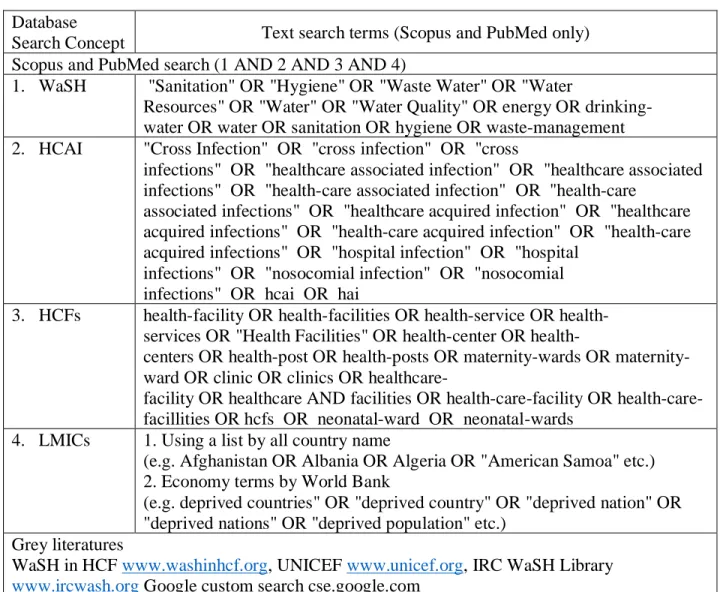
PubMed and Scopus were searched in March 2019 to identify peer reviewed journals in English using the search terms outlined in Table 3. Grey literature was searched using an
advanced custom Google search and included publications from the World Health Organization, UNICEF and the IRC WaSH Library. Dissertations were excluded. A combination of specific and broad search terms was used to retrieve all relevant papers. LMICs were classified based on income levels defined by the World Bank data, which listed each country by name. No
restrictions on study design and duration were applied. Reference lists were manually scanned for additional relevant papers and included if eligible. Papers that had no WASH component was excluded.
3.2 Criteria for Inclusion and Exclusion
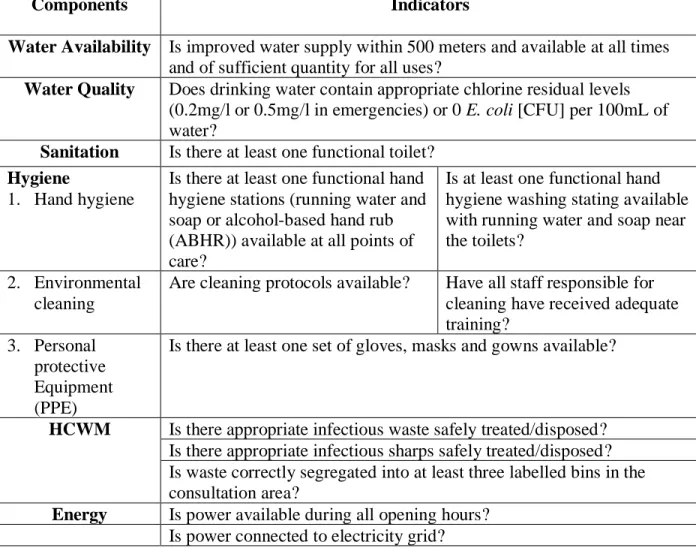
Published peer reviewed literature was screened and reviewed along with peer reviewed journal articles that discuss the prevention of HCAIs in lower level HCFs including maternities, health centers, health posts, and MCH centers. The review was restricted to studies that explicitly consider the coverage of water, sanitation, hygiene (hand hygiene, environmental cleaning, personal protective equipment (PPE)), healthcare waste management and energy.
Table 2. Criteria for inclusion and exclusion (Adapted from SDG’s core indicator (WHO, 2018).
Components Indicators
Water Availability Is improved water supply within 500 meters and available at all times
and of sufficient quantity for all uses?
Water Quality Does drinking water contain appropriate chlorine residual levels (0.2mg/l or 0.5mg/l in emergencies) or 0 E. coli [CFU] per 100mL of water?
Sanitation Is there at least one functional toilet?
Hygiene
1. Hand hygiene
Is there at least one functional hand hygiene stations (running water and soap or alcohol-based hand rub (ABHR)) available at all points of care?
Is at least one functional hand hygiene washing stating available with running water and soap near the toilets?
2. Environmental cleaning
Are cleaning protocols available? Have all staff responsible for cleaning have received adequate training?
3. Personal protective Equipment (PPE)
Is there at least one set of gloves, masks and gowns available?
HCWM Is there appropriate infectious waste safely treated/disposed? Is there appropriate infectious sharps safely treated/disposed? Is waste correctly segregated into at least three labelled bins in the consultation area?
Energy Is power available during all opening hours? Is power connected to electricity grid?
Table 3. Literature review search terms.
3.3 Data extraction and analysis
Relevant data were extracted from all included papers using a standardized form. The data included geographic location, type of HCF, sample size, intervention (if any), and main findings. All quantitative and qualitative findings were recorded. Data were summarized narratively, and no meta-analysis was conducted because WaSH indicators were used differently in different countries (making results insufficiently comparable for meaningful meta-analysis).
Database
Search Concept Text search terms (Scopus and PubMed only)
Scopus and PubMed search (1 AND 2 AND 3 AND 4)
1. WaSH "Sanitation" OR "Hygiene" OR "Waste Water" OR "Water
Resources" OR "Water" OR "Water Quality" OR energy OR drinking-water OR drinking-water OR sanitation OR hygiene OR waste-management 2. HCAI "Cross Infection" OR "cross infection" OR "cross
infections" OR "healthcare associated infection" OR "healthcare associated infections" OR "health-care associated infection" OR "health-care
associated infections" OR "healthcare acquired infection" OR "healthcare acquired infections" OR "health-care acquired infection" OR "health-care acquired infections" OR "hospital infection" OR "hospital
infections" OR "nosocomial infection" OR "nosocomial infections" OR hcai OR hai
3. HCFs facility OR facilities OR service OR services OR "Health Facilities" OR center OR
health-centers OR health-post OR health-posts OR wards OR maternity-ward OR clinic OR clinics OR
healthcare-facility OR healthcare AND facilities OR healthcare-facility OR health-care-facillities OR hcfs OR neonatal-ward OR neonatal-wards
4. LMICs 1. Using a list by all country name
(e.g. Afghanistan OR Albania OR Algeria OR "American Samoa" etc.) 2. Economy terms by World Bank
(e.g. deprived countries" OR "deprived country" OR "deprived nation" OR "deprived nations" OR "deprived population" etc.)
Grey literatures
WaSH in HCF www.washinhcf.org, UNICEF www.unicef.org, IRC WaSH Library
4. Results
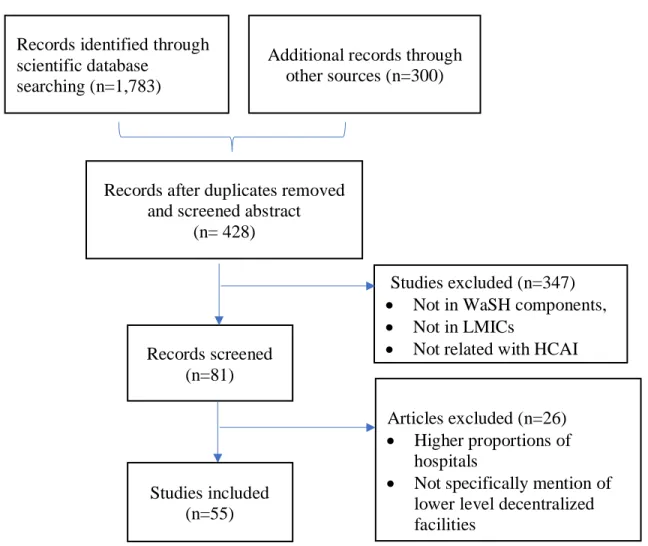
The primary search identified 1,783 publications with titles ‘WaSH’ and ‘HCAI’ in lower-level HCFs in LMICs (Figure 1). The majority of the results were found in Scopus (n=1009), PubMed (n=774), and grey literature. After removing duplicates and screening the abstracts and texts, 81 papers were identified. Following full-text screening, 22 publications were excluded due to their high proportion of hospitals and no specific mention of lower-level
(decentralized) facilities.
Figure 2. Flow diagram of studies included in the review.
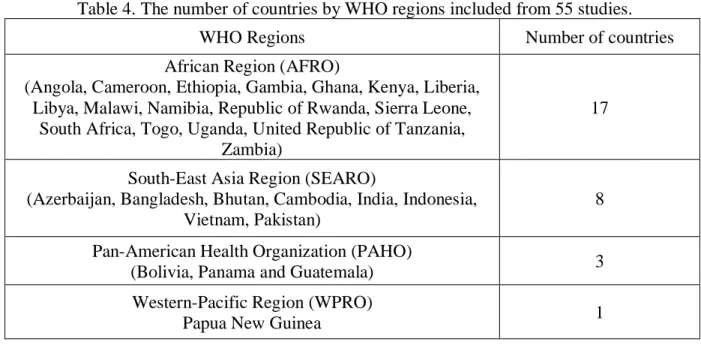
Twenty-nine countries and four WHO regions were represented in the 55 included studies (Table 4). The African Regions (AFRO) had the largest number of studies (n=17). Countries in
Records identified through scientific database
searching (n=1,783)
Additional records through other sources (n=300)
Records after duplicates removed and screened abstract
(n= 428)
Studies excluded (n=347) • Not in WaSH components, • Not in LMICs
• Not related with HCAI • Records screened (n=81) Articles excluded (n=26) • Higher proportions of hospitals
• Not specifically mention of lower level decentralized facilities
Studies included (n=55)
the region include Angola, Cameroon, Ethiopia, Gambia, Ghana, Kenya, Liberia, Libya, Malawi, Namibia, Republic of Rwanda, Sierra Leone, South Africa, Togo, Uganda, United Republic of Tanzania and Zambia. The South-East Asia Region (SEARO), which had the second highest number of studies (n=8), includes Azerbaijan, Bangladesh, Bhutan, Cambodia, India, Indonesia, Pakistan and Vietnam. The Pan-American Region (PAHO) had three studies (n=3) from Bolivia, Panama, and Guatemala. The Western Pacific Region (WPRO) had one study in Papua New Guinea.
Table 4. The number of countries by WHO regions included from 55 studies.
WHO Regions Number of countries
African Region (AFRO)
(Angola, Cameroon, Ethiopia, Gambia, Ghana, Kenya, Liberia, Libya, Malawi, Namibia, Republic of Rwanda, Sierra Leone,
South Africa, Togo, Uganda, United Republic of Tanzania, Zambia)
17
South-East Asia Region (SEARO)
(Azerbaijan, Bangladesh, Bhutan, Cambodia, India, Indonesia, Vietnam, Pakistan)
8
Pan-American Health Organization (PAHO)
(Bolivia, Panama and Guatemala) 3
Western-Pacific Region (WPRO)
Papua New Guinea 1
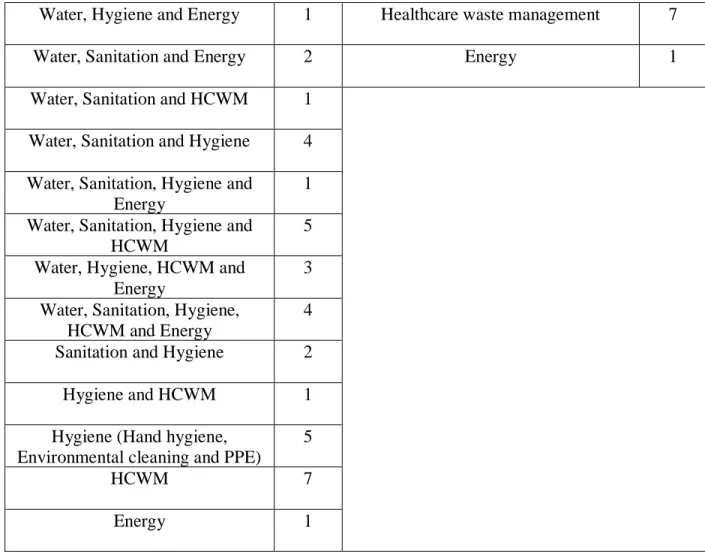
Included studies were categorized according to type of WaSH components considered (Table 5). Table 5. WaSH and Energy components addressed in 55 studies.
WaSH and Energy components N=55 WaSH and Energy components N=55
Water quality 2 Combined assessment of all WaSH
services assessment
24
Water and Sanitation 1 WaSH services assessment by SDG
indicators
7
Water and HCWM 2 WaSH services intervention and
evaluation
6
Water and Hygiene 5 WaSH services in maternities 5
Water, Hygiene and Energy 1 Healthcare waste management 7
Water, Sanitation and Energy 2 Energy 1
Water, Sanitation and HCWM 1
Water, Sanitation and Hygiene 4 Water, Sanitation, Hygiene and
Energy
1 Water, Sanitation, Hygiene and
HCWM
5 Water, Hygiene, HCWM and
Energy
3 Water, Sanitation, Hygiene,
HCWM and Energy
4
Sanitation and Hygiene 2
Hygiene and HCWM 1
Hygiene (Hand hygiene, Environmental cleaning and PPE)
5
HCWM 7
Energy 1
Included studies were categorized according to quality assessment of WaSH and energy services (Table 6).
Table 6. Studies on quality assessment of WaSH and energy services studies
WaSH services Count WaSH services Count
Water availability
(Improved water supply within 500m)
17 (31%) Sanitation (At least one functional latrine) 16 (29%) Water quality (Chlorine residual (0.2mg/l or 0.5mg/l in emergencies) or <1 E.coli/100ml) 6 (11%) HCWM
(Appropriate infectious waste safely disposed)
8 (15%)
Hand hygiene
(Handwashing facilities near the toilet with running water and soap)
16 (29%) HCWM
(Appropriate sharp waste safely disposed)
7 (13%)
Hand hygiene 6 (11%) Waste correctly segregated into
sharp box
(Handwashing facilities at the point of care with running water and soap or ABHR)
Environmental cleaning 2 (3.6%) Gloves (PPE) 7 (13%)
Energy
(Available power during all opening hours)
15 (27%) Masks (PPE) 4 (7%)
Water availability, Sanitation, Hygiene (Handwashing facilities at the point of care), PPE,
HCWM and energy
4 (7%) Gowns (PPE) 3 (5%)
Many of the included studies assessed WaSH services coverage in lower-level HCFs in LMICs: and fewer provided a description of or assessed the process or impact of WaSH interventions. The details of the papers and extracted data are presented in supplementary material.
There is no agreement across countries on the ‘names’ of lower-level HCFs and the range of services that each provides. Clinics, health centers, health posts, dispensaries, and maternities have been classified as lower-level HCFs. We noted that there are the same levels of service delivery have different facility names (e.g. public/basic health units, primary health care units, and health and family welfare centers). Eleven studies with hospitals were included because the proportion of these facilities is low compared to the number of lower-level HCFs.
5. Discussion
5.1 Components/activities
5.1.1 Water availability
Adequate water quantity and access are achieved when sufficient water is available at collection points and water is routinely used in the health-care setting. These factors facilitate appropriate access and use of water for medical activities, drinking, personal hygiene, food
preparation, laundry and cleaning (Adams et al., 2008). According to the corresponding SDG1
indicator, HCFs with basic water services are those having an improved main source that is located on premises and available at the time of survey (WHO, 2018). The WHO minimum WaSH standards for WaSH in HCFs specifies that 100 liters of water per delivery should be available in an operating theatre. In addition, 40-60 liters per inpatient per day should also be available in these settings (Adams et al., 2008).
a) Adverse effects of inadequate water availability deficiency
Water availability, central to health care, enables patients to remain hydrated, to clean themselves, and to have reduced risk of infections (WHO and UNICEF, 2019). Without water, HCWs and patients are unable to wash their hands, and care-givers cannot provide effective surgical care. Without consistently available water, it is difficult to establish and maintain a clean working environment (WHO and UNICEF, 2019).
According to the WHO’s worldwide survey on HCAIs, surgical site infection (SSI) is the most frequent type of infection in LMICs (World Health Organization 2011). The incidence of SSI ranges from 1.2 to 23.6 per 100 surgical procedures and is significantly higher than the incidence in high-income countries where SSIs average around 2-3% (World Health Organisation, 2011).
In 2015, the World Health Assembly expressed the concern that inadequate investment in infrastructure to ensure water availability limits progress in improving the delivery of surgical care (World Health Assembly 2015). Water is required for washing and sterilizing instruments, wound irrigation, and surgical hand scrubbing, the most water-intensive part of surgical care,
1 SDG indicator document presents recommended core indicators to support harmonized monitoring of WaSH in HCF in support of the 2030 agenda convened by the WHO/UNICEF Joint Monitoring Programme for Water Supply, Sanitation and Hygiene (JMP).
ranging from 15 to 20 L per surgical hand scrub (Ahmed 2007; WHO and Unicef 2015; Petterwood and Shridhar 2009). In one year, a tertiary hospital in Nigeria used 200,283 L of water for surgical hand scrubbing alone (Ahmed, 2007).
Available safe drinking water is an important part of medical treatment; it is necessary for taking medicines and other aspects of recovery, as water carries nutrients to cells, protects organs and helps flush out waste. Women, especially, may need large amounts of drinking water during childbirth and while breast feeding (WHO and UNICEF, 2019).
b) Status of water availability
Seventeen studies reported on improved water sources in HCFs. Sierra Leone and Liberia conducted a national WaSH assessment in HCFs. A survey of 1,064 Peripheral Health Units (PHU) in 12 rural districts of Sierra Leone in 2016 found that water sources in compounds ranged between 62% and 82% (WHO 2016). Abrampah and colleagues found that only 45% of the 701 HCFs in Liberia had an improved water source (Abrampah et al. 2017). In Cameroon, only 8.8% of the 207 primary health care facilities had improved water supply (Ministry of Public Health, 2013). According to the National Institute of Statistics (NIS) in Rwanda, 28% of 389 HCs/polyclinics and 52% of 107 dispensary/HPs have regular water supply (Rwanda, 2008). The Ministry of Health and Social Welfare (MOH&SW) and others2 in Gambia assessed emergency obstetric and
newborn care (EmONC). The cross-sectional facility-based survey on 38 clinics and 52 HCs found that 53% of the clinics and 68.5% of HCs (major 100%, minor 37%) had a piped water source (Ministry of Health and Social Welfare & Gamia, 2012).
Dalinjong and colleagues investigated the availability of basic inputs including drugs, supplies, equipment, and emergency transport for maternal health in HCFs in Ghana. Only two
(14%) out of 14 facilities had clean water (Dalinjong, Wang, & Homer, 2018). Frøystad and colleagues examined the availability and quality of health services in two provinces of Angola. Among 19 HCs and 15 HPs, only 72.2% and 53.3% of facilities respectively had water available within 500m of the facility (Frøystad & Maestad, 2011). Of the 169 clinics surveyed in the Ethiopia Service Provision Assessment Survey, 89.6% of clinics and 76.3% of HCFs had an improved piped water source. Seventy-one percent of 182 HCs had improved sources and 44% had piped water sources (Ethiopia Service Provision Assessment, 2014). Guo and colleagues conducted a cross-sectional study in rural regions of Ethiopia, Rwanda, Uganda and Zambia. Fewer than half of surveyed HCFs in each country had an improved water source on premises (74%, 97%, 97%, 95%) (Amy Guo, Michael Bowling, Bartram, & Kayser, 2017).
The 2010 Service Availability and Readiness Assessment for Zambia was conducted to enable the health sector to assess the availability and capacities of health services at 471 HCs and 51 HPs. The assessment found that 88% of HCs and 79% of HPs had an improved water source (Ministry of Health in Zambia, 2010). Davis and colleagues conducted case studies on 11 HCFs in Ethiopia and 9 HCFs in Kenya. None of the conditions found at the HCFs in the two countries met the WaSH criteria. While most had a functional water supply, none had the sufficient
quantity or quality of water to meet all needs; water was accessible to all users at all times in only 36% of HCFs in Ethiopia and 44% in Kenya HCFs (Davis, 2018). The Ministry of Health in Namibia assessed HCFs to gather information on the ability to provide maternal, child, and reproductive health services and to control infectious diseases including HIV/AIDS, TB, and malaria. The assessment examined 295 clinics and 47 HCs; 54% of clinics and 68% of HCs had regular water supply (Ministry of Health and Social Services (MoHSS) & ICF Marco 2010).
In Rwanda, 389 HCs/polyclinics and 107 dispensaries/clinics/HPs were assessed; 28% of HCs and 52% of HPs had regular water supply and all basic client amenities (National Institute of Statistics (NIS) Rwanda, 2008). The Ministry of Health and Social Welfare (MoHSW) in Tanzania and others3 summarized national-level results by HCFs. Twenty-one clinics, 129 HCs,
and 992 dispensaries were included in this study. An improved water source was used in 89% of clinics, 84% of HCs, and 65% of dispensaries (Ministry of Health and Social Welfare
(MoHSW)[Tamzania Mainland], 2015). El-Zanaty and associates conducted a service
assessment of HCFs in Libya. Four hundred and forty-four public health centers and 504 public health units in Libya was assessed. The study found that 98.4% of HCs and 92.7% of public health units had improved water supply (El-Zanaty, 2012).
The Ministry of Health in Malawi in partnership with ICF International, investigated 327 clinics, 466 HCs, 48 dispensaries, and 23 HPs and found improved water supply at 96%, 93%, 96% and 70% of the facilities (ICF, 2014). Mulogo and colleagues investigated WaSH services availability at 50 HCFs in rural southwestern Uganda. The majority (94%) of HCFs had
improved sources (Mulogo et al. 2018). Benova and colleagues investigated the water and sanitation environment in maternities in Tanzania. Of the 273 HCs and dispensaries assessed, 71.8% of dispensaries providing delivery care were found ‘unsafe’ and without an improved water source (Benova et al., 2014).
The Ministry of Health in Bhutan conducted a scoping study of WaSH in 35 HCs in three rural areas. In Mongar district, 73% of HCs reported the water sufficiency a long with 50% of HCs in Samdrup Jongkhar. Likewise, in Samtse district only 22% of HCs have sufficient water supply. Forty-six percent of the 35 HCs had severe water shortages during the 12 months of the
survey (2014) (Ministry of Health in Bhutan 2015). Bradley and colleagues identified problems and barriers to ensuring the availability and quality of water in facilities providing family
planning services in Azerbaijan. Only 5.2% of the Doctor Ambulatory Clinics (DACs) and 4.5% of the Feldsher Accoucher Posts (FAPs), which provide primary health care services, had piped water (Bradley & Mursagulova, 2006). In 2008, the National Center for HIV/AIDS Dermatology and STDs (NCHADS) and others4 investigated the availability of HIV/AIDS information at 84
clinics, 97 HCs, and 18 HPs in Cambodia. They examined the basic elements of infrastructure such as water and energy. Eighty-five percent of clinics, 75.5% of HCs, and 44% of HPs had improved water sources. An average, 88.7% of HCFs had improved water sources (NCHADS 2009).
UNICEF and WHO conducted a scoping study of WaSH in HCFs in Papua New Guinea (PNG) and Indonesia. In PNG, the study size was not defined and hospitals and remote facilities were excluded. Seventy-seven percent of HCFs had an improved water source on the premises (within 50m of buildings), with water available at all times of the day (WHO and UNICEF, 2017). In Indonesia, primary health centers (including 34 HCs and 48 local health offices) were included in the study. Seventy-two percent of HCFs had improved, clean water accessible year-round access (WHO and UNICEF, 2017). Long and colleagues assessed safe water and
sanitation facilities and the disposal of medical wastes at HCs in Vietnam and found that 72.76% of HCs had access to both improved water and sanitation facilities (Long & Anh, 2018).
Unicomb and colleagues conducted a cross-sectional study of 875 HCFs to determine WaSH services in Bangladesh and found that 79% had improved water source for doctors, 59% had
4 National TB Program (Phnom Cambodia), National Malaria Center (Phnom Cambodia), Psychosocial
Organization (Phnom Cambodia), Marco International (Calverton, Maryland USA) and World Health Organization (Geneva, Switzerland)
improved sources for staff and 59% had improved sources for patients/caregivers (Leanne Unicomb et al., 2018).
Odagiri and colleagues investigated WaSH services in Indonesia and found that 23.6% of PHCs did not have access to a combination of basic water and sanitation services; they also noted a significant regional variation (10.6–59.8%) (Odagiri et al. 2018). Goldberg et al. (2006) conducted the first baseline survey that measured the availability and quality of family planning services at the facilities its supports in Bolivia. Among the 159 facilities assessed, 86.2% of HCs had piped water services (Goldberg et al, 2006). A baseline health facility survey was conducted in Guatemala by the Institute for Health Metrics and Evaluation (IHME). The study included 47 ambulatory5 health units and 13 basic6 health units (IHME a, 2014) (IHME a, 2014). Of the 47
ambulatory facilities assessed, the majority (62.2%) had piped water services from an
unprotected source. Among the basic health facilities, 69.2% had piped water from unprotected sources, i.e., wells, tanker trucks, or water tanks (IHME a, 2014). Panama has a health facility structure similar to Guatemala with 66 ambulatory health units and 20 basic health units. While 60.6% of the ambulatory health units and 70% of the basic health units had piped water, over 30% of water sources were specified as “other”, an undefined category (IHME b, 2014).
HCFs should provide adequate quantities of safe drinking water to patients and staff but only five studies reported on the presence of drinking water in HCFs. Four out of five were evaluation studies examined the functioning of portable drinking water stations following installation. In 2014, WaterAid evaluated the status of WaSH in 8 HCFs providing newborn health services in
5 Ambulatory units include health centers, community health centers, health posts, and other lower level health units. 6 Basic health facilities include permanent health care centers and comprehensive maternal and child health care
two provinces of Cambodia. Sixty-three percent of the HCs provided a source of drinking water for their staff and only 25% had water for patients (Water Aid, 2015).
c) The Effects of improving water availability
Water availability at HCFs has not been systematically addressed (WHO 2015a). Increased access to water has been achieved by providing piped water on-site through running water, installing public taps, drilling boreholes, and supporting rainwater capture methods (World Health Organization and UNICEF, 2015). However, public taps, boreholes, and rainwater capture are less than ideal for providing a continuous, large volume supply of water (WHO 2015a). There are no studies that show the effects of improving water availability in lower-level HCFs, although there is an example of the successful implementation of water availability strategies in hospitals. In 25 hospitals in Laos, the national government provided guidance on environmental standards, integrated the standards into national programs, and provided support for training personnel (World Health Organization and UNICEF, 2015).
d) Specific considerations about water availability
Based on a review of a few studies, there are appears to be a significant difference between urban and rural settings and between major and minor HCs. The gap between urban HCs, with 100% coverage, and rural HCs with 51% coverage, is significant (NCHADS 2009). The Ministry of Health and Social Welfare (MOH&SW) in Gambia assessed emergency obstetric and
newborn care (EmONC). The cross-sectional facility-based survey included 38 clinics and 52 HCs. Fifty-three percent of clinics and 100% of major HCs and 37% of minor HCs had a piped water source. These findings are comparable with the findings of Cronk and Bartram who found a significant difference in the availability of basic water services between HCFs in urban and rural settings (Cronk and Bartram 2018).
5.1.2 Water quality
The WHO minimum WaSH standards in HCFs define water quality as water for drinking, cooking, personal hygiene, medical activities, cleaning and laundry as safe for the purpose intended (Adams et al., 2008). The minimum standards and Guidelines for Drinking-water quality from the JMP does not set standards but promotes the adoption of pragmatic monitoring indicators. The JMP indicator promotes the “use of an improved water source within 500m of the facility” and defines ‘improved water sources’ as clean and safe water that includes piped water, boreholes or tube wells, protected springs, rainwater, and packaged or delivered water” (WHO, 2018), assuming that these sources are less likely to be contaminated with pathogenic microbes. I t is noted that drinking water supplied to health-care settings should meet national standards and follow WHO guidelines. In addition, water should be free from fecal contamination (0 fecal coliform counts/100ml)(WHO 2011). Lee et al. (2005) claimed that the presence of a public water distribution network is often an indicator of an improved water supply in a developing country but noted that it should not be assumed that the water quality is always safe and adequate for human consumption (Lee and Schwab 2005). Bain et al. (2012) reported that microbial drinking-water quality testing plays an essential role in protecting public health but considered such testing is a significant challenge where resources are limited (Bain et al., 2012).
a) Adverse effects of water quality deficiency
Drinking water is a well-documented transmission route for infectious diarrheal and other diseases (WHO 2011). Contaminated water contributes to epidemic endemic diseases (Ford, 1999; Payment & Hunger, 2001). Patients who are immune-compromised appear most susceptible to the risks of infections due to exposure to contaminated water sources; this observation has been substantiated by a number of reviews (Bartram et al. 2003.; Emmerson
2001; Merlani and Francioli 2003; Wallace, Brown, and Griffith 1998). Also, several studies claim that water quality is linked with maternal mortality. A dose-response relationship between four types of water sources and maternal mortality was seen in Golding et al.’s analysis (chi-square test for trend P < 0.01, comparing water piped into a dwelling OR = 1.0 (reference category) with piped water into a yard OR=1.8, public standpipe OR=3.0 and other source OR = 2.1) (Golding, Ashley, Mccaw-Binns, Keeling, & Shenton, 1989). Fikree et al. (1997) estimated the population attributable risk of maternal mortality linked to the lack of access to portable water to be 21.2% (Fikree, Midhet, Sadruddin, & Berendes, 1997).
b) Status of water quality
From 55 studies, only seven mentioned water quality in HCFs. Six of the seven studies are evaluations of drinking water and handwashing practices following installation of the systems. The Cameroon Ministry of Public Health reported that only 10.7% of primary care facilities had improved water quality but found no indication that water quality testing was ever conducted (Ministry of Public Health, 2013). Sreenivasan and colleagues investigated the impact of the implementation of water stations and handwashing stations in rural western Kenya three years following the completion of the project. Of 30 randomly selected facilities, 97% had water stations in use. Chorine residuals were detectable in at least one container at 59% of HCFs and 79% of the staff knew the recommended water treatment procedures (Sreenivasan et al., 2015). Bennett and colleagues conducted follow-up evaluations on the impact of the interventions at 15 months post implementation in Western Kenya. After 15 months, there was a statistically significant increase in the percentage of dispensaries with access to HWSs with soap (42% vs. 77%, p<0.01), access to safe drinking water (6% vs. 55%, p<0.01), and reported treatment of stored drinking water using any method (73% vs. 92%, p<0.01)(Bennett et al., 2015). Rajasingham and colleagues assessed
the impact of the implementation of water stations and handwashing stations in rural Kenya in a random sample of 30 HCFs. Six years after implementation they found that 80% of HCFs had at least one functional hand- washing station, 60% had soap at handwashing stations, and 23.3% had one container with detectable free chlorine six years after implementation (Rajasingham, Leso, Ombeki, Ayers, & Quick, 2018). Huttinger and colleagues investigated WaSH infrastructure and water quality in HCFs in Rwanda. They assessed drinking water treatment, the presence and conditions of the sanitation facilities, the provision of soap and water, and the presence of WaSH-related infrastructure and found that 3 out of 18 drinking water samples met the WHO guideline for free chlorine residual of >0.2 mg/l, 6 of 16 drinking water samples analyzed for total coliforms met the WHO guideline of <1 coliform/100 mL and 15 of 16 drinking water samples analyzed for
E. coli met the WHO guideline of <1 E. coli/100 mL. At all sites, 60% of water access points (160
of 267) were observed to be functional, 32% of handwashing locations (46 of 142) had water and soap and 44% of sanitary facilities (48 of 109) were in hygienic condition and accessible to patients ( Huttinger et al., 2017).
c) Effects of improvements to water quality
In low-resource settings, decentralized treatment using ultrafiltration (UF) technology for membrane water treatment is increasingly available and has growing potential for application (Peter-Varbanets, Zurbrügg, Swartz, & Pronk, 2009; Schäfer, Hughes, & Richards, 2014; Sima & Elimelech, 2013; Zheng et al., 2012). Huttinger et al. (2015) monitored 22 months of
operation of 10 water treatment systems, including pre-filtration, membrane ultrafiltration, and chlorine residual disinfection at rural HCFs in Rwanda. When systems were operational, 98% of water samples collected from the HCFs taps met WHO guidelines for microbiological water quality (Alexandra Huttinger et al., 2015).
There is a clear need to consider safe water treatment training. A study by Guo and colleagues found that HCF staff members failed to withdraw water from storage containers safely. They instead scooped water from the container with a cup, bowl, or hands which can introduce contaminants (Amy Guo et al., 2017). Finding by Screenivasan and colleagues’ findings suggest that knowledge can be transferred from staff to clients. A higher proportion of clients who were taught about Water Guard7 at a HCFs knew the recommended water-treatment
procedure in comparison with clients who had not received this training at a health facility (Sreenivasan et al., 2015).
d) Specific considerations about water quality
It has long been recognized that water systems and water containing equipment can be a source of waterborne infections in HCFs. Anaissie et al., pointed out that hospital water
distribution systems might be the most overlooked, important, and controllable source of HCAI (Anaissie, Penzak, & Dignani, 2002). The emergence of opportunistic pathogens and those with increased antimicrobial resistance, such as Legionella and Pseudomonas aeruginosa, are
particularly a cause of nosocomial infection a concern for vulnerable patients, i.e., those suffering from severe illness and disease or in an intensive care unit (ICU) (Anaissie et al., 2002). For large HCFs, patients may be exposed to well-designed or unmanaged water supply or water treatment systems; these can increase the risk of disease outbreaks (World Health
Organization, 2011a).
In summary, water availability and quality are important to prevent HCAIs and to improve health outcomes, enhance the quality of care, and protect health care personnel. Overall, 73.6% of studies documented the presence of an improved water source but many studies did not
indicate that the improved source that was on the premises, available through pipes, or at protected wells or springs.
5.1.3 Sanitation
Sanitation services in HCFs are essential to ensure the delivery of high quality care that improves the health, welfare, and dignity of patients and staff (WHO and UNICEF, 2019). Feces are the principal source of bacteria, viruses, and parasites that cause diarrheal diseases including cholera, shigellosis, etc. (WHO and UNICEF, 2019). People seeking care in HCFs often have weakened immune systems and are particularly vulnerable to infection by fecal pathogens (WHO and UNICEF, 2019). Adams et al. (2008) state that adequate, accessible, and appropriate toilets should be available to patients. The indicators for sanitation monitor the sufficiency of available toilets, i.e., one toilet per 20 users should be available for inpatient settings and at least four toilets per outpatient setting (one for staff, and patients (including one for males, females, and children) (Adams et al., 2008). In addition, the SDG indicator for improved sanitation requires “facilities with improved and usable sanitation facilities to have at least one toilet dedicated for staff, at least one sex-separated toilet with menstrual hygiene facilities, and at least one toilet accessible for users with limited mobility” (WHO, 2018).
a) Adverse effects of sanitation deficiency
One study in rural Pune (India) found that inadequate sanitation in HCFs decreased patient’s attendance. Steinmann et al. (2015) found that the number of latrines, their cleanliness and the availability of water were important factors considered by rural women when using or avoiding latrines (Steinmann et al., 2015). Sanitation matters because patients and HCWs at HCFs need clean and functioning toilets that can protect clients, workers and the community from the unsafe conditions. The safe disposal of human waste of patients, staff and visitors is an essential
environmental health measure because it contributes to reducing the transmission of HCAIs that afflict 5% to 30% of patients (WHO, 2008 b)
Untreated sewage contains excreted pathogens that can lead to illness in individuals exposed contaminated water (Shuval, 2003). The associated infections are from viruses (e.g., rotavirus,
norovirus), bacteria (e.g., Vibrio cholerae, Shigella spp., Campylobacter spp.), and protozoa (eg., Entamoeba histolytica, Cryptosporidium spp., Giardia lamblia) (Mara, 2003). Other
excreta-related diseases include schistosomiasis and bancroftian filariasis (Mara, 2003). Specific
infectious diseases that may potentially be transmitted by human excreta and present a sanitation challenge include cholera, Ebola, and hepatitis A and E (Sozzi, Fabre, Fesselet, Ebdon, &
Taylor, 2015).
b) Status of sanitation
Sixteen studies found at least one functional toilet in HCFs. Open pit latrines were the most used methods and their coverage was 53% (1,343/2,556) in Sierra Leone (WHO 2016). The Cameroon Ministry of Public Health reported only 83.6% of primary care facilities had at least one clean and functioning latrine (Ministry of Public Health, 2013). The Ethiopia Service Provision Assessment surveyed 169 clinics and found that 80% of clinics and 78% of HCs had a latrine designated for use by patients. The assessment did not report on the availability of latrines for HCWs (Ethiopia Service Provision Assessment, 2014). The 2010 Service Availability and Readiness Assessment for Zambia found that 95% of HCs and 98% of HPs had sanitation facilities (Ministry of Health in Zambia, 2010).
The Ministry of Health in Bhutan found that the mean number of sanitation facilities for the 35 HCs assessed was 6.02 (with individual regional means of 4.58 in Mongar, 9 in Samdrup Jongkhar, and 4.5 in Samtse) (Ministry of Health in Bhutan, 2015). In Cambodia, 75% of HCs
had functional toilets, but only 25% had sex-segregated toilets on-site (Water Aid, 2015). The Ministry of Health in Zanzibar et al. (2015) surveyed 21 clinics, 129 HCs, and 992 dispensaries and found that 93% of clinics, 56% of HCs, and 40% of dispensaries had a latrine for clients (Ministry of Health and Social Welfare (MoHSW)[Tamzania Mainland], 2015). El-Zanaty and associates assessed 444 public health centers and 504 public health units HCFs in Lybia. They found that 98.4% of HCs and 92.7% of public health units had improved water and 91.9% of 444 HCs and 71.6% of 504 public health units had toilets for (El-Zanaty, 2012).
The Ministry of Health in Malawi, in partnership with ICF International, investigated 327 clinics, 466 HCs, 48 dispensaries, and 23 HPs. About 26% of all the facilities had client latrines (ICF, 2014). UNICEF and WHO carried out a study in Papua New Guinea (PNG) and Indonesia. The study size was not specified and hospitals and remote facilities were excluded in PNG. The sanitation methods at the facilities ranged from 38% to 100% but the definition of “simple pits” did not indicate whether a slab was present. In Indonesia, 34 HCs and 48 local health offices were surveyed; 74% had access to a functional clean toilet with water available (WHO and UNICEF, 2017). A cross-sectional study conducted in rural regions of Ethiopia, Rwanda, Uganda and Zambia found that 61% (Ethiopia), 87% (Rwanda), 91% (Uganda), 95% (Zambia) had functional sanitation services (Amy Guo et al., 2017). Long and colleagues assessed and found that 72.8% of HCs had access to sanitation facilities in Vietnam (Long & Anh, 2018). Mulogo and colleagues investigated WaSH services availability at 50 HCFs in rural
southwestern Uganda. Improved toilets were available at 96% of the HCFs visited. Hospitals had the poorest toilet to patient ratio (1: 63) (Mulogo et al. 2018). Unicomb and colleagues
conducted a cross-sectional study of WaSH services at 875 HCFs in Bangladesh. While
by patients/caregivers to WaSH facilities was found to be inadequate in many HCFs (Unicomb et al., 2018). Odagiri and colleagues investigated WaSH services in Indonesia and found that 23.6% of PHCs did not have access to basic water and sanitation services while noting a significant regional variation (10.6–59.8%) (Odagiri et al. 2018). Benova and colleagues investigated the water and sanitation environment in maternity services in Tanzania and found that 15% of dispensaries were without improved sanitations services (Benova et al., 2014).
c) Effects of improvements to sanitation
None of the studies provided information on the health effects of implementing sanitation services. It is proposed that adequate sanitation can contribute to preventing intestinal
helminthiases, giardiasis, schistosomiasis, trachoma, and other globally important infections (Jamie Bartram & Cairncross, 2010). Some common health problems related to poor water and sanitation include bacterial and viral infections (diarrhea, cholera, hepatitis and etc.), parasitic infections (amoeba and giardia, schistosomiasis and etc.), and other illnesses such as upper respiratory infections, trachoma and scabies (Stekelenburg 2004).
One study, using global databases from the World Bank and the WHO and UNICEF found that increased access to improved water sources and improved sanitation are significantly associated with decreased maternal mortality ratios (odds ratio 0.58, P=0.008 and 0.52, P=0.009 respectively). Cheng et al. (2012) suggest that better water quality and sanitation reduce the risk of morbidity related to illnesses such as anemia, nutritional deficiency, and hepatitis, in addition to reducing the workload of women (Cheng, Schuster-Wallace, Watt, Newbold, & Mente, 2012). A recent study by Muldoon and colleagues examined the link between the strength of the health system and improved public health outcomes across nations. Access to sustainable water and
sanitation services were found to be associated with a lower maternal mortality ratio (RR 0.88; 95%CI 0.82-0.94) (Muldoon et al., 2011).
d) Specific considerations about sanitation
Steinmann and colleagues investigated the relationship between female satisfaction with latrines and handwashing stations and care-seeking behavior in rural India. They emphasized the differences between public and private facilities, and found that the mean number of toilets in public facilities was 1.3 (out of 6) compared to 3.5 (out of 6) in private facilities. Women preferred private facilities over public government facilities (Steinmann et al., 2015). These findings are comparable with those of Cronk and Bartram who found a significant difference in the availability (and use) of private and public (government) basic water services. Privately-managed facilities had higher levels of basic water service (and use) than government Privately-managed facilities (Cronk and Bartram 2018).
In summary, sanitation facilities in HCFs are essential to deliver high quality care that improves health and well-being, supports the dignity of patients and staff, and improves health outcomes (WHO and UNICEF, 2019). Bouzid and colleagues found that poor WaSH provisions was associated with significant patient dissatisfaction and poor quality of care (Maha Bouzid, Cumming, & Hunter, 2018). Patient dissatisfaction is a barrier to care-seeking care in poorly functioning HCFs. Improving WaSH conditions has the potential to improve patient satisfaction and to increase care-seeking behavior that contribute to improved health outcomes (M Bouzid, Cumming, & Hunter, 2018).
5.1.4 Hygiene
Good hygiene practices in HCFs are essential to preventing the transmission of HCAIs (Allegranzi & Pittet, 2009; Rutala & Weber, 2008). This section discusses hand hygiene, environmental cleaning, and personal protective equipment (PPE).
1) Hand Hygiene
Hand hygiene is a general term that includes handwashing, antiseptic hand wash, antiseptic hand rub, and surgical hand antisepsis (John M. Boyce and Didier Pittet, 2001). In the mid-1800s, Gordon, Holmes and Semmelweis showed that puerperal sepsis, an important cause of maternal mortality in delivery/maternity centers, was linked to poor hand-hygiene (Gould, 2010; Semmelweis & Codell, 1983). Compliance is essential to achieve effective hand hygiene behavior, a complex interaction of many factors. Studies suggest that no one behavioral theory can reliably predict effective hand hygiene behavior (O’Boyle, Henly, & Larson, 2001). In the healthcare settings, hand hygiene knowledge does not necessarily lead to effective hand hygiene behavior (Jumaa, 2005). HCWs may know the recommendations regarding hand hygiene, but the knowledge is not always sufficient to achieve effective compliance because, for example, gloves may not be available. The gap between knowledge and practice contributes to low compliance (Jumaa, 2005). There is evidence that HCWs may be unaware that poor compliance contributes to the spread of infection (O’Boyle et al., 2001). Yet, repeated and timely handwashing is the single most important intervention for preventing the spread of infection (Allegranzi & Pittet, 2009a).
a) Effects of defective hand hygiene
Poor hygiene at the time of delivery can introduce infection in the genital tract (Benova, Cumming, & Campbell, 2014). A recent global review suggests that 8% of all maternal deaths are due to sepsis (WHO AND UNICEF 2012.) Rhee et al. (2008) investigated the impact of
maternal and birth attendant handwashing on neonatal mortality in Southern Nepal and found that birth attendant hand-washing was associated with a statistically significant lower mortality among neonates (aRR=0.81; 95% CI: 0.66-0.99). There was a 41% lower mortality among neonates exposed to both birth attendant and maternal handwashing practices (aRR=0.59; 95% CI:0.37-0.94) (Rhee et al., 2008).
b) Status of hand hygiene
Thirteen studies reported on handwashing facilities and five studies reported on hand hygiene compliance among HCWs and on infection control training of HCWs.
Before the outbreak of Ebola in Sierra Leone, there was no systematic handwashing system. After the outbreak of Eblola, every HCFs had adopted a hand hygiene practice. However, only 9% of handwashing stations were near the toilet, 17% were located at points of care, and only 23% of the stations had soap and water at all times (WHO 2016). The Cameroon Ministry of Public Health reported that 49.3% of the 207 primary care facilities had water for handwashing, soap and a clean towel available in the patient examination area (Ministry of Public Health, 2013). The Ministry of Health and Social Welfare (MOH&SW) in Gambia assessed emergency obstetric and newborn care (EmONC). The cross-sectional facility-based survey included 38 clinics and 52 HCs and found that of the 38 clinics 88% had soap and 100% had gloves. Of the 52 HCs, 89% had soap and 99% had gloves (Welfare, UNPF, UNICEF, Organization), &
University, 2012). The 2010 Service Availability and Readiness Assessment for Zambia assessed 471 HCs and 52 HPs and found that soap was available but that there was no information on proper handwashing at the handwashing stations and no running water in the facilities (Ministry of Health in Zambia, 2010).
In Cambodia, 60% of eight HCs had a handwashing sink and 40% had access to soap and water in the maternity wards (Water Aid, 2015). Davis and colleagues carried out a case study on 11 HCFs in Ethiopia and 9 HCFs in Kenya. They found that facilities in both countries were without a functioning hand hygiene stations with soap within 5 meters of latrines. (None of the Kenyan facilities had handwashing stations, and only one facility in Ethiopia had a ‘functioning’ handwashing station)(Davis, 2018). The Ministry of Health in Namibia assessed the capacity of 295 clinics and 47 HCs to provide information on the general performance of facilities that offer maternal, child, and reproductive health services as well as the treatment of infectious diseases including HIV/AIDS, TB, and malaria. The assessment reports that all items related to the prevention of infection, including soap and running water or hand disinfectant, gloves and sharp boxes, were in 49% of HCs and 63% of the clinics (Ministry of Health and Social Services (MoHSS) & ICF Marco 2010, 2010). In Rwanda, 389 HCs/polyclinic and 107
dispensary/clinics/HPs were assessed. The assessment found that running water was available in 23% of the HCs and 49% of the dispensaries, and that soap was available in 11% of the HCs and 45% of the dispensaries (Rwanda, 2008).
The Ministry of Health and Social Welfare (MoHSW) in Tanzania and others8 investigated
21 clinics, 129 HCs, and 992 dispensaries and found that 83% of handwashing stations had soap, 71% had running water with soap, and 63% had ABHR available (Ministry of Health and Social Welfare (MoHSW)[Tanzania Mainland], 2015). The Ministry of Health in Malawi, in
partnership with ICF International, investigated 327 clinics, 466 HCs, 48 dispensaries and 23 HPs. Running water with soap or ABHR was found in 78%, 56% and 45% of the facilities, but
8 Ministry of Health Zanzibar, National Bureau of Statistics Dar es Salaam, Office of Chief
none of the 23 HPs had hand hygiene materials (ICF, 2014). Guo and colleagues conducted a cross-sectional study in rural regions of Ethiopia, Rwanda, Uganda and Zambia. Fewer than half of the HCFs surveyed in each country had handwashing supplies with soap (58%, 88%, 60%, 72%) or water (50%, 71%, 48%, 27%). Odagiri and colleagues investigated WaSH services in Indonesia and found that 72% of PHCs lacked a handwashing facility with soap in their general consulting, immunization, and delivery rooms (Odagiri et al. 2018). Mulogo and colleagues investigated the availability of WaSH services at 50 HCFs in rural southwestern Uganda. Forty-two percent of 50 HCFs had handwashing facilities at the toilets and 84% of 50 HCFs had handwashing facilities available at the points of health facility. Both water and soap were present in only 15% of these 50 HCFs (Mulogo et al. 2018).
Marjadi and colleagues examined the hand hygiene compliance/practices of 318 HCW and identified the barriers to effective hand hygiene practices in 10 HCFs in a rural district in
Indonesia. Hand hygiene compliance was 20% and was more likely to be practiced after patient contact (34% after contact vs 5% before contact). Barriers to compliance were water scarcity, tolerance of dirtiness by community and an institutional culture that accepted unsanitary
conditions (Marjadi & McLaws, 2010). Wasswa and colleagues investigated the implementation of infection control in HCFs and identified a predictors of effective handwashing practices among HCWs in Uganda. The study found that HCWs are more likely to wash their hands if they had training on infection control (AOR=2.71) (Wasswa et al., 2015). Sahiledengle and
colleagues investigated the knowledge and practices of HCWs with respect to infection
prevention and associated factors among HCWs in HCFs in Ethiopia. They found that 53.7% of HCWs reported infection prevention knowledge and 36.3% reported safe infection prevention practices (Sahiledengle, Gebresilassie, Getahun, & Hiko, 2018).