Abstract— The paper is focused on the measurement and use of thermal processes at old mining dumps. It describes the causes of occurrence of thermal processes, including their negative impacts. It also describes technology of heat collection. Much of the paper is devoted to a description of the pilot projects that deal with collection and subsequent use of the heat in the selected mining dumps. The end of the paper deals with the description of complex measurement system for monitoring important variables associated with collecting and using of thermal energy at mining dumps. The paper also summarizes the basic problems related to the heat collection at old mining dumps.
Index Terms — Mining dump, thermal process, temperature monitoring, heat collect, measurement
I. INTRODUCTION
URRENTLY, one of the negative consequences of mining coal is occurrence of extractive waste storage locations - mine dumps, many of which show presence of thermal processes. Their development is allowed due to a certain amount of the stored coal substance, which, together with the accompanying rocks, is deposited on the surface repository. There is a variety of unassimilated materials, besides accompanying rocks from the mining process (coal containing substance) it is also various organic and inorganic waste, which has its origin in the operation of coal enterprise. Percentage of combustible substances - primarily coal substance varies considerably and ranges from 0 up to 60 % of stored volume.
Sufficient amount of atmospheric oxygen and negative character of coal substance lead to creation of bonds between carbon and oxygen. A significant factor here is the temperature. Most important for the interaction of coal with oxygen appears to be the time of interaction, temperature level, the amount of oxygen in the air and coal particle size. Another impact factors are also water content, degree of coalification coal substance and its micropetrographic
Manuscript received June 10, 2013; revised July 31, 2013. The work and the contribution were supported by the project of the Ministry of Industry and Trade – MPO TIP FR-TI 4/327 “ Research into the possibility of a comprehensive revitalization of industrial waste landfills, incl. the use of their potential, develop measuring systems for remote monitoring, creation of guidelines and sample projects for revitalizing and optimizing”.
R. Hajovsky is with the Department of Cybernetics and Biomedical Engineering, VŠB – Technical University of Ostrava, Ostrava – Poruba,708 33, Czech Republic (corresponding author to provide phone: +420597324221; fax: +420597323138; e-mail: [email protected] ).
J.Hajovsky is with SG-Geoinženýring, s.r.o., 28.října 150/2663, 702 00 Ostrava, Czech Republic (e-mail: [email protected]).
M. Pies is with the Department of Cybernetics and Biomedical Engineering, VŠB – Technical University of Ostrava, Ostrava – Poruba,708 33, Czech Republic (e-mail: [email protected]).
composition.
In places with a higher percentage of coal substance the thermal processes often rise which results in release of large amounts of heat. Given that mining pits have a volume of several hundred to several million cubic meters, the existence of thermal processes is a significant source of thermal process heat that escapes into the atmosphere. Use of this heat would bring significant economic benefits to the surrounding industrial resp. housing development.
As a result of the oxidation process the development of a significant amount of thermal energy occur. This process is generally referred to as thermal activity. After exceeding a certain temperature (approx. 60 °C), due to the above factors, it may be called coal self-ignition. Actual oxidation at higher temperatures is accompanied with generation of a number of gaseous substances. The most important is water vapor, CO, CO2, and many hydrocarbons. Furthermore, sulphur oxides, nitrogen oxides and hydrogen sulfide. Production of carbon monoxide is generally considered as an initial symptom and indicator of spontaneous combustion. The subject of self-ignition process is characteristic for all types of coal. These processes are referred to by term “thermal process”.
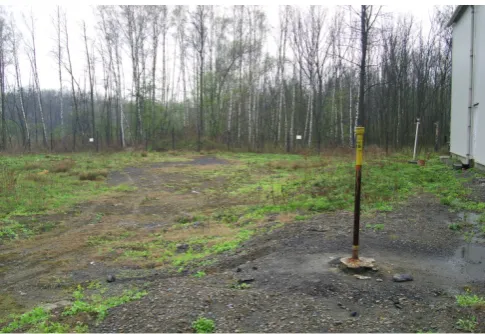
[image:1.595.305.548.536.703.2]Coal substances stored in basins is highly inhomogeneous system which contains so called coal substance and other mineral materials. The properties of this material vary significantly not only by different sites, but even within the same coal basin. The Fig.1 shows typically view on mine dump with thermal process.
Fig. 1. A view at the Hedvika mining dump
The problem of thermal processes in relation to the possible use of a heat potential due to thermal activity concerns mainly mining dumps - storage locations with
Thermall Processes at Old Mining Dumps and
Their Measurement and Utilization
Radovan Hajovsky, Jiri Hajovsky,and Martin Pies
extractive waste generated during mining of hard coal. The creation of these dumps is negative accompanying activity during the extraction of raw materials and management of underground work, especially long mining excavation works. It is necessary to break and transport large number of spin-carboniferous rocks to the surface which only have a very limited use, respectively they weren’t used at all in the past. A very grim fact is that part of the stored accompanying rocks - particularly in the past (this is also true today but in a smaller scale) - is a certain amount of substance in coal mine spoil material. This coal is here given in pure form (scrolling through long seams during the excavation of mines) or as part of the accompanying rocks (mudstones containing coal) [5], [6].
II. THERMAL ACTIVITY OF MINING DUMPS
The development of thermal activity can be initiated by several causes. As mentioned above, one of the most extensive thermal initiations at mining dumps is the oxidation process of coal substance as a part of the deposited material. Another cause is the direct ignition caused by external initiation - breaking of surface fire above the area containing a higher percentage of coal substance in the heap material. Another cause may be the dumping of hot materials at storage space, especially insufficiently cooled ash or performing welding process directly on the surface of the dump. Ignition by atmospheric lightning can occur very rarely.
The length and course of thermal activity at the storage location is very different and depends on several factors. Important factors are quantity and nature of coal substance in the material heap, the heap extent and its shape. The course of thermal activity is described by many experts. As an example, prof. Martinec and prof. Klika, who divided the overall process into the following phases:
- Weathering of Fe-sulfides in coal and rock accompaniedby bacterial activity.
- Spontaneous ignition of coal and beginning of carbonization of coal residues and coal substance in the rocks within the temperature interval from 75 °C up to about 400 - 500 °C.
- The development of burning, carbonization of coal and coal substance within the temperature interval from approx. 400-500 °C to approx. 900 °C.
- High-temperature transformation of rock and coal ashes accompanied by creation of mullite, spinels and alkaline glass at the temperature above approx. 900 °C.
- Progressive burn-out of the dump heap associated with its cooling below 75 °C.
The relevant thermal processes are the source of significant adverse effects on the surrounding environment. There is a strong development of flue aromatic fumes, disposal of all vegetation cover, immediate threat to the health and life of animals and people located near the epicenter of underground fires. Subsequently it is followed by groundwater contamination.
III. HEAT POTENTIAL OF MINING DUMP AFFECTED BY THERMAL PROCESSES
The existence of thermal processes causes a massive release of heat energy. Its amount depends on the petrographic composition of rocks in the overburden material, content of coal substance and dispersed coal mass in the rocks, as well as the size of the dump itself and its shape. Calculation of the amount of heat generated at the site is very complex. It depends on a number of parameters predominately specific heat of coal, humidity, ash content, chemical and mineralogical composition of the deposited rocks and their thermal conductivity. The above information is usually unknown and may vary considerably within one location due to dump inhomogeneity [1].
If we significantly simplify the problem of dump heat potential and if we come out of evaluation of the dumps’ conditions affected by underground mining dumps fire, we can state the following fundamental facts:
- Mining waste pile generates a substantial amount of thermal energy. In principle, the amount depends on the size of the dump and the percentage of combustibles (coal), which is contained in the stored material.
- The period of potential use of thermal energy is highly variable. There are known cases where the observed thermal process on certain parts of the dump lasted for tens of years - as for example central cone of the Ema dump, or the central part of the Hedvika mining dump. - Existing experience don’t result in knowledge regarding
the efficient use of heat potential of mining waste dump in the Czech Republic.
Under the previous theoretical considerations on the potential heat energy intake, the following technical issues were specified, rising a need of solution in a wider range: - Very difficult installation of the heat collectors in the
thermally affected area, due to high temperature levels - above 500 °C, exceptionally up to about 800 °C. - Uncertainty in determination of the time period of heat
collection due to heterogeneity of composition of the mining dump and determination of the actual heat potential of the site.
- An environment with underground fire is characterized by completely irregular occurrences of high temperatures and by their rapid migration. Burnout is followed by a rapid decline.
- Thermal processes which turn into the underground fire are totally unpredictable and cannot be controlled. - There is a surge of the exhaust fumes, smoke and steam
outputs followed by a generation of severely poisonous CO and other toxic gases.
- There is a real risk of breaking a surface fire of combustible materials located above the focal point of the thermal process.
- Underground fires cause uneven surface declines.
- Danger of a slump into burnt-out cavities is inconsiderable.
A significant fact which must be taken into account in extensive industrial use of heat potential is the distance from the heat source (mining dump with thermal activity) and the point of consumption of recovered heat. It will be necessary to create a transmission network, which will cause substantial loss of heat transmitted energy despite good insulation.
IV. TECHNOLOGY OF HEAT COLLECTION
Heat collection technology is based on the principle of warming the media being blown into the heat collector. It consists of a steel cylinder with a diameter of 20-30 cm and length of about 5-7 m. Heat collector is installed within the area affected by thermal process to a depth of 6m. Optionally it is possible to install surface collector situated between 0.8 to 1.5 m below the ground level. Ambient heated mine tailings heats up the transfer medium in the collector. It then passes its energy via a heat exchanger into the secondary circuit. The secondary circuit subsequently distributes the heat via hot water into the heated object.
V. PILOT PROJECTS OF HEAT COLLECTION
The first attempts to use heat potential thermally active dumps are dated to the years 2010 to 2012. Experimental tests were carried out within the framework of the sub-project of the sub-project called Research of thermal processes at mining dumps created during extraction of coal deposits, development of methods and equipment for the use of their thermal potential.
Two localities have been chosen for the verification of operations that should demonstrate the technical feasibility of collecting heat as well as its effective use, namely the Krimich mining dump and the Hedvika mining dump in Ostrava.
It should be noted that they use completely different ways of collecting heat.
A. Verification experiment at the Krimich (ZUD)
Surface of the Krimich is composed of its own heap and sludge lagoon (originally 25 000 m2). The heap is composed of two parts. Older ridge, situated on the western slope of the dump, was sprinkled as sharp. Another central ridge in the north-south direction is yet flat, as well as the last one in SV-SJ direction. Dump area is approximately 107 000 m2 hectares, height up to 72 meters and cubic approximately 3.53 million m3.
Material of the heap is composed mainly of Carboniferous sediments. The rock is composed mainly of arkosic sandstone, siltstone, claystone and coal dust. Moreover, the dump incorporates coal slurry and a layer of sludge ponds. It is expected that half of the total quantity of accumulated material is still able to burn through. In the past this heap was hit by a significant thermal activity in its interior. For this reason, surface sealing was performed by use of clayey soil and clay with 0.3 to 0.5 m thickness, which greatly damped thermal processes. However, damping is not strong enough to defeat utilization of thermal processes. At present, the surface temperature of the heap is so high that in the winter there was a disproportionately
rapid melting of snow at least at area of 1 500 m2.
In the past, temperature monitoring was performed and results showed a high thermal yield of the dump. At an ambient temperature of -6 °C the surface temperature was 12 °C heap and 10cm below the surface the measured temperature was 20 °C.
[image:3.595.304.549.206.351.2]The air surface screening has been performed by use of infrared camera (see Fig. 2.) for precise mapping of the most suitable locations for heat collector placement. This survey revealed the highest thermal activity in the northern part of the dump. One of the symptoms of increased thermal activity is the change in vegetation over its epicenter.
Fig. 2. Infra red picture of the Krimich
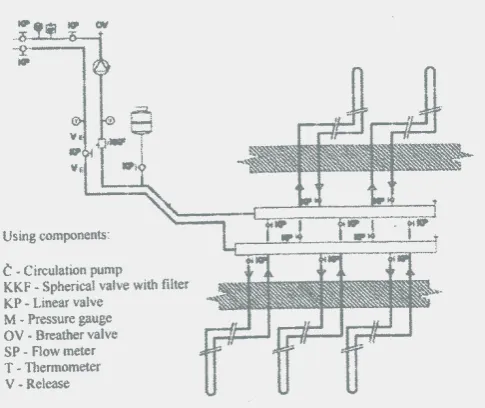
Technology to collect the heat at the Krimich is based on the use of surface heat collector (ground collector) that is located 0.5 to 0.7 m below the surface of the heap. Natural collector consists of five circuits, where one circuit has a length of about 100 m. Ground collector uses two kinds of lines (high-temperature resistant plastic for approx. 90 °C - 3 circuits, copper wires - 2 circuits). The scheme of heat collection is shown in Fig. 3.
Fig. 3. The scheme of heat collection at the Krimich mining dump
All five areas are linked in the technological rooms by a collector and a distributor. Distribution lines are systematically spaced by 0.8 m. Copper circuits are stored at the depth of 0.5 m and plastic circuits at a depth of 0.7 m.
[image:3.595.305.548.493.697.2]quantities of about 300 l. Circulating pump is used with a maximum allowable pressure of 600 kPa and a minimum pressure of 30 kPa.
Previous experiments on heat collection at this mining dump were performed as a test pilot operational test. Up to now the heat was emitted to the surrounding space uselessly. This year it is planned to use the heat for heating the greenhouse that will be used to grow certain types of vegetables and fruits under testing operation. In the future, there is a vision of the use of the heat for heating residential homes situated beneath the heap.
B. The Hedvika Mining Dump (Ostrava)
The Hedvika mining dump is waste rock that belongs to former mining factory of Julius Fučík’s Hedvika establishment. It is a massive, powerful and large flat formation of waste rock backfill, connecting the northern and western edge of the former mining factory of Julius Fučík (formerly J. Fučík II). The subject heap is reclaimed, partly biologically stable formation with progressive revitalization - partly self-seeded forestation, partly seeded by reclamation plants. Part of the dump in the northern part of the edges is composed of relatively fresh tailings of embankments. The heap is located on the eastern edge of the cadastral Radvanice and Michálkovice (Municipal District of Ostrava) in local suburbs Chotěbuz and Zaryje, on the border of the former districts of Ostrava and Karviná. The eastern part of the area belongs to Karviná, it is part of the cadaster Petřvald u Karviné. The surrounding area is predominantly covered by forests (the Panský les and the Velký ostravský les).
The territory is closer identified as part of the industrial area of mining factory of Julius Fučík’s Hedvika establishment, mining factory ODRA and together with the area of mining locality it forms the common territory. The heap area itself is extensive, freely accessible, without fencing and occupies an area of about 320 000 m2. The northeast part it is bounded by the road Michálkovice – Petřvald, the southwest it is adjacent to the mining site. Heap is accessible from the road Michálkovice - Petřvald at its northern edge. There is a network of local roads at the mining dump [3].
C. Technology of heat collection:
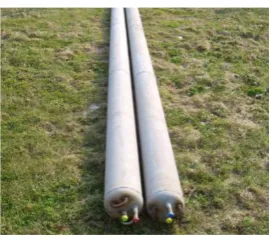
[image:4.595.307.551.257.440.2]Technology of heat collection on this mining dump differs from the one at the Krimich. Heat collection is enabled by a special device consisting of 4 collecting containers filled with water (primary circuit), where the secondary distribution pipes are placed, see Fig. 4.
Fig. 4. Heat collectors of the primary circuit at the Hedvika mining dump
That heat collector was installed to a depth of 6 m at a point significantly affected by thermal process in order to ensure the efficiency of the collection system and heat transfer. To place the heat collectors special holes were drilled with a diameter of 400 mm.
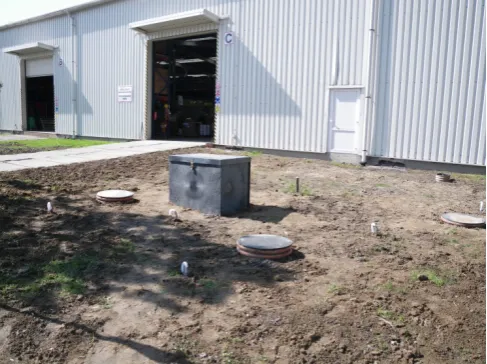
[image:4.595.101.237.643.763.2]Thermally affected surrounding waste rock give its heat to the water in the primary circuit in heat collector and then it is transferred to the secondary circuit water. Subsequently, the secondary circuit water is conducted to a collection point equipped with other technology for distribution of the heated water to the heated space. Installation includes a circulation pump, heat measurement Megatron 2 and telemetry unit providing measurement of temperatures around collectors and the wireless transmission to dispatching center. Overall view of the collection point is shown in Fig. 5.
Fig. 5. Collection point with the measuring equipment
From the collection point the heated water in the secondary circuit is fed to two places:
a) Storage halls of Canis Safety, a.s. where it is used for tempering the hall through heating units Sahara MAX series HN (in winter months)
b) Water heater OKC 300 designed to preheat the water located in the administrative building of the same company
VI. MEASUREMENT SYSTEM
Fig. 7. shows a view of the installed heat collector and measurement probes in their surroundings [2], [4].
Fig. 6. The block scheme of measurement system
Fig. 7. A view at the place of heat collection with heat collector and measured probes
VII. CONCLUSION
The paper focused on description of the current knowledge regarding collecting heat energy from mining dumps affected by underground fires.
Over the last three years there have been cooperation among VSB-TU Ostrava, ARCADIS Geotechnika, a.s. and SG-Geoinženýring, ltd. regarding activities connected to research and verification operation of heat collection and use of the heat from thermally active mining dumps. Pilot projects have demonstrated the technical feasibility of obtaining thermal energy and its use from inner space of the thermally active mining dumps. It also included testing operation of technology for heat collection from waste dumps, particularly at the areas with decomposing processes. Despite significant limitation of the experiment, it demonstrated the technical feasibility of collecting heat.
The implementation of pilot verification projects arose many questions that need to be solved in the subsequent development and introduction into practice. For example, let’s denote the following issues:
- Risk of sudden increase of temperature due to atmospheric oxygen level increase during installation of collecting technology.
- Risk of strong exhalation of gas fumes from thermally active zones
- Installation in a high temperature environment threatening the health of workers – risk of burn marks when handling tools
- Filling the primary circuit with the chosen medium - Water solutions cannot be used at temperatures above
100 °C
- The use of measuring technic devices (measurement of temperatures, flow rates and energy recovery) at high temperatures
- Strongly aggressive environment in which heating devices are installed.
The most important problem that must be taken into account when projecting the heat collection is the whole range of issues addressing the efficient use of such obtained energy. Particularly it concerns the summer months when the heat production is significantly higher than its consumption possibilities. Also important is the distance of the intake from the point where the obtained heat energy is used. Regulation of heat consumption, particularly with the aim of production increase during severe frosts, has not been dealt so far.
REFERENCES
[1] Hajovsky, J., Sojka, R., “Effect of thermal processes at the mine dumps on construction buildings and possibilities of construction revitalization after attenuation of thermal processes,” The conference proceedings – The 13th International Conference Geotechnics 2012, The High Tatras, Slovakia, ISBN 978-80-248-2785-8
[2] Hajovsky, R., Ozana, S., “Long term temperature monitoring and thermal processes prediction within mining dumps”, Proceedings
IDAACS. Prague, 2011. pp. 522–526. DOI:
10.1109/IDAACS.2011.6072821
[3] Hajovsky, R., Hajovsky, J., “Possibilities of use of the heat potential of old mining dumps”, Proceedings of the 4th International Science Conference OZE 2013, Tatranské Matliare, Slovakia, 2013, pp. 189 – 194, ISBN 978-80-89402-64-9
[4] Hajovsky, R., Pies, M., “Complex Measuring System for Longtime Monitoring and Visualization of Temperature and Toxic Gases Concentration”, Electronics and Electrical Engineering. Kaunas, KTU, 2012, s. 4. ISSN 1392-1215.
[5] Chen, Y., Wang, Y., Li, D., Wu, X., “A Monitoring System Based on Environment Indicator Technology for Land Rehabilitation Coal Mine Dump Areas”, INTELLIGENT AUTOMATION AND SOFT COMPUTING, Volume: 18, Issue: 5, Autosoft Press, USA, 2012 [6] Mathiyazhagan, N., Natarajan, D., “Impact of mine waste dumps on